

ISSN 1671-3710
CN 11-4766/R
主办:中国科学院心理研究所
出版:科学出版社
CN 11-4766/R
主办:中国科学院心理研究所
出版:科学出版社
心理科学进展 ›› 2026, Vol. 34 ›› Issue (4): 666-686.doi: 10.3724/SP.J.1042.2026.0666 cstr: 32111.14.2026.0666
任维聪, 范俊龙, 张志杰( )
)
收稿日期:2025-06-16
出版日期:2026-04-15
发布日期:2026-03-02
通讯作者:
张志杰, E-mail: zhzhj@hebtu.edu.cn基金资助:
REN Weicong, FAN Junlong, ZHANG Zhijie()
Received:2025-06-16
Online:2026-04-15
Published:2026-03-02
摘要:
本研究采用三水平元分析方法, 系统考察抑郁个体的注意偏向特征及其潜在调节机制。最终纳入51篇消极注意偏向研究(91个效应量)和33篇积极注意偏向研究(56个效应量)。结果表明, 抑郁个体存在中等程度的消极注意偏向, 同时伴随积极注意偏向的缺失。调节效应分析发现, 任务范式显著影响两类注意偏向的效应量; 刺激类型在消极注意偏向中呈边缘显著作用, 在积极注意偏向中作用显著; 而年龄、样本类型及刺激效价等变量无显著影响。本研究揭示了抑郁个体注意偏向的双重特征, 提示抑郁情绪的改善既依赖于减少对消极信息的过度关注(“减负”), 也依赖于增强对积极信息的注意投入(“增正”), 为完善抑郁认知理论和发展双轨干预策略提供了理论依据。
中图分类号:
任维聪, 范俊龙, 张志杰. (2026). 抑郁个体注意偏向的双重特征:一项三水平元分析. 心理科学进展 , 34(4), 666-686.
REN Weicong, FAN Junlong, ZHANG Zhijie. (2026). Dual characteristics of attentional bias in depression: A three-level meta-analysis. Advances in Psychological Science, 34(4), 666-686.
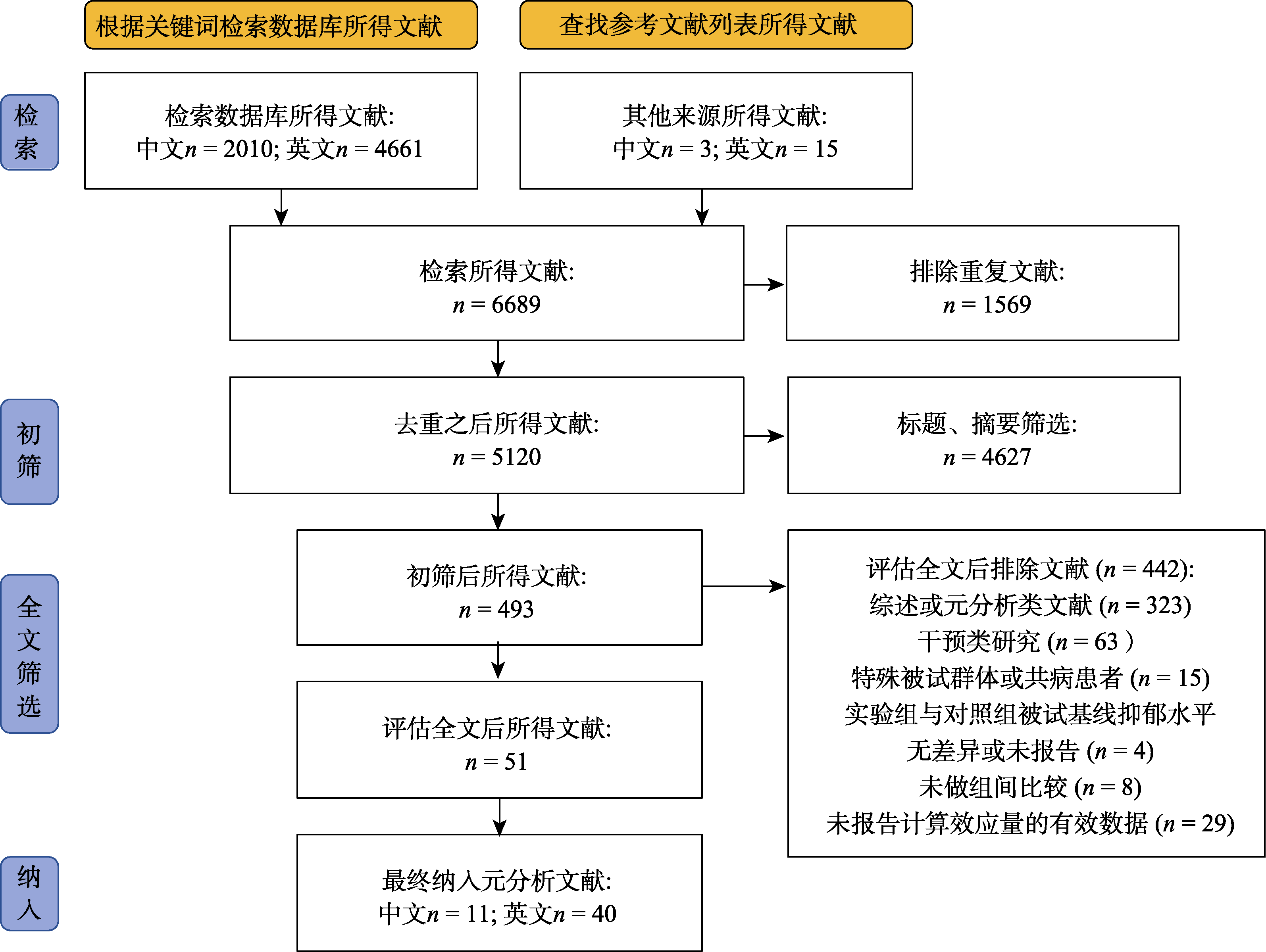
图1 文献纳入流程图(消极注意偏向)
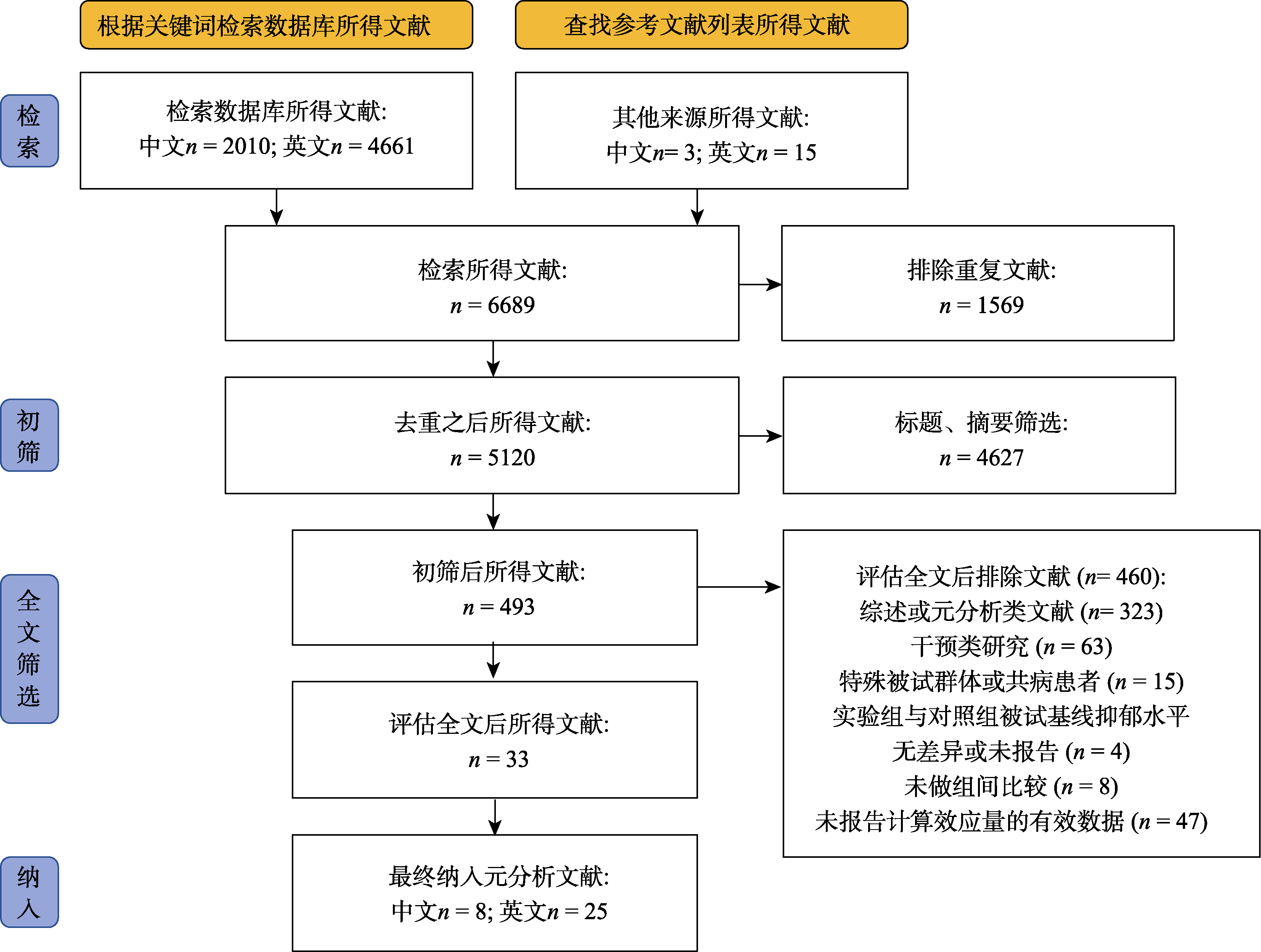
图2 文献纳入流程图(积极注意偏向)
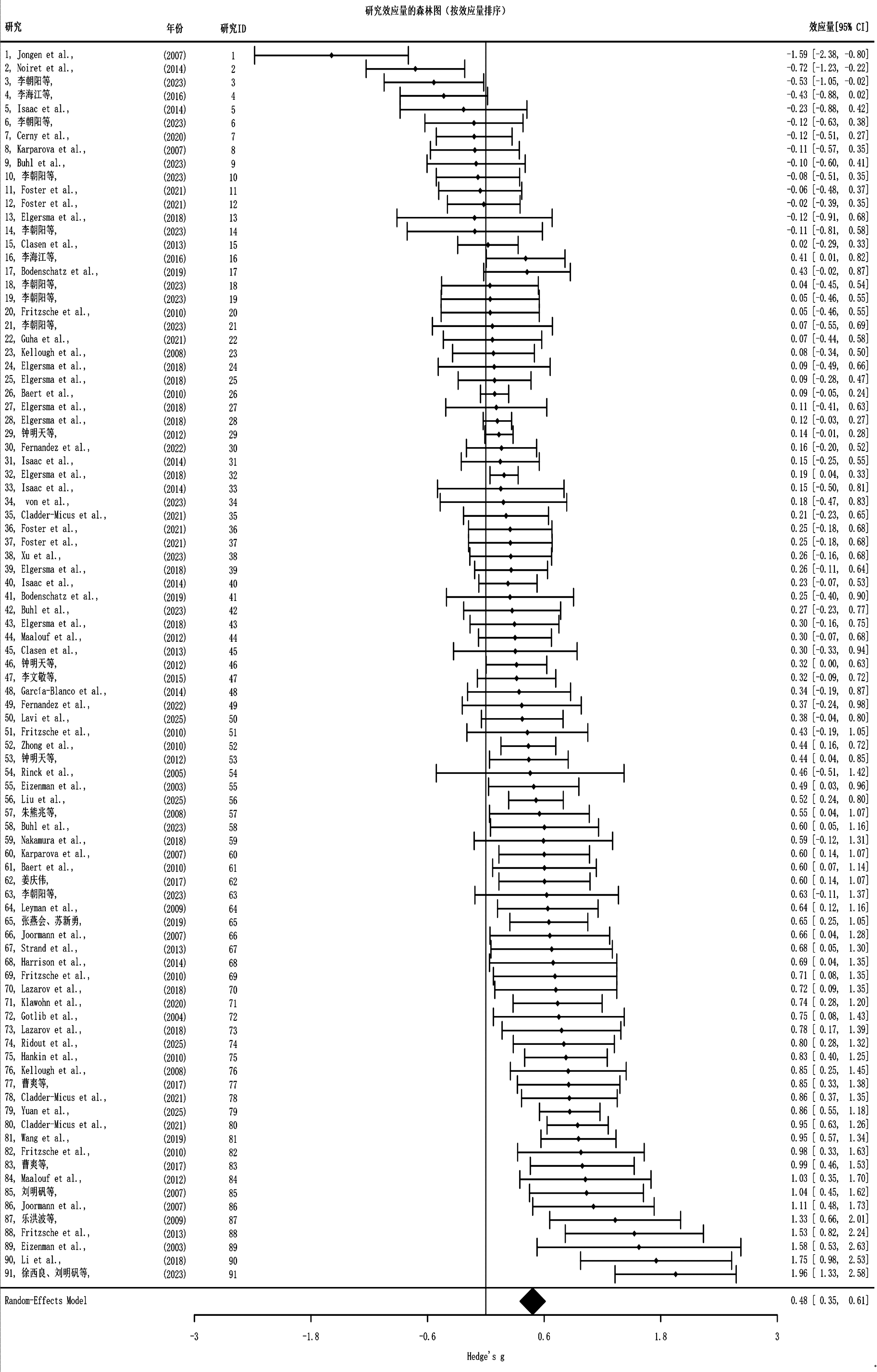
附图1 抑郁人群消极注意偏向组间比较(Hedge’g值)森林图 注:Random−Effects Model为随机效应模型
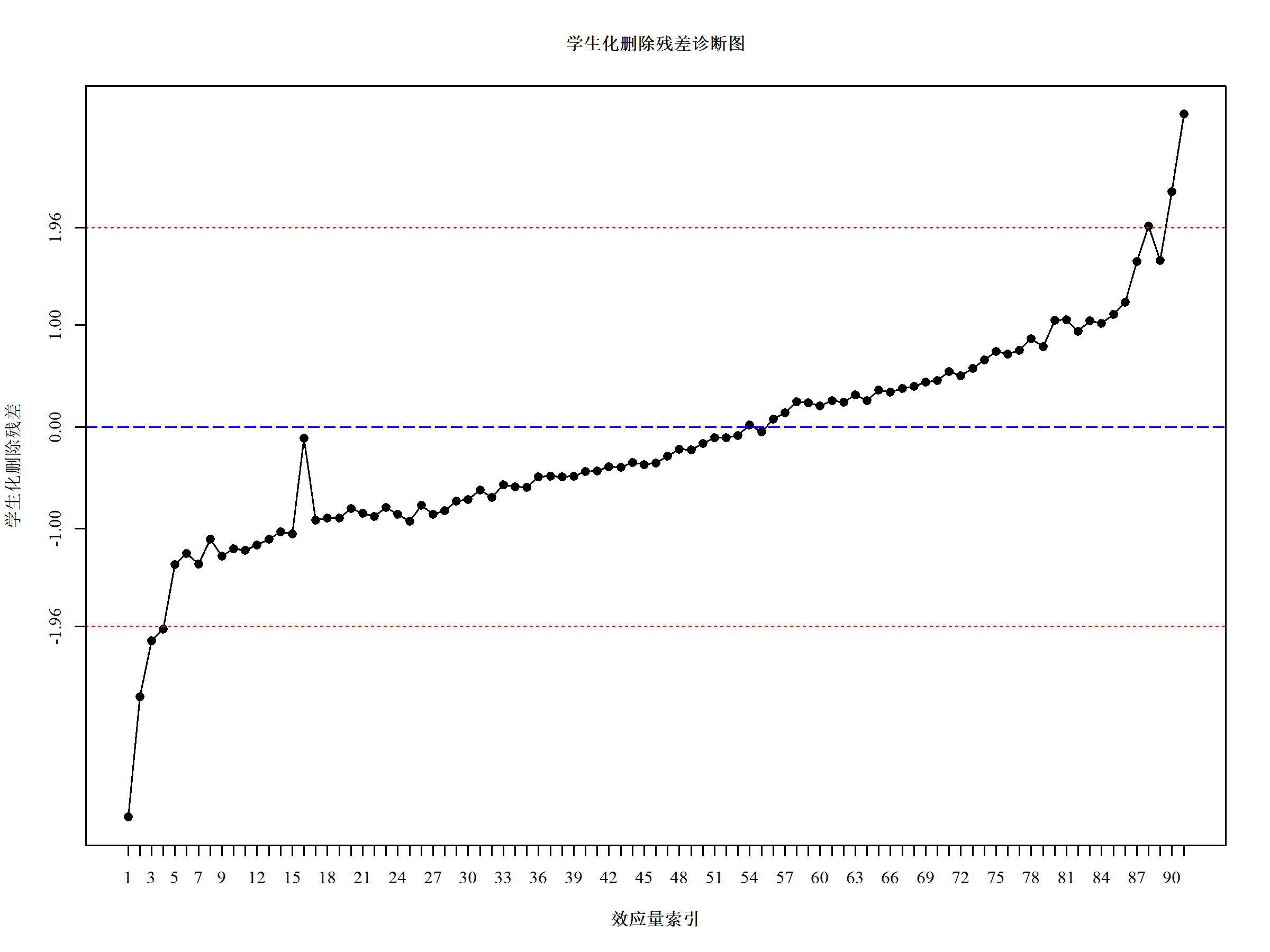
附图2 SDR检验(消极注意偏向)
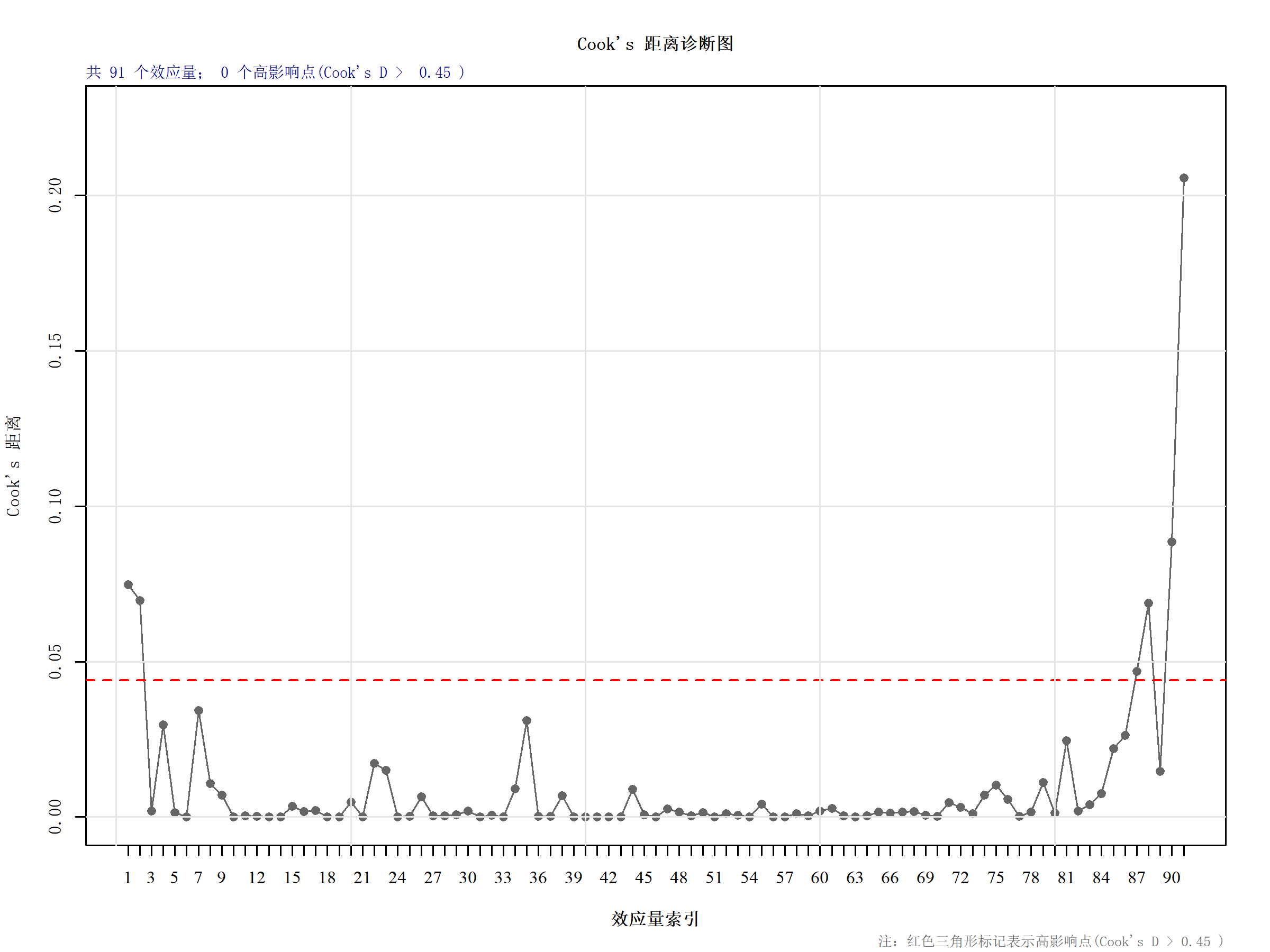
附图3 CD检验(消极注意偏向)
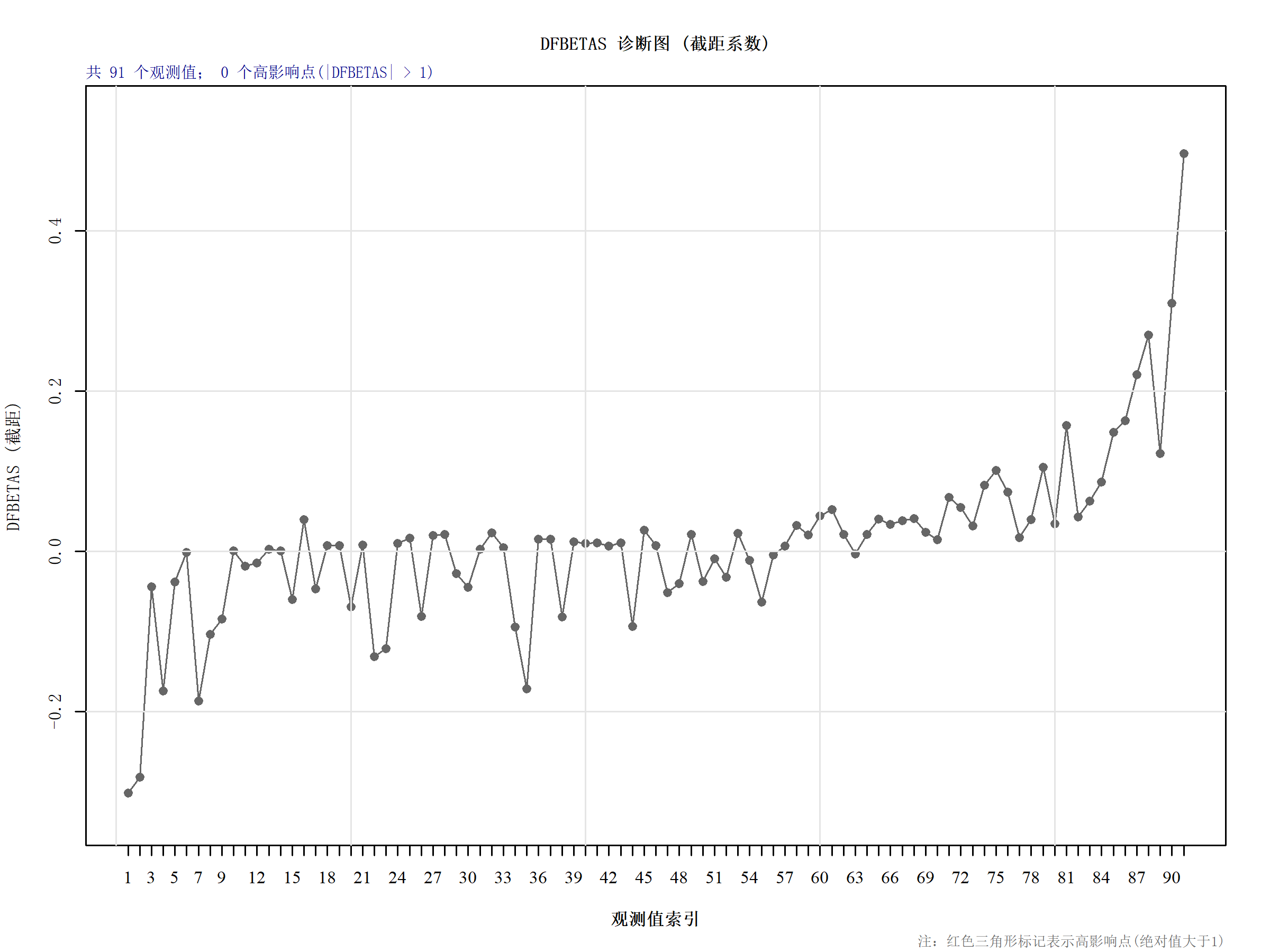
附图4 DFBETAS检验(消极注意偏向)
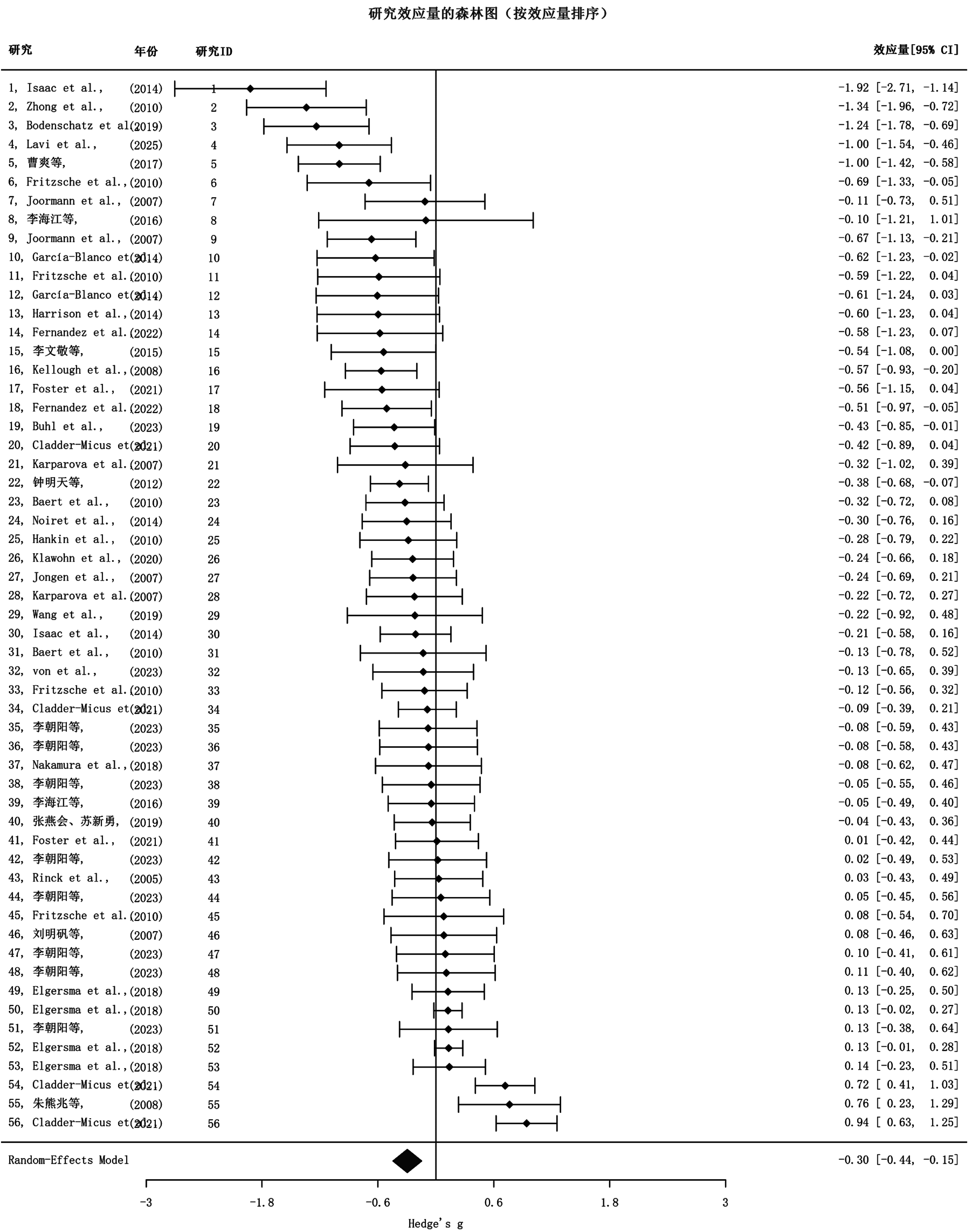
附图5 抑郁人群积极注意偏向组间比较(Hedge’g值)森林图 注:Random−Effects Model为随机效应模型
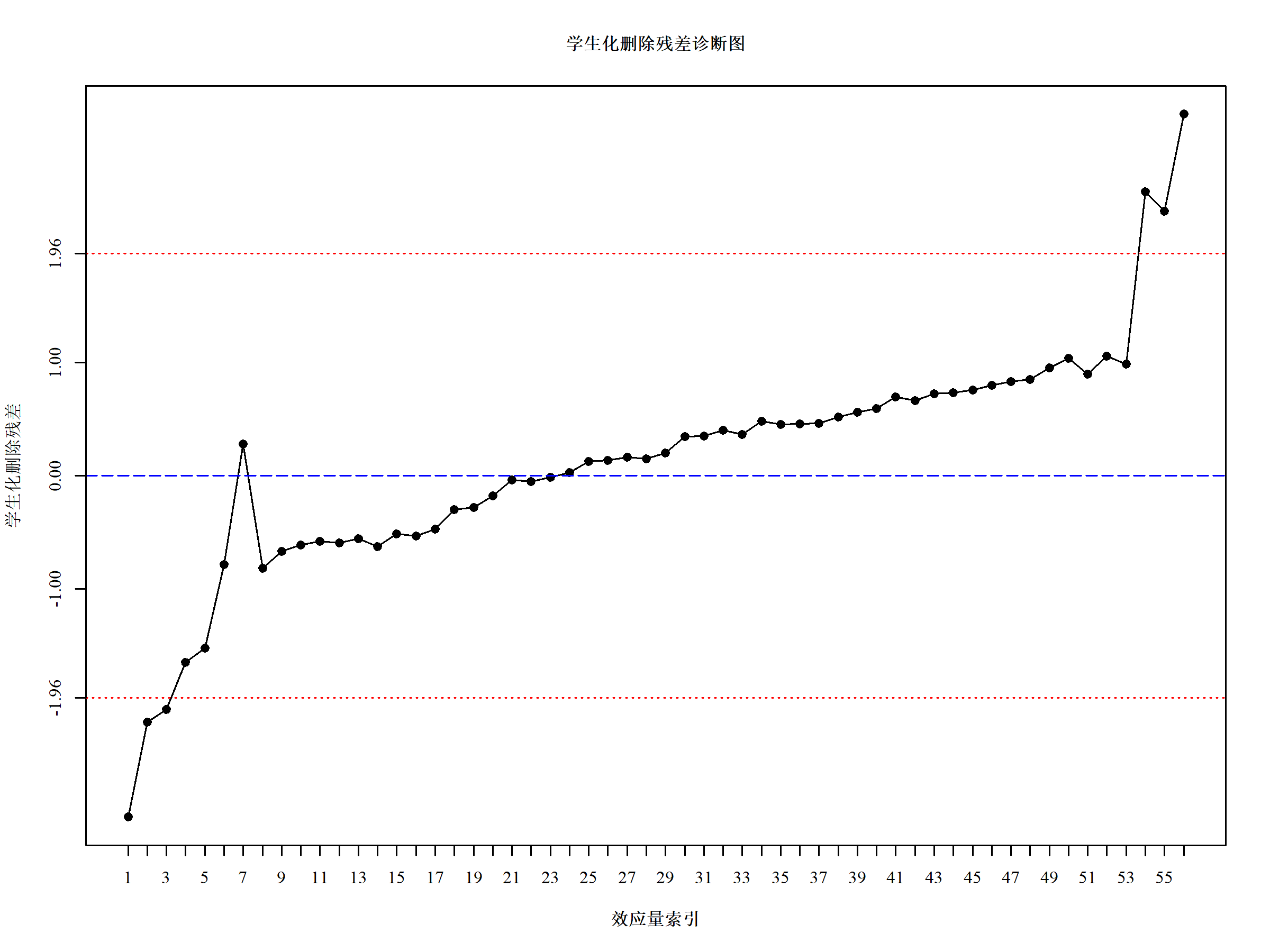
附图6 SDR检验(积极注意偏向)
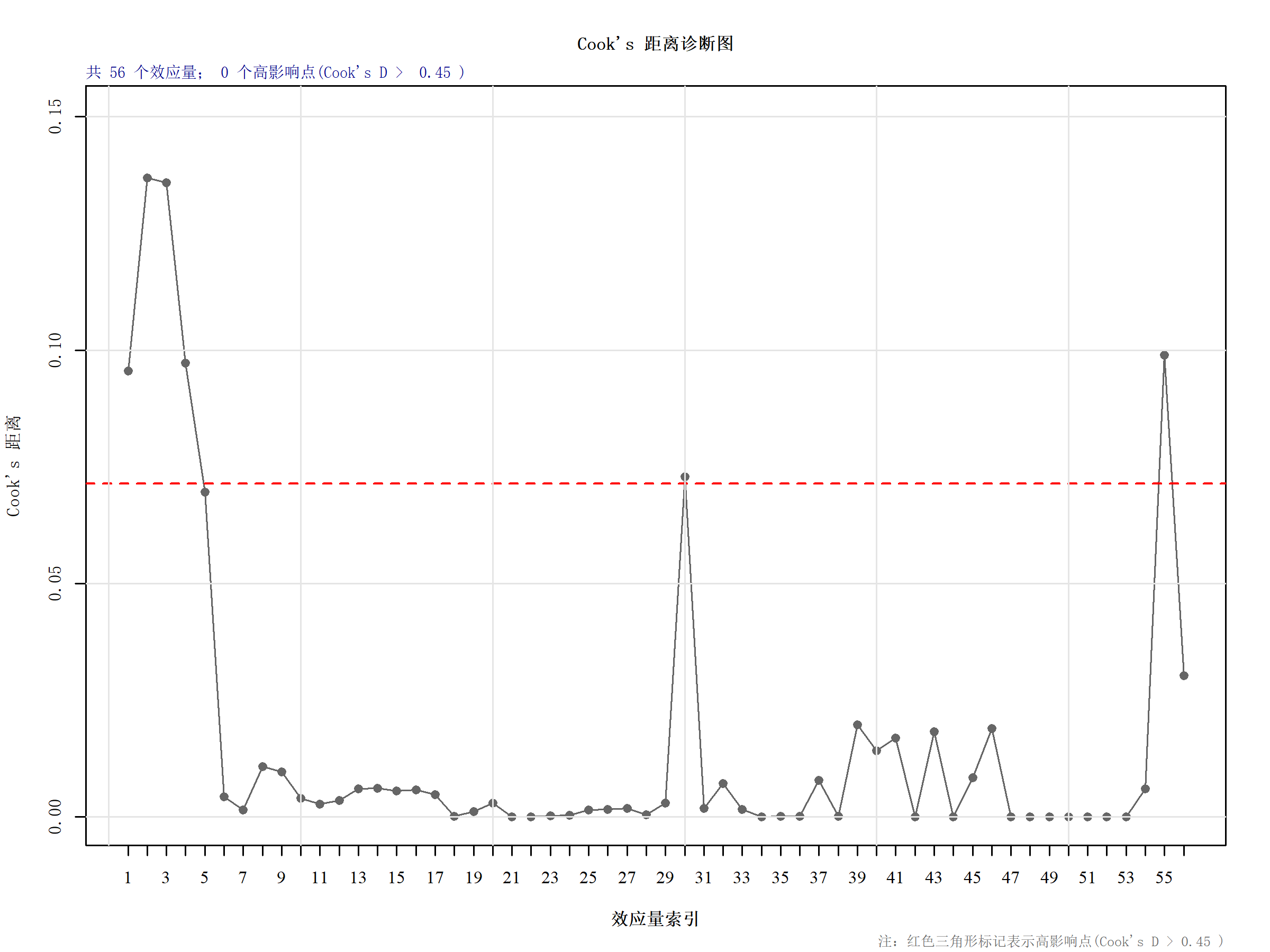
附图7 CD检验(积极注意偏向)
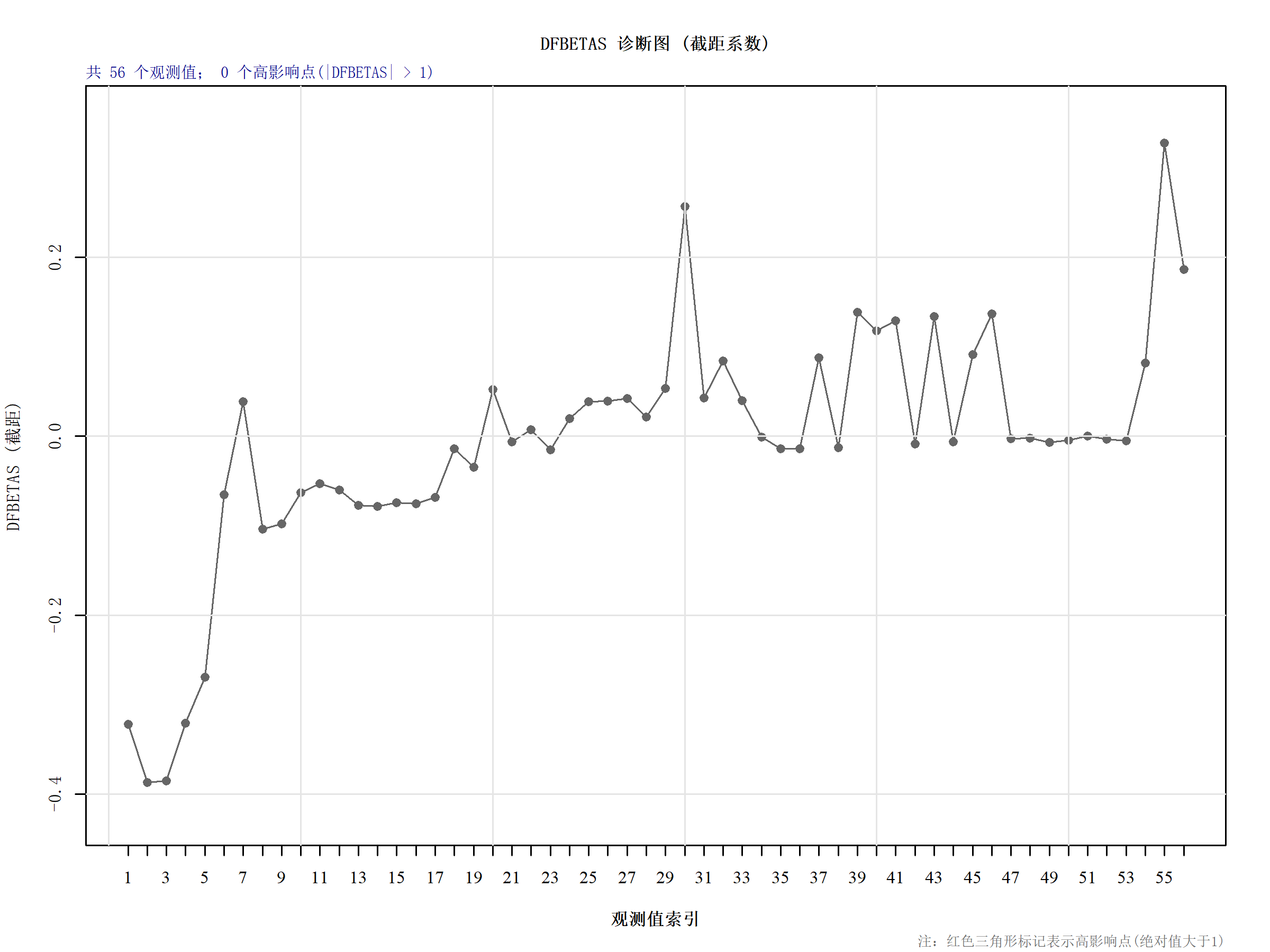
附图8 DFBETAS检验(积极注意偏向)
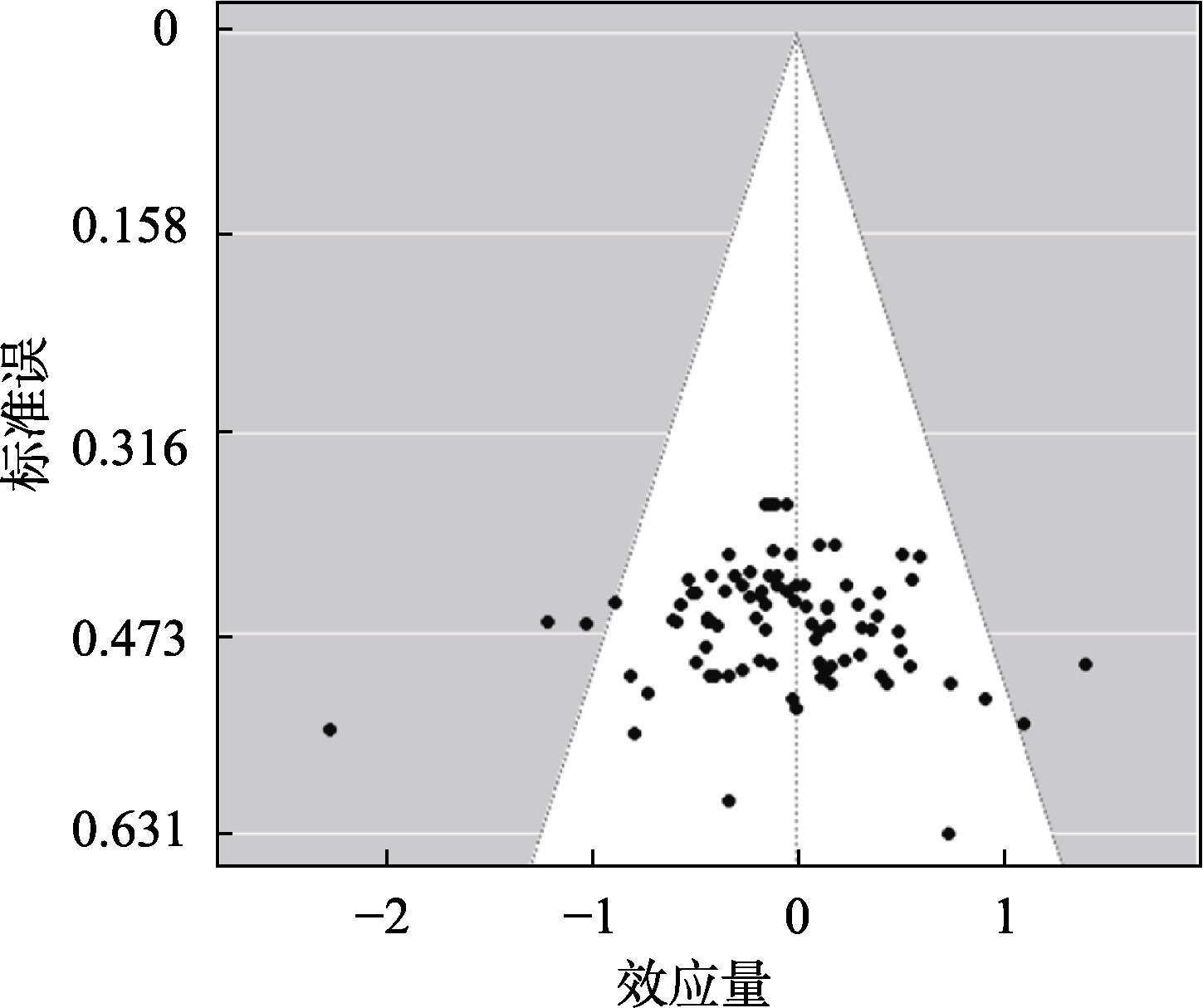
图3 抑郁人群消极注意偏向效应量分布漏斗图 注:图中实心黑色散点代表各个研究效应量; 横轴为效应量, 纵轴为标准误
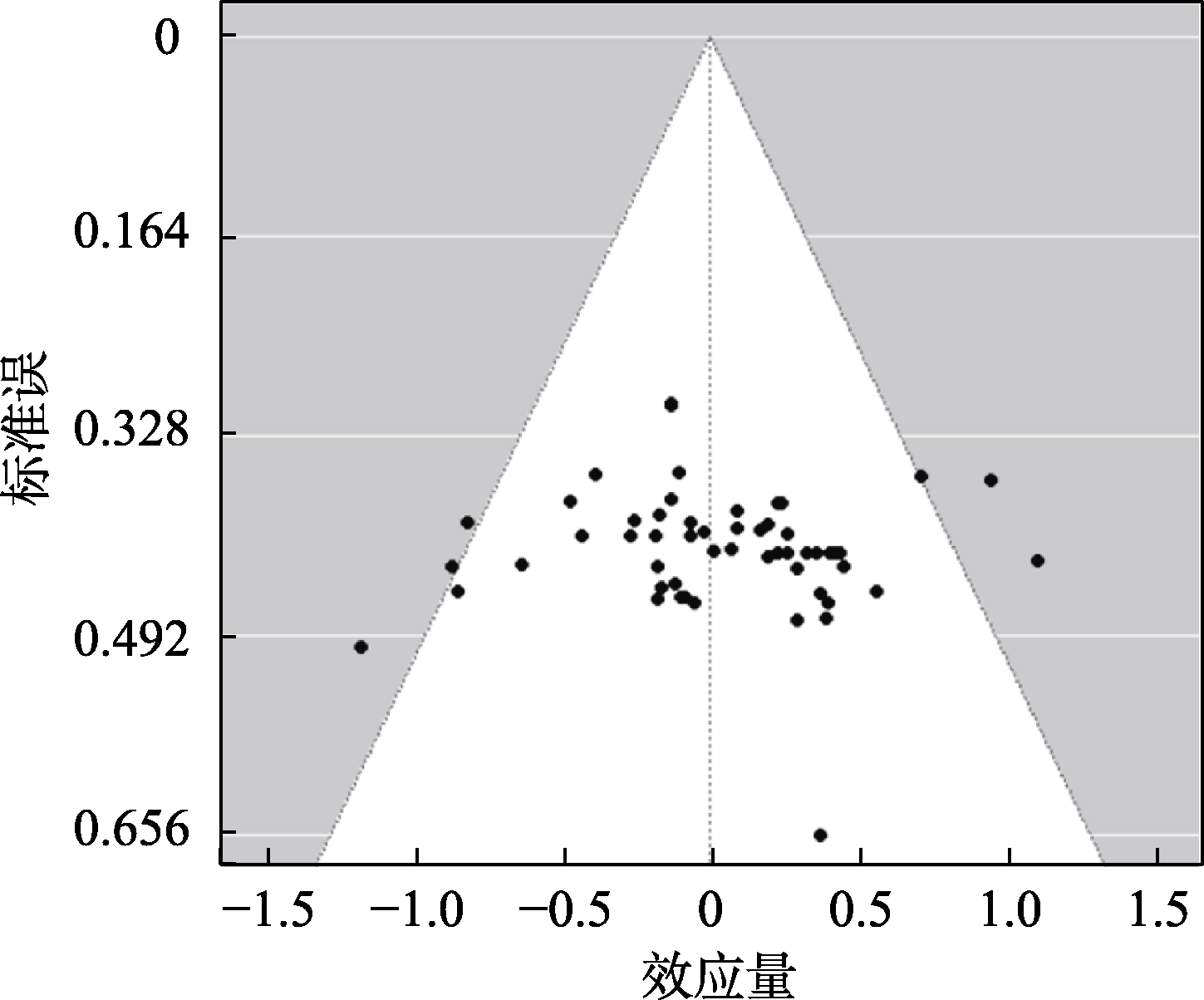
图4 抑郁人群积极注意偏向效应量分布漏斗图 注:图中实心黑色散点代表各个研究效应量; 横轴为效应量, 纵轴为标准误
| 调节变量 | N (效应量) | QE (df) | F(df1, df2) | Hedges’g | SE | 95% CI | t | p |
|---|---|---|---|---|---|---|---|---|
| 年龄 | 90 | |||||||
| 截距 | QE (88) = 294.74 | F(1, 88) = 1.37 | 0.67 | 0.18 | [0.32, 1.01] | 3.82 | < 0.001 | |
| 年龄 | p < 0.001 | p = 0.245 | −0.01 | 0.01 | [−0.02, 0.00] | −1.17 | 0.245 | |
| 任务范式 | 89 | |||||||
| a.点探测任务 | 18 | QE (84) = 263.25 p < 0.001 | F(4, 84) = 4.49 p = 0.002 | 0.72 | 0.13 | [0.46, 0.97] | 5.53 | < 0.001 |
| b.空间线索任务 | 24 | 0.51 | 0.15 | [0.20, 0.81] | 3.33 | 0.001 | ||
| c.情绪Stroop任务 | 6 | 0.05 | 0.16 | [−0.28, 0.37] | 0.29 | 0.776 | ||
| d.视觉搜索任务 | 5 | 0.13 | 0.22 | [−0.31, 0.56] | 0.57 | 0.567 | ||
| e.自由观看任务 | 36 | 0.47 | 0.10 | [0.27, 0.67] | 4.65 | < 0.001 | ||
| 刺激类型 | 91 | |||||||
| a.单词 | 28 | QE (89) = 280.80 | F(1, 89) = 3.71 | 0.30 | 0.11 | [0.08, 0.53] | 2.66 | 0.009 |
| b.图片 | 63 | p < 0.001 | p = 0.057 | 0.54 | 0.07 | [0.40, 0.68] | 7.70 | < 0.001 |
| 样本类型 | 91 | |||||||
| a.非临床(自我报告) | 38 | QE (89) = 275.23 | F(1, 89) = 0.71 | 0.43 | 0.09 | [0.26, 0.61] | 5.01 | < 0.001 |
| b.临床 | 53 | p < 0.001 | p = 0.403 | 0.51 | 0.08 | [0.37, 0.66] | 6.87 | < 0.001 |
| 刺激物情绪效价 | 89 | |||||||
| a.悲伤 | 42 | QE (84) = 294.35 | F(4, 84) = 0.73 | 0.52 | 0.08 | [0.36, 0.67] | 6.55 | < 0.001 |
| b.愤怒 | 8 | p < 0.001 | p = 0.574 | 0.35 | 0.15 | [0.06, 0.65] | 2.36 | 0.021 |
| c.威胁 | 8 | − | − | 0.55 | 0.12 | [0.30, 0.79] | 4.46 | < 0.001 |
| d.消极 | 26 | − | − | 0.38 | 0.11 | [0.16, 0.59] | 3.46 | < 0.001 |
| e.恐惧 | 5 | 0.544 | 0.177 | [0.19, 0.90] | 3.07 | 0.003 |
表1 抑郁个体消极注意偏向调节效应检验
| 调节变量 | N (效应量) | QE (df) | F(df1, df2) | Hedges’g | SE | 95% CI | t | p |
|---|---|---|---|---|---|---|---|---|
| 年龄 | 90 | |||||||
| 截距 | QE (88) = 294.74 | F(1, 88) = 1.37 | 0.67 | 0.18 | [0.32, 1.01] | 3.82 | < 0.001 | |
| 年龄 | p < 0.001 | p = 0.245 | −0.01 | 0.01 | [−0.02, 0.00] | −1.17 | 0.245 | |
| 任务范式 | 89 | |||||||
| a.点探测任务 | 18 | QE (84) = 263.25 p < 0.001 | F(4, 84) = 4.49 p = 0.002 | 0.72 | 0.13 | [0.46, 0.97] | 5.53 | < 0.001 |
| b.空间线索任务 | 24 | 0.51 | 0.15 | [0.20, 0.81] | 3.33 | 0.001 | ||
| c.情绪Stroop任务 | 6 | 0.05 | 0.16 | [−0.28, 0.37] | 0.29 | 0.776 | ||
| d.视觉搜索任务 | 5 | 0.13 | 0.22 | [−0.31, 0.56] | 0.57 | 0.567 | ||
| e.自由观看任务 | 36 | 0.47 | 0.10 | [0.27, 0.67] | 4.65 | < 0.001 | ||
| 刺激类型 | 91 | |||||||
| a.单词 | 28 | QE (89) = 280.80 | F(1, 89) = 3.71 | 0.30 | 0.11 | [0.08, 0.53] | 2.66 | 0.009 |
| b.图片 | 63 | p < 0.001 | p = 0.057 | 0.54 | 0.07 | [0.40, 0.68] | 7.70 | < 0.001 |
| 样本类型 | 91 | |||||||
| a.非临床(自我报告) | 38 | QE (89) = 275.23 | F(1, 89) = 0.71 | 0.43 | 0.09 | [0.26, 0.61] | 5.01 | < 0.001 |
| b.临床 | 53 | p < 0.001 | p = 0.403 | 0.51 | 0.08 | [0.37, 0.66] | 6.87 | < 0.001 |
| 刺激物情绪效价 | 89 | |||||||
| a.悲伤 | 42 | QE (84) = 294.35 | F(4, 84) = 0.73 | 0.52 | 0.08 | [0.36, 0.67] | 6.55 | < 0.001 |
| b.愤怒 | 8 | p < 0.001 | p = 0.574 | 0.35 | 0.15 | [0.06, 0.65] | 2.36 | 0.021 |
| c.威胁 | 8 | − | − | 0.55 | 0.12 | [0.30, 0.79] | 4.46 | < 0.001 |
| d.消极 | 26 | − | − | 0.38 | 0.11 | [0.16, 0.59] | 3.46 | < 0.001 |
| e.恐惧 | 5 | 0.544 | 0.177 | [0.19, 0.90] | 3.07 | 0.003 |
| 调节变量 | N (效应量) | QE (df) | F(df1, df2) | Hedges’g | SE | 95% CI | t | p |
|---|---|---|---|---|---|---|---|---|
| 年龄 | 55 | |||||||
| 截距 | − | QE (53) = 221.89 | F(1, 53) = 0.05 | −0.27 | 0.20 | [−0.67, 0.14] | −0.96 | 0.340 |
| 年龄 | − | p < 0.001 | p = 0.828 | −0.00 | 0.01 | [−0.02, 0.01] | −0.01 | 0.010 |
| 任务范式 | 56 | |||||||
| a.点探测任务 | 13 | QE (50) = 140.09 | F(3, 50) = 8.74 | −0.32 | 0.12 | [−0.55, −0.09] | −2.74 | 0.008 |
| b.空间线索任务 | 18 | p < 0.001 | p < 0.001 | 0.11 | 0.09 | [−0.06, 0.29] | 1.32 | 0.191 |
| c.情绪Stroop任务 | 3 | − | − | −0.04 | 0.25 | [−0.53, 0.46] | −0.14 | 0.881 |
| d.自由观看任务 | 21 | − | − | −0.50 | 0.09 | [−0.67, −0.32] | −4.32 | < 0.001 |
| 刺激类型 | 56 | |||||||
| a.单词 | 23 | QE (54) = 175.29 | F(1, 54) = 8.22 | −0.05 | 0.10 | [−0.25, 0.15] | −0.54 | 0.590 |
| b.图片 | 33 | p < 0.001 | p = 0.006 | −0.40 | 0.08 | [−0.56, −0.24] | −5.08 | < 0.001 |
| 样本类型 | 56 | |||||||
| a.非临床(自我报告) | 25 | QE (54) = 225.98 | F(1, 54) = 1.66 | −0.19 | 0.11 | [−0.41, 0.02] | −1.81 | 0.076 |
| b.临床 | 31 | p < 0.001 | p = 0.204 | −0.37 | 0.09 | [−0.55, −0.18] | −3.97 | < 0.001 |
| 刺激物情绪效价 | 56 | |||||||
| a.快乐 | 26 | QE (54) = 225.41 | F(1, 54) = 2.17 | −0.40 | 0.10 | [−0.60, −0.20] | −3.95 | < 0.001 |
| b.积极 | 30 | p < 0.001 | p = 0.147 | −0.19 | 0.10 | [−0.40, 0.02] | −1.80 | 0.078 |
表2 抑郁个体积极注意偏向调节效应检验
| 调节变量 | N (效应量) | QE (df) | F(df1, df2) | Hedges’g | SE | 95% CI | t | p |
|---|---|---|---|---|---|---|---|---|
| 年龄 | 55 | |||||||
| 截距 | − | QE (53) = 221.89 | F(1, 53) = 0.05 | −0.27 | 0.20 | [−0.67, 0.14] | −0.96 | 0.340 |
| 年龄 | − | p < 0.001 | p = 0.828 | −0.00 | 0.01 | [−0.02, 0.01] | −0.01 | 0.010 |
| 任务范式 | 56 | |||||||
| a.点探测任务 | 13 | QE (50) = 140.09 | F(3, 50) = 8.74 | −0.32 | 0.12 | [−0.55, −0.09] | −2.74 | 0.008 |
| b.空间线索任务 | 18 | p < 0.001 | p < 0.001 | 0.11 | 0.09 | [−0.06, 0.29] | 1.32 | 0.191 |
| c.情绪Stroop任务 | 3 | − | − | −0.04 | 0.25 | [−0.53, 0.46] | −0.14 | 0.881 |
| d.自由观看任务 | 21 | − | − | −0.50 | 0.09 | [−0.67, −0.32] | −4.32 | < 0.001 |
| 刺激类型 | 56 | |||||||
| a.单词 | 23 | QE (54) = 175.29 | F(1, 54) = 8.22 | −0.05 | 0.10 | [−0.25, 0.15] | −0.54 | 0.590 |
| b.图片 | 33 | p < 0.001 | p = 0.006 | −0.40 | 0.08 | [−0.56, −0.24] | −5.08 | < 0.001 |
| 样本类型 | 56 | |||||||
| a.非临床(自我报告) | 25 | QE (54) = 225.98 | F(1, 54) = 1.66 | −0.19 | 0.11 | [−0.41, 0.02] | −1.81 | 0.076 |
| b.临床 | 31 | p < 0.001 | p = 0.204 | −0.37 | 0.09 | [−0.55, −0.18] | −3.97 | < 0.001 |
| 刺激物情绪效价 | 56 | |||||||
| a.快乐 | 26 | QE (54) = 225.41 | F(1, 54) = 2.17 | −0.40 | 0.10 | [−0.60, −0.20] | −3.95 | < 0.001 |
| b.积极 | 30 | p < 0.001 | p = 0.147 | −0.19 | 0.10 | [−0.40, 0.02] | −1.80 | 0.078 |
| 调节变量 | k | β | SE | 95% CI | t | p |
|---|---|---|---|---|---|---|
| 截距 | 89 | 0.72 | 0.13 | [0.43, 0.97] | 5.53 | < 0.001 |
| 测量范式 | ||||||
| 空间线索任务 | 24 | −0.21 | 0.19 | [−0.59, 0.17] | −1.10 | 0.273 |
| 情绪Stroop任务 | 6 | −0.67 | 0.19 | [−1.05, −0.29] | −3.52 | < 0.001 |
| 视觉搜索任务 | 5 | −0.59 | 0.25 | [−1.10, −0.09] | −2.33 | 0.022 |
| 自由观看任务 | 36 | −0.25 | 0.16 | [−0.57, 0.08] | −1.50 | 0.138 |
表3 调节变量多重回归分析(消极注意偏向)
| 调节变量 | k | β | SE | 95% CI | t | p |
|---|---|---|---|---|---|---|
| 截距 | 89 | 0.72 | 0.13 | [0.43, 0.97] | 5.53 | < 0.001 |
| 测量范式 | ||||||
| 空间线索任务 | 24 | −0.21 | 0.19 | [−0.59, 0.17] | −1.10 | 0.273 |
| 情绪Stroop任务 | 6 | −0.67 | 0.19 | [−1.05, −0.29] | −3.52 | < 0.001 |
| 视觉搜索任务 | 5 | −0.59 | 0.25 | [−1.10, −0.09] | −2.33 | 0.022 |
| 自由观看任务 | 36 | −0.25 | 0.16 | [−0.57, 0.08] | −1.50 | 0.138 |
| 调节变量 | k | β | SE | 95% CI | t | p |
|---|---|---|---|---|---|---|
| 截距 | − | −0.13 | 0.18 | [−0.49, 0.24] | −0.70 | 0.487 |
| 测量范式 | ||||||
| 空间线索任务 | 18 | 0.28 | 0.18 | [−0.09, 0.65] | 1.51 | 0.136 |
| 情绪Stroop任务 | 3 | 0.16 | 0.29 | [−0.42, 0.74] | 0.56 | 0.580 |
| 自由观看任务 | 21 | −0.23 | 0.15 | [−0.53, 0.07] | −1.52 | 0.134 |
| 刺激类型 | ||||||
| 图片 | 33 | −0.19 | 0.14 | [−0.47, 0.09] | −1.37 | 0.178 |
表4 调节变量多重回归分析(积极注意偏向)
| 调节变量 | k | β | SE | 95% CI | t | p |
|---|---|---|---|---|---|---|
| 截距 | − | −0.13 | 0.18 | [−0.49, 0.24] | −0.70 | 0.487 |
| 测量范式 | ||||||
| 空间线索任务 | 18 | 0.28 | 0.18 | [−0.09, 0.65] | 1.51 | 0.136 |
| 情绪Stroop任务 | 3 | 0.16 | 0.29 | [−0.42, 0.74] | 0.56 | 0.580 |
| 自由观看任务 | 21 | −0.23 | 0.15 | [−0.53, 0.07] | −1.52 | 0.134 |
| 刺激类型 | ||||||
| 图片 | 33 | −0.19 | 0.14 | [−0.47, 0.09] | −1.37 | 0.178 |
| (*为元分析中使用的文献) | |
| [1] | *曹爽, 吴迪, 邢辰, 陈雨琴, 王晓慧, 苗丹民. (2019). 抑郁症患者面孔识别注意偏向的时间进程研究. 中华行为医学与脑科学杂志, 28(12), 1075-1080. |
| [2] | 戴琴, 冯正直. (2008). 抑郁患者的注意偏向. 心理科学进展, 16(2), 260-265. |
| [3] |
何振宏, 张丹丹, 罗跃嘉. (2015). 抑郁症人群的心境一致性认知偏向. 心理科学进展, 23(12), 2118-2128.
doi: 10.3724/SP.J.1042.2015.02118 |
| [4] | 侯金芹, 陈祉妍. (2021). 2009年和2020年青少年心理健康状况的年际演变. 见: 傅小兰, 张侃, 陈雪峰, 陈祉妍 (主编). 中国国民心理健康发展报告(2019-2020) (pp.188-202). 社会科学出版社. |
| [5] | *姜庆伟, 费惠慧, 高存友, 甘景梨, 梁学军, 祝希泉. (2017). 首发抑郁症患者情绪面孔反应时间及注意偏向研究. 中华行为医学与脑科学杂志, 26(8), 699-703. |
| [6] | *乐洪波, 马树华, 程晓玲, 王兆新, 胡治国, 张慧红, … 廖玲敏. (2009). 重度抑郁症对负性情绪面孔的注意偏向. 中国心理卫生杂志, 23(11), 795-799. |
| [7] | *李朝阳, 王滨, 丁锦红. (2023). 亚临床抑郁大学生注意偏向与记忆偏向的关系. 中国心理卫生杂志, 37(8), 701-709. |
| [8] | *李海江, 卢家楣, 张庆林, 邱江. (2016). 阈下抑郁个体对负性情绪刺激的注意解脱困难. 心理发展与教育, 32(5), 513-520. |
| [9] | *李文敬, 栗觅, 吕胜富, 李莎, 丰雷, 付冰冰, 王刚, 钟宁. (2015). 抑郁症缓解期情绪面孔注意加工偏向的眼动研究. 中国神经精神疾病杂志, 41(11), 698-700. |
| [10] | *刘明矾, 姚树桥. (2007). 情绪负启动任务中抑郁个体的抑制机制研究. 中国心理卫生杂志, 21(10), 727-730. |
| [11] |
陆嘉琦, 李雨斯, 何贵兵. (2025). 双相障碍患者的风险决策偏好: 来自三水平元分析的证据. 心理学报, 57(1), 100-124.
doi: 10.3724/SP.J.1041.2025.0100 |
| [12] | 唐乐, 强微, 孙世玉. (2025). 人口老龄化对城乡收入差距的影响——基于新型城镇化与人力资本投资视角. 人口与发展, 31(2), 85-93. |
| [13] | *徐西良, 刘明矾, 李宁, 倪平. (2023). 伴述情障碍抑郁大学生对情绪面孔注意偏向的眼动研究. 中华行为医学与脑科学杂志, 32(1), 56-61. |
| [14] |
杨营凯, 刘衍玲. (2016). 抑郁反刍的认知神经机制. 心理科学进展, 24(7), 1042-1049.
doi: 10.3724/SP.J.1042.2016.01042 |
| [15] |
尹华站, 肖春花, 夏安妮, 袁中静, 崔晓冰, 李丹. (2024). 基本情绪对时距知觉的影响: 来自三水平元分析和网络元分析的证据. 心理学报, 56(12), 1676-1690.
doi: 10.3724/SP.J.1041.2024.01676 |
| [16] | *张燕会, 苏新勇. (2019). 大学生抑郁认知易感者注意偏向分析. 中国学校卫生, 40(7), 1094-1096. |
| [17] | 中华医学会精神科分会. (2001). 中国精神障碍分类与诊断标准第三版(CCMD-3). 山东科学技术出版社. |
| [18] | *钟明天, 蚁金瑶, 凌宇, 王海星, 朱熊兆, 姚树桥. (2012). 抑郁认知易感者对负性面孔的注意特征. 中国心理卫生杂志, 26(2), 151-156. |
| [19] | *朱熊兆, 钟明天, 蚁金瑶, 姚树桥, 匡永锋. (2008). 临床抑郁症患者的注意偏倚特征. 中国临床心理学杂志, (3), 234-236. |
| [20] |
Aldao, A., Nolen-Hoeksema, S., & Schweizer, S. (2010). Emotion-regulation strategies across psychopathology: A meta-analytic review. Clinical Psychology Review, 30(2), 217-237.
doi: 10.1016/j.cpr.2009.11.004 pmid: 20015584 |
| [21] |
Allard, E. S., & Yaroslavsky, I. (2019). Attentional disengagement deficits predict brooding, but not reflection, over a one-year period. Frontiers in Psychology, 10, 2282.
doi: 10.3389/fpsyg.2019.02282 pmid: 31681088 |
| [22] | *Alloy, L. B., Abramson, L. Y., Murray, L. A., Whitehouse, W. G., & Hogan, M. E. (1997). Self-referent information- processing in individuals at high and low cognitive risk for depression. Cognition & Emotion, 11(5-6), 539-568. |
| [23] |
Amanda, M. E., Keith, S. D., David, J. A. D., & Paul, A. F. (2012). A systematic meta-analysis of the Stroop task in depression. Clinical Psychology Review, 32(4), 316-328.
doi: 10.1016/j.cpr.2012.02.005 pmid: 22459792 |
| [24] |
Assink, M., Vander Put, C. E., Hoeve, M., De vries, S. L. A., Stams, G. J. J. M., & Oort, F. J. (2015). Risk factors for persistent delinquent behavior among juveniles: A meta- analytic review. Clinical Psychology Review, 42, 47-61.
doi: 10.1016/j.cpr.2015.08.002 pmid: 26301752 |
| [25] |
Assink, M., & Wibbelink, C. J. M. (2016). Fitting three-level meta-analytic models in R: A step-by-step tutorial. The Quantitative Methods for Psychology, 12(3), 154-174.
doi: 10.20982/tqmp.12.3.p154 URL |
| [26] |
*Baert, S., De Raedt, R., & Koster, E. H. (2010). Depression-related attentional bias: The influence of symptom severity and symptom specificity. Cognition and Emotion, 24(6), 1044-1052.
doi: 10.1080/02699930903043461 URL |
| [27] |
Bar-haim, Y., Lamy, D., Pergamin, L., Bakermans-kranenburg, M. J., & Van ijzendoorn, M. H. (2007). Threat-related attentional bias in anxious and nonanxious individuals: A meta-analytic study. Psychological Bulletin, 133(1), 1-24.
doi: 10.1037/0033-2909.133.1.1 pmid: 17201568 |
| [28] | Beck, A. T. (1967). Depression: clinical, experimental and theoretical aspects. New York: Harper & Row. |
| [29] | Beck, A. T. (1976). Cognitive therapy and the emotional disorders. New York: International Universities Press. |
| [30] |
Beck, A. T., & Bredemeier, K. (2016). A unified model of depression: Integrating clinical, cognitive, biological and evolutionary perspectives. Clinical Psychological Science, 4(4), 596-619.
doi: 10.1177/2167702616628523 URL |
| [31] |
Beck, A. T., & Clar, D. A. (1997). An information processing model of anxiety: Automatic and strategic processes. Behaviour Research and Therapy, 35(1), 49-58.
doi: 10.1016/s0005-7967(96)00069-1 pmid: 9009043 |
| [32] |
Begg, C. B., & Mazumdar, M. (1994). Operating characteristics of a rank correlation test for publication bias. Biometrics, 50(4), 1088-1101.
pmid: 7786990 |
| [33] | Ben-Shachar, M., Lüdecke, D., & Makowski, D. (2020). Effectsize: Estimation of effect size indices and standardized parameters. Journal of Open Source Software, 5(56), 2815. |
| [34] |
Bishop, S. J. (2007). Neurocognitive mechanisms of anxiety: An integrative account. Trends in Cognitive Sciences, 11(7), 307-316.
doi: 10.1016/j.tics.2007.05.008 pmid: 17553730 |
| [35] |
Blanchette, I. (2006). Snakes, spiders, guns and syringes: How specific are evolutionary constraints on the detection of threatening stimuli? The Quarterly Journal of Experimental Psychology, 59(8), 1484-1504.
doi: 10.1080/02724980543000204 URL |
| [36] |
*Bodenschatz, C. M., Skopinceva, M., Ruß, T., & Suslow, T. (2019). Attentional bias and childhood maltreatment in clinical depression - An eye-tracking study. Journal of Psychiatric Research, 112, 83-88.
doi: S0022-3956(18)31323-2 pmid: 30870713 |
| [37] | *Buhl, C., Sfärlea, A., Loechner, J., Starman-wöhrle, K., Salemink, E., Schulte-körne, G., & Platt, B. (2021). Biased maintenance of attention on sad faces in clinically depressed youth: An eye-tracking study. Child Psychiatry & Human Development, 54(1), 189-201. |
| [38] | Carretié, L. (2014). Exogenous (automatic) attention to emotional stimuli: A review. Cognitive, Affective, & Behavioral Neuroscience, 14(4), 1228-1258. |
| [39] |
Carstensen, L. L., & Mikels, J. A. (2005). At the intersection of emotion and cognition: Aging and the positivity Effect. Current Directions in Psychological Science, 14(3), 117-121.
doi: 10.1111/j.0963-7214.2005.00348.x URL |
| [40] |
*Cerny, B. M., Stange, J. P., Kling, L. R., Hamlat, E. J., O'Donnell, L. A., Deveney, C., & Langenecker, S. A. (2019). Self-reported affective biases, but not all affective performance biases, are present in depression remission. The British Journal of Clinical Psychology, 58(3), 274-288.
doi: 10.1111/bjc.v58.3 URL |
| [41] |
Cheung, M. W. -L. (2014). Modeling dependent effect sizes with three-level meta-analyses: A structural equation modeling approach. Psychological Methods, 19(2), 211-229.
doi: 10.1037/a0032968 pmid: 23834422 |
| [42] |
Cisler, J. M., & Koster, E. H. W. (2010). Mechanisms of attentional biases towards threat in anxiety disorders: An integrative review. Clinical Psychology Review, 30(2), 203-216.
doi: 10.1016/j.cpr.2009.11.003 pmid: 20005616 |
| [43] |
*Cladder-Micus, M., Vrijsen, J. N., Putter, L. D., Raedt, R. D., Spijker, J., Speckens, A. E. M., Becker, E. S., & Koster, E. H. W. (2021). A multi-method assessment of attentional processes in chronic, treatment-resistant depression. Journal of Psychiatric Research, 140, 68-76.
doi: 10.1016/j.jpsychires.2021.04.030 pmid: 34098388 |
| [44] |
*Clasen, P. C., Wells, T. T., Ellis, A. J., & Beevers, C. G. (2013). Attentional biases and the persistence of sad mood in major depressive disorder. Journal of Abnormal Psychology, 122(1), 74-85.
doi: 10.1037/a0029211 pmid: 22867117 |
| [45] | Colich, N. L., Foland-ross, L. C., Eggleston, C., Singh, M. K., & Gotlib, I. H. (2015). Neural aspects of inhibition following emotional primes in depressed adolescents. Journal of Clinical Child & Adolescent Psychology, 45(1), 21-30. |
| [46] | Cook, R. D., & Weisberg, S. (1982). Residuals and influence in regression. Chapman & Hall. |
| [47] |
Disner, S. G., Beevers, C. G., Haigh, E. A. P., & Beck, A. T. (2011). Neural mechanisms of the cognitive model of depression. Nature Reviews Neuroscience, 12(8), 467-477.
doi: 10.1038/nrn3027 pmid: 21731066 |
| [48] |
Dryman, M. T., & Heimberg, R. G. (2018). Emotion regulation in social anxiety and depression: A systematic review of expressive suppression and cognitive reappraisal. Clinical Psychology Review, 65, 17-42.
doi: S0272-7358(18)30071-0 pmid: 30064053 |
| [49] |
Duan, H., Gong, M., Zhang, Q., Huang, X., & Wan, B. (2022). Research on sleep status, body mass index, anxiety and depression of college students during the post-pandemic era in Wuhan, China. Journal of Affective Disorders, 301, 189-192.
doi: 10.1016/j.jad.2022.01.015 pmid: 34990628 |
| [50] |
Duval, S., & Tweedie, R. (2000). Trim and Fill: A simple funnel-plot-based method of testing and adjusting for publication bias in meta-analysis. Biometrics, 56(2), 455-463.
doi: 10.1111/j.0006-341x.2000.00455.x pmid: 10877304 |
| [51] |
Egger, M., Smith, G. D., Schneider, M., & Minder, C. (1997). Bias in meta-analysis detected by a simple, graphical test. British Medical Journal, 315(7109), 629-634.
doi: 10.1136/bmj.315.7109.629 URL |
| [52] |
*Eizenman, M., Yu, L. H., Grupp, L., Eizenman, E., Ellenbogen, M., Gemar, M., & Levitan, R. D. (2003). A naturalistic visual scanning approach to assess selective attention in major depressive disorder. Psychiatry Research, 118(2), 117-128.
doi: 10.1016/s0165-1781(03)00068-4 pmid: 12798976 |
| [53] | *Elgersma, H. J., Koster, E. H. W., van Tuijl, L. A., Hoekzema, A., Penninx, B. W. J. H., Bockting, C. L. H., & de Jong, P. J. (2018). Attentional bias for negative, positive, and threat words in current and remitted depression. PLOS ONE, 13(10), 205154. |
| [54] |
Faul, L., Bellaiche, L., Madden, D. J., Smoski, M. J., & LaBar, K. S. (2024). Depression and emotion regulation strategy use moderate age-related attentional positivity bias. Frontiers in Psychology, 15, 1427480.
doi: 10.3389/fpsyg.2024.1427480 URL |
| [55] |
Fazia, T., Bubbico, F., Iliakis, I., Salvato, G., Berzuini, G., Bruno, S., & Bernardinelli, L. (2020). Short-term meditation training fosters mindfulness and emotion regulation: A pilot study. Frontiers in Psychology, 11, 558803.
doi: 10.3389/fpsyg.2020.558803 URL |
| [56] |
Fernandes, A. C., & Garcia-Marques, T. (2020). A meta- analytical review of the familiarity temporal effect: Testing assumptions of the attentional and the fluency-attributional accounts. Psychological Bulletin, 146(3), 187-217.
doi: 10.1037/bul0000222 URL |
| [57] |
Fernandes, M. A., Koji, S., Dixon, M. J., & Aquino, J. M. (2011). Changing the focus of attention: The interacting effect of valence and arousal. Visual Cognition, 19(9), 1191-1211.
doi: 10.1080/13506285.2011.618151 URL |
| [58] |
*Fernandez, A., Quigley, L., Dobson, K., & Sears, C. (2022). Coherence of attention and memory biases in currently and previously depressed women. Cognition and Emotion, 36(7), 1239-1254.
doi: 10.1080/02699931.2022.2099348 URL |
| [59] |
*Fiske, A., Wetherell, J. L., & Gatz, M. (2009). Depression in older adults. Annual Review of Clinical Psychology, 5(1), 363-389.
doi: 10.1146/clinpsy.2009.5.issue-1 URL |
| [60] |
*Foster, C. E., Owens, M., Kudinova, A. Y., & Gibb, B. E. (2020). Attentional biases to emotional faces among women with a history of single episode versus recurrent major depression. Cognition and Emotion, 35(1), 193-198.
doi: 10.1080/02699931.2020.1802228 URL |
| [61] |
*Fritzsche, A., Dahme, B., Gotlib, I. H., Joormann, J., Magnussen, H., Watz, H., Nutzinger, D. O., & Von Leupoldt, A. (2009). Specificity of cognitive biases in patients with current depression and remitted depression and in patients with asthma. Psychological Medicine, 40(5), 815-826.
doi: 10.1017/S0033291709990948 URL |
| [62] |
*Fritzsche, A., Watz, H., Magnussen, H., Tuinmann, G., Löwe, B., & Leupoldt, A. V. (2013). Cognitive biases in patients with chronic obstructive pulmonary disease and depression - A pilot study. British Journal of Health Psychology, 18(4), 827-843.
doi: 10.1111/bjhp.12025 pmid: 23351008 |
| [63] |
Gao, S., Assink, M., Cipriani, A., & Lin, K. (2017). Associations between rejection sensitivity and mental health outcomes: A meta-analytic review. Clinical Psychology Review, 57, 59-74.
doi: S0272-7358(17)30122-8 pmid: 28841457 |
| [64] |
*García-blanco, A., Salmerón, L., Perea, M., & Livianos, L. (2014). Attentional biases toward emotional images in the different episodes of bipolar disorder: An eye-tracking study. Psychiatry Research, 215(3), 628-633.
doi: 10.1016/j.psychres.2013.12.039 pmid: 24439518 |
| [65] |
*Gotlib, I. H., Krasnoperova, E., Yue, D. N., & Joormann, J. (2004). Attentional biases for negative interpersonal stimuli in clinical depression. Journal of Abnormal Psychology, 113(1), 127-135.
doi: 10.1037/0021-843X.113.1.121 URL |
| [66] |
Gotlib, I. H., & Joormann, J. (2010). Cognition and depression: Current status and future directions. Annual Review of Clinical Psychology, 6(1), 285-312.
doi: 10.1146/clinpsy.2010.6.issue-1 URL |
| [67] |
Graziano, M. S. A. (2020). Consciousness and the attention schema: Why it has to be right. Cognitive Neuropsychology, 37(3-4), 224-233.
doi: 10.1080/02643294.2020.1761782 pmid: 32434429 |
| [68] | *Guha, A., Yee, C. M., Heller, W., & Miller, G. A. (2021). Alterations in the default mode‐salience network circuit provide a potential mechanism supporting negativity bias in depression. Psychophysiology, 58(12), 1-18. |
| [69] |
*Hankin, B. L., Gibb, B. E., Abela, J. R. Z., & Flory, K. (2010). Selective attention to affective stimuli and clinical depression among youths: Role of anxiety and specificity of emotion. Journal of Abnormal Psychology, 119(3), 491-501.
doi: 10.1037/a0019609 pmid: 20677838 |
| [70] |
*Harrison, A. J., & Gibb, B. E. (2015). Attentional biases in currently depressed children: An eye-tracking study of biases in sustained attention to emotional stimuli. Journal of Clinical Child and Adolescent Psychology, 44(6), 1008-1014.
doi: 10.1080/15374416.2014.930688 pmid: 25010145 |
| [71] |
Higgins, J. P. T., Thompson, S. G., Deeks, J. J., & Altman, D. G. (2003). Measuring inconsistency in meta-analyses. British Medical Journal, 324(7414), 557-560.
doi: 10.1136/bmj.324.7337.557 URL |
| [72] | Hinojosa, J. A., Carretié, L., Valcárcel, M. A., Méndez-bértolo, C., & Pozo, M. A. (2009). Electrophysiological differences in the processing of affective information in words and pictures. Cognitive, Affective, & Behavioral Neuroscience, 9(2), 173-189. |
| [73] | Huang, G., Li, Y., Zhu, H., Feng, H., Shen, X., & Chen, Z. (2023). Emotional stimulation processing characteristics in depression: Meta-analysis of eye tracking findings. Frontiers in Psychology, 13(5), 1089654.https://doi.org/10.3389/fpsyg.2022.1089654 |
| [74] |
Huang, Y., Wang, Y., Wang, H., Liu, Z., Yu, X., Yan, J., Y… Wu, Y. (2019). Prevalence of mental disorders in China: A cross-sectional epidemiological study. Lancet Psychiatry, 6(3), 211-224.
doi: S2215-0366(18)30511-X pmid: 30792114 |
| [75] |
*Isaac, L., Vrijsen, J. N., Rinck, M., Speckens, A., & Becker, E. S. (2014). Shorter gaze duration for happy faces in current but not remitted depression: Evidence from eye movements. Psychiatry Research, 218(1-2), 79-86.
doi: 10.1016/j.psychres.2014.04.002 pmid: 24751380 |
| [76] | *Johnson, A. & Gibb, B. E. (2014). Attentional biases in currently depressed children: An eye-tracking study of biases in sustained attention to emotional stimuli. Journal of Clinical Child & Adolescent Psychology, 44(6), 1008-1014. |
| [77] |
*Jongen, E. M. M., Smulders, F. T. Y., Ranson, S. M. G., Arts, B. M. G., & Krabbendam, L. (2007). Attentional bias and general orienting processes in bipolar disorder. Journal of Behavior Therapy and Experimental Psychiatry, 38(2), 168-183.
pmid: 17107657 |
| [78] |
*Joormann, J., & Gotlib, I. H. (2007). Selective attention to emotional faces following recovery from depression. Journal of Abnormal Psychology, 116(1), 80-85.
doi: 10.1037/0021-843X.116.1.80 pmid: 17324018 |
| [79] |
Joormann, J., & Gotlib, I. H. (2010). Emotion regulation in depression: Relation to cognitive inhibition. Cognition and Emotion, 24(2), 281-298.
doi: 10.1080/02699930903407948 URL |
| [80] |
*Joormann, J., Talbot, L., & Gotlib, I. H. (2007). Biased processing of emotional information in girls at risk for depression. Journal of Abnormal Psychology, 116(1), 135-143.
doi: 10.1037/0021-843X.116.1.135 pmid: 17324024 |
| [81] |
Kanske, P., & Kotz, S. A. (2007). Concreteness in emotional words: ERP evidence from a hemifield study. Brain Research, 1148, 138-148.
pmid: 17391654 |
| [82] |
*Karparova, S. P., Kersting, A., & Suslow, T. (2007). Deployment of attention in clinical depression during symptom remission. Scandinavian Journal of Psychology, 48(1), 1-5.
pmid: 17257363 |
| [83] |
*Kellough, J. L., Beevers, C. G., Ellis, A. J., & Wells, T. T. (2008). Time course of selective attention in clinically depressed young adults: An eye tracking study. Behaviour Research and Therapy, 46(11), 1238-1243.
doi: 10.1016/j.brat.2008.07.004 pmid: 18760771 |
| [84] |
*Klawohn, J., Bruchnak, A., Burani, K., Meyer, A., Lazarov, A., Bar-haim, Y., & Hajcak, G. (2020). Aberrant attentional bias to sad faces in depression and the role of stressful life events: Evidence from an eye-tracking paradigm. Behaviour Research and Therapy, 135, 103762.
doi: 10.1016/j.brat.2020.103762 URL |
| [85] |
*Koch, L. V., Kathmann, N., & Reuter, B. (2023). Lack of speeded disengagement from facial expressions of disgust in remitted major depressive disorder: Evidence from an eye-movement study. Behaviour Research and Therapy, 160, 104231.
doi: 10.1016/j.brat.2022.104231 URL |
| [86] |
Koster, E. H. W., De Lissnyder, E., Derakshan, N., & De Raedt, R. (2011). Understanding depressive rumination from a cognitive science perspective: The impaired disengagement hypothesis. Clinical Psychology Review, 31(1), 138-145.
doi: 10.1016/j.cpr.2010.08.005 pmid: 20817334 |
| [87] |
Kraft, B., Jonassen, R., Heeren, A., Harmer, C., Stiles, T., & Landrø, N. I. (2019). Attention bias modification in remitted depression is associated with increased interest and leads to reduced adverse impact of anxiety symptoms and negative cognition. Clinical Psychological Science, 7(3), 530-544.
doi: 10.1177/2167702618822480 URL |
| [88] |
Kuczynski, A. M., Piccirillo, M. L., Dora, J., Kuehn, K. S., Halvorson, M. A., King, K. M., & Kanter, J. W. (2024). Characterizing the momentary association between loneliness, depression, and social interactions: Insights from an ecological momentary assessment study. Journal of Affective Disorders, 360, 376-386.
doi: 10.1016/j.jad.2024.05.148 pmid: 38823593 |
| [89] |
*Lavi, S., Shamai-Leshem, D., Bar-Haim, Y., & Lazarov, A. (2025). Biased attention allocation in major depressive disorder: A replication and exploration of the potential effects of depression history. Journal of Affective Disorders, 374, 258-266.
doi: 10.1016/j.jad.2025.01.058 pmid: 39809354 |
| [90] |
*Lazarov, A., Ben-zion, Z., Shamai, D., Pine, D. S., & Bar-haim, Y. (2018). Free viewing of sad and happy faces in depression: A potential target for attention bias modification. Journal of Affective Disorders, 238, 94-100.
doi: S0165-0327(18)30309-4 pmid: 29870821 |
| [91] |
Lemoult, J., & Gotlib, I. H. (2019). Depression: A cognitive perspective. Clinical Psychology Review, 69, 51-66.
doi: S0272-7358(17)30391-4 pmid: 29961601 |
| [92] |
Levenson, R. W. (2011). Basic emotion questions. Emotion Review, 3(4), 379-386.
doi: 10.1177/1754073911410743 URL |
| [93] |
*Leyman, L., Raedt, R. D., Schacht, R., & Koster, E. H. W. (2006). Attentional biases for angry faces in unipolar depression. Psychological Medicine, 37(3), 393-402.
doi: 10.1017/S003329170600910X URL |
| [94] | Li, J., Long, Z., Ji, G., Han, S., Chen, Y., Yao, G., … Liao, W. (2025). Major depressive disorder on a neuromorphic continuum. Nature Communications, 16(1), 2405. https://doi.org/10.1038/s41467-025-57682-0 |
| [95] |
Li, R., Yue, Y., Gu, X., Xiong, L., Luo, M., & Li, L. (2025). Risk prediction models for adolescent suicide: A systematic review and meta-analysis. Psychiatry Research, 347, 116405.
doi: 10.1016/j.psychres.2025.116405 URL |
| [96] |
*Li, X., Li, J., Hu, B., Zhu, J., Zhang, X., Wei, L., … Zhang, L. (2018). Attentional bias in MDD: ERP components analysis and classification using a dot-probe task. Computer Methods and Programs in Biomedicine, 164, 169-179.
doi: S0169-2607(18)30104-4 pmid: 30195425 |
| [97] | *Liu, H., Dong, X., Wang, J., Liu, H., Liu, Y., Han, B., & Sun, L. (2022). Age-related positivity effect of emotional attention: time and frequency domain. Psychology, Health & Medicine, 28(6), 1599-1610. |
| [98] | Lipsey, M. W., & Wilson, D. B. (2001). The way in which intervention studies have “personality” and why it is important to meta-analysis. Evaluation & the Health Professions, 24(3), 236-254. |
| [99] |
Lovakov, A., & Agadullina, E. R. (2021). Empirically derived guidelines for effect size interpretation in social psychology. European Journal of Social Psychology, 51(3), 485-504.
doi: 10.1002/ejsp.v51.3 URL |
| [100] |
*Lu, S. F., Xu, J. Y., Li, M., Xue, J., Lu, X. F., Feng, L., … Hu, B. (2017). Attentional bias scores in patients with depression and effects of age: A controlled, eye-tracking study. Journal of International Medical Research, 45(5), 1518-1527.
doi: 10.1177/0300060517708920 pmid: 28661268 |
| [101] |
*Maalouf, F. T., Clark, L., Tavitian, L., Sahakian, B. J., Brent, D., & Phillips, M. L. (2012). Bias to negative emotions: A depression state-dependent marker in adolescent major depressive disorder. Psychiatry Research, 198(1), 28-33.
doi: 10.1016/j.psychres.2012.01.030 pmid: 22460133 |
| [102] |
Manelis, A., Ladouceur, C. D., Graur, S., Monk, K., Bonar, L. K., Hickey, M. B., … Phillips, M. L. (2015). Altered amygdala-prefrontal response to facial emotion in offspring of parents with bipolar disorder. Brain, 138(9), 2777-2790.
doi: 10.1093/brain/awv176 URL |
| [103] |
*Nakamura, A., Takizawa, R., & Shimoyama, H. (2018). Increased sensitivity to sad faces in depressive symptomatology: A longitudinal study. Journal of Affective Disorders, 240, 99-104.
doi: S0165-0327(18)30269-6 pmid: 30059940 |
| [104] |
*Noiret, N., Carvalho, N., Laurent, É., Vulliez, L., Bennabi, D., Chopard, G., … Vandel, P. (2014). Visual scanning behavior during processing of emotional faces in older adults with major depression. Aging & Mental Health, 19(3), 264-273.
doi: 10.1080/13607863.2014.926473 URL |
| [105] |
O’beaglaoich, C., Mccutcheon, J., Conway, P. F., Hanafin, J., & Morrison, T. G. (2020). Adolescent suicide ideation, depression and self-Esteem: Relationships to a new measure of gender role conflict. Frontiers in Psychology, 11, 111.
doi: 10.3389/fpsyg.2020.00111 pmid: 32153450 |
| [106] |
Peckham, A. D., Mchugh, R. K., & Otto, M. W. (2010). A meta-analysis of the magnitude of biased attention in depression. Depression and Anxiety, 27(12), 1135-1142.
doi: 10.1002/da.20755 pmid: 21049527 |
| [107] |
Pool, E., Brosch, T., Delplanque, S., & Sander, D. (2016). Attentional bias for positive emotional stimuli: A meta-analytic investigation. Psychological Bulletin, 142(1), 79-106.
doi: 10.1037/bul0000026 pmid: 26390266 |
| [108] |
Price, R. B., Kuckertz, J. M., Siegle, G. J., Ladouceur, C. D., Silk, J. S., Ryan, N. D., Dahl, R. E., & Amir, N. (2015). Empirical recommendations for improving the stability of the dot-probe task in clinical research. Psychological Assessment, 27(2), 365-376.
doi: 10.1037/pas0000036 pmid: 25419646 |
| [109] |
*Ridout, N., Dritschel, B., Wardall, H., Day, R., & O'Carroll, R. (2025). Inhibition of emotional faces in clinical and subclinical depression. Journal of Psychiatric Research, 182, 221-234.
doi: 10.1016/j.jpsychires.2025.01.025 pmid: 39818110 |
| [110] |
*Rinck, M., & Becker, E. S. (2005). A comparison of attentional biases and memory biases in women with social phobia and major depression. Journal of Abnormal Psychology, 114(1), 62-74.
pmid: 15709813 |
| [111] |
Rosenthal, R. (1979). The file drawer problem and tolerance for null results. Psychological Bulletin, 86(3), 638-641.
doi: 10.1037/0033-2909.86.3.638 URL |
| [112] |
Rutherford, A. V., Mcdougle, S. D., & Joormann, J. (2023). “Don't [ruminate], be happy”: A cognitive perspective linking depression and anhedonia. Clinical Psychology Review, 101, 102255.
doi: 10.1016/j.cpr.2023.102255 URL |
| [113] |
*Strand, M., Oram, M. W., & Hammar, A. (2012). Emotional information processing in major depression remission and partial remission: Faces come first. Applied Neuropsychology: Adult, 20(2), 110-119.
doi: 10.1080/09084282.2012.670159 URL |
| [114] |
Sun, R., Fietz, J., Erhart, M., Poehlchen, D., Henco, L., Brückl, T. M., … Spoormaker, V. I. (2023). Free-viewing gaze patterns reveal a mood-congruency bias in MDD during an affective fMRI/eye-tracking task. European Archives of Psychiatry and Clinical Neuroscience, 274(3), 559-571.
doi: 10.1007/s00406-023-01608-8 pmid: 37087709 |
| [115] |
Suslow, T., Hußlack, A., Kersting, A., & Bodenschatz, C. M. (2020). Attentional biases to emotional information in clinical depression: A systematic and meta-analytic review of eye tracking findings. Journal of Affective Disorders, 274, 632-642.
doi: S0165-0327(20)31138-1 pmid: 32663997 |
| [116] |
Tang, Y. -Y., Hölzel, B. K., & Posner, M. I. (2015). The neuroscience of mindfulness meditation. Nature Reviews Neuroscience, 16(4), 213-225.
doi: 10.1038/nrn3916 |
| [117] |
*Taylor, J. L., & John, C. H. (2004). Attentional and memory bias in persecutory delusions and depression. Psychopathology, 37(5), 233-241.
pmid: 15383713 |
| [118] |
Tonhajzerova, I., Visnovcova, Z., Ondrejka, I., Funakova, D., Hrtanek, I., & Ferencova, N. (2022). Major depressive disorder at adolescent age is associated with impaired cardiovascular autonomic regulation and vasculature functioning. International Journal of Psychophysiology, 181, 14-22.
doi: 10.1016/j.ijpsycho.2022.08.004 pmid: 36029918 |
| [119] |
*Trapp, W., Kalzendorf, C., Baum, C., Hajak, G., & Lautenbacher, S. (2018). Attentional biases in patients suffering from unipolar depression: Results of a dot probe task investigation. Psychiatry Research, 261, 325-331.
doi: S0165-1781(17)30257-3 pmid: 29331850 |
| [120] |
Trindade, I. A., Mendes, A. L., & Ferreira, N. B. (2020). The moderating effect of psychological flexibility on the link between learned helplessness and depression symptomatology: A preliminary study. Journal of Contextual Behavioral Science, 15, 68-72.
doi: 10.1016/j.jcbs.2019.12.001 URL |
| [121] |
Van Eldik, W. M., DE Haan, A. D., Parry, L. Q., Davies, P. T., Luijk, M. P. C. M., Arends, L. R., & Prinzie, P. (2020). The interparental relationship: Meta-analytic associations with children’s maladjustment and responses to interparental conflict. Psychological Bulletin, 146(7), 553-594.
doi: 10.1037/bul0000233 URL |
| [122] |
Viechtbauer, W., & Cheung, M. W. (2010). Outlier and influence diagnostics for meta-analysis. Research Synthesis Methods, 1(2), 112-125.
doi: 10.1002/jrsm.11 pmid: 26061377 |
| [123] |
Volz, H., Stirnweiß, J., Kasper, S., Möller, H., & Seifritz, E. (2022). Subthreshold depression - Concept, operationalisation and epidemiological data. A scoping review. International Journal of Psychiatry in Clinical Practice, 27(1), 92-106.
doi: 10.1080/13651501.2022.2087530 URL |
| [124] |
*Von, L., Kathmann, N., & Reuter, B. (2023). Lack of speeded disengagement from facial expressions of disgust in remitted major depressive disorder: Evidence from an eye-movement study. Behaviour Research and Therapy, 160, 104231.
doi: 10.1016/j.brat.2022.104231 URL |
| [125] |
Vos, L. M. W., Nieto, I., Amanvermez, Y., Smeets, T., & Everaert, J. (2025). Do cognitive biases prospectively predict anxiety and depression? A multi-level meta-analysis of longitudinal studies. Clinical Psychology Review, 116, 102552.
doi: 10.1016/j.cpr.2025.102552 URL |
| [126] | *Wang, Y., He, Y., Wang, G., Li, J., & Zhu, H. (2019). Correlation analysis between attentional bias and somatic symptoms in depressive disorders. Frontiers in Psychiatry, 10(5), 903. |
| [127] |
Whiteford, H. A., Degenhardt, L., Rehm, J., Baxter, A., Ferrari, A. J., Erskine, H. E., & Vos, T. (2013). Global burden of disease attributable to mental and substance use disorders: Findings from the global burden of disease study 2010. The Lancet, 382(9904), 1575-1586.
doi: 10.1016/S0140-6736(13)61611-6 URL |
| [128] |
Winer, E. S., & Salem, T. (2016). Reward devaluation: Dot-probe meta-analytic evidence of avoidance of positive information in depressed persons. Psychological Bulletin, 142(1), 18-78.
doi: 10.1037/bul0000022 pmid: 26619211 |
| [129] | World Health Organization (Ed.) (1992). International statistical classification of diseases and related health problems: Tenth Revision (ICD-10). (Vol. 1). World Health Organization. |
| [130] | World Health Organization. (2022). Mental disorders. https://www.who.int/news-room/fact-sheets/detail/mental-disorders |
| [131] |
*Xu, Y., Zheng, P., Feng, W., Chen, L., Sun, S., Liu, J., … Zhao, K. (2023). Patterns of attentional bias in antenatal depression: an eye-tracking study. Frontiers in Behavioral Neuroscience, 17, 1288616.
doi: 10.3389/fnbeh.2023.1288616 URL |
| [132] |
*Yuan, J., Chen, Y., Yuan, X., Zhang, Y., Wang, Y., & Liu, Z. (2024). Attentional bias in older adults with non-clinical depression: An eye-tracking study. Experimental Aging Research, 51(2), 220-231.
doi: 10.1080/0361073X.2024.2377430 URL |
| [133] |
Yuan, J., Tian, Y., Huang, X., Fan, H., & Wei, X. (2019). Emotional bias varies with stimulus type, arousal and task setting: Meta-analytic evidences. Neuroscience and Biobehavioral Reviews, 107, 461-472.
doi: S0149-7634(19)30069-7 pmid: 31557549 |
| [134] |
Zhao, Q., Jiao, X., Tang, Y., Chen, S., Tong, S., Wang, J., & Sun, J. (2019). Temporal characteristics of attentional disengagement from emotional facial cues in depression. Neurophysiologie Clinique, 49(3), 235-242.
doi: S0987-7053(18)30237-5 pmid: 30902372 |
| [135] |
*Zhong, M. T., Zhu, Z. X., Yi, J. Y., Yao, S. Q., & Atchley, R. A. (2011). Do the early attentional components of ERPs reflect attentional bias in depression? It depends on the stimulus presentation time. Clinical Neurophysiology, 122(7), 1371-1381.
doi: 10.1016/j.clinph.2010.09.016 pmid: 20961804 |
| [1] | 吕艳奇, 韦庆旺. 执中致和:中庸思维与心理健康关系的三水平元分析[J]. 心理科学进展, 2026, 34(4): 687-709. |
| [2] | 谢宇, 郑弘欣, 刘怡资, 禹红刚, 杨成赫. 大模型在抑郁症筛查与诊断中的应用[J]. 心理科学进展, 2026, 34(3): 424-440. |
| [3] | 范伟, 程颖. 悲伤与亲社会行为关系的三水平元分析[J]. 心理科学进展, 2026, 34(1): 83-96. |
| [4] | 高可翔, 汤煜尧, 张岳瑶, 张丹丹. 内隐情绪调节的认知神经机制[J]. 心理科学进展, 2026, 34(1): 108-122. |
| [5] | 张露, 王子谦, 张清芳. 词汇获得年龄效应的认知机制: 三水平元分析[J]. 心理科学进展, 2025, 33(7): 1199-1220. |
| [6] | 刘永进, 杨雪, 杜欣欣, 嵇文麒, 臧寅垠, 官锐园, 宋森, 钱铭怡, 牟文婷. 融合机器学习技术的阈下抑郁神经生理机制及干预[J]. 心理科学进展, 2025, 33(6): 887-904. |
| [7] | 薛笑然, 崔伟, 张丽. 空间导航能力性别差异的三水平元分析[J]. 心理科学进展, 2025, 33(5): 843-862. |
| [8] | 唐苏勤, 彭闻捷, 余茵琪, 符仲芳. 丧亲人群网络化心理干预效果的系统综述与元分析[J]. 心理科学进展, 2025, 33(2): 256-273. |
| [9] | 沈殷琪, 蔡怡, 吴继霞. 第三方干预对亲社会行为的影响:一项三水平元分析[J]. 心理科学进展, 2025, 33(12): 2121-2137. |
| [10] | 赵子卿, 余锦婷, 陈嘉彦, 王芸茹, 黄佳, 陈楚侨. 精神病临床高危人群的症状和功能改变:一项系统综述和三水平元分析[J]. 心理科学进展, 2025, 33(1): 42-61. |
| [11] | 赵立, 白莎. 数媒时代焦虑、抑郁与社会比较的关系[J]. 心理科学进展, 2025, 33(1): 92-106. |
| [12] | 温秀娟, 马毓璟, 谭斯祺, 李芸, 刘文华. 身体还是认知努力的损害?抑郁症努力奖赏动机评估及计算模型应用[J]. 心理科学进展, 2025, 33(1): 107-122. |
| [13] | 丁颖, 汪紫滢, 李卫东. 抑郁症疼痛加工的行为特点及神经机制[J]. 心理科学进展, 2024, 32(8): 1315-1327. |
| [14] | 詹紫薇, 王梦梦, 索涛, 蒋艳菊. “一个连续过程”与“三个阶段”:抑郁青少年情绪失调的原因探析[J]. 心理科学进展, 2024, 32(6): 928-938. |
| [15] | 文思雁, 于旭晨, 金磊, 宫俊如, 张晓函, 孙敬林, 张杉, 吕厚超. 儿童青少年家庭功能障碍与心理健康关系的三水平元分析[J]. 心理科学进展, 2024, 32(5): 771-789. |
| 阅读次数 | ||||||
|
全文 |
|
|||||
|
摘要 |
|
|||||
