

ISSN 1671-3710
CN 11-4766/R
主办:中国科学院心理研究所
出版:科学出版社
CN 11-4766/R
主办:中国科学院心理研究所
出版:科学出版社
心理科学进展 ›› 2026, Vol. 34 ›› Issue (4): 726-741.doi: 10.3724/SP.J.1042.2026.0726 cstr: 32111.14.2026.0726
申玥1, 辛聪2, 郑远霞3, 刘国雄1( )
)
收稿日期:2023-10-25
出版日期:2026-04-15
发布日期:2026-03-02
通讯作者:
刘国雄, E-mail: 17219367@qq.com
SHEN Yue1, XIN Cong2, ZHENG Yuanxia3, LIU Guoxiong1()
Received:2023-10-25
Online:2026-04-15
Published:2026-03-02
摘要:
声誉管理是一种旨在控制他人对自己的评价以获得所期望的个人声誉的策略性行为。在儿童亲社会动机的演变过程中, 其对自身声誉的关注逐渐浮现, 并表现出通过亲社会行为来管理自身声誉的倾向。基于此, 本文从声誉情境下的亲社会行为入手, 系统综述了儿童声誉管理的表现与发展趋势, 并从个体认知、社会动机和神经生理三个角度分析了声誉管理的心理机制, 提出了基于认知、动机以及脑神经的声誉管理综合模型。未来需进一步拓展亲社会行为中儿童声誉管理的发生、发展与影响因素研究, 关注儿童亲社会行为中声誉管理的脑神经机制, 并加强儿童声誉管理的应用实践研究。
中图分类号:
申玥, 辛聪, 郑远霞, 刘国雄. (2026). 儿童亲社会行为中的声誉管理及其心理机制. 心理科学进展 , 34(4), 726-741.
SHEN Yue, XIN Cong, ZHENG Yuanxia, LIU Guoxiong. (2026). Children’s reputation management in prosocial behavior and its psychological mechanisms. Advances in Psychological Science, 34(4), 726-741.
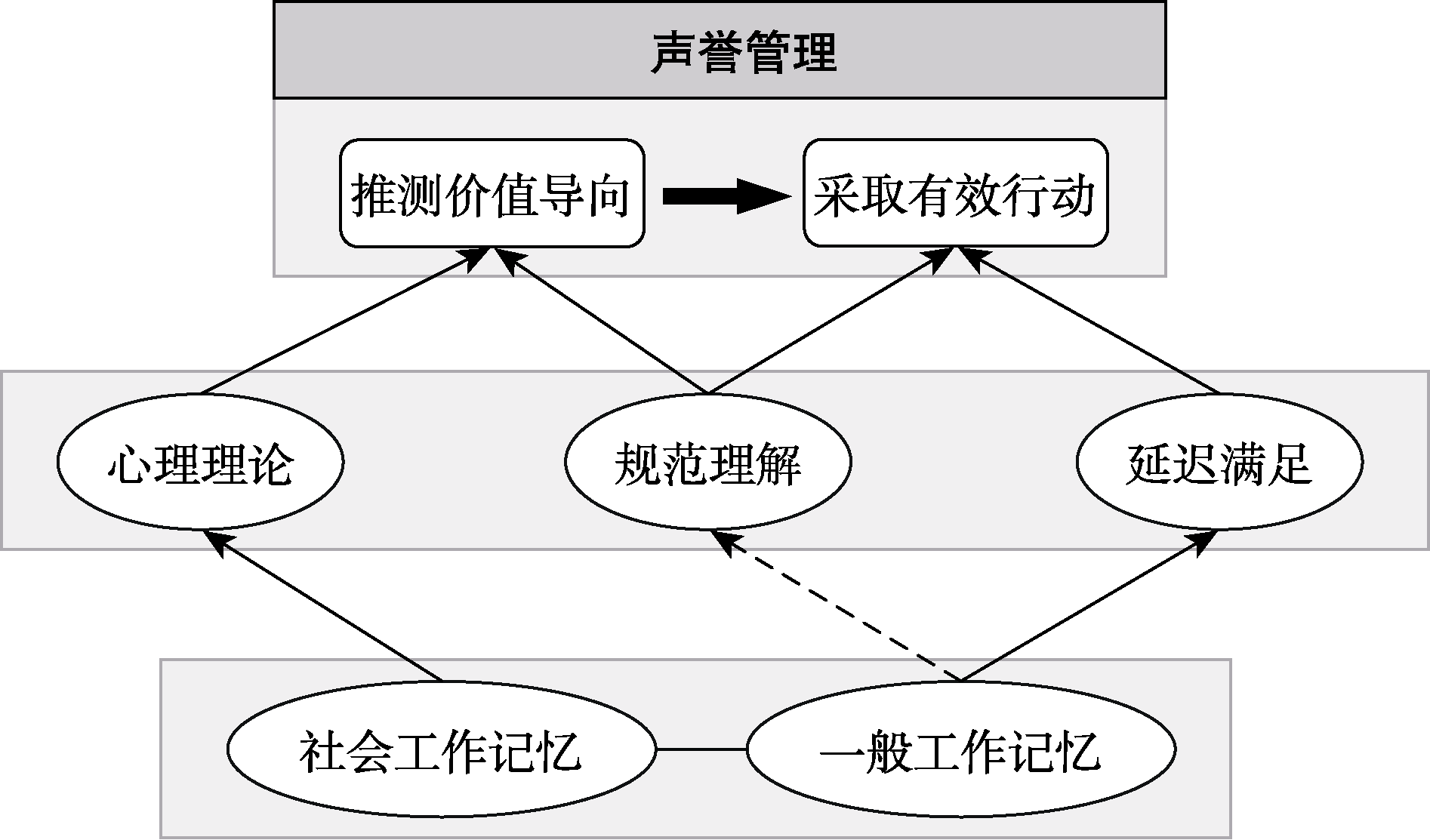
图1 基于个体认知视角的声誉管理心理机制
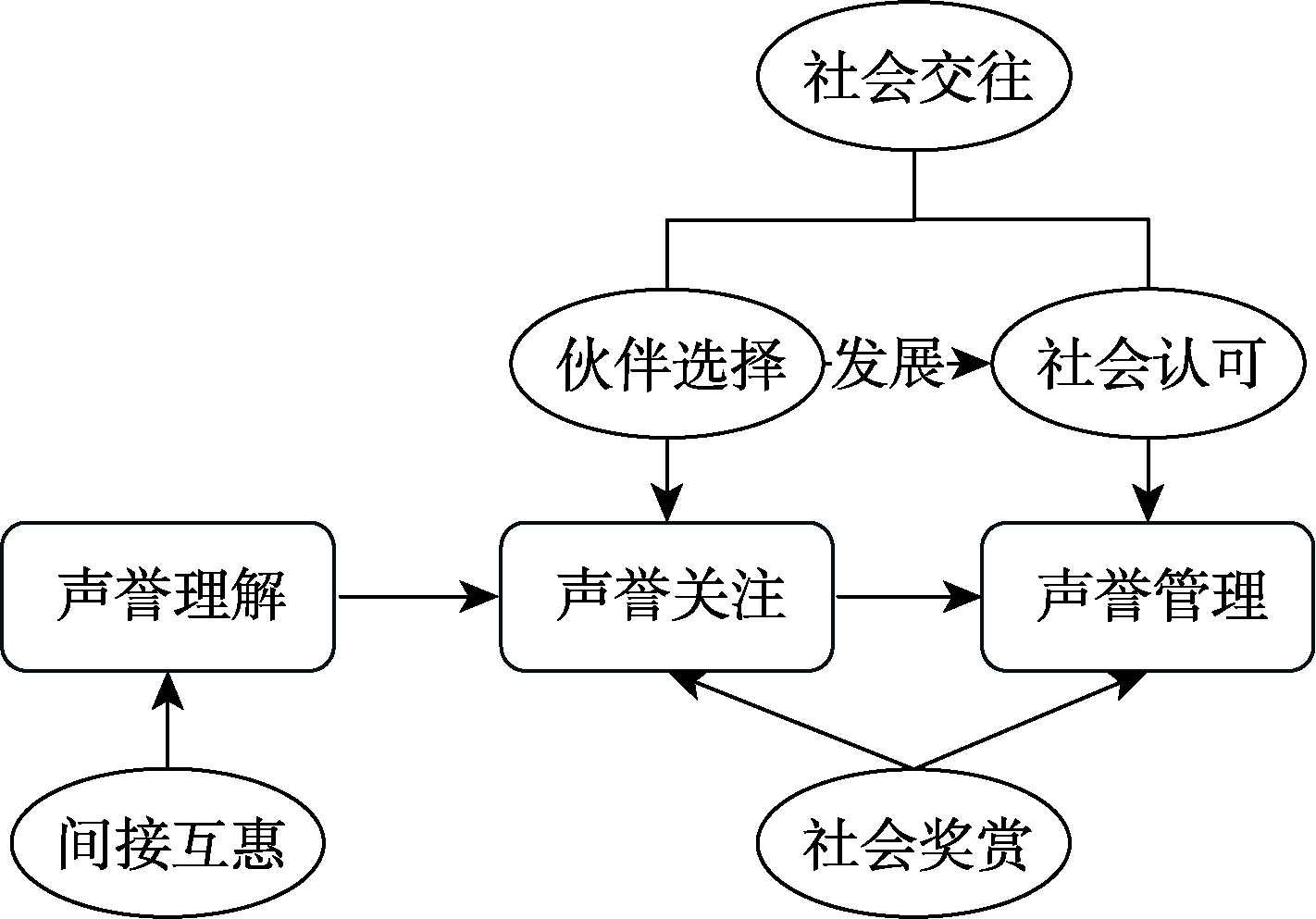
图2 基于社会动机视角的声誉管理发生与发展机制
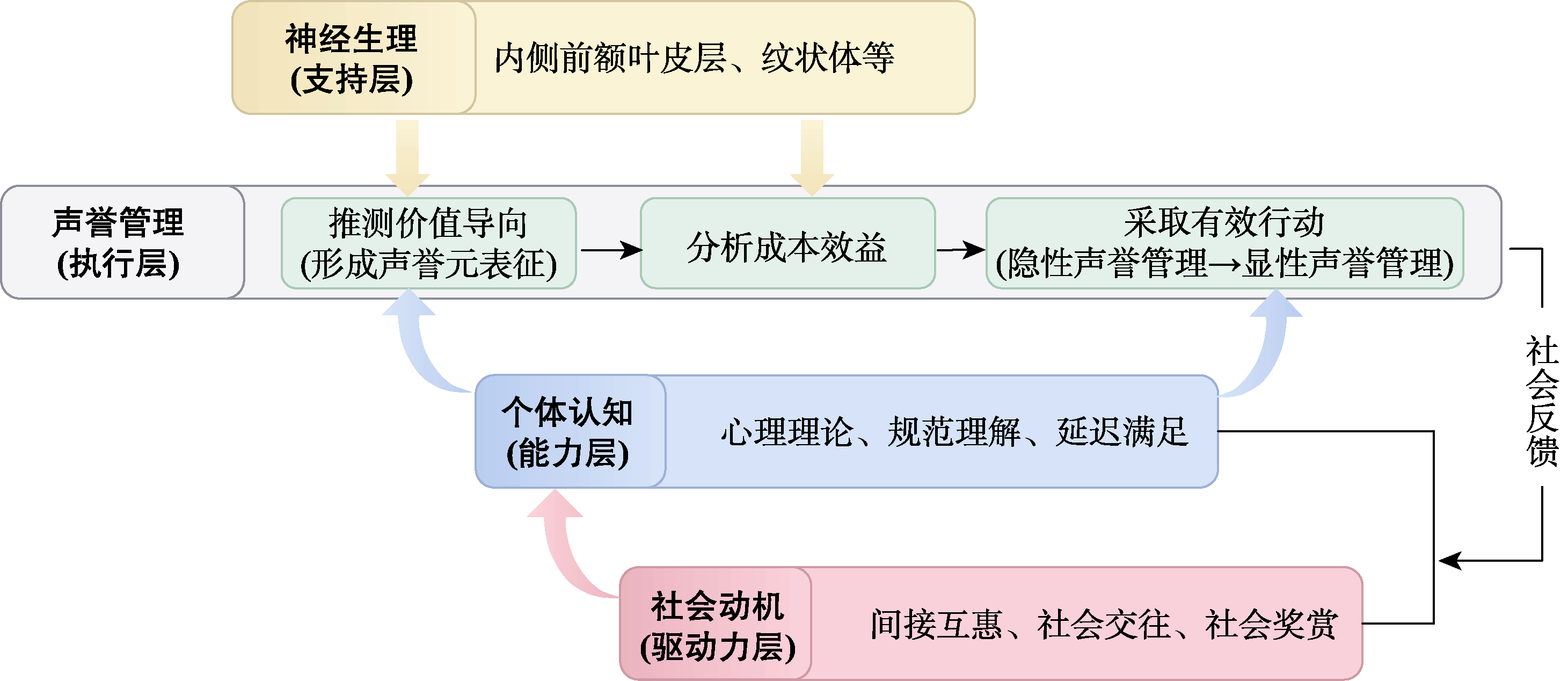
图3 亲社会行为中声誉管理的心理机制模型
| [1] | 安秋玲, 陈国鹏. (2003). 不同年龄儿童对权威认知水平的研究. 心理发展与教育, 3(1), 17-22. |
| [2] |
陈童, 伍珍. (2017). 儿童的分配公平性: 心理理论的作用. 心理科学进展, 25(8), 1299-1309.
doi: 10.3724/SP.J.1042.2017.01299 |
| [3] | 龚丽垚, 王滔. (2022). 孤独症谱系障碍个体的声誉管理缺陷. 中国特殊教育, 6, 51-59. |
| [4] | 侯玉波. (2018). 社会心理学(第4版). 北京: 北京大学出版社. |
| [5] |
江丹莹, 杨运梅, 李晶. (2022). 群体情境下儿童的分配公平性. 心理科学进展, 30(9), 2004-2019.
doi: 10.3724/SP.J.1042.2022.02004 |
| [6] | 金盛华, 郑建君, 辛志勇. (2009). 当代中国人价值观的结构与特点. 心理学报, 41(10), 1000-1014. |
| [7] |
李卉, 刘思懿, 庞怡. (2025). 社交机器人对3-5岁儿童分享行为的影响. 心理学报, 57(4), 573-583.
doi: 10.3724/SP.J.1041.2025.0573 |
| [8] | 吕房艳, 谭敬斌, 徐鹏飞, 熊希灵, 金泽慧, 高定国. (2021). 社会性奖赏及其作用的神经机制. 应用心理学, 27(3), 189-203. |
| [9] |
王磊, 贺荟中, 毕小彬, 周丽, 范晓壮. (2021). 社会动机理论视角下自闭症谱系障碍者的社交缺陷. 心理科学进展, 29(12), 2209-2223.
doi: 10.3724/SP.J.1042.2021.02209 |
| [10] | 王欣, 张真. (2019). 学龄前儿童的亲社会行为动机. 学前教育研究, 6, 45-57. |
| [11] | 肖凤秋, 郑志伟, 陈英和. (2014). 亲社会行为产生机制的理论演进. 心理科学, 37(5), 1263-1270. |
| [12] | 杨丽珠, 王江洋, 刘文, Cuskelly, M., & Zhang, A. (2005). 3-5岁幼儿自我延迟满足的发展特点及其中澳跨文化比较. 心理学报, 37(2), 224-232. |
| [13] | 张真, 王欣, 宗语飞. (2025). 对现有亲社会声誉的关注提高5岁儿童的亲社会性. 应用心理学, 31(2), 134-147. |
| [14] | 赵华丽, 徐凤娇, 郭永玉, 舒首立. (2018). 亲社会行为的阶层差异: 施与受的双重视角. 中国临床心理学杂志, 26(5), 841-846. |
| [15] | 赵章留, 寇彧. (2006). 儿童四种典型亲社会行为发展的特点. 心理发展与教育, (1), 117-121. |
| [16] | Ahn, S., Amemiya, J., Compton, B. J., & Heyman, G. D. (2020). Children approve of lying to benefit another person's reputation. Cognitive Development, 56, Article 100960. https://doi.org/10.1016/j.cogdev.2020.100960 |
| [17] |
Aloise-Young, P. A. (1993). The development of self- presentation: Self-promotion in 6- to 10-year old children. Social Cognition, 11(2), 201-222.
doi: 10.1521/soco.1993.11.2.201 URL |
| [18] | Amodio, D. M., & Frith, C. D. (2006). Meeting of minds:The medial frontal cortex and social cognition. Nature Reviews Neuroscience, 7(4), 268-277. |
| [19] |
Armstrong-Carter, E., & Telzer, E. H. (2024). The development of prosocial risk-taking behavior: Mechanisms and opportunities. Child Development Perspectives, 19(2), 63-71.
doi: 10.1111/cdep.12525 URL |
| [20] | Baddeley, A. (2010). Working memory. Current Biology, 20(4), R136-R140. |
| [21] | Balliet, D., Wu, J., & Van lange, P. A. M. (2020). Indirect reciprocity, gossip, and reputation-based cooperation. In P. A. M. Van Lange, E. T. Higgins, A. W. Kruglanski (Eds.), Social psychology: Handbook of basic principles (pp. 265-287). The Guilford Press, New York, NY. |
| [22] |
Banerjee, R. (2000). The development of an understanding of modesty. British Journal of Developmental Psychology, 18(4), 499-517.
doi: 10.1348/026151000165823 URL |
| [23] |
Banerjee, R. (2002). Audience effects on self-presentation in childhood. Social Development, 11(4), 487-507.
doi: 10.1111/sode.2002.11.issue-4 URL |
| [24] |
Best, J. R., & Miller, P. H. (2010). A developmental perspective on executive function. Child Development, 81(6), 1641-1660.
doi: 10.1111/j.1467-8624.2010.01499.x pmid: 21077853 |
| [25] | Blakey, K. H. (2025). Children consider others' need and reputation in costly sharing decisions. Scientific Reports, 15(1), 7103. https://doi.org/10.1038/s41598-025-91648-y |
| [26] |
Botto, S. V., & Rochat, P. (2019). Evaluative audience perception (EAP): How children come to care about reputation. Child Development Perspectives, 13(3), 180-185.
doi: 10.1111/cdep.12335 URL |
| [27] |
Brownell, C. A. (2013). Early development of prosocial behavior: Current perspectives. Infancy, 18(1), 1-9.
pmid: 25632273 |
| [28] |
Cage, E., Bird, G., & Pellicano, E. (2016). Reputation management in children on the autism spectrum. Journal of Autism and Developmental Disorders, 46(12), 3798-3811.
pmid: 27696187 |
| [29] | Cage, E., Pellicano, E., Shah, P., & Bird, G. (2013). Reputation management: Evidence for ability but reduced propensity in autism. Autism Researsh, 6(5), 433-442. |
| [30] | Chevallier, C., Molesworth, C., & Happe, F. (2012). Diminished social motivation negatively impacts reputation management: Autism spectrum disorders as a case in point. Plos One, 7(1), e31107. https://doi.org/10.1371/journal.pone.0031107 |
| [31] |
Collodi, S., Panerati, S., Imbimbo, E., Stefanelli, F., Duradoni, M., & Guazzini, A. (2018). Personality and reputation: A complex relationship in virtual environments. Future Internet, 10(12), 120-134.
doi: 10.3390/fi10120120 URL |
| [32] |
Diamond, A. (2013). Executive functions. Annual Review of Psychology, 64, 135-168.
doi: 10.1146/annurev-psych-113011-143750 pmid: 23020641 |
| [33] |
Dubey, I., Groom, M., Tahir, A., & Hamilton, A. (2024). Social anxiety is more likely to influence reputation management decisions than autistic traits. Autism Research, 17(1), 78-88.
doi: 10.1002/aur.v17.1 URL |
| [34] |
Dunfield, K., Kuhlmeier, V. A., O'Connell, L., & Kelley, E. (2011). Examining the diversity of prosocial behavior: Helping, sharing, and comforting in infancy. Infancy, 16(3), 227-247.
doi: 10.1111/j.1532-7078.2010.00041.x pmid: 32693496 |
| [35] |
Eisenberg, N., VanSchyndel, S. K., & Spinrad, T. L. (2016). Prosocial motivation: Inferences from an opaque body of work. Child Development, 87(6), 1668-1678.
doi: 10.1111/cdev.12638 pmid: 28262941 |
| [36] | Engelmann, J. M., Herrmann, E., & Tomasello, M. (2012). Five-year olds, but not chimpanzees, attempt to manage their reputations. Plos One, 7(10), e48433. https://doi.org/10.1371/journal.pone.0048433 |
| [37] |
Engelmann, J. M., Herrmann, E., & Tomasello, M. (2018). Concern for group reputation increases prosociality in young children. Psychological Science, 29(2), 181-190.
doi: 10.1177/0956797617733830 pmid: 29095665 |
| [38] |
Engelmann, J. M., Over, H., Herrmann, E., & Tomasello, M. (2013). Young children care more about their reputation with ingroup members and potential reciprocators. Developmental Science, 16(6), 952-958.
doi: 10.1111/desc.12086 pmid: 24118719 |
| [39] |
Engelmann, J. M., & Rapp, D. J. (2018). The influence of reputational concerns on children's prosociality. Current Opinion in Psychology, 20, 92-95.
doi: S2352-250X(17)30129-X pmid: 28858772 |
| [40] | Erkmen, T., & Esen, E. (2019). The effects of self-esteem and locus of control on self-reported personal reputation. Gurukul Business Review, 15, 12-23. |
| [41] | Fast, A. A., Morelli, S. A., Zaki, J., & Olson, K. R. (2022). Mutual identification promotes children's generosity. Infant and Child Development, 31(3), e2310. https://doi.org/10.1016/j.cogdev.2023.101337 |
| [42] |
Fehr, E., & Fischbacher, U. (2003). The nature of human altruism. Nature, 425(6960), 785-791.
doi: 10.1038/nature02043 |
| [43] |
Flavell, J. H. (2004). Theory-of-mind development: Retrospect and prospect. Merrill-Palmer Quarterly, 50(3), 274-290.
doi: 10.1353/mpq.2004.0018 URL |
| [44] | Fu, F., Hauert, C., Nowak, M. A., & Wang, L. (2008). Reputation-based partner choice promotes cooperation in social networks. Physical Review E, 78(2), 026117. https://doi.org/10.1103/PhysRevE.78.026117 |
| [45] |
Fu, G., Heyman, G. D., & Lee, K. (2011). Reasoning about modesty among adolescents and adults in China and the U.S. Journal of Adolescence, 34(4), 599-608.
doi: 10.1016/j.adolescence.2010.10.003 pmid: 21145101 |
| [46] |
Fu, G., Heyman, G. D., Qian, M., Guo, T., & Lee, K. (2016). Young children with a positive reputation to maintain are less likely to cheat. Developmental Science, 19(2), 275-283.
doi: 10.1111/desc.12304 pmid: 25872952 |
| [47] |
Giardini, F., Balliet, D., Power, E. A., Számadó, S., & Takács, K. (2021). Four puzzles of reputation-based cooperation. Human Nature, 33(1), 43-61.
doi: 10.1007/s12110-021-09419-3 |
| [48] |
Good, K., & Shaw, A. (2021). Achieving a good impression: Reputation management and performance goals. Wiley Interdisciplinary Reviews: Cognitive Science, 12(4), e1552. https://doi.org/10.1002/wcs.1552
pmid: 33426784 |
| [49] |
Grimm, C., Balsters, J. H., & Zerbi, V. (2021). Shedding light on social reward circuitry: (Un)common blueprints in humans and rodents. Neuroscientist, 27(2), 159-183.
doi: 10.1177/1073858420923552 URL |
| [50] |
Günsoy, C., Cross, S. E., Uskul, A. K., & Gercek-Swing, B. (2020). The role of culture in appraisals, emotions and helplessness in response to threats. International Journal of Psychology, 55(3), 472-477.
doi: 10.1002/ijop.12589 pmid: 31134611 |
| [51] |
Hay, D. F. (1979). Cooperative interactions and sharing between very young children and their parents. Developmental Psychology, 15(6), 647-653.
doi: 10.1037/0012-1649.15.6.647 URL |
| [52] |
He, J., Guo, D., Zhai, S., Shen, M., & Gao, Z. (2019). Development of social working memory in preschoolers and its relation to theory of mind. Child Development, 90(4), 1319-1332.
doi: 10.1111/cdev.13025 pmid: 29292501 |
| [53] | Hepach, R., Engelmann, J. M., Herrmann, E., Gerdemann, S. C., & Tomasello, M. (2023). Evidence for a developmental shift in the motivation underlying helping in early childhood. Developmental Science, 26(1), e13253. https://doi.org/10.1111/desc.13253 |
| [54] |
Hepach, R., Haberl, K., Lambert, S., & Tomasello, M. (2017). Toddlers help anonymously. Infancy, 22(1), 130-145.
doi: 10.1111/infa.2017.22.issue-1 URL |
| [55] |
Hepach, R., Vaish, A., & Tomasello, M. (2012). Young children are intrinsically motivated to see others helped. Psychological Science, 23(9), 967-972.
doi: 10.1177/0956797612440571 pmid: 22851443 |
| [56] |
Hepach, R., Vaish, A., & Tomasello, M. (2013). A new look at children’s prosocial motivation. Infancy, 18(1), 67-90.
doi: 10.1111/infa.2012.18.issue-1 URL |
| [57] |
Herrmann, E., Engelmann, J. M., & Tomasello, M. (2019). Children engage in competitive altruism. Journal of Experimental Child Psychology, 179, 176-189.
doi: S0022-0965(18)30438-7 pmid: 30537568 |
| [58] |
Hertz, U., Tyropoulou, E., Traberg, C., & Bahrami, B. (2020). Self-competence increases the willingness to pay for social influence. Scientific Reports, 10(1), 17813. https://doi.org/10.1038/s41598-020-74857-5
pmid: 33082465 |
| [59] |
Heyman, G. D., Compton, A. M., Amemiya, J., Ahn, S., & Shao, S. (2021). Children's reputation management: Learning to identify what is socially valued and acting upon it. Current Directions in Psychological Science, 30(4), 315-320.
doi: 10.1177/09637214211009516 pmid: 34366581 |
| [60] |
Heyman, G. D., Itakura, S., & Lee, K. (2010). Japanese and american children's reasoning about accepting credit for prosocial behavior. Social Development, 20(1), 171-184.
pmid: 21344067 |
| [61] |
Hill, V., & Pillow, B. H. (2006). Children's understanding of reputations. The Journal of Genetic Psychology: Research and Theory on Human Development, 167(2), 137-157.
doi: 10.3200/GNTP.167.2.137-157 URL |
| [62] |
Hinson, J. M., Jameson, T. L., & Whitney, P. (2003). Impulsive decision making and working memory. Journal of Experimental Psychology: Learning, Memory, and Cognition, 29(2), 298-306.
doi: 10.1037/0278-7393.29.2.298 URL |
| [63] |
Hopkins, N., Reicher, S., Harrison, K., Cassidy, C., Bull, R., & Levine, M. (2007). Helping to improve the group stereotype: On the strategic dimension of prosocial behavior. Personality and Social Psychology Bulletin, 33(6), 776-788.
doi: 10.1177/0146167207301023 pmid: 17483397 |
| [64] | Huang, Z., Tarnal, V., Vlisides, P. E., Janke, E. L., McKinney, A. M., Picton, P.,... Hudetz, A. G. (2021). Anterior insula regulates brain network transitions that gate conscious access. Cell Reports, 35(5), 109081. https://doi.org/10.1016/j.celrep.2021.109081 |
| [65] |
Izuma, K. (2012). The social neuroscience of reputation. Neuroscience Research, 72(4), 283-288.
doi: 10.1016/j.neures.2012.01.003 pmid: 22285602 |
| [66] |
Izuma, K., Saito, D. N., & Sadato, N. (2008). Processing of social and monetary rewards in the human striatum. Neuron, 58(2), 284-294.
doi: 10.1016/j.neuron.2008.03.020 pmid: 18439412 |
| [67] |
Izuma, K., Saito, D. N., & Sadato, N. (2010). The roles of the medial prefrontal cortex and striatum in reputation processing. Social Neuroscience, 5(2), 133-147.
doi: 10.1080/17470910903202559 pmid: 19705330 |
| [68] |
Jordan, J. J. (2023). A pull versus push framework for reputation. Trends in Cognitive Sciences, 27(9), 852-866.
doi: 10.1016/j.tics.2023.06.005 URL |
| [69] | Katz, T., Kushnir, T., & Tomasello, M. (2024). Children are eager to take credit for prosocial acts, and cost affects this tendency. Journal of Experimental Child Psychology, 237, 105764. https://doi.org/10.1016/j.jecp.2023.105764 |
| [70] | Kawamura, Y., & Kusumi, T. (2020). Altruism does not always lead to a good reputation: A normative explanation. Journal of Experimental Social Psychology, 90, 104021. https://doi.org/10.1016/j.jesp.2020.104021 |
| [71] |
Kelsey, C., Grossmann, T., & Vaish, A. (2018). Early reputation management: Three-year-old children are more generous following exposure to eyes. Frontiers in Psychology, 9, 698. https://doi.org/10.3389/fpsyg.2018.00698
pmid: 29867665 |
| [72] |
Kelsey, C., Vaish, A., & Grossmann, T. (2018). Eyes, more than other facial features, enhance real-world donation behavior. Human Nature, 29(4), 390-401.
doi: 10.1007/s12110-018-9327-1 |
| [73] |
Kennedy, D. P., & Adolphs, R. (2010). Impaired fixation to eyes following amygdala damage arises from abnormal bottom-up attention. Neuropsychologia, 48(12), 3392-3398.
doi: 10.1016/j.neuropsychologia.2010.06.025 pmid: 20600184 |
| [74] |
Köster, M., & Kärtner, J. (2019). Why do infants help? A simple action reveals a complex phenomenon. Developmental Review, 51, 175-187.
doi: 10.1016/j.dr.2018.11.004 |
| [75] | Leimgruber, K. L., Shaw, A., Santos, L. R., & Olson, K. R. (2012). Young children are more generous when others are aware of their actions. Plos One, 7(10), e48292. https://doi.org/10.1371/journal.pone.0048292 |
| [76] |
Lemmon, K., & Moore, C. (2007). The development of prudence in the face of varying future rewards. Developmental Science, 10(4), 502-511.
pmid: 17552939 |
| [77] |
Leung, A. K., & Cohen, D. (2011). Within- and between- culture variation: Individual differences and the cultural logics of honor, face, and dignity cultures. Journal of Personality and Social Psychology, 100(3), 507-526.
doi: 10.1037/a0022151 URL |
| [78] |
Lin, A., Adolphs, R., & Rangel, A. (2012). Social and monetary reward learning engage overlapping neural substrates. Social Cognitive and Affective Neuroscience, 7(3), 274-281.
doi: 10.1093/scan/nsr006 pmid: 21427193 |
| [79] |
Liu, X., Zhao, C., Zhang, X., Compton, B. J., Sai, L., & Heyman, G. D. (2022). Messaging about descriptive and injunctive norms can promote honesty in young children. Child Development, 93(6), e598-e606.
doi: 10.1111/cdev.13830 URL |
| [80] |
Liszkowski, U., Carpenter, M., & Tomasello, M. (2008). Twelve-month-olds communicate helpfully and appropriately for knowledgeable and ignorant partners. Cognition, 108(3), 732-739.
doi: 10.1016/j.cognition.2008.06.013 pmid: 18721918 |
| [81] |
Ma, F., Gu, X., Tang, L., Luo, X., Compton, B. J., & Heyman, G. D. (2023). If they won't know, i won't wait: Anticipated social consequences drive children's performance on self- control tasks. Psychological Science, 34(11), 1220-1228.
doi: 10.1177/09567976231198194 URL |
| [82] |
Ma, F., Zeng, D., Xu, F., Compton, B. J., & Heyman, G. D. (2020). Delay of gratification as reputation management. Psychological Science, 31(9), 1174-1182.
doi: 10.1177/0956797620939940 pmid: 32840460 |
| [83] | Manrique, H. M., Zeidler, H., Roberts, G., Barclay, P., Walker, M., Samu, F.,... Raihani, N. (2021). The psychological foundations of reputation-based cooperation. Philosophical Transactions of the Royal Society B, 376(1838), 20200287. https://doi.org/10.1098/rstb.2020.0287 |
| [84] | Martin, D. U., MacIntyre, M. I., Perry, C., Clift, G., Pedell, S., & Kaufman, J. (2020). Young children’s indiscriminate helping behavior toward a humanoid robot. Frontiers in Psychology, 11, 00239. https://doi.org/10.3389/fpsyg.2020.00239 |
| [85] |
McQuade, J. D., Murray-Close, D., Shoulberg, E. K., & Hoza, B. (2013). Working memory and social functioning in children. Journal of Experimental Child Psychology, 115(3), 422-435.
doi: 10.1016/j.jecp.2013.03.002 pmid: 23665178 |
| [86] | Meyer, M. L., & Lieberman, M. D. (2012). Social working memory: Neurocognitive networks and directions for future research. Frontiers in Psychology, 3, 00571. https://doi.org/10.3389/fpsyg.2012.00571 |
| [87] |
Meyer, M. L., & Lieberman, M. D. (2016). Social working memory training improves perspective-taking accuracy. Social Psychological and Personality Science, 7(4), 381-389.
doi: 10.1177/1948550615624143 URL |
| [88] |
Meyer, M. L., Spunt, R. P., Berkman, E. T., Taylor, S. E., & Lieberman, M. D. (2012). Evidence for social working memory from a parametric functional MRI study. Proceedings of the National Academy of Sciences, 109(6), 1883-1888.
doi: 10.1073/pnas.1121077109 URL |
| [89] | Milinski, M. (2016). Reputation, a universal currency for human social interactions. Philosophical Transactions of the Royal Society B-Biological Sciences, 371(1687), 20150100. http://dx.doi.org/10.1098/rstb.2015.0100 |
| [90] |
Milinski, M., Semmann, D., & Krambeck, H. J. (2002). Donors to charity gain in both indirect reciprocity and political reputation. Proceedings of the Royal Society B-Biological Sciences, 269(1494), 881-883.
doi: 10.1098/rspb.2002.1964 URL |
| [91] |
Ng, F. F.-Y., Pomerantz, E. M., & Lam, S.-F. (2007). European American and Chinese parents' responses to children's success and failure: Implications for children's responses. Developmental Psychology, 43(5), 1239-1255.
doi: 10.1037/0012-1649.43.5.1239 pmid: 17723048 |
| [92] |
Okumura, Y., Hattori, T., Fujita, S., & Kobayashi, T. (2023). A robot is watching me!: Five-year-old children care about their reputation after interaction with a social robot. Child Development, 94(4), 865-873.
doi: 10.1111/cdev.13903 pmid: 36752147 |
| [93] | Olivier, J. L., McCall, C., Dunham, Y., & Over, H. (2022). Procedural (in)justice in children: Children choose procedures that favor their ingroup. Journal of Experimental Child Psychology, 215, 105313. https://doi.org/10.1016/j.jecp.2021.105313 |
| [94] | Over, H. (2016). The origins of belonging: Social motivation in infants and young children. Philosophical Transactions of the Royal Society B: Biological Sciences, 371(1686), 20150072. https://doi.org/10.1098/rstb.2015.0072 |
| [95] | Parker,, J., Rubin, K., Erath, S., Bowker, J., & Buskirk-Cohen, A. (2006). Peer relationships, child development, and adjustment:A developmental psychopathology perspective. In D. Cicchetti & D. J. Cohen (Eds.), Developmental psychopathology: Volume 1: Theory and method (2nd ed., pp. 419-493). Hoboken, NJ: John Wiley & Sons. |
| [96] |
Paulus, M. (2014). The emergence of prosocial behavior: Why do infants and toddlers help, comfort, and share? Child Development Perspectives, 8(2), 77-81.
doi: 10.1111/cdep.12066 URL |
| [97] |
Phan, K. L., Sripada, C. S., Angstadt, M., & McCabe, K. (2010). Reputation for reciprocity engages the brain reward center. Proceedings of the National Academy of Sciences of the United States of America, 107(29), 13099-13104.
doi: 10.1073/pnas.1008137107 pmid: 20615982 |
| [98] | Qin, W., Zhao, L., Compton, B. J., Zheng, Y., Mao, H., Zheng, J., & Heyman, G. D. (2021). Overheard conversations can influence children's generosity. Developmental Science, 24(5), e13068. https://doi.org/10.1111/desc.13068 |
| [99] |
Rademacher, L., Krach, S., Kohls, G., Irmak, A., Gründer, G., & Spreckelmeyer, K. N. (2010). Dissociation of neural networks for anticipation and consumption of monetary and social rewards. Neuroimage, 49(4), 3276-3285.
doi: 10.1016/j.neuroimage.2009.10.089 pmid: 19913621 |
| [100] |
Rapp, D. J., Engelmann, J. M., Herrmann, E., & Tomasello, M. (2019). Young children's reputational strategies in a peer group context. Developmental Psychology, 55(2), 329-336.
doi: 10.1037/dev0000639 pmid: 30525833 |
| [101] | Romano, A., Giardini, F., Columbus, S., de Kwaadsteniet, E. W., Kisfalusi, D., Triki, Z.,... Hagel, K. (2021). Reputation and socio-ecology in humans. Philosophical Transactions of the Royal Society B, 376(1838), 20200295. http://dx.doi.org/10.1098/rstb.2020.0295 |
| [102] |
Sai, L., Liu, X., Li, H., Compton, B. J., & Heyman, G. D. (2020). Promoting honesty through overheard conversations. Developmental Psychology, 56(6), 1073-1079.
doi: 10.1037/dev0000933 pmid: 32309981 |
| [103] | Salehinejad, M. A., Ghanavati, E., Rashid, M. H. A., & Nitsche, M. A. (2021). Hot and cold executive functions in the brain: A prefrontal-cingular network. Brain and Neuroscience Advances, 5, 23982128211007769. https://doi.org/10.1177/23982128211007769 |
| [104] | Santos, S., Almeida, I., Oliveiros, B., & Castelo-Branco, M. (2016). The role of the amygdala in facial trustworthiness processing: A systematic review and meta-analyses of fMRI studies. Plos One, 11(11), e0167276. https://doi.org/10.1371/journal.pone.0167276 |
| [105] |
Saxe, R., & Kanwisher, N. (2003). People thinking about thinking people: The role of the temporo-parietal junction in "theory of mind". Neuroimage, 19(4), 1835-1842.
doi: 10.1016/s1053-8119(03)00230-1 pmid: 12948738 |
| [106] |
Schmidt, M. F. H., Butler, L. P., Heinz, J., & Tomasello, M. (2016). Young children see a single action and infer a social norm: Promiscuous normativity in 3-year-olds. Psychological Science, 27(10), 1360-1370.
doi: 10.1177/0956797616661182 pmid: 27634004 |
| [107] |
Sebastian-Enesco, C., & Warneken, F. (2015). The shadow of the future: 5-year-olds, but not 3-year-olds, adjust their sharing in anticipation of reciprocation. Journal of Experimental Child Psychology, 129, 40-54.
doi: 10.1016/j.jecp.2014.08.007 URL |
| [108] | Shimizu, H. (2023). The impact of working memory on the development of social play in japanese preschool children: Emotion knowledge as a mediator. Children, 10(3), 524. https://doi.org/10.3390/children10030524 |
| [109] |
Shinohara, A., Kanakogi, Y., & Myowa, M. (2019). Strategic reputation management: Children adjust their reward distribution in accordance with an observer's mental state. Cognitive Development, 50, 195-204.
doi: 10.1016/j.cogdev.2019.04.003 |
| [110] |
Shinohara, A., Kanakogi, Y., Okumura, Y., & Kobayashi, T. (2021). Children manage their reputation by caring about gossip. Social Development, 31(2), 455-465.
doi: 10.1111/sode.v31.2 URL |
| [111] |
Sierksma, J., Thijs, J., & Verkuyten, M. (2014). With a little help from my friends: Bystander context and children's attitude toward peer helping. Journal of Social Psychology, 154(2), 142-154.
pmid: 24765819 |
| [112] |
Silver, I. M., & Shaw, A. (2018). Pint-sized public relations: The development of reputation management. Trends in Cognitive Sciences, 22(4), 271-274.
doi: 10.1016/j.tics.2018.01.008 URL |
| [113] | SimanTov-Nachlieli, I., & Moran, S. (2022). The primacy of honest reputations. Current Opinion in Psychology, 46, 101398. https://doi.org/10.1016/j.copsyc.2022.101398 |
| [114] | Siposova, B., Grueneisen, S., Helming, K., Tomasello, M., & Carpenter, M. (2021). Common knowledge that help is needed increases helping behavior in children. Journal of Experimental Child Psychology, 201, 104973. https://doi.org/10.1016/j.jecp.2020.104973 |
| [115] | Számadó, S., Balliet, D., Giardini, F., Power, E. A., & Takács, K. (2021). The language of cooperation: Reputation and honest signalling. Philosophical Transactions of the Royal Society B, 376(1838), 20200286. https://doi.org/10.1098/rstb.2020.0286 |
| [116] |
Tennie, C., Frith, U., & Frith, C. D. (2010). Reputation management in the age of the world-wide web. Trends in Cognitive Sciences, 14(11), 482-488.
doi: 10.1016/j.tics.2010.07.003 pmid: 20685154 |
| [117] |
Thornton, M. A., & Conway, A. R. (2013). Working memory for social information: Chunking or domain-specific buffer? Neuroimage, 70, 233-239.
doi: 10.1016/j.neuroimage.2012.12.063 pmid: 23298748 |
| [118] |
Tomasello, M., Melis, A. P., Tennie, C., Wyman, E., & Herrmann, E. (2012). Two key steps in the evolution of human cooperation. Current Anthropology, 53(6), 673-692.
doi: 10.1086/668207 URL |
| [119] | Tricoche, L., Pélisson, D., Longo, L., Koun, E., Poisson, A., Prado, J., & Meunier, M. (2022). Peer presence elicits task-independent changes within and beyond the mentalizing network across children and adults. bioRxiv, 2022.04.19.488718. https://doi.org/10.1101/2022.04.19.488718 |
| [120] |
Ulber, J., Hamann, K., & Tomasello, M. (2016). Extrinsic rewards diminish costly sharing in 3-year-olds. Child Development, 87(4), 1192-1203.
doi: 10.1111/cdev.12534 pmid: 27084549 |
| [121] | Vuilleumier,, P. (2007). Neural representation of faces in human visual cortex: The roles of attention, emotion, and viewpoint. In Osaka, N., Rentschler, I., Biederman, I. (Eds.), Object recognition, attention, and action (pp. 119-138). Springer, Tokyo. |
| [122] |
Wang, D., Liu, T., & Shi, J. (2017). Development of monetary and social reward processes. Scientific Reports, 7(1), 11128. https://doi.org/10.1038/s41598-017-11558-6
pmid: 28894231 |
| [123] |
Wang, X. C., Dai, W., Hu, B., & Song, Z. (2019). ‘Good job!’: Unpacking praise practices of high- and low-quality early childhood teachers in China. Early Child Development and Care, 191(2), 266-280.
doi: 10.1080/03004430.2019.1614571 URL |
| [124] | Wardle, M. C., Fitzgerald, D. A., Angstadt, M., Sripada, C. S., McCabe, K., & Phan, K. L. (2013). The caudate signals bad reputation during trust decisions. Plos One, 8(6), e68884. https://doi.org/10.1371/journal.pone.0068884 |
| [125] |
Warneken, F. (2018). How children solve the two challenges of cooperation. Annual Review of Psychology, 69(1), 205-229.
doi: 10.1146/psych.2018.69.issue-1 URL |
| [126] |
Warneken, F., Lohse, K., Melis, A. P., & Tomasello, M. (2011). Young children share the spoils after collaboration. Psychological Science, 22(2), 267-273.
doi: 10.1177/0956797610395392 pmid: 21196533 |
| [127] | Warneken, F., Sebastian-Enesco, C., Benjamin, N. E., & Pieloch, K. A. (2019). Pay to play: Children's emerging ability to use acts of generosity for selfish ends. Journal of Experimental Child Psychology, 188, 104675. https://doi.org/10.1016/j.jecp.2019.104675 |
| [128] | Wispé, L. G. (1972). Positive forms of social behavior: An overview. Journal of Social Issues, 28(3), 1-19. |
| [129] |
Xu, J., Saether, L., & Sommerville, J. A. (2016). Experience facilitates the emergence of sharing behavior among 7.5-month-old infants. Developmental Psychology, 52(11), 1732-1743.
pmid: 27657650 |
| [130] |
Yoon, E. J., Tessler, M. H., Goodman, N. D., & Frank, M. C. (2020). Polite speech emerges from competing social goals. Open Mind: Discoveries in Cognitive Science, 4, 71-87.
doi: 10.1162/opmi_a_00035 pmid: 33225196 |
| [131] | Yu, J., Kam, C. M., & Lee, T. M. (2016). Better working memory and motor inhibition in children who delayed gratification. Frontiers in Psychology, 7, 01098. https://doi.org/10.3389/fpsyg.2016.01098 |
| [132] |
Yu, J., Zhu, L., & Leslie, A. M. (2016). Children's sharing behavior in mini-dictator games: The role of in-group favoritism and theory of mind. Child Development, 87(6), 1747-1757.
doi: 10.1111/cdev.12635 pmid: 28262934 |
| [133] |
Zhang, J., Zhu, Y., & Liu, X. (2023). How do young children manage their reputation among peers? International Journal of Mental Health Promotion, 25(7), 847-854.
doi: 10.32604/ijmhp.2023.028166 URL |
| [134] |
Zhao, L., Heyman, G., Chen, L., & Lee, K. (2017). Praising young children for being smart promotes cheating. Psychological Science, 28(12), 1868-1870.
doi: 10.1177/0956797617721529 pmid: 28898167 |
| [135] | Zhao, L., Heyman, G. D., Chen, L., & Lee, K. (2018). Telling young children they have a reputation for being smart promotes cheating. Developmental Science, 21(3), e12585. https://doi.org/10.1111/desc.12585 |
| [136] |
Zhao, L., Heyman, G. D., Chen, L., Sun, W., Zhang, R., & Lee, K. (2019). Cheating in the name of others: Offering prosocial justifications promotes unethical behavior in young children. Journal of Experimental Child Psychology, 177, 187-196.
doi: S0022-0965(18)30140-1 pmid: 30216777 |
| [137] |
Zhao, L., Li, Y., Qin, W., Amemiya, J., Fang, F., Compton, B. J., & Heyman, G. D. (2022). Overheard evaluative comments: Implications for beliefs about effort and ability. Child Development. 93(6), 1889-1902.
doi: 10.1111/cdev.13829 pmid: 35938557 |
| [1] | 李东伟, 祁梦迪, 唐书凝, 陈路遥, 崔新. 中文自然阅读情境下儿童副中央凹注意编码的神经发育基础[J]. 心理科学进展, 2026, 34(4): 571-582. |
| [2] | 范伟, 程颖. 悲伤与亲社会行为关系的三水平元分析[J]. 心理科学进展, 2026, 34(1): 83-96. |
| [3] | 楚克群, 朱风书. 结构化身体活动改善孤独症儿童社交障碍的作用机制:基于情绪加工系统激活的视角[J]. 心理科学进展, 2026, 34(1): 134-143. |
| [4] | 张满豪, 周炜, 陈朝阳, 朱怡, 程亚华. 汉语声调意识与儿童阅读能力的关系[J]. 心理科学进展, 2025, 33(9): 1604-1616. |
| [5] | 史珈铭. 多代家庭中夹心世代的代际照料对健康的影响及其机制[J]. 心理科学进展, 2025, 33(8): 1275-1291. |
| [6] | 刘豫, 毕丹丹, 赵凯宾, 史怡明, Hanna Y. Adamseged, 晋争. 儿童挑食行为的认知机制[J]. 心理科学进展, 2025, 33(2): 305-321. |
| [7] | 沈殷琪, 蔡怡, 吴继霞. 第三方干预对亲社会行为的影响:一项三水平元分析[J]. 心理科学进展, 2025, 33(12): 2121-2137. |
| [8] | 刘楠, 邱钰婷, 董志强, 李爱梅. 抚育动机何以促进亲社会行为?基于进化适应性的认知−能量机制及助推[J]. 心理科学进展, 2025, 33(11): 1854-1869. |
| [9] | 周嘉雯, 王明怡. 新冠疫情下的儿童青少年健康危险行为:基于家庭风险的视角[J]. 心理科学进展, 2024, 32(8): 1328-1341. |
| [10] | 何婷, 胡惠南, 乔璐, 杨靓靓, 李明英, 蔺秀云. 父母应对社会化如何影响儿童青少年适应:基于长时与实时时间轴的视角[J]. 心理科学进展, 2024, 32(8): 1342-1353. |
| [11] | 李俊朋, 周临舒, 江俊, 王丹妮, 蒋存梅. 音乐对亲社会行为的影响及其作用机制[J]. 心理科学进展, 2024, 32(7): 1179-1194. |
| [12] | 蒋莹, 胡佳, 冯靓瑜, 任启丹. 贫困经历下稀缺心态对儿童执行功能的影响及其机制[J]. 心理科学进展, 2024, 32(5): 728-737. |
| [13] | 文思雁, 于旭晨, 金磊, 宫俊如, 张晓函, 孙敬林, 张杉, 吕厚超. 儿童青少年家庭功能障碍与心理健康关系的三水平元分析[J]. 心理科学进展, 2024, 32(5): 771-789. |
| [14] | 郑远霞, 刘国雄, 辛聪, 程黎. 以貌取人:儿童基于面孔的信任判断[J]. 心理科学进展, 2024, 32(2): 300-317. |
| [15] | 诸彦含, 贺彬, 孙蕾. 状态权力感对亲社会行为的影响:一项三水平元分析[J]. 心理科学进展, 2024, 32(11): 1786-1799. |
| 阅读次数 | ||||||
|
全文 |
|
|||||
|
摘要 |
|
|||||
