

ISSN 0439-755X
CN 11-1911/B
主办:中国心理学会
中国科学院心理研究所
出版:科学出版社
CN 11-1911/B
主办:中国心理学会
中国科学院心理研究所
出版:科学出版社
心理学报 ›› 2026, Vol. 58 ›› Issue (4): 755-772.doi: 10.3724/SP.J.1041.2026.0755 cstr: 32110.14.2026.0755
陶金洪1, 赵蔚1( ), 程诺1, 乔丽方2, 姜强1
收稿日期:2024-03-11
发布日期:2026-01-16
出版日期:2026-04-25
通讯作者:
赵蔚, E-mail: zhaow577@nenu.edu.cn基金资助:
TAO Jinhong1, ZHAO Wei1(), CHENG Nuo1, QIAO Lifang2, JIANG Qiang1
Received:2024-03-11
Online:2026-01-16
Published:2026-04-25
摘要:
神经网络作为最重要的机器学习方法已被广泛地用于认知诊断, 但目前仍没有一种简单通用的神经网络认知诊断方法。因此, 提出一种Q矩阵约束的神经网络认知诊断方法(Bi-QNN), 并基于迁移学习进行训练。新模型的优势在于:(1)使用人员无需专门设计网络结构, 新模型可以根据Q矩阵与交互式Q矩阵自适应任意数据集; (2)网络结构的设计原理源于GDINA模型, 使其能够较好地表达属性的主效应与交互效应; (3)基于迁移学习的模型训练方案能有效地解决标记数据稀缺问题, 提高模型的易用性与适用范围。实验结果表明:Bi-QNN在模拟数据集上的预测误差整体上比参数化方法GDINA与DINA的表现更好; 在一定的范围内, 模型对属性数量敏感性相对较低, 当属性数量增加时在一定程度上仍能保持较好的分类准确率; 基于迁移学习训练的Bi-QNN方法能更好地适应不同样本量的数据集, 在模拟数据与实证数据的多种条件下保持对其它模型的领先; 模型性能的进一步提升受到基于参数模型的模拟数据的限制, 对试题质量仍有一定的敏感性。
中图分类号:
陶金洪, 赵蔚, 程诺, 乔丽方, 姜强. (2026). 基于迁移学习与Q矩阵约束的神经网络认知诊断方法. 心理学报, 58(4), 755-772.
TAO Jinhong, ZHAO Wei, CHENG Nuo, QIAO Lifang, JIANG Qiang. (2026). Cognitive diagnosis method via neural networks with transfer learning and Q-matrix constraints. Acta Psychologica Sinica, 58(4), 755-772.
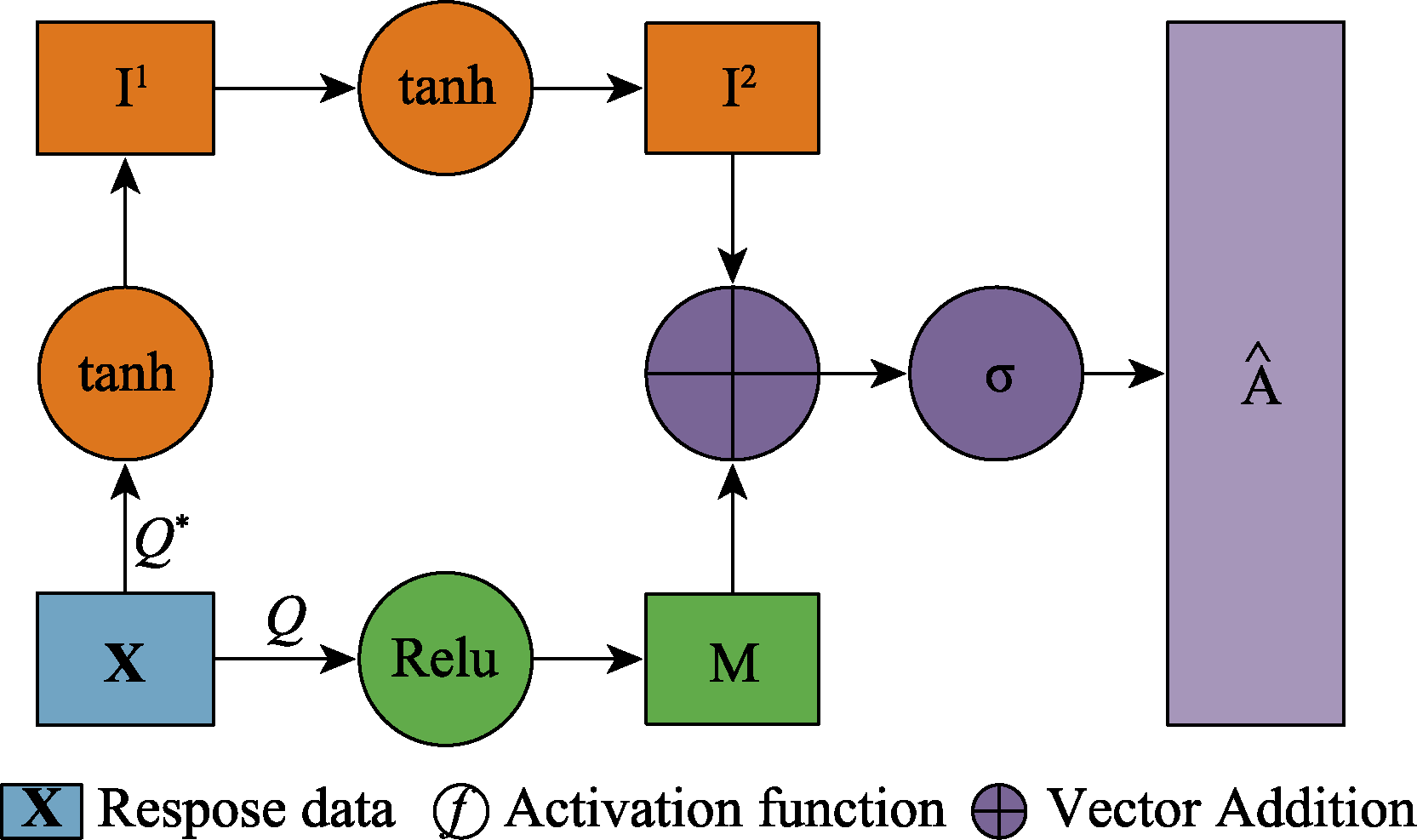
图1 Bi-QNN网络架构图 注:绿色表示主效应,橙色表示交互效应,紫色为综合结果,彩图见电子版
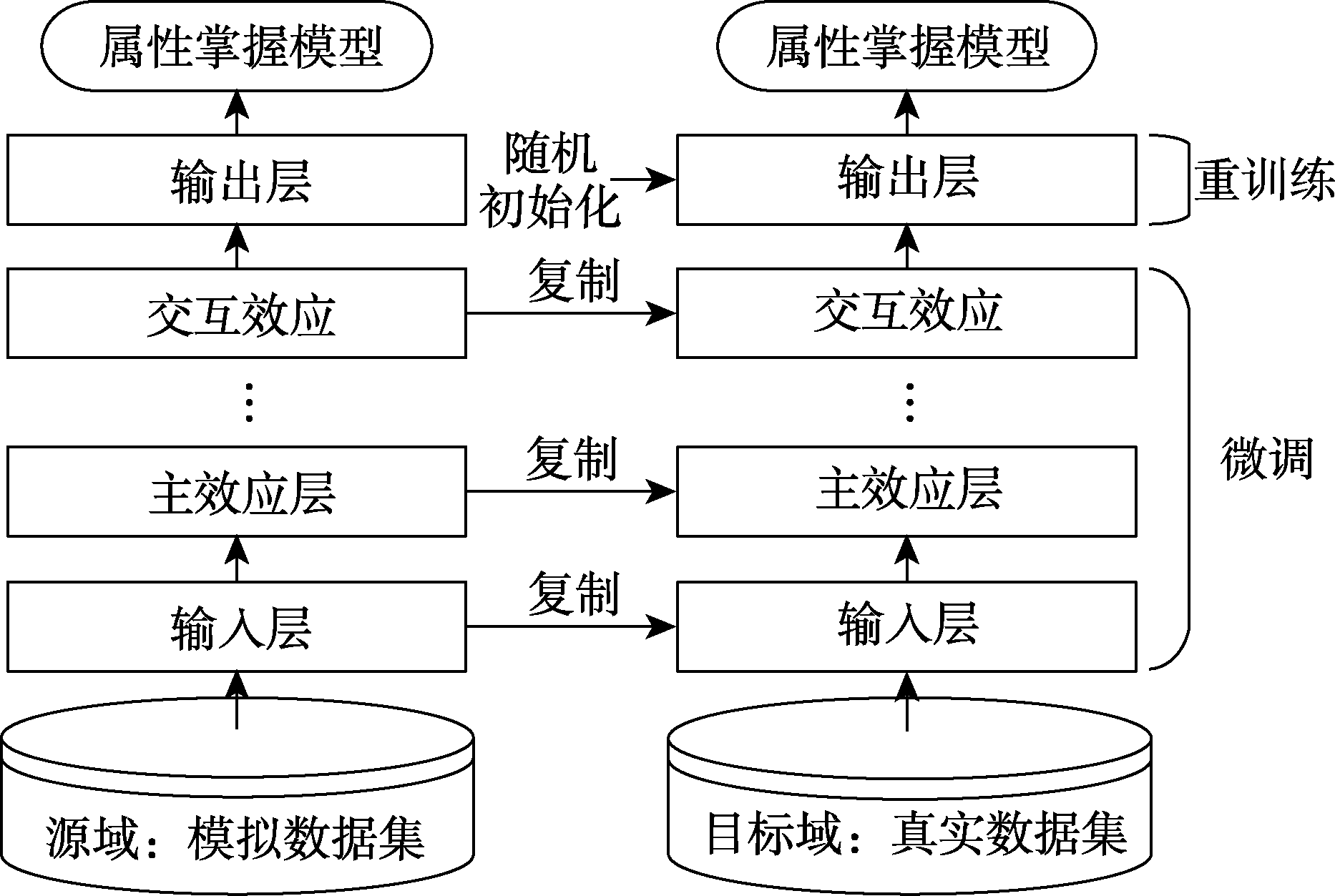
图2 基于微调−预训练的Bi-QNN训练示意图
| 模拟数据 | 质量 | N | DINA | GDINA | NPC | GNPC | ANN | Bi-QNN |
|---|---|---|---|---|---|---|---|---|
| SD1 | 高 | 50 | 0.214 | 0.248 | 0.239 | 0.178 | 0.411 | 0.172 |
| 100 | 0.185 | 0.200 | 0.239 | 0.174 | 0.384 | 0.159 | ||
| 200 | 0.176 | 0.176 | 0.233 | 0.171 | 0.327 | 0.155 | ||
| 300 | 0.169 | 0.171 | 0.237 | 0.166 | 0.276 | 0.145 | ||
| 500 | 0.159 | 0.163 | 0.232 | 0.162 | 0.213 | 0.141 | ||
| Mean | 0.181 | 0.192 | 0.236 | 0.170 | 0.322 | 0.154 | ||
| 低 | 50 | 0.374 | 0.413 | 0.399 | 0.365 | 0.434 | 0.296 | |
| 100 | 0.362 | 0.385 | 0.396 | 0.364 | 0.416 | 0.285 | ||
| 200 | 0.343 | 0.358 | 0.394 | 0.351 | 0.375 | 0.268 | ||
| 300 | 0.340 | 0.340 | 0.393 | 0.342 | 0.338 | 0.261 | ||
| 500 | 0.338 | 0.324 | 0.395 | 0.345 | 0.296 | 0.258 | ||
| Mean | 0.351 | 0.364 | 0.395 | 0.353 | 0.372 | 0.274 | ||
| SD2 | 高 | 50 | 0.325 | 0.368 | 0.338 | 0.326 | 0.387 | 0.273 |
| 100 | 0.322 | 0.356 | 0.332 | 0.308 | 0.372 | 0.270 | ||
| 200 | 0.300 | 0.333 | 0.320 | 0.293 | 0.331 | 0.258 | ||
| 300 | 0.300 | 0.312 | 0.318 | 0.282 | 0.303 | 0.251 | ||
| 500 | 0.286 | 0.293 | 0.313 | 0.280 | 0.265 | 0.243 | ||
| Mean | 0.307 | 0.332 | 0.324 | 0.298 | 0.332 | 0.259 | ||
| 低 | 50 | 0.475 | 0.512 | 0.471 | 0.490 | 0.405 | 0.335 | |
| 100 | 0.438 | 0.499 | 0.464 | 0.477 | 0.405 | 0.339 | ||
| 200 | 0.396 | 0.460 | 0.464 | 0.473 | 0.372 | 0.323 | ||
| 300 | 0.384 | 0.433 | 0.457 | 0.466 | 0.353 | 0.330 | ||
| 500 | 0.360 | 0.396 | 0.453 | 0.461 | 0.328 | 0.321 | ||
| Mean | 0.411 | 0.46 | 0.462 | 0.473 | 0.373 | 0.330 | ||
| SD3 | 高 | 50 | 0.350 | 0.374 | 0.333 | 0.284 | 0.379 | 0.216 |
| 100 | 0.327 | 0.347 | 0.324 | 0.261 | 0.370 | 0.207 | ||
| 200 | 0.319 | 0.347 | 0.322 | 0.253 | 0.321 | 0.206 | ||
| 300 | 0.306 | 0.336 | 0.318 | 0.249 | 0.296 | 0.203 | ||
| 500 | 0.298 | 0.332 | 0.315 | 0.247 | 0.249 | 0.197 | ||
| Mean | 0.320 | 0.347 | 0.322 | 0.259 | 0.323 | 0.206 | ||
| 低 | 50 | 0.441 | 0.476 | 0.473 | 0.450 | 0.393 | 0.298 | |
| 100 | 0.409 | 0.461 | 0.451 | 0.433 | 0.404 | 0.305 | ||
| 200 | 0.382 | 0.447 | 0.443 | 0.427 | 0.367 | 0.298 | ||
| 300 | 0.375 | 0.426 | 0.441 | 0.422 | 0.346 | 0.298 | ||
| 500 | 0.358 | 0.407 | 0.438 | 0.420 | 0.315 | 0.287 | ||
| Mean | 0.393 | 0.443 | 0.449 | 0.430 | 0.365 | 0.297 |
表1 各个模型在不同条件下的均方根误差(RMSE)
| 模拟数据 | 质量 | N | DINA | GDINA | NPC | GNPC | ANN | Bi-QNN |
|---|---|---|---|---|---|---|---|---|
| SD1 | 高 | 50 | 0.214 | 0.248 | 0.239 | 0.178 | 0.411 | 0.172 |
| 100 | 0.185 | 0.200 | 0.239 | 0.174 | 0.384 | 0.159 | ||
| 200 | 0.176 | 0.176 | 0.233 | 0.171 | 0.327 | 0.155 | ||
| 300 | 0.169 | 0.171 | 0.237 | 0.166 | 0.276 | 0.145 | ||
| 500 | 0.159 | 0.163 | 0.232 | 0.162 | 0.213 | 0.141 | ||
| Mean | 0.181 | 0.192 | 0.236 | 0.170 | 0.322 | 0.154 | ||
| 低 | 50 | 0.374 | 0.413 | 0.399 | 0.365 | 0.434 | 0.296 | |
| 100 | 0.362 | 0.385 | 0.396 | 0.364 | 0.416 | 0.285 | ||
| 200 | 0.343 | 0.358 | 0.394 | 0.351 | 0.375 | 0.268 | ||
| 300 | 0.340 | 0.340 | 0.393 | 0.342 | 0.338 | 0.261 | ||
| 500 | 0.338 | 0.324 | 0.395 | 0.345 | 0.296 | 0.258 | ||
| Mean | 0.351 | 0.364 | 0.395 | 0.353 | 0.372 | 0.274 | ||
| SD2 | 高 | 50 | 0.325 | 0.368 | 0.338 | 0.326 | 0.387 | 0.273 |
| 100 | 0.322 | 0.356 | 0.332 | 0.308 | 0.372 | 0.270 | ||
| 200 | 0.300 | 0.333 | 0.320 | 0.293 | 0.331 | 0.258 | ||
| 300 | 0.300 | 0.312 | 0.318 | 0.282 | 0.303 | 0.251 | ||
| 500 | 0.286 | 0.293 | 0.313 | 0.280 | 0.265 | 0.243 | ||
| Mean | 0.307 | 0.332 | 0.324 | 0.298 | 0.332 | 0.259 | ||
| 低 | 50 | 0.475 | 0.512 | 0.471 | 0.490 | 0.405 | 0.335 | |
| 100 | 0.438 | 0.499 | 0.464 | 0.477 | 0.405 | 0.339 | ||
| 200 | 0.396 | 0.460 | 0.464 | 0.473 | 0.372 | 0.323 | ||
| 300 | 0.384 | 0.433 | 0.457 | 0.466 | 0.353 | 0.330 | ||
| 500 | 0.360 | 0.396 | 0.453 | 0.461 | 0.328 | 0.321 | ||
| Mean | 0.411 | 0.46 | 0.462 | 0.473 | 0.373 | 0.330 | ||
| SD3 | 高 | 50 | 0.350 | 0.374 | 0.333 | 0.284 | 0.379 | 0.216 |
| 100 | 0.327 | 0.347 | 0.324 | 0.261 | 0.370 | 0.207 | ||
| 200 | 0.319 | 0.347 | 0.322 | 0.253 | 0.321 | 0.206 | ||
| 300 | 0.306 | 0.336 | 0.318 | 0.249 | 0.296 | 0.203 | ||
| 500 | 0.298 | 0.332 | 0.315 | 0.247 | 0.249 | 0.197 | ||
| Mean | 0.320 | 0.347 | 0.322 | 0.259 | 0.323 | 0.206 | ||
| 低 | 50 | 0.441 | 0.476 | 0.473 | 0.450 | 0.393 | 0.298 | |
| 100 | 0.409 | 0.461 | 0.451 | 0.433 | 0.404 | 0.305 | ||
| 200 | 0.382 | 0.447 | 0.443 | 0.427 | 0.367 | 0.298 | ||
| 300 | 0.375 | 0.426 | 0.441 | 0.422 | 0.346 | 0.298 | ||
| 500 | 0.358 | 0.407 | 0.438 | 0.420 | 0.315 | 0.287 | ||
| Mean | 0.393 | 0.443 | 0.449 | 0.430 | 0.365 | 0.297 |
| 模拟数据 | 质量 | N | DINA | GDINA | NPC | GNPC | ANN | Bi-QNN |
|---|---|---|---|---|---|---|---|---|
| SD1 | 高 | 50 | 0.945 | 0.929 | 0.942 | 0.966 | 0.816 | 0.963 |
| 100 | 0.957 | 0.953 | 0.942 | 0.968 | 0.814 | 0.968 | ||
| 200 | 0.959 | 0.962 | 0.944 | 0.970 | 0.892 | 0.970 | ||
| 300 | 0.962 | 0.964 | 0.944 | 0.972 | 0.929 | 0.972 | ||
| 500 | 0.965 | 0.967 | 0.946 | 0.973 | 0.966 | 0.975 | ||
| Mean | 0.958 | 0.955 | 0.944 | 0.970 | 0.883 | 0.970 | ||
| 低 | 50 | 0.835 | 0.818 | 0.839 | 0.865 | 0.764 | 0.886 | |
| 100 | 0.840 | 0.830 | 0.843 | 0.867 | 0.776 | 0.892 | ||
| 200 | 0.85 | 0.844 | 0.844 | 0.876 | 0.810 | 0.904 | ||
| 300 | 0.852 | 0.854 | 0.845 | 0.882 | 0.860 | 0.908 | ||
| 500 | 0.853 | 0.864 | 0.846 | 0.883 | 0.896 | 0.911 | ||
| Mean | 0.846 | 0.842 | 0.843 | 0.875 | 0.821 | 0.900 | ||
| SD2 | 高 | 50 | 0.878 | 0.852 | 0.885 | 0.898 | 0.805 | 0.906 |
| 100 | 0.877 | 0.858 | 0.890 | 0.907 | 0.825 | 0.907 | ||
| 200 | 0.887 | 0.867 | 0.898 | 0.915 | 0.868 | 0.917 | ||
| 300 | 0.889 | 0.880 | 0.899 | 0.920 | 0.886 | 0.921 | ||
| 500 | 0.899 | 0.892 | 0.902 | 0.921 | 0.917 | 0.926 | ||
| Mean | 0.886 | 0.870 | 0.895 | 0.912 | 0.860 | 0.915 | ||
| 低 | 50 | 0.748 | 0.723 | 0.777 | 0.759 | 0.773 | 0.846 | |
| 100 | 0.765 | 0.726 | 0.785 | 0.772 | 0.771 | 0.845 | ||
| 200 | 0.792 | 0.748 | 0.785 | 0.776 | 0.815 | 0.855 | ||
| 300 | 0.802 | 0.767 | 0.790 | 0.782 | 0.831 | 0.858 | ||
| 500 | 0.823 | 0.794 | 0.796 | 0.788 | 0.854 | 0.858 | ||
| Mean | 0.786 | 0.752 | 0.787 | 0.775 | 0.809 | 0.852 | ||
| SD3 | 高 | 50 | 0.865 | 0.847 | 0.889 | 0.918 | 0.825 | 0.940 |
| 100 | 0.877 | 0.861 | 0.895 | 0.933 | 0.825 | 0.938 | ||
| 200 | 0.882 | 0.866 | 0.896 | 0.936 | 0.876 | 0.945 | ||
| 300 | 0.888 | 0.873 | 0.899 | 0.938 | 0.897 | 0.947 | ||
| 500 | 0.894 | 0.875 | 0.901 | 0.940 | 0.931 | 0.950 | ||
| Mean | 0.881 | 0.864 | 0.896 | 0.933 | 0.871 | 0.944 | ||
| 低 | 50 | 0.772 | 0.766 | 0.775 | 0.797 | 0.793 | 0.882 | |
| 100 | 0.794 | 0.770 | 0.797 | 0.813 | 0.775 | 0.866 | ||
| 200 | 0.811 | 0.771 | 0.803 | 0.817 | 0.825 | 0.882 | ||
| 300 | 0.818 | 0.783 | 0.806 | 0.822 | 0.840 | 0.882 | ||
| 500 | 0.834 | 0.795 | 0.808 | 0.823 | 0.869 | 0.888 | ||
| Mean | 0.806 | 0.777 | 0.798 | 0.814 | 0.820 | 0.880 |
表2 各个模型在不同条件下的属性判准率(AMR)
| 模拟数据 | 质量 | N | DINA | GDINA | NPC | GNPC | ANN | Bi-QNN |
|---|---|---|---|---|---|---|---|---|
| SD1 | 高 | 50 | 0.945 | 0.929 | 0.942 | 0.966 | 0.816 | 0.963 |
| 100 | 0.957 | 0.953 | 0.942 | 0.968 | 0.814 | 0.968 | ||
| 200 | 0.959 | 0.962 | 0.944 | 0.970 | 0.892 | 0.970 | ||
| 300 | 0.962 | 0.964 | 0.944 | 0.972 | 0.929 | 0.972 | ||
| 500 | 0.965 | 0.967 | 0.946 | 0.973 | 0.966 | 0.975 | ||
| Mean | 0.958 | 0.955 | 0.944 | 0.970 | 0.883 | 0.970 | ||
| 低 | 50 | 0.835 | 0.818 | 0.839 | 0.865 | 0.764 | 0.886 | |
| 100 | 0.840 | 0.830 | 0.843 | 0.867 | 0.776 | 0.892 | ||
| 200 | 0.85 | 0.844 | 0.844 | 0.876 | 0.810 | 0.904 | ||
| 300 | 0.852 | 0.854 | 0.845 | 0.882 | 0.860 | 0.908 | ||
| 500 | 0.853 | 0.864 | 0.846 | 0.883 | 0.896 | 0.911 | ||
| Mean | 0.846 | 0.842 | 0.843 | 0.875 | 0.821 | 0.900 | ||
| SD2 | 高 | 50 | 0.878 | 0.852 | 0.885 | 0.898 | 0.805 | 0.906 |
| 100 | 0.877 | 0.858 | 0.890 | 0.907 | 0.825 | 0.907 | ||
| 200 | 0.887 | 0.867 | 0.898 | 0.915 | 0.868 | 0.917 | ||
| 300 | 0.889 | 0.880 | 0.899 | 0.920 | 0.886 | 0.921 | ||
| 500 | 0.899 | 0.892 | 0.902 | 0.921 | 0.917 | 0.926 | ||
| Mean | 0.886 | 0.870 | 0.895 | 0.912 | 0.860 | 0.915 | ||
| 低 | 50 | 0.748 | 0.723 | 0.777 | 0.759 | 0.773 | 0.846 | |
| 100 | 0.765 | 0.726 | 0.785 | 0.772 | 0.771 | 0.845 | ||
| 200 | 0.792 | 0.748 | 0.785 | 0.776 | 0.815 | 0.855 | ||
| 300 | 0.802 | 0.767 | 0.790 | 0.782 | 0.831 | 0.858 | ||
| 500 | 0.823 | 0.794 | 0.796 | 0.788 | 0.854 | 0.858 | ||
| Mean | 0.786 | 0.752 | 0.787 | 0.775 | 0.809 | 0.852 | ||
| SD3 | 高 | 50 | 0.865 | 0.847 | 0.889 | 0.918 | 0.825 | 0.940 |
| 100 | 0.877 | 0.861 | 0.895 | 0.933 | 0.825 | 0.938 | ||
| 200 | 0.882 | 0.866 | 0.896 | 0.936 | 0.876 | 0.945 | ||
| 300 | 0.888 | 0.873 | 0.899 | 0.938 | 0.897 | 0.947 | ||
| 500 | 0.894 | 0.875 | 0.901 | 0.940 | 0.931 | 0.950 | ||
| Mean | 0.881 | 0.864 | 0.896 | 0.933 | 0.871 | 0.944 | ||
| 低 | 50 | 0.772 | 0.766 | 0.775 | 0.797 | 0.793 | 0.882 | |
| 100 | 0.794 | 0.770 | 0.797 | 0.813 | 0.775 | 0.866 | ||
| 200 | 0.811 | 0.771 | 0.803 | 0.817 | 0.825 | 0.882 | ||
| 300 | 0.818 | 0.783 | 0.806 | 0.822 | 0.840 | 0.882 | ||
| 500 | 0.834 | 0.795 | 0.808 | 0.823 | 0.869 | 0.888 | ||
| Mean | 0.806 | 0.777 | 0.798 | 0.814 | 0.820 | 0.880 |
| 模拟数据 | 质量 | N | DINA | GDINA | NPC | GNPC | ANN | Bi-QNN |
|---|---|---|---|---|---|---|---|---|
| SD1 | 高 | 50 | 0.847 | 0.797 | 0.836 | 0.907 | 0.498 | 0.883 |
| 100 | 0.878 | 0.864 | 0.835 | 0.912 | 0.497 | 0.904 | ||
| 200 | 0.883 | 0.891 | 0.840 | 0.917 | 0.716 | 0.908 | ||
| 300 | 0.891 | 0.897 | 0.841 | 0.923 | 0.811 | 0.923 | ||
| 500 | 0.899 | 0.904 | 0.847 | 0.925 | 0.904 | 0.925 | ||
| Mean | 0.880 | 0.871 | 0.840 | 0.917 | 0.685 | 0.909 | ||
| 低 | 50 | 0.591 | 0.539 | 0.604 | 0.652 | 0.378 | 0.694 | |
| 100 | 0.601 | 0.563 | 0.606 | 0.654 | 0.424 | 0.711 | ||
| 200 | 0.622 | 0.594 | 0.610 | 0.679 | 0.505 | 0.742 | ||
| 300 | 0.624 | 0.615 | 0.606 | 0.690 | 0.636 | 0.751 | ||
| 500 | 0.629 | 0.637 | 0.607 | 0.689 | 0.726 | 0.757 | ||
| Mean | 0.613 | 0.590 | 0.607 | 0.673 | 0.534 | 0.731 | ||
| SD2 | 高 | 50 | 0.550 | 0.460 | 0.554 | 0.593 | 0.321 | 0.615 |
| 100 | 0.536 | 0.466 | 0.574 | 0.619 | 0.370 | 0.621 | ||
| 200 | 0.568 | 0.483 | 0.593 | 0.649 | 0.480 | 0.657 | ||
| 300 | 0.571 | 0.525 | 0.602 | 0.673 | 0.537 | 0.669 | ||
| 500 | 0.604 | 0.551 | 0.609 | 0.675 | 0.653 | 0.689 | ||
| Mean | 0.566 | 0.497 | 0.586 | 0.642 | 0.472 | 0.650 | ||
| 低 | 50 | 0.269 | 0.193 | 0.318 | 0.247 | 0.299 | 0.436 | |
| 100 | 0.293 | 0.201 | 0.334 | 0.282 | 0.247 | 0.422 | ||
| 200 | 0.337 | 0.234 | 0.339 | 0.288 | 0.344 | 0.447 | ||
| 300 | 0.362 | 0.274 | 0.350 | 0.298 | 0.386 | 0.457 | ||
| 500 | 0.407 | 0.328 | 0.362 | 0.309 | 0.457 | 0.461 | ||
| Mean | 0.334 | 0.246 | 0.341 | 0.285 | 0.347 | 0.445 | ||
| SD3 | 高 | 50 | 0.527 | 0.459 | 0.570 | 0.680 | 0.349 | 0.728 |
| 100 | 0.544 | 0.468 | 0.587 | 0.716 | 0.349 | 0.729 | ||
| 200 | 0.572 | 0.477 | 0.593 | 0.729 | 0.496 | 0.754 | ||
| 300 | 0.587 | 0.481 | 0.599 | 0.738 | 0.583 | 0.765 | ||
| 500 | 0.595 | 0.479 | 0.601 | 0.739 | 0.715 | 0.779 | ||
| Mean | 0.565 | 0.473 | 0.590 | 0.720 | 0.498 | 0.751 | ||
| 低 | 50 | 0.325 | 0.261 | 0.331 | 0.323 | 0.320 | 0.527 | |
| 100 | 0.356 | 0.262 | 0.363 | 0.371 | 0.307 | 0.507 | ||
| 200 | 0.393 | 0.272 | 0.376 | 0.376 | 0.353 | 0.538 | ||
| 300 | 0.402 | 0.286 | 0.380 | 0.376 | 0.402 | 0.538 | ||
| 500 | 0.435 | 0.313 | 0.382 | 0.386 | 0.488 | 0.558 | ||
| Mean | 0.382 | 0.279 | 0.366 | 0.366 | 0.374 | 0.534 |
表3 各个模型在不同条件下的属性模式分类准确率(PMR)
| 模拟数据 | 质量 | N | DINA | GDINA | NPC | GNPC | ANN | Bi-QNN |
|---|---|---|---|---|---|---|---|---|
| SD1 | 高 | 50 | 0.847 | 0.797 | 0.836 | 0.907 | 0.498 | 0.883 |
| 100 | 0.878 | 0.864 | 0.835 | 0.912 | 0.497 | 0.904 | ||
| 200 | 0.883 | 0.891 | 0.840 | 0.917 | 0.716 | 0.908 | ||
| 300 | 0.891 | 0.897 | 0.841 | 0.923 | 0.811 | 0.923 | ||
| 500 | 0.899 | 0.904 | 0.847 | 0.925 | 0.904 | 0.925 | ||
| Mean | 0.880 | 0.871 | 0.840 | 0.917 | 0.685 | 0.909 | ||
| 低 | 50 | 0.591 | 0.539 | 0.604 | 0.652 | 0.378 | 0.694 | |
| 100 | 0.601 | 0.563 | 0.606 | 0.654 | 0.424 | 0.711 | ||
| 200 | 0.622 | 0.594 | 0.610 | 0.679 | 0.505 | 0.742 | ||
| 300 | 0.624 | 0.615 | 0.606 | 0.690 | 0.636 | 0.751 | ||
| 500 | 0.629 | 0.637 | 0.607 | 0.689 | 0.726 | 0.757 | ||
| Mean | 0.613 | 0.590 | 0.607 | 0.673 | 0.534 | 0.731 | ||
| SD2 | 高 | 50 | 0.550 | 0.460 | 0.554 | 0.593 | 0.321 | 0.615 |
| 100 | 0.536 | 0.466 | 0.574 | 0.619 | 0.370 | 0.621 | ||
| 200 | 0.568 | 0.483 | 0.593 | 0.649 | 0.480 | 0.657 | ||
| 300 | 0.571 | 0.525 | 0.602 | 0.673 | 0.537 | 0.669 | ||
| 500 | 0.604 | 0.551 | 0.609 | 0.675 | 0.653 | 0.689 | ||
| Mean | 0.566 | 0.497 | 0.586 | 0.642 | 0.472 | 0.650 | ||
| 低 | 50 | 0.269 | 0.193 | 0.318 | 0.247 | 0.299 | 0.436 | |
| 100 | 0.293 | 0.201 | 0.334 | 0.282 | 0.247 | 0.422 | ||
| 200 | 0.337 | 0.234 | 0.339 | 0.288 | 0.344 | 0.447 | ||
| 300 | 0.362 | 0.274 | 0.350 | 0.298 | 0.386 | 0.457 | ||
| 500 | 0.407 | 0.328 | 0.362 | 0.309 | 0.457 | 0.461 | ||
| Mean | 0.334 | 0.246 | 0.341 | 0.285 | 0.347 | 0.445 | ||
| SD3 | 高 | 50 | 0.527 | 0.459 | 0.570 | 0.680 | 0.349 | 0.728 |
| 100 | 0.544 | 0.468 | 0.587 | 0.716 | 0.349 | 0.729 | ||
| 200 | 0.572 | 0.477 | 0.593 | 0.729 | 0.496 | 0.754 | ||
| 300 | 0.587 | 0.481 | 0.599 | 0.738 | 0.583 | 0.765 | ||
| 500 | 0.595 | 0.479 | 0.601 | 0.739 | 0.715 | 0.779 | ||
| Mean | 0.565 | 0.473 | 0.590 | 0.720 | 0.498 | 0.751 | ||
| 低 | 50 | 0.325 | 0.261 | 0.331 | 0.323 | 0.320 | 0.527 | |
| 100 | 0.356 | 0.262 | 0.363 | 0.371 | 0.307 | 0.507 | ||
| 200 | 0.393 | 0.272 | 0.376 | 0.376 | 0.353 | 0.538 | ||
| 300 | 0.402 | 0.286 | 0.380 | 0.376 | 0.402 | 0.538 | ||
| 500 | 0.435 | 0.313 | 0.382 | 0.386 | 0.488 | 0.558 | ||
| Mean | 0.382 | 0.279 | 0.366 | 0.366 | 0.374 | 0.534 |
| 真实数据 | 性能指标 | N | DINA | GDINA | NPC | GNPC | ANN | Bi-QNN |
|---|---|---|---|---|---|---|---|---|
| SFRAC | AMR | 50 | 0.920 | 0.906 | 0.840 | 0.854 | 0.887 | 0.923 |
| 100 | 0.931 | 0.896 | 0.841 | 0.860 | 0.927 | 0.956 | ||
| 200 | 0.942 | 0.920 | 0.848 | 0.812 | 0.951 | 0.959 | ||
| 300 | 0.953 | 0.919 | 0.851 | 0.786 | 0.953 | 0.963 | ||
| 500 | 0.953 | 0.929 | 0.848 | 0.773 | 0.950 | 0.960 | ||
| Mean | 0.940 | 0.914 | 0.846 | 0.817 | 0.934 | 0.952 | ||
| PMR | 50 | 0.706 | 0.664 | 0.508 | 0.500 | 0.572 | 0.674 | |
| 100 | 0.742 | 0.630 | 0.530 | 0.541 | 0.701 | 0.803 | ||
| 200 | 0.761 | 0.710 | 0.533 | 0.448 | 0.777 | 0.820 | ||
| 300 | 0.807 | 0.700 | 0.550 | 0.421 | 0.795 | 0.836 | ||
| 500 | 0.799 | 0.736 | 0.548 | 0.392 | 0.785 | 0.829 | ||
| Mean | 0.763 | 0.688 | 0.534 | 0.460 | 0.726 | 0.792 | ||
| PMR(K-1) | 50 | 0.908 | 0.872 | 0.756 | 0.798 | 0.890 | 0.946 | |
| 100 | 0.926 | 0.874 | 0.754 | 0.800 | 0.943 | 0.979 | ||
| 200 | 0.951 | 0.905 | 0.768 | 0.709 | 0.978 | 0.976 | ||
| 300 | 0.960 | 0.903 | 0.779 | 0.661 | 0.973 | 0.980 | ||
| 500 | 0.966 | 0.917 | 0.772 | 0.613 | 0.964 | 0.974 | ||
| Mean | 0.942 | 0.894 | 0.766 | 0.716 | 0.950 | 0.971 |
表4 各个模型在Sub FRAC数据集上的属性与模式分类一致性
| 真实数据 | 性能指标 | N | DINA | GDINA | NPC | GNPC | ANN | Bi-QNN |
|---|---|---|---|---|---|---|---|---|
| SFRAC | AMR | 50 | 0.920 | 0.906 | 0.840 | 0.854 | 0.887 | 0.923 |
| 100 | 0.931 | 0.896 | 0.841 | 0.860 | 0.927 | 0.956 | ||
| 200 | 0.942 | 0.920 | 0.848 | 0.812 | 0.951 | 0.959 | ||
| 300 | 0.953 | 0.919 | 0.851 | 0.786 | 0.953 | 0.963 | ||
| 500 | 0.953 | 0.929 | 0.848 | 0.773 | 0.950 | 0.960 | ||
| Mean | 0.940 | 0.914 | 0.846 | 0.817 | 0.934 | 0.952 | ||
| PMR | 50 | 0.706 | 0.664 | 0.508 | 0.500 | 0.572 | 0.674 | |
| 100 | 0.742 | 0.630 | 0.530 | 0.541 | 0.701 | 0.803 | ||
| 200 | 0.761 | 0.710 | 0.533 | 0.448 | 0.777 | 0.820 | ||
| 300 | 0.807 | 0.700 | 0.550 | 0.421 | 0.795 | 0.836 | ||
| 500 | 0.799 | 0.736 | 0.548 | 0.392 | 0.785 | 0.829 | ||
| Mean | 0.763 | 0.688 | 0.534 | 0.460 | 0.726 | 0.792 | ||
| PMR(K-1) | 50 | 0.908 | 0.872 | 0.756 | 0.798 | 0.890 | 0.946 | |
| 100 | 0.926 | 0.874 | 0.754 | 0.800 | 0.943 | 0.979 | ||
| 200 | 0.951 | 0.905 | 0.768 | 0.709 | 0.978 | 0.976 | ||
| 300 | 0.960 | 0.903 | 0.779 | 0.661 | 0.973 | 0.980 | ||
| 500 | 0.966 | 0.917 | 0.772 | 0.613 | 0.964 | 0.974 | ||
| Mean | 0.942 | 0.894 | 0.766 | 0.716 | 0.950 | 0.971 |
| 真实数据 | 性能指标 | N | DINA | GDINA | NPC | GNPC | ANN | Bi-QNN |
|---|---|---|---|---|---|---|---|---|
| FRAC | AMR | 50 | 0.919 | 0.887 | 0.837 | 0.854 | 0.901 | 0.946 |
| 100 | 0.926 | 0.889 | 0.829 | 0.841 | 0.947 | 0.956 | ||
| 200 | 0.940 | 0.908 | 0.835 | 0.827 | 0.964 | 0.964 | ||
| 300 | 0.949 | 0.921 | 0.842 | 0.829 | 0.960 | 0.964 | ||
| 500 | 0.955 | 0.932 | 0.837 | 0.823 | 0.958 | 0.962 | ||
| Mean | 0.938 | 0.907 | 0.836 | 0.835 | 0.946 | 0.958 | ||
| PMR | 50 | 0.529 | 0.450 | 0.346 | 0.340 | 0.460 | 0.652 | |
| 100 | 0.575 | 0.465 | 0.315 | 0.314 | 0.663 | 0.707 | ||
| 200 | 0.639 | 0.508 | 0.351 | 0.311 | 0.741 | 0.752 | ||
| 300 | 0.690 | 0.575 | 0.384 | 0.327 | 0.722 | 0.755 | ||
| 500 | 0.720 | 0.599 | 0.374 | 0.308 | 0.716 | 0.738 | ||
| Mean | 0.631 | 0.519 | 0.354 | 0.320 | 0.660 | 0.721 | ||
| PMR(K-1) | 50 | 0.866 | 0.754 | 0.637 | 0.666 | 0.787 | 0.931 | |
| 100 | 0.867 | 0.753 | 0.619 | 0.602 | 0.919 | 0.954 | ||
| 200 | 0.901 | 0.827 | 0.638 | 0.598 | 0.97 | 0.965 | ||
| 300 | 0.924 | 0.850 | 0.647 | 0.591 | 0.958 | 0.961 | ||
| 500 | 0.930 | 0.886 | 0.641 | 0.575 | 0.952 | 0.962 | ||
| Mean | 0.898 | 0.814 | 0.636 | 0.606 | 0.917 | 0.955 |
表5 各个模型在FRAC数据集上的属性与模式分类一致性
| 真实数据 | 性能指标 | N | DINA | GDINA | NPC | GNPC | ANN | Bi-QNN |
|---|---|---|---|---|---|---|---|---|
| FRAC | AMR | 50 | 0.919 | 0.887 | 0.837 | 0.854 | 0.901 | 0.946 |
| 100 | 0.926 | 0.889 | 0.829 | 0.841 | 0.947 | 0.956 | ||
| 200 | 0.940 | 0.908 | 0.835 | 0.827 | 0.964 | 0.964 | ||
| 300 | 0.949 | 0.921 | 0.842 | 0.829 | 0.960 | 0.964 | ||
| 500 | 0.955 | 0.932 | 0.837 | 0.823 | 0.958 | 0.962 | ||
| Mean | 0.938 | 0.907 | 0.836 | 0.835 | 0.946 | 0.958 | ||
| PMR | 50 | 0.529 | 0.450 | 0.346 | 0.340 | 0.460 | 0.652 | |
| 100 | 0.575 | 0.465 | 0.315 | 0.314 | 0.663 | 0.707 | ||
| 200 | 0.639 | 0.508 | 0.351 | 0.311 | 0.741 | 0.752 | ||
| 300 | 0.690 | 0.575 | 0.384 | 0.327 | 0.722 | 0.755 | ||
| 500 | 0.720 | 0.599 | 0.374 | 0.308 | 0.716 | 0.738 | ||
| Mean | 0.631 | 0.519 | 0.354 | 0.320 | 0.660 | 0.721 | ||
| PMR(K-1) | 50 | 0.866 | 0.754 | 0.637 | 0.666 | 0.787 | 0.931 | |
| 100 | 0.867 | 0.753 | 0.619 | 0.602 | 0.919 | 0.954 | ||
| 200 | 0.901 | 0.827 | 0.638 | 0.598 | 0.97 | 0.965 | ||
| 300 | 0.924 | 0.850 | 0.647 | 0.591 | 0.958 | 0.961 | ||
| 500 | 0.930 | 0.886 | 0.641 | 0.575 | 0.952 | 0.962 | ||
| Mean | 0.898 | 0.814 | 0.636 | 0.606 | 0.917 | 0.955 |
| 数据集 | 质量 | 预训练 | 样本量 | 微调 | ||
|---|---|---|---|---|---|---|
| CPU | GPU | CPU | GPU | |||
| SD1 | 高 | 18.685 | 30.479 | 50 | 1.258 | 3.103 |
| 100 | 2.004 | 5.145 | ||||
| 200 | 3.613 | 9.206 | ||||
| 300 | 5.158 | 14.330 | ||||
| 500 | 10.017 | 23.457 | ||||
| 低 | 50 | 1.739 | 3.131 | |||
| 100 | 2.610 | 5.198 | ||||
| 200 | 4.100 | 9.666 | ||||
| 300 | 5.942 | 14.693 | ||||
| 500 | 10.814 | 27.488 | ||||
| SD2 | 高 | 19.504 | 30.229 | 50 | 1.783 | 3.478 |
| 100 | 2.260 | 5.654 | ||||
| 200 | 4.103 | 10.063 | ||||
| 300 | 5.213 | 14.456 | ||||
| 500 | 10.960 | 27.522 | ||||
| 低 | 50 | 1.823 | 3.491 | |||
| 100 | 2.284 | 5.856 | ||||
| 200 | 4.130 | 10.375 | ||||
| 300 | 5.418 | 14.502 | ||||
| 500 | 11.811 | 27.588 | ||||
| SD3 | 高 | 21.764 | 31.407 | 50 | 1.890 | 3.534 |
| 100 | 2.519 | 5.931 | ||||
| 200 | 4.293 | 10.697 | ||||
| 300 | 5.433 | 14.481 | ||||
| 500 | 11.891 | 27.578 | ||||
| 低 | 50 | 1.906 | 3.525 | |||
| 100 | 2.730 | 5.905 | ||||
| 200 | 4.360 | 10.702 | ||||
| 300 | 5.782 | 14.503 | ||||
| 500 | 11.935 | 27.612 | ||||
| SFRAC | 20.875 | 30.717 | 50 | 1.794 | 3.513 | |
| 100 | 2.249 | 5.897 | ||||
| 200 | 4.233 | 10.319 | ||||
| 300 | 6.126 | 14.527 | ||||
| 500 | 11.742 | 27.582 | ||||
| FRAC | 22.332 | 32.942 | 50 | 1.914 | 3.649 | |
| 100 | 2.741 | 5.908 | ||||
| 200 | 4.541 | 10.423 | ||||
| 300 | 5.785 | 15.832 | ||||
| 500 | 11.995 | 28.182 | ||||
附表1 Bi-QNN模型在各数据集上的训练时间统计
| 数据集 | 质量 | 预训练 | 样本量 | 微调 | ||
|---|---|---|---|---|---|---|
| CPU | GPU | CPU | GPU | |||
| SD1 | 高 | 18.685 | 30.479 | 50 | 1.258 | 3.103 |
| 100 | 2.004 | 5.145 | ||||
| 200 | 3.613 | 9.206 | ||||
| 300 | 5.158 | 14.330 | ||||
| 500 | 10.017 | 23.457 | ||||
| 低 | 50 | 1.739 | 3.131 | |||
| 100 | 2.610 | 5.198 | ||||
| 200 | 4.100 | 9.666 | ||||
| 300 | 5.942 | 14.693 | ||||
| 500 | 10.814 | 27.488 | ||||
| SD2 | 高 | 19.504 | 30.229 | 50 | 1.783 | 3.478 |
| 100 | 2.260 | 5.654 | ||||
| 200 | 4.103 | 10.063 | ||||
| 300 | 5.213 | 14.456 | ||||
| 500 | 10.960 | 27.522 | ||||
| 低 | 50 | 1.823 | 3.491 | |||
| 100 | 2.284 | 5.856 | ||||
| 200 | 4.130 | 10.375 | ||||
| 300 | 5.418 | 14.502 | ||||
| 500 | 11.811 | 27.588 | ||||
| SD3 | 高 | 21.764 | 31.407 | 50 | 1.890 | 3.534 |
| 100 | 2.519 | 5.931 | ||||
| 200 | 4.293 | 10.697 | ||||
| 300 | 5.433 | 14.481 | ||||
| 500 | 11.891 | 27.578 | ||||
| 低 | 50 | 1.906 | 3.525 | |||
| 100 | 2.730 | 5.905 | ||||
| 200 | 4.360 | 10.702 | ||||
| 300 | 5.782 | 14.503 | ||||
| 500 | 11.935 | 27.612 | ||||
| SFRAC | 20.875 | 30.717 | 50 | 1.794 | 3.513 | |
| 100 | 2.249 | 5.897 | ||||
| 200 | 4.233 | 10.319 | ||||
| 300 | 6.126 | 14.527 | ||||
| 500 | 11.742 | 27.582 | ||||
| FRAC | 22.332 | 32.942 | 50 | 1.914 | 3.649 | |
| 100 | 2.741 | 5.908 | ||||
| 200 | 4.541 | 10.423 | ||||
| 300 | 5.785 | 15.832 | ||||
| 500 | 11.995 | 28.182 | ||||
| [1] |
Chen D., & Yan C. (2021). Classification of attribute mastery patterns using deep learning. Open Journal of Modelling and Simulation, 9(2), 198-210.
doi: 10.4236/ojmsi.2021.92013 URL |
| [2] |
Chiu C.-Y., & Douglas J. (2013). A nonparametric approach to cognitive diagnosis by proximity to ideal response patterns. Journal of Classification, 30(2), 225-250.
doi: 10.1007/s00357-013-9132-9 URL |
| [3] |
Chiu C.-Y., Douglas J. A., & Li X. (2009). Cluster analysis for cognitive diagnosis: Theory and applications. Psychometrika, 74(4), 633-665.
doi: 10.1007/s11336-009-9125-0 URL |
| [4] |
Chiu C.-Y., Sun Y., & Bian Y. (2018). Cognitive diagnosis for small educational programs: The general nonparametric classification method. Psychometrika, 83(2), 355-375.
doi: 10.1007/s11336-017-9595-4 URL |
| [5] |
Cui Y., Gierl M., & Guo Q. (2016). Statistical classification for cognitive diagnostic assessment: An artificial neural network approach. Educational Psychology, 36(6), 1065-1082.
doi: 10.1080/01443410.2015.1062078 URL |
| [6] |
DeCarlo L. T. (2011). On the analysis of fraction subtraction data: The DINA model, classification, latent class sizes, and the q-matrix. Applied Psychological Measurement, 35(1), 8-26.
doi: 10.1177/0146621610377081 URL |
| [7] |
DeCarlo L. T. (2012). Recognizing uncertainty in the Q-matrix via a Bayesian extension of the DINA model. Applied Psychological Measurement, 36(6), 447-468.
doi: 10.1177/0146621612449069 URL |
| [8] |
de la Torre, J. (2009). DINA model and parameter estimation: A didactic. Journal of Educational and Behavioral Statistics, 34(1), 115-130.
doi: 10.3102/1076998607309474 URL |
| [9] | de la Torre, J., & Minchen N. D. (2019). The G-DINA model framework. In M. von Davier & Y.-S. Lee (Eds.), Handbook of diagnostic classification models: Methodology of educational measurement and assessment (pp. 155-169). Springer, Cham. |
| [10] |
de la Torre, J. (2011). The generalized DINA model framework. Psychometrika, 76(2), 179-199.
doi: 10.1007/s11336-011-9207-7 URL |
| [11] | Gao X. L., Gong Y., & Wang F. (2021). Research progress in polytomous cognitive diagnosis model. Journal of Psychological Science, 44(2), 457-464. |
| [高旭亮, 龚毅, 王芳. (2021). 多级评分认知诊断模型述评. 心理科学, 44(2), 457-464.] | |
| [12] |
Guo L., Yang J., & Song N. (2020). Spectral clustering algorithm for cognitive diagnostic assessment. Frontiers in Psychology, 11, 944.
doi: 10.3389/fpsyg.2020.00944 pmid: 32477226 |
| [13] |
Guo L., & Zhou W. J. (2021). Nonparametric methods for cognitive diagnosis to multiple-choice test items. Acta Psychologica Sinica, 53(9), 1032-1043.
doi: 10.3724/SP.J.1041.2021.01032 |
|
[郭磊, 周文杰. (2021). 基于选项层面的认知诊断非参数方法. 心理学报, 53(9), 1032-1043.]
doi: 10.3724/SP.J.1041.2021.01032 |
|
| [14] |
Junker B. W., & Sijtsma K. (2001). Cognitive assessment models with few assumptions, and connections with nonparametric item response theory. Applied Psychological Measurement, 25(3), 258-272.
doi: 10.1177/01466210122032064 URL |
| [15] |
Kang C. H., Ren P., & Zeng P. F. (2015). Nonparametric cognitive diagnosis: A cluster diagnostic method based on grade response items. Acta Psychologica Sinica, 47(8), 1077-1088.
doi: 10.3724/SP.J.1041.2015.01077 URL |
| [康春花, 任平, 曾平飞. (2015). 非参数认知诊断方法: 多级评分的聚类分析. 心理学报, 47(8), 1077-1088.] | |
| [16] | Kang C. H., Zhang S. J., Li Y. B., & Zeng P. F. (2019). The cognitive diagnosis of k-nearest neighbor algorithm and its application. Journal of Jiangxi Normal University (Natural Science), 43(2), 135-141+159. |
| [康春花, 张淑君, 李元白, 曾平飞. (2019). KNN认知诊断法及其应用. 江西师范大学学报(自然科学版), 43(2), 135-141+159.] | |
| [17] |
Liu C., & Cheng Y. (2018). An application of the support vector machine for attribute-by-attribute classification in cognitive diagnosis. Applied Psychological Measurement, 42(1), 58-72.
doi: 10.1177/0146621617712246 pmid: 29881112 |
| [18] | Liu Q. (2021, August). Towards a new generation of cognitive diagnosis. In Proceedings of the Thirtieth International Joint Conference on Artificial Intelligence, IJCAI-21 (pp.4961-4964). Montreal, Canada. |
| [19] | Liu Y., Zhang T., Wang X., Yu G., & Li T. (2022). New development of cognitive diagnosis models. Frontiers of Computer Science, 17(1), 171604. |
| [20] |
Ma W., & de la Torre J. (2016). A sequential cognitive diagnosis model for polytomous responses. The British Journal of Mathematical and Statistical Psychology, 69(3), 253-275.
doi: 10.1111/bmsp.2016.69.issue-3 URL |
| [21] | Nájera P., Abad F. J., & Sorrel M. A. (2021). Determining the number of attributes in cognitive diagnosis modeling. Frontier of Psychology, 12, 614470. |
| [22] | Nie C., Sun X. J., & Xin T. (2021). Factors affecting the classification accuracy in cognitive diagnosis assessment based on BP neural network. Journal of China Examinations, (3), 28-35. |
| [聂畅, 孙小坚, 辛涛. (2021). 基于BP神经网络的认知诊断评估分类准确率影响因素分析. 中国考试, (3), 28-35.] | |
| [23] |
Pan S. J., & Yang Q. (2010). A survey on transfer learning. IEEE Transactions on Knowledge and Data Engineering, 22(10), 1345-1359.
doi: 10.1109/TKDE.2009.191 URL |
| [24] |
Qin H., & Guo L. (2024). Using machine learning to improve Q-matrix validation. Behavior Research Methods, 56(3), 1916-1935.
doi: 10.3758/s13428-023-02126-0 |
| [25] |
Rosenblatt F. (1958). The perceptron: A probabilistic model for information storage and organization in the brain. Psychological Review, 65(6), 386-408.
doi: 10.1037/h0042519 pmid: 13602029 |
| [26] | Rumelhart D. E., Hinton G. E., & Williams R. J. (1986). Learning internal representations by error propagation. In D. E. Rumelhart & J. L. McClelland (Eds.), Parallel distributed processing: Explorations in the microstructure of cognition (Vol. 1: Foundations, pp. 318-362). MIT Press. |
| [27] |
Sen S., & Cohen A. S. (2021). Sample size requirements for applying diagnostic classification models. Frontiers in Psychology, 11, 621251.
doi: 10.3389/fpsyg.2020.621251 URL |
| [28] |
Song L. H., Wang W. Y., & Ding S. L. (2024). Q-matrix theory and its applications in cognitive diagnostic assessment. Advances in Psychological Science, 32(6), 1010-1033.
doi: 10.3724/SP.J.1042.2024.01010 URL |
|
[宋丽红, 汪文义, 丁树良. (2024). 认知诊断评估中Q矩阵理论及应用. 心理科学进展, 32(6), 1010-1033.]
doi: 10.3724/SP.J.1042.2024.01010 |
|
| [29] |
Sorrel M. A., Escudero S., Nájera P., Kreitchmann R. S., & Vázquez-Lira R. (2023). Exploring approaches for estimating parameters in cognitive diagnosis models with small sample sizes. Psych, 5(2), 336-349.
doi: 10.3390/psych5020023 URL |
| [30] | Srivastava N., Hinton G., Krizhevsky A., Sutskever I., & Salakhutdinov R. (2014). Dropout: A simple way to prevent neural networks from overfitting. The Journal of Machine Learning Research, 15(1), 1929-1958. |
| [31] | Tan, C., Sun F., Kong T., Zhang W., Yang C., & Liu C. (2018). A survey on deep transfer learning. In V. Kůrková, Y. Manolopoulos, B. Hammer, L. Iliadis, & I. Maglogiannis (Eds.),Artificial neural networks and machine learning - ICANN 2018 (Vol. 11141, pp. 270-279). Springer. |
| [32] | Tatsuoka, K. K. (1995). Architecture of knowledge structures and cognitive diagnosis:A statistical pattern recognition and classification approach. In P. D. Nichols, S. F. Chipman, & R. L. Brennan (Eds.), Cognitively diagnostic assessment (pp. 327-359). Lawrence Erlbaum Associates, Inc. |
| [33] |
Templin J. L., & Henson R. A. (2006). Measurement of psychological disorders using cognitive diagnosis models. Psychological Methods, 11(3), 287-305.
pmid: 16953706 |
| [34] |
Tian Y. S., Zhan P. D., & Wang L. J. (2023). Joint cognitive diagnostic modeling for probabilistic attributes incorporating item responses and response times. Acta Psychologica Sinica, 55(9), 1573-1586.
doi: 10.3724/SP.J.1041.2023.01573 |
|
[田亚淑, 詹沛达, 王立君. (2023). 联合作答精度和作答时间的概率态认知诊断模型. 心理学报, 55(9), 1573-1586.]
doi: 10.3724/SP.J.1041.2023.01573 |
|
| [35] |
Wang D., Ma W., Cai Y., & Tu D. (2024). A general nonparametric classification method for multiple strategies in cognitive diagnostic assessment. Behavior Research Methods, 56(2), 723-735.
doi: 10.3758/s13428-023-02075-8 |
| [36] | Wang D. X., Xiao Q. W., Tan Q. R., Cai Y., & Tu D. B. (2023). A non-parametric multi-strategy cognitive diagnosis method. Journal of Psychological Science, 46(4), 971-979. |
| [汪大勋, 肖清文, 谭青蓉, 蔡艳, 涂冬波. (2023). 非补偿的非参数化多策略认知诊断方法:NCNPMSC方法开发. 心理科学, 46(4), 971-979.] | |
| [37] | Wang F., Liu Q., Chen E., Huang Z., Chen Y., Yin Y., … Wang S. (2020, April). Neural cognitive diagnosis for intelligent education systems. In Proceedings of the 34th AAAI conference on artificial intelligence (Vol. 34, No. 04, pp. 6153-6161). New York, NA. |
| [38] |
Wang M., & Deng W. (2018). Deep visual domain adaptation: A survey. Neurocomputing, 312, 135-153.
doi: 10.1016/j.neucom.2018.05.083 URL |
| [39] |
Wang W., Song L., Chen P., Meng Y., & Ding S. (2015). Attribute-level and pattern-level classification consistency and accuracy indices for cognitive diagnostic assessment. Journal of Educational Measurement, 52(4), 457-476.
doi: 10.1111/jedm.2015.52.issue-4 URL |
| [40] | Wang W. Y., Ding S. L., Song L. H., Kuang Z., & Gao H. Y. (2016). Application of neural networks and support vector machines to cognitive diagnosis. Journal of Psychological Science, 39(4), 777-782. |
| [汪文义, 丁树良, 宋丽红, 邝铮, 曹慧媛. (2016). 神经网络和支持向量机在认知诊断中的应用. 心理科学, 39(4), 777-782.] | |
| [41] | Wang W. Y., Song L. H., Ding S. L., Wang T., & Xiong J. (2021). A probabilistic representation approach for the nonparametric classification method to cognitive diagnosis. Journal of Psychological Science, 44(5), 1249-1258. |
| [汪文义, 宋丽红, 丁树良, 汪腾, 熊建. (2021). 非参数认知诊断方法下诊断结果的概率化表征. 心理科学, 44(5), 1249-1258.] | |
| [42] |
Wen H., Liu Y., & Zhao N. (2020). Longitudinal cognitive diagnostic assessment based on the HMM/ANN model. Frontiers in Psychology, 11, 2145.
doi: 10.3389/fpsyg.2020.02145 pmid: 33013545 |
| [43] |
Xin T., Wang C., Chen P., & Liu Y. (2022). Editorial: Cognitive diagnostic models: Methods for practical applications. Frontiers in Psychology, 13, 895399.
doi: 10.3389/fpsyg.2022.895399 URL |
| [44] |
Xu G., & Zhang S. (2016). Identifiability of diagnostic classification models. Psychometrika, 81(3), 625-649.
doi: 10.1007/s11336-015-9471-z pmid: 26155755 |
| [45] | Xu H. Y., Chen Q. P., Liu Y. H., & Zhan P. D. (2023). Nonparametric diagnostic classification for polytomous attributes: A comparison of 18 distance discriminant methods. Journal of Psychological Science, 46(6), 1486-1494. |
| [徐慧颖, 陈琦鹏, 刘耀辉, 詹沛达. (2023). 多分属性的非参数诊断分类:18种距离判别法的对比. 心理科学, 46(6), 1486-1494.] | |
| [46] |
Xue K., & Bradshaw L. P. (2021). A semi-supervised learning-based diagnostic classification method using artificial neural networks. Frontiers in Psychology, 11, 618336.
doi: 10.3389/fpsyg.2020.618336 URL |
| [47] |
Yamaguchi K. (2023). On the boundary problems in diagnostic classification models. Behaviormetrika, 50(1), 399-429.
doi: 10.1007/s41237-022-00187-7 |
| [48] |
Zhan P., Man K., Wind S. A., & Malone J. (2022). Cognitive diagnosis modeling incorporating response times and fixation counts: Providing comprehensive feedback and accurate diagnosis. Journal of Educational and Behavioral Statistics, 47(6), 736-776.
doi: 10.3102/10769986221111085 URL |
| [49] |
Zhang W., Meng L., & Liang B. (2022). EW-KNN: Evaluating information technology courses in high school with a non-parametric cognitive diagnosis method. Interactive Learning Environments, 31(10), 6783-6798.
doi: 10.1080/10494820.2022.2043912 URL |
| [50] |
Zhuang F., Qi Z., Duan K., Xi D., Zhu Y., Zhu H., Xiong H., & He Q. (2021). A comprehensive survey on transfer learning. Proceedings of the IEEE, 109(1), 43-76.
doi: 10.1109/PROC.5 URL |
| [1] | 刘凯, 郭治辰, 王琴, 汪大勋, 蔡艳, 涂冬波. 认知诊断评估中主效应DIF与交互式DIF检测方法开发: 基于递归分割视角[J]. 心理学报, 2026, 58(5): 995-1014. |
| [2] | 詹沛达, 王志谋, 褚高红, 郝宁. 基于成员间高阶认知交互的团队认知诊断建模[J]. 心理学报, 2026, 58(1): 166-179. |
| [3] | 汪玲玲, 孙小坚. 认知诊断模型属性层级关系和Q矩阵的联合验证方法:面向实践的视角[J]. 心理学报, 2025, 57(7): 1295-1308. |
| [4] | 唐小娟, 毛萌萌, 李瑜, 丁树良, 彭志霞. 认知诊断测验最简完备Q矩阵统一设计方法[J]. 心理学报, 2025, 57(10): 1849-1866. |
| [5] | 谭青蓉, 蔡艳, 汪大勋, 罗芬, 涂冬波. CD-CAT中基于SCAD惩罚和EM视角的在线标定方法开发——G-DINA模型[J]. 心理学报, 2024, 56(5): 670-688. |
| [6] | 郭磊, 秦海江. 基于信号检测论的认知诊断评估:构建与应用[J]. 心理学报, 2024, 56(3): 339-351. |
| [7] | 田亚淑, 詹沛达, 王立君. 联合作答精度和作答时间的概率态认知诊断模型[J]. 心理学报, 2023, 55(9): 1573-1586. |
| [8] | 游晓锋, 杨建芹, 秦春影, 刘红云. 认知诊断测评中缺失数据的处理:随机森林阈值插补法[J]. 心理学报, 2023, 55(7): 1192-1206. |
| [9] | 刘彦楼, 陈启山, 王一鸣, 姜晓彤. 模型参数点估计的可靠性:以CDM为例[J]. 心理学报, 2023, 55(10): 1712-1728. |
| [10] | 刘彦楼, 吴琼琼. 认知诊断模型Q矩阵修正:完整信息矩阵的作用[J]. 心理学报, 2023, 55(1): 142-158. |
| [11] | 孙小坚, 郭磊. 考虑题目选项信息的非参数认知诊断计算机自适应测验[J]. 心理学报, 2022, 54(9): 1137-1150. |
| [12] | 李佳, 毛秀珍, 韦嘉. 一种简单有效的Q矩阵修正新方法[J]. 心理学报, 2022, 54(8): 996-1008. |
| [13] | 刘彦楼. 认知诊断模型的标准误与置信区间估计:并行自助法[J]. 心理学报, 2022, 54(6): 703-724. |
| [14] | 宋枝璘, 郭磊, 郑天鹏. 认知诊断缺失数据处理方法的比较:零替换、多重插补与极大似然估计法[J]. 心理学报, 2022, 54(4): 426-440. |
| [15] | 詹沛达. 引入眼动注视点的联合-交叉负载多模态认知诊断建模[J]. 心理学报, 2022, 54(11): 1416-1423. |
| 阅读次数 | ||||||
|
全文 |
|
|||||
|
摘要 |
|
|||||
