

ISSN 0439-755X
CN 11-1911/B
主办:中国心理学会
中国科学院心理研究所
出版:科学出版社
CN 11-1911/B
主办:中国心理学会
中国科学院心理研究所
出版:科学出版社
心理学报 ›› 2025, Vol. 57 ›› Issue (8): 1323-1332.doi: 10.3724/SP.J.1041.2025.1323 cstr: 32110.14.2025.1323
王俊博1,2, 赵娜2, 李子媛3, 刘强1( )
)
收稿日期:2024-04-03
发布日期:2025-05-22
出版日期:2025-08-25
通讯作者:
刘强, E-mail: lq780614@163.com基金资助:
WANG Junbo1,2, ZHAO Na2, LI Ziyuan3, LIU Qiang1()
Received:2024-04-03
Online:2025-05-22
Published:2025-08-25
摘要:
已有研究表明, 负性面孔在工作记忆的在线态存储中具有加工优势; 同时负性面孔也可能诱发个体的负性情绪状态, 从而影响后续的工作记忆加工过程。然而, 对于负性面孔信息被储存于离线态时, 是否会影响在线态记忆加工, 尚未有研究进行探讨。本研究采用序列记忆提取任务, 结合脑电记录分析技术, 考察了离线态表征为愤怒/中性面孔时在线态记忆的行为表现和脑电响应差异。行为结果显示, 负性面孔的离线记忆表现优于中性面孔, 但两种条件下的在线记忆成绩无显著差异。脑电数据分析显示, 在在线态记忆加工过程中, 与编码阶段注意资源分配相关的晚期正电位(LPP)不受离线态情绪面孔条件的影响。此外, 维持阶段的脑电解码结果也未发现存在条件间神经活动的显著差异。这些结果表明, 离线态存储的负性面孔信息不会对在线态记忆编码和维持加工产生影响。这一发现为理解视觉工作记忆中情绪信息的加工机制提供了新的实证依据。
中图分类号:
王俊博, 赵娜, 李子媛, 刘强. (2025). 负性面孔的工作记忆离线态存储不影响在线态存储. 心理学报, 57(8), 1323-1332.
WANG Junbo, ZHAO Na, LI Ziyuan, LIU Qiang. (2025). The passive storage of negative facial expressions in working memory does not affect the active state storage. Acta Psychologica Sinica, 57(8), 1323-1332.

图1 实验流程图
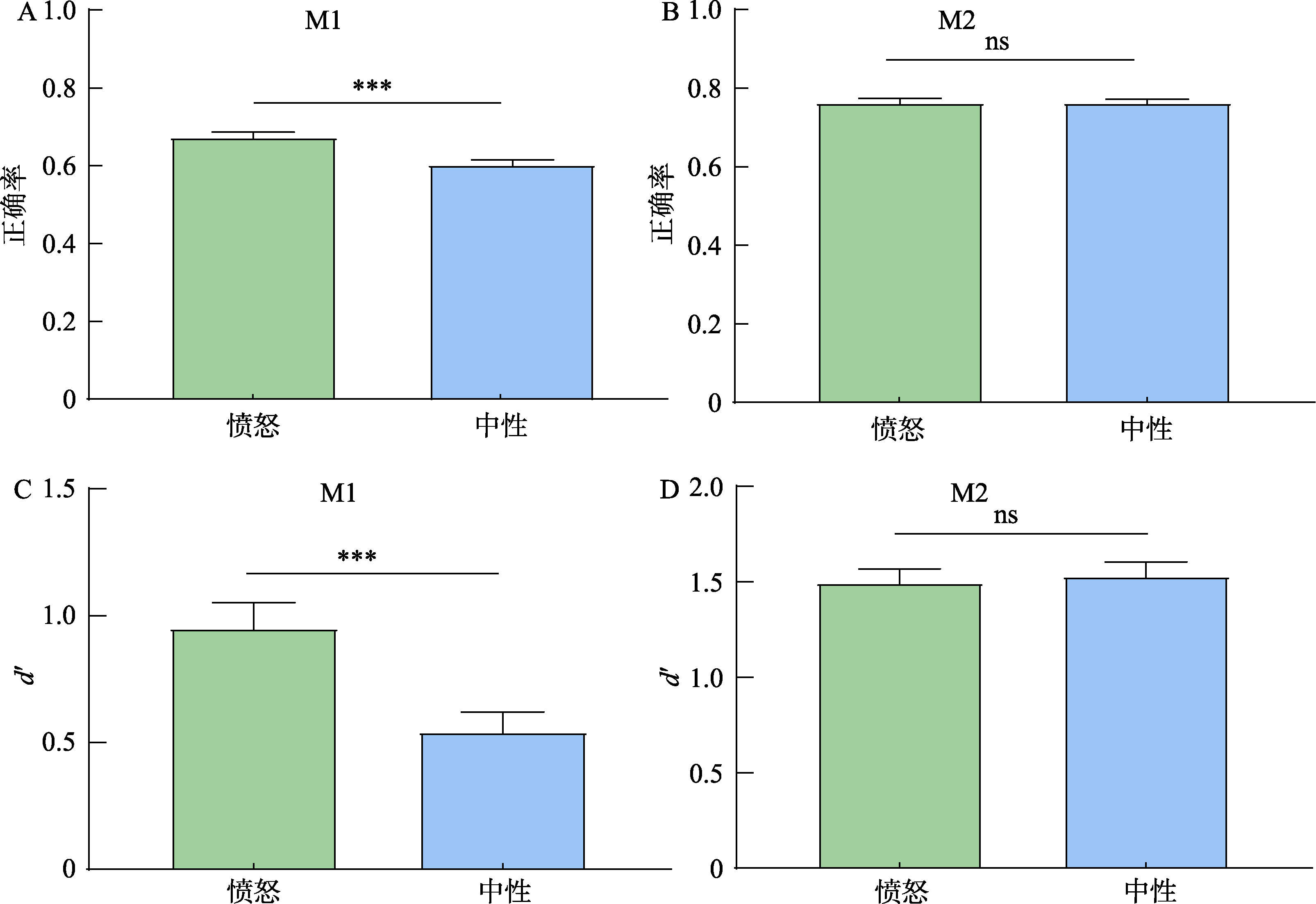
图2 行为结果图
注:***表示p < 0.001, ns代表p ≥ 0.05
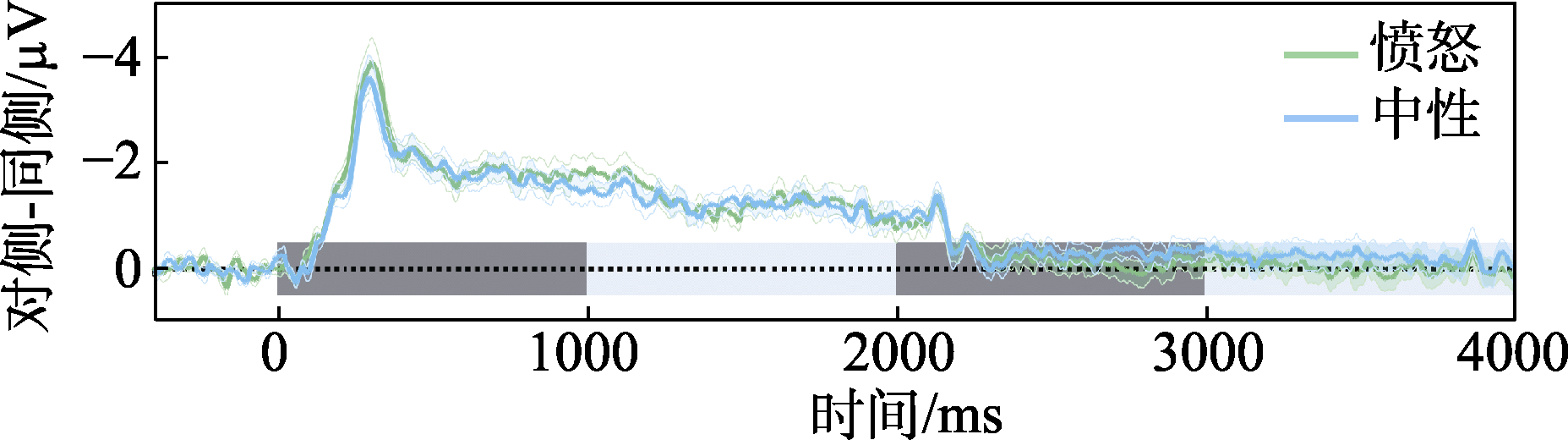
图3 CDA结果图 注:其中深灰色部分为刺激呈现阶段,浅灰色部分为维持期。彩图见电子版, 下同
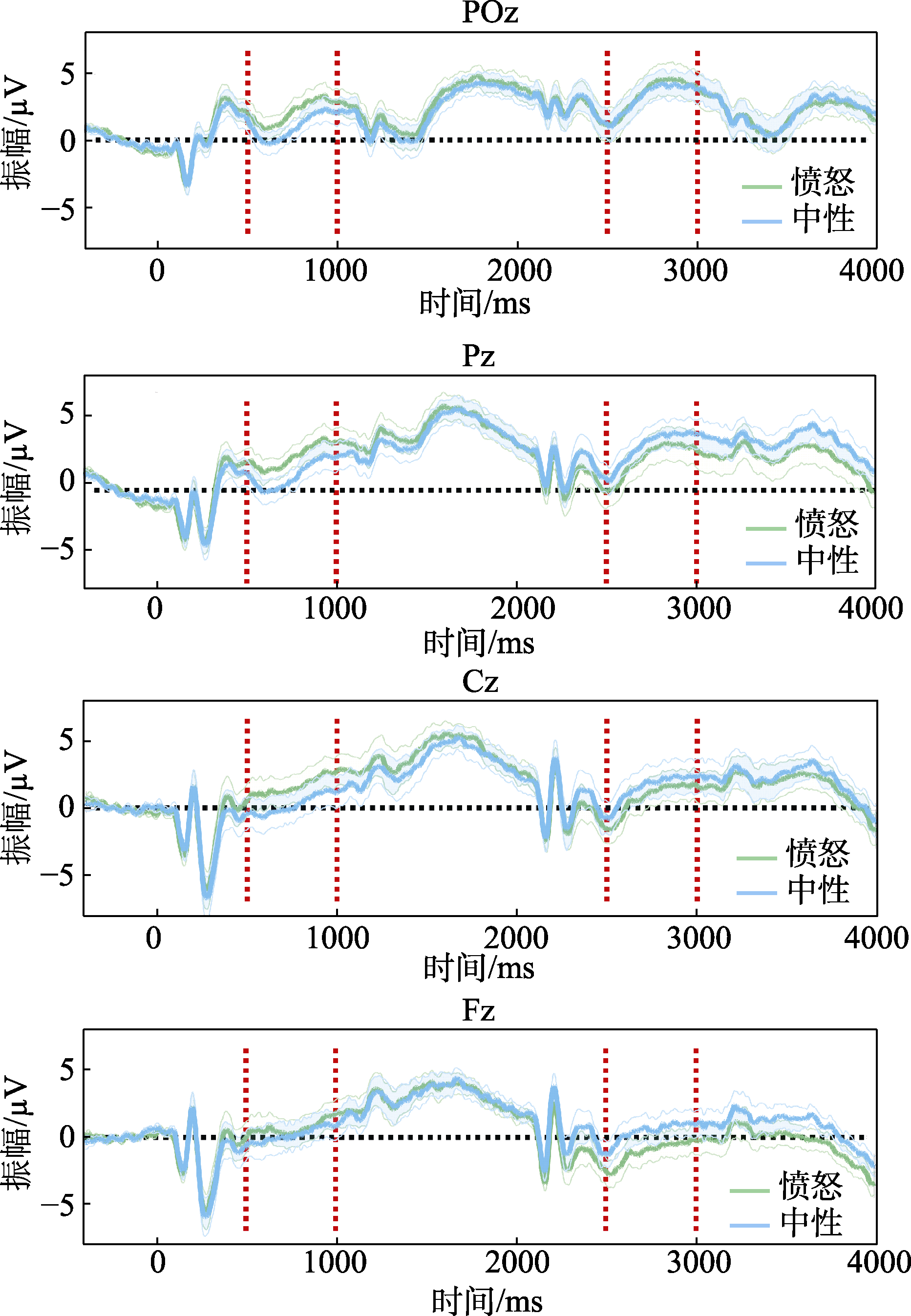
图4 两个条件下对应电极点的LPP成分 注:红色虚线部分为LPP在M1和M2刺激呈现期间分析时间窗
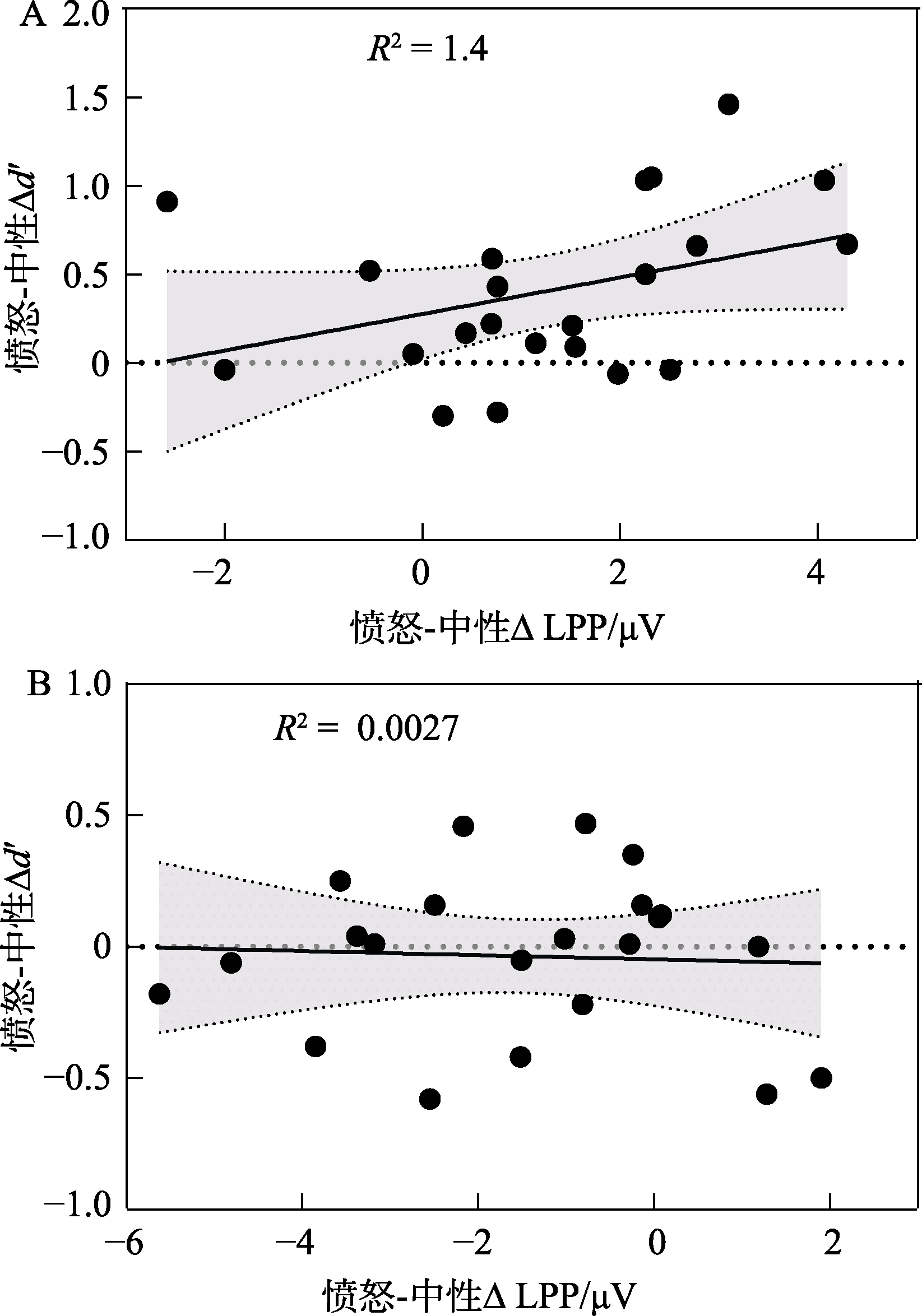
图5 两条件LPP和辨别力d'差值 (愤怒﹣中性) 线性相关关系图 注:图5A为M1编码阶段额叶LPP差值与比辨别力差值的相关图; 图5B为M2编码阶段额叶LPP差值与比辨别力差值的相关图
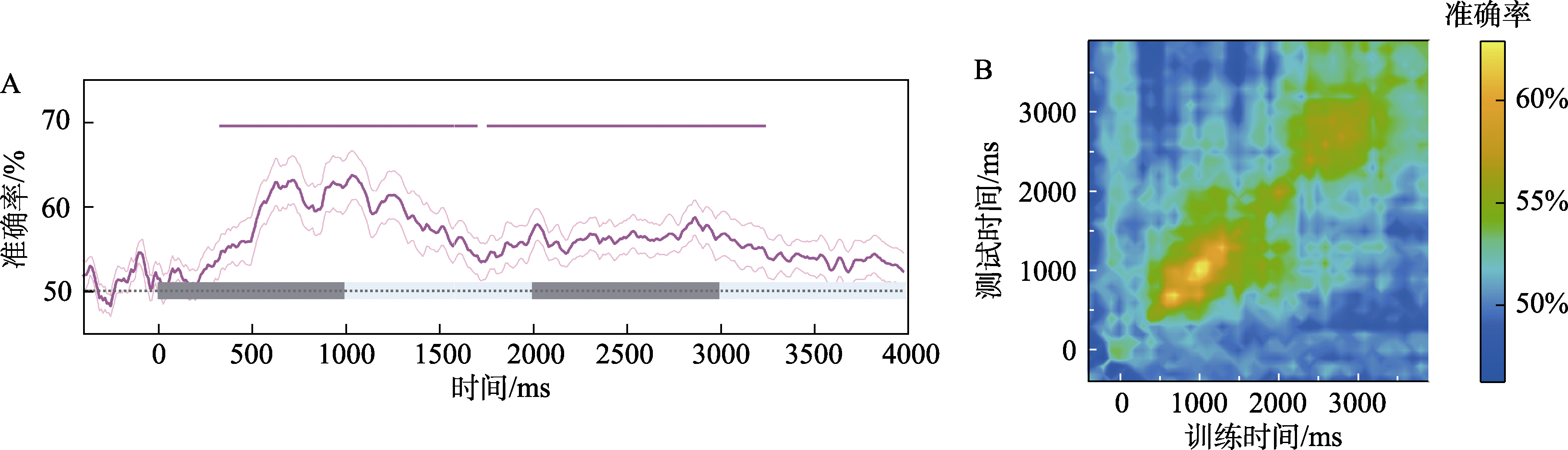
图6 ERP解码图及时间泛化分析图 注:图A为ERP解码图;图B为时间泛化分析图
| [1] | Ankaoua M., & Luria R. (2023). One turn at a time: Behavioral and ERP evidence for two types of rotations in the classical mental rotation task. Psychophysiology, 60(4), e14213. |
| [2] | Bae G. Y., & Luck S. J. (2019). Decoding motion direction using the topography of sustained ERPs and alpha oscillations. NeuroImage, 184, 242-255. |
| [3] |
Balaban H., & Luria R. (2015). The number of objects determines visual working memory capacity allocation for complex items. NeuroImage, 119, 54-62.
doi: 10.1016/j.neuroimage.2015.06.051 pmid: 26119024 |
| [4] |
Becker D. V., Kenrick D. T., Neuberg S. L., Blackwell K. C., & Smith D. M. (2007). The confounded nature of angry men and happy women. Journal of Personality and Social Psychology, 92(2), 179-190.
pmid: 17279844 |
| [5] |
Carver C. S., & Harmon-Jones E. (2009). Anger is an approach-related affect: Evidence and implications. Psychological Bulletin, 135(2), 183-204.
doi: 10.1037/a0013965 pmid: 19254075 |
| [6] | Chota S., & Van der Stigchel S. (2021). Dynamic and flexible transformation and reallocation of visual working memory representations. Visual Cognition, 29(7), 409-415. |
| [7] | Cohen J. (2013). Statistical power analysis for the behavioral sciences. Routledge. |
| [8] |
Ferrari V., Codispoti M., Cardinale R., & Bradley M. M. (2008). Directed and motivated attention during processing of natural scenes. Journal of Cognitive Neuroscience, 20(10), 1753-1761.
doi: 10.1162/jocn.2008.20121 pmid: 18370595 |
| [9] |
Ferreira de Sá D. S., Michael T., Wilhelm F. H., & Peyk P.(2019). Learning to see the threat: Temporal dynamics of ERPs of motivated attention in fear conditioning. Social Cognitive and Affective Neuroscience, 14(2), 189-203.
doi: 10.1093/scan/nsy103 pmid: 30481357 |
| [10] | Falkenberg I., Kohn N., Schoepker R., & Habel U. (2012). Mood induction in depressive patients: A comparative multidimensional approach. PloS One, 7(1), e30016. |
| [11] |
Figueira J. S., Oliveira L., Pereira M. G., Pacheco L. B., Lobo I., Motta-Ribeiro G. C., & David I. A. (2017). An unpleasant emotional state reduces working memory capacity: Electrophysiological evidence. Social Cognitive and Affective Neuroscience, 12(6), 984-992.
doi: 10.1093/scan/nsx030 pmid: 28402534 |
| [12] | Flores Jr L. E., & Berenbaum H. (2017). The social regulation of emotion and updating negative contents of working memory. Emotion, 17(4), 577. |
| [13] | Fox E., Lester V., Russo R., Bowles R., Pichler A., & Dutton K. (2000). Facial expressions of emotion: Are angry faces detected more efficiently? Cognition & Emotion, 14(1), 61-92. |
| [14] |
Gable P. A., & Adams D. L. (2013). Nonaffective motivation modulates the sustained LPP (1,000-2,000 ms). Psychophysiology, 50(12), 1251-1254.
doi: 10.1111/psyp.12135 pmid: 23941161 |
| [15] |
Hajcak G., MacNamara A., Foti D., Ferri J., & Keil A. (2013). The dynamic allocation of attention to emotion: Simultaneous and independent evidence from the late positive potential and steady state visual evoked potentials. Biological Psychology, 92(3), 447-455.
doi: 10.1016/j.biopsycho.2011.11.012 pmid: 22155660 |
| [16] | Jackson M. C., Linden D. E., & Raymond J. E. (2014). Angry expressions strengthen the encoding and maintenance of face identity representations in visual working memory. Cognition & Emotion, 28(2), 278-297. |
| [17] | Jackson M. C., & Raymond J. E. (2004). Visual working memory for faces. Journal of Vision, 4(8), 394. |
| [18] | Jackson M. C., Wu C.-Y., Linden D. E. J., & Raymond J. E. (2009). Enhanced visual short-term memory for angry faces. Journal of Experimental Psychology: Human Perception and Performance, 35(2), 363-374. |
| [19] |
JIA S., QI C., CHEN L., & REN Y. (2022). The effect of working memory load on feedback processing: Evidence from an event-related potentials (ERP) study. Acta Psychologica Sinica, 54(3), 248-258.
doi: 10.3724/SP.J.1041.2022.00248 |
|
[贾世伟, 齐丛丛, 陈乐乐, 任衍具. (2022). 工作记忆负荷对反馈加工过程的影响: 来自脑电研究的证据. 心理学报, 54(3), 248-258. ]
doi: 10.3724/SP.J.1041.2022.00248 |
|
| [20] | Kreither J., Papaioannou O., & Luck S. J. (2022). Active working memory and simple cognitive operations. Journal of Cognitive Neuroscience, 34(2), 313-331. |
| [21] | Kuo B.-C., Nobre A. C., Scerif G., & Astle D. E. (2016). Top-down activation of spatiotopic sensory codes in perceptual and working memory search. Journal of Cognitive Neuroscience, 28(7), 996-1009. |
| [22] |
LaRocque J. J., Lewis-Peacock J. A., Drysdale A. T., Oberauer K., & Postle B. R. (2013). Decoding attended information in short-term memory: An EEG study. Journal of Cognitive Neuroscience, 25(1), 127-142.
doi: 10.1162/jocn_a_00305 pmid: 23198894 |
| [23] | Lee H. J., & Cho Y. S. (2019). Memory facilitation for emotional faces: Visual working memory trade-offs resulting from attentional preference for emotional facial expressions. Memory & Cognition, 47(6), 1231-1243. |
| [24] |
Lewis-Peacock J. A., Drysdale A. T., Oberauer K., & Postle B. R. (2012). Neural evidence for a distinction between short-term memory and the focus of attention. Journal of Cognitive Neuroscience, 24(1), 61-79.
doi: 10.1162/jocn_a_00140 pmid: 21955164 |
| [25] | Li J., Cao D., Yu S., Xiao X., Imbach L., Stieglitz L., Sarnthein J., & Jiang T. (2023). Functional specialization and interaction in the amygdala-hippocampus circuit during working memory processing. Nature Communications, 14(1), 2921. |
| [26] |
Li S., Xie H., Zheng Z., Chen W., Xu F., Hu X., & Zhang D. (2022). The causal role of the bilateral ventrolateral prefrontal cortices on emotion regulation of social feedback. Human Brain Mapping, 43(9), 2898-2910.
doi: 10.1002/hbm.25824 pmid: 35261115 |
| [27] | Li Z., Guo W., Zhao N., & Liu Q. (2024). The suppression mechanisms of passive memory in visual working memory: The evidence from electroencephalography. Journal of Cognitive Neuroscience, 37(2), 334-344 |
| [28] | Li Z., Liang T., & Liu Q. (2021). The storage resources of the active and passive states are independent in visual working memory. Cognition, 217, 104911. |
| [29] |
Li Z., Ren G., Yuan Z., Yu Q., Wu Y., & Liu Q. (2025). Offline memory representations have robustness superiority in visual working memory. Acta Psychologica Sinica, 57(5), 739-748.
doi: 10.3724/SP.J.1041.2025.0739 |
|
[李子媛, 任国防, 袁子昕, 喻青青, 伍越, 刘强. (2025). 视觉工作记忆离线态表征具有稳固性优势. 心理学报, 57(5), 739-748.]
doi: 10.3724/SP.J.1041.2025.0739 |
|
| [30] | Liang T. (2023). Research on the processing mechanism of dual representation states in visual working memory [Unpublished doctoral dissertation]. Liaoning Normal University, China. |
| [梁腾飞. (2023). 视觉工作记忆双重表征态的加工机制研究 (博士学位论文). 辽宁师范大学.] | |
| [31] | Lin H., & Liang J. (2023). The priming effects of emotional vocal expressions on face encoding and recognition: An ERP study. International Journal of Psychophysiology, 183, 32-40. |
| [32] | Long F., Ye C., Li Z., Tian Y., & Liu Q. (2020). Negative emotional state modulates visual working memory in the late consolidation phase. Cognition and Emotion, 34(8), 1646-1663. |
| [33] | Mallett R., Mummaneni A., & Lewis-Peacock J. A. (2020). Distraction biases working memory for faces. Psychonomic Bulletin & Review, 27(2), 350-356. |
| [34] | Mauss I. B., Bunge S. A., & Gross J. J. (2007). Automatic emotion regulation. Social and Personality Psychology Compass, 1(1), 146-167. |
| [35] | Moratti S., Saugar C., & Strange B. A. (2011). Prefrontal- occipitoparietal coupling underlies late latency human neuronal responses to emotion. The Journal of Neuroscience, 31(47), 17278-17286. |
| [36] |
Most S. B., Chun M. M., Johnson M. R., & Kiehl K. A. (2006). Attentional modulation of the amygdala varies with personality. NeuroImage, 31(2), 934-944.
pmid: 16492400 |
| [37] | Muhle-Karbe P. S., Myers N. E., & Stokes M. G. (2021). A hierarchy of functional states in working memory. The Journal of Neuroscience, 41(20), 4461-4475. |
| [38] | Oberauer K. (2002). Access to information in working memory: Exploring the focus of attention. Journal of Experimental Psychology: Learning, Memory, and Cognition, 28(3), 411. |
| [39] | Ribes-Guardiola P., Ventura-Bort C., Poy R., Segarra P., Branchadell V., & Moltó J. (2023). Attention-affect interactions and triarchic psychopathy: New electrophysiological insights from the late positive potential. Psychophysiology, 60(4), e14222. |
| [40] |
Richter-Levin G., & Akirav I. (2000). Amygdala-hippocampus dynamic interaction in relation to memory. Molecular Neurobiology, 22(1-3), 11-20.
doi: 10.1385/MN:22:1-3:011 pmid: 11414274 |
| [41] | Rose N. S. (2020). The dynamic-processing model of working memory. Current Directions in Psychological Science, 29(4), 378-387. |
| [42] | Schindler S., Bruchmann M., & Straube T. (2022). Feature-based attention interacts with emotional picture content during mid-latency and late ERP processing stages. Biological Psychology, 170, 108310. |
| [43] |
Schindler S., & Bublatzky F. (2020). Attention and emotion: An integrative review of emotional face processing as a function of attention. Cortex, 130, 362-386.
doi: S0010-9452(20)30262-8 pmid: 32745728 |
| [44] |
Schneider F., Gur R. C., Gur R. E., & Muenz L. R. (1994). Standardized mood induction with happy and sad facial expressions. Psychiatry Research, 51(1), 19-31.
pmid: 8197269 |
| [45] |
Sessa P., Luria R., Gotler A., Jolicœur P., & Dell'acqua R. (2011). Interhemispheric ERP asymmetries over inferior parietal cortex reveal differential visual working memory maintenance for fearful versus neutral facial identities. Psychophysiology, 48(2), 187-197.
doi: 10.1111/j.1469-8986.2010.01046.x pmid: 20557488 |
| [46] |
Srivastava S., Sharma H. O., & Mandal M. K. (2003). Mood induction with facial expressions of emotion in patients with generalized anxiety disorder. Depression and Anxiety, 18(3), 144-148.
pmid: 14625879 |
| [47] | Thomas G. D., & Ghulum B. (1994). Solving multiclass learning problems via error-correcting output codes. Journal of Artificial Intelligence Research, 2(1), 263-286. |
| [48] |
Wang S., Rajsic J., & Woodman G. F. (2019). The contralateral delay activity tracks the sequential loading of objects into visual working memory, unlike lateralized alpha oscillations. Journal of Cognitive Neuroscience, 31(11), 1689-1698.
doi: 10.1162/jocn_a_01446 pmid: 31274391 |
| [49] | Xie W., Ye C., & Zhang W. (2023). Negative emotion reduces visual working memory recall variability: A meta-analytical review. Emotion, 23(3), 859-871. |
| [50] | Ye C., Liu R., Guo L., Zhao G., & Liu Q. (2024). A negative emotional state impairs individuals’ ability to filter distractors from working memory: An ERP study. Cognitive, Affective, & Behavioral Neuroscience, 24(3), 491-504. |
| [51] |
Ye C., Xu Q., Liu Q., Cong F., Saariluoma P., Ristaniemi T., & Astikainen P. (2018). The impact of visual working memory capacity on the filtering efficiency of emotional face distractors. Biological Psychology, 138, 63-72.
doi: S0301-0511(18)30588-X pmid: 30125615 |
| [52] |
Young A. W., & Burton A. M. (2018). Are we face experts? Trends in Cognitive Sciences, 22(2), 100-110.
doi: S1364-6613(17)30247-4 pmid: 29254899 |
| [53] | Zhang J., Ye C., Sun H. J., Zhou J., Liang T., Li Y., & Liu Q. (2022). The passive state: A protective mechanism for information in working memory tasks. Journal of Experimental Psychology: Learning, Memory, and Cognition, 48(9), 1235-1248. |
| [1] | 李子媛, 任国防, 袁子昕, 喻青青, 伍越, 刘强. 视觉工作记忆离线态表征具有稳固性优势[J]. 心理学报, 2025, 57(5): 739-748. |
| [2] | 连浩敏, 张倩, 谷雪敏, 李寿欣. 持续性视觉注意对视觉工作记忆项目优先加工的影响[J]. 心理学报, 2025, 57(2): 191-206. |
| [3] | 李子媛, 雷鸣, 刘强. 视觉工作记忆离线态表征的生成机制[J]. 心理学报, 2024, 56(4): 412-420. |
| [4] | 庞超, 陈颜璋, 王莉, 杨喜端, 贺雅, 李芷莹, 欧阳小钰, 傅世敏, 南威治. 客体信息在视觉工作记忆编码和维持阶段的不同注意选择模式[J]. 心理学报, 2023, 55(9): 1397-1410. |
| [5] | 孙博, 曾宪卿, 许恺煜, 谢韵婷, 傅世敏. 情绪面孔的意识神经相关物及其无意识自动加工:来自事件相关电位的证据[J]. 心理学报, 2022, 54(8): 867-880. |
| [6] | 孙彦良, 宋佳汝, 辛晓雯, 丁晓伟, 李寿欣. 视觉工作记忆的同类别存储优势[J]. 心理学报, 2021, 53(11): 1189-1202. |
| [7] | 张琪, 邓娜丽, 姜秀敏, 李卫君. 自我相关性影响情绪词汇加工的时间进程[J]. 心理学报, 2020, 52(8): 946-957. |
| [8] | 叶超雄, 胡中华, 梁腾飞, 张加峰, 许茜如, 刘强. 视觉工作记忆回溯线索效应的产生机制:认知阶段分离[J]. 心理学报, 2020, 52(4): 399-413. |
| [9] | 张頔, 郝仁宁, 刘强. 注意范围分布对视觉工作记忆巩固过程的影响[J]. 心理学报, 2019, 51(7): 772-780. |
| [10] | 李寿欣, 车晓玮, 李彦佼, 王丽, 陈恺盛. 视觉工作记忆负载类型对注意选择的影响[J]. 心理学报, 2019, 51(5): 527-542. |
| [11] | 王思思, 库逸轩. 右侧背外侧前额叶在视觉工作记忆中的因果性作用[J]. 心理学报, 2018, 50(7): 727-738. |
| [12] | 王静, 薛成波, 刘强. 客体同维度特征的视觉工作记忆存储机制[J]. 心理学报, 2018, 50(2): 176-185. |
| [13] | 黄羽商, 曹立人. 基于空间方位信息的构型对视觉工作记忆绩效的影响[J]. 心理学报, 2018, 50(11): 1222-1234. |
| [14] | 付艺蕾, 罗跃嘉, 崔芳. 选择一致性影响结果评价的ERP研究[J]. 心理学报, 2017, 49(8): 1089-1099. |
| [15] | 李腾飞, 马 楠, 胡中华, 刘 强. 空间距离对视觉工作记忆巩固的影响[J]. 心理学报, 2017, 49(6): 711-722. |
| 阅读次数 | ||||||
|
全文 |
|
|||||
|
摘要 |
|
|||||
