

ISSN 0439-755X
CN 11-1911/B
主办:中国心理学会
中国科学院心理研究所
出版:科学出版社
CN 11-1911/B
主办:中国心理学会
中国科学院心理研究所
出版:科学出版社
心理学报 ›› 2026, Vol. 58 ›› Issue (3): 534-557.doi: 10.3724/SP.J.1041.2026.0534 cstr: 32110.14.2026.0534
屈国梁1, 鞠恩霞1, 薛一宁2, 陈煦海1, 罗扬眉1( )
)
收稿日期:2024-11-26
发布日期:2025-12-26
出版日期:2026-03-25
通讯作者:
罗扬眉, E-mail: yangmeiluo@snnu.edu.cn基金资助:
QU Guoliang1, JU Enxia1, XUE Yining2, CHEN Xuhai1, LUO Yangmei1()
Received:2024-11-26
Online:2025-12-26
Published:2026-03-25
摘要:
志愿服务对于社会治理具有重要价值。以往研究强调通过增强动机或角色认同去促进志愿服务参与, 却忽视了习惯在志愿服务行为中的作用。并且, 内外奖励和情境线索稳定性与志愿服务行为习惯之间的关系机制尚不清楚。因此, 采用深度访谈和问卷调查, 设计3个子研究, 探讨内外奖励和情境线索稳定性对志愿服务行为习惯的影响。结果发现, 内在奖励(包括意义感、快乐感和自我价值感)、外在奖励(包括荣誉奖励、物质奖励和社会支持与认可)和情境线索稳定性(包括时间、地点、活动类型、人际和情绪状态稳定性)显著正向预测志愿服务行为习惯; 内外奖励与情境线索稳定性对志愿服务行为习惯具有交互效应, 即当情境线索稳定性更低时, 内在或外在奖励对志愿服务行为习惯的正向预测作用更强。这表明, 内外奖励和情境线索稳定性是志愿服务行为习惯的重要促进因素且交互影响着志愿服务行为习惯。
中图分类号:
屈国梁, 鞠恩霞, 薛一宁, 陈煦海, 罗扬眉. (2026). 内外奖励和情境线索稳定性对志愿服务行为习惯的交互影响. 心理学报, 58(3), 534-557.
QU Guoliang, JU Enxia, XUE Yining, CHEN Xuhai, LUO Yangmei. (2026). The interactive effects of intrinsic and extrinsic rewards and context stability on volunteers’ volunteering habits. Acta Psychologica Sinica, 58(3), 534-557.
| 主题 | 子主题 | Kappa | 编码关键词句 |
|---|---|---|---|
| 内在奖励 | 意义感 | 0.91 | 有意义的、正确的 |
| 快乐感 | 0.84 | 快乐、开心、愉悦、舒服 | |
| 自我价值感 | 0.82 | 自我价值、被需要、有用的、有帮助的、有价值的 | |
| 外在奖励 | 荣誉奖励 | 0.79 | 荣誉称号、荣誉证书、奖牌、勋章、徽章、纪念品 |
| 物质奖励 | 0.79 | 米、面、油、钱、学分、补贴、交通餐饮补助 | |
| 社会支持与认可 | 0.71 | 他人的认可、被肯定、被尊重、被赞赏、跟我说谢谢、支持我 | |
| 情境线索 稳定性 | 时间线索稳定性 | 0.69 | 周末、海洋日、寒暑假、放假的时候 |
| 地点线索稳定性 | 0.93 | 特定的点、固定去一个社区、考虑通勤时间 | |
| 活动类型稳定性 | 0.67 | 固定做几种类型的志愿服务、匹配自己的兴趣、爱好、能力 | |
| 人际线索稳定性 | 0.72 | 可以相互帮忙、志愿搭子、一起去做 | |
| 情绪状态稳定性 | 0.69 | 调整心态、饱满的精神状态、面带微笑 |
表1 编码所确定的主题、子主题以及编码关键词句
| 主题 | 子主题 | Kappa | 编码关键词句 |
|---|---|---|---|
| 内在奖励 | 意义感 | 0.91 | 有意义的、正确的 |
| 快乐感 | 0.84 | 快乐、开心、愉悦、舒服 | |
| 自我价值感 | 0.82 | 自我价值、被需要、有用的、有帮助的、有价值的 | |
| 外在奖励 | 荣誉奖励 | 0.79 | 荣誉称号、荣誉证书、奖牌、勋章、徽章、纪念品 |
| 物质奖励 | 0.79 | 米、面、油、钱、学分、补贴、交通餐饮补助 | |
| 社会支持与认可 | 0.71 | 他人的认可、被肯定、被尊重、被赞赏、跟我说谢谢、支持我 | |
| 情境线索 稳定性 | 时间线索稳定性 | 0.69 | 周末、海洋日、寒暑假、放假的时候 |
| 地点线索稳定性 | 0.93 | 特定的点、固定去一个社区、考虑通勤时间 | |
| 活动类型稳定性 | 0.67 | 固定做几种类型的志愿服务、匹配自己的兴趣、爱好、能力 | |
| 人际线索稳定性 | 0.72 | 可以相互帮忙、志愿搭子、一起去做 | |
| 情绪状态稳定性 | 0.69 | 调整心态、饱满的精神状态、面带微笑 |
| 变量名 | 1 | 2 | 3 | 4 | 5 | 6 | 7 | 8 |
|---|---|---|---|---|---|---|---|---|
| 1. 性别 | 1 | 0.04 | 0.01 | −0.08** | 0.04 | 0.06* | −0.02 | −0.01 |
| 2. 年龄 | −0.14*** | 1 | −0.07** | −0.53*** | 0.17*** | 0.14*** | −0.03 | 0.04 |
| 3. 受教育程度 | −0.03 | 0.40*** | 1 | 0.04 | 0.07** | 0.03 | 0.07** | −0.07** |
| 4. 婚姻状况 | 0.08* | −0.19*** | 0.04 | 1 | −0.17*** | −0.06* | −0.02 | −0.07* |
| 5. 习惯强度 | 0.00 | −0.12*** | 0.04 | −0.03 | 1 | 0.55*** | 0.46*** | 0.43*** |
| 6. 内在奖励 | 0.05 | −0.05 | −0.01 | 0.09** | 0.52*** | 1 | 0.37*** | 0.32*** |
| 7. 外在奖励 | −0.10** | 0.07* | 0.02 | 0.01 | 0.50*** | 0.47*** | 1 | 0.43*** |
| 8. 情境线索稳定性 | −0.05 | 0.06 | −0.02 | 0.02 | 0.42*** | 0.33*** | 0.39*** | 1 |
| M社会人士 (SD) | − | 28.62 (5.81) | − | − | 5.40 (0.80) | 6.21 (0.70) | 5.28 (0.91) | 5.39 (1.05) |
| M学生 (SD) | − | 21.09 (2.06) | − | − | 5.18 (0.79) | 6.12 (0.70) | 5.34 (0.89) | 5.35 (0.96) |
表2 各变量的描述性统计结果及相关关系(N社会人士 + 学生 = 1572 + 853)
| 变量名 | 1 | 2 | 3 | 4 | 5 | 6 | 7 | 8 |
|---|---|---|---|---|---|---|---|---|
| 1. 性别 | 1 | 0.04 | 0.01 | −0.08** | 0.04 | 0.06* | −0.02 | −0.01 |
| 2. 年龄 | −0.14*** | 1 | −0.07** | −0.53*** | 0.17*** | 0.14*** | −0.03 | 0.04 |
| 3. 受教育程度 | −0.03 | 0.40*** | 1 | 0.04 | 0.07** | 0.03 | 0.07** | −0.07** |
| 4. 婚姻状况 | 0.08* | −0.19*** | 0.04 | 1 | −0.17*** | −0.06* | −0.02 | −0.07* |
| 5. 习惯强度 | 0.00 | −0.12*** | 0.04 | −0.03 | 1 | 0.55*** | 0.46*** | 0.43*** |
| 6. 内在奖励 | 0.05 | −0.05 | −0.01 | 0.09** | 0.52*** | 1 | 0.37*** | 0.32*** |
| 7. 外在奖励 | −0.10** | 0.07* | 0.02 | 0.01 | 0.50*** | 0.47*** | 1 | 0.43*** |
| 8. 情境线索稳定性 | −0.05 | 0.06 | −0.02 | 0.02 | 0.42*** | 0.33*** | 0.39*** | 1 |
| M社会人士 (SD) | − | 28.62 (5.81) | − | − | 5.40 (0.80) | 6.21 (0.70) | 5.28 (0.91) | 5.39 (1.05) |
| M学生 (SD) | − | 21.09 (2.06) | − | − | 5.18 (0.79) | 6.12 (0.70) | 5.34 (0.89) | 5.35 (0.96) |
| 变量 | 习惯强度 | ||||||||||
|---|---|---|---|---|---|---|---|---|---|---|---|
| 社会人士:模型a (R2 = 0.43) | 学生:模型b (R2 = 0.40) | 路径系数多组比较 | |||||||||
| β | SE | p | 95% CI | β | SE | p | 95% CI | χ2 | df | p | |
| 1. 性别 | 0.01 | 0.02 | 0.479 | [−0.02, 0.05] | 0.04 | 0.03 | 0.169 | [−0.02, 0.09] | |||
| 2. 年龄 | 0.07 | 0.02 | 0.004 | [0.02, 0.12] | 0.10 | 0.03 | 0.001 | [0.04, 0.15] | |||
| 3. 受教育程度 | 0.06 | 0.02 | 0.001 | [0.03, 0.10] | 0.01 | 0.03 | 0.664 | [−0.04, 0.07] | |||
| 4. 婚姻状况 | −0.09 | 0.02 | <0.001 | [−0.13, −0.04] | −0.05 | 0.03 | 0.051 | [−0.11, 0.00] | |||
| 5. 内在奖励 | 0.38 | 0.02 | <0.001 | [0.34, 0.42] | 0.35 | 0.03 | <0.001 | [0.29, 0.41] | 1.10 | 1 | 0.294 |
| 6. 外在奖励 | 0.22 | 0.02 | <0.001 | [0.18, 0.27] | 0.25 | 0.03 | <0.001 | [0.19, 0.31] | 0.58 | 1 | 0.445 |
| 7. 情境线索稳定性 | 0.21 | 0.02 | <0.001 | [0.16, 0.25] | 0.20 | 0.03 | <0.001 | [0.14, 0.26] | 0.03 | 1 | 0.866 |
表3 内外奖励与情境线索稳定性对志愿服务行为习惯强度的预测作用(N社会人士 + 学生 = 1572 + 853)
| 变量 | 习惯强度 | ||||||||||
|---|---|---|---|---|---|---|---|---|---|---|---|
| 社会人士:模型a (R2 = 0.43) | 学生:模型b (R2 = 0.40) | 路径系数多组比较 | |||||||||
| β | SE | p | 95% CI | β | SE | p | 95% CI | χ2 | df | p | |
| 1. 性别 | 0.01 | 0.02 | 0.479 | [−0.02, 0.05] | 0.04 | 0.03 | 0.169 | [−0.02, 0.09] | |||
| 2. 年龄 | 0.07 | 0.02 | 0.004 | [0.02, 0.12] | 0.10 | 0.03 | 0.001 | [0.04, 0.15] | |||
| 3. 受教育程度 | 0.06 | 0.02 | 0.001 | [0.03, 0.10] | 0.01 | 0.03 | 0.664 | [−0.04, 0.07] | |||
| 4. 婚姻状况 | −0.09 | 0.02 | <0.001 | [−0.13, −0.04] | −0.05 | 0.03 | 0.051 | [−0.11, 0.00] | |||
| 5. 内在奖励 | 0.38 | 0.02 | <0.001 | [0.34, 0.42] | 0.35 | 0.03 | <0.001 | [0.29, 0.41] | 1.10 | 1 | 0.294 |
| 6. 外在奖励 | 0.22 | 0.02 | <0.001 | [0.18, 0.27] | 0.25 | 0.03 | <0.001 | [0.19, 0.31] | 0.58 | 1 | 0.445 |
| 7. 情境线索稳定性 | 0.21 | 0.02 | <0.001 | [0.16, 0.25] | 0.20 | 0.03 | <0.001 | [0.14, 0.26] | 0.03 | 1 | 0.866 |
| 变量 | 习惯强度 | ||||||||||
|---|---|---|---|---|---|---|---|---|---|---|---|
| 社会人士:模型a (R2 = 0.43) | 学生:模型b (R2 = 0.41) | 路径系数多组比较 | |||||||||
| β | SE | p | 95% CI | β | SE | p | 95% CI | χ2 | df | p | |
| 1. 性别 | 0.01 | 0.02 | 0.476 | [−0.02, 0.05] | 0.04 | 0.03 | 0.138 | [−0.01, 0.09] | |||
| 2. 年龄 | 0.07 | 0.02 | 0.003 | [0.02, 0.12] | 0.10 | 0.03 | 0.001 | [0.04, 0.15] | |||
| 3. 受教育程度 | 0.06 | 0.02 | 0.001 | [0.03, 0.10] | 0.01 | 0.03 | 0.730 | [−0.05, 0.07] | |||
| 4. 婚姻状况 | −0.09 | 0.02 | <0.001 | [−0.13, −0.04] | −0.05 | 0.03 | 0.057 | [−0.11, 0.002] | |||
| 5. 内在奖励 | 0.56 | 0.09 | <0.001 | [0.40, 0.73] | 0.69 | 0.15 | <0.001 | [0.40, 0.98] | |||
| 6. 外在奖励 | 0.10 | 0.10 | 0.287 | [−0.09, 0.29] | 0.14 | 0.16 | 0.362 | [−0.16, 0.45] | |||
| 7. 情境线索稳定性 | 0.44 | 0.15 | 0.002 | [0.16, 0.73] | 0.68 | 0.22 | 0.002 | [0.26, 1.10] | |||
| 8. 内在奖励×情境线索稳定性 | −0.46 | 0.21 | 0.029 | [−0.87, −0.05] | −0.77 | 0.33 | 0.018 | [−1.41, −0.13] | 0.78 | 1 | 0.379 |
| 9. 外在奖励×情境线索稳定性 | 0.21 | 0.17 | 0.217 | [−0.12, 0.53] | 0.18 | 0.26 | 0.484 | [−0.33, 0.69] | 0.00 | 1 | 0.955 |
表4 内外奖励与情境线索稳定性对志愿服务行为习惯强度的交互效应(N社会人士 + 学生 = 1572 + 853)
| 变量 | 习惯强度 | ||||||||||
|---|---|---|---|---|---|---|---|---|---|---|---|
| 社会人士:模型a (R2 = 0.43) | 学生:模型b (R2 = 0.41) | 路径系数多组比较 | |||||||||
| β | SE | p | 95% CI | β | SE | p | 95% CI | χ2 | df | p | |
| 1. 性别 | 0.01 | 0.02 | 0.476 | [−0.02, 0.05] | 0.04 | 0.03 | 0.138 | [−0.01, 0.09] | |||
| 2. 年龄 | 0.07 | 0.02 | 0.003 | [0.02, 0.12] | 0.10 | 0.03 | 0.001 | [0.04, 0.15] | |||
| 3. 受教育程度 | 0.06 | 0.02 | 0.001 | [0.03, 0.10] | 0.01 | 0.03 | 0.730 | [−0.05, 0.07] | |||
| 4. 婚姻状况 | −0.09 | 0.02 | <0.001 | [−0.13, −0.04] | −0.05 | 0.03 | 0.057 | [−0.11, 0.002] | |||
| 5. 内在奖励 | 0.56 | 0.09 | <0.001 | [0.40, 0.73] | 0.69 | 0.15 | <0.001 | [0.40, 0.98] | |||
| 6. 外在奖励 | 0.10 | 0.10 | 0.287 | [−0.09, 0.29] | 0.14 | 0.16 | 0.362 | [−0.16, 0.45] | |||
| 7. 情境线索稳定性 | 0.44 | 0.15 | 0.002 | [0.16, 0.73] | 0.68 | 0.22 | 0.002 | [0.26, 1.10] | |||
| 8. 内在奖励×情境线索稳定性 | −0.46 | 0.21 | 0.029 | [−0.87, −0.05] | −0.77 | 0.33 | 0.018 | [−1.41, −0.13] | 0.78 | 1 | 0.379 |
| 9. 外在奖励×情境线索稳定性 | 0.21 | 0.17 | 0.217 | [−0.12, 0.53] | 0.18 | 0.26 | 0.484 | [−0.33, 0.69] | 0.00 | 1 | 0.955 |
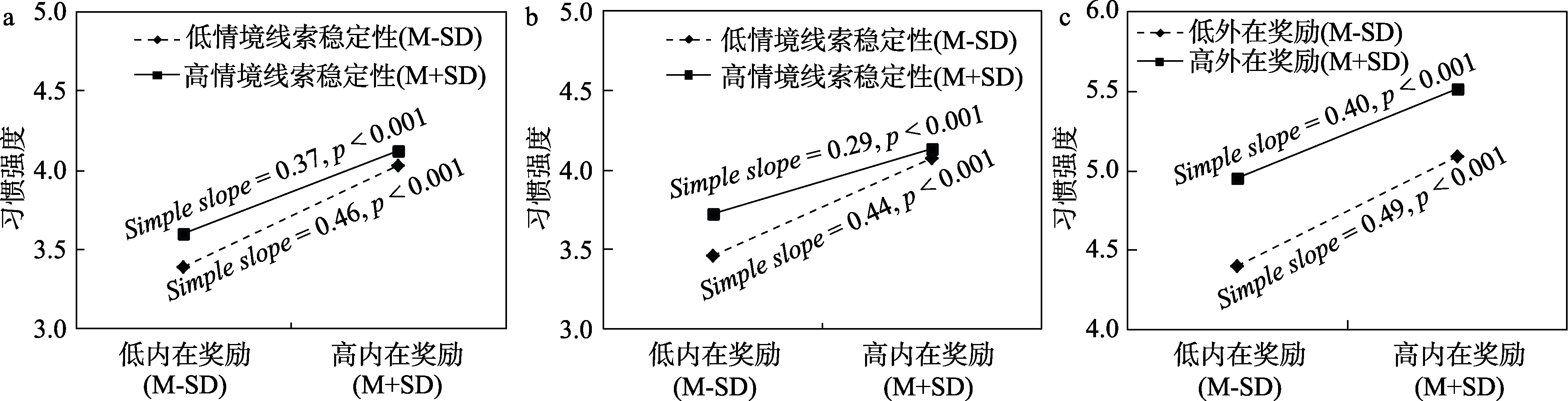
图1 交互效应的简单斜率分析 注:图1a为在社会人士志愿者样本(N = 1572)中内在奖励与情境线索稳定性对志愿服务行为习惯强度交互效应的简单斜率分析; 图1b为在学生志愿者样本(N = 853)中内在奖励与情境线索稳定性对志愿服务行为习惯强度交互效应的简单斜率分析; 图1c为在社会人士志愿者样本(N = 1572)中内在奖励与外在奖励对志愿服务行为习惯强度交互效应的简单斜率分析。
| 变量 | 习惯强度 | ||||||||||
|---|---|---|---|---|---|---|---|---|---|---|---|
| 社会人士:模型a (R2 = 0.40) | 学生:模型b (R2 = 0.37) | 路径系数多组比较 | |||||||||
| β | SE | p | 95% CI | β | SE | p | 95% CI | χ2 | df | p | |
| 1. 性别 | 0.01 | 0.02 | 0.526 | [−0.03, 0.05] | 0.03 | 0.03 | 0.247 | [−0.02, 0.09] | |||
| 2. 年龄 | 0.07 | 0.02 | 0.004 | [0.02, 0.12] | 0.11 | 0.03 | <0.001 | [0.05, 0.17] | |||
| 3. 受教育程度 | 0.04 | 0.02 | 0.025 | [0.01, 0.08] | 0.00 | 0.03 | 0.945 | [−0.06, 0.06] | |||
| 4. 婚姻状况 | −0.10 | 0.02 | <0.001 | [−0.14, −0.05] | −0.05 | 0.03 | 0.072 | [−0.11, 0.004] | |||
| 5. 内在奖励 | 0.63 | 0.07 | <0.001 | [0.48, 0.77] | 0.40 | 0.12 | 0.001 | [0.16, 0.64] | |||
| 6. 外在奖励 | 0.67 | 0.13 | <0.001 | [0.42, 0.93] | 0.33 | 0.20 | 0.095 | [−0.06, 0.71] | |||
| 7. 内在奖励×外在奖励 | −0.49 | 0.17 | 0.004 | [−0.83, −0.16] | −0.02 | 0.27 | 0.928 | [−0.56, 0.51] | 2.23 | 1 | 0.135 |
表5 内在奖励与外在奖励对志愿服务行为习惯强度的交互效应(N社会人士 + 学生 = 1572 + 853)
| 变量 | 习惯强度 | ||||||||||
|---|---|---|---|---|---|---|---|---|---|---|---|
| 社会人士:模型a (R2 = 0.40) | 学生:模型b (R2 = 0.37) | 路径系数多组比较 | |||||||||
| β | SE | p | 95% CI | β | SE | p | 95% CI | χ2 | df | p | |
| 1. 性别 | 0.01 | 0.02 | 0.526 | [−0.03, 0.05] | 0.03 | 0.03 | 0.247 | [−0.02, 0.09] | |||
| 2. 年龄 | 0.07 | 0.02 | 0.004 | [0.02, 0.12] | 0.11 | 0.03 | <0.001 | [0.05, 0.17] | |||
| 3. 受教育程度 | 0.04 | 0.02 | 0.025 | [0.01, 0.08] | 0.00 | 0.03 | 0.945 | [−0.06, 0.06] | |||
| 4. 婚姻状况 | −0.10 | 0.02 | <0.001 | [−0.14, −0.05] | −0.05 | 0.03 | 0.072 | [−0.11, 0.004] | |||
| 5. 内在奖励 | 0.63 | 0.07 | <0.001 | [0.48, 0.77] | 0.40 | 0.12 | 0.001 | [0.16, 0.64] | |||
| 6. 外在奖励 | 0.67 | 0.13 | <0.001 | [0.42, 0.93] | 0.33 | 0.20 | 0.095 | [−0.06, 0.71] | |||
| 7. 内在奖励×外在奖励 | −0.49 | 0.17 | 0.004 | [−0.83, −0.16] | −0.02 | 0.27 | 0.928 | [−0.56, 0.51] | 2.23 | 1 | 0.135 |
| 变量名 | 1 | 2 | 3 | 4 | 5 | 6 | 7 | 8 | 9 | 10 | 11 | 12 |
|---|---|---|---|---|---|---|---|---|---|---|---|---|
| 1. T1习惯强度 | 1 | |||||||||||
| 2. T2习惯强度 | 0.59*** | 1 | ||||||||||
| 3. T3习惯强度 | 0.57*** | 0.73*** | 1 | |||||||||
| 4. T1内在奖励 | 0.47*** | 0.38*** | 0.38*** | 1 | ||||||||
| 5. T2内在奖励 | 0.45*** | 0.60*** | 0.49*** | 0.61*** | 1 | |||||||
| 6. T3内在奖励 | 0.38*** | 0.52*** | 0.58*** | 0.56*** | 0.72*** | 1 | ||||||
| 7. T1外在奖励 | 0.49*** | 0.38*** | 0.38*** | 0.37*** | 0.33*** | 0.30*** | 1 | |||||
| 8. T2外在奖励 | 0.39*** | 0.50*** | 0.41*** | 0.22*** | 0.41*** | 0.34*** | 0.64*** | 1 | ||||
| 9. T3外在奖励 | 0.32*** | 0.41*** | 0.52*** | 0.23*** | 0.34*** | 0.44*** | 0.62*** | 0.69*** | 1 | |||
| 10. T1情境线索稳定性 | 0.34*** | 0.26*** | 0.29*** | 0.18*** | 0.16*** | 0.15*** | 0.39*** | 0.34*** | 0.32*** | 1 | ||
| 11. T2情境线索稳定性 | 0.27*** | 0.35*** | 0.30*** | 0.09* | 0.18*** | 0.18*** | 0.24*** | 0.34*** | 0.30*** | 0.59*** | 1 | |
| 12. T3情境线索稳定性 | 0.21*** | 0.24*** | 0.32*** | 0.05 | 0.11** | 0.18*** | 0.25*** | 0.30*** | 0.36*** | 0.54*** | 0.62*** | 1 |
| M | 5.19 | 5.25 | 5.29 | 6.13 | 6.11 | 6.14 | 5.22 | 5.22 | 5.26 | 5.17 | 5.04 | 5.01 |
| SD | 0.79 | 0.82 | 0.84 | 0.71 | 0.69 | 0.70 | 0.93 | 0.88 | 0.91 | 1.07 | 1.09 | 1.07 |
表6 各变量的描述性统计结果及相关关系(N = 623)
| 变量名 | 1 | 2 | 3 | 4 | 5 | 6 | 7 | 8 | 9 | 10 | 11 | 12 |
|---|---|---|---|---|---|---|---|---|---|---|---|---|
| 1. T1习惯强度 | 1 | |||||||||||
| 2. T2习惯强度 | 0.59*** | 1 | ||||||||||
| 3. T3习惯强度 | 0.57*** | 0.73*** | 1 | |||||||||
| 4. T1内在奖励 | 0.47*** | 0.38*** | 0.38*** | 1 | ||||||||
| 5. T2内在奖励 | 0.45*** | 0.60*** | 0.49*** | 0.61*** | 1 | |||||||
| 6. T3内在奖励 | 0.38*** | 0.52*** | 0.58*** | 0.56*** | 0.72*** | 1 | ||||||
| 7. T1外在奖励 | 0.49*** | 0.38*** | 0.38*** | 0.37*** | 0.33*** | 0.30*** | 1 | |||||
| 8. T2外在奖励 | 0.39*** | 0.50*** | 0.41*** | 0.22*** | 0.41*** | 0.34*** | 0.64*** | 1 | ||||
| 9. T3外在奖励 | 0.32*** | 0.41*** | 0.52*** | 0.23*** | 0.34*** | 0.44*** | 0.62*** | 0.69*** | 1 | |||
| 10. T1情境线索稳定性 | 0.34*** | 0.26*** | 0.29*** | 0.18*** | 0.16*** | 0.15*** | 0.39*** | 0.34*** | 0.32*** | 1 | ||
| 11. T2情境线索稳定性 | 0.27*** | 0.35*** | 0.30*** | 0.09* | 0.18*** | 0.18*** | 0.24*** | 0.34*** | 0.30*** | 0.59*** | 1 | |
| 12. T3情境线索稳定性 | 0.21*** | 0.24*** | 0.32*** | 0.05 | 0.11** | 0.18*** | 0.25*** | 0.30*** | 0.36*** | 0.54*** | 0.62*** | 1 |
| M | 5.19 | 5.25 | 5.29 | 6.13 | 6.11 | 6.14 | 5.22 | 5.22 | 5.26 | 5.17 | 5.04 | 5.01 |
| SD | 0.79 | 0.82 | 0.84 | 0.71 | 0.69 | 0.70 | 0.93 | 0.88 | 0.91 | 1.07 | 1.09 | 1.07 |
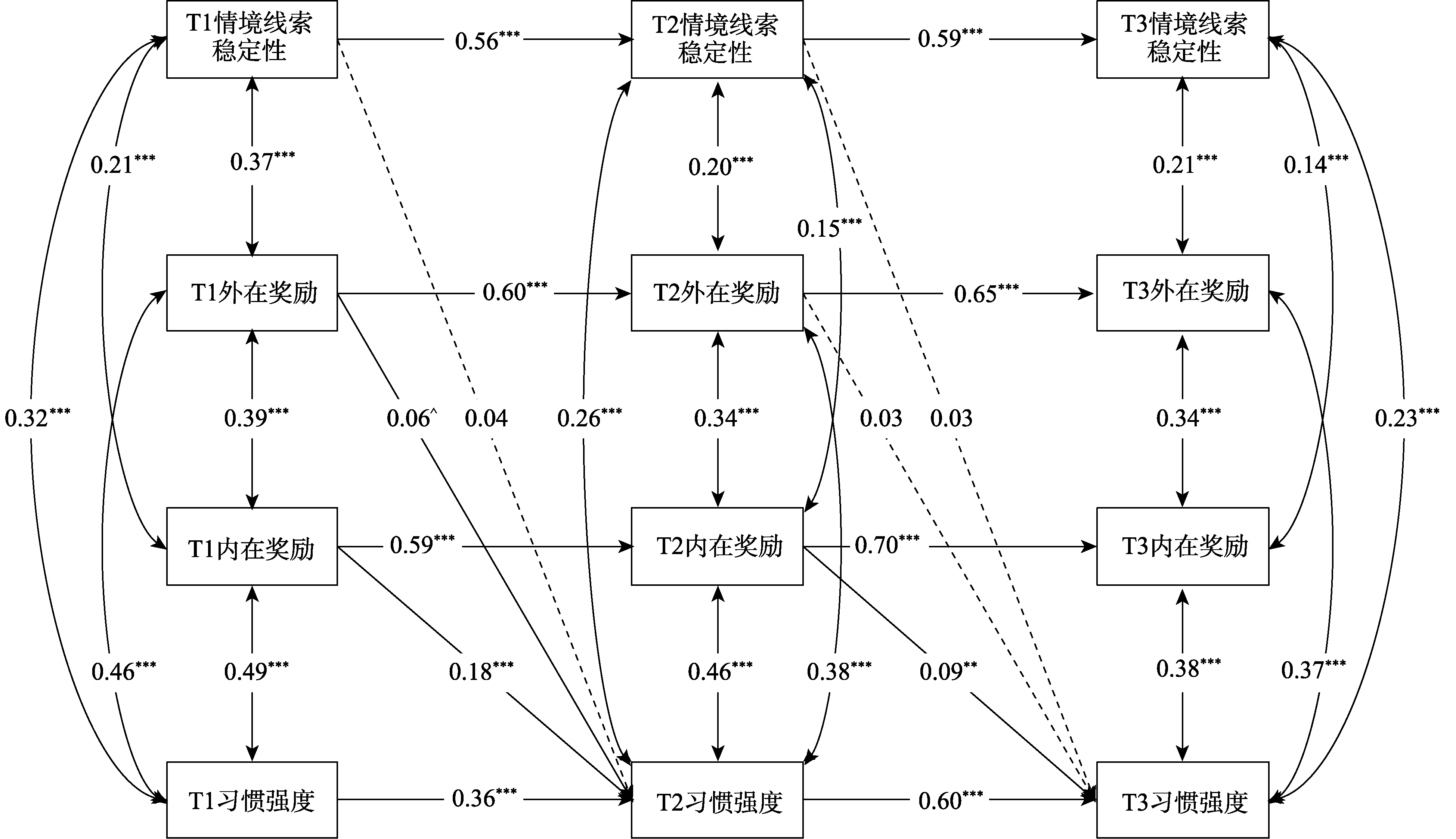
图2 内外奖励与情境线索稳定性对志愿服务行为习惯的跨时间预测作用(N = 623) 注:^ p < 0.10。被试报告的性别、年龄、受教育程度和婚姻状况为控制变量, 但出于简化的目的, 模型中未画出。所有路径系数均已标准化。实线代表该路径显著; 虚线代表该路径不显著。下同。
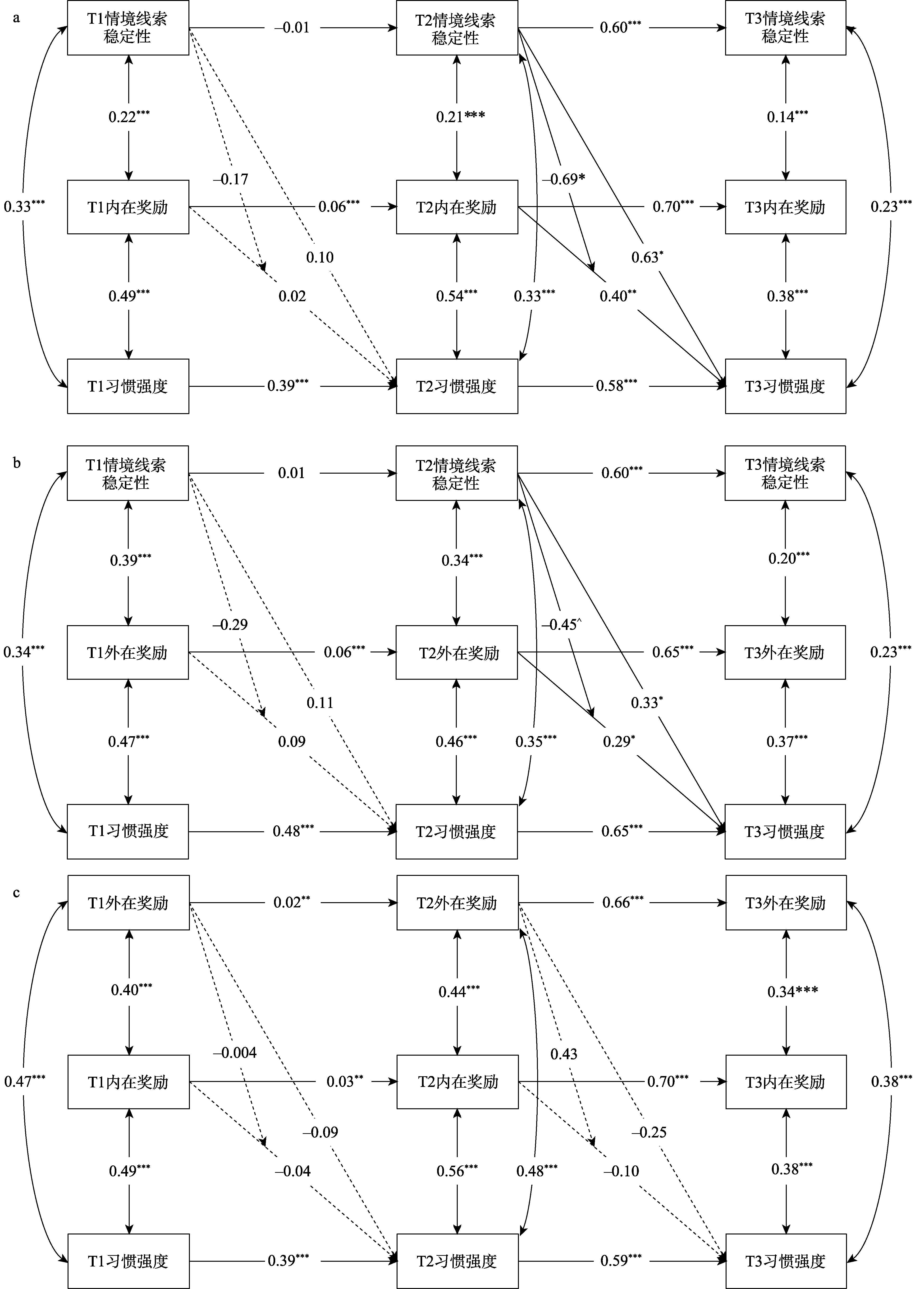
图3 内在奖励与情境线索稳定性(a)、外在奖励与情境线索稳定性(b)、内在奖励与外在奖励(c)对志愿服务行为习惯的跨时间交互效应(N = 623)
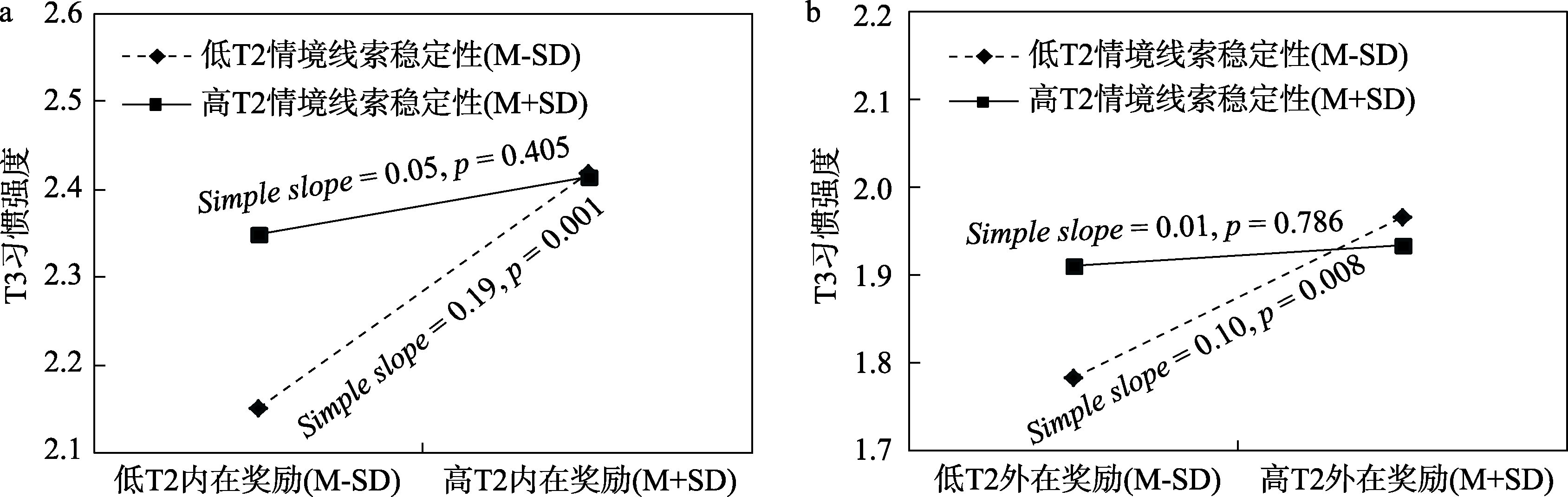
图4 内在奖励与情境线索稳定性(a)、外在奖励与情境线索稳定性(b)对志愿服务行为习惯强度的跨时间交互效应简单斜率分析(N = 623)
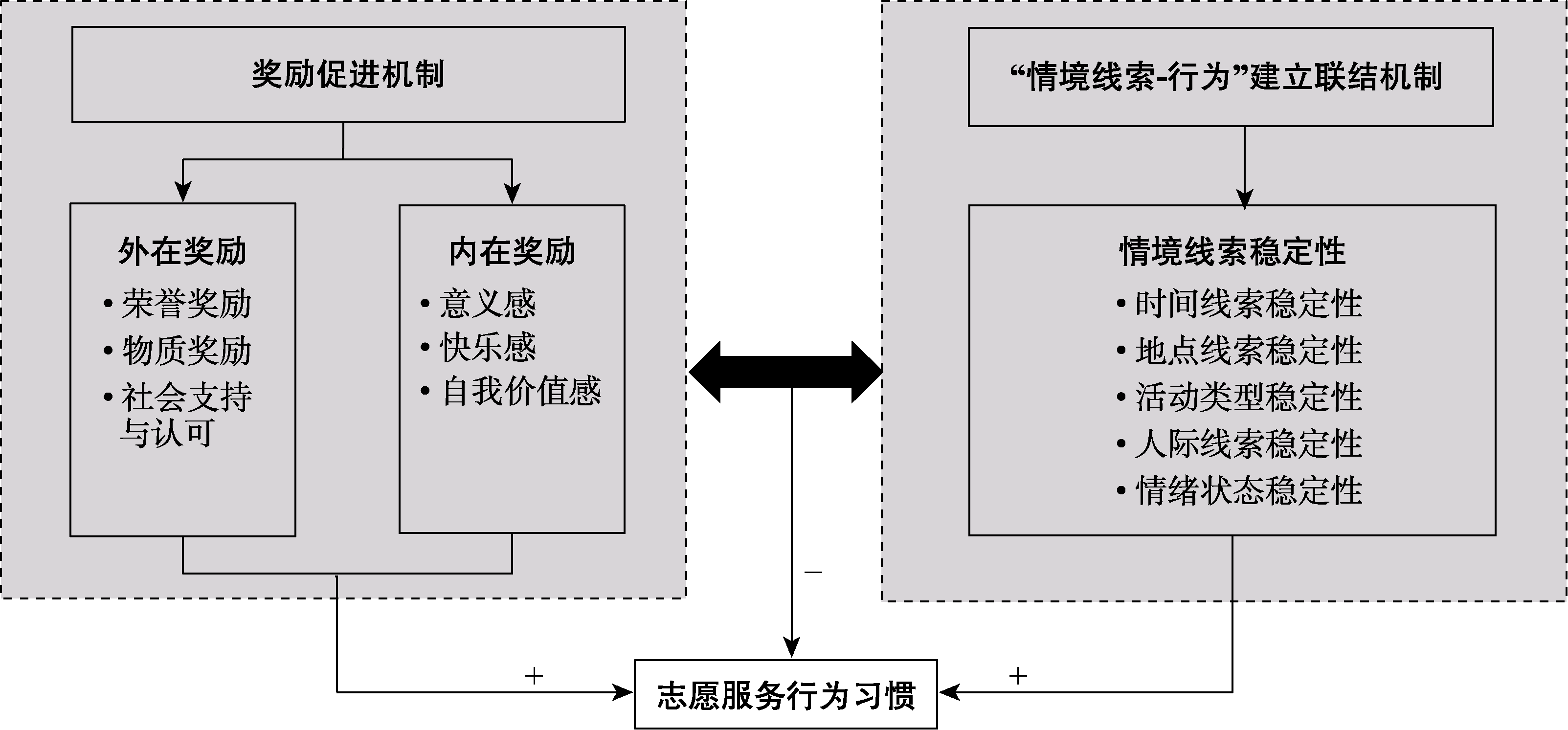
图5 内外奖励和情境线索稳定性影响志愿服务行为习惯的心理机制模型
| 编号 | 性别 | 年龄 | 受教育 程度 | 婚姻 情况 | 职业/行业 | 服务 年限 | 习惯 强度 | 主要参加的 志愿服务类型 | 最近一年的 参加频率 | 最近一年的 参加时长 |
|---|---|---|---|---|---|---|---|---|---|---|
| V1 | 女 | 22 | 本科 | 未婚 | 大学生 | 3 | 5.17 | 1、3、5、8、10 | 2 | 70 |
| V2 | 男 | 22 | 本科 | 未婚 | 专职志愿者 | 8 | 4.75 | 1、2、3、4、5、6、7、10、11、13 | 7 | 1500 |
| V3 | 男 | 32 | 本科 | 已婚 | 教育行业 | 5 | 6.58 | 1、3、6、7 | 4 | 300 |
| V4 | 女 | 23 | 硕士 | 未婚 | 研究生 | 6 | 5.50 | 8、13 | 2 | 50 |
| V5 | 男 | 27 | 本科 | 未婚 | 面包师 | 6 | 6.00 | 1、3、4、7、10 | 2 | 30 |
| V6 | 女 | 25 | 硕士 | 未婚 | 研究生 | 3 | 4.75 | 1、2、5、6、8、9、10、11 | 2 | 100 |
| V7 | 男 | 21 | 本科 | 未婚 | 大学生 | 3 | 5.42 | 1、3、8、10、13 | 4 | 90 |
| V8 | 男 | 55 | 专科 或本科 | 已婚 | 个体工商户 | 7 | 5.92 | 13 | 7 | - |
| V9 | 男 | 42 | 本科 | 离异 | 心理咨询师 | 5 | 4.50 | 13 | 6 | 600 |
| V10 | 男 | 34 | 专科 | 未婚 | 安全管理 工程师 | 8 | 5.75 | 1、3、5、10、11、13 | 4 | 500 |
| V11 | 女 | 30 | 本科 | 未婚 | 心理咨询师 | 6 | 6.92 | 2、3 | 7 | 1100 |
| V12 | 女 | 26 | 本科 | 未婚 | 心理项目经理 | 3 | 5.33 | 1、2、3、5 | 5 | 50 |
| V13 | 男 | 40 | 硕士 | 未婚 | 公司老板 | 15 | 5.00 | 1、2、3、5、7、9、10 | 6 | 400 |
| V14 | 男 | 40 | 本科 | 已婚 | 港口机械维修 工程师 | 9 | 6.50 | 10 | 3 | 120 |
| V15 | 男 | 18 | 专科 | 未婚 | 大学生 | 6 | 6.92 | 6、8、10、11 | 7 | 1000 |
| V16 | 女 | 52 | 硕士 | 已婚 | 大学教师 | 20 | 5.33 | 1、2、7、10、13 | 2 | 15 |
| V17 | 男 | 37 | 本科 | 已婚 | - | 15 | 4.67 | 1、2、3、4、5、7、11、12、13 | 7 | 150 |
| V18 | 女 | 23 | 本科 | 未婚 | 品牌营销 | 8 | 5.58 | 6、10 | 2 | 30 |
| V19 | 男 | 28 | 本科 | 未婚 | 个体工商户 | 4 | 6.17 | 3、5、7、8、10 | 6 | 500 |
| V20 | 女 | 21 | 本科 | 未婚 | 大学生 | 3 | 5.92 | 1、3、6、10、12、13 | 4 | 200 |
| V21 | 女 | 40 | 本科 | 已婚 | 心理咨询师 | 7 | 5.58 | 1、2、3 | 5 | 70 |
| V22 | 男 | 23 | 专科 | 未婚 | 数码行业 | 3 | 6.00 | 3、7、10、13 | 6 | 1500 |
| V23 | 女 | 25 | 硕士 | 未婚 | 小学教师 | 5 | 5.17 | 1、2、6 | 5 | 30 |
| V24 | 女 | 28 | 本科 | 未婚 | 大学生 | 3 | 4.67 | 1、3、7、10 | 4 | 140 |
| V25 | 女 | 37 | 博士 | 已婚 | 心理咨询师 | 15 | 5.25 | 1、13 | 5 | 100 |
| M | 30.84 | 7.04 | 5.57 | 4.56 | 360.21 | |||||
| SD | 9.83 | 4.59 | 0.69 | 1.85 | 459.13 |
表S1 受访志愿者的基本信息
| 编号 | 性别 | 年龄 | 受教育 程度 | 婚姻 情况 | 职业/行业 | 服务 年限 | 习惯 强度 | 主要参加的 志愿服务类型 | 最近一年的 参加频率 | 最近一年的 参加时长 |
|---|---|---|---|---|---|---|---|---|---|---|
| V1 | 女 | 22 | 本科 | 未婚 | 大学生 | 3 | 5.17 | 1、3、5、8、10 | 2 | 70 |
| V2 | 男 | 22 | 本科 | 未婚 | 专职志愿者 | 8 | 4.75 | 1、2、3、4、5、6、7、10、11、13 | 7 | 1500 |
| V3 | 男 | 32 | 本科 | 已婚 | 教育行业 | 5 | 6.58 | 1、3、6、7 | 4 | 300 |
| V4 | 女 | 23 | 硕士 | 未婚 | 研究生 | 6 | 5.50 | 8、13 | 2 | 50 |
| V5 | 男 | 27 | 本科 | 未婚 | 面包师 | 6 | 6.00 | 1、3、4、7、10 | 2 | 30 |
| V6 | 女 | 25 | 硕士 | 未婚 | 研究生 | 3 | 4.75 | 1、2、5、6、8、9、10、11 | 2 | 100 |
| V7 | 男 | 21 | 本科 | 未婚 | 大学生 | 3 | 5.42 | 1、3、8、10、13 | 4 | 90 |
| V8 | 男 | 55 | 专科 或本科 | 已婚 | 个体工商户 | 7 | 5.92 | 13 | 7 | - |
| V9 | 男 | 42 | 本科 | 离异 | 心理咨询师 | 5 | 4.50 | 13 | 6 | 600 |
| V10 | 男 | 34 | 专科 | 未婚 | 安全管理 工程师 | 8 | 5.75 | 1、3、5、10、11、13 | 4 | 500 |
| V11 | 女 | 30 | 本科 | 未婚 | 心理咨询师 | 6 | 6.92 | 2、3 | 7 | 1100 |
| V12 | 女 | 26 | 本科 | 未婚 | 心理项目经理 | 3 | 5.33 | 1、2、3、5 | 5 | 50 |
| V13 | 男 | 40 | 硕士 | 未婚 | 公司老板 | 15 | 5.00 | 1、2、3、5、7、9、10 | 6 | 400 |
| V14 | 男 | 40 | 本科 | 已婚 | 港口机械维修 工程师 | 9 | 6.50 | 10 | 3 | 120 |
| V15 | 男 | 18 | 专科 | 未婚 | 大学生 | 6 | 6.92 | 6、8、10、11 | 7 | 1000 |
| V16 | 女 | 52 | 硕士 | 已婚 | 大学教师 | 20 | 5.33 | 1、2、7、10、13 | 2 | 15 |
| V17 | 男 | 37 | 本科 | 已婚 | - | 15 | 4.67 | 1、2、3、4、5、7、11、12、13 | 7 | 150 |
| V18 | 女 | 23 | 本科 | 未婚 | 品牌营销 | 8 | 5.58 | 6、10 | 2 | 30 |
| V19 | 男 | 28 | 本科 | 未婚 | 个体工商户 | 4 | 6.17 | 3、5、7、8、10 | 6 | 500 |
| V20 | 女 | 21 | 本科 | 未婚 | 大学生 | 3 | 5.92 | 1、3、6、10、12、13 | 4 | 200 |
| V21 | 女 | 40 | 本科 | 已婚 | 心理咨询师 | 7 | 5.58 | 1、2、3 | 5 | 70 |
| V22 | 男 | 23 | 专科 | 未婚 | 数码行业 | 3 | 6.00 | 3、7、10、13 | 6 | 1500 |
| V23 | 女 | 25 | 硕士 | 未婚 | 小学教师 | 5 | 5.17 | 1、2、6 | 5 | 30 |
| V24 | 女 | 28 | 本科 | 未婚 | 大学生 | 3 | 4.67 | 1、3、7、10 | 4 | 140 |
| V25 | 女 | 37 | 博士 | 已婚 | 心理咨询师 | 15 | 5.25 | 1、13 | 5 | 100 |
| M | 30.84 | 7.04 | 5.57 | 4.56 | 360.21 | |||||
| SD | 9.83 | 4.59 | 0.69 | 1.85 | 459.13 |
| 志愿者 编号 | 编码员 编号 | 内在奖励 | 外在奖励 | 情境线索稳定性 | ||||||||
|---|---|---|---|---|---|---|---|---|---|---|---|---|
| 意义感 | 快乐感 | 自我 价值感 | 荣誉 奖励 | 物质 奖励 | 社会支持 与认可 | 时间线索 稳定性 | 地点线索 稳定性 | 活动类型 稳定性 | 人际线索 稳定性 | 情绪状态 稳定性 | ||
| V1 | C1 | √ | √ | √ | √ | √ | ||||||
| C2 | √ | √ | √ | √ | √ | √ | ||||||
| C3 | √ | √ | √ | √ | √ | |||||||
| V2 | C1 | √ | √ | √ | √ | √ | ||||||
| C2 | √ | √ | √ | √ | √ | √ | ||||||
| C3 | √ | √ | √ | √ | √ | |||||||
| V3 | C1 | √ | √ | √ | √ | √ | √ | |||||
| C2 | √ | √ | √ | √ | √ | |||||||
| C3 | √ | √ | √ | √ | √ | √ | ||||||
| V4 | C1 | √ | √ | √ | √ | |||||||
| C2 | √ | √ | √ | √ | √ | |||||||
| C3 | √ | √ | √ | √ | √ | |||||||
| V5 | C1 | √ | √ | √ | √ | √ | ||||||
| C2 | √ | √ | √ | √ | √ | √ | √ | |||||
| C3 | √ | √ | √ | √ | √ | √ | ||||||
| V6 | C1 | √ | √ | √ | √ | √ | √ | √ | ||||
| C2 | √ | √ | √ | √ | √ | √ | √ | √ | ||||
| C3 | √ | √ | √ | √ | √ | √ | √ | √ | ||||
| V7 | C1 | √ | √ | √ | √ | √ | √ | √ | √ | √ | ||
| C2 | √ | √ | √ | √ | √ | √ | √ | √ | √ | |||
| C3 | √ | √ | √ | √ | √ | √ | √ | √ | √ | |||
| V8 | C1 | √ | √ | √ | √ | √ | √ | |||||
| C2 | √ | √ | √ | √ | √ | √ | ||||||
| C3 | √ | √ | √ | √ | √ | √ | ||||||
| V9 | C1 | √ | √ | √ | √ | |||||||
| C2 | √ | √ | √ | √ | √ | |||||||
| C3 | √ | √ | √ | √ | ||||||||
| V10 | C1 | √ | √ | √ | √ | |||||||
| C2 | √ | √ | √ | |||||||||
| C3 | √ | √ | √ | √ | ||||||||
| V11 | C1 | √ | √ | √ | √ | |||||||
| C2 | √ | √ | √ | |||||||||
| C3 | √ | √ | √ | √ | ||||||||
| V12 | C1 | √ | √ | √ | √ | √ | √ | |||||
| C2 | √ | √ | √ | √ | √ | √ | ||||||
| C3 | √ | √ | √ | √ | √ | |||||||
| V13 | C1 | √ | ||||||||||
| C2 | √ | |||||||||||
| C3 | √ | |||||||||||
| V14 | C1 | √ | √ | √ | √ | √ | √ | √ | √ | √ | √ | |
| C2 | √ | √ | √ | √ | √ | √ | √ | √ | √ | |||
| C3 | √ | √ | √ | √ | √ | √ | √ | √ | √ | √ | ||
| V15 | C1 | √ | √ | √ | √ | √ | √ | |||||
| C2 | √ | √ | √ | √ | √ | √ | √ | |||||
| C3 | √ | √ | √ | √ | √ | √ | ||||||
| V16 | C1 | √ | √ | √ | √ | √ | √ | √ | ||||
| C2 | √ | √ | √ | √ | √ | √ | ||||||
| C3 | √ | √ | √ | √ | √ | √ | ||||||
| V17 | C1 | √ | √ | √ | √ | √ | √ | |||||
| C2 | √ | √ | √ | √ | √ | |||||||
| C3 | √ | √ | √ | √ | √ | |||||||
| V18 | C1 | √ | √ | √ | √ | √ | √ | √ | ||||
| C2 | √ | √ | √ | √ | √ | √ | √ | √ | ||||
| C3 | √ | √ | √ | √ | √ | √ | √ | |||||
| V19 | C1 | √ | √ | √ | √ | √ | √ | |||||
| C2 | √ | √ | √ | √ | √ | √ | ||||||
| C3 | √ | √ | √ | √ | √ | √ | ||||||
| V20 | C1 | √ | √ | √ | √ | √ | √ | |||||
| C2 | √ | √ | √ | √ | √ | |||||||
| C3 | √ | √ | √ | √ | √ | |||||||
| V21 | C1 | √ | √ | √ | √ | √ | √ | √ | √ | |||
| C2 | √ | √ | √ | √ | √ | √ | √ | √ | ||||
| C3 | √ | √ | √ | √ | √ | √ | ||||||
| V22 | C1 | √ | √ | √ | √ | √ | √ | |||||
| C2 | √ | √ | √ | √ | √ | √ | ||||||
| C3 | √ | √ | √ | √ | √ | √ | ||||||
| V23 | C1 | √ | √ | √ | √ | √ | √ | √ | √ | |||
| C2 | √ | √ | √ | √ | √ | √ | ||||||
| C3 | √ | √ | √ | √ | √ | √ | ||||||
| V24 | C1 | √ | √ | √ | √ | |||||||
| C2 | √ | √ | √ | √ | ||||||||
| C3 | √ | √ | √ | |||||||||
| V25 | C1 | √ | √ | √ | √ | √ | √ | √ | ||||
| C2 | √ | √ | √ | √ | √ | √ | √ | |||||
| C3 | √ | √ | √ | √ | √ | |||||||
| 占比 | C1 | 21/25 | 20/25 | 20/25 | 13/25 | 14/25 | 17/25 | 8/25 | 6/25 | 9/25 | 12/25 | 7/25 |
| C2 | 21/25 | 19/25 | 20/25 | 14/25 | 15/25 | 15/25 | 8/25 | 6/25 | 12/25 | 8/25 | 9/25 | |
| C3 | 20/25 | 20/25 | 21/25 | 11/25 | 11/25 | 16/25 | 7/25 | 7/25 | 10/25 | 8/25 | 8/25 | |
| 平均 | 83% | 79% | 81% | 51% | 53% | 64% | 31% | 25% | 41% | 37% | 32% | |
| Kappa | 0.91 | 0.84 | 0.82 | 0.79 | 0.79 | 0.71 | 0.69 | 0.93 | 0.67 | 0.72 | 0.69 | |
表S2 编码者的编码一致性数据
| 志愿者 编号 | 编码员 编号 | 内在奖励 | 外在奖励 | 情境线索稳定性 | ||||||||
|---|---|---|---|---|---|---|---|---|---|---|---|---|
| 意义感 | 快乐感 | 自我 价值感 | 荣誉 奖励 | 物质 奖励 | 社会支持 与认可 | 时间线索 稳定性 | 地点线索 稳定性 | 活动类型 稳定性 | 人际线索 稳定性 | 情绪状态 稳定性 | ||
| V1 | C1 | √ | √ | √ | √ | √ | ||||||
| C2 | √ | √ | √ | √ | √ | √ | ||||||
| C3 | √ | √ | √ | √ | √ | |||||||
| V2 | C1 | √ | √ | √ | √ | √ | ||||||
| C2 | √ | √ | √ | √ | √ | √ | ||||||
| C3 | √ | √ | √ | √ | √ | |||||||
| V3 | C1 | √ | √ | √ | √ | √ | √ | |||||
| C2 | √ | √ | √ | √ | √ | |||||||
| C3 | √ | √ | √ | √ | √ | √ | ||||||
| V4 | C1 | √ | √ | √ | √ | |||||||
| C2 | √ | √ | √ | √ | √ | |||||||
| C3 | √ | √ | √ | √ | √ | |||||||
| V5 | C1 | √ | √ | √ | √ | √ | ||||||
| C2 | √ | √ | √ | √ | √ | √ | √ | |||||
| C3 | √ | √ | √ | √ | √ | √ | ||||||
| V6 | C1 | √ | √ | √ | √ | √ | √ | √ | ||||
| C2 | √ | √ | √ | √ | √ | √ | √ | √ | ||||
| C3 | √ | √ | √ | √ | √ | √ | √ | √ | ||||
| V7 | C1 | √ | √ | √ | √ | √ | √ | √ | √ | √ | ||
| C2 | √ | √ | √ | √ | √ | √ | √ | √ | √ | |||
| C3 | √ | √ | √ | √ | √ | √ | √ | √ | √ | |||
| V8 | C1 | √ | √ | √ | √ | √ | √ | |||||
| C2 | √ | √ | √ | √ | √ | √ | ||||||
| C3 | √ | √ | √ | √ | √ | √ | ||||||
| V9 | C1 | √ | √ | √ | √ | |||||||
| C2 | √ | √ | √ | √ | √ | |||||||
| C3 | √ | √ | √ | √ | ||||||||
| V10 | C1 | √ | √ | √ | √ | |||||||
| C2 | √ | √ | √ | |||||||||
| C3 | √ | √ | √ | √ | ||||||||
| V11 | C1 | √ | √ | √ | √ | |||||||
| C2 | √ | √ | √ | |||||||||
| C3 | √ | √ | √ | √ | ||||||||
| V12 | C1 | √ | √ | √ | √ | √ | √ | |||||
| C2 | √ | √ | √ | √ | √ | √ | ||||||
| C3 | √ | √ | √ | √ | √ | |||||||
| V13 | C1 | √ | ||||||||||
| C2 | √ | |||||||||||
| C3 | √ | |||||||||||
| V14 | C1 | √ | √ | √ | √ | √ | √ | √ | √ | √ | √ | |
| C2 | √ | √ | √ | √ | √ | √ | √ | √ | √ | |||
| C3 | √ | √ | √ | √ | √ | √ | √ | √ | √ | √ | ||
| V15 | C1 | √ | √ | √ | √ | √ | √ | |||||
| C2 | √ | √ | √ | √ | √ | √ | √ | |||||
| C3 | √ | √ | √ | √ | √ | √ | ||||||
| V16 | C1 | √ | √ | √ | √ | √ | √ | √ | ||||
| C2 | √ | √ | √ | √ | √ | √ | ||||||
| C3 | √ | √ | √ | √ | √ | √ | ||||||
| V17 | C1 | √ | √ | √ | √ | √ | √ | |||||
| C2 | √ | √ | √ | √ | √ | |||||||
| C3 | √ | √ | √ | √ | √ | |||||||
| V18 | C1 | √ | √ | √ | √ | √ | √ | √ | ||||
| C2 | √ | √ | √ | √ | √ | √ | √ | √ | ||||
| C3 | √ | √ | √ | √ | √ | √ | √ | |||||
| V19 | C1 | √ | √ | √ | √ | √ | √ | |||||
| C2 | √ | √ | √ | √ | √ | √ | ||||||
| C3 | √ | √ | √ | √ | √ | √ | ||||||
| V20 | C1 | √ | √ | √ | √ | √ | √ | |||||
| C2 | √ | √ | √ | √ | √ | |||||||
| C3 | √ | √ | √ | √ | √ | |||||||
| V21 | C1 | √ | √ | √ | √ | √ | √ | √ | √ | |||
| C2 | √ | √ | √ | √ | √ | √ | √ | √ | ||||
| C3 | √ | √ | √ | √ | √ | √ | ||||||
| V22 | C1 | √ | √ | √ | √ | √ | √ | |||||
| C2 | √ | √ | √ | √ | √ | √ | ||||||
| C3 | √ | √ | √ | √ | √ | √ | ||||||
| V23 | C1 | √ | √ | √ | √ | √ | √ | √ | √ | |||
| C2 | √ | √ | √ | √ | √ | √ | ||||||
| C3 | √ | √ | √ | √ | √ | √ | ||||||
| V24 | C1 | √ | √ | √ | √ | |||||||
| C2 | √ | √ | √ | √ | ||||||||
| C3 | √ | √ | √ | |||||||||
| V25 | C1 | √ | √ | √ | √ | √ | √ | √ | ||||
| C2 | √ | √ | √ | √ | √ | √ | √ | |||||
| C3 | √ | √ | √ | √ | √ | |||||||
| 占比 | C1 | 21/25 | 20/25 | 20/25 | 13/25 | 14/25 | 17/25 | 8/25 | 6/25 | 9/25 | 12/25 | 7/25 |
| C2 | 21/25 | 19/25 | 20/25 | 14/25 | 15/25 | 15/25 | 8/25 | 6/25 | 12/25 | 8/25 | 9/25 | |
| C3 | 20/25 | 20/25 | 21/25 | 11/25 | 11/25 | 16/25 | 7/25 | 7/25 | 10/25 | 8/25 | 8/25 | |
| 平均 | 83% | 79% | 81% | 51% | 53% | 64% | 31% | 25% | 41% | 37% | 32% | |
| Kappa | 0.91 | 0.84 | 0.82 | 0.79 | 0.79 | 0.71 | 0.69 | 0.93 | 0.67 | 0.72 | 0.69 | |
| 问卷 | 维度划分(N = 459) | ||
|---|---|---|---|
| 1. 参加志愿服务对我来说非常重要。 | 0.43 | ||
| 2. 就我个人而言, 参加志愿服务很有意义。 | 0.88 | ||
| 3. 我所做的志愿服务工作是有意义的。 | 0.86 | ||
| 4. 参加志愿服务让我觉得很开心。 | 0.42(删除) | 0.49 | |
| 5. 参加志愿服务带给我许多的乐趣。 | 0.87 | ||
| 6. 我很享受参加志愿服务的时光。 | 0.74 | ||
| 7. 参加志愿服务让我觉得自己是一个有价值的人。 | 0.66 | ||
| 8. 参加志愿服务让我感到我有许多好的品质。 | 0.87 | ||
| 9. 我很自豪能够去参加志愿服务帮助他人。 | 0.68 | ||
| 1. 我经常拿到志愿组织发放的荣誉称号、荣誉证书等荣誉性奖励。 | 0.47 | ||
| 2. 我经常拿到志愿组织发放的纪念品奖励。 | 0.69 | ||
| 3. 我经常拿到志愿组织发放的金钱、礼品、优惠券、学分等物质奖励。 | 0.81 | ||
| 4. 我经常拿到志愿组织发放的食宿交通补贴。 | 0.80 | ||
| 5. 家人和朋友支持我去做志愿者。 | 0.60 | ||
| 6. 做志愿者让我获得他人的认可和赞赏。 | 0.84 | ||
| 7. 我经常收到受助者真诚的感谢。 | 0.75 | ||
| 1. 每次我都是在相同的时间参加志愿服务。 (例如:周末、节假日) | 0.56 | ||
| 2. 每次我都是在相同的地点参加志愿服务。 (例如:某社区、某学校) | 0.66 | ||
| 3. 每次我都是参加相同类型的志愿服务。 (例如:关爱儿童、保护环境) | 0.78 | ||
| 4. 每次我都是和相同的人一起去参加志愿服务。 (例如:好朋友、志愿者团队) | 0.52 | ||
| 5. 每次我都是在相同的情绪状态下参加志愿服务。 (例如:心情愉悦时) | 0.46 | ||
表S3 自设问卷探索性因素分析结果
| 问卷 | 维度划分(N = 459) | ||
|---|---|---|---|
| 1. 参加志愿服务对我来说非常重要。 | 0.43 | ||
| 2. 就我个人而言, 参加志愿服务很有意义。 | 0.88 | ||
| 3. 我所做的志愿服务工作是有意义的。 | 0.86 | ||
| 4. 参加志愿服务让我觉得很开心。 | 0.42(删除) | 0.49 | |
| 5. 参加志愿服务带给我许多的乐趣。 | 0.87 | ||
| 6. 我很享受参加志愿服务的时光。 | 0.74 | ||
| 7. 参加志愿服务让我觉得自己是一个有价值的人。 | 0.66 | ||
| 8. 参加志愿服务让我感到我有许多好的品质。 | 0.87 | ||
| 9. 我很自豪能够去参加志愿服务帮助他人。 | 0.68 | ||
| 1. 我经常拿到志愿组织发放的荣誉称号、荣誉证书等荣誉性奖励。 | 0.47 | ||
| 2. 我经常拿到志愿组织发放的纪念品奖励。 | 0.69 | ||
| 3. 我经常拿到志愿组织发放的金钱、礼品、优惠券、学分等物质奖励。 | 0.81 | ||
| 4. 我经常拿到志愿组织发放的食宿交通补贴。 | 0.80 | ||
| 5. 家人和朋友支持我去做志愿者。 | 0.60 | ||
| 6. 做志愿者让我获得他人的认可和赞赏。 | 0.84 | ||
| 7. 我经常收到受助者真诚的感谢。 | 0.75 | ||
| 1. 每次我都是在相同的时间参加志愿服务。 (例如:周末、节假日) | 0.56 | ||
| 2. 每次我都是在相同的地点参加志愿服务。 (例如:某社区、某学校) | 0.66 | ||
| 3. 每次我都是参加相同类型的志愿服务。 (例如:关爱儿童、保护环境) | 0.78 | ||
| 4. 每次我都是和相同的人一起去参加志愿服务。 (例如:好朋友、志愿者团队) | 0.52 | ||
| 5. 每次我都是在相同的情绪状态下参加志愿服务。 (例如:心情愉悦时) | 0.46 | ||
| 问卷 | N = 459 | N = 279 | ||||||
|---|---|---|---|---|---|---|---|---|
| CFI | RMSEA | SRMR | 标准化因子载荷 | Cronbach’s α | r | ICC (2, 1) | ICC (3, 1) | |
| 志愿服务行为内在奖励问卷 | 0.98 | 0.08 | 0.02 | [0.76~0.89]*** | 0.94 | 0.64*** | 0.63 | 0.64 |
| 意义感分问卷 | - | - | - | [0.76~0.87]*** | 0.86 | 0.60*** | 0.59 | 0.60 |
| 快乐感分问卷 | - | - | - | [0.89~0.89]*** | 0.92 | 0.57*** | 0.55 | 0.56 |
| 自我价值感分问卷 | - | - | - | [0.79~0.85]*** | 0.86 | 0.58*** | 0.58 | 0.58 |
| 志愿服务行为外在奖励问卷 | 0.97 | 0.07 | 0.04 | [0.57~0.82]*** | 0.75 | 0.60*** | 0.60 | 0.60 |
| 荣誉与物质奖励分问卷 | - | - | - | [0.57~0.81]*** | 0.79 | 0.58*** | 0.58 | 0.58 |
| 社会支持与认可分问卷 | - | - | - | [0.62~0.82]*** | 0.77 | 0.60*** | 0.60 | 0.60 |
| 志愿服务行为情境线索稳定性问卷 | 0.99 | 0.05 | 0.02 | [0.47~0.78] *** | 0.73 | 0.46*** | 0.42 | 0.45 |
表S4 自设问卷验证性因素分析和信度分析结果
| 问卷 | N = 459 | N = 279 | ||||||
|---|---|---|---|---|---|---|---|---|
| CFI | RMSEA | SRMR | 标准化因子载荷 | Cronbach’s α | r | ICC (2, 1) | ICC (3, 1) | |
| 志愿服务行为内在奖励问卷 | 0.98 | 0.08 | 0.02 | [0.76~0.89]*** | 0.94 | 0.64*** | 0.63 | 0.64 |
| 意义感分问卷 | - | - | - | [0.76~0.87]*** | 0.86 | 0.60*** | 0.59 | 0.60 |
| 快乐感分问卷 | - | - | - | [0.89~0.89]*** | 0.92 | 0.57*** | 0.55 | 0.56 |
| 自我价值感分问卷 | - | - | - | [0.79~0.85]*** | 0.86 | 0.58*** | 0.58 | 0.58 |
| 志愿服务行为外在奖励问卷 | 0.97 | 0.07 | 0.04 | [0.57~0.82]*** | 0.75 | 0.60*** | 0.60 | 0.60 |
| 荣誉与物质奖励分问卷 | - | - | - | [0.57~0.81]*** | 0.79 | 0.58*** | 0.58 | 0.58 |
| 社会支持与认可分问卷 | - | - | - | [0.62~0.82]*** | 0.77 | 0.60*** | 0.60 | 0.60 |
| 志愿服务行为情境线索稳定性问卷 | 0.99 | 0.05 | 0.02 | [0.47~0.78] *** | 0.73 | 0.46*** | 0.42 | 0.45 |
| 测量模型(N = 623) | χ2(df) | ΔCFI | CFI | RMSEA | SRMR |
|---|---|---|---|---|---|
| 习惯强度 | |||||
| 形态等值 | 577.043(339) | - | 0.965 | 0.034 | 0.053 |
| 弱等值 | 597.032(353) | 0.001 | 0.964 | 0.033 | 0.055 |
| 强等值 | 625.681(367) | 0.002 | 0.962 | 0.034 | 0.056 |
| 内在奖励 | |||||
| 形态等值 | 401.179(261) | - | 0.981 | 0.029 | 0.028 |
| 弱等值 | 414.951(273) | 0.001 | 0.980 | 0.029 | 0.032 |
| 强等值 | 423.236(285) | 0.001 | 0.981 | 0.028 | 0.032 |
| 外在奖励 | |||||
| 形态等值 | 565.272(153) | - | 0.921 | 0.066 | 0.081 |
| 弱等值 | 579.006(163) | 0.001 | 0.920 | 0.064 | 0.082 |
| 强等值 | 593.115(173) | 0.001 | 0.919 | 0.062 | 0.083 |
| 情境线索稳定性 | |||||
| 形态等值 | 111.532(72) | - | 0.985 | 0.030 | 0.027 |
| 弱等值 | 131.554(80) | 0.004 | 0.981 | 0.032 | 0.041 |
| 强等值 | 142.479(88) | 0.001 | 0.980 | 0.032 | 0.041 |
表S5 纵向测量不变性检验结果
| 测量模型(N = 623) | χ2(df) | ΔCFI | CFI | RMSEA | SRMR |
|---|---|---|---|---|---|
| 习惯强度 | |||||
| 形态等值 | 577.043(339) | - | 0.965 | 0.034 | 0.053 |
| 弱等值 | 597.032(353) | 0.001 | 0.964 | 0.033 | 0.055 |
| 强等值 | 625.681(367) | 0.002 | 0.962 | 0.034 | 0.056 |
| 内在奖励 | |||||
| 形态等值 | 401.179(261) | - | 0.981 | 0.029 | 0.028 |
| 弱等值 | 414.951(273) | 0.001 | 0.980 | 0.029 | 0.032 |
| 强等值 | 423.236(285) | 0.001 | 0.981 | 0.028 | 0.032 |
| 外在奖励 | |||||
| 形态等值 | 565.272(153) | - | 0.921 | 0.066 | 0.081 |
| 弱等值 | 579.006(163) | 0.001 | 0.920 | 0.064 | 0.082 |
| 强等值 | 593.115(173) | 0.001 | 0.919 | 0.062 | 0.083 |
| 情境线索稳定性 | |||||
| 形态等值 | 111.532(72) | - | 0.985 | 0.030 | 0.027 |
| 弱等值 | 131.554(80) | 0.004 | 0.981 | 0.032 | 0.041 |
| 强等值 | 142.479(88) | 0.001 | 0.980 | 0.032 | 0.041 |
| [1] |
Braun V., & Clarke V. (2006). Using thematic analysis in psychology. Qualitative Research in Psychology, 3(2), 77-101.
doi: 10.1191/1478088706qp063oa URL |
| [2] |
Cheung G. W., & Rensvold R. B. (2002). Evaluating goodness-of-fit indexes for testing measurement invariance. Structural Equation Modeling: A Multidisciplinary Journal, 9(2), 233-255.
doi: 10.1207/S15328007SEM0902_5 URL |
| [3] |
Chi C. G., Chi O. H., Xu X., & Kennedy I. (2022). Narrowing the intention-behavior gap: The impact of hotel green certification. International Journal of Hospitality Management, 107, 103305.
doi: 10.1016/j.ijhm.2022.103305 URL |
| [4] |
Cox K. S. (2010). Elevation predicts domain-specific volunteerism 3 months later. The Journal of Positive Psychology, 5(5), 333-341.
doi: 10.1080/17439760.2010.507468 URL |
| [5] | Creswell J. W. (2007). Qualitative inquiry and research design: Choosing among five approaches (2nd ed.). Sage Publications. |
| [6] |
Dallmeyer S., Breuer C., & Feiler S. (2024). To pay or not to pay? The effects of monetary compensation on volunteers in sports clubs. Nonprofit and Voluntary Sector Quarterly, 53(5), 1181-1204.
doi: 10.1177/08997640231210456 URL |
| [7] | Di Maio S., Keller J., Kwasnicka D., Knoll N., Sichert L., & Fleig L. (2022). What helps to form a healthy nutrition habit? Daily associations of intrinsic reward, anticipated regret, and self-efficacy with automaticity. Appetite, 175, 106083. |
| [8] |
Du L., & Li D. (2020). Mechanisms and strategies for cultivating behavioral habits within the field of public policy. Advances in Psychological Science, 28(7), 1209-1218.
doi: 10.3724/SP.J.1042.2020.01209 |
|
[杜立婷, 李东进. (2020). 公共政策情境中行为习惯的形成机制与培养策略. 心理科学进展, 28(7), 1209-1218.]
doi: 10.3724/SP.J.1042.2020.01209 |
|
| [9] |
Fracchia M., Molina-Millán T., & Vicente P. C. (2023). Motivating volunteer health workers in an African capital city. Journal of Development Economics, 163, 103096.
doi: 10.1016/j.jdeveco.2023.103096 URL |
| [10] | Furman C. R., Volz S. C., & Rothman A. J. (2023). Contextual disruption and exercise: Mapping changes to exercise routines and engagement during the COVID-19 pandemic. Psychology & Health, 38(9), 1215-1233. |
| [11] |
Galla B. M., & Duckworth A. L. (2015). More than resisting temptation: Beneficial habits mediate the relationship between self-control and positive life outcomes. Journal of Personality and Social Psychology, 109(3), 508-525.
doi: 10.1037/pspp0000026 pmid: 25643222 |
| [12] |
Gallus J. (2017). Fostering public good contributions with symbolic awards: A large-scale natural field experiment at Wikipedia. Management Science, 63(12), 3999-4015.
doi: 10.1287/mnsc.2016.2540 URL |
| [13] | Gardner B., Abraham C., Lally P., & de Bruijn G. J. (2012). Towards parsimony in habit measurement: Testing the convergent and predictive validity of an automaticity subscale of the Self-Report Habit Index. International Journal of Behavioral Nutrition and Physical Activity, 9(1), 102. |
| [14] | Gardner B., & Lally P. (2018). Modelling habit formation and its determinants. In B. Verplanken (Ed.), The psychology of habit: Theory, mechanisms, change, and contexts (pp. 207-229). Berlin, Germany: Springer International Publishing. |
| [15] | Gardner B., Lally P., & Rebar A. L. (2020). Does habit weaken the relationship between intention and behaviour? Revisiting the habit-intention interaction hypothesis. Social and Personality Psychology Compass, 14(8), e12553. |
| [16] | Gardner B., Rebar A. L., de Wit S., & Lally P. (2024). What is habit and how can it be used to change real-world behaviour? Narrowing the theory-reality gap. Social and Personality Psychology Compass, 18(6), e12975. |
| [17] | Gardner B., Rebar A. L., & Lally P. (2022). How does habit form? Guidelines for tracking real-world habit formation. Cogent Psychology, 9(1), 2041277. |
| [18] |
Gelman A., & Stern H. (2006). The difference between “significant” and “not significant” is not itself statistically significant. The American Statistician, 60(4), 328-331.
doi: 10.1198/000313006X152649 URL |
| [19] |
Gibson L. P., Magnan R. E., Kramer E. B., & Bryan A. D. (2021). Theory of planned behavior analysis of social distancing during the COVID-19 pandemic: Focusing on the intention-behavior gap. Annals of Behavioral Medicine, 55(8), 805-812.
doi: 10.1093/abm/kaab041 pmid: 34228112 |
| [20] |
Grant A. M., & Gino F. (2010). A little thanks goes a long way: Explaining why gratitude expressions motivate prosocial behavior. Journal of Personality and Social Psychology, 98(6), 946-955.
doi: 10.1037/a0017935 pmid: 20515249 |
| [21] |
Guest G., Bunce A., & Johnson L. (2006). How many interviews are enough? An experiment with data saturation and variability. Field Methods, 18(1), 59-82.
doi: 10.1177/1525822X05279903 URL |
| [22] |
Hamaker E. L., Kuiper R. M., & Grasman R. P. P. P. (2015). A critique of the cross-lagged panel model. Psychological Methods, 20(1), 102-116.
doi: 10.1037/a0038889 pmid: 25822208 |
| [23] |
He J., Cai X., Li G., Zou X., & Morrison A. M. (2024). Volunteering and pro-environmental behavior: The relationships of meaningfulness and emotions in protected areas. Journal of Sustainable Tourism, 32(2), 304-321.
doi: 10.1080/09669582.2022.2141249 URL |
| [24] | He Z., & Qi C. (2020). Why do volunteers offer service continuously?--An empirical analysis based on the ecological systems model. Youth Exploration, (6), 59-70. |
| [贺志峰, 齐从鹏. (2020). 志愿者为何愿意持续提供服务?——基于生态系统模型的实证分析. 青年探索, (6), 59-70.] | |
| [25] |
Huang H., Shi J., Ma H., Chen X., & Luo Y. (2024). Are monetary gifts negatively labeled? Material benefits and prosocial motivation evaluation. The Journal of Social Psychology, 164(5), 736-754.
doi: 10.1080/00224545.2022.2160692 URL |
| [26] |
Hu L. T., & Bentler P. M. (1999). Cutoff criteria for fit indexes in covariance structure analysis: Conventional criteria versus new alternatives. Structural Equation Modeling: A Multidisciplinary Journal, 6(1), 1-55.
doi: 10.1080/10705519909540118 URL |
| [27] |
Jiang D., Warner L. M., Chong, A. M. L., Li T., Wolff J. K., & Chou K. L. (2021). Benefits of volunteering on psychological well-being in older adulthood: Evidence from a randomized controlled trial. Aging & Mental Health, 25(4), 641-649.
doi: 10.1080/13607863.2020.1711862 URL |
| [28] | Judah G., Gardner B., Kenward M. G., DeStavola B., & Aunger R. (2018). Exploratory study of the impact of perceived reward on habit formation. BMC Psychology, 6(1), 62. |
| [29] |
Kaushal N., & Rhodes R. E. (2015). Exercise habit formation in new gym members: A longitudinal study. Journal of Behavioral Medicine, 38(4), 652-663.
doi: 10.1007/s10865-015-9640-7 pmid: 25851609 |
| [30] |
Kilb M., & Labudek S. (2022). Effects of behavioral performance, intrinsic reward value, and context stability on the formation of a higher-order nutrition habit: An intensive longitudinal diary study. International Journal of Behavioral Nutrition and Physical Activity, 19, 105.
doi: 10.1186/s12966-022-01343-8 pmid: 35962435 |
| [31] |
Kim B., Lee E., & Jo S. H. (2023). The effects of extrinsic reward that affect a user’s continuous intention to use a fitness application. Informatics for Health and Social Care, 48(2), 153-164.
doi: 10.1080/17538157.2022.2086463 URL |
| [32] |
Lally P., & Gardner B. (2013). Promoting habit formation. Health Psychology Review, 7(sup1), S137-S158.
doi: 10.1080/17437199.2011.603640 URL |
| [33] |
Lally P., Van Jaarsveld C. H., Potts H. W., & Wardle J. (2010). How are habits formed: Modelling habit formation in the real world. European Journal of Social Psychology, 40(6), 998-1009.
doi: 10.1002/ejsp.v40:6 URL |
| [34] |
Landis J. R., & Koch G. G. (1977). The measurement of observer agreement for categorical data. Biometrics, 33(1), 159-174.
pmid: 843571 |
| [35] |
Lawton R.N., Gramatki I., Watt W., & Fujiwara D. (2021). Does volunteering make us happier, or are happier people more likely to volunteer? Addressing the problem of reverse causality when estimating the wellbeing impacts of volunteering. Journal of Happiness Studies, 22(2), 599-624.
doi: 10.1007/s10902-020-00242-8 |
| [36] |
Lee H. W., Bradburn J., Johnson R. E., Lin S. H. J., & Chang C. H. D. (2019). The benefits of receiving gratitude for helpers: A daily investigation of proactive and reactive helping at work. Journal of Applied Psychology, 104(2), 197-213.
doi: 10.1037/apl0000346 pmid: 30179021 |
| [37] |
Ma J., Wang K., & Thompson J. K. (2023). Translation and psychometric properties of the Chinese version of the Sociocultural Attitudes Towards Appearance Questionnaire-4 (SATAQ-4) in college students. Body Image, 45, 172-182.
doi: 10.1016/j.bodyim.2023.02.011 pmid: 36934561 |
| [38] |
McCloskey K., & Johnson B. T. (2019). Habits, quick and easy: Perceived complexity moderates the associations of contextual stability and rewards with behavioral automaticity. Frontiers in Psychology, 10, 1556.
doi: 10.3389/fpsyg.2019.01556 pmid: 31396122 |
| [39] |
McCloskey K., & Johnson B. T. (2021). You are what you repeatedly do: Links between personality and habit. Personality and Individual Differences, 181, 111000.
doi: 10.1016/j.paid.2021.111000 URL |
| [40] |
Mitchell M. S., Orstad S. L., Biswas A., Oh P. I., Jay M., Pakosh M. T., & Faulkner G. (2020). Financial incentives for physical activity in adults: Systematic review and meta-analysis. British Journal of Sports Medicine, 54(21), 1259-1268.
doi: 10.1136/bjsports-2019-100633 pmid: 31092399 |
| [41] |
Mullan B., Liddelow C., Charlesworth J., Slabbert A., Allom V., Harris C.,... Kothe E. (2021). Investigating mechanisms for recruiting and retaining volunteers: The role of habit strength and planning in volunteering engagement. The Journal of Social Psychology, 161(3), 363-378.
doi: 10.1080/00224545.2020.1845113 URL |
| [42] | Nowell L. S., Norris J. M., White D. E., & Moules N. J. (2017). Thematic analysis: Striving to meet the trustworthiness criteria. International Journal of Qualitative Methods, 16(1), 1609406917733847. |
| [43] | Okun M., Infurna, F. J., & Hutchinson I. (2016). Are volunteer satisfaction and enjoyment related to cessation of volunteering by older adults? Journals of Gerontology Series B: Psychological Sciences and Social Sciences, 71(3), 439-444. |
| [44] |
Parsons S., Kruijt A.-W., & Fox E. (2019). Psychological science needs a standard practice of reporting the reliability of cognitive-behavioral measurements. Advances in Methods and Practices in Psychological Science, 2(4), 378-395.
doi: 10.1177/2515245919879695 URL |
| [45] |
Pimm R., Vandelanotte C., Rhodes R. E., Short C., Duncan M. J., & Rebar A. L. (2016). Cue consistency associated with physical activity automaticity and behavior. Behavioral Medicine, 42(4), 248-253.
doi: 10.1080/08964289.2015.1017549 pmid: 25864705 |
| [46] | Qu G., Ju E., Qin G., Chen X., & Luo Y. (2024). Profiles of volunteers’ motivations and positive experiences relate to their sustained volunteering during the COVID-19 pandemic. Journal of Community & Applied Social Psychology, 34(1), e2748. |
| [47] | Qu G., Zhang Z., Ju E., Chen X., & Luo Y. (2025). The power of habit: Maintaining volunteer engagement despite an intention to quit. Manuscript submitted for publication. |
| [48] | Rosenberg M. (1965). Society and the adolescent self-image. Princeton University Press. |
| [49] |
Schnauber-Stockmann A., & Naab T. K. (2019). The process of forming a mobile media habit: Results of a longitudinal study in a real-world setting. Media Psychology, 22(5), 714-742.
doi: 10.1080/15213269.2018.1513850 |
| [50] |
Steger M. F., Frazier P., Oishi S., & Kaler M. (2006). The meaning in life questionnaire: Assessing the presence of and search for meaning in life. Journal of Counseling Psychology, 53(1), 80-93.
doi: 10.1037/0022-0167.53.1.80 URL |
| [51] |
Stirling F. J., Monteux S., & Stoll M. (2023). Receiving thank you letters in inpatient child and adolescent mental health services (CAMHS): A qualitative study of nurse’s experiences. Journal of Psychiatric and Mental Health Nursing, 30(4), 709-718.
doi: 10.1111/jpm.v30.4 URL |
| [52] |
Traeger C., Alfes K., & Fürstenberg N. (2023). Perceived organizational support and volunteer outcomes: Evidence from a German environmental nonprofit organization. Nonprofit and Voluntary Sector Quarterly, 52(3), 763-786.
doi: 10.1177/08997640221103292 URL |
| [53] |
Verplanken B., & Orbell S. (2003). Reflections on past behavior: A self-report index of habit strength. Journal of Applied Social Psychology, 33(6), 1313-1330.
doi: 10.1111/jasp.2003.33.issue-6 URL |
| [54] |
Verplanken B., & Orbell S. (2022). Attitudes, habits, and behavior change. Annual Review of Psychology, 73, 327-352.
doi: 10.1146/psych.2022.73.issue-1 URL |
| [55] |
Wakefield J. R. H., Bowe M., & Kellezi B. (2022). Who helps and why? A longitudinal exploration of volunteer role identity, between-group closeness, and community identification as predictors of coordinated helping during the COVID-19 pandemic. British Journal of Social Psychology, 61(3), 907-923.
doi: 10.1111/bjso.12523 pmid: 35122285 |
| [56] | Wang J., Wang X., & Jiang B. (2011). Structural equation models: Methods and applications. Beijing, China: Higher Education Press. |
| [王济川, 王小倩, 姜宝法. (2011). 结构方程模型:方法与应用. 北京: 高等教育出版社.] | |
| [57] |
Wood W. (2017). Habit in personality and social psychology. Personality and Social Psychology Review, 21(4), 389-403.
doi: 10.1177/1088868317720362 pmid: 28737111 |
| [58] |
Wood W. (2024). Habits, goals, and effective behavior change. Current Directions in Psychological Science, 33(4), 226-232.
doi: 10.1177/09637214241246480 URL |
| [59] | Xu H. (2018). Qualitative research of stress and coping in young volunteers who help children living with HIV. Chinese Mental Health Journal, 32(10), 862-868. |
| [徐华女. (2018). 帮助HIV感染儿童的青年志愿者压力与应对的定性研究. 中国心理卫生杂志, 32(10), 862-868.] | |
| [60] | Xu H., & Zhong N. (2019). The initial motivation of young volunteers who provide services for children living with HIV. Chinese Social Psychological Review, (2), 145-170+ 222-223. |
| [徐华女, 钟年. (2019). 青年志愿者帮助HIV感染儿童的初始动机. 中国社会心理学评论, (2), 145-170+222-223.] | |
| [61] | Zhang Y. (2022). Report on the development of voluntary services in China (2021-2022). Beijing, China: Social Sciences Academic Press. |
| [张翼. (2022). 中国志愿服务发展报告 (2021-2022). 北京: 社会科学文献出版社.] | |
| [62] | Zhao Y. (2022). Multiple effects of incentives for volunteering behavior: A mixed methods study [Unpublished doctoral dissertation]. Zhejiang University, Hangzhou. |
| [赵一星. (2022). 志愿服务行为激励机制多重效应:一项混合方法研究 (博士学位论文). 浙江大学, 杭州.] | |
| [63] | Zheng S., Zhang L., Cao S., & Yao M. (2020). Volunteer motivation and sustained volunteering: The moderating effect of prosocial personality. Chinese Journal of Clinical Psychology, 28(1), 157-162. |
| [郑爽, 张骊凡, 曹仕涛, 姚梅林. (2020). 志愿服务动机与志愿服务持续性的关系: 亲社会人格的调节作用. 中国临床心理学杂志, 28(1), 157-162.] | |
| [64] | Zhou H., & Long L. R. (2004). Statistical remedies for common method biases. Advances in Psychological Science, 12(6), 942-950. |
| [周浩, 龙立荣. (2004). 共同方法偏差的统计检验与控制方法. 心理科学进展, 12(6), 942-950.] | |
| [65] |
Zhou X., Tang J., Zhao Y., & Wang T. (2020). Effects of feedback design and dispositional goal orientations on volunteer performance in citizen science projects. Computers in Human Behavior, 107, 106266.
doi: 10.1016/j.chb.2020.106266 URL |
| [1] | 王健树, 姜啸威, 陈亚楠, 王明辉, 杜峰. 从显性威慑到隐性内化:AI监管和黑暗三联征人格对诚实行为的影响[J]. 心理学报, 2026, 58(3): 381-398. |
| [2] | 周蕾, 李立统, 王旭, 区桦烽, 胡倩瑜, 李爱梅, 古晨妍. 能辨“单次−多次博弈”的大语言模型: 理解与干预风险决策[J]. 心理学报, 2026, 58(3): 416-436. |
| [3] | 苏微, 方晓义, 侯娟. 心相应, 爱相随: 夫妻相似性与婚姻满意度[J]. 心理学报, 2026, 58(2): 350-361. |
| [4] | 张衍, 王俊秀, 许博洋, 崔雨晴. 迈向橄榄型社会的心理意义:扩大中等收入群体与公平感提升[J]. 心理学报, 2026, 58(2): 292-307. |
| [5] | 江程铭, 杨小娟, 余淑琦, 陈李娜, 马家涛. 工作场所募捐: 上级与同事捐赠额信息对员工捐赠额的影响[J]. 心理学报, 2026, 58(2): 279-291. |
| [6] | 丁毅, 欧阳雪萍, 郭永玉. 人穷或地方穷?区域性贫困信息增加贫困救助意愿与行为[J]. 心理学报, 2026, 58(2): 264-278. |
| [7] | 茆家焱, 杨沈龙, 田彩玉. 想成功又想躺平:经济不平等引发的冲突后效及其作用机制[J]. 心理学报, 2026, 58(2): 247-263. |
| [8] | 李凯, 许丽颖, 刘采梦, 喻丰. 技术接受的贫富分化?主观社会阶层影响个体对人工智能的态度[J]. 心理学报, 2026, 58(2): 235-246. |
| [9] | 胡小勇, 杜棠艳, 冀月欣, 宫文卓, 王笛新, 郭永玉. 稀缺威胁下低社会经济地位者的短视决策过程[J]. 心理学报, 2026, 58(2): 198-220. |
| [10] | 杨沈龙, 胡小勇, 郭永玉. 经济处境的心理影响及其干预策略与治理启示(专栏总论)[J]. 心理学报, 2026, 58(2): 191-197. |
| [11] | 龙娟, 王婷, 张积家. 中华民族文化融合的心理学证据:基于汉族和纳西族的情境实验结果[J]. 心理学报, 2025, 57(12): 2242-2258. |
| [12] | 李维维, 欧敏华, 康志强, 文雨婷, 林雪晴. 公平还是效率? 完成动机对亲社会行为偏好的影响[J]. 心理学报, 2025, 57(12): 2202-2219. |
| [13] | 蒋多, 罗振旺, 黄伟淇, 罗南宝, 陈雅文. 金钱与道德情境中对智能机器人的工作分配接受度:基于独立与协同模式[J]. 心理学报, 2025, 57(12): 2177-2201. |
| [14] | 范云歌, 马紫娟, 林玮诗, 张瑞, 王东方, 范方. 当代老年人精神赡养的内涵及其特征维度[J]. 心理学报, 2025, 57(12): 2131-2148. |
| [15] | 彭旺, 阎平, 周雅萍, 向燕辉. 结婚对成年早期个体生活满意度发展轨迹的影响——基于中国家庭追踪调查的10年追踪[J]. 心理学报, 2025, 57(12): 2149-2164. |
| 阅读次数 | ||||||
|
全文 |
|
|||||
|
摘要 |
|
|||||
