

ISSN 1671-3710
CN 11-4766/R
主办:中国科学院心理研究所
出版:科学出版社
CN 11-4766/R
主办:中国科学院心理研究所
出版:科学出版社
心理科学进展 ›› 2020, Vol. 28 ›› Issue (2): 266-274.doi: 10.3724/SP.J.1042.2020.00266 cstr: 32111.14.2020.00266
董健宇, 韦文棋, 吴珂, 妮娜, 王粲霏, 付莹, 彭歆( )
)
收稿日期:2019-04-16
出版日期:2020-02-15
发布日期:2019-12-25
DONG Jianyu, WEI Wenqi, WU Ke, NI Na, WANG Canfei, FU Ying, PENG Xin()
Received:2019-04-16
Online:2020-02-15
Published:2019-12-25
摘要:
抑郁症患者疾病意识的不足以及早期筛查方法的缺乏导致患者在被诊断时大多已发展至重性抑郁障碍。为改善现状, 近年来机器学习被逐渐应用到抑郁症的早期预测、早期识别、辅助诊断和治疗决策中。在应用中, 机器学习模型准确性的影响因素包括样本集种类及规模、特征工程、算法类型等。建议未来将机器学习进一步融入医疗健康系统及移动应用程序等, 不断优化机器学习模型, 通过充分挖掘患者健康数据来改善抑郁症的预防、识别、诊断和治疗等相关问题。
中图分类号:
董健宇, 韦文棋, 吴珂, 妮娜, 王粲霏, 付莹, 彭歆. (2020). 机器学习在抑郁症领域的应用. 心理科学进展 , 28(2), 266-274.
DONG Jianyu, WEI Wenqi, WU Ke, NI Na, WANG Canfei, FU Ying, PENG Xin. (2020). The application of machine learning in depression. Advances in Psychological Science, 28(2), 266-274.
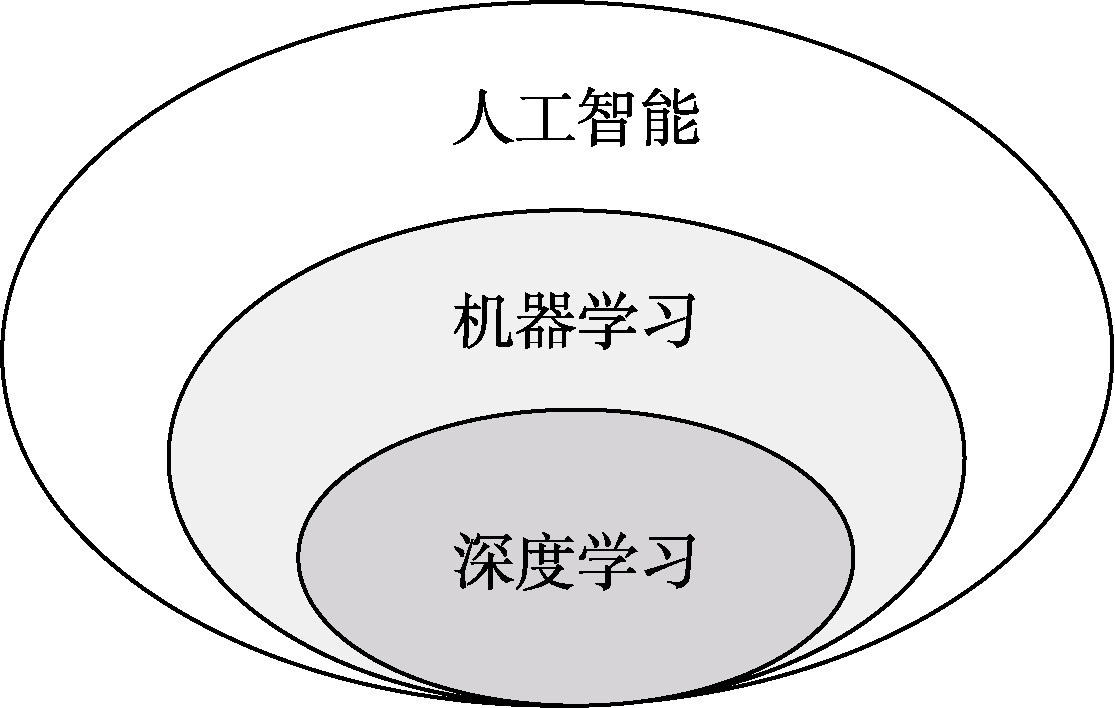
图1 深度学习与机器学习的关系
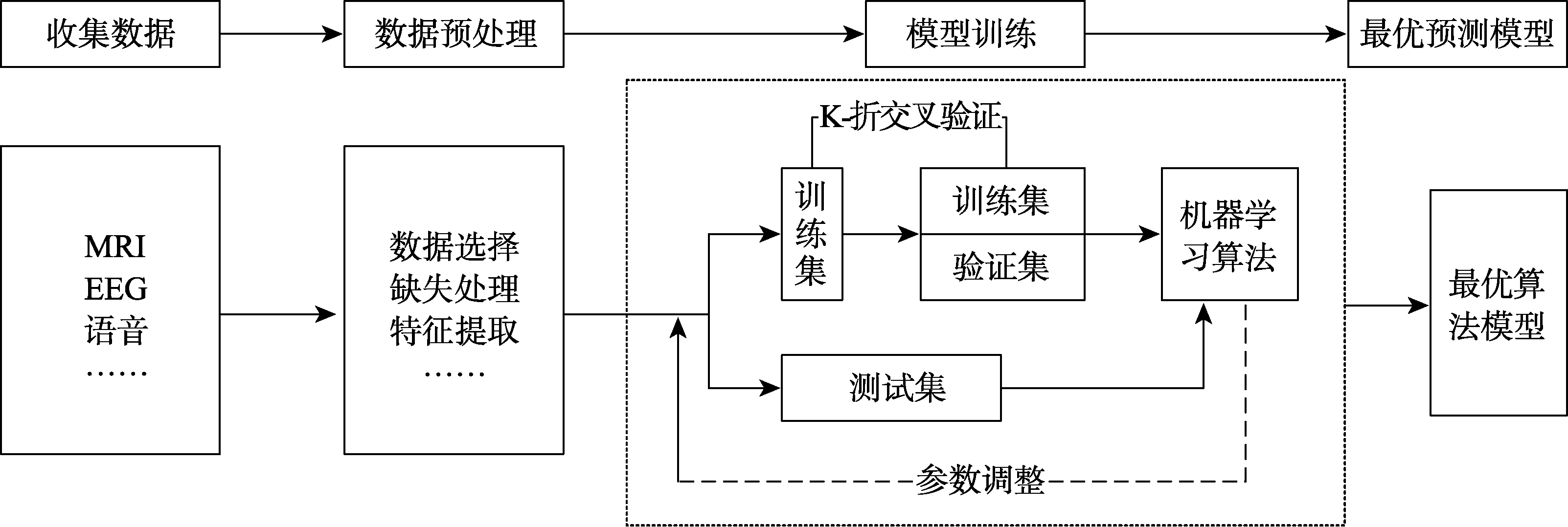
图2 基于ML建立抑郁症预测模型的思路框架如图
| 比较内容 | 传统机器学习 | 深度学习 |
|---|---|---|
| 主要算法 | 支持向量机、支持向量机、随机森林、K-近邻算法、浅层人工神经网络… | 卷积神经网络、自动编码器、循环神经网络、置信神经网络… |
| 人工提取特征 | 需要 | 不需要, 自动抽取特征 |
| 数据集 | 较小 | 大 |
| 硬件需求 | 一般 | 高 |
| 训练时间 | 较短 | 长 |
| 解释性 | 良好 | 差 |
| 拟合能力 | 一般 | 很强 |
表1 传统机器学习与深度学习的比较
| 比较内容 | 传统机器学习 | 深度学习 |
|---|---|---|
| 主要算法 | 支持向量机、支持向量机、随机森林、K-近邻算法、浅层人工神经网络… | 卷积神经网络、自动编码器、循环神经网络、置信神经网络… |
| 人工提取特征 | 需要 | 不需要, 自动抽取特征 |
| 数据集 | 较小 | 大 |
| 硬件需求 | 一般 | 高 |
| 训练时间 | 较短 | 长 |
| 解释性 | 良好 | 差 |
| 拟合能力 | 一般 | 很强 |
| [1] | 靳宇倡, 丁美月 . ( 2017). 产后抑郁的预测因素及神经生理机制. 心理科学进展, 25( 7), 1145-1161. |
| [2] | 康环宇 . ( 2018). 抑郁人群语音信号时间特征研究(硕士学位论文). 兰州大学, 兰州. |
| [3] | 李建秀 . ( 2018). 基于抑郁症患者ERP数据的源定位及分类算法研究(硕士学位论文). 兰州大学, 兰州. |
| [4] | 刘岩, 李幼军, 陈萌 . ( 2017). 基于固有模态分解和深度学习的抑郁症脑电信号分类分析. 中国医学物理学杂志, 34( 09), 963-967. |
| [5] | 罗晓舟, 温小鹏, 何家扬, 黄健婷, 唐纯志 . ( 2017). 基于机器学习的卒中后抑郁影响因素分析. 中医杂志, 58( 17), 1478-1481. |
| [6] | 吕瑞雪 . ( 2014). 围产期抑郁症量化诊断系统的研发(硕士学位论文). 华南理工大学, 广州. |
| [7] | 马丽明, 黄昊 . ( 2016). 医疗信息人才的培养模式研究. 中国数字医学, 11(10), 74-75+97. |
| [8] | 任志洪, 李献云, 赵陵波, 余香莲, 李政汉, 赖丽足, … 江光荣 . ( 2016). 抑郁症网络化自助干预的效果及作用机制——以汉化MoodGYM为例. 心理学报, 48( 07), 818-832. |
| [9] | 沈骥 . ( 2015). 基于眼动、脑电特征的抑郁识别研究(硕士学位论文). 兰州大学, 兰州. |
| [10] | 于斌, 牛凯军 . ( 2015). 膳食营养与抑郁症的关系. 心理科学进展, 23( 12), 2107-2117. |
| [11] | 周爱保, 鲁小勇, 吴文意, 徐世鹏 . ( 2017). 采用语音的抑郁症诊断研究述评. 小型微型计算机系统, 38( 11), 2619-2624. |
| [12] | Acharya, U. R., Oh, S. L., Hagiwara, Y., Tan, J. H., Adeli, H., & Subha, D. P . ( 2018). Automated EEG-based screening of depression using deep convolutional neural network. Computer Methods and Programs in Biomedicine, 161, 103-113. |
| [13] | American Psychiatric Association. ( 2013). Diagnostic and statistical manual of mental disorders (DSM-5®). New York: American Psychiatric Pub. |
| [14] | Bailey, N. W., Hoy, K. E., Rogasch, N. C., Thomson, R. H., McQueen, S., Elliot, D., … Fitzgerald, P. B . ( 2019). Differentiating responders and non-responders to rTMS treatment for depression after one week using resting EEG connectivity measures. Journal of Affective Disorders, 242, 68-79. |
| [15] | Brundtland, G. H . ( 2001). Mental health: New understanding, new hope. JAMA - Journal of the American Medical Association, 286( 19), 2391-2391. |
| [16] | Cabitza, F., & Banfi, G . ( 2018). Machine learning in laboratory medicine: Waiting for the flood? Clinical Chemistry and Laboratory Medicine, 56( 4), 516-524. |
| [17] | Chekroud, A. M., Zotti, R. J., Shehzad, Z., Gueorguieva, R., Johnson, M. K., Trivedi, M. H., … Corlett, P. R . ( 2016). Cross-trial prediction of treatment outcome in depression: A machine learning approach. Lancet Psychiatry, 3( 3), 243-250. |
| [18] | Dipnall, J. F., Pasco, J. A., Berk, M., Williams, L. J., Dodd, S., Jacka, F. N., & Meyer, D . ( 2016). Into the bowels of depression: Unravelling medical symptoms associated with depression by applying machine-learning techniques to a community based population sample. Plos One, 11( 12), e0167055. |
| [19] | Enshaeifar, S., Zoha, A., Markides, A., Skillman, S., Acton, S. T., Elsaleh, T., … Barnaghi, P . ( 2018). Health management and pattern analysis of daily living activities of people with dementia using in-home sensors and machine learning techniques. Plos One, 13( 5), e0195605. |
| [20] | Fatima, I., Mukhtar, H., Ahmad, H. F., & Rajpoot, K . ( 2018). Analysis of user-generated content from online social communities to characterise and predict depression degree. Journal of Information Science, 44( 5), 683-695. |
| [21] | Foster, S., Mohler-Kuo, M., Tay, L., Hothorn, T., & Seibold, H . ( 2019). Estimating patient-specific treatment advantages in the “Treatment for adolescents with depression study”. Journal of Psychiatric Research, 112, 61-70. |
| [22] | Fu, M. R., Wang, Y., Li, C., Qiu, Z., Axelrod, D., Guth, A. A., … Cheung, Y. K . ( 2018). Machine learning for detection of lymphedema among breast cancer survivors. mHealth, 4, 17-17. |
| [23] | Gao, S., Calhoun, V. D., & Sui, J . ( 2018). Machine learning in major depression: From classification to treatment outcome prediction. CNS Neuroscience & Therapeutics, 24( 11), 1037-1052. |
| [24] | Garcia-Ceja, E., Riegler, M., Nordgreen, T., Jakobsen, P., Oedegaard, K. J., & Torresen, J . ( 2018). Mental health monitoring with multimodal sensing and machine learning: A survey. Pervasive and Mobile Computing, 51, 1-26. |
| [25] | Gold, P. W., Machado-Vieira, R., & Pavlatou, M. G . ( 2015). Clinical and biochemical manifestations of depression: Relation to the neurobiology of stress. Neural Plasticity, 2015, 581976. |
| [26] | Hasanzadeh, F., Mohebbi, M., & Rostami, R . ( 2019). Prediction of rTMS treatment response in major depressive disorder using machine learning techniques and nonlinear features of EEG signal. Journal of Affective Disorders, 256, 132-142. |
| [27] | He, L., & Cao, C . ( 2018). Automated depression analysis using convolutional neural networks from speech. Journal of Biomedical Informatics, 83, 103-111. |
| [28] | Helbich, M., Yao, Y., Liu, Y., Zhang, J., Liu, P., & Wang, R . ( 2019). Using deep learning to examine street view green and blue spaces and their associations with geriatric depression in Beijing, China. Environment International, 126, 107-117. |
| [29] | Hilbert, K., Lueken, U., Muehlhan, M., & Beesdo-Baum, K . ( 2017). Separating generalized anxiety disorder from major depression using clinical, hormonal, and structural MRI data: A multimodal machine learning study. Brain and Behavior, 7( 3), e00633. |
| [30] | Hollon, S. D., Cohen, Z. D., Singla, D. R., & Andrews, P. W . ( 2019). Recent developments in the treatment of depression. Behavior Therapy, 50( 2), 257-269. |
| [31] | Islam, M. R., Kabir, M. A., Ahmed, A., Kamal, A. M., Wang, H., & Ulhaq, A . ( 2018). Depression detection from social network data using machine learning techniques. Health Information Science and Systems, 6, 8. |
| [32] | Jimenez-Serrano, S., Tortajada, S., & Miguel Garcia-Gomez, J . ( 2015). A mobile health application to predict postpartum depression based on machine learning. Telemedicine and e-Health, 21( 7), 567-574. |
| [33] | Kantoch, E . ( 2018). Recognition of sedentary behavior by machine learning analysis of wearable sensors during activities of daily living for telemedical assessment of cardiovascular risk. Sensors, 18( 10), 3219. |
| [34] | Karhade, A.V., Ogink, P. T., Thio, Q. C. B. S., Cha, T. D., Gormley, W. B., Hershman, S. H., … Schwab, J. H . ( 2019). Development of machine learning algorithms for prediction of prolonged opioid prescription after surgery for lumbar disc herniation. The Spine Journal. doi: 10.1016/j.spinee.2019.06.002. |
| [35] | Kolossvary, M., de Cecco, C. N., Feuchtner, G., & Maurovich-Horvat, P . ( 2019). Advanced atherosclerosis imaging by CT: Radiomics, machine learning and deep learning. Journal of Cardiovascular Computed Tomography. doi: 10.1016/j. jcct.2019.04.007. |
| [36] | Lee, Y., Ragguett, R. M., Mansur, R. B., Boutilier, J. J., Rosenblat, J. D., Trevizol, A., … McIntyre, R. S . ( 2018). Applications of machine learning algorithms to predict therapeutic outcomes in depression: A meta-analysis and systematic review. Journal of Affective Disorders, 241, 519-532. |
| [37] | Li, X., La, R., Wang, Y., Niu, J., Zeng, S., Sun, S., & Zhu, J . ( 2019). EEG-based mild depression recognition using convolutional neural network. Medical & Biological Engineering & Computing, 57( 6), 1341-1352. |
| [38] | Lin, E., Kuo, P.-H., Liu, Y.-L., Yu, Y. W.-Y., Yang, A. C., & Tsai, S.-J . ( 2018). A deep learning approach for predicting antidepressant response in major depression using clinical and genetic biomarkers. Frontiers in Psychiatry, 9, 290. |
| [39] | Lundervold, A.S. & Lundervold, A . ( 2019). An overview of deep learning in medical imaging focusing on MRI. Zeitschrift fur Medizinische Physik, 29( 2), 102-127. |
| [40] | Marinelarena-Dondena, L., Ferretti, E., Maragoudakis, M., Sapino, M., & Errecalde, M. L . ( 2017). Predicting depression: A comparative study of machine learning approaches based on language usage. Cuadernos De Neuropsicologia-Panamerican Journal of Neuropsychology, 11( 3), 42-54. |
| [41] | McGinnis, R. S., McGinnis, E. W., Hruschak, J., Lopez- Duran, N. L., Fitzgerald, K., Rosenblum, K. L., & Muzik, Maria . ( 2018). Rapid anxiety and depression diagnosis in young children enabled by wearable sensors and machine learning. Conference proceedings: Annual International Conference of the IEEE Engineering in Medicine and Biology Society. IEEE Engineering in Medicine and Biology Society. Annual Conference, 3983-3986. |
| [42] | Moreira, M. W. L., Rodrigues, J. J. P. C., Kumar, N., Saleem, K., & Illin, I. V . ( 2019). Postpartum depression prediction through pregnancy data analysis for emotion-aware smart systems updates. Information Fusion, 47, 23-31. |
| [43] | Mukherjee, H., Obaidullah, S. M., Santosh, K. C., Phadikar, S. & Roy, K . ( 2018). Line spectral frequency-based features and extreme learning machine for voice activity detection from audio signal. International Journal of Speech Technology, 21( 4), 753-760. |
| [44] | Mumtaz, W., & Malik, A. S . ( 2018). A comparative study of different EEG reference choices for diagnosing unipolar depression. Brain Topography, 31( 5), 875-885. |
| [45] | Patel, M.J., Khalaf, A., & Aizenstein, H.J . ( 2016). Studying depression using imaging and machine learning methods. Neuroimage-Clinical, 10, 115-123. |
| [46] | Pearson, R., Pisner, D., Meyer, B., Shumake, J., & Beevers, C. G . ( 2018). A machine learning ensemble to predict treatment outcomes following an Internet intervention for depression. Psychological Medicine. doi: 10.1017/ S003329171800315X. |
| [47] | Ricard, B. J., Marsch, L. A., Crosier, B., & Hassanpour, S . ( 2018). Exploring the utility of community-generated social media content for detecting depression: An analytical study on Instagram. Journal of Medical Internet Research, 20( 12), e11817. |
| [48] | Sarda, A., Munuswamy, S., Sarda, S., & Subramanian, V . ( 2019). Using passive smartphone sensing for improved risk stratification of patients with depression and diabetes: Cross-sectional observational study. JMIR Mhealth and Uhealth, 7( 1), e11041. |
| [49] | Sau, A., & Bhakta, I ., ( 2017a). Artificial neural network (ANN) model to predict depression among geriatric population at a slum in Kolkata, India. Journal of Clinical and Diagnostic Research, 11(5), VC01-VC04. |
| [50] | Sau, A, & Bhakta, I . ( 2017b). Predicting anxiety and depression in elderly patients using machine learning technology. Healthcare Technology Letters, 4( 6), 238-243. |
| [51] | Senders, J. T., Staples, P. C., Karhade, A. V., Zaki, M. M., Gormley, W. B., Broekman, M. L. D., … Arnaout, O . ( 2018). Machine learning and neurosurgical outcome prediction: A systematic review. World Neurosurgery, 109, 476-486. |
| [52] | Wallert, J., Gustafson, E., Held, C., Madison, G., Norlund, F., von Essen, L., & Olsson, E. M. G . ( 2018). Predicting adherence to internet-delivered psychotherapy for symptoms of depression and anxiety after myocardial infarction: Machine learning insights from the U-CARE Heart randomized controlled trial. Journal of Medical Internet Research, 20( 10), e10754. |
| [53] | Wu, C., Dillon, D. G., Hsu, H., Huang, S. A., Barrick, E., & Liu, Y. H . ( 2018). Depression detection using relative EEG power induced by emotionally positive images and a conformal kernel support vector machine. Applied Sciences-Basel, 8( 8), 1244. |
| [54] | Zhao, K. & So, H . ( 2019). Drug repositioning for schizophrenia and depression/anxiety disorders: A machine learning approach leveraging expression data. IEEE Journal of Biomedical and Health Informatics, 23( 3), 1304-1315. |
| [55] | Zheng, H., Zheng, P., Zhao, L., Jia, J., Tang, S., Xu, P., … Gao, H . ( 2017). Predictive diagnosis of major depression using NMR-based metabolomics and least-squares support vector machine. Clinica Chimica Acta, 464, 223-227. |
| [56] | Zilcha-Mano, S., Roose, S. P., Brown, P. J., & Rutherford, B. R . ( 2018). A machine learning approach to identifying placebo responders in late-life depression trials. American Journal of Geriatric Psychiatry, 26( 6), 669-677. |
| [1] | 术鑫迪, 刘菡茵, 王瑾, 刘志远, 刘兰芳. 脑间同步性的产生机制及其功能[J]. 心理科学进展, 2025, 33(3): 439-451. |
| [2] | 侯祥庆, 杨盈, 张倩倩, 杨丽. 自杀风险的评估:基于诊断的视角[J]. 心理科学进展, 2025, 33(3): 494-505. |
| [3] | 高白雪, 谢云龙, 罗俊龙, 贺雯. 机器学习在提高非自杀性自伤预测力中的应用:一项系统综述[J]. 心理科学进展, 2025, 33(3): 506-519. |
| [4] | 温秀娟, 马毓璟, 谭斯祺, 李芸, 刘文华. 身体还是认知努力的损害?抑郁症努力奖赏动机评估及计算模型应用[J]. 心理科学进展, 2025, 33(1): 107-122. |
| [5] | 温聪聪. 惩罚对齐法:测量不变性检验的新方法[J]. 心理科学进展, 2025, 33(1): 176-190. |
| [6] | 李兴珊, 张淇玮, 黄林洁琼. 中文词汇语义加工过程的计算模拟与实验验证[J]. 心理科学进展, 2024, 32(9): 1379-1392. |
| [7] | 肖悦, 刘红云, 徐永泽. 密集追踪成对数据分析的模型建构探索[J]. 心理科学进展, 2024, 32(9): 1450-1462. |
| [8] | 苏涛, 曾浩文, 钟晓琳, 马文聪, 陈修德. 祸福相依:自恋型领导对下属效能双面效应的元分析[J]. 心理科学进展, 2024, 32(9): 1463-1487. |
| [9] | 丁颖, 汪紫滢, 李卫东. 抑郁症疼痛加工的行为特点及神经机制[J]. 心理科学进展, 2024, 32(8): 1315-1327. |
| [10] | 何婷, 胡惠南, 乔璐, 杨靓靓, 李明英, 蔺秀云. 父母应对社会化如何影响儿童青少年适应:基于长时与实时时间轴的视角[J]. 心理科学进展, 2024, 32(8): 1342-1353. |
| [11] | 李育辉, 杨晨露. 团队时间领导的概念内涵及其对团队和个体效能的影响机制[J]. 心理科学进展, 2024, 32(7): 1073-1086. |
| [12] | 付春野, 李艾馨, 吕小康, 王崇颖. 孤独症谱系障碍者的视觉感知:基于贝叶斯和预测编码视角[J]. 心理科学进展, 2024, 32(7): 1164-1178. |
| [13] | 詹紫薇, 王梦梦, 索涛, 蒋艳菊. “一个连续过程”与“三个阶段”:抑郁青少年情绪失调的原因探析[J]. 心理科学进展, 2024, 32(6): 928-938. |
| [14] | 荆伟, 陈琦, 薛云卿, 杨苗, 张婕. 孤独症者的预测编码缺陷:前馈联结异常还是反馈联结异常?[J]. 心理科学进展, 2024, 32(5): 813-833. |
| [15] | 周琦玮, 李倩, 梁爽. 员工对企业数字化转型的反应研究: 基于压力的理论视角[J]. 心理科学进展, 2024, 32(4): 594-615. |
| 阅读次数 | ||||||
|
全文 |
|
|||||
|
摘要 |
|
|||||
