

ISSN 0439-755X
CN 11-1911/B
主办:中国心理学会
中国科学院心理研究所
出版:科学出版社
CN 11-1911/B
主办:中国心理学会
中国科学院心理研究所
出版:科学出版社
心理学报 ›› 2026, Vol. 58 ›› Issue (6): 1197-1212.doi: 10.3724/SP.J.1041.2026.1197 cstr: 32110.14.2026.1197
任梦梦1,2, 李琎1,2, 钟毅平1,2( ), 杨莉君1
收稿日期:2025-06-19
发布日期:2026-04-28
出版日期:2026-06-25
通讯作者:
钟毅平, E-mail: ypzhong@hunnu.edu.cn基金资助:
REN Mengmeng1,2, LI Jin1,2, ZHONG Yiping1,2(), YANG Lijun1
Received:2025-06-19
Online:2026-04-28
Published:2026-06-25
摘要:
在生态环境问题日益严峻的背景下, 促进个体亲环境行为至关重要。社会规范虽为关键外部因素, 但不同类型效力存在差异, 其中指令性规范的效力弱于描述性规范, 其心理与神经机制尚不明确。本研究采用更好物品博弈任务并结合fNIRS技术, 考察道德认同在不同社会规范类型影响亲环境行为中的调节作用及其神经机制。结果表明, 道德认同启动条件下, 指令性规范较描述性规范显著提升亲环境行为及其倾向; 未启动条件下, 描述性规范较指令性规范, 行为选择未达到显著, 但呈现更高亲环境倾向。神经结果显示, 道德认同伴随背外侧前额叶皮层激活增强。进一步分析发现, 指令性规范与道德认同主要激活眶额叶皮层与内侧前额叶皮层; 描述性规范与道德认同主要激活右侧颞顶联合区。研究揭示社会规范影响亲环境行为的双路径机制, 并表明道德认同具有关键调节作用。研究为政策与实践提供启示,通过激活道德认同增强指令性规范的引导力, 并结合描述性规范的稳定效应, 为基于神经机制的行为干预提供实证依据。
中图分类号:
任梦梦, 李琎, 钟毅平, 杨莉君. (2026). 社会规范类型对亲环境行为的影响:道德认同的调节作用及其fNIRS证据. 心理学报, 58(6), 1197-1212.
REN Mengmeng, LI Jin, ZHONG Yiping, YANG Lijun. (2026). Effects of social norm types on pro-environmental behavior: The moderating role of moral identity and fNIRS evidence. Acta Psychologica Sinica, 58(6), 1197-1212.
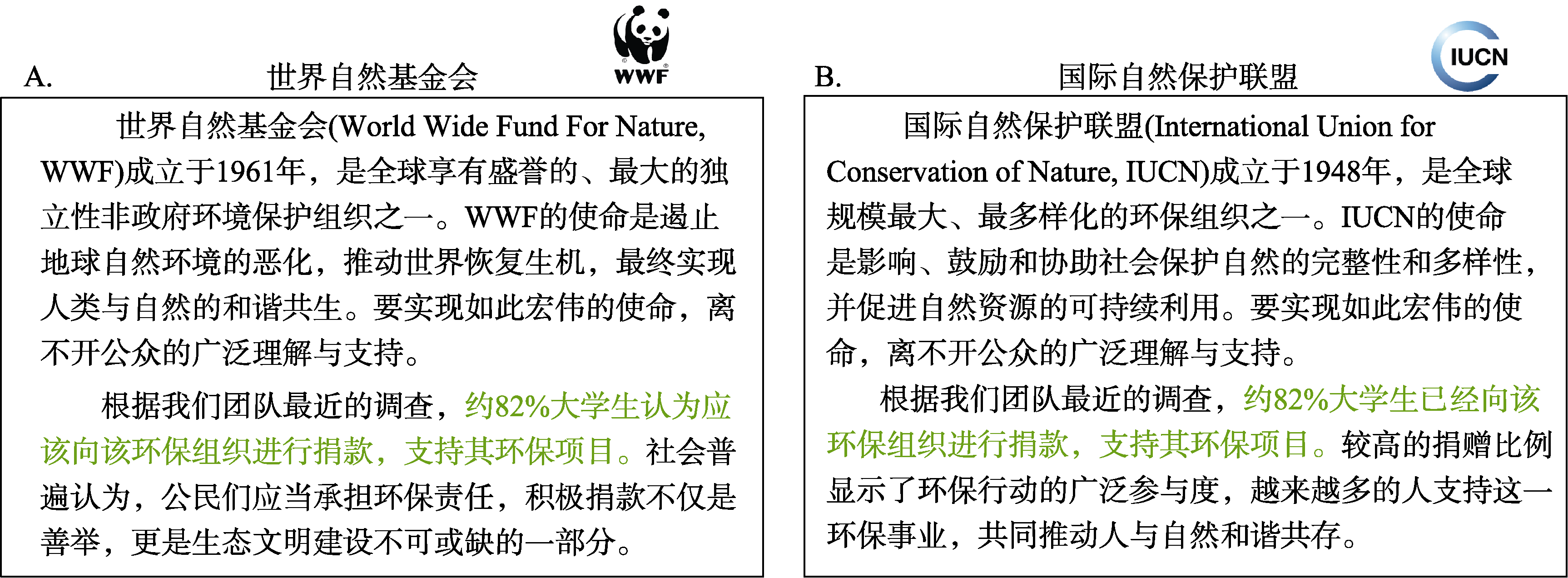
图1 指令性规范(A)和描述性规范(B)的背景信息
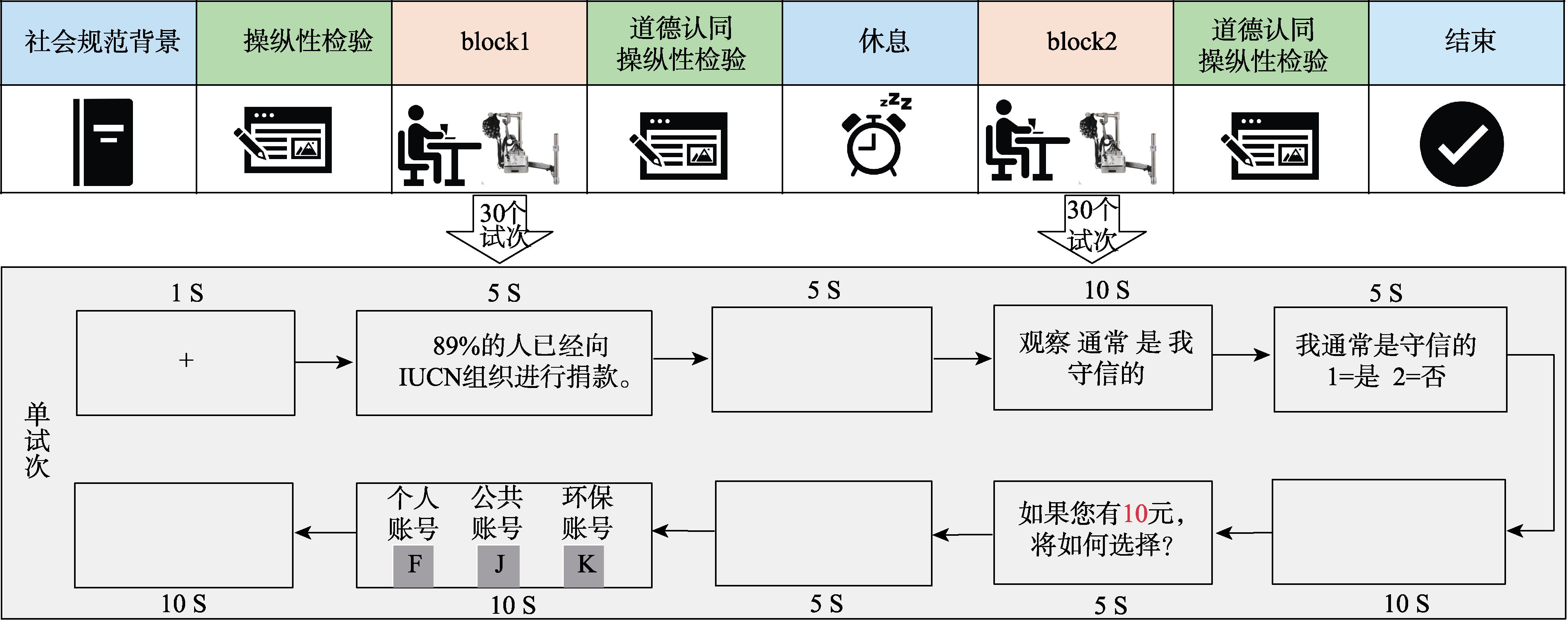
图2 实验流程图 注: 图中展示了实验的整体程序结构及单试次时间流程, 所示单试次为描述性规范条件下道德认同启动区块的代表性示例。
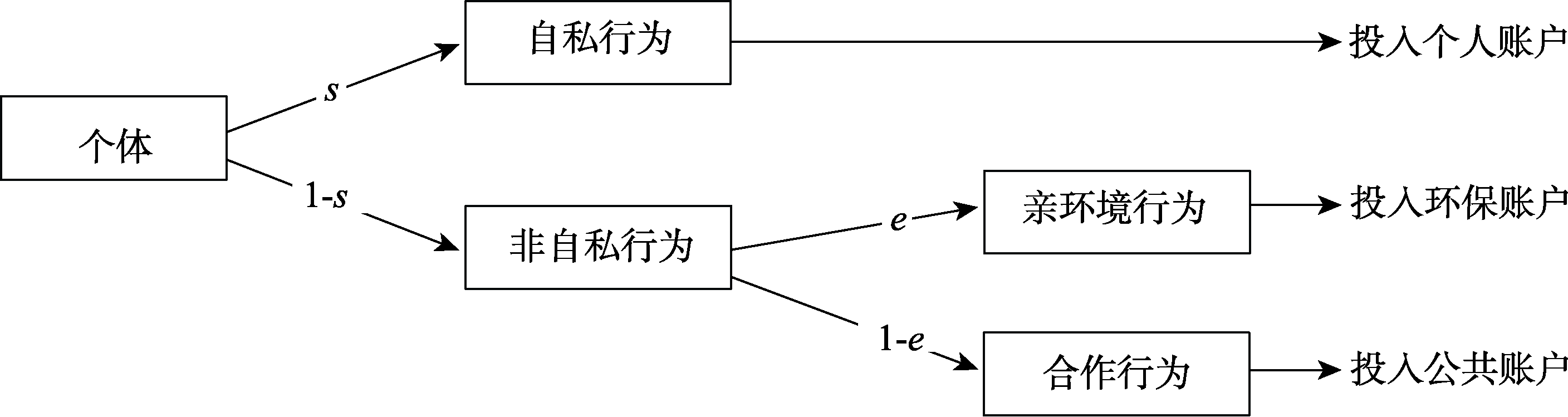
图3 更好物品博弈任务的MPT模型 注:s 表示自利决策路径个人账户选择的概率; e 表示非自利路径中环保账户选择的概率(模型定义见2.4.1)。
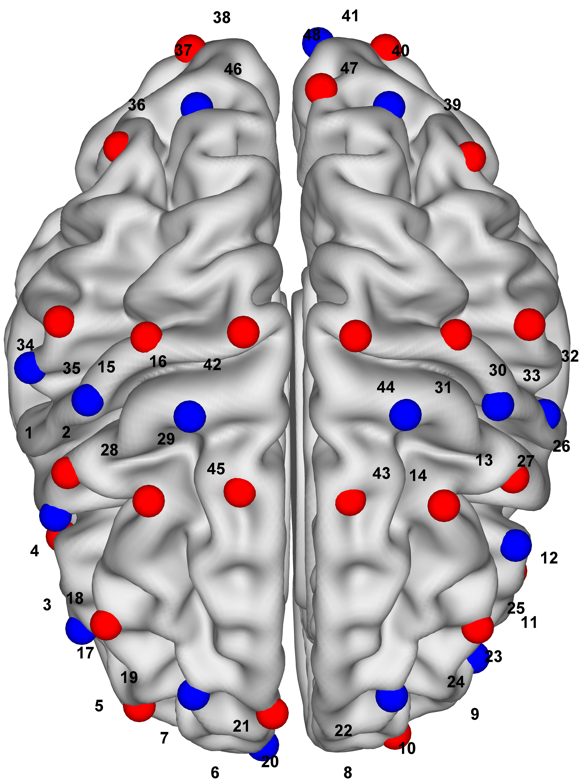
图4 fNIRS通道排布矢状面图 注:红色圆圈, 发射器; 蓝色圆圈, 接收探头; 两者之间的数字表示通道。彩图见电子版, 下同。
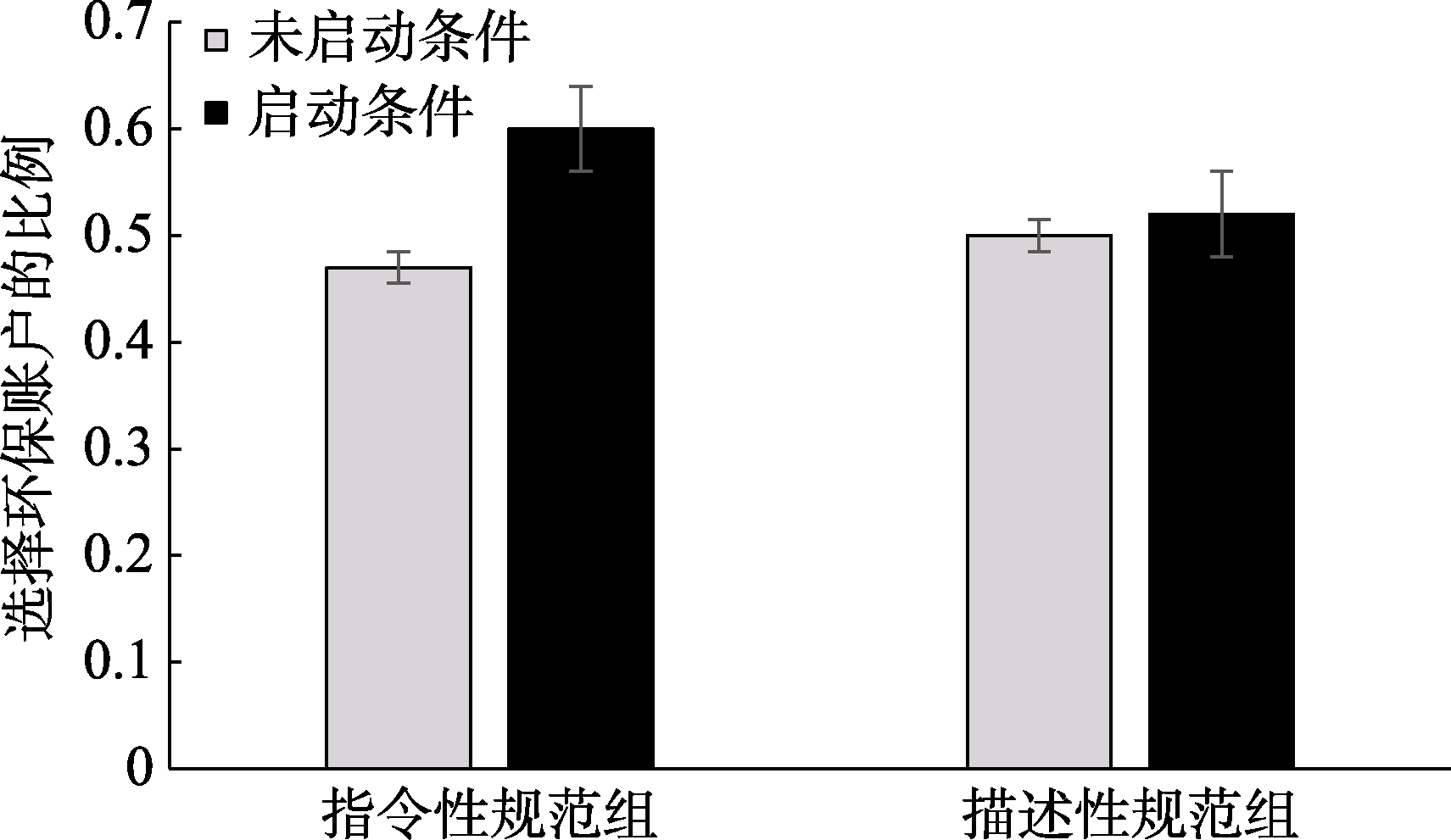
图5 不同实验条件下环保账户选择比例(图中的误差线表示均值的标准误)
| 实验条件 | 行为选择的比例 | 参数估计(标准误) | |||
|---|---|---|---|---|---|
| 自私 | 合作 | 亲环境行为 | s | e | |
| 指令性规范启动条件(组1) | 0.10 | 0.38 | 0.52 | 0.10(0.01) | 0.59(0.02) |
| 描述性规范启动条件(组2) | 0.15 | 0.36 | 0.49 | 0.15(0.01) | 0.56(0.02) |
| 指令性规范未启动条件(组3) | 0.14 | 0.44 | 0.42 | 0.14(0.01) | 0.49(0.02) |
| 描述性规范未启动条件(组4) | 0.14 | 0.39 | 0.47 | 0.14(0.01) | 0.54(0.02) |
表1 四组被试在行为选择比例与参数估计值的结果
| 实验条件 | 行为选择的比例 | 参数估计(标准误) | |||
|---|---|---|---|---|---|
| 自私 | 合作 | 亲环境行为 | s | e | |
| 指令性规范启动条件(组1) | 0.10 | 0.38 | 0.52 | 0.10(0.01) | 0.59(0.02) |
| 描述性规范启动条件(组2) | 0.15 | 0.36 | 0.49 | 0.15(0.01) | 0.56(0.02) |
| 指令性规范未启动条件(组3) | 0.14 | 0.44 | 0.42 | 0.14(0.01) | 0.49(0.02) |
| 描述性规范未启动条件(组4) | 0.14 | 0.39 | 0.47 | 0.14(0.01) | 0.54(0.02) |
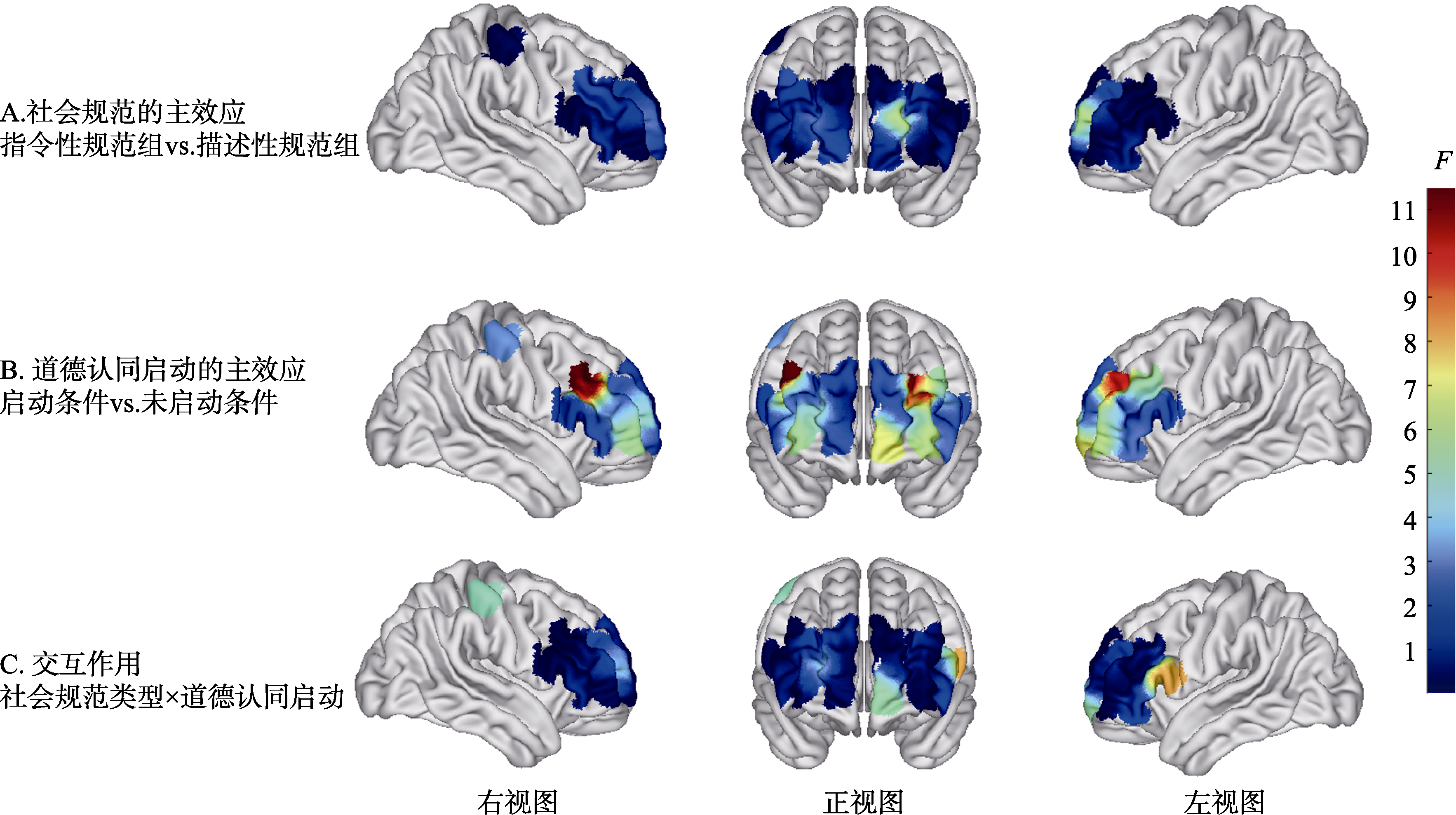
图6 社会规范类型与道德认同启动的主效应及交互作用的脑区激活成像图 注:图中颜色代表方差分析的F值(0~11), 颜色越红表示该脑区的主效应或交互作用对应的F值越大。
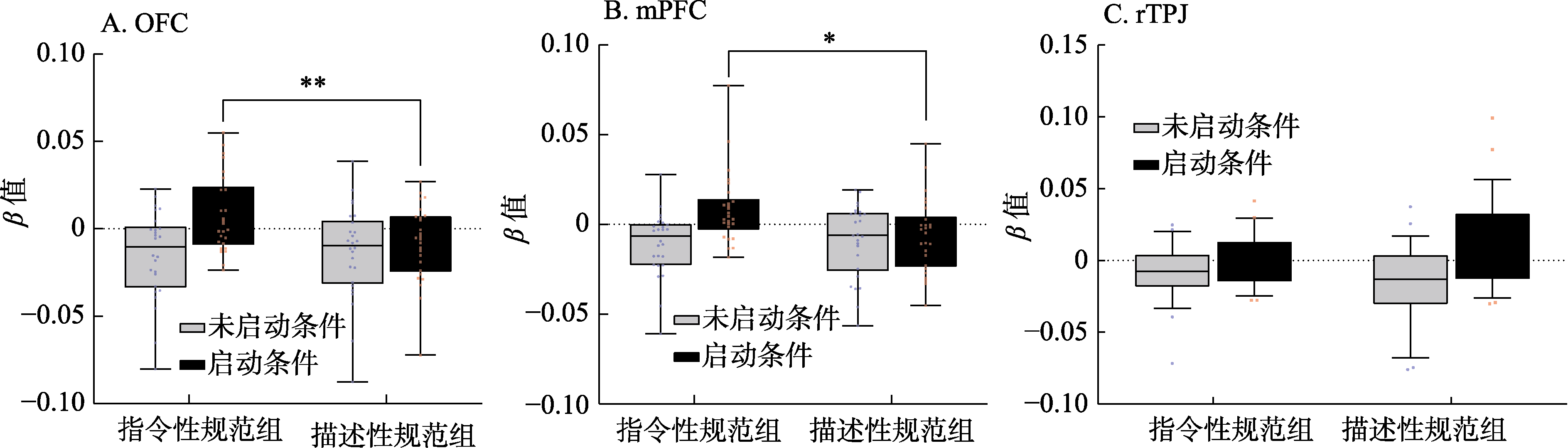
图7 不同组别在决策阶段激活OFC、mPFC和rTPJ脑区的结果 注:* p < 0.05, ** p < 0.01, *** p < 0.001。
| 环保组织 | 该环保组织在环境保护中的贡献非常突出(M ± SD) | 该环保组织在环境保护领域具有深远的影响力(M ± SD) |
|---|---|---|
| 世界自然基金会 | 4.73 ± 0.47 | 4.65 ± 0.58 |
| 世界自然保护联盟 | 4.56 ± 0.54 | 4.49 ± 0.63 |
| 中华环境保护基金会 | 4.42 ± 0.58 | 4.34 ± 0.52 |
| 大自然保护协会 | 4.69 ± 0.43 | 4.53 ± 0.55 |
| 全球环境基金 | 4.22 ± 0.66 | 4.17 ± 0.63 |
| 绿色和平组织 | 4.01 ± 0.74 | 3.93 ± 0.84 |
| 地球之友 | 3.83 ± 0.65 | 3.74 ± 0.79 |
| 阿里巴巴公益基金会 | 3.57 ± 0.72 | 3.46 ± 0.75 |
| 中国环境保护协会 | 3.64 ± 0.62 | 3.51 ± 0.62 |
| 中华环保联合会 | 3.75 ± 0.65 | 3.64 ± 0.78 |
附表1 10个环保组织在2个操纵性检验问题的得分
| 环保组织 | 该环保组织在环境保护中的贡献非常突出(M ± SD) | 该环保组织在环境保护领域具有深远的影响力(M ± SD) |
|---|---|---|
| 世界自然基金会 | 4.73 ± 0.47 | 4.65 ± 0.58 |
| 世界自然保护联盟 | 4.56 ± 0.54 | 4.49 ± 0.63 |
| 中华环境保护基金会 | 4.42 ± 0.58 | 4.34 ± 0.52 |
| 大自然保护协会 | 4.69 ± 0.43 | 4.53 ± 0.55 |
| 全球环境基金 | 4.22 ± 0.66 | 4.17 ± 0.63 |
| 绿色和平组织 | 4.01 ± 0.74 | 3.93 ± 0.84 |
| 地球之友 | 3.83 ± 0.65 | 3.74 ± 0.79 |
| 阿里巴巴公益基金会 | 3.57 ± 0.72 | 3.46 ± 0.75 |
| 中国环境保护协会 | 3.64 ± 0.62 | 3.51 ± 0.62 |
| 中华环保联合会 | 3.75 ± 0.65 | 3.64 ± 0.78 |
| [1] | Amodio, D. M., & Frith, C. D. (2006). Meeting of minds:The medial frontal cortex and social cognition. Nature Reviews Neuroscience, 7(4), 268-277. |
| [2] | Aquino, K., & Kay, A. (2018). A social cognitive model of moral identity. In K. Gray & J. Graham (Eds.), Atlas of moral psychology (pp. 133-140). Guilford Press. |
| [3] |
Aquino, K., & Reed, A., II. (2002). The self-importance of moral identity. Journal of Personality and Social Psychology, 83(6), 1423-1440.
pmid: 12500822 |
| [4] | Balconi, M., Allegretta, R. A., Acconito, C., Saquella, F., & Angioletti, L. (2025). The functional signature of decision making across dyads during a persuasive scenario: Hemodynamic fNIRS coherence measure. Sensors, 25(6), 1880. |
| [5] |
Barclay, P., & Barker, J. L. (2020). Greener than thou: People who protect the environment are more cooperative, compete to be environmental, and benefit from reputation. Journal of Environmental Psychology, 72, 101441.
doi: 10.1016/j.jenvp.2020.101441 URL |
| [6] |
Baumgartner, T., Langenbach, B. P., Gianotti, L. R., Müri, R. M., & Knoch, D. (2019). Frequency of everyday pro-environmental behaviour is explained by baseline activation in lateral prefrontal cortex. Scientific Reports, 9(1), 1-7.
doi: 10.1038/s41598-018-37186-2 |
| [7] |
Bicchieri, C., & Xiao, E. (2009). Do the right thing: But only if others do so. Journal of Behavioral Decision Making, 22(2), 191-208.
doi: 10.1002/bdm.v22:2 URL |
| [8] |
Brevers, D., Baeken, C., Maurage, P., Sescousse, G., Vögele, C., & Billieux, J. (2021). Brain mechanisms underlying prospective thinking of sustainable behaviours. Nature Sustainability, 4(5), 433-439.
doi: 10.1038/s41893-020-00658-3 |
| [9] | Brosch, T., Stussi, Y., Desrichard, O., & Sander, D. (2018). Not my future? Core values and the neural representation of future events. Cognitive, Affective, & Behavioral Neuroscience, 18(3), 476-484. |
| [10] |
Buckholtz, J. W., & Marois, R. (2012). The roots of modern justice: Cognitive and neural foundations of social norms and their enforcement. Nature Neuroscience, 15(5), 655-661.
doi: 10.1038/nn.3087 pmid: 22534578 |
| [11] |
Cialdini, R. B., & Jacobson, R. P. (2021). Influences of social norms on climate change-related behaviors. Current Opinion in Behavioral Sciences, 42, 1-8.
doi: 10.1016/j.cobeha.2021.01.005 URL |
| [12] |
Cialdini, R. B., Reno, R. R., & Kallgren, C. A. (1990). A focus theory of normative conduct: Recycling the concept of norms to reduce littering in public places. Journal of Personality and Social Psychology, 58(6), 1015-1026.
doi: 10.1037/0022-3514.58.6.1015 URL |
| [13] |
Chai, M., Liu, K., & Jin, F. (2024). More moral or more social: The self-construction mechanism of green consumption. Advances in Psychological Science, 32(10), 1726-1735.
doi: 10.3724/SP.J.1042.2024.01726 |
|
[柴民权, 刘可欣, 靳菲. (2024). 更道德抑或更社会: 绿色消费的自我建构机制. 心理科学进展, 32(10), 1726-1735.]
doi: 10.3724/SP.J.1042.2024.01726 |
|
| [14] |
Christensen, P. N., Rothgerber, H., Wood, W., & Matz, D. C. (2004). Social norms and identity relevance: A motivational approach to normative behavior. Personality and Social Psychology Bulletin, 30(10), 1295-1309.
pmid: 15466602 |
| [15] |
Constantino, S. M., Sparkman, G., Kraft-Todd, G. T., Bicchieri, C., Centola, D., Shell-Duncan, B.,... Weber, E. U. (2022). Scaling up change: A critical review and practical guide to harnessing social norms for climate action. Psychological Science in the Public Interest, 23(2), 50-97.
doi: 10.1177/15291006221105279 pmid: 36227765 |
| [16] |
de Groot, J. I. M., & Steg, L. (2008). Value orientations to explain beliefs related to environmental significant behavior: How to measure egoistic, altruistic, and biospheric value orientations. Environment and Behavior, 40(3), 330-354.
doi: 10.1177/0013916506297831 URL |
| [17] |
Doell, K. C., Berman, M. G., Bratman, G. N., Knutson, B., Kühn, S., Lamm, C.,... Brosch, T. (2023). Leveraging neuroscience for climate change research. Nature Climate Change, 13(12), 1288-1297.
doi: 10.1038/s41558-023-01857-4 |
| [18] |
Doran, R., & Larsen, S. (2016). The relative importance of social and personal norms in explaining intentions to choose eco-friendly travel options. International Journal of Tourism Research, 18(2), 159-166.
doi: 10.1002/jtr.v18.2 URL |
| [19] |
Engler, D., Gutsche, G., Simixhiu, A., & Ziegler, A. (2025). Social norms and individual climate protection activities: A survey experiment for Germany. Energy Economics, 142, 108103.
doi: 10.1016/j.eneco.2024.108103 URL |
| [20] |
Farrow, K., Grolleau, G., & Ibanez, L. (2017). Social norms and pro-environmental behavior: A review of the evidence. Ecological Economics, 140, 1-13.
doi: 10.1016/j.ecolecon.2017.04.017 URL |
| [21] |
Faul, F., Erdfelder, E., Lang, A. G., & Buchner, A. (2007). G* Power 3: A flexible statistical power analysis program for the social, behavioral, and biomedical sciences. Behavior Research Methods, 39(2), 175-191.
doi: 10.3758/BF03193146 URL |
| [22] |
Fehr, E., & Fischbacher, U. (2003). The nature of human altruism. Nature, 425(6960), 785-791.
doi: 10.1038/nature02043 |
| [23] |
Felix-Ortiz, A. C., Burgos-Robles, A., Bhagat, N. D., Leppla, C. A., & Tye, K. M. (2016). Bidirectional modulation of anxiety-related and social behaviors by amygdala projections to the medial prefrontal cortex. Neuroscience, 321, 197-209.
doi: S0306-4522(15)00655-7 pmid: 26204817 |
| [24] |
Gotowiec, S., & van Mastrigt, S. (2019). Having versus doing: The roles of moral identity internalization and symbolization for prosocial behaviors. The Journal of Social Psychology, 159(1), 75-91.
doi: 10.1080/00224545.2018.1454394 URL |
| [25] |
Hao, S., Xin, Q., & Xiaoqin, W. (2023). Anodal tDCS over TPJ reduces bidding in Tullock contest: Implications for social decision-making. Neuroscience Letters, 812, 137361.
doi: 10.1016/j.neulet.2023.137361 URL |
| [26] |
Hardy, S. A., & Carlo, G. (2011). Moral identity: What is it, how does it develop, and is it linked to moral action?. Child Development Perspectives, 5(3), 212-218.
doi: 10.1111/j.1750-8606.2011.00189.x URL |
| [27] |
Helferich, M., Thøgersen, J., & Bergquist, M. (2023). Direct and mediated impacts of social norms on pro- environmental behavior. Global Environmental Change, 80, 102680.
doi: 10.1016/j.gloenvcha.2023.102680 URL |
| [28] |
Hertz, S. G., & Krettenauer, T. (2016). Does moral identity effectively predict moral behavior?: A meta-analysis. Review of General Psychology, 20(2), 129-140.
doi: 10.1037/gpr0000062 URL |
| [29] |
Jacquet, J., Hagel, K., Hauert, C., Marotzke, J., Röhl, T., & Milinski, M. (2013). Intra-and intergenerational discounting in the climate game. Nature Climate Change, 3(12), 1025-1028.
doi: 10.1038/nclimate2024 |
| [30] |
Jiang, Y., Jiang, C., Hu, T., & Sun, H. (2022). Effects of emotion on intertemporal decision-making: Explanation from the single dimension priority model. Acta Psychologica Sinica, 54(2), 122-140.
doi: 10.3724/SP.J.1041.2022.00122 |
|
[蒋元萍, 江程铭, 胡天翊, 孙红月. (2022). 情绪对跨期决策的影响:来自单维占优模型的解释. 心理学报, 54(2), 122-140.]
doi: 10.3724/SP.J.1041.2022.00122 |
|
| [31] |
Klein, S. A., Hilbig, B. E., & Heck, D. W. (2017). Which is the greater good? A social dilemma paradigm disentangling environmentalism and cooperation. Journal of Environmental Psychology, 53, 40-49.
doi: 10.1016/j.jenvp.2017.06.001 URL |
| [32] | Klein, S. A., Nockur, L., & Reese, G. (2022). Prosociality from the perspective of environmental psychology. Current Opinion in Psychology, 44, 182-187. |
| [33] |
Knoch, D., Gianotti, L. R., Pascual-Leone, A., Treyer, V., Regard, M., Hohmann, M., & Brugger, P. (2006). Disruption of right prefrontal cortex by low-frequency repetitive transcranial magnetic stimulation induces risk- taking behavior. Journal of Neuroscience, 26(24), 6469-6472.
doi: 10.1523/JNEUROSCI.0804-06.2006 URL |
| [34] | Krettenauer, T. (2022). When moral identity undermines moral behavior: An integrative framework. Social and Personality Psychology Compass, 16(3), e12655. |
| [35] |
Kwon, S. J., van Hoorn, J., Do, K. T., Burroughs, M., & Telzer, E. H. (2023). Neural representation of donating time and money. Journal of Neuroscience, 43(36), 6297-6305.
doi: 10.1523/JNEUROSCI.0480-23.2023 URL |
| [36] |
Lange, F., Steinke, A., & Dewitte, S. (2018). The pro- environmental behavior task: A laboratory measure of actual pro-environmental behavior. Journal of Environmental Psychology, 56, 46-54.
doi: 10.1016/j.jenvp.2018.02.007 URL |
| [37] |
Langenbach, B. P., Savic, B., Baumgartner, T., Wyss, A. M., & Knoch, D. (2022). Mentalizing with the future: Electrical stimulation of the right TPJ increases sustainable decision-making. Cortex, 146, 227-237.
doi: 10.1016/j.cortex.2021.11.006 URL |
| [38] |
Le Houcq Corbi, Z., Taşkıran, D., & Soutschek, A. (2025). Pro-environmental and prosocial decisions share neural correlates. Journal of Cognitive Neuroscience, 37(11), 2178-2189.
doi: 10.1162/jocn_a_02314 URL |
| [39] | Lemmel, F. K., Hoppen, T. H., & Morina, N. (2025). Long-term effects of social norm interventions on pro-environmental behaviours: A systematic review and meta-analysis. Journal of Environmental Psychology, 107,102784. |
| [40] | Li, H., Lin, J., He, N., Wang, Z., & Zhang, L. (2023). The influence of moral identity on cooperative behavior and its mechanism in social predicaments. Psychological and Behavioral Research, 21(3), 410-417. |
|
[李红, 林嘉浩, 何宁, 王紫祎, 张亮. (2023). 社会困境下道德认同对合作行为的影响及其作用机制. 心理与行为研究, 21(3), 410-417.]
doi: 10.12139/j.1672-0628.2023.03.017 |
|
| [41] | Li, Y., Chen, R., & He, Q. (2018). The application of functional near-infrared spectroscopy in understanding the brain mechanism of social interaction. Journal of Psychological Science, 41(2), 305-311 |
| [李玉华, 陈睿, 何清华. (2018). 功能性近红外光谱技术在社会互动脑机制研究中的应用. 心理科学, 41(2), 305-311.] | |
| [42] | Liu, R. (2014). On the concept of moral identity. Studies in Ethics, 74(6), 15-20. |
| [刘仁贵. (2014). 道德认同概念辨析. 伦理学研究, 74(6), 15-20.] | |
| [43] |
Lu, H., Zou, J., Chen, H., & Long, R. (2020). Promotion or inhibition? Moral norms, anticipated emotion and employee’s pro-environmental behavior. Journal of Cleaner Production, 258, 120858.
doi: 10.1016/j.jclepro.2020.120858 URL |
| [44] |
Luu, T. T., Thieken, A. H., Tuyen, T. T., Vinh, V. T., & Bubeck, P. (2025). Exploring the influence of different types of social norms and other factors on flood-adaptive behaviour. Journal of Environmental Psychology, 108, 102835.
doi: 10.1016/j.jenvp.2025.102835 URL |
| [45] | Marciano, D., Staveland, B. R., Lin, J. J., Saez, I., Hsu, M., & Knight, R. T. (2023). Electrophysiological signatures of inequity-dependent reward encoding in the human OFC. Cell Reports, 42(8), 112865. |
| [46] |
Molenberghs, P., Johnson, H., Henry, J. D., & Mattingley, J. B. (2016). Understanding the minds of others: A neuroimaging meta-analysis. Neuroscience & Biobehavioral Reviews, 65, 276-291.
doi: 10.1016/j.neubiorev.2016.03.020 URL |
| [47] |
Mollen, S., Cheung, Q., & Stok, F. M. (2023). The influence of social norms on anticipated snacking: An experimental study comparing different types of social norms. Appetite, 180, 106372.
doi: 10.1016/j.appet.2022.106372 URL |
| [48] | Nielsen, Y. A., & Pfattheicher, S. (2024). Separating individual and group-level cooperation in the Public Goods Game. PNAS Nexus, 3(5), pgae200. |
| [49] | Niemiec, R. M., Champine, V., Vaske, J. J., & Mertens, A. (2020). Does the impact of norms vary by type of norm and type of conservation behavior? A meta-analysis. Society & Natural Resources, 33(8), 1024-1040. |
| [50] |
Niu, B., Li, Y., Ding, X., Shi, C., Zhou, B., & Gong, J. (2023). Neural correlates of bribe-taking decision dilemma: An fNIRS study. Brain and Cognition, 166, 105951.
doi: 10.1016/j.bandc.2023.105951 URL |
| [51] |
Noble, W. S. (2009). How does multiple testing correction work?. Nature Biotechnology, 27(12), 1135-1137.
doi: 10.1038/nbt1209-1135 pmid: 20010596 |
| [52] |
Nyborg, K., Anderies, J. M., Dannenberg, A., Lindahl, T., Schill, C., Schluter, M., …de Zeeuw, A. (2016). Social norms as solutions. Science, 354(6308), 42-43.
pmid: 27846488 |
| [53] | Orui, J., Inoue, T., Shiraiwa, K., Ueda, M., Naito, Y., & Ishii, R. (2025). The neurophysiological correlates of altruism: A scoping review of fMRI, EEG, and autonomic studies. Cognitive, Affective, & Behavioral Neuroscience, 1-26. |
| [54] | Panico, F., Ferrara, A., Sagliano, L., & Trojano, L. (2024). The involvement of rTPJ in intention attribution during social decision making: A TMS study. Cognitive, Affective, & Behavioral Neuroscience, 24(4), 755-765. |
| [55] |
Piao, X. D., & Managi, S. (2024). Determinants of pro-environmental behaviour: Effects of socioeconomic, subjective, and psychological well-being factors from 37 countries. Humanities and Social Sciences Communications, 11(1), 1-17.
doi: 10.1057/s41599-023-02237-1 |
| [56] |
Prakash, G., Choudhary, S., Kumar, A., Garza-Reyes, J. A., Khan, S. A. R., & Panda, T. K. (2019). Do altruistic and egoistic values influence consumers’ attitudes and purchase intentions towards eco-friendly packaged products? An empirical investigation. Journal of Retailing and Consumer Services, 50, 163-169.
doi: 10.1016/j.jretconser.2019.05.011 |
| [57] |
Reed, A., Aquino, K., & Levy, E. (2007). Moral identity and judgments of charitable behaviors. Journal of Marketing, 71(1), 178-193.
doi: 10.1509/jmkg.71.1.178 URL |
| [58] | Ren, M., Fan, W., Huang, Z., Yang, L., & Zhong, Y. (2026). Beyond self-interested choices: The influence mechanism of social norms on pro-environmental behavior in social dilemmas. Journal of Psychological Science, 49(2), 412-425. |
| [任梦梦, 范伟, 黄子君, 杨莉君, 钟毅平. (2026). 超越自利选择:社会规范对社会困境中亲环境行为的影响机制. 心理科学, 49(2), 412-425.] | |
| [59] | Ren, M., Fan, W., Yang, L., & Zhong, Y. (2025). Navigating nested social dilemmas: The impact of social norms on pro-environmental behaviour. International Journal of Psychology, 60(6), e70124. |
| [60] |
Ren, M., Zhong, B., & Fan, W. (2024). The impact of descriptive and injunctive social norms on pro-environmental behavior: A study using eye-tracking technology. Current Psychology, 43(45), 34761-34777.
doi: 10.1007/s12144-024-06909-2 |
| [61] |
Rhodes, N., Shulman, H. C., & McClaran, N. (2020). Changing norms: A meta-analytic integration of research on social norms appeals. Human Communication Research, 46(2-3), 161-191.
doi: 10.1093/hcr/hqz023 URL |
| [62] | Rolls, E. T., Cheng, W., & Feng, J. (2020). The orbitofrontal cortex: Reward, emotion and depression. Brain Communications, 2(2), fcaa196. |
| [63] |
Rosales, E. G., Baumgartner, T., & Knoch, D. (2022). Interindividual differences in intergenerational sustainable behavior are associated with cortical thickness of the dorsomedial and dorsolateral prefrontal cortex. NeuroImage, 264, 119664.
doi: 10.1016/j.neuroimage.2022.119664 URL |
| [64] |
Ruff, C. C., Ugazio, G., & Fehr, E. (2013). Changing social norm compliance with noninvasive brain stimulation. Science, 342(6157), 482-484.
doi: 10.1126/science.1241399 pmid: 24091703 |
| [65] |
Salciuviene, L., Dovalienė, A., Gravelines, Ž., Vilkas, M., Oates, C., & Banytė, J. (2024). Examining moral identity and engagement with sustainable consumption at home and in the workplace. EuroMed Journal of Business, 20(4), 1052-1072.
doi: 10.1108/EMJB URL |
| [66] |
Schultz, P. W. (2001). The structure of environmental concern: Concern for self, other people, and the biosphere. Journal of Environmental Psychology, 21(4), 327-339.
doi: 10.1006/jevp.2001.0227 URL |
| [67] | Sommet, N., Weissman, D. L., Cheutin, N., & Elliot, A. J. (2023). How many participants do I need to test an interaction? Conducting an appropriate power analysis and achieving sufficient power to detect an interaction. Advances in Methods and Practices in Psychological Science, 6(3), 1-21. |
| [68] | Soutschek, A., Moisa, M., Ruff, C. C., & Tobler, P. N. (2020). The right temporoparietal junction enables delay of gratification by allowing decision makers to focus on future events. PLoS biology, 18(8), e3000800. |
| [69] | Sovacool, B. K., Turnheim, B., Martiskainen, M., Brown, D., & Kivimaa, P. (2020). Guides or gatekeepers? Incumbent- oriented transition intermediaries in a low-carbon era. Energy Research & Social Science, 66, 101490. |
| [70] |
Spitzer, M., Fischbacher, U., Herrnberger, B., Grön, G., & Fehr, E. (2007). The neural signature of social norm compliance. Neuron, 56(1), 185-196.
pmid: 17920024 |
| [71] |
Steg, L., & Vlek, C. (2009). Encouraging pro-environmental behaviour: An integrative review and research agenda. Journal of Environmental Psychology, 29(3), 309-317.
doi: 10.1016/j.jenvp.2008.10.004 URL |
| [72] |
Strang, S., Gross, J., Schuhmann, T., Riedl, A., Weber, B., & Sack, A. T. (2015). Be nice if you have to-the neurobiological roots of strategic fairness. Social Cognitive and Affective Neuroscience, 10(6), 790-796.
doi: 10.1093/scan/nsu114 URL |
| [73] |
Tang, M., Tian, S., & Xie, T. (2024). Beyond the myth of slimming: The impact of social norms on positive body image and caloric intake among young adults. Acta Psychologica Sinica, 56(10), 1367-1383.
doi: 10.3724/SP.J.1041.2024.01367 |
|
[汤美慧, 田姝菀, 谢天. (2024). 超越瘦身迷思:“以瘦为美”的社会规范对青年群体积极身体意象与热量摄入的影响. 心理学报, 56(10), 1367-1383.]
doi: 10.3724/SP.J.1041.2024.01367 |
|
| [74] |
van der Werff, E., Steg, L., & Keizer, K. (2013). It is a moral issue: The relationship between environmental self-identity, obligation-based intrinsic motivation and pro-environmental behaviour. Global Environmental Change, 23(5), 1258-1265.
doi: 10.1016/j.gloenvcha.2013.07.018 URL |
| [75] |
Vesely, S., Klöckner, C. A., & Brick, C. (2020). Pro-environmental behavior as a signal of cooperativeness: Evidence from a social dilemma experiment. Journal of Environmental Psychology, 67, 101362.
doi: 10.1016/j.jenvp.2019.101362 URL |
| [76] |
Wang, C., Zheng, X., Yu, Q., & Lei, L. (2019). The dilemma of green consumption: Identity construction or environmental concern?. Advances in Psychological Science, 27(8), 1507-1520.
doi: 10.3724/SP.J.1042.2019.01507 |
|
[王财玉, 郑晓旭, 余秋婷, 雷雳. (2019). 绿色消费的困境:身份建构抑或环境关心?. 心理科学进展, 27(8), 1507-1520.]
doi: 10.3724/SP.J.1042.2019.01507 |
|
| [77] |
Wang, G., Tang, J., Yin, Z., Yu, S., Shi, X., Hao, X.,... Li, S. (2024). The neurocomputational signature of decision-making for unfair offers in females under acute psychological stress. Neurobiology of Stress, 30, 100622.
doi: 10.1016/j.ynstr.2024.100622 URL |
| [78] |
Wang, S., & van den Berg, B. (2021). Neuroscience and climate change: How brain recordings can help us understand human responses to climate change. Current Opinion in Psychology, 42, 126-132.
doi: 10.1016/j.copsyc.2021.06.023 pmid: 34358820 |
| [79] |
Wang, X., Kong, F., Zhu, H., & Chen, Y. (2024). Dynamic indirect reciprocity: The influence of personal reputation and group reputation on cooperative behavior in nested social dilemmas. Journal of Experimental Social Psychology, 112, 104599.
doi: 10.1016/j.jesp.2024.104599 URL |
| [80] |
Winterich, K. P., Aquino, K., Mittal, V., & Swartz, R. (2013). When moral identity symbolization motivates prosocial behavior: The role of recognition and moral identity internalization. Journal of Applied Psychology, 98(5), 759-770.
doi: 10.1037/a0033177 pmid: 23751218 |
| [81] |
Wu, B., Li, D., & Wang, C. (2016). The psychological mechanism of green consumption based on moral identity theory. Advances in Psychological Science, 24(12), 1829-1843.
doi: 10.3724/SP.J.1042.2016.01829 |
|
[吴波, 李东进, 王财玉. (2016). 基于道德认同理论的绿色消费心理机制. 心理科学进展, 24(12), 1829-1843.]
doi: 10.3724/SP.J.1042.2016.01829 |
|
| [82] |
Wu, B., & Yang, Z. (2018). The impact of moral identity on consumers’ green consumption tendency: The role of perceived responsibility for environmental damage. Journal of Environmental Psychology, 59, 74-84.
doi: 10.1016/j.jenvp.2018.08.011 URL |
| [83] | Xu, J., Sun, X., D, Y., Wang, Z., Li, W., & Yuan, B. (2017). Compensation or punishment? —The effect of social distance on third-party intervention. Journal of Psychological Science, 40(5), 1175-1181. |
| [徐杰, 孙向超, 董悦, 汪祚军, 李伟强, 袁博. (2017). 人情与公正的抉择:社会距离对第三方干预的影响. 心理科学, 40(5), 1175-1181.] | |
| [84] |
Ye, P., Zhu, R., Tang, H., Mai, X., & Liu, C. (2017). The application of functional near-infrared spectroscopy in social cognitive neuroscience. Advances in Psychological Science, 25(5), 731-741.
doi: 10.3724/SP.J.1042.2017.00731 |
|
[叶佩霞, 朱睿达, 唐红红, 买晓琴, 刘超. (2017). 近红外光学成像在社会认知神经科学中的应用. 心理科学进展, 25(5), 731-741.]
doi: 10.3724/SP.J.1042.2017.00731 |
|
| [85] |
Young, L., Camprodon, J. A., Hauser, M., Pascual-Leone, A., & Saxe, R. (2010). Disruption of the right temporoparietal junction with transcranial magnetic stimulation reduces the role of beliefs in moral judgments. Proceedings of the National Academy of Sciences, 107(15), 6753-6758.
doi: 10.1073/pnas.0914826107 URL |
| [86] |
Zhang, M., Liu, T., Pelowski, M., Jia, H., & Yu, D. (2017). Social risky decision-making reveals gender differences in the TPJ: A hyperscanning study using functional near- infrared spectroscopy. Brain and Cognition, 119, 54-63.
doi: 10.1016/j.bandc.2017.08.008 URL |
| [87] |
Zhang, Y., Dong, Y., & Jiang, J. (2025). From behavior domain to behavior attribute: Issues and suggestions in measuring pro-environmental behavior. Advances in Psychological Science, 33(1), 163-175.
doi: 10.3724/SP.J.1042.2025.0163 |
| [张玥, 董艺佳, 蒋奖. (2025). 从领域到属性:亲环境行为测量的问题及建议. 心理科学进展, 33(1), 163-175.] | |
| [88] | Zhao, M., & Qu, S. (2022). Research on the consequences of employees’ unethical pro-organizational behavior: The moderating role of moral identity. Frontiers in Psychology, 13, 1068606. |
| [1] | 刘淑娟, 谭丽柔, 齐芸, 胡帅, 王小娟, 杨剑峰. 顶下叶在汉语声调感知中的作用:fNIRS导航的TMS研究[J]. 心理学报, 2026, 58(7): 1343-1356. |
| [2] | 陈斯允, 程梅子, 熊继伟, 房心怡, 吴来安. “林间慢板”:音乐节奏如何影响个体的亲环境行为[J]. 心理学报, 2026, 58(4): 698-724. |
| [3] | 农梅兰, 朱瑜, 王雁飞. 以家庭之名行不义之事: 不道德亲家庭行为的影响及其机制[J]. 心理学报, 2025, 57(7): 1262-1280. |
| [4] | 张俐娟, 江妍雪, 马建平, 崔博洋, 张锦坤. 提取难度对困难材料提取练习效应的促进作用:来自行为和fNIRS的证据[J]. 心理学报, 2025, 57(3): 363-379. |
| [5] | 张环, 秦锡权, 刘雨, 林琳, 吴捷. 不同强度趋近动机积极情绪对基于语义关联性错误记忆的影响及其神经机制[J]. 心理学报, 2025, 57(3): 349-362. |
| [6] | 魏心妮, 喻丰, 彭凯平, 钟年. 心理丰富提高亲环境行为意愿[J]. 心理学报, 2023, 55(8): 1330-1343. |
| [7] | 陈发坤, 陈甜, 蔡文琦, 王小娟, 杨剑峰. 左侧额中回参与汉字视觉空间分析的fNIRS证据[J]. 心理学报, 2023, 55(5): 685-695. |
| [8] | 樊亚凤, 蒋晶, 崔稳权. 网络公益平台默认选项设置对个人捐赠意愿的影响及作用机制[J]. 心理学报, 2019, 51(4): 415-427. |
| [9] | 陈默;梁建. 高绩效要求与亲组织不道德行为:基于社会认知理论的视角[J]. 心理学报, 2017, 49(1): 94-105. |
| [10] | 白学军;张琪涵;章鹏;周菘;刘颖;宋星;彭国慧. 基于fNIRS的运动执行与运动想象脑激活模式比较[J]. 心理学报, 2016, 48(5): 495-508. |
| 阅读次数 | ||||||
|
全文 |
|
|||||
|
摘要 |
|
|||||
