

ISSN 0439-755X
CN 11-1911/B
主办:中国心理学会
中国科学院心理研究所
出版:科学出版社
CN 11-1911/B
主办:中国心理学会
中国科学院心理研究所
出版:科学出版社
心理学报 ›› 2026, Vol. 58 ›› Issue (6): 1213-1236.doi: 10.3724/SP.J.1041.2026.1213 cstr: 32110.14.2026.1213
• 研究报告 • 上一篇
周蕾1, 李立统1, 梁竹苑2,3( ), 李纾4, 惠青山1, 张磊5,6,7,8
收稿日期:2025-03-20
发布日期:2026-04-28
出版日期:2026-06-25
通讯作者:
梁竹苑, E-mail: liangzy@psych.ac.cn基金资助:
ZHOU Lei1, LI Litong1, LIANG Zhuyuan2,3(), LI Shu4, HUI Qingshan1, ZHANG Lei5,6,7,8
Received:2025-03-20
Online:2026-04-28
Published:2026-06-25
摘要:
风险与跨期决策对人类生存发展至关重要。两类决策在理论、行为和过程上具有多重相似性, 但已有研究缺乏对两类决策过程的系统性直接比较, 且忽略了概率与时间的等量关系问题及其中的个体差异。本研究设计了自适应设计优化的概率−时间等量转换任务新范式, 基于个体层面测量其概率和时间的等量转换值, 据此在个性化的单结果(研究1)和双结果(研究2)风险和跨期决策眼动实验中, 针对两类模型检验的核心规则(补偿性/非补偿性、基于选项/基于维度), 基于多层次指标(行为、局部和整体过程特征、认知建模), 全面比较两类决策的异同。结果表明: 自适应设计优化的概率与时间等量转换范式有效, 个体可对概率与时间进行有效等量转换; 两类决策均更遵循非补偿性和基于维度的规则, 但二者在行为、过程及机制层面均存在特异性。该结果为未来两类决策的比较研究提供了可靠有效的工具, 有助于构建和发展普适性决策模型, 并为该模型提供了精细化参数及基于心理学解释的基础证据。
中图分类号:
周蕾, 李立统, 梁竹苑, 李纾, 惠青山, 张磊. (2026). 风险决策和跨期决策的过程比较: 基于概率和时间的等量转换范式. 心理学报, 58(6), 1213-1236.
ZHOU Lei, LI Litong, LIANG Zhuyuan, LI Shu, HUI Qingshan, ZHANG Lei. (2026). Comparison of risky and intertemporal choice processes: An equivalent conversion paradigm of probability and time. Acta Psychologica Sinica, 58(6), 1213-1236.
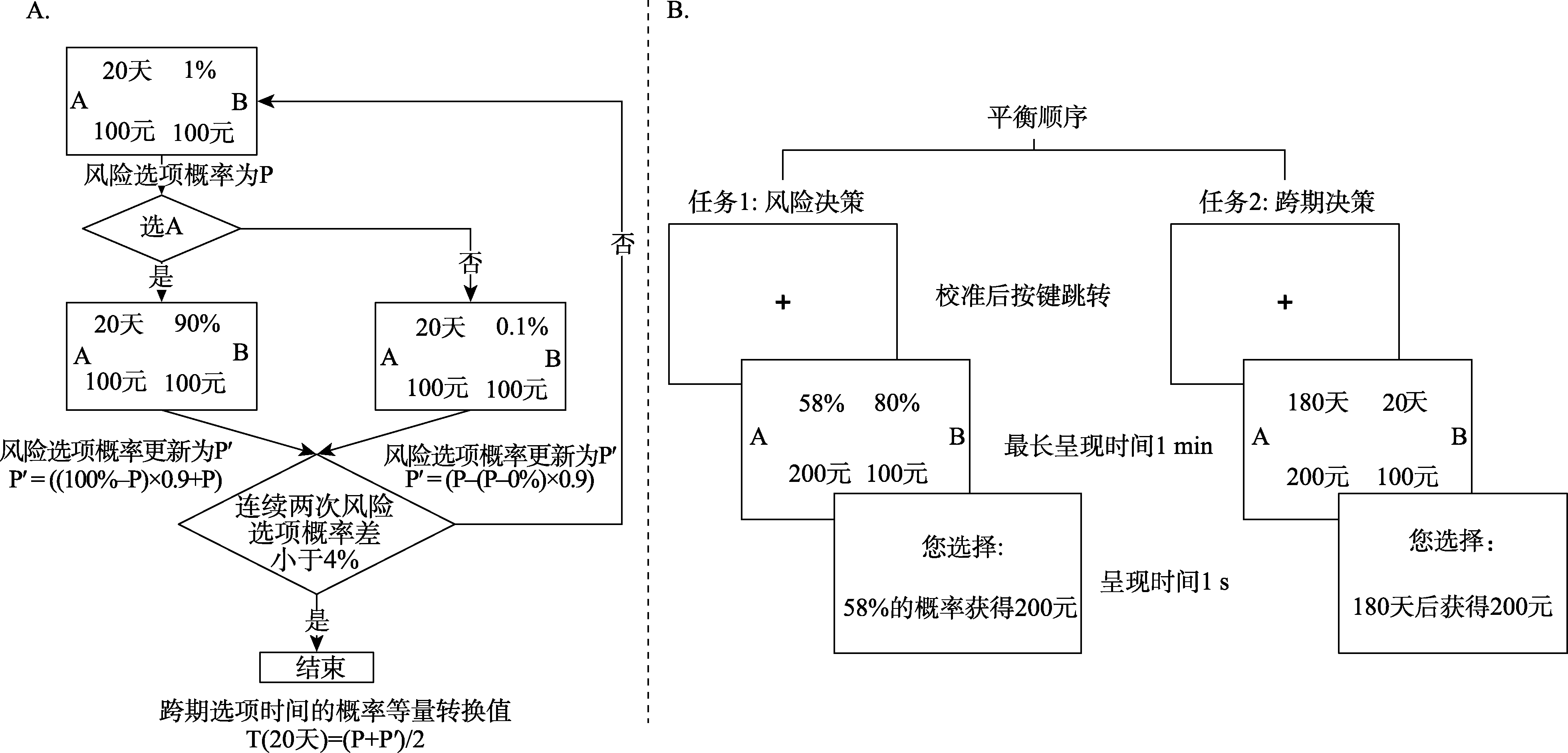
图1 研究1实验流程图 注: A. 阶段一: 概率和时间等量转换实验; B. 阶段二: 单结果风险和跨期决策比较眼动实验。
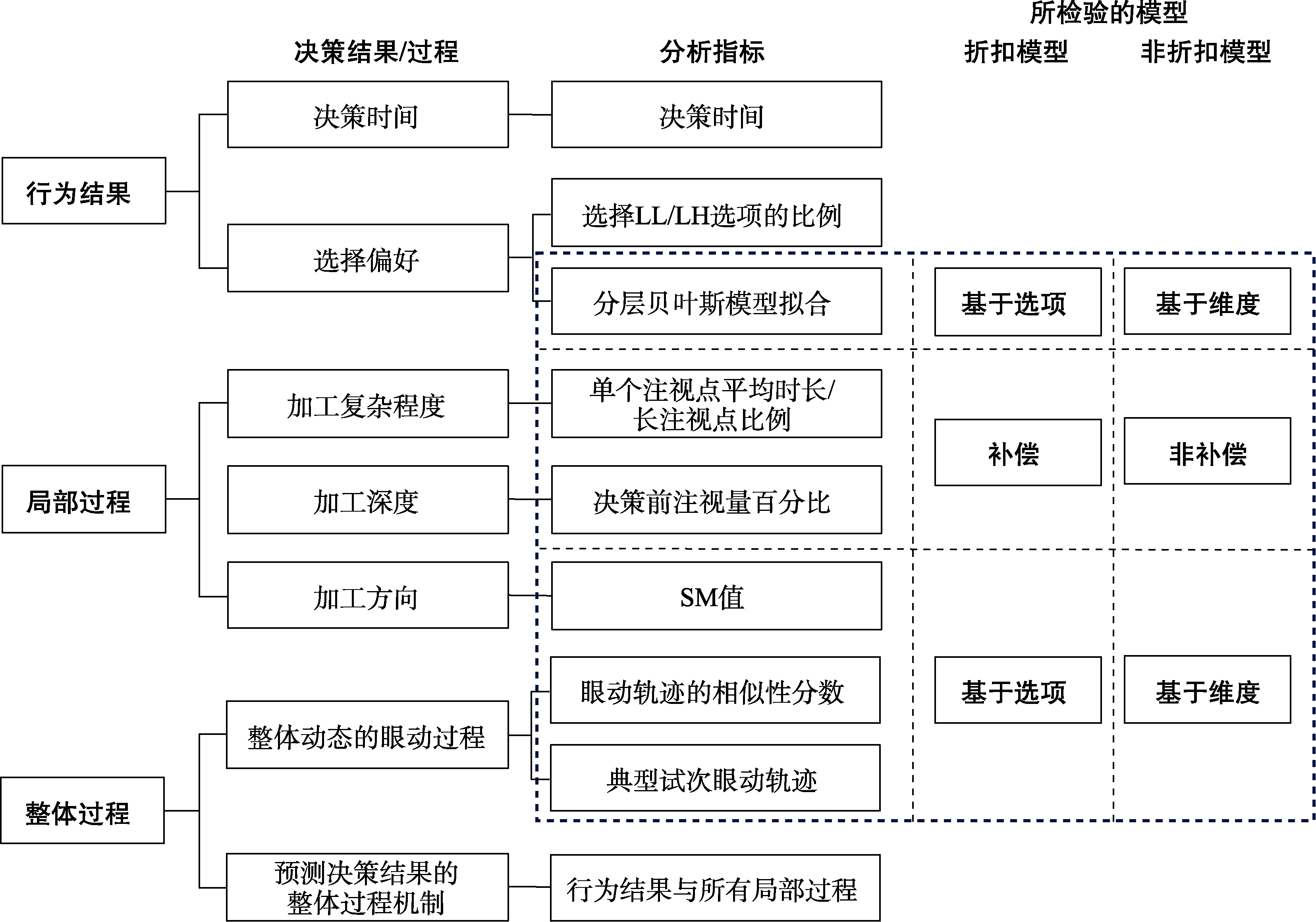
图2 研究1和研究2数据分析逻辑框架
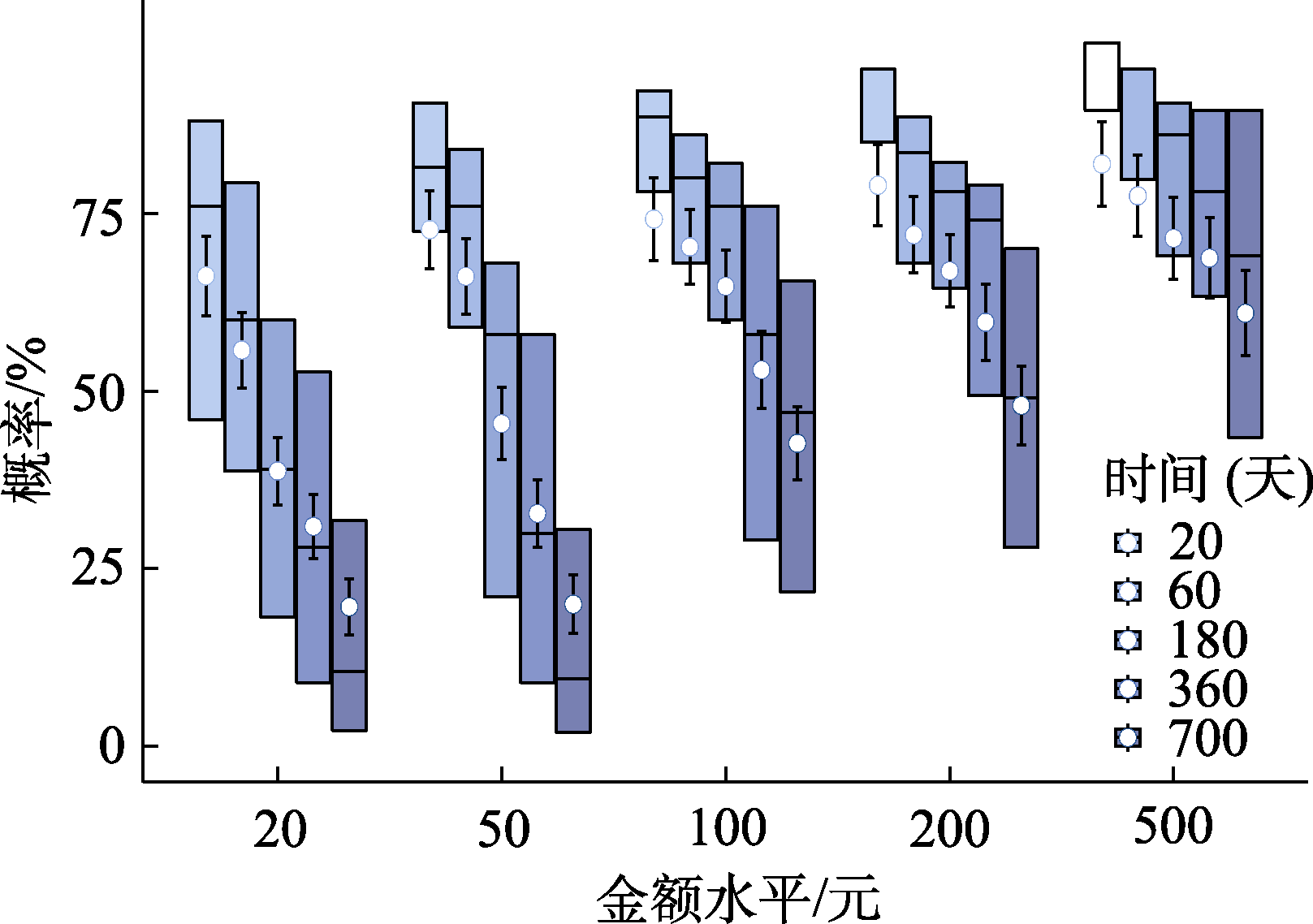
图3 研究1中概率与时间等量转换点的参数分布 注: 箱线图的横线自上而下分别为上四分位数、中位数、下四分位数, 白色圆点为均值M, 误差线为标准误SE。图中每组柱状图自左至右分别代表时间20/60/180/360/700天。彩图见电子版。
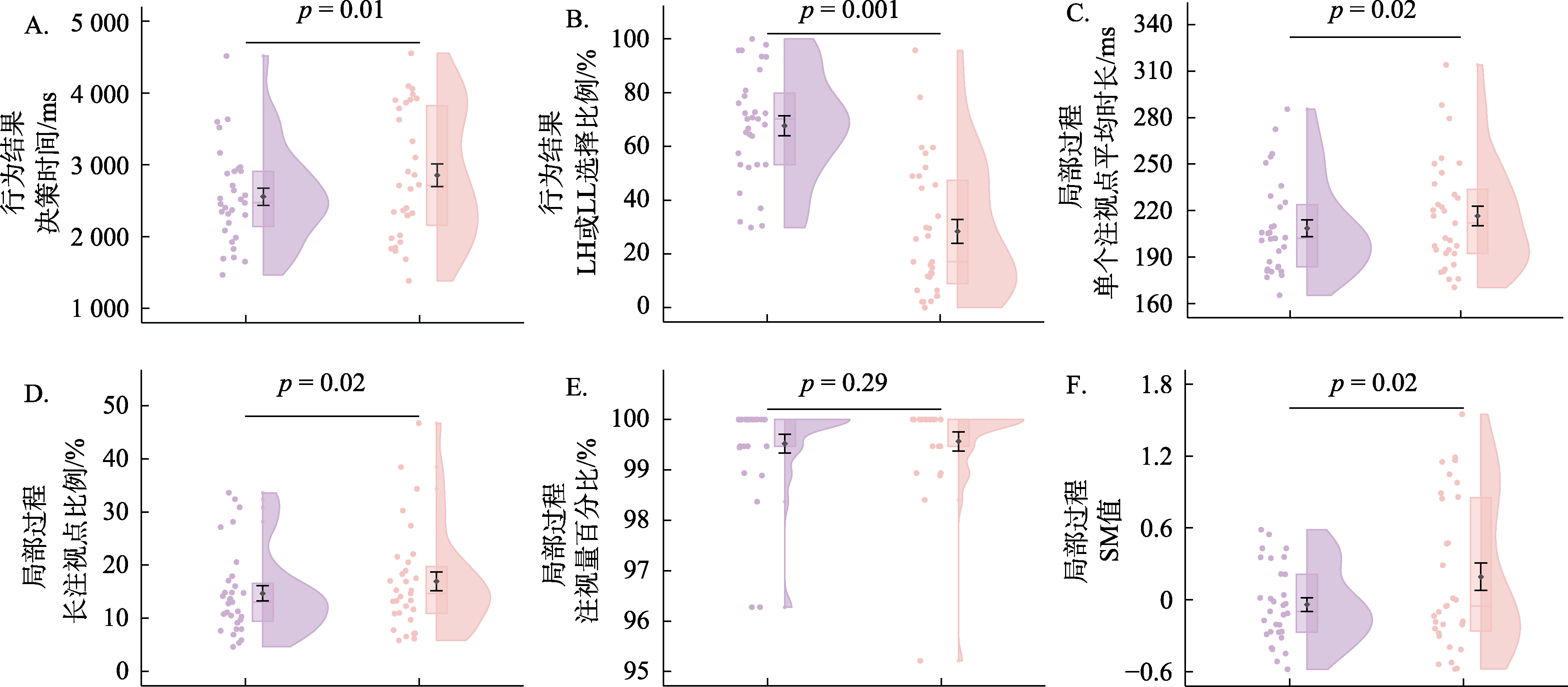
图4 研究1风险与跨期决策任务的行为和局部过程层面比较 注: A. 决策时间; B. 选择偏好; C. 加工复杂程度, 指标: 单个注视点平均时长; D. 加工复杂程度, 指标: 长注视点比例; E. 加工深度; F. 加工方向。图中每组组合图自左至右分别代表风险决策和跨期决策。彩图见电子版。
| 模型类别 | 拟合模型 | 风险决策 | 跨期决策 | ||||
|---|---|---|---|---|---|---|---|
| elpd (SE) | elpd-diff(SE) | 预测准确率 | elpd (SE) | elpd-diff(SE) | 预测准确率 | ||
| 折扣模型 | 指数模型 | −1253.6 (31.2) | −602.3 (59.2) | 69.98% | −903.8 (56.2) | −237.5 (37.7) | 70.31% |
| 双曲线模型 | −1439.9 (10.1) | −788.5 (72.6) | 72.54% | −824.8 (55.4) | −158.5 (28.5) | 71.18% | |
| 非折扣模型 | ITCH启发式模型 | −651.4 (68.4) | 0 (0) | 86.83% | −666.3 (43.1) | 0 (0) | 81.75% |
表1 研究1风险与跨期决策中选择偏好的分层贝叶斯模型拟合
| 模型类别 | 拟合模型 | 风险决策 | 跨期决策 | ||||
|---|---|---|---|---|---|---|---|
| elpd (SE) | elpd-diff(SE) | 预测准确率 | elpd (SE) | elpd-diff(SE) | 预测准确率 | ||
| 折扣模型 | 指数模型 | −1253.6 (31.2) | −602.3 (59.2) | 69.98% | −903.8 (56.2) | −237.5 (37.7) | 70.31% |
| 双曲线模型 | −1439.9 (10.1) | −788.5 (72.6) | 72.54% | −824.8 (55.4) | −158.5 (28.5) | 71.18% | |
| 非折扣模型 | ITCH启发式模型 | −651.4 (68.4) | 0 (0) | 86.83% | −666.3 (43.1) | 0 (0) | 81.75% |
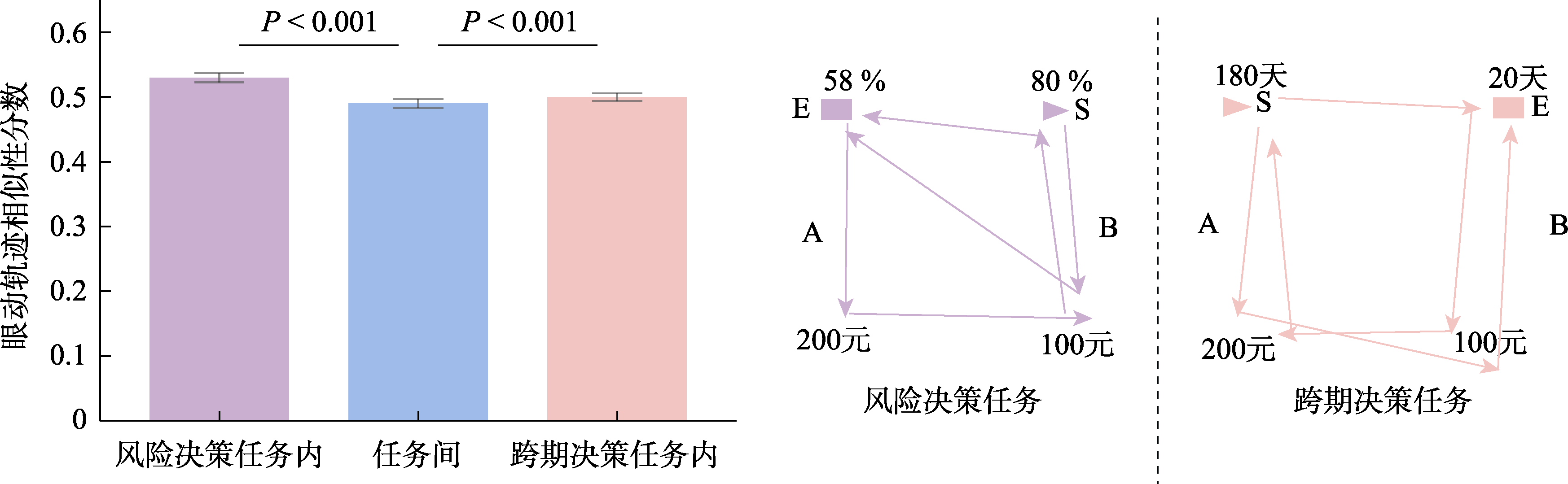
图5 研究1风险与跨期决策任务在整体过程层面的比较 注: A. 眼动轨迹相似性分数; B. 典型试次眼动轨迹, S代表起始位置, 箭头代表眼动轨迹的方向, E代表终止位置。图中每组柱状图自左至右分别代表风险决策任务内、任务间、跨期决策任务内。彩图见电子版。
| 因变量 | 自变量 | b | SE | z | p | 95% CI |
|---|---|---|---|---|---|---|
| 风险决策: 选择LH选项的比例 | 截距 | 0.97 | 0.22 | 4.33 | < 0.001 | [0.53, 1.41] |
| 决策时间 | 0.02 | 0.08 | 0.31 | 0.760 | [−0.13, 0.18] | |
| 单个注视点平均时长 | 0.12 | 0.12 | 0.96 | 0.339 | [−0.12, 0.35] | |
| 长注视点比例 | −0.06 | 0.11 | −0.59 | 0.556 | [−0.28, 0.15] | |
| SM值 | −0.21 | 0.07 | −3.06 | 0.002 | [−0.35, −0.08] | |
| 注视量百分比 | 0.12 | 0.07 | 1.85 | 0.064 | [−0.01, 0.25] | |
| 跨期决策: 选择LL选项的比例 | 截距 | −1.32 | 0.29 | −4.57 | < 0.001 | [−1.89, −0.76] |
| 决策时间 | 0.20 | 0.08 | 2.37 | 0.018 | [0.04, 0.37] | |
| 单个注视点平均时长 | 0.03 | 0.13 | 0.25 | 0.802 | [−0.22, 0.28] | |
| 长注视点比例 | −0.25 | 0.13 | −2.02 | 0.044 | [−0.50, −0.01] | |
| SM值 | −0.04 | 0.09 | −0.44 | 0.658 | [−0.22, 0.14] | |
| 注视量百分比 | −0.06 | 0.10 | −0.65 | 0.516 | [−0.25, 0.12] |
表2 研究1基于广义线性模型预测风险与跨期决策任务中的选择偏好
| 因变量 | 自变量 | b | SE | z | p | 95% CI |
|---|---|---|---|---|---|---|
| 风险决策: 选择LH选项的比例 | 截距 | 0.97 | 0.22 | 4.33 | < 0.001 | [0.53, 1.41] |
| 决策时间 | 0.02 | 0.08 | 0.31 | 0.760 | [−0.13, 0.18] | |
| 单个注视点平均时长 | 0.12 | 0.12 | 0.96 | 0.339 | [−0.12, 0.35] | |
| 长注视点比例 | −0.06 | 0.11 | −0.59 | 0.556 | [−0.28, 0.15] | |
| SM值 | −0.21 | 0.07 | −3.06 | 0.002 | [−0.35, −0.08] | |
| 注视量百分比 | 0.12 | 0.07 | 1.85 | 0.064 | [−0.01, 0.25] | |
| 跨期决策: 选择LL选项的比例 | 截距 | −1.32 | 0.29 | −4.57 | < 0.001 | [−1.89, −0.76] |
| 决策时间 | 0.20 | 0.08 | 2.37 | 0.018 | [0.04, 0.37] | |
| 单个注视点平均时长 | 0.03 | 0.13 | 0.25 | 0.802 | [−0.22, 0.28] | |
| 长注视点比例 | −0.25 | 0.13 | −2.02 | 0.044 | [−0.50, −0.01] | |
| SM值 | −0.04 | 0.09 | −0.44 | 0.658 | [−0.22, 0.14] | |
| 注视量百分比 | −0.06 | 0.10 | −0.65 | 0.516 | [−0.25, 0.12] |
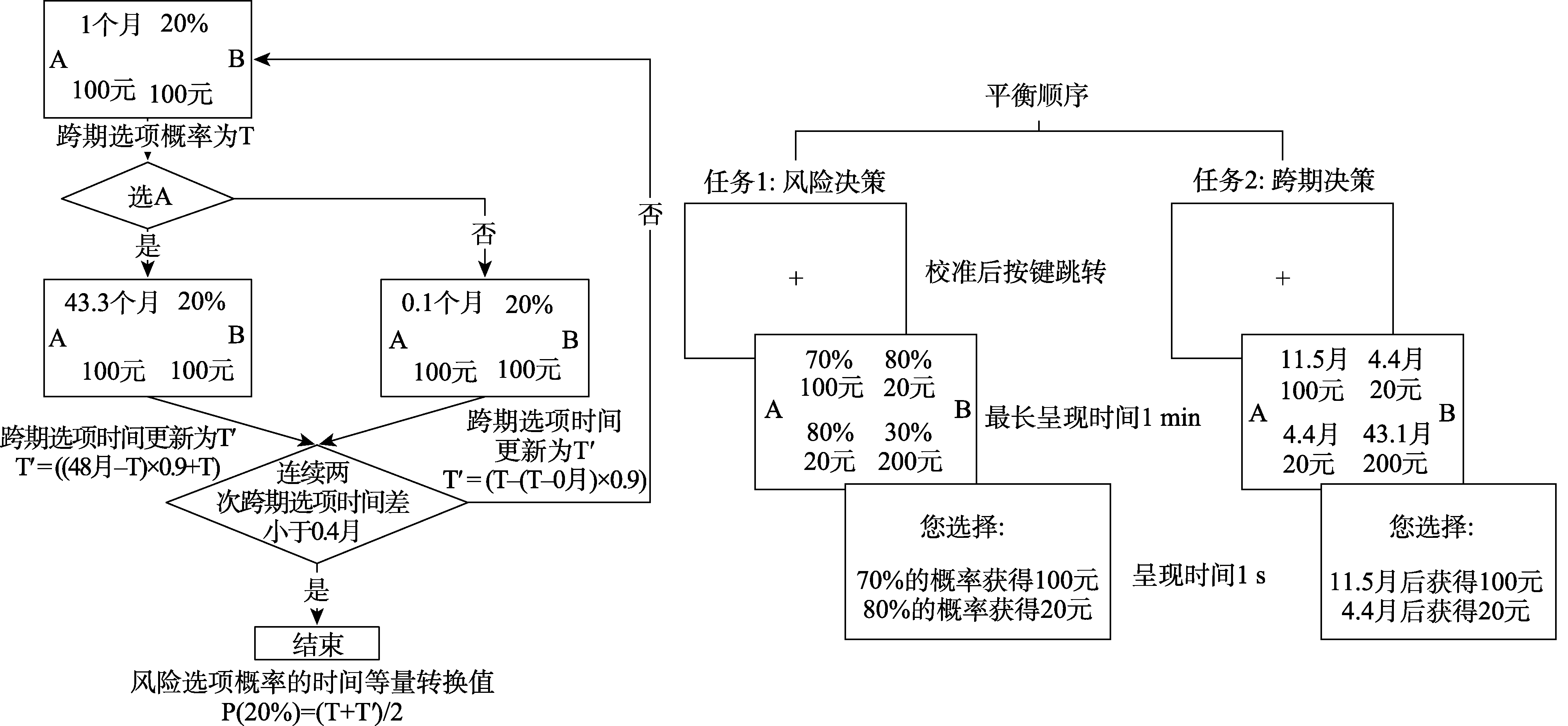
图6 研究2实验流程图 注: A. 阶段一: 概率和时间等量转换实验; B. 阶段二: 双结果风险和跨期决策比较眼动实验。
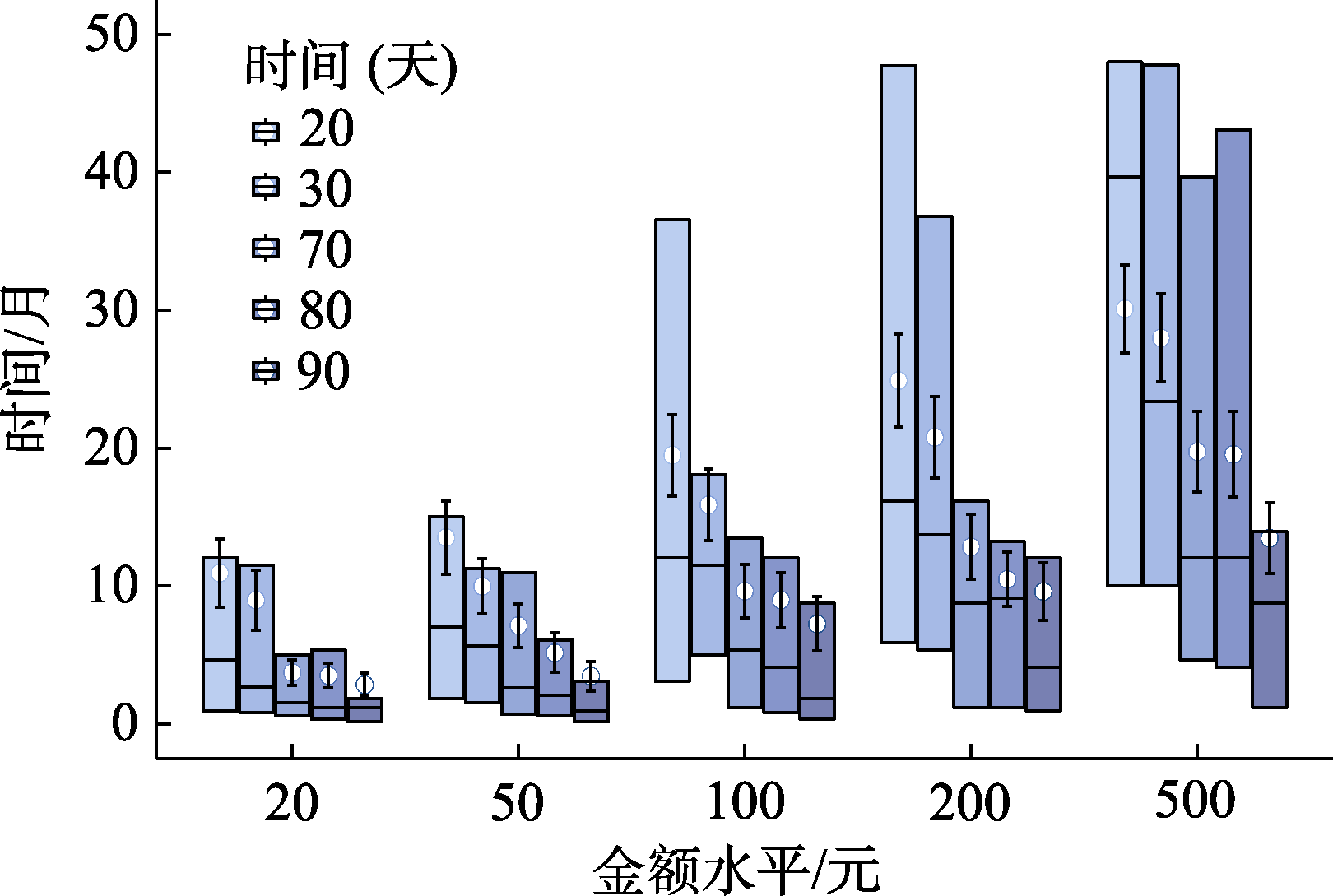
图7 研究2中概率与时间等量转换点的参数分布 注: 箱线图的横线自上而下分别为上四分位数、中位数、下四分位数, 白色圆点为均值M, 误差线为标准误SE。图中每组柱状图自左至右分别代表概率20%/30%/70%/80%/90%。彩图见电子版。
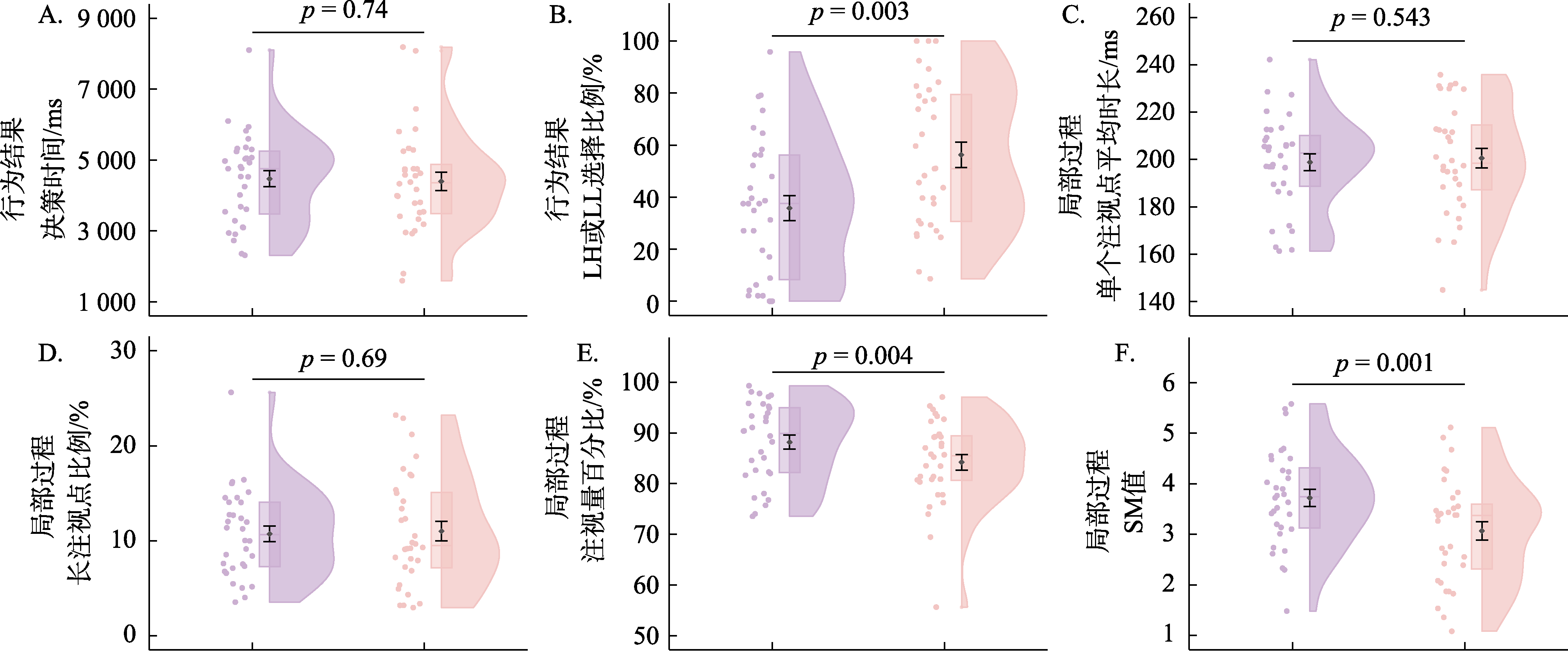
图8 研究2风险与跨期决策任务的行为和局部过程比较结果 注: A. 决策时间; B. 选择偏好; C. 加工复杂程度, 指标: 单个注视点平均时长; D. 加工复杂程度, 指标: 长注视点比例; E. 加工深度; F. 加工方向。图中每组组合图自左至右分别代表风险决策和跨期决策。彩图见电子版。
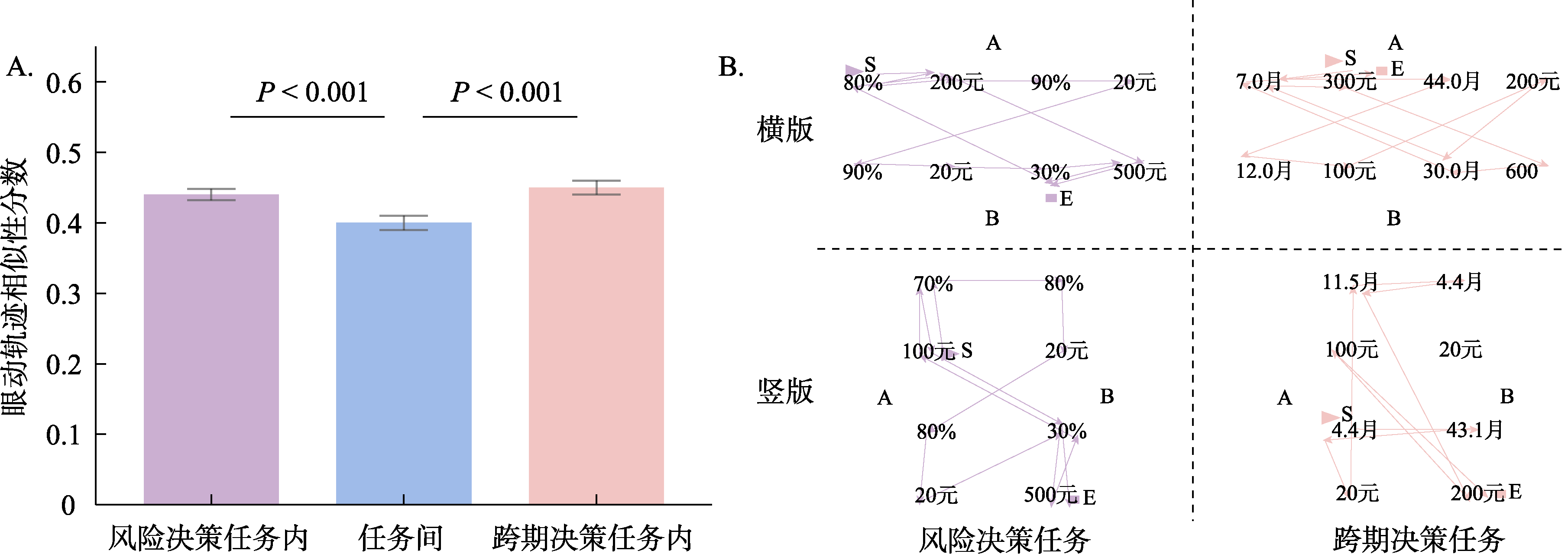
图9 研究2风险与跨期决策任务的整体过程层面的比较 注: A. 眼动轨迹相似性分数; B. 典型试次眼动轨迹, S代表起始位置, 箭头代表眼动轨迹的方向, E代表终止位置。图中每组柱状图自左至右分别代表风险决策任务内、任务间、跨期决策任务内。彩图见电子版。
| 因变量 | 自变量 | b | SE | z | p | 95% CI |
|---|---|---|---|---|---|---|
| 风险决策: LH选项 | 截距 | −1.57 | 0.61 | −2.55 | 0.011 | [−2.77, −0.36] |
| 决策时间 | −0.10 | 0.15 | −0.69 | 0.492 | [−0.40, 0.19] | |
| 单个注视点平均时长 | −0.24 | 0.16 | −1.46 | 0.143 | [−0.56, 0.08] | |
| 长注视点比例 | 0.05 | 0.15 | 0.33 | 0.740 | [−0.24, 0.34] | |
| SM值 | −0.18 | 0.14 | −1.27 | 0.205 | [−0.45, 0.10] | |
| 注视量百分比 | −0.28 | 0.13 | −2.16 | 0.031 | [−0.53, −0.03] | |
| 跨期决策: LL选项 | 截距 | 0.49 | 0.43 | 1.14 | 0.256 | [−0.36, 1.34] |
| 决策时间 | −0.16 | 0.13 | −1.25 | 0.212 | [−0.40, 0.09] | |
| 单个注视点平均时长 | −0.25 | 0.14 | −1.81 | 0.071 | [−0.52, 0.02] | |
| 长注视点比例 | 0.11 | 0.13 | 0.89 | 0.375 | [−0.13, 0.36] | |
| SM值 | 0.11 | 0.11 | 0.99 | 0.322 | [−0.11, 0.33] | |
| 注视量百分比 | −0.04 | 0.10 | −0.43 | 0.670 | [−0.24, 0.15] |
表3 研究2基于广义线性模型预测风险与跨期决策任务中的选择偏好
| 因变量 | 自变量 | b | SE | z | p | 95% CI |
|---|---|---|---|---|---|---|
| 风险决策: LH选项 | 截距 | −1.57 | 0.61 | −2.55 | 0.011 | [−2.77, −0.36] |
| 决策时间 | −0.10 | 0.15 | −0.69 | 0.492 | [−0.40, 0.19] | |
| 单个注视点平均时长 | −0.24 | 0.16 | −1.46 | 0.143 | [−0.56, 0.08] | |
| 长注视点比例 | 0.05 | 0.15 | 0.33 | 0.740 | [−0.24, 0.34] | |
| SM值 | −0.18 | 0.14 | −1.27 | 0.205 | [−0.45, 0.10] | |
| 注视量百分比 | −0.28 | 0.13 | −2.16 | 0.031 | [−0.53, −0.03] | |
| 跨期决策: LL选项 | 截距 | 0.49 | 0.43 | 1.14 | 0.256 | [−0.36, 1.34] |
| 决策时间 | −0.16 | 0.13 | −1.25 | 0.212 | [−0.40, 0.09] | |
| 单个注视点平均时长 | −0.25 | 0.14 | −1.81 | 0.071 | [−0.52, 0.02] | |
| 长注视点比例 | 0.11 | 0.13 | 0.89 | 0.375 | [−0.13, 0.36] | |
| SM值 | 0.11 | 0.11 | 0.99 | 0.322 | [−0.11, 0.33] | |
| 注视量百分比 | −0.04 | 0.10 | −0.43 | 0.670 | [−0.24, 0.15] |
| 检验层级 | 决策结果/过程 | 分析指标 | 结果 | |
|---|---|---|---|---|
| 差异性 | 检验规则 | |||
| 行为结果 | 决策时间 | 决策时间 | R < I | — |
| R = I | ||||
| 选择偏好 | 选择LL/LH选项的比例 | R > I | — | |
| R < I | ||||
| 分层贝叶斯模型拟合(研究1) | R=I | 基于维度 | ||
| 局部过程 | 加工复杂程度 | 单个注视点平均时长 | R<I | 非补偿 |
| 长注视点比例 | R=I | 非补偿 | ||
| 加工深度 | 注视量百分比 | R=I | 非补偿 | |
| R>I | 非补偿 | |||
| 加工方向 | SM值 | R<I | 无占优规则 | |
| R>I | 基于选项 | |||
| 整体过程 | 整体动态眼动过程 | 眼动轨迹 | R≠I | 无占优规则 |
| 基于选项(R), 基于维度(I) | ||||
| 所有局部过程指标 | 广义线性混合模型 | R≠I | — | |
表4 研究结果总结
| 检验层级 | 决策结果/过程 | 分析指标 | 结果 | |
|---|---|---|---|---|
| 差异性 | 检验规则 | |||
| 行为结果 | 决策时间 | 决策时间 | R < I | — |
| R = I | ||||
| 选择偏好 | 选择LL/LH选项的比例 | R > I | — | |
| R < I | ||||
| 分层贝叶斯模型拟合(研究1) | R=I | 基于维度 | ||
| 局部过程 | 加工复杂程度 | 单个注视点平均时长 | R<I | 非补偿 |
| 长注视点比例 | R=I | 非补偿 | ||
| 加工深度 | 注视量百分比 | R=I | 非补偿 | |
| R>I | 非补偿 | |||
| 加工方向 | SM值 | R<I | 无占优规则 | |
| R>I | 基于选项 | |||
| 整体过程 | 整体动态眼动过程 | 眼动轨迹 | R≠I | 无占优规则 |
| 基于选项(R), 基于维度(I) | ||||
| 所有局部过程指标 | 广义线性混合模型 | R≠I | — | |
| 决策规则 | 决策类型 | 核心假设 | 代表性模型 | 参考文献 |
|---|---|---|---|---|
| 补偿性/ 基于选项 | 风险决策 | 基于数学期望(mathematical expectation), 遵循“加权求和”期望法则, 假设人们通过各选项发生概率对结果加权求和得出期望值, 并选择最大期望值的选项。 | 期望价值理论(expected value, EV); 期望效用理论(expected utility, EU); 预期理论(prospect theory, PT); 累计预期理论(cumulative prospect theory, CPT) | Pascal, von Neumann & Morgenstern, |
| 跨期决策 | 遵循“折扣求和计算”的规则, 假设人们按时间折扣率(discounting rate)对未来各时间点的效用进行折扣求和, 并选择总效用最大的选项。 | 效用模型(discounted utility model, DU); 双曲线模型(hyperbolic discounting model) | Samuelson, | |
| 非补偿性/ 基于维度 | 风险决策 | 决策者仅关注部分关键维度(如“最坏结果”、“最坏结果概率”、“最好结果”等), 并在选项间比较这些维度以做出决策。 | 极大极小启发式模型(minimax heuristic model); 齐当别模型(equate-to- differentiate model, ETD); 占优启发式模型(priority heuristic model) | Thorngate, |
| 跨期决策 | 决策者时间间隔和结果差异的权衡, 并依据差异更大的维度进行决策。 | 相似性判断模型(similarity judgments model); 权衡模型(tradeoff model); 跨期决策启发式模型(intertemporal choice heuristics model, ITCH) | Leland, |
表S1 风险决策和跨期决策的理论模型
| 决策规则 | 决策类型 | 核心假设 | 代表性模型 | 参考文献 |
|---|---|---|---|---|
| 补偿性/ 基于选项 | 风险决策 | 基于数学期望(mathematical expectation), 遵循“加权求和”期望法则, 假设人们通过各选项发生概率对结果加权求和得出期望值, 并选择最大期望值的选项。 | 期望价值理论(expected value, EV); 期望效用理论(expected utility, EU); 预期理论(prospect theory, PT); 累计预期理论(cumulative prospect theory, CPT) | Pascal, von Neumann & Morgenstern, |
| 跨期决策 | 遵循“折扣求和计算”的规则, 假设人们按时间折扣率(discounting rate)对未来各时间点的效用进行折扣求和, 并选择总效用最大的选项。 | 效用模型(discounted utility model, DU); 双曲线模型(hyperbolic discounting model) | Samuelson, | |
| 非补偿性/ 基于维度 | 风险决策 | 决策者仅关注部分关键维度(如“最坏结果”、“最坏结果概率”、“最好结果”等), 并在选项间比较这些维度以做出决策。 | 极大极小启发式模型(minimax heuristic model); 齐当别模型(equate-to- differentiate model, ETD); 占优启发式模型(priority heuristic model) | Thorngate, |
| 跨期决策 | 决策者时间间隔和结果差异的权衡, 并依据差异更大的维度进行决策。 | 相似性判断模型(similarity judgments model); 权衡模型(tradeoff model); 跨期决策启发式模型(intertemporal choice heuristics model, ITCH) | Leland, |
| 维度 | 决策属性 | 分析指标 | 研究假设 | |
|---|---|---|---|---|
| H2: 两类决策过程相似 | H4: 两类决策过程更遵循 非补偿性/基于维度的规则 | |||
| 行为特征 | 决策时间 | H2a: 决策时间无差异 | ||
| LL/LH选项选择比例 | H2b: 选择偏好无差异 | |||
| 分层贝叶斯模型拟合 | H2c: 二者可被同类决策模型拟合 | H4a: 相较于折扣模型, 二者能够更好地被非折扣模型拟合 | ||
| 局部 过程特征 | 加工复杂程度 | 单个注视点平均时长 | H2d: 单个注视点平均时长无差异 | |
| 长注视点比例 | H2e: 长注视点比例无差异 | H4b: 长注视点比例显著小于50%, 符合非补偿性规则 | ||
| 加工深度 | 决策前注视量百分比 | H2f: 二者在决策前的注视信息量百分比无差异 | H4c: 在决策前无需注视所有选项特征, 符合非补偿性规则 | |
| 加工方向 | SM值 | H2g: 二者基于选项的眼跳和基于维度的眼跳的频数分布无差异 | H4d: 采用基于维度的策略进行决策, 即在反映决策信息搜索方向的SM值指标上均小于零, 符合基于维度加工规则 | |
| 整体 过程特征 | 整体动态眼动过程 | 眼动轨迹 | H2h: 眼动轨迹无差异 | H4e: 根据典型试次定性观察到更多基于维度加工模式, 符合基于维度加工规则 |
表S2 研究对各检验指标的操作假设
| 维度 | 决策属性 | 分析指标 | 研究假设 | |
|---|---|---|---|---|
| H2: 两类决策过程相似 | H4: 两类决策过程更遵循 非补偿性/基于维度的规则 | |||
| 行为特征 | 决策时间 | H2a: 决策时间无差异 | ||
| LL/LH选项选择比例 | H2b: 选择偏好无差异 | |||
| 分层贝叶斯模型拟合 | H2c: 二者可被同类决策模型拟合 | H4a: 相较于折扣模型, 二者能够更好地被非折扣模型拟合 | ||
| 局部 过程特征 | 加工复杂程度 | 单个注视点平均时长 | H2d: 单个注视点平均时长无差异 | |
| 长注视点比例 | H2e: 长注视点比例无差异 | H4b: 长注视点比例显著小于50%, 符合非补偿性规则 | ||
| 加工深度 | 决策前注视量百分比 | H2f: 二者在决策前的注视信息量百分比无差异 | H4c: 在决策前无需注视所有选项特征, 符合非补偿性规则 | |
| 加工方向 | SM值 | H2g: 二者基于选项的眼跳和基于维度的眼跳的频数分布无差异 | H4d: 采用基于维度的策略进行决策, 即在反映决策信息搜索方向的SM值指标上均小于零, 符合基于维度加工规则 | |
| 整体 过程特征 | 整体动态眼动过程 | 眼动轨迹 | H2h: 眼动轨迹无差异 | H4e: 根据典型试次定性观察到更多基于维度加工模式, 符合基于维度加工规则 |
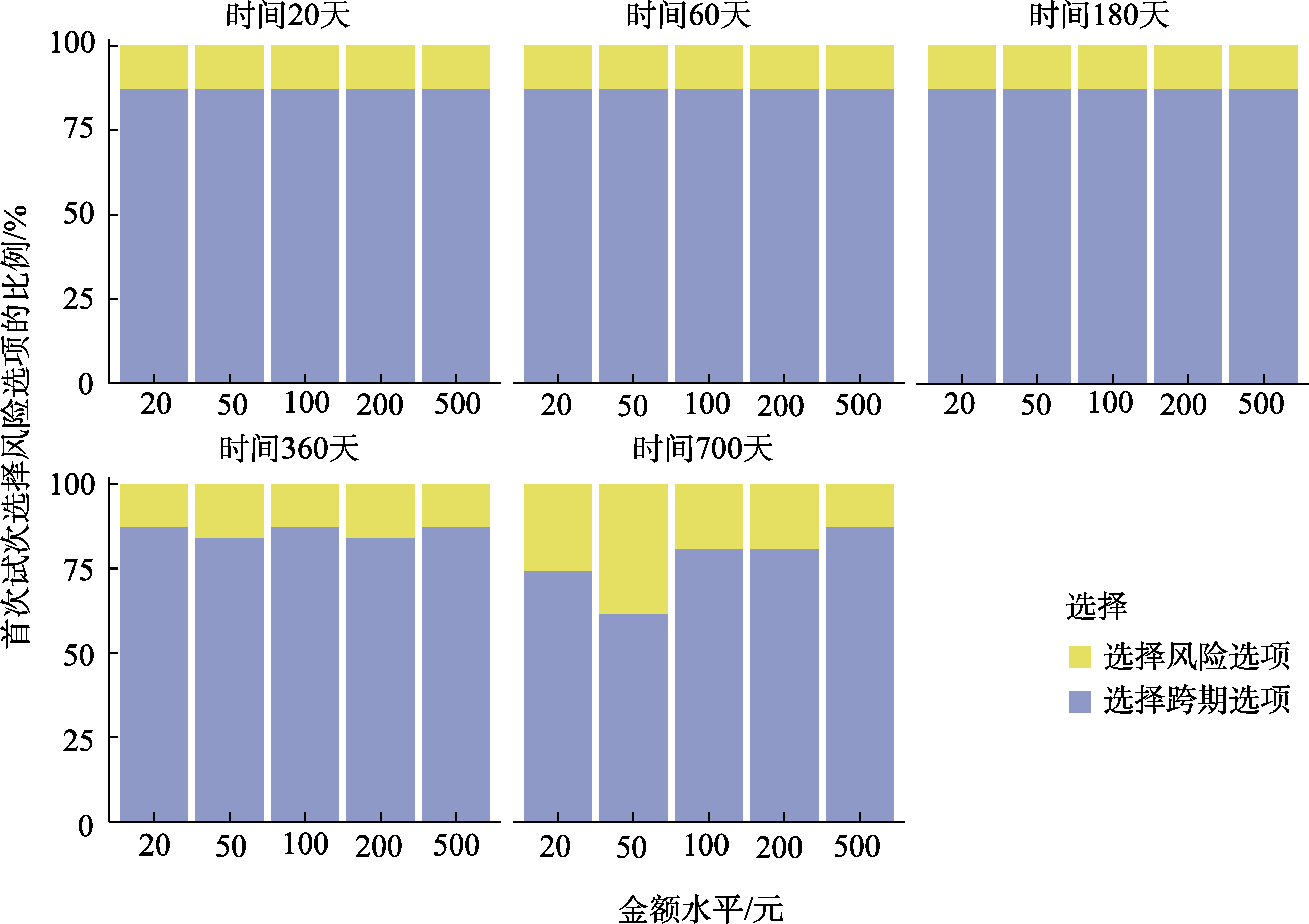
图S1 研究1中阶段一被试的首次试次选择风险选项的比例(%)
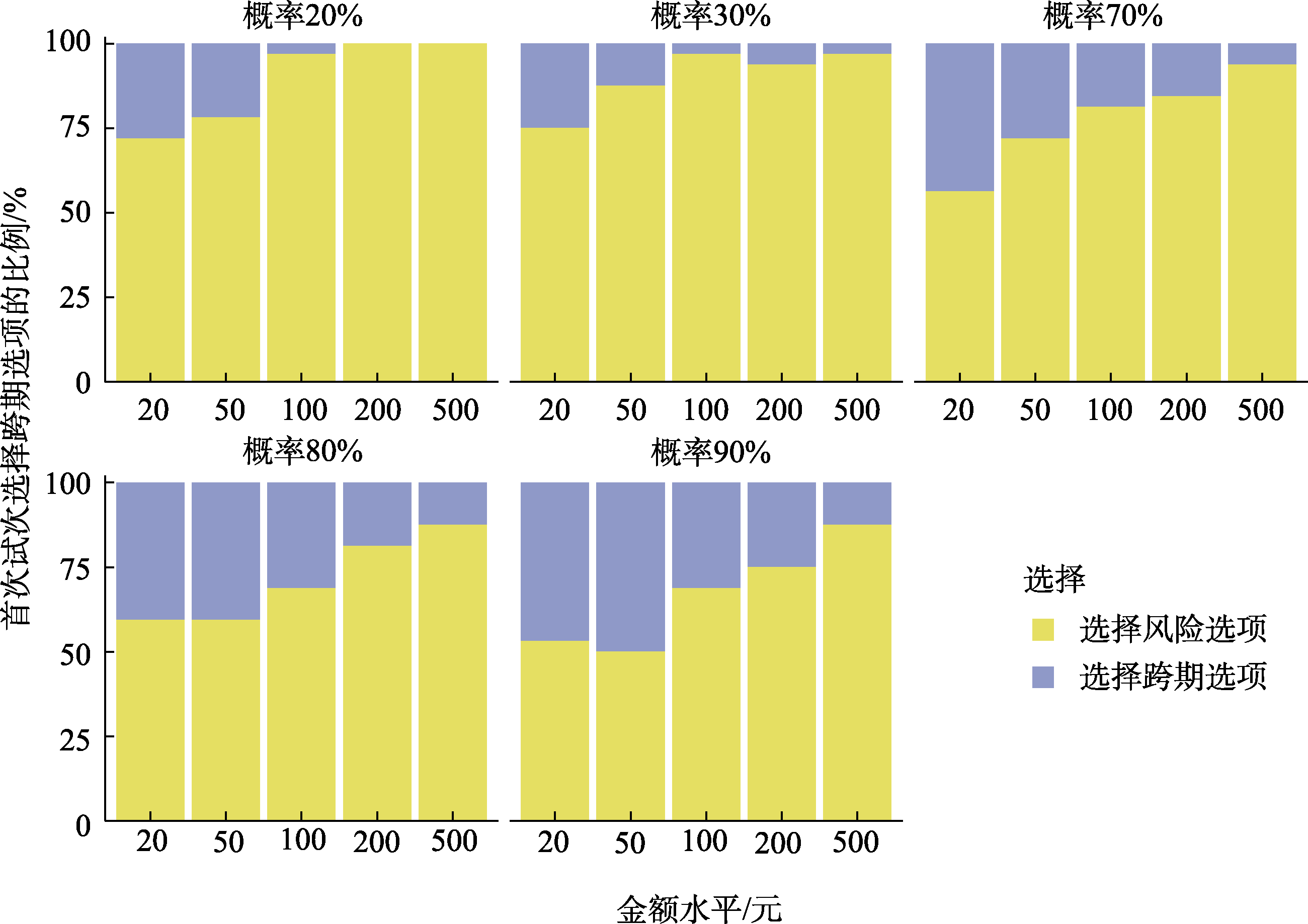
图S2 研究2中阶段一被试的首次试次选择跨期选项的比例(%)
| 风险任务 | 跨期任务 | ||||||
|---|---|---|---|---|---|---|---|
| 选项A | 选项B | 选项A | 选项B | ||||
| 概率(%) | 金额(元) | 概率(%) | 金额(元) | 时间(天) | 金额(元) | 时间(天) | 金额(元) |
| 78 | 500 | 90 | 200 | 180 | 200 | 60 | 100 |
| 24 | 100 | 74 | 50 | 700 | 500 | 20 | 20 |
| 60 | 500 | 90 | 200 | 700 | 50 | 20 | 20 |
| 78 | 500 | 82 | 50 | 700 | 500 | 20 | 200 |
| 82 | 500 | 90 | 200 | 700 | 50 | 360 | 20 |
| 53 | 100 | 82 | 50 | 360 | 100 | 20 | 50 |
| 10 | 50 | 30 | 20 | 360 | 500 | 20 | 50 |
| 60 | 50 | 76 | 20 | 700 | 50 | 60 | 20 |
| 53 | 100 | 76 | 20 | 360 | 100 | 60 | 50 |
| 60 | 500 | 76 | 20 | 700 | 500 | 20 | 100 |
| 26 | 200 | 82 | 50 | 180 | 200 | 20 | 50 |
| 26 | 200 | 82 | 100 | 700 | 500 | 20 | 50 |
| 60 | 500 | 84 | 200 | 360 | 200 | 180 | 100 |
| 26 | 50 | 60 | 20 | 360 | 500 | 20 | 100 |
| 10 | 50 | 49 | 20 | 700 | 200 | 20 | 50 |
| 53 | 100 | 60 | 20 | 700 | 500 | 60 | 100 |
| 60 | 50 | 60 | 20 | 180 | 100 | 20 | 20 |
| 80 | 200 | 82 | 50 | 700 | 100 | 20 | 20 |
| 76 | 20 | 10 | 50 | 700 | 200 | 60 | 100 |
| 82 | 100 | 82 | 200 | 700 | 500 | 60 | 200 |
| 82 | 100 | 60 | 500 | 700 | 200 | 20 | 20 |
| 76 | 20 | 80 | 200 | 360 | 100 | 60 | 20 |
| 82 | 100 | 82 | 500 | 700 | 100 | 20 | 50 |
| 53 | 100 | 26 | 200 | 700 | 200 | 20 | 100 |
| 84 | 200 | 78 | 500 | 180 | 50 | 60 | 20 |
| 69 | 100 | 80 | 200 | 20 | 100 | 180 | 200 |
| 74 | 50 | 26 | 200 | 20 | 100 | 180 | 500 |
| 60 | 20 | 10 | 50 | 360 | 100 | 700 | 200 |
| 74 | 50 | 53 | 100 | 20 | 20 | 360 | 200 |
| 69 | 100 | 82 | 200 | 20 | 20 | 360 | 100 |
| 58 | 100 | 26 | 200 | 20 | 100 | 360 | 200 |
| 82 | 100 | 80 | 200 | 60 | 50 | 700 | 100 |
| 69 | 100 | 26 | 200 | 60 | 50 | 700 | 200 |
| 76 | 20 | 26 | 50 | 60 | 200 | 360 | 500 |
| 82 | 50 | 24 | 100 | 20 | 200 | 360 | 500 |
| 82 | 50 | 58 | 100 | 60 | 100 | 360 | 200 |
| 82 | 100 | 78 | 500 | 180 | 100 | 700 | 200 |
| 74 | 50 | 80 | 200 | 20 | 200 | 180 | 500 |
| 58 | 100 | 80 | 200 | 20 | 20 | 180 | 50 |
| 69 | 100 | 60 | 500 | 60 | 50 | 360 | 200 |
| 60 | 20 | 24 | 100 | 60 | 20 | 700 | 200 |
| 76 | 20 | 58 | 100 | 60 | 20 | 700 | 100 |
| 82 | 50 | 82 | 200 | 60 | 20 | 360 | 50 |
| 76 | 20 | 26 | 200 | 180 | 20 | 700 | 50 |
| 76 | 20 | 24 | 100 | 20 | 50 | 360 | 200 |
| 82 | 50 | 60 | 500 | 20 | 50 | 180 | 100 |
| 30 | 20 | 26 | 200 | 20 | 20 | 360 | 50 |
表S3 研究1阶段二实验材料(被试A)
| 风险任务 | 跨期任务 | ||||||
|---|---|---|---|---|---|---|---|
| 选项A | 选项B | 选项A | 选项B | ||||
| 概率(%) | 金额(元) | 概率(%) | 金额(元) | 时间(天) | 金额(元) | 时间(天) | 金额(元) |
| 78 | 500 | 90 | 200 | 180 | 200 | 60 | 100 |
| 24 | 100 | 74 | 50 | 700 | 500 | 20 | 20 |
| 60 | 500 | 90 | 200 | 700 | 50 | 20 | 20 |
| 78 | 500 | 82 | 50 | 700 | 500 | 20 | 200 |
| 82 | 500 | 90 | 200 | 700 | 50 | 360 | 20 |
| 53 | 100 | 82 | 50 | 360 | 100 | 20 | 50 |
| 10 | 50 | 30 | 20 | 360 | 500 | 20 | 50 |
| 60 | 50 | 76 | 20 | 700 | 50 | 60 | 20 |
| 53 | 100 | 76 | 20 | 360 | 100 | 60 | 50 |
| 60 | 500 | 76 | 20 | 700 | 500 | 20 | 100 |
| 26 | 200 | 82 | 50 | 180 | 200 | 20 | 50 |
| 26 | 200 | 82 | 100 | 700 | 500 | 20 | 50 |
| 60 | 500 | 84 | 200 | 360 | 200 | 180 | 100 |
| 26 | 50 | 60 | 20 | 360 | 500 | 20 | 100 |
| 10 | 50 | 49 | 20 | 700 | 200 | 20 | 50 |
| 53 | 100 | 60 | 20 | 700 | 500 | 60 | 100 |
| 60 | 50 | 60 | 20 | 180 | 100 | 20 | 20 |
| 80 | 200 | 82 | 50 | 700 | 100 | 20 | 20 |
| 76 | 20 | 10 | 50 | 700 | 200 | 60 | 100 |
| 82 | 100 | 82 | 200 | 700 | 500 | 60 | 200 |
| 82 | 100 | 60 | 500 | 700 | 200 | 20 | 20 |
| 76 | 20 | 80 | 200 | 360 | 100 | 60 | 20 |
| 82 | 100 | 82 | 500 | 700 | 100 | 20 | 50 |
| 53 | 100 | 26 | 200 | 700 | 200 | 20 | 100 |
| 84 | 200 | 78 | 500 | 180 | 50 | 60 | 20 |
| 69 | 100 | 80 | 200 | 20 | 100 | 180 | 200 |
| 74 | 50 | 26 | 200 | 20 | 100 | 180 | 500 |
| 60 | 20 | 10 | 50 | 360 | 100 | 700 | 200 |
| 74 | 50 | 53 | 100 | 20 | 20 | 360 | 200 |
| 69 | 100 | 82 | 200 | 20 | 20 | 360 | 100 |
| 58 | 100 | 26 | 200 | 20 | 100 | 360 | 200 |
| 82 | 100 | 80 | 200 | 60 | 50 | 700 | 100 |
| 69 | 100 | 26 | 200 | 60 | 50 | 700 | 200 |
| 76 | 20 | 26 | 50 | 60 | 200 | 360 | 500 |
| 82 | 50 | 24 | 100 | 20 | 200 | 360 | 500 |
| 82 | 50 | 58 | 100 | 60 | 100 | 360 | 200 |
| 82 | 100 | 78 | 500 | 180 | 100 | 700 | 200 |
| 74 | 50 | 80 | 200 | 20 | 200 | 180 | 500 |
| 58 | 100 | 80 | 200 | 20 | 20 | 180 | 50 |
| 69 | 100 | 60 | 500 | 60 | 50 | 360 | 200 |
| 60 | 20 | 24 | 100 | 60 | 20 | 700 | 200 |
| 76 | 20 | 58 | 100 | 60 | 20 | 700 | 100 |
| 82 | 50 | 82 | 200 | 60 | 20 | 360 | 50 |
| 76 | 20 | 26 | 200 | 180 | 20 | 700 | 50 |
| 76 | 20 | 24 | 100 | 20 | 50 | 360 | 200 |
| 82 | 50 | 60 | 500 | 20 | 50 | 180 | 100 |
| 30 | 20 | 26 | 200 | 20 | 20 | 360 | 50 |
| 风险任务 | 跨期任务 | ||||||||||||||
|---|---|---|---|---|---|---|---|---|---|---|---|---|---|---|---|
| 选项A | 选项B | 选项A | 选项B | ||||||||||||
| 结果1 | 结果2 | 结果1 | 结果2 | 结果1 | 结果2 | 结果1 | 结果2 | ||||||||
| 概率 (%) | 金额 (元) | 概率 (%) | 金额 (元) | 概率 (%) | 金额 (元) | 概率 (%) | 金额 (元) | 时间 (月) | 金额 (元) | 时间 (月) | 金额 (元) | 时间 (月) | 金额 (元) | 时间 (月) | 金额 (元) |
| 20 | 200 | 80 | 20 | 80 | 20 | 70 | 100 | 8.75 | 200 | 0.05 | 20 | 0.05 | 20 | 1.2 | 100 |
| 70 | 100 | 80 | 50 | 80 | 50 | 20 | 200 | 1.2 | 100 | 0.15 | 50 | 0.15 | 50 | 8.75 | 200 |
| 20 | 500 | 80 | 20 | 80 | 20 | 70 | 200 | 11.7 | 500 | 0.05 | 20 | 0.05 | 20 | 0.25 | 200 |
| 70 | 200 | 80 | 50 | 80 | 50 | 20 | 500 | 0.25 | 200 | 0.15 | 50 | 0.15 | 50 | 11.7 | 500 |
| 20 | 500 | 80 | 20 | 80 | 20 | 70 | 100 | 11.7 | 500 | 0.05 | 20 | 0.05 | 20 | 1.2 | 100 |
| 70 | 100 | 80 | 50 | 80 | 50 | 20 | 500 | 1.2 | 100 | 0.15 | 50 | 0.15 | 50 | 11.7 | 500 |
| 30 | 200 | 80 | 20 | 80 | 20 | 70 | 100 | 5 | 200 | 0.05 | 20 | 0.05 | 20 | 1.2 | 100 |
| 70 | 100 | 80 | 50 | 80 | 50 | 30 | 200 | 1.2 | 100 | 0.15 | 50 | 0.15 | 50 | 5 | 200 |
| 30 | 500 | 80 | 20 | 80 | 20 | 70 | 200 | 12.05 | 500 | 0.05 | 20 | 0.05 | 20 | 0.25 | 200 |
| 70 | 200 | 80 | 50 | 80 | 50 | 30 | 500 | 0.25 | 200 | 0.15 | 50 | 0.15 | 50 | 12.05 | 500 |
| 30 | 500 | 80 | 20 | 80 | 20 | 70 | 100 | 12.05 | 500 | 0.05 | 20 | 0.05 | 20 | 1.2 | 100 |
| 70 | 100 | 80 | 50 | 80 | 50 | 30 | 500 | 1.2 | 100 | 0.15 | 50 | 0.15 | 50 | 12.05 | 500 |
| 20 | 200 | 90 | 20 | 90 | 20 | 80 | 100 | 8.75 | 200 | 0.05 | 20 | 0.05 | 20 | 0.25 | 100 |
| 80 | 100 | 90 | 50 | 90 | 50 | 20 | 200 | 0.25 | 100 | 0.05 | 50 | 0.05 | 50 | 8.75 | 200 |
| 20 | 500 | 90 | 20 | 90 | 20 | 80 | 200 | 11.7 | 500 | 0.05 | 20 | 0.05 | 20 | 0.95 | 200 |
| 80 | 200 | 90 | 50 | 90 | 50 | 20 | 500 | 0.95 | 200 | 0.05 | 50 | 0.05 | 50 | 11.7 | 500 |
| 20 | 500 | 90 | 20 | 90 | 20 | 80 | 100 | 11.7 | 500 | 0.05 | 20 | 0.05 | 20 | 0.25 | 100 |
| 80 | 100 | 90 | 50 | 90 | 50 | 20 | 500 | 0.25 | 100 | 0.05 | 50 | 0.05 | 50 | 11.7 | 500 |
| 30 | 200 | 90 | 20 | 90 | 20 | 80 | 100 | 5 | 200 | 0.05 | 20 | 0.05 | 20 | 0.25 | 100 |
| 80 | 100 | 90 | 50 | 90 | 50 | 30 | 200 | 0.25 | 100 | 0.05 | 50 | 0.05 | 50 | 5 | 200 |
| 30 | 500 | 90 | 20 | 90 | 20 | 80 | 200 | 12.05 | 500 | 0.05 | 20 | 0.05 | 20 | 0.95 | 200 |
| 80 | 200 | 90 | 50 | 90 | 50 | 30 | 500 | 0.95 | 200 | 0.05 | 50 | 0.05 | 50 | 12.05 | 500 |
| 30 | 500 | 90 | 20 | 90 | 20 | 80 | 100 | 12.05 | 500 | 0.05 | 20 | 0.05 | 20 | 0.25 | 100 |
| 80 | 100 | 90 | 50 | 90 | 50 | 30 | 500 | 0.25 | 100 | 0.05 | 50 | 0.05 | 50 | 12.05 | 500 |
表S4 研究2阶段二实验材料(被试B)
| 风险任务 | 跨期任务 | ||||||||||||||
|---|---|---|---|---|---|---|---|---|---|---|---|---|---|---|---|
| 选项A | 选项B | 选项A | 选项B | ||||||||||||
| 结果1 | 结果2 | 结果1 | 结果2 | 结果1 | 结果2 | 结果1 | 结果2 | ||||||||
| 概率 (%) | 金额 (元) | 概率 (%) | 金额 (元) | 概率 (%) | 金额 (元) | 概率 (%) | 金额 (元) | 时间 (月) | 金额 (元) | 时间 (月) | 金额 (元) | 时间 (月) | 金额 (元) | 时间 (月) | 金额 (元) |
| 20 | 200 | 80 | 20 | 80 | 20 | 70 | 100 | 8.75 | 200 | 0.05 | 20 | 0.05 | 20 | 1.2 | 100 |
| 70 | 100 | 80 | 50 | 80 | 50 | 20 | 200 | 1.2 | 100 | 0.15 | 50 | 0.15 | 50 | 8.75 | 200 |
| 20 | 500 | 80 | 20 | 80 | 20 | 70 | 200 | 11.7 | 500 | 0.05 | 20 | 0.05 | 20 | 0.25 | 200 |
| 70 | 200 | 80 | 50 | 80 | 50 | 20 | 500 | 0.25 | 200 | 0.15 | 50 | 0.15 | 50 | 11.7 | 500 |
| 20 | 500 | 80 | 20 | 80 | 20 | 70 | 100 | 11.7 | 500 | 0.05 | 20 | 0.05 | 20 | 1.2 | 100 |
| 70 | 100 | 80 | 50 | 80 | 50 | 20 | 500 | 1.2 | 100 | 0.15 | 50 | 0.15 | 50 | 11.7 | 500 |
| 30 | 200 | 80 | 20 | 80 | 20 | 70 | 100 | 5 | 200 | 0.05 | 20 | 0.05 | 20 | 1.2 | 100 |
| 70 | 100 | 80 | 50 | 80 | 50 | 30 | 200 | 1.2 | 100 | 0.15 | 50 | 0.15 | 50 | 5 | 200 |
| 30 | 500 | 80 | 20 | 80 | 20 | 70 | 200 | 12.05 | 500 | 0.05 | 20 | 0.05 | 20 | 0.25 | 200 |
| 70 | 200 | 80 | 50 | 80 | 50 | 30 | 500 | 0.25 | 200 | 0.15 | 50 | 0.15 | 50 | 12.05 | 500 |
| 30 | 500 | 80 | 20 | 80 | 20 | 70 | 100 | 12.05 | 500 | 0.05 | 20 | 0.05 | 20 | 1.2 | 100 |
| 70 | 100 | 80 | 50 | 80 | 50 | 30 | 500 | 1.2 | 100 | 0.15 | 50 | 0.15 | 50 | 12.05 | 500 |
| 20 | 200 | 90 | 20 | 90 | 20 | 80 | 100 | 8.75 | 200 | 0.05 | 20 | 0.05 | 20 | 0.25 | 100 |
| 80 | 100 | 90 | 50 | 90 | 50 | 20 | 200 | 0.25 | 100 | 0.05 | 50 | 0.05 | 50 | 8.75 | 200 |
| 20 | 500 | 90 | 20 | 90 | 20 | 80 | 200 | 11.7 | 500 | 0.05 | 20 | 0.05 | 20 | 0.95 | 200 |
| 80 | 200 | 90 | 50 | 90 | 50 | 20 | 500 | 0.95 | 200 | 0.05 | 50 | 0.05 | 50 | 11.7 | 500 |
| 20 | 500 | 90 | 20 | 90 | 20 | 80 | 100 | 11.7 | 500 | 0.05 | 20 | 0.05 | 20 | 0.25 | 100 |
| 80 | 100 | 90 | 50 | 90 | 50 | 20 | 500 | 0.25 | 100 | 0.05 | 50 | 0.05 | 50 | 11.7 | 500 |
| 30 | 200 | 90 | 20 | 90 | 20 | 80 | 100 | 5 | 200 | 0.05 | 20 | 0.05 | 20 | 0.25 | 100 |
| 80 | 100 | 90 | 50 | 90 | 50 | 30 | 200 | 0.25 | 100 | 0.05 | 50 | 0.05 | 50 | 5 | 200 |
| 30 | 500 | 90 | 20 | 90 | 20 | 80 | 200 | 12.05 | 500 | 0.05 | 20 | 0.05 | 20 | 0.95 | 200 |
| 80 | 200 | 90 | 50 | 90 | 50 | 30 | 500 | 0.95 | 200 | 0.05 | 50 | 0.05 | 50 | 12.05 | 500 |
| 30 | 500 | 90 | 20 | 90 | 20 | 80 | 100 | 12.05 | 500 | 0.05 | 20 | 0.05 | 20 | 0.25 | 100 |
| 80 | 100 | 90 | 50 | 90 | 50 | 30 | 500 | 0.25 | 100 | 0.05 | 50 | 0.05 | 50 | 12.05 | 500 |
| 变异来源 | F(df1, df2) | p | ηp² |
|---|---|---|---|
| 年龄 | F(9, 13) = 0.48 | 0.863 | 0.25 |
| 金额 | F(2.28, 29.61) = 12.67 | < 0.001 | 0.494 |
| 时间 | F(1.22, 15.88) = 41.01 | < 0.001 | 0.759 |
| 年龄*金额 | F(20.50, 29.61) = 0.69 | 0.806 | 0.324 |
| 年龄*时间 | F(11.00, 15.88) = 0.52 | 0.863 | 0.264 |
| 金额*时间 | F(16, 208) = 3.59 | < 0.001 | 0.216 |
| 年龄*金额*时间 | F(144, 208) = 1.05 | 0.371 | 0.421 |
| 性别 | F(1, 21) = 3.25 | 0.086 | 0.134 |
| 金额 | F(2.57, 54.04) = 23.00 | < 0.001 | 0.523 |
| 时间 | F(1.51, 31.61) = 86.05 | < 0.001 | 0.804 |
| 性别*金额 | F(2.57, 54.04) = 0.56 | 0.62 | 0.026 |
| 性别*时间 | F(1.51, 31.61) = 4.24 | 0.033 | 0.168 |
| 金额*时间 | F(5.76, 120.91) = 5.77 | < 0.001 | 0.216 |
| 性别*金额*时间 | F(5.76, 120.91) = 0.79 | 0.574 | 0.036 |
| 专业 | F(4, 18) = 1.09 | 0.392 | 0.195 |
| 金额 | F(2.47, 44.41) = 11.99 | < 0.001 | 0.4 |
| 时间 | F(1.48, 26.61) = 27.31 | < 0.001 | 0.603 |
| 专业*金额 | F(9.87, 44.41) = 1.19 | 0.325 | 0.209 |
| 专业*时间 | F(5.91, 26.61) = 0.74 | 0.623 | 0.141 |
| 金额*时间 | F(5.33, 96.02) = 1.85 | 0.106 | 0.093 |
| 专业*金额*时间 | F(21.34, 96.02) = 0.95 | 0.535 | 0.174 |
| 学历 | F(2, 20) = 0.26 | 0.777 | 0.025 |
| 金额 | F(2.51, 50.26) = 6.82 | < 0.001 | 0.254 |
| 时间 | F(1.41, 28.25) = 22.64 | < 0.001 | 0.531 |
| 学历*金额 | F(5.03, 50.26) = 0.83 | 0.533 | 0.077 |
| 学历*时间 | F(2.82, 28.25) = 0.22 | 0.872 | 0.021 |
| 金额*时间 | F(5.61, 112.27) = 2.88 | 0.014 | 0.126 |
| 学历*金额*时间 | F(11.23, 112.27) = 1.01 | 0.443 | 0.092 |
| 收入 | F(3, 19) = 0.99 | 0.419 | 0.135 |
| 金额 | F(2.40, 45.59) = 9.68 | < 0.001 | 0.337 |
| 时间 | F(1.37, 26.09) = 30.20 | < 0.001 | 0.614 |
| 收入*金额 | F(7.20, 45.59) = 0.62 | 0.737 | 0.09 |
| 收入*时间 | F(4.12, 26.09) = 0.18 | 0.952 | 0.027 |
| 金额*时间 | F(5.47, 103.94) = 2.59 | 0.026 | 0.12 |
| 收入*金额*时间 | F(16.41, 103.94) = 0.81 | 0.669 | 0.114 |
表S5 研究1中年龄、性别、专业、学历与收入对等量转换值的重复测量方差分析结果
| 变异来源 | F(df1, df2) | p | ηp² |
|---|---|---|---|
| 年龄 | F(9, 13) = 0.48 | 0.863 | 0.25 |
| 金额 | F(2.28, 29.61) = 12.67 | < 0.001 | 0.494 |
| 时间 | F(1.22, 15.88) = 41.01 | < 0.001 | 0.759 |
| 年龄*金额 | F(20.50, 29.61) = 0.69 | 0.806 | 0.324 |
| 年龄*时间 | F(11.00, 15.88) = 0.52 | 0.863 | 0.264 |
| 金额*时间 | F(16, 208) = 3.59 | < 0.001 | 0.216 |
| 年龄*金额*时间 | F(144, 208) = 1.05 | 0.371 | 0.421 |
| 性别 | F(1, 21) = 3.25 | 0.086 | 0.134 |
| 金额 | F(2.57, 54.04) = 23.00 | < 0.001 | 0.523 |
| 时间 | F(1.51, 31.61) = 86.05 | < 0.001 | 0.804 |
| 性别*金额 | F(2.57, 54.04) = 0.56 | 0.62 | 0.026 |
| 性别*时间 | F(1.51, 31.61) = 4.24 | 0.033 | 0.168 |
| 金额*时间 | F(5.76, 120.91) = 5.77 | < 0.001 | 0.216 |
| 性别*金额*时间 | F(5.76, 120.91) = 0.79 | 0.574 | 0.036 |
| 专业 | F(4, 18) = 1.09 | 0.392 | 0.195 |
| 金额 | F(2.47, 44.41) = 11.99 | < 0.001 | 0.4 |
| 时间 | F(1.48, 26.61) = 27.31 | < 0.001 | 0.603 |
| 专业*金额 | F(9.87, 44.41) = 1.19 | 0.325 | 0.209 |
| 专业*时间 | F(5.91, 26.61) = 0.74 | 0.623 | 0.141 |
| 金额*时间 | F(5.33, 96.02) = 1.85 | 0.106 | 0.093 |
| 专业*金额*时间 | F(21.34, 96.02) = 0.95 | 0.535 | 0.174 |
| 学历 | F(2, 20) = 0.26 | 0.777 | 0.025 |
| 金额 | F(2.51, 50.26) = 6.82 | < 0.001 | 0.254 |
| 时间 | F(1.41, 28.25) = 22.64 | < 0.001 | 0.531 |
| 学历*金额 | F(5.03, 50.26) = 0.83 | 0.533 | 0.077 |
| 学历*时间 | F(2.82, 28.25) = 0.22 | 0.872 | 0.021 |
| 金额*时间 | F(5.61, 112.27) = 2.88 | 0.014 | 0.126 |
| 学历*金额*时间 | F(11.23, 112.27) = 1.01 | 0.443 | 0.092 |
| 收入 | F(3, 19) = 0.99 | 0.419 | 0.135 |
| 金额 | F(2.40, 45.59) = 9.68 | < 0.001 | 0.337 |
| 时间 | F(1.37, 26.09) = 30.20 | < 0.001 | 0.614 |
| 收入*金额 | F(7.20, 45.59) = 0.62 | 0.737 | 0.09 |
| 收入*时间 | F(4.12, 26.09) = 0.18 | 0.952 | 0.027 |
| 金额*时间 | F(5.47, 103.94) = 2.59 | 0.026 | 0.12 |
| 收入*金额*时间 | F(16.41, 103.94) = 0.81 | 0.669 | 0.114 |
| 变异来源 | F(df1, df2) | p | ηp² |
|---|---|---|---|
| RP | F(1, 21) = 0.60 | 0.445 | 0.028 |
| 金额 | F(2.70, 56.66) = 9.50 | < 0.001 | 0.311 |
| 时间 | F(1.43, 30.09) = 44.96 | < 0.001 | 0.682 |
| RP *金额 | F(2.70, 56.66) = 1.19 | 0.32 | 0.054 |
| RP *时间 | F(1.43, 30.09) = 0.39 | 0.613 | 0.018 |
| 金额*时间 | F(5.71, 119.82) = 2.48 | 0.029 | 0.106 |
| RP *金额*时间 | F(5.71, 119.82) = 1.67 | 0.137 | 0.074 |
| BIS | F(1, 21) = 0.11 | 0.742 | 0.005 |
| 金额 | F(2.35, 49.36) = 24.18 | < 0.001 | 0.535 |
| 时间 | F(1.46, 30.64) = 71.74 | < 0.001 | 0.774 |
| BIS*金额 | F(2.35, 49.36) = 2.17 | 0.117 | 0.094 |
| BIS*时间 | F(1.46, 30.64) = 0.70 | 0.462 | 0.032 |
| 金额*时间 | F(5.83, 122.37) = 5.47 | < 0.001 | 0.207 |
| BIS*金额*时间 | F(5.83, 122.37) = 0.68 | 0.665 | 0.031 |
| NS | F(1, 21) = 0.60 | 0.445 | 0.028 |
| 金额 | F(2.70, 56.66) = 9.50 | < 0.001 | 0.311 |
| 时间 | F(1.43, 30.09) = 44.96 | < 0.001 | 0.682 |
| NS*金额 | F(2.70, 56.66) = 1.19 | 0.32 | 0.054 |
| NS*时间 | F(1.43, 30.09) = 0.39 | 0.613 | 0.018 |
| 金额*时间 | F(5.71, 119.82) = 2.48 | 0.029 | 0.106 |
| NS*金额*时间 | F(5.71, 119.82) = 1.67 | 0.137 | 0.074 |
| CRT | F(1, 21) = 0.24 | 0.629 | 0.011 |
| 金额 | F(2.74, 57.47) = 19.11 | < 0.001 | 0.476 |
| 时间 | F(1.43, 30.08) = 63.11 | < 0.001 | 0.75 |
| CRT*金额 | F(2.74, 57.47) = 1.34 | 0.271 | 0.06 |
| CRT*时间 | F(1.43, 30.08) = 0.09 | 0.853 | 0.004 |
| 金额*时间 | F(5.89, 123.74) = 4.60 | < 0.001 | 0.18 |
| CRT*金额*时间 | F(5.89, 123.74) = 0.56 | 0.755 | 0.026 |
表S6 研究1中风险倾向(RP)、冲动性(BIS)、计算能力(NS)与认知反思(CRT)对等量转换值的重复测量方差分析结果
| 变异来源 | F(df1, df2) | p | ηp² |
|---|---|---|---|
| RP | F(1, 21) = 0.60 | 0.445 | 0.028 |
| 金额 | F(2.70, 56.66) = 9.50 | < 0.001 | 0.311 |
| 时间 | F(1.43, 30.09) = 44.96 | < 0.001 | 0.682 |
| RP *金额 | F(2.70, 56.66) = 1.19 | 0.32 | 0.054 |
| RP *时间 | F(1.43, 30.09) = 0.39 | 0.613 | 0.018 |
| 金额*时间 | F(5.71, 119.82) = 2.48 | 0.029 | 0.106 |
| RP *金额*时间 | F(5.71, 119.82) = 1.67 | 0.137 | 0.074 |
| BIS | F(1, 21) = 0.11 | 0.742 | 0.005 |
| 金额 | F(2.35, 49.36) = 24.18 | < 0.001 | 0.535 |
| 时间 | F(1.46, 30.64) = 71.74 | < 0.001 | 0.774 |
| BIS*金额 | F(2.35, 49.36) = 2.17 | 0.117 | 0.094 |
| BIS*时间 | F(1.46, 30.64) = 0.70 | 0.462 | 0.032 |
| 金额*时间 | F(5.83, 122.37) = 5.47 | < 0.001 | 0.207 |
| BIS*金额*时间 | F(5.83, 122.37) = 0.68 | 0.665 | 0.031 |
| NS | F(1, 21) = 0.60 | 0.445 | 0.028 |
| 金额 | F(2.70, 56.66) = 9.50 | < 0.001 | 0.311 |
| 时间 | F(1.43, 30.09) = 44.96 | < 0.001 | 0.682 |
| NS*金额 | F(2.70, 56.66) = 1.19 | 0.32 | 0.054 |
| NS*时间 | F(1.43, 30.09) = 0.39 | 0.613 | 0.018 |
| 金额*时间 | F(5.71, 119.82) = 2.48 | 0.029 | 0.106 |
| NS*金额*时间 | F(5.71, 119.82) = 1.67 | 0.137 | 0.074 |
| CRT | F(1, 21) = 0.24 | 0.629 | 0.011 |
| 金额 | F(2.74, 57.47) = 19.11 | < 0.001 | 0.476 |
| 时间 | F(1.43, 30.08) = 63.11 | < 0.001 | 0.75 |
| CRT*金额 | F(2.74, 57.47) = 1.34 | 0.271 | 0.06 |
| CRT*时间 | F(1.43, 30.08) = 0.09 | 0.853 | 0.004 |
| 金额*时间 | F(5.89, 123.74) = 4.60 | < 0.001 | 0.18 |
| CRT*金额*时间 | F(5.89, 123.74) = 0.56 | 0.755 | 0.026 |
| 变异来源 | F(df1, df2) | p | ηp² |
|---|---|---|---|
| RP | F(1, 30) = 0.04 | 0.846 | 0.001 |
| 金额 | F(1.61, 48.43) = 47.52 | < 0.001 | 0.613 |
| 概率 | F(1.60, 48.08) = 28.48 | < 0.001 | 0.487 |
| RP *金额 | F(1.61, 48.43) = 0.49 | 0.573 | 0.016 |
| RP *概率 | F(1.60, 48.08) = 0.15 | 0.819 | 0.005 |
| 金额*概率 | F(6.97, 209.19) = 3.86 | < 0.001 | 0.114 |
| RP *金额*概率 | F(6.97, 209.19) = 0.87 | 0.532 | 0.028 |
| BIS | F(1, 30) = 4.85 | 0.036 | 0.139 |
| 金额 | F(1.79, 53.63) = 58.14 | < 0.001 | 0.660 |
| 概率 | F(1.58, 47.48) = 28.74 | < 0.001 | 0.489 |
| BIS*金额 | F(1.79, 53.63) = 7.31 | 0.002 | 0.196 |
| BIS*概率 | F(1.58, 47.48) = 0.42 | 0.611 | 0.014 |
| 金额*概率 | F(7.12, 213.59) = 3.97 | < 0.001 | 0.117 |
| BIS*金额*概率 | F(7.12, 213.59) = 1.78 | 0.092 | 0.056 |
| NS | F(1, 30) = 1.86 | 0.182 | 0.058 |
| 金额 | F(1.60, 48.07) = 11.62 | < 0.001 | 0.279 |
| 概率 | F(1.60, 48.06) = 9.69 | < 0.001 | 0.244 |
| NS*金额 | F(1.60, 48.07) = 1.14 | 0.318 | 0.037 |
| NS*概率 | F(1.60, 48.06) = 0.11 | 0.849 | 0.004 |
| 金额*概率 | F(7.09, 212.67) = 3.54 | 0.001 | 0.106 |
| NS*金额*概率 | F(7.09, 212.67) = 1.33 | 0.236 | 0.043 |
| CRT | F(1, 30) = 0.50 | 0.485 | 0.016 |
| 金额 | F(1.59, 47.79) = 45.76 | < 0.001 | 0.593 |
| 概率 | F(1.64, 49.24) = 23.30 | < 0.001 | 0.437 |
| CRT*金额 | F(1.59, 47.79) = 0.30 | 0.694 | 0.01 |
| CRT*概率 | F(1.64, 49.24) = 1.76 | 0.188 | 0.055 |
| 金额*概率 | F(6.96, 208.72) = 3.29 | 0.002 | 0.099 |
| CRT*金额*概率 | F(6.96, 208.72) = 0.85 | 0.543 | 0.028 |
表S7 研究2中风险倾向(RP)、冲动性(BIS)、计算能力(NS)与认知反思(CRT)对等量转换值的重复测量方差分析
| 变异来源 | F(df1, df2) | p | ηp² |
|---|---|---|---|
| RP | F(1, 30) = 0.04 | 0.846 | 0.001 |
| 金额 | F(1.61, 48.43) = 47.52 | < 0.001 | 0.613 |
| 概率 | F(1.60, 48.08) = 28.48 | < 0.001 | 0.487 |
| RP *金额 | F(1.61, 48.43) = 0.49 | 0.573 | 0.016 |
| RP *概率 | F(1.60, 48.08) = 0.15 | 0.819 | 0.005 |
| 金额*概率 | F(6.97, 209.19) = 3.86 | < 0.001 | 0.114 |
| RP *金额*概率 | F(6.97, 209.19) = 0.87 | 0.532 | 0.028 |
| BIS | F(1, 30) = 4.85 | 0.036 | 0.139 |
| 金额 | F(1.79, 53.63) = 58.14 | < 0.001 | 0.660 |
| 概率 | F(1.58, 47.48) = 28.74 | < 0.001 | 0.489 |
| BIS*金额 | F(1.79, 53.63) = 7.31 | 0.002 | 0.196 |
| BIS*概率 | F(1.58, 47.48) = 0.42 | 0.611 | 0.014 |
| 金额*概率 | F(7.12, 213.59) = 3.97 | < 0.001 | 0.117 |
| BIS*金额*概率 | F(7.12, 213.59) = 1.78 | 0.092 | 0.056 |
| NS | F(1, 30) = 1.86 | 0.182 | 0.058 |
| 金额 | F(1.60, 48.07) = 11.62 | < 0.001 | 0.279 |
| 概率 | F(1.60, 48.06) = 9.69 | < 0.001 | 0.244 |
| NS*金额 | F(1.60, 48.07) = 1.14 | 0.318 | 0.037 |
| NS*概率 | F(1.60, 48.06) = 0.11 | 0.849 | 0.004 |
| 金额*概率 | F(7.09, 212.67) = 3.54 | 0.001 | 0.106 |
| NS*金额*概率 | F(7.09, 212.67) = 1.33 | 0.236 | 0.043 |
| CRT | F(1, 30) = 0.50 | 0.485 | 0.016 |
| 金额 | F(1.59, 47.79) = 45.76 | < 0.001 | 0.593 |
| 概率 | F(1.64, 49.24) = 23.30 | < 0.001 | 0.437 |
| CRT*金额 | F(1.59, 47.79) = 0.30 | 0.694 | 0.01 |
| CRT*概率 | F(1.64, 49.24) = 1.76 | 0.188 | 0.055 |
| 金额*概率 | F(6.96, 208.72) = 3.29 | 0.002 | 0.099 |
| CRT*金额*概率 | F(6.96, 208.72) = 0.85 | 0.543 | 0.028 |
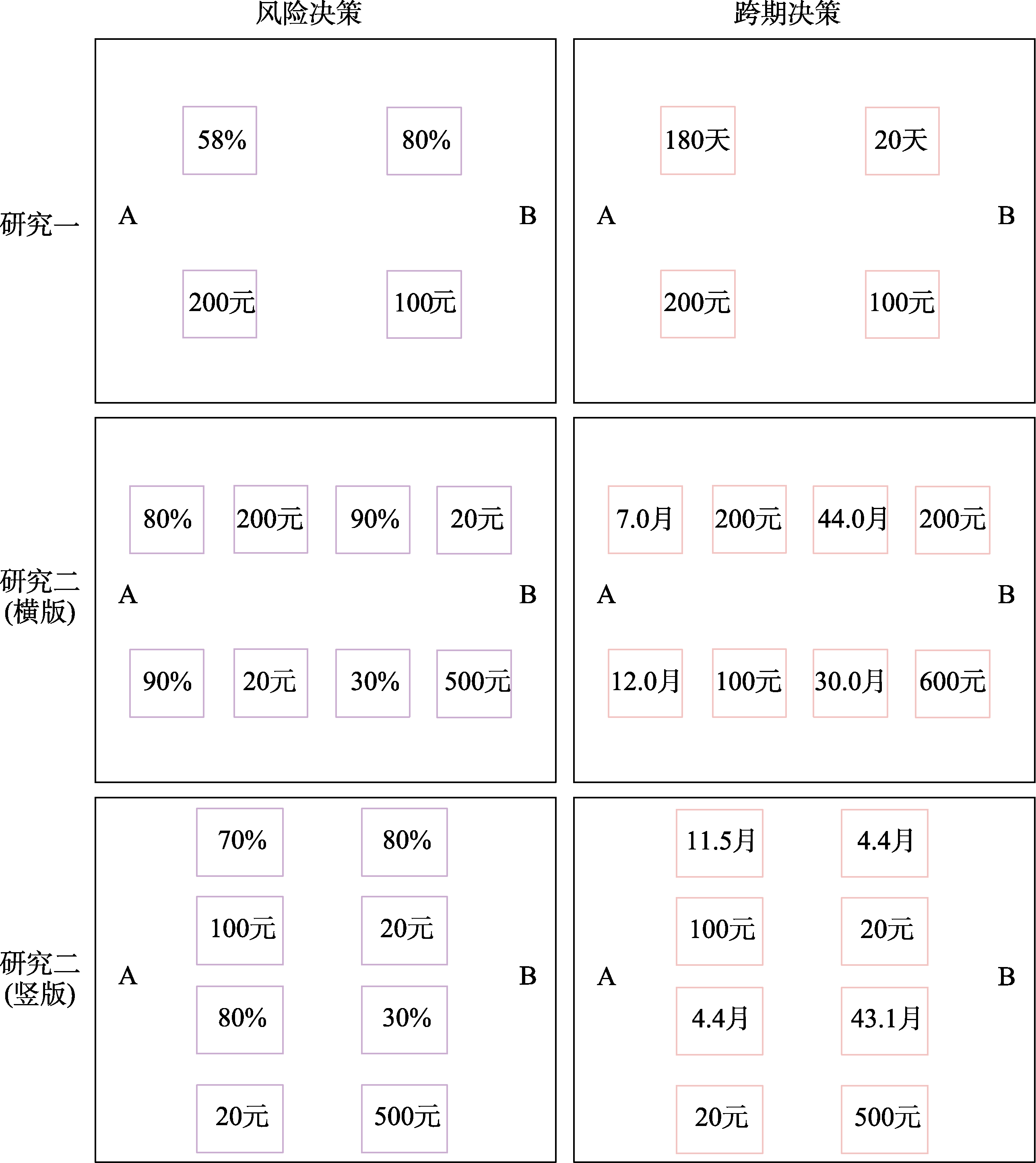
图S3 研究1和研究2眼动实验材料示意图 注: 图中矩形框表示兴趣区, 覆盖了选项的所有属性, 仅用于眼动数据分析, 在实验过程中被试不可见。
| 决策结果/ 过程 | 分析指标 | 决策类型 | M | SE | t(30) | p | ||||
|---|---|---|---|---|---|---|---|---|---|---|
| 剔除 | 不剔除 | 剔除 | 不剔除 | 剔除 | 不剔除 | 剔除 | 不剔除 | |||
| 决策时间 | 决策时间 | RC | 2.56 | 2.68 | 0.12 | 0.15 | −2.80 | −1.99 | 0.01 | 0.06 |
| IC | 2.85 | 2.93 | 0.16 | 0.18 | ||||||
| 选择偏好 | 选择LL/LH选项的比例 | RC | 67.68% | 67.16% | 3.66% | 3.61% | 8.97 | 9.08 | < 0.001 | < 0.001 |
| IC | 28.32% | 28.64% | 4.46% | 4.44% | ||||||
| 加工复杂程度 | 单个注视点平均时长 | RC | 208.64 | 210 | 5.39 | 5.44 | −2.56 | −2.20 | 0.02 | 0.04 |
| IC | 216.53 | 216.93 | 6.35 | 6.33 | ||||||
| 长注视点比例 | RC | 14.67% | 14.98% | 1.44% | 1.46% | −2.42 | −2.06 | 0.02 | 0.05 | |
| IC | 16.94% | 17.00% | 1.75% | 1.75% | ||||||
| RC与0.5单尾t检验 | / | / | / | / | −24.53 | −24.03 | < 0.001 | < 0.001 | ||
| IC与0.5单尾t检验 | / | / | / | / | −18.84 | −18.87 | < 0.001 | < 0.001 | ||
| 加工深度 | 决策前注视量比例 | RC | 98.91% | 99.29% | 0.47% | 0.33% | 1.08 | 1.06 | 0.29 | 0.3 |
| IC | 97.92% | 98.67% | 0.92% | 0.59% | ||||||
| RC与1单尾t检验 | / | / | / | / | −2.33 | −2.17 | 0.01 | 0.02 | ||
| IC与1单尾t检验 | / | / | / | / | −2.25 | −2.26 | 0.02 | 0.02 | ||
| 加工方向 | SM值 | RC | −0.04 | −0.04 | 0.06 | 0.06 | −2.48 | −2.48 | 0.02 | 0.02 |
| IC | 0.19 | 0.19 | 0.11 | 0.11 | ||||||
| RC与0单尾t检验 | / | / | / | / | −0.69 | −0.69 | 0.25 | 0.25 | ||
| IC与0单尾t检验 | / | / | / | / | 1.68 | 1.66 | 0.10 | 0.05 | ||
表S8 剔除与未剔除数据条件下研究1的决策过程与眼动指标结果对比
| 决策结果/ 过程 | 分析指标 | 决策类型 | M | SE | t(30) | p | ||||
|---|---|---|---|---|---|---|---|---|---|---|
| 剔除 | 不剔除 | 剔除 | 不剔除 | 剔除 | 不剔除 | 剔除 | 不剔除 | |||
| 决策时间 | 决策时间 | RC | 2.56 | 2.68 | 0.12 | 0.15 | −2.80 | −1.99 | 0.01 | 0.06 |
| IC | 2.85 | 2.93 | 0.16 | 0.18 | ||||||
| 选择偏好 | 选择LL/LH选项的比例 | RC | 67.68% | 67.16% | 3.66% | 3.61% | 8.97 | 9.08 | < 0.001 | < 0.001 |
| IC | 28.32% | 28.64% | 4.46% | 4.44% | ||||||
| 加工复杂程度 | 单个注视点平均时长 | RC | 208.64 | 210 | 5.39 | 5.44 | −2.56 | −2.20 | 0.02 | 0.04 |
| IC | 216.53 | 216.93 | 6.35 | 6.33 | ||||||
| 长注视点比例 | RC | 14.67% | 14.98% | 1.44% | 1.46% | −2.42 | −2.06 | 0.02 | 0.05 | |
| IC | 16.94% | 17.00% | 1.75% | 1.75% | ||||||
| RC与0.5单尾t检验 | / | / | / | / | −24.53 | −24.03 | < 0.001 | < 0.001 | ||
| IC与0.5单尾t检验 | / | / | / | / | −18.84 | −18.87 | < 0.001 | < 0.001 | ||
| 加工深度 | 决策前注视量比例 | RC | 98.91% | 99.29% | 0.47% | 0.33% | 1.08 | 1.06 | 0.29 | 0.3 |
| IC | 97.92% | 98.67% | 0.92% | 0.59% | ||||||
| RC与1单尾t检验 | / | / | / | / | −2.33 | −2.17 | 0.01 | 0.02 | ||
| IC与1单尾t检验 | / | / | / | / | −2.25 | −2.26 | 0.02 | 0.02 | ||
| 加工方向 | SM值 | RC | −0.04 | −0.04 | 0.06 | 0.06 | −2.48 | −2.48 | 0.02 | 0.02 |
| IC | 0.19 | 0.19 | 0.11 | 0.11 | ||||||
| RC与0单尾t检验 | / | / | / | / | −0.69 | −0.69 | 0.25 | 0.25 | ||
| IC与0单尾t检验 | / | / | / | / | 1.68 | 1.66 | 0.10 | 0.05 | ||
| 决策结果/过程 | 分析指标 | 决策类型 | M | SE | t(31) | p | ||||
|---|---|---|---|---|---|---|---|---|---|---|
| 剔除 | 不剔除 | 剔除 | 不剔除 | 剔除 | 不剔除 | 剔除 | 不剔除 | |||
| 决策时间 | 决策时间 | RC | 4.47 | 4.59 | 0.23 | 0.24 | 0.34 | 0.37 | 0.74 | 0.71 |
| IC | 4.4 | 4.5 | 0.26 | 0.29 | ||||||
| 选择偏好 | 选择LL/LH选项的比例 | RC | 35.81% | 36.00% | 4.82% | 4.84% | −3.19 | −3.12 | 0.003 | 0.004 |
| IC | 56.26% | 56.18% | 4.88% | 4.88% | ||||||
| 加工复杂程度 | 单个注视点平均时长 | RC | 198.84 | 199.25 | 3.55 | 3.52 | −0.61 | −0.54 | 0.54 | 0.60 |
| IC | 200.6 | 200.84 | 4.08 | 4.13 | ||||||
| 长注视点比例 | RC | 10.72% | 10.83% | 0.83% | 0.81% | −0.40 | −0.30 | 0.69 | 0.77 | |
| IC | 11.01% | 11.06% | 1.03% | 1.04% | ||||||
| RC与0.5单尾t检验 | / | / | / | / | −47.58 | −48.35 | < 0.001 | < 0.001 | ||
| IC与0.5单尾t检验 | / | / | / | / | −37.79 | −37.45 | < 0.001 | < 0.001 | ||
| 加工深度 | 决策前注视量比例 | RC | 88.17% | 88.48% | 1.39% | 1.35% | 3.15 | 3.41 | 0.004 | 0.002 |
| IC | 84.20% | 84.23% | 1.52% | 1.52% | ||||||
| RC与1单尾t检验 | / | / | / | / | −8.53 | −8.53 | < 0.001 | < 0.001 | ||
| IC与1单尾t检验 | / | / | / | / | −10.41 | −10.38 | < 0.001 | < 0.001 | ||
| 加工方向 | SM值 | RC | 3.72 | 3.77 | 0.17 | 0.17 | 0.55 | 4.4 | < 0.001 | < 0.001 |
| IC | 3.07 | 3.08 | 0.18 | 0.19 | ||||||
| RC与0单尾t检验 | / | / | / | / | 18.39 | 22.23 | < 0.001 | < 0.001 | ||
| IC与0单尾t检验 | / | / | / | / | 16.69 | 16.46 | < 0.001 | < 0.001 | ||
表S9 剔除与未剔除数据条件下研究2的决策过程与眼动指标结果对比
| 决策结果/过程 | 分析指标 | 决策类型 | M | SE | t(31) | p | ||||
|---|---|---|---|---|---|---|---|---|---|---|
| 剔除 | 不剔除 | 剔除 | 不剔除 | 剔除 | 不剔除 | 剔除 | 不剔除 | |||
| 决策时间 | 决策时间 | RC | 4.47 | 4.59 | 0.23 | 0.24 | 0.34 | 0.37 | 0.74 | 0.71 |
| IC | 4.4 | 4.5 | 0.26 | 0.29 | ||||||
| 选择偏好 | 选择LL/LH选项的比例 | RC | 35.81% | 36.00% | 4.82% | 4.84% | −3.19 | −3.12 | 0.003 | 0.004 |
| IC | 56.26% | 56.18% | 4.88% | 4.88% | ||||||
| 加工复杂程度 | 单个注视点平均时长 | RC | 198.84 | 199.25 | 3.55 | 3.52 | −0.61 | −0.54 | 0.54 | 0.60 |
| IC | 200.6 | 200.84 | 4.08 | 4.13 | ||||||
| 长注视点比例 | RC | 10.72% | 10.83% | 0.83% | 0.81% | −0.40 | −0.30 | 0.69 | 0.77 | |
| IC | 11.01% | 11.06% | 1.03% | 1.04% | ||||||
| RC与0.5单尾t检验 | / | / | / | / | −47.58 | −48.35 | < 0.001 | < 0.001 | ||
| IC与0.5单尾t检验 | / | / | / | / | −37.79 | −37.45 | < 0.001 | < 0.001 | ||
| 加工深度 | 决策前注视量比例 | RC | 88.17% | 88.48% | 1.39% | 1.35% | 3.15 | 3.41 | 0.004 | 0.002 |
| IC | 84.20% | 84.23% | 1.52% | 1.52% | ||||||
| RC与1单尾t检验 | / | / | / | / | −8.53 | −8.53 | < 0.001 | < 0.001 | ||
| IC与1单尾t检验 | / | / | / | / | −10.41 | −10.38 | < 0.001 | < 0.001 | ||
| 加工方向 | SM值 | RC | 3.72 | 3.77 | 0.17 | 0.17 | 0.55 | 4.4 | < 0.001 | < 0.001 |
| IC | 3.07 | 3.08 | 0.18 | 0.19 | ||||||
| RC与0单尾t检验 | / | / | / | / | 18.39 | 22.23 | < 0.001 | < 0.001 | ||
| IC与0单尾t检验 | / | / | / | / | 16.69 | 16.46 | < 0.001 | < 0.001 | ||
| 决策结果/过程 | 分析指标 | 分析类型 | Cauchy (r = 0.707) | Normal (0, 0.5) | Normal (0, 1) |
|---|---|---|---|---|---|
| 决策时间 | 决策时间 | RC vs. IC | 4.96 | 5.48 | 4.16 |
| 选择偏好 | 选择LL/LH选项的比例 | RC vs. IC | > 100 | > 100 | > 100 |
| 加工复杂程度 | 单个注视点平均时长 | RC vs. IC | 3.03 | 3.43 | 2.49 |
| RC结果维度 vs. IC结果维度 | 20.15 | 20.84 | 17.79 | ||
| RC概率维度 vs. IC时间维度 | 0.45 | 0.57 | 0.34 | ||
| 长注视点比例 | RC vs. IC | 2.31 | 2.66 | 1.88 | |
| RC vs. 0.5 | > 100 | > 100 | > 100 | ||
| IC vs. 0.5 | > 100 | > 100 | > 100 | ||
| 加工深度 | 决策前注视量比例 | RC vs. IC | 0.33 | 0.41 | 0.23 |
| RC vs. 1 | 1.98 | 1.67 | 1.12 | ||
| IC vs. 1 | 1.69 | 1.93 | 1.32 | ||
| 加工方向 | SM值 | RC vs. IC | 2.58 | 2.95 | 2.1 |
| RC vs. 0 | 0.24 | 0.32 | 0.18 | ||
| IC vs. 0 | 0.67 | 0.83 | 0.52 |
表S10 研究1中主要决策指标的贝叶斯因子敏感性分析
| 决策结果/过程 | 分析指标 | 分析类型 | Cauchy (r = 0.707) | Normal (0, 0.5) | Normal (0, 1) |
|---|---|---|---|---|---|
| 决策时间 | 决策时间 | RC vs. IC | 4.96 | 5.48 | 4.16 |
| 选择偏好 | 选择LL/LH选项的比例 | RC vs. IC | > 100 | > 100 | > 100 |
| 加工复杂程度 | 单个注视点平均时长 | RC vs. IC | 3.03 | 3.43 | 2.49 |
| RC结果维度 vs. IC结果维度 | 20.15 | 20.84 | 17.79 | ||
| RC概率维度 vs. IC时间维度 | 0.45 | 0.57 | 0.34 | ||
| 长注视点比例 | RC vs. IC | 2.31 | 2.66 | 1.88 | |
| RC vs. 0.5 | > 100 | > 100 | > 100 | ||
| IC vs. 0.5 | > 100 | > 100 | > 100 | ||
| 加工深度 | 决策前注视量比例 | RC vs. IC | 0.33 | 0.41 | 0.23 |
| RC vs. 1 | 1.98 | 1.67 | 1.12 | ||
| IC vs. 1 | 1.69 | 1.93 | 1.32 | ||
| 加工方向 | SM值 | RC vs. IC | 2.58 | 2.95 | 2.1 |
| RC vs. 0 | 0.24 | 0.32 | 0.18 | ||
| IC vs. 0 | 0.67 | 0.83 | 0.52 |
| 决策结果/过程 | 分析指标 | 分析类型 | Cauchy (r = 0.707) | Normal (0, 0.5) | Normal (0, 1) |
|---|---|---|---|---|---|
| 决策时间 | 决策时间 | RC vs. IC | 0.20 | 0.27 | 0.14 |
| 选择偏好 | 选择LL/LH选项的比例 | RC vs. IC | 11.59 | 12.34 | 9.99 |
| 加工复杂程度 | 单个注视点平均时长 | RC vs. IC | 0.22 | 0.3 | 0.16 |
| RC结果维度 vs. IC结果维度 | 0.37 | 0.48 | 0.28 | ||
| RC概率维度 vs. IC时间维度 | 0.80 | 0.98 | 0.62 | ||
| 长注视点比例 | RC vs. IC | 0.20 | 0.27 | 0.15 | |
| RC vs. 0.5 | > 100 | > 100 | > 100 | ||
| IC vs. 0.5 | > 100 | > 100 | > 100 | ||
| 加工深度 | 决策前注视量比例 | RC vs. IC | 10.63 | 11.37 | 9.14 |
| RC vs. 1 | > 100 | > 100 | > 100 | ||
| 加工方向 | SM值 | IC vs. 1 | > 100 | > 100 | > 100 |
| RC vs. IC | > 100 | > 100 | > 100 | ||
| RC vs. 0 | > 100 | > 100 | > 100 | ||
| IC vs. 0 | > 100 | > 100 | > 100 |
表S11 研究2中主要决策指标的贝叶斯因子敏感性分析
| 决策结果/过程 | 分析指标 | 分析类型 | Cauchy (r = 0.707) | Normal (0, 0.5) | Normal (0, 1) |
|---|---|---|---|---|---|
| 决策时间 | 决策时间 | RC vs. IC | 0.20 | 0.27 | 0.14 |
| 选择偏好 | 选择LL/LH选项的比例 | RC vs. IC | 11.59 | 12.34 | 9.99 |
| 加工复杂程度 | 单个注视点平均时长 | RC vs. IC | 0.22 | 0.3 | 0.16 |
| RC结果维度 vs. IC结果维度 | 0.37 | 0.48 | 0.28 | ||
| RC概率维度 vs. IC时间维度 | 0.80 | 0.98 | 0.62 | ||
| 长注视点比例 | RC vs. IC | 0.20 | 0.27 | 0.15 | |
| RC vs. 0.5 | > 100 | > 100 | > 100 | ||
| IC vs. 0.5 | > 100 | > 100 | > 100 | ||
| 加工深度 | 决策前注视量比例 | RC vs. IC | 10.63 | 11.37 | 9.14 |
| RC vs. 1 | > 100 | > 100 | > 100 | ||
| 加工方向 | SM值 | IC vs. 1 | > 100 | > 100 | > 100 |
| RC vs. IC | > 100 | > 100 | > 100 | ||
| RC vs. 0 | > 100 | > 100 | > 100 | ||
| IC vs. 0 | > 100 | > 100 | > 100 |
| [1] |
Ahn, W. Y., Haines, N., & Zhang, L. (2017). Revealing neurocomputational mechanisms of reinforcement learning and decision-making with the hBayesDM package. Computational Psychiatry, 1, 24-57. https://doi.org/10.1162/CPSY_a_00002
doi: 10.1162/CPSY_a_00002 URL |
| [2] |
Ainslie, G. (1975). Specious reward: A behavioral theory of impulsiveness and impulse control. Psychological Bulletin, 82(4), 463-496. https://doi.org/10.1037/h0076860
doi: 10.1037/h0076860 URL pmid: 1099599 |
| [3] |
Allais, M. (1953). Le comportement de l’homme rationnel devant le risque: Critique des postulats et axiomes de l’école américaine. Econometrica, 21(4), 503-546. https://doi.org/10.2307/1907921
doi: 10.2307/1907921 URL |
| [4] |
Amasino, D. R., Sullivan, N. J., Kranton, R. E., & Huettel, S. A. (2019). Amount and time exert independent influences on intertemporal choice. Nature Human Behaviour, 3(4), 383-392. https://doi.org/10.1038/s41562-019-0537-2
doi: 10.1038/s41562-019-0537-2 URL pmid: 30971787 |
| [5] |
Anderson, C. J. (2003). The psychology of doing nothing: Forms of decision avoidance result from reason and emotion. Psychological Bulletin, 129(1), 139-167. https://doi.org/10.1037/0033-2909.129.1.139
URL pmid: 12555797 |
| [6] |
Anderson, M. A. B., Cox, D. J., & Dallery, J. (2023). Effects of economic context and reward amount on delay and probability discounting. Journal of the Experimental Analysis of Behavior, 120(2), 204-213. https://doi.org/10.1002/jeab.868
doi: 10.1002/jeab.868 URL pmid: 37311053 |
| [7] |
Anderson, N. H., & Shanteau, J. C. (1970). Information integration in risky decision making. Journal of Experimental Psychology, 84(3), 441-451. https://doi.org/10.1037/h0029300
doi: 10.1037/h0029300 URL |
| [8] | Bates, D., Mächler, M., Bolker, B., & Walker, S. (2015). Fitting linear mixed-effects models using lme4. Journal of Statistical Software, 67(1), 1-48. https://doi.org/10.18637/jss.v067.i01 |
| [9] |
Benzion, U., Rapoport, A., & Yagil, J. (1989). Discount rates inferred from decisions: An experimental study. Management Science, 35(3), 270-284. https://doi.org/10.1287/mnsc.35.3.270
doi: 10.1287/mnsc.35.3.270 URL |
| [10] |
Bhatnagar, R., & Orquin, J. L. (2022). A meta-analysis on the effect of visual attention on choice. Journal of Experimental Psychology: General, 151(10), 2265-2283. https://doi.org/10.1037/xge0001204
doi: 10.1037/xge0001204 URL |
| [11] |
Białaszek, W., Ostaszewski, P., Green, L., & Myerson, J. (2019). On four types of devaluation of outcomes due to their costs: Delay, probability, effort, and social discounting. The Psychological Record, 69(3), 415-424. https://doi.org/10.1007/s40732-019-00340-x
doi: 10.1007/s40732-019-00340-x URL |
| [12] |
Böckenholt, U., & Hynan, L. S. (1994). Caveats on a process‐tracing measure and a remedy. Journal of Behavioral Decision Making, 7(2), 103-117. https://doi.org/10.1002/bdm.3960070203
doi: 10.1002/bdm.v7:2 URL |
| [13] |
Brandstätter, E., Gigerenzer, G., & Hertwig, R. (2006). The priority heuristic: Making choices without trade-offs. Psychological Review, 113(2), 409-432. https://doi.org/10.1037/0033-295X.113.2.409
doi: 10.1037/0033-295X.113.2.409 URL pmid: 16637767 |
| [14] |
Brysbaert, M., & Stevens, M. (2018). Power analysis and effect size in mixed effects models: A tutorial. Journal of Cognition, 1(1), 9. https://doi.org/10.5334/joc.10
doi: 10.5334/joc.10 URL pmid: 31517183 |
| [15] |
Chen, F., Zheng, J., Wang, L., & Krajbich, I. (2024). Attribute latencies causally shape intertemporal decisions. Nature Communications, 15(1), 2948. https://doi.org/10.1038/s41467-024-46657-2
doi: 10.1038/s41467-024-46657-2 URL pmid: 38580626 |
| [16] |
Cheng, J., & González-Vallejo, C. (2016). Attribute-wise vs. alternative-wise mechanism in intertemporal choice: Testing the proportional difference, trade-off, and hyperbolic models. Decision, 3(3), 190-215. https://doi.org/10.1037/dec0000046
doi: 10.1037/dec0000046 URL |
| [17] |
Coronel, J. C., Bullock, O. M., Shulman, H. C., Sweitzer, M. D., Bond, R. M., & Poulsen, S. (2021). Eye movements predict large-scale voting decisions. Psychological Science, 32(6), 836-848. https://doi.org/10.1177/0956797621991142
doi: 10.1177/0956797621991142 URL |
| [18] |
Cristino, F., Mathôt, S., Theeuwes, J., & Gilchrist, I. D. (2010). ScanMatch: A novel method for comparing fixation sequences. Behavior Research Methods, 42, 692-700. https://doi.org/10.3758/BRM.42.3.692
doi: 10.3758/BRM.42.3.692 URL pmid: 20805591 |
| [19] |
Dai, J., & Busemeyer, J. R. (2014). A probabilistic, dynamic, and attribute-wise model of intertemporal choice. Journal of Experimental Psychology: General, 143(4), 1489-1514. https://doi.org/10.1037/a0035976
doi: 10.1037/a0035976 URL |
| [20] |
Dai, J., Pleskac, T. J., & Pachur, T. (2018). Dynamic cognitive models of intertemporal choice. Cognitive Psychology, 104, 29-56. https://doi.org/10.1016/j.cogpsych.2018.03.001
doi: S0010-0285(17)30211-6 URL pmid: 29587183 |
| [21] |
DeKay, M. L., & Dou, S. (2024). Risky-choice framing effects result partly from mismatched option descriptions in gains and losses. Psychological Science, 35(8), 918-932. https://doi.org/10.1177/09567976241249183
doi: 10.1177/09567976241249183 URL |
| [22] |
Diederich, A., & Zhao, W. J. (2019). A dynamic dual process model of intertemporal choice. The Spanish Journal of Psychology, 22, E54. https://doi.org/10.1017/sjp.2019.53
doi: 10.1017/sjp.2019.53 URL |
| [23] |
Escobar, G. G., Morales-Chainé, S., Haynes, J. M., Santoyo, C., & Mitchell, S. H. (2023). Moderate stability among delay, probability, and effort discounting in humans. The Psychological Record, 73(2), 149-162. https://doi.org/10.1007/s40732-023-00537-1
doi: 10.1007/s40732-023-00537-1 URL |
| [24] | Fidanoski, F., Dixit, V., & Ortmann, A. (2023). Can a single model account for both risky choices and inter-temporal choices? Testing the assumptions underlying models of risky-intertemporal choice: A conceptual replication [Preprint]. SSRN. https://doi.org/10.2139/ssrn.4393036 |
| [25] |
Fisher, G. (2021). Intertemporal choices are causally influenced by fluctuations in visual attention. Management Science, 67(8), 4961-4981. https://doi.org/10.1287/mnsc.2020.3732
doi: 10.1287/mnsc.2020.3732 URL |
| [26] |
Franco‐Watkins, A. M., Mattson, R. E., & Jackson, M. D. (2016). Now or later? Attentional processing and intertemporal choice. Journal of Behavioral Decision Making, 29(2-3), 206-217. https://doi.org/10.1002/bdm.1895
doi: 10.1002/bdm.v29.2-3 URL |
| [27] |
Frederick, S. (2005). Cognitive reflection and decision making. Journal of Economic Perspectives, 19(4), 25-42. https://doi.org/10.1257/089533005775196732
doi: 10.1257/089533005775196732 URL |
| [28] |
Frederick, S., & Loewenstein, G. (2002). Time discounting and time preference: A critical review. Journal of Economic Literature, 40(2), 351-401. https://doi.org/10.1257/002205102320161311
doi: 10.1257/jel.40.2.351 URL |
| [29] |
Freeman, J. B., & Ambady, N. (2010). MouseTracker: Software for studying real-time mental processing using a computer mouse-tracking method. Behavior Research Methods, 42(1), 226-241. https://doi.org/10.3758/BRM.42.1.226
doi: 10.3758/BRM.42.1.226 URL pmid: 20160302 |
| [30] | Gerretsen, P., Kim, J., Caravaggio, F., Quilty, L., Sanches, M., Wells, S., … Graff-Guerrero, A. (2021). Individual determinants of COVID-19 vaccine hesitancy. PLoS One, 16(11), e0258462. https://doi.org/10.1371/journal.pone.0258462 |
| [31] |
Glöckner, A., & Herbold, A. K. (2011). An eye-tracking study on information processing in risky decisions: Evidence for compensatory strategies based on automatic processes. Journal of Behavioral Decision Making, 24(1), 71-98. https://doi.org/10.1002/bdm.684
doi: 10.1002/bdm.v24.1 URL |
| [32] |
Goldstein, D. G., & Gigerenzer, G. (2002). Models of ecological rationality: The recognition heuristic. Psychological Review, 109(1), 75-90. https://doi.org/10.1037/0033-295X.109.1.75
URL pmid: 11863042 |
| [33] |
Green, L., & Myerson, J. (2004). A discounting framework for choice with delayed and probabilistic rewards. Psychological Bulletin, 130(5), 769-792. https://psycnet.apa.org/doi/10.1037/0033-2909.130.5.769
doi: 10.1037/0033-2909.130.5.769 URL pmid: 15367080 |
| [34] |
Green, L., & Myerson, J. (2013). How many impulsivities? A discounting perspective. Journal of the Experimental Analysis of Behavior, 99(1), 3-13. https://doi.org/10.1002/jeab.1
doi: 10.1002/jeab.1 URL pmid: 23344985 |
| [35] |
Green, L., Myerson, J., & Ostaszewski, P. (1999). Amount of reward has opposite effects on the discounting of delayed and probabilistic outcomes. Journal of Experimental Psychology: Learning, Memory, and Cognition, 25(2), 418-427. https://psycnet.apa.org/doi/10.1037/0278-7393.25.2.418
doi: 10.1037/0278-7393.25.2.418 URL |
| [36] | Green, L., Myerson, J., & Vanderveldt, A. (2014). Delay and probability discounting. In F. K. McSweeney & E. S. Murphy (Eds.), The Wiley-Blackwell handbook of operant and classical conditioning (pp. 307-337). Wiley-Blackwell. https://doi.org/10.1002/9781118468135.ch13 |
| [37] |
Guo, M., Ikink, I., Roelofs, K., & Figner, B. (2025). Ambiguity preferences in intertemporal and risky choice: A large-scale study using drift-diffusion modelling. Psychonomic Bulletin & Review, 32(6), 2939-2956. https://doi.org/10.3758/s13423-025-02709-2
doi: 10.3758/s13423-025-02709-2 URL |
| [38] |
Han, X., Wang, Y. T., Feng, J. L., Deng, C., Chen, Z. H., Huang, Y. A., … Hu, P. W. (2023). A survey of transformer-based multimodal pre-trained modals. Neurocomputing, 515, 89-106. https://doi.org/10.1016/j.neucom.2022.09.136
doi: 10.1016/j.neucom.2022.09.136 URL |
| [39] |
Hardisty, D. J., & Weber, E. U. (2009). Discounting future green: Money versus the environment. Journal of Experimental Psychology: General, 138(3), 329-340. https://doi.org/10.1037/a0016433
doi: 10.1037/a0016433 URL |
| [40] |
He, L., Analytis, P. P., & Bhatia, S. (2022). The wisdom of model crowds. Management Science, 68(5), 3635-3659. https://doi.org/10.1287/mnsc.2021.4090
doi: 10.1287/mnsc.2021.4090 URL |
| [41] |
He, L., Wall, D., Reeck, C., & Bhatia, S. (2023). Information acquisition and decision strategies in intertemporal choice. Cognitive Psychology, 142, 101562. https://doi.org/10.1016/j.cogpsych.2023.101562
doi: 10.1016/j.cogpsych.2023.101562 URL |
| [42] |
He, L., Zhao, W. J., & Bhatia, S. (2022). An ontology of decision models. Psychological Review, 129(1), 49-72. https://doi.org/10.1037/rev0000231
doi: 10.1037/rev0000231 URL |
| [43] |
Hertwig, R., Barron, G., Weber, E. U., & Erev, I. (2004). Decisions from experience and the effect of rare events in risky choice. Psychological Science, 15(8), 534-539. https://doi.org/10.1111/j.0956-7976.2004.00715.x
doi: 10.1111/j.0956-7976.2004.00715.x URL pmid: 15270998 |
| [44] |
Hertwig, R., & Erev, I. (2009). The description-experience gap in risky choice. Trends in Cognitive Sciences, 13(12), 517-523. https://doi.org/10.1016/j.tics.2009.09.004
doi: 10.1016/j.tics.2009.09.004 URL pmid: 19836292 |
| [45] |
Hinvest, N. S., & Anderson, I. M. (2010). The effects of real versus hypothetical reward on delay and probability discounting. Quarterly Journal of Experimental Psychology, 63(6), 1072-1084. https://doi.org/10.1080/17470210903276350
doi: 10.1080/17470210903276350 URL |
| [46] |
Hoffmann, T., Hofman, A., & Wagenmakers, E. J. (2022). Bayesian tests of two proportions: A tutorial with R and JASP. Methodology, 18(4), 239-277. https://doi.org/10.5964/meth.9263
doi: 10.5964/meth.v18i4 URL |
| [47] |
Horstmann, N., Ahlgrimm, A., & Glöckner, A. (2009). How distinct are intuition and deliberation? An eye-tracking analysis of instruction-induced decision modes. Judgment and Decision Making, 4(5), 335-354. https://doi.org/10.1017/S1930297500001182
doi: 10.1017/S1930297500001182 URL |
| [48] |
Hsiao, J. H. (2024). Understanding human cognition through computational modeling. Topics in Cognitive Science, 16(3), 349-376. https://doi.org/10.1111/tops.12737
doi: 10.1111/tops.v16.3 URL |
| [49] |
Hu, M., Chang, R., Sui, X., & Gao, M. (2024). Attention biases the process of risky decision-making: Evidence from eye-tracking. PsyCh Journal, 13(2), 157-165. https://doi.org/10.1002/pchj.724
doi: 10.1002/pchj.724 URL |
| [50] |
Huang, Y., Luan, S., Wu, B., Li, Y., Wu, J., Chen, W., & Hertwig, R. (2024). Impulsivity is a stable, measurable, and predictive psychological trait. Proceedings of the National Academy of Sciences, 121(24), e2321758121. https://doi.org/10.1073/pnas.2321758121
doi: 10.1073/pnas.2321758121 URL |
| [51] |
Huang, Y. N., Jiang, C. M., Liu, H. Z., & Li, S. (2023). Toward a coherent understanding of risky, intertemporal, and spatial choices: Evidence from eye-tracking and subjective evaluation. Acta Psychologica Sinica, 55(6), 994-1015. https://doi.org/10.3724/SP.J.1041.2023.00994
doi: 10.3724/SP.J.1041.2023.00994 URL |
|
[黄元娜, 江程铭, 刘洪志, 李纾. (2023). 风险、跨期和空间决策的决策策略共享: 眼动和主观判断的证据. 心理学报, 55(6), 994-1015. https://doi.org/10.3724/SP.J.1041.2023.00994]
doi: 10.3724/SP.J.1041.2023.00994 URL |
|
| [52] |
Jenke, L., Bansak, K., Hainmueller, J., & Hangartner, D. (2021). Using eye-tracking to understand decision-making in conjoint experiments. Political Analysis, 29(1), 75-101. https://doi.org/10.1017/pan.2020.11
doi: 10.1017/pan.2020.11 URL |
| [53] |
Jiang, J., & Dai, J. (2021). Time and risk perceptions mediate the causal impact of objective delay on delay discounting: An experimental examination of the implicit-risk hypothesis. Psychonomic Bulletin & Review, 28(4), 1399-1412. https://doi.org/10.3758/s13423-021-01890-4
doi: 10.3758/s13423-021-01890-4 URL |
| [54] | Johnson, K. L., Bixter, M. T., & Luhmann, C. C. (2020). Delay discounting and risky choice: Meta-analytic evidence regarding single-process theories. Judgment and Decision Making, 15(3), 381-400. https://doi.org/10.1017/S193029750000718X |
| [55] |
Kahneman, D., & Tversky, A. (1979). Prospect theory: An analysis of decision under risk. Econometrica, 47(2), 263. https://doi.org/10.1142/9789814417358_0006
doi: 10.2307/1914185 URL |
| [56] |
Kahneman, D., & Tversky, A. (1984). Choices, values, and frames. American Psychologist, 39(4), 341-350. https://doi.org/10.1037/0003-066X.39.4.341
doi: 10.1037/0003-066X.39.4.341 URL |
| [57] |
Kalenscher, T., Ohmann, T., & Güntürkün, O. (2006). The neuroscience of impulsive and self-controlled decisions. International Journal of Psychophysiology, 62(2), 203-211. https://doi.org/10.1016/j.ijpsycho.2006.05.010
URL pmid: 16828187 |
| [58] |
Kaplan, B. A., Amlung, M., Reed, D. D., Jarmolowicz, D. P., McKerchar, T. L., & Lemley, S. M. (2016). Automating scoring of delay discounting for the 21- and 27-item Monetary Choice Questionnaires. The Behavior Analyst, 39(2), 293-304. https://doi.org/10.1007/s40614-016-0070-9
doi: 10.1007/s40614-016-0070-9 URL |
| [59] |
Killeen, P. R. (2023). Variations on a theme by Rachlin: Probability discounting. Journal of the Experimental Analysis of Behavior, 119(1), 140-155. https://doi.org/10.1002/jeab.817
doi: 10.1002/jeab.v119.1 URL |
| [60] |
Kirby, K. N., & Maraković, N. N. (1996). Delay-discounting probabilistic rewards: Rates decrease as amounts increase. Psychonomic Bulletin & Review, 3(1), 100-104. https://doi.org/10.3758/BF03210748
doi: 10.3758/BF03210748 URL |
| [61] |
Kirby, K. N. (1997). Bidding on the future: Evidence against normative discounting of delayed rewards. Journal of Experimental Psychology: General, 126(1), 54-70. https://doi.org/10.1037/0096-3445.126.1.54
doi: 10.1037/0096-3445.126.1.54 URL |
| [62] |
Kirby, K. N., & Herrnstein, R. J. (1995). Preference reversals due to myopic discounting of delayed reward. Psychological Science, 6(2), 83-89. https://doi.org/10.1111/j.1467-9280.1995.tb00311.x
doi: 10.1111/j.1467-9280.1995.tb00311.x URL |
| [63] | Konovalov, A., & Krajbich, I. (2020). Mouse tracking reveals structure knowledge in the absence of model-based choice. Nature Communications, 11(1), 1893. https://doi.org/10.1038/s41467-020-15696-w |
| [64] |
Konstantinidis, E., Van Ravenzwaaij, D., Güney, Ş., & Newell, B. R. (2020). Now for sure or later with a risk? Modeling risky intertemporal choice as accumulated preference. Decision, 7(2), 91-120. https://doi.org/10.1037/dec0000103
doi: 10.1037/dec0000103 URL |
| [65] |
Krajbich, I., & Rangel, A. (2011). Multialternative drift-diffusion model predicts the relationship between visual fixations and choice in value-based decisions. Proceedings of the National Academy of Sciences, 108(33), 13852-13857. https://doi.org/10.1073/pnas.1101328108
doi: 10.1073/pnas.1101328108 URL |
| [66] |
Leland, J. W. (2002). Similarity judgments and anomalies in intertemporal choice. Economic Inquiry, 40(4), 574-581. https://doi.org/10.1093/ei/40.4.574
doi: 10.1093/ei/40.4.574 URL |
| [67] |
Li, S. (2004). A behavioral choice model when computational ability matters. Applied Intelligence, 20(2), 147-163. https://doi.org/10.1023/b:apin.0000013337.01711.c7
doi: 10.1023/B:APIN.0000013337.01711.c7 URL |
| [68] |
Li, S., Su, Y., & Sun, Y. (2010). The effect of pseudo‐immediacy on intertemporal choices. Journal of Risk Research, 13(6), 781-787. https://doi.org/10.1080/13669870903551704
doi: 10.1080/13669870903551704 URL |
| [69] | Liang, Z. Y., Xu, L. J., Rao, L. L., Jiang, T. Z., & Li, S. (2012). “20% probability to gain a cake” = “gain 20% of the cake”?: Testing the expectation rule of risky decision making. Chinese Science Bulletin, 57(35), 3421-3433. http://doi.org/10.1360/972012-691 |
| [梁竹苑, 徐丽娟, 饶俪琳, 蒋田仔, 李纾. (2012). “20%的概率获得蛋糕”=“获得蛋糕的20%”?检验风险决策的期望法则假设. 科学通报, 57(35), 3421-3433. http://doi.org/10.1360/972012-691] | |
| [70] |
Lin, J. M., Li, A. M., Zhou, Y. R., He, J. H., & Zhou, L. (2022). The prospect of gaze manipulation technology in decision- making research: Altering decision-making. Advances in Psychological Science, 30(8), 1794-1803. https://doi.org/10.3724/SP.J.1042.2022.01794
doi: 10.3724/SP.J.1042.2022.01794 URL |
|
[林浇敏, 李爱梅, 周雅然, 何军红, 周蕾. (2022). 眼动操纵技术在决策研究中的应用前景: 改变决策行为. 心理科学进展, 30(8), 1794-1803. https://doi.org/10.3724/SP.J.1042.2022.01794]
doi: 10.3724/SP.J.1042.2022.01794 URL |
|
| [71] |
Liu, H. Z., Lyu, X. K., Wei, Z. H., Mo, W. L., Luo, J. R., & Su, X. Y. (2021). Exploiting the dynamics of eye gaze to bias intertemporal choice. Journal of Behavioral Decision Making, 34(3), 419-431. https://doi.org/10.1002/bdm.2219
doi: 10.1002/bdm.v34.3 URL |
| [72] |
Luckman, A., Donkin, C., & Newell, B. R. (2018). Can a single model account for both risky choices and inter-temporal choices? Testing the assumptions underlying models of risky inter-temporal choice. Psychonomic Bulletin & Review, 25(2), 785-792. https://doi.org/10.3758/s13423-017-1330-8
doi: 10.3758/s13423-017-1330-8 URL |
| [73] |
Luckman, A., Donkin, C., & Newell, B. R. (2020). An evaluation and comparison of models of risky intertemporal choice. Psychological Review, 127(6), 1097-1138. https://doi.org/10.1037/rev0000223
doi: 10.1037/rev0000223 URL |
| [74] |
Ludwig, J., Jaudas, A., & Achtziger, A. (2024). The zero effect: An eye-tracking study of affect and motivation in risky choices. Journal of Behavioral Decision Making, 37(3), e2400. https://doi.org/10.1002/bdm.2400
doi: 10.1002/bdm.v37.3 URL |
| [75] |
Marzilli Ericson, K. M., White, J. M., Laibson, D., & Cohen, J. D. (2015). Money earlier or later? Simple heuristics explain intertemporal choices better than delay discounting does. Psychological Science, 26(6), 826-833. https://doi.org/10.1177/0956797615572232
doi: 10.1177/0956797615572232 URL pmid: 25911124 |
| [76] | Mazur, J. E. (1987). An adjusting procedure for studying delayed reinforcement. In M. L. Commons, J. E. Mazur, J. A. Nevin, & H. Rachlin (Eds.), The effect of delay and of intervening events on reinforcement value (pp. 55-73). Erlbaum. |
| [77] |
Meertens, R. M., & Lion, R. (2008). Measuring an individual’s tendency to take risks: The Risk Propensity Scale. Journal of Applied Social Psychology, 38(6), 1506-1520. https://doi.org/10.1111/j.1559-1816.2008.00357.x
doi: 10.1111/jasp.2008.38.issue-6 URL |
| [78] |
Meissner, T., Gassmann, X., Faure, C., & Schleich, J. (2023). Individual characteristics associated with risk and time preferences: A multi-country representative survey. Journal of Risk and Uncertainty, 66, 77-107. https://doi.org/10.1007/s11166-022-09383-y
doi: 10.1007/s11166-022-09383-y URL |
| [79] |
Mok, J. N. Y., Kwan, D., Green, L., Myerson, J., Craver, C. F., & Rosenbaum, R. S. (2020). Is it time? Episodic imagining and the discounting of delayed and probabilistic rewards in young and older adults. Cognition, 199, 104222. https://doi.org/10.1016/j.cognition.2020.104222
doi: 10.1016/j.cognition.2020.104222 URL |
| [80] |
Noton, D., & Stark, L. (1971). Scanpaths in eye movements during pattern perception. Science, 171(3968), 308-311. https://doi.org/10.1126/science.171.3968.308
URL pmid: 5538847 |
| [81] | Ohmura, Y., Takahashi, T., & Kitamura, N. (2016). Discounting delayed and probabilistic monetary gains and losses by smokers of cigarettes. In S. Ikeda, H. K. Kato, F. Ohtake, & Y. Tsutsui (Eds.), Behavioral economics of preferences, choices, and happiness (pp. 179-196). Springer. |
| [82] |
Orquin, J. L., Ashby, N. J. S., & Clarke, A. D. F. (2016). Areas of interest as a signal detection problem in behavioral eye-tracking research. Journal of Behavioral Decision Making, 29(2-3), 103-115. https://doi.org/10.1002/bdm.1867
doi: 10.1002/bdm.v29.2-3 URL |
| [83] |
Orquin, J. L., & Holmqvist, K. (2018). Threats to the validity of eye-movement research in psychology. Behavior Research Methods, 50(4), 1645-1656. https://doi.org/10.3758/s13428-017-0998-z
doi: 10.3758/s13428-017-0998-z URL pmid: 29218588 |
| [84] |
Orquin, J. L., Lahm, E. S., & Stojić, H. (2021). The visual environment and attention in decision making. Psychological Bulletin, 147(6), 597-617. https://doi.org/10.1037/bul0000328
doi: 10.1037/bul0000328 URL pmid: 34843300 |
| [85] | Pascal, B. (1670/2018). Pensées (W. F. Trotter, Trans.). Fordham University Sourcebooks. https://sourcebooks.fordham.edu/mod/1660pascal-pensees.asp |
| [86] |
Patton, J. H., Stanford, M. S., & Barratt, E. S. (1995). Factor structure of the Barratt Impulsiveness Scale. Journal of Clinical Psychology, 51(6), 768-774. https://doi.org/10.1002/1097-4679(199511)51:6<768::AID-JCLP2270510607>3.0.CO;2-1
doi: 10.1002/1097-4679(199511)51:6<768::aid-jclp2270510607>3.0.co;2-1 URL pmid: 8778124 |
| [87] | Payne, J. W., Bettman, J. R., & Johnson, E. J. (1993). The adaptive decision maker. Cambridge University Press. https://doi.org/10.1017/cbo9781139173933.002 |
| [88] |
Payne, J. W., Braunstein, M. L., & Carroll, J. S. (1978). Exploring predecisional behavior: An alternative approach to decision research. Organizational Behavior and Human Performance, 22(1), 17-44. https://doi.org/10.1016/0030-5073(78)90003-X
doi: 10.1016/0030-5073(78)90003-X URL |
| [89] |
Peters, E., Västfjäll, D., Slovic, P., Mertz, C. K., Mazzocco, K., & Dickert, S. (2006). Numeracy and decision making. Psychological Science, 17(5), 407-413. https://doi.org/10.1111/j.1467-9280.2006.01720.x
URL pmid: 16683928 |
| [90] |
Peters, J., & Büchel, C. (2009). Overlapping and distinct neural systems code for subjective value during intertemporal and risky decision making. The Journal of Neuroscience, 29(50), 15727-15734. https://doi.org/10.1523/JNEUROSCI.3489-09.2009
doi: 10.1523/JNEUROSCI.3489-09.2009 URL |
| [91] |
Peters, J., & Büchel, C. (2011). The neural mechanisms of inter-temporal decision-making: Understanding variability. Trends in Cognitive Sciences, 15(5), 227-239. https://doi.org/10.1016/j.tics.2011.03.002
doi: 10.1016/j.tics.2011.03.002 URL pmid: 21497544 |
| [92] |
Rachlin, H., Logue, A. W., Gibbon, J., & Frankel, M. (1986). Cognition and behavior in studies of choice. Psychological Review, 93(1), 33-45. https://doi.org/10.1037/0033-295x.93.1.33
doi: 10.1037/0033-295X.93.1.33 URL |
| [93] |
Rao, L. L., & Li, S. (2011). New paradoxes in intertemporal choice. Judgment and Decision Making, 6(2), 122-129. https://doi.org/10.1017/s193029750000406x
doi: 10.1017/S193029750000406X URL |
| [94] | Rayner, K. (Ed.). (2012). Eye movements and visual cognition: Scene perception and reading. Springer Science & Business Media. https://doi.org/10.1007/978-1-4612-2852-3 |
| [95] |
Read, D., & Scholten, M. (2012). Tradeoffs between sequences: Weighing accumulated outcomes against outcome-adjusted delays. Journal of Experimental Psychology: Learning, Memory, and Cognition, 38(6), 1675-1688. https://doi.org/10.1037/a0028216
doi: 10.1037/a0028216 URL |
| [96] |
Reyna, V. F., Nelson, W. L., Han, P. K., & Dieckmann, N. F. (2009). How numeracy influences risk comprehension and medical decision making. Psychological Bulletin, 135(6), 943-973. https://doi.org/10.1037/a0017327
doi: 10.1037/a0017327 URL pmid: 19883143 |
| [97] | Reyna, V. F., Müller, S. M., & Edelson, S. M. (2023). Critical tests of fuzzy trace theory in brain and behavior: Uncertainty across time, probability, and development. Cognitive, Affective, & Behavioral Neuroscience, 23(3), 746-772. https://doi.org/10.3758/s13415-022-01058-0 |
| [98] |
Samuelson, P. A. (1937). A note on measurement of utility. The Review of Economic Studies, 4(2), 155-161. https://doi.org/10.2307/2967612
doi: 10.2307/2967612 URL |
| [99] |
Scholten, M., & Read, D. (2010). The psychology of intertemporal tradeoffs. Psychological Review, 117(3), 925-944. https://doi.org/10.1037/a0019619
doi: 10.1037/a0019619 URL pmid: 20658858 |
| [100] |
Scholten, M., Read, D., & Sanborn, A. (2014). Weighing outcomes by time or against time? Evaluation rules in intertemporal choice. Cognitive Science, 38(3), 399-438. https://doi.org/10.1111/cogs.12104
doi: 10.1111/cogs.12104 URL pmid: 24404941 |
| [101] |
Scholten, M., Walters, D. J., Fox, C. R., & Read, D. (2024). The unified tradeoff model. Psychological Review, 131(4), 1007-1044. https://doi.org/10.1037/rev0000458
doi: 10.1037/rev0000458 URL pmid: 38512175 |
| [102] |
Schulte-Mecklenbeck, M., Johnson, J. G., Böckenholt, U., Goldstein, D. G., Russo, J. E., Sullivan, N. J., & Willemsen, M. C. (2017). Process-tracing methods in decision making: On growing up in the 70s. Current Directions in Psychological Science, 26(5), 442-450. https://doi.org/10.1177/0963721417708229
doi: 10.1177/0963721417708229 URL |
| [103] | Sivula, T., Magnusson, M., Matamoros, A. A., & Vehtari, A. (2020). Uncertainty in Bayesian leave-one-out cross-validation based model comparison. arXiv. https://doi.org/10.1214/25-ba1569 |
| [104] | Smith, E., & Peters, J. (2022). Motor response vigour and visual fixation patterns reflect subjective valuation during intertemporal choice. PLoS Computational Biology, 18(6), e1010096. https://doi.org/10.1371/journal.pcbi.1010096 |
| [105] | Stevenson, M. K., Busemeyer, J. R., & Naylor, J. C. (1990). Judgment and decision-making theory. In M. D. Dunnette & L. M. Hough (Eds.), Handbook of industrial and organizational psychology (2nd ed., pp. 283-374). Consulting Psychologists Press. |
| [106] |
Stewart, N., Hermens, F., & Matthews, W. J. (2016). Eye movements in risky choice. Journal of Behavioral Decision Making, 29(2-3), 116-136. https://doi.org/10.1002/bdm.1854
URL pmid: 27522985 |
| [107] |
Stillman, P. E., Shen, X., & Ferguson, M. J. (2018). How mouse-tracking can advance social cognitive theory. Trends in Cognitive Sciences, 22(6), 531-543. https://doi.org/10.1016/j.tics.2018.03.012
doi: S1364-6613(18)30073-1 URL pmid: 29731415 |
| [108] |
Su, Y., Rao, L. L., Sun, H. Y., Du, X. L., Li, X., & Li, S. (2013). Is making a risky choice based on a weighting and adding process? An eye-tracking investigation. Journal of Experimental Psychology: Learning, Memory, and Cognition, 39(6), 1765-1780. https://doi.org/10.1037/a0032861
doi: 10.1037/a0032861 URL |
| [109] |
Sui, X. Y., Liu, H. Z., & Rao, L. L. (2020). The timing of gaze-contingent decision prompts influences risky choice. Cognition, 195, 104077. https://doi.org/10.1016/j.cognition.2019.104077
doi: 10.1016/j.cognition.2019.104077 URL |
| [110] |
Thorngate, W. (1980). Efficient decision heuristics. Behavioral Science, 25(3), 219-225. https://doi.org/10.1002/bs.3830250306
doi: 10.1002/(ISSN)1099-1743 URL |
| [111] | Ting, C. C., & Gluth, S. (2024). Unraveling information processes of decision-making with eye-tracking data. Frontiers in Behavioral Economics, 3, 1384713. https://doi.org/10.3389/frbhe.2024.1384713 |
| [112] | Trinh, K. A. (2025). Big Five personality traits, poverty, and environmental shocks in shaping farmers’ risk and time preferences: Experimental evidence from Vietnam. Economics, 19(1), 1-21. https://doi.org/10.1515/econ-2025-0172 |
| [113] |
Tversky, A., & Kahneman, D. (1992). Advances in prospect theory: Cumulative representation of uncertainty. Journal of Risk and Uncertainty, 5(4), 297-323. https://doi.org/10.1007/BF00122574
doi: 10.1007/BF00122574 URL |
| [114] |
Vanderveldt, A., Green, L., & Myerson, J. (2015). Discounting of monetary rewards that are both delayed and probabilistic: Delay and probability combine multiplicatively, not additively. Journal of Experimental Psychology: Learning, Memory, and Cognition, 41(1), 148-162. https://doi.org/10.1037/xlm0000029
doi: 10.1037/xlm0000029 URL |
| [115] |
Vehtari, A., Gelman, A., & Gabry, J. (2017). Practical Bayesian model evaluation using leave-one-out cross-validation and WAIC. Statistics and Computing, 27(5), 1413-1432. https://doi.org/10.1007/s11222-016-9696-4
doi: 10.1007/s11222-016-9696-4 URL |
| [116] | von Neumann, J., & Morgenstern, O. (1944). Theory of games and economic behavior. Princeton University Press. |
| [117] |
Wang, P., Wang, X. T., Gao, J., Li, X., & Xu, J. (2019). Adaptive time management: The effects of death awareness on time perception and intertemporal choice. Acta Psychologica Sinica, 51(12), 1341-1350. https://doi.org/10.3724/SP.J.1041.2019.01341
doi: 10.3724/SP.J.1041.2019.01341 URL |
|
[王鹏, 王晓田, 高娟, 黎夏岚, 徐静. (2019). 适应性时间管理: 死亡意识对时间知觉和跨期决策的影响. 心理学报, 51(12), 1341-1350. https://doi.org/10.3724/SP.J.1041.2019.01341]
doi: 10.3724/SP.J.1041.2019.01341 URL |
|
| [118] |
Wang, S., Jiang, Z., Noland, R. B., & Mondschein, A. S. (2020). Attitudes towards privately-owned and shared autonomous vehicles. Transportation Research Part F: Traffic Psychology and Behaviour, 72, 297-306. https://doi.org/10.1016/j.trf.2020.05.014
doi: 10.1016/j.trf.2020.05.014 URL |
| [119] | Wang, Z. J., & Li, S. (2012). Tests of the integrative model and priority heuristic model from the point of view of choice process: Evidence from an eye-tracking study. Acta Psychologica Sinica, 44(2), 179-198. https://doi.org/10.3724/sp.j.1041.2012.00179 |
| [汪祚军, 李纾. (2012). 对整合模型和占优启发式模型的检验: 基于信息加工过程的眼动研究证据. 心理学报, 44(2), 179-198. https://doi.org/10.3724/sp.j.1041.2012.00179] | |
| [120] |
Weber, B. J., & Huettel, S. A. (2008). The neural substrates of probabilistic and intertemporal decision making. Brain Research, 1234, 104-115. https://doi.org/10.1016/j.brainres.2008.07.105
doi: 10.1016/j.brainres.2008.07.105 URL pmid: 18710652 |
| [121] |
Wei, Z. H., & Li, X. S. (2015). Decision process tracing: Evidence from eye-movement data. Advances in Psychological Science, 23(12), 2029-2041. https://doi.org/10.3724/SP.J.1042.2015.02029
doi: 10.3724/SP.J.1042.2015.02029 URL |
|
[魏子晗, 李兴珊. (2015). 决策过程的追踪:基于眼动的证据. 心理科学进展, 23(12), 2029-2041. https://doi.org/10.3724/SP.J.1042.2015.02029]
doi: 10.3724/SP.J.1042.2015.02029 URL |
|
| [122] | Wismans, A., Thurik, R., Baptista, R., Dejardin, M., Janssen, F., & Franken, I. (2021). Psychological characteristics and the mediating role of the 5C model in explaining students’ COVID-19 vaccination intention. PLoS One, 16(8), e0255382. https://doi.org/10.1371/journal.pone.0255382 |
| [123] |
Yang, X., & Krajbich, I. (2023). A dynamic computational model of gaze and choice in multi-attribute decisions. Psychological Review, 130(1), 52-70. https://doi.org/10.1037/rev0000350
doi: 10.1037/rev0000350 URL |
| [124] |
Yang, X. L., Chen, S. T., & Liu, H. Z. (2022). The effect of incentives on intertemporal choice: Choice, confidence, and eye movements. Frontiers in Psychology, 13, 989511. https://doi.org/10.3389/fpsyg.2022.989511
doi: 10.3389/fpsyg.2022.989511 URL |
| [125] | Zhang, X., Aimone, J. A., Alsharawy, A., Li, F., Ball, S., & Smith, A. (2024). The effects of task difficulty and presentation format on eye movements in risky choice. Frontiers in Behavioral Economics, 3, 1321301. https://doi.org/10.3389/frbhe.2024.1321301 |
| [126] |
Zhang, Y. Y., Rao, L. L., Liang, Z. Y., Zhou, Y., & Li, S. (2014). Process test of risky decision making: New understanding, new evidence pitting non-compensatory against compensatory models. Advances in Psychological Science, 22(2), 205-219. https://doi.org/10.3724/SP.J.1042.2014.00205
doi: 10.3724/SP.J.1042.2014.00205 URL |
|
[张阳阳, 饶俪琳, 梁竹苑, 周媛, 李纾. (2014). 风险决策过程验证: 补偿/非补偿模型之争的新认识与新证据. 心理科学进展, 22(2), 205-219. https://doi.org/10.3724/SP.J.1042.2014.00205]
doi: 10.3724/SP.J.1042.2014.00205 URL |
|
| [127] | Zhang, Y. Y., Zhou, L., Li, S., & Liang, Z. Y. (2022). Computation of subjective value does not always elicit alternative-based information searching in intertemporal choice. Journal of Behavioral Decision Making, 35(4), Article e2274. https://doi.org/10.1002/bdm.2274 |
| [128] |
Zhou, L., Li, A. M., Zhang, L., Li, S., & Liang, Z. Y. (2019). Similarity in processes of risky choice and intertemporal choice: The case of certainty effect and immediacy effect. Acta Psychologica Sinica, 51(3), 337-352. https://doi.org/10.3724/SP.J.1041.2019.00337
doi: 10.3724/SP.J.1041.2019.00337 URL |
|
[周蕾, 李爱梅, 张磊, 李纾, 梁竹苑. (2019). 风险决策和跨期决策的过程比较:以确定效应和即刻效应为例. 心理学报, 51(3), 337-352. https://doi.org/10.3724/SP.J.1041.2019.00337]
doi: 10.3724/SP.J.1041.2019.00337 URL |
|
| [129] | Zhou, L., Xiao, S. Y., He, X. Y., Li, J., & Liu, H. M. (2006). Reliability and validity of Chinese version of Barratt Impulsiveness Scale-11. Chinese Journal of Clinical Psychology, 14(4), 343-344. https://doi.org/10.3969/j.issn.1005-3611.2006.04.005 |
| [周亮, 肖水源, 何晓燕, 厉洁, 刘慧铭. (2006). BIS-11 中文版的信度与效度检验. 中国临床心理学杂志, 14(4), 343-344. https://doi.org/10.3969/j.issn.1005-3611.2006.04.005] | |
| [130] |
Zhou, L., Zhang, Y. Y., Li, S., & Liang, Z. Y. (2018). New paradigms for the old question: Challenging the expectation rule held by risky decision-making theories. Journal of Pacific Rim Psychology, 12, e17. https://doi.org/10.1017/prp.2018.4
doi: 10.1017/prp.2018.4 URL |
| [131] |
Zhou, L., Zhang, Y. Y., Wang, Z. J., Rao, L. L., Wang, W., Li, S., Li, X. S., & Liang, Z. Y. (2016). A scanpath analysis of the risky decision-making process. Journal of Behavioral Decision Making, 29(2-3), 169-182. https://doi.org/10.1002/bdm.1943
doi: 10.1002/bdm.v29.2-3 URL |
| [132] |
Zhou, Y. B., Li, Q., & Liu, H. Z. (2021). Visual attention and time preference reversals. Judgment and Decision Making, 16(4), 1010-1038. https://doi.org/10.1017/S1930297500008068
doi: 10.1017/S1930297500008068 URL |
| [133] | Zhou, Y. B., Ruan, S. J., Zhang, K., Bao, Q., & Liu, H. Z. (2024). Time pressure effects on decision-making in intertemporal loss scenarios: An eye-tracking study. Frontiers in Psychology, 15, 1451674. https://doi.org/10.3389/fpsyg.2024.1451674 |
| [134] |
Zilker, V., & Pachur, T. (2022). Nonlinear probability weighting can reflect attentional biases in sequential sampling. Psychological Review, 129(5), 949-975. https://doi.org/10.31234/osf.io/dqexn
doi: 10.1037/rev0000304 URL |
| [135] |
Zilker, V., & Pachur, T. (2023). Attribute attention and option attention in risky choice. Cognition, 236, 105441. https://doi.org/10.1016/j.cognition.2023.105441
doi: 10.1016/j.cognition.2023.105441 URL |
| [1] | 刘雷, 刘雯霞, 程阳, 葛春磊, 刘泓婷, 李宇. 负折扣行为的加工机制:基于查询理论的解释[J]. 心理学报, 2026, 58(7): 1387-1404. |
| [2] | 周蕾, 李立统, 王旭, 区桦烽, 胡倩瑜, 李爱梅, 古晨妍. 能辨“单次−多次博弈”的大语言模型: 理解与干预风险决策[J]. 心理学报, 2026, 58(3): 416-436. |
| [3] | 胡小勇, 杜棠艳, 冀月欣, 宫文卓, 王笛新, 郭永玉. 稀缺威胁下低社会经济地位者的短视决策过程[J]. 心理学报, 2026, 58(2): 198-220. |
| [4] | 李春好, 刘荣媛, 刘远豪. 经典和对偶共结果效应对前景集结果区间的依赖性:基于概率权重的视角[J]. 心理学报, 2025, 57(3): 398-414. |
| [5] | 耿晓伟, 刘超, 苏黎, 韩冰雪, 张巧明, 吴明证. 人机合作使人更冒险: 主体责任感的中介作用[J]. 心理学报, 2025, 57(11): 1885-1900. |
| [6] | 陆嘉琦, 李雨斯, 何贵兵. 双相障碍患者的风险决策偏好:来自三水平元分析的证据[J]. 心理学报, 2025, 57(1): 100-124. |
| [7] | 杨周, 朱嘉雯, 苏琳, 熊明洁. 对疼痛线索的晚期注视偏向预测慢性疼痛的维持:来自眼动的证据[J]. 心理学报, 2024, 56(1): 44-60. |
| [8] | 黄元娜, 江程铭, 刘洪志, 李纾. 风险、跨期和空间决策的决策策略共享:眼动和主观判断的证据[J]. 心理学报, 2023, 55(6): 994-1015. |
| [9] | 刘洪志, 杨钘兰, 李秋月, 魏子晗. 跨期决策中的维度差异偏好:眼动证据[J]. 心理学报, 2023, 55(4): 612-625. |
| [10] | 蒋元萍, 江程铭, 胡天翊, 孙红月. 情绪对跨期决策的影响:来自单维占优模型的解释[J]. 心理学报, 2022, 54(2): 122-140. |
| [11] | 刘洪志, 李兴珊, 李纾, 饶俪琳. 基于期望值最大化的理论何时失效:风险决策中为自己-为所有人决策差异的眼动研究[J]. 心理学报, 2022, 54(12): 1517-1531. |
| [12] | 宋锡妍, 程亚华, 谢周秀甜, 龚楠焰, 刘雷. 愤怒情绪对延迟折扣的影响:确定感和控制感的中介作用[J]. 心理学报, 2021, 53(5): 456-468. |
| [13] | 张银玲, 虞祯, 买晓琴. 社会价值取向对自我-他人风险决策的影响及其机制[J]. 心理学报, 2020, 52(7): 895-908. |
| [14] | 王盼盼, 何嘉梅. 情景预见对跨期决策的影响机制[J]. 心理学报, 2020, 52(1): 38-54. |
| [15] | 杨玲, 王斌强, 耿银凤, 姚东伟, 曹华, 张建勋, 许琼英. 虚拟和真实金钱奖赏幅度对海洛因戒断者风险决策的影响[J]. 心理学报, 2019, 51(4): 507-516. |
| 阅读次数 | ||||||
|
全文 |
|
|||||
|
摘要 |
|
|||||
