

ISSN 0439-755X
CN 11-1911/B
主办:中国心理学会
中国科学院心理研究所
出版:科学出版社
CN 11-1911/B
主办:中国心理学会
中国科学院心理研究所
出版:科学出版社
心理学报 ›› 2025, Vol. 57 ›› Issue (7): 1295-1308.doi: 10.3724/SP.J.1041.2025.1295 cstr: 32110.14.2025.1295
• 研究报告 • 上一篇
汪玲玲1( ), 孙小坚2
收稿日期:2024-08-06
发布日期:2025-04-24
出版日期:2025-07-25
通讯作者:
汪玲玲, E-mail: wling-007@163.com基金资助:
WANG Ling-Ling1(), SUN Xiao-Jian2
Received:2024-08-06
Online:2025-04-24
Published:2025-07-25
摘要: 在认知诊断评估实践中, Q矩阵和属性层级关系的构建正确与否都会影响认知诊断模型参数估计的准确性以及被试的分类准确率。属性层级关系和Q矩阵通常依赖领域专家判断实现, 目前已经有一些研究对Q矩阵或者属性层级关系分别进行检验修正。本文提出一种基于贝叶斯网条件独立性检验的方法联合验证Q矩阵和属性层级关系, 通过两个模拟研究考察了该方法的联合修正准确率, 以及修正准确率的具体影响因素。结果表明, 在Q矩阵错误率处于中等或以下水平时, 该方法能够有效修正Q矩阵和属性层级关系, 尤其在题目质量较高样本量充足测验长度较长的情况下, 联合修正效果更好。最后将该算法应用于具体认知诊断评估实践中, 对专家界定的属性层级关系和Q矩阵进行联合的基于数据的检验修正, 结果表明修正后的模型拟合更好。
中图分类号:
汪玲玲, 孙小坚. (2025). 认知诊断模型属性层级关系和Q矩阵的联合验证方法:面向实践的视角. 心理学报, 57(7), 1295-1308.
WANG Ling-Ling, SUN Xiao-Jian. (2025). An approach that can validate both Q-matrices and attribute hierarchies in cognitive diagnosis models: From the empirical application perspective. Acta Psychologica Sinica, 57(7), 1295-1308.
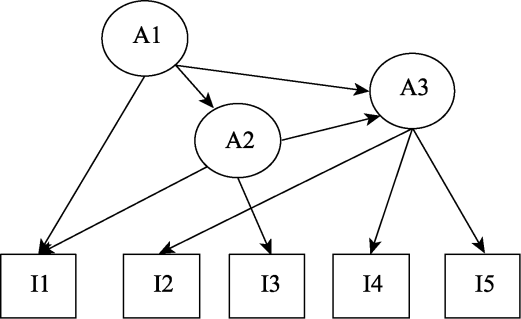
图1 综合表征属性层级关系和Q矩阵的贝叶斯网路结构
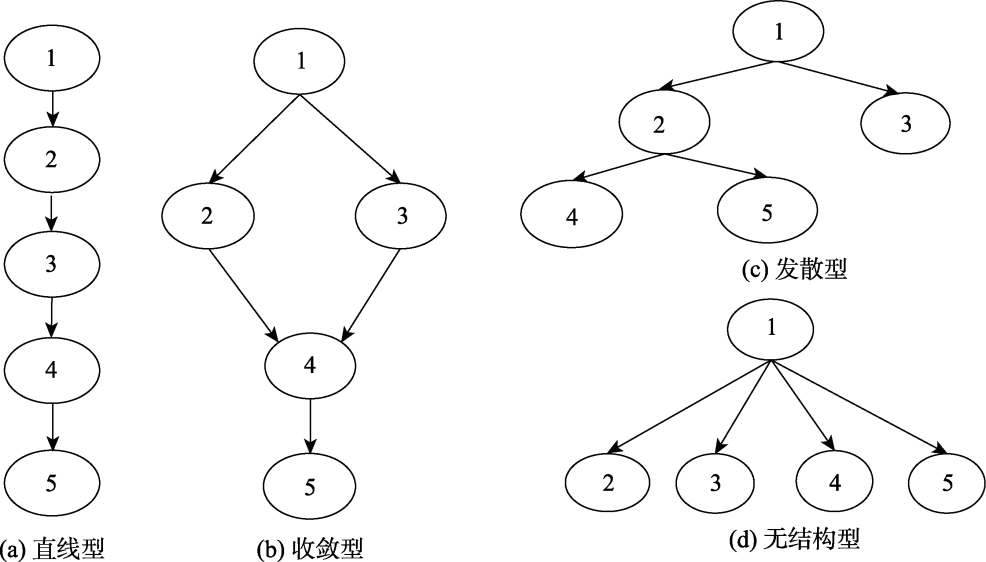
图2 模拟研究设置的5个属性的4种真实的属性层级关系及7个属性的发散结构
| 属性缺失 | 发散型 | 无结构型 | 线性型 | 聚合型 | ||||||
|---|---|---|---|---|---|---|---|---|---|---|
| Q-error | test length | g-s | 2000 | 1000 | 2000 | 1000 | 2000 | 1000 | 2000 | 1000 |
| 0% | 25 | 0.05-0.25 | 100 | 100 | 100 | 100 | 100 | 100 | 100 | 100 |
| 0.05-0.4 | 100 | 100 | 100 | 100 | 100 | 100 | 100 | 100 | ||
| 40 | 0.05-0.25 | 100 | 100 | 100 | 100 | 100 | 100 | 100 | 100 | |
| 0.05-0.4 | 100 | 100 | 100 | 100 | 100 | 100 | 100 | 100 | ||
| 10% | 25 | 0.05-0.25 | 100 | 84 | 100 | 96 | 96 | 92 | 96 | 93 |
| 0.05-0.4 | 90 | 82 | 98 | 96 | 89 | 87 | 96 | 91 | ||
| 40 | 0.05-0.25 | 100 | 100 | 100 | 100 | 100 | 100 | 100 | 100 | |
| 0.05-0.4 | 98 | 92 | 95 | 95 | 96 | 91 | 97 | 93 | ||
| 20% | 25 | 0.05-0.25 | 79 | 75 | 90 | 90 | 81 | 74 | 89 | 83 |
| 0.05-0.4 | 74 | 64 | 82 | 50 | 76 | 66 | 82 | 75 | ||
| 40 | 0.05-0.25 | 91 | 85 | 98 | 95 | 96 | 97 | 98 | 96 | |
| 0.05-0.4 | 82 | 76 | 85 | 57 | 85 | 84 | 88 | 90 | ||
| 30% | 25 | 0.05-0.25 | 70 | 47 | 54 | 56 | 68 | 58 | 64 | 58 |
| 0.05-0.4 | 60 | 30 | 46 | 18 | 64 | 60 | 58 | 54 | ||
| 40 | 0.05-0.25 | 77 | 76 | 75 | 75 | 93 | 84 | 85 | 85 | |
| 0.05-0.4 | 70 | 62 | 53 | 44 | 75 | 72 | 74 | 61 | ||
表1 属性缺失情境下4种层级结构完全正确修正次数(100次)
| 属性缺失 | 发散型 | 无结构型 | 线性型 | 聚合型 | ||||||
|---|---|---|---|---|---|---|---|---|---|---|
| Q-error | test length | g-s | 2000 | 1000 | 2000 | 1000 | 2000 | 1000 | 2000 | 1000 |
| 0% | 25 | 0.05-0.25 | 100 | 100 | 100 | 100 | 100 | 100 | 100 | 100 |
| 0.05-0.4 | 100 | 100 | 100 | 100 | 100 | 100 | 100 | 100 | ||
| 40 | 0.05-0.25 | 100 | 100 | 100 | 100 | 100 | 100 | 100 | 100 | |
| 0.05-0.4 | 100 | 100 | 100 | 100 | 100 | 100 | 100 | 100 | ||
| 10% | 25 | 0.05-0.25 | 100 | 84 | 100 | 96 | 96 | 92 | 96 | 93 |
| 0.05-0.4 | 90 | 82 | 98 | 96 | 89 | 87 | 96 | 91 | ||
| 40 | 0.05-0.25 | 100 | 100 | 100 | 100 | 100 | 100 | 100 | 100 | |
| 0.05-0.4 | 98 | 92 | 95 | 95 | 96 | 91 | 97 | 93 | ||
| 20% | 25 | 0.05-0.25 | 79 | 75 | 90 | 90 | 81 | 74 | 89 | 83 |
| 0.05-0.4 | 74 | 64 | 82 | 50 | 76 | 66 | 82 | 75 | ||
| 40 | 0.05-0.25 | 91 | 85 | 98 | 95 | 96 | 97 | 98 | 96 | |
| 0.05-0.4 | 82 | 76 | 85 | 57 | 85 | 84 | 88 | 90 | ||
| 30% | 25 | 0.05-0.25 | 70 | 47 | 54 | 56 | 68 | 58 | 64 | 58 |
| 0.05-0.4 | 60 | 30 | 46 | 18 | 64 | 60 | 58 | 54 | ||
| 40 | 0.05-0.25 | 77 | 76 | 75 | 75 | 93 | 84 | 85 | 85 | |
| 0.05-0.4 | 70 | 62 | 53 | 44 | 75 | 72 | 74 | 61 | ||
| 属性冗余 | 发散型 | 无结构型 | ||||
|---|---|---|---|---|---|---|
| Q-error | test length | g-s | 2000 | 1000 | 2000 | 1000 |
| 0% | 25 | 0.05-0.25 | 100 | 100 | 100 | 100 |
| 0.05-0.4 | 100 | 100 | 100 | 100 | ||
| 40 | 0.05-0.25 | 100 | 100 | 100 | 100 | |
| 0.05-0.4 | 100 | 100 | 100 | 100 | ||
| 10% | 25 | 0.05-0.25 | 98 | 98 | 100 | 98 |
| 0.05-0.4 | 96 | 92 | 99 | 86 | ||
| 40 | 0.05-0.25 | 100 | 100 | 100 | 93 | |
| 0.05-0.4 | 100 | 100 | 100 | 90 | ||
| 20% | 25 | 0.05-0.25 | 90 | 89 | 90 | 89 |
| 0.05-0.4 | 82 | 64 | 83 | 49 | ||
| 40 | 0.05-0.25 | 100 | 95 | 100 | 87 | |
| 0.05-0.4 | 95 | 93 | 90 | 80 | ||
| 30% | 25 | 0.05-0.25 | 64 | 60 | 63 | 57 |
| 0.05-0.4 | 60 | 54 | 49 | 46 | ||
| 40 | 0.05-0.25 | 80 | 75 | 90 | 80 | |
| 0.05-0.4 | 80 | 65 | 58 | 55 | ||
表2 属性冗余情境下2种层级结构完全正确修正次数(100次)
| 属性冗余 | 发散型 | 无结构型 | ||||
|---|---|---|---|---|---|---|
| Q-error | test length | g-s | 2000 | 1000 | 2000 | 1000 |
| 0% | 25 | 0.05-0.25 | 100 | 100 | 100 | 100 |
| 0.05-0.4 | 100 | 100 | 100 | 100 | ||
| 40 | 0.05-0.25 | 100 | 100 | 100 | 100 | |
| 0.05-0.4 | 100 | 100 | 100 | 100 | ||
| 10% | 25 | 0.05-0.25 | 98 | 98 | 100 | 98 |
| 0.05-0.4 | 96 | 92 | 99 | 86 | ||
| 40 | 0.05-0.25 | 100 | 100 | 100 | 93 | |
| 0.05-0.4 | 100 | 100 | 100 | 90 | ||
| 20% | 25 | 0.05-0.25 | 90 | 89 | 90 | 89 |
| 0.05-0.4 | 82 | 64 | 83 | 49 | ||
| 40 | 0.05-0.25 | 100 | 95 | 100 | 87 | |
| 0.05-0.4 | 95 | 93 | 90 | 80 | ||
| 30% | 25 | 0.05-0.25 | 64 | 60 | 63 | 57 |
| 0.05-0.4 | 60 | 54 | 49 | 46 | ||
| 40 | 0.05-0.25 | 80 | 75 | 90 | 80 | |
| 0.05-0.4 | 80 | 65 | 58 | 55 | ||
| 属性缺失的PCR | 发散型 | 无结构型 | 线性型 | 聚合型 | ||||||
|---|---|---|---|---|---|---|---|---|---|---|
| Q-error | test length | g-s | 2000 | 1000 | 2000 | 1000 | 2000 | 1000 | 2000 | 1000 |
| 10% | 25 | 0.05-0.25 | 0.94 | 0.84 | 0.906 | 0.856 | 0.876 | 0.786 | 0.882 | 0.88 |
| 0.05-0.4 | 0.813 | 0.677 | 0.827 | 0.73 | 0.786 | 0.652 | 0.786 | 0.79 | ||
| 40 | 0.05-0.25 | 0.964 | 0.891 | 0.945 | 0.883 | 0.93 | 0.853 | 0.945 | 0.901 | |
| 0.05-0.4 | 0.859 | 0.794 | 0.76 | 0.624 | 0.825 | 0.7 | 0.863 | 0.77 | ||
| 20% | 25 | 0.05-0.25 | 0.864 | 0.768 | 0.847 | 0.77 | 0.832 | 0.692 | 0.832 | 0.802 |
| 0.05-0.4 | 0.66 | 0.497 | 0.722 | 0.486 | 0.692 | 0.522 | 0.646 | 0.634 | ||
| 40 | 0.05-0.25 | 0.936 | 0.869 | 0.925 | 0.821 | 0.929 | 0.826 | 0.93 | 0.83 | |
| 0.05-0.4 | 0.785 | 0.709 | 0.648 | 0.438 | 0.743 | 0.595 | 0.781 | 0.664 | ||
| 30% | 25 | 0.05-0.25 | 0.695 | 0.559 | 0.602 | 0.577 | 0.608 | 0.536 | 0.616 | 0.658 |
| 0.05-0.4 | 0.541 | 0.307 | 0.419 | 0.279 | 0.441 | 0.371 | 0.451 | 0.437 | ||
| 40 | 0.05-0.25 | 0.825 | 0.689 | 0.823 | 0.715 | 0.835 | 0.784 | 0.798 | 0.778 | |
| 0.05-0.4 | 0.663 | 0.569 | 0.483 | 0.334 | 0.618 | 0.527 | 0.634 | 0.525 | ||
| 属性缺失的AACR | 发散型 | 无结构型 | 线性型 | 聚合型 | ||||||
| Q-error | test length | g-s | 2000 | 1000 | 2000 | 1000 | 2000 | 1000 | 2000 | 1000 |
| 10% | 25 | 0.05-0.25 | 0.988 | 0.967 | 0.98 | 0.97 | 0.975 | 0.954 | 0.976 | 0.975 |
| 0.05-0.4 | 0.958 | 0.93 | 0.964 | 0.942 | 0.956 | 0.915 | 0.952 | 0.952 | ||
| 40 | 0.05-0.25 | 0.993 | 0.976 | 0.989 | 0.977 | 0.986 | 0.968 | 0.989 | 0.978 | |
| 0.05-0.4 | 0.968 | 0.953 | 0.938 | 0.911 | 0.958 | 0.928 | 0.971 | 0.948 | ||
| 20% | 25 | 0.05-0.25 | 0.97 | 0.943 | 0.964 | 0.949 | 0.958 | 0.921 | 0.962 | 0.953 |
| 0.05-0.4 | 0.913 | 0.867 | 0.935 | 0.872 | 0.899 | 0.873 | 0.91 | 0.91 | ||
| 40 | 0.05-0.25 | 0.986 | 0.972 | 0.985 | 0.961 | 0.984 | 0.96 | 0.986 | 0.959 | |
| 0.05-0.4 | 0.948 | 0.927 | 0.908 | 0.849 | 0.932 | 0.897 | 0.945 | 0.918 | ||
| 30% | 25 | 0.05-0.25 | 0.912 | 0.871 | 0.88 | 0.887 | 0.876 | 0.859 | 0.885 | 0.897 |
| 0.05-0.4 | 0.864 | 0.782 | 0.818 | 0.779 | 0.793 | 0.805 | 0.829 | 0.829 | ||
| 40 | 0.05-0.25 | 0.95 | 0.916 | 0.956 | 0.926 | 0.953 | 0.943 | 0.944 | 0.944 | |
| 0.05-0.4 | 0.908 | 0.877 | 0.844 | 0.798 | 0.886 | 0.863 | 0.896 | 0.863 | ||
表3 属性缺失情境下Q矩阵的修正准确率(PCR和AACR)
| 属性缺失的PCR | 发散型 | 无结构型 | 线性型 | 聚合型 | ||||||
|---|---|---|---|---|---|---|---|---|---|---|
| Q-error | test length | g-s | 2000 | 1000 | 2000 | 1000 | 2000 | 1000 | 2000 | 1000 |
| 10% | 25 | 0.05-0.25 | 0.94 | 0.84 | 0.906 | 0.856 | 0.876 | 0.786 | 0.882 | 0.88 |
| 0.05-0.4 | 0.813 | 0.677 | 0.827 | 0.73 | 0.786 | 0.652 | 0.786 | 0.79 | ||
| 40 | 0.05-0.25 | 0.964 | 0.891 | 0.945 | 0.883 | 0.93 | 0.853 | 0.945 | 0.901 | |
| 0.05-0.4 | 0.859 | 0.794 | 0.76 | 0.624 | 0.825 | 0.7 | 0.863 | 0.77 | ||
| 20% | 25 | 0.05-0.25 | 0.864 | 0.768 | 0.847 | 0.77 | 0.832 | 0.692 | 0.832 | 0.802 |
| 0.05-0.4 | 0.66 | 0.497 | 0.722 | 0.486 | 0.692 | 0.522 | 0.646 | 0.634 | ||
| 40 | 0.05-0.25 | 0.936 | 0.869 | 0.925 | 0.821 | 0.929 | 0.826 | 0.93 | 0.83 | |
| 0.05-0.4 | 0.785 | 0.709 | 0.648 | 0.438 | 0.743 | 0.595 | 0.781 | 0.664 | ||
| 30% | 25 | 0.05-0.25 | 0.695 | 0.559 | 0.602 | 0.577 | 0.608 | 0.536 | 0.616 | 0.658 |
| 0.05-0.4 | 0.541 | 0.307 | 0.419 | 0.279 | 0.441 | 0.371 | 0.451 | 0.437 | ||
| 40 | 0.05-0.25 | 0.825 | 0.689 | 0.823 | 0.715 | 0.835 | 0.784 | 0.798 | 0.778 | |
| 0.05-0.4 | 0.663 | 0.569 | 0.483 | 0.334 | 0.618 | 0.527 | 0.634 | 0.525 | ||
| 属性缺失的AACR | 发散型 | 无结构型 | 线性型 | 聚合型 | ||||||
| Q-error | test length | g-s | 2000 | 1000 | 2000 | 1000 | 2000 | 1000 | 2000 | 1000 |
| 10% | 25 | 0.05-0.25 | 0.988 | 0.967 | 0.98 | 0.97 | 0.975 | 0.954 | 0.976 | 0.975 |
| 0.05-0.4 | 0.958 | 0.93 | 0.964 | 0.942 | 0.956 | 0.915 | 0.952 | 0.952 | ||
| 40 | 0.05-0.25 | 0.993 | 0.976 | 0.989 | 0.977 | 0.986 | 0.968 | 0.989 | 0.978 | |
| 0.05-0.4 | 0.968 | 0.953 | 0.938 | 0.911 | 0.958 | 0.928 | 0.971 | 0.948 | ||
| 20% | 25 | 0.05-0.25 | 0.97 | 0.943 | 0.964 | 0.949 | 0.958 | 0.921 | 0.962 | 0.953 |
| 0.05-0.4 | 0.913 | 0.867 | 0.935 | 0.872 | 0.899 | 0.873 | 0.91 | 0.91 | ||
| 40 | 0.05-0.25 | 0.986 | 0.972 | 0.985 | 0.961 | 0.984 | 0.96 | 0.986 | 0.959 | |
| 0.05-0.4 | 0.948 | 0.927 | 0.908 | 0.849 | 0.932 | 0.897 | 0.945 | 0.918 | ||
| 30% | 25 | 0.05-0.25 | 0.912 | 0.871 | 0.88 | 0.887 | 0.876 | 0.859 | 0.885 | 0.897 |
| 0.05-0.4 | 0.864 | 0.782 | 0.818 | 0.779 | 0.793 | 0.805 | 0.829 | 0.829 | ||
| 40 | 0.05-0.25 | 0.95 | 0.916 | 0.956 | 0.926 | 0.953 | 0.943 | 0.944 | 0.944 | |
| 0.05-0.4 | 0.908 | 0.877 | 0.844 | 0.798 | 0.886 | 0.863 | 0.896 | 0.863 | ||
| 属性冗余的PCR | 属性冗余的AACR | |||||||||
|---|---|---|---|---|---|---|---|---|---|---|
| 发散型 | 无结构型 | 发散型 | 无结构型 | |||||||
| Q-error | test length | g-s | 2000 | 1000 | 2000 | 1000 | 2000 | 1000 | 2000 | 1000 |
| 10% | 25 | 0.05-0.25 | 0.929 | 0.861 | 0.909 | 0.854 | 0.985 | 0.971 | 0.982 | 0.969 |
| 0.05-0.4 | 0.81 | 0.678 | 0.826 | 0.711 | 0.957 | 0.929 | 0.964 | 0.937 | ||
| 40 | 0.05-0.25 | 0.968 | 0.909 | 0.953 | 0.88 | 0.993 | 0.98 | 0.991 | 0.976 | |
| 0.05-0.4 | 0.876 | 0.791 | 0.865 | 0.783 | 0.974 | 0.954 | 0.973 | 0.955 | ||
| 20% | 25 | 0.05-0.25 | 0.867 | 0.782 | 0.828 | 0.755 | 0.969 | 0.95 | 0.958 | 0.944 |
| 0.05-0.4 | 0.651 | 0.761 | 0.704 | 0.504 | 0.909 | 0.944 | 0.928 | 0.876 | ||
| 40 | 0.05-0.25 | 0.936 | 0.868 | 0.93 | 0.81 | 0.986 | 0.97 | 0.986 | 0.958 | |
| 0.05-0.4 | 0.814 | 0.695 | 0.8 | 0.703 | 0.955 | 0.925 | 0.958 | 0.935 | ||
| 30% | 25 | 0.05-0.25 | 0.681 | 0.595 | 0.612 | 0.534 | 0.908 | 0.883 | 0.883 | 0.871 |
| 0.05-0.4 | 0.502 | 0.581 | 0.449 | 0.254 | 0.852 | 0.88 | 0.827 | 0.772 | ||
| 40 | 0.05-0.25 | 0.855 | 0.719 | 0.858 | 0.718 | 0.96 | 0.926 | 0.967 | 0.926 | |
| 0.05-0.4 | 0.616 | 0.575 | 0.61 | 0.478 | 0.891 | 0.884 | 0.887 | 0.854 | ||
表4 属性冗余情境下Q矩阵的修正准确率(PCR和AACR)
| 属性冗余的PCR | 属性冗余的AACR | |||||||||
|---|---|---|---|---|---|---|---|---|---|---|
| 发散型 | 无结构型 | 发散型 | 无结构型 | |||||||
| Q-error | test length | g-s | 2000 | 1000 | 2000 | 1000 | 2000 | 1000 | 2000 | 1000 |
| 10% | 25 | 0.05-0.25 | 0.929 | 0.861 | 0.909 | 0.854 | 0.985 | 0.971 | 0.982 | 0.969 |
| 0.05-0.4 | 0.81 | 0.678 | 0.826 | 0.711 | 0.957 | 0.929 | 0.964 | 0.937 | ||
| 40 | 0.05-0.25 | 0.968 | 0.909 | 0.953 | 0.88 | 0.993 | 0.98 | 0.991 | 0.976 | |
| 0.05-0.4 | 0.876 | 0.791 | 0.865 | 0.783 | 0.974 | 0.954 | 0.973 | 0.955 | ||
| 20% | 25 | 0.05-0.25 | 0.867 | 0.782 | 0.828 | 0.755 | 0.969 | 0.95 | 0.958 | 0.944 |
| 0.05-0.4 | 0.651 | 0.761 | 0.704 | 0.504 | 0.909 | 0.944 | 0.928 | 0.876 | ||
| 40 | 0.05-0.25 | 0.936 | 0.868 | 0.93 | 0.81 | 0.986 | 0.97 | 0.986 | 0.958 | |
| 0.05-0.4 | 0.814 | 0.695 | 0.8 | 0.703 | 0.955 | 0.925 | 0.958 | 0.935 | ||
| 30% | 25 | 0.05-0.25 | 0.681 | 0.595 | 0.612 | 0.534 | 0.908 | 0.883 | 0.883 | 0.871 |
| 0.05-0.4 | 0.502 | 0.581 | 0.449 | 0.254 | 0.852 | 0.88 | 0.827 | 0.772 | ||
| 40 | 0.05-0.25 | 0.855 | 0.719 | 0.858 | 0.718 | 0.96 | 0.926 | 0.967 | 0.926 | |
| 0.05-0.4 | 0.616 | 0.575 | 0.61 | 0.478 | 0.891 | 0.884 | 0.887 | 0.854 | ||
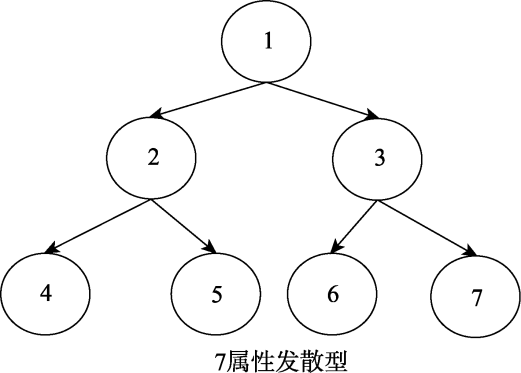
图3 模拟研究设置的7个属性发散结构的属性层级关系
| PCR | 缺失一个边 | 缺失两个边 | 冗余一个边 | 冗余两个边 | 既有缺失 | |
|---|---|---|---|---|---|---|
| Q-error | g-s | 又有冗余 | ||||
| 10% | 0.05-0.25 | 0.849 | 0.859 | 0.836 | 0.861 | 0.846 |
| 0.05-0.4 | 0.767 | 0.724 | 0.71 | 0.705 | 0.713 | |
| 20% | 0.05-0.25 | 0.739 | 0.693 | 0.739 | 0.728 | 0.716 |
| 0.05-0.4 | 0.57 | 0.546 | 0.576 | 0.513 | 0.53 | |
| 30% | 0.05-0.25 | 0.51 | 0.511 | 0.578 | 0.51 | 0.555 |
| 0.05-0.4 | 0.333 | 0.27 | 0.35 | 0.343 | 0.336 | |
| AACR | 缺失一个边 | 缺失两个边 | 冗余一个边 | 冗余两个边 | 既有缺失 | |
| Q-error | g-s | 又有冗余 | ||||
| 10% | 0.05-0.25 | 0.977 | 0.978 | 0.975 | 0.978 | 0.976 |
| 0.05-0.4 | 0.964 | 0.953 | 0.953 | 0.952 | 0.955 | |
| 20% | 0.05-0.25 | 0.952 | 0.941 | 0.951 | 0.95 | 0.946 |
| 0.05-0.4 | 0.914 | 0.912 | 0.919 | 0.904 | 0.909 | |
| 30% | 0.05-0.25 | 0.885 | 0.883 | 0.91 | 0.881 | 0.897 |
| 0.05-0.4 | 0.815 | 0.834 | 0.839 | 0.842 | 0.839 | |
表5 7个属性的发散结构下Q矩阵的修正准确率(样本量 = 2000)
| PCR | 缺失一个边 | 缺失两个边 | 冗余一个边 | 冗余两个边 | 既有缺失 | |
|---|---|---|---|---|---|---|
| Q-error | g-s | 又有冗余 | ||||
| 10% | 0.05-0.25 | 0.849 | 0.859 | 0.836 | 0.861 | 0.846 |
| 0.05-0.4 | 0.767 | 0.724 | 0.71 | 0.705 | 0.713 | |
| 20% | 0.05-0.25 | 0.739 | 0.693 | 0.739 | 0.728 | 0.716 |
| 0.05-0.4 | 0.57 | 0.546 | 0.576 | 0.513 | 0.53 | |
| 30% | 0.05-0.25 | 0.51 | 0.511 | 0.578 | 0.51 | 0.555 |
| 0.05-0.4 | 0.333 | 0.27 | 0.35 | 0.343 | 0.336 | |
| AACR | 缺失一个边 | 缺失两个边 | 冗余一个边 | 冗余两个边 | 既有缺失 | |
| Q-error | g-s | 又有冗余 | ||||
| 10% | 0.05-0.25 | 0.977 | 0.978 | 0.975 | 0.978 | 0.976 |
| 0.05-0.4 | 0.964 | 0.953 | 0.953 | 0.952 | 0.955 | |
| 20% | 0.05-0.25 | 0.952 | 0.941 | 0.951 | 0.95 | 0.946 |
| 0.05-0.4 | 0.914 | 0.912 | 0.919 | 0.904 | 0.909 | |
| 30% | 0.05-0.25 | 0.885 | 0.883 | 0.91 | 0.881 | 0.897 |
| 0.05-0.4 | 0.815 | 0.834 | 0.839 | 0.842 | 0.839 | |
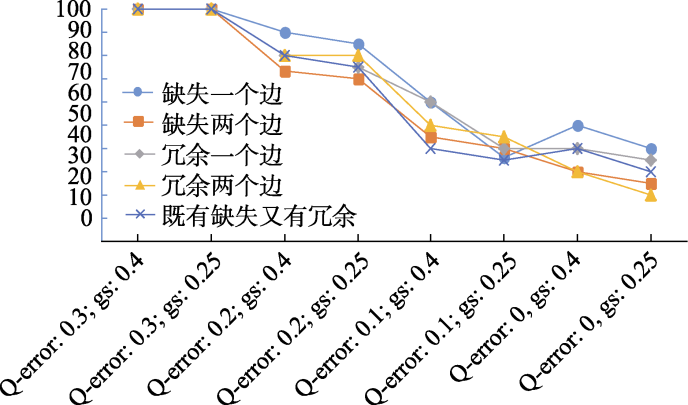
图4 BN对7个属性的发散结构属性层级关系在各种实验条件下的完全修正正确次数(样本量= 2000) (100次实验完全修正正确的次数)
| PCR | 缺失一个边 | 缺失两个边 | 冗余一个边 | 冗余两个边 | 既有缺失 | |
|---|---|---|---|---|---|---|
| Q-error | g-s | 又有冗余 | ||||
| 10% | 0.05-0.25 | 0.728 | 0.745 | 0.728 | 0.735 | 0.646 |
| 0.05-0.4 | 0.738 | 0.731 | 0.653 | 0.695 | 0.638 | |
| 20% | 0.05-0.25 | 0.632 | 0.626 | 0.475 | 0.635 | 0.484 |
| 0.05-0.4 | 0.627 | 0.598 | 0.415 | 0.603 | 0.479 | |
| 30% | 0.05-0.25 | 0.434 | 0.431 | 0.408 | 0.428 | 0.19 |
| 0.05-0.4 | 0.373 | 0.425 | 0.33 | 0.39 | 0.11 | |
| AACR | 缺失一个边 | 缺失两个边 | 冗余一个边 | 冗余两个边 | 既有缺失 | |
| Q-error | g-s | 又有冗余 | ||||
| 10% | 0.05-0.25 | 0.957 | 0.963 | 0.943 | 0.952 | 0.941 |
| 0.05-0.4 | 0.96 | 0.959 | 0.958 | 0.958 | 0.94 | |
| 20% | 0.05-0.25 | 0.932 | 0.931 | 0.799 | 0.928 | 0.897 |
| 0.05-0.4 | 0.931 | 0.928 | 0.887 | 0.929 | 0.897 | |
| 30% | 0.05-0.25 | 0.871 | 0.868 | 0.863 | 0.868 | 0.61 |
| 0.05-0.4 | 0.851 | 0.863 | 0.835 | 0.861 | 0.527 | |
表6 7个属性的发散结构下Q矩阵的修正准确率(样本量 = 1000)
| PCR | 缺失一个边 | 缺失两个边 | 冗余一个边 | 冗余两个边 | 既有缺失 | |
|---|---|---|---|---|---|---|
| Q-error | g-s | 又有冗余 | ||||
| 10% | 0.05-0.25 | 0.728 | 0.745 | 0.728 | 0.735 | 0.646 |
| 0.05-0.4 | 0.738 | 0.731 | 0.653 | 0.695 | 0.638 | |
| 20% | 0.05-0.25 | 0.632 | 0.626 | 0.475 | 0.635 | 0.484 |
| 0.05-0.4 | 0.627 | 0.598 | 0.415 | 0.603 | 0.479 | |
| 30% | 0.05-0.25 | 0.434 | 0.431 | 0.408 | 0.428 | 0.19 |
| 0.05-0.4 | 0.373 | 0.425 | 0.33 | 0.39 | 0.11 | |
| AACR | 缺失一个边 | 缺失两个边 | 冗余一个边 | 冗余两个边 | 既有缺失 | |
| Q-error | g-s | 又有冗余 | ||||
| 10% | 0.05-0.25 | 0.957 | 0.963 | 0.943 | 0.952 | 0.941 |
| 0.05-0.4 | 0.96 | 0.959 | 0.958 | 0.958 | 0.94 | |
| 20% | 0.05-0.25 | 0.932 | 0.931 | 0.799 | 0.928 | 0.897 |
| 0.05-0.4 | 0.931 | 0.928 | 0.887 | 0.929 | 0.897 | |
| 30% | 0.05-0.25 | 0.871 | 0.868 | 0.863 | 0.868 | 0.61 |
| 0.05-0.4 | 0.851 | 0.863 | 0.835 | 0.861 | 0.527 | |
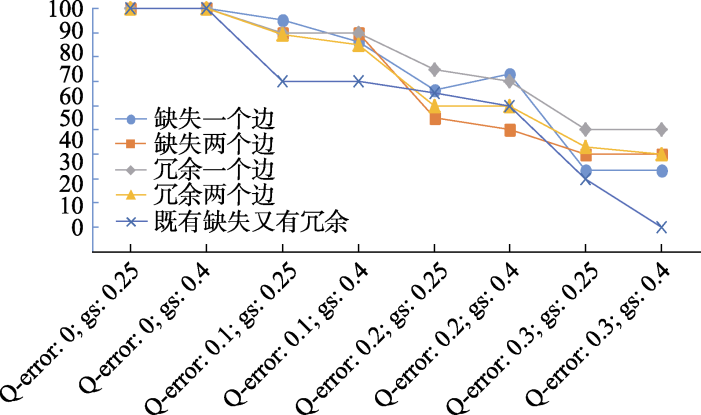
图5 BN对7个属性的发散结构属性层级关系在各种实验条件下的完全修正正确次数(样本量 = 1000) (100次实验完全修正正确的次数)
| 属性层级关系 | Q矩阵 | BIC |
|---|---|---|
| a→b→c | 原始 | 43815.53 |
| a→c, b→c | BN修正 | 44071.94 |
| a→b→c | BN修正 | 43724.51 |
表7 BN对实证数据的模型修正后的拟合指标
| 属性层级关系 | Q矩阵 | BIC |
|---|---|---|
| a→b→c | 原始 | 43815.53 |
| a→c, b→c | BN修正 | 44071.94 |
| a→b→c | BN修正 | 43724.51 |
| [1] | Akaike, H. (1974). A new look at the statistical model identification. IEEE Transactions on Automatic Control, 19(6), 716-723. http://dx.doi.org/10.1109/TAC.1974.1100705 |
| [2] | Cui, Y. (2007). The hierarchy consistency index: Development and analysis [Unpublished doctoral dissertation]. University of Alberta. |
| [3] | Cui, Y., & Leighton, J. P. (2009). The hierarchy consistency index: Evaluating person fit for cognitive diagnostic assessment. Journal of Educational Measurement, 46(4), 429-449. |
| [4] | Chiu, C.-Y. (2013). Statistical refinement of the Q-Matrix in cognitive diagnosis. Applied Psychological Measurement, 37(8), 598-618. https://doi.org/10.1177/0146621613488436 |
| [5] | de la Torre, J. (2008). An empirically based method of Q-matrix validation for the DINA model: Development and applications. Journal of Educational Measurement, 45(4), 346-362. |
| [6] | de la Torre, J. (2009). DINA model and parameter estimation:A didactic. Journal of Educational and Behavioral Statistics, 34(1), 115-130. |
| [7] | de la Torre, J. (2011). The generalized DINA model framework. Psychometrika, 76(2), 179-199. |
| [8] |
de la Torre, J., & Chiu, C. Y. (2016). A general method of empirical Q-matrix validation. Psychometrika, 81(2), 253-273.
doi: 10.1007/s11336-015-9467-8 pmid: 25943366 |
| [9] |
Ding, S. L., Mao, M. M., Wang, W. Y., Luo, F., & Cui, Y. (2012). Evaluating the consistency of test items relative to the cognitive model for educational cognitive diagnosis. Acta Psychologica Sinica, 44(11), 1535-1546.
doi: 10.3724/SP.J.1041.2012.01535 |
| [丁树良, 毛萌萌, 汪文义, 罗芬, Cui, Y. (2012). 教育认知诊断测验与认知模型一致性的评估. 心理学报, 44(11), 1535-1546.] | |
| [10] | Gu, Y., Liu, J., Xu, G., & Ying, Z. (2018). Hypothesis testing of the Q-matrix. Psychometrika, 83(3), 515-537. |
| [11] | Heckerman, D., Geiger, D., & Chickering, D. M. (1995). Learning Bayesian networks: The combination of knowledge and statistical data. Machine Learning, 20(3), 197-243. |
| [12] | Henson, R., Templin, J., & Willse, J. (2009). Defining a family of cognitive diagnosis models using log-linear models with latent variables. Psychometrika, 74(3), 191-210. |
| [13] | Jiang, Y. (2020). Research on the test method of attribute hierarchy based on information matrix [Unpublished doctoral dissertation]. Beijing Normal University. |
| [姜宇. (2020). 基于信息矩阵的属性层级关系检验方法研究(博士学位论文). 北京师范大学.] | |
| [14] |
Kang, C. H., Yang, Y. K., & Zeng, P. H. (2019). Q-matrix refinement based on item fit statistic RMSEA. Applied Psychological Measurement, 43(7), 527-542.
doi: 10.1177/0146621618813104 pmid: 31534288 |
| [15] | Leighton, J. P., & Gierl, M. J.(Eds.). (2007). Cognitive diagnostic assessment for education: Theory and application. Cambridge: Cambridge University Press. |
| [16] |
Li, J., Mao, X., & Wei, J. (2022). A simple and effective new method of Q-matrix validation. Acta Psychologica Sinica, 54(8), 996-1008.
doi: 10.3724/SP.J.1041.2022.00996 |
|
[李佳, 毛秀珍, 韦嘉. (2022). 一种简单有效的Q矩阵修正新方法. 心理学报, 54(8), 996-1008.]
doi: 10.3724/SP.J.1041.2022.00996 |
|
| [17] | Liu, J., Xu, G., & Ying, Z. (2012). Data-driven learning of Q- Matrix. Applied Psychological Measurement, 36(7), 548-564. |
| [18] |
Liu, R., Huggins-Manley, A. C., & Bradshaw, L. (2017). The impact of Q-matrix designs on diagnostic classification accuracy in the presence of attribute hierarchies. Educational and Psychological Measurement, 77(2), 220-240
doi: 10.1177/0013164416645636 pmid: 29795911 |
| [19] |
Liu, Y., & Wu, Q. (2023). An empirical Q-matrix validation method using complete information matrix in cognitive diagnostic models. Acta Psychologica Sinica, 55(1), 142-158.
doi: 10.3724/SP.J.1041.2023.00142 |
|
[刘彦楼, 吴琼琼. (2023). 认知诊断模型Q矩阵修正:完整信息矩阵的作用. 心理学报, 55(1), 142-158.]
doi: 10.3724/SP.J.1041.2023.00142 |
|
| [20] |
Ma, C., Ouyang, J., & Xu, G. (2022). Learning latent and hierarchical structures in cognitive diagnosis models. Psychometrika, 88(1), 175-207.
doi: 10.1007/s11336-022-09867-5 pmid: 35596101 |
| [21] | Ma, W., & de la Torre, J. (2020). An empirical Q-matrix validation method for the sequential generalized DINA model. British Journal of Mathematical and Statistical Psychology, 73(1), 142-163. |
| [22] | Pinheiro, J. C., & Bates, D. M. (1995). Approximations to the log-likelihood function in the nonlinear mixed-effects model. Journal of Computational and Graphical Statistics, 4(1), 12-35. |
| [23] | Rupp, A. A., Templin, J. (2008). The effects of Q-matrix misspecification on parameter estimates and classification accuracy in the DINA model. Educational and Psychological Measurement, 68(1), 78-96. |
| [24] | Schwarz, G. (1978). Estimating the dimension of a model. Annals of Statistics, 6(2), 461-464. |
| [25] | Scutari, M., & Denis, J. B. (2021). Bayesian networks with examples in R. New York: Chapman and Hall/CRC. |
| [26] | Tatsuoka, K. (1985). A probabilistic model for diagnosing misconceptions by the pattern classification approach. Journal of Educational Statistics, 10(1), 55-73. |
| [27] | Tatsuoka, K. K. (1983). Rule space: An approach for dealing with misconceptions based on item response theory. Journal of Educational Measurement, 20(4), 345-354. |
| [28] | Templin, J., & Bradshaw, L. (2014a). Hierarchical diagnostic classification models: A family of models for estimating and testing attribute hierarchies. Psychometrika, 79(2), 317-339. |
| [29] | Templin, J., & Bradshaw, L. (2014b). The use and misuse of psychometric models. Psychometrika, 79(2), 347-354. |
| [30] | Terzi, R., & de la Torre, J. (2018). An iterative method for empirically-based Q-matrix validation. International Journal of Assessment Tools in Education, 5(2), 248-262. |
| [31] | Tu, D. B., Cai, Y., & Dai, H. Q. (2012). A new method of Q- matrix validation based on DINA model. Acta Psychologica Sinica, 44(4), 558-568. |
| [涂冬波, 蔡艳, 戴海琦. (2012). 基于DINA模型的Q矩阵修正方法. 心理学报, 44(4), 558-568.] | |
| [32] | Wang, C., & Gierl, M. (2011). Using the attribute hierarchy method to make diagnostic inferences about examinees' cognitive skills in critical reading. Journal of Educational Measurement, 48(2), 165-187 |
| [33] |
Wang, D., Gao, X., Cai, Y., & Tu, D. (2020). A method of Q-matrix validation for polytomous response cognitive diagnosis model based on relative fit statistics. Acta Psychologica Sinica, 52(1), 93-106.
doi: 10.3724/SP.J.1041.2020.00093 |
|
[汪大勋, 高旭亮, 蔡艳, 涂冬波. (2020). 基于类别水平的多级计分认知诊断Q矩阵修正:相对拟合统计量视角. 心理学报, 52(1), 93-106.]
doi: 10.3724/SP.J.1041.2020.00093 |
|
| [34] | Wang, D. X., Cai, Y., & Tu, D. B. (2020). Q-matrix estimation methods for cognitive diagnosis models: Based on partial known Q-matrix. Multivariate Behavioral Research. https://doi.org/10.1080/00273171.2020.1746901 |
| [35] | Wang, D.-X., Gao, X.-L., Han, Y.-T., & Tu, D.-B. (2018). A simple and effective Q-matrix estimation method: From non-parametric perspective. Journal of Psychological Science, 41(1), 180-188. |
| [汪大勋, 高旭亮, 韩雨婷, 涂冬波. (2018). 一种简单有效的Q矩阵估计方法开发:基于非参数化方法视角. 心理科学, 41(1), 180-188.] | |
| [36] | Wang, C., & Lu, J. (2021). Learning attribute hierarchies from data: Two exploratory approaches. Journal of Educational and Behavioral Statistics, 46(1), 1-27. https://doi.org/10.3102/1076998620931094 |
| [37] | Xu, G., & Shang, Z. (2018). Identifying latent structures in restricted latent class models. Journal of the American Statistical Association, 113(523), 1284-1295. |
| [38] | Xue, W., & Chen, H. G. (2012). Data mining based on Clementine. China Renmin University Press. |
| [薛薇, 陈欢歌. (2012). 基于Clementine的数据挖掘. 中国人民大学出版社.] | |
| [39] | Yu, X. F., & Cheng, Y. (2020). Data- driven Q-matrix validation using a residual-based statistic in cognitive diagnostic assessment. British Journal of Mathematical and Statistical Psychology, 73(Suppl 1), 145-179. |
| [40] | Yu, X. F., Ding, S. L., Qin, C. Y., & Lu, Y. N. (2011). Application of Bayesian networks to identify hierarchical relation among attributes in cognitive diagnosis. Acta Psychologica Sinica, 43(3), 338-346. |
| [喻晓锋, 丁树良, 秦春影, 陆云娜. (2011). 贝叶斯网在认知诊断属性层级结构确定中的应用. 心理学报, 43(3), 338-346.] | |
| [41] | Zhang, L. W., & Guo, H. P. (2006). Introduction to Bayesian networks. Beijing: Science Press. |
| [张连文, 郭海鹏. (2006). 贝叶斯网引论. 北京: 科学出版社.] | |
| [42] | Zhang, X. Q., Jiang, Y., Xin, T., & Liu, Y. L. (2024). Iterative attribute hierarchy exploration methods for cognitive diagnosis models. Journal of Educational and Behavioral Statistics, https://doi.org/10.3102/10769986241268906 |
| [1] | 谭青蓉, 蔡艳, 汪大勋, 罗芬, 涂冬波. CD-CAT中基于SCAD惩罚和EM视角的在线标定方法开发——G-DINA模型[J]. 心理学报, 2024, 56(5): 670-688. |
| [2] | 郭磊, 秦海江. 基于信号检测论的认知诊断评估:构建与应用[J]. 心理学报, 2024, 56(3): 339-351. |
| [3] | 田亚淑, 詹沛达, 王立君. 联合作答精度和作答时间的概率态认知诊断模型[J]. 心理学报, 2023, 55(9): 1573-1586. |
| [4] | 游晓锋, 杨建芹, 秦春影, 刘红云. 认知诊断测评中缺失数据的处理:随机森林阈值插补法[J]. 心理学报, 2023, 55(7): 1192-1206. |
| [5] | 刘彦楼, 陈启山, 王一鸣, 姜晓彤. 模型参数点估计的可靠性:以CDM为例[J]. 心理学报, 2023, 55(10): 1712-1728. |
| [6] | 刘彦楼, 吴琼琼. 认知诊断模型Q矩阵修正:完整信息矩阵的作用[J]. 心理学报, 2023, 55(1): 142-158. |
| [7] | 孙小坚, 郭磊. 考虑题目选项信息的非参数认知诊断计算机自适应测验[J]. 心理学报, 2022, 54(9): 1137-1150. |
| [8] | 李佳, 毛秀珍, 韦嘉. 一种简单有效的Q矩阵修正新方法[J]. 心理学报, 2022, 54(8): 996-1008. |
| [9] | 刘彦楼. 认知诊断模型的标准误与置信区间估计:并行自助法[J]. 心理学报, 2022, 54(6): 703-724. |
| [10] | 宋枝璘, 郭磊, 郑天鹏. 认知诊断缺失数据处理方法的比较:零替换、多重插补与极大似然估计法[J]. 心理学报, 2022, 54(4): 426-440. |
| [11] | 詹沛达. 引入眼动注视点的联合-交叉负载多模态认知诊断建模[J]. 心理学报, 2022, 54(11): 1416-1423. |
| [12] | 郭磊, 周文杰. 基于选项层面的认知诊断非参数方法[J]. 心理学报, 2021, 53(9): 1032-1043. |
| [13] | 谭青蓉, 汪大勋, 罗芬, 蔡艳, 涂冬波. 一种高效的CD-CAT在线标定新方法:基于熵的信息增益与EM视角[J]. 心理学报, 2021, 53(11): 1286-1300. |
| [14] | 罗芬, 王晓庆, 蔡艳, 涂冬波. 基于基尼指数的双目标CD-CAT选题策略[J]. 心理学报, 2020, 52(12): 1452-1465. |
| [15] | 汪大勋, 高旭亮, 蔡艳, 涂冬波. 基于类别水平的多级计分认知诊断Q矩阵修正:相对拟合统计量视角[J]. 心理学报, 2020, 52(1): 93-106. |
| 阅读次数 | ||||||
|
全文 |
|
|||||
|
摘要 |
|
|||||
