

ISSN 0439-755X
CN 11-1911/B
主办:中国心理学会
中国科学院心理研究所
出版:科学出版社
CN 11-1911/B
主办:中国心理学会
中国科学院心理研究所
出版:科学出版社
心理学报 ›› 2025, Vol. 57 ›› Issue (10): 1729-1744.doi: 10.3724/SP.J.1041.2025.1729 cstr: 32110.14.2025.1729
杨鑫超1, 陈燕铃2, 郑俊猛1, 张荣祥1, 牟晓1, 徐强1( )
)
收稿日期:2024-10-24
发布日期:2025-08-15
出版日期:2025-10-25
通讯作者:
徐强, E-mail: xuqiang1117@163.com作者简介:第一联系人:杨鑫超和陈燕铃同为第一作者。
基金资助:
YANG Xinchao1, CHEN Yanling2, ZHENG Junmeng1, ZHANG Rongxiang1, MU Xiao1, XU Qiang1()
Received:2024-10-24
Online:2025-08-15
Published:2025-10-25
摘要:
本研究以稳态视觉诱发电位(SSVEP)作为表征注意分配的神经指标, 通过设置工作记忆负荷间接操纵注意控制能力, 考察高、低社交焦虑个体的动态注意偏向。以不同频率下SSVEP平均波幅的差异反映个体对刺激的选择性注意, 即使用愤怒面孔诱发的SSVEP平均波幅减去中性面孔作为负性注意偏向指标; 快乐面孔诱发的SSVEP平均波幅减去中性面孔作为正性注意偏向指标。 结果发现,在高工作记忆负荷条件下, 高社交焦虑(HSA)组的负性注意偏向指标显著高于低社交焦虑(LSA)组(刺激呈现后的180~1000 ms), 且社交焦虑症状的严重程度显著正向预测负性注意偏向指标; 而在低工作记忆负荷条件下, 两组之间无显著差异。对于正性注意偏向指标, 在低工作记忆负荷条件下, LSA组显著高于HSA组, 而在高工作记忆负荷条件下两组无显著差异。上述结果表明, 社交焦虑个体的负性注意偏向受工作记忆负荷的调节。当工作记忆负荷增加, 即注意控制能力受到实验性抑制时, HSA组会增强并维持对威胁性社会刺激的注意警觉。此外, HSA组还表现出对积极社会刺激的注意不足。综上所述, 本研究结果支持社交焦虑症状的连续性观点, 证明注意控制能力的受损可能是社交焦虑症状产生和发展的重要风险因素。
中图分类号:
杨鑫超, 陈燕铃, 郑俊猛, 张荣祥, 牟晓, 徐强. (2025). 工作记忆负荷对社交焦虑个体注意偏向的调节作用: 来自稳态视觉诱发电位的证据. 心理学报, 57(10), 1729-1744.
YANG Xinchao, CHEN Yanling, ZHENG Junmeng, ZHANG Rongxiang, MU Xiao, XU Qiang. (2025). Working memory load modulates the attentional bias of individuals with social anxiety: Evidence from steady-state visual evoked potentials. Acta Psychologica Sinica, 57(10), 1729-1744.
| 组别 | 年龄(岁) | 性别(男/女) | LSAS | SIAS |
|---|---|---|---|---|
| 高社交焦虑组 (n = 19) | 20.68 (1.87) | 7/12 | 72.21 (18.62) | 41.26 (5.93) |
| 低社交焦虑组 (n = 19) | 21.42 (2.16) | 8/11 | 34.95 (8.08) | 15.11 (5.90) |
| t(36) | - | - | 8.001** | 13.620** |
表1 高、低社交焦虑组的年龄、性别以及LSAS、SIAS的平均得分及标准差
| 组别 | 年龄(岁) | 性别(男/女) | LSAS | SIAS |
|---|---|---|---|---|
| 高社交焦虑组 (n = 19) | 20.68 (1.87) | 7/12 | 72.21 (18.62) | 41.26 (5.93) |
| 低社交焦虑组 (n = 19) | 21.42 (2.16) | 8/11 | 34.95 (8.08) | 15.11 (5.90) |
| t(36) | - | - | 8.001** | 13.620** |
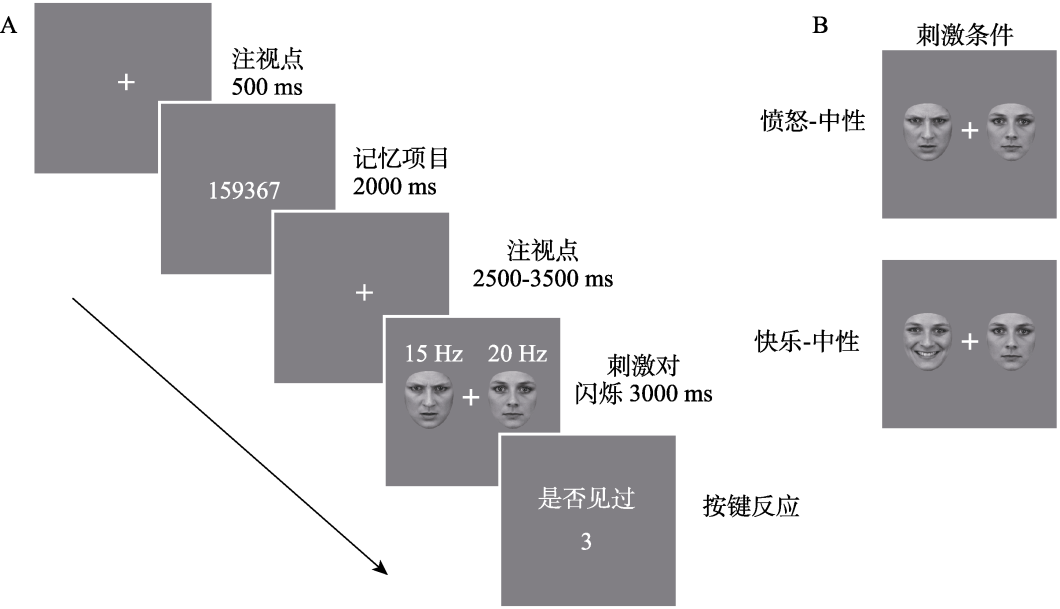
图1 高工作记忆负荷条件下的实验流程图
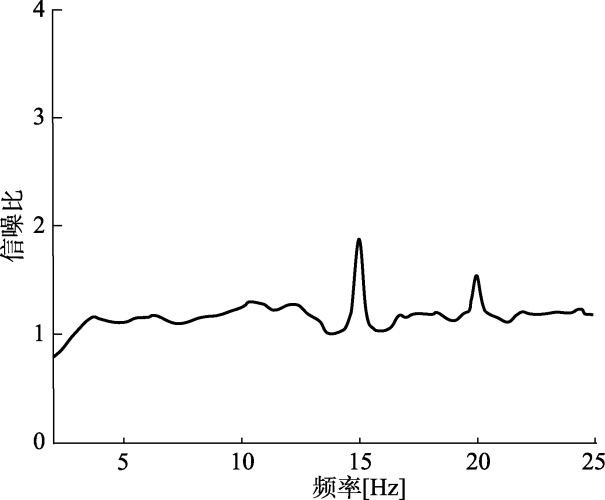
图2 稳态视觉诱发电位在15 Hz和20 Hz驱动频率下的信噪比频谱

图3 负性注意偏向指标结果图。图A为高、低社交焦虑被试分别在高、低工作记忆负荷条件下的负性注意偏向指标的波形图, 阴影部分对应180~500 ms、500~1000 ms、1000~2000 ms的时间窗; 图B为统计结果上存在差异的地形图; 图C为各实验条件下负性注意偏向指标的柱状图(* p < 0.05, *** p < 0.001)。HSA: 高社交焦虑组, LSA: 低社交焦虑组, WM: 工作记忆。彩图见电子版, 下同
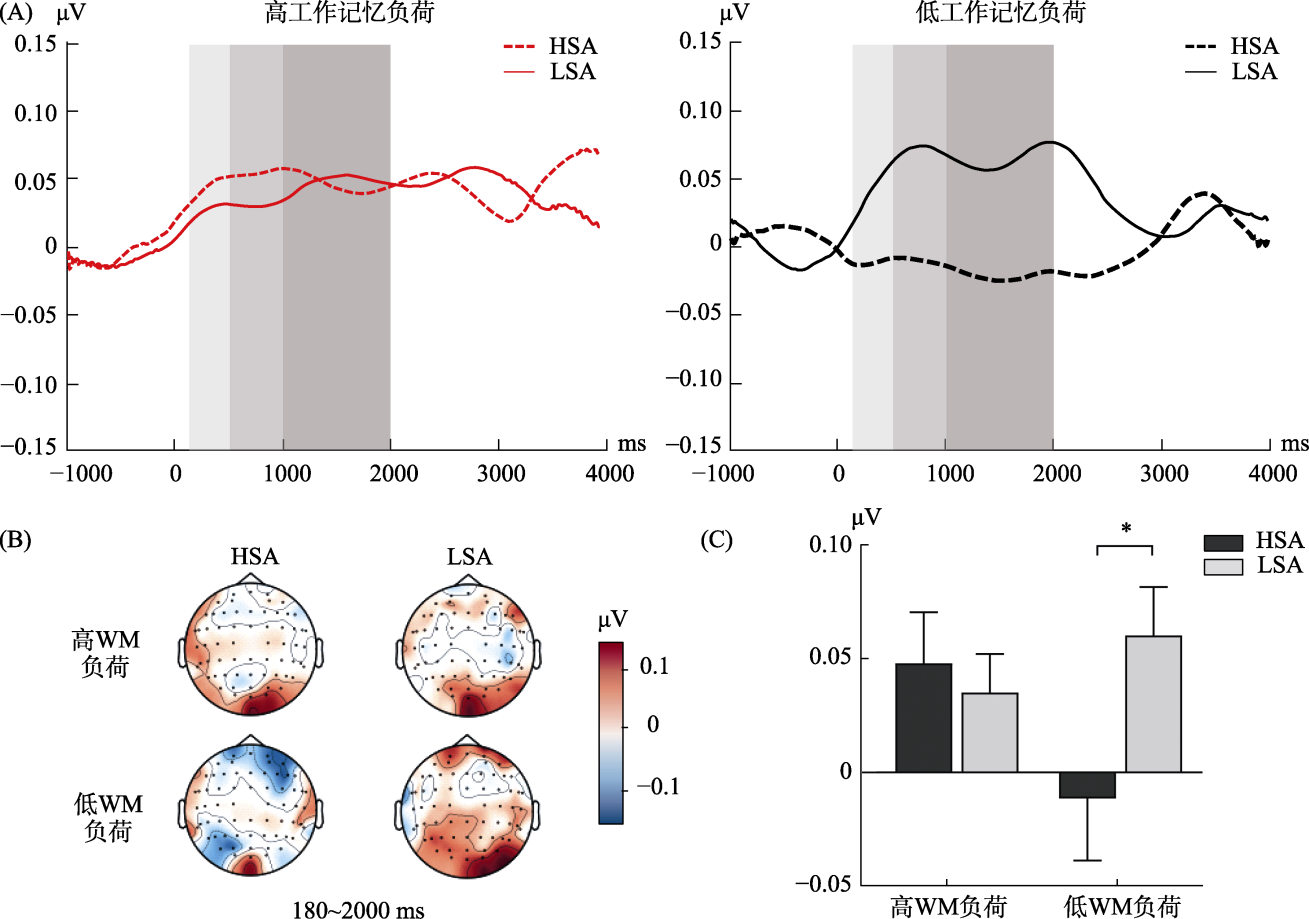
图4 正性注意偏向指标结果图。图A为高、低社交焦虑组分别在高、低工作记忆负荷条件下的正性注意偏向指标的波形图, 阴影部分对应180~500 ms、500~1000 ms、1000~2000 ms的时间窗; 图B为统计结果上存在差异的地形图; 图C为统计结果上存在差异的负性注意偏向指标的柱状图(* p < 0.05)。HSA: 高社交焦虑组, LSA: 低社交焦虑组, WM: 工作记忆。
| 注意偏向 | 高工作记忆负荷 | 低工作记忆负荷 | ||||
|---|---|---|---|---|---|---|
| 180~500 ms | 500~1000 ms | 1000~2000 ms | 180~500 ms | 500~1000 ms | 1000~2000 ms | |
| 负性 | 0.748** | 0.642** | 0.234 | 0.181 | 0.159 | 0.153 |
| 正性 | 0.142 | 0.088 | −0.058 | −0.179 | −0.134 | −0.237 |
表2 LSAS分数与负性、正性注意偏向指标的相关分析
| 注意偏向 | 高工作记忆负荷 | 低工作记忆负荷 | ||||
|---|---|---|---|---|---|---|
| 180~500 ms | 500~1000 ms | 1000~2000 ms | 180~500 ms | 500~1000 ms | 1000~2000 ms | |
| 负性 | 0.748** | 0.642** | 0.234 | 0.181 | 0.159 | 0.153 |
| 正性 | 0.142 | 0.088 | −0.058 | −0.179 | −0.134 | −0.237 |

图5 负性注意偏向指标回归分析结果。纵坐标为平均波幅, 横坐标为LSAS分数。
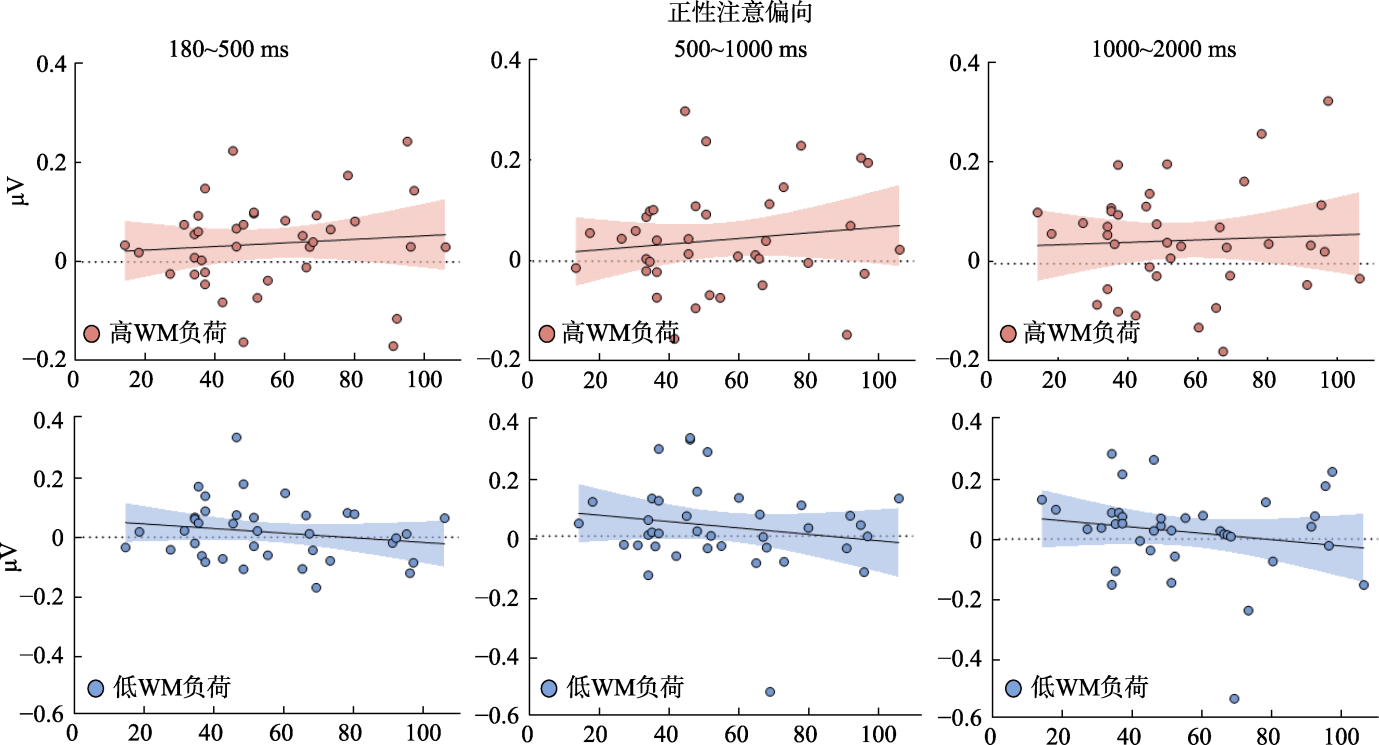
图6 正性注意偏向指标回归分析结果。纵坐标为平均波幅, 横坐标为LSAS分数。
| [1] |
Alden, L. E., Taylor, C. T., Mellings, T. M., & Laposa, J. M. (2008). Social anxiety and the interpretation of positive social events. Journal of Anxiety Disorders, 22(4), 577-590.
pmid: 17587542 |
| [2] | American Psychiatric Association. (2022). Diagnostic and Statistical Manual of Mental Disorders (5th ed, Text Revision). Washington, DC: American Psychiatric Association. |
| [3] |
Amir, N., Kuckertz, J. M., & Strege, M. V. (2016). A pilot study of an adaptive, idiographic, and multi-component attention bias modification program for social anxiety disorder. Cognitive Therapy and Research, 40(5), 661-671.
pmid: 27795598 |
| [4] | Amir, N., Najmi, S., Bomyea, J., & Burns, M. (2010). Disgust and anger in social anxiety. International Journal of Cognitive Therapy, Special Section: Disgust and Psychopathology, 3(1), 3-10. |
| [5] |
Asher, M., Hofmann, S. G., & Aderka, I. M. (2021). I’m not feeling it: Momentary experiential avoidance and social anxiety among individuals with social anxiety disorder. Behavior Therapy, 52(1), 183-194.
doi: 10.1016/j.beth.2020.04.001 pmid: 33483116 |
| [6] | Bas-Hoogendam, J. M., Blackford, J. U., Brühl, A. B., Blair, K. S., van der Wee, N. J., & Westenberg, P. M. (2016). Neurobiological candidate endophenotypes of social anxiety disorder. Neuroscience & Biobehavioral Reviews, 71, 362-378. |
| [7] |
Bekhtereva, V., Craddock, M., & Müller, M. M. (2015). Attentional bias to affective faces and complex IAPS images in early visual cortex follows emotional cue extraction. NeuroImage, 112, 254-266.
doi: S1053-8119(15)00247-5 pmid: 25818682 |
| [8] |
Berggren, N., & Derakshan, N. (2013). Attentional control deficits in trait anxiety: Why you see them and why you don’t. Biological Psychology, 92(3), 440-446.
doi: 10.1016/j.biopsycho.2012.03.007 pmid: 22465045 |
| [9] |
Booth, R. W., Mackintosh, B., & Sharma, D. (2017). Working memory regulates trait anxiety-related threat processing biases. Emotion, 17(4), 616-627.
doi: 10.1037/emo0000264 pmid: 27991817 |
| [10] |
Campagnoli, R. R., Wieser, M. J., Gruss, L. F., Boylan, M. R., McTeague, L. M., & Keil, A. (2019). How the visual brain detects emotional changes in facial expressions: Evidence from driven and intrinsic brain oscillations. Cortex, 111, 35-50.
doi: S0010-9452(18)30332-0 pmid: 30447483 |
| [11] |
Chapman, A., Devue, C., & Grimshaw, G. M. (2019). Fleeting reliability in the dot-probe task. Psychological Research, 83(2), 308-320.
doi: 10.1007/s00426-017-0947-6 pmid: 29159699 |
| [12] |
Chen, N. T., Clarke, P. J., MacLeod, C., & Guastella, A. J. (2012). Biased attentional processing of positive stimuli in social anxiety disorder: An eye movement study. Cognitive Behaviour Therapy, 41(2), 96-107.
doi: 10.1080/16506073.2012.666562 pmid: 22489625 |
| [13] | Chen, X. Y., Cheng, Z, J., Hu, C. M., Liang, T. F., & Liu, Q.(2020). Steady-state visual evoked potential and its applications in studying visual selective attention. Chinese Science Bulletin, 65(24), 2601-2614. |
| [陈晓宇, 程子健, 胡成谧, 梁腾飞, 刘强. (2020). 稳态视觉诱发电位及其在视觉选择性注意研究中的应用. 科学通报, 65(24), 2601-2614.] | |
| [14] | Das, A., Nandi, N., & Ray, S. (2024). Alpha and SSVEP power outperform gamma power in capturing attentional modulation in human EEG. Cerebral Cortex, 34(1), bhad412. https://doi.org/10.1093/cercor/bhad412 |
| [15] | Davidson, M. J., Mithen, W., Hogendoorn, H., Van Boxtel, J. J., & Tsuchiya, N. (2020). The SSVEP tracks attention, not consciousness, during perceptual filling-in. Elife, 9, e60031. https://doi.org/10.7554/eLife.60031 |
| [16] |
Dennis-Tiwary, T. A., Roy, A. K., Denefrio, S., & Myruski, S. (2019). Heterogeneity of the anxiety-related attention bias: A review and working model for future research. Clinical Psychological Science, 7(5), 879-899.
doi: 10.1177/2167702619838474 |
| [17] |
Derryberry, D., & Reed, M. A. (2002). Anxiety-related attentional biases and their regulation by attentional control. Journal of Abnormal Psychology, 111(2), 225-236.
doi: 10.1037//0021-843x.111.2.225 pmid: 12003445 |
| [18] |
Doehrmann, O., Ghosh, S. S., Polli, F. E., Reynolds, G. O., Horn, F., Keshavan, A., ... Gabrieli, J. D. (2013). Predicting treatment response in social anxiety disorder from functional magnetic resonance imaging. JAMA Psychiatry, 70(1), 87-97.
doi: 10.1001/2013.jamapsychiatry.5 pmid: 22945462 |
| [19] | Draheim, C., Pak, R., Draheim, A. A., & Engle, R. W. (2022). The role of attention control in complex real-world tasks. Psychonomic Bulletin & Review, 29(4), 1143-1197. |
| [20] | Eysenck, M. W., & Derakshan, N. (2011). New perspectives in attentional control theory. Personality and Individual Differences, 50(7), 955-960. |
| [21] |
Eysenck, M. W., Derakshan, N., Santos, R., & Calvo, M. G. (2007). Anxiety and cognitive performance: Attentional control theory. Emotion, 7(2), 336-353.
doi: 10.1037/1528-3542.7.2.336 pmid: 17516812 |
| [22] | Eysenck, M. W., Moser, J. S., Derakshan, N., Hepsomali, P., & Allen, P. (2023). A neurocognitive account of attentional control theory: How does trait anxiety affect the brain’s attentional networks?. Cognition and Emotion, 37(2), 220-237. |
| [23] | Faul, F., Erdfelder, E., Lang, A.-G., & Buchner, A. (2007). G* Power 3: A flexible statistical power analysis program for the social, behavioral, and biomedical sciences. Behavior Research Methods, 39(2), 175-191. |
| [24] |
Filho, A. S., Hetem, L. A., Ferrari, M. C., Trzesniak, C., Martín-Santos, R., Borduqui, T., ... Crippa, J. A. D. S. (2010). Social anxiety disorder: What are we losing with the current diagnostic criteria?. Acta Psychiatrica Scandinavica, 121(3), 216-226.
doi: 10.1111/j.1600-0447.2009.01459.x pmid: 19694635 |
| [25] | Garcia, S. E., Francis, S. M., Tone, E. B., & Tully, E. C. (2019). Understanding associations between negatively biased attention and depression and social anxiety: Positively biased attention is key. Anxiety, Stress, & Coping, 32(6), 611-625. |
| [26] | Gilbert, P. (2001). Evolution and social anxiety: The role of attraction, social competition, and social hierarchies. Psychiatric Clinics, 24(4), 723-751. |
| [27] | Gilboa-Schechtman, E., Shachar, I., & Helpman, L. (2014). Chapter 21—Evolutionary perspective on social anxiety. In S. G. Hofmann & P. M. DiBartolo (Eds.), Social anxiety (3rd ed., pp. 599-622). Academic Press. |
| [28] | Goeleven, E., De Raedt, R., Leyman, L., & Verschuere, B. (2008). The Karolinska directed emotional faces: A validation study. Cognition and Emotion, 22(6), 1094-1118. |
| [29] |
Gramfort, A., Luessi, M., Larson, E., Engemann, D. A., Strohmeier, D., Brodbeck, C., ... Parkkonen, L. (2013). MEG and EEG data analysis with MNE-Python. Frontiers in Neuroscience, 7, 267. https://doi.org/10.3389/fnins.2013.00267
doi: 10.3389/fnins.2013.00267 URL pmid: 24431986 |
| [30] | He, Y. L., & Zhang, M. Y. (2004). Psychometric investigation of Liebowitz Social Anxiety Scale. Journal of Diagnostics Concepts & Practice, 3(2), 89-93. |
| [何燕玲, 张明园. (2004). Liebowitz社交焦虑量表的信度和效度研究. 诊断学理论与实践, 3(2), 89-93.] | |
| [31] |
Heeren, A., Billieux, J., Philippot, P., De Raedt, R., Baeken, C., de Timary, P., ... Vanderhasselt, M. A. (2017). Impact of transcranial direct current stimulation on attentional bias for threat: A proof-of-concept study among individuals with social anxiety disorder. Social Cognitive and Affective Neuroscience, 12(2), 251-260.
doi: 10.1093/scan/nsw119 pmid: 27531388 |
| [32] | Jayakar, R., Tone, E. B., Crosson, B., Turner, J. A., Anderson, P. L., Phan, K. L., & Klumpp, H. (2020). Amygdala volume and social anxiety symptom severity: Does segmentation technique matter?. Psychiatry Research: Neuroimaging, 295, 111006. https://doi.org/10.1016/j.pscychresns.2019.111006 |
| [33] | Jefferies, P., & Ungar, M. (2020). Social anxiety in young people: A prevalence study in seven countries. PloS One, 15(9), e0239133. https://doi.org/10.1371/journal.pone.0239133 |
| [34] |
Jiang, J. Q., Wang, H. Y., & Qian, Y. M. (2019). Dynamic attention bias in social anxiety. Advances in Psychological Science, 27(11), 1887-1895.
doi: 10.3724/SP.J.1042.2019.01887 |
|
[蒋婧琪, 王浩宇, 钱铭怡. (2019). 社交焦虑注意偏向的动态变化. 心理科学进展, 27(11), 1887-1895.]
doi: 10.3724/SP.J.1042.2019.01887 |
|
| [35] | Judah, M. R., Grant, D. M., Lechner, W. V., & Mills, A. C. (2013). Working memory load moderates late attentional bias in social anxiety. Cognition and Emotion, 27(3), 502-511. |
| [36] |
Kashdan, T. B., & Breen, W. E. (2008). Social anxiety and positive emotions: A prospective examination of a self-regulatory model with tendencies to suppress or express emotions as a moderating variable. Behavior Therapy, 39(1), 1-12.
doi: 10.1016/j.beth.2007.02.003 pmid: 18328865 |
| [37] | Kritzman, L., Eidelman-Rothman, M., Keil, A., Freche, D., Sheppes, G., & Levit-Binnun, N. (2022). Steady-state visual evoked potentials differentiate between internally and externally directed attention. NeuroImage, 254, 119133. https://doi.org/10.1016/j.neuroimage.2022.119133 |
| [38] | Lavie, N., Hirst, A., de Fockert, J. W., & Viding, E. (2004). Load theory of selective attention and cognitive control. Journal of Experimental Psychology: General, 133, 339-354. |
| [39] |
Lazarov, A., Abend, R., & Bar-Haim, Y. (2016). Social anxiety is related to increased dwell time on socially threatening faces. Journal of Affective Disorders, 193, 282-288.
doi: 10.1016/j.jad.2016.01.007 pmid: 26774515 |
| [40] | Leichsenring, F., & Leweke, F. (2017). Social anxiety disorder. New England Journal of Medicine, 376(23), 2255-2264. |
| [41] | Liang, C. W. (2021). Inhibitory attentional control under cognitive load in social anxiety: An investigation using a novel dual-task paradigm. Behaviour Research and Therapy, 144, 103925. https://doi.org/10.1016/j.brat.2021.103925 |
| [42] |
Liebowitz, M. R. (1987). Social phobia. Modern Problems of Pharmacopsychiatry, 22, 141-173.
pmid: 2885745 |
| [43] |
MacLeod, C., Grafton, B., & Notebaert, L. (2019). Anxiety- linked attentional bias: Is it reliable? Annual Review of Clinical Psychology, 15, 529-554.
doi: 10.1146/annurev-clinpsy-050718-095505 pmid: 30649926 |
| [44] |
Mattick, R. P., & Clarke, J. C. (1998). Development and validation of measures of social phobia scrutiny fear and social interaction anxiety. Behaviour Research and Therapy, 36(4), 455-470.
doi: 10.1016/s0005-7967(97)10031-6 pmid: 9670605 |
| [45] |
McTeague, L. M., Laplante, M.-C., Bulls, H. W., Shumen, J. R., Lang, P. J., & Keil, A. (2018). Face perception in social anxiety: Visuocortical dynamics reveal propensities for hypervigilance or avoidance. Biological Psychiatry, 83(7), 618-628.
doi: S0006-3223(17)32060-7 pmid: 29157845 |
| [46] |
McTeague, L. M., Shumen, J. R., Wieser, M. J., Lang, P. J., & Keil, A. (2011). Social vision: Sustained perceptual enhancement of affective facial cues in social anxiety. NeuroImage, 54(2), 1615-1624.
doi: 10.1016/j.neuroimage.2010.08.080 pmid: 20832490 |
| [47] |
Mogg, K., & Bradley, B. P. (2018). Anxiety and threat-related attention: Cognitive-motivational framework and treatment. Trends in Cognitive Sciences, 22(3), 225-240.
doi: S1364-6613(18)30001-9 pmid: 29402737 |
| [48] | Mogg, K., Bradley, B., Miles, F., & Dixon, R. (2004). Brief report time course of attentional bias for threat scenes: Testing the vigilance-avoidance hypothesis. Cognition and Emotion, 18(5), 689-700. |
| [49] | Morrison, A. S., & Heimberg, R. G. (2013). Social anxiety and social anxiety disorder. Annual Review of Clinical Psychology, 9(1), 249-274. |
| [50] |
Müller, M. M., & Hillyard, S. (2000). Concurrent recording of steady-state and transient event-related potentials as indices of visual-spatial selective attention. Clinical Neurophysiology, 111(9), 1544-1552.
pmid: 10964063 |
| [51] |
Norcia, A. M., Appelbaum, L. G., Ales, J. M., Cottereau, B. R., & Rossion, B. (2015). The steady-state visual evoked potential in vision research: A review. Journal of Vision, 15(6), 4-4.
doi: 10.1167/15.6.4 pmid: 26024451 |
| [52] | Norton, A. R., & Abbott, M. J. (2016). Self-focused cognition in social anxiety: A review of the theoretical and empirical literature. Behaviour Change, 33(1), 44-64. |
| [53] |
Parsaei, M., Hasehmi, S. M., Seyedmirzaei, H., Cattarinussi, G., Sambataro, F., Brambilla, P., & Delvecchio, G. (2024). Microstructural white matter alterations associated with social anxiety disorders: A systematic review. Journal of Affective Disorders, 350, 78-88.
doi: 10.1016/j.jad.2024.01.118 pmid: 38220105 |
| [54] | Peirce, J. W. (2009). Generating stimuli for neuroscience using PsychoPy. Frontiers in Neuroinformatics, 2, 10. https://doi.org/10.3389/neuro.11.010.2008 |
| [55] | Quigley, L., Wright, C. A., Dobson, K. S., & Sears, C. R. (2017). Measuring attentional control ability or beliefs? Evaluation of the factor structure and convergent validity of the attentional control scale. Journal of Psychopathology and Behavioral Assessment, 39(4), 742-754. |
| [56] |
Radtke, E. L., Martens, U., & Gruber, T. (2021). The steady-state visual evoked potential (SSVEP) reflects the activation of cortical object representations: Evidence from semantic stimulus repetition. Experimental Brain Research, 239(2), 545-555.
doi: 10.1007/s00221-020-05992-8 pmid: 33315126 |
| [57] |
Ran, G., & Chen, X. (2017). The impact of top-down prediction on emotional face processing in social anxiety. Frontiers in Psychology, 8, 1269. https://doi.org/10.3389/fpsyg.2017.01269
doi: 10.3389/fpsyg.2017.01269 URL pmid: 28790960 |
| [58] |
Ruscio, A. M. (2010). The latent structure of social anxiety disorder: Consequences of shifting to a dimensional diagnosis. Journal of Abnormal Psychology, 119(4), 662-671.
doi: 10.1037/a0019341 pmid: 20853918 |
| [59] |
Rytwinski, N. K., Fresco, D. M., Heimberg, R. G., Coles, M. E., Liebowitz, M. R., Cissell, S., ... Hofmann, S. G. (2009). Screening for social anxiety disorder with the self-report version of the Liebowitz Social Anxiety Scale. Depression and Anxiety, 26(1), 34-38.
doi: 10.1002/da.20503 pmid: 18781659 |
| [60] | Schofield, C. A., Johnson, A. L., Inhoff, A. W., & Coles, M. E. (2012). Social anxiety and difficulty disengaging threat: Evidence from eye-tracking. Cognition and Emotion, 26(2), 300-311. |
| [61] | Shi, R., Sharpe, L., & Abbott, M. (2019). A meta-analysis of the relationship between anxiety and attentional control. Clinical Psychology Review, 72, 101754. https://doi.org/10.1016/j.cpr.2019.101754 |
| [62] | Shipstead, Z., Harrison, T. L., & Engle, R. W. (2015). Working memory capacity and the scope and control of attention. Attention, Perception, & Psychophysics, 77, 1863-1880. |
| [63] | Silvia, P. J., Allan, W. D., Beauchamp, D. L., Maschauer, E. L., & Workman, J. O. (2006). Biased recognition of happy facial expressions in social anxiety. Journal of Social and Clinical Psychology, 25(6), 585-602. |
| [64] |
Spence, S. H., & Rapee, R. M. (2016). The etiology of social anxiety disorder: An evidence-based model. Behaviour Research and Therapy, 86, 50-67.
doi: S0005-7967(16)30111-5 pmid: 27406470 |
| [65] | Stegmann, Y., Ahrens, L., Pauli, P., Keil, A., & Wieser, M. J. (2020). Social aversive generalization learning sharpens the tuning of visuocortical neurons to facial identity cues. Elife, 9, e55204. https://doi.org/10.7554/eLife.55204 |
| [66] | Stein, D. J., Lim, C. C., Roest, A. M., De Jonge, P., Aguilar-Gaxiola, S., Al-Hamzawi, A., ... WHO World Mental Health Survey Collaborators. (2017). The cross- national epidemiology of social anxiety disorder: Data from the World Mental Health Survey Initiative. BMC Medicine, 15, 1-21. |
| [67] | Stein, M. B., & Stein, D. J. (2008). Social anxiety disorder. The Lancet, 371(9618), 1115-1125. |
| [68] |
Taylor, C. T., Cross, K., & Amir, N. (2016). Attentional control moderates the relationship between social anxiety symptoms and attentional disengagement from threatening information. Journal of Behavior Therapy and Experimental Psychiatry, 50, 68-76.
doi: 10.1016/j.jbtep.2015.05.008 pmid: 26072705 |
| [69] | Thigpen, N. N., Gruss, L. F., Garcia, S., Herring, D. R., & Keil, A. (2018). What does the dot-probe task measure? A reverse correlation analysis of electrocortical activity. Psychophysiology, 55(6), e13058. https://doi.org/10.1111/psyp.13058 |
| [70] |
Trew, J. L., & Alden, L. E. (2012). Positive affect predicts avoidance goals in social interaction anxiety: Testing a hierarchical model of social goals. Cognitive Behaviour Therapy, 41(2), 174-183.
doi: 10.1080/16506073.2012.663402 pmid: 22489603 |
| [71] | Todd, J., Notebaert, L., & Clarke, P. J. (2022). The association between self-report and behavioural measure of attentional control: Evidence of no relationship between ACS scores and antisaccade performance. Personality and Individual Differences, 184, 111168. https://doi.org/10.1016/j.paid.2021.111168 |
| [72] |
Wang, X., & Han, S. (2021). Processing of facial expressions of same-race and other-race faces: Distinct and shared neural underpinnings. Social Cognitive and Affective Neuroscience, 16(6), 576-592.
doi: 10.1093/scan/nsab027 pmid: 33624818 |
| [73] |
Weeks, J. W. (2015). Replication and extension of a hierarchical model of social anxiety and depression: Fear of positive evaluation as a key unique factor in social anxiety. Cognitive Behaviour Therapy, 44(2), 103-116.
doi: 10.1080/16506073.2014.990050 pmid: 25530031 |
| [74] |
Wen, F., Zuo, B., Ma, S., & Xie, Z. (2020). Own-group bias in face recognition. Advances in Psychological Science, 28(7), 1164-1171.
doi: 10.3724/SP.J.1042.2020.01164 |
|
[温芳芳, 佐斌, 马书瀚, 谢志杰. (2020). 面孔识别的自我群体偏向. 心理科学进展, 28(7), 1164-1171 ]
doi: 10.3724/SP.J.1042.2020.01164 |
|
| [75] |
Wieser, M. J., & Keil, A. (2020). Attentional threat biases and their role in anxiety: A neurophysiological perspective. International Journal of Psychophysiology, 153, 148-158.
doi: S0167-8760(20)30119-7 pmid: 32428525 |
| [76] |
Wieser, M. J., McTeague, L. M., & Keil, A. (2011). Sustained preferential processing of social threat cues: Bias without competition? Journal of Cognitive Neuroscience, 23(8), 1973-1986.
doi: 10.1162/jocn.2010.21566 pmid: 20807057 |
| [77] |
Wieser, M. J., McTeague, L. M., & Keil, A. (2012). Competition effects of threatening faces in social anxiety. Emotion, 12(5), 1050-1060.
doi: 10.1037/a0027069 pmid: 22390712 |
| [78] |
Wieser, M. J., Miskovic, V., & Keil, A. (2016). Steady-state visual evoked potentials as a research tool in social affective neuroscience. Psychophysiology, 53(12), 1763-1775.
doi: 10.1111/psyp.12768 pmid: 27699794 |
| [79] |
Wong, Q. J., & Rapee, R. M. (2016). The aetiology and maintenance of social anxiety disorder: A synthesis of complimentary theoretical models and formulation of a new integrated model. Journal of Affective Disorders, 203, 84-100.
doi: S0165-0327(16)30430-X pmid: 27280967 |
| [80] | Ye, D. M., Qian, Y. M., Liu, X. H., & Chen, X. (2007). Revision of social interaction anxiety scale and social phobia scale. Chinese Journal of Clinical Psychology, 15(2), 115-117. |
| [叶冬梅, 钱铭怡, 刘兴华, 陈曦. (2007). 社会交往焦虑量表和社交恐惧量表的修订. 中国临床心理学杂志, 15(2), 115-117.] | |
| [81] |
Ye, Y., Lin, R., & Yan, Y. (2021). Tall trees catch much wind: Fear of positive evaluation in social anxiety. Advances in Psychological Science, 29(6), 1056-1066.
doi: 10.3724/SP.J.1042.2021.01056 |
|
[叶友才, 林荣茂, 严由伟. (2021). 树大招风: 社交焦虑者的正性评价恐惧. 心理科学进展, 29(6), 1056-1066 ]
doi: 10.3724/SP.J.1042.2021.01056 |
|
| [82] |
Zheng, J., Cao, F., Chen, Y., Yu, L., Yang, Y., Katembu, S., & Xu, Q. (2023). Time course of attentional bias in social anxiety: Evidence from visuocortical dynamics. International Journal of Psychophysiology, 184, 110-117.
doi: 10.1016/j.ijpsycho.2023.01.002 pmid: 36621629 |
| [1] | 耿莉, 冯秋阳, 李彧, 邱江. 反刍思维对社交焦虑的影响:消极自我信念的作用[J]. 心理学报, 2025, 57(5): 792-804. |
| [2] | 冯彪, 张栋桓, 陈伟, 曾灵, 吴潇悦, 黄君琳, 郑希付. 知觉还是概念?先前学习经验对恐惧泛化路径的调节[J]. 心理学报, 2025, 57(12): 2100-2115. |
| [3] | 王伟晗, 曹斐臻, 余林伟, 曾珂, 杨鑫超, 徐强. 群体信息对面部表情识别的影响[J]. 心理学报, 2024, 56(3): 268-280. |
| [4] | 尹华站, 张丽, 刘鹏玉, 李丹. 负性情绪的动机维度对时距知觉的影响:注意控制和注意偏向的中介作用[J]. 心理学报, 2023, 55(12): 1917-1931. |
| [5] | 陈必忠, 黄璇, 牛更枫, 孙晓军, 蔡志慧. 学步期至青年期社交焦虑的发展轨迹和稳定性:一项基于纵向研究的三水平元分析[J]. 心理学报, 2023, 55(10): 1637-1652. |
| [6] | 彭宇彬, 宛小昂. 视觉搜索中风味引发对关联颜色的注意偏向[J]. 心理学报, 2022, 54(7): 736-747. |
| [7] | 李婉悦, 刘燊, 韩尚锋, 张林, 徐强. 特质焦虑在面部表情前注意加工阶段的影响:来自ERP的证据[J]. 心理学报, 2022, 54(1): 1-11. |
| [8] | 张妮, 刘文, 刘方, 郭鑫. 8~12岁儿童抑郁与认知重评的关系:悲伤面孔注意偏向的中介作用[J]. 心理学报, 2022, 54(1): 25-39. |
| [9] | 熊承清, 许佳颖, 马丹阳, 刘永芳. 囚徒困境博弈中对手面部表情对合作行为的影响及其作用机制[J]. 心理学报, 2021, 53(8): 919-932. |
| [10] | 侯娟, 朱英格, 方晓义. 手机成瘾与抑郁:社交焦虑和负性情绪信息注意偏向的多重中介作用[J]. 心理学报, 2021, 53(4): 362-373. |
| [11] | 华艳, 李明霞, 王巧婷, 冯彩霞, 张晶. 左侧眶额皮层在自动情绪调节下注意选择中的作用:来自经颅直流电刺激的证据[J]. 心理学报, 2020, 52(9): 1048-1056. |
| [12] | 雷怡, 夏琦, 莫志凤, 李红. 面孔可爱度和客观熟悉度对婴儿面孔注意偏向效应的影响[J]. 心理学报, 2020, 52(7): 811-822. |
| [13] | 任志洪, 赵子仪, 余香莲, 赵春晓, 张琳, 林羽中, 张微. 睾酮素与反社会倾向未成年犯的攻击行为:敌意注意偏向的中介和皮质醇的调节作用[J]. 心理学报, 2020, 52(11): 1288-1300. |
| [14] | 李婉悦, 韩尚锋, 刘燊, 杨亚平, 张林, 徐强. 场景对面孔情绪探测的影响:特质性焦虑的调节作用[J]. 心理学报, 2019, 51(8): 869-878. |
| [15] | 刘静远, 李虹. 状态焦虑对时距知觉的影响:认知评价和注意偏向有调节的中介作用[J]. 心理学报, 2019, 51(7): 747-758. |
| 阅读次数 | ||||||
|
全文 |
|
|||||
|
摘要 |
|
|||||
