

ISSN 1671-3710
CN 11-4766/R
主办:中国科学院心理研究所
出版:科学出版社
CN 11-4766/R
主办:中国科学院心理研究所
出版:科学出版社
Advances in Psychological Science ›› 2020, Vol. 28 ›› Issue (5): 833-843.doi: 10.3724/SP.J.1042.2020.00833
• Regular Articles • Previous Articles Next Articles
LEI Liang( ), WANG Jingyu, LIU Wumei
Received:2019-05-13
Online:2020-04-26
Published:2020-03-27
Contact:
LEI Liang
E-mail:leil@lzu.edu.cn
CLC Number:
LEI Liang, WANG Jingyu, LIU Wumei. The effect of scarcity on individuals’ psychology and behavior: An explanation from a more integrated perspective[J]. Advances in Psychological Science, 2020, 28(5): 833-843.
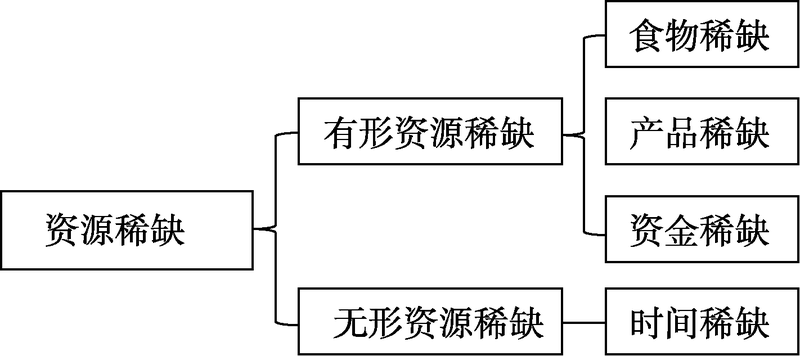
| 研究阶段 | 研究领域 | 研究内容及结论 | 代表性研究 |
|---|---|---|---|
| 第一阶段: 20世纪50年代至今 | 食物稀缺 | 食物稀缺情况下食物的发放问题 | Keys et al., 1950 |
| 食物稀缺会使消费者产生不耐烦的情绪 | Read & van Leeuwen, 1998 | ||
| 食物稀缺导致对非食物目标的追求 | Xu et al., 2015 | ||
| 第二阶段: 20世纪70年代前后至今 | 产品稀缺 | 商品理论:稀缺性提高产品的价值 | Brock, 1968; Inman, et al., 1997 |
| 商品理论在营销中的应用 | Lynn, 1991 | ||
| 产品稀缺影响购买意愿 | Bozzolo & Brock, 1992 | ||
| 产品稀缺影响支付意愿 | Eisend, 2008 | ||
| 产品稀缺影响消费者购买意愿的中介探讨 | Wu et al., 2012; 刘建新 & 李东进, 2017 | ||
| 第三阶段: 20世纪90年代至今 | 资金稀缺 | 储蓄的缓冲库存理论 | Carroll et al., 1992 |
| 贫困问题的稀缺理论 | Shah et al., 2012 | ||
| 资金稀缺导致稀缺商品的追求 | Sharma & Alter, 2012 | ||
| 资金稀缺导致口红效应 | Hill et al., 2012 | ||
| 资金稀缺导致压力和消极情绪状态 | Haushofer & Fehr, 2014 | ||
| 第四阶段: 20世纪90年代至今 | 时间稀缺 | 繁忙使得个体更加关注任务的截止时间 | Karau & Kelly, 1992 |
| 时间的价值增加了个体的时间压力 | Devoe & Pfeffer, 2011 | ||
| 时间稀缺对目标追求的影响 | Zhu et al., 2018 | ||
| 时间稀缺对个体幸福感的影响 | Layous et al., 2018 |
| 研究阶段 | 研究领域 | 研究内容及结论 | 代表性研究 |
|---|---|---|---|
| 第一阶段: 20世纪50年代至今 | 食物稀缺 | 食物稀缺情况下食物的发放问题 | Keys et al., 1950 |
| 食物稀缺会使消费者产生不耐烦的情绪 | Read & van Leeuwen, 1998 | ||
| 食物稀缺导致对非食物目标的追求 | Xu et al., 2015 | ||
| 第二阶段: 20世纪70年代前后至今 | 产品稀缺 | 商品理论:稀缺性提高产品的价值 | Brock, 1968; Inman, et al., 1997 |
| 商品理论在营销中的应用 | Lynn, 1991 | ||
| 产品稀缺影响购买意愿 | Bozzolo & Brock, 1992 | ||
| 产品稀缺影响支付意愿 | Eisend, 2008 | ||
| 产品稀缺影响消费者购买意愿的中介探讨 | Wu et al., 2012; 刘建新 & 李东进, 2017 | ||
| 第三阶段: 20世纪90年代至今 | 资金稀缺 | 储蓄的缓冲库存理论 | Carroll et al., 1992 |
| 贫困问题的稀缺理论 | Shah et al., 2012 | ||
| 资金稀缺导致稀缺商品的追求 | Sharma & Alter, 2012 | ||
| 资金稀缺导致口红效应 | Hill et al., 2012 | ||
| 资金稀缺导致压力和消极情绪状态 | Haushofer & Fehr, 2014 | ||
| 第四阶段: 20世纪90年代至今 | 时间稀缺 | 繁忙使得个体更加关注任务的截止时间 | Karau & Kelly, 1992 |
| 时间的价值增加了个体的时间压力 | Devoe & Pfeffer, 2011 | ||
| 时间稀缺对目标追求的影响 | Zhu et al., 2018 | ||
| 时间稀缺对个体幸福感的影响 | Layous et al., 2018 |
| 1 | 樊亚凤, 蒋晶 . ( 2017). 财务约束感对消费者多样化寻求行为的影响及心理机制. 营销科学学报, 13( 2), 56-70. |
| 2 | 利振华, 窦凯, 聂衍刚 . ( 2018). 远离“诱惑”:预先承诺对跨期决策的调控机制及其神经基础. 心理科学进展, 26( 10), 1869-1877. |
| 3 | 刘建新, 李东进 . ( 2017). 产品稀缺诉求影响消费者购买意愿的并列多重中介机制. 南开管理评论, 20( 4), 4-15. |
| 4 | 郑晓莹, 彭泗清 . ( 2014). 补偿性消费行为: 概念、类型与心理机制. 心理科学进展, 22( 9), 1513-1520. |
| 5 | Aarøe L. &Petersen M. B . ( 2013). Hunger games: Fluctuations in blood glucose levels influence support for social welfare. Psychological Science, 24( 12), 2550-2556. |
| 6 | Adler B.A . ( 1917). Study of organ inferiority and its psychical compensation: A contribution to clinical medicine. Journal of Abnormal Psychology, 12( 5), 348-351. |
| 7 | Arkes H. R., &Ayton P. , ( 1999). The sunk cost and concorde effects: Are humans less rational than lower animals?. Psychological Bulletin, 125( 5), 591-600. |
| 8 | Belk R.W . ( 1985). Materialism: Trait aspects of living in the material world. Journal of Consumer Research, 12( 3), 265-280. |
| 9 | Bozzolo A. M., &Brock T. C . ( 1992). Unavailability effects on message processing: A theoretical analysis an empirical test. Basic & Applied Social Psychology, 13( 1), 93-101. |
| 10 | Brock T. C. ( 1968). Implications of commodity theory for value change. In Psychological foundations of attitudes (pp. 243-275). San Diego: Academic Press. |
| 11 | Carroll C. D., Hall R. E., & Zeldes S. P . ( 1992). The buffer-stock theory of saving: Some macroeconomic evidence. Brookings Papers on Economic Activity, ( 2), 61-156. |
| 12 | Devoe S. E., &Pfeffer J. , ( 2011). Time is tight: How higher economic value of time increases feelings of time pressure. Journal of Applied Psychology, 96( 4), 665-676. |
| 13 | Duncker, K. ( 1945). On problem solving. Psychological Monographs, 58( 5), i-113. |
| 14 | Eisenberg N., Fabes R. A., & Spinrad T. L . ( 2006). Prosocial development. In Handbook of child psychology: Social, emotional, and personality development (6th ed., Vol. 3, pp. 646-718). Hoboken, NJ: Wiley. |
| 15 | Eisenberg N. ,& Strayer, J.( 1987) . Critical issues in the study of empathy. In N. Eisenberg & J. Strayer (Eds.), Empathy and its development (pp. 3-13). New York: Cambridge University Press. |
| 16 | Eisend, M. ( 2008). Explaining the impact of scarcity appeals in advertising: The mediating role of perceptions of susceptibility. Journal of Advertising, 37( 3), 33-40. |
| 17 | Ellis B. J., Figueredo A. J., Brumbach B. H., & Schlomer G. L . ( 2009). Fundamental dimensions of environmental risk: The impact of harsh versus unpredictable environments on the evolution and development of life history strategies. Human Nature, 20( 2), 204-268. |
| 18 | Fan L. Y. S., Li X. N. S., & Jiang Y. W . ( 2018). Room for opportunity: Resource scarcity increases attractiveness of range marketing offers. Journal of Consumer Research, 46( 1), 82-98. |
| 19 | Figueredo A. J., Vasquez G., Brumbach B. H., Schneider S. M. R., Sefcek J. A., Tal I. R., .. Jacobs W. J . ( 2006). Consilience and life history theory: From genes to brain to reproductive strategy. Developmental Review, 26( 2), 243-275. |
| 20 | Griskevicius V., Ackerman J. M., Cantú S. M., Delton A. W., Robertson T. E., Simpson J. A., … Tybur J. M . ( 2013). When the economy falters, do people spend or save? Responses to resource scarcity depend on childhood environments. Psychological Science, 24( 2), 197-205. |
| 21 | Griskevicius V., Delton A. W., Robertson T. E., & Tybur J. M . ( 2011). Environmental contingency in life history strategies: The influence of mortality and socioeconomic status on reproductive timing. Journal of Personality & Social Psychology, 100( 2), 241-254. |
| 22 | Griskevicius V., Tybur J. M., Ackerman J. M., Delton A. W., Robertson T. E., & White A. E . ( 2012). The financial consequences of too many men: Sex ratio effects on saving, borrowing, and spending. Journal of Personality and Social Psychology, 102( 1), 69-80. |
| 23 | Griskevicius V., Tybur J. M., Delton A. W., & Robertson T. E . ( 2011). The influence of mortality and socioeconomic status on risk and delayed rewards: A life history theory approach. Journal of Personality and Social Psychology, 100( 6), 1015-1026. |
| 24 | Hamilton R., Thompson D., Bone S., Chaplin L. N., Griskevicius V., Goldsmith K., .. Zhu M . ( 2019). The effects of scarcity on consumer decision journeys. Journal of the Academy of Marketing Science, 47( 3), 532-550. |
| 25 | Haushofer J. &Fehr E. , ( 2014). On the psychology of poverty. Science, 344( 6186), 862-867. |
| 26 | Higgins E.T . ( 1997). Beyond pleasure and pain. American Psychologist, 52( 12), 1280-1300. |
| 27 | Higgins E.T . ( 1998). Promotion and prevention: Regulatory focus as a motivational principle. Advances in Experimental Social Psychology, 30( 2), 1-46. |
| 28 | Hill S. E., Rodeheffer C. D., Griskevicius V., Durante K., & White A. E . ( 2012). Boosting beauty in an economic decline: Mating, spending, and the lipstick effect. Journal of Personality and Social Psychology, 103( 2), 275-291. |
| 29 | Holland J., Silva A. S., & Mace R . ( 2012). Lost letter measure of variation in altruistic behaviour in 20 neighbourhoods. Plos One, 7( 8), e43294. |
| 30 | Hsee C. K., Yang Y., & Ruan B . ( 2015). The mere-reaction effect: Even nonpositive and noninformative reactions can reinforce actions. Journal of Consumer Research, 42( 3), 420-434. |
| 31 | Inman J. J., Peter A. C., & Raghubir P . ( 1997). Framing the deal: The role of restrictions in accentuating deal value. Journal of Consumer Research, 24( 1), 68-79. |
| 32 | Karau S. J., &Kelly J. R . ( 1992). The effects of time scarcity and time abundance on group performance quality and interaction process. Journal of Experimental Social Psychology, 28( 6), 542-571. |
| 33 | Karlsson N., Gärling T., Dellgran P., & Klingander B . ( 2005). Social comparison and consumer behavior: When feeling richer or poorer than others is more important than being so. Journal of Applied Social Psychology, 35( 6), 1206-1222. |
| 34 | Keys A., Brožek J., Henschel A., Mickelsen O. , & Taylor, H. L.( 1950) . The biology of human starvation. (2 vols). Minneapolis, MN: University of Minnesota Press. |
| 35 | Kraus M. W., Piff P. K., Mendoza-Denton R., Rheinschmidt M. L., & Keltner D . ( 2012). Social class, solipsism, and contextualism: How the rich are different from the poor. Psychological Review, 119( 3), 546-572. |
| 36 | Kristofferson K., McFerran B., Morales A. C., & Dahl D. W . ( 2016). The dark side of scarcity promotions: How exposure to limited-quantity promotions can induce aggression. Journal of Consumer Research, 43( 5), 683-706. |
| 37 | Laran J. &Salerno A. , ( 2013). Life-history strategy, food choice, and caloric consumption. Psychological Science, 24( 2), 167-173. |
| 38 | Layous K., Kurtz J., Chancellor J., & Lyubomirsky S . ( 2018). Reframing the ordinary: Imagining time as scarce increases well-being. The Journal of Positive Psychology, 13( 3), 301-308. |
| 39 | Lynn M. ( 1991). Scarcity effects on value: A quantitative review of the commodity theory literature. Psychology & Marketing, 8( 1), 43-57. |
| 40 | Mani A., Mullainathan S., Shafir E., & Zhao J . ( 2013). Poverty impedes cognitive function. Science, 341( 6149), 976-980. |
| 41 | Mehta R. &Zhu M. , ( 2015). Creating when you have less: The impact of resource scarcity on product use creativity. Journal of Consumer Research, 42( 5), 767-782. |
| 42 | Molden D. C., Lee A. Y. , & Higgins, E. T.( 2008) . Motivation for promotion and prevention. In J. Shah & W. Gardner (Eds.), Handbookof motivation science (pp. 169-187). New York, NY: Guilford Press. |
| 43 | Monga A., May F., & Bagchi R . ( 2017). Eliciting time versus money: Time scarcity underlies asymmetric wage rates. Journal of Consumer Research, 44( 4), 833-852. |
| 44 | Morris M. W., Menon T., & Ames D. R . ( 2001). Culturally conferred conceptions of agency: A key to social perception of persons, groups, and other actors. Personality and Social Psychology Review, 5( 2), 169-182. |
| 45 | Mullainathan S. &Shafir E. , ( 2013). Scarcity: Why having too little means so much. New York:Penguin Books. |
| 46 | Petersen M. B., Aarøe L., Jensen N. H., & Curry O . ( 2014). Social welfare and the psychology of food sharing: Short‐term hunger increases support for social welfare. Political Psychology, 35( 6), 757-773. |
| 47 | Pierce J. L., Kostova T., & Dirks K. T . ( 2001). Toward a theory of psychological ownership in organizations. Academy of Management Review, 26( 2), 298-310. |
| 48 | Pierce J. L., Kostova T., & Dirks K. T . ( 2003). The state of psychological ownership: Integrating and extending a century of research. Review of General Psychology, 7( 1), 84-107. |
| 49 | Piff P. K., Kraus M. W., Côté S., Cheng B. H., & Keltner D . ( 2010). Having less, giving more: The influence of social class on prosocial behavior. Journal of Personality and Social Psychology, 99( 5), 771-784. |
| 50 | Read D. & van Leeuwen , B. ( 1998). Predicting hunger: The effects of appetite and delay on choice. Organizational Behavior and Human Decision Processes, 76( 2), 189-205. |
| 51 | Reb J. &Connolly T. , ( 2007). Possession, feelings of ownership, and the endowment effect. Judgment and Decision Making, 2( 2), 107-114. |
| 52 | Ross L. &Nisbett R. E . ( 2011). The person and the situation: Perspectives of social psychology. London: Pinter & Martin Publishers. |
| 53 | Roux C., Goldsmith K., & Bonezzi A . ( 2015). On the psychology of scarcity: When reminders of resource scarcity promote selfish (and generous) behavior. Journal of Consumer Research, 42( 4), 615-631. |
| 54 | Sasson C., Magid D. J., Chan P., Root E. D., McNally B. F., Kellermann A. L., & Haukoos J. S . ( 2012). Association of neighborhood characteristics with bystander-initiated CPR. New England Journal of Medicine, 367( 17), 1607-1615. |
| 55 | Shah A. K., Mullainathan S., & Shafir E . ( 2012). Some consequences of having too little. Science, 338( 6107), 682-685. |
| 56 | Sharma E. &Alter A. L . ( 2012). Financial deprivation prompts consumers to seek scarce goods. Journal of Consumer Research, 39( 3), 545-560. |
| 57 | Siddiqui R. A., May F., & Monga A . ( 2014). Reversals of task duration estimates: Thinking how rather than why shrinks duration estimates for simple tasks, but elongates estimates for complex tasks. Journal of Experimental Social Psychology, 50( 1), 184-189. |
| 58 | Stern, K. ( 2013). With charity for all: Why charities are failing and a better way to give. New York: Anchor Books. |
| 59 | Suls J. &Wheeler L. , ( Eds.). ( 2013). Handbook of social comparison: Theory and research. Berlin: Springer Science & Business Media. |
| 60 | Wu W. Y., Lu H. Y., Wu Y. Y., & Fu C. S . ( 2012). The effects of product scarcity and consumers’ need for uniqueness on purchase intention. International Journal of Consumer Studies, 36( 3), 263-274. |
| 61 | Xu A. J., Schwarz N., & Wyer R. S . ( 2015). Hunger promotes acquisition of nonfood objects. Proceedings of the National Academy of Sciences, 112( 9), 2688-2692. |
| 62 | Zauberman D., Levav J., Diehl K. , & Bhargave, R.( 2010). 1995 feels so close yet so far: the effect of event 'markers' on the subjective feelings of elapsed time. Social Science Electronic Publishing, 21(1), 133-139. |
| 63 | Zhu M., Bagchi R., & Hock S. J . ( 2018). The mere deadline effect: Why more time might sabotage goal pursuit. Journal of Consumer Research, 45( 5), 1068-1084. |
| [1] | LI Hu, LI Jianguo, ZENG Lei, SU Lingjie. A meta-analysis of the influence of work connectivity behavior after-hours on employees: The mediating role of work autonomy and psychological detachment [J]. Advances in Psychological Science, 2025, 33(3): 411-424. |
| [2] | PAN Yun, YANG Huanyu, ZHU Jun, JIA Liangzhi. Cognitive mechanism and neural basis of groupitizing strategies in numerosity perception [J]. Advances in Psychological Science, 2025, 33(2): 191-201. |
| [3] | HUANG Hanjing, RAU Pei-Luen Patrick. Exploration of multi-level human-machine integration theory between elderly users and intelligent systems [J]. Advances in Psychological Science, 2025, 33(2): 223-235. |
| [4] | PENG Chenming, QU Yifan, GUO Xiaoling, CHEN Zengxiang. The double-edged sword effect of artificial intelligence services on consumer moral behavior [J]. Advances in Psychological Science, 2025, 33(2): 236-255. |
| [5] | WEI Xuhua, JIAO Wenying. The behavioral theory of approach-inhibition of power: Theoretical expansion based on a meta-analysis [J]. Advances in Psychological Science, 2025, 33(2): 274-290. |
| [6] | JIN Lefan, ZHANG Ning. Behavioral nudging intervention strategies to increase cancer screening rates [J]. Advances in Psychological Science, 2025, 33(2): 336-350. |
| [7] | QIN Huanyu, LIU Zhancheng, XIE Zhipeng, LV Linxiang. Handmade effect on marketing [J]. Advances in Psychological Science, 2025, 33(2): 362-380. |
| [8] | FANG Xia, PAN Zhihe. The impact of dynamic sequential context on facial expression perception and the underlying mechanisms [J]. Advances in Psychological Science, 2025, 33(1): 1-10. |
| [9] | LIU Geng, HAN Yi, LU Junyang. The connotation and multi-level effect of leader listening [J]. Advances in Psychological Science, 2025, 33(1): 25-41. |
| [10] | ZHANG Yue, DONG Yijia, JIANG Jiang. From behavior domain to behavior attribute: Issues and suggestions in measuring pro-environmental behavior [J]. Advances in Psychological Science, 2025, 33(1): 163-175. |
| [11] | LIANG Shujing, YANG Guangyong. Poverty leads to the desire to change, and wealth leads to the desire for stability: The impact of perceived money scarcity and abundance on individual risk decision-making [J]. Advances in Psychological Science, 2024, 32(8): 1233-1249. |
| [12] | DING Ying, WANG Ziying, LI Weidong. Behavioral characteristics and neural mechanisms of pain processing in depression [J]. Advances in Psychological Science, 2024, 32(8): 1315-1327. |
| [13] | ZHOU Jiawen, WANG Mingyi. Health risk behaviors among children and adolescents during the COVID-19 pandemic: A perspective from family risk [J]. Advances in Psychological Science, 2024, 32(8): 1328-1341. |
| [14] | ZHOU Lei, LIN Jiao-Min, CHEN Yi-Qi, LIANG Yong-Chao, GU Chen-Yan, SUN Qi-Zhang. The psychological mechanism and promotion of green behavior from the perspective of uncertainty intertemporal decision-making [J]. Advances in Psychological Science, 2024, 32(7): 1048-1056. |
| [15] | FU Chunye, LI Aixin, LYU Xiaokang, WANG Chongying. Visual perception in individuals with autism spectrum disorder: Bayesian and predictive coding-based perspective [J]. Advances in Psychological Science, 2024, 32(7): 1164-1178. |
| Viewed | ||||||
|
Full text |
|
|||||
|
Abstract |
|
|||||
