

ISSN 0439-755X
CN 11-1911/B
主办:中国心理学会
中国科学院心理研究所
出版:科学出版社
CN 11-1911/B
主办:中国心理学会
中国科学院心理研究所
出版:科学出版社
心理学报 ›› 2026, Vol. 58 ›› Issue (3): 480-499.doi: 10.3724/SP.J.1041.2026.0480 cstr: 32110.14.2026.0480
宋艺1, 付晓彤3, 袁加锦1,2( ), 孙萌1, 杨洁敏1()
收稿日期:2025-04-10
发布日期:2025-12-26
出版日期:2026-03-25
通讯作者:
杨洁敏, E-mail: yangjiemin85@126.com, yangjiemin@sicnu.edu.cn;基金资助:
SONG Yi1, FU Xiaotong3, YUAN Jiajin1,2(), SUN Meng1, YANG Jiemin1()
Received:2025-04-10
Online:2025-12-26
Published:2026-03-25
摘要:
本研究将自我同情与执行意图相结合, 根据大学生日常面临的39种典型消极情境构建基于执行意图的标准化自我同情语料库(实验1), 并检验该语料库对抑郁倾向大学生的情绪调节功效(实验2~3)。结果发现: (1)所开发的117个基于执行意图的自我同情(II-SC)语句可以有效反映3种自我同情目标(自我关怀、共同人性、正念), II-SC语句有效降低了负面情境的情绪影响(唤醒降低、效价升高), 语料库具有良好的内部一致性及重测信度; (2)在认知资源充足时, II-SC语句与传统自我同情(TSC)语句的情绪调节效果相当, 但前者更节省认知资源; (3)在认知资源不足时, 相较于TSC, II-SC的情绪调节效果更好, 并且未以更多认知资源消耗为代价; 两者对情绪相关生理指标(心率、皮肤电)的调控效应无显著差异。这提示II-SC语料库有助于抑郁倾向大学生自动化且高效完成情绪调节过程, 提升自我同情策略的情绪调节功效, 为抑郁倾向大学生应对日常生活中的多样性压力源提供了潜在解决方案。
中图分类号:
宋艺, 付晓彤, 袁加锦, 孙萌, 杨洁敏. (2026). 基于执行意图的自我同情语料库编制及其情绪调节功效检验. 心理学报, 58(3), 480-499.
SONG Yi, FU Xiaotong, YUAN Jiajin, SUN Meng, YANG Jiemin. (2026). Buildup of a self-compassion sentence collection in the construct of implementation intention and its application in emotion regulation. Acta Psychologica Sinica, 58(3), 480-499.
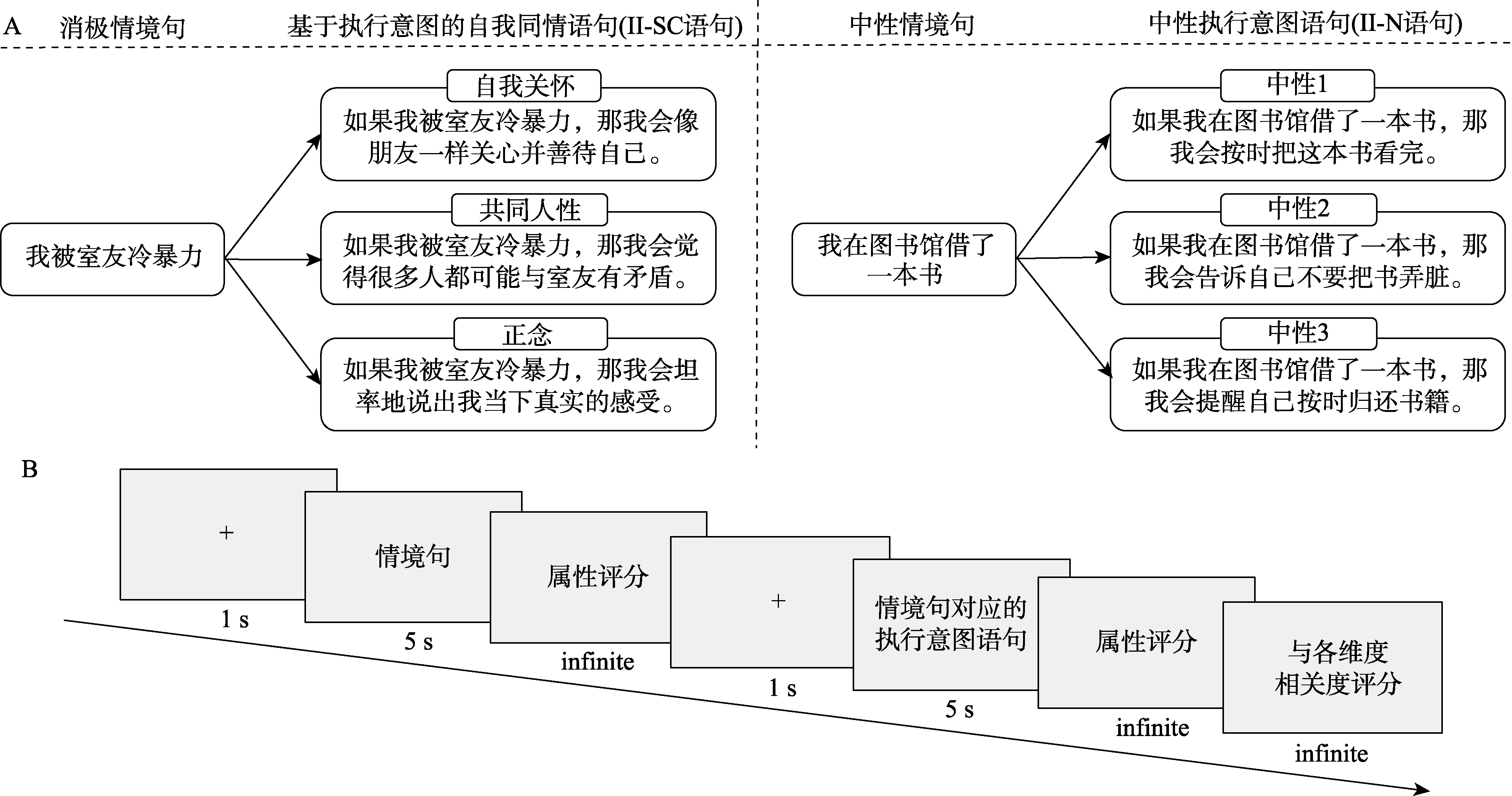
图1 A: 基于执行意图的自我同情语句与中性执行意图语句例句; B: 实验1语句呈现流程
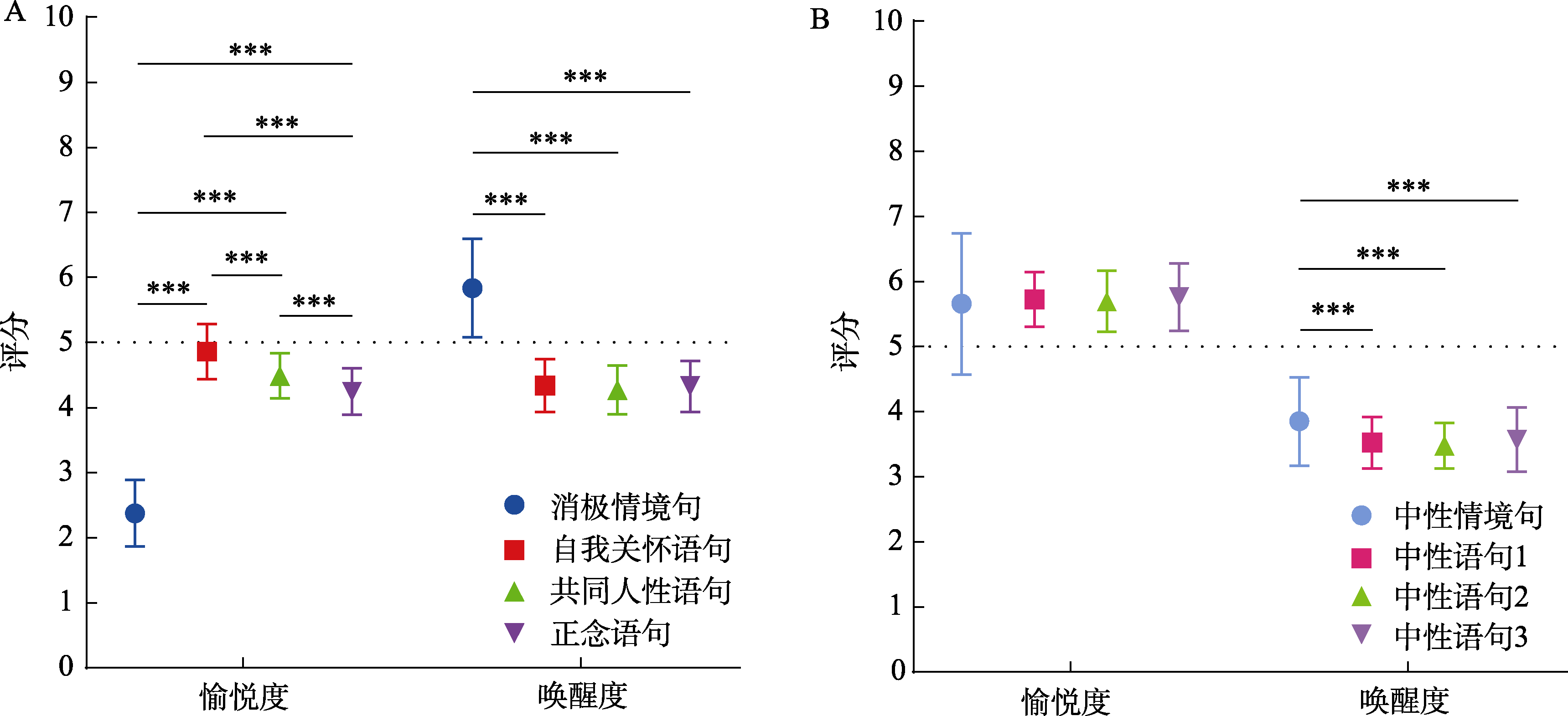
图2 A: 消极情境句与三种II-SC语句的主观情绪评分; B: 中性情境句与三种II-N语句的主观情绪评分; ***p < 0.001
| 语句类型 | 接受度 | 愉悦度 | 唤醒度 |
|---|---|---|---|
| 自我关怀语句 | 0.933 | 0.934 | 0.973 |
| 共同人性语句 | 0.961 | 0.938 | 0.972 |
| 正念语句 | 0.951 | 0.926 | 0.971 |
| 中性语句1 | 0.927 | 0.937 | 0.982 |
| 中性语句2 | 0.911 | 0.928 | 0.982 |
| 中性语句3 | 0.921 | 0.932 | 0.980 |
表1 各类语句的克隆巴赫α系数
| 语句类型 | 接受度 | 愉悦度 | 唤醒度 |
|---|---|---|---|
| 自我关怀语句 | 0.933 | 0.934 | 0.973 |
| 共同人性语句 | 0.961 | 0.938 | 0.972 |
| 正念语句 | 0.951 | 0.926 | 0.971 |
| 中性语句1 | 0.927 | 0.937 | 0.982 |
| 中性语句2 | 0.911 | 0.928 | 0.982 |
| 中性语句3 | 0.921 | 0.932 | 0.980 |
| 语句类型 | 接受度 | 愉悦度 | 唤醒度 | 与自我关怀的相关度 | 与共同人性的相关度 | 与正念的相关度 |
|---|---|---|---|---|---|---|
| II-SC语句 | 0.357** | 0.396** | 0.451** | 0.950** | 0.990** | 0.979** |
| II-N语句 | 0.899** | 0.811** | 0.765** | 0.594** | 0.12 | 0.181 |
表2 重测信度检验结果
| 语句类型 | 接受度 | 愉悦度 | 唤醒度 | 与自我关怀的相关度 | 与共同人性的相关度 | 与正念的相关度 |
|---|---|---|---|---|---|---|
| II-SC语句 | 0.357** | 0.396** | 0.451** | 0.950** | 0.990** | 0.979** |
| II-N语句 | 0.899** | 0.811** | 0.765** | 0.594** | 0.12 | 0.181 |
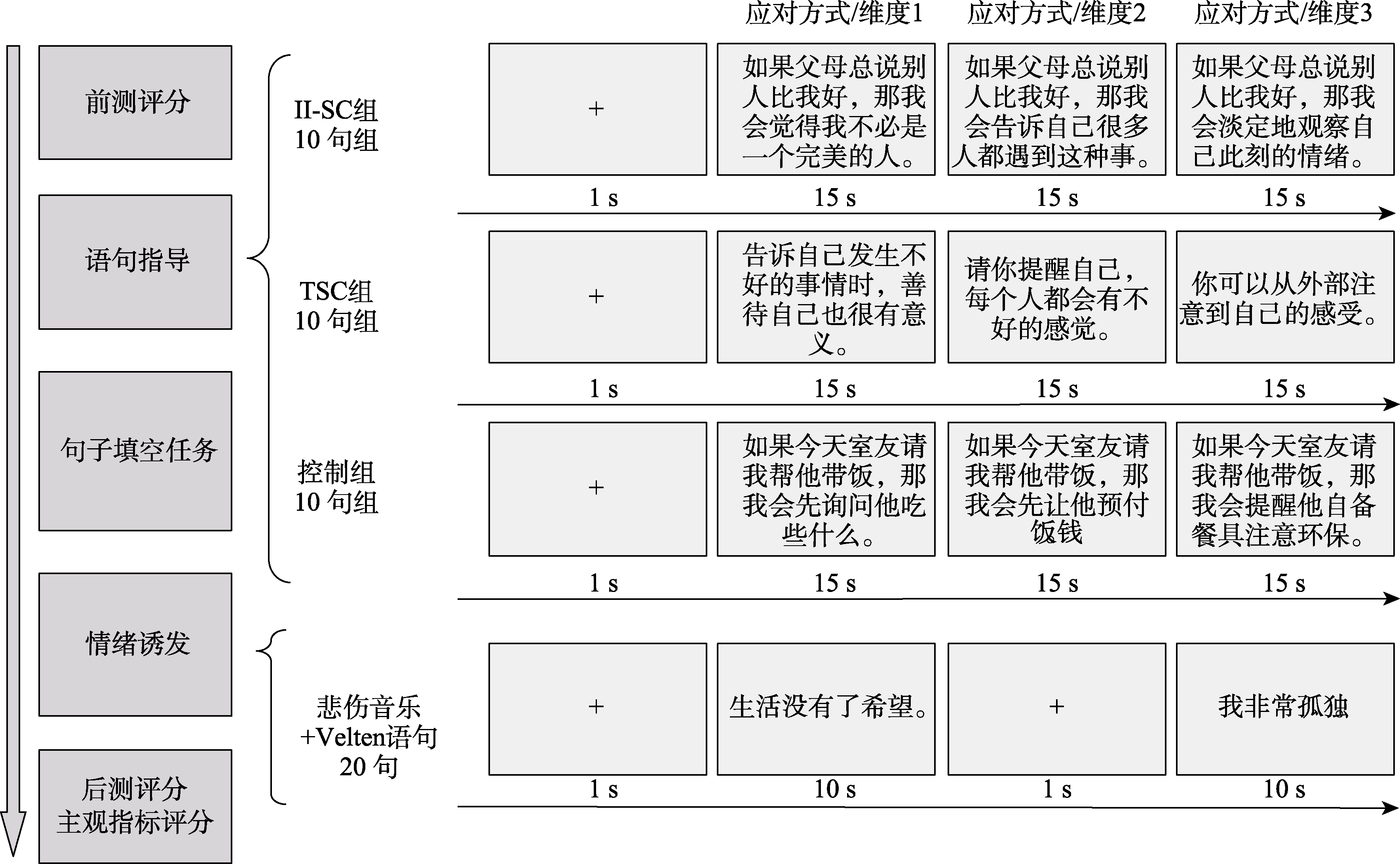
图3 实验2流程图
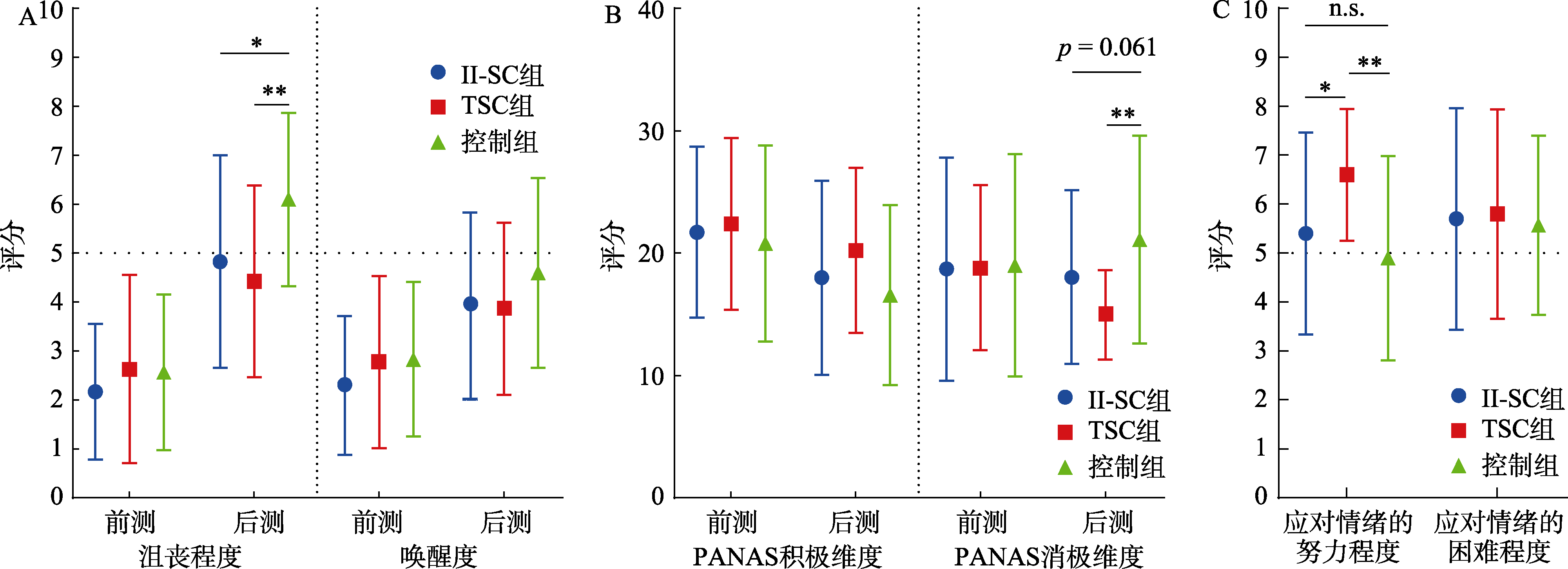
图4 A: 沮丧程度、唤醒度前后测评分; B: PANAS量表积极、消极维度前后测评分; C: 应对情绪的努力程度、困难程度评分; n.s. p > 0.05, *p < 0.05, **p < 0.01
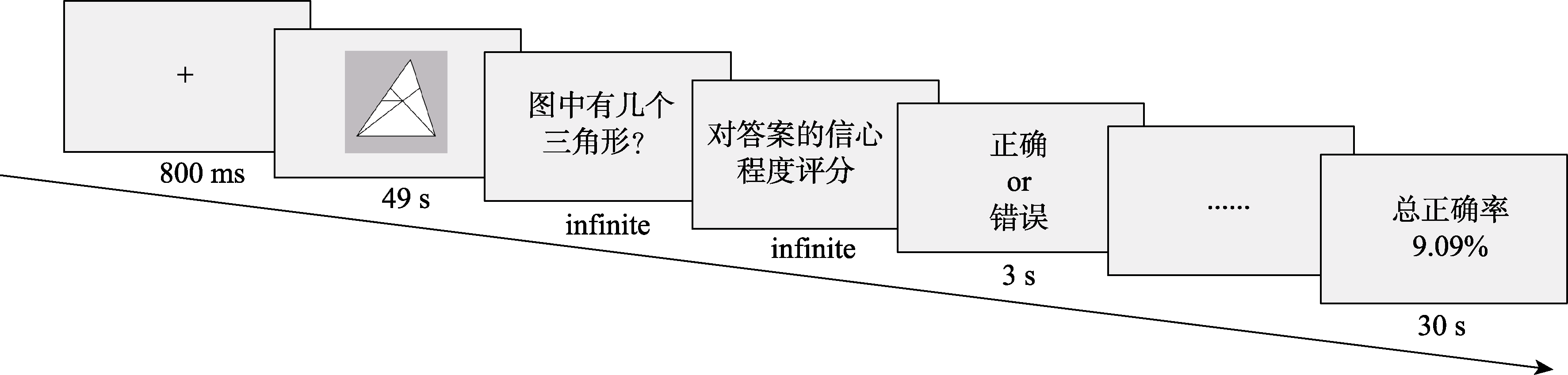
图5 实验3情绪诱发材料呈现流程图
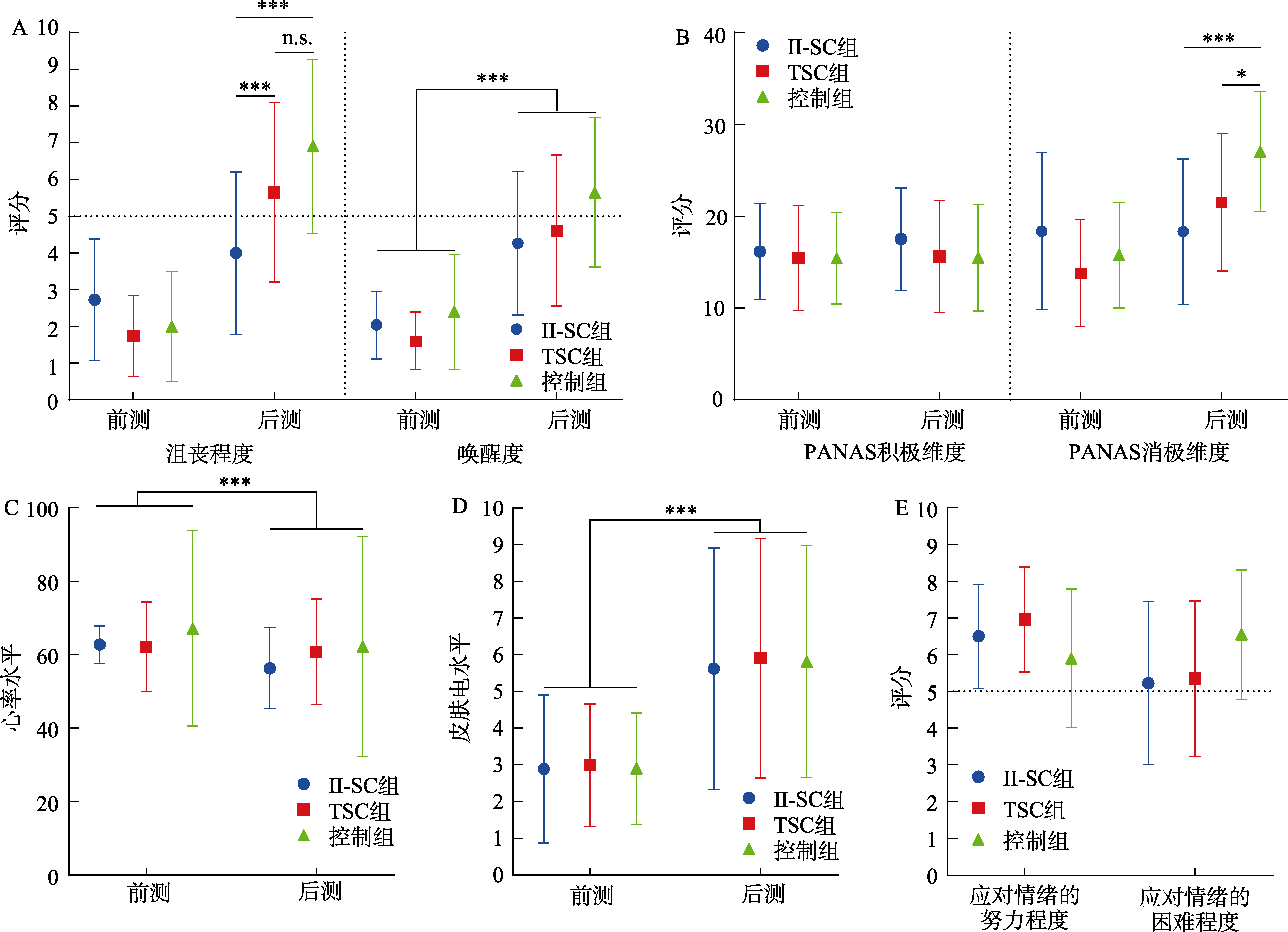
图6 A沮丧程度、唤醒度前后测评分; B: PANAS量表积极、消极维度前后测评分; C: 心率水平前后测; D: 皮肤电水平前后测; E: 应对情绪的努力程度、困难程度评分; n.s.: p > 0.05, *p < 0.05, ***p < 0.001
| [1] |
Achtziger A., Bayer U. C., & Gollwitzer P. M. (2012). Committing to implementation intentions: Attention and memory effects for selected situational cues. Motivation and Emotion, 36, 287-300.
doi: 10.1007/s11031-011-9261-6 URL |
| [2] | Arch J. J., Landy L. N., Schneider R. L., Koban L., & Andrews-Hanna J. R. (2018). Self-compassion induction enhances recovery from social stressors: Comparing adults with social anxiety disorder and healthy controls. Anxiety, Stress, & Coping, 31(5), 594-609. |
| [3] |
Ayres P., Lee J. Y., Paas F., & Van Merrienboer J. J. (2021). The validity of physiological measures to identify differences in intrinsic cognitive load. Frontiers in Psychology, 12, 702538. https://doi.org/10.3389/fpsyg.2021.702538
doi: 10.3389/fpsyg.2021.702538 URL |
| [4] |
Barnes L.L., Harp D., & Jung W. S. (2002). Reliability generalization of scores on the Spielberger State-Trait Anxiety Inventory. Educational and Psychological Measurement, 62(4), 603-618.
doi: 10.1177/0013164402062004005 URL |
| [5] | Beck A. T., Steer R. A., & Brown G. (1996). Beck Depression Inventory-II. Psychological Assessment. https://doi.org/10.1037/t00742-000 |
| [6] | Beerendonk L., Mejías J. F., Nuiten S. A., de Gee J. W., Fahrenfort J. J., & van Gaal S. (2024). A disinhibitory circuit mechanism explains a general principle of peak performance during mid-level arousal. Proceedings of the National Academy of Sciences, 121(5), e2312898121. |
| [7] |
Beretvas S. N., Meyers J. L., & Leite W. L. (2002). A reliability generalization study of the Marlowe-Crowne Social Desirability Scale. Educational and Psychological Measurement, 62(4), 570-589.
doi: 10.1177/0013164402062004003 URL |
| [8] |
Brouwer A. M., Hogervorst M. A., Holewijn M., & van Erp J. B. (2014). Evidence for effects of task difficulty but not learning on neurophysiological variables associated with effort. International Journal of Psychophysiology, 93(2), 242-252.
doi: 10.1016/j.ijpsycho.2014.05.004 URL |
| [9] |
Burnham C. M., & Kocovski N. L. (2024). Coping with past social stress: Comparing brief self-compassion, cognitive reappraisal and control writing exercises. Mindfulness, 15(1), 203-216.
doi: 10.1007/s12671-023-02268-4 |
| [10] | Chen J., Yan L. S., & Zhou L. H. (2011). Reliability and validity of Chinese version of Self-compassion Scale. Chinese Journal of Clinical Psychology, 19(6), 734-736. |
| [陈健, 燕良轼, 周丽华. (2011). 中文版自悯量表的信效度研究. 中国临床医学杂志, 19(6), 734-736.] | |
| [11] | Chen S., Ding N., Wang F., Li Z., Qin S., Biswal B. B., & Yuan J. (2021). Functional decoupling of emotion coping network subsides automatic emotion regulation by implementation intention. Neural Plasticity, 2021(1), 6639739. |
| [12] |
Chen S., Yu K., Yang J., & Yuan J. (2020). Automatic reappraisal-based implementation intention produces early and sustainable emotion regulation effects: Event-related potential evidence. Frontiers in Behavioral Neuroscience, 14, 89.
doi: 10.3389/fnbeh.2020.00089 pmid: 32765230 |
| [13] |
Choi Y. M., Lee D. G., & Lee H. K. (2014). The effect of self-compassion on emotions when experiencing a sense of inferiority across comparison situations. Procedia-Social and Behavioral Sciences, 114, 949-953.
doi: 10.1016/j.sbspro.2013.12.813 URL |
| [14] |
Christou-Champi S., Farrow T. F., & Webb T. L. (2015). Automatic control of negative emotions: Evidence that structured practice increases the efficiency of emotion regulation. Cognition and Emotion, 29(2), 319-331.
doi: 10.1080/02699931.2014.901213 URL |
| [15] |
Correia P., Quaresma C., Morais P., Fonseca M., Vigário R., & Quintão C. (2023). Effects of mindfulness-based stress reduction meditation on the emotional reaction to affective pictures assessed by electrodermal activity. Biomedical Signal Processing and Control, 86, 105314.
doi: 10.1016/j.bspc.2023.105314 URL |
| [16] |
Creaser J. L., Storr J., & Karl A. (2022). Brain responses to a self-compassion induction in trauma survivors with and without post-traumatic stress disorder. Frontiers in Psychology, 13, 765602.
doi: 10.3389/fpsyg.2022.765602 URL |
| [17] |
Crowne D. P., & Marlowe D. (1960). A new scale of social desirability independent of psychopathology. Journal of Consulting Psychology, 24(4), 349-354.
doi: 10.1037/h0047358 URL |
| [18] |
Diedrich A., Grant M., Hofmann S. G., Hiller W., & Berking M. (2014). Self-compassion as an emotion regulation strategy in major depressive disorder. Behaviour Research and Therapy, 58, 43-51.
doi: 10.1016/j.brat.2014.05.006 pmid: 24929927 |
| [19] |
Diedrich A., Hofmann S. G., Cuijpers P., & Berking M. (2016). Self-compassion enhances the efficacy of explicit cognitive reappraisal as an emotion regulation strategy in individuals with major depressive disorder. Behaviour Research and Therapy, 82, 1-10.
doi: 10.1016/j.brat.2016.04.003 pmid: 27152671 |
| [20] |
Dreisoerner A., Junker N. M., & van Dick R. (2021). The relationship among the components of self-compassion: A pilot study using a compassionate writing intervention to enhance self-kindness, common humanity, and mindfulness. Journal of Happiness Studies, 22(1), 21-47.
doi: 10.1007/s10902-019-00217-4 |
| [21] | Ehret A. M., Joormann J., & Berking M. (2018). Self- compassion is more effective than acceptance and reappraisal in decreasing depressed mood in currently and formerly depressed individuals. Journal of Afective Disorders, 226, 220-226. |
| [22] |
Ewert C., Vater A., & Schröder-Abé M. (2021). Self- compassion and coping: A meta-analysis. Mindfulness, 12(5), 1063-1077.
doi: 10.1007/s12671-020-01563-8 |
| [23] |
Faul F., Erdfelder E., Lang A. G., & Buchner A. (2007). G* Power 3: A flexible statistical power analysis program for the social, behavioral, and biomedical sciences. Behavior Research Methods, 39(2), 175-191.
doi: 10.3758/BF03193146 URL |
| [24] | Gailliot M. T., Zell A., & Baumeister R. F. (2014). Having used self-control reduces emotion regulation—Emotion regulation as relying on interchangeably used “self-control energy”. Open Access Library Journal, 1(8), 1. |
| [25] |
Gan S., Yang J., Chen X., Zhang X., & Yang Y. (2017). High working memory load impairs the effect of cognitive reappraisal on emotional response: Evidence from an event- related potential study. Neuroscience Letters, 639, 126-131.
doi: 10.1016/j.neulet.2016.12.069 URL |
| [26] | Gao W., Chen S. D., Long Q. S., Yang J. M., & Yuan J. J. (2018). The progress of emotion regulation methods and paradigms: From voluntary emotion regulation to automatic emotion regulation. Chinese Science Bulletin, 63(4), 415-424. |
| [高伟, 陈圣栋, 龙泉杉, 杨洁敏, 袁加锦. (2018). 情绪调节研究方法的蜕变:从有意情绪调节到自动化情绪调节. 科学通报, 63(4), 415-424.] | |
| [27] |
Germer C. K., & Neff K. D. (2013). Self-compassion in clinical practice. Journal of Clinical Psychology, 69(8), 856-867.
doi: 10.1002/jclp.22021 pmid: 23775511 |
| [28] | Goldin P. R., Moodie C. A., & Gross J. J. (2019). Acceptance versus reappraisal: Behavioral, autonomic, and neural effects. Cognitive, Affective, & Behavioral Neuroscience, 19(4), 927-944. |
| [29] | Gollwitzer P. M., & Sheeran P. (2006). Implementation Intentions and Goal Achievement: A Meta‐analysis of Effects and Processes. Advances in Experimental Social Psychology, 38, 69-119. |
| [30] |
Gratz K. L., & Roemer L. (2004). Multidimensional assessment of emotion regulation and dysregulation: Development, factor structure, and initial validation of the Difficulties in Emotion Regulation Scale. Journal of Psychopathology and Behavioral Assessment, 26(1), 41-54.
doi: 10.1023/B:JOBA.0000007455.08539.94 |
| [31] |
Grillon C., Quispe-Escudero D., Mathur A., & Ernst M. (2015). Mental fatigue impairs emotion regulation. Emotion, 15(3), 383-389.
doi: 10.1037/emo0000058 pmid: 25706833 |
| [32] |
Gross J. J. (1998). The emerging field of emotion regulation: An integrative review. Review of General Psychology, 2(3), 271-299.
doi: 10.1037/1089-2680.2.3.271 URL |
| [33] |
Gross J. J. (2015). Emotion regulation: Current status and future prospects. Psychological Inquiry, 26(1), 1-26.
doi: 10.1080/1047840X.2014.940781 URL |
| [34] |
Gross J. J., & Jazaieri H. (2014). Emotion, emotion regulation, and psychopathology: An affective science perspective. Clinical Psychological Science, 2(4), 387-401.
doi: 10.1177/2167702614536164 URL |
| [35] |
Gross J. J., & John O. P. (2003). Individual differences in two emotion regulation processes: Implications for affect, relationships, and well-being. Journal of Personality and Social Psychology, 85(2), 348-362.
doi: 10.1037/0022-3514.85.2.348 pmid: 12916575 |
| [36] | Gutiérrez-Hernández M. E., Fanjul Rodríguez L. F., Díaz Megolla A., Oyanadel C., & Peñate Castro W. (2023). The effect of daily meditative practices based on mindfulness and self-compassion on emotional distress under stressful conditions: A randomized controlled trial. European Journal of Investigation in Health, Psychology and Education, 13(4), 762-775. |
| [37] | Hallam G. P., Webb T. L., Sheeran P., Miles E., Wilkinson I. D., Hunter M. D.,... Farrow T. F. (2015). The neural correlates of emotion regulation by implementation intentions. PloS One, 10(3), e0119500. |
| [38] |
Hansen N. H., Fjorback L. O., Frydenberg M., & Juul L. (2021). Mediators for the effect of compassion cultivating training: A longitudinal path analysis in a randomized controlled trial among caregivers of people with mental illness. Frontiers in Psychiatry, 12, 761806.
doi: 10.3389/fpsyt.2021.761806 URL |
| [39] | Harvey P. O., Fossati P., Pochon J. B., Levy R., LeBastard G., Lehéricy S., Allilaire J. F., & Dubois B. (2005). Cognitive control and brain resources in major depression: An fMRI study using the n-back task. Neuroimage, 26(3), 860-869. |
| [40] | He C., Mao J., Yang Q., Yuan J., & Yang J. (2022). Trait Acceptance buffers aggressive tendency by the regulation of anger during social exclusion. International Journal of Environmental Research and Public Health, 19(22), 14666. |
| [41] |
Kılıç A., Hudson J., McCracken L. M., Ruparelia R., Fawson S., & Hughes L. D. (2021). A systematic review of the effectiveness of self-compassion-related interventions for individuals with chronic physical health conditions. Behavior Therapy, 52(3), 607-625.
doi: 10.1016/j.beth.2020.08.001 pmid: 33990237 |
| [42] |
Kirschner H., Kuyken W., Wright K., Roberts H., Brejcha C., & Karl A. (2019). Soothing your heart and feeling connected: A new experimental paradigm to study the benefits of self-compassion. Clinical Psychological Science, 7(3), 545-565.
doi: 10.1177/2167702618812438 pmid: 32655984 |
| [43] |
Krieger T., Altenstein D., Baettig I., Doerig N., & Holtforth M. G. (2013). Self-compassion in depression: Associations with depressive symptoms, rumination, and avoidance in depressed outpatients. Behavior Therapy, 44(3), 501-513.
doi: 10.1016/j.beth.2013.04.004 pmid: 23768676 |
| [44] |
Kuppens P., Tuerlinckx F., Russell J. A., & Barrett L. F. (2013). The relation between valence and arousal in subjective experience. Psychological Bulletin, 139(4), 917-940.
doi: 10.1037/a0030811 pmid: 23231533 |
| [45] |
Lewczuk K., Wizła M., Oleksy T., & Wyczesany M. (2022). Emotion regulation, effort and fatigue: Complex issues worth investigating. Frontiers in Psychology, 13, 742557.
doi: 10.3389/fpsyg.2022.742557 URL |
| [46] |
Li Y. Q., Dai J. J., Gao W., & Yuan J. J. (2025). Sustainable regulation effects of implementation intention-based reappraisal on negative emotions: Longitudinal EEG evidence. Acta Psychologica Sinica, 57(9), 1572-1588.
doi: 10.3724/SP.J.1041.2025.1572 |
|
[李亚琴, 代佳佳, 高伟, 袁加锦. (2025). 基于执行意图的认知重评对负性情绪的持续调节效应: 纵向脑电证据. 心理学报, 57(9), 1572-1588.]
doi: 10.3724/SP.J.1041.2025.1572 |
|
| [47] |
Licht C. M., de Geus E. J., Zitman F. G., Hoogendijk W. J., van Dyck R., & Penninx B. W. (2008). Association between major depressive disorder and heart rate variability in the Netherlands Study of Depression and Anxiety (NESDA). Archives of General Psychiatry, 65(12), 1358-1367.
doi: 10.1001/archpsyc.65.12.1358 pmid: 19047522 |
| [48] |
Lindsay E. K., & Creswell J. D. (2019). Mindfulness, acceptance, and emotion regulation: Perspectives from Monitor and Acceptance Theory (MAT). Current Opinion in Psychology, 28, 120-125.
doi: S2352-250X(18)30223-9 pmid: 30639835 |
| [49] |
Liu Q. Q., Yang X. J., Hu Y. T., & Zhang C. Y. (2020). Peer victimization, self-compassion, gender and adolescent mobile phone addiction: Unique and interactive effects. Children and Youth Services Review, 118, 105397. https://doi.org/10.1016/j.childyouth.2020.105397
doi: 10.1016/j.childyouth.2020.105397 URL |
| [50] | Liu X. C., Tang M. Q., Chen K., Hu L., & Wang A. Z. (1995). A comparative analysis of SDS and CES-D assessment results for depressive symptoms among college students. Chinese Mental Health Journal, 9(1), 19-20. |
| [刘贤臣, 唐茂芹, 陈琨, 胡蕾, 王爱祯. (1995). SDS和CES-D对大学生抑郁症状评定结果的比较. 中国心理卫生杂志, 9(1), 19-20.] | |
| [51] | Liu Y., Wang Z. Y., Zhang K., Cheng Y. H., Wang X. Y., & Yu L. L. (2024). Preliminary study of sleep quality and heart rate variability in patients with anxiety and depressive disorder. Journal of Neuroscience and Mental Health, 24(9), 623-628. |
| [刘颖, 王卓言, 张坤, 程月红, 王学义, 于鲁璐. (2024). 伴焦虑抑郁症患者的睡眠质量及心率变异性的初步研究. 神经疾病与精神卫生, 24(9), 623-628.] | |
| [52] |
Lu J., Xu X., Huang Y., Li T., Ma C., Xu G.,... Zhang N. (2021). Prevalence of depressive disorders and treatment in China: A cross-sectional epidemiological study. The Lancet Psychiatry, 8(11), 981-990.
doi: 10.1016/S2215-0366(21)00251-0 URL |
| [53] |
Mauss I. B., Bunge S. A., & Gross J. J. (2007). Automatic emotion regulation. Social and Personality Psychology Compass, 1(1), 146-167.
doi: 10.1111/spco.2007.1.issue-1 URL |
| [54] | McBride N. L., Bates G. W., Elphinstone B., & Whitehead R. (2022). Self-compassion and social anxiety: The mediating effect of emotion regulation strategies and the influence of depressed mood. Psychology and Psychotherapy: Theory, Research and Practice, 95(4), 1036-1055. |
| [55] |
Moretta T., Kaess M., & Koenig J. (2023). A comparative evaluation of resting state proxies of sympathetic and parasympathetic nervous system activity in adolescent major depression. Journal of Neural Transmission, 130(2), 135-144.
doi: 10.1007/s00702-022-02577-3 pmid: 36629967 |
| [56] |
Muraven M., Tice D. M., & Baumeister R. F. (1998). Self- control as a limited resource: Regulatory depletion patterns. Journal of Personality and Social Psychology, 74(3), 774-789.
pmid: 9523419 |
| [57] |
Neff K. D. (2003a). Self-compassion: An alternative conceptualization of a healthy attitude toward oneself. Self and Identity, 2(2), 85-101.
doi: 10.1080/15298860309032 URL |
| [58] |
Neff K. D. (2003b). The development and validation of a scale to measure self-compassion. Self and Identity, 2(3), 223-250.
doi: 10.1080/15298860309027 URL |
| [59] |
Neff K. D. (2023). Self-compassion: Theory, method, research, and intervention. Annual Review of Psychology, 74(1), 193-218.
doi: 10.1146/psych.2023.74.issue-1 URL |
| [60] |
Olshansky B., Sabbah H. N., Hauptman P. J., & Colucci W. S. (2008). Parasympathetic nervous system and heart failure: Pathophysiology and potential implications for therapy. Circulation, 118(8), 863-871.
doi: 10.1161/CIRCULATIONAHA.107.760405 pmid: 18711023 |
| [61] |
Opitz P. C., Lee I. A., Gross J. J., & Urry H. L. (2014). Fluid cognitive ability is a resource for successful emotion regulation in older and younger adults. Frontiers in Psychology, 5, 609.
doi: 10.3389/fpsyg.2014.00609 pmid: 24987387 |
| [62] |
Paucsik M., Nardelli C., Bortolon C., Shankland R., Leys C., & Baeyens C. (2023). Self-compassion and emotion regulation: Testing a mediation model. Cognition and Emotion, 37(1), 49-61.
doi: 10.1080/02699931.2022.2143328 URL |
| [63] | Pauley G., & McPherson S. (2010). The experience and meaning of compassion and self-compassion for individuals with depression or anxiety. Psychology and Psychotherapy: Theory, Research and Practice, 83(2), 129-143. |
| [64] |
Qi X., Shen Y., Che X., Wang Y., Luo X., & Sun L. (2025). The effect of self-compassion versus mindfulness interventions on autonomic responses to stress in generalized anxiety disorders. Frontiers in Psychiatry, 16, 1483827.
doi: 10.3389/fpsyt.2025.1483827 URL |
| [65] | Qiu L., Zheng X., & Wang Y. F. (2008). Revision of the positive affect and negative affect scale. Chinese Journal of Applied Psychology, 14(3), 249-254+268. |
| [邱林, 郑雪, 王雁飞. (2008). 积极情感消极情感量表(PANAS)的修订. 应用心理学, 14(3), 249-254+268.] | |
| [66] | Raes F., Pommier E., Neff K. D., & Van Gucht D. (2011). Construction and factorial validation of a short form of the self-compassion scale. Clinical Psychology & Psychotherapy, 18(3), 250-255. |
| [67] |
Rahl H. A., Lindsay E. K., Pacilio L. E., Brown K. W., & Creswell J. D. (2017). Brief mindfulness meditation training reduces mind wandering: The critical role of acceptance. Emotion, 17(2), 224-230.
doi: 10.1037/emo0000250 pmid: 27819445 |
| [68] |
Rodriguez L. M., Stewart S. H., & Neighbors C. (2021). Effects of a brief web-based interpersonal conflict cognitive reappraisal expressive-writing intervention on changes in romantic conflict during COVID-19 quarantine. Couple and Family Psychology: Research and Practice, 10(3), 212-222.
doi: 10.1037/cfp0000173 URL |
| [69] | Rodríguez M. R., Nuevo R., Chatterji S., & Ayuso-Mateos J. L. (2012). Definitions and factors associated with subthreshold depressive conditions: A systematic review. BMC Psychiatry, 12(1), 181. |
| [70] |
Schneider W., & Chein J. M. (2003). Controlled & automatic processing: Behavior, theory, and biological mechanisms. Cognitive Science, 27(3), 525-559.
doi: 10.1207/s15516709cog2703_8 URL |
| [71] |
Sheppes G., & Levin Z. (2013). Emotion regulation choice: Selecting between cognitive regulation strategies to control emotion. Frontiers in Human Neuroscience, 7, 179.
doi: 10.3389/fnhum.2013.00179 pmid: 23658540 |
| [72] |
Shore T., Cohen Kadosh K., Lommen M., Cooper M., & Lau J. Y. (2017). Investigating the effectiveness of brief cognitive reappraisal training to reduce fear in adolescents. Cognition and Emotion, 31(4), 806-815.
doi: 10.1080/02699931.2016.1159542 URL |
| [73] |
Singer T., Seymour B., O'Doherty J., Kaube H., Dolan R. J., & Frith C. D. (2004). Empathy for pain involves the affective but not sensory components of pain. Science, 303(5661), 1157-1162.
doi: 10.1126/science.1093535 pmid: 14976305 |
| [74] |
Singh N., Aggarwal Y., & Sinha R. K. (2019). Heart rate variability analysis under varied task difficulties in mental arithmetic performance. Health and Technology, 9, 343-353.
doi: 10.1007/s12553-018-0272-0 |
| [75] | Smeets E., Neff K., Alberts H., & Peters M. (2014). Meeting suffering with kindness:Effects of a brief self‐compassion intervention for female college students. Journal of Clinical Psychology, 70(9), 794-807. |
| [76] |
Smoski M. J., Keng S. L., Ji J. L., Moore T., Minkel J., & Dichter G. S. (2015). Neural indicators of emotion regulation via acceptance vs reappraisal in remitted major depressive disorder. Social Cognitive and Affective Neuroscience, 10(9), 1187-1194.
doi: 10.1093/scan/nsv003 pmid: 25617820 |
| [77] | Spielberger C. D. (1983). Manual for the State-Trait Anxiety Inventory. Palo Alto, CA: Consulting Psychologists Press. |
| [78] |
Sun Y., Mao X., & Hou P. (2025). Abnormal resting-state brain networks and their relationship with cognitive reappraisal preferences in depressive tendencies. Brain Research, 1854, 149522.
doi: 10.1016/j.brainres.2025.149522 URL |
| [79] |
Thurber S. D., Snow M. D., & Honts C. R. (2002). The Zung self-rating depression scale: Convergent validity and diagnostic discrimination. Assessment, 9(4), 401-405.
doi: 10.1177/1073191102238471 pmid: 12462760 |
| [80] |
Tracy A., Jopling E., & LeMoult J. (2021). The effects of inducing self-compassion on affective and physiological recovery from a psychosocial stressor in depression. Behaviour Research and Therapy, 146, 103965.
doi: 10.1016/j.brat.2021.103965 URL |
| [81] |
Troy A. S., Shallcross A. J., Brunner A., Friedman R., & Jones M. C. (2018). Cognitive reappraisal and acceptance: Effects on emotion, physiology, and perceived cognitive costs. Emotion, 18(1), 58-74.
doi: 10.1037/emo0000371 pmid: 29154585 |
| [82] | Umezawa K., Nakano M., Nakazawa M., & Hirasawa S. (2023, February). A study on the relationship between brain waves, heart rate, and facial expressions during programming learning. In Proceedings of the 2023 12th International Conference on Software and Computer Applications (pp.321-327). 2022 IEEE International Conference on Systems, Man, and Cybernetics (SMC). |
| [83] |
Velten E. (1968). A laboratory task for induction of mood states. Behaviour Research and Therapy, 6(4), 473-482.
doi: 10.1016/0005-7967(68)90028-4 pmid: 5714990 |
| [84] |
Volkaert B., Verbeken S., Debeuf T., Michels N., & Braet C. (2022). Training self-compassion: Exploring the effects on adolescents’ physiological and self-reported stress responses. Mindfulness, 13(4), 897-907.
doi: 10.1007/s12671-022-01838-2 |
| [85] | Wang Y., & Li X. (2017). Temporal course of implicit emotion regulation during a Priming-Identify task: An ERP study. Scientific Reports, 7(1), 41941. |
| [86] | Wang Z., Yuan C. -M., Huang J., Li Z. -Z., Chen J., Zhang H. -Y., Fang Y. -R., & Xiao Z. -P. (2011). Reliability and validity of the Chinese version of Beck Depression Inventory-II among depression patients. Chinese Mental Health Journal, 25(6), 476-480. |
| [王振, 苑成梅, 黄佳, 李则挚, 陈珏, 张海音, 方贻儒, 肖泽萍. (2011). 贝克抑郁量表第2版中文版在抑郁症患者中的信效度. 中国心理卫生杂志, 25(6), 476-480.] | |
| [87] |
Webb T. L., & Sheeran P. (2008). Mechanisms of implementation intention effects: The role of goal intentions, self-efficacy, and accessibility of plan components. British Journal of Social Psychology, 47(3), 373-395.
doi: 10.1348/014466607X267010 URL |
| [88] |
Weinbach N., Barzilay G., & Cohen N. (2022). Cognitive reappraisal reduces the influence of threat on food craving. Affective Science, 3(4), 818-826.
doi: 10.1007/s42761-022-00141-6 pmid: 36519143 |
| [89] |
Wieber F., Thürmer J. L., & Gollwitzer P. M. (2015). Promoting the translation of intentions into action by implementation intentions: Behavioral effects and physiological correlates. Frontiers in Human Neuroscience, 9, 395.
doi: 10.3389/fnhum.2015.00395 pmid: 26236214 |
| [90] | Williams J. C., & Lynn S. J. (2010). Acceptance: An historical and conceptual review. Imagination, Cognition and Personality, 30(1), 5-56. |
| [91] |
Wren A. A., Shelby R. A., Soo M. S., Huysmans Z., Jarosz J. A., & Keefe F. J. (2019). Preliminary efficacy of a lovingkindness meditation intervention for patients undergoing biopsy and breast cancer surgery: A randomized controlled pilot study. Supportive Care in Cancer, 27(9), 3583-3592.
doi: 10.1007/s00520-019-4657-z pmid: 30706142 |
| [92] |
Yang Q., Tang P., Gu R., Luo W., & Luo Y. J. (2015). Implicit emotion regulation affects outcome evaluation. Social Cognitive and Affective Neuroscience, 10(6), 824-831.
doi: 10.1093/scan/nsu124 pmid: 25332404 |
| [93] |
Yaroslavsky I., Rottenberg J., Bylsma L. M., Jennings J. R., George C., Baji I.,... Kovacs M. (2016). Parasympathetic nervous system activity predicts mood repair use and its effectiveness among adolescents with and without histories of major depression. Journal of Abnormal Psychology, 125(3), 323-336.
doi: 10.1037/abn0000149 pmid: 26950752 |
| [94] |
Yoon S., & Rottenberg J. (2020). Why do people with depression use faulty emotion regulation strategies? Emotion Review, 12(2), 118-128.
doi: 10.1177/1754073919890670 |
| [95] | Yuan J., Liu Y., Ding N., & Yang J. (2014). The regulation of induced depression during a frustrating situation: Benefits of expressive suppression in Chinese individuals. PlOS ONE, 9(5), e97420. |
| [96] |
Yuan J. J., & Li H. (2012). The human susceptibility to the valence strength of emotional stimuli: Neural mechanisms. Advances in Psychological Science, 20(1), 10-19.
doi: 10.3724/SP.J.1042.2012.00010 URL |
| [袁加锦, 李红. (2012). 人类对情绪事件效价强度的易感性及神经机制. 心理科学进展, 20(1), 10-19.] | |
| [97] |
Yuan J., Zhang Y., Chen S., Luo L., & Ru Y. (2021). The establishment of Chinese Emotion Regulation Word System (CERWS) and its pilot test. Acta Psychologica Sinica, 53(5), 445-455.
doi: 10.3724/SP.J.1041.2021.00445 |
|
[袁加锦, 张祎程, 陈圣栋, 罗利, 茹怡珊. (2021). 中国情绪调节词语库的初步编制与试用. 心理学报, 53(5), 445-455.]
doi: 10.3724/SP.J.1041.2021.00445 |
|
| [98] |
Yuan J., Zhang Y., Zhao Y., Gao K., Tan S., & Zhang D. (2023). The emotion-regulation benefits of implicit reappraisal in clinical depression: Behavioral and electrophysiological evidence. Neuroscience Bulletin, 39(6), 973-983.
doi: 10.1007/s12264-022-00973-z |
| [99] |
Yuan Y., Jiang S., Yan S., Chen L., Zhang M., Zhang J.,... & Jiang K. (2022). The relationship between depression and social avoidance of college students: A moderated mediation model. Journal of Affective Disorders, 300, 249-254.
doi: 10.1016/j.jad.2021.12.119 URL |
| [100] |
Zhang S. (2025). The research on relations of university students’ self-compassion, meaning in life and psychological resilience. Advances in Psychology, 15(3), 299-304.
doi: 10.12677/ap.2025.153156 URL |
| [张爽. (2025). 大学生自我同情、生命意义感和心理弹性的关系研究. 心理学进展, 15(3), 299-304.] | |
| [101] |
Zhang Z., Mao J., Yuan J., & Yang J. (2023). Unconscious and conscious acceptance downregulate aggressive behavior: Mediating role of anger regulation. Acta Psychologica, 239, 104000.
doi: 10.1016/j.actpsy.2023.104000 URL |
| [102] |
Zhao D., Li H., Mao J., & Yuan J. (2022). The formation of the if-then contingency in implementation intention relieves anticipatory anxiety. Stress and Brain, 2(3), 78-86.
doi: 10.26599/SAB.2022.9060014 URL |
| [103] |
Zhao T., Yang Y., & Cui L. (2024). How self-compassion components develop in adolescents? Evidence from cross- lagged panel network analysis with gender considerations. Applied Research in Quality of Life, 19(5), 2767-2784.
doi: 10.1007/s11482-024-10355-4 |
| [104] |
Zilverstand A., Parvaz M. A., & Goldstein R. Z. (2017). Neuroimaging cognitive reappraisal in clinical populations to define neural targets for enhancing emotion regulation. A systematic review. Neuroimage, 151, 105-116.
doi: S1053-8119(16)30227-0 pmid: 27288319 |
| [105] |
Zung W. W., Richards C. B., & Short M. J. (1965). Self-rating depression scale in an outpatient clinic: Further validation of the SDS. Archives of General Psychiatry, 13(6), 508-515.
doi: 10.1001/archpsyc.1965.01730060026004 pmid: 4378854 |
| [1] | 王雪珂, 邓芳, 陈立, 冯廷勇. 孤独症儿童负性情绪调节特征及干预:基于多模态评估的正念与认知策略训练[J]. 心理学报, 2026, 58(1): 39-56. |
| [2] | 李亚琴, 代佳佳, 高伟, 袁加锦. 基于执行意图的认知重评对负性情绪的持续调节效应:纵向脑电证据[J]. 心理学报, 2025, 57(9): 1572-1588. |
| [3] | 何从莲, 袁加锦. 情绪动机对人际情绪调节策略选择的影响:来自行为与超扫描的实验证据[J]. 心理学报, 2025, 57(9): 1589-1608. |
| [4] | 李雨桐, 李璇, 岳泽明, 李亚红, 隋雪. 抑郁倾向个体对言语情绪信息的加工偏向[J]. 心理学报, 2025, 57(6): 1041-1055. |
| [5] | 孙岩, 王艺锦, 侯沛雨, 冯雪, 兰帆. 抑郁倾向对自我关注重评和情境关注重评影响的脑网络研究[J]. 心理学报, 2025, 57(2): 232-246. |
| [6] | 姚雨佳, 颜之悦, 林慧慧, 陈静全, 宣雨阳. 人际距离和策略创造性对人际情绪调节的影响[J]. 心理学报, 2025, 57(1): 125-134. |
| [7] | 童廷婷, 白幼玲, 冯廷勇. 情绪调节改善拖延行为的认知机制:任务厌恶中介作用[J]. 心理学报, 2024, 56(4): 458-468. |
| [8] | 王妹, 程思, 李宜伟, 李红, 张丹丹. 背外侧前额叶在安慰剂效应中的作用:社会情绪调节研究[J]. 心理学报, 2023, 55(7): 1063-1073. |
| [9] | 谢慧, 林轩怡, 胡婉柔, 胡晓晴. 情绪调节促进负性社会反馈的遗忘:来自行为和脑电的证据[J]. 心理学报, 2023, 55(6): 905-919. |
| [10] | 王小琴, 谈雅菲, 蒙杰, 刘源, 位东涛, 杨文静, 邱江. 情绪调节灵活性对负性情绪的影响:来自经验取样的证据[J]. 心理学报, 2023, 55(2): 192-209. |
| [11] | 高可翔, 张岳瑶, 李思瑾, 袁加锦, 李红, 张丹丹. 腹内侧前额叶在内隐认知重评中的因果作用[J]. 心理学报, 2023, 55(2): 210-223. |
| [12] | 刘宇平, 周冰涛, 杨波. 情绪如何引发暴力犯的攻击?基于情绪调节理论的解释[J]. 心理学报, 2022, 54(3): 270-280. |
| [13] | 程瑞, 卢克龙, 郝宁. 愤怒情绪对恶意创造力的影响及调节策略[J]. 心理学报, 2021, 53(8): 847-860. |
| [14] | 袁加锦, 张祎程, 陈圣栋, 罗利, 茹怡珊. 中国情绪调节词语库的初步编制与试用[J]. 心理学报, 2021, 53(5): 445-455. |
| [15] | 莫李澄, 郭田友, 张岳瑶, 徐锋, 张丹丹. 激活右腹外侧前额叶提高抑郁症患者对社会疼痛的情绪调节能力:一项TMS研究[J]. 心理学报, 2021, 53(5): 494-504. |
| 阅读次数 | ||||||
|
全文 |
|
|||||
|
摘要 |
|
|||||
