

ISSN 0439-755X
CN 11-1911/B
主办:中国心理学会
中国科学院心理研究所
出版:科学出版社
CN 11-1911/B
主办:中国心理学会
中国科学院心理研究所
出版:科学出版社
心理学报 ›› 2025, Vol. 57 ›› Issue (11): 1885-1900.doi: 10.3724/SP.J.1041.2025.1885 cstr: 32110.14.2025.1885
耿晓伟1,2( ), 刘超3, 苏黎2, 韩冰雪2, 张巧明4, 吴明证5()
收稿日期:2024-02-08
发布日期:2025-09-24
出版日期:2025-11-25
通讯作者:
耿晓伟, E-mail: xwgeng@hznu.edu.cn;基金资助:
GENG Xiaowei1,2(), LIU Chao3, SU Li2, HAN Bingxue2, ZHANG Qiaoming4, WU Mingzheng5()
Received:2024-02-08
Online:2025-09-24
Published:2025-11-25
摘要:
随着人工智能技术的迅猛发展, 人工智能越来越成为人的“助攻”。在人机合作风险决策的过程中, 人工智能是否会助长人类的冒险行为, 以及人知觉到的主体责任如何发挥作用, 这些问题亟待澄清。为了考察人−机合作对个体风险决策的影响及其机制, 进行了4个实验。结果发现: (1)不管与人合作, 还是与人工智能合作, 个体都比单独做决策时更保守; “人−机”合作比“人−人”合作时, 个体更冒险。(2)个体在合作中知觉到的主体责任部分中介了“人−机”合作对风险决策的影响, 人机合作时, 个体知觉到的主体责任更大, 从而在风险决策中更冒险。(3)成功反馈时, 人机合作情景下, 个体更多将责任归于自己, 知觉到的主体责任在人机合作对风险决策影响中起中介作用; 失败反馈时, 人机合作与“人−人”合作之间知觉到的主体责任差异不显著, 知觉到的主体责任的中介作用不成立。
中图分类号:
耿晓伟, 刘超, 苏黎, 韩冰雪, 张巧明, 吴明证. (2025). 人机合作使人更冒险: 主体责任感的中介作用. 心理学报, 57(11), 1885-1900.
GENG Xiaowei, LIU Chao, SU Li, HAN Bingxue, ZHANG Qiaoming, WU Mingzheng. (2025). Human-AI cooperation makes individuals more risk seeking: The mediating role of perceived agentic responsibility. Acta Psychologica Sinica, 57(11), 1885-1900.
图1 合作情景的操作
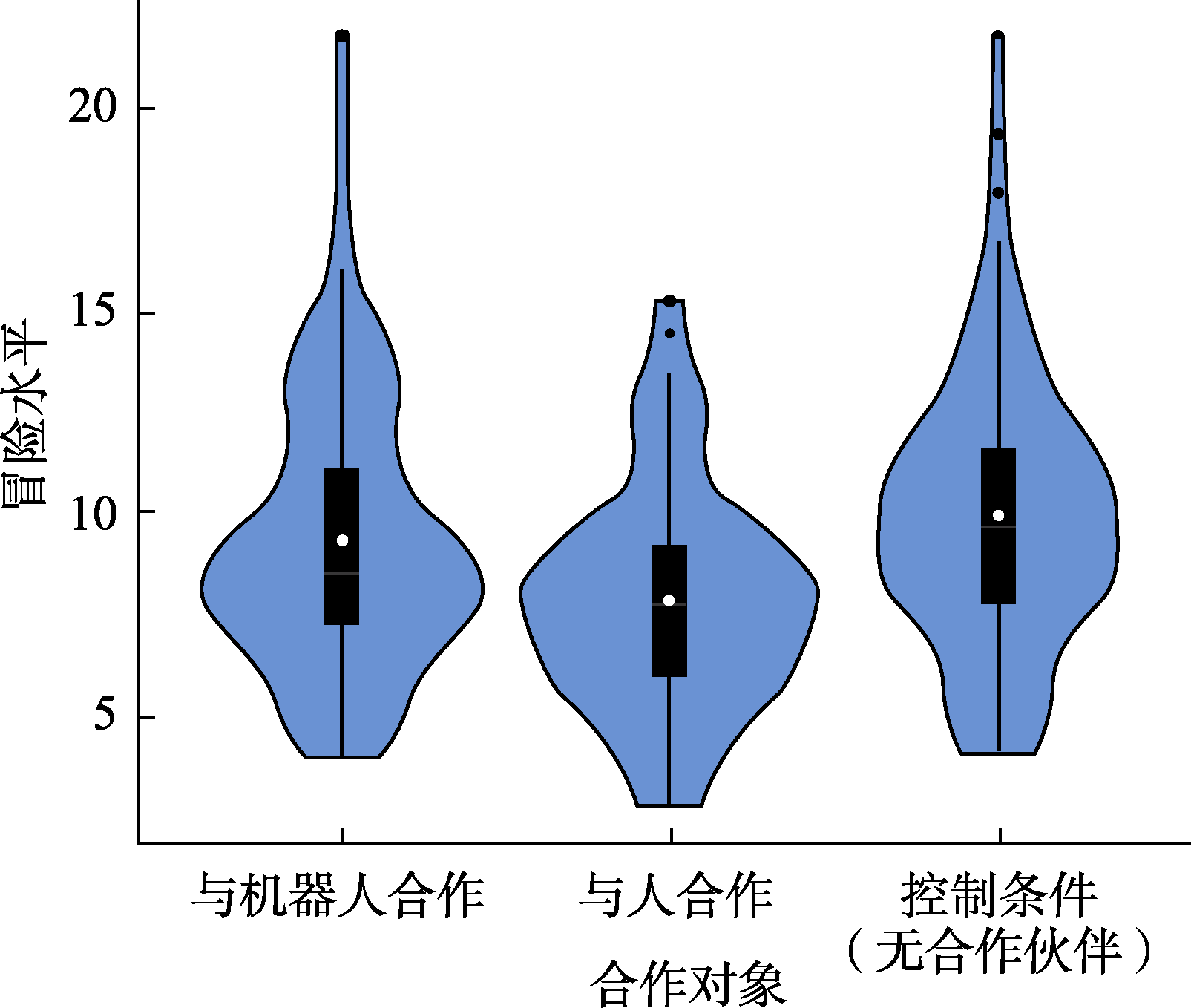
图2 实验1a 不同实验条件下的冒险水平 注: 中心白点表示平均数, 黑色的方块表示四分位数的范围
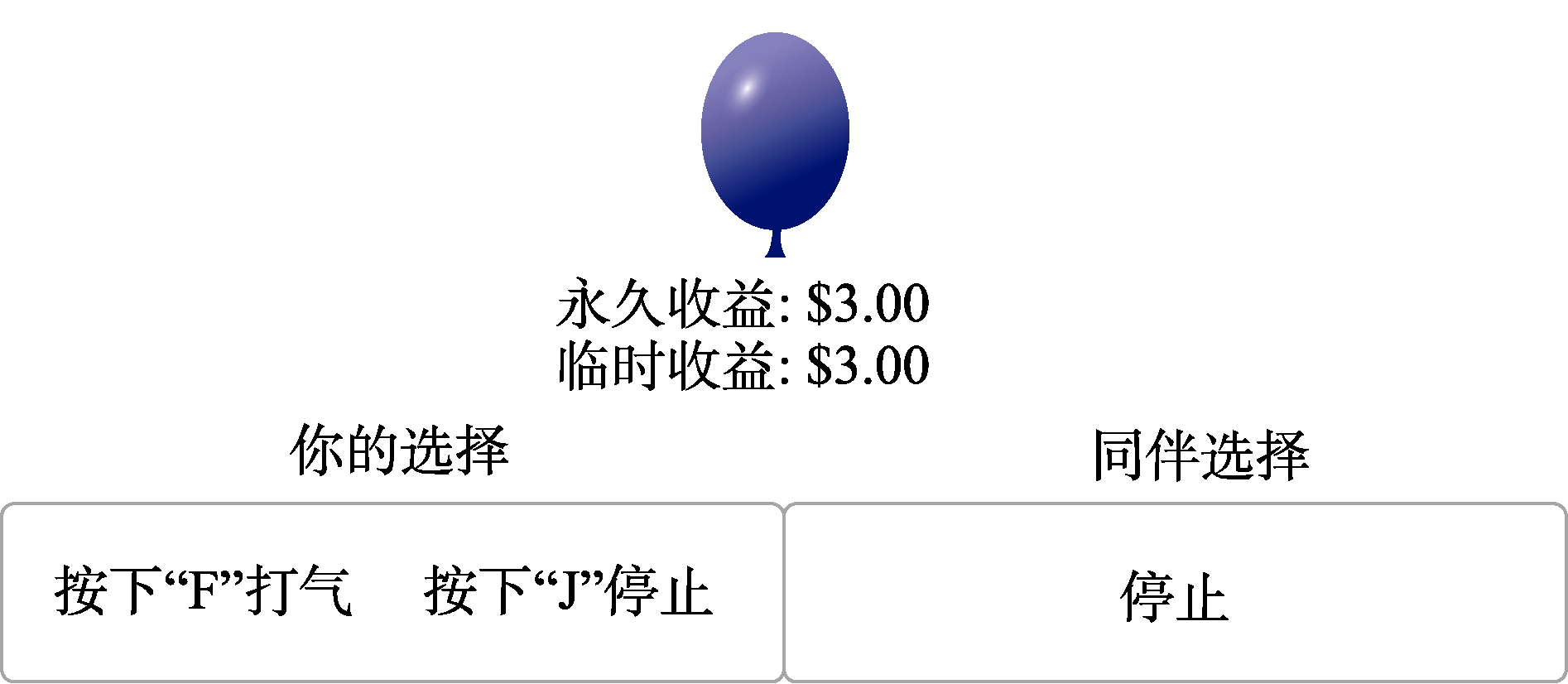
图3 人机互动情景下的风险决策
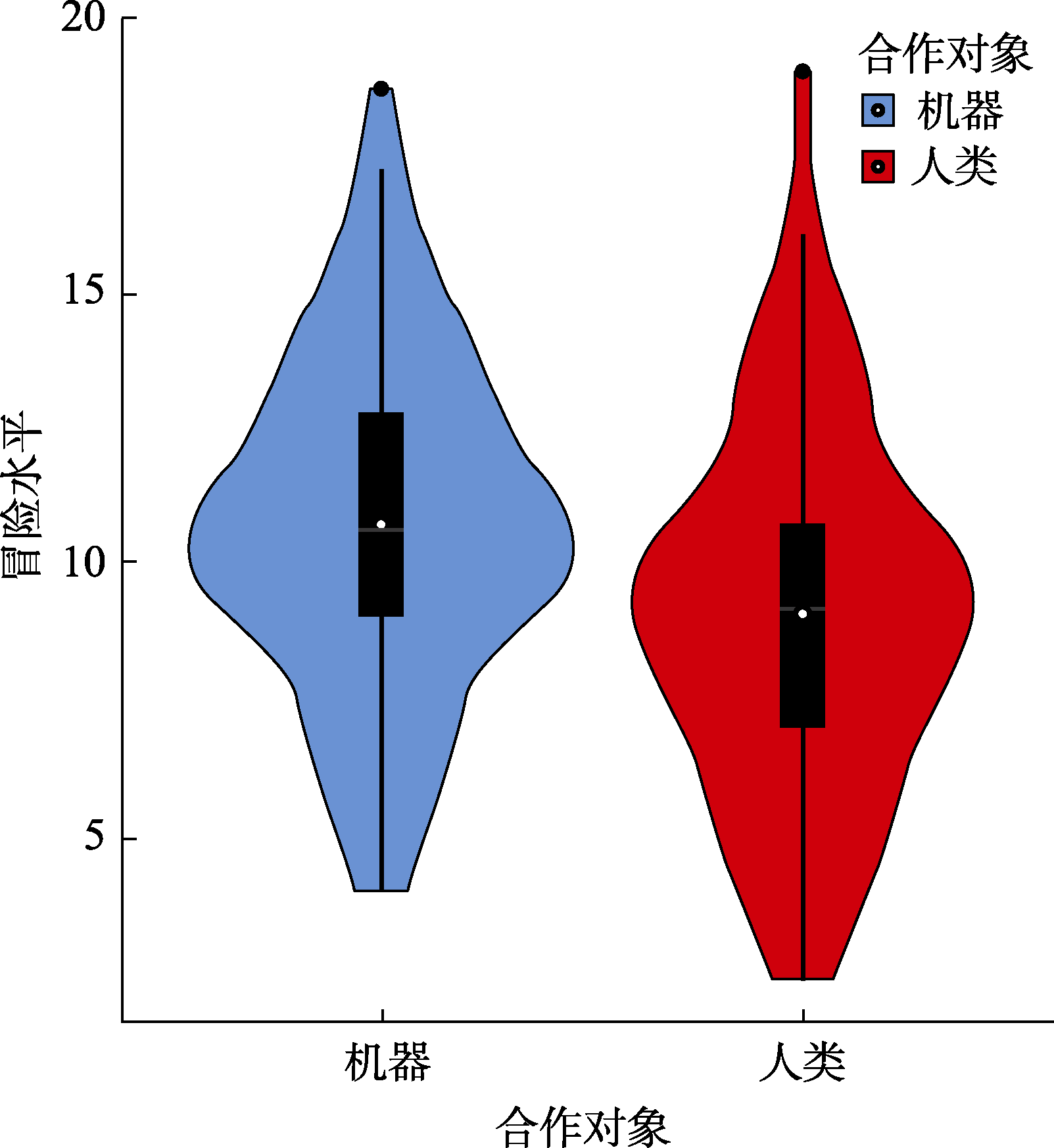
图4 不同合作对象的冒险水平
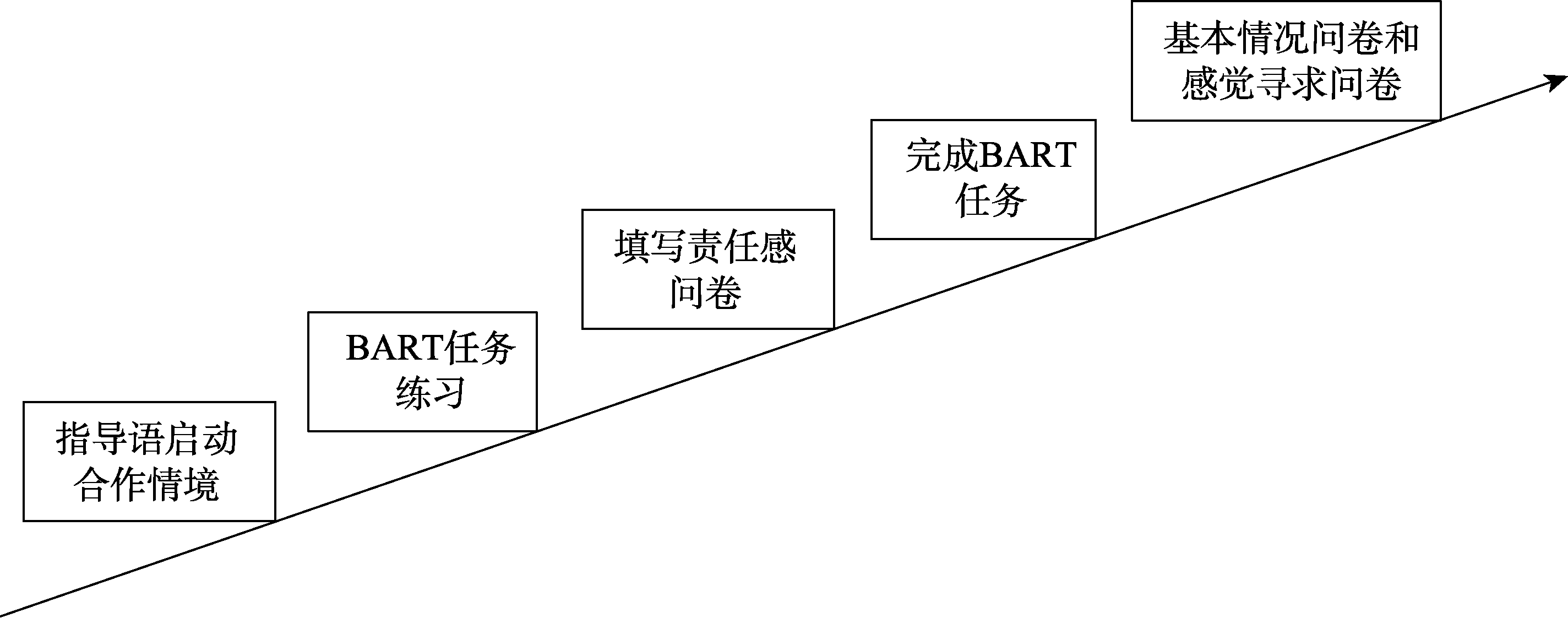
图5 实验2实验流程图
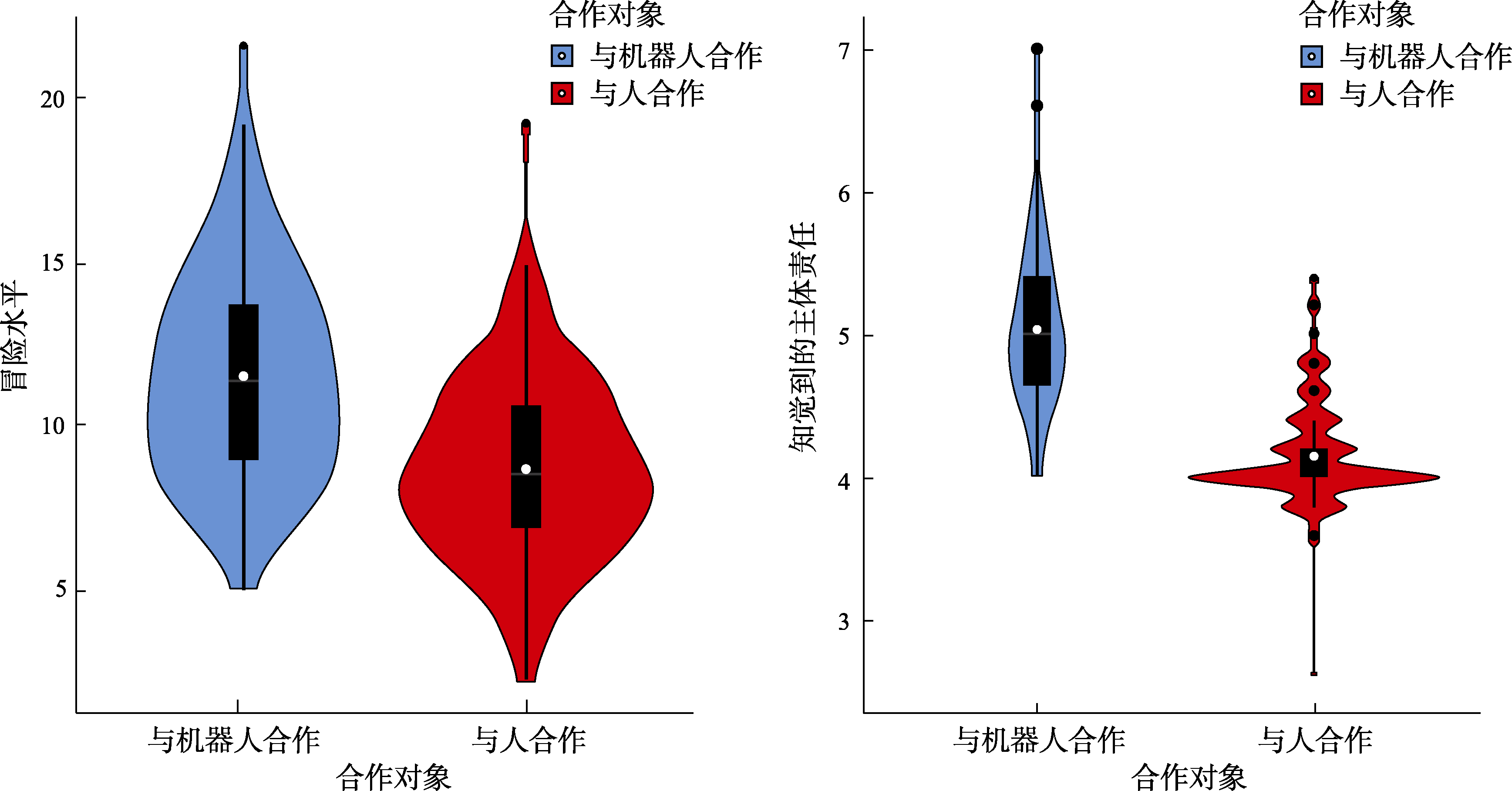
图6 不同合作情境下个体冒险水平和知觉到的主体责任
| 预测变量 | 方程1 (因变量: 平均打气次数) | 方程2 (因变量: 知觉到的主体责任) | 方程3 (因变量: 平均打气次数) | ||||||
|---|---|---|---|---|---|---|---|---|---|
| β | SE | t | β | SE | t | β | SE | t | |
| 常数 | 2.37 | 2.93** | 0.38 | 8.98*** | 2.78 | 1.09 | |||
| 年龄 | −0.002 | 0.09 | −0.03 | 0.03 | 0.01 | 0.55 | −0.01 | 0.09 | −0.13 |
| 性别 | −0.16 | 0.50 | −2.44* | −0.12 | 0.08 | −2.38* | −0.13 | 0.50 | −2.00* |
| 感觉寻求 | −0.01 | 0.03 | −0.12 | −0.03 | 0.004 | −0.62 | <0.001 | 0.03 | −0.01 |
| 合作对象 | 0.42 | 0.43 | 6.52*** | 0.69 | 0.07 | 13.32*** | 0.26 | 0.59 | 3.00** |
| 知觉到的主体责任 | 0.23 | 0.45 | 2.59* | ||||||
| F | F (4, 194) = 12.86*** | F (4, 194) = 47.16*** | F (5, 193) = 11.93*** | ||||||
| R² | 0.21 | 0.49 | 0.24 | ||||||
表1 合作对象、知觉到的主体责任对个体冒险水平影响的回归分析
| 预测变量 | 方程1 (因变量: 平均打气次数) | 方程2 (因变量: 知觉到的主体责任) | 方程3 (因变量: 平均打气次数) | ||||||
|---|---|---|---|---|---|---|---|---|---|
| β | SE | t | β | SE | t | β | SE | t | |
| 常数 | 2.37 | 2.93** | 0.38 | 8.98*** | 2.78 | 1.09 | |||
| 年龄 | −0.002 | 0.09 | −0.03 | 0.03 | 0.01 | 0.55 | −0.01 | 0.09 | −0.13 |
| 性别 | −0.16 | 0.50 | −2.44* | −0.12 | 0.08 | −2.38* | −0.13 | 0.50 | −2.00* |
| 感觉寻求 | −0.01 | 0.03 | −0.12 | −0.03 | 0.004 | −0.62 | <0.001 | 0.03 | −0.01 |
| 合作对象 | 0.42 | 0.43 | 6.52*** | 0.69 | 0.07 | 13.32*** | 0.26 | 0.59 | 3.00** |
| 知觉到的主体责任 | 0.23 | 0.45 | 2.59* | ||||||
| F | F (4, 194) = 12.86*** | F (4, 194) = 47.16*** | F (5, 193) = 11.93*** | ||||||
| R² | 0.21 | 0.49 | 0.24 | ||||||
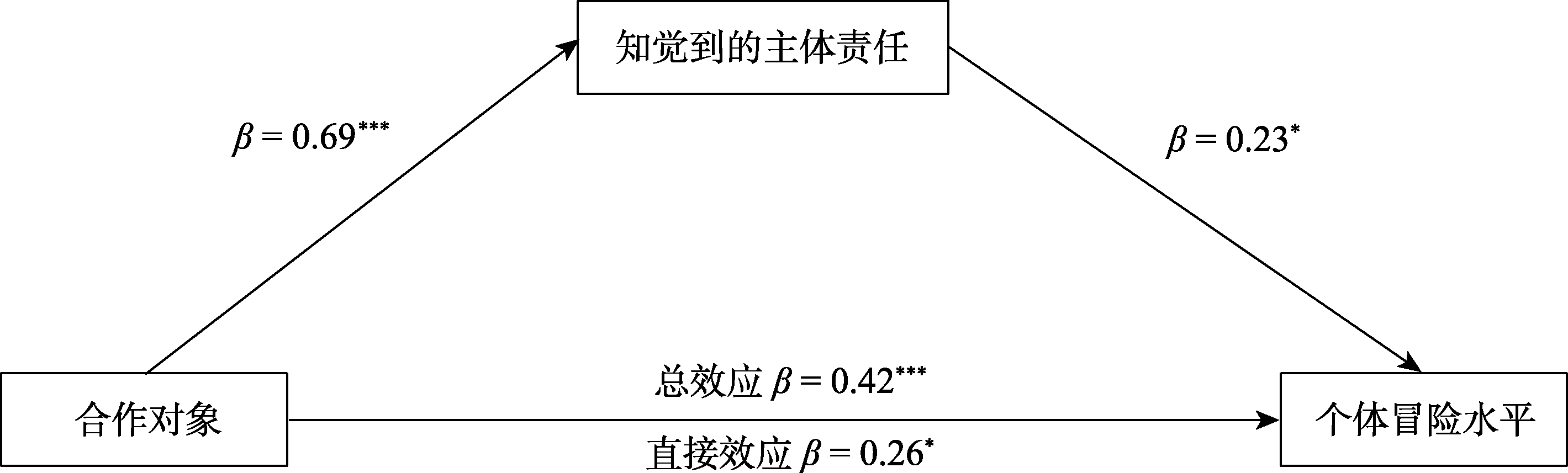
图7 知觉到主体责任的中介作用 注: 合作对象为虚拟变量, 1 = 人−机合作, 0 = 人−人合作。* p < 0.05, *** p < 0.001
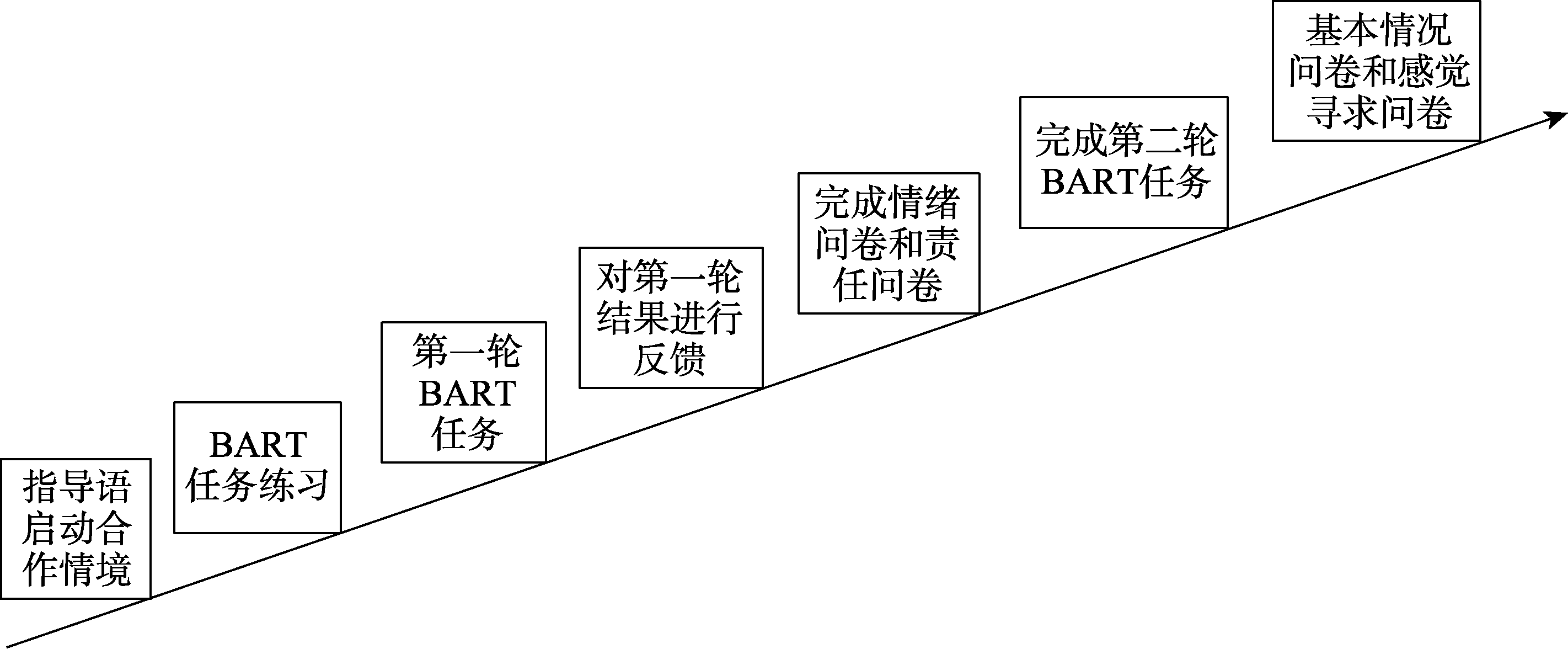
图8 实验3流程图
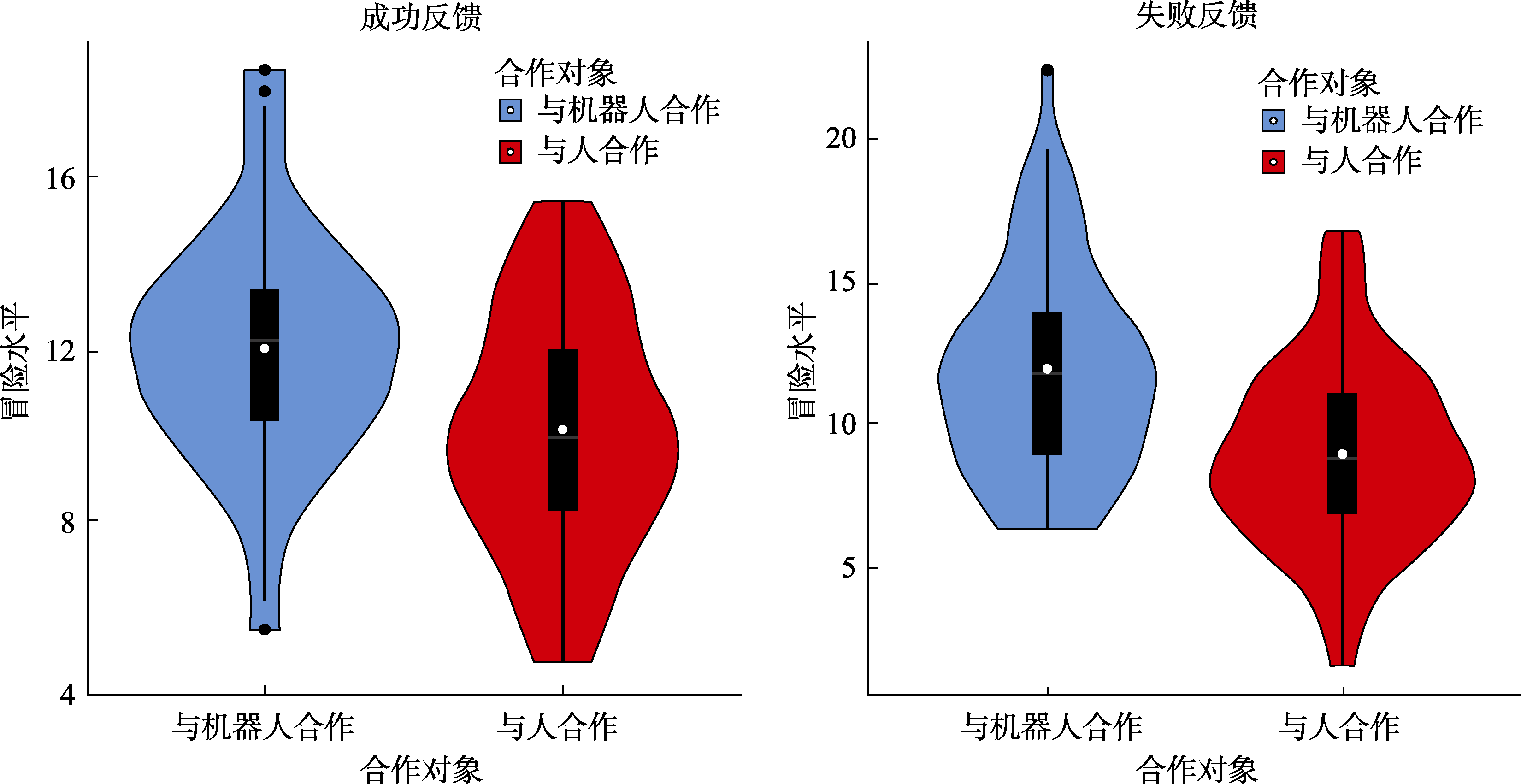
图9 不同结果反馈与合作情景下的冒险水平
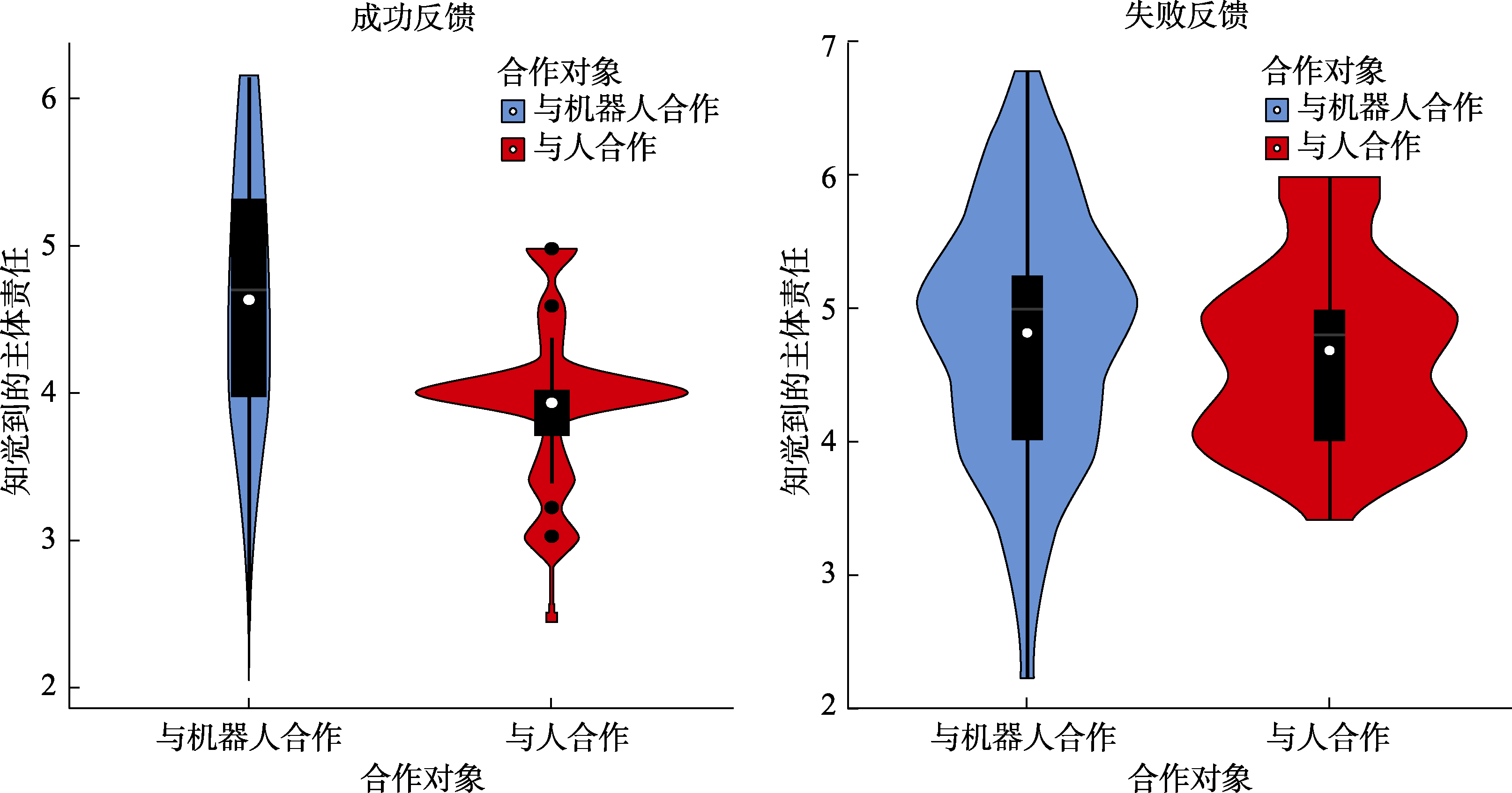
图10 不同结果反馈与合作对象下知觉到的主体责任
| 预测变量 | 方程1 (因变量: 冒险水平) | 方程2 (因变量: 知觉到主体责任) | 方程3 (因变量: 冒险水平) | ||||||
|---|---|---|---|---|---|---|---|---|---|
| β | SE | t | β | SE | t | β | SE | t | |
| 常数 | 0.003 | 0.07 | 0.04 | −0.01 | 0.07 | −0.15 | −0.03 | 0.07 | −0.44 |
| 年龄 | −0.01 | 0.07 | −0.12 | 0.01 | 0.07 | 0.20 | −0.01 | 0.06 | −0.17 |
| 性别 | −0.10 | 0.07 | −1.47 | −0.07 | 0.07 | −1.05 | −0.08 | 0.07 | −1.21 |
| 感觉寻求 | 0.06 | 0.07 | 0.84 | −0.01 | 0.07 | −0.15 | 0.07 | 0.06 | 0.03 |
| 积极情绪 | 0.14 | 0.07 | 1.86 | 0.14 | 0.07 | 1.87 | 0.10 | 0.07 | 1.36 |
| 消极情绪 | −0.09 | 0.07 | −1.22 | −0.05 | 0.07 | −0.70 | −0.09 | 0.07 | −1.31 |
| 合作对象 | 0.34 | 0.07 | 5.05*** | 0.22 | 0.07 | 3.28** | 0.30 | 0.07 | 4.50*** |
| 结果反馈 | −0.02 | 0.08 | −0.20 | 0.33 | 0.08 | 4.36*** | −0.09 | 0.08 | −1.20 |
| 知觉到的主体责任 | 0.25 | 0.07 | 3.57*** | ||||||
| 结果反馈×合作对象 | 0.05 | 0.07 | 0.79 | −0.18 | 0.07 | −2.61** | 0.06 | 0.07 | 0.94 |
| 结果反馈×知觉到的主体责任 | 0.13 | 0.07 | 1.82 | ||||||
| F | F (8, 190) = 5.67*** | F (8, 190) = 5.13*** | F (10, 188) = 6.50*** | ||||||
| R² | 0.19 | 0.18 | 0.26 | ||||||
表2 有调节的中介效应检验(N = 199)
| 预测变量 | 方程1 (因变量: 冒险水平) | 方程2 (因变量: 知觉到主体责任) | 方程3 (因变量: 冒险水平) | ||||||
|---|---|---|---|---|---|---|---|---|---|
| β | SE | t | β | SE | t | β | SE | t | |
| 常数 | 0.003 | 0.07 | 0.04 | −0.01 | 0.07 | −0.15 | −0.03 | 0.07 | −0.44 |
| 年龄 | −0.01 | 0.07 | −0.12 | 0.01 | 0.07 | 0.20 | −0.01 | 0.06 | −0.17 |
| 性别 | −0.10 | 0.07 | −1.47 | −0.07 | 0.07 | −1.05 | −0.08 | 0.07 | −1.21 |
| 感觉寻求 | 0.06 | 0.07 | 0.84 | −0.01 | 0.07 | −0.15 | 0.07 | 0.06 | 0.03 |
| 积极情绪 | 0.14 | 0.07 | 1.86 | 0.14 | 0.07 | 1.87 | 0.10 | 0.07 | 1.36 |
| 消极情绪 | −0.09 | 0.07 | −1.22 | −0.05 | 0.07 | −0.70 | −0.09 | 0.07 | −1.31 |
| 合作对象 | 0.34 | 0.07 | 5.05*** | 0.22 | 0.07 | 3.28** | 0.30 | 0.07 | 4.50*** |
| 结果反馈 | −0.02 | 0.08 | −0.20 | 0.33 | 0.08 | 4.36*** | −0.09 | 0.08 | −1.20 |
| 知觉到的主体责任 | 0.25 | 0.07 | 3.57*** | ||||||
| 结果反馈×合作对象 | 0.05 | 0.07 | 0.79 | −0.18 | 0.07 | −2.61** | 0.06 | 0.07 | 0.94 |
| 结果反馈×知觉到的主体责任 | 0.13 | 0.07 | 1.82 | ||||||
| F | F (8, 190) = 5.67*** | F (8, 190) = 5.13*** | F (10, 188) = 6.50*** | ||||||
| R² | 0.19 | 0.18 | 0.26 | ||||||
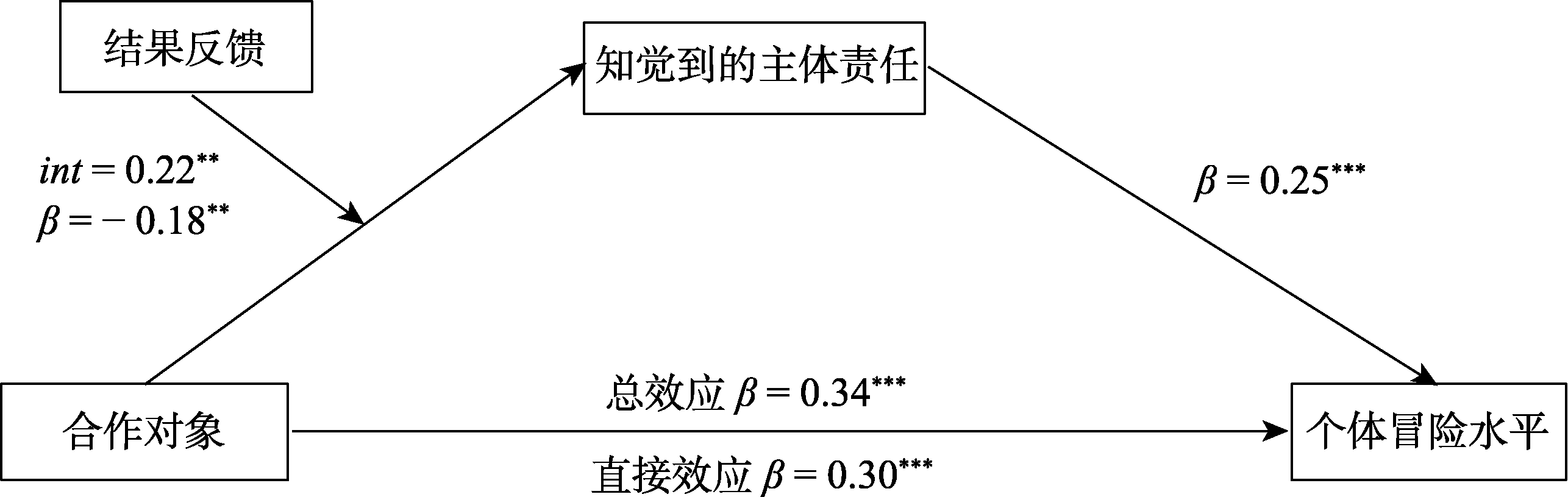
图11 有调节的中介作用 注: 合作对象为虚拟变量, 1 = 人−机合作, 0 = 人−人合作。** p < 0.01, *** p < 0.001
| 中介变量 | 结果反馈 | effect | BootSE | BootCI下限 | BootCI上限 |
|---|---|---|---|---|---|
| 知觉到的 主体责任 | 成功(0) | 0.0821 | 0.0354 | 0.0246 | 0.1622 |
| 失败(1) | 0.0094 | 0.0233 | −0.0329 | 0.0607 |
表3 成功/失败反馈下知觉到的主体责任的中介效应
| 中介变量 | 结果反馈 | effect | BootSE | BootCI下限 | BootCI上限 |
|---|---|---|---|---|---|
| 知觉到的 主体责任 | 成功(0) | 0.0821 | 0.0354 | 0.0246 | 0.1622 |
| 失败(1) | 0.0094 | 0.0233 | −0.0329 | 0.0607 |
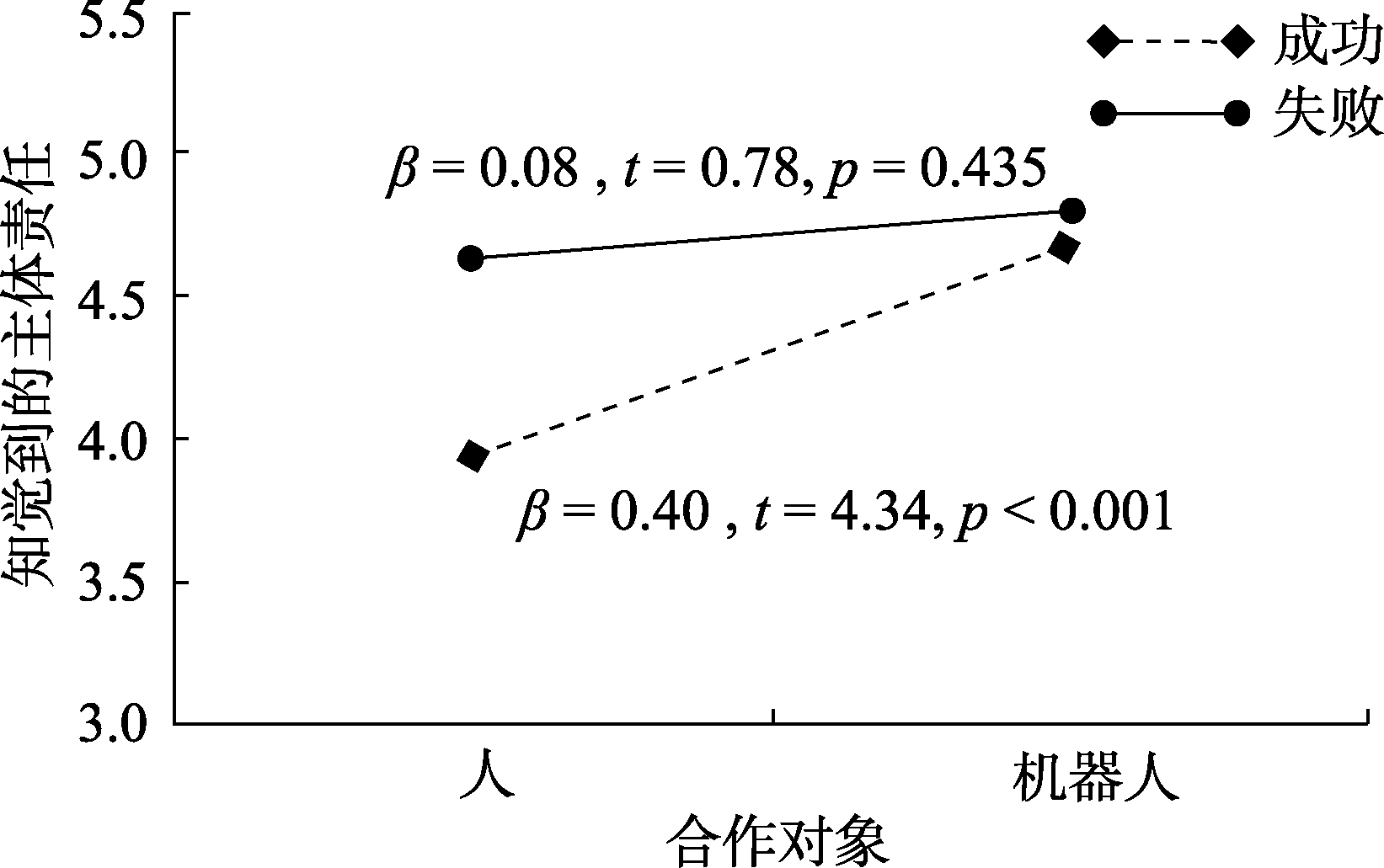
图12 结果反馈的调节作用
| [1] | Abele, A. E., & Wojciszke, B. (2014). Communal and agentic content in social cognition:A dual perspective model. In M. P.Zanna & J. M.Olson (Eds.), Advances in experimental social psychology (Vol. 50, pp. 195-255). Academic Press. |
| [2] | Atanasov, P., & Kunreuther, H. (2016). Cautious defection: Group representatives cooperate and risk less than individuals. Journal of Behavioral Decision Making, 29(4), 372-380. |
| [3] | Awad, E., Levine, S., Kleiman-Weiner, M., Dsouza, S., Tenenbaum, J. B., Shariff, A., Bonnefon, J.-F., & Rahwan, I. (2019). Drivers are blamed more than their automated cars when both make mistakes. Nature Human Behaviour, 4(2), 134-143. |
| [4] | Bolton, G. E., Ockenfels, A., & Stauf, J. (2015). Social responsibility promotes conservative risk behavior. European Economic Review, 74, 109-127. |
| [5] | Charness, G., & Jackson, M. O. (2009). The role of responsibility in strategic risk-taking. Journal of Economic Behavior & Organization, 69(3), 241-247. |
| [6] | Chong, L., Zhang, G., Goucher-Lambert, K., Kotovsky, K., & Cagan, J. (2022). Human confidence in artificial intelligence and in themselves: The evolution and impact of confidence on adoption of AI advice. Computers in Human Behavior, 127, 107018. |
| [7] |
Darley, J. M., & Latane, B. (1968). Bystander intervention in emergencies: Diffusion of responsibility. Journal of Personality and Social Psychology, 8(4, Pt.1), 377-383.
pmid: 5645600 |
| [8] |
Decety, J., Jackson, P. L., Sommerville, J. A., Chaminade, T., & Meltzoff, A. N. (2004). The neural bases of cooperation and competition: An fMRI investigation. Neuroimage, 23(2), 744-751.
pmid: 15488424 |
| [9] | Duan, Y., Edwards, J. S., & Dwivedi, Y. K. (2019). Artificial intelligence for decision making in the era of big data - Evolution, challenges and research agenda. International Journal of Information Management, 48, 63-71. |
| [10] |
Faul, F., Erdfelder, E., Lang, A. G., & Buchner, A. (2007). G*power 3: A flexible statistical power analysis program for the social, behavioral, and biomedical sciences. Behavior Research Methods, 39(2), 175-191.
doi: 10.3758/bf03193146 pmid: 17695343 |
| [11] |
Forgiarini, M., Gallucci, M., & Maravita, A. (2011). Racism and the empathy for pain on our skin. Frontiers in Psychology, 2, 108.
doi: 10.3389/fpsyg.2011.00108 pmid: 21687466 |
| [12] | Franklin, M., Ashton, H., Awad, E., & Lagnado, D. (2022). Causal framework of artificial autonomous agent responsibility. In V. Conitzer & J. Tasioulas (Chair), Proceedings of the 2022 AAAI/ACM Conference on AI, Ethics, and Society (pp. 276-284), Oxford United Kingdom. |
| [13] | Gombolay, M. C., Gutierrez, R. A., Clarke, S. G., Sturla, G. F., & Shah, J. A. (2015). Decision-making authority, team efficiency and human worker satisfaction in mixed human-robot teams. Autonomous Robots, 39(3), 293-312 |
| [14] | Gong, J. P., Zhang, X., Zhang, G., Wang, Q. L., & Fan, C. X. (2021). The relationship between college students' subjective well-being, coping styles, and social desirability. Chinese Journal of Health Psychology, 29(8), 1262-1265. |
| [巩金培, 张希, 张改, 王庆林, 范成香. (2021). 大学生主观幸福感、应对方式与社会赞许性的关系. 中国健康心理学杂志, 29(8), 1262-1265.] | |
| [15] | Haesevoets, T., De Cremer, D., Dierckx, K., & Van Hiel, A. (2021). Human-machine collaboration in managerial decision making. Computers in Human Behavior, 119, Article 106730. |
| [16] | Hayes, A. F. (2018). Introduction to mediation, moderation, and conditional process analysis: A regression-based approach (2nd ed.). New York: Guilford Press. |
| [17] | He, H., Martinsson, P., & Sutter, M. (2012). Group decision making under risk: An experiment with student couples. Economics Letters, 117(3), 691-693. |
| [18] | Hewstone, M., Rubin, M., & Willis, H. (2002). Intergroup bias. Annual Review of Psychology, 53(1), 575-604. |
| [19] | Hinds, P. J., Roberts, T. L., & Jones, H. (2004). Whose job is it anyway? A study of human-robot interaction in a collaborative task. Human-Computer Interaction, 19(1-2), 151-181. |
| [20] | Hong, J. W., Cruz, I., & Williams, D. (2021). AI, you can drive my car: How we evaluate human drivers vs. self- driving cars. Computers in Human Behavior, 125, 106944. |
| [21] | Huang, L., Yang, Y. Z., & Ji, Z. M. (2003). Applicability of the Positive and Negative Affect Scale in Chinese. Chinese Mental Health Journal, 17(1), 54-56. |
| [黄丽, 杨廷忠, 季忠民. (2003). 正性负性情绪量表的中国人群适用性研究. 中国心理卫生杂志, 17(1), 54-56.] | |
| [22] | Kim, T., & Hinds, P. (2006, September). Who should I blame? Effects of autonomy and transparency on attributions in human-robot interaction. ROMAN 2006 - The 15th IEEE International Symposium on Robot and Human Interactive Communication. |
| [23] | Lei, X., & Rau, P. P. (2021a). Effect of relative status on responsibility attributions in human-robot collaboration: Mediating role of sense of responsibility and moderating role of power distance orientation. Computers in Human Behavior, 122, 106820. |
| [24] | Lei, X., & Rau, P. P. (2021b). Should I Blame the human or the robot? attribution within a human-robot group. International Journal of Social Robotics, 13(2), 363-377. |
| [25] |
Levine, M., Prosser, A., Evans, D., & Reicher, S. (2005). Identity and emergency intervention: How social group membership and inclusiveness of group boundaries shape helping behavior. Personality and Social Psychology Bulletin, 31(4), 443-453.
doi: 10.1177/0146167204271651 pmid: 15743980 |
| [26] | Matsui, T., & Koike, A. (2021). Who is to blame? The appearance of virtual agents and the attribution of perceived responsibility. Sensors, 21(8), 2646. |
| [27] | Miller, D. T., & Ross, M. (1975). Self-serving biases in the attribution of causality: Fact or fiction? Psychological Bulletin, 82(2), 213-225. |
| [28] | Mittal, S. K. (2022). Behavior biases and investment decision: Theoretical and research framework. Qualitative Research in Financial Markets, 14(2), 213-228. |
| [29] | Oliveira, R., Arriaga, P., Correia, F., & Paiva, A. (2020). Looking beyond collaboration: Socioemotional positive, negative and task-oriented behaviors in human-robot group interactions. International Journal of Social Robotics, 12(2), 505-518. |
| [30] | Parise, S., Kiesler, S., Sproull, L., & Waters, K. (1996, November). My partner is a real dog: Cooperation with social agents. Paper presented at the meeting of the CSCW 96 Conference on Computer-Supported Cooperative Work. New York: ACM. |
| [31] | Posard, M. N., & Rinderknecht, R. G. (2015). Do people like working with computers more than human beings? Computers in Human Behavior, 51, 232-238. |
| [32] | Savela, N., Kaakinen, M., Ellonen, N., & Oksanen, A. (2021). Sharing a work team with robots: The negative effect of robot co-workers on in-group identification with the work team. Computers in Human Behavior, 115, 106585. |
| [33] | Schoemann, A. M., Boulton, A. J., & Short, S. D. (2017). Determining power and sample size for simple and complex mediation models. Social Psychological and Personality Science, 8(4), 379-386. |
| [34] | Silva, K., Chein, J., & Steinberg, L. (2020). The influence of romantic partners on male risk-taking. Journal of Social and Personal Relationships, 37(5), 1405-1415. |
| [35] | Tang, W. C. (2017). Men and women working together can make of job easier: The study on risk decisions made by two-person group of different genders [Unpublished master’s thesis]. Beijing University of Posts and Telecommunications. |
| [唐伟超. (2017). 男女搭配干活不累: 异性组合的两人共同风险决策研究 (硕士学位论文). 北京邮电大学.] | |
| [36] | Turner, J. C., Hogg, M. A., Oakes, P. J., Reicher, S. D., & Wetherell, M. S. (1987). Rediscovering the social group: A self-categorization theory. Basil Blackwell. |
| [37] | Wang, Z., Kuang, Y., Tang, H., Gao, C., Chen, A., & Chan, K. (2018). Are decisions made by group representatives more risk averse? The effect of sense of responsibility. Journal of Behavioral Decision Making, 31(3), 311-323. |
| [38] | Watson, D., Clark, L. A., & Tellegen, A. (1988). Development and validation of brief measures of positive and negative affect: The PANAS scales. Journal Personal Social Psychology, 54(6), 1063-1070. |
| [39] |
Wen, Z. L., & Ye, B. J. (2014). Different methods for testing moderated mediation models: Competitors or backups? Acta Psychologica Sinica, 46(5), 714-726.
doi: 10.3724/SP.J.1041.2014.00714 |
| [温忠麟, 叶宝娟. (2014). 有调节的中介模型检验方法: 竞争还是替补? 心理学报, 46(5), 714-726.] | |
| [40] | Xiong, W., Wang, C., & Ma, L. (2023). Partner or subordinate? Sequential risky decision-making behaviors under human- machine collaboration contexts. Computers in Human Behavior, 139, 107556. |
| [41] |
Xu, S. H., Fang, Z., & Rao, H. Y. (2013). Real or hypothetical monetary rewards modulates risk taking behavior. Acta Psychologica Sinica, 45(8), 874-886.
doi: 10.3724/SP.J.1041.2013.00874 |
| [徐四华, 方卓, 饶恒毅. (2013). 真实和虚拟金钱奖赏影响风险决策行为. 心理学报, 45(8), 874-886.] | |
| [42] |
Xu, S. H., Pan, Y., Qu, Z., Fang, Z., Yang, Z. J., Yang, F.,... Rao, H. Y. (2018). Differential effects of real versus hypothetical monetary reward magnitude on risk-taking behavior and brain activity. Scientific Reports, 8(1), 3712.
doi: 10.1038/s41598-018-21820-0 pmid: 29487303 |
| [43] | You, S., Nie, J., Suh, K., & Sundar, S. S. (2011). When the robot criticizes you… Self-serving bias in human-robot interaction. 2011 6th ACM/IEEE International Conference on Human-Robot Interaction (HRI). |
| [44] | Yue, B., & Li, H. (2023). The impact of human-AI collaboration types on consumer evaluation and usage intention: A perspective of responsibility attribution. Frontiers in Psychology, 14, 1277861. |
| [45] | Yue, L. Z., Li, S., & Liang, Z. Y. (2018). New avenues for the development of domain-specific nature of risky decision making. Advances in Psychological Science, 26(5), 928-938. |
|
[岳灵紫, 李纾, 梁竹苑. (2018). 风险决策中的领域特异性. 心理科学进展, 26(5), 928-938.]
doi: 10.3724/SP.J.1042.2018.00928 |
|
| [46] | Zhao, S. (2004). A study on the relationship between Sensation seeking (SS) and mental health of college students [Unpublished master’s thesis]. Northeast Normal University, Changchun. |
| [赵闪. (2004). 大学生感觉寻求及其与心理健康关系的研究 (硕士学位论文). 东北师范大学, 长春.] |
| [1] | 李春好, 刘荣媛, 刘远豪. 经典和对偶共结果效应对前景集结果区间的依赖性:基于概率权重的视角[J]. 心理学报, 2025, 57(3): 398-414. |
| [2] | 陆嘉琦, 李雨斯, 何贵兵. 双相障碍患者的风险决策偏好:来自三水平元分析的证据[J]. 心理学报, 2025, 57(1): 100-124. |
| [3] | 刘洪志, 李兴珊, 李纾, 饶俪琳. 基于期望值最大化的理论何时失效:风险决策中为自己-为所有人决策差异的眼动研究[J]. 心理学报, 2022, 54(12): 1517-1531. |
| [4] | 张银玲, 虞祯, 买晓琴. 社会价值取向对自我-他人风险决策的影响及其机制[J]. 心理学报, 2020, 52(7): 895-908. |
| [5] | 杨玲, 王斌强, 耿银凤, 姚东伟, 曹华, 张建勋, 许琼英. 虚拟和真实金钱奖赏幅度对海洛因戒断者风险决策的影响[J]. 心理学报, 2019, 51(4): 507-516. |
| [6] | 周蕾, 李爱梅, 张磊, 李纾, 梁竹苑. 风险决策和跨期决策的过程比较:以确定效应和即刻效应为例[J]. 心理学报, 2019, 51(3): 337-352. |
| [7] | 陈嘉欣;何贵兵. “金钱−环境”复合收益的风险决策:价值取向的影响[J]. 心理学报, 2017, 49(4): 500-512. |
| [8] | 陆青云;陶芳标;侯方丽;孙莹. 青少年应激下皮质醇应答与风险决策相关性的性别差异[J]. 心理学报, 2014, 46(5): 647-655. |
| [9] | 徐四华;方卓;饶恒毅. 真实和虚拟金钱奖赏影响风险决策行为[J]. 心理学报, 2013, 45(8): 874-886. |
| [10] | 徐四华. 网络成瘾者的行为冲动性—— 来自爱荷华赌博任务的证据[J]. 心理学报, 2012, 44(11): 1523-1534. |
| [11] | 贺伟,龙立荣. 薪酬体系框架与考核方式对个人绩效薪酬选择的影响[J]. 心理学报, 2011, 43(10): 1198-1210. |
| [12] | 张文慧,王晓田. 自我框架、风险认知和风险选择[J]. 心理学报, 2008, 40(06): 633-641. |
| [13] | 张锋,周艳艳,李鹏,沈模卫. 海洛因戒除者的行为冲动性: 基于DDT和IGT任务反应模式的探讨 [J]. 心理学报, 2008, 40(06): 642-653. |
| [14] | 王晓田. 投资决策进化心理学的研究:预期的私人资金分配和父母对子女的差异性精力投入[J]. 心理学报, 2007, 39(03): 406-414. |
| [15] | 何贵兵,白凤祥. 风险决策中的参照点效应研究[J]. 心理学报, 1997, 29(2): 178-186. |
| 阅读次数 | ||||||
|
全文 |
|
|||||
|
摘要 |
|
|||||
