

ISSN 0439-755X
CN 11-1911/B
主办:中国心理学会
中国科学院心理研究所
出版:科学出版社
CN 11-1911/B
主办:中国心理学会
中国科学院心理研究所
出版:科学出版社
心理学报 ›› 2026, Vol. 58 ›› Issue (4): 571-589.doi: 10.3724/SP.J.1041.2026.0571 cstr: 32110.14.2026.0571
• 研究报告 • 下一篇
王爱君1,2( ), 黄杰1,2(), 赵丹娜3, 李欣3, 张明4,5
收稿日期:2025-04-27
发布日期:2026-01-16
出版日期:2026-04-25
通讯作者:
王爱君, E-mail: wangaj@gxnu.edu.cn;基金资助:
WANG Aijun1,2(), HUANG Jie1,2(), ZHAO Danna3, LI Xin3, ZHANG Ming4,5
Received:2025-04-27
Online:2026-01-16
Published:2026-04-25
摘要:
认知加工水平假说认为跨通道冲突中的感觉主导效应存在反应前水平的视觉主导效应以及反应水平的听觉主导效应, 但刺激在不同加工水平中的表征方式如何影响这一效应目前仍不清楚。研究采用2-1映射(2-1 mapping)范式, 将视听通道一致性条件分为一致、反应前不一致和反应不一致三种条件, 考察刺激相似性对反应前水平和反应水平跨通道冲突感觉主导效应的影响。实验1结果发现, 不相似条件在反应前水平的跨通道冲突表现为视觉主导效应、反应水平的跨通道冲突表现为听觉主导效应; 视觉相似条件显著减小了反应前水平的视觉主导效应和反应水平的听觉主导效应; 听觉相似条件显著增大了反应前水平的视觉主导效应。实验2采用经颅电刺激分别对左侧梭状回(实验2a)和左侧顶下小叶(实验2b)进行神经调控, 因果性地验证刺激相似性如何影响跨通道冲突中感觉主导效应。实验2a结果发现, 阳极刺激导致反应前水平的视觉主导效应减小; 实验2b结果发现, 阳极刺激导致反应前水平的视觉主导效应增大。研究表明, 刺激相似性能够影响跨通道冲突中的感觉主导效应, 视觉相似和听觉相似对反应前水平的感觉主导效应起到调控作用, 完善了认知加工假说对跨通道冲突感觉主导效应的解释。
中图分类号:
王爱君, 黄杰, 赵丹娜, 李欣, 张明. (2026). 刺激相似性对跨通道冲突中感觉主导效应的影响. 心理学报, 58(4), 571-589.
WANG Aijun, HUANG Jie, ZHAO Danna, LI Xin, ZHANG Ming. (2026). Stimulus similarity modulates sensory dominance effects in cross-modal conflicts. Acta Psychologica Sinica, 58(4), 571-589.
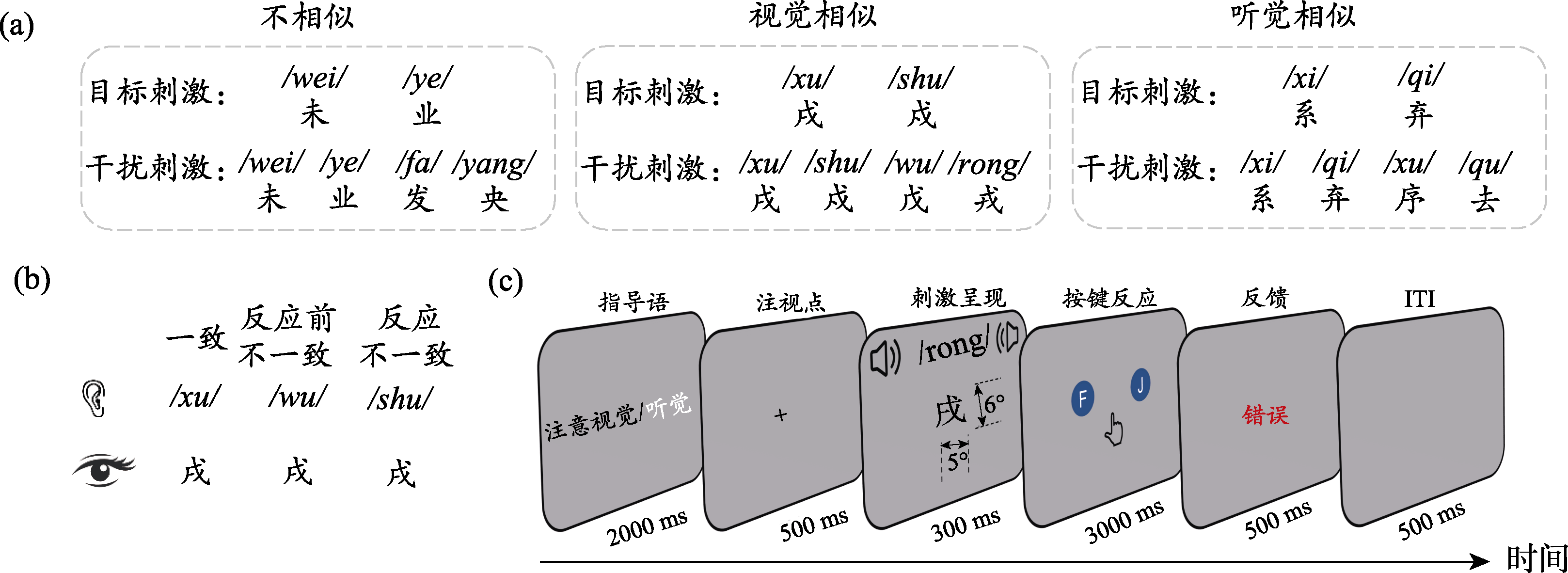
图1 (a) 不同相似性条件下的刺激材料; (b) 视听一致性条件的示意图, 以视觉相似为例; (c) 2-1 mapping实验流程图。

图2 三种相似性条件下的反应时结果。(a) 不相似组; (b) 视觉相似组; (c) 听觉相似组。 注:云雨图的形状代表反应时数据的分布, 每个点代表每个被试的反应时, 箱体代表反应时的四分位距, 箱体内部的线代表反应时的中位数。
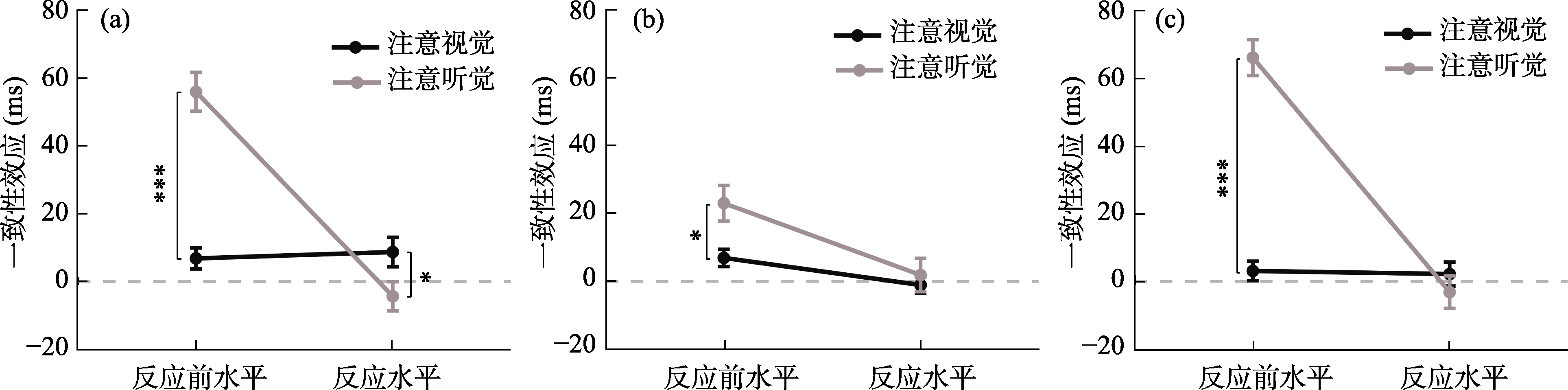
图3 不同相似性条件下的一致性效应结果。(a) 不相似组; (b) 视觉相似组; (c) 听觉相似组。
注:***p < 0.001; **p < 0.01; *p < 0.05, 下同。
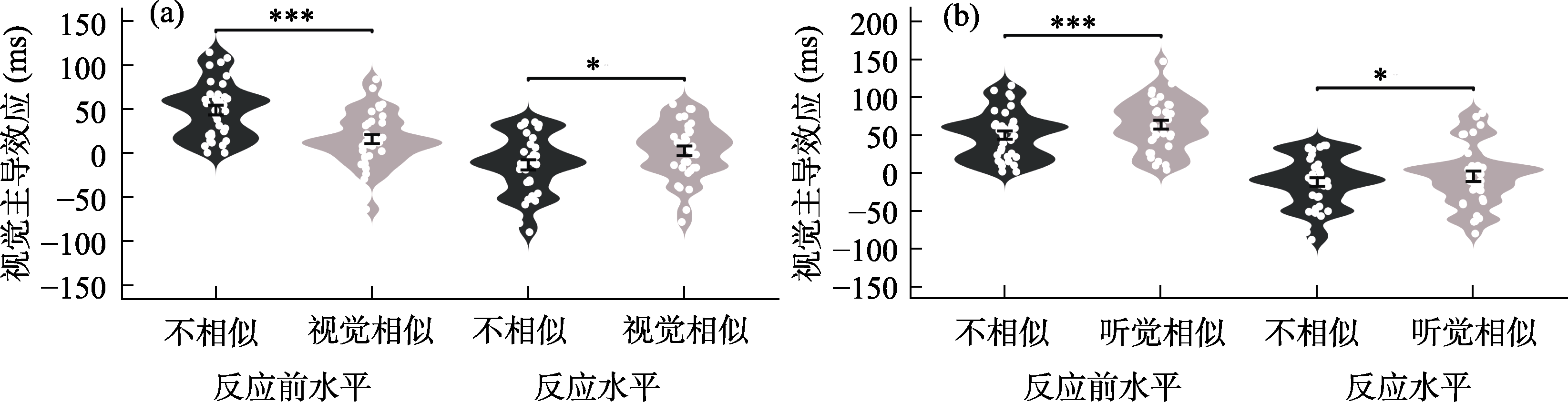
图4 不同相似性条件在反应前水平和反应水平的视觉主导效应差异; (a) 视觉相似组与不相似组; (b) 听觉相似组与不相似组。
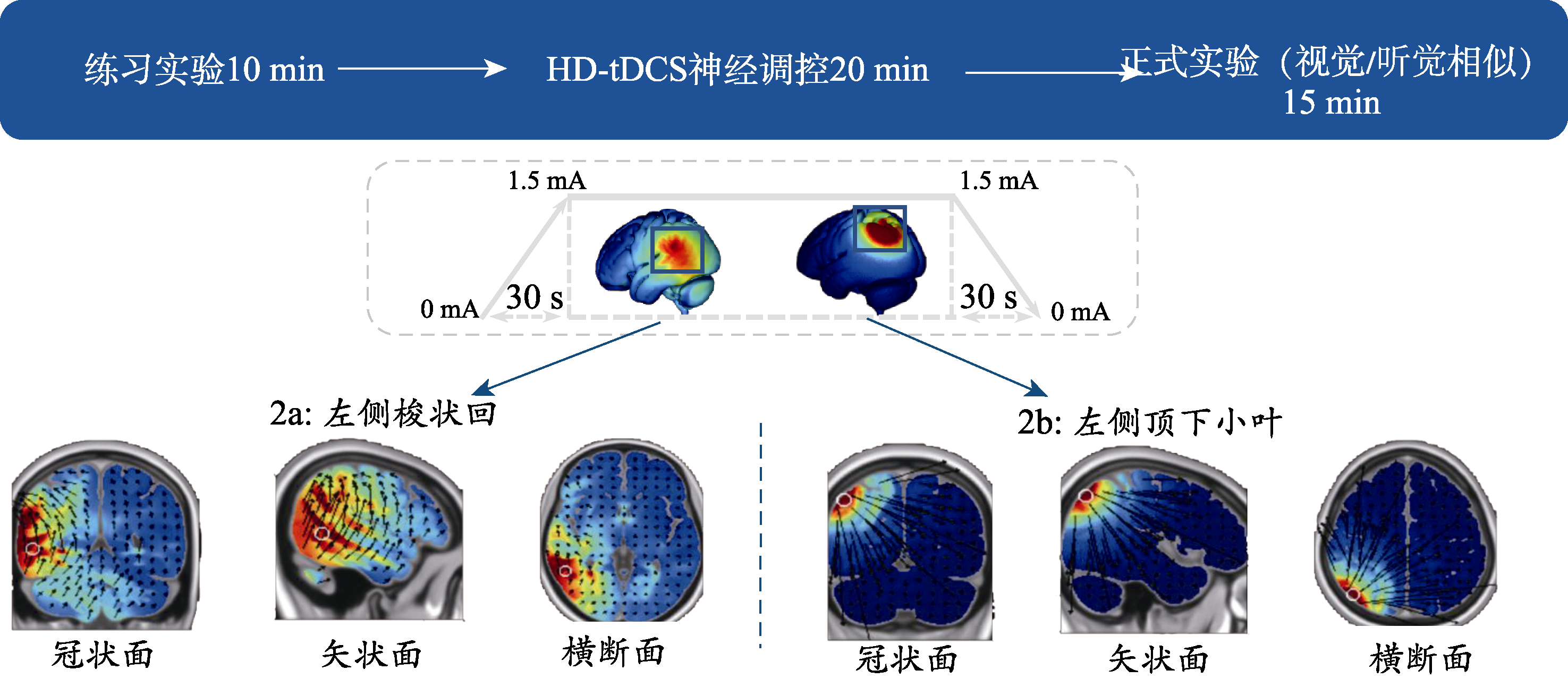
图5 HD-explore软件模拟的1.5 mA的HD-tDCS刺激左侧梭状回和左侧顶下小叶的电场强度和电流走向图

图6 不同实验条件的反应时结果。(a) 伪刺激; (b) 阳极刺激; (c) 阴极刺激。
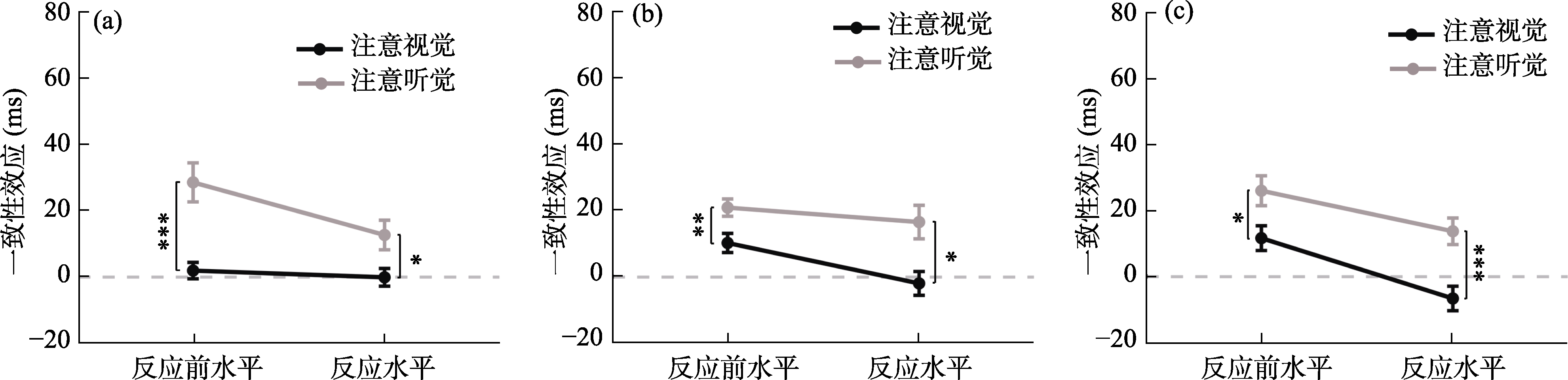
图7 三种电极类型所有实验条件的一致性效应结果。(a) 伪刺激; (b) 阳极刺激; (c) 阴极刺激。
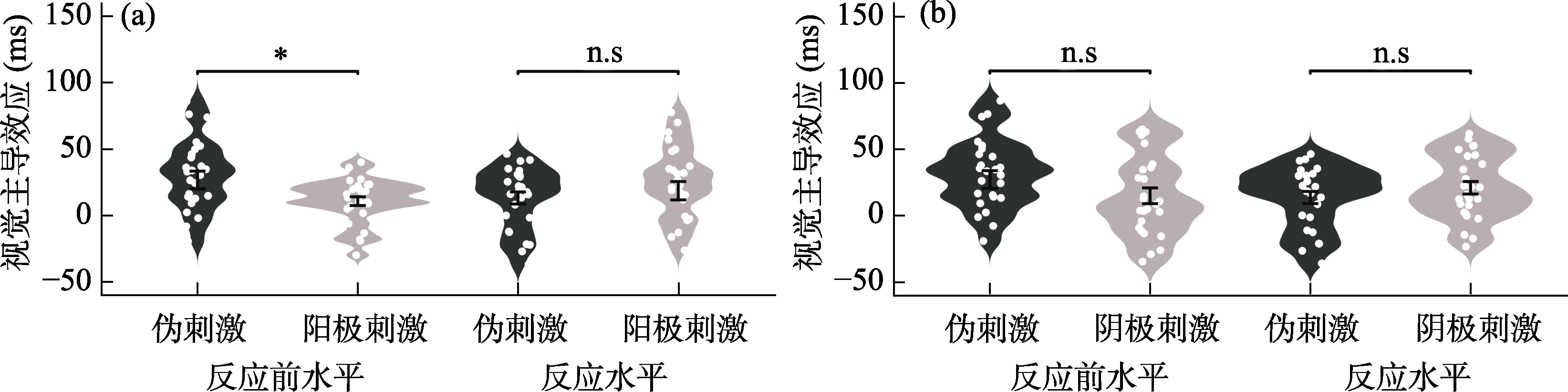
图8 不同电极类型在反应前水平和反应水平的感觉主导效应差异。(a) 阳极刺激与伪刺激; (b) 阴极刺激与伪刺激。

图9 三种电刺激类型所有实验条件的反应时结果。(a) 伪刺激; (b) 阳极刺激; (c) 阴极刺激。
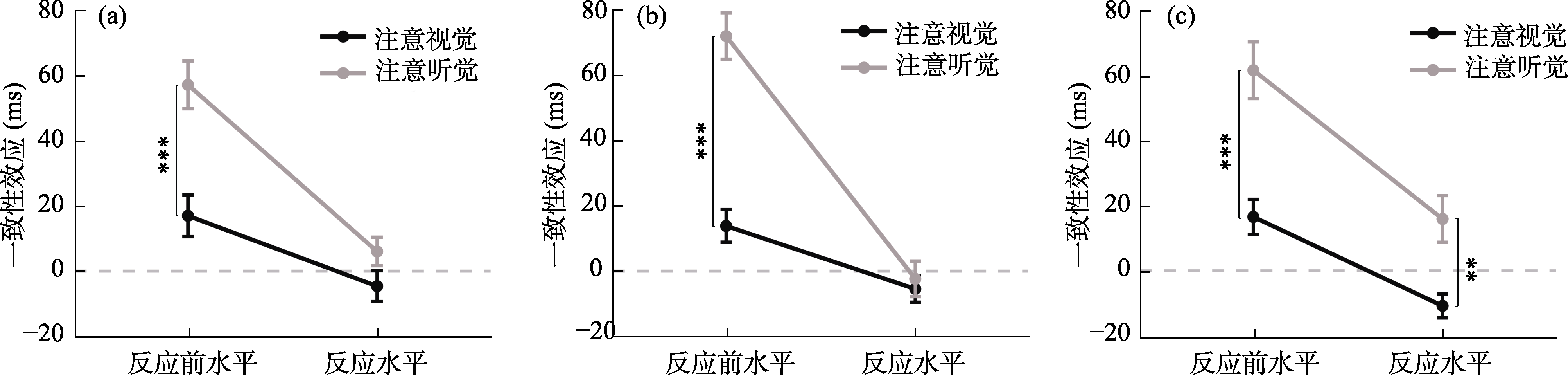
图10 三种电极类型所有实验条件的一致性效应结果。(a) 伪刺激; (b) 阳极刺激; (c) 阴极刺激。
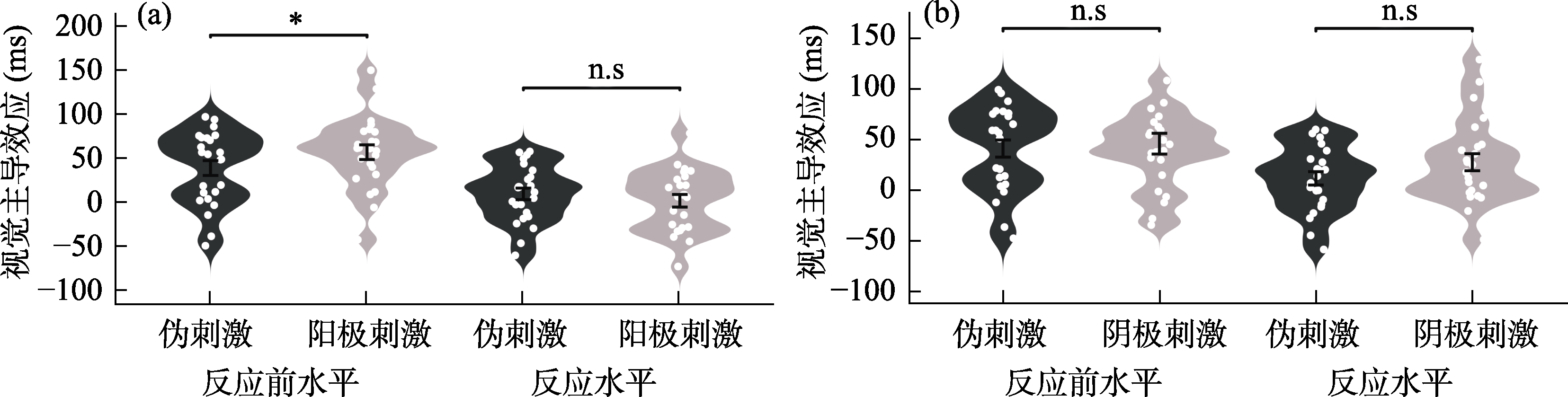
图11 不同电极类型在反应前水平和反应水平的感觉主导效应差异。(a) 阳极刺激与伪刺激; (b) 阴极刺激与伪刺激。
| [1] |
Abdel Rahman R., & Melinger A. (2009). Semantic context effects in language production: A swinging lexical network proposal and a review. Language and Cognitive Processes, 24(5), 713-734.
doi: 10.1080/01690960802597250 URL |
| [2] |
Ashby F. G., & Ell S. W. (2001). The neurobiology of human category learning. Trends in Cognitive Sciences, 5(5), 204-210.
pmid: 11323265 |
| [3] |
Boggio P. S., Zaghi S., & Fregni F. (2009). Modulation of emotions associated with images of human pain using anodal transcranial direct current stimulation (tDCS). Neuropsychologia, 47(1), 212-217.
doi: 10.1016/j.neuropsychologia.2008.07.022 pmid: 18725237 |
| [4] |
Booth J. R., Burman D. D., Meyer J. R., Gitelman D. R., Parrish T. B., & Mesulam M. M. (2002). Functional anatomy of intra- and cross-modal lexical tasks. NeuroImage, 16(1), 7-22.
doi: 10.1006/nimg.2002.1081 pmid: 11969313 |
| [5] |
Bosworth R. G., Binder E. M., Tyler S. C., & Morford J. P. (2021). Automaticity of lexical access in deaf and hearing bilinguals: Cross-linguistic evidence from the color Stroop task across five languages. Cognition, 212, 104659.
doi: 10.1016/j.cognition.2021.104659 URL |
| [6] |
Breining B., Nozari N., & Rapp B. (2016). Does segmental overlap help or hurt? Evidence from blocked cyclic naming in spoken and written production. Psychonomic Bulletin & Review, 23(2), 500-506.
doi: 10.3758/s13423-015-0900-x URL |
| [7] |
Cao F., Lee R., Shu H., Yang Y., Xu G., Li K., & Booth J. R. (2010). Cultural constraints on brain development: Evidence from a developmental study of visual word processing in mandarin Chinese. Cerebral Cortex, 20(5), 1223-1233.
doi: 10.1093/cercor/bhp186 URL |
| [8] |
Chen Q., & Zhou X. L. (2013). Vision dominates at the pre-response level and audition dominates at the response level in cross-modal interaction: Behavioral and neural evidence. The Journal of Neuroscience, 33(17), 7109-7121.
doi: 10.1523/JNEUROSCI.1985-12.2013 URL |
| [9] |
Chikazoe J., Jimura K., Asari T., Yamashita K., Morimoto H., Hirose S., Miyashita Y., & Konishi S. (2009). Functional dissociation in right inferior frontal cortex during performance of go/no-go task. Cerebral Cortex, 19(1), 146-152.
doi: 10.1093/cercor/bhn065 URL |
| [10] | Ciaramidaro A., Toppi J., Casper C., Freitag C. M., Siniatchkin M., & Astolfi L. (2018). Multiple-brain connectivity during third party punishment: An EEG hyperscanning study. Scientific Reports, 8(1), 6822. |
| [11] |
Dalrymple-Alford E. C. (1972). Sound similarity and color- word interference in the Stroop task. Psychonomic Science, 28(4), 209-210.
doi: 10.3758/BF03328712 URL |
| [12] |
Dehaene S., & Cohen L. (2011). The unique role of the visual word form area in reading. Trends in Cognitive Sciences, 15(6), 254-262.
doi: 10.1016/j.tics.2011.04.003 pmid: 21592844 |
| [13] |
De Houwer J. (2003). On the role of stimulus-response and stimulus-stimulus compatibility in the Stroop effect. Memory and Cognition, 31(3), 353-359.
doi: 10.3758/BF03194393 URL |
| [14] | DeWitt I., & Rauschecker J. P. (2012). Phoneme and word recognition in the auditory ventral stream. Proceedings of the National Academy of Sciences of the United States of America, 109(8), E505-E514. |
| [15] |
Diaconescu A. O., Alain C., & McIntosh A. R. (2011). The co-occurrence of multisensory facilitation and cross-modal conflict in the human brain. Journal of Neurophysiology, 106(6), 2896-2909.
doi: 10.1152/jn.00303.2011 pmid: 21880944 |
| [16] | Donohue S. E., Appelbaum L. G., Park C. J., Roberts K. C., & Woldorff M. G. (2013). Cross-modal stimulus conflict: The behavioral effects of stimulus input timing in a visual-auditory Stroop task. PloS ONE, 8(4), e62802. |
| [17] | Fitzhugh M. C., Whitehead P. S., Johnson L., Cai J. M., Baxter L. C., & Rogalsky C. (2019). A functional MRI investigation of cross-modal interference in an audiovisual Stroop task. PLoS ONE, 14(1), e0210736. |
| [18] |
Floyer-Lea A., Wylezinska M., Kincses T., & Matthews P. M. (2006). Rapid modulation of GABA concentration in human sensorimotor cortex during motor learning. Journal of Neurophysiology, 95(3), 1639-1644.
doi: 10.1152/jn.00346.2005 pmid: 16221751 |
| [19] |
Folstein J. R., Fuller K., Howard D., & DePatie T. (2017). The effect of category learning on attentional modulation of visual cortex. Neuropsychologia, 104, 18-30.
doi: S0028-3932(17)30278-6 pmid: 28754490 |
| [20] |
Fong M. C. M., Hui N. Y., Fung, E. S. W., Chu P. C. K., & Wang W. S. Y.. (2018). Conflict monitoring in multi-sensory flanker tasks: Effects of cross-modal distractors on the N2 component. Neuroscience Letters, 670, 31-35.
doi: 10.1016/j.neulet.2018.01.037 URL |
| [21] |
Gale T. M., Laws K. R., & Foley K. (2006). Crowded and sparse domains in object recognition: Consequences for categorization and naming. Brain and Cognition, 60(2), 139-145.
pmid: 16377049 |
| [22] |
Gao Y., Wei N., Wang Z. K., Jian J., Ding G. S., Meng X. Z., & Liu L. (2015). Interaction between native and second language processing: Evidence from a functional magnetic resonance imaging study of Chinese-English bilingual children. Acta Psychologica Sinica, 47(12), 1419-1432.
doi: 10.3724/SP.J.1041.2015.01419 |
| [高悦, 魏娜, 王正科, 简洁, 丁国盛, 孟祥芝, 刘丽. (2015). 汉-英儿童双语者母语和二语加工的相互作用: 来自神经机制方面的证据. 心理学报, 47(12), 1419-1432. | |
| [23] |
Gerlach C., Zhu X., & Joseph J. E. (2015). Structural similarity exerts opposing effects on perceptual differentiation and categorization: An FMRI study. Journal of Cognitive Neuroscience, 27(5), 974-987.
doi: 10.1162/jocn_a_00748 pmid: 25390196 |
| [24] |
Grill-Spector K., & Weiner K. S. (2014). The functional architecture of the ventral temporal cortex and its role in categorization. Nature Reviews Neuroscience, 15(8), 536-548.
doi: 10.1038/nrn3747 pmid: 24962370 |
| [25] | Guo W., Geng S., Cao M., & Feng J. (2022). Functional gradient of the fusiform cortex for Chinese character recognition. eNeuro, 9(3), 0495. |
| [26] |
Hecht D., & Reiner M. (2009). Sensory dominance in combinations of audio, visual and haptic stimuli. Experimental Brain Research, 193(2), 307-314.
doi: 10.1007/s00221-008-1626-z pmid: 18985327 |
| [27] |
Hickok G. (2009). Eight problems for the mirror neuron theory of action understanding in monkeys and humans. Journal of Cognitive Neuroscience, 21(7), 1229-1243.
doi: 10.1162/jocn.2009.21189 pmid: 19199415 |
| [28] |
Hickok G., & Poeppel D. (2007). The cortical organization of speech processing. Nature Reviews Neuroscience, 8(5), 393-402.
doi: 10.1038/nrn2113 pmid: 17431404 |
| [29] |
Hirst R. J., Kicks E. C., Allen H. A., & Cragg L. (2019). Cross-modal interference-control is reduced in childhood but maintained in aging: A cohort study of stimulus- and response-interference in cross-modal and unimodal Stroop tasks. Journal of Experimental Psychology: Human Perception and Performance, 45(5), 553-572.
doi: 10.1037/xhp0000608 pmid: 30945905 |
| [30] |
Huang S., Li Y., Zhang W., Zhang B., Liu X., Mo L., & Chen Q. (2015). Multisensory competition is modulated by sensory pathway interactions with fronto-sensorimotor and default-mode network regions. Journal of Neuroscience, 35(24), 9064-9077.
doi: 10.1523/JNEUROSCI.3760-14.2015 pmid: 26085631 |
| [31] | Joseph J. E., & Gathers A. D. (2003). Effects of structural similarity on neural substrates for object recognition. Cognitive, Affective, & Behavioral Neuroscience, 3(1), 1-16. |
| [32] |
Kho S. K., Keeble, D. R. T., Wong H. K., & Estudillo A. J. (2023). Investigating the role of the fusiform face area and occipital face area using multifocal transcranial direct current stimulation. Neuropsychologia, 189, 108663.
doi: 10.1016/j.neuropsychologia.2023.108663 URL |
| [33] |
Kornblum S., Hasbroucq T., & Osman A. (1990). Dimensional overlap: Cognitive basis for stimulus-response compatibility-A model and taxonomy. Psychological Review, 97(2), 253-270.
doi: 10.1037/0033-295x.97.2.253 pmid: 2186425 |
| [34] |
Krause B., & Cohen Kadosh R. (2014). Not all brains are created equal: The relevance of individual differences in responsiveness to transcranial electrical stimulation. Frontiers in Systems Neuroscience, 8, 25.
doi: 10.3389/fnsys.2014.00025 pmid: 24605090 |
| [35] |
Krause B., Márquez-Ruiz J., & Cohen Kadosh R. (2013). The effect of transcranial direct current stimulation: A role for cortical excitation/inhibition balance? Frontiers in Human Neuroscience, 7, 602.
doi: 10.3389/fnhum.2013.00602 pmid: 24068995 |
| [36] |
Li Z., Gu R., Qi M., Cen J., Zhang S., Gu J., Zeng X., & Chen Q. (2019). Loss of vision dominance at the preresponse level in tinnitus patients: Preliminary behavioral evidence. Frontiers in Neuroscience, 13, 482.
doi: 10.3389/fnins.2019.00482 pmid: 31139048 |
| [37] | Liu C. L., Lai M. H., Tien K. W., Chuang Y. H., Wu S. H., & Lee C. Y. (2011). Visually and phonologically similar characters in incorrect Chinese words: Analysis, identification, and applications. ACM Transactions on Asian Language Information Processing, 10, 1-39. |
| [38] | Little D. R., Nosofsky R., & Denton S. E. (2011). Response-time tests of logical-rule models of categorization. Journal of Experimental Psychology: Learning, Memory, and Cognition, 37(1), 1-27. |
| [39] |
Little J. L., & McDaniel, M A. (2015). Individual differences in category learning: Memorization versus rule abstraction. Memory and Cognition, 43, 283-297.
doi: 10.3758/s13421-014-0475-1 URL |
| [40] |
Marmurek H. H., Proctor C., & Javor A. (2006). Stroop-like serial position effects in color naming of words and nonwords. Experimental Psychology, 53(2), 105-110.
pmid: 16909934 |
| [41] |
Martin A. (2007). The representation of object concepts in the brain. Annual Review of Psychology, 58, 25-45.
pmid: 16968210 |
| [42] |
Mate J., & Baqués J. (2009). Visual similarity at encoding and retrieval in an item recognition task. Quarterly Journal of Experimental Psychology, 62(7), 1277-1284.
doi: 10.1080/17470210802680769 URL |
| [43] | Mayer A. R., Ryman S. G., Hanlon F. M., Dodd A. B., & Ling J. M. (2016). Look hear! The prefrontal cortex is stratified by modality of sensory input during multisensory cognitive control. Cerebral Cortex, 27(5), 2831-2840. |
| [44] | Misselhorn J., Friese U., & Engel A. K. (2019). Frontal and parietal alpha oscillations reflect attentional modulation of cross-modal matching. Scientific Reports, 9(1), 5030. |
| [45] |
Molholm S., Ritter W., Javitt D. C., & Foxe J. J. (2004). Multisensory visual-auditory object recognition in humans: A high-density electrical mapping study. Cerebral Cortex, 14(4), 452-465.
doi: 10.1093/cercor/bhh007 pmid: 15028649 |
| [46] |
Montgomery J. W. (1995). Examination of phonological working memory in specifically language-impaired children. Applied Psycholinguistics, 16(4), 355-378.
doi: 10.1017/S0142716400065991 URL |
| [47] |
Mummery C. J., Patterson K., Hodges J. R., & Price C. J. (1998). Functional neuroanatomy of the semantic system: Divisible by what? Journal of Cognitive Neuroscience, 10(6), 766-777.
pmid: 9831743 |
| [48] |
Napolitano A. C., & Sloutsky V. M. (2004). Is a picture worth a thousand words? The flexible nature of modality dominance in young children. Child Development, 75(6), 1850-1870.
pmid: 15566384 |
| [49] |
Nitsche M. A., & Paulus W. (2001). Sustained excitability elevations induced by transcranial DC motor cortex stimulation in humans. Neurology, 57(10), 1899-1901.
doi: 10.1212/wnl.57.10.1899 pmid: 11723286 |
| [50] |
Nikolin S., Martin D., Loo C. K., & Boonstra T. W. (2018). Effects of TDCS dosage on working memory in healthy participants. Brain Stimulation, 11(3), 518-527.
doi: S1935-861X(18)30031-7 pmid: 29361442 |
| [51] |
Nosofsky R. M., Palmeri T. J., & McKinley S. C. (1994). Rule-plus-exception model of classification learning. Psychological Review, 101(1), 53-79.
pmid: 8121960 |
| [52] |
Parkin B. L., Ekhtiari H., & Walsh V. F. (2015). Non- invasive human brain stimulation in cognitive neuroscience: A primer. Neuron, 87(5), 932-945.
doi: 10.1016/j.neuron.2015.07.032 pmid: 26335641 |
| [53] |
Phillipou A., Kirkovski M., Castle D. J., Gurvich C., Abel L. A., Miles S., & Rossell S. L. (2019). High-definition transcranial direct current stimulation in anorexia nervosa: A pilot study. International Journal of Eating Disorders, 52(11), 1274-1280.
doi: 10.1002/eat.v52.11 URL |
| [54] |
Poreisz C., Boros K., Antal A., & Paulus W. (2007). Safety aspects of transcranial direct current stimulation concerning healthy subjects and patients. Brain Research Bulletin, 72(4), 208-214.
doi: 10.1016/j.brainresbull.2007.01.004 URL |
| [55] |
Qu Q., Feng C., & Damian M. F. (2021). Interference effects of phonological similarity in word production arise from competitive incremental learning. Cognition, 212, 104738.
doi: 10.1016/j.cognition.2021.104738 URL |
| [56] | Quinlan P. T., & Cohen D. J. (2012). Grouping and binding in visual short-term memory. Journal of Experimental Psychology: Learning, Memory, and Cognition, 38(5), 1432-1438. |
| [57] |
Ragert P., Vandermeeren Y., Camus M., & Cohen L. G. (2008). Improvement of spatial tactile acuity by transcranial direct current stimulation. Clinical Neurophysiology, 119(4), 805-811.
doi: 10.1016/j.clinph.2007.12.001 pmid: 18203660 |
| [58] | Storkel H. L., Bontempo D. E., & Pak N. S. (2014). Online learning from input versus offline memory evolution in adult word learning: Effects of neighborhood density and phonologically related practice. Journal of Speech, Language, and Hearing Research, 57(5), 1708-1721. |
| [59] |
Swick D., Ashley V., & Turken A. U. (2008). Left inferior frontal gyrus is critical for response inhibition. BMC Neuroscience, 9, 1-11.
doi: 10.1186/1471-2202-9-1 |
| [60] |
Van Veen V., & Carter C. S. (2006). Conflict and cognitive control in the brain. Current Directions in Psychological Science, 15(5), 237-240.
doi: 10.1111/j.1467-8721.2006.00443.x URL |
| [61] |
Vinckier F., Dehaene S., Jobert A., Dubus J. P., Sigman M., & Cohen L. (2007). Hierarchical coding of letter strings in the ventral stream: Dissecting the inner organization of the visual word-form system. Neuron, 55(1), 143-156.
pmid: 17610823 |
| [62] |
Weiss M., & Lavidor M. (2012). When less is more: Evidence for a facilitative cathodal tDCS effect in attentional abilities. Journal of Cognitive Neuroscience, 24(9), 1826-1833.
doi: 10.1162/jocn_a_00248 pmid: 22624605 |
| [63] |
Wu D., Zhang P., Liu N., Sun K., & Xiao W. (2021). Effects of high-definition transcranial direct current stimulation over the left fusiform face area on face view discrimination depend on the individual baseline performance. Frontiers in Neuroscience, 15, 704880.
doi: 10.3389/fnins.2021.704880 URL |
| [64] | Yeh S. L., & Li J. L. (2002). Role of structure and component in judgments of visual similarity of Chinese characters. Journal of Experimental Psychology. Human Perception and Performance, 28(4), 933-947. |
| [65] |
Younger J. W., Randazzo Wagner M., & Booth J. R. (2016). Weighing the cost and benefit of transcranial direct current stimulation on different reading subskills. Frontiers in Neuroscience, 10, 262.
doi: 10.3389/fnins.2016.00262 pmid: 27375421 |
| [66] |
Yuval-Greenberg S., & Deouell L. Y. (2009). The dog’s meow: Asymmetrical interaction in cross-modal object recognition. Experimental Brain Research, 193(4), 603-614.
doi: 10.1007/s00221-008-1664-6 pmid: 19066869 |
| [67] |
Zatorre R. J., Chen J. L., & Penhune V. B. (2007). When the brain plays music: Auditory-motor interactions in music perception and production. Nature Reviews Neuroscience, 8(7), 547-558.
doi: 10.1038/nrn2152 pmid: 17585307 |
| [68] |
Zeithamova D., Maddox W. T., & Schnyer. D. M. (2008). Dissociable prototype learning systems: Evidence from brain imaging and behavior. The Journal of Neuroscience, 28(49), 13194-13201.
doi: 10.1523/JNEUROSCI.2915-08.2008 URL |
| [69] |
Zhang H., & Kornblum S. (1998). The effects of stimulus- response mapping and irrelevant stimulus-response and stimulus-stimulus overlap in four-choice Stroop tasks with single-carrier stimuli. Journal of Experimental Psychology: Human Perception and Performance, 24(1), 3-19.
doi: 10.1037/0096-1523.24.1.3 URL |
| [70] | Zhang J. L. (2005). The distinctive features for standard Chinese. Acta Acustica, 30(6), 506-514. |
| [张家騄. (2005). 汉语普通话区别特征系统. 声学学报, 30(6), 506-514.] | |
| [71] |
Zhou H., Wang A. J., Yuan X. Y., & Jiang Y. (2025). Object category differences regulate the sensory dominance of the response level in an audiovisual cross-modal conflict. Acta Psychologica Sinica, 57(6), 1001-1012.
doi: 10.3724/SP.J.1041.2025.1001 |
|
[周衡, 王爱君, 袁祥勇, 蒋毅. (2025). 客体类别差异调节视听跨通道冲突中反应水平的感觉主导效应. 心理学报, 57(6), 1001-1002.]
doi: 10.3724/SP.J.1041.2025.1001 |
|
| [72] |
Zhou H., Yuan X., Xie P., Wang A., & Jiang Y. (2025). Distinct processing stages of cross-modal conflict in schizophrenia: The role of auditory cortex underactivation. Schizophrenia Research, 281, 191-200.
doi: 10.1016/j.schres.2025.05.014 pmid: 40393114 |
| [1] | 吴瑕, 李依薇, 孙晓雅, 陈瀛, 姜云鹏, 陈岩. 认知控制与显著性加工在类别注意选择中的分工与协同机制——来自fMRI的证据[J]. 心理学报, 2026, 58(4): 603-617. |
| [2] | 陈霁雯, 买晓琴, 李富洪. 去抑制的认知神经机制: 一项事件相关电位研究[J]. 心理学报, 2025, 57(5): 762-774. |
| [3] | 林爽, 程塨渌, 刘文, 白学军. 初中生认知控制对替代性攻击行为的影响: 激惹和触发的情境边界条件[J]. 心理学报, 2025, 57(1): 36-57. |
| [4] | 潘玥安, 姜云鹏, 郭茂杰, 吴瑕. 不确定性和预期有效性对运动方向感知决策的影响[J]. 心理学报, 2022, 54(6): 595-603. |
| [5] | 陈莉, 石晓柯, 李维娜, 胡妍. 基于不同冲突水平的认知控制对性别刻板印象表达的影响[J]. 心理学报, 2022, 54(6): 628-645. |
| [6] | 李建花, 解佳佳, 庄锦英. 生理周期对情景记忆的影响[J]. 心理学报, 2022, 54(5): 466-480. |
| [7] | 吴建校, 曹碧华, 陈云, 李子夏, 李富洪. 认知控制的层级性:来自任务切换的脑电证据*[J]. 心理学报, 2022, 54(10): 1167-1180. |
| [8] | 张孟可, 李晴, 尹首航, 陈安涛. 冲突水平的变化诱发冲突适应[J]. 心理学报, 2021, 53(2): 128-138. |
| [9] | 黄月胜, 张豹, 范兴华, 黄杰. 无关工作记忆表征的负性情绪信息能否捕获视觉注意?一项眼动研究[J]. 心理学报, 2021, 53(1): 26-37. |
| [10] | 孙岩, 吕娇娇, 兰帆, 张丽娜. 自我关注重评和情境关注重评情绪调节策略及对随后认知控制的影响[J]. 心理学报, 2020, 52(12): 1393-1406. |
| [11] | 崔诣晨, 王沛, 崔亚娟. 知觉冲突印象形成的认知控制策略:以刻板化信息与反刻板化信息为例 *[J]. 心理学报, 2019, 51(10): 1157-1170. |
| [12] | 王宴庆, 陈安涛, 胡学平, 尹首航. 奖赏通过增强信号监测提升认知控制[J]. 心理学报, 2019, 51(1): 48-57. |
| [13] | 胡岑楼;张豹;黄赛. 无关长时记忆表征能否引导视觉注意选择?[J]. 心理学报, 2017, 49(5): 590-601. |
| [14] | 张豹;胡岑楼;黄赛. 认知控制在工作记忆表征引导注意中的作用:来自眼动的证据[J]. 心理学报, 2016, 48(9): 1105-1118. |
| [15] | 刘聪;焦鲁;孙逊;王瑞明. 语言转换对非熟练双语者不同认知控制成分的即时影响[J]. 心理学报, 2016, 48(5): 472-481. |
| 阅读次数 | ||||||
|
全文 |
|
|||||
|
摘要 |
|
|||||
