

ISSN 0439-755X
CN 11-1911/B
主办:中国心理学会
中国科学院心理研究所
出版:科学出版社
CN 11-1911/B
主办:中国心理学会
中国科学院心理研究所
出版:科学出版社
心理学报 ›› 2025, Vol. 57 ›› Issue (11): 1933-1950.doi: 10.3724/SP.J.1041.2025.1933 cstr: 32110.14.2025.1933
唐小飞1,†, 王昌梅1,†, 孙晓东1( ), 张恩忠2
收稿日期:2023-09-04
发布日期:2025-09-24
出版日期:2025-11-25
通讯作者:
孙晓东, E-mail: sunxd@swufe.edu.cn作者简介:†唐小飞和王昌梅为共同第一作者
基金资助:
TANG Xiaofei1,†, WANG Changmei1,†, SUN Xiaodong1(), CHANG En-Chung2
Received:2023-09-04
Online:2025-09-24
Published:2025-11-25
摘要:
类人智能机器人(Humanoid Intelligent Robots, HIR)不仅带给人类情感体验, 而且正在重塑人机关系信任。本文试图从独特代理假说视角探究组织关系情境中的新型人机关系信任的形成与影响。1个定性访谈研究和3个定量研究发现, 组织关系情境中的新型人机关系信任可以分为HIR情感修缮信任和HIR功能辅助信任两个维度。自我修缮和友情修缮两种人机协作类型更能显著激发HIR情感修缮信任; 智力辅助和体力辅助两种人机协作类型更能显著激发HIR功能辅助信任。相比HIR功能辅助信任, HIR情感修缮信任更有利于提升组织温暖感知, 进而更有效促进员工工作贡献意愿; 反之, 相比HIR情感修缮信任, HIR功能辅助信任更有利于提升组织能力感知, 进而更有效促进员工工作贡献意愿。最后, 将HIR代理需求导向作为情境变量引入研究, 验证了其在人机关系信任与组织温暖−能力感知之间的调节作用。
中图分类号:
唐小飞, 王昌梅, 孙晓东, 张恩忠. (2025). 类人智能机器人信任对员工工作贡献意愿的影响: 基于人机关系信任的归维考察. 心理学报, 57(11), 1933-1950.
TANG Xiaofei, WANG Changmei, SUN Xiaodong, CHANG En-Chung. (2025). Impact of trusting humanoid intelligent robots on employees’ job dedication intentions: An investigation based on the classification of human−robot trust. Acta Psychologica Sinica, 57(11), 1933-1950.
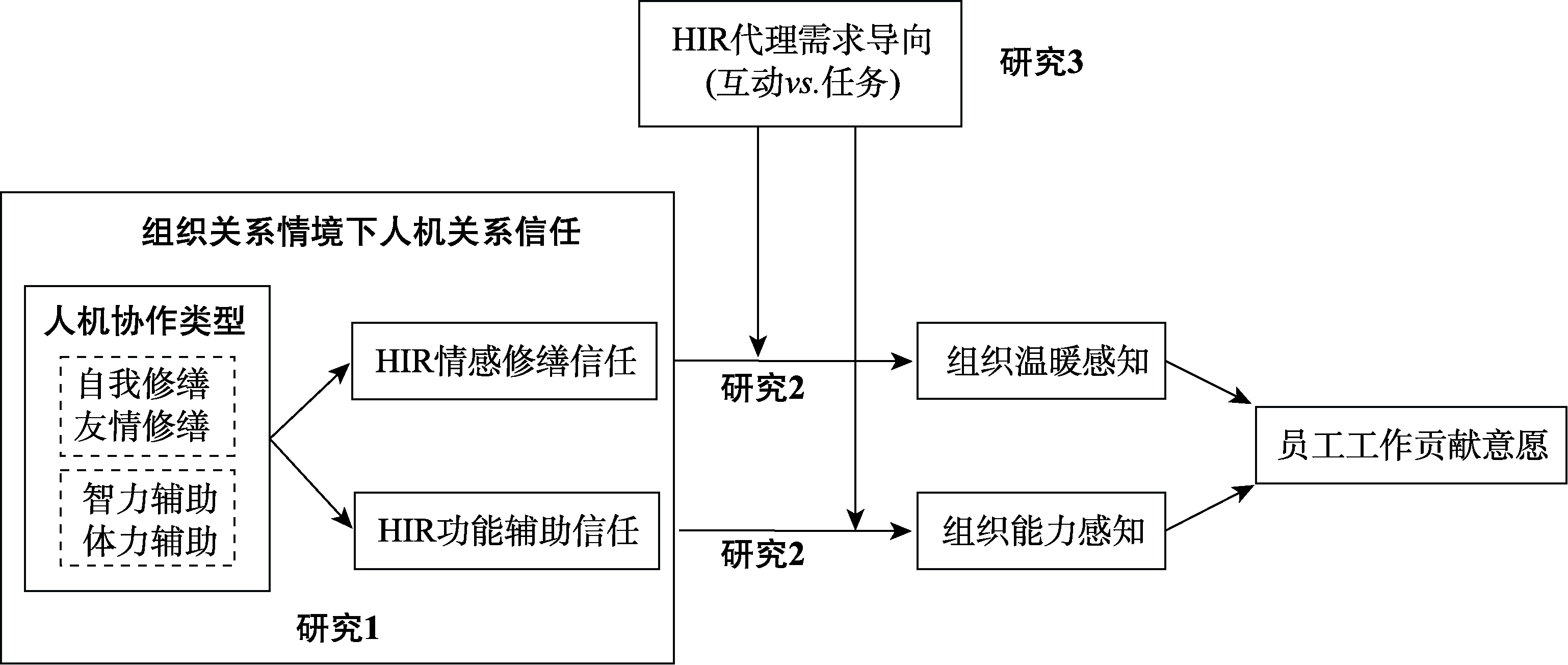
图1 研究概念模型

图2 拟人化外形不同的两种HIR——Nao V6 (左)和Sophia (右)
| 组别 | 均值 | 标准差 | ||
|---|---|---|---|---|
| HIR情感 修缮信任 | HIR功能 辅助信任 | HIR情感 修缮信任 | HIR功能 辅助信任 | |
| 自我修缮组 | 5.82 | 4.97 | 1.01 | 1.03 |
| 友情修缮组 | 5.71 | 4.58 | 1.01 | 1.02 |
| 智力辅助组 | 4.53 | 6.11 | 1.16 | 1.02 |
| 体力辅助组 | 3.66 | 5.79 | 1.11 | 0.93 |
表1 研究变量的描述性统计结果(研究1)
| 组别 | 均值 | 标准差 | ||
|---|---|---|---|---|
| HIR情感 修缮信任 | HIR功能 辅助信任 | HIR情感 修缮信任 | HIR功能 辅助信任 | |
| 自我修缮组 | 5.82 | 4.97 | 1.01 | 1.03 |
| 友情修缮组 | 5.71 | 4.58 | 1.01 | 1.02 |
| 智力辅助组 | 4.53 | 6.11 | 1.16 | 1.02 |
| 体力辅助组 | 3.66 | 5.79 | 1.11 | 0.93 |
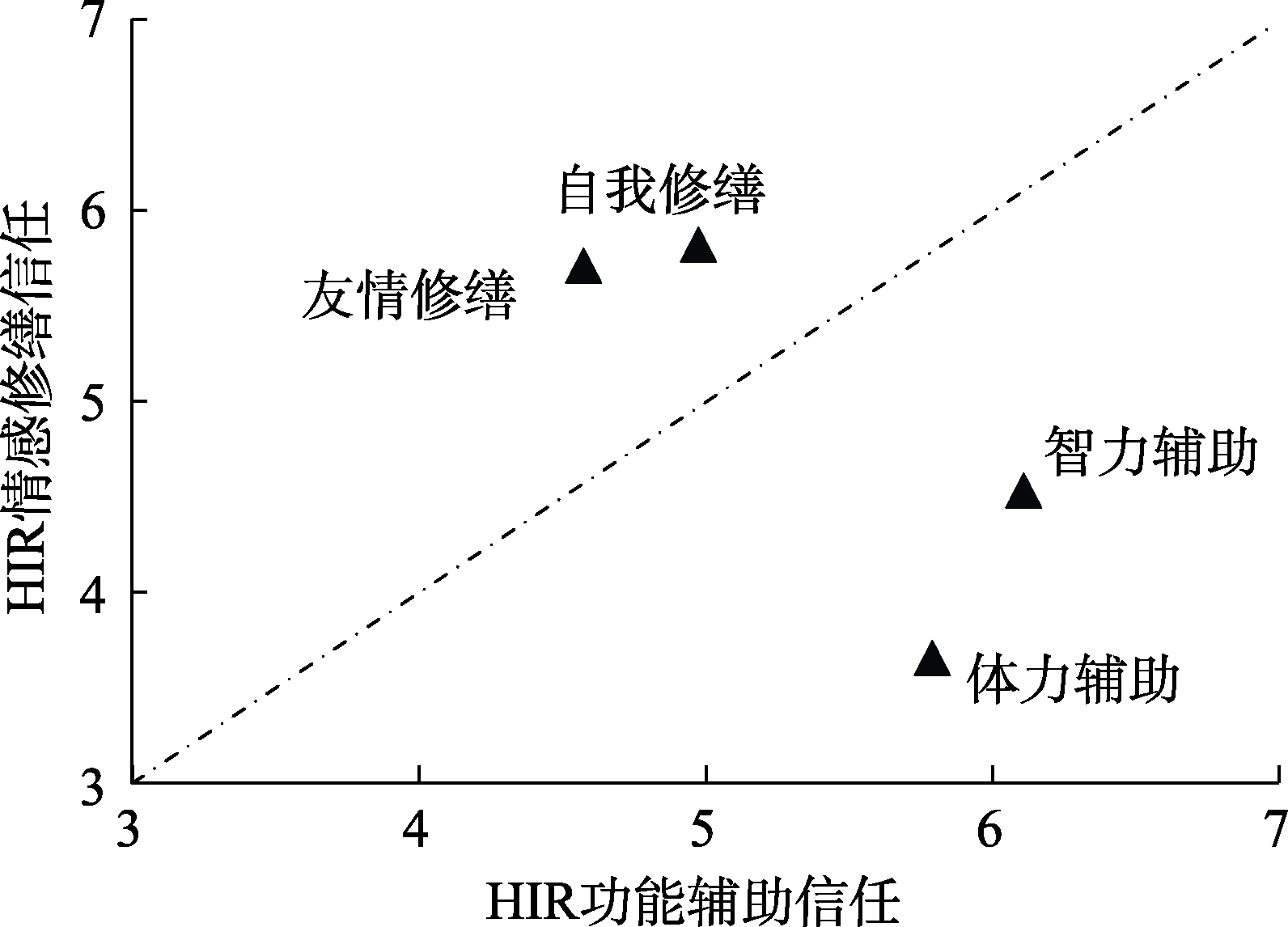
图3 人机关系信任维度的评价分布图
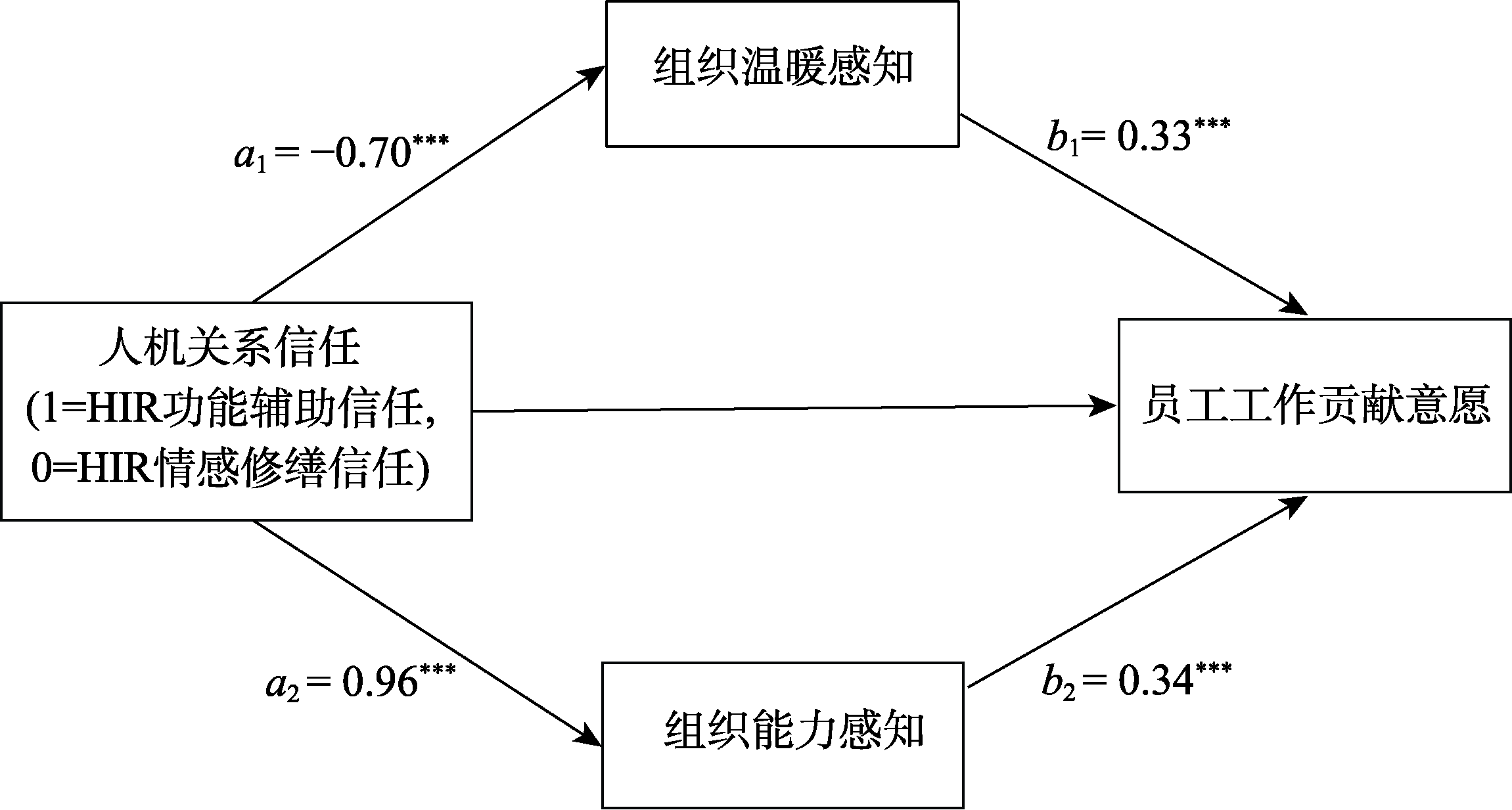
图4 组织温暖感知和组织能力感知的中介作用(*p < 0.05, **p < 0.01, ***p < 0.001)
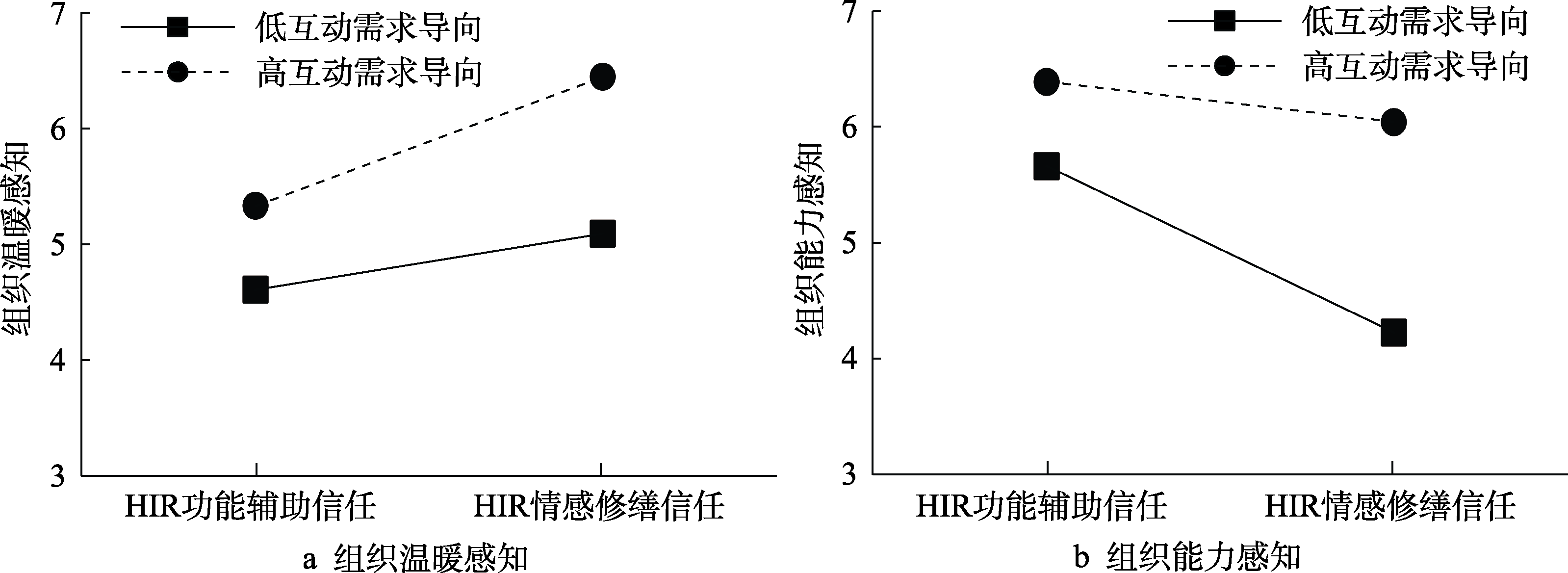
图5 HIR代理互动需求导向的调节作用
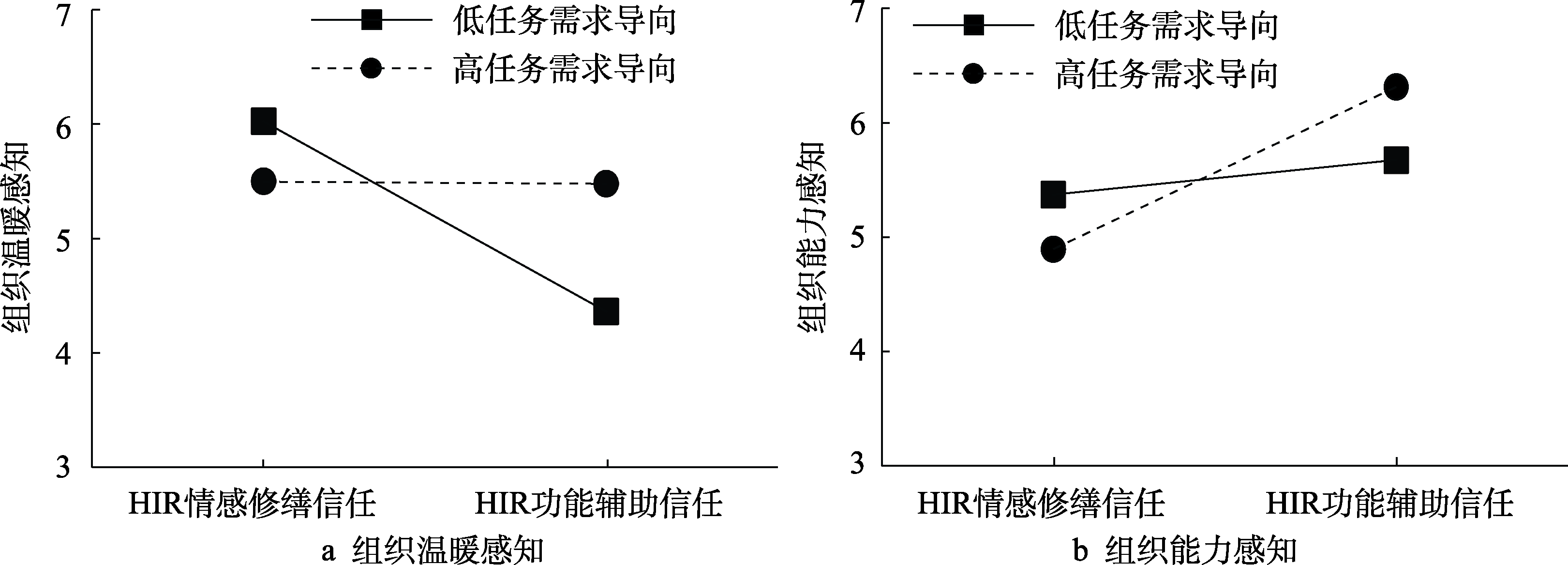
图6 HIR代理任务需求导向的调节作用
| 域(维度)、类及子类 | 个案(数) | 代表性个案的核心观点举例 | |
|---|---|---|---|
| 1. HIR情感修缮信任域(维度) | |||
| (1)自我修缮 | |||
| 重塑工作成就感 | 2 | 感觉没有得到预期的工作成就, 我会很不舒服、难过, 机器人的理性属性可以改善人类感性等情感属性的缺陷, 我相信他能够将我从负面情绪旋涡中抽离出来; 进行到一半时发现花了很多时间去探索的项目做不出来, 我常常会觉得工作没什么意思, 还会对自我产生怀疑, 机器人拥有着对情绪进行调控和治愈的能力, 所以它是一个值得信任的心理治愈师。 | |
| 缓解工作麻木倦怠感 | 2 | 每天兼顾运营相关的各种各样的杂事让我觉得自己像是大内总管、维修工, 丧失工作热情、感觉麻木, 通过机器人的心理辅助治疗, 我相信能有效提升我的工作热情和活力; 人工智能的出现是对人类现有时间的延长, 或者说是某些认知的拓展, 能把我从重复琐碎的程序性工作中解放, 所以人工智能激发了我的个人价值和工作热情。 | |
| 辅助反省缓解负罪感 | 2 | 工作状态不太好时, 可能会在工作中犯很多低级错误, 为此, 我感到非常自责懊悔。如果机器人可以辅助我进行心理疏导和反省纠错, 我想它应该可以帮我消解我那部分过度的自责感; 在工作中犯错以后, 我常常感到极度懊悔, 我愿意与机器人沟通复盘, 减轻负罪心理, 我相信这比我独自承担会好得多。 | |
| 拓宽认知缓解焦虑 | 2 | 当我需要在短时间内去学习大量的新知识, 我会感到焦虑、压力和茫然无措, 类人机器人对焦虑和压力的靶向修复能力, 相信会让我释然; 很多时候因为认知的局限, 我时常会陷入到“本领恐慌”的焦虑中, 期待组织中引入机器人对员工心理和情绪进行辅助治疗, 我相信这能有效打消庸人自扰的消极情绪。 | |
| (2)友情修缮 | |||
| 缓解部门或领导冲突导致的人际负面情绪 | 3 | 当领导的批评让我感到悲伤时, 机器人能够辅助我利用大数据分析原因和消除负面情绪, 所以在组织中利用机器人修复情绪是值得推荐的; 平级两个部门之间或者两个单位之间因责任不明晰, 流程不明确产生推诿, 让我对推诿部门的人员产生对立情绪, 采用机器人作为沟通的桥梁, 能够有效缓解这种冲突带来的负面情绪; 有时, 由于上级的原因导致不同部门之间产生了利益分配不均的情况, 对上级不满的负面情绪就会油然而生。由于我与机器人不会有利益冲突, 这让我不用担心被背叛, 所以机器人是一个更好的情感交互对象。 | |
| 缓解同事之间工作冲突导致的人际负面情绪 | 3 | 是的, 我喜欢工作节奏慢一点, 这往往会和工作节奏拉得快的同事产生分歧, 我感觉我们相互之间的关系会变得冷漠、迟钝、甚至很少愿意去沟通。如果单位有一个能共情我、能理解我的机器人, 我愿意寻求机器人的帮助, 向机器人倾诉这类情绪, 这样的我们也许就不会那么冷漠和无情了吧; 有的同事经常把锅甩给我, 功劳归在自己头上。由于不用像担心人类朋友那样担心机器人那么烦我, 所以我更放心把机器人当作情绪倾诉对象; 职场里可能遭遇同事背叛使我陷入焦虑和难受情绪, 所以相比人类同事, 我更相信机器人。 | |
| 缓解同事之间社交冲突导致的人际负面情绪 | 2 | 同事间复杂的人际关系本就让我不是很愿意与同事分享喜怒哀乐, 而且遇到大嘴巴同事很可能在不经你同意的情况下, 扭头就把你讲的话告诉别人了, 我很讨厌这种没有分寸和边界感的同事, 如果机器人可以深度融入到职场, 它更合适成为我的情感交互对象, 并能有效缓解我的负面情绪; 有的同事心眼小、八卦, 经常在背后说三道四和造谣生事, 我对这样的同事很不爽、也无语。相比人类, 我觉得机器人能更好地倾听和安慰我, 并赋予我工作中的积极能量。 | |
| 2. HIR功能辅助信任域(维度) | |||
| (3)智力辅助 | |||
| 收集并解读资讯 | 3 | 在我感到收集信息的渠道匮乏时, 借助机器人强大的搜索引擎, 相信可以协助我完成这类工作; 未来, 在工作中可以利用机器人的专业能力去收集、筛选和过滤信息, 从而提高我的工作效率; 对于一些政策性的文件解读, 诸如ChatGPT等工具可能能力更强, 所以我觉得完全可以依赖机器人。 | |
| 处理表格 | 2 | 像用表格汇总数据这类工作, 应该可以完全交给机器人来完成, 它的能力完全可以胜任; 诸如求和、画图、做表之类常规性操作, 机器人的能力在不断地超越人类, 相信不久的将来它就可以基本替代人类。 | |
| 文案写作 | 3 | 在条件允许的情况下, 机器人充当助手辅助完成文案性质的工作, 我相信不会输给人类; 目前, 机器人已经可以用来协助我们写工作总结和做活动策划等, 它是值得我信任的好助手; 将来, 机器人可能陪同我一起完成投资项目的研判, 甚至它还能帮我进行投资陈述, 所以我认为它可以成为像人类一样的工作伙伴。 | |
| 计算数据 | 2 | 如果机器人能够根据诉求去自动完成桥荷载模型的测算, 传输出最终结果, 那么就可以帮助非专业人员、或者说不是这个领域的人把跨领域的工作干得更好; 在办业务开存单的过程中, 机器人拥有超强的运算能力, 所以采用机器人做统计工作, 我觉得是可以信任的。 | |
| 生成式图片 | 2 | 我把一家三口在餐厅吃饭的场景用文字描述出来, 机器人能够理解这段文字, 并生成出我想要的图片; 我认为, 将来的工作报告中是可以借助机器人根据我们提供的素材主动生成并添加图片、影像之类的。 | |
| 培养新人 | 2 | 机器人可以提供工作上经验性的帮助, 比如说我是新入职的, 什么都不会, 但是机器人可以教我, 或许我再也不需要人类师傅了; 作为一个新人, 当组织让我去处理很多本职工作以外的事情, 我愿意借助机器人的能力来辅助我完成。 | |
| 秘书助理 | 2 | 在会谈中机器人可以用摄像头把对话的内容都记录下来, 当我遗忘了什么, 就可以问机器人, 所以我觉得机器人是充当秘书的好角色; 机器人不但有记录、运算功能, 而且还有反馈、纠错功能, 这些能力在工作中对我有很大的帮助, 我认为机器人充当秘书也许是更好的选择。 | |
| (4)体力辅助 | |||
| 跑腿性质 | 3 | 在职场中可能会遇到一些分身乏术的情况, 可以用HIR帮我们送水、泡茶、冲咖啡、打印复印、收发快递等, 我相信它会做得很好; 将来或许有像酒店内送餐食和日用品的类人机器人一样, 可以很好地完成对合同协议书、法律诉讼函等这些文件的收发整理, 并且全程监控; 当然, 我愿意让类人机器人帮我做一些日常的参观接待和讲解。 | |
| 高强度高重复 | 3 | 搬运负重的时候, 人最多只能抬百来斤, 机器人载重可能上千斤, 所以我觉得在某些方面机器是值得信任的; 工程建设中的拌合站, 全智能的钢筋加工厂都可以让机器人来做; 机械化的这种生产线, 以前需要员工把零件放到指定的位置, 现在使用机器人也做得一样好。 | |
| 有安全隐患的 | 1 | 将来一些工作强度大、危险性高, 或者一些特殊的工作环境可以依赖机器人, 比如桩基础的浇灌, 人工操作会存在一定的危险性。 | |
| 拍照识别 | 3 | 之前的彩电工人是用肉眼去识别一个芯片模块, 现在机器人可能做得比人更好; 或许不久的将来, 机器人代替我完成一些体力上的工作, 比如用机器人参与拍照, 我相信他会漂亮地完成任务; 用机器人精准识别客户签名, 或做其他精准操作层面的工作, 我觉得是可以信赖的。 | |
附表1 人机关系信任维度: CQR结果
| 域(维度)、类及子类 | 个案(数) | 代表性个案的核心观点举例 | |
|---|---|---|---|
| 1. HIR情感修缮信任域(维度) | |||
| (1)自我修缮 | |||
| 重塑工作成就感 | 2 | 感觉没有得到预期的工作成就, 我会很不舒服、难过, 机器人的理性属性可以改善人类感性等情感属性的缺陷, 我相信他能够将我从负面情绪旋涡中抽离出来; 进行到一半时发现花了很多时间去探索的项目做不出来, 我常常会觉得工作没什么意思, 还会对自我产生怀疑, 机器人拥有着对情绪进行调控和治愈的能力, 所以它是一个值得信任的心理治愈师。 | |
| 缓解工作麻木倦怠感 | 2 | 每天兼顾运营相关的各种各样的杂事让我觉得自己像是大内总管、维修工, 丧失工作热情、感觉麻木, 通过机器人的心理辅助治疗, 我相信能有效提升我的工作热情和活力; 人工智能的出现是对人类现有时间的延长, 或者说是某些认知的拓展, 能把我从重复琐碎的程序性工作中解放, 所以人工智能激发了我的个人价值和工作热情。 | |
| 辅助反省缓解负罪感 | 2 | 工作状态不太好时, 可能会在工作中犯很多低级错误, 为此, 我感到非常自责懊悔。如果机器人可以辅助我进行心理疏导和反省纠错, 我想它应该可以帮我消解我那部分过度的自责感; 在工作中犯错以后, 我常常感到极度懊悔, 我愿意与机器人沟通复盘, 减轻负罪心理, 我相信这比我独自承担会好得多。 | |
| 拓宽认知缓解焦虑 | 2 | 当我需要在短时间内去学习大量的新知识, 我会感到焦虑、压力和茫然无措, 类人机器人对焦虑和压力的靶向修复能力, 相信会让我释然; 很多时候因为认知的局限, 我时常会陷入到“本领恐慌”的焦虑中, 期待组织中引入机器人对员工心理和情绪进行辅助治疗, 我相信这能有效打消庸人自扰的消极情绪。 | |
| (2)友情修缮 | |||
| 缓解部门或领导冲突导致的人际负面情绪 | 3 | 当领导的批评让我感到悲伤时, 机器人能够辅助我利用大数据分析原因和消除负面情绪, 所以在组织中利用机器人修复情绪是值得推荐的; 平级两个部门之间或者两个单位之间因责任不明晰, 流程不明确产生推诿, 让我对推诿部门的人员产生对立情绪, 采用机器人作为沟通的桥梁, 能够有效缓解这种冲突带来的负面情绪; 有时, 由于上级的原因导致不同部门之间产生了利益分配不均的情况, 对上级不满的负面情绪就会油然而生。由于我与机器人不会有利益冲突, 这让我不用担心被背叛, 所以机器人是一个更好的情感交互对象。 | |
| 缓解同事之间工作冲突导致的人际负面情绪 | 3 | 是的, 我喜欢工作节奏慢一点, 这往往会和工作节奏拉得快的同事产生分歧, 我感觉我们相互之间的关系会变得冷漠、迟钝、甚至很少愿意去沟通。如果单位有一个能共情我、能理解我的机器人, 我愿意寻求机器人的帮助, 向机器人倾诉这类情绪, 这样的我们也许就不会那么冷漠和无情了吧; 有的同事经常把锅甩给我, 功劳归在自己头上。由于不用像担心人类朋友那样担心机器人那么烦我, 所以我更放心把机器人当作情绪倾诉对象; 职场里可能遭遇同事背叛使我陷入焦虑和难受情绪, 所以相比人类同事, 我更相信机器人。 | |
| 缓解同事之间社交冲突导致的人际负面情绪 | 2 | 同事间复杂的人际关系本就让我不是很愿意与同事分享喜怒哀乐, 而且遇到大嘴巴同事很可能在不经你同意的情况下, 扭头就把你讲的话告诉别人了, 我很讨厌这种没有分寸和边界感的同事, 如果机器人可以深度融入到职场, 它更合适成为我的情感交互对象, 并能有效缓解我的负面情绪; 有的同事心眼小、八卦, 经常在背后说三道四和造谣生事, 我对这样的同事很不爽、也无语。相比人类, 我觉得机器人能更好地倾听和安慰我, 并赋予我工作中的积极能量。 | |
| 2. HIR功能辅助信任域(维度) | |||
| (3)智力辅助 | |||
| 收集并解读资讯 | 3 | 在我感到收集信息的渠道匮乏时, 借助机器人强大的搜索引擎, 相信可以协助我完成这类工作; 未来, 在工作中可以利用机器人的专业能力去收集、筛选和过滤信息, 从而提高我的工作效率; 对于一些政策性的文件解读, 诸如ChatGPT等工具可能能力更强, 所以我觉得完全可以依赖机器人。 | |
| 处理表格 | 2 | 像用表格汇总数据这类工作, 应该可以完全交给机器人来完成, 它的能力完全可以胜任; 诸如求和、画图、做表之类常规性操作, 机器人的能力在不断地超越人类, 相信不久的将来它就可以基本替代人类。 | |
| 文案写作 | 3 | 在条件允许的情况下, 机器人充当助手辅助完成文案性质的工作, 我相信不会输给人类; 目前, 机器人已经可以用来协助我们写工作总结和做活动策划等, 它是值得我信任的好助手; 将来, 机器人可能陪同我一起完成投资项目的研判, 甚至它还能帮我进行投资陈述, 所以我认为它可以成为像人类一样的工作伙伴。 | |
| 计算数据 | 2 | 如果机器人能够根据诉求去自动完成桥荷载模型的测算, 传输出最终结果, 那么就可以帮助非专业人员、或者说不是这个领域的人把跨领域的工作干得更好; 在办业务开存单的过程中, 机器人拥有超强的运算能力, 所以采用机器人做统计工作, 我觉得是可以信任的。 | |
| 生成式图片 | 2 | 我把一家三口在餐厅吃饭的场景用文字描述出来, 机器人能够理解这段文字, 并生成出我想要的图片; 我认为, 将来的工作报告中是可以借助机器人根据我们提供的素材主动生成并添加图片、影像之类的。 | |
| 培养新人 | 2 | 机器人可以提供工作上经验性的帮助, 比如说我是新入职的, 什么都不会, 但是机器人可以教我, 或许我再也不需要人类师傅了; 作为一个新人, 当组织让我去处理很多本职工作以外的事情, 我愿意借助机器人的能力来辅助我完成。 | |
| 秘书助理 | 2 | 在会谈中机器人可以用摄像头把对话的内容都记录下来, 当我遗忘了什么, 就可以问机器人, 所以我觉得机器人是充当秘书的好角色; 机器人不但有记录、运算功能, 而且还有反馈、纠错功能, 这些能力在工作中对我有很大的帮助, 我认为机器人充当秘书也许是更好的选择。 | |
| (4)体力辅助 | |||
| 跑腿性质 | 3 | 在职场中可能会遇到一些分身乏术的情况, 可以用HIR帮我们送水、泡茶、冲咖啡、打印复印、收发快递等, 我相信它会做得很好; 将来或许有像酒店内送餐食和日用品的类人机器人一样, 可以很好地完成对合同协议书、法律诉讼函等这些文件的收发整理, 并且全程监控; 当然, 我愿意让类人机器人帮我做一些日常的参观接待和讲解。 | |
| 高强度高重复 | 3 | 搬运负重的时候, 人最多只能抬百来斤, 机器人载重可能上千斤, 所以我觉得在某些方面机器是值得信任的; 工程建设中的拌合站, 全智能的钢筋加工厂都可以让机器人来做; 机械化的这种生产线, 以前需要员工把零件放到指定的位置, 现在使用机器人也做得一样好。 | |
| 有安全隐患的 | 1 | 将来一些工作强度大、危险性高, 或者一些特殊的工作环境可以依赖机器人, 比如桩基础的浇灌, 人工操作会存在一定的危险性。 | |
| 拍照识别 | 3 | 之前的彩电工人是用肉眼去识别一个芯片模块, 现在机器人可能做得比人更好; 或许不久的将来, 机器人代替我完成一些体力上的工作, 比如用机器人参与拍照, 我相信他会漂亮地完成任务; 用机器人精准识别客户签名, 或做其他精准操作层面的工作, 我觉得是可以信赖的。 | |
| 互动流程 | 自我修缮 | 友情修缮 | 智力辅助 | 体力辅助 |
|---|---|---|---|---|
| 初始互动 | HI, 我是HIR小可, 是你工作中的知心助手。每个人都有短板和不足, 每个人都不可能成为完人, 小可愿意与你一起塑造一个更加完善的自己。 | HI, 我是HIR小可, 是你工作中的知心助手。当你不善处理与同事的人际关系, 或者感受到工作压力和烦恼时, 小可愿意做你的朋友陪伴你喔。 | HI, 我是HIR小可, 是你工作中的得力助手。我可以完成海量的信息搜集、数据处理分析和帮助编辑润色文本等工作, 小可很乐意为你效劳喔。 | HI, 我是HIR小可, 是你工作中的得力助手。我可以完成泡茶、跑腿、打印文件、传递资料等工作, 小可很乐意为你效劳喔。 |
| 参与者向HIR阐述工作问题 | 是否共情: 是能否理解问题: 能 | 是否共情: 是能否理解问题: 能 | 是否共情: 否能否理解问题: 能 | 是否共情: 否能否理解问题: 能 |
| 参与者向HIR寻求解决办法 | 提供建议, 获得认可。 | 提供建议, 获得认可。 | 提供建议, 获得认可。 | 未提供建议, 执行人类的建议。 |
| 结束互动 | 别客气, 我会一直在这里陪你完善自己的。小可希望你能开心。 | 别客气, 我会一直在这里永远做你的朋友。小可希望你能开心。 | 不客气。 | 不客气。 |
附表2 HIR在不同协作情境的互动流程和行为示例
| 互动流程 | 自我修缮 | 友情修缮 | 智力辅助 | 体力辅助 |
|---|---|---|---|---|
| 初始互动 | HI, 我是HIR小可, 是你工作中的知心助手。每个人都有短板和不足, 每个人都不可能成为完人, 小可愿意与你一起塑造一个更加完善的自己。 | HI, 我是HIR小可, 是你工作中的知心助手。当你不善处理与同事的人际关系, 或者感受到工作压力和烦恼时, 小可愿意做你的朋友陪伴你喔。 | HI, 我是HIR小可, 是你工作中的得力助手。我可以完成海量的信息搜集、数据处理分析和帮助编辑润色文本等工作, 小可很乐意为你效劳喔。 | HI, 我是HIR小可, 是你工作中的得力助手。我可以完成泡茶、跑腿、打印文件、传递资料等工作, 小可很乐意为你效劳喔。 |
| 参与者向HIR阐述工作问题 | 是否共情: 是能否理解问题: 能 | 是否共情: 是能否理解问题: 能 | 是否共情: 否能否理解问题: 能 | 是否共情: 否能否理解问题: 能 |
| 参与者向HIR寻求解决办法 | 提供建议, 获得认可。 | 提供建议, 获得认可。 | 提供建议, 获得认可。 | 未提供建议, 执行人类的建议。 |
| 结束互动 | 别客气, 我会一直在这里陪你完善自己的。小可希望你能开心。 | 别客气, 我会一直在这里永远做你的朋友。小可希望你能开心。 | 不客气。 | 不客气。 |
| 变量组别 | 员工工作贡献意愿 | 组织温暖感知 | 组织能力感知 | |||
|---|---|---|---|---|---|---|
| 均值 | 标准差 | 均值 | 标准差 | 均值 | 标准差 | |
| 自我修缮组 | 5.76 | 0.77 | 5.71 | 0.89 | 5.07 | 0.81 |
| 友情修缮组 | 5.61 | 0.79 | 5.67 | 0.63 | 4.76 | 0.86 |
| 智力辅助组 | 5.90 | 0.68 | 5.19 | 0.69 | 6.13 | 0.58 |
| 体力辅助组 | 5.81 | 0.89 | 4.71 | 0.89 | 6.02 | 0.70 |
附表3 研究变量的描述性统计结果
| 变量组别 | 员工工作贡献意愿 | 组织温暖感知 | 组织能力感知 | |||
|---|---|---|---|---|---|---|
| 均值 | 标准差 | 均值 | 标准差 | 均值 | 标准差 | |
| 自我修缮组 | 5.76 | 0.77 | 5.71 | 0.89 | 5.07 | 0.81 |
| 友情修缮组 | 5.61 | 0.79 | 5.67 | 0.63 | 4.76 | 0.86 |
| 智力辅助组 | 5.90 | 0.68 | 5.19 | 0.69 | 6.13 | 0.58 |
| 体力辅助组 | 5.81 | 0.89 | 4.71 | 0.89 | 6.02 | 0.70 |
| [1] | Aaker, J., Vohs, K. D., & Mogilner, C. (2010). Non-profits are seen as warm and for-profits as competent: Firm stereotypes matter. Journal of Consumer Research, 37(2), 224-237. |
| [2] | Alarcon, G. M., Capiola, A., Hamdan, I. A., Lee, M. A., & Jessup, S. A. (2023). Differential biases in human-human versus human-robot interactions. Applied Ergonomics, 106, Article 103858. https://doi.org/10.1016/j.apergo.2022.103858 |
| [3] | Bakker, A. B., Demerouti, E., & Sanz-Vergel, A. (2023). Job demands-resources theory: Ten years later. Annual Review of Organizational Psychology and Organizational Behavior, 10, 25-53. |
| [4] | Bakker, A. B., Tims, M., & Derks, D. (2012). Proactive personality and job performance: The role of job crafting and work engagement. Human Relations, 65(10), 1359-1378. |
| [5] |
Bartz, J. A., Tchalova, K., & Fenerci, C. (2016). Reminders of social connection can attenuate anthropomorphism. Psychological Science, 27(12), 1644-1650.
doi: 10.1177/0956797616668510 pmid: 27777375 |
| [6] | Blut, M., & Wang, C. (2020). Technology readiness: A meta-analysis of conceptualizations of the construct and its impact on technology usage. Journal of the Academy of Marketing Science, 48(4), 649-669. |
| [7] | Brengman, M., De Gauquier, L., Willems, K., & Vanderborght, B. (2021). From stopping to shopping: An observational study comparing a humanoid service robot with a tablet service kiosk to attract and convert shoppers. Journal of Business Research, 134, 263-274. |
| [8] | Burke, C. S., Sims, D. E., Lazzara, E. H., & Salas, E. (2007). Trust in leadership: A multi-level review and integration. Leadership Quarterly, 18(6), 606-632. |
| [9] |
Cao, J., Zhang, J., Zhang, L., & Wang, X. (2023). The psychological structure and influence of interactive naturalness. Acta Psychologica Sinica, 55(1), 55-65.
doi: 10.3724/SP.J.1041.2023.00055 |
|
[曹剑琴, 张警吁, 张亮, 王晓宇. (2023). 交互自然性的心理结构及其影响. 心理学报, 55(1), 55-65.]
doi: 10.3724/SP.J.1041.2023.00055 |
|
| [10] | Chandra, S., Shirish, A., & Srivastava, S. C. (2022). To be or not to be horizontal ellipsis human? Theorizing the role of human-like competencies in conversational artificial intelligence agents. Journal of Management Information Systems, 39(4), 969-1005. |
| [11] | Chen, M. (2019). Research on artificial intelligence development, labor classification and structural unemployment. Economist, (10), 66-74. |
| [陈明生. (2019). 人工智能发展、劳动分类与结构性失业研究. 经济学家, (10), 66-74.] | |
| [12] | Chien, S. Y., Lin, Y. L., & Chang, B. F. (2024). The effects of intimacy and proactivity on trust in human-humanoid robot interaction. Information Systems Frontiers, 26(1), 75-90. |
| [13] | Chowdhury, S., Budhwar, P., Dey, P. K., Joel-Edgar, S., & Abadie, A. (2022). AI-employee collaboration and business performance: Integrating knowledge-based view, socio- technical systems and organisational socialisation framework. Journal of Business Research, 144, 31-49. |
| [14] | Chowdhury, S., Dey, P., Joel-Edgar, S., Bhattacharya, S., Rodriguez-Espindola, O., Abadie, A., & Truong, L. (2023). Unlocking the value of artificial intelligence in human resource management through AI capability framework. Human Resource Management Review, 33(1), Article 100899. https://doi.org/10.1016/j.hrmr.2022.100899 |
| [15] | Cleveland, J. N., Byrne, Z. S., & Cavanagh, T. M. (2015). The future of HR is RH: Respect for humanity at work. Human Resource Management Review, 25(2), 146-161. |
| [16] | Crolic, C., Thomaz, F., Hadi, R., & Stephen, A. T. (2022). Blame the bot: Anthropomorphism and anger in customer- chatbot interactions. Journal of Marketing, 86(1), 132-148. |
| [17] |
Cuddy, A. J. C., Fiske, S. T., & Glick, P. (2007). The BIAS map: Behaviors from intergroup affect and stereotypes. Journal of Personality and Social Psychology, 92(4), 631-648.
doi: 10.1037/0022-3514.92.4.631 pmid: 17469949 |
| [18] | Cuddy, A. J. C., Glick, P., & Beninger, A. (2011). The dynamics of warmth and competence judgments, and their outcomes in organizations. Research in Organizational Behavior, 31, 73-98. |
| [19] | Dabholkar, P. A. (1996). Consumer evaluations of new technology-based self-service options: An investigation of alternative models of service quality. International Journal of Research in Marketing, 13(1), 29-51. |
| [20] | de Visser, E. J., Monfort, S. S., McKendrick, R., Smith, M. A., McKnight, P. E., Krueger, F., & Parasuraman, R. (2016). Almost human: Anthropomorphism increases trust resilience in cognitive agents. Journal of Experimental Psychology: Applied, 22(3), 331-349. |
| [21] | Deng, X. (2014). Why ethical consumers don’t do what they say: The study on factors influencing consumers’ ethical buying intention-behavior gap. Acta Psychologica Sinica, 46(7), 1014-1031. |
| [邓新明. (2014). 消费者为何喜欢“说一套, 做一套”——消费者伦理购买“意向-行为”差距的影响因素. 心理学报, 46(7), 1014-1031.] | |
| [22] | Desideri, L., Ottaviani, C., Malavasi, M., di Marzio, R., & Bonifacci, P. (2018). Emotional processes in human-robot interaction during brief cognitive testing. Computers in Human Behavior, 90, 331-342. |
| [23] | Ding, X. (2020). On the legal regulation of algorithms. Social Sciences in China, (12), 138-159+203. |
| [丁晓东. (2020). 论算法的法律规制. 中国社会科学, (12), 138-159+203.] | |
| [24] | Eisenberger, R., Huntington, R., Hutchison, S., & Sowa, D. (1986). Perceived organizational support. Journal of Applied Psychology, 71(3), 500-507. |
| [25] |
Faul, F., Erdfelder, E., Lang, A.-G., & Buchner, A. (2007). G*Power 3: A flexible statistical power analysis program for the social, behavioral, and biomedical sciences. Behavior Research Methods, 39(2), 175-191.
doi: 10.3758/bf03193146 pmid: 17695343 |
| [26] |
Fiske, S. T. (2018). Stereotype content: Warmth and competence endure. Current Directions in Psychological Science, 27(2), 67-73.
doi: 10.1177/0963721417738825 pmid: 29755213 |
| [27] |
Fiske, S. T., Cuddy, A. J., Glick, P., & Xu, J. (2002). A model of (often mixed) stereotype content: Competence and warmth respectively follow from perceived status and competition. Journal of Personality and Social Psychology, 82(6), 878-902.
pmid: 12051578 |
| [28] | Gati, I., & Kulcsar, V. (2021). Making better career decisions: From challenges to opportunities. Journal of Vocational Behavior, 126, Article 103545. https://doi.org/10.1016/j.jvb.2021.103545 |
| [29] | Gaudiello, I., Zibetti, E., Lefort, S., Chetouani, M., & Ivaldi, S. (2016). Trust as indicator of robot functional and social acceptance. An experimental study on user conformation to iCub answers. Computers in Human Behavior, 61, 633-655. |
| [30] | Glikson, E., & Woolley, A. W. (2020). Human trust in artificial intelligence: Review of empirical research. Academy of Management Annals, 14(2), 627-660. |
| [31] |
Goldenberg, A., Weisz, E., Sweeny, T. D., Cikara, M., & Gross, J. J. (2021). The crowd-emotion-amplification effect. Psychological Science, 32(3), 437-450.
doi: 10.1177/0956797620970561 pmid: 33626289 |
| [32] |
Gong, Z., Liu, C., Shen, W., Wang, X., & Shi, R. (2017). The impact of trust on creativity: Activation, inhibition and inverted U model hypothesis. Advances in Psychological Science, 25(3), 463-474.
doi: 10.3724/SP.J.1042.2017.00463 |
|
[贡喆, 刘昌, 沈汪兵, 王贤, 石荣. (2017). 信任对创造力的影响: 激发, 抑制以及倒U假设. 心理科学进展, 25(3), 463-474.]
doi: 10.3724/SP.J.1042.2017.00463 |
|
| [33] |
Grant, A. M. (2008). The significance of task significance: Job performance effects, relational mechanisms, and boundary conditions. Journal of Applied Psychology, 93(1), 108-124.
doi: 10.1037/0021-9010.93.1.108 pmid: 18211139 |
| [34] | Harris-Watson, A. M., Larson, L. E., Lauharatanahirun, N., DeChurch, L. A., & Contractor, N. S. (2023). Social perception in Human-AI teams: Warmth and competence predict receptivity to AI teammates. Computers in Human Behavior, 145, Article 107765. https://doi.org/10.1016/j.chb.2023.107765 |
| [35] | Hayes, A. F. (2013). Introduction to mediation, moderation, and conditional process analysis: A regression-based approach. New York: Guilford Press. |
| [36] |
He, G., Chen, C., He, Z., Cui, L., Lu, J., Xuan, H., & Lin, L. (2022). Human-agent collaborative decision-making in intelligent organizations: A perspective of human-agent inner compatibility. Advances in Psychological Science, 30(12), 2619-2627.
doi: 10.3724/SP.J.1042.2022.02619 |
|
[何贵兵, 陈诚, 何泽桐, 崔力丹, 陆嘉琦, 宣泓舟, 林琳. (2022). 智能组织中的人机协同决策: 基于人机内部兼容性的研究探索. 心理科学进展, 30(12), 2619-2627.]
doi: 10.3724/SP.J.1042.2022.02619 |
|
| [37] | Hill, C. E., Knox, S., Thompson, B. J., Williams, E. N., Hess, S. A., & Ladany, N. (2005). Consensual qualitative research: An update. Journal of Counseling Psychology, 52(2), 196-205. |
| [38] | Hoff, K. A., & Bashir, M. (2015). Trust in automation: Integrating empirical evidence on factors that influence trust. Human Factors: The Journal of the Human Factors and Ergonomics Society, 57(3), 407-434. |
| [39] |
Hou, J., Zhu, Y., & Fang, X. (2021). Mobile phone addiction and depression: Multiple mediating effects of social anxiety and attentional bias to negative emotional information. Acta Psychologica Sinica, 53(4), 362-373.
doi: 10.3724/SP.J.1041.2021.00362 |
|
[侯娟, 朱英格, 方晓义. (2021). 手机成瘾与抑郁: 社交焦虑和负性情绪信息注意偏向的多重中介作用. 心理学报, 53(4), 362-373.]
doi: 10.3724/SP.J.1041.2021.00362 |
|
| [40] |
Hu, Q., Wang, H., & Long, L. (2020). Will newcomer job crafting bring positive outcomes? The role of leader-member exchange and traditionality. Acta Psychologica Sinica, 52(5), 659-668.
doi: 10.3724/SP.J.1041.2020.00659 |
|
[胡巧婷, 王海江, 龙立荣. (2020). 新员工工作重塑会带来积极的结果吗? 领导成员交换与个体传统性的作用. 心理学报, 52(5), 659-668.]
doi: 10.3724/SP.J.1041.2020.00659 |
|
| [41] | Ilies, R., Lanaj, K., Pluut, H., & Goh, Z. (2018). Intrapersonal and interpersonal need fulfillment at work: Differential antecedents and incremental validity in explaining job satisfaction and citizenship behavior. Journal of Vocational Behavior, 108, 151-164. |
| [42] | Kellogg, K. C., Valentine, M. A., & Christin, A. (2020). Algorithms at work: The new contested terrain of control. Academy of Management Annals, 14(1), 366-410. |
| [43] | Köhler, C. F., Rohm, A. J., de Ruyter, K., & Wetzels, M. (2011). Return on interactivity: The impact of online agents on newcomer adjustment. Journal of Marketing, 75(2), 93-108. |
| [44] | Komiak, S. Y., & Benbasat, I. (2006). The effects of personalization and familiarity on trust and adoption of recommendation agents. MIS Quarterly, 30(4), 941-960. |
| [45] | Kong, H., Yin, Z., Baruch, Y., & Yuan, Y. (2023). The impact of trust in AI on career sustainability: The role of employee-AI collaboration and protean career orientation. Journal of Vocational Behavior, 146, Article 103928. https://doi.org/10.1016/j.jvb.2023.103928 |
| [46] | Kurtessis, J. N., Eisenberger, R., Ford, M. T., Buffardi, L. C., Stewart, K. A., & Adis, C. S. (2017). Perceived organizational support: A meta-analytic evaluation of organizational support theory. Journal of Management, 43(6), 1854-1884. |
| [47] | Lee, H. J., & Lyu, J. (2016). Personal values as determinants of intentions to use self-service technology in retailing. Computers in Human Behavior, 60, 322-332. |
| [48] | Levin, D. Z., & Cross, R. (2004). The strength of weak ties you can trust: The mediating role of trust in effective knowledge transfer. Management Science, 50(11), 1477-1490. |
| [49] | Lewis,, M., Sycara, K., & Walker, P. (2018). The role of trust in human-robot interaction. In H. A.Abbass, J.Scholz, & D. J.Reid (Eds.), Foundations of trusted autonomy: Studies in systems decision and control (Vol. 117, pp. 135-159). Springer-Cham. |
| [50] |
Lewis, S. C., Guzman, A. L., & Schmidt, T. R. (2019). Automation, journalism, and human-machine communication: Rethinking roles and relationships of humans and machines in news. Digital Journalism, 7(4), 409-427.
doi: 10.1080/21670811.2019.1577147 |
| [51] | Li, J. J., Bonn, M. A., & Ye, B. H. (2019). Hotel employee's artificial intelligence and robotics awareness and its impact on turnover intention: The moderating roles of perceived organizational support and competitive psychological climate. Tourism Management, 73, 172-181. |
| [52] | Li, N., Yan, J., & Jin, M. (2006). How does trust in organizations benefit task performance. Acta Psychologica Sinica, 38(5), 770-777. |
| [李宁, 严进, 金鸣轩. (2006). 组织内信任对任务绩效的影响效应. 心理学报, 38(5), 770-777.] | |
| [53] | Looije, R., Neerincx, M. A., Peters, J. K., & Henkemans, O. A. B. (2016). Integrating robot support functions into varied activities at returning hospital visits: Supporting child’s self-management of diabetes. International Journal of Social Robotics, 8(4), 483-497. |
| [54] | Lu, L., Cai, R., & Gursoy, D. (2019). Developing and validating a service robot integration willingness scale. International Journal of Hospitality Management, 80, 36-51. |
| [55] | Madden, T. J., Ellen, P. S., & Ajzen, I. (1992). A comparison of the theory of planned behavior and the theory of reasoned action. Personality and Social Psychology Bulletin, 18(1), 3-9. |
| [56] | Mazzetti, G., Robledo, E., Vignoli, M., Topa, G., Guglielmi, D., & Schaufeli, W. B. (2023). Work engagement: A meta-analysis using the job demands-resources model. Psychological Reports, 126(3), 1069-1107. |
| [57] | McAllister, D. J. (1995). Affect- and cognition-based trust as foundations for interpersonal cooperation in organizations. Academy of Management Journal, 38(1), 24-59. |
| [58] | Mcfarland, R. G., Challagalla, G. N., & Shervani, T. A. (2006). Influence tactics for effective adaptive selling. Journal of Marketing, 70(4), 103-117. |
| [59] | Memon, M. A., Salleh, R., Nordin, S. M., Cheah, J. H., Ting, H., & Chuah, F. (2018). Person-organisation fit and turnover intention: The mediating role of work engagement. Journal of Management Development, 37(3), 285-298. |
| [60] | Mende, M., Scott, M. L., van Doorn, J., Grewal, D., & Shanks, I. (2019). Service robots rising: How humanoid robots influence service experiences and elicit compensatory consumer responses. Journal of Marketing Research, 56(4), 535-556. |
| [61] | Molina, M. A. C., González, J. M. H., Florencio, B. P., & González, J. L. G. (2014). Does the balanced scorecard adoption enhance the levels of organizational climate, employees’ commitment, job satisfaction and job dedication? Management Decision, 52(5), 983-1010. |
| [62] | Mori, M. (1970). The uncanny valley. Energy, 7, 33-35. |
| [63] | Novikova, J., & Watts, L. (2015). Towards artificial emotions to assist social coordination in HRI. International Journal of Social Robotics, 7(1), 77-88. |
| [64] | Obschonka, M., Pavez, I., Kautonen, T., Kibler, E., Salmela-Aro, K., & Wincent, J. (2023). Job burnout and work engagement in entrepreneurs: How the psychological utility of entrepreneurship drives healthy engagement. Journal of Business Venturing, 38(2), Article 106272. https://doi.org/10.1016/j.jbusvent.2022.106272 |
| [65] | Omrani, N., Rivieccio, G., Fiore, U., Schiavone, F., & Agreda, S. G. (2022). To trust or not to trust? An assessment of trust in AI-based systems: Concerns, ethics and contexts. Technological Forecasting and Social Change, 181, Article 121763. https://doi.org/10.1016/j.techfore.2022.121763 |
| [66] | Picard, R. W. (2003). Affective computing: Challenges. International Journal of Human-Computer Studies, 59(1-2), 55-64. |
| [67] | Przybylski, A. K., Murayama, K., DeHaan, C. R., & Gladwell, V. (2013). Motivational, emotional, and behavioral correlates of fear of missing out. Computers in Human Behavior, 29(4), 1841-1848. |
| [68] |
Rhoades, L., & Eisenberger, R. (2002). Perceived organizational support: A review of the literature. Journal of Applied Psychology, 87(4), 698-714.
doi: 10.1037/0021-9010.87.4.698 pmid: 12184574 |
| [69] | Röning, J., Holappa, J., Kellokumpu, V., Tikanmäki, A., & Pietikäinen, M. (2014). Minotaurus: A system for affective human-robot interaction in smart environments. Cognitive Computation, 6(4), 940-953. |
| [70] | Scott, M. L., Mende, M., & Bolton, L. E. (2013). Judging the book by its cover? How consumers decode conspicuous consumption cues in buyer-seller relationships. Journal of Marketing Research, 50(3), 334-347. |
| [71] | Shamim, S., Yang, Y., Zia, N. U., Khan, Z., & Shariq, S. M. (2023). Mechanisms of cognitive trust development in artificial intelligence among front line employees: An empirical examination from a developing economy. Journal of Business Research, 167, Article 114168. https://doi.org/10.1016/j.jbusres.2023.114168 |
| [72] | Sheehan, B., Jin, H. S., & Gottlieb, U. (2020). Customer service chatbots: Anthropomorphism and adoption. Journal of Business Research, 115, 14-24. |
| [73] | Siau, K., & Wang, W. Y. (2018). Building trust in Artificial Intelligence, machine learning, and robotics. Cutter Business Technology Journal, 31(2), 47-53. |
| [74] | Song, C. S., & Kim, Y. K. (2022). The role of the human-robot interaction in consumers’ acceptance of humanoid retail service robots. Journal of Business Research, 146, 489-503. |
| [75] | Sun, W. (2020). Artificial intelligence and the "New Alienation" of human beings. Social Sciences in China, (12), 119-137+ 202-203. |
| [孙伟平. (2020). 人工智能与人的“新异化”. 中国社会科学, (12), 119-137+202-203.] | |
| [76] |
Tang, P. M., Koopman, J., Mai, K. M., De Cremer, D., Zhang, J. H., Reynders, P., Ng, C. T. S., & Chen, I. (2023). No person is an island: Unpacking the work and after-work consequences of interacting with artificial intelligence. Journal of Applied Psychology, 108(11), 1766-1789.
doi: 10.1037/apl0001103 pmid: 37307359 |
| [77] | Tang, X., Sun, B., Zhang, E., & Mei, F. (2021). Research on social value substitution, risk and consumption attitude based on humanoid intelligent robot. Nankai Business Review, 24(6), 4-13. |
| [唐小飞, 孙炳, 张恩忠, 梅发贵. (2021). HIR社会价值替代与风险态度研究. 南开管理评论, 24(6), 4-13.] | |
| [78] | Tisu, L., Lupșa, D., Vîrgă, D., & Rusu, A. (2020). Personality characteristics, job performance and mental health: The mediating role of work engagement. Personality and Individual Differences, 153, Article 109644. https://doi.org/10.1016/j.paid.2019.109644 |
| [79] | van Scotter, J. R., & Motowidlo, S. J. (1996). Interpersonal facilitation and job dedication as separate facets of contextual performance. Journal of Applied Psychology, 81(5), 525-531. |
| [80] |
Wang, C., Chen, W., Huang, L., Hou, S., & Wang, Y. (2024). Robots abide by ethical principles promote human-robot trust? The reverse effect of decision types and the human-robot projection hypothesis. Acta Psychologica Sinica, 56(2), 194-209.
doi: 10.3724/SP.J.1041.2024.00194 |
|
[王晨, 陈为聪, 黄亮, 侯苏豫, 王益文. (2024). 机器人遵从伦理促进人机信任? 决策类型反转效应与人机投射假说. 心理学报, 56(2), 194-209.]
doi: 10.3724/SP.J.1041.2024.00194 |
|
| [81] | Wang, W., Chen, L., Xiong, M., & Wang, Y. (2023). Accelerating AI adoption with responsible AI signals and employee engagement mechanisms in health care. Information Systems Frontiers, 25(6), 2239-2256. |
| [82] | Waytz, A., Heafner, J., & Epley, N. (2014). The mind in the machine: Anthropomorphism increases trust in an autonomous vehicle. Journal of Experimental Social Psychology, 52, 113-117. |
| [83] | Wei, H., & Long, L. (2009). Effects of cognition- and affect-base trust in supervisors on task performance and OCB. Acta Psychologica Sinica, 41(1), 86-94. |
| [韦慧民, 龙立荣. (2009). 主管认知信任和情感信任对员工行为及绩效的影响. 心理学报, 41(1), 86-94.] | |
| [84] | Wei, Q., Li, M., & Chen, X. (2018). Social class and social perception: Is warmth or competence more important? Acta Psychologica Sinica, 50(2), 243-252. |
| [韦庆旺, 李木子, 陈晓晨. (2018). 社会阶层与社会知觉:热情和能力哪个更重要? 心理学报, 50(2), 243-252.] | |
| [85] | Willems, K., Verhulst, N., De Gauquier, L., & Brengman, M. (2023). Frontline employee expectations on working with physical robots in retailing. Journal of Service Management, 34(3), 467-492. |
| [86] | Wynne, K. T., & Lyons, J. B. (2018). An integrative model of autonomous agent teammate-likeness. Theoretical Issues in Ergonomics Science, 19(3), 353-374. |
| [87] | Xie, B., & Long, L. (2008). The effects of career plateau on job satisfaction, organizational commitment and turnover intentions. Acta Psychologica Sinica, 40(8), 927-938. |
| [谢宝国, 龙立荣. (2008). 职业生涯高原对员工工作满意度、组织承诺、离职意愿的影响. 心理学报, 40(8), 927-938.] | |
| [88] |
Xie, M., Li, F., Luo, Y., Ke, L., Wang, X., & Wang, Y. (2022). A developmental model of job burnout dimensions among primary school teachers: Evidence from structural equation model and cross-lagged panel network model. Acta Psychologica Sinica, 54(4), 371-384.
doi: 10.3724/SP.J.1041.2022.00371 |
|
[谢敏, 李峰, 罗玉晗, 柯李, 王侠, 王耘. (2022). 小学教师职业倦怠维度发展顺序探究——来自结构方程模型和交叉滞后网络分析模型的证据. 心理学报, 54(4), 371-384.]
doi: 10.3724/SP.J.1041.2022.00371 |
|
| [89] |
Xu, L., Wang, X., Yu, F., & Peng, K. (2024). The influence of perceived robot threat on workplace objectification. Acta Psychologica Sinica, 56(2), 210-225.
doi: 10.3724/SP.J.1041.2024.00210 |
|
[许丽颖, 王学辉, 喻丰, 彭凯平. (2024). 感知机器人威胁对职场物化的影响. 心理学报, 56(2), 210-225.]
doi: 10.3724/SP.J.1041.2024.00210 |
|
| [90] |
Xu, L., Yu, F., & Peng, K. (2022). Algorithmic discrimination causes less desire for moral punishment than human discrimination. Acta Psychologica Sinica, 54(9), 1076-1092.
doi: 10.3724/SP.J.1041.2022.01076 |
|
[许丽颖, 喻丰, 彭凯平. (2022). 算法歧视比人类歧视引起更少道德惩罚欲. 心理学报, 54(9), 1076-1092.]
doi: 10.3724/SP.J.1041.2022.01076 |
|
| [91] | Xu, Y., & Liu, Y. (2021). The impact of trust in technology and trust in leadership on the adoption of new technology from employee’s perspective. Advances in Psychological Science, 29(10), 1711-1723. |
|
[徐禕, 刘艺璇. (2021). 技术信任和领导信任对企业员工新技术接受的影响. 心理科学进展, 29(10), 1711-1723.]
doi: 10.3724/SP.J.1042.2021.01711 |
|
| [92] | Yam, K. C., Tang, P. M., Jackson, J. C., Su, R., & Gray, K. (2023). The rise of robots increases job insecurity and maladaptive workplace behaviors: Multimethod evidence. Journal of Applied Psychology, 108(5), 850-870. |
| [93] | Yoganathan, V., Osburg, V. S., Kunz, W. H., & Toporowski, W. (2021). Check-in at the Robo-desk: Effects of automated social presence on social cognition and service implications. Tourism Management, 85, Article 104309. https://doi.org/10.1016/j.tourman.2021.104309 |
| [94] | Yu, A., Pichler, S., Russo, M., & Hammer, L. (2022). Family- supportive supervisor behaviors (FSSB) and work-family conflict: The role of stereotype content, supervisor gender, and gender role beliefs. Journal of Occupational and Organizational Psychology, 95(2), 275-304. |
| [95] | Zhu, X., & Jiang, G. (2011). The working alliance in clients’ eyes: A qualitative analysis. Acta Psychologica Sinica, 43(4), 420-431. |
| [朱旭, 江光荣. (2011). 当事人眼里的工作同盟: 质的分析. 心理学报, 43(4), 420-431.] |
| [1] | 向姝婷, 周芷蕊, 谢小云, 张昱城, 吴珊. 越被小用, 越失激情?员工资质过剩感对其工作激情的影响[J]. 心理学报, 2026, 58(1): 96-112. |
| [2] | 张生军, 周建军, 万国光, 刘芳舟, 龙立荣, 庞旭宏. 领导人际情绪管理策略如何打破员工向领导者宣泄的自我延续效应?宣泄者-接受者互动视角[J]. 心理学报, 2026, 58(1): 113-129. |
| [3] | 钟杰, 倪丹, 郑晓明, 马超. 上下级关系与职业主动行为之间的倒U型关系——基于跨边界视角[J]. 心理学报, 2026, 58(1): 130-150. |
| [4] | 王永跃, 张范颖, 岳峰凯, 谢江佩. 时间压力作用下知识存量对即兴行为的影响机制[J]. 心理学报, 2025, 57(10): 1791-1812. |
| [5] | 高雪原, 张志朋, 谢宝国, 龙立荣, 尹奎. “好压力, 坏压力?” 算法规范压力对服务绩效的双刃剑效应[J]. 心理学报, 2025, 57(10): 1813-1831. |
| [6] | 张一杰, 郑晓明. 危机事件强度对员工主动行为的双刃剑效应:危机领导力的调节作用[J]. 心理学报, 2025, 57(8): 1482-1498. |
| [7] | 农梅兰, 朱瑜, 王雁飞. 以家庭之名行不义之事: 不道德亲家庭行为的影响及其机制[J]. 心理学报, 2025, 57(7): 1262-1280. |
| [8] | 王永跃, 王静, 刘军, 金杨华. 辱虐管理变化的动态前因:一个潜变化分数模型[J]. 心理学报, 2025, 57(3): 479-494. |
| [9] | 王国轩, 龙立荣, 李绍龙, 孙芳, 望家晴, 黄世英子. 负面绩效反馈下员工绩效改进动机的人机比较[J]. 心理学报, 2025, 57(2): 298-314. |
| [10] | 徐世勇, 杨春梦, 李超平, 李海蓉. “摸鱼”如何带来创新?恢复体验曲线中介效应的情景实验与调查证据[J]. 心理学报, 2025, 57(1): 135-151. |
| [11] | 李其容, 王春淼, 孙明慧. 创业激情的“错位”对创业努力和创业成瘾的影响机制[J]. 心理学报, 2024, 56(11): 1568-1584. |
| [12] | 贾建锋, 刘伟鹏, 段锦云, 赵洋. 妒忌还是钦佩: 员工对同事被授权的心理与行为反应[J]. 心理学报, 2024, 56(10): 1401-1416. |
| [13] | 赵晨, 林晨, 周锦来, 高中华. 愿景沟通中负面反馈的解释水平对下属愿景追逐行为的影响[J]. 心理学报, 2024, 56(10): 1417-1430. |
| [14] | 赵富强, 祝含秋, 陈耘, 陈祝慧. 员工跨界何以影响上司支持:上司信任与向上建议寻求的作用[J]. 心理学报, 2024, 56(10): 1431-1447. |
| [15] | 倪丹, 郑晓明. 同事帮助行为对观察者的人际影响:基于社会比较理论[J]. 心理学报, 2024, 56(8): 1125-1140. |
| 阅读次数 | ||||||
|
全文 |
|
|||||
|
摘要 |
|
|||||
