

ISSN 0439-755X
CN 11-1911/B
主办:中国心理学会
中国科学院心理研究所
出版:科学出版社
CN 11-1911/B
主办:中国心理学会
中国科学院心理研究所
出版:科学出版社
心理学报 ›› 2025, Vol. 57 ›› Issue (11): 1914-1932.doi: 10.3724/SP.J.1041.2025.1914 cstr: 32110.14.2025.1914
李斌1,2, 芮建禧1, 俞炜楠1,3, 李爱梅1( ), 叶茂林1()
收稿日期:2023-12-31
发布日期:2025-09-24
出版日期:2025-11-25
通讯作者:
李爱梅, E-mail: tliaim@jnu.edu.cn;基金资助:
LI Bin1,2, RUI Jianxi1, YU Weinan1,3, LI Aimei1(), YE Maolin1()
Received:2023-12-31
Online:2025-09-24
Published:2025-11-25
摘要:
随着人工智能(Artificial Intelligence, AI)技术的迅速发展, 利用AI设计产品与创新是未来一大趋势。文章基于刻板印象内容模型, 通过6个递进实验(N = 1418)探讨了设计来源(人类设计 vs. AI设计)与产品类型(怀旧产品 vs. 创新产品)对消费者响应模式(欣赏 vs. 厌恶)的影响、机制及边界条件。结果发现, 对于怀旧产品, 消费者更偏爱人类设计, 呈现AI厌恶; 对于创新产品, 消费者更偏爱AI设计, 呈现AI欣赏, 即出现了“人类设计−怀旧产品”、“AI设计−创新产品”的匹配效应。进一步分析发现, 加工流畅性在此匹配效应过程中起到中介作用; 同时温暖感知与能力感知是导致加工流畅性的关键。此外, AI−人类协同设计模式、AI拟人化特征及消费者自我建构类型均在其中起到了调节作用。文章不仅揭示了消费者对人工智能设计不同类型产品的赞赏或厌恶的响应模式及其深层机理, 同时亦为人工智能新时代下的AI+设计的战略规划及营销策略提供了参考。
中图分类号:
李斌, 芮建禧, 俞炜楠, 李爱梅, 叶茂林. (2025). 当设计遇见AI:人工智能设计产品对消费者响应模式的影响. 心理学报, 57(11), 1914-1932.
LI Bin, RUI Jianxi, YU Weinan, LI Aimei, YE Maolin. (2025). When design meets AI: The impact of AI design products on consumers’ response patterns. Acta Psychologica Sinica, 57(11), 1914-1932.
| 实验 | 实验目的 | 样本量 | 实验设计 | 产品 | 结果变量 |
|---|---|---|---|---|---|
| 实验1A | 验证H1 | 181 | 2 (设计来源: 人类设计 vs. AI设计) × 2 (产品类型: 怀旧产品 vs. 创新产品)被试间设计 | 座式风扇 | 产品态度 |
| 实验1B | 验证H1 | 258 | 3 (设计来源: 人类设计 vs. 人类−AI协同设计 vs. AI设计) × 2 (产品类型: 怀旧产品 vs. 创新产品)被试间设计 | 座钟 | 购买意愿 |
| 实验2A | 验证H2 | 304 | 4 (设计来源: 人类设计 vs. 人类主导−AI辅助vs. AI主导−人类辅助vs. AI设计) × 2 (产品类型: 怀旧产品 vs. 创新产品)被试间设计 | 座钟 | 加工流畅性、购买意愿 |
| 实验2B | 验证H2 | 167 | 2 (设计来源: 人类设计 vs. AI设计) × 2 (产品类型: 怀旧产品 vs. 创新产品)混合设计 | 迷你风扇 | 温暖感知、能力感知、加工流畅性、购买意愿 |
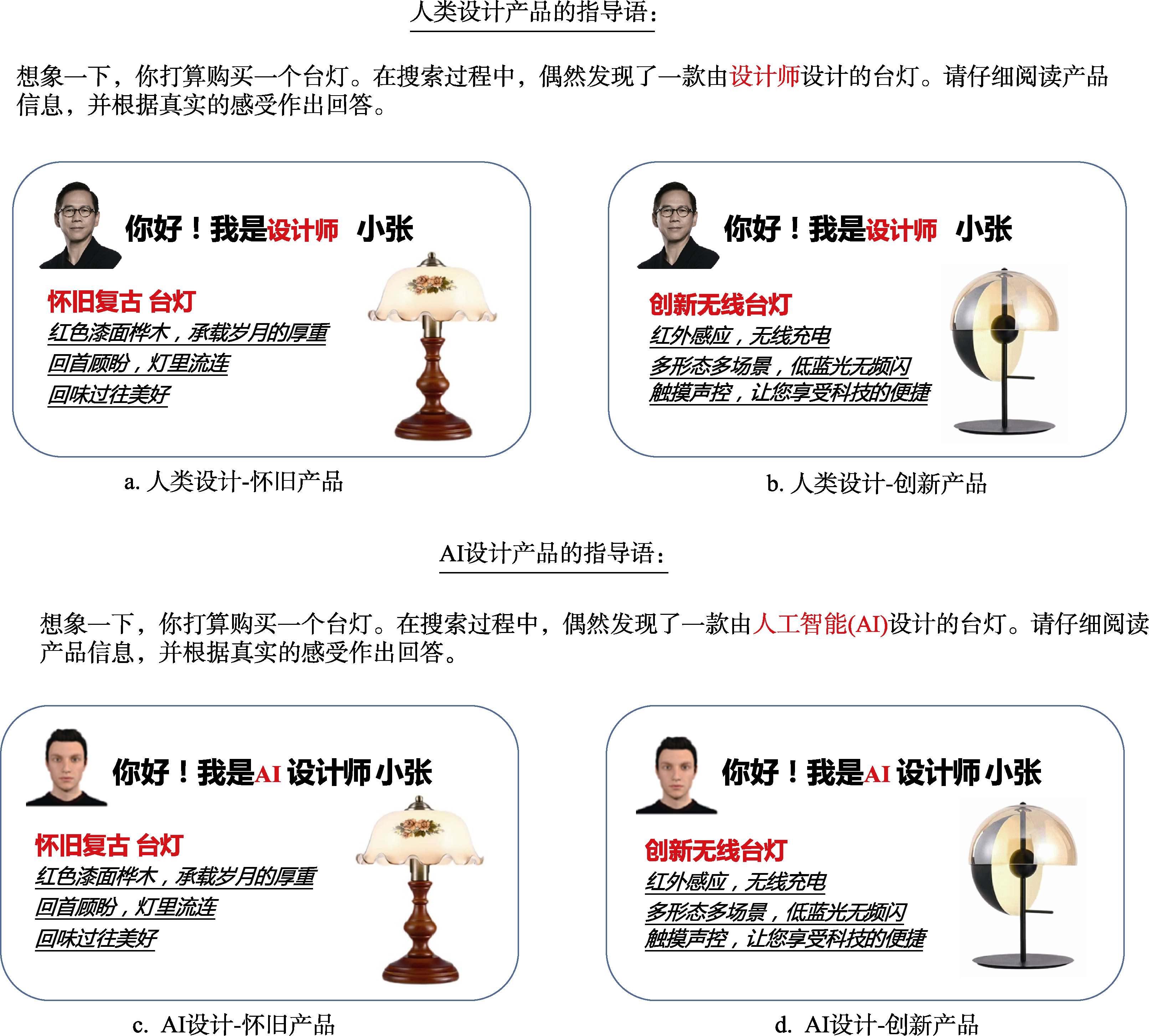
| 实验3 | 验证H3 | 218 | 3 (设计来源: 人类 vs. AI拟人高 vs. AI拟人低) × 2 (产品类型:怀旧产品 vs. 创新产品)被试间设计 | 台灯 | 加工流畅性、购买意愿 |
| 实验4 | 验证H4 | 290 | 2 (设计来源:人类设计 vs. AI设计) × 2 (产品类型: 怀旧产品 vs. 创新产品) × 2 (自我建构: 互依型 vs. 独立型)被试间设计 | 台灯 | 购买意愿 |
表1 实验总览
| 实验 | 实验目的 | 样本量 | 实验设计 | 产品 | 结果变量 |
|---|---|---|---|---|---|
| 实验1A | 验证H1 | 181 | 2 (设计来源: 人类设计 vs. AI设计) × 2 (产品类型: 怀旧产品 vs. 创新产品)被试间设计 | 座式风扇 | 产品态度 |
| 实验1B | 验证H1 | 258 | 3 (设计来源: 人类设计 vs. 人类−AI协同设计 vs. AI设计) × 2 (产品类型: 怀旧产品 vs. 创新产品)被试间设计 | 座钟 | 购买意愿 |
| 实验2A | 验证H2 | 304 | 4 (设计来源: 人类设计 vs. 人类主导−AI辅助vs. AI主导−人类辅助vs. AI设计) × 2 (产品类型: 怀旧产品 vs. 创新产品)被试间设计 | 座钟 | 加工流畅性、购买意愿 |
| 实验2B | 验证H2 | 167 | 2 (设计来源: 人类设计 vs. AI设计) × 2 (产品类型: 怀旧产品 vs. 创新产品)混合设计 | 迷你风扇 | 温暖感知、能力感知、加工流畅性、购买意愿 |
| 实验3 | 验证H3 | 218 | 3 (设计来源: 人类 vs. AI拟人高 vs. AI拟人低) × 2 (产品类型:怀旧产品 vs. 创新产品)被试间设计 | 台灯 | 加工流畅性、购买意愿 |
| 实验4 | 验证H4 | 290 | 2 (设计来源:人类设计 vs. AI设计) × 2 (产品类型: 怀旧产品 vs. 创新产品) × 2 (自我建构: 互依型 vs. 独立型)被试间设计 | 台灯 | 购买意愿 |
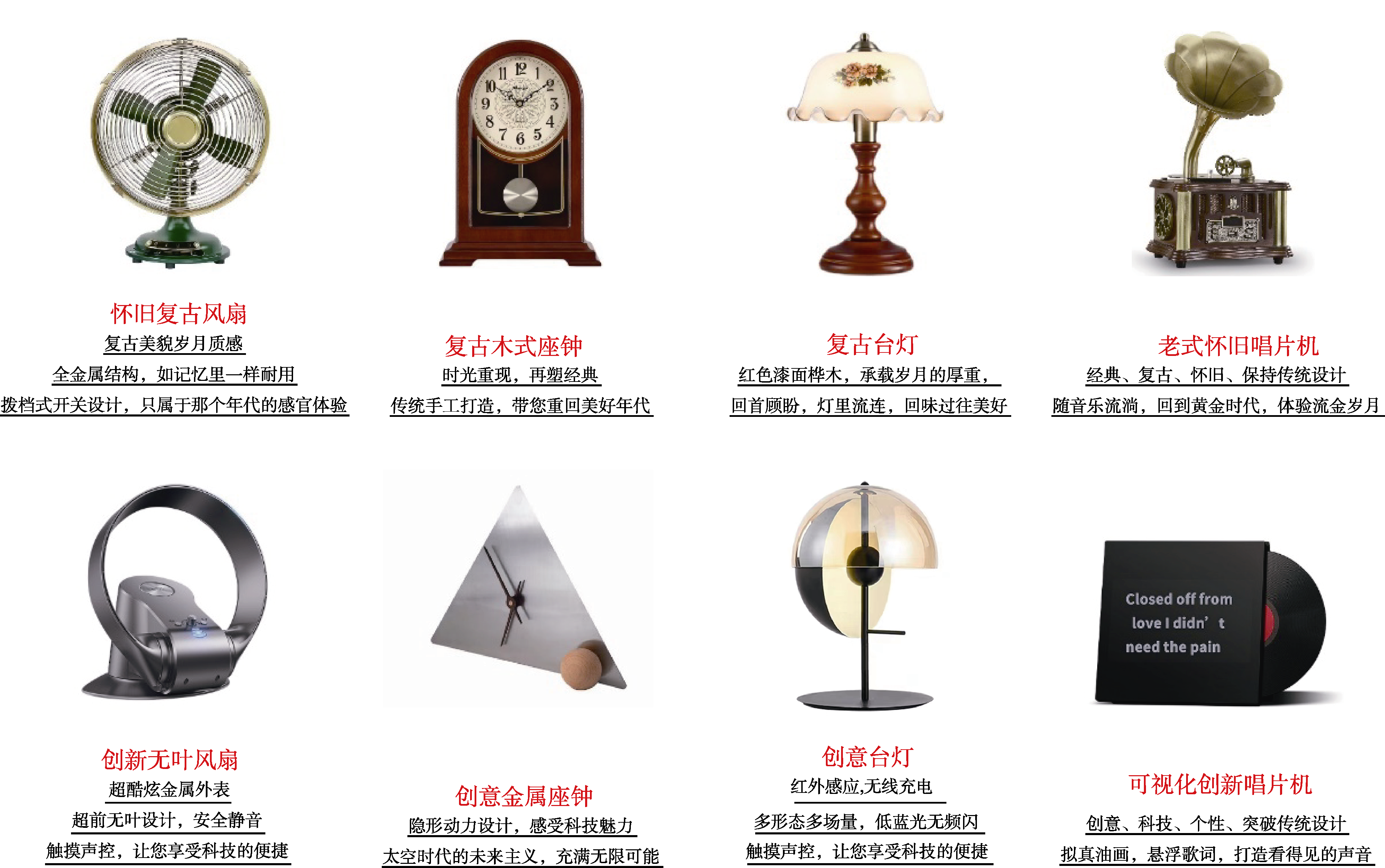
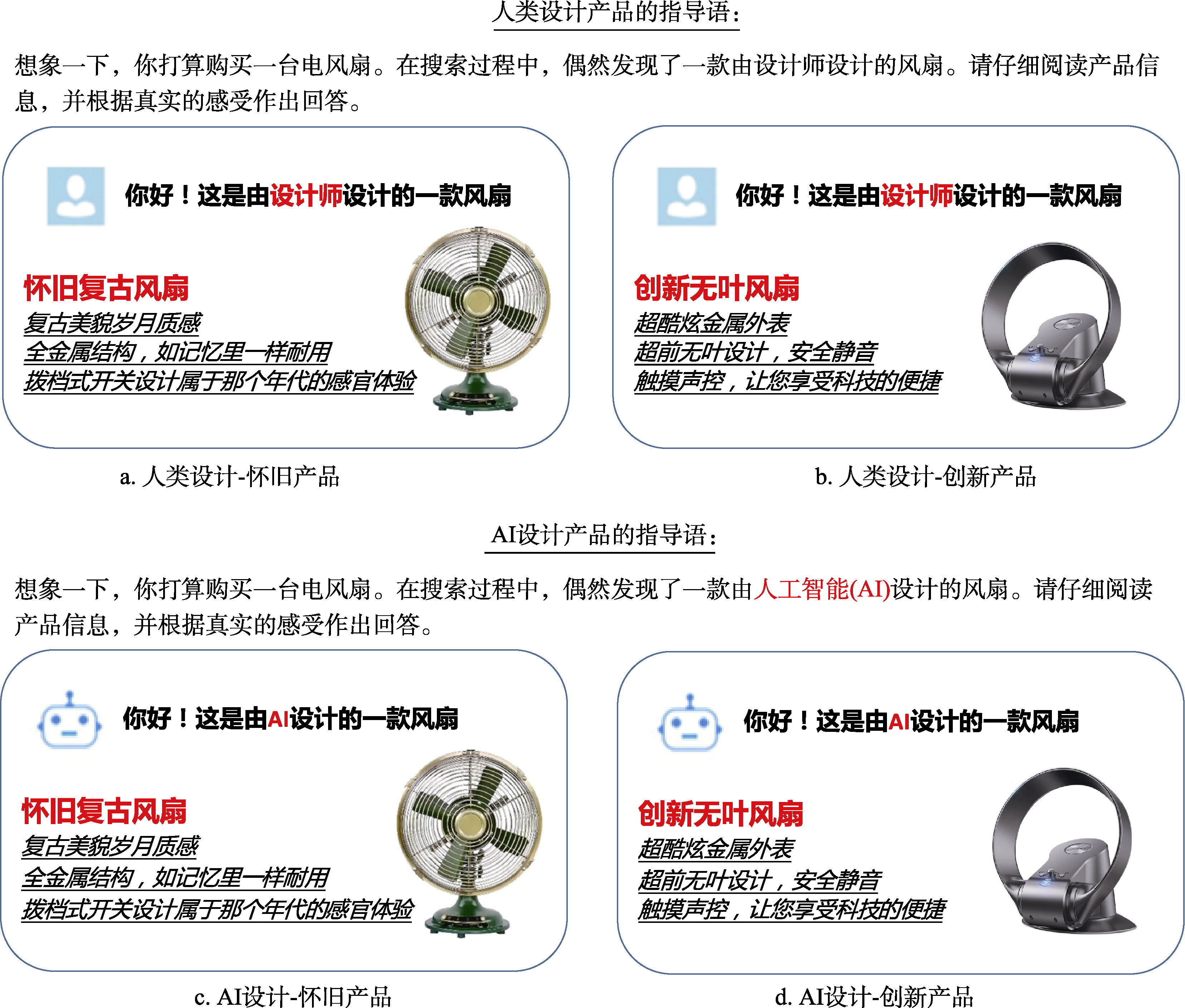
图1 预实验产品材料图示
| 产品 | 类型 | 怀旧组(M ± SD) | 创新组(M ± SD) | 独立样本t检验 | Cohen’s d |
|---|---|---|---|---|---|
| 风扇 | 怀旧感知 | 5.59 ± 0.95 | 4.43 ± 1.27 | t(169) = 5.87*** | 1.03 |
| 创新感知 | 4.25 ± 1.87 | 5.47 ± 0.98 | t(169) = −6.01*** | −0.82 | |
| 座钟 | 怀旧感知 | 5.29 ± 1.08 | 4.27 ± 1.28 | t(169) = 4.11*** | 0.86 |
| 创新感知 | 4.36 ± 1.79 | 5.34 ± 1.09 | t(169) = −5.87*** | −0.66 | |
| 台灯 | 怀旧感知 | 5.21 ± 1.53 | 4.40 ± 1.19 | t(169) = 3.31*** | 0.59 |
| 创新感知 | 4.44 ± 1.81 | 5.45 ± 0.97 | t(169) = −6.35*** | −0.70 | |
| 唱片机 | 怀旧感知 | 5.24 ± 1.27 | 4.21 ± 1.40 | t(169) = 2.58*** | 0.77 |
| 创新感知 | 4.70 ± 1.46 | 5.25 ± 1.04 | t(169) = −5.48*** | −0.43 |
表2 实验材料有效性的独立样本t检验
| 产品 | 类型 | 怀旧组(M ± SD) | 创新组(M ± SD) | 独立样本t检验 | Cohen’s d |
|---|---|---|---|---|---|
| 风扇 | 怀旧感知 | 5.59 ± 0.95 | 4.43 ± 1.27 | t(169) = 5.87*** | 1.03 |
| 创新感知 | 4.25 ± 1.87 | 5.47 ± 0.98 | t(169) = −6.01*** | −0.82 | |
| 座钟 | 怀旧感知 | 5.29 ± 1.08 | 4.27 ± 1.28 | t(169) = 4.11*** | 0.86 |
| 创新感知 | 4.36 ± 1.79 | 5.34 ± 1.09 | t(169) = −5.87*** | −0.66 | |
| 台灯 | 怀旧感知 | 5.21 ± 1.53 | 4.40 ± 1.19 | t(169) = 3.31*** | 0.59 |
| 创新感知 | 4.44 ± 1.81 | 5.45 ± 0.97 | t(169) = −6.35*** | −0.70 | |
| 唱片机 | 怀旧感知 | 5.24 ± 1.27 | 4.21 ± 1.40 | t(169) = 2.58*** | 0.77 |
| 创新感知 | 4.70 ± 1.46 | 5.25 ± 1.04 | t(169) = −5.48*** | −0.43 |
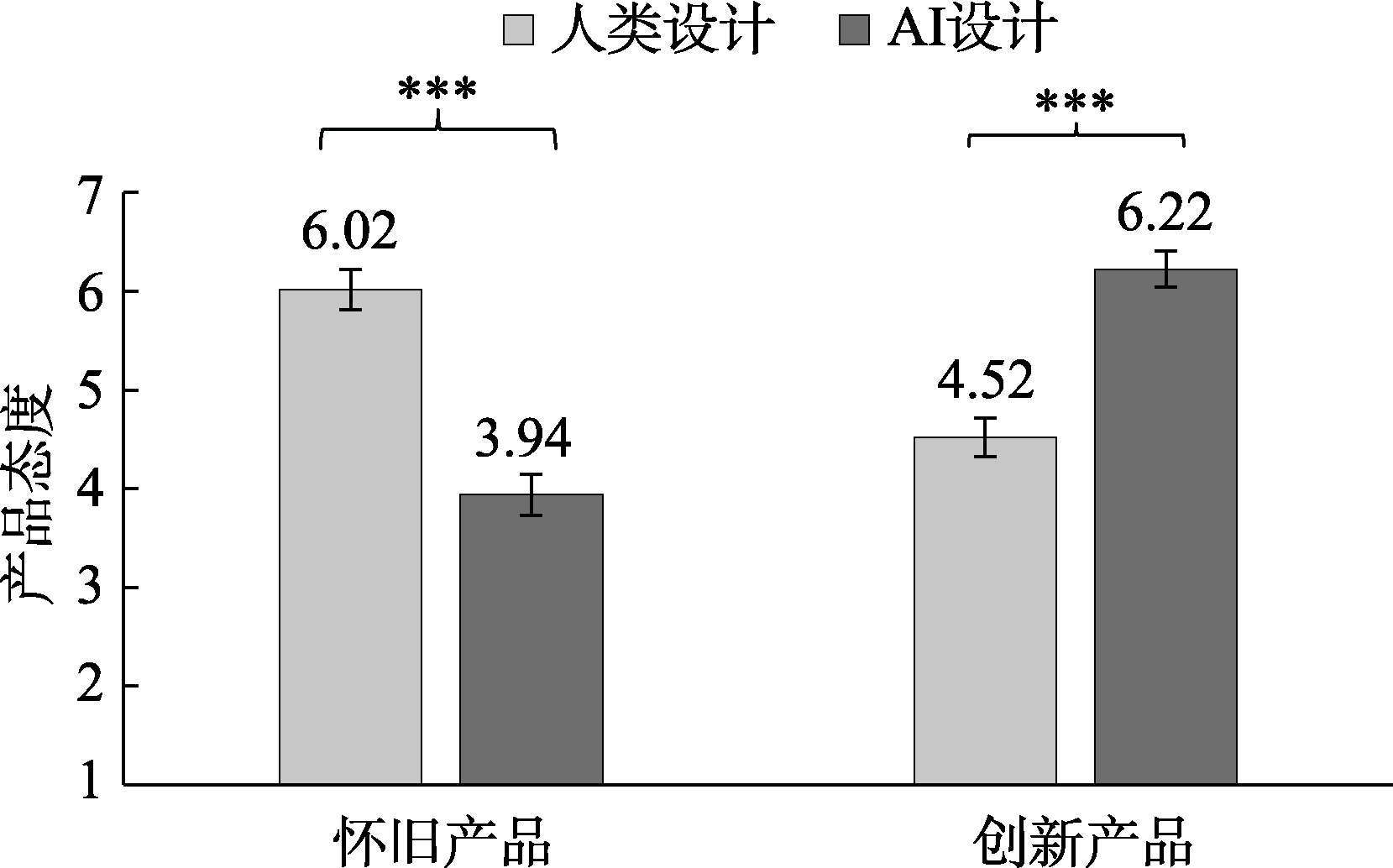
图2 设计来源和产品类型对产品态度的影响(实验1A) 注:***p < 0.001
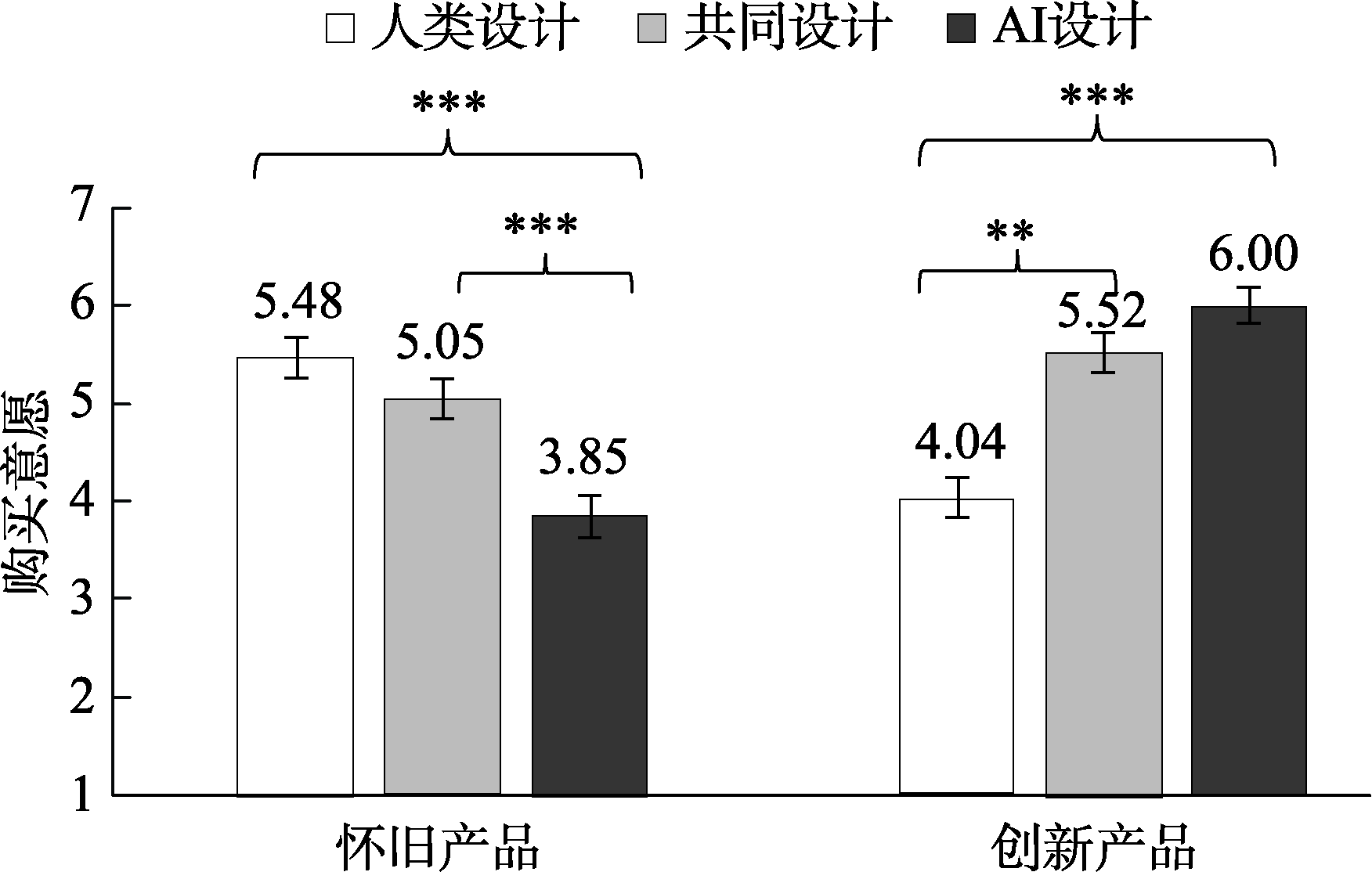
图3 设计来源和产品类型对购买意愿的影响(实验1B) 注:***p < 0.001
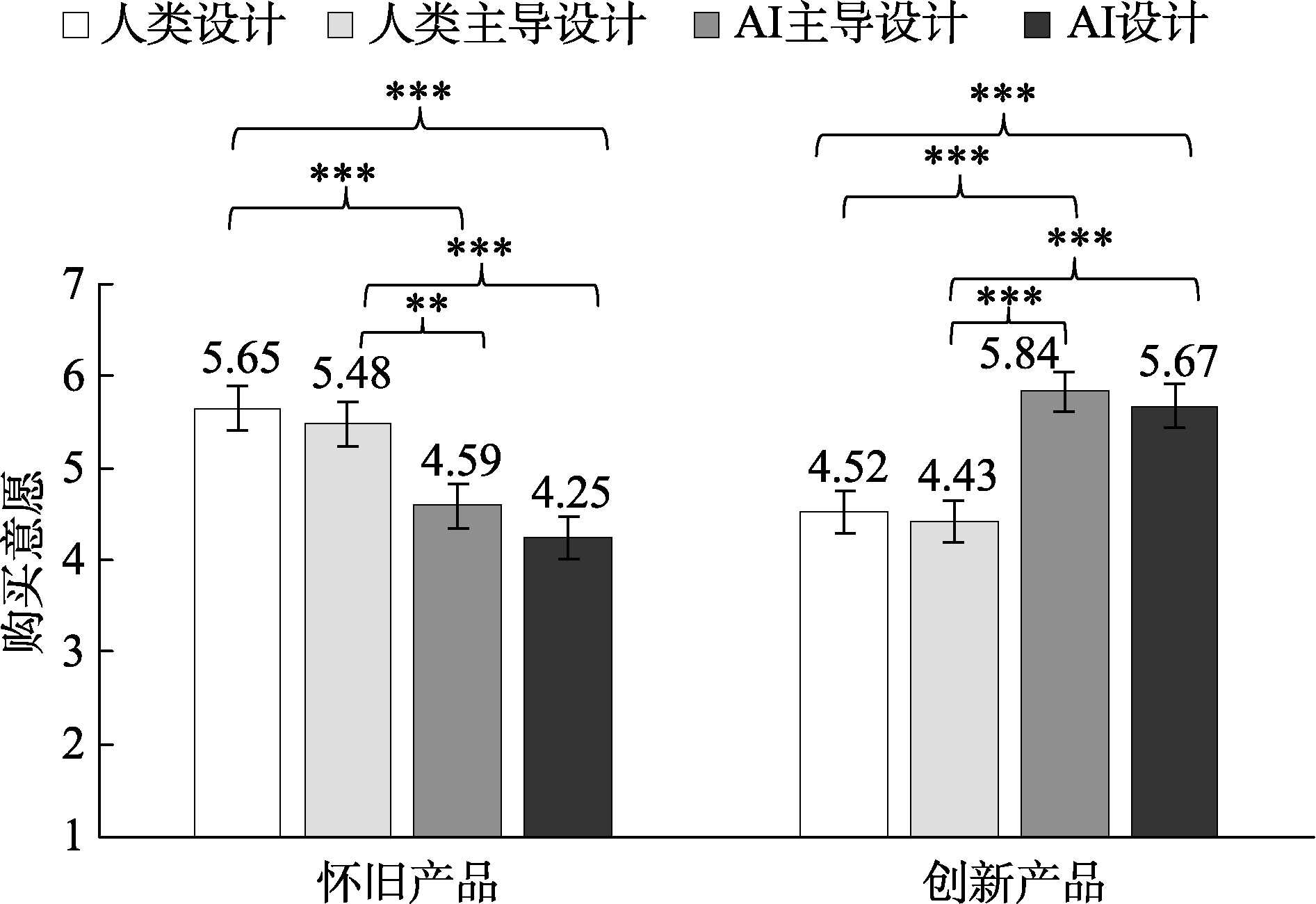
图4 设计来源和产品类型对购买意愿的影响(实验2A) 注:***p < 0.001, **p < 0.01
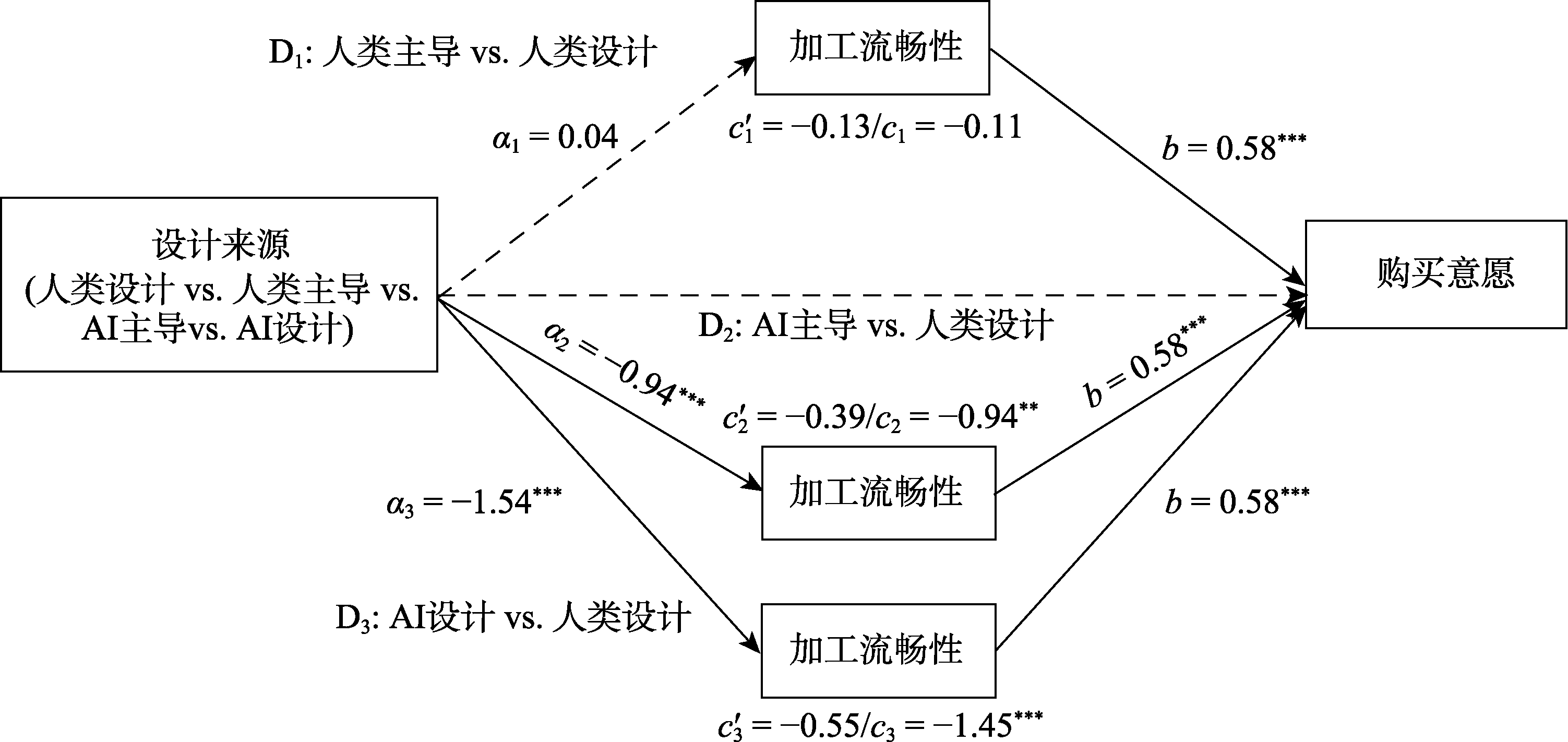
图5 怀旧产品组的相对中介效应分析 注: *** p < 0.001; ** p < 0.01。D1, D2 和D3 是三个虚拟变量, 代表四种设计来源, 编码如下:D1:人类设计 = 0, 人类主导 = 1, AI主导 = 0, AI设计 = 0; D2:人类设计 = 0, 人类主导 = 0, AI主导 = 1, AI设计 = 0; D3:人类设计 = 0, 人类主导 = 0, AI主导 = 0, AI设计 = 1。
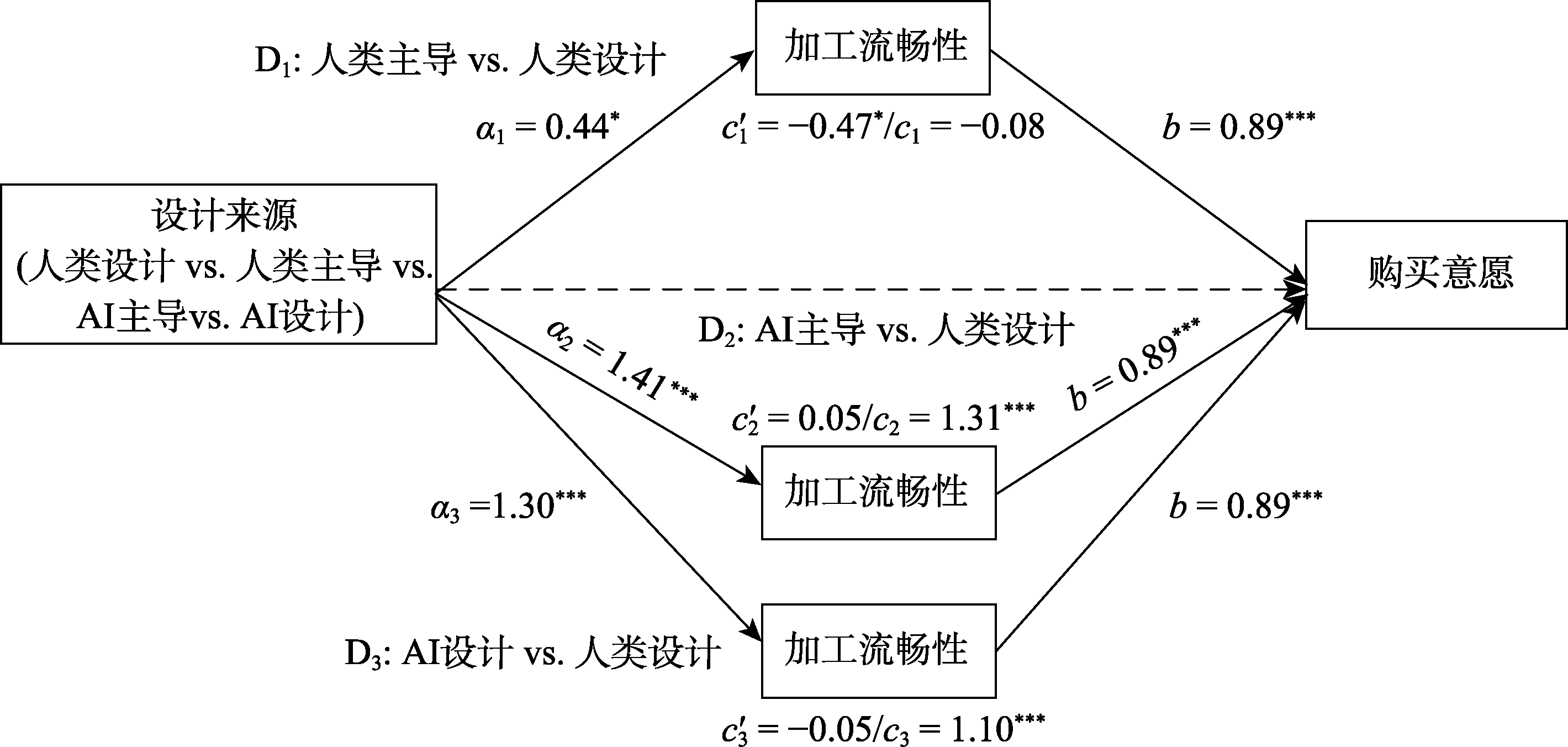
图6 创新产品组的相对中介效应分析 注: *** p < 0.001; * p < 0.05。D1, D2 和D3 是三个虚拟变量, 代表四种设计来源, 编码如下:D1:人类设计 = 0, 人类主导 = 1, AI主导 = 0, AI设计 = 0; D2:人类设计 = 0, 人类主导 = 0, AI主导 = 1, AI设计 = 0; D3:人类设计 = 0, 人类主导 = 0, AI主导 = 0, AI设计 = 1。
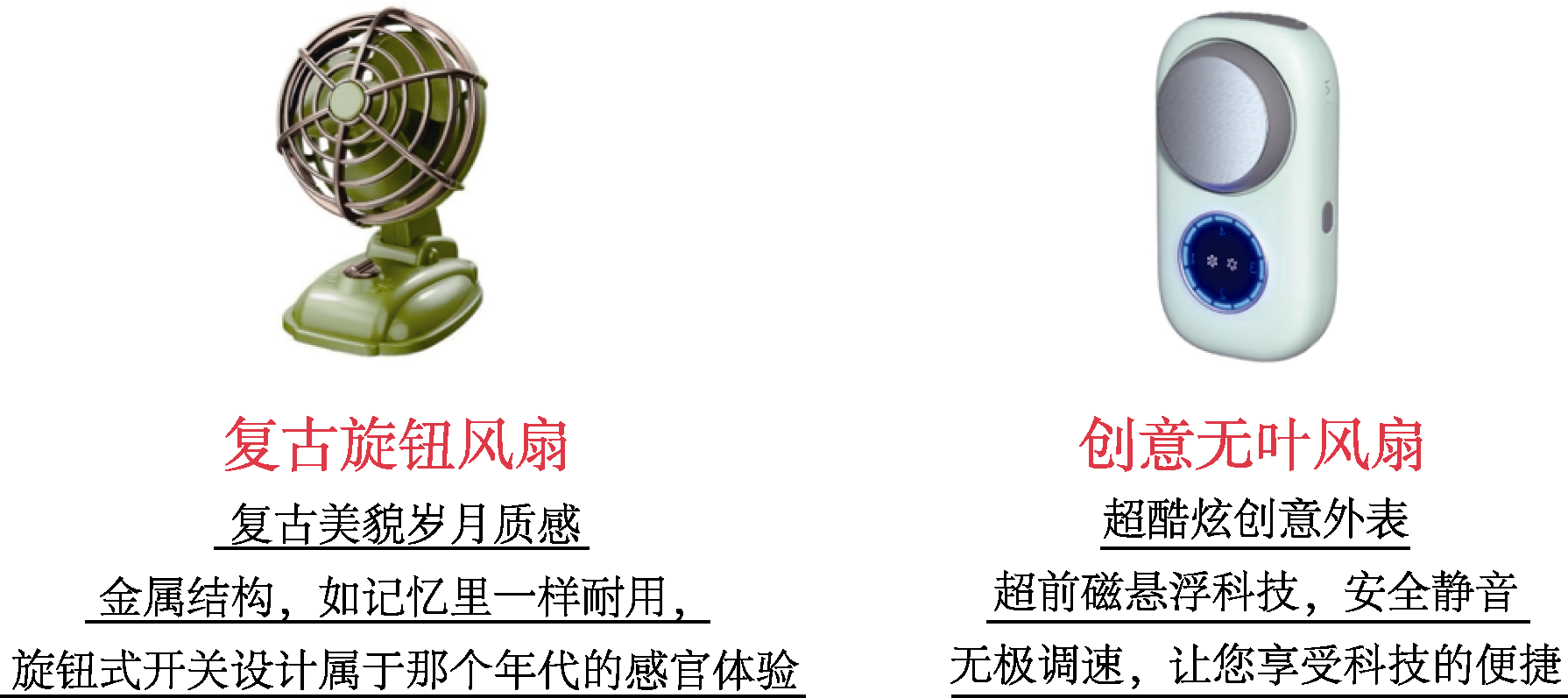
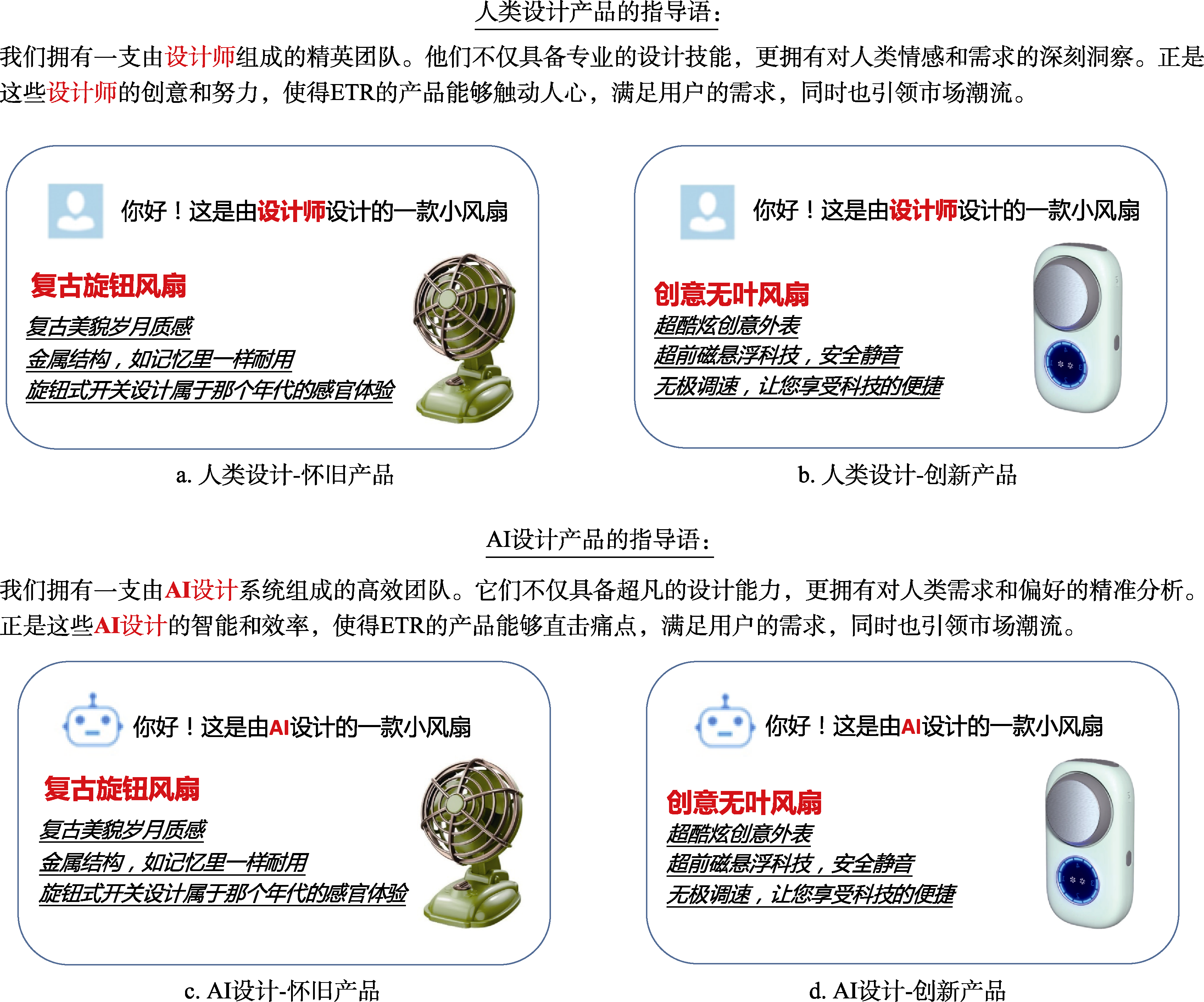
图7 实验2B实验材料图示
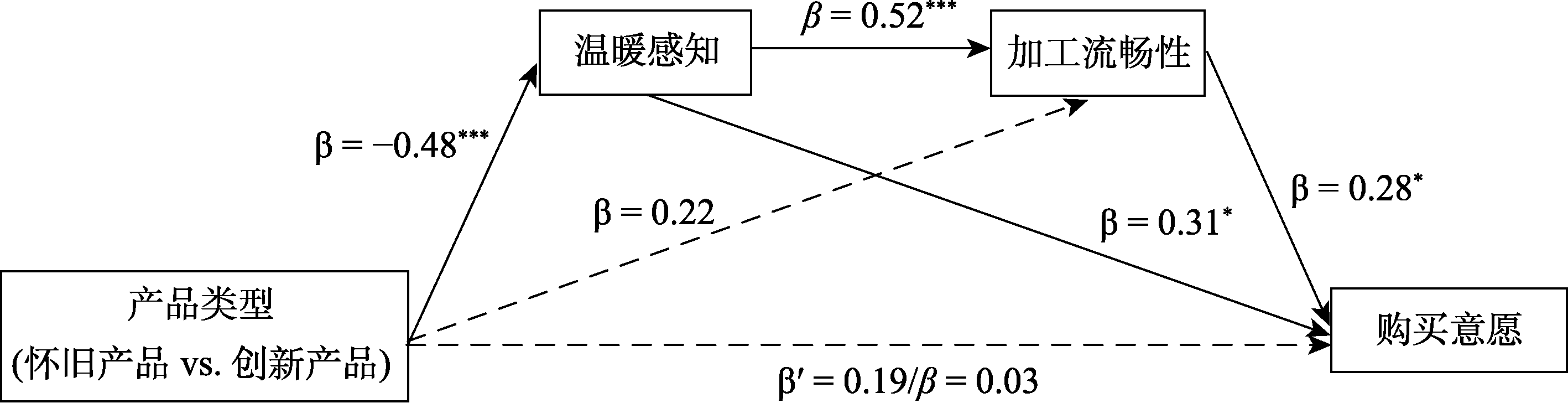
图8 人类设计组的温暖感知与加工流畅性的链式中介效应分析 注:***p < 0.001, *p < 0.05
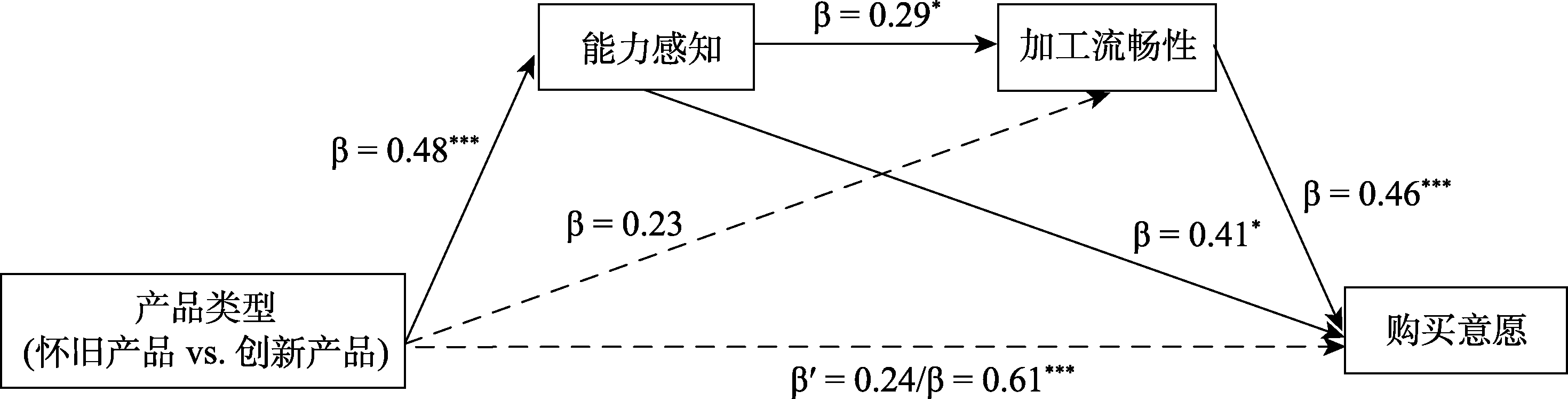
图9 AI设计组的能力感知与加工流畅性的链式中介效应分析 注:***p < 0.001, *p < 0.05
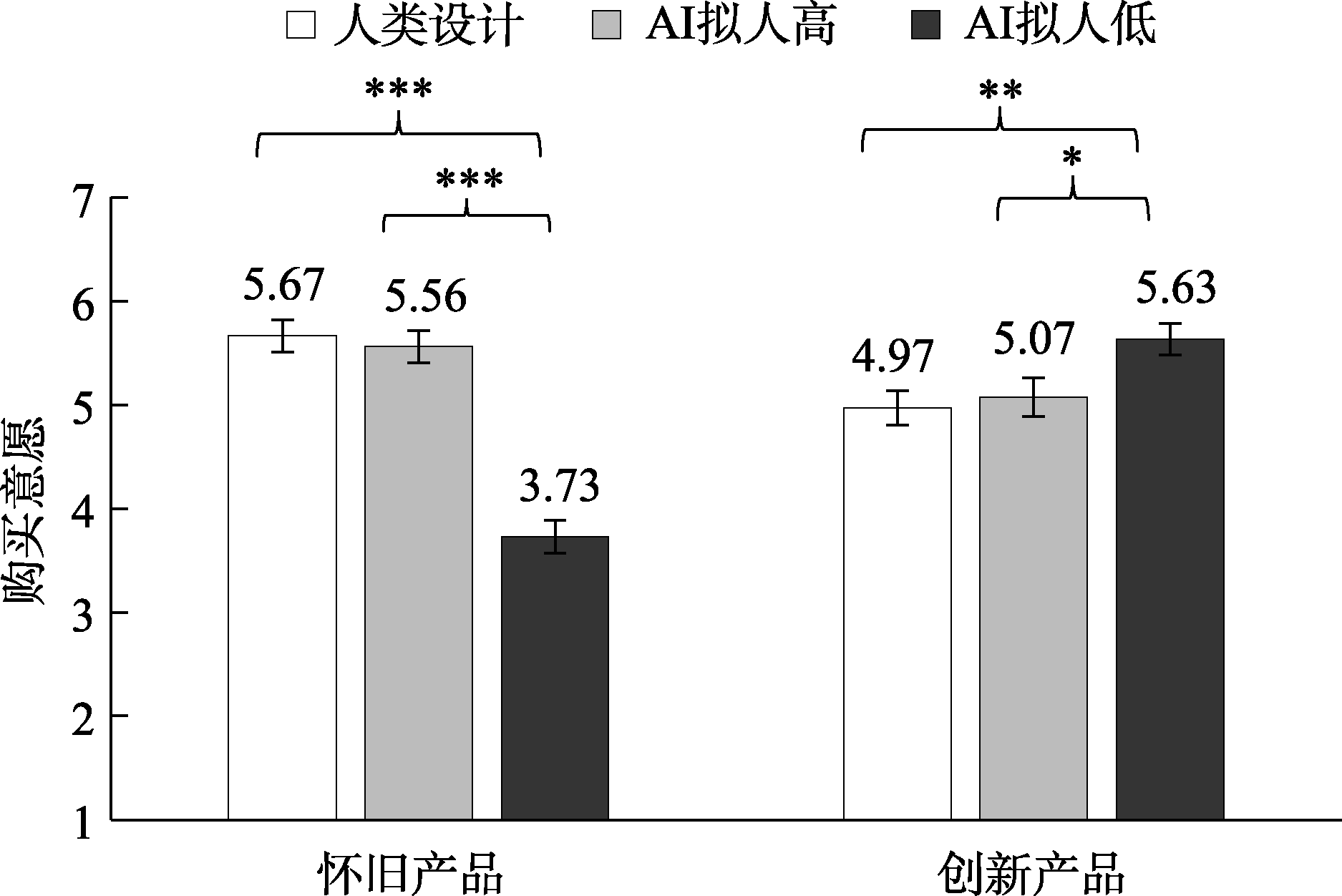
图10 设计来源和产品类型对购买意愿的影响(实验3) 注:***p < 0.001, **p < 0.01, *p < 0.05



| [1] | Aaker, J., Vohs, K. D., & Mogilner, C. (2010). Nonprofits are seen as warm and for-profits as competent: Firm stereotypes matter. Journal of Consumer Research, 37(2), 224-237. |
| [2] | Ackermann, C. L., Teichert, T., & Truong, Y. (2018). ‘So, what is it? And do I like it?’ New product categorisation and the formation of consumer implicit attitude. Journal of Marketing Management, 34(9-10), 796-818. |
| [3] |
Bodenhausen, G. V., & Lichtenstein, M. (1987). Social stereotypes and information-processing strategies: The impact of task complexity. Journal of Personality and Social Psychology, 52(5), 871-880.
doi: 10.1037//0022-3514.52.5.871 pmid: 3585699 |
| [4] |
Castelo, N., Bos, M. W., & Lehmann, D. R. (2019). Task-dependent algorithm aversion. Journal of Marketing Research, 56(5), 809-825.
doi: 10.1177/0022243719851788 |
| [5] | Chae, B., & Hoegg, J. (2013). The future looks “right”: Effects of the horizontal location of advertising images on product attitude. Journal of Consumer Research, 40(2), 223-238. |
| [6] | Cui, N., Chen, Q., Xu, L., He, J. T., & Xu, H. J. (2021). When historical-cultural creative products meet AR: The effect of augmented reality product display on consumers’ evaluation of historical-cultural creative products. Nankai Business Review, 24(6), 50-61. |
| [崔楠, 陈全, 徐岚, 贺靖婷, 徐华谨. (2021). 当历史文创产品遇上AR: 增强现实技术产品展示对消费者历史文创产品评价的影响. 南开管理评论, 24(6), 50-61.] | |
| [7] | Deng, X., Kahn, B. E., Unnava, H. R., & Lee, H. (2016). A “wide” variety: Effects of horizontal versus vertical display on assortment processing, perceived variety, and choice. Journal of Marketing Research, 53(5), 682-698. |
| [8] | Dietvorst, B. J., Simmons, J. P., & Massey, C. (2015). Algorithm aversion: People erroneously avoid algorithms after seeing them err. Journal of Experimental Psychology: General, 144(1), 114-126. |
| [9] | Faul, F., Erdfelder, E., Buchner, A., & Lang, A. G. (2009). Statistical power analyses using G* Power 3.1: Tests for correlation and regression analyses. Behavior Research Methods, 41(4), 1149-1160. |
| [10] |
Fiske, S. T., Cuddy, A. J., Glick, P., & Xu, J. (2002). A model of (often mixed) stereotype content: Competence and warmth respectively follow from perceived status and competition. Journal of Personality and Social Psychology, 82(6), 878-902.
pmid: 12051578 |
| [11] | Fuchs, C., Prandelli, E., Schreier, M., & Dahl, D. W. (2013). All that is users might not be gold: How labeling products as user designed backfires in the context of luxury fashion brands. Journal of Marketing, 77(5), 75-91. |
| [12] | Garvey, A. M., Kim, T., & Duhachek, A. (2023). Bad news? Send an AI. good news? Send a human. Journal of Marketing, 87(1), 10-25. |
| [13] | Gershoff, A. D., & Frels, J. K. (2015). What makes it green? The role of centrality of green attributes in evaluations of the greenness of products. Journal of Marketing, 79(1), 97-110. |
| [14] | Glikson, E., & Woolley, A. W. (2020). Human trust in artificial intelligence: Review of empirical research. Academy of Management Annals, 14(2), 627-660. |
| [15] | Grewal, D., Krishnan, R., Baker, J., & Borin, N. (1998). The effect of store name, brand name and price discounts on consumers' evaluations and purchase intentions. Journal of Retailing, 74(3), 331-352. |
| [16] | Guha, A., Bressgott, T., Grewal, D., Mahr, D., Wetzels, M., & Schweiger, E. (2023). How artificiality and intelligence affect voice assistant evaluations. Journal of the Academy of Marketing Science, 51, 843-886. |
| [17] | Hayes, A. F. (2017). Introduction to mediation, moderation, and conditional process analysis: A regression-based approach. New York: Guilford publications. |
| [18] | Huang, M. H., & Rust, R. T. (2021). Engaged to a robot? The role of AI in service. Journal of Service Research, 24(1), 30-41. |
| [19] | Jindal, R. P., Sarangee, K. R., Echambadi, R., & Lee, S. (2016). Designed to succeed: Dimensions of product design and their impact on market share. Journal of Marketing, 80(4), 72-89. |
| [20] | Kim, S., & McGill, A. L. (2011). Gaming with Mr. Slot or gaming the slot machine? Power, anthropomorphism, and risk perception. Journal of Consumer Research, 38(1), 94-107. |
| [21] |
Kim, T. W., & Duhachek, A. (2020). Artificial intelligence and persuasion: A construal-level account. Psychological Science, 31(4), 363-380.
doi: 10.1177/0956797620904985 pmid: 32223692 |
| [22] |
Kühnen, U., Hannover, B., & Schubert, B. (2001). The semantic-procedural interface model of the self: The role of self-knowledge for context-dependent versus context-independent modes of thinking. Journal of Personality and Social Psychology, 80(3), 397-409.
pmid: 11300574 |
| [23] | Lalwani, A. K., & Shavitt, S. (2013). You get what you pay for? Self-construal influences price-quality judgments. Journal of Consumer Research, 40(2), 255-267. |
| [24] | Li, B., Feng, K., Jin, L., Lei, L., & Li, A. M.(2025). Experiential advantage in consumer decision behavior: Phenomenon, mechanism and prospect. China Journal of Applied Psychology. Advance online publication. https://link.cnki.net/urlid/33.1012.B.20231101.1339.010 |
| [李斌, 冯凯, 金来, 雷励, 李爱梅. (2025). 消费者决策行为中的体验优势现象: 机制及展望. 应用心理学. https://link.cnki.net/urlid/33.1012.B.20231101.1339.010] | |
| [25] |
Li, B., Jin, L., Chen, X. X., Yu, W. N., Li, A. M., & Dai, X. Z. (2024). Order of disorder: The matching effect between display order and product attribute. Acta Psychologica Sinica, 56(10), 1448-1461.
doi: 10.3724/SP.J.1041.2024.01448 |
|
[李斌, 金来, 陈晓曦, 俞炜楠, 李爱梅, 戴先炽. (2024). 有序还是无序: 陈列秩序与产品属性的匹配效应. 心理学报, 56(10), 1448-1461.]
doi: 10.3724/SP.J.1041.2024.01448 |
|
| [26] |
Li, B., Ma, H. Y., Li, A. M., & Ling, W. Q. (2015). The trigger, research paradigm and measurement of nostalgic. Advances in Psychological Science, 23(7), 1289-1298.
doi: 10.3724/SP.J.1042.2015.01289 |
| [李斌, 马红宇, 李爱梅, 凌文辁. (2015). 怀旧的触发、研究范式及测量. 心理科学进展, 23(7), 1289-1298.] | |
| [27] | Li, B., Wang, S. J., Lei, L., & Li, F. J. (2022). Expanding the experiential advantage model: Exploring the mediating roles of a sense of meaning and moderating effects of motivational autonomy. Journal of Consumer Marketing, 39(4), 317-332. |
| [28] | Li, B., Wei, H. Y., Li, A. M., & Li, F. J. (2018). Dual-theory of experiential consumption and material consumption: Phenomenon, mechanism, and influence factors. Advances in Psychological Science, 26(5), 761-769. |
|
[李斌, 卫海英, 李爱梅, 李方君, 陈晓曦. (2018). 体验性消费与实物性消费的双加工理论模型:现象、机制及影响因素. 心理科学进展, 26(5), 761-769.]
doi: 10.3724/SP.J.1042.2018.00761 |
|
| [29] |
Li, B., Zhang, Q., He, R. W., Li, A. M., & Wei, H. Y. (2023). The effect of mortality salience on consumers' preference for experiential purchases and its mechanism. Acta Psychologica Sinica, 55(2), 301-317.
doi: 10.3724/SP.J.1041.2023.00301 |
|
[李斌, 朱钦, 贺汝婉, 李爱梅, 卫海英. (2023). 死亡凸显对消费者体验性消费选择偏好的影响及其作用机制. 心理学报, 55(2), 301-317.]
doi: 10.3724/SP.J.1041.2023.00301 |
|
| [30] | Li, B., Zhang, S. Y., & Feng, K. (2022). The effect of social exclusion on consumer choice: The moderating role of nostalgia and mediating role of social connectedness. Journal of Psychological of Science, 45(5), 1174-1181. |
| [李斌, 张淑颖, 冯凯. (2022). 社会排斥对消费选择偏向的影响:怀旧的调节作用及社会联结的中介作用. 心理科学, 45(5), 1174-1181.] | |
| [31] | Li, B., Zhu, Q., Li, A. M., & Cui, R. B. (2023). Can good memories of the past instill happiness? Nostalgia improves subjective well-being by increasing gratitude. The Journal of Happiness Studies, 24(2), 699-715. |
| [32] | Lindebaum, D., Vesa, M., & Den Hond, F. (2020). Insights from “the machine stops” to better understand rational assumptions in algorithmic decision making and its implications for organizations. Academy of Management Review, 45(1), 247-263. |
| [33] |
Logg, J. M., Minson, J. A., & Moore, D. A. (2019). Algorithm appreciation: People prefer algorithmic to human judgment. Organizational Behavior and Human Decision Processes, 151, 90-103.
doi: 10.1016/j.obhdp.2018.12.005 |
| [34] |
Longoni, C., Bonezzi, A., & Morewedge, C. K. (2019). Resistance to medical artificial intelligence. Journal of Consumer Research, 46(4), 629-650.
doi: 10.1093/jcr/ucz013 |
| [35] | Longoni, C., & Cian, L. (2022). Artificial intelligence in utilitarian vs. hedonic contexts: The “word-of-machine” effect. Journal of Marketing, 86(1), 91-108. |
| [36] | Luo, Y. Y., Zhu, G. W., Qian, W. J., Wu, Y. Y., Huang, J., & Yang, Z. (2023). Algorithm aversion in the era of artificial intelligence: Research framework and future agenda. Journal of Management World, 39(10), 205-233. |
| [罗映宇, 朱国玮, 钱无忌, 吴月燕, 黄静, 杨智. (2023). 人工智能时代的算法厌恶:研究框架与未来展望. 管理世界, 39(10), 205-233.] | |
| [37] | Lv, X., Liu, Y., Luo, J., Liu, Y., & Li, C. (2021). Does a cute artificial intelligence assistant soften the blow? The impact of cuteness on customer tolerance of assistant service failure. Annals of Tourism Research, 87, 103114. |
| [38] | Mandel, N. (2003). Shifting selves and decision making: The effects of self-construal priming on consumer risk-taking. Journal of Consumer Research, 30(1), 30-40. |
| [39] | Markus, H. R., & Kitayama, S. (1991). Culture and the self: Implications for cognition, emotion, and motivation. Psychological Review, 98(2), 224-253. |
| [40] |
Montoya, A. K., & Hayes, A. F. (2017). Two-condition within- participant statistical mediation analysis: A path-analytic framework. Psychological Methods, 22(1), 6-27.
doi: 10.1037/met0000086 pmid: 27362267 |
| [41] | Moreau, C. P., Prandelli, E., Schreier, M., & Hieke, S. (2020). Customization in luxury brands: Can Valentino get personal? Journal of Marketing Research, 57(5), 937-947. |
| [42] | Muehling, D. D., & Pascal, V. J. (2011). An empirical investigation of the differential effects of personal, historical, and non-nostalgic advertising on consumer responses. Journal of Advertising, 40(2), 107-122. |
| [43] | Newman, D. T., Fast, N. J., & Harmon, D. J. (2020). When eliminating bias isn’t fair: Algorithmic reductionism and procedural justice in human resource decisions. Organizational Behavior and Human Decision Processes, 160, 149-167. |
| [44] | Reich, T., Kaju, A., & Maglio, S. J. (2023). How to overcome algorithm aversion: Learning from mistakes. Journal of Consumer Psychology, 33(2), 285-302. |
| [45] | Rubera, G. (2015). Design innovativeness and product sales' evolution. Marketing Science, 34(1), 98-115. |
| [46] | Schwarz, N. (2004). Metacognitive experiences: Response to commentaries. Journal of Consumer Psychology, 14(4), 370-373. |
| [47] | Septianto, F., Seo, Y., & Zhao, F. (2021). The effects of competence and warmth appeals on luxury and sustainable brand advertising: The moderating role of construal level. Journal of Advertising, 51(3), 369-384. |
| [48] | Singelis, T. M. (1994). The measurement of independent and interdependent self-construals. Personality and Social Psychology Bulletin, 20(5), 580-591. |
| [49] | Stock, R. M., & Zacharias, N. A. (2013). Two sides of the same coin: How do different dimensions of product program innovativeness affect customer loyalty?. Journal of Product Innovation Management, 30(3), 516-532. |
| [50] | Sweeney, J. C., & Soutar, G. N. (2001). Consumer perceived value: The development of a multiple item scale. Journal of Retailing, 77(2), 203-220. |
| [51] | Trafimow, D., Triandis, H. C., & Goto, S. G. (1991). Some tests of the distinction between the private self and the collective self. Journal of Personality and Social Psychology, 60(5), 649-655. |
| [52] |
Tversky, A., & Kahneman, D. (1981). The framing of decisions and the psychology of choice. Science, 211(4481), 453-458.
doi: 10.1126/science.7455683 pmid: 7455683 |
| [53] |
Van Boven, L., & Gilovich, T. (2003). To do or to have? That is the question. Journal of Personality and Social Psychology, 85(6), 1193-1202.
doi: 10.1037/0022-3514.85.6.1193 pmid: 14674824 |
| [54] | Verganti, R., Vendraminelli, L., & Iansiti, M. (2020). Innovation and design in the age of artificial intelligence. Journal of Product Innovation Management, 37(3), 212-227. |
| [55] | Wang, P. X., Kim, S., & Kim, M. (2023). Robot anthropomorphism and job insecurity: The role of social comparison. Journal of Business Research, 164, 114003. |
| [56] |
Waytz, A., & Norton, M. I. (2014). Botsourcing and outsourcing: Robot, British, Chinese, and German workers are for thinking-not feeling-jobs. Emotion, 14(2), 434-444.
doi: 10.1037/a0036054 pmid: 24708509 |
| [57] |
Wildschut, T., Sedikides, C., Routledge, C., Arndt, J., & Cordaro, F. (2010). Nostalgia as a repository of social connectedness: The role of attachment-related avoidance. Journal of Personality and Social Psychology, 98(4), 573-586.
doi: 10.1037/a0017597 pmid: 20307130 |
| [58] | Xu, L., & Mehta, R. (2022). Technology devalues luxury? Exploring consumer responses to AI-designed luxury products. Journal of the Academy of Marketing Science, 50(6), 1135-1152. |
| [59] |
Xu, L. Y., Yu, F., & Peng, K. P. (2022). Algorithmic discrimination causes less desire for moral punishment than human discrimination. Acta Psychologica Sinica, 54(9), 1076-1092.
doi: 10.3724/SP.J.1041.2022.01076 |
|
[许丽颖, 喻丰, 彭凯平. (2022). 算法歧视比人类歧视引起更少道德惩罚欲. 心理学报, 54(9), 1076-1092.]
doi: 10.3724/SP.J.1041.2022.01076 |
|
| [60] | Xu, L. Y., Yu, F., Wu, J. H., Han, T. T., & Zhao, L. (2017). Anthropomorphism: Antecedents and consequences. Advances in Psychological Science, 25(11), 1942-1954. |
|
[许丽颖, 喻丰, 邬家骅, 韩婷婷, 赵靓. (2017). 拟人化:从“它”到“他”. 心理科学进展, 25(11), 1942-1954.]
doi: 10.3724/SP.J.1042.2017.01942 |
|
| [61] | Yalcin, G., Lim, S., Puntoni, S., & van Osselaer, S. M. (2022). Thumbs up or down: Consumer reactions to decisions by algorithms versus humans. Journal of Marketing Research, 59(4), 696-717. |
| [62] | Yam, K. C., Tan, T., Jackson, J. C., Shariff, A., & Gray, K. (2023). Cultural differences in people’s reactions and applications of robots, algorithms, and artificial intelligence. Management and Organization Review, 19(5), 859-875. |
| [63] |
Zhao, Y. J., Xu, L. Y., Yu, F., & Jin, W. L. (2024). Perceived opacity leads to algorithm aversion in the workplace. Acta Psychologica Sinica, 56(4), 497-514.
doi: 10.3724/SP.J.1041.2024.00497 |
|
[赵一骏, 许丽颖, 喻丰, 金旺龙. (2024). 感知不透明性增加职场中的算法厌恶. 心理学报, 56(4), 497-514.]
doi: 10.3724/SP.J.1041.2024.00497 |
|
| [64] | Zhu, D. H., & Chang, Y. P. (2020). Robot with humanoid hands cooks food better? Effect of robotic chef anthropomorphism on food quality prediction. International Journal of Contemporary Hospitality Management, 32(3), 1367-1383. |
| [1] | 胡小勇, 李穆峰, 李悦, 李凯, 喻丰. 人工智能决策的道德缺失效应及其机制与应对策略[J]. 心理学报, 2026, 58(1): 74-95. |
| [2] | 章彦博, 黄峰, 莫柳铃, 刘晓倩, 朱廷劭. 基于大语言模型的自杀意念文本数据增强与识别技术[J]. 心理学报, 2025, 57(6): 987-1000. |
| [3] | 王国轩, 龙立荣, 李绍龙, 孙芳, 望家晴, 黄世英子. 负面绩效反馈下员工绩效改进动机的人机比较[J]. 心理学报, 2025, 57(2): 298-314. |
| [4] | 黄峰, 丁慧敏, 李思嘉, 韩诺, 狄雅政, 刘晓倩, 赵楠, 李林妍, 朱廷劭. 基于大语言模型的自助式AI心理咨询系统构建及其效果评估[J]. 心理学报, 2025, 57(11): 2022-2042. |
| [5] | 魏心妮, 喻丰, 彭凯平. 低可持续性降低人工智能的接受意愿[J]. 心理学报, 2025, 57(11): 1973-1987. |
| [6] | 周详, 白博仁, 张婧婧, 刘善柔. 和而不同:生成式人工智能凸显下人类的社会创造策略[J]. 心理学报, 2025, 57(11): 1901-1913. |
| [7] | 吴胜涛, 彭凯平. 智能时代的人类优势与心理变革(代序)[J]. 心理学报, 2025, 57(11): 1879-1884. |
| [8] | 王晨, 陈为聪, 黄亮, 侯苏豫, 王益文. 机器人遵从伦理促进人机信任?决策类型反转效应与人机投射假说[J]. 心理学报, 2024, 56(2): 194-209. |
| [9] | 于文环, 何琳, 傅钰, 刘涛. 产品传统文化载荷对品牌地位的影响——来自青年消费群体的证据[J]. 心理学报, 2023, 55(9): 1542-1557. |
| [10] | 黄敏学, 姚舜禹, 刘茂红. 自强还是自嘲?名人代言如何提升社会化媒体广告的营销效果[J]. 心理学报, 2018, 50(8): 907-919. |
| [11] | 李宝珠, 魏少木. 广告诉求形式对产品反馈的影响作用: 基于眼动的证据[J]. 心理学报, 2018, 50(1): 69-81. |
| [12] | 崔楠;徐岚;谢雯婷. 做会后悔还是不做会后悔?——自我调节模式对不作为惯性的影响[J]. 心理学报, 2016, 48(4): 423-434. |
| [13] | 魏华;汪涛;周宗奎;冯文婷;丁倩. 叠音品牌名称对消费者知觉和偏好的影响[J]. 心理学报, 2016, 48(11): 1479-1488. |
| [14] | 杜晓梦, 赵占波, 崔晓. 评论效价、新产品类型与调节定向对在线评论有用性的影响[J]. 心理学报, 2015, 47(4): 555-568. |
| [15] | 范亮艳;范晓芳;罗位超;吴功航;严序;尹大志;吕岳;朱君明;徐冬溶. 艺术设计中创造性思维的fMRI研究:一项基于智能CAD的探索[J]. 心理学报, 2014, 46(4): 427-436 . |
| 阅读次数 | ||||||
|
全文 |
|
|||||
|
摘要 |
|
|||||
