

ISSN 1671-3710
CN 11-4766/R
主办:中国科学院心理研究所
出版:科学出版社
CN 11-4766/R
主办:中国科学院心理研究所
出版:科学出版社
心理科学进展 ›› 2026, Vol. 34 ›› Issue (4): 626-646.doi: 10.3724/SP.J.1042.2026.0626 cstr: 32111.14.2026.0626
韩翼1( ), 马朝翊1, 宗树伟2
收稿日期:2025-09-09
出版日期:2026-04-15
发布日期:2026-03-02
通讯作者:
韩翼, E-mail: hanyi7009@163.com基金资助:
HAN Yi1(), MA Zhaoyi1, ZONG Shuwei2
Received:2025-09-09
Online:2026-04-15
Published:2026-03-02
摘要:
GenAI参与组织决策已经成为不可阻挡的趋势, 但学术界对于GenAI建议采纳的研究尚不完善。在领导决策过程中, 领导如何比较员工建议、GenAI建议、员工−GenAI团队建议并进行采纳?领导的感知有何差异?为此, 本研究从社会比较理论的视角出发, 通过5个子课题的研究, 主要解决以下5个问题:1) GenAI建议采纳如何进行界定?2)领导对于员工−GenAI建议采纳存在何种差异?3)领导对于员工−GenAI团队建议采纳的差异如何?4)如何比较员工−GenAI建议采纳的差异效果?5)员工−GenAI协同过程中建议障碍如何差异化影响建议质量?干预策略是否有效?最终, 本研究系统构建了领导对于员工−GenAI建议采纳的多层次模型, 为跨学科理论发展赋予了新的视角, 也为组织优化人智协同决策, 降低技术风险提供了实践指导。
中图分类号:
韩翼, 马朝翊, 宗树伟. (2026). 领导对员工−生成式人工智能建议的反应机制:基于社会比较视角多层次研究. 心理科学进展 , 34(4), 626-646.
HAN Yi, MA Zhaoyi, ZONG Shuwei. (2026). The differential perception of leaders' response to employee-GenAI advice: A multi-level study based on social comparison view. Advances in Psychological Science, 34(4), 626-646.
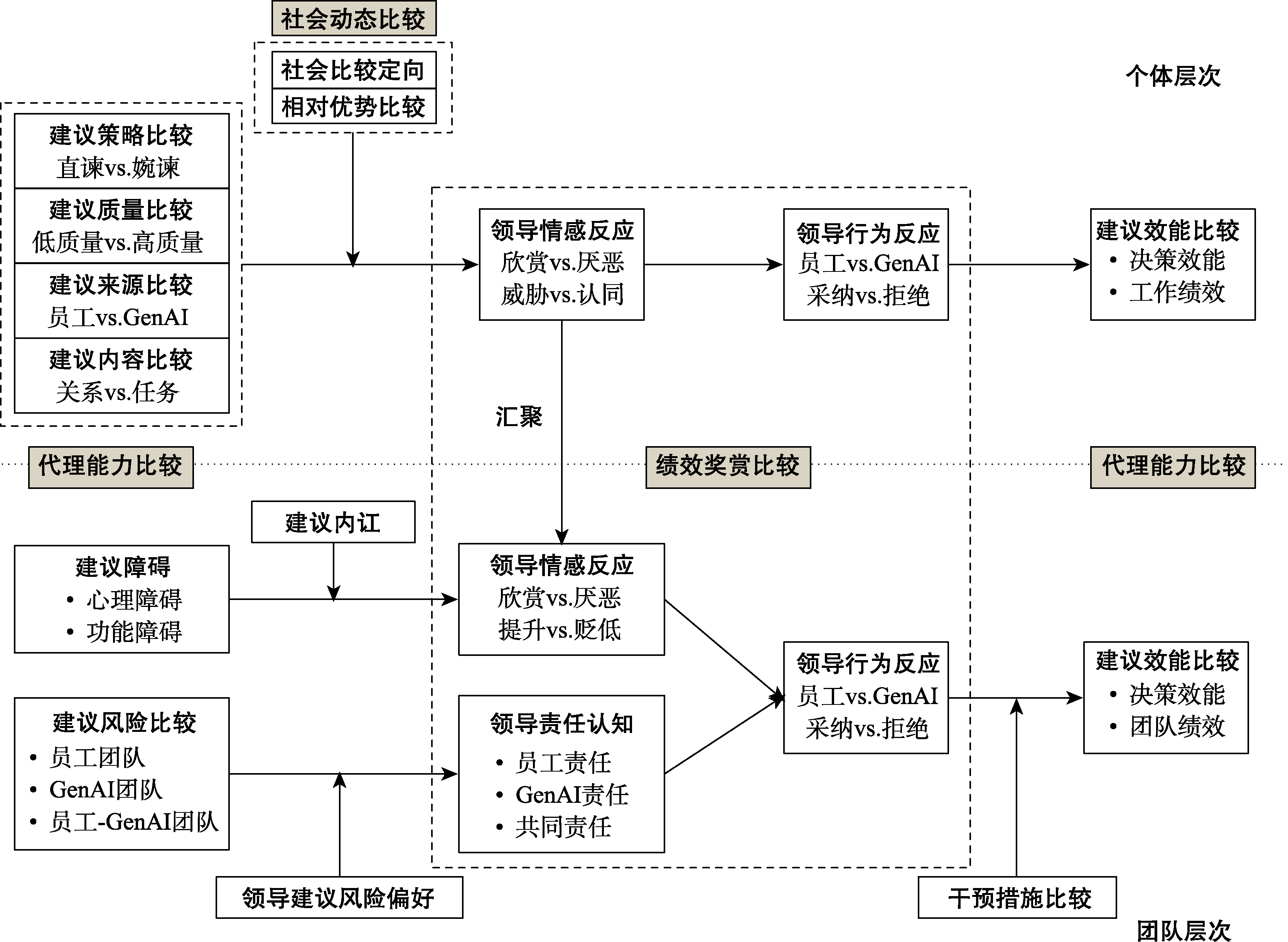
图1 总体研究框架
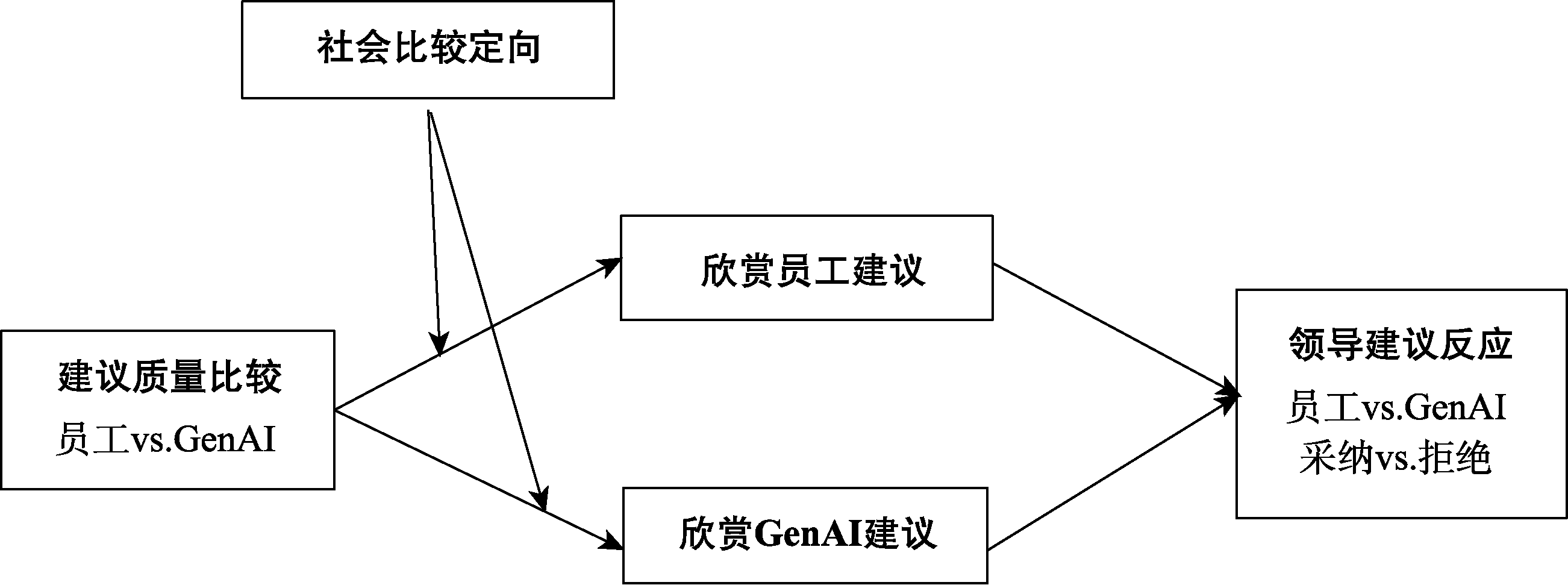
图2 员工−GenAI建议质量的比较对领导建议反应的影响
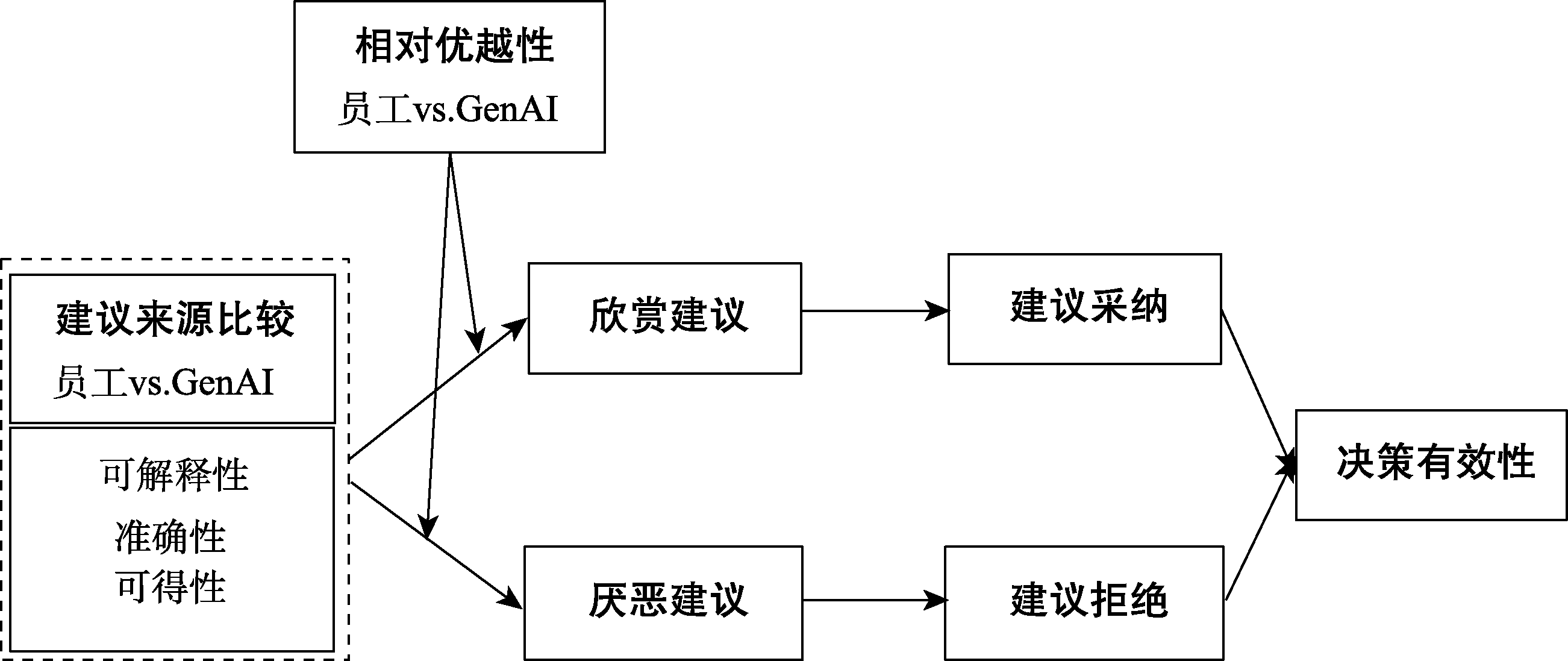
图3 员工−GenAI建议来源的决策有效性比较
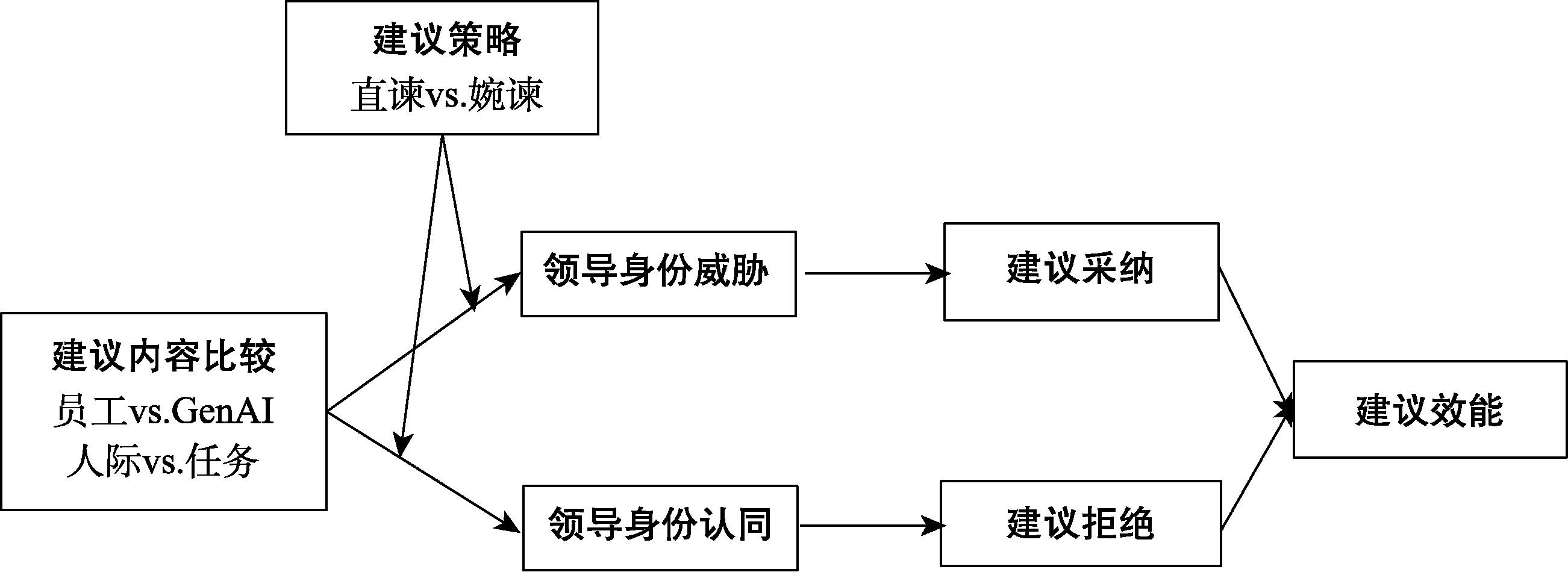
图4 员工−GenAI建议内容与建议策略交互影响的比较研究
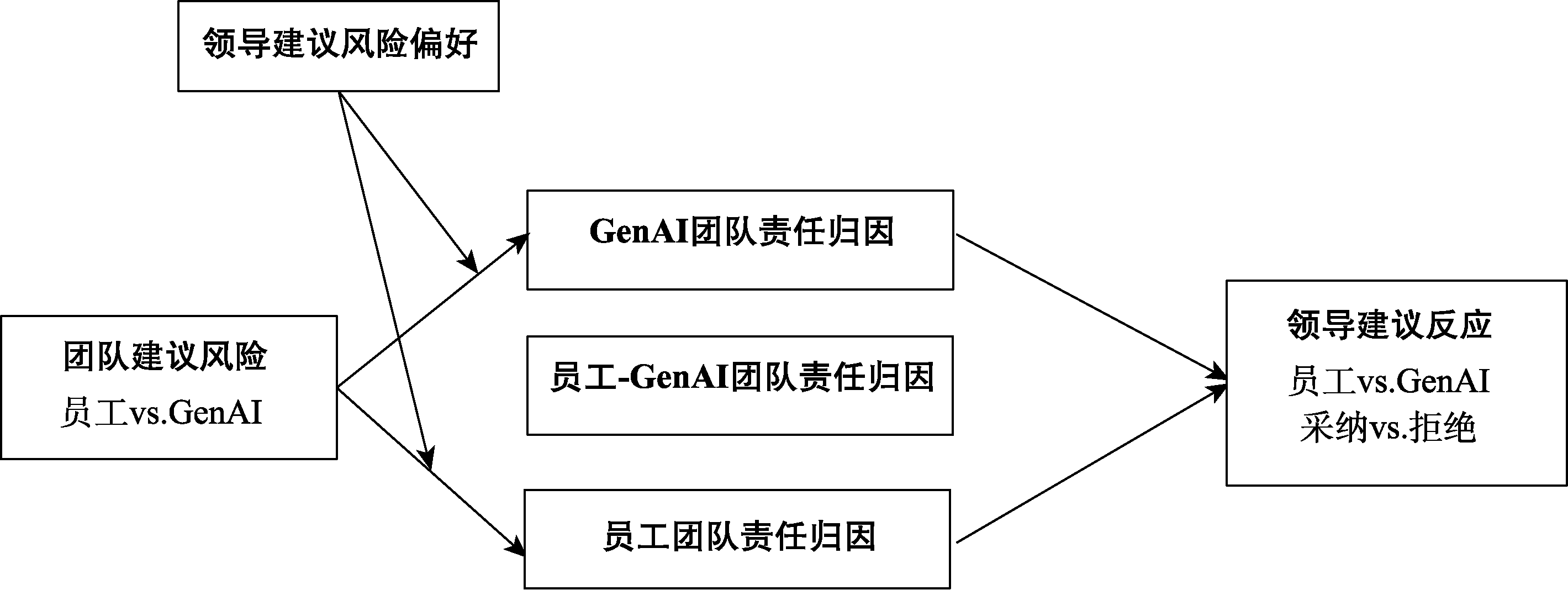
图5 员工−GenAI建议风险及责任归因的差异性效果
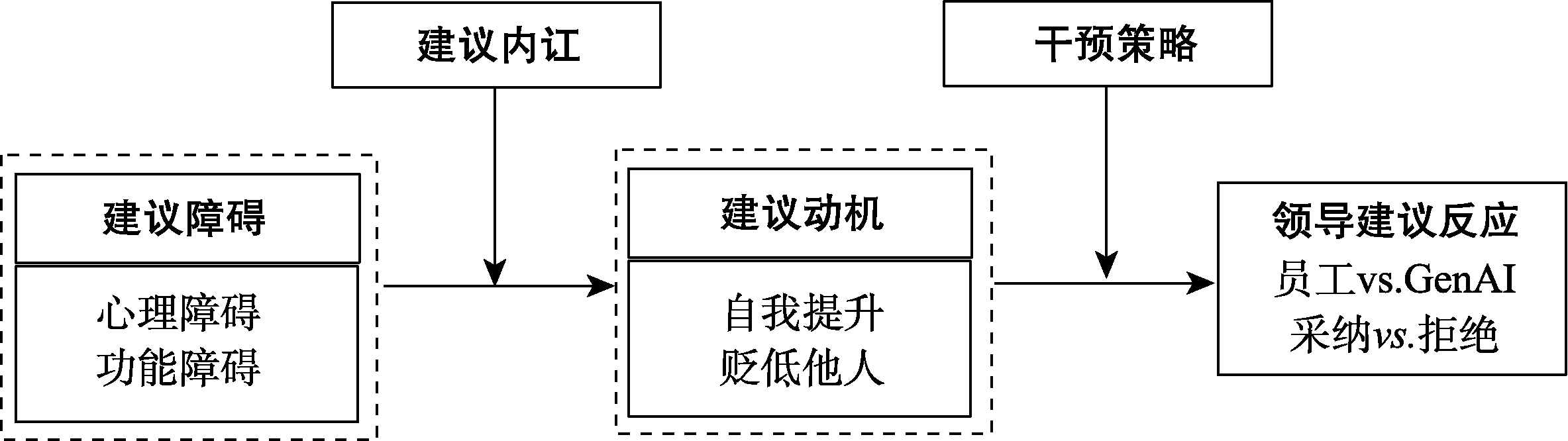
图6 员工−GenAI建议障碍及干预策略研究
| [1] | 段锦云, 魏秋江. (2012). 建言效能感结构及其在员工建言行为发生中的作用. 心理学报, 44(7), 972-985. |
| [2] | 韩翼, 肖素芳. (2020). 领导为什么拒谏: 基于动机社会认知视角的阐释. 外国经济与管理, 42(8), 68-80. |
| [3] | 韩翼, 董越, 胡筱菲, 谢怡敏. (2017). 员工进谏策略及其有效性研究. 管理学报, 14(12), 1777-1785. |
| [4] | 李思贤, 陈佳昕, 宋艾珈, 王梦琳, 段锦云. (2022). 人们对人工智能建议接受度的影响因素. 心理技术与应用, 10(4), 202-214. |
| [5] | 刘伟, 谭文辉. (2025). 人机环境系统融合智能: 超越人类智能的可能性. 清华大学出版社. |
| [6] | 裴巧玲, 吴秋洁. (2023). 员工建言与管理者纳言: 一个有调节的中介模型. 现代营销, (12), 119-121. |
| [7] | 魏昕, 张志学. (2014). 上级何时采纳促进性或抑制性进言? 上级地位和下属专业度的影响. 管理世界, (1), 132-143. |
| [8] |
许丽颖, 赵一骏, 喻丰. (2025). 人工智能主管提出的道德行为建议更少被遵从. 心理学报, 57(11), 2060-2082.
doi: 10.3724/SP.J.1041.2025.2060 |
| [9] |
章凯, 时金京, 罗文豪. (2020). 建言采纳如何促进员工建言: 基于目标自组织视角的整合机制. 心理学报, 52(2), 229-239.
doi: 10.3724/SP.J.1041.2020.00229 |
| [10] | 张若勇, 闫石, 邵琪. (2019). 同事建言对员工任务绩效影响机制的研究. 兰州大学学报(社会科学版), 47(4), 73-82. |
| [11] | 宗树伟, 杨付, 龙立荣, 韩翼. (2025). 促进还是抑制? 生成式人工智能建议采纳对创造力的双刃剑效应. 心理科学进展, 33(6), 905-915. |
| [12] | Aghion,, P., Jones, B. F., & Jones, C. I. (2017). Artificial intelligence and economic growth. In Agrawal, A., Gans, J. & Goldfarb, A. (Eds.), National bureau of economic research (pp.237-290). University of Chicago Press. |
| [13] | Agrawal, A., Gans, J., & Goldfarb, A. (2022). Power and prediction: The disruptive economics of artificial intelligence. Harvard Business Review Press. |
| [14] |
Agrawal, A., Gans, J. S., & Goldfarb, A. (2024). Artificial intelligence adoption and system-wide change. Journal of Economics & Management Strategy, 33(2), 327-337.
doi: 10.1111/jems.v33.2 URL |
| [15] | Ahn, P., Swol, L., Kim, S. J., & Park, H. (2021). Enhanced motivation and decision making from going hybrid. Small Group Research, 53, 104649642110435. |
| [16] |
Aschauer, F., Sohn, M., & Hirsch, B. (2024). Managerial advice-taking-Sharing responsibility with (non) human advisors trumps decision accuracy. European Management Review, 21(1), 186-203.
doi: 10.1111/emre.v21.1 URL |
| [17] |
Bailey, P. E., Leon, T., Ebner, N. C., Moustafa, A. A., & Weidemann, G. (2023). A meta-analysis of the weight of advice in decision-making. Current Psychology, 42(28), 24516-24541.
doi: 10.1007/s12144-022-03573-2 pmid: 39711945 |
| [18] |
Baines, J. I., Dalal, R. S., Ponce, L. P., & Tsai, H. C. (2024). Advice from artificial intelligence: A review and practical implications. Frontiers in Psychology, 15, 1390182.
doi: 10.3389/fpsyg.2024.1390182 URL |
| [19] | Blau, P. M. (1964). Exchange and power in social life. New York, NY: Wiley. |
| [20] |
Bonaccio, S., & Dalal, R. S. (2006). Advice taking and decision-making: An integrative literature review, and implications for the organizational sciences. Organizational Behavior and Human Decision Processes, 101(2), 127-151.
doi: 10.1016/j.obhdp.2006.07.001 URL |
| [21] |
Booyse, D., & Scheepers, C. B. (2024). Barriers to adopting automated organisational decision-making through the use of artificial intelligence. Management Research Review, 47(1), 64-85.
doi: 10.1108/MRR-09-2021-0701 URL |
| [22] |
Böhm, R., Jörling, M., Reiter, L., & Fuchs, C. (2023). People devalue generative AI’s competence but not its advice in addressing societal and personal challenges. Communications Psychology, 1(1), 1-10.
doi: 10.1038/s44271-023-00001-4 |
| [23] |
Brykman, K. M., & Raver, J. L. (2021). To speak up effectively or often? The effects of voice quality and voice frequency on peers' and managers' evaluations. Journal of Organizational Behavior, 42(4), 504-526.
doi: 10.1002/job.v42.4 URL |
| [24] | Brynjolfsson, E., & McAfee, A. (2014). The second machine age: Work, progress, and prosperity in a time of brilliant technologies. W.W. Norton & Company. |
| [25] |
Bucher, E., Schou, P. K., & Waldkirch, M. (2024). Just another voice in the crowd? Investigating digital voice formation in the gig economy. Academy of Management Discoveries, 10(3), 488-511.
doi: 10.5465/amd.2022.0112 URL |
| [26] |
Burton, J. W., Stein, M.-K., & Jensen, T. B. (2020). A systematic review of algorithm aversion in augmented decision making. Journal of Behavioral Decision Making, 33(2), 220-239.
doi: 10.1002/bdm.2155 |
| [27] | Cao, X., De Zwaan, L., & Wong, V. (2025). Building trust in robo-advisory: Technology, firm-specific and system trust. Qualitative Research in Financial Markets. https://doi.org/10.1108/QRFM-02-2024-0033 |
| [28] |
Cecil, J., Lermer, E., Hudecek, M. F., Sauer, J., & Gaube, S. (2024). Explainability does not mitigate the negative impact of incorrect AI advice in a personnel selection task. Scientific Reports, 14(1), 9736. https://doi.org/10.1038/s41598-024-60220-5
pmid: 38679619 |
| [29] | Chakraborty, D., Kar, A. K., Patre, S., & Gupta, S. (2024). Enhancing trust in online grocery shopping through generative AI chatbots. Journal of Business Research, 180, 114-737. |
| [30] | Chen, Q., Yin, C., & Gong, Y. (2025). Would an AI chatbot persuade you: An empirical answer from the elaboration likelihood model. Information Technology & People, 38(2), 937-962. |
| [31] |
Cheng, L., Varshney, K. R., & Liu, H. (2021). Socially responsible AI algorithms: Issues, purposes, and challenges. Journal of Artificial Intelligence Research, 71, 1137-1181.
doi: 10.1613/jair.1.12814 URL |
| [32] | Cheng, B., Lin, H., & Kong, Y. (2023). Challenge or hindrance? How and when organizational artificial intelligence adoption influences employee job crafting. Journal of Business Research, 164, 113987. https://doi.org/10.1016/j.jbusres.2023.113987 |
| [33] | Chui, M., Manyika, J., & Miremadi, M. (2016). Where machines could replace humans-and where they can't (yet). The McKinsey Quarterly, (3), 58-69 |
| [34] |
Choudhury, V., & Karahanna, E. (2008). The relative advantage of electronic channels: A multidimensional view. MIS Quarterly, 32(1), 179-200.
doi: 10.2307/25148833 URL |
| [35] |
Choudhary, V., Marchetti, A., Shrestha, Y. R., & Puranam, P. (2025). Human-AI ensembles: When can they work?. Journal of Management, 51(2), 536-569.
doi: 10.1177/01492063231194968 URL |
| [36] | Civit, M., Civit-Masot, J., Cuadrado, F., & Escalona, M. J. (2022). A systematic review of artificial intelligence- based music generation: Scope, applications, and future trends. Expert Systems with Applications, 209, 118190. https://doi.org/10.1016/j.eswa.2022.118190 |
| [37] | Corcoran, K., Crusius, J., & Mussweiler, T. (2011). Social comparison: Motives, standards, and mechanisms. In D. Chadee (Ed.), Theories in Social Psychology (pp. 119-139). Wiley Blackwell. |
| [38] |
Dai, Y., Lee, J., & Kim, J. W. (2024). AI vs. human voices: How delivery source and narrative format influence the effectiveness of persuasion messages. International Journal of Human-Computer Interaction, 40(24), 8735-8749.
doi: 10.1080/10447318.2023.2288734 URL |
| [39] |
Dalal, R. S., & Bonaccio, S. (2010). What types of advice do decision-makers prefer? Organizational Behavior and Human Decision Processes, 112(1), 11-23.
doi: 10.1016/j.obhdp.2009.11.007 URL |
| [40] |
Damen, F., Van Knippenberg, B., & Van Knippenberg, D. (2008). Affective match in leadership: Leader emotional displays, follower positive affect, and follower performance. Journal of Applied Social Psychology, 38(4), 868-902.
doi: 10.1111/jasp.2008.38.issue-4 URL |
| [41] | Dang, J., & Liu, L. (2022). Implicit theories of the human mind predict competitive and cooperative responses to AI robots. Computers in Human Behavior, 134, 107300. https://doi.org/10.1016/j.chb.2022.107300 |
| [42] | Dang, J., & Liu, L. (2024). Extended artificial intelligence aversion: People deny humanness to artificial intelligence users. Journal of Personality and Social Psychology. https://doi.org/10.1037/pspi0000480 |
| [43] |
Daschner, S., & Obermaier, R. (2022). Algorithm aversion? On the influence of advice accuracy on trust in algorithmic advice. Journal of Decision Systems, 31(sup1), 77-97.
doi: 10.1080/12460125.2022.2070951 URL |
| [44] | Davenport, T. H., & Kirby, J. (2016). Only humans need apply: Winners and losers in the age of smart machines. Harper Business. |
| [45] |
De Dreu, C. K. W., & Weingart, L. R. (2003). Task versus relationship conflict, team performance, and team member satisfaction: A meta-analysis. Journal of Applied Psychology, 88(4), 741-749.
doi: 10.1037/0021-9010.88.4.741 pmid: 12940412 |
| [46] |
Detert, J. R., & Burris, E. R. (2007). Leadership behavior and employee voice: Is the door really open? Academy of Management Journal, 50(4), 869-884.
doi: 10.5465/amj.2007.26279183 URL |
| [47] |
Dietvorst, B. J., Simmons, J. P., & Massey, C. (2015). Algorithm aversion: People erroneously avoid algorithms after seeing them err. Journal of Experimental Psychology: General, 144(1), 114-126.
doi: 10.1037/xge0000033 URL |
| [48] |
Dietvorst, B. J., Simmons, J. P., & Massey, C. (2018). Overcoming algorithm aversion: People will use imperfect algorithms if they can (even slightly) modify them. Management Science, 64(3), 1155-1170.
doi: 10.1287/mnsc.2016.2643 URL |
| [49] |
Dillard, J. P., Wilson, S. R., Tusing, K. J., & Kinney, T. A. (1997). Politeness judgments in personal relationships. Journal of Language and Social Psychology, 16(3), 297-325.
doi: 10.1177/0261927X970163003 URL |
| [50] | Doshi-Velez, F., & Kim, B. (2017). Towards a rigorous science of interpretable machine learning. PsyArXiv. https://doi.org/10.48550/arXiv.1702.08608 |
| [51] |
Edwards, M. R., Zubielevitch, E., Okimoto, T., Parker, S., & Anseel, F. (2024). Managerial control or feedback provision: How perceptions of algorithmic HR systems shape employee motivation, behavior, and well-being. Human Resource Management, 63(4), 691-710.
doi: 10.1002/hrm.v63.4 URL |
| [52] | Endsley, M. R. (2023). Supporting human-ai teams: Transparency, explainability, and situation awareness. Computers in Human Behavior, 140, 107574. https://doi.org/10.1016/j.chb.2022.107574 |
| [53] |
Erkutlu, H., & Chafra, J. (2015). The mediating roles of psychological safety and employee voice on the relationship between conflict management styles and organizational identification. American Journal of Business, 30(1), 72-91.
doi: 10.1108/AJB-06-2013-0040 URL |
| [54] |
Exline, J. J., & Lobel, M. (1999). The perils of outperformance: Sensitivity about being the target of a threatening upward comparison. Psychological Bulletin, 125(3), 307-337.
pmid: 10349354 |
| [55] |
Farh, C. I., Li, J., & Lee, T. W. (2024). Toward a contextualized view of voice quality, its dimensions, and its dynamics across newcomer socialization. Academy of Management Review, 49(2), 399-428.
doi: 10.5465/amr.2019.0159 URL |
| [56] |
Feng, B., & MacGeorge, E. L. (2010). The influences of message and source factors on advice outcomes. Communication Research, 37(4), 553-575.
doi: 10.1177/0093650210368258 URL |
| [57] |
Festinger, L. (1954). A theory of social comparison processes. Human Relations, 7(2), 117-140.
doi: 10.1177/001872675400700202 URL |
| [58] | Feuerriegel, S., Hartmann, J., Janiesch, C., & Zschech, P. (2024). Generative AI. Business & Information Systems Engineering, 66(1), 111-126. |
| [59] |
Gerber, J. P., Wheeler, L., & Suls, J. (2018). A social comparison theory meta-analysis 60+ years on. Psychological Bulletin, 144(2), 177-197.
doi: 10.1037/bul0000127 pmid: 29144145 |
| [60] |
Gibbons, F. X., & Buunk, B. P. (1999). Individual differences in social comparison: Development of a scale of social comparison orientation. Journal of Personality and Social Psychology, 76(1), 129-142.
doi: 10.1037//0022-3514.76.1.129 pmid: 9972558 |
| [61] |
Giroux, M., Kim, J., Lee, J. C., & Park, J. (2022). Artificial intelligence and declined guilt: Retailing morality comparison between human and AI. Journal of Business Ethics, 178(4), 1027-1041.
doi: 10.1007/s10551-022-05056-7 |
| [62] |
Glikson, E., & Woolley, A. W. (2020). Human trust in artificial intelligence: Review of empirical research. Academy of Management Annals, 14(2), 627-660.
doi: 10.5465/annals.2018.0057 URL |
| [63] |
Goldsmith, D. J., & MacGeorge, E. L. (2000). The impact of politeness and relationship on perceived quality of advice about a problem. Human Communication Research, 26, 234-263.
doi: 10.1111/hcre.2000.26.issue-2 URL |
| [64] |
Graf, B., & Antoni, C. H. (2023). Drowning in the flood of information: A meta-analysis on the relation between information overload, behaviour, experience, and health and moderating factors. European Journal of Work and Organizational Psychology, 32(2), 173-198.
doi: 10.1080/1359432X.2022.2118051 URL |
| [65] |
Hagendorff, T. (2020). The ethics of AI ethics: An evaluation of guidelines. Minds and Machines, 30(1), 99-120.
doi: 10.1007/s11023-020-09517-8 |
| [66] |
Hogg, M. A., Terry, D. J., & White, K. M. (1995). A tale of two theories: A critical comparison of identity theory with social identity theory. Social Psychology Quarterly, 58(4), 255-269.
doi: 10.2307/2787127 URL |
| [67] | Huang, Z., Che, C., Zheng, H., & Li, C. (2024). Research on generative artificial intelligence for virtual financial robo-advisor. Academic Journal of Science and Technology, 10(1), 74-80. |
| [68] | Hyman, J. (2018). Employee voice and participation: Contested past, troubled present, uncertain future. Routledge. |
| [69] |
Ikeda, S. (2024). Inconsistent advice by ChatGPT influences decision making in various areas. Scientific Reports, 14(1), 15876. https://doi.org/10.1038/s41598-024-66821-4
pmid: 38982276 |
| [70] | Jakubik, J., Schöffer, J., Hoge, V., Vössing, M., & Kühl, N. (2022). An empirical evaluation of predicted outcomes as explanations in human-AI decision-making. In M. R., Amini, S., Canu, A., Fischer, T., Guns, P. K., Novak & G., Tsoumakas (Eds), Selected paper on machine learning and knowledge discovery in databases (pp. 353-368). Springer-Verlag. |
| [71] |
Jeblick, K., Schachtner, B., Dexl, J., Mittermeier, A., Stüber, A. T., Topalis, J., … Ingrisch, M. (2024). ChatGPT makes medicine easy to swallow: An exploratory case study on simplified radiology reports. European Radiology, 34(5), 2817-2825.
doi: 10.1007/s00330-023-10213-1 |
| [72] |
Jehn, K. A. (1995). A multimethod examination of the benefits and detriments of intragroup conflict. Administrative Science Quarterly, 40(2), 256-282.
doi: 10.2307/2393638 URL |
| [73] | Jiang, J., Gong, Y., Dong, Y., Han, Y., & Qin, Y. (2025). Unpacking leader critical thinking in employee voice quality and silence frequency. Journal of Occupational and Organizational Psychology, 98(1), e12554. https://doi.org/10.1111/joop.12554 |
| [74] | Jiang, H. H., Brown, L., Cheng, J., Khan, M., Gupta, A., Workman, D., … Gebru, T. (2023). AI art and its impact on artists. In F., Rossi, S., Das, J., Davis, K., Firth-Butterfield, & A., John (Eds), Selected paper on proceedings of the 2023 AAAI/ACM conference on AI, ethics, and society (pp. 363-374). Association for Computing Machinery. |
| [75] | Jin, F., & Zhang, X. (2025). Artificial intelligence or human: When and why consumers prefer AI recommendations. Information Technology & People, 38(1), 279-303. |
| [76] |
Jones, G. R., & George, J. M. (1998). The experience and evolution of trust: Implications for cooperation and teamwork. Academy of Management Review, 23(3), 531-546.
doi: 10.2307/259293 URL |
| [77] |
Jones, S. M., & Burleson, B. R. (1997). The impact of situational variables on helpers' perceptions of comforting messages: An attributional analysis. Communication Research, 24(5), 530-555.
doi: 10.1177/009365097024005004 URL |
| [78] |
Kahneman, D., Lovallo, D., & Sibony, O. (2011). Before you make that big decision. Harvard Business Review, 89(6), 50-60.
pmid: 21714386 |
| [79] | Kahr, P. K., Rooks, G., Snijders, C., & Willemsen, M. C. (2024). The trust recovery journey. The effect of timing of errors on the willingness to follow AI advice. In B., Knijnenburg (Eds), Selected paper on proceedings of the 29th international conference on intelligent user interfaces (pp. 609-622). Association for Computing Machinery. |
| [80] |
Kämmer, J. E., Choshen-Hillel, S., Müller-Trede, J., Black, S. L., & Weibler, J. (2023). A systematic review of empirical studies on advice-based decisions in behavioral and organizational research. Decision, 10(2), 107-137.
doi: 10.1037/dec0000199 URL |
| [81] | Kasneci, E., Sessler, K., Küchemann, S., Bannert, M., Dementieva, D., Fischer, F., … Kasneci, G. (2023). ChatGPT for good? On opportunities and challenges of large language models for education. Learning and Individual Differences, 103, 102274. https://doi.org/10.1016/j.lindif.2023.102274 |
| [82] |
Kaufmann, E. (2021). Algorithm appreciation or aversion? Comparing in-service and pre-service teachers’ acceptance of computerized expert models. Computers and Education: Artificial Intelligence, 2, 100028.
doi: 10.1016/j.caeai.2021.100028 URL |
| [83] | Kim, H. (2026). Beyond algorithm aversion: The impact of psychological readiness on algorithmic advice. Computers in Human Behavior, 174, 108824. https://doi.org/10.1016/j.chb.2025.108824 |
| [84] |
Kim, H. Y., Lee, Y. S., & Jun, D. B. (2020). Individual and group advice taking in judgmental forecasting: Is group forecasting superior to individual forecasting? Journal of Behavioral Decision Making, 33(3), 287-303.
doi: 10.1002/bdm.v33.3 URL |
| [85] |
Kim, T., & Cho, W. (2024). Employee voice opportunities enhance organizational performance when faced with competing demands. Review of Public Personnel Administration, 44(4), 713-739.
doi: 10.1177/0734371X231190327 URL |
| [86] | Kuosmanen, O. J. (2024). Advice from humans and artificial intelligence: Can we distinguish them, and is one better than the other? [Unpublished master's thesis]. UiT Norges arktiske universitet. |
| [87] |
Logg, J. M., Minson, J. A., & Moore, D. A. (2019). Algorithm appreciation: People prefer algorithmic to human judgment. Organizational Behavior and Human Decision Processes, 151, 90-103.
doi: 10.1016/j.obhdp.2018.12.005 |
| [88] |
Longoni, C., Bonezzi, A., & Morewedge, C. K. (2019). Resistance to medical artificial intelligence. Journal of Consumer Research, 46(4), 629-650.
doi: 10.1093/jcr/ucz013 |
| [89] | Longoni, C., & Cian, L. (2020). Artificial intelligence in utilitarian vs. Hedonic contexts: The “word-of-machine” effect. Journal of Marketing. 86(1), 96-118. |
| [90] |
Lord, R. G., & Smith, J. E. (1983). Theoretical, information processing, and situational factors affecting attribution theory models of organizational behavior. Academy of Management Review, 8(1), 50-60.
doi: 10.5465/amr.1983.4287658 URL |
| [91] | Lundberg, S. M., & Lee, S.-I. (2017). A unified approach to interpreting model predictions. Proceedings of the 31st International Conference on Neural Information Processing Systems, 4768-4777. |
| [92] | Luo, X., Tong, S., Fang, Z., & Qu, Z. (2019). Frontiers: Machines vs. Humans: the impact of artificial intelligence chatbot disclosure on customer purchases. Marketing Science, 38(6), 937-947. |
| [93] | MacGeorge, E. L., Feng, B., Butler, G. L., & Budarz, S. K. (2004). Understanding advice in supportive Interactions: Beyond the facework and message evaluation paradigm. Human Communication Research, 30(1), 42-70. |
| [94] |
MacGeorge, E. L., Lichtman, R. M., & Pressey, L. C. (2002). The evaluation of advice in supportive interactions: Facework and contextual factors. Human Communication Research, 28(3), 451-463.
doi: 10.1111/hcre.2002.28.issue-3 URL |
| [95] |
Mahmud, H., Islam, A. N., Ahmed, S. I., & Smolander, K. (2022). What influences algorithmic decision-making? A systematic literature review on algorithm aversion. Technological Forecasting and Social Change, 175, 121390.
doi: 10.1016/j.techfore.2021.121390 URL |
| [96] | Mahmud, H., Islam, A. N., & Mitra, R. K. (2023). What drives managers towards algorithm aversion and how to overcome it? Mitigating the impact of innovation resistance through technology readiness. Technological Forecasting and Social Change, 193, 122641. https://doi.org/10.1016/j.techfore.2023.122641 |
| [97] | Marocco, S., Talamo, A., & Quintiliani, F. (2024). From service design thinking to the third generation of activity theory: A new model for designing AI-based decision- support systems. Frontiers in Artificial Intelligence, 7, 1303691. https://doi.org/10.3389/frai.2024.1303691 |
| [98] |
Matthews, M. J., & Kelemen, T. K. (2025). To compare is human: A review of social comparison theory in organizational settings. Journal of Management, 51(1), 212-248.
doi: 10.1177/01492063241266157 URL |
| [99] | Mesbah, N., Tauchert, C., & Buxmann, P. (2021). Whose advice counts more-man or machine? An experimental investigation of ai-based advice utilization. Proceedings of the 54th Hawaii International Conference on System Sciences (pp.4083-4092). Kauai, Hawaii, USA. |
| [100] |
Mesmer-Magnus, J. R., & DeChurch, L. A. (2009). Information sharing and team performance: A meta-analysis. Journal of Applied Psychology, 94(2), 535-546.
doi: 10.1037/a0013773 pmid: 19271807 |
| [101] |
Miller, T. (2019). Explanation in artificial intelligence: Insights from the social sciences. Artificial Intelligence, 267, 1-38.
doi: 10.1016/j.artint.2018.07.007 |
| [102] | Milyavsky, M., & Gvili, Y. (2024). Advice taking vs. combining opinions: Framing social information as advice increases source’s perceived helping intentions, trust, and influence. Organizational Behavior and Human Decision Processes, 183, 104328. https://doi.org/10.1016/j.obhdp.2024.104328 |
| [103] |
Minh, D., Wang, H. X., Li, Y. F., & Nguyen, T. N. (2022). Explainable artificial intelligence: A comprehensive review. Artificial Intelligence Review, 55(5), 3503-3568.
doi: 10.1007/s10462-021-10088-y |
| [104] |
Morrison, E. W. (2011). Employee voice behavior: Integration and directions for future research. Academy of Management Annals, 5(1), 373-412.
doi: 10.5465/19416520.2011.574506 URL |
| [105] |
Mowbray, P. K., Wilkinson, A., & Tse, H. H. (2022). Strategic or silencing? Line managers’ repurposing of employee voice mechanisms for high performance. British Journal of Management, 33(2), 1054-1070.
doi: 10.1111/bjom.v33.2 URL |
| [106] |
Mussweiler, T. (2003). Comparison processes in social judgment: Mechanisms and consequences. Psychological Review, 110(3), 472-489.
doi: 10.1037/0033-295x.110.3.472 pmid: 12885111 |
| [107] | Na-Nan, K., & Sanamthong, E. (2020). Self-efficacy and employee job performance: Mediating effects of perceived workplace support, motivation to transfer and transfer of training. International Journal of Quality & Reliability Management, 37(1), 1-17. |
| [108] |
Nelson, G. S. (2019). Bias in artificial intelligence. North Carolina Medical Journal, 80(4), 220-222.
doi: 10.18043/ncm.80.4.220 pmid: 31278182 |
| [109] |
Newby, J., Mason, E., Kladnistki, N., Murphy, M., Millard, M., Haskelberg, H.,... Mahoney, A. (2021). Integrating internet CBT into clinical practice: A practical guide for clinicians. Clinical Psychologist, 25(2), 164-178.
doi: 10.1080/13284207.2020.1843968 |
| [110] |
Ng, T. W., & Feldman, D. C. (2012). Employee voice behavior: A meta-analytic test of the conservation of resources framework. Journal of Organizational Behavior, 33(2), 216-234.
doi: 10.1002/job.v33.2 URL |
| [111] |
Ng, T. W., Wang, M., Hsu, D. Y., & Su, C. (2022). Voice quality and ostracism. Journal of Management, 48(2), 281-318.
doi: 10.1177/0149206320921230 URL |
| [112] |
Nishant, R., Schneckenberg, D., & Ravishankar, M. N. (2024). The formal rationality of artificial intelligence- based algorithms and the problem of bias. Journal of Information Technology, 39(1), 19-40.
doi: 10.1177/02683962231176842 URL |
| [113] | Oksanen, A., Cvetkovic, A., Akin, N., Latikka, R., Bergdahl, J., Chen, Y., & Savela, N. (2023). Artificial intelligence in fine arts: A systematic review of empirical research. Computers in Human Behavior: Artificial Humans, 1(2), 100004. https://doi.org/10.1016/j.chbah.2023.100004 |
| [114] | Parke, M. R., Tangirala, S., Sanaria, A., & Ekkirala, S. (2022). How strategic silence enables employee voice to be valued and rewarded. Organizational Behavior and Human Decision Processes, 173, 104187. https://doi.org/10.1016/j.obhdp.2022.104187 |
| [115] |
Perry-Smith, J. E., & Mannucci, P. V. (2017). From creativity to innovation: The social network drivers of the four phases of the idea journey. Academy of Management Review, 42(1), 53-79.
doi: 10.5465/amr.2014.0462 URL |
| [116] |
Pescetelli, N., & Yeung, N. (2021). The role of decision confidence in advice-taking and trust formation. Journal of Experimental Psychology: General, 150(3), 507-520.
doi: 10.1037/xge0000960 URL |
| [117] | Pfrombeck, J., Levin, C., Rucker, D. D., & Galinsky, A. D. (2023). The hierarchy of voice framework: The dynamic relationship between employee voice and social hierarchy. Research in Organizational Behavior, 100179. https://doi.org/10.1016/j.riob.2022.100179 |
| [118] |
Popelnukha, A., Almeida, S., Obaid, A., Sarwar, N., Atamba, C., Tariq, H., & Weng, Q. (2022). Keep your mouth shut until I feel good: Testing the moderated mediation model of leader's threat to competence, self-defense tactics, and voice rejection. Personnel Review, 51(1), 394-431.
doi: 10.1108/PR-09-2019-0508 URL |
| [119] |
Qin, X., Zhou, X., Chen, C., Wu, D., Zhou, H., Dong, X.,... Lu, J. G. (2025). AI aversion or appreciation? A capability-personalization framework and a meta-analytic review. Psychological Bulletin, 151(5), 580-599.
doi: 10.1037/bul0000477 pmid: 40489180 |
| [120] |
Ramaul, L., Ritala, P., & Ruokonen, M. (2024). Creational and conversational AI affordances: How the new breed of chatbots is revolutionizing knowledge industries. Business Horizons, 67(5), 615-627.
doi: 10.1016/j.bushor.2024.05.006 URL |
| [121] | Rjab, A. B., Mellouli, S., & Corbett, J. (2023). Barriers to artificial intelligence adoption in smart cities: A systematic literature review and research agenda. Government Information Quarterly, 40(3), 101814. https://doi.org/10.1016/j.giq.2023.101814 |
| [122] | Ribeiro, M. T., Singh, S., & Guestrin, C. (2016). “Why should I trust you?”: Explaining the predictions of any classifier. Proceedings of the 22nd ACM SIGKDD International Conference on Knowledge Discovery and Data Mining (pp. 1135-1144). San Diego, California, USA. |
| [123] | Rizzo, C., Bagna, G., & Tuček, D. (2024). Do managers trust AI? An exploratory research based on social comparison theory. Management Decision, 63(10), 3625-3641. https://doi.org/10.1108/MD-10-2023-1971 |
| [124] |
Ruan, Y., Le, J. D. V., & Reis, H. T. (2024). How can I help?: Specific strategies used in interpersonal emotion regulation in a relationship context. Emotion, 24(2), 329-344.
doi: 10.1037/emo0001272 URL |
| [125] |
Sachin, P. K., & Schecter, A. (2024). Advice utilization in combined human-algorithm decision-making: An analysis of preferences and behaviors. Journal of the Association for Information Systems, 25(6), 1439-1465.
doi: 10.17705/1jais URL |
| [126] | Schemmer, M., Bartos, A., Spitzer, P., Hemmer, P., Kühl, N., Liebschner, J., & Satzger, G. (2023). Towards effective human-AI decision-making: The role of human learning in appropriate reliance on AI advice. PsyArXiv. https://doi.org/10.48550/arXiv.2310.02108 |
| [127] | Schmitt, A., Zierau, N., Janson, A., & Leimeister, J. M. (2021, June). Voice as a contemporary frontier of interaction design. Paper presented at the meeting of European conference on information systems 2021 Research Papers. Marrackech, Morocco. |
| [128] |
Schoenherr, J. R., & Thomson, R. (2024). When AI fails, who do we blame? Attributing responsibility in human-AI interactions. IEEE Transactions on Technology and Society, 5(1), 61-70.
doi: 10.1109/TTS.2024.3370095 URL |
| [129] | Shamim, S., Zeng, J., Khan, Z., & Zia, N. U. (2020). Big data analytics capability and decision making performance in emerging market firms: The role of contractual and relational governance mechanisms. Technological Forecasting and Social Change, 161, 120315. https://doi.org/10.1016/j.techfore.2020.120315 |
| [130] | Shaver, K. G. (2016). Introduction to attribution processes. Routledge. |
| [131] |
Shrestha, Y. R., Ben-Menahem, S. M., & Von Krogh, G. (2019). Organizational decision-making structures in the age of artificial intelligence. California Management Review, 61(4), 66-83.
doi: 10.1177/0008125619862257 |
| [132] |
Siau, K., & Wang, W. (2020). Artificial intelligence (AI) ethics: Ethics of AI and ethical AI. Journal of Database Management, 31(2), 74-87.
doi: 10.4018/JDM URL |
| [133] |
SimanTov-Nachlieli, I. (2025). More to lose: The adverse effect of high performance ranking on employees’ preimplementation attitudes toward the integration of powerful AI aids. Organization Science, 36(1), 1-20.
doi: 10.1287/orsc.2023.17515 URL |
| [134] | Sturm, T., Pumplun, L., Gerlach, J. P., Kowalczyk, M., & Buxmann, P. (2023). Machine learning advice in managerial decision-making: The overlooked role of decision makers’ advice utilization. The Journal of Strategic Information Systems, 32(4), 101790. https://doi.org/10.1016/j.jsis.2023.101790 |
| [135] |
Tai, K., Keem, S., Lee, K. Y., & Kim, E. (2024). Envy influences interpersonal dynamics and team performance: Roles of gender congruence and collective team identification. Journal of Management, 50(2), 556-587.
doi: 10.1177/01492063221121597 URL |
| [136] |
Tangirala, S., & Ramanujam, R. (2008). Exploring nonlinearity in employee voice: The effects of personal control and organizational identification. Academy of Management Journal, 51(6), 1189-1203.
doi: 10.5465/amj.2008.35732719 URL |
| [137] |
Tilton, Z., LaVelle, J. M., Ford, T., & Montenegro, M. (2023). Artificial intelligence and the future of evaluation education: Possibilities and prototypes. New Directions for Evaluation, 2023(178-179), 97-109.
doi: 10.1002/ev.v2023.178-179 URL |
| [138] |
Tong, S., Jia, N., Luo, X., & Fang, Z. (2021). The Janus face of artificial intelligence feedback: Deployment versus disclosure effects on employee performance. Strategic Management Journal, 42(9), 1600-1631.
doi: 10.1002/smj.v42.9 URL |
| [139] |
Tversky, A., & Kahneman, D. (1992). Advances in prospect theory: Cumulative representation of uncertainty. Journal of Risk and Uncertainty, 5(4), 297-323.
doi: 10.1007/BF00122574 URL |
| [140] |
Tversky, A., & Koehler, D. J. (1994). Support theory: A nonextensional representation of subjective probability. Psychological Review, 101(4), 547-567.
doi: 10.1037/0033-295X.101.4.547 URL |
| [141] |
Van den Heuvel, M., Demerouti, E., & Peeters, M. C. (2015). The job crafting intervention: Effects on job resources, self-efficacy, and affective well-being. Journal of Occupational and Organizational Psychology, 88(3), 511-532.
doi: 10.1111/joop.2015.88.issue-3 URL |
| [142] |
Van Kleef, G. A. (2009). How emotions regulate social life: The emotions as social information (EASI) model. Current Directions in Psychological Science, 18(3), 184-188.
doi: 10.1111/j.1467-8721.2009.01633.x URL |
| [143] |
Wang, Y. Y., & Chuang, Y. W. (2024). Artificial intelligence self-efficacy: Scale development and validation. Education and Information Technologies, 29(4), 4785-4808.
doi: 10.1007/s10639-023-12015-w |
| [144] |
Weiner, B. (1985). An attributional theory of achievement motivation and emotion. Psychological Review, 92(4), 548-573.
pmid: 3903815 |
| [145] |
Wesche, J. S., Hennig, F., Kollhed, C. S., Quade, J., Kluge, S., & Sonderegger, A. (2022). People’s reactions to decisions by human vs. algorithmic decision-makers: The role of explanations and type of selection tests. European Journal of Work and Organizational Psychology, 33(2), 146-157.
doi: 10.1080/1359432X.2022.2132940 URL |
| [146] | Wibberley,, G., & Saundry, R. (2016). From representation gap to resolution gap:Exploring the role of employee voice in conflict management. In R., Saundry, P., Latreille, & I., Ashman (Eds.), Selected papers on reframing resolution: Innovation and change in the management of workplace conflict (pp. 127-148). London: Palgrave Macmillan UK. |
| [147] |
Wiesche, M., Pflügler, C., & Thatcher, J. B. (2024). The impact of social comparison on turnover among information technology professionals. Journal of Management Information Systems, 41(1), 297-324.
doi: 10.1080/07421222.2023.2301170 URL |
| [148] | Williams, S. H. (2020). AI advice: The irony of big data disclosures and the new advice paradigm. SSRN Electronic Journal. https://doi.org/10.2139/ssrn.3657639 |
| [149] | Wolsink, I., Den Hartog, D. N., Belschak, F. D., & Sligte, I. G. (2019). Dual cognitive pathways to voice quality: Frequent voicers improvise, infrequent voicers elaborate. PLOS One, 14(2), e0212608. https://doi.org/10.1371/journal.pone.0212608 |
| [150] |
Wood, J. V. (1996). What is social comparison and how should we study it? Personality and Social Psychology Bulletin, 22(5), 520-537.
doi: 10.1177/0146167296225009 URL |
| [151] | Xavier, D. F., & Korunka, C. (2025). Integrating artificial intelligence across cultural orientations: A longitudinal examination of creative self-efficacy and employee autonomy. Computers in Human Behavior Reports, 18, 100623. https://doi.org/10.1016/j.chbr.2025.100623 |
| [152] | Yang, C., Bauer, K., Li, X., & Hinz, O. (2025). My advisor, her AI, and me: Evidence from a field experiment on human-AI collaboration and investment decisions. Management Science. Advance online publication. https://doi.org/10.1287/mnsc.2022.03918 |
| [153] |
Yaniv, I. (2004). Receiving other people’s advice: Influence and benefit. Organizational Behavior and Human Decision Processes, 93(1), 1-13.
doi: 10.1016/j.obhdp.2003.08.002 URL |
| [154] |
You, S., Yang, C. L., & Li, X. (2022). Algorithmic versus human advice: Does presenting prediction performance matter for algorithm appreciation?. Journal of Management Information Systems, 39(2), 336-365.
doi: 10.1080/07421222.2022.2063553 URL |
| [155] | Yue, B., & Li, H. (2023). The impact of human-AI collaboration types on consumer evaluation and usage intention: A perspective of responsibility attribution. Frontiers in Psychology, 14, 1277861. https://doi.org/10.3389/fpsyg.2023.1277861 |
| [1] | 刘庚, 韩翼, 卢俊阳. 领导倾听内涵及其多层次效应[J]. 心理科学进展, 2025, 33(1): 25-41. |
| [2] | 刘争光, 李梦吟. 当父母有助于成为好领导?基于“父母−领导增益”视角的领导力发展探究[J]. 心理科学进展, 2024, 32(9): 1551-1566. |
| [3] | 汤一鹏, 樊为, 张晓, 王淑红, 熊善阔, 蒲小萍. 见字如面:虚拟沟通风格对领导力涌现的影响[J]. 心理科学进展, 2024, 32(6): 886-907. |
| [4] | 石冠峰, 吴玉莹, 庞惠伟, 刘朝辉, 谢智慧. 职场错失焦虑的结构测量、多维效应与形成机制[J]. 心理科学进展, 2023, 31(8): 1374-1388. |
| [5] | 邹艳春, 章惠敏, 彭坚, 田一雯. 环保服务型领导:效果与机制[J]. 心理科学进展, 2023, 31(5): 827-839. |
| [6] | 李倩, 李超凡, 龚诗阳, 周琦玮, 可祎. 多元文化经历对领导者能力及发展的影响[J]. 心理科学进展, 2022, 30(9): 1922-1943. |
| [7] | 张宏宇, 李文, 郎艺. 矛盾视角下调节焦点在领导力领域的应用[J]. 心理科学进展, 2019, 27(4): 711-725. |
| [8] | 彭坚, 王震, 侯楠. 你和上司合拍吗?组织中的上下级匹配[J]. 心理科学进展, 2019, 27(2): 370-380. |
| [9] | 吕鸿江, 韩承轩, 王道金. 领导者情绪智力对领导力效能影响的元分析[J]. 心理科学进展, 2018, 26(2): 204-220. |
| [10] | 张志学;施俊琦;刘军. 组织行为与领导力研究的进展与前沿[J]. 心理科学进展, 2016, 24(3): 317-326. |
| [11] | 彭坚; 刘毅; 路红; 刘映杰; 吴伟炯. 情绪领导力:概念、测量、发展与模型建构[J]. 心理科学进展, 2014, 22(11): 1757-1769. |
| [12] | 黄攸立;刘筱. 国外工作场所负面人格特质研究述评[J]. 心理科学进展, 2011, 19(1): 85-93. |
| 阅读次数 | ||||||
|
全文 |
|
|||||
|
摘要 |
|
|||||
