

ISSN 1671-3710
CN 11-4766/R
主办:中国科学院心理研究所
出版:科学出版社
CN 11-4766/R
主办:中国科学院心理研究所
出版:科学出版社
心理科学进展 ›› 2026, Vol. 34 ›› Issue (8): 1371-1385.doi: 10.3724/SP.J.1042.2026.1371 cstr: 32111.14.2026.1371
宋皓杰1, 殷倩1, 张强2, 杨燕绥3( )
)
收稿日期:2025-11-06
出版日期:2026-08-15
发布日期:2026-06-03
通讯作者:
杨燕绥, E-mail: yangys@tsinghua.edu.cn基金资助:
SONG Haojie1, YIN Qian1, ZHANG Qiang2, YANG Yansui3()
Received:2025-11-06
Online:2026-08-15
Published:2026-06-03
摘要: 老化态度是老年人对自身老化进程的心理评价, 现有研究主要从个体层面阐释其成因, 但我国老年人老化态度的历史变迁趋势及其社会成因尚不明晰。基于此, 本研究通过对72篇文献(224项独立研究)进行横断历史元分析, 考察了2008年至2023年间我国老年人老化态度的演变趋势及其社会成因。结果显示: (1)老化态度总体水平呈现显著的积极上升趋势, 具体表现为心理成长维度水平的提升与心理社会丧失维度水平的下降, 而生理变化维度水平的演变趋势不显著; (2)福利保障水平(国家老年福利资金人均支出水平以及享有高龄津贴、护理津贴或养老服务津贴老年人数比例)、养老服务水平(机构或社区养老床位数量以及社会工作师数量)、社会参与服务水平(老年协会数量)对老化态度及其心理成长维度和心理社会丧失维度的变迁趋势具有显著预测作用。研究结果厘清了我国老年人老化态度的变迁趋势及其社会成因, 为积极应对人口老龄化提供了学理支撑和实践参考。
中图分类号:
宋皓杰, 殷倩, 张强, 杨燕绥. (2026). 我国老年人老化态度的变迁趋势及社会成因. 心理科学进展 , 34(8), 1371-1385.
SONG Haojie, YIN Qian, ZHANG Qiang, YANG Yansui. (2026). Longitudinal changes and social causes of older adults’ ageing attitudes in China. Advances in Psychological Science, 34(8), 1371-1385.
| 年代 | 老化态度总体 | 生理变化维度 | 心理成长维度 | 心理社会丧失维度 | ||||
|---|---|---|---|---|---|---|---|---|
| 数据组 | 样本量 | 数据组 | 样本量 | 数据组 | 样本量 | 数据组 | 样本量 | |
| 2008 | 3 | 1007 | 3 | 1007 | 3 | 1007 | 3 | 1007 |
| 2011 | 1 | 341 | 1 | 341 | 1 | 341 | 1 | 341 |
| 2012 | 2 | 930 | 2 | 930 | 2 | 930 | 2 | 930 |
| 2013 | 1 | 436 | 1 | 436 | 1 | 436 | 1 | 436 |
| 2014 | 5 | 25727 | 1 | 62 | 2 | 8630 | 2 | 8630 |
| 2015 | 2 | 1037 | 2 | 1037 | 2 | 1037 | 2 | 1037 |
| 2016 | 2 | 668 | 1 | 333 | 2 | 615 | 2 | 615 |
| 2017 | 3 | 1505 | 3 | 1505 | 3 | 1505 | 3 | 1505 |
| 2018 | 6 | 1909 | 4 | 1715 | 4 | 1715 | 4 | 1715 |
| 2019 | 13 | 6529 | 11 | 5410 | 11 | 5410 | 11 | 5943 |
| 2020 | 7 | 2379 | 4 | 1529 | 5 | 1796 | 5 | 1796 |
| 2021 | 12 | 7131 | 8 | 4237 | 7 | 3690 | 8 | 4237 |
| 2022 | 7 | 3781 | 6 | 3261 | 6 | 3261 | 6 | 3261 |
| 2023 | 5 | 1728 | 3 | 1176 | 3 | 1176 | 3 | 1176 |
| 合计 | 69 | 55108 | 50 | 22979 | 52 | 31549 | 53 | 32629 |
表1 老化态度总体及各维度研究文献数据组数
| 年代 | 老化态度总体 | 生理变化维度 | 心理成长维度 | 心理社会丧失维度 | ||||
|---|---|---|---|---|---|---|---|---|
| 数据组 | 样本量 | 数据组 | 样本量 | 数据组 | 样本量 | 数据组 | 样本量 | |
| 2008 | 3 | 1007 | 3 | 1007 | 3 | 1007 | 3 | 1007 |
| 2011 | 1 | 341 | 1 | 341 | 1 | 341 | 1 | 341 |
| 2012 | 2 | 930 | 2 | 930 | 2 | 930 | 2 | 930 |
| 2013 | 1 | 436 | 1 | 436 | 1 | 436 | 1 | 436 |
| 2014 | 5 | 25727 | 1 | 62 | 2 | 8630 | 2 | 8630 |
| 2015 | 2 | 1037 | 2 | 1037 | 2 | 1037 | 2 | 1037 |
| 2016 | 2 | 668 | 1 | 333 | 2 | 615 | 2 | 615 |
| 2017 | 3 | 1505 | 3 | 1505 | 3 | 1505 | 3 | 1505 |
| 2018 | 6 | 1909 | 4 | 1715 | 4 | 1715 | 4 | 1715 |
| 2019 | 13 | 6529 | 11 | 5410 | 11 | 5410 | 11 | 5943 |
| 2020 | 7 | 2379 | 4 | 1529 | 5 | 1796 | 5 | 1796 |
| 2021 | 12 | 7131 | 8 | 4237 | 7 | 3690 | 8 | 4237 |
| 2022 | 7 | 3781 | 6 | 3261 | 6 | 3261 | 6 | 3261 |
| 2023 | 5 | 1728 | 3 | 1176 | 3 | 1176 | 3 | 1176 |
| 合计 | 69 | 55108 | 50 | 22979 | 52 | 31549 | 53 | 32629 |
| 得分 | 被试的选取 | 数据来源有效率 | 量表内部一致性 | 刊物级别 |
|---|---|---|---|---|
| 2 | 随机选取 | 0.9及以上 | 0.8及以上 | CSSCI (含扩展版)及SSCI期刊 |
| 1 | 非随机选取 | 0.8~0.9之间 | 0.7~0.8之间 | 北大核心期刊 |
| 0 | 未报告 | 0.8以下及未报告 | 0.7以下及未报告 | 普通期刊、硕博论文及未公开发表论文 |
表2 文献满意度评估计分表
| 得分 | 被试的选取 | 数据来源有效率 | 量表内部一致性 | 刊物级别 |
|---|---|---|---|---|
| 2 | 随机选取 | 0.9及以上 | 0.8及以上 | CSSCI (含扩展版)及SSCI期刊 |
| 1 | 非随机选取 | 0.8~0.9之间 | 0.7~0.8之间 | 北大核心期刊 |
| 0 | 未报告 | 0.8以下及未报告 | 0.7以下及未报告 | 普通期刊、硕博论文及未公开发表论文 |
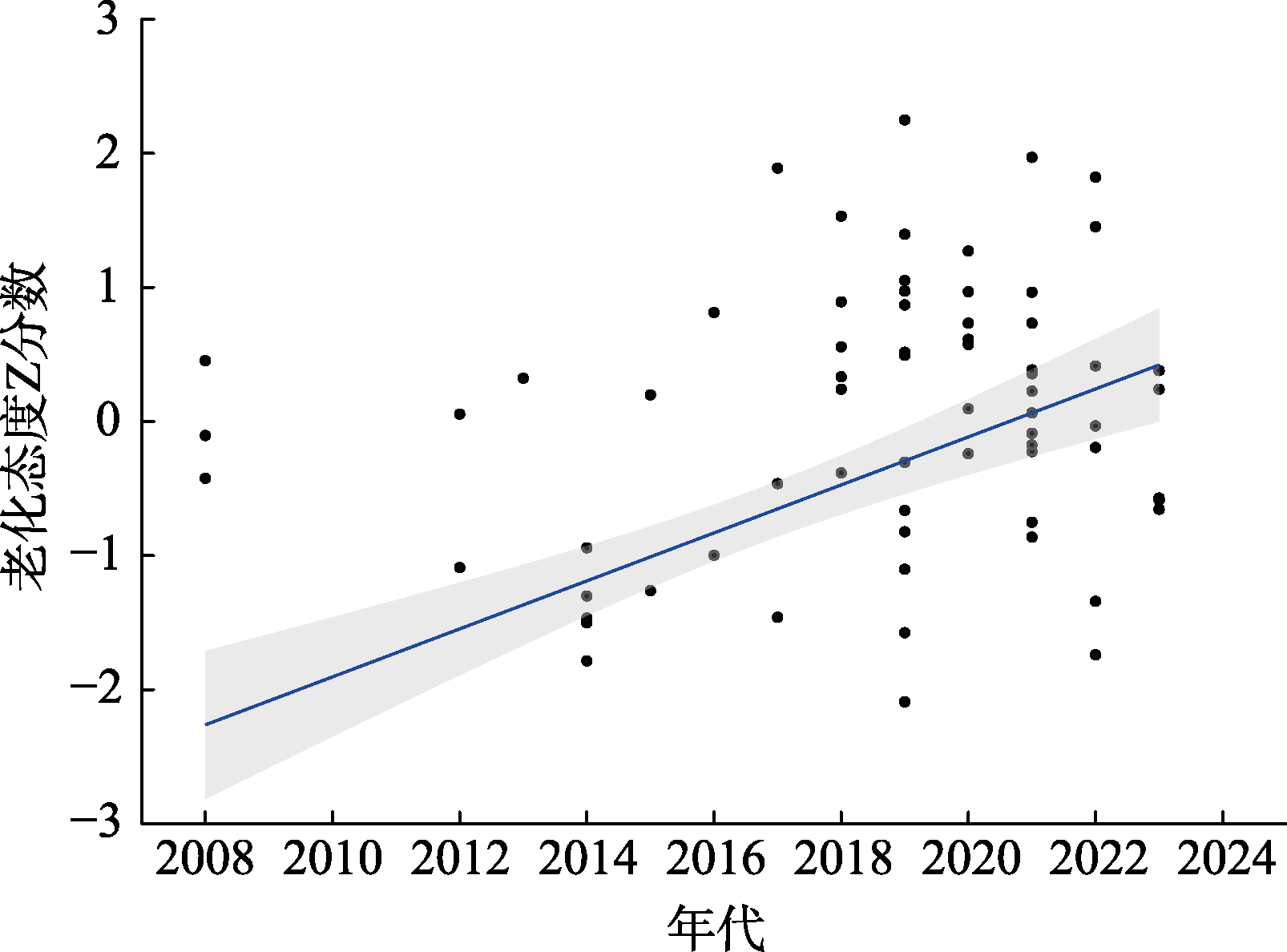
图1 老化态度总体Z分数年代变化
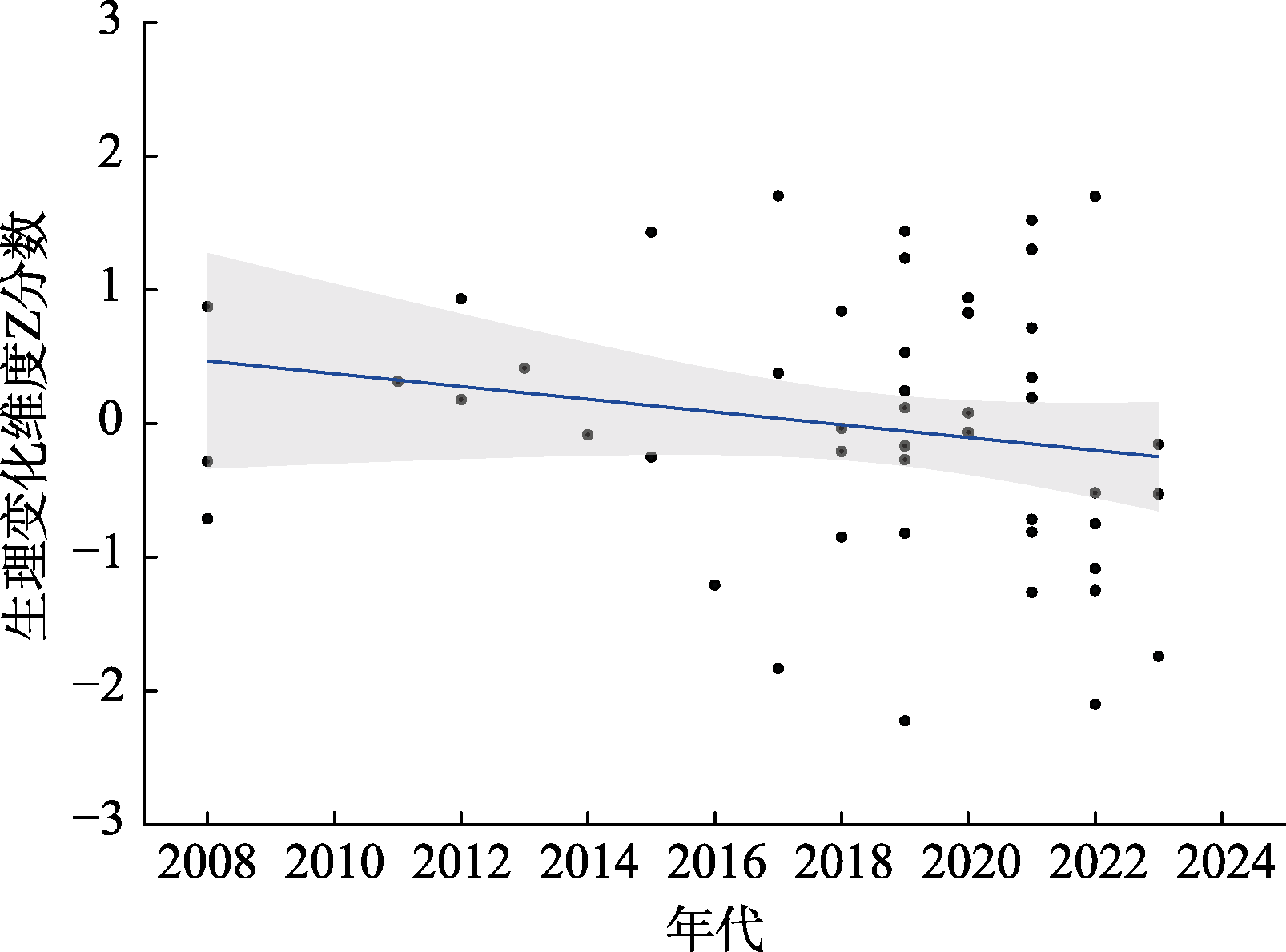
图2 生理变化维度Z分数年代变化
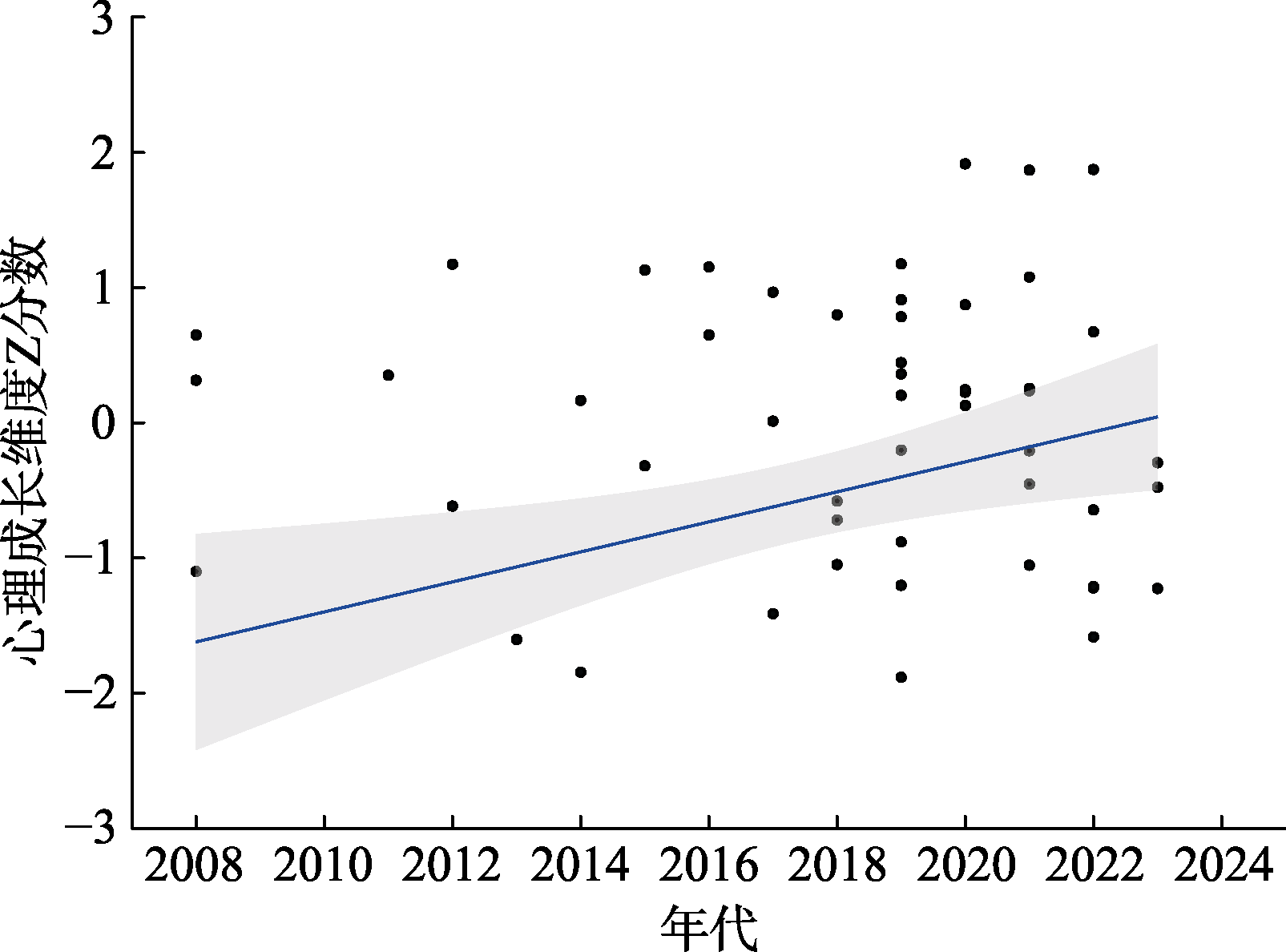
图3 心理成长维度Z分数年代变化
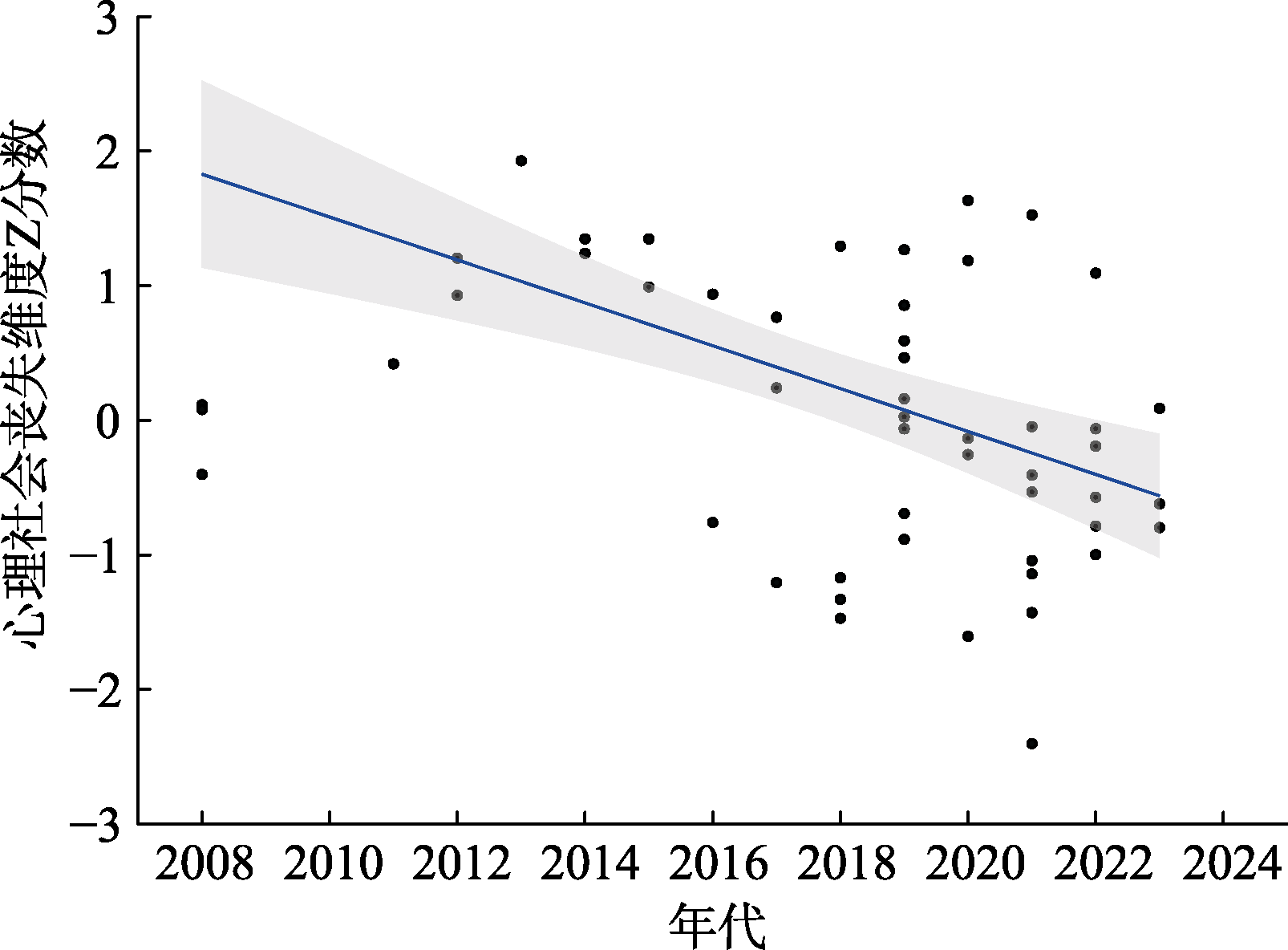
图4 心理社会丧失维度Z分数年代变化
| 变量 | ADF 检验值 | p | 检验 结果 |
|---|---|---|---|
| 老化态度总体水平 | -4.35 | 0.00 | 平稳 |
| 生理变化维度水平 | -4.34 | 0.00 | 平稳 |
| 心理成长维度水平 | -4.89 | 0.00 | 平稳 |
| 心理社会丧失维度水平 | -4.24 | 0.00 | 平稳 |
| 全国老年福利资金人均支出 | -3.31 | 0.00 | 平稳 |
| 享有高龄津贴老年人数比例 | -5.88 | 0.00 | 平稳 |
| 享有护理津贴老年人数比例 | -2.53 | 0.01 | 平稳 |
| 享有养老服务津贴老年人数比例 | -2.92 | 0.01 | 平稳 |
| 机构养老床位数量 | -2.73 | 0.01 | 平稳 |
| 机构养老社会工作师数量 | -3.24 | 0.00 | 平稳 |
| 社区养老床位数量 | -3.32 | 0.00 | 平稳 |
| 社区养老社会工作师数量 | -3.44 | 0.00 | 平稳 |
| 设有老年医学科的医疗机构数量 | -2.32 | 0.03 | 平稳 |
| 设有临终关怀科的医疗机构数量 | -1.64 | 0.11 | 不平稳 |
| 老年协会数量 | -2.52 | 0.02 | 平稳 |
| 老年人参加老年协会比例 | -2.39 | 0.03 | 平稳 |
表3 社会因素指标数据平稳性检验
| 变量 | ADF 检验值 | p | 检验 结果 |
|---|---|---|---|
| 老化态度总体水平 | -4.35 | 0.00 | 平稳 |
| 生理变化维度水平 | -4.34 | 0.00 | 平稳 |
| 心理成长维度水平 | -4.89 | 0.00 | 平稳 |
| 心理社会丧失维度水平 | -4.24 | 0.00 | 平稳 |
| 全国老年福利资金人均支出 | -3.31 | 0.00 | 平稳 |
| 享有高龄津贴老年人数比例 | -5.88 | 0.00 | 平稳 |
| 享有护理津贴老年人数比例 | -2.53 | 0.01 | 平稳 |
| 享有养老服务津贴老年人数比例 | -2.92 | 0.01 | 平稳 |
| 机构养老床位数量 | -2.73 | 0.01 | 平稳 |
| 机构养老社会工作师数量 | -3.24 | 0.00 | 平稳 |
| 社区养老床位数量 | -3.32 | 0.00 | 平稳 |
| 社区养老社会工作师数量 | -3.44 | 0.00 | 平稳 |
| 设有老年医学科的医疗机构数量 | -2.32 | 0.03 | 平稳 |
| 设有临终关怀科的医疗机构数量 | -1.64 | 0.11 | 不平稳 |
| 老年协会数量 | -2.52 | 0.02 | 平稳 |
| 老年人参加老年协会比例 | -2.39 | 0.03 | 平稳 |
| 指标 | 当年 | 1年前 | 2年前 | |||
|---|---|---|---|---|---|---|
| B | p | B | p | B | p | |
| 福利保障 | ||||||
| 全国老年福利资金人均支出 | 0.02 | 0.00 | 0.02 | 0.00 | 0.01 | 0.00 |
| 享有高龄津贴老年人数比例 | 28.82 | 0.00 | 26.09 | 0.00 | 25.34 | 0.00 |
| 享有护理津贴老年人数比例 | 708.16 | 0.00 | 645.89 | 0.00 | 134.07 | 0.46 |
| 享有养老服务津贴老年人数比例 | 120.12 | 0.00 | 106.79 | 0.00 | 17.33 | 0.53 |
| 养老服务 | ||||||
| 机构养老床位数量 | 0.01 | 0.00 | -0.00 | 0.99 | -0.00 | 0.40 |
| 机构养老社会工作师数量 | 3.45 | 0.00 | -0.01 | 0.99 | -0.84 | 0.32 |
| 社区养老床位数量 | 0.01 | 0.00 | 0.01 | 0.05 | 0.01 | 0.27 |
| 社区养老社会工作师数量 | 1.58 | 0.00 | -0.25 | 0.51 | -0.56 | 0.24 |
| 医疗服务 | ||||||
| 设有老年医学科的医疗机构数量 | -1.06 | 0.15 | -1.31 | 0.19 | -2.67 | 0.13 |
| 社会参与服务 | ||||||
| 老年协会数量 | -0.11 | 0.33 | 0.01 | 0.42 | 0.03 | 0.02 |
| 老年人参加老年协会比例 | -11.56 | 0.52 | 8.60 | 0.68 | -28.70 | 0.44 |
表4 当年、1年前、2年前社会因素指标对老年人老化态度总体水平的预测
| 指标 | 当年 | 1年前 | 2年前 | |||
|---|---|---|---|---|---|---|
| B | p | B | p | B | p | |
| 福利保障 | ||||||
| 全国老年福利资金人均支出 | 0.02 | 0.00 | 0.02 | 0.00 | 0.01 | 0.00 |
| 享有高龄津贴老年人数比例 | 28.82 | 0.00 | 26.09 | 0.00 | 25.34 | 0.00 |
| 享有护理津贴老年人数比例 | 708.16 | 0.00 | 645.89 | 0.00 | 134.07 | 0.46 |
| 享有养老服务津贴老年人数比例 | 120.12 | 0.00 | 106.79 | 0.00 | 17.33 | 0.53 |
| 养老服务 | ||||||
| 机构养老床位数量 | 0.01 | 0.00 | -0.00 | 0.99 | -0.00 | 0.40 |
| 机构养老社会工作师数量 | 3.45 | 0.00 | -0.01 | 0.99 | -0.84 | 0.32 |
| 社区养老床位数量 | 0.01 | 0.00 | 0.01 | 0.05 | 0.01 | 0.27 |
| 社区养老社会工作师数量 | 1.58 | 0.00 | -0.25 | 0.51 | -0.56 | 0.24 |
| 医疗服务 | ||||||
| 设有老年医学科的医疗机构数量 | -1.06 | 0.15 | -1.31 | 0.19 | -2.67 | 0.13 |
| 社会参与服务 | ||||||
| 老年协会数量 | -0.11 | 0.33 | 0.01 | 0.42 | 0.03 | 0.02 |
| 老年人参加老年协会比例 | -11.56 | 0.52 | 8.60 | 0.68 | -28.70 | 0.44 |
| 指标 | 当年 | 1年前 | 2年前 | |||
|---|---|---|---|---|---|---|
| B | p | B | p | B | p | |
| 福利保障 | ||||||
| 人均福利资金金额 | 0.01 | 0.00 | 0.01 | 0.00 | 0.01 | 0.00 |
| 高龄津贴覆盖比例 | 17.13 | 0.01 | 13.78 | 0.02 | 14.78 | 0.00 |
| 护理津贴覆盖比例 | 655.40 | 0.00 | 537.06 | 0.00 | -171.49 | 0.38 |
| 养老服务津贴覆盖比例 | 113.45 | 0.00 | 93.56 | 0.00 | -11.44 | 0.72 |
| 养老服务 | ||||||
| 机构养老床位数量 | 0.01 | 0.07 | -0.00 | 0.50 | -0.00 | 0.27 |
| 机构养老社会工作师数量 | 3.07 | 0.00 | -0.42 | 0.62 | -1.45 | 0.14 |
| 社区养老床位数量 | 0.01 | 0.00 | 0.00 | 0.90 | -0.00 | 0.88 |
| 社区养老社会工作师数量 | 1.14 | 0.01 | -0.39 | 0.39 | -0.99 | 0.08 |
| 医疗服务 | ||||||
| 设有老年医学科的医疗机构数量 | -0.77 | 0.40 | -1.73 | 0.16 | -4.41 | 0.09 |
| 社会参与服务 | ||||||
| 老年协会数量 | 0.02 | 0.52 | 0.02 | 0.28 | 0.01 | 0.55 |
| 老年人参加老年协会比例 | -12.90 | 0.54 | 9.08 | 0.70 | -39.20 | 0.38 |
表5 当年、1年前、2年前社会因素指标对心理成长维度水平的预测
| 指标 | 当年 | 1年前 | 2年前 | |||
|---|---|---|---|---|---|---|
| B | p | B | p | B | p | |
| 福利保障 | ||||||
| 人均福利资金金额 | 0.01 | 0.00 | 0.01 | 0.00 | 0.01 | 0.00 |
| 高龄津贴覆盖比例 | 17.13 | 0.01 | 13.78 | 0.02 | 14.78 | 0.00 |
| 护理津贴覆盖比例 | 655.40 | 0.00 | 537.06 | 0.00 | -171.49 | 0.38 |
| 养老服务津贴覆盖比例 | 113.45 | 0.00 | 93.56 | 0.00 | -11.44 | 0.72 |
| 养老服务 | ||||||
| 机构养老床位数量 | 0.01 | 0.07 | -0.00 | 0.50 | -0.00 | 0.27 |
| 机构养老社会工作师数量 | 3.07 | 0.00 | -0.42 | 0.62 | -1.45 | 0.14 |
| 社区养老床位数量 | 0.01 | 0.00 | 0.00 | 0.90 | -0.00 | 0.88 |
| 社区养老社会工作师数量 | 1.14 | 0.01 | -0.39 | 0.39 | -0.99 | 0.08 |
| 医疗服务 | ||||||
| 设有老年医学科的医疗机构数量 | -0.77 | 0.40 | -1.73 | 0.16 | -4.41 | 0.09 |
| 社会参与服务 | ||||||
| 老年协会数量 | 0.02 | 0.52 | 0.02 | 0.28 | 0.01 | 0.55 |
| 老年人参加老年协会比例 | -12.90 | 0.54 | 9.08 | 0.70 | -39.20 | 0.38 |
| 指标 | 当年 | 1年前 | 2年前 | |||
|---|---|---|---|---|---|---|
| B | p | B | p | B | p | |
| 福利保障 | ||||||
| 人均福利资金金额 | -0.01 | 0.00 | -0.01 | 0.00 | -0.01 | 0.00 |
| 高龄津贴覆盖比例 | -21.31 | 0.00 | -18.80 | 0.00 | -19.12 | 0.00 |
| 护理津贴覆盖比例 | -776.89 | 0.00 | -615.29 | 0.00 | -303.19 | 0.15 |
| 养老服务津贴覆盖比例 | -122.00 | 0.00 | -94.89 | 0.00 | -72.94 | 0.02 |
| 养老服务 | ||||||
| 机构养老床位数量 | -0.01 | 0.00 | -0.00 | 0.15 | -0.00 | 0.49 |
| 机构养老社会工作师数量 | -3.33 | 0.00 | -2.39 | 0.01 | -1.17 | 0.25 |
| 社区养老床位数量 | -0.01 | 0.00 | -0.00 | 0.41 | -0.00 | 0.99 |
| 社区养老社会工作师数量 | -1.62 | 0.00 | -1.11 | 0.02 | -0.46 | 0.43 |
| 医疗服务 | ||||||
| 设有老年医学科的医疗机构数量 | -1.22 | 0.20 | -1.41 | 0.24 | -0.32 | 0.90 |
| 社会参与服务 | ||||||
| 老年协会数量 | -0.01 | 0.62 | -0.00 | 0.86 | -0.01 | 0.48 |
| 老年人参加老年协会比例 | 4.66 | 0.72 | -5.28 | 0.71 | 34.90 | 0.21 |
表6 当年、1年前、2年前社会因素指标对心理社会丧失维度水平的预测
| 指标 | 当年 | 1年前 | 2年前 | |||
|---|---|---|---|---|---|---|
| B | p | B | p | B | p | |
| 福利保障 | ||||||
| 人均福利资金金额 | -0.01 | 0.00 | -0.01 | 0.00 | -0.01 | 0.00 |
| 高龄津贴覆盖比例 | -21.31 | 0.00 | -18.80 | 0.00 | -19.12 | 0.00 |
| 护理津贴覆盖比例 | -776.89 | 0.00 | -615.29 | 0.00 | -303.19 | 0.15 |
| 养老服务津贴覆盖比例 | -122.00 | 0.00 | -94.89 | 0.00 | -72.94 | 0.02 |
| 养老服务 | ||||||
| 机构养老床位数量 | -0.01 | 0.00 | -0.00 | 0.15 | -0.00 | 0.49 |
| 机构养老社会工作师数量 | -3.33 | 0.00 | -2.39 | 0.01 | -1.17 | 0.25 |
| 社区养老床位数量 | -0.01 | 0.00 | -0.00 | 0.41 | -0.00 | 0.99 |
| 社区养老社会工作师数量 | -1.62 | 0.00 | -1.11 | 0.02 | -0.46 | 0.43 |
| 医疗服务 | ||||||
| 设有老年医学科的医疗机构数量 | -1.22 | 0.20 | -1.41 | 0.24 | -0.32 | 0.90 |
| 社会参与服务 | ||||||
| 老年协会数量 | -0.01 | 0.62 | -0.00 | 0.86 | -0.01 | 0.48 |
| 老年人参加老年协会比例 | 4.66 | 0.72 | -5.28 | 0.71 | 34.90 | 0.21 |
| *标识纳入元分析的文献 | |
| [1] | * 柏雅颖. (2017). 老年人参与学习活动与主观幸福感的关系: 老化态度的中介作用 [硕士学位论文]. 山西师范大学, 山西. |
| [2] | 陈功. (2021). 以时间银行开发利用我国老年人力资本. 人民论坛·学术前沿, (24), 61-67+135. |
| [3] | 陈璐. (2023). 从“断缘”到“结缘”: 联结性视角下农村老年人精神慰藉的自组织实现—基于湖北省G村老年协会的案例研究. 兰州学刊, (9), 121-135. |
| [4] |
* 陈艳桃, 高晓彤, 陈兆琳, 黄时华. (2022). 基于双因素模型的老年人生命意义感与心理健康: 老化态度的中介作用. 心理与行为研究, 20(1), 88-95.
doi: 10.12139/j.1672-0628.2022.01.013 |
| [5] | * 陈志彬, 李敏, 吴泳玲, 黄绿青, 吴裕锋, 杜钊勃. (2022). 广东省2167名老年人老化态度对生活满意度的影响. 职业与健康, 38(13), 1797-1801. |
| [6] | 戴卫东, 付王巧. (2021). 贫困失能老年人长期护理津贴救助的财政投入—基于老年福利津贴整合的视角. 财经论丛, (6), 33-44. |
| [7] | * 董晓帅. (2023). 身体健康与老年人老化态度及其干预研究: 主观年龄和自我价值感的链式中介作用 [硕士学位论文]. 西南大学, 重庆. |
| [8] | 方敏, 王敏娇, 严运楼. (2025). 老年友善型医院医养结合模式的创新发展路径研究. 卫生经济研究, 42(11), 24-27+31. |
| [9] | 封铁英, 马朵朵. (2020). 社区居家养老服务如何包容性发展?一个理论分析视角. 社会保障评论, 4(3), 77-89. |
| [10] | 高婷, 王永梅. (2025). 老年人日常活动对其老化态度的影响研究—基于“生产-消费-休闲”三维框架的实证检验. 南方人口, 40(6), 65-78. |
| [11] | * 谷璜, 何惠, 杜顺顺, 赵申苒, 赵国祥. (2022). 农村老年人社会参与对老化态度的影响:自我效能感和孤独感的中介作用. 心理科学, 45(4), 863-870. |
| [12] | 国务院发展研究中心课题组, 马建堂, 李建伟, 张亮, 钱诚, 李恒森. (2022). 认识人口基本演变规律促进我国人口长期均衡发展. 管理世界, 38(1), 1-19+34+20. |
| [13] | 海龙, 申开元. (2023). 中国高龄津贴制度的区域差异、发展困境与优化路径. 河北学刊, 43(2), 186-193. |
| [14] | * 韩凯红, 常红娟. (2024). 疼痛自我效能在农村老年慢性疼痛患者老化态度与疼痛干扰间的中介效应. 现代医学与健康研究电子杂志, 8(2), 91-94. |
| [15] | * 韩丽娜. (2020). 社区老年人社会参与、老化态度对积极老龄化的影响 [硕士学位论文]. 延边大学, 吉林. |
| [16] | * 何秋瑾. (2016). 社会支持与老年人主观幸福感的关系: 老化态度的中介作用 [硕士学位论文]. 山西师范大学, 山西. |
| [17] |
侯娟, 贾可可, 方晓义. (2024). 近20年中国夫妻婚姻满意度发展趋势与社会变迁. 心理学报, 56(7), 895-910.
doi: 10.3724/SP.J.1041.2024.00895 |
| [18] | * 黄一帆, 王大华, 刘永广, Kenneth Laidlaw. (2010). 老化态度问卷(AAQ)中文版的初步试用. 中国临床心理学杂志, 18(4), 447-450. |
| [19] | * 贾锟. (2021). 养老机构老年人的老化态度与社会支持、成功老龄的关系研究 [硕士学位论文]. 山东中医药大学, 山东. |
| [20] | 蒋潮鑫, 史珈铭. (2024). 老化态度对老年心理健康的影响—基于三维数字融入视角的实证分析. 北京社会科学, (11), 116-128. |
| [21] | 蒋艳, 武景, 邹雪琴. (2023). 自我感知老化与社会支持对老年慢性病患者生命质量影响研究. 实用预防医学, 30(1), 88-91. |
| [22] | * 姜敏敏, 谭磊, 房亚明. (2018). 自理能力、老化态度对老年人幸福感的影响. 中国老年学杂志, 38(5), 1230-1233. |
| [23] | 金牛, 刘晓娇. (2026). “十五五”时期银发经济高质量发展: 关键问题与改革进路. 西北人口, 47(1), 13-24. |
| [24] | 康蕊. (2024). 医养结合中的医疗机构参与方式与激励路径研究—基于不同等级医疗机构差异化的视角. 社会保障研究, (4), 72-80. |
| [25] | 李建新, 夏翠翠. (2019). 中国老年人口疾病转型: 传统与现代. 人口与发展, 25(4), 94-105. |
| [26] | * 李莎莎, 倪莺媛, 徐丽君, 奚迎雪, 李越. (2024). 结构性团体心理-运动干预对农村独居老年人的影响. 护理学杂志, 39(4), 92-96. |
| [27] |
* 梁韵仪, 殷文君, 申乔乔, 周静静, 彭勇良, 高钰琳. (2021). 老化态度在老年人家庭功能与生命意义感的中介效应分析. 护理学报, 28(8), 39-43.
doi: 10.16460/j.issn1008-9969.2021.08.039 |
| [28] | * 廖敏, 曾丝霞, 文婷婷, 童川, 罗彬, 周静. (2018). 老年大学老年人老化态度现状及其影响因素分析. 中国实用护理杂志, 34(25), 1925-1929. |
| [29] | * 刘彩梅, 张恩慧, 董及美. (2023). 社会网络对老年人心理健康的影响研究—以老年开放大学学员为例. 远程教育杂志, 41(6), 104-110. |
| [30] | 刘素素, 欧阳铮, 王海涛. (2016). 老年人的社会关系研究概述: 基于护航模型的视角. 人口与发展, 22(5), 90-97. |
| [31] | 刘尚君, 宋新明. (2025). 中国高龄老年人1998—2018年认知障碍患病水平及结构趋势: 基于年龄-时期-队列分析视角. 残疾人研究, (1), 61-71. |
| [32] |
刘维林, 杨勇, 李志宏, 林宝, 郝晓宁, 张文娟, 谢立黎. (2024). 新形势下我国应对人口老龄化的策略研究. 中国工程科学, 26(6), 19-31.
doi: 10.15302/J-SSCAE-2024.06.002 |
| [33] | 刘彦旭, 李华平, 王雪净, 付国琪, 柴钰霖, 王一阳,... 罗盛. (2025). 原居安老视角下老年友好社区环境对城镇老年人社会适应的影响及社会参与的中介作用. 现代预防医学, 52(19), 3568-3572. |
| [34] | 刘子硕, 刘丽敏. (2026). 居家和社区养老服务改革如何驱动“成功老龄化”—基于试点政策的双重差分证据与机制分析. 现代财经(天津财经大学学报), 46(1), 113-137. |
| [35] | * 罗迪, 侯春秀, 王俊, 黄欢欢, 赵庆华, 肖明朝. (2022). 养老机构老年人社会参与现状及影响因素. 护理学杂志, 37(8), 84-87. |
| [36] | 罗涛, 赵越, 刘兰秋. (2022). 健康老龄化视角下我国安宁疗护服务体系建设现状与对策建议. 中国全科医学, 25(19), 2315-2319+2324. |
| [37] | 罗艳艳, 杜诣深, 姚桂英, 张金华, 张会敏, 秦立伟, 刘凯莉, 吴慧敏, 袁坤. (2021). 社区老年人运动功能及自我感知老化与抑郁的结构方程模型构建. 护理学杂志, 36(8), 80-83. |
| [38] | * 罗一馨, 刘智淇, 王雅铃. (2022). 高龄学习者社会接触动机与活跃老化之关系: 老化态度之中介效果. 教育科学研究期刊, 67(3), 177-204. |
| [39] | 鲁冰洋, 陈宁. (2024). 居家和社区养老服务是否改善了老年人主观福利?—基于“居家和社区养老服务试点政策”的准自然实验. 郑州大学学报(哲学社会科学版), 57(5), 18-24. |
| [40] | 吕宣如, 章晓懿. (2022). 社区居家养老服务对老年人健康水平的影响. 中国人口科学, (3), 111-125+128. |
| [41] | 马青山, 廖智柳. (2025). 老有所乐: 高龄津贴与高龄老年人心理健康. 人口与发展, 31(3), 40-50. |
| [42] | 马琦峰, 宋俊燃, 李龙. (2025). 社区养老服务、社会网络与老年人抑郁水平—基于CLASS 2014—2023年数据的实证分析. 调研世界, (7), 79-89. |
| [43] | * 麻雨婷, 张宝山. (2022). 老年人负性情绪的联合发展轨迹与心理资源的关系: 基于潜类别增长的分析. 西南大学学报(自然科学版), 44(10), 10-20. |
| [44] | 倪晨旭, 彭洋漾, 郭诗怡, 王震. (2024). 老年优待政策、公共服务可及性与老年人身心健康. 财经研究, 50(2), 93-107. |
| [45] | * 潘室容, 蔺可, 吴佳, 李琴, 黄莎, 李东文, 吴柯杨, 张佳琦, 李松霖, 杨拯. (2023). 老年维持性血液透析病人老化态度现状及影响因素. 护理研究, 37(7), 1285-1290. |
| [46] | * 庞林, 何桂连, 周英, 黄瑶, 黄晓珊, 朱静怡, 毕秋林, 王静. (2020). 自理能力、老化态度对养老院老年人主观幸福感的影响. 全科护理, 18(21), 2737-2741. |
| [47] | * 史珈铭, 刘晓婷. (2024). 代际支持与老年人的抑郁症状:老化态度的中介作用与城乡因素的调节作用. 心理科学, 47(3), 695-702. |
| [48] | 史文欣, 景丽伟, 刘志, 高熹. (2022). 老龄化对医疗服务体系的挑战及对策研究. 卫生经济研究, 39(7), 18-20. |
| [49] | 史晓丹, 陈友华. (2022). 经济效率视角下的 “十五分钟养老服务圈”分析. 东南学术, (4), 178-187+248. |
| [50] | * 史云静, 代景华, 许文华. (2023). 老年人老化态度在社会参与和抑郁间的中介效应研究. 社会科学, (5), 68-72. |
| [51] | * 宋晨洋. (2019). 自我老化态度对老年人社会参与的影响: 社会自我效能感的中介作用 [硕士学位论文]. 吉林大学, 吉林. |
| [52] | * 宋佳倩, 张逵, 马娜, 谭千禧, 金蓉, 王冬华. (2021). 社区老年人自我和谐与老化态度相关性研究. 职业与健康, 37(9), 1270-1273. |
| [53] | 孙峰. (2025). 面向“十五五”的“老有所为”支持政策演进、质量评估与优化. 兰州学刊, (6), 12-25. |
| [54] | 孙金明. (2018). 中国失能老人照料需求及照料满足感研究—基于中国老年健康影响因素跟踪调查. 调研世界, (5), 25-31. |
| [55] | * 唐丹, 燕磊, 王大华. (2014). 老年人老化态度对心理健康的影响. 中国临床心理学杂志, 22(1), 159-162. |
| [56] | * 田军香, 郝晓阳, 王雅星, 代颖超, 赵红伟, 景梦雅,... 王申. (2020). 养老机构老年人老化态度、述情障碍现状及相关性分析. 职业与健康, 36(8), 1066-1070. |
| [57] | * 王冬华, 刘伟, 喻自艺, 涂文君, 皇甫瑞威, 温晓航. (2018). 农村老年人老化态度现状及影响因素研究. 护理学杂志, 33(16), 86-89. |
| [58] | * 王冬华, 罗艳, 周通, 谢小舒, 周瑶. (2020). 农村老年慢性病病人老化态度、自主性感知现状及其影响因素研究. 护理研究, 34(14), 2563-2566. |
| [59] |
* 王港, 魏敏, 冯瑜. (2020). 积极老龄化背景下老年人老化态度与生存质量的关系研究. 心理月刊, 15(20), 1-4+8.
doi: 10.19738/j.cnki.psy.2020.20.001 |
| [60] | 王璐, 陈璐. (2024). 中国老年人的年龄认知与社会参与. 人口研究, 48(5), 50-66. |
| [61] | * 王娜娜, 韩丽娜, 孙滕滕, 吴善玉. (2021). 社区老年人老化态度与积极老龄化现状及其相关性分析. 全科护理, 19(23), 3181-3185. |
| [62] | * 王萍, 李亚静. (2023). 社会网络对农村老年人老化态度的影响: 基于孤独感的中介作用. 中国健康心理学杂志, 31(10), 1458-1463. |
| [63] | * 王琼宇, 李凌波, 邓铸, 徐姝舫. (2016). 老年人的老化态度与认知老化的关系. 心理技术与应用, 4(6), 336-343. |
| [64] | 王武林, 司俊霄. (2024). 智慧助老场景治理的驱动逻辑与实现路径. 济南大学学报(社会科学版), 34(3), 94-104. |
| [65] | * 王西鸽. (2019). 养老机构老年人老化态度和衰弱的相关性研究 [硕士学位论文]. 吉林大学, 吉林. |
| [66] |
王祥坤, 辛自强, 侯友. (2024). 我国大中学生道德推脱水平的变迁及宏观成因. 心理学报, 56(7), 859-875.
doi: 10.3724/SP.J.1041.2024.00859 |
| [67] | 王宇, 闫宜人, 张登浩. (2024). 社会排斥与成功老龄化: 生命意义感和自我老化态度的中介作用. 中国临床心理学杂志, 32(5), 1046-1051. |
| [68] | 温书宇, 刘臣. (2022). 国家老年大学建设的理论逻辑与实践路径. 中国高等教育, (22), 18-20. |
| [69] | * 吴芳, 李晓敏. (2019). 代际支持及人口学特征对社区老年人老化态度的影响. 护理学杂志, 34(12), 1-4. |
| [70] | * 武剑倩, 钞秋玲, 陈媛. (2019). 家庭环境对老年人生活质量的影响: 老化态度的中介作用. 心理与行为研究, 17(2), 223-228. |
| [71] | * 肖云, 邓钰强, 周洁. (2023). 老年人社会支持和老化态度情况调查. 科学咨询, (15), 258-260. |
| [72] | 新华社. (2021). 中共中央国务院关于加强新时代老龄工作的意见. 2021-11-18取自 https://www.gov.cn/zhengce/2021-11/24/content_5653181.htm. |
| [73] | 谢立黎, 王煜霏, 王飞. (2023). 党的十八大以来我国老龄政策的发展历程和变化特征—基于“五位一体”总体布局视角. 社会建设, 10(1), 16-28. |
| [74] | 谢立黎, 欧阳材泓. (2024). 中国老年人志愿服务参与类型对老化态度的影响研究. 人口学刊, 46(6), 95-111. |
| [75] | * 谢鹏程. (2014). 老年人老化态度、亲子支持与心理健康的关系研究 [硕士学位论文]. 南京师范大学, 南京. |
| [76] | 辛自强, 张梅. (2009). 1992年以来中学生心理健康的变迁: 一项横断历史研究. 心理学报, 41(1), 69-78. |
| [77] | * 邢波, 张宁. (2022). 陕西省322名农村空巢老人自我养老能力现状及其影响因素分析. 护理研究, 36(17), 3071-3076. |
| [78] | * 徐繁花. (2022). 老年人生活空间对抑郁的影响: 一个有调节的中介模型 [硕士学位论文]. 江西中医药大学, 江西. |
| [79] | * 徐铁飞, 鞠梅, 张杰兰, 赖先婷. (2022). 老化态度在社区老年人代际支持与生活质量间的作用. 现代预防医学, 49(11), 1999-2002. |
| [80] | * 徐铁飞, 蔡英, 袁素萍, 李敏, 李冬曼, 代小梅. (2024). 社区老年人老化态度与生命质量的相关性研究. 重庆医学, 53(6), 912-916. |
| [81] | * 燕良烜, 王卫红. (2023). 湖南省农村老年人老化态度现状. 中国农村卫生, 15(8), 15-19. |
| [82] | * 杨晗琦. (2023). 老年人互联网使用对主观幸福感的影响: 孤独感和老化态度的链式中介作用 [硕士学位论文]. 石河子大学, 新疆. |
| [83] | * 杨建华, 许秀琼, 白尧, 万艺, 邓小芳, 张丽梅. (2023). 社区老年人的自我忽视与老化态度现状及关系研究. 中国健康教育, 39(6), 544-548. |
| [84] | 杨晶, 刘振杰, 邓悦, 刘姜涛. (2022). 民生托底政策能使农村失能老人家庭照护投入增加吗?—对中国农村三项主要民生保障政策效应的考察. 中国农村观察, (6), 68-87. |
| [85] |
* 杨梅, 吴罗凤, 刘珊. (2024). 老化态度在农村社区老年人社会隔离和自我感知老化的中介效应分析. 包头医学院学报, 40(6), 74-79.
doi: 10.16833/j.cnki.jbmc.2024.06.014 |
| [86] | * 杨思宇. (2017). 内隐及外显老化态度对老年抑郁的影响 [硕士学位论文]. 华东师范大学, 上海. |
| [87] |
* 杨侠, 于卫华, 张雨溪, 邓曼, 任影, 张利, 张海燕. (2024). 377例社区老年多重慢病患者心理困扰现状及影响因素分析. 护理学报, 31(18), 50-55.
doi: 10.16460/j.issn1008-9969.2024.18.050 |
| [88] | * 杨玉莎. (2023). 老年人生命意义与生活质量的关系及其干预研究 [硕士学位论文]. 四川师范大学, 四川. |
| [89] | * 尹澜欣, 王华容, 高建林. (2023). 农村老年人认知功能对心理健康状态影响: 老化态度的中介作用. 中国健康心理学杂志, 31(12), 1773-1779. |
| [90] | * 尹一凡. (2022). 怀旧对老年人生命意义感的提升路径研究 [硕士学位论文]. 西南交通大学, 四川. |
| [91] | * 尤梅, 刘安诺, 丁原, 黄丹丹, 张露露, 姜玉芹. (2023). 代际支持、社会网络对老年人抑郁的影响及老化态度的中介作用. 现代预防医学, 50(10), 1859-1863+1875. |
| [92] | * 俞浩. (2021). 老年人人生意义与成功老龄化的关系: 控制策略与老化态度的作用 [硕士学位论文]. 安徽师范大学, 安徽. |
| [93] | * 翟雅丽. (2021). 老年人衰弱现状及改善研究 [硕士学位论文]. 重庆师范大学, 重庆. |
| [94] | 张冲, 兰想. (2021). 社区支持与老年健康促进. 调研世界, (1), 74-81. |
| [95] | * 张惠, 唐莉, 戴冰. (2022). 社会支持对流动老人积极老化的影响:有调节的中介作用. 现代预防医学, 49(3), 472-475+566. |
| [96] | * 张雪净, 杨劲. (2013). 老年人老化态度与主观幸福感的关系. 牡丹江大学学报, 22(4), 179-181. |
| [97] | * 张艳丽, 李红玉. (2022). 老年人社会参与在主观幸福感与老化态度间的中介效应. 循证护理, 8(6), 776-780. |
| [98] | * 赵梦娟, 朱自强, 张悦琪, 赵春善. (2021). 健康行为在失地老人老化态度与衰弱间的中介作用. 中国农村卫生事业管理, 41(2), 144-148. |
| [99] | 赵娜, 方卫华. (2018). 城市机构养老服务质量评价影响因素研究—基于个体差异的视角. 郑州大学学报(哲学社会科学版), 51(2), 64-69. |
| [100] | * 赵苗苗, 王莉, 陈满满, 袁梦琳, 王洁, 张家齐, 康亦凡. (2024). 老年脑卒中患者老化态度现状及影响因素分析. 护理学杂志, 39(14), 16-20. |
| [101] | 张强. (2018). 依老助老: 老年协会参与城市社区居家养老实践研究—以武汉市W老年协会为例. 西北人口, 39(3), 91-99. |
| [102] | 曾起艳, 何志鹏, 曾寅初. (2022). 社区养老服务设施对城乡老年人主观福利的影响. 人口与发展, 28(6), 148-160. |
| [103] | * 郑闪闪. (2020). 老年人抑郁现状及其与气郁质关系的研究 [硕士学位论文]. 长春中医药大学, 长春. |
| [104] | * 周丽清, 陈烨, 冀嘉嘉, 张松朋, 叶芬, 吕宇鸣. (2014). 老年人老化态度、孝顺期待和传承感之间的关系. 杭州师范大学学报(自然科学版), 13(3), 240-244. |
| [105] | * 周裕琼, 谢奋, 龚宝发. (2023). 家庭祖孙三代的老化态度及影响因素研究—基于老龄化传播视角的初次尝试. 广州大学学报(社会科学版), 22(1), 160-171. |
| [106] | * Cheng, X., Cosco, T. D., & Ariyo, T. (2021). Decreasing social isolation to enhance mental health among older adults in China: A mediation analysis of aging attitude. Frontiers in Psychology, 12, 1-12. |
| [107] |
* Dang, Q., & Zhang, B. (2022). Linkage from self-sacrifice to hope through the intervening roles of perceived family support and attitudes to aging in Chinese older adults. Journal of Happiness Studies, 23(6), 2405-2426.
doi: 10.1007/s10902-022-00504-7 |
| [108] |
* Ding, L., Li, Z., Jiang, H., Zhang, X., Xiong, Z., & Zhu, X. (2024). Mobile phone problem use and depressive symptoms: The mediating role of social support and attitude to aging among Chinese older adults. BMC Psychiatry, 24(1), 135-148.
doi: 10.1186/s12888-024-05565-x pmid: 38365625 |
| [109] |
Jadad, A., Moore, D. C., Carroll, D., Jenkinson, C., Reynolds, D. J., Gavaghan, D. J., & McQuay, H. J. (1996). Assessing the quality of reports of randomized clinical trials: Is blinding necessary?. Controlled Clinical Trials, 17, 1-12.
doi: 10.1016/0197-2456(95)00134-4 pmid: 8721797 |
| [110] |
Laidlaw, K., Power, M. J., Schmidt, S., & WHOQOL-OLD, Group (2007). The attitudes to ageing questionnaire (AAQ): Development and psychometric properties. International Journal of Geriatric Psychiatry, 22(4), 367-379.
pmid: 17051535 |
| [111] |
* Li, J., & Wu, H. T. (2025). Chinese older adult educators’ attitudes toward aging and turnover intention: Burnout as a mediator. Educational Gerontology, 51(3), 261-285.
doi: 10.1080/03601277.2024.2387960 URL |
| [112] |
* Liu, J., Wei, W., Peng, Q., & Xue, C. (2020). Perceived health and life satisfaction of elderly people: Testing the moderating effects of social support, attitudes toward aging, and senior privilege. Journal of Geriatric Psychiatry and Neurology, 33(3), 144-154.
doi: 10.1177/0891988719866926 pmid: 31378127 |
| [113] |
* Luo, S., Yang, X., Wang, Z., Qin, P., Jiang, H., Chen, X., … Lau, J. T. F. (2020). Negative attitudes toward aging mediated the association between HIV status and depression among older people in China’s mainland. Journal of Affective Disorders, 277, 1005-1012.
doi: 10.1016/j.jad.2020.09.031 URL |
| [114] |
* Mao, S., Zeng, Y., & Lu, N. (2023). Research on attitudes towards ageing, social participation and depressive symptoms among older adults in China. The British Journal of Social Work, 53(2), 698-717.
doi: 10.1093/bjsw/bcac118 URL |
| [115] |
Sexton, E., King-Kallimanis, B. L., Morgan, K., & McGee, H. (2014). Development of the brief ageing perceptions questionnaire: A confirmatory factor analysis approach to item reduction. BMC Geriatrics, 14(1), 44-55.
doi: 10.1186/1471-2318-14-44 URL |
| [116] |
Twenge, J. M. (2001). Changes in women's assertiveness in response to status and roles: A cross-temporal meta-analysis, 1931-1993. Journal of Personality and Social Psychology, 81(1), 133-145.
pmid: 11474719 |
| [117] |
* Wang, D., Laidlaw, K., Power, M. J., & Shen, J. (2009). Older people's belief of filial piety in China: Expectation and non-expectation. Clinical Gerontologist, 33(1), 21-38.
doi: 10.1080/07317110903347771 URL |
| [118] |
* Ye, B., Gao, J., Fu, H., Chen, H., Dong, W., & Gu, M. (2020). How does ageism influence frailty? A preliminary study using a structural equation model. BMC Geriatrics, 20(1), 422-433.
doi: 10.1186/s12877-020-01749-8 pmid: 33106186 |
| [119] | Zastrow, C.H., & Hessenauer, S.L. (2020). Generalist social work practice: A Worktext. Oxford University Press. |
| [120] |
* Zeng, Y., Mao, S., Lu, N., & Chen, M. (2023). Activity patterns and loneliness in later life: The mediating effects of social support and attitudes toward aging. Journal of Gerontological Social Work, 66(2), 303-318.
doi: 10.1080/01634372.2022.2103761 URL |
| [1] | 张子健, 陈继文, 彭顺, 吴佳慧, 王思倩. 中国内地学生学习投入的变迁(2006~2024年)[J]. 心理科学进展, 2025, 33(12): 2069-2082. |
| [2] | 陈必忠, 孙晓军. 中国内地大学生时间管理倾向的时代变迁:1999~2020[J]. 心理科学进展, 2022, 30(9): 1968-1980. |
| [3] | 肖承丽, 隋雨檠, 肖苏衡, 周仁来. 空间交互研究新视角:多重社会因素的影响[J]. 心理科学进展, 2021, 29(5): 796-805. |
| [4] | 郑怡;尚俊辰; 李伯冉;梁耀文;何嘉梅; 由一林; 蒋重清. 人类嗓音吸引力的影响因素[J]. 心理科学进展, 2017, 25(2): 237-246. |
| [5] | 聂瑞虹;许颖;韩卓. 皮质醇日常节律与儿童问题行为及心理社会因素的关系[J]. 心理科学进展, 2015, 23(4): 591-601. |
| [6] | 寇慧;苏艳华;张妍;孔繁昌;胡媛艳;王洋;陈红. 面孔吸引力的影响因素:观察者假设[J]. 心理科学进展, 2013, 21(12): 2144-2153. |
| [7] | 刘靖东;钟伯光;姒刚彦. 自我决定理论在中国人人群的应用[J]. 心理科学进展, 2013, 21(10): 1803-1813. |
| [8] | 姜兆萍;周宗奎. 老年歧视的特点、机制与干预[J]. 心理科学进展, 2012, 20(10): 1642-1650. |
| [9] | 董妍,俞国良. 自我提升的研究现状与展望[J]. 心理科学进展, 2005, 13(2): 178-185. |
| [10] | 邱林,郑雪,严标宾. 谈判心理研究发展述评[J]. 心理科学进展, 2003, 11(2): 235-239. |
| [11] | 刘艳;林文娟. 肿瘤的心理神经免疫学研究进展[J]. 心理科学进展, 1997, 5(4): 11-162. |
| [12] | 刘昌;李德明. 成功的老年──近期老年学领域一个新的研究主题[J]. 心理科学进展, 1995, 3(1): 7-12. |
| 阅读次数 | ||||||
|
全文 |
|
|||||
|
摘要 |
|
|||||
