

ISSN 0439-755X
CN 11-1911/B
CN 11-1911/B
Acta Psychologica Sinica ›› 2026, Vol. 58 ›› Issue (6): 1197-1212.doi: 10.3724/SP.J.1041.2026.1197
• Reports of Empirical Studies • Previous Articles Next Articles
REN Mengmeng1,2, LI Jin1,2, ZHONG Yiping1,2( ), YANG Lijun1
Published:2026-06-25
Online:2026-04-28
Contact:
ZHONG Yiping
E-mail:ypzhong@hunnu.edu.cn
REN Mengmeng, LI Jin, ZHONG Yiping, YANG Lijun. (2026). Effects of social norm types on pro-environmental behavior: The moderating role of moral identity and fNIRS evidence. Acta Psychologica Sinica, 58(6), 1197-1212.
Add to citation manager EndNote|Ris|BibTeX
URL: https://journal.psych.ac.cn/acps/EN/10.3724/SP.J.1041.2026.1197
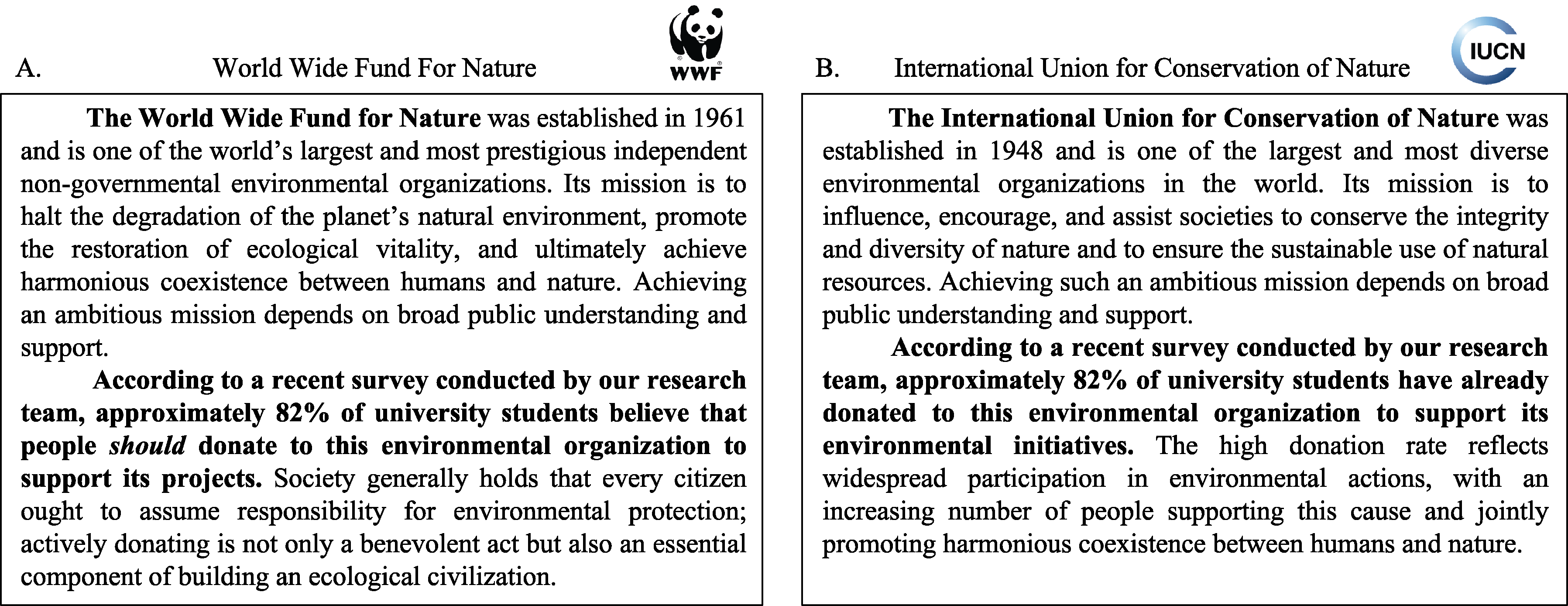
Figure 1. Background Information for Injunctive Norms (A) and Descriptive Norms (B).

Figure 2. Experimental Procedure. Note. The figure illustrates the overall structure of the experimental procedure and the timing sequence within a single trial. The example trial shown corresponds to a representative trial from the moral identity priming block under the descriptive norm condition.
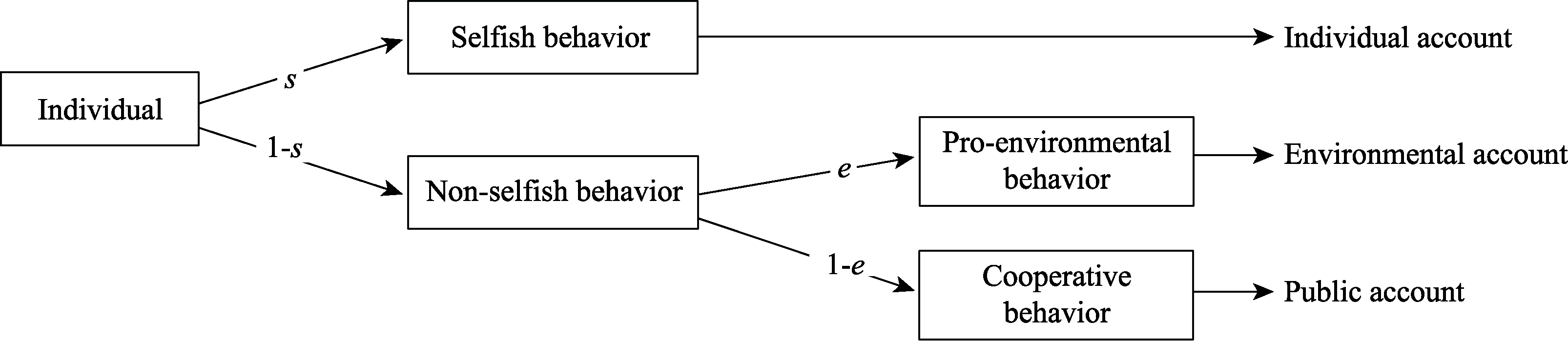
Figure 3. MPT Model of the Greater Good Game. Note. s represents the probability of choosing the individual account (self-interested decision path); e represents the probability of choosing the environmental account within the non-self-interested path (see Section 2.4.1 for model specification).
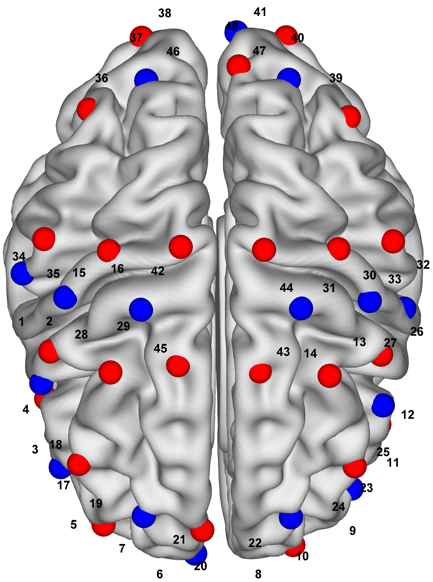
Figure 4. Sagittal View of fNIRS Channel Layout. Note. Red circles denote emitters; blue circles denote detectors; the numbers between them indicate channels. Color figures are available in the electronic version; the same applies hereafter.
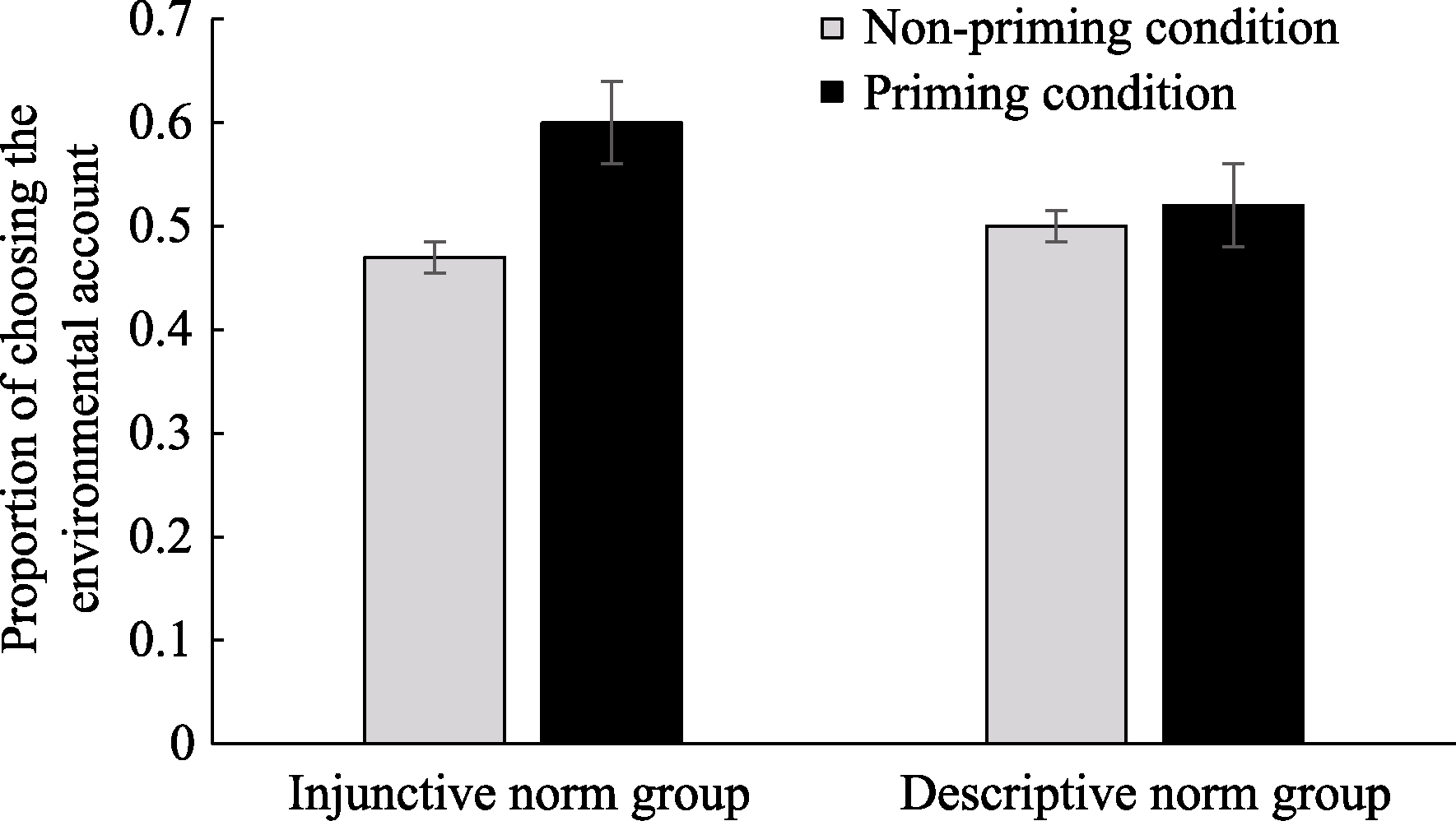
Figure 5. Proportion of Environmental Account Choices Under Different Experimental Conditions (Error bars represent the standard error of the mean).

Figure 6. Brain Activation Maps of the Main Effects and Interaction Between Social Norm Types and Moral Identity Priming. Note. Colors in the figure represent F-values from the ANOVA (range: 0-11); warmer (redder) colors indicate larger F-values for the corresponding main effects or interaction in those brain regions.
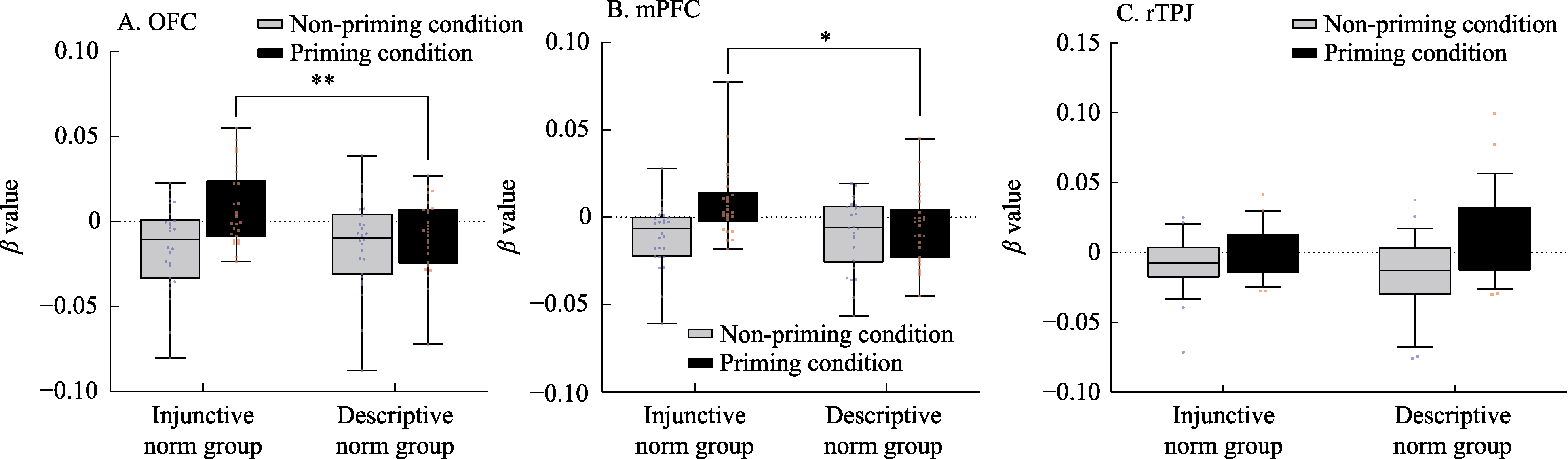
Figure 7. Activation of OFC, mPFC, and rTPJ During the Decision Phase Across Different Groups. Note. * p < 0.05, ** p < 0.01, *** p < 0.001
| Environmental organizations | This environmental organization has made outstanding contributions to environmental protection (M ± SD) | This environmental organization has far-reaching influence in the field of environmental protection (M ± SD) |
|---|---|---|
| World Wide Fund for Nature | 4.73 ± 0.47 | 4.65 ± 0.58 |
| International Union for Conservation of Nature | 4.56 ± 0.54 | 4.49 ± 0.63 |
| China Environmental Protection Foundation | 4.42 ± 0.58 | 4.34 ± 0.52 |
| The Nature Conservancy | 4.69 ± 0.43 | 4.53 ± 0.55 |
| Global Environment Facility | 4.22 ± 0.66 | 4.17 ± 0.63 |
| Greenpeace | 4.01 ± 0.74 | 3.93 ± 0.84 |
| Friends of the Earth | 3.83 ± 0.65 | 3.74 ± 0.79 |
| Alibaba Foundation | 3.57 ± 0.72 | 3.46 ± 0.75 |
| China Association of Environmental Protection | 3.64 ± 0.62 | 3.51 ± 0.62 |
| All-China Environment Federation | 3.75 ± 0.65 | 3.64 ± 0.78 |
Appendix Table 1 Scores of the 10 Environmental Organizations on Two Manipulation Check Items
| Environmental organizations | This environmental organization has made outstanding contributions to environmental protection (M ± SD) | This environmental organization has far-reaching influence in the field of environmental protection (M ± SD) |
|---|---|---|
| World Wide Fund for Nature | 4.73 ± 0.47 | 4.65 ± 0.58 |
| International Union for Conservation of Nature | 4.56 ± 0.54 | 4.49 ± 0.63 |
| China Environmental Protection Foundation | 4.42 ± 0.58 | 4.34 ± 0.52 |
| The Nature Conservancy | 4.69 ± 0.43 | 4.53 ± 0.55 |
| Global Environment Facility | 4.22 ± 0.66 | 4.17 ± 0.63 |
| Greenpeace | 4.01 ± 0.74 | 3.93 ± 0.84 |
| Friends of the Earth | 3.83 ± 0.65 | 3.74 ± 0.79 |
| Alibaba Foundation | 3.57 ± 0.72 | 3.46 ± 0.75 |
| China Association of Environmental Protection | 3.64 ± 0.62 | 3.51 ± 0.62 |
| All-China Environment Federation | 3.75 ± 0.65 | 3.64 ± 0.78 |
| [1] | Amodio, D. M., & Frith, C. D. (2006). Meeting of minds:The medial frontal cortex and social cognition. Nature Reviews Neuroscience, 7(4), 268-277. |
| [2] | Aquino,, K., & Kay, A. (2018). A social cognitive model of moral identity. In K. Gray & J. Graham (Eds.), Atlas of moral psychology (pp. 133-140). Guilford Press. |
| [3] | Aquino, K., & Reed, A., II. (2002). The self-importance of moral identity. Journal of Personality and Social Psychology, 83(6), 1423-1440. |
| [4] | Balconi, M., Allegretta, R. A., Acconito, C., Saquella, F., & Angioletti, L. (2025). The functional signature of decision making across dyads during a persuasive scenario: Hemodynamic fNIRS coherence measure. Sensors, 25(6), 1880. |
| [5] | Barclay, P., & Barker, J. L. (2020). Greener than thou: People who protect the environment are more cooperative, compete to be environmental, and benefit from reputation. Journal of Environmental Psychology, 72, 101441. |
| [6] | Baumgartner, T., Langenbach, B. P., Gianotti, L. R., Müri, R. M., & Knoch, D. (2019). Frequency of everyday pro-environmental behaviour is explained by baseline activation in lateral prefrontal cortex. Scientific Reports, 9(1), 1-7. |
| [7] | Bicchieri, C., & Xiao, E. (2009). Do the right thing: But only if others do so. Journal of Behavioral Decision Making, 22(2), 191-208. |
| [8] | Brevers, D., Baeken, C., Maurage, P., Sescousse, G., Vögele, C., & Billieux, J. (2021). Brain mechanisms underlying prospective thinking of sustainable behaviours. Nature Sustainability, 4(5), 433-439. |
| [9] | Brosch, T., Stussi, Y., Desrichard, O., & Sander, D. (2018). Not my future? Core values and the neural representation of future events. Cognitive, Affective, & Behavioral Neuroscience, 18( 3), 476-484. |
| [10] | Buckholtz, J. W., & Marois, R. (2012). The roots of modern justice: Cognitive and neural foundations of social norms and their enforcement. Nature Neuroscience, 15(5), 655-661. |
| [11] | Cialdini, R. B., & Jacobson, R. P. (2021). Influences of social norms on climate change-related behaviors. Current Opinion in Behavioral Sciences, 42, 1-8. |
| [12] | Cialdini, R. B., Reno, R. R., & Kallgren, C. A. (1990). A focus theory of normative conduct: Recycling the concept of norms to reduce littering in public places. Journal of Personality and Social Psychology, 58(6), 1015-1026. |
| [13] | Chai, M., Liu, K., & Jin, F. (2024). More moral or more social: The self-construction mechanism of green consumption. Advances in Psychological Science, 32(10), 1726-1735. |
| [14] | Christensen, P. N., Rothgerber, H., Wood, W., & Matz, D. C. (2004). Social norms and identity relevance: A motivational approach to normative behavior. Personality and Social Psychology Bulletin, 30(10), 1295-1309. |
| [15] | Constantino, S. M., Sparkman, G., Kraft-Todd, G. T., Bicchieri, C., Centola, D., Shell-Duncan, B., ... Weber, E. U. (2022). Scaling up change: A critical review and practical guide to harnessing social norms for climate action. Psychological Science in the Public Interest, 23(2), 50-97. |
| [16] | de Groot, J. I. M., & Steg, L. (2008). Value orientations to explain beliefs related to environmental significant behavior: How to measure egoistic, altruistic, and biospheric value orientations. Environment and Behavior, 40(3), 330-354. |
| [17] | Doell, K. C., Berman, M. G., Bratman, G. N., Knutson, B., Kühn, S., Lamm, C., ... Brosch, T. (2023). Leveraging neuroscience for climate change research. Nature Climate Change, 13(12), 1288-1297. |
| [18] | Doran, R., & Larsen, S. (2016). The relative importance of social and personal norms in explaining intentions to choose eco-friendly travel options. International Journal of Tourism Research, 18(2), 159-166. |
| [19] | Engler, D., Gutsche, G., Simixhiu, A., & Ziegler, A. (2025). Social norms and individual climate protection activities: A survey experiment for Germany. Energy Economics, 142, 108103. |
| [20] | Farrow, K., Grolleau, G., & Ibanez, L. (2017). Social norms and pro-environmental behavior: A review of the evidence. Ecological Economics, 140, 1-13. |
| [21] | Faul, F., Erdfelder, E., Lang, A. G., & Buchner, A. (2007). G* Power 3: A flexible statistical power analysis program for the social, behavioral, and biomedical sciences. Behavior Research Methods, 39(2), 175-191. |
| [22] | Fehr, E., & Fischbacher, U. (2003). The nature of human altruism. Nature, 425(6960), 785-791. |
| [23] | Felix-Ortiz, A. C., Burgos-Robles, A., Bhagat, N. D., Leppla, C. A., & Tye, K. M. (2016). Bidirectional modulation of anxiety-related and social behaviors by amygdala projections to the medial prefrontal cortex. Neuroscience, 321, 197-209. |
| [24] | Gotowiec, S., & van Mastrigt, S. (2019). Having versus doing: The roles of moral identity internalization and symbolization for prosocial behaviors. The Journal of Social Psychology, 159(1), 75-91. |
| [25] | Hao, S., Xin, Q., & Xiaoqin, W. (2023). Anodal tDCS over TPJ reduces bidding in Tullock contest: Implications for social decision-making. Neuroscience Letters, 812, 137361. |
| [26] | Hardy, S. A., & Carlo, G. (2011). Moral identity: What is it, how does it develop, and is it linked to moral action?. Child Development Perspectives, 5(3), 212-218. |
| [27] | Helferich, M., Thøgersen, J., & Bergquist, M. (2023). Direct and mediated impacts of social norms on pro-environmental behavior. Global Environmental Change, 80, 102680. |
| [28] | Hertz, S. G., & Krettenauer, T. (2016). Does moral identity effectively predict moral behavior?: A meta-analysis. Review of General Psychology, 20(2), 129-140. |
| [29] | Jacquet, J., Hagel, K., Hauert, C., Marotzke, J., Röhl, T., & Milinski, M. (2013). Intra-and intergenerational discounting in the climate game. Nature Climate Change, 3(12), 1025-1028. |
| [30] | Jiang, Y., Jiang, C., Hu, T., & Sun, H. (2022). Effects of emotion on intertemporal decision-making: Explanation from the single dimension priority model. Acta Psychologica Sinica, 54(2), 122-140. |
| [31] | Klein, S. A., Hilbig, B. E., & Heck, D. W. (2017). Which is the greater good? A social dilemma paradigm disentangling environmentalism and cooperation. Journal of Environmental Psychology, 53, 40-49. |
| [32] | Klein, S. A., Nockur, L., & Reese, G. (2022). Prosociality from the perspective of environmental psychology. Current Opinion in Psychology, 44, 182-187. |
| [33] | Knoch, D., Gianotti, L. R., Pascual-Leone, A., Treyer, V., Regard, M., Hohmann, M., & Brugger, P. (2006). Disruption of right prefrontal cortex by low-frequency repetitive transcranial magnetic stimulation induces risk- taking behavior. Journal of Neuroscience, 26(24), 6469-6472. |
| [34] | Krettenauer, T. (2022). When moral identity undermines moral behavior: An integrative framework. Social and Personality Psychology Compass, 16(3), e12655. |
| [35] | Kwon, S. J., van Hoorn, J., Do, K. T., Burroughs, M., & Telzer, E. H. (2023). Neural representation of donating time and money. Journal of Neuroscience, 43(36), 6297-6305. |
| [36] | Lange, F., Steinke, A., & Dewitte, S. (2018). The pro-environmental behavior task: A laboratory measure of actual pro-environmental behavior. Journal of Environmental Psychology, 56, 46-54. |
| [37] | Langenbach, B. P., Savic, B., Baumgartner, T., Wyss, A. M., & Knoch, D. (2022). Mentalizing with the future: Electrical stimulation of the right TPJ increases sustainable decision-making. Cortex, 146, 227-237. |
| [38] | Le Houcq Corbi, Z., Taşkıran, D., & Soutschek, A. (2025). Pro-environmental and prosocial decisions share neural correlates. Journal of Cognitive Neuroscience, 37(11), 2178-2189. |
| [39] | Lemmel, F. K., Hoppen, T. H., & Morina, N. (2025). Long-term effects of social norm interventions on pro-environmental behaviours: A systematic review and meta-analysis. Journal of Environmental Psychology, 107,102784. |
| [40] | Li, H., Lin, J., He, N., Wang, Z., & Zhang, L. (2023). The influence of moral identity on cooperative behavior and its mechanism in social predicaments. Psychological and Behavioral Research, 21(3), 410-417. |
| [41] | Li, Y., Chen, R., & He, Q. (2018). The application of functional near-infrared spectroscopy in understanding the brain mechanism of social interaction. Journal of Psychological Science, 41(2), 305-311 |
| [42] | Liu, R. (2014). On the concept of moral identity. Studies in Ethics, 74(6), 15-20. |
| [43] | Lu, H., Zou, J., Chen, H., & Long, R. (2020). Promotion or inhibition? Moral norms, anticipated emotion and employee’s pro-environmental behavior. Journal of Cleaner Production, 258, 120858. |
| [44] | Luu, T. T., Thieken, A. H., Tuyen, T. T., Vinh, V. T., & Bubeck, P. (2025). Exploring the influence of different types of social norms and other factors on flood-adaptive behaviour. Journal of Environmental Psychology, 108, 102835. |
| [45] | Marciano, D., Staveland, B. R., Lin, J. J., Saez, I., Hsu, M., & Knight, R. T. (2023). Electrophysiological signatures of inequity-dependent reward encoding in the human OFC. Cell Reports, 42(8), 112865. |
| [46] | Molenberghs, P., Johnson, H., Henry, J. D., & Mattingley, J. B. (2016). Understanding the minds of others: A neuroimaging meta-analysis. Neuroscience & Biobehavioral Reviews, 65, 276-291. |
| [47] | Mollen, S., Cheung, Q., & Stok, F. M. (2023). The influence of social norms on anticipated snacking: An experimental study comparing different types of social norms. Appetite, 180, 106372. |
| [48] | Nielsen, Y. A., & Pfattheicher, S. (2024). Separating individual and group-level cooperation in the Public Goods Game. PNAS Nexus, 3(5), pgae200. |
| [49] | Niemiec, R. M., Champine, V., Vaske, J. J., & Mertens, A. (2020). Does the impact of norms vary by type of norm and type of conservation behavior? A meta-analysis. Society & Natural Resources, 33(8), 1024-1040. |
| [50] | Niu, B., Li, Y., Ding, X., Shi, C., Zhou, B., & Gong, J. (2023). Neural correlates of bribe-taking decision dilemma: An fNIRS study. Brain and Cognition, 166, 105951. |
| [51] | Noble, W. S. (2009). How does multiple testing correction work?. Nature biotechnology, 27(12), 1135-1137. |
| [52] | Nyborg, K., Anderies, J. M., Dannenberg, A., Lindahl, T., Schill, C., Schluter, M., de Zeeuw, A. (2016). Social norms as solutions. Science, 354(6308), 42-43. |
| [53] | Orui, J., Inoue, T., Shiraiwa, K., Ueda, M., Naito, Y., & Ishii, R. (2025). The neurophysiological correlates of altruism: A scoping review of fMRI, EEG, and autonomic studies. Cognitive, Affective, & Behavioral Neuroscience, 1-26. |
| [54] | Panico, F., Ferrara, A., Sagliano, L., & Trojano, L. (2024). The involvement of rTPJ in intention attribution during social decision making: A TMS study. Cognitive, Affective, & Behavioral Neuroscience, 24( 4), 755-765. |
| [55] | Piao, X. D., & Managi, S. (2024). Determinants of pro-environmental behaviour: Effects of socioeconomic, subjective, and psychological well-being factors from 37 countries. Humanities and Social Sciences Communications, 11(1), 1-17. |
| [56] | Prakash, G., Choudhary, S., Kumar, A., Garza-Reyes, J. A., Khan, S. A. R., & Panda, T. K. (2019). Do altruistic and egoistic values influence consumers’ attitudes and purchase intentions towards eco-friendly packaged products? An empirical investigation. Journal of Retailing and Consumer Services, 50, 163-169. |
| [57] | Reed, A., Aquino, K., & Levy, E. (2007). Moral identity and judgments of charitable behaviors. Journal of Marketing, 71(1), 178-193. |
| [58] | Ren, M., Fan, W., Huang, Z., Yang, L., & Zhong, Y. (2026). Beyond self-interested choices: The influence mechanism of social norms on pro-environmental behavior in social dilemmas. Journal of Psychological Science, 49(2), 412-425. |
| [59] | Ren, M., Fan, W., Yang, L., & Zhong, Y. (2025). Navigating nested social dilemmas: The impact of social norms on pro-environmental behaviour. International Journal of Psychology, 60(6), e70124. |
| [60] | Ren, M., Zhong, B., & Fan, W. (2024). The impact of descriptive and injunctive social norms on pro-environmental behavior: A study using eye-tracking technology. Current Psychology, 43(45), 34761-34777. |
| [61] | Rhodes, N., Shulman, H. C., & McClaran, N. (2020). Changing norms: A meta-analytic integration of research on social norms appeals. Human Communication Research, 46(2-3), 161-191. |
| [62] | Rolls, E. T., Cheng, W., & Feng, J. (2020). The orbitofrontal cortex: Reward, emotion and depression. Brain Communications, 2(2), fcaa196. |
| [63] | Rosales, E. G., Baumgartner, T., & Knoch, D. (2022). Interindividual differences in intergenerational sustainable behavior are associated with cortical thickness of the dorsomedial and dorsolateral prefrontal cortex. NeuroImage, 264, 119664. |
| [64] | Ruff, C. C., Ugazio, G., & Fehr, E. (2013). Changing social norm compliance with noninvasive brain stimulation. Science, 342(6157), 482-484. |
| [65] | Salciuviene, L., Dovalienė, A., Gravelines, Ž., Vilkas, M., Oates, C., & Banytė, J. (2024). Examining moral identity and engagement with sustainable consumption at home and in the workplace. EuroMed Journal of Business, 20(4), 1052-1072. |
| [66] | Schultz, P. W. (2001). The structure of environmental concern: Concern for self, other people, and the biosphere. Journal of Environmental Psychology, 21(4), 327-339. |
| [67] | Sommet, N., Weissman, D. L., Cheutin, N., & Elliot, A. J. (2023). How many participants do I need to test an interaction? Conducting an appropriate power analysis and achieving sufficient power to detect an interaction. Advances in Methods and Practices in Psychological Science, 6(3), 1-21. |
| [68] | Soutschek, A., Moisa, M., Ruff, C. C., & Tobler, P. N. (2020). The right temporoparietal junction enables delay of gratification by allowing decision makers to focus on future events. PLoS biology, 18(8), e3000800. |
| [69] | Sovacool, B. K., Turnheim, B., Martiskainen, M., Brown, D., & Kivimaa, P. (2020). Guides or gatekeepers? Incumbent- oriented transition intermediaries in a low-carbon era. Energy Research & Social Science, 66, 101490. |
| [70] | Spitzer, M., Fischbacher, U., Herrnberger, B., Grön, G., & Fehr, E. (2007). The neural signature of social norm compliance. Neuron, 56(1), 185-196. |
| [71] | Steg, L., & Vlek, C. (2009). Encouraging pro-environmental behaviour: An integrative review and research agenda. Journal of Environmental Psychology, 29(3), 309-317. |
| [72] | Strang, S., Gross, J., Schuhmann, T., Riedl, A., Weber, B., & Sack, A. T. (2015). Be nice if you have to-the neurobiological roots of strategic fairness. Social Cognitive and Affective Neuroscience, 10(6), 790-796. |
| [73] | Tang, M., Tian, S., & Xie, T. (2024). Beyond the myth of slimming: The impact of social norms on positive body image and caloric intake among young adults. Acta Psychologica Sinica, 56(10), 1367-1383. |
| [74] | van der Werff, E., Steg, L., & Keizer, K. (2013). It is a moral issue: The relationship between environmental self-identity, obligation-based intrinsic motivation and pro-environmental behaviour. Global Environmental Change, 23(5), 1258-1265. |
| [75] | Vesely, S., Klöckner, C. A., & Brick, C. (2020). Pro-environmental behavior as a signal of cooperativeness: Evidence from a social dilemma experiment. Journal of Environmental Psychology, 67, 101362. |
| [76] | Wang, C., Zheng, X., Yu, Q., & Lei, L. (2019). The dilemma of green consumption: Identity construction or environmental concern?. Advances in Psychological Science, 27(8), 1507-1520. |
| [77] | Wang, G., Tang, J., Yin, Z., Yu, S., Shi, X., Hao, X., ... Li, S. (2024). The neurocomputational signature of decision-making for unfair offers in females under acute psychological stress. Neurobiology of Stress, 30, 100622. |
| [78] | Wang, S., & van den Berg, B. (2021). Neuroscience and climate change: How brain recordings can help us understand human responses to climate change. Current Opinion in Psychology, 42, 126-132. |
| [79] | Wang, X., Kong, F., Zhu, H., & Chen, Y. (2024). Dynamic indirect reciprocity: The influence of personal reputation and group reputation on cooperative behavior in nested social dilemmas. Journal of Experimental Social Psychology, 112, 104599. |
| [80] | Winterich, K. P., Aquino, K., Mittal, V., & Swartz, R. (2013). When moral identity symbolization motivates prosocial behavior: The role of recognition and moral identity internalization. Journal of Applied Psychology, 98(5), 759-770. |
| [81] | Wu, B., Li, D., & Wang, C. (2016). The psychological mechanism of green consumption based on moral identity theory. Advances in Psychological Science, 24(12), 1829-1843. |
| [82] | Wu, B., & Yang, Z. (2018). The impact of moral identity on consumers’ green consumption tendency: The role of perceived responsibility for environmental damage. Journal of Environmental Psychology, 59, 74-84. |
| [83] | Xu, J., Sun, X., Dong, Y., Wang, Z., Li, W., & Yuan, B. (2017). Compensation or punishment? —The effect of social distance on third-party intervention. Journal of Psychological Science, 40(5), 1175-1181. |
| [84] | Ye, P., Zhu, R., Tang, H., Mai, X., & Liu, C. (2017). The application of functional near-infrared spectroscopy in social cognitive neuroscience. Advances in Psychological Science, 25(5), 731-741. |
| [85] | Young, L., Camprodon, J. A., Hauser, M., Pascual-Leone, A., & Saxe, R. (2010). Disruption of the right temporoparietal junction with transcranial magnetic stimulation reduces the role of beliefs in moral judgments. Proceedings of the National Academy of Sciences, 107(15), 6753-6758. |
| [86] | Zhang, M., Liu, T., Pelowski, M., Jia, H., & Yu, D. (2017). Social risky decision-making reveals gender differences in the TPJ: A hyperscanning study using functional near- infrared spectroscopy. Brain and Cognition, 119, 54-63. |
| [87] | Zhang, Y., Dong, Y., & Jiang, J. (2025). From behavior domain to behavior attribute: Issues and suggestions in measuring pro-environmental behavior. Advances in Psychological Science, 33(1), 163-175. |
| [88] | Zhao, M., & Qu, S. (2022). Research on the consequences of employees’ unethical pro-organizational behavior: The moderating role of moral identity. Frontiers in Psychology, 13, 1068606. |
| [1] | LIU Shujuan, TAN Lirou, QI Yun, HU Shuai, WANG Xiaojuan, YANG Jianfeng. fNIRS-guided TMS technique reveals a critical role of the left inferior parietal lobule in Chinese tone perception [J]. Acta Psychologica Sinica, 2026, 58(7): 1343-1356. |
| [2] | ZHANG Wenjie, LONG Ruyi, LI Miaoqing, FAN Wei, FU Xiaolan. The Impact of Emotional Valence and Response Orientation on Helping Behavior in Young Children: Evidence from Behavior and fNIRS [J]. Acta Psychologica Sinica, 2026, 58(6): 1143-1159. |
| [3] | LI Yangzhuo, ZHANG Ruqian, SONG Sensen, LI Xianchun, LUO Junlong. Interactive Feedback in persuader-persuadee interaction Enhances Persuasion: An fNIRS hyperscanning study [J]. Acta Psychologica Sinica, 2025, 57(5): 805-819. |
| [4] | ZHANG Huan, QIN Xiquan, LIU Yu, LIN Lin, WU Jie. The influence of positive emotion with varying intensities of approach motivation on false memory and its neural mechanisms: A study based on semantic-related false memory [J]. Acta Psychologica Sinica, 2025, 57(3): 349-362. |
| [5] | ZHU Yi, HU Yi. Chunking feedback in instructor-learner interaction facilities long-term learning transfer: Behavioral and fNIRS hyperscanning studies [J]. Acta Psychologica Sinica, 2024, 56(5): 555-576. |
| [6] | WEI Xinni, YU Feng, PENG Kaiping, ZHONG Nian. Psychological richness increases behavioral intention to protect the environment [J]. Acta Psychologica Sinica, 2023, 55(8): 1330-1343. |
| [7] | CHEN Fakun, CHEN Tian, CAI Wenqi, WANG Xiaojuan, YANG Jianfeng. fNIRS evidence for left middle frontal gyrus involved in visual-spatial analysis of Chinese characters [J]. Acta Psychologica Sinica, 2023, 55(5): 685-695. |
| [8] | XU Chuyan, ZHU Lin, WANG Yunping, WANG Ruibing, LIU Conghui. The effect of foreign language speaking anxiety on the quality of verbal interaction: A fNIRS-based hyperscanning study [J]. Acta Psychologica Sinica, 2023, 55(12): 1949-1965. |
| [9] | CHENG Xiaojun, LIU Meihuan, PAN Yafeng. Shared responsibility promotes the benefit of interactive decision-making in novices: A hyperscanning study [J]. Acta Psychologica Sinica, 2022, 54(11): 1391-1402. |
| [10] | ZHANG Ruqian, LIU Jieqiong, LI Xianchun. Neural mechanisms of fairness formation in the perspective of social interactions [J]. Acta Psychologica Sinica, 2019, 51(9): 1007-1017. |
| [11] | FAN Yafeng, JIANG Jing, CUI Wenquan. The backfire effect of default amounts on donation behavior in online donation platform [J]. Acta Psychologica Sinica, 2019, 51(4): 415-427. |
| [12] | YANG Haibo,LIU Hejun,ZHANG Peng,LI Liang. The role of masking stimulation in target recognition processing: Evidence from fNIRS [J]. Acta Psychologica Sinica, 2019, 51(11): 1187-1197. |
| [13] | CHEN Mo; LIANG Jian. High performance expectation and unethical pro-organizational behavior: Social cognitive perspective [J]. Acta Psychologica Sinica, 2017, 49(1): 94-105. |
| [14] | BAI Xuejun, ZHANG Qihan, ZHANG Peng, ZHOU Song, LIU Ying, SONG Xing, PENG Guohui. Comparison of motor execution and motor imagery brain activation patterns: A fNIRS Study [J]. Acta Psychologica Sinica, 2016, 48(5): 495-508. |
| Viewed | ||||||
|
Full text |
|
|||||
|
Abstract |
|
|||||
