

ISSN 0439-755X
CN 11-1911/B
CN 11-1911/B
Acta Psychologica Sinica ›› 2026, Vol. 58 ›› Issue (6): 1160-1182.doi: 10.3724/SP.J.1041.2026.1160
• Reports of Empirical Studies • Previous Articles Next Articles
MA Chao, ZHAO Lu, ZHAO Xin( )
)
Received:2025-03-27
Published:2026-06-25
Online:2026-04-28
Contact:
ZHAO Xin
E-mail:psyzhaoxin@nwnu.edu.cn
Supported by:MA Chao, ZHAO Lu, ZHAO Xin. (2026). Beyond the Screen: Sports Video Game Training Can Better Enhance Children’s Executive Functions. Acta Psychologica Sinica, 58(6), 1160-1182.
Add to citation manager EndNote|Ris|BibTeX
URL: https://journal.psych.ac.cn/acps/EN/10.3724/SP.J.1041.2026.1160

Figure 1. The overall research idea and framework diagram of this study
| Group | Total | Male | Female | Age (M ± SD, years) |
|---|---|---|---|---|
| Sports video game training group | 30 | 14 | 16 | 11.43 ± 0.50 |
| Sports + video game training group | 30 | 13 | 17 | 11.33 ± 0.48 |
| Pure sports training group | 30 | 17 | 13 | 11.40 ± 0.62 |
| Pure video game training group | 30 | 18 | 12 | 11.50 ± 0.57 |
| Control group | 30 | 16 | 14 | 11.27 ± 0.45 |
| Total | 150 | 78 | 72 | 11.39 ± 0.53 |
Table 1 Demographic variables of participants in Experiment 1
| Group | Total | Male | Female | Age (M ± SD, years) |
|---|---|---|---|---|
| Sports video game training group | 30 | 14 | 16 | 11.43 ± 0.50 |
| Sports + video game training group | 30 | 13 | 17 | 11.33 ± 0.48 |
| Pure sports training group | 30 | 17 | 13 | 11.40 ± 0.62 |
| Pure video game training group | 30 | 18 | 12 | 11.50 ± 0.57 |
| Control group | 30 | 16 | 14 | 11.27 ± 0.45 |
| Total | 150 | 78 | 72 | 11.39 ± 0.53 |

Figure 2. Implementation flowchart of Experiment 1.
| Variable | Task Indicator | Factor | dfs | F | p | η2p |
|---|---|---|---|---|---|---|
| Interference Inhibition | Stroop Task Interference Effect (ms) | Test Phase | (4,145) | 1.73 | 0.180 | 0.01 |
| Group | (4,145) | 0.82 | 0.513 | 0.02 | ||
| Test Phase × Group | (4,145) | 0.35 | 0.947 | 0.01 | ||
| Response Inhibition | Go/No-go Task No-go Accuracy | Test Phase | (4,145) | 10.22 | <0.001*** | 0.07 |
| Group | (4,145) | 3.70 | 0.007** | 0.09 | ||
| Test Phase × Group | (4,145) | 0.85 | 0.562 | 0.02 | ||
| Working Memory Updating | Digital Updating Task Average Accuracy | Test Phase | (4,145) | 31.38 | <0.001*** | 0.18 |
| Group | (4,145) | 8.21 | <0.001*** | 0.19 | ||
| Test Phase × Group | (4,145) | 2.82 | 0.005** | 0.07 | ||
| Attention Shifting | Attention Switching Task Switching Cost (ms) | Test Phase | (4,145) | 10.46 | <0.001*** | 0.07 |
| Group | (4,145) | 1.75 | 0.143 | 0.05 | ||
| Test Phase × Group | (4,145) | 0.47 | 0.865 | 0.01 |
Table 2 Improvement effects of executive function sub-components in children before and after intervention in each group
| Variable | Task Indicator | Factor | dfs | F | p | η2p |
|---|---|---|---|---|---|---|
| Interference Inhibition | Stroop Task Interference Effect (ms) | Test Phase | (4,145) | 1.73 | 0.180 | 0.01 |
| Group | (4,145) | 0.82 | 0.513 | 0.02 | ||
| Test Phase × Group | (4,145) | 0.35 | 0.947 | 0.01 | ||
| Response Inhibition | Go/No-go Task No-go Accuracy | Test Phase | (4,145) | 10.22 | <0.001*** | 0.07 |
| Group | (4,145) | 3.70 | 0.007** | 0.09 | ||
| Test Phase × Group | (4,145) | 0.85 | 0.562 | 0.02 | ||
| Working Memory Updating | Digital Updating Task Average Accuracy | Test Phase | (4,145) | 31.38 | <0.001*** | 0.18 |
| Group | (4,145) | 8.21 | <0.001*** | 0.19 | ||
| Test Phase × Group | (4,145) | 2.82 | 0.005** | 0.07 | ||
| Attention Shifting | Attention Switching Task Switching Cost (ms) | Test Phase | (4,145) | 10.46 | <0.001*** | 0.07 |
| Group | (4,145) | 1.75 | 0.143 | 0.05 | ||
| Test Phase × Group | (4,145) | 0.47 | 0.865 | 0.01 |

Figure 3. Trends in interference inhibition scores for the five experimental groups before and after training

Figure 4. Trends in response inhibition scores for the five experimental groups before and after training.

Figure 5. Trends in working memory updating scores for the five experimental groups before and after training.

Figure 6. Trends in attention shifting scores for the five experimental groups before and after training.
| Group | Total | Male | Female | Age (M ± SD, years) |
|---|---|---|---|---|
| High Sport Intensity + High Cognitive Engagement Group | 30 | 17 | 13 | 12.30 ± 0.54 |
| Low Sport Intensity + High Cognitive Engagement Group | 30 | 15 | 15 | 12.53 ± 0.68 |
| High Sport Intensity + Low Cognitive Engagement Group | 30 | 14 | 16 | 12.50 ± 0.57 |
| Low Sport Intensity + Low Cognitive Engagement Group | 30 | 18 | 12 | 12.43 ± 0.63 |
| Total | 120 | 64 | 56 | 12.44 ± 0.61 |
Table 3 Demographic variables of participants in Experiment 2
| Group | Total | Male | Female | Age (M ± SD, years) |
|---|---|---|---|---|
| High Sport Intensity + High Cognitive Engagement Group | 30 | 17 | 13 | 12.30 ± 0.54 |
| Low Sport Intensity + High Cognitive Engagement Group | 30 | 15 | 15 | 12.53 ± 0.68 |
| High Sport Intensity + Low Cognitive Engagement Group | 30 | 14 | 16 | 12.50 ± 0.57 |
| Low Sport Intensity + Low Cognitive Engagement Group | 30 | 18 | 12 | 12.43 ± 0.63 |
| Total | 120 | 64 | 56 | 12.44 ± 0.61 |

Figure 7. Implementation Flowchart of Experiment 2.
| Group | Sport Intensity | Cognitive Engagement | ||
|---|---|---|---|---|
| M | SD | M | SD | |
| High Sport Intensity + High Cognitive Engagement Group | 15.98 | 0.63 | 4.64 | 0.48 |
| Low Sport Intensity + High Cognitive Engagement Group | 7.62 | 0.60 | 4.65 | 0.48 |
| High Sport Intensity + Low Cognitive Engagement Group | 15.94 | 1.01 | 1.35 | 0.74 |
| Low Sport Intensity + Low Cognitive Engagement Group | 7.57 | 0.62 | 1.36 | 0.62 |
| P | <0.001*** | <0.001*** | ||
Table 4 Analysis of Manipulation Validity in Experiment 2
| Group | Sport Intensity | Cognitive Engagement | ||
|---|---|---|---|---|
| M | SD | M | SD | |
| High Sport Intensity + High Cognitive Engagement Group | 15.98 | 0.63 | 4.64 | 0.48 |
| Low Sport Intensity + High Cognitive Engagement Group | 7.62 | 0.60 | 4.65 | 0.48 |
| High Sport Intensity + Low Cognitive Engagement Group | 15.94 | 1.01 | 1.35 | 0.74 |
| Low Sport Intensity + Low Cognitive Engagement Group | 7.57 | 0.62 | 1.36 | 0.62 |
| P | <0.001*** | <0.001*** | ||

Figure 8. Visual Distribution of Sport Intensity Scores After Each Intervention for Each Group in Experiment 2.
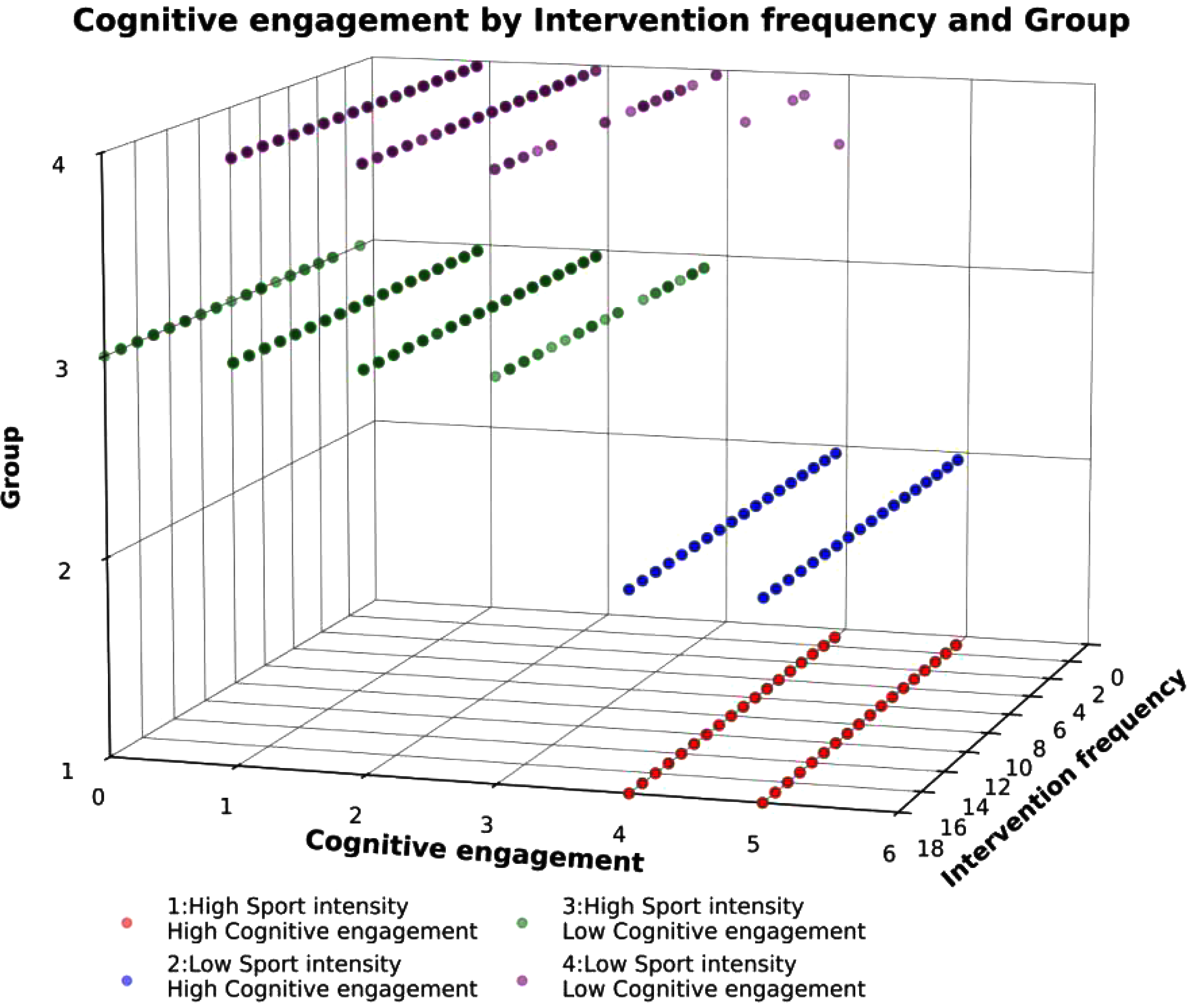
Figure 9. Visual Distribution of Cognitive Engagement Scores After Each Intervention for Each Group in Experiment 2.
| Variable | Task Indicator | Factor | dfs | F | P | η2p |
|---|---|---|---|---|---|---|
| Response Inhibition | Go/No-go Task No-go Accuracy | Test Phase | (3, 116) | 29.88 | <0.001*** | 0.21 |
| Sport Intensity | (3, 116) | 18.84 | <0.001*** | 0.14 | ||
| Test Phase×Sport Intensity | (3, 116) | 0.84 | 0.435 | 0.01 | ||
| Cognitive Engagement | (3, 116) | 70.78 | <0.001*** | 0.38 | ||
| Test Phase×Cognitive Engagement | (3, 116) | 13.17 | <0.001*** | 0.10 | ||
| Test Phase×Sport Intensity×Cognitive Engagement | (3, 116) | 0.58 | 0.558 | 0.01 | ||
| Sport Intensity×Cognitive Engagement | (3, 116) | 1.20 | 0.276 | 0.01 | ||
| Working Memory Updating | Digital Updating Task Average Accuracy | Test Phase | (3, 116) | 297.25 | <0.001*** | 0.72 |
| Sport Intensity | (3, 116) | 40.65 | <0.001*** | 0.26 | ||
| Test Phase×Sport Intensity | (3, 116) | 18.55 | <0.001*** | 0.14 | ||
| Cognitive Engagement | (3, 116) | 138.78 | <0.001*** | 0.55 | ||
| Test Phase×Cognitive Engagement | (3, 116) | 42.94 | <0.001*** | 0.27 | ||
| Test Phase×Sport Intensity×Cognitive Engagement | (3, 116) | 2.05 | 0.140 | 0.02 | ||
| Sport Intensity×Cognitive Engagement | (3, 116) | 0.50 | 0.483 | 0.00 |
Table 5 Effects of Sport Intensity and Cognitive Engagement on Response Inhibition and Working Memory Updating Before and After Intervention
| Variable | Task Indicator | Factor | dfs | F | P | η2p |
|---|---|---|---|---|---|---|
| Response Inhibition | Go/No-go Task No-go Accuracy | Test Phase | (3, 116) | 29.88 | <0.001*** | 0.21 |
| Sport Intensity | (3, 116) | 18.84 | <0.001*** | 0.14 | ||
| Test Phase×Sport Intensity | (3, 116) | 0.84 | 0.435 | 0.01 | ||
| Cognitive Engagement | (3, 116) | 70.78 | <0.001*** | 0.38 | ||
| Test Phase×Cognitive Engagement | (3, 116) | 13.17 | <0.001*** | 0.10 | ||
| Test Phase×Sport Intensity×Cognitive Engagement | (3, 116) | 0.58 | 0.558 | 0.01 | ||
| Sport Intensity×Cognitive Engagement | (3, 116) | 1.20 | 0.276 | 0.01 | ||
| Working Memory Updating | Digital Updating Task Average Accuracy | Test Phase | (3, 116) | 297.25 | <0.001*** | 0.72 |
| Sport Intensity | (3, 116) | 40.65 | <0.001*** | 0.26 | ||
| Test Phase×Sport Intensity | (3, 116) | 18.55 | <0.001*** | 0.14 | ||
| Cognitive Engagement | (3, 116) | 138.78 | <0.001*** | 0.55 | ||
| Test Phase×Cognitive Engagement | (3, 116) | 42.94 | <0.001*** | 0.27 | ||
| Test Phase×Sport Intensity×Cognitive Engagement | (3, 116) | 2.05 | 0.140 | 0.02 | ||
| Sport Intensity×Cognitive Engagement | (3, 116) | 0.50 | 0.483 | 0.00 |
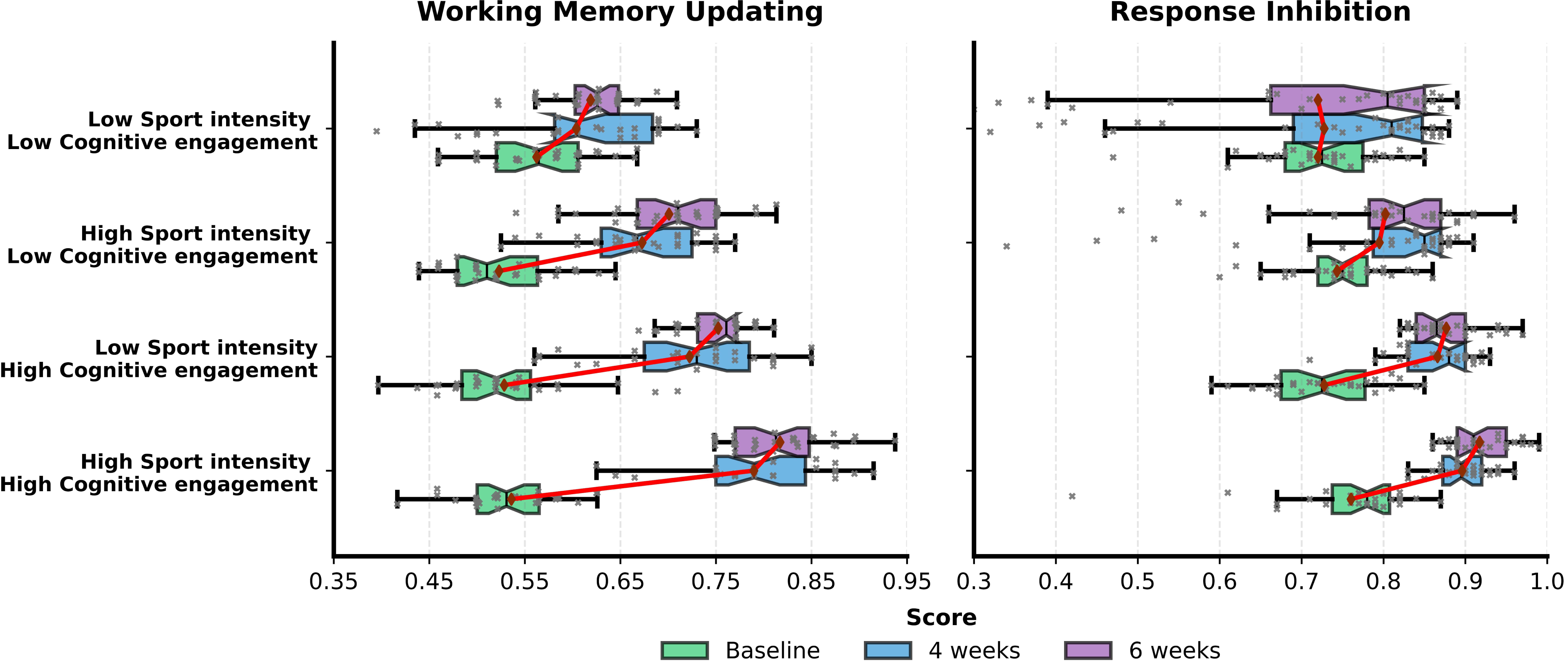
Figure 10. Trends in Response Inhibition and Working Memory Updating Scores Before and After Training for the Four Experimental Groups.
| Group | Total | Male | Female | Age (M ± SD, years) |
|---|---|---|---|---|
| Sports Video Game Training Group | 30 | 14 | 16 | 19.17 ± 0.87 |
| Sports + Video Game Training Group | 30 | 13 | 17 | 19.37 ± 0.89 |
| Control Group | 30 | 16 | 14 | 19.00 ± 0.95 |
| Total | 90 | 43 | 47 | 19.18 ± 0.91 |
Table S1 Demographic Variables of Participants in the Supplementary Experiment
| Group | Total | Male | Female | Age (M ± SD, years) |
|---|---|---|---|---|
| Sports Video Game Training Group | 30 | 14 | 16 | 19.17 ± 0.87 |
| Sports + Video Game Training Group | 30 | 13 | 17 | 19.37 ± 0.89 |
| Control Group | 30 | 16 | 14 | 19.00 ± 0.95 |
| Total | 90 | 43 | 47 | 19.18 ± 0.91 |
| Variable | Sports Video Game Training Group | Sports + Video Game Training Group | Control Group | F(2, 87) | p | η2p | |||
|---|---|---|---|---|---|---|---|---|---|
| (n = 30) | (n = 30) | (n = 30) | |||||||
| M | SD | M | SD | M | SD | ||||
| Interference Inhibition | |||||||||
| Stroop Interference Effect (ms) | -41.27 | 45.93 | -31.28 | 57.15 | -14.81 | 45.86 | 1.42 | 0.25 | 0.03 |
| Response Inhibition | |||||||||
| No-go Accuracy | 0.92 | 0.06 | 0.90 | 0.07 | 0.89 | 0.06 | 2.15 | 0.12 | 0.05 |
| Working Memory Updating | |||||||||
| Average Accuracy | 0.89 | 0.14 | 0.88 | 0.09 | 0.86 | 0.08 | 0.86 | 0.43 | 0.02 |
| Attention Shifting | |||||||||
| Switch Cost (ms) | -284.75 | 193.22 | -240.99 | 184.14 | -320.54 | 243.95 | 1.09 | 0.34 | 0.02 |
Table S2 Descriptive Statistics and ANOVA Results for Baseline Levels of Variables in Young Adults (Supplementary Experiment)
| Variable | Sports Video Game Training Group | Sports + Video Game Training Group | Control Group | F(2, 87) | p | η2p | |||
|---|---|---|---|---|---|---|---|---|---|
| (n = 30) | (n = 30) | (n = 30) | |||||||
| M | SD | M | SD | M | SD | ||||
| Interference Inhibition | |||||||||
| Stroop Interference Effect (ms) | -41.27 | 45.93 | -31.28 | 57.15 | -14.81 | 45.86 | 1.42 | 0.25 | 0.03 |
| Response Inhibition | |||||||||
| No-go Accuracy | 0.92 | 0.06 | 0.90 | 0.07 | 0.89 | 0.06 | 2.15 | 0.12 | 0.05 |
| Working Memory Updating | |||||||||
| Average Accuracy | 0.89 | 0.14 | 0.88 | 0.09 | 0.86 | 0.08 | 0.86 | 0.43 | 0.02 |
| Attention Shifting | |||||||||
| Switch Cost (ms) | -284.75 | 193.22 | -240.99 | 184.14 | -320.54 | 243.95 | 1.09 | 0.34 | 0.02 |
| Variable | Task Indicator | Factor | dfs | F | P | η2p |
|---|---|---|---|---|---|---|
| Interference Inhibition | Stroop Task Interference Effect (ms) | Test Phase | (2,87) | 0.66 | 0.518 | 0.01 |
| Group | (2,87) | 0.77 | 0.465 | 0.02 | ||
| Test Phase × Group | (2,87) | 4.50 | 0.003** | 0.09 | ||
| Response Inhibition | Go/No-go Task No-go Accuracy | Test Phase | (2,87) | 0.08 | 0.921 | 0.00 |
| Group | (2,87) | 4.36 | 0.016 | 0.09 | ||
| Test Phase × Group | (2,87) | 1.21 | 0.309 | 0.03 | ||
| Working Memory Updating | Digital Updating Task Average Accuracy | Test Phase | (2,87) | 9.07 | <0.001*** | 0.09 |
| Group | (2,87) | 6.60 | 0.002** | 0.13 | ||
| Test Phase × Group | (2,87) | 1.21 | 0.310 | 0.03 | ||
| Attention Shifting | Attention Switching Task Switching Cost (ms) | Test Phase | (2,87) | 17.02 | <0.001*** | 0.16 |
| Group | (2,87) | 0.76 | 0.471 | 0.02 | ||
| Test Phase × Group | (2,87) | 1.12 | 0.346 | 0.03 |
Table S3 Improvement Effects of Executive Function Sub-components in Young Adults Before and After Intervention
| Variable | Task Indicator | Factor | dfs | F | P | η2p |
|---|---|---|---|---|---|---|
| Interference Inhibition | Stroop Task Interference Effect (ms) | Test Phase | (2,87) | 0.66 | 0.518 | 0.01 |
| Group | (2,87) | 0.77 | 0.465 | 0.02 | ||
| Test Phase × Group | (2,87) | 4.50 | 0.003** | 0.09 | ||
| Response Inhibition | Go/No-go Task No-go Accuracy | Test Phase | (2,87) | 0.08 | 0.921 | 0.00 |
| Group | (2,87) | 4.36 | 0.016 | 0.09 | ||
| Test Phase × Group | (2,87) | 1.21 | 0.309 | 0.03 | ||
| Working Memory Updating | Digital Updating Task Average Accuracy | Test Phase | (2,87) | 9.07 | <0.001*** | 0.09 |
| Group | (2,87) | 6.60 | 0.002** | 0.13 | ||
| Test Phase × Group | (2,87) | 1.21 | 0.310 | 0.03 | ||
| Attention Shifting | Attention Switching Task Switching Cost (ms) | Test Phase | (2,87) | 17.02 | <0.001*** | 0.16 |
| Group | (2,87) | 0.76 | 0.471 | 0.02 | ||
| Test Phase × Group | (2,87) | 1.12 | 0.346 | 0.03 |
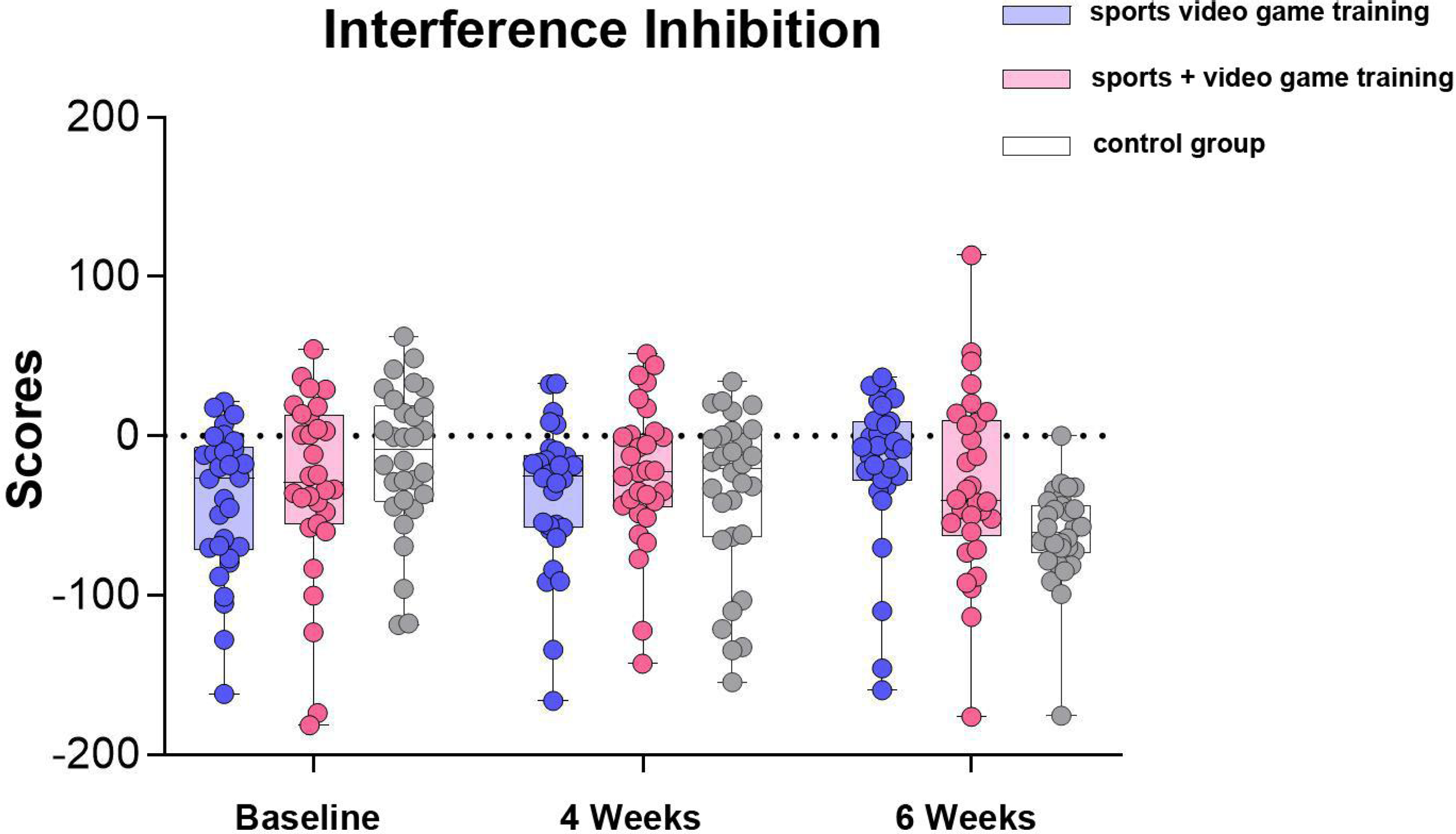
Figure S1. Trends in Interference Inhibition Scores Before and After Training Across Three Experimental Groups.

Figure S2. Trends in Response Inhibition Scores Before and After Training Across Three Experimental Groups.
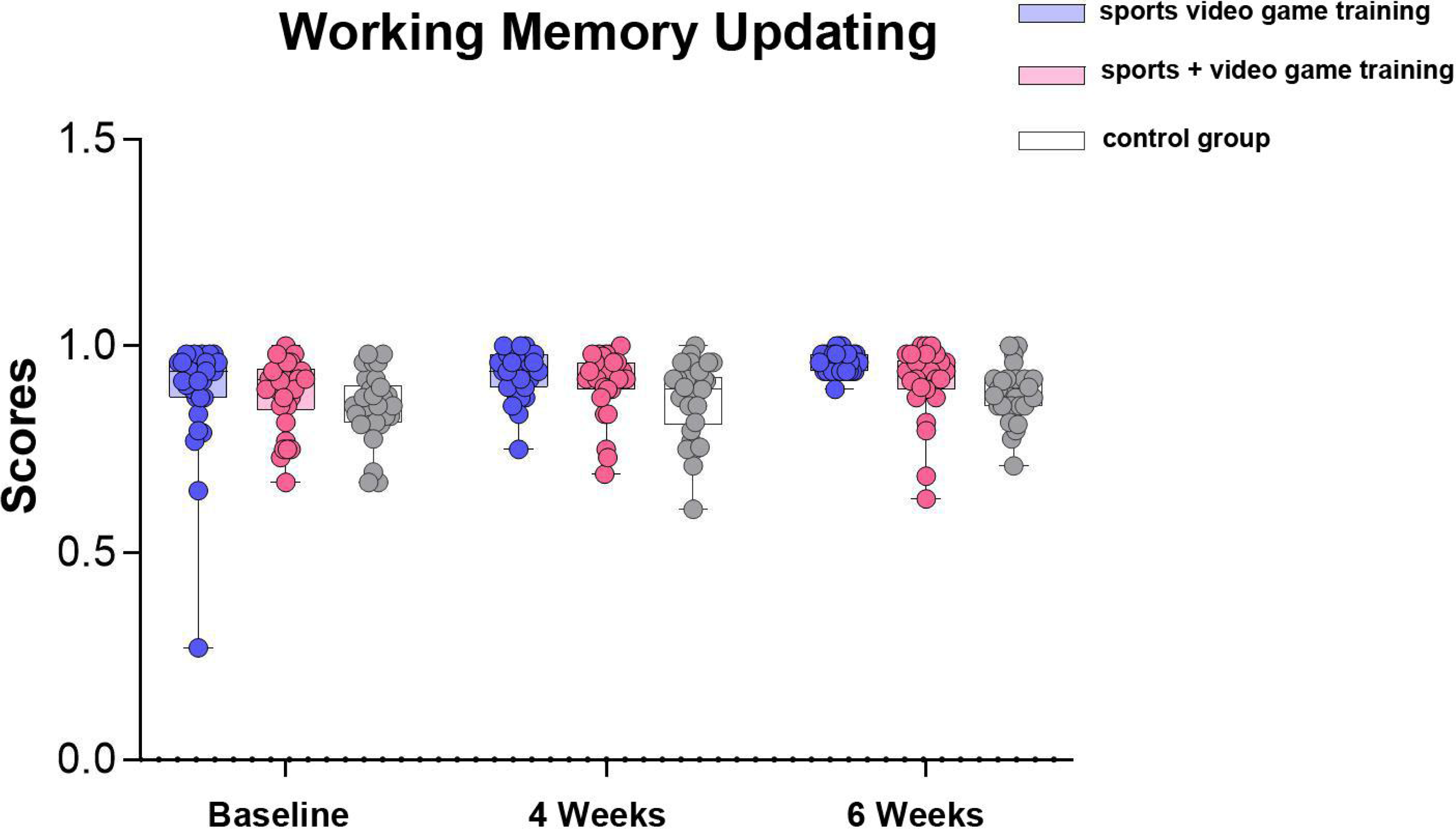
Figure S3. Trends in Working Memory Updating Scores Before and After Training Across Three Experimental Groups.
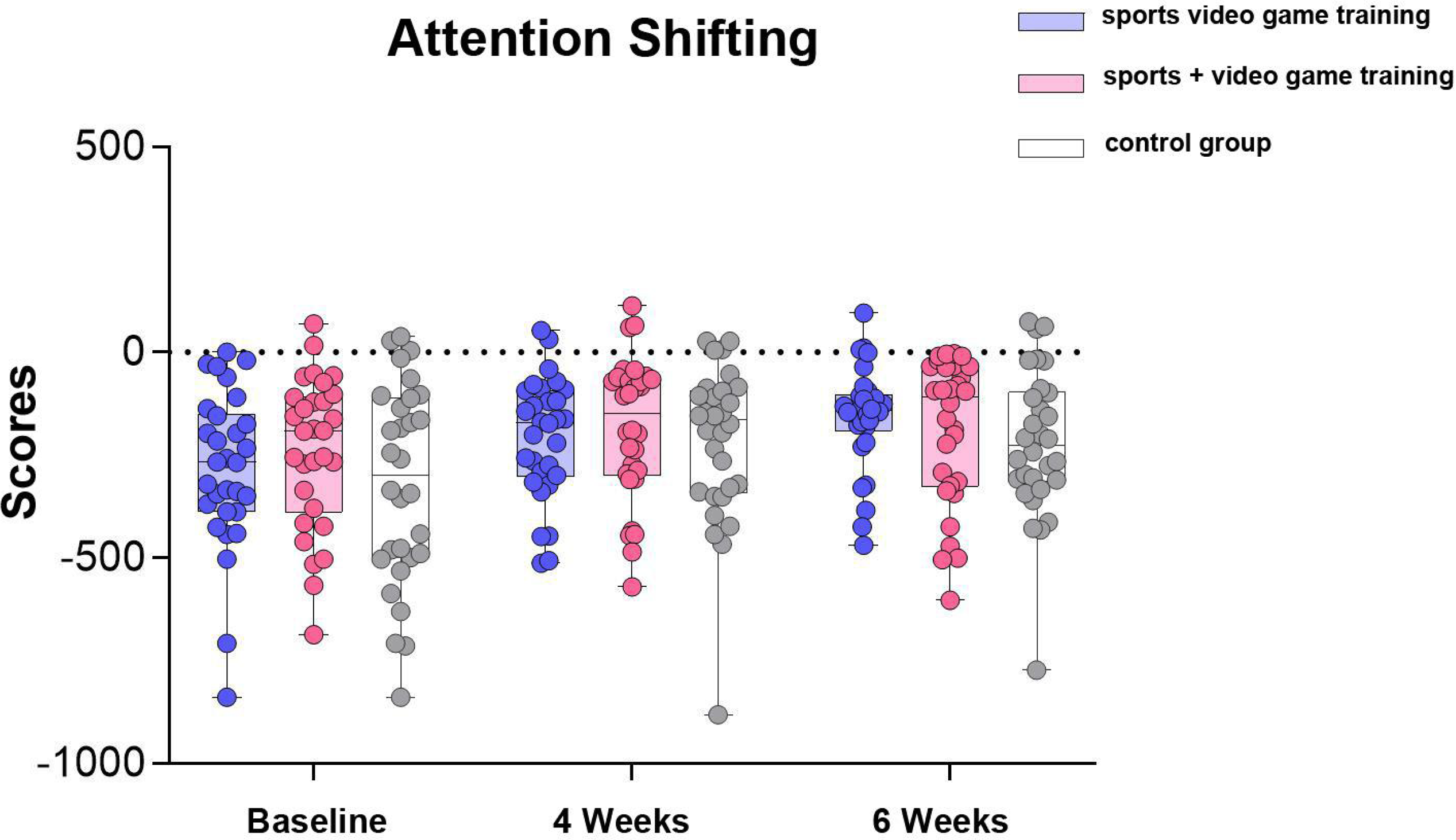
Figure S4. rends in Attention Shifting Scores Before and After Training Across Three Experimental Groups.
| Variable | Sports Video Game Training Group | Sports + Video Game Training Group | Pure Sports Training Group | Pure Video Game Training Group | Control Group | F (4, 145) | p | η2p | |||||
|---|---|---|---|---|---|---|---|---|---|---|---|---|---|
| (n = 30) | (n = 30) | (n = 30) | (n = 30) | (n = 30) | |||||||||
| M | SD | M | SD | M | SD | M | SD | M | SD | ||||
| Interference Inhibition | |||||||||||||
| Stroop Interference Effect (ms) | -21.57 | 55.96 | -28.66 | 51.66 | -25.24 | 41.97 | -18.42 | 41.78 | 9.67 | 71.12 | 0.55 | 0.70 | 0.02 |
| Response Inhibition | |||||||||||||
| No-go Accuracy | 0.82 | 0.12 | 0.78 | 0.18 | 0.81 | 0.12 | 0.79 | 0.12 | 0.80 | 0.17 | 0.25 | 0.91 | 0.01 |
| Working Memory Updating | |||||||||||||
| Average Accuracy | 0.52 | 0.13 | 0.56 | 0.15 | 0.53 | 0.07 | 0.54 | 0.13 | 0.47 | 0.14 | 1.70 | 1.15 | 0.05 |
| Attention Shifting | |||||||||||||
| Switch Cost (ms) | -191.70 | 262.41 | -143.03 | 219.53 | -149.85 | 225.32 | -155.26 | 165.43 | 104.10 | 151.42 | 0.67 | 0.61 | 0.02 |
Table S3 Descriptive Statistics and ANOVA Results for Baseline Levels of Variables in Children (Experiment 1)
| Variable | Sports Video Game Training Group | Sports + Video Game Training Group | Pure Sports Training Group | Pure Video Game Training Group | Control Group | F (4, 145) | p | η2p | |||||
|---|---|---|---|---|---|---|---|---|---|---|---|---|---|
| (n = 30) | (n = 30) | (n = 30) | (n = 30) | (n = 30) | |||||||||
| M | SD | M | SD | M | SD | M | SD | M | SD | ||||
| Interference Inhibition | |||||||||||||
| Stroop Interference Effect (ms) | -21.57 | 55.96 | -28.66 | 51.66 | -25.24 | 41.97 | -18.42 | 41.78 | 9.67 | 71.12 | 0.55 | 0.70 | 0.02 |
| Response Inhibition | |||||||||||||
| No-go Accuracy | 0.82 | 0.12 | 0.78 | 0.18 | 0.81 | 0.12 | 0.79 | 0.12 | 0.80 | 0.17 | 0.25 | 0.91 | 0.01 |
| Working Memory Updating | |||||||||||||
| Average Accuracy | 0.52 | 0.13 | 0.56 | 0.15 | 0.53 | 0.07 | 0.54 | 0.13 | 0.47 | 0.14 | 1.70 | 1.15 | 0.05 |
| Attention Shifting | |||||||||||||
| Switch Cost (ms) | -191.70 | 262.41 | -143.03 | 219.53 | -149.85 | 225.32 | -155.26 | 165.43 | 104.10 | 151.42 | 0.67 | 0.61 | 0.02 |
| Variable | Task Indicator | Group | T0 (M ± SD) | T1 (M ± SD) | T2 (M ± SD) |
|---|---|---|---|---|---|
| Interference Inhibition | Stroop Interference Effect (ms) | Sports video game training group | -21.57 ± 55.96 | -8.45 ± 75.47 | -4.18 ± 52.15 |
| Sports + video game training group | -28.66 ± 51.66 | -33.90 ± 60.00 | -4.21 ± 85.38 | ||
| Pure sports training group | -25.24 ± 41.97 | -25.61 ± 53.90 | -20.08 ± 78.95 | ||
| Pure video game training group | -18.42 ± 41.78 | -15.64 ± 77.01 | -8.63 ± 40.86 | ||
| Control group | -9.67 ± 71.12 | -21.85 ± 62.08 | -7.92 ± 63.30 | ||
| Response Inhibition | No-go Accuracy | Sports video game training group | 0.82 ± 0.12 | 0.90 ± 0.08 | 0.93 ± 0.03 |
| Sports + video game training group | 0.78 ± 0.18 | 0.87 ± 0.11 | 0.84 ± 0.18 | ||
| Pure sports training group | 0.81 ± 0.12 | 0.83 ± 0.10 | 0.83 ± 0.10 | ||
| Pure video game training group | 0.79 ± 0.12 | 0.83 ± 0.08 | 0.83 ± 0.08 | ||
| Control group | 0.80 ± 0.17 | 0.84 ± 0.14 | 0.84 ± 0.14 | ||
| Working Memory Updating | Average Accuracy | Sports video game training group | 0.52 ± 0.13 | 0.70 ± 0.20 | 0.78 ± 0.16 |
| Sports + video game training group | 0.55 ± 0.15 | 0.69 ± 0.18 | 0.62 ± 0.14 | ||
| Pure sports training group | 0.53 ± 0.07 | 0.57 ± 0.10 | 0.59 ± 0.11 | ||
| Pure video game training group | 0.54 ± 0.13 | 0.63 ± 0.17 | 0.66 ± 0.18 | ||
| Control group | 0.47 ± 0.14 | 0.56 ± 0.18 | 0.60 ± 0.17 | ||
| Attention Shifting | Switch Cost (ms) | Sports video game training group | -191.70 ± 262.41 | -139.67 ± 164.56 | -66.31 ± 100.19 |
| Sports + video game training group | -143.03 ± 219.52 | -141.95 ± 164.58 | -28.31 ± 143.86 | ||
| Pure sports training group | -149.84 ± 225.32 | -131.89 ± 171.60 | -96.58 ± 190.30 | ||
| Pure video game training group | -155.26 ± 165.43 | -146.52 ± 207.96 | -75.27 ± 98.71 | ||
| Control group | -104.10 ± 151.42 | -65.71 ± 127.21 | -41.84 ± 140.20 |
Table S4 Descriptive Statistics for Children's Performance in Executive Function Components Before and After Intervention Across Groups (Experiment 1)
| Variable | Task Indicator | Group | T0 (M ± SD) | T1 (M ± SD) | T2 (M ± SD) |
|---|---|---|---|---|---|
| Interference Inhibition | Stroop Interference Effect (ms) | Sports video game training group | -21.57 ± 55.96 | -8.45 ± 75.47 | -4.18 ± 52.15 |
| Sports + video game training group | -28.66 ± 51.66 | -33.90 ± 60.00 | -4.21 ± 85.38 | ||
| Pure sports training group | -25.24 ± 41.97 | -25.61 ± 53.90 | -20.08 ± 78.95 | ||
| Pure video game training group | -18.42 ± 41.78 | -15.64 ± 77.01 | -8.63 ± 40.86 | ||
| Control group | -9.67 ± 71.12 | -21.85 ± 62.08 | -7.92 ± 63.30 | ||
| Response Inhibition | No-go Accuracy | Sports video game training group | 0.82 ± 0.12 | 0.90 ± 0.08 | 0.93 ± 0.03 |
| Sports + video game training group | 0.78 ± 0.18 | 0.87 ± 0.11 | 0.84 ± 0.18 | ||
| Pure sports training group | 0.81 ± 0.12 | 0.83 ± 0.10 | 0.83 ± 0.10 | ||
| Pure video game training group | 0.79 ± 0.12 | 0.83 ± 0.08 | 0.83 ± 0.08 | ||
| Control group | 0.80 ± 0.17 | 0.84 ± 0.14 | 0.84 ± 0.14 | ||
| Working Memory Updating | Average Accuracy | Sports video game training group | 0.52 ± 0.13 | 0.70 ± 0.20 | 0.78 ± 0.16 |
| Sports + video game training group | 0.55 ± 0.15 | 0.69 ± 0.18 | 0.62 ± 0.14 | ||
| Pure sports training group | 0.53 ± 0.07 | 0.57 ± 0.10 | 0.59 ± 0.11 | ||
| Pure video game training group | 0.54 ± 0.13 | 0.63 ± 0.17 | 0.66 ± 0.18 | ||
| Control group | 0.47 ± 0.14 | 0.56 ± 0.18 | 0.60 ± 0.17 | ||
| Attention Shifting | Switch Cost (ms) | Sports video game training group | -191.70 ± 262.41 | -139.67 ± 164.56 | -66.31 ± 100.19 |
| Sports + video game training group | -143.03 ± 219.52 | -141.95 ± 164.58 | -28.31 ± 143.86 | ||
| Pure sports training group | -149.84 ± 225.32 | -131.89 ± 171.60 | -96.58 ± 190.30 | ||
| Pure video game training group | -155.26 ± 165.43 | -146.52 ± 207.96 | -75.27 ± 98.71 | ||
| Control group | -104.10 ± 151.42 | -65.71 ± 127.21 | -41.84 ± 140.20 |
| Group | Sport Intensity | |
|---|---|---|
| M | SD | |
| High Sport Intensity + High Cognitive Engagement Group | 137.41 | 1.46 |
| Low Sport Intensity + High Cognitive Engagement Group | 92.28 | 1.45 |
| High Sport Intensity + Low Cognitive Engagement Group | 142.46 | 1.44 |
| Low Sport Intensity + Low Cognitive Engagement Group | 97.34 | 1.41 |
| P | <0.001*** | |
Table S5 Supplementary Analysis of Manipulation Validity for Sport Intensity in Experiment 2 (Polar RS400 Average Heart Rate)
| Group | Sport Intensity | |
|---|---|---|
| M | SD | |
| High Sport Intensity + High Cognitive Engagement Group | 137.41 | 1.46 |
| Low Sport Intensity + High Cognitive Engagement Group | 92.28 | 1.45 |
| High Sport Intensity + Low Cognitive Engagement Group | 142.46 | 1.44 |
| Low Sport Intensity + Low Cognitive Engagement Group | 97.34 | 1.41 |
| P | <0.001*** | |
| Variable | High Sport Intensity + High Cognitive Engagement Group | Low Sport Intensity + High Cognitive Engagement Group | High Sport Intensity + Low Cognitive Engagement Group | Low Sport Intensity + Low Cognitive Engagement Group | F(3, 116) | p | η2p | ||||
|---|---|---|---|---|---|---|---|---|---|---|---|
| (n = 30) | (n = 30) | (n = 30) | (n = 30) | ||||||||
| M | SD | M | SD | M | SD | M | SD | ||||
| Response Inhibition | |||||||||||
| No-go Accuracy | 0.76 | 0.09 | 0.73 | 0.07 | 0.74 | 0.06 | 0.72 | 0.08 | 1.77 | 0.16 | 0.04 |
| Working Memory Updating | |||||||||||
| Average Accuracy | 0.54 | 0.05 | 0.53 | 0.07 | 0.52 | 0.06 | 0.56 | 0.06 | 2.65 | 0.05 | 0.06 |
Table S6 Descriptive Statistics and ANOVA Results for Baseline Levels of Variables in Children (Experiment 2)
| Variable | High Sport Intensity + High Cognitive Engagement Group | Low Sport Intensity + High Cognitive Engagement Group | High Sport Intensity + Low Cognitive Engagement Group | Low Sport Intensity + Low Cognitive Engagement Group | F(3, 116) | p | η2p | ||||
|---|---|---|---|---|---|---|---|---|---|---|---|
| (n = 30) | (n = 30) | (n = 30) | (n = 30) | ||||||||
| M | SD | M | SD | M | SD | M | SD | ||||
| Response Inhibition | |||||||||||
| No-go Accuracy | 0.76 | 0.09 | 0.73 | 0.07 | 0.74 | 0.06 | 0.72 | 0.08 | 1.77 | 0.16 | 0.04 |
| Working Memory Updating | |||||||||||
| Average Accuracy | 0.54 | 0.05 | 0.53 | 0.07 | 0.52 | 0.06 | 0.56 | 0.06 | 2.65 | 0.05 | 0.06 |
| Variable | Task Indicator | Group | T0 (M ± SD) | T1 (M ± SD) | T2 (M ± SD) |
|---|---|---|---|---|---|
| Response Inhibition | No-go Accuracy | High Sport Intensity + High Cognitive Engagement Group | 0.76 ± 0.08 | 0.90 ± 0.03 | 0.92 ± 0.04 |
| Low Sport Intensity + High Cognitive Engagement Group | 0.73 ± 0.07 | 0.87 ± 0.05 | 0.88 ± 0.04 | ||
| High Sport Intensity + Low Cognitive Engagement Group | 0.74 ± 0.06 | 0.79 ± 0.14 | 0.80 ± 0.11 | ||
| Low Sport Intensity + Low Cognitive Engagement Group | 0.72 ± 0.08 | 0.73 ± 0.17 | 0.72 ± 0.18 | ||
| Working Memory Updating | Average Accuracy | High Sport Intensity + High Cognitive Engagement Group | 0.54 ± 0.05 | 0.79 ± 0.07 | 0.82 ± 0.05 |
| Low Sport Intensity + High Cognitive Engagement Group | 0.53 ± 0.07 | 0.72 ± 0.09 | 0.75 ± 0.04 | ||
| High Sport Intensity + Low Cognitive Engagement Group | 0.52 ± 0.06 | 0.67 ± 0.07 | 0.70 ± 0.07 | ||
| Low Sport Intensity + Low Cognitive Engagement Group | 0.56 ± 0.06 | 0.60 ± 0.09 | 0.62 ± 0.04 |
Table S7 Descriptive Statistics for Children's Performance in Response Inhibition and Working Memory Updating Before and After Intervention Across Groups (Experiment 2)
| Variable | Task Indicator | Group | T0 (M ± SD) | T1 (M ± SD) | T2 (M ± SD) |
|---|---|---|---|---|---|
| Response Inhibition | No-go Accuracy | High Sport Intensity + High Cognitive Engagement Group | 0.76 ± 0.08 | 0.90 ± 0.03 | 0.92 ± 0.04 |
| Low Sport Intensity + High Cognitive Engagement Group | 0.73 ± 0.07 | 0.87 ± 0.05 | 0.88 ± 0.04 | ||
| High Sport Intensity + Low Cognitive Engagement Group | 0.74 ± 0.06 | 0.79 ± 0.14 | 0.80 ± 0.11 | ||
| Low Sport Intensity + Low Cognitive Engagement Group | 0.72 ± 0.08 | 0.73 ± 0.17 | 0.72 ± 0.18 | ||
| Working Memory Updating | Average Accuracy | High Sport Intensity + High Cognitive Engagement Group | 0.54 ± 0.05 | 0.79 ± 0.07 | 0.82 ± 0.05 |
| Low Sport Intensity + High Cognitive Engagement Group | 0.53 ± 0.07 | 0.72 ± 0.09 | 0.75 ± 0.04 | ||
| High Sport Intensity + Low Cognitive Engagement Group | 0.52 ± 0.06 | 0.67 ± 0.07 | 0.70 ± 0.07 | ||
| Low Sport Intensity + Low Cognitive Engagement Group | 0.56 ± 0.06 | 0.60 ± 0.09 | 0.62 ± 0.04 |
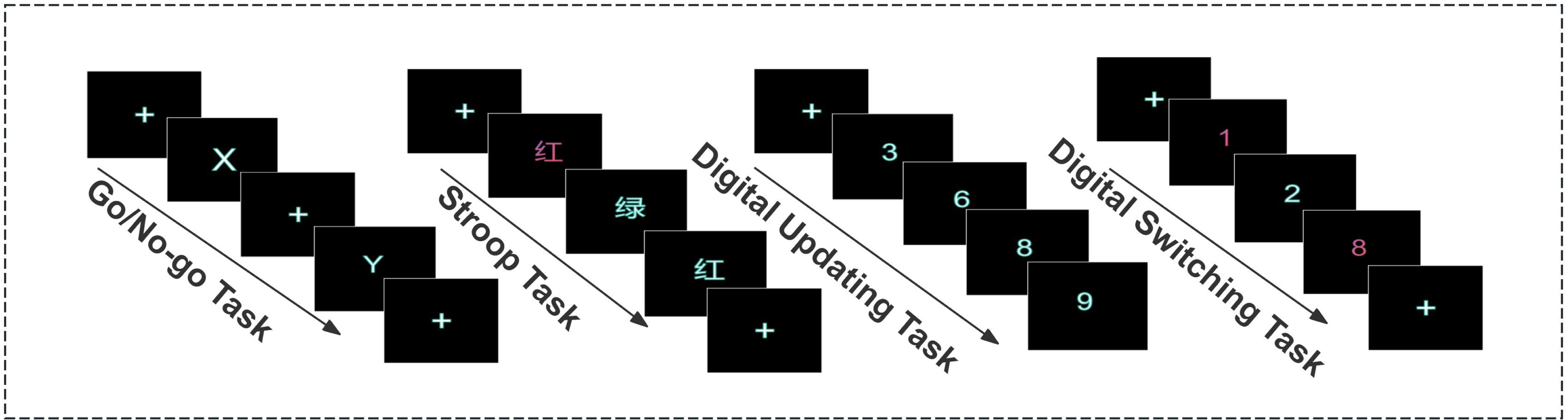
Figure S5. Examples of Experimental Tasks for Pre- and Post-test Executive Function Assessment.
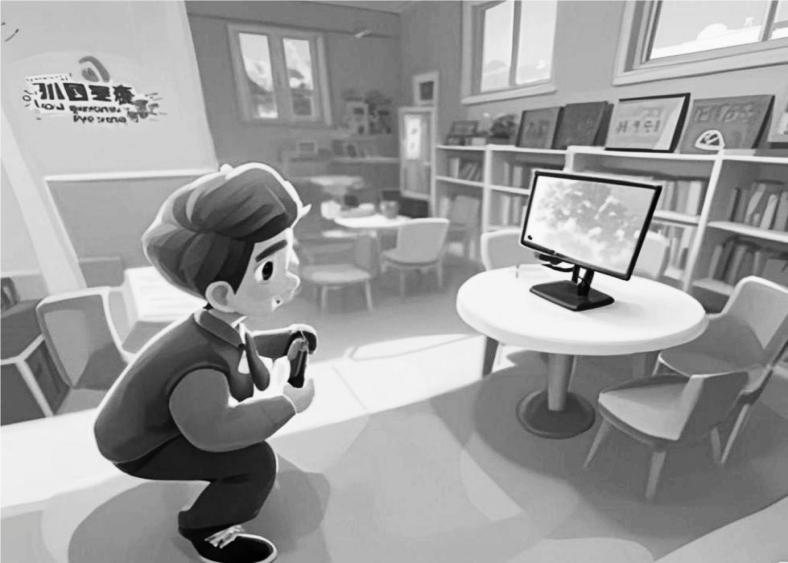
Figure S6. Specific Intervention Methods for the Sports Video Game Training Group (Experiment 1). Note: Due to ethical considerations, all real intervention photos in this study were processed using AI anime filters. The same applies below.
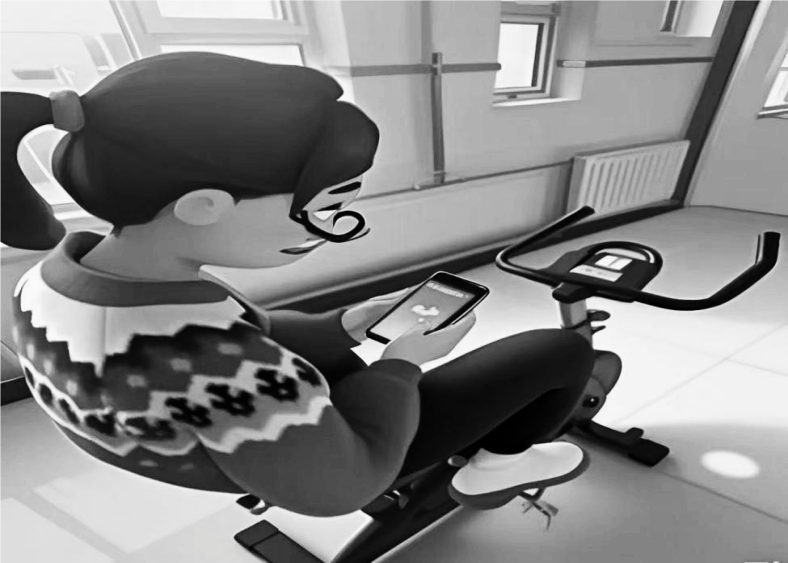
Figure S7. Specific Intervention Methods for the Sports + Video Game Training Group (Experiment 1).
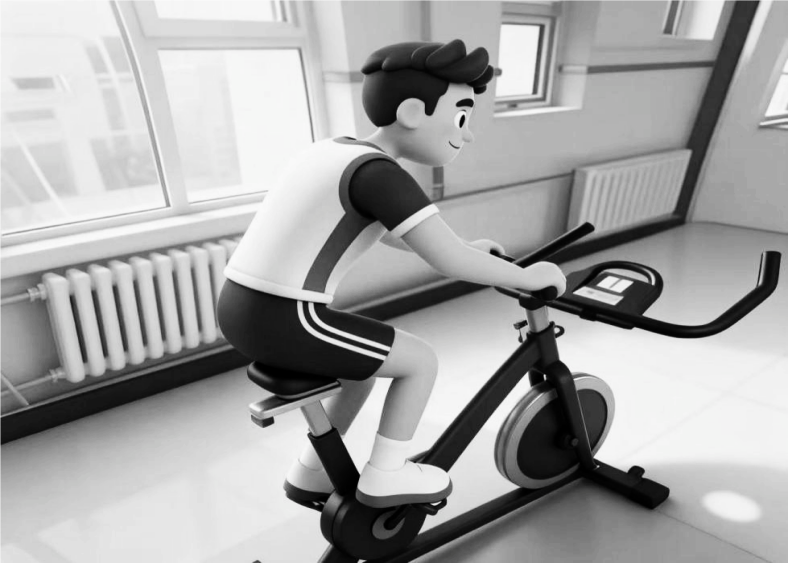
Figure S8. Specific Intervention Methods for the Pure Exercise Training Group (Experiment 1).
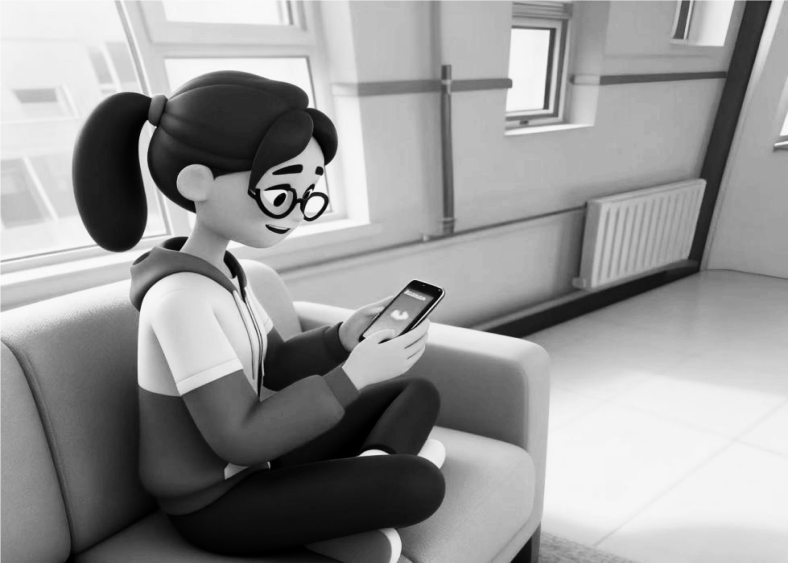
Figure S9. Specific Intervention Methods for the Pure Video Game Training Group (Experiment 1).

Figure S10. Specific Intervention Methods for the Control Group (Experiment 1).
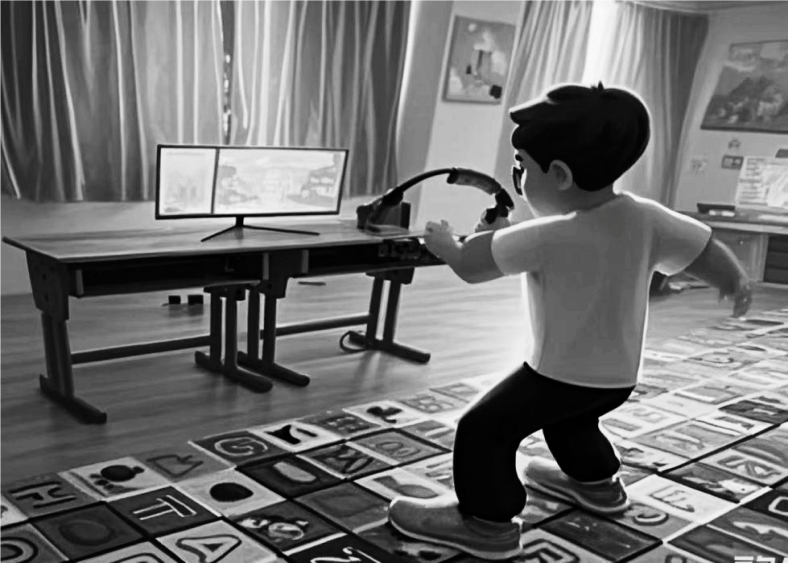
Figure S11. Specific Intervention Methods for the High Sport Intensity + High Cognitive Engagement Group (Experiment 2).
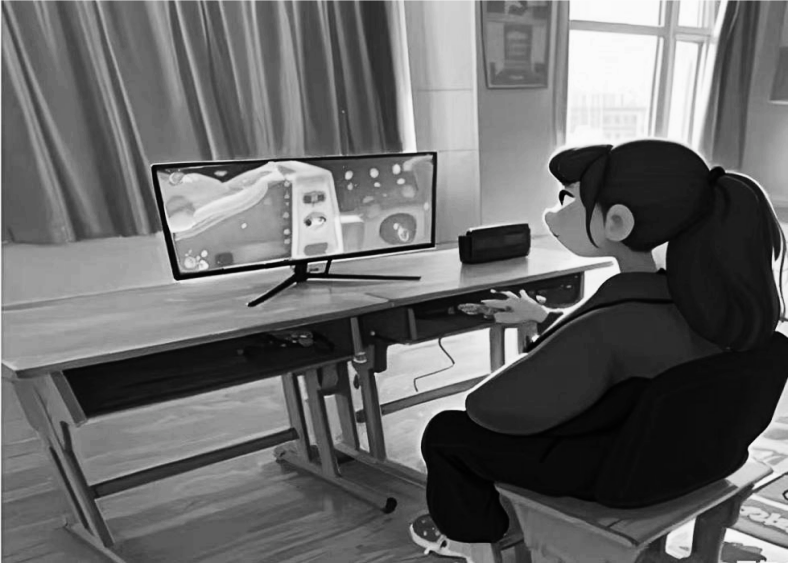
Figure S12. Specific Intervention Methods for the Low Sport Intensity + High Cognitive Engagement Group (Experiment 2).
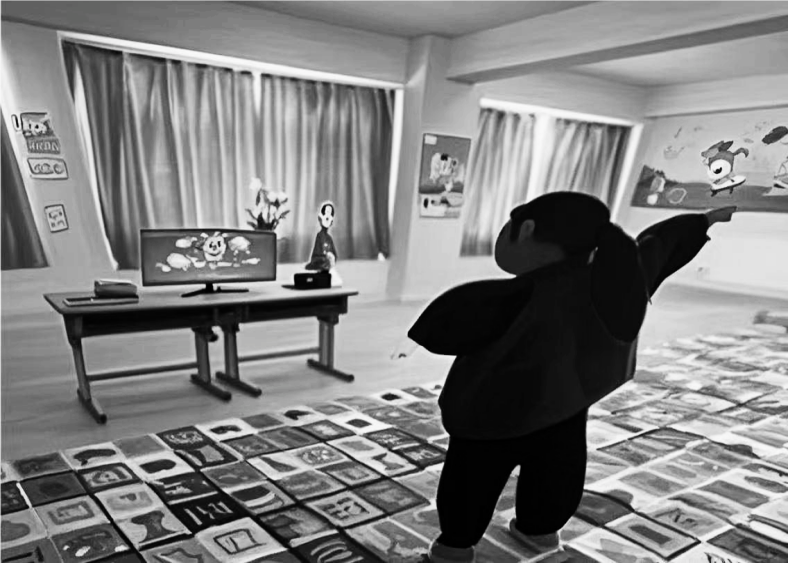
Figure S13. Specific Intervention Methods for the High Sport Intensity + Low Cognitive Engagement Group (Experiment 2).
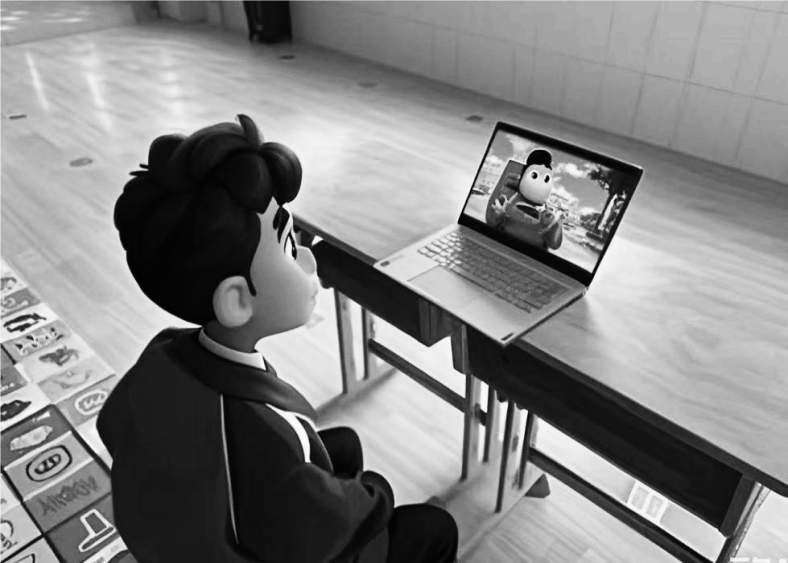
Figure S14. Specific Intervention Methods for the Low Sport Intensity + Low Cognitive Engagement Group (Experiment 2).
| [1] | Adcock, M., Fankhauser, M., Post, J., Lutz, K., Zizlsperger, L., Luft, A. R., … de Bruin, E. D. (2020). Effects of an in-home multicomponent exergame training on physical functions, cognition, and brain volume of older adults: A randomized controlled trial. Frontiers in Medicine, 6(1), 321. |
| [2] |
Anderson, P. (2002). Assessment and development of executive function (EF) during childhood. Child Neuropsychology, 8(2), 71-82.
doi: 10.1076/chin.8.2.71.8724 pmid: 12638061 |
| [3] | Anzeneder, S., Benzing, V., & Schmidt, M. (2023). Designed acute physical activity to benefit primary school children’s cognition: Effects of cognitive challenge, bout duration and positive affect. Current Issues in Sport Science, 8(2), 25. |
| [4] |
Aron, A. R., Robbins, T. W., & Poldrack, R. A. (2004). Inhibition and the right inferior frontal cortex. Trends in Cognitive Sciences, 8(4), 170-177.
doi: 10.1016/j.tics.2004.02.010 pmid: 15050513 |
| [5] |
Audiffren, M., Tomporowski, P. D., & Zagrodnik, J. (2008). Acute aerobic exercise and information processing: Energizing motor processes during a choice reaction time task. Acta psychologica, 129(3), 410-419.
doi: 10.1016/j.actpsy.2008.09.006 pmid: 18930445 |
| [6] |
Bahar-Fuchs, A., Webb, S., Bartsch, L., Clare, L., Rebok, G., Cherbuin, N., & Anstey, K. J. (2017). Tailored and adaptive computerized cognitive training in older adults at risk for dementia: A randomized controlled trial. Journal of Alzheimer’s Disease, 60(3), 889-911.
doi: 10.3233/JAD-170404 URL |
| [7] |
Barsalou, L. W. (2008). Grounded cognition. Annual Review of Psychology, 59, 617-645.
pmid: 17705682 |
| [8] | Benzing, V., Heinks, T., Eggenberger, N., & Schmidt, M. (2016). Acute cognitively engaging exergame-based physical activity enhances executive functions in adolescents. PloS one, 11(12), e0167501. |
| [9] | Benzing, V., & Schmidt, M. (2017). Cognitively and physically demanding exergaming to improve executive functions of children with attention deficit hyperactivity disorder: A randomised clinical trial. BMC Pediatrics, 17(1), 8. |
| [10] | Benzing, V., & Schmidt, M. (2018). Exergaming for children and adolescents: Strengths, weaknesses, opportunities and threats. Journal of Clinical Medicine, 7(11), 422. |
| [11] | Benzing, V., & Schmidt, M. (2019). The effect of exergaming on executive functions in children with ADHD: A randomized clinical trial. Scandinavian Journal of Medicine & Science in Sports, 29(8), 1243-1253. |
| [12] |
Best, J. R. (2010). Effects of physical activity on children’s executive function: Contributions of experimental research on aerobic exercise. Developmental Review, 30(4), 331-351.
doi: 10.1016/j.dr.2010.08.001 URL |
| [13] |
Best, J. R. (2012). Exergaming immediately enhances children's executive function. Developmental Psychology, 48(5), 1501-1510.
doi: 10.1037/a0026648 pmid: 22148945 |
| [14] |
Blakey, E., Matthews, D., Cragg, L., Buck, J., Cameron, D., Higgins, B.,... Carroll, D. J. (2020). The role of executive functions in socioeconomic attainment gaps: Results from a randomized controlled trial. Child Development, 91(5), 1594-1614.
doi: 10.1111/cdev.13358 URL |
| [15] | Borg, G. (1982). Psychophysical bases of perceived exertion. Medicine & Science in Sports & Exercise, 14(5), 377-381. |
| [16] | Castellote-Caballero, Y., Carcelén Fraile, M. D. C., Aibar-Almazán, A., Afanador-Restrepo, D. F., González-Martín, A. M. (2024). Effect of combined physical-cognitive training on the functional and cognitive capacity of older people with mild cognitive impairment: A randomized controlled trial. BMC Medicine, 22(1), 281. |
| [17] |
Chang, E. C. H., Chu, C. H., Karageorghis, C. I., Wang, C. C., Tsai, J., H. C., Wang, Y. S., & Chang, Y. K. (2017). Relationship between mode of sport training and general cognitive performance. Journal of Sport and Health Science, 6(1), 89-95.
doi: 10.1016/j.jshs.2015.07.007 URL |
| [18] |
Chartier, C., Godard, J., Durand, S., Humeau-Heurtier, A., Menetrier, E., Allain, P., & Besnard, J. (2024). Combinations of physical and cognitive training for subcortical neurodegenerative diseases with physical, cognitive and behavioral symptoms: A systematic review. Neurological Sciences, 45(12), 5571-5589. https://doi.org/10.1007/s10072-024-07808-x
doi: 10.1007/s10072-024-07808-x URL pmid: 39424648 |
| [19] | Contreras-Osorio, F., Campos-Jara, C., Martínez-Salazar, C., Chirosa-Ríos, L., & Martínez-García, D. (2021). Effects of sport-based interventions on children’s executive function: A systematic review and meta-analysis. Brain sciences, 11(6), 755. |
| [20] | Contreras-Osorio, F., Guzmán-Guzmán, I. P., Cerda-Vega, E., Chirosa-Ríos, L., Ramírez-Campillo, R., & Campos-Jara, C. (2022). Effects of the type of sports practice on the executive functions of schoolchildren. International Journal of Environmental Research and Public Health, 19(7), 3886. |
| [21] |
Cowan, N. (2016). Working memory maturation: Can we get at the essence of cognitive growth? Perspectives on Psychological Science, 11(2), 239-264.
doi: 10.1177/1745691615621279 pmid: 26993277 |
| [22] |
Cumming, M. M., Smith, S. W., & O'Brien, K. (2019). Perceived stress, executive function, perceived stress regulation, and behavioral outcomes of adolescents with and without significant behavior problems. Psychology in the Schools, 56(9), 1359-1380.
doi: 10.1002/pits.v56.9 URL |
| [23] |
Davis, C. L., Tomporowski, P. D., McDowell, J. E., Austin, B. P., Miller, P. H., Yanasak, N. E.,... Naglieri, J. A. (2011). Exercise improves executive function and achievement and alters brain activation in overweight children: A randomized, controlled trial. Health Psychology, 30(1), 91-98.
doi: 10.1037/a0021766 pmid: 21299297 |
| [24] |
Diamond, A. (2013). Executive functions. Annual Review of Psychology, 64, 135-168.
doi: 10.1146/annurev-psych-113011-143750 pmid: 23020641 |
| [25] |
Diamond, A., & Lee, K. (2011). Interventions shown to aid executive function development in children 4 to 12 years old. Science, 333(6045), 959-964.
doi: 10.1126/science.1204529 pmid: 21852486 |
| [26] |
Diamond, A., & Ling, D. S. (2016). Conclusions about interventions, programs, and approaches for improving executive functions that appear justified and those that, despite much hype, do not. Developmental Cognitive Neuroscience, 18, 34-48.
doi: S1878-9293(15)30051-7 pmid: 26749076 |
| [27] |
Dishman, R. K., Berthoud, H. R., Booth, F. W., Cotman, C. W., Edgerton, V. R., Fleshner, M. R.,... Zigmond, M. J. (2006). Neurobiology of exercise. Obesity, 14(3), 345-356.
doi: 10.1038/oby.2006.46 pmid: 16648603 |
| [28] | Durston, S., Thomas, K. M., Yang, Y., Uluğ, A. M., Zimmerman, R. D., & Casey, B. J. (2002). A neural basis for the development of inhibitory control. Developmental Science, 5(4), F9-F16. |
| [29] | Eggenberger, P., Schumacher, V., Angst, M., Theill, N., & de Bruin, E. D. (2015). Does multicomponent physical exercise with simultaneous cognitive training boost cognitive performance in older adults? A 6-month randomized controlled trial with a 1-year follow-up. Clinical Intervetional Aging, 10, 1335-1349. |
| [30] | Egger, F., Benzing, V., Conzelmann, A., & Schmidt, M. (2019). Boost your brain, while having a break! The effects of long-term cognitively engaging physical activity breaks on children's executive functions and academic achievement. PLOS ONE, 14(3), e0212482. |
| [31] |
Fabel, K., Wolf, S., Ehninger, D., Babu, H., Leal-Galicia, P., & Kempermann, G. (2009). Additive effects of physical exercise and environmental enrichment on adult hippocampal neurogenesis in mice. Frontiers in Neuroscience, 3, 50.
doi: 10.3389/neuro.22.002.2009 pmid: 20582277 |
| [32] | Festa, F., Medori, S., & Macrì, M. (2023). Move your body, boost your brain: The positive impact of physical activity on cognition across all age groups. Biomedicines, 11(6), 1765. |
| [33] |
Flynn, R. M., & Richert, R. A. (2018). Cognitive, not physical, engagement in video gaming influences executive functioning. Journal of Cognition and Development, 19(1), 1-20.
doi: 10.1080/15248372.2017.1419246 URL |
| [34] |
Foglia, L., & Wilson, R. A. (2013). Embodied cognition. Wiley Interdisciplinary Reviews: Cognitive Science, 4(3), 319-325.
doi: 10.1002/wcs.v4.3 URL |
| [35] | Formenti, D., Trecroci, A., Duca, M., Cavaggioni, L., D’Angelo, F., Passi, A.,... Alberti, G. (2021). Differences in inhibitory control and motor fitness in children practicing open and closed skill sports. Scientific Reports, 11(1), 4033. |
| [36] |
Gai, X., Xu, J., Yan, Y., Wang, Y., & Xie, X. (2021). Exergame can improve children’s executive function: The role of physical intensity and cognitive engagement. Acta Psychologica Sinica, 53(5), 505-514.
doi: 10.3724/SP.J.1041.2021.00505 |
| [37] | Gates, N. J., Rutjes, A. W., Di Nisio, M., Karim, S., Chong, L.-Y., March, E., … Vernooij, R. W. (2019). Computerised cognitive training for maintaining cognitive function in cognitively healthy people in late life. Cohrane Database of Systematic Reviews, 3(3), CD012277. |
| [38] | George, A. S., George, A. H., & Baskar, T. (2023). Neuro-gaming: How video games shape the brain's cognitive landscape. Partners Universal International Research Journal, 2(4), 128-137. |
| [39] |
Glenberg, A. M. (2010). Embodiment as a unifying perspective for psychology. Wiley Interdisciplinary Reviews: Cognitive Science, 1(4), 586-596.
doi: 10.1002/wcs.v1:4 URL |
| [40] |
Gu, Q., Zou, L., Loprinzi, P. D., Quan, M., & Huang, T. (2019). Effects of open versus closed skill exercise on cognitive function: A systematic review. Frontiers in Psychology, 10, 1707.
doi: 10.3389/fpsyg.2019.01707 pmid: 31507472 |
| [41] | Herold, F., Hamacher, D., Schega, L., & Müller, N. G. (2018). Thinking while moving or moving while thinking-concepts of motor-cognitive training for cognitive performance enhancement. Frontiers in Aging Neuroscience, 10(2), 228. |
| [42] |
Hillman, C. H., Erickson, K. I., & Kramer, A. F. (2008). Be smart, exercise your heart: Exercise effects on brain and cognition. Nature Reviews Neuroscience, 9(1), 58-65.
doi: 10.1038/nrn2298 pmid: 18094706 |
| [43] |
Hillman, C. H., Pontifex, M. B., Raine, L. B., Castelli, D. M., Hall, E. E., & Kramer, A. F. (2009). The effect of acute treadmill walking on cognitive control and academic achievement in preadolescent children. Neuroscience, 159(3), 1044-1054.
doi: 10.1016/j.neuroscience.2009.01.057 pmid: 19356688 |
| [44] |
Hötting, K., & Röder, B. (2013). Beneficial effects of physical exercise on neuroplasticity and cognition. Neuroscience & Biobehavioral Reviews, 37(9), 2243-2257.
doi: 10.1016/j.neubiorev.2013.04.005 URL |
| [45] | Huang, K. T. (2020). Exergaming executive functions: An immersive virtual reality-based cognitive training for adults aged 50 and older. Cyberpsychology, Behavior, and Social Networking, 23( 3), 143-149. |
| [46] | Huber, S. K., Knols, R. H., Held, J. P. O., Betschart, M., & de Bruin, E. D. (2024). PEMOCS: Evaluating the effects of a concept-guided, personalised, motor-cognitive exergame training on cognitive functions and gait in chronic Stroke—Study protocol for a randomised controlled trial. Trials, 25(1), 451. |
| [47] |
Irak, M., & Soylu, C. (2023). Effects of excessive video game playing on event-related brain potentials during working memory. Current Psychology, 42(3), 1881-1895.
doi: 10.1007/s12144-021-01573-2 |
| [48] |
Ishihara, T., Sugasawa, S., Matsuda, Y., & Mizuno, M. (2017). Relationship of tennis play to executive function in children and adolescents. European Journal of Sport Science, 17(8), 1074-1083.
doi: 10.1080/17461391.2017.1334831 pmid: 28609253 |
| [49] |
Ji, Z., Feng, T., & Wang, H. (2020). The effects of 12-week physical exercise tapping high-level cognitive functions. Advances in Cognitive Psychology, 16(1), 59-66.
doi: 10.5709/acp-0284-5 pmid: 32676132 |
| [50] |
Kim, G. Y., Han, M. R., & Lee, H. G. (2014). Effect of dual-task rehabilitative training on cognitive and motor function of stroke patients. Journal of Physical Therapy Science, 26(1), 1-6.
doi: 10.1589/jpts.26.1 pmid: 24567664 |
| [51] | Klingberg, T., Fernell, E., Olesen, P. J., Johnson, M., Gustafsson, P., Dahlström, K.,... Westerberg, H. (2005). Computerized training of working memory in children with ADHD-a randomized, controlled trial. Journal of the American Academy of Child & Adolescent Psychiatry, 44(2), 177-186. |
| [52] |
Kou, R., Zhang, Z., Zhu, F., Tang, Y., & Li, Z. (2024). Effects of exergaming on executive function and motor ability in children: A systematic review and meta-analysis. PLOS ONE, 19(9), e0309462. https://doi.org/10.1371/journal.pone.0309462
doi: 10.1371/journal.pone.0309462 URL |
| [53] |
Lai, L., Bruce, H., Bherer, L., Lussier, M., & Li, K. (2017). Comparing the transfer effects of simultaneously and sequentially combined aerobic exercise and cognitive training in older adults. Journal of Cognitive Enhancement, 1(4), 478-490.
doi: 10.1007/s41465-017-0052-1 URL |
| [54] |
Lakes, K. D., & Hoyt, W. T. (2004). Promoting self-regulation through school-based martial arts training. Journal of Applied Developmental Psychology, 25(3), 283-302.
doi: 10.1016/j.appdev.2004.04.002 URL |
| [55] |
Lauenroth, A., Ioannidis, A. E., & Teichmann, B. (2016). Influence of combined physical and cognitive training on cognition: A systematic review. BMC Geriatrics, 16, 141.
doi: 10.1186/s12877-016-0315-1 pmid: 27431673 |
| [56] |
Lillard, A. S., & Peterson, J. (2011). The immediate impact of different types of television on young children’s executive function. Pediatrics, 128(4), 644-649.
doi: 10.1542/peds.2010-1919 URL |
| [57] |
Lindenberger, U. (2014). Human cognitive aging: Corriger la fortune? Science, 346(6209), 572-578.
doi: 10.1126/science.1254403 pmid: 25359964 |
| [58] |
Lucia, S., Bianco, V., & Di Russo, F. (2023). Specific effect of a cognitive-motor dual-task training on sport performance and brain processing associated with decision-making in semi-elite basketball players. Psychology of Sport and Exercise, 64, 102302.
doi: 10.1016/j.psychsport.2022.102302 URL |
| [59] |
Ludyga, S., Gerber, M., & Kamijo, K. (2022). Exercise types and working memory components during development. Trends in Cognitive Sciences, 26(3), 191-203.
doi: 10.1016/j.tics.2021.12.004 pmid: 35031211 |
| [60] |
Luna, B., Marek, S., Larsen, B., Tervo-Clemmens, B., & Chahal, R. (2015). An integrative model of the maturation of cognitive control. Annual Review of Neuroscience, 38, 151-170.
doi: 10.1146/annurev-neuro-071714-034054 pmid: 26154978 |
| [61] |
Ma, C., Song, M., & Zhao, X. (2025). The impact of executive functions on English academic performance among Chinese primary school students: A network analysis. Learning and Instruction, 99, 102174.
doi: 10.1016/j.learninstruc.2025.102174 URL |
| [62] |
Ma, C., Wang, Y., Fu, J., & Zhao, X. (2025). The impact of different types of academic stress on subcomponents of executive function in high school students of different grades. Acta Psychologica Sinica, 57(1), 18-35.
doi: 10.3724/SP.J.1041.2025.0018 |
| [63] | Magistro, D., Cooper, S. B., Boat, R., Carlevaro, F., Magno, F., Castagno, C.,... Musella, G. (2022). An After-School Football Session Transiently Improves Cognitive Function in Children. International Journal of Environmental Research and Public Health, 20(1), 164. |
| [64] |
McEwen, B. S., & Morrison, J. H. (2013). The brain on stress: Vulnerability and plasticity of the prefrontal cortex over the life course. Neuron, 79(1), 16-29.
doi: 10.1016/j.neuron.2013.06.028 pmid: 23849196 |
| [65] |
Miyake, A., Friedman, N. P., Emerson, M. J., Witzki, A. H., Howerter, A., & Wager, T. D. (2000). The unity and diversity of executive functions and their contributions to complex “frontal lobe” tasks: A latent variable analysis. Cognitive Psychology, 41(1), 49-100.
doi: 10.1006/cogp.1999.0734 pmid: 10945922 |
| [66] |
Miyamoto, T., Hashimoto, S., Yanamoto, H., Ikawa, M., Nakano, Y., Sekiyama, T.,... Fujioka, H. (2018). Response of brain-derived neurotrophic factor to combining cognitive and physical exercise. European Journal of Sport Science, 18(8), 1119-1127.
doi: 10.1080/17461391.2018.1470676 pmid: 29842831 |
| [67] | Mothes, L., Haag Kristensen, C., Grassi Oliveira, R., Iracema de Lima Argimon, I., Paz Fonseca, R., & Quarti Irigaray, T. (2017). Stressful events and executive functioning in adolescents with and without history of grade repetition. Universitas Psychologica, 16(4), 139-150. |
| [68] | Mullender-Wijnsma, M. J., Hartman, E., de Greeff, J. W., Doolaard, S., Bosker, R. J., & Visscher, C. (2016). Physically active math and language lessons improve academic achievement: A cluster randomized controlled trial. Pediatrics, 137(3), e20152743. |
| [69] |
Pesce, C. (2012). Shifting the focus from quantitative to qualitative exercise characteristics in exercise and cognition research. Journal of Sport and Exercise Psychology, 34(6), 766-786.
doi: 10.1123/jsep.34.6.766 URL |
| [70] |
Raichlen, D. A., & Alexander, G. E. (2017). Adaptive capacity: An evolutionary neuroscience model linking exercise, cognition, and brain health. Trends in Neurosciences, 40(7), 408-421.
doi: S0166-2236(17)30089-9 pmid: 28610948 |
| [71] |
Savulich, G., Piercy, T., Fox, C., Suckling, J., Rowe, J. B., O’Brien, J. T., & Sahakian, B. J. (2017). Cognitive training using a novel memory game on an iPad in patients with amnestic mild cognitive impairment (aMCI). International Journal of Neuropsychopharmacology, 20(8), 624-633.
doi: 10.1093/ijnp/pyx040 URL |
| [72] |
Schäefer, S., & Schumacher, V. (2011). The interplay between cognitive and motor functioning in healthy older adults: Findings from dual-task studies and suggestions for intervention. Gerontology, 57(3), 239-246.
doi: 10.1159/000322197 pmid: 20980735 |
| [73] |
Schäfer, J., Reuter, T., Leuchter, M., & Karbach, J. (2024). Executive functions and problem-solving—The contribution of inhibition, working memory, and cognitive flexibility to science problem- solving performance in elementary school students. Journal of Experimental Child Psychology, 244, 105962.
doi: 10.1016/j.jecp.2024.105962 URL |
| [74] |
Schmidt, M., Jäger, K., Egger, F., Roebers, C. M., & Conzelmann, A. (2015). Cognitively engaging chronic physical activity, but not aerobic exercise, affects executive functions in primary school children: A group-randomized controlled trial. Journal of Sport and Exercise Psychology, 37(6), 575-591.
doi: 10.1123/jsep.2015-0069 URL |
| [75] | Shi, P., Tang, Y., Zhang, Z., Feng, X., & Li, C. (2022). Effect of Physical Exercise in Real-World Settings on Executive Function of Typical Children and Adolescents: A Systematic Review. Brain Sciences, 12(12), 1734. |
| [76] | Stojan, R., & Voelcker-rehage, C. (2019). A systematic review on the cognitive benefits and neurophysiological correlates of exergaming in healthy older adults. Journal of Clinical Medicine, 8(5), 734. |
| [77] |
Tombu, M., & Jolicoeur, P. (2003). A central capacity sharing model of dual-task performance. Journal of Experimental Psychology: Human Perception and Performance, 29(2), 3-18.
doi: 10.1037/0096-1523.29.1.3 URL |
| [78] |
Tomporowski, P. D., McCullick, B., Pendleton, D. M., & Pesce, C. (2015). Exercise and children's cognition: The role of exercise characteristics and a place for metacognition. Journal of Sport and Health Science, 4(1), 47-55.
doi: 10.1016/j.jshs.2014.09.003 URL |
| [79] | Valkenborghs, S. R., Noetel, M., Hillman, C. H., Nilsson, M., Smith, J. J., Ortega, F. B., & Lubans, D. R. (2019). The impact of physical activity on brain structure and function in youth: A systematic review. Pediatrics, 144(4), e20184032. |
| [80] |
Verbruggen, F., & Logan, G. D. (2008). Response inhibition in the stop-signal paradigm. Trends in Cognitive Sciences, 12(11), 418-424.
doi: 10.1016/j.tics.2008.07.005 pmid: 18799345 |
| [81] |
Wang, C. H., Moreau, D., Yang, C. T., Lin, J. T., Tsai, Y. Y., & Tsai, C. L. (2019). The influence of aerobic fitness on top-down and bottom-up mechanisms of interference control. Neuropsychology, 33(2), 245-255.
doi: 10.1037/neu0000507 URL |
| [82] |
Yao, Y., Cui, R., Li, Y., Zeng, L., Jiang, J., Qiu, N., … Liu, T. (2020). Action real-time strategy gaming experience related to enhanced capacity of visual working memory. Frontiers in Human Neuroscience, 14, 333.
doi: 10.3389/fnhum.2020.00333 pmid: 33110407 |
| [83] |
Yogev-seligmann, G., Hausdorff, J. M., & Giladi, N. (2012). Do we always prioritize balance when walking? Towards an integrated model of task prioritization. Movement Disorders, 27(6), 765-770.
doi: 10.1002/mds.24963 pmid: 22419512 |
| [84] |
Yongtawee, A., & Woo, M. J. (2017). The influence of gender, sports type and training experience on cognitive functions in adolescent athletes. Exercise Science, 26(2), 159-167.
doi: 10.15857/ksep.2017.26.2.159 URL |
| [85] | Zhao, X., Chen, L., & Maes, J. H. (2018a). Training and transfer effects of response inhibition training in children and adults. Developmental Science, 21(1), e12511. |
| [86] |
Zhao, X., & Jia, L. (2019). Training and transfer effects of interference control training in children and young adults. Psychological Research, 83(7), 1519-1530.
doi: 10.1007/s00426-018-1007-6 pmid: 29691649 |
| [87] |
Zhao, X., Li, H., Jin, G., Li, S., Zhou, A., Liang, W.,... Cai, Y. (2020). Effects of phonological memory and central executive function on decoding, language comprehension of children in different grades. Acta Psychologica Sinica, 52(4), 469-484.
doi: 10.3724/SP.J.1041.2020.00469 |
| [88] |
Zhao, X., Wang, H., & Maes, J. H. (2020). Training and transfer effects of extensive task-switching training in students. Psychological Research, 84(2), 389-403.
doi: 10.1007/s00426-018-1059-7 pmid: 30019270 |
| [89] |
Zhao, X., Xu, Y., Fu, J., & Maes, J. H. (2018b). Are training and transfer effects of working memory updating training modulated by achievement motivation? Memory & Cognition, 46(3), 398-409.
doi: 10.3758/s13421-017-0773-5 URL |
| [90] |
Zhu, X., & Zhao, X. (2023). Role of executive function in mathematical ability of children in different grades. Acta Psychologica Sinica, 55(5), 696-710.
doi: 10.3724/SP.J.1041.2023.00696 |
| Viewed | ||||||
|
Full text |
|
|||||
|
Abstract |
|
|||||
