

ISSN 0439-755X
CN 11-1911/B
CN 11-1911/B
Acta Psychologica Sinica ›› 2026, Vol. 58 ›› Issue (3): 437-449.doi: 10.3724/SP.J.1041.2026.0437
• Reports of Empirical Studies • Previous Articles Next Articles
ZHANG Jingjing1, SHI Ying1, DENG Shanwen1, LI Jiabin2, CHEN Qingrong1,3( )
)
Published:2026-03-25
Online:2025-12-26
Contact:
CHEN Qingrong
E-mail:jscqr80@sina.com
ZHANG Jingjing, SHI Ying, DENG Shanwen, LI Jiabin, CHEN Qingrong. (2026). Cognitive neural mechanisms of tonal patterns and semantic processing in poetry. Acta Psychologica Sinica, 58(3), 437-449.
Add to citation manager EndNote|Ris|BibTeX
URL: https://journal.psych.ac.cn/acps/EN/10.3724/SP.J.1041.2026.0437
| Experimental Condition | Poem example |
|---|---|
| S+T+ | 竹凉/侵/卧/内/, /野月/满/庭/隅/。 Zhú liáng / qīn / wò / nèi /, / yě yuè / mǎn / tíng / yú /。 Bamboo coolness / seeps / into / the bedding / inside /, / wild moon / fills / the courtyard / corner /. |
| S+T? | 竹凉/侵/卧/内/, /野月/满/庭/院/。 Zhú liáng / qīn / wò / nèi /, / yě yuè / mǎn / tíng / yuàn /。 Bamboo coolness / seeps / into / the bedding / inside /, / wild moon / fills / the courtyard / yard /. |
| S?T+ | 竹凉/侵/卧/内/, /野月/满/庭/啡/。 Zhú liáng / qīn / wò / nèi /, / yě yuè / mǎn / tíng / fēi /。 Bamboo coolness / seeps / into / the bedding / inside /, / wild moon / fills / the courtyard / ‘fei’ /. |
| S?T? | 竹凉/侵/卧/内/, /野月/满/庭/肺/。 Zhú liáng / qīn / wò / nèi /, / yě yuè / mǎn / tíng / fèi /。 Bamboo coolness / seeps / into / the bedding / inside /, / wild moon / fills / the courtyard / ‘fei’ (lung) /. |
Table 1 Classical poetic lines with different ping-ze regularity and semantic congruity
| Experimental Condition | Poem example |
|---|---|
| S+T+ | 竹凉/侵/卧/内/, /野月/满/庭/隅/。 Zhú liáng / qīn / wò / nèi /, / yě yuè / mǎn / tíng / yú /。 Bamboo coolness / seeps / into / the bedding / inside /, / wild moon / fills / the courtyard / corner /. |
| S+T? | 竹凉/侵/卧/内/, /野月/满/庭/院/。 Zhú liáng / qīn / wò / nèi /, / yě yuè / mǎn / tíng / yuàn /。 Bamboo coolness / seeps / into / the bedding / inside /, / wild moon / fills / the courtyard / yard /. |
| S?T+ | 竹凉/侵/卧/内/, /野月/满/庭/啡/。 Zhú liáng / qīn / wò / nèi /, / yě yuè / mǎn / tíng / fēi /。 Bamboo coolness / seeps / into / the bedding / inside /, / wild moon / fills / the courtyard / ‘fei’ /. |
| S?T? | 竹凉/侵/卧/内/, /野月/满/庭/肺/。 Zhú liáng / qīn / wò / nèi /, / yě yuè / mǎn / tíng / fèi /。 Bamboo coolness / seeps / into / the bedding / inside /, / wild moon / fills / the courtyard / ‘fei’ (lung) /. |
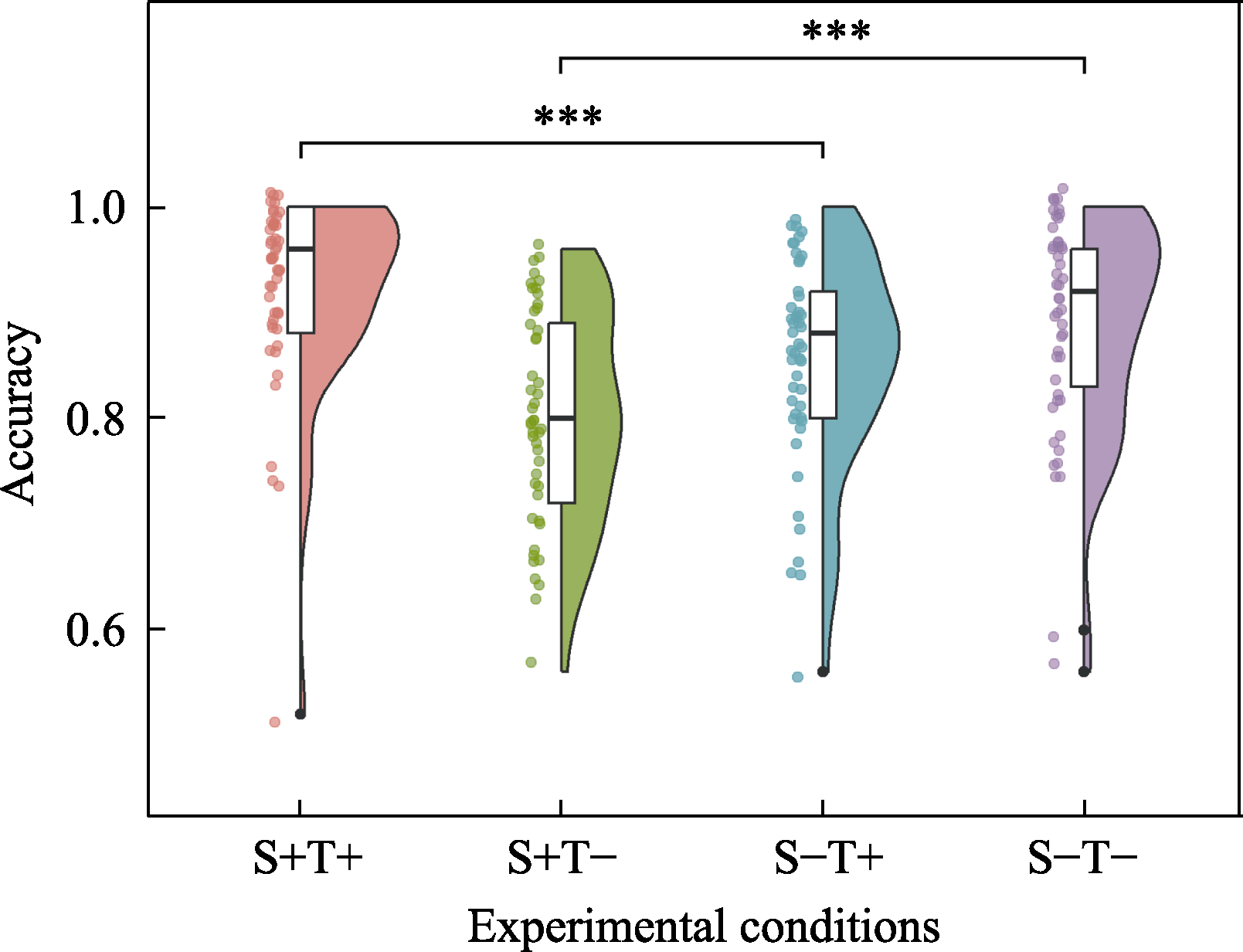
Figure 1 Accuracy under the four experimental conditions. *p < 0.001.
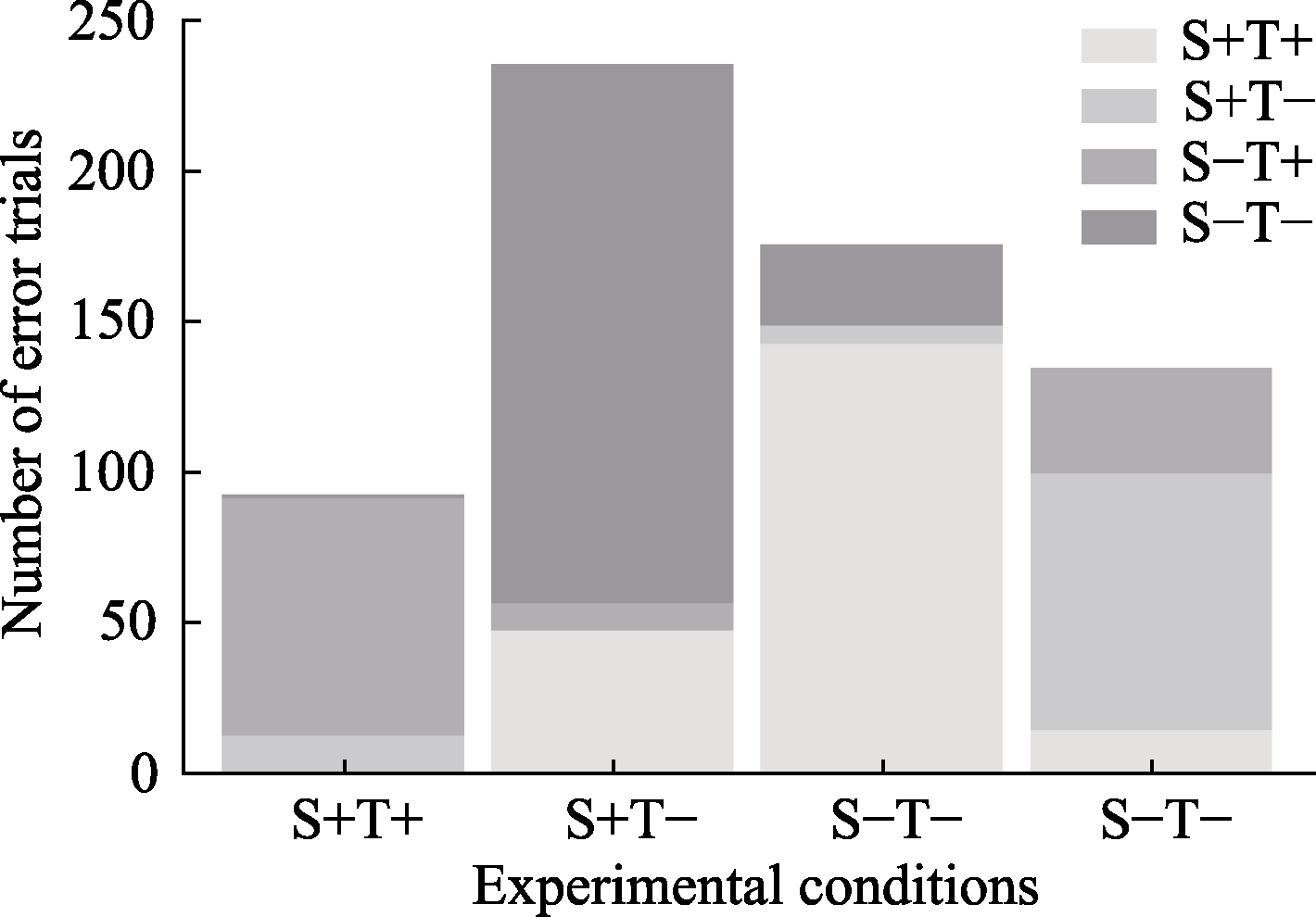
Figure 2 Distribution of all error trials across the four experimental conditions.
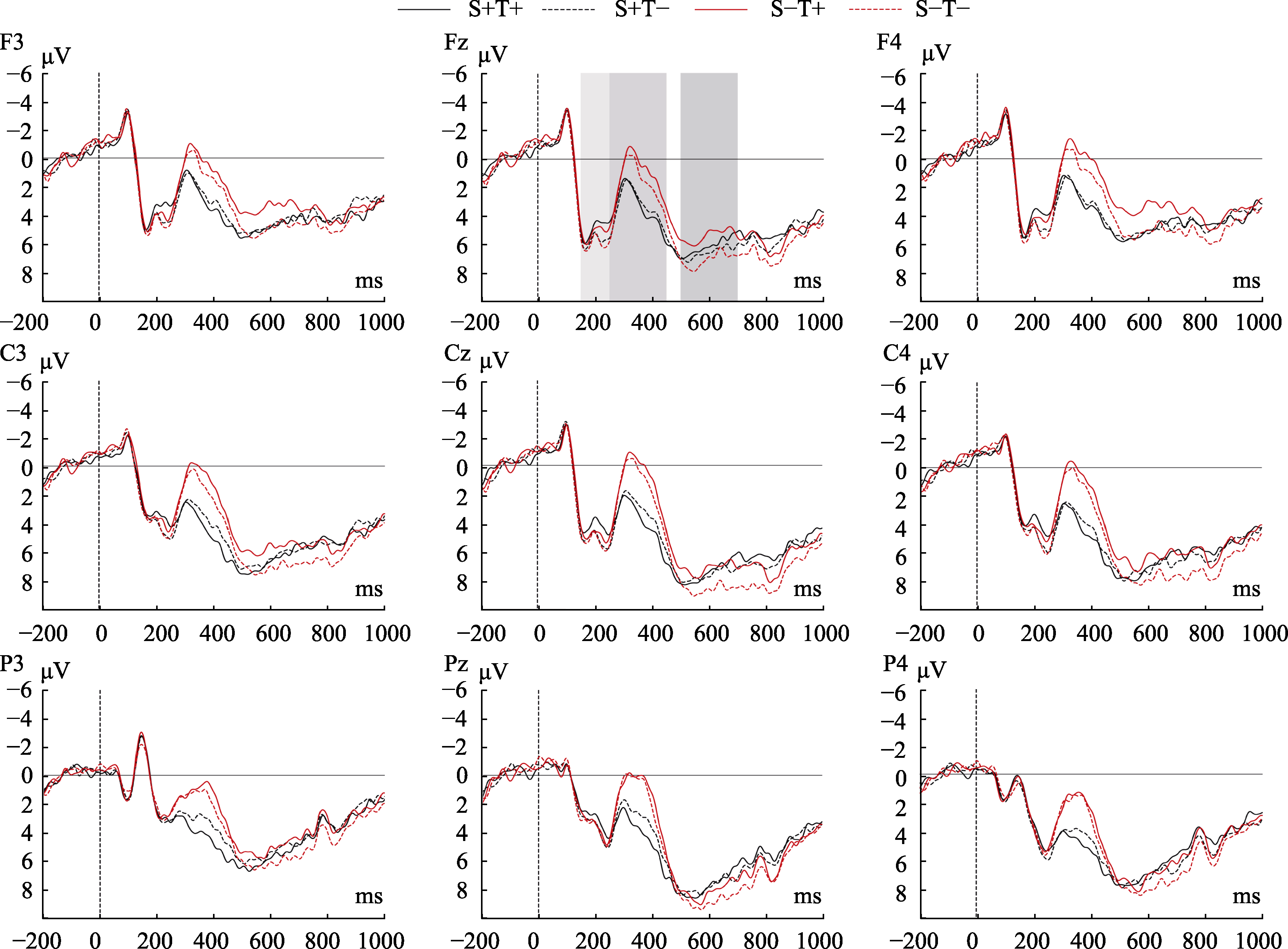
Figure 3 Grand-average waveforms elicited by the critical character for the four poem types.

Figure 4 Main effect of ping-ze regularity and its interaction with semantic congruity: (a) ping-ze effect (P200); (b) interaction (N400); (c) interaction (LPC).
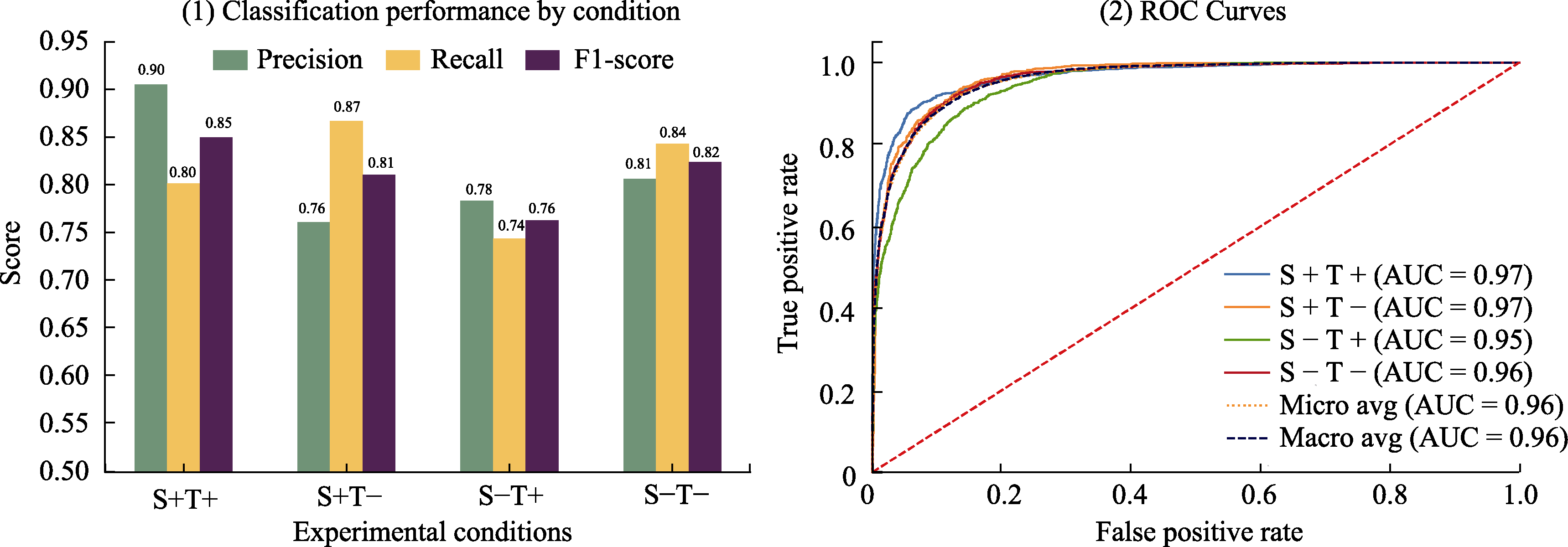
Figure 5 Performance (1) and multi-class ROC curves (2) for classifying poem types from EEG data.
| [1] | Aristotle A. (1968). Poetics (Vol. 9). Clarendon Press. |
| [2] |
Astésano C., Besson M., & Alter K. (2004). Brain potentials during semantic and prosodic processing in French. Cognitive Brain Research, 18(2), 172-184.
pmid: 14736576 |
| [3] |
Barr D. J., Levy R., Scheepers C., & Tily H. J. (2013). Random effects structure for confirmatory hypothesis testing: Keep it maximal. Journal of Memory and Language, 68(3), 255-278.
doi: 10.1016/j.jml.2012.11.001 URL |
| [4] | Beck J., & Konieczny L. (2020). Rhythmic subvocalization: An eye-tracking study on silent poetry reading. Journal of Eye Movement Research, 13(3), 1-40. |
| [5] |
Bornkessel-Schlesewsky I., & Schlesewsky M. (2008). An alternative perspective on “semantic P600” effects in language comprehension. Brain Research Reviews, 59(1), 55-73.
doi: 10.1016/j.brainresrev.2008.05.003 pmid: 18617270 |
| [6] |
Borra D., & Magosso E. (2021). Deep learning-based EEG analysis: Investigating P3 ERP components. Journal of Integrative Neuroscience, 20(4), 791-811.
doi: 10.31083/j.jin2004083 pmid: 34997705 |
| [7] |
Brauer M., & Curtin J. J. (2018). Linear mixed-effects models and the analysis of nonindependent data: A unified framework to analyze categorical and continuous independent variables that vary within-subjects and/or within-items. Psychological Methods, 23(3), 389-411.
doi: 10.1037/met0000159 pmid: 29172609 |
| [8] |
Brouwer H., Crocker M. W., Venhuizen N. J., & Hoeks J. C. (2017). A neurocomputational model of the N400 and the P600 in language processing. Cognitive Science, 41(Suppl 6), 1318-1352.
doi: 10.1111/cogs.2017.41.issue-S6 URL |
| [9] |
Brouwer H., Fitz H., & Hoeks J. (2012). Getting real about semantic illusions: Rethinking the functional role of the P600 in language comprehension. Brain Research, 1446, 127-143.
doi: 10.1016/j.brainres.2012.01.055 pmid: 22361114 |
| [10] |
Brown C., & Hagoort P. (1993). The processing nature of the N400: Evidence from masked priming. Journal of Cognitive Neuroscience, 5(1), 34-44.
doi: 10.1162/jocn.1993.5.1.34 pmid: 23972118 |
| [11] | Chen Q., & Dou F. (2021). Constructing a Questionnaire to Test the Knowledge of Ancient Chinese Poetry:A preliminary result. Journal of Nanjing Normal University (Social Science Edition), 3, 73-82. |
| [12] | Chen Q., & Yang Y. (2017). Cognitive mechanisms in reading ancient Chinese poetry: Evidence from eye movements. Social Sciences in China, 3, 48-76+205. |
| [13] |
Chen Q., Zhang J., Xu X., Scheepers C., Yang Y., & Tanenhaus M. K. (2016). Prosodic expectations in silent reading: ERP evidence from rhyme scheme and semantic congruence in classic Chinese poems. Cognition, 154, 11-21.
doi: S0010-0277(16)30122-6 pmid: 27228392 |
| [14] |
Coch D., Grossi G., Skendzel W., & Neville H. (2005). ERP nonword rhyming effects in children and adults. Journal of Cognitive Neuroscience, 17(1), 168-182.
pmid: 15701247 |
| [15] | Cohen J. (1988). Statistical power analysis for the behavioral sciences. Routledge. |
| [16] |
Connolly J. F., & Phillips N. A. (1994). Event-related potential components reflect phonological and semantic processing of the terminal word of spoken sentences. Journal of Cognitive Neuroscience, 6(3), 256-266.
doi: 10.1162/jocn.1994.6.3.256 pmid: 23964975 |
| [17] |
Cox D. D., & Savoy R. L. (2003). Functional magnetic resonance imaging (fMRI) “brain reading”: Detecting and classifying distributed patterns of fMRI activity in human visual cortex. NeuroImage, 19(2), 261-270.
doi: 10.1016/S1053-8119(03)00049-1 URL |
| [18] | Culler J. (1975). Structuralist poetics: Structuralism, linguistics and the study of literature. Routledge. |
| [19] | Dambacher M., Rolfs M., Göllner K., Kliegl R., & Jacobs A. M. (2009). Event-related potentials reveal rapid verification of predicted visual input. PLoS One, 4(3), e5047. |
| [20] |
Dikker S., Rabagliati H., Farmer T. A., & Pylkkänen L. (2010). Early occipital sensitivity to syntactic category is based on form typicality. Psychological Science, 21(5), 629-634.
doi: 10.1177/0956797610367751 pmid: 20483838 |
| [21] |
Dikker S., Rabagliati H., & Pylkkänen L. (2009). Sensitivity to syntax in visual cortex. Cognition, 110(3), 293-321.
doi: 10.1016/j.cognition.2008.09.008 pmid: 19121826 |
| [22] | Fodor J. A. (1983). The modularity of mind. MIT Press. |
| [23] |
Friederici A. D. (1995). The time course of syntactic activation during language processing: A model based on neuropsychological and neurophysiological data. Brain and Language, 50(3), 259-281.
pmid: 7583190 |
| [24] |
Friederici A. D. (2002). Towards a neural basis of auditory sentence processing. Trends in Cognitive Sciences, 6(2), 78-84.
doi: 10.1016/s1364-6613(00)01839-8 pmid: 15866191 |
| [25] |
Friederici A. D. (2012). The cortical language circuit: From auditory perception to sentence comprehension. Trends in Cognitive Sciences, 16(5), 262-268.
doi: 10.1016/j.tics.2012.04.001 pmid: 22516238 |
| [26] |
Gramfort A., Luessi M., Larson E., Engemann D. A., Strohmeier D., Brodbeck C.,... Hämäläinen M. S. (2013). MEG and EEG data analysis with MNE-Python. Frontiers in Neuroscience, 7, 267.
doi: 10.3389/fnins.2013.00267 pmid: 24431986 |
| [27] | Hagoort, P., Brown C. M., & Osterhout L. (1999). The neurocognition of syntactic processing. In C. M. Brown, & (Eds.),The neurocognition of language, (pp. 273-316). https://doi.org/10.1093/acprof:oso/9780198507932.003.0009 |
| [28] |
Hagoort P., Hald L., Bastiaansen M., & Petersson K. M. (2004). Integration of word meaning and world knowledge in language comprehension. Science, 304(5669), 438-441.
doi: 10.1126/science.1095455 pmid: 15031438 |
| [29] |
Hanauer D. (1998). The genre-specific hypothesis of reading: Reading poetry and encyclopedic items. Poetics, 26(2), 63-80.
doi: 10.1016/S0304-422X(98)00011-4 URL |
| [30] |
Haynes J., & Rees G. (2006). Decoding mental states from brain activity in humans. Nature Reviews Neuroscience, 7(7), 523-534.
doi: 10.1038/nrn1931 |
| [31] | Hirst, D., & Di Cristo A. (Eds.). (1998). Intonation systems: A survey of twenty languages. Cambridge University Press. |
| [32] |
Hu J., Gao S., Ma W., & Yao D. (2012). Dissociation of tone and vowel processing in Mandarin idioms. Psychophysiology, 49(9), 1179-1190.
doi: 10.1111/j.1469-8986.2012.01406.x pmid: 22748083 |
| [33] | Jacobs A. M. (2015). Neurocognitive poetics: Methods and models for investigating the neuronal and cognitive- affective bases of literature reception. Frontiers in Human Neuroscience, 9, 186. |
| [34] | Jakobson, R. (1960). Linguistics and poetics. In T. Sebeok (Ed.), Style in language (pp. 350-377). Cambridge, MA: MIT Press. |
| [35] |
Just M. A., & Carpenter P. A. (1980). A theory of reading: From eye fixations to comprehension. Psychological Review, 87(4), 329-354.
pmid: 7413885 |
| [36] |
Kaan E., Harris A., Gibson E., & Holcomb P. (2000). The P600 as an index of syntactic integration difficulty. Language and Cognitive Processes, 15(2), 159-201.
doi: 10.1080/016909600386084 URL |
| [37] |
Kaan E., & Swaab T. Y. (2003). Repair, revision, and complexity in syntactic analysis: An electrophysiological differentiation. Journal of Cognitive Neuroscience, 15(1), 98-110.
pmid: 12590846 |
| [38] |
Kim A., & Osterhout L. (2005). The independence of combinatory semantic processing: Evidence from event- related potentials. Journal of Memory and Language, 52(2), 205-225.
doi: 10.1016/j.jml.2004.10.002 URL |
| [39] |
Kriegeskorte N., & Douglas P. K. (2019). Interpreting encoding and decoding models. Current Opinion in Neurobiology, 55, 167-179.
doi: S0959-4388(18)30100-4 pmid: 31039527 |
| [40] |
Kutas M., & Federmeier K. D. (2011). Thirty years and counting: Finding meaning in the N400 component of the event-related brain potential (ERP). Annual Review of Psychology, 62(1), 621-647.
doi: 10.1146/psych.2011.62.issue-1 URL |
| [41] | Ladd D. R. (2008). Intonational phonology (2nd ed.). Cambridge University Press. |
| [42] | Lau E. F., Phillips C., & Poeppel D. (2008). A cortical network for semantics: (de)constructing the N400. Nature Reviews Neuroscience, 9(12), 920-933. |
| [43] |
Lenth R., & Lenth M. R. (2018). Package ‘lsmeans’. The American Statistician, 34(4), 216-221.
doi: 10.1080/00031305.1980.10483031 URL |
| [44] | Li S., Zhang T., Yang F., Li X., Wang Z., & Zhao D. (2024). A dynamic multi-scale convolution model for face recognition using event-related potentials. Sensors, 24(13), 4368. |
| [45] | Li W., Wang L., & Yang Y. (2014). Chinese tone and vowel processing exhibits distinctive temporal characteristics: An electrophysiological perspective from classical Chinese poem processing. PLOS ONE, 9(1), e85683. |
| [46] |
Li W., & Yang Y. (2010). Perception of Chinese poem and its electrophysiological effects. Neuroscience, 168(3), 757-768.
doi: 10.1016/j.neuroscience.2010.03.069 pmid: 20382205 |
| [47] |
Li X., Shao X., Xia J., & Xu X. (2019). The cognitive and neural oscillatory mechanisms underlying the facilitating effect of rhythm regularity on speech comprehension. Journal of Neurolinguistics, 49, 155-167.
doi: 10.1016/j.jneuroling.2018.05.004 URL |
| [48] |
Liu Y., Li P., Shu H., Zhang Q., & Chen L. (2010). Structure and meaning in Chinese: An ERP study of idioms. Journal of Neurolinguistics, 23(6), 615-630.
doi: 10.1016/j.jneuroling.2010.06.001 URL |
| [49] |
Luck S. J., & Hillyard S. A. (1994). Electrophysiological correlates of feature analysis during visual search. Psychophysiology, 31(3), 291-308.
doi: 10.1111/j.1469-8986.1994.tb02218.x pmid: 8008793 |
| [50] |
Luo Y., & Zhou X. (2010). ERP evidence for the online processing of rhythmic pattern during Chinese sentence reading. NeuroImage, 49(3), 2836-2849.
doi: 10.1016/j.neuroimage.2009.10.008 pmid: 19833211 |
| [51] | Luo Z. (1993). Chinese Dictionary Compendium. Shanghai: Publishing House of Chinese Dictionary Compendium. |
| [52] |
Magne C., Astésano C., Aramaki M., Ystad S., Kronland- Martinet R., & Besson M. (2007). Influence of syllabic lengthening on semantic processing in spoken French: Behavioral and electrophysiological evidence. Cerebral cortex, 17(11), 2659-2668.
pmid: 17264253 |
| [53] |
Magne C., Schön D., & Besson M. (2006). Musician children detect pitch violations in both music and language better than nonmusician children: Behavioral and electrophysiological approaches. Journal of Cognitive Neuroscience, 18(2), 199-211.
pmid: 16494681 |
| [54] |
McClelland J. L., & Rumelhart D. E. (1981). An interactive activation model of context effects in letter perception: I. An account of basic findings. Psychological Review, 88(5), 375-407.
doi: 10.1037/0033-295X.88.5.375 URL |
| [55] |
Näätänen R., & Picton T. (1987). The N1 wave of the human electric and magnetic response to sound: A review and an analysis of the component structure. Psychophysiology, 24(4), 375-425.
doi: 10.1111/j.1469-8986.1987.tb00311.x pmid: 3615753 |
| [56] | Nietzsche F. (2012). The birth of tragedy. Courier Corporation. |
| [57] |
Nieuwland M. S. (2019). Do ‘early’ brain responses reveal word form prediction during language comprehension? A critical review. Neuroscience & Biobehavioral Reviews, 96, 367-400.
doi: 10.1016/j.neubiorev.2018.11.019 URL |
| [58] | Nieuwland M. S., Barr D. J., Bartolozzi F., Busch-Moreno S., Darley E., Donaldson D. I.,... Von Grebmer Zu Wolfsthurn S. (2020). Dissociable effects of prediction and integration during language comprehension: Evidence from a large-scale study using brain potentials. Philosophical Transactions of the Royal Society B, 375(1791), 20180522. |
| [59] |
Osterhout L., & Holcomb P. J. (1992). Event-related brain potentials elicited by syntactic anomaly. Journal of Memory and Language, 31(6), 785-806.
doi: 10.1016/0749-596X(92)90039-Z URL |
| [60] |
Rothermich K., & Kotz S. A. (2013). Predictions in speech comprehension: fMRI evidence on the meter-semantic interface. NeuroImage, 70, 89-100.
doi: 10.1016/j.neuroimage.2012.12.013 pmid: 23291188 |
| [61] |
Rothermich K., Schmidt-Kassow M., & Kotz S. A. (2012). Rhythm's gonna get you: Regular meter facilitates semantic sentence processing. Neuropsychologia, 50(2), 232-244.
doi: 10.1016/j.neuropsychologia.2011.10.025 pmid: 22178743 |
| [62] |
Rugg M. D. (1984). Event-related potentials in phonological matching tasks. Brain and Language, 23(2), 225-240.
pmid: 6518354 |
| [63] |
Schirmer A., Tang S. L., Penney T. B., Gunter T. C., & Chen H. C. (2005). Brain responses to segmentally and tonally induced semantic violations in Cantonese. Journal of Cognitive Neuroscience, 17(1), 1-12.
pmid: 15701235 |
| [64] |
Schön D., Magne C., & Besson M. (2004). The music of speech: Music training facilitates pitch processing in both music and language. Psychophysiology, 41(3), 341-349.
doi: 10.1111/1469-8986.00172.x pmid: 15102118 |
| [65] |
Schwartze M., & Kotz S. A. (2013). A dual-pathway neural architecture for specific temporal prediction. Neuroscience & Biobehavioral Reviews, 37(10), 2587-2596.
doi: 10.1016/j.neubiorev.2013.08.005 URL |
| [66] |
Tian X., Zhu L., Zhang M., Wang S., Lu Y., Xu X., Jia W., Zheng Y., & Song S. (2024). Social anxiety prediction based on ERP features: A deep learning approach. Journal of Affective Disorders, 367, 545-553.
doi: 10.1016/j.jad.2024.09.006 pmid: 39236887 |
| [67] |
Tong F., & Pratte M. S. (2012). Decoding patterns of human brain activity. Annual Review of Psychology, 63(1), 483-509.
doi: 10.1146/psych.2012.63.issue-1 URL |
| [68] |
Tong Y., Francis A. L., & Gandour J. T. (2008). Processing dependencies between segmental and suprasegmental features in mandarin Chinese. Language and Cognitive Processes, 23(5), 689-708.
doi: 10.1080/01690960701728261 URL |
| [69] | Tsur R. (1983). What is cognitive poetics? Katz Research Institute for Hebrew Literature, Tel Aviv University. |
| [70] | Wang L. (2012). The metrics of Chinese poetry. Beijing: Zhonghua Book Company. |
| [71] | Winter B. (2013). Linear models and linear mixed effects models in R with linguistic applications. arXiv preprint arXiv:1308.5499. |
| [72] |
Yaron I. (2002). Processing of obscure poetic texts: Mechanisms of selection. Journal of Literary Semantics, 31(2), 133-170.
doi: 10.1515/jlse.2002.013 URL |
| [73] | Zeman A., Milton F., Smith A., & Rylance R. (2013). By heart: What is cognitive poetics? An fMRI study of brain activation by poetry and prose. Journal of Consciousness Studies, 20(9-10), 132-158. |
| [74] | Zhang Y. H. (2015). Cognitive poetics and interdisciplinary research on literary comprehension. Journal of Tsinghua University (Philosophy and Social Sciences), 30(2), 139-147+190. |
| [75] |
Zhang Z., Han M., Zhang F., & Li W. (2020). Musical training improves rhythm integrative processing of classical Chinese poem. Acta Psychologica Sinica, 52(7), 847-860.
doi: 10.3724/SP.J.1041.2020.00847 |
| [76] |
Zhang Z., Zhang H., Sommer W., Yang X., Wei Z., & Li W. (2023). Musical training alters neural processing of tones and vowels in classic Chinese poems. Brain and Cognition, 166, 105952.
doi: 10.1016/j.bandc.2023.105952 URL |
| [77] | Zhang Z., Zhang H., Wang B., Zheng Z., Zhao L., & Li W. (2021). The processing of the tone and the vowel in poems under different tasks: Evidence from ERPs. Studies of Psychology and Behavior, 19(6), 728-735. |
| [78] | Zhu G. Q. (2012). On Poetry. Beijing: Zhonghua Book Company. |
| [1] | CHEN Siyun, CHENG Meizi, XIONG Jiwei, FANG Xinyi, WU Laian. Adagio in the woods: How does music tempo impact individual pro-environmental behavior? [J]. Acta Psychologica Sinica, 2026, 58(4): 698-724. |
| [2] | YANG Mingchuan, LI Xianzhuo, LIANG Dandan. Bidirectional transfer between language and musical experience: Based on the categorical perception in Mandarin-speaking musicians [J]. Acta Psychologica Sinica, 2025, 57(9): 1499-1511. |
| [3] | HUA Shan, JIANG Xintong, GAO Yangzhenyu, MU Yan, DU Yi. The impacts of music training and music sophistication on empathy [J]. Acta Psychologica Sinica, 2025, 57(4): 544-558. |
| [4] | ZHOU Linshu, ZHANG Yuqing, CAI Dan-Chao. Musical training enhances the interaction between pitch and time dimensions in auditory working memory [J]. Acta Psychologica Sinica, 2025, 57(10): 1701-1714. |
| [5] | WU Jie, CHE Zixuan. The cognitive characteristics and neural mechanisms of multisensory category learning: EEG and drift-diffusion model evidence [J]. Acta Psychologica Sinica, 2025, 57(10): 1715-1728. |
| [6] | XIE Hui, LIN Xuanyi, HU Wanrou, HU Xiaoqing. Emotion regulation promotes forgetting of negative social feedback: Behavioral and EEG evidence [J]. Acta Psychologica Sinica, 2023, 55(6): 905-919. |
| [7] | ZHENG Xi, ZHANG Tingting, LI Liang, FAN Ning, YANG Zhigang. Unmasking effects of speech emotional prosody and semantics on auditory informational masking [J]. Acta Psychologica Sinica, 2023, 55(2): 177-191. |
| [8] | ZHANG Hang, WANG Ting, FENG Xiaohui, WEI Yiping, ZHANG Jijia. Effect of bronze drum training on rhythm perception and executive function of Zhuang drummers [J]. Acta Psychologica Sinica, 2023, 55(11): 1762-1779. |
| [9] | QIN Huiyi, DING Lihong, DUAN Wei, LEI Xu. Test-retest reliability of EEG: A comparison across multiple resting-state and task-state experiments [J]. Acta Psychologica Sinica, 2023, 55(10): 1587-1596. |
| [10] | LI Xianzhuo, XIAO Rong, LIANG Dandan. The cross-domain influence of tonal categorical perception and tonal complexity on musical pitch perception [J]. Acta Psychologica Sinica, 2022, 54(9): 1021-1030. |
| [11] | SUN Fang, SONG Wei, WEN Xiaotong, LI Huanhuan, OUYANG Lisheng, WEI Shijie. Efficacy of suicide ideation classification based on pain avoidance and the EEG characteristics under self-referential punishment [J]. Acta Psychologica Sinica, 2022, 54(9): 1031-1047. |
| [12] | YANG Jimei, CHAI Jieyu, QIU Tianlong, QUAN Xiaoshan, ZHENG Maoping. Relationship between empathy and emotion recognition in Chinese national music: An event-related potential study evidence [J]. Acta Psychologica Sinica, 2022, 54(10): 1181-1192. |
| [13] | LIU Jie, LI Jinqi, SHEN Chaoran, HU Xiaohui, ZHAO Tinghao, GUAN Qing, LUO Yuejia. The neural mechanism of approximate number processing for mathematical anxious individuals: An EEG study [J]. Acta Psychologica Sinica, 2020, 52(8): 958-970. |
| [14] | ZHANG Zhenghua, HAN Mei, ZHANG Fang, LI Weijun. Musical training improves rhythm integrative processing of classical Chinese poem [J]. Acta Psychologica Sinica, 2020, 52(7): 847-860. |
| [15] | YAO Yao,CHEN Xiaoxiang. The effects of music training on categorical perception of Mandarin tones in 4- to 5-year-old children [J]. Acta Psychologica Sinica, 2020, 52(4): 456-468. |
| Viewed | ||||||
|
Full text |
|
|||||
|
Abstract |
|
|||||
