
ISSN 0439-755X
CN 11-1911/B

Acta Psychologica Sinica ›› 2026, Vol. 58 ›› Issue (4): 698-724.doi: 10.3724/SP.J.1041.2026.0698

• Reports of Empirical Studies • Previous Articles     Next Articles

Adagio in the woods: How does music tempo impact individual pro-environmental behavior?

CHEN Siyun1, CHENG Meizi2, XIONG Jiwei3, FANG Xinyi2, WU Laian2   

  1. 1School of Tourism Management, Sun Yat-sen University, Guangzhou 510275, China;
    2School of Economics and Management, Wuhan University, Wuhan 430072, China;
    3School of Journalism and Communication, Jinan University, Guangzhou 510632, China
  • Received:2025-06-30 Published:2026-04-25 Online:2026-01-16

Abstract: As one of the most fundamental elements of music, music tempo influences people’s emotional experiences and cognitive responses. However, the effect of music tempo on individuals’ pro-environmental behavior remains underexplored, with both its effects and underlying mechanisms still unclear. Drawing on associative learning theory, the current research systematically examined the impact of music tempo on pro-environmental behavior.
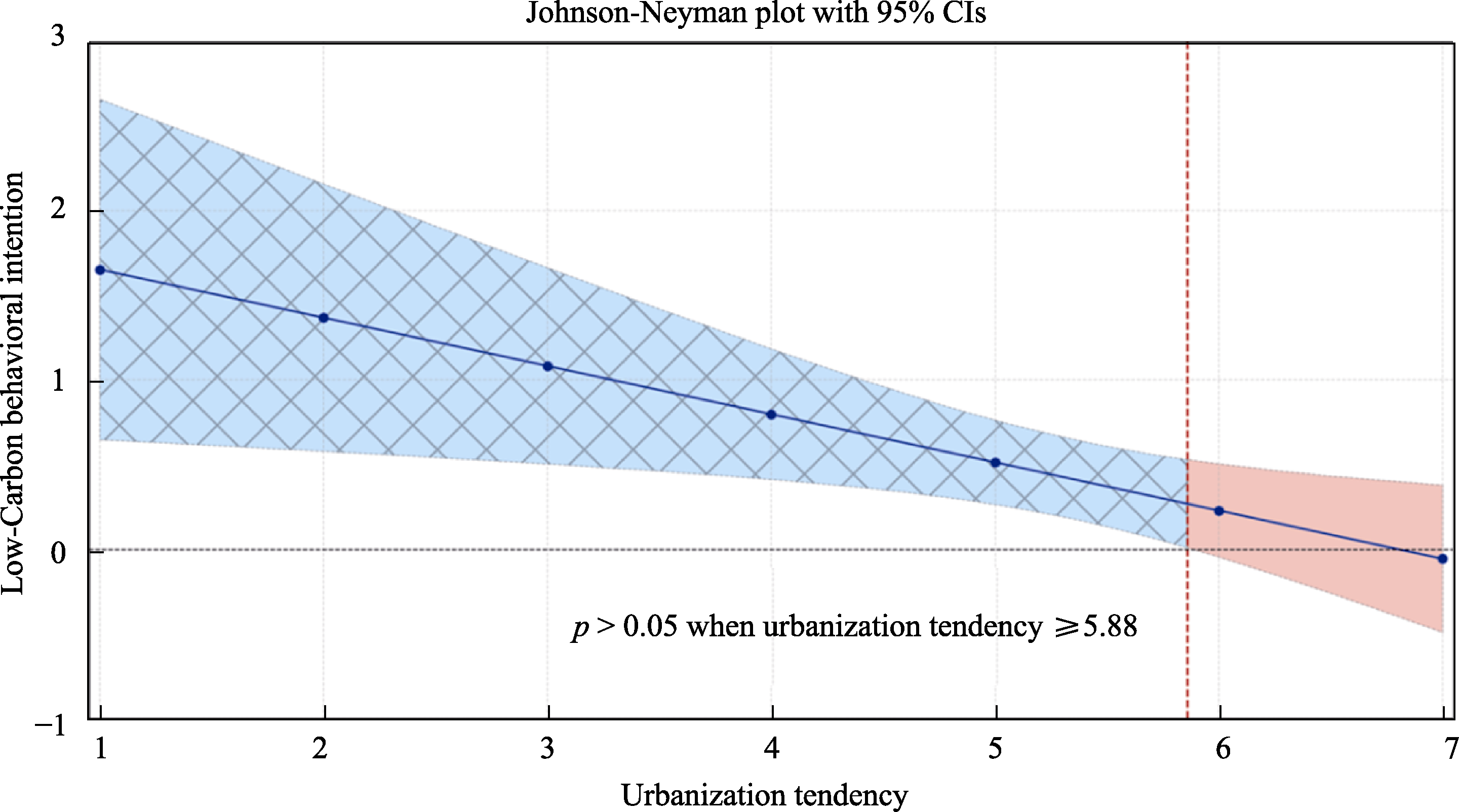
Across eight studies, this paper employed multiple approaches, including secondary data, an incentive-compatible paradigm, and online/offline behavioral experiments, to test how and when slow-paced (vs. fast-paced) music impacts pro-environmental behavior. To this end, we proposed and examined the following assumptions: 1) slow-tempo (vs. fast-tempo) music promotes individuals’ pro-environmental behavior; 2) nature connectedness plays a mediating role in this relationship, such that slow-tempo (vs. fast-tempo) music enhances individuals’ nature connectedness, which in turn increases pro-environmental behavior; 3) the presence or absence of audio tracks with natural elements moderates the effect—specifically, slow-tempo (vs. fast-tempo) music positively impacts pro-environmental behavior when such tracks are not introduced, but the core effect is weakened or even eliminated when they are introduced; 4) green values act as a moderator, meaning that the positive effect of slow-tempo (vs. fast-tempo) music on pro-environmental behavior diminishes as individuals’ green values scores decrease; 5) urbanization tendency serves as a moderator, such that the positive effect of slow-tempo (vs. fast-tempo) music on pro-environmental behavior diminishes as individuals’ urbanization tendency increases.
To enhance the generalizability of the research findings, we employed multiple cross-situational indicators of pro-environmental behavior across sub-studies, including crowdfunding behavior for environmental projects, actual choices of eco-friendly products, willingness to participate in recycling activities, attitudes toward environmental brands, and relative preferences for eco-friendly products. Specifically, Study 1, which employed machine learning and secondary data modeling, identified a positive correlation between slow-tempo music and support for environmental crowdfunding projects, based on data from the GoFundMe website. Adopting an incentive-compatible design, Study 2 confirmed that individuals are more likely to choose pro-environmental products when exposed to slow-tempo music (vs. fast-tempo music). Moreover, Studies 3A and 3B collectively explored the mediating role of nature connectedness in the relationship between music tempo and pro-environmental behavior: slow-tempo (vs. fast-tempo) music enhances individuals’ connectedness to nature (i.e., the “adagio in the woods” association), which in turn positively drives pro-environmental behavior. Furthermore, Study 4 verified the moderating effect of audio tracks with natural elements: when such tracks are introduced, the impact of music tempo on pro-environmental behavior disappears. Study 5 further examined the boundary condition of green values, revealing that the positive effect of slow-tempo music on pro-environmental behavior weakens as individuals’ green values decrease. Finally, Study 6 tested the moderating role of urbanization tendency, such that the positive effect of slow-tempo music on pro-environmental behavior weakens as individuals’ urbanization tendency increases.
Taken together, the current research not only enriches theoretical knowledge in the fields of music marketing, pro-environmental behavior, associative learning theory, and environmental psychology but also provides practical insights for promoting engagement in pro-environmental behavior and fostering a harmonious relationship between humans and nature.

Key words: music tempo, pro-environmental behavior, connectedness to nature, green consumption