
ISSN 0439-755X
CN 11-1911/B
CN 11-1911/B
Acta Psychologica Sinica ›› 2026, Vol. 58 ›› Issue (5): 935-960.doi: 10.3724/SP.J.1041.2026.0935
• Reports of Empirical Studies • Previous Articles Next Articles
SUN Sijie, ZHAO Huanhuan( ), PI Qiao, ZHANG Heyun()
Published:2026-05-25
Online:2026-03-05
Contact:
ZHAO Huanhuan, E-mail: SUN Sijie, ZHAO Huanhuan, PI Qiao, ZHANG Heyun. (2026). Beyond “The more the better”: The impact of altruism degree on moral evaluation and its moderating mechanism. Acta Psychologica Sinica, 58(5), 935-960.
Add to citation manager EndNote|Ris|BibTeX
URL: https://journal.psych.ac.cn/acps/EN/10.3724/SP.J.1041.2026.0935
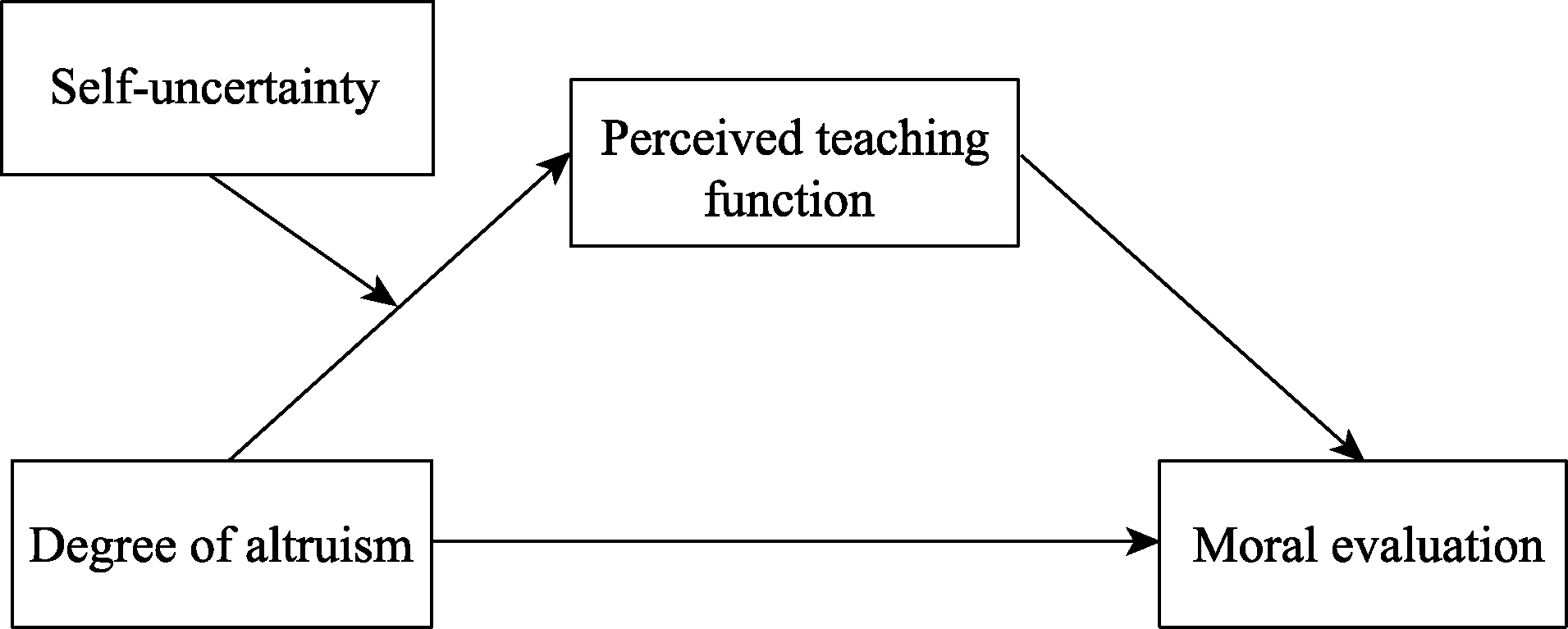
Figure 1. The hypothesized moderated mediation model.
| variable | 1 | 2 | 3 | 4 | 5 |
|---|---|---|---|---|---|
| 1. Gender | — | ?0.001 | ?0.17 | ?0.26** | ?0.21* |
| 2. Age | 0.12 | — | 0.31*** | 0.29*** | 0.23* |
| 3. Teaching function | ?0.11 | 0.07 | — | 0.79*** | 0.73*** |
| 4. Morality of the behavior | 0.20 | 0.06 | 0.50*** | — | 0.63*** |
| 5. Moral character | ?0.01 | 0.11 | 0.56*** | 0.70*** | — |
Table 1 Correlations among variables
| variable | 1 | 2 | 3 | 4 | 5 |
|---|---|---|---|---|---|
| 1. Gender | — | ?0.001 | ?0.17 | ?0.26** | ?0.21* |
| 2. Age | 0.12 | — | 0.31*** | 0.29*** | 0.23* |
| 3. Teaching function | ?0.11 | 0.07 | — | 0.79*** | 0.73*** |
| 4. Morality of the behavior | 0.20 | 0.06 | 0.50*** | — | 0.63*** |
| 5. Moral character | ?0.01 | 0.11 | 0.56*** | 0.70*** | — |
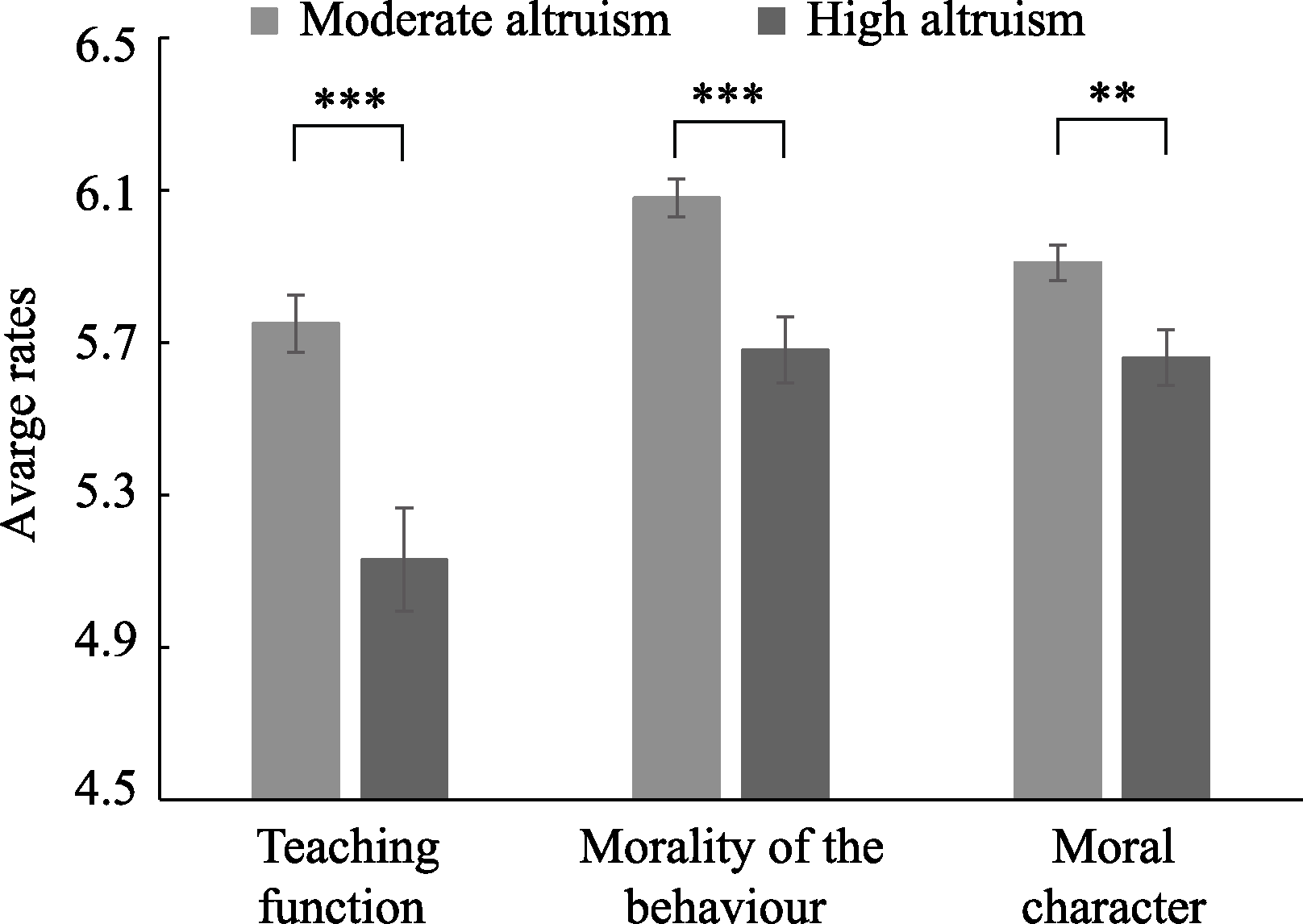
Figure 2. Differences in dependent-variable ratings by degree of altruism. Note: Error bars represent standard errors. **p < 0.01, ***p < 0.001.
| variable | 1 | 2 | 3 | 4 | 5 |
|---|---|---|---|---|---|
| 1. Gender | — | 0.04 | ?0.04 | ?0.13 | ?0.10 |
| 2. Age | ?0.09 | — | 0.16 | 0.09 | 0.003 |
| 3. Teaching function | 0.07 | 0.23** | — | 0.74*** | 0.62*** |
| 4. Morality of the behavior | 0.03 | 0.12 | 0.79*** | — | 0.86*** |
| 5. Moral character | 0.06 | 0.12 | 0.81*** | 0.87*** | — |
Table 2 Correlations among variables
| variable | 1 | 2 | 3 | 4 | 5 |
|---|---|---|---|---|---|
| 1. Gender | — | 0.04 | ?0.04 | ?0.13 | ?0.10 |
| 2. Age | ?0.09 | — | 0.16 | 0.09 | 0.003 |
| 3. Teaching function | 0.07 | 0.23** | — | 0.74*** | 0.62*** |
| 4. Morality of the behavior | 0.03 | 0.12 | 0.79*** | — | 0.86*** |
| 5. Moral character | 0.06 | 0.12 | 0.81*** | 0.87*** | — |
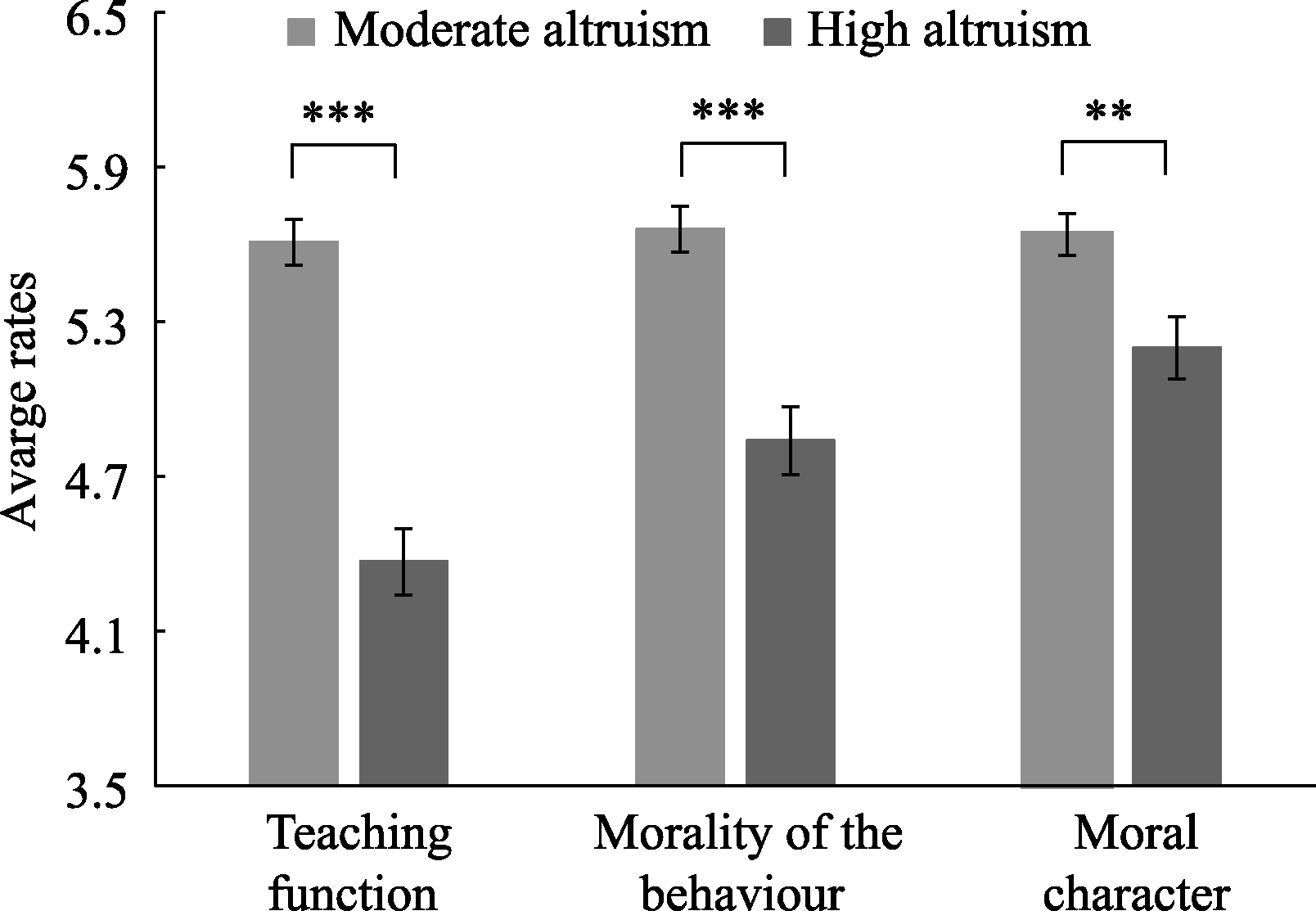
Figure 3. Differences in dependent-variable ratings by degree of altruism. Note: Error bars represent standard errors. **p < 0.01, ***p < 0.001.
| variable | Low teaching function | Control | High teaching function | F | η2 p |
|---|---|---|---|---|---|
| Moderate altruism | 3.30 ± 1.20 | 5.65 ± 0.95 | 5.94 ± 0.69 | 73.57*** | 0.32 |
| High altruism | 3.40 ± 1.49 | 4.28 ± 1.70 | 5.52 ± 1.06 | 38.58*** | 0.20 |
| Total | 3.35 ± 1.35 | 4.96 ± 1.53 | 5.74 ± 0.91 | 102.70*** | 0.40 |
Table 3 Manipulation check results for perceived teaching function
| variable | Low teaching function | Control | High teaching function | F | η2 p |
|---|---|---|---|---|---|
| Moderate altruism | 3.30 ± 1.20 | 5.65 ± 0.95 | 5.94 ± 0.69 | 73.57*** | 0.32 |
| High altruism | 3.40 ± 1.49 | 4.28 ± 1.70 | 5.52 ± 1.06 | 38.58*** | 0.20 |
| Total | 3.35 ± 1.35 | 4.96 ± 1.53 | 5.74 ± 0.91 | 102.70*** | 0.40 |
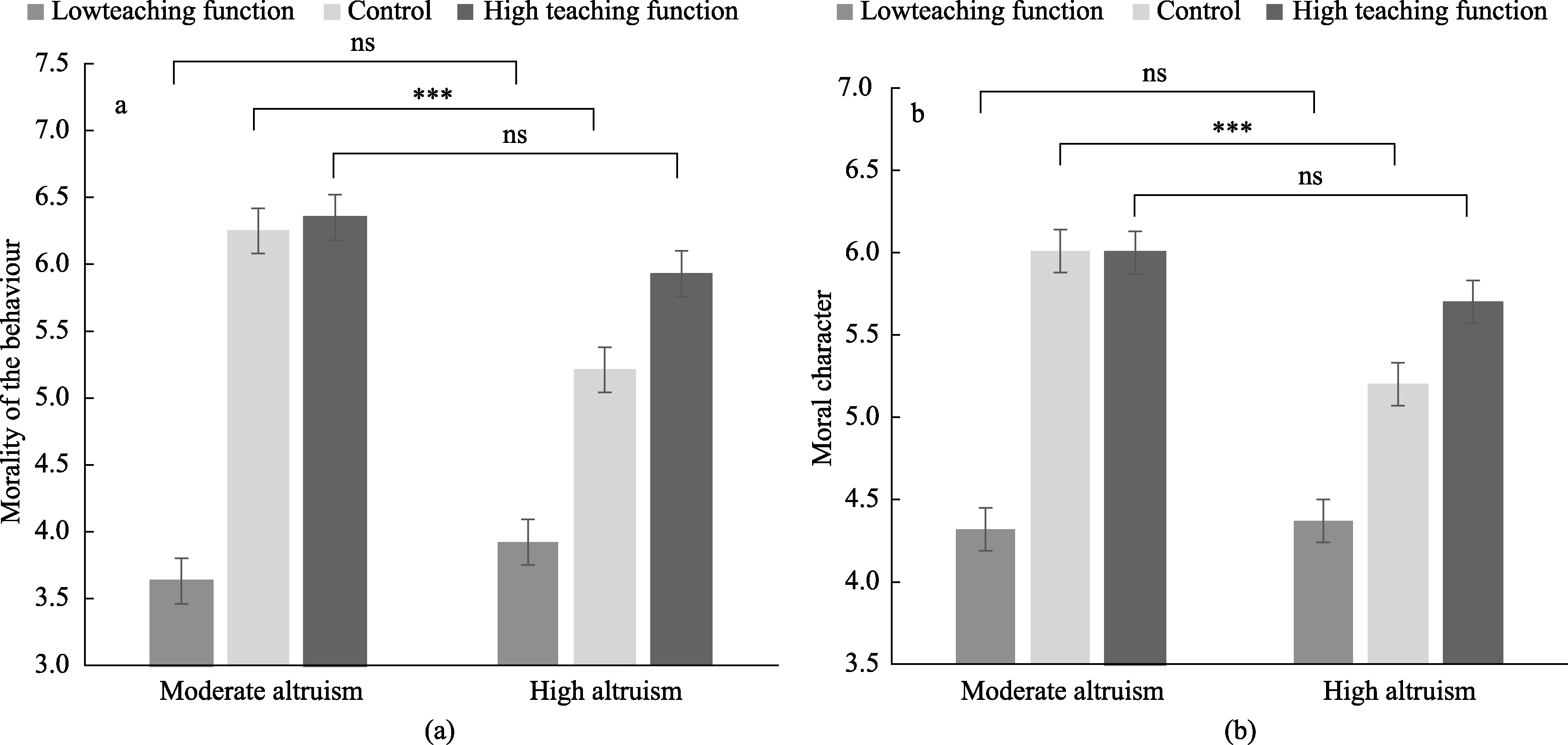
Figure 4. Differences in moral evaluation of the behavior and perceived moral character by degree of altruism and teaching-function manipulation. Note: Error bars represent standard errors. ***p < 0.001. ns = not significant.
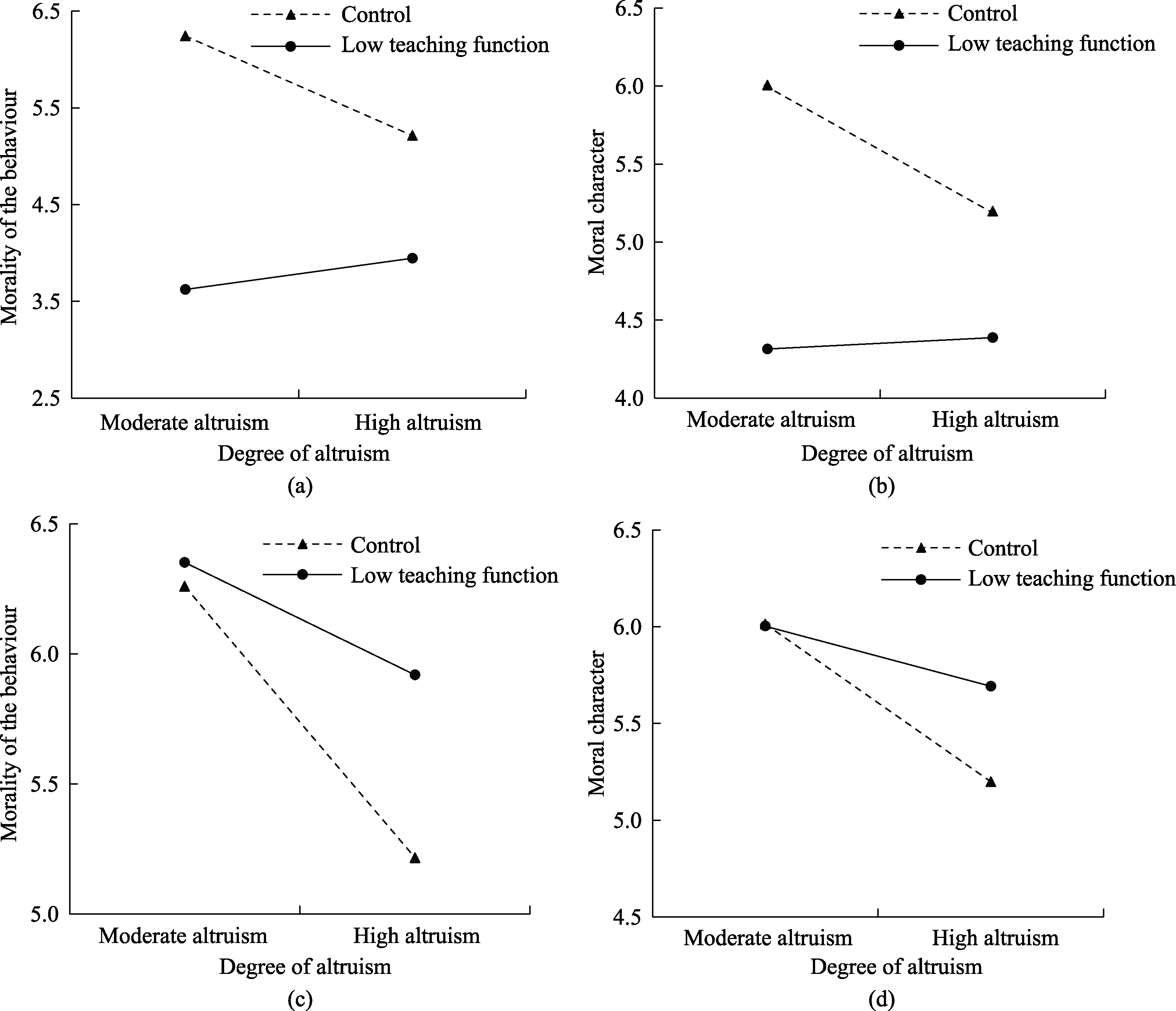
Figure 5. Moderating effects of teaching function on the relationship between degree of altruism and moral evaluation.
| variable | Low teaching function | Control | High teaching function | F | η2 p |
|---|---|---|---|---|---|
| Moderate altruism | 3.32 ± 1.32 | 5.36 ± 1.16 | 5.83 ± 0.83 | 73.46*** | 0.28 |
| High altruism | 3.47 ± 1.34 | 4.87 ± 1.52 | 5.42 ± 1.16 | 40.80*** | 0.18 |
| Total | 3.39 ± 1.33 | 5.13 ± 1.37 | 5.62 ± 1.02 | 109.93*** | 0.37 |
Table 4 Manipulation check results for perceived teaching function
| variable | Low teaching function | Control | High teaching function | F | η2 p |
|---|---|---|---|---|---|
| Moderate altruism | 3.32 ± 1.32 | 5.36 ± 1.16 | 5.83 ± 0.83 | 73.46*** | 0.28 |
| High altruism | 3.47 ± 1.34 | 4.87 ± 1.52 | 5.42 ± 1.16 | 40.80*** | 0.18 |
| Total | 3.39 ± 1.33 | 5.13 ± 1.37 | 5.62 ± 1.02 | 109.93*** | 0.37 |
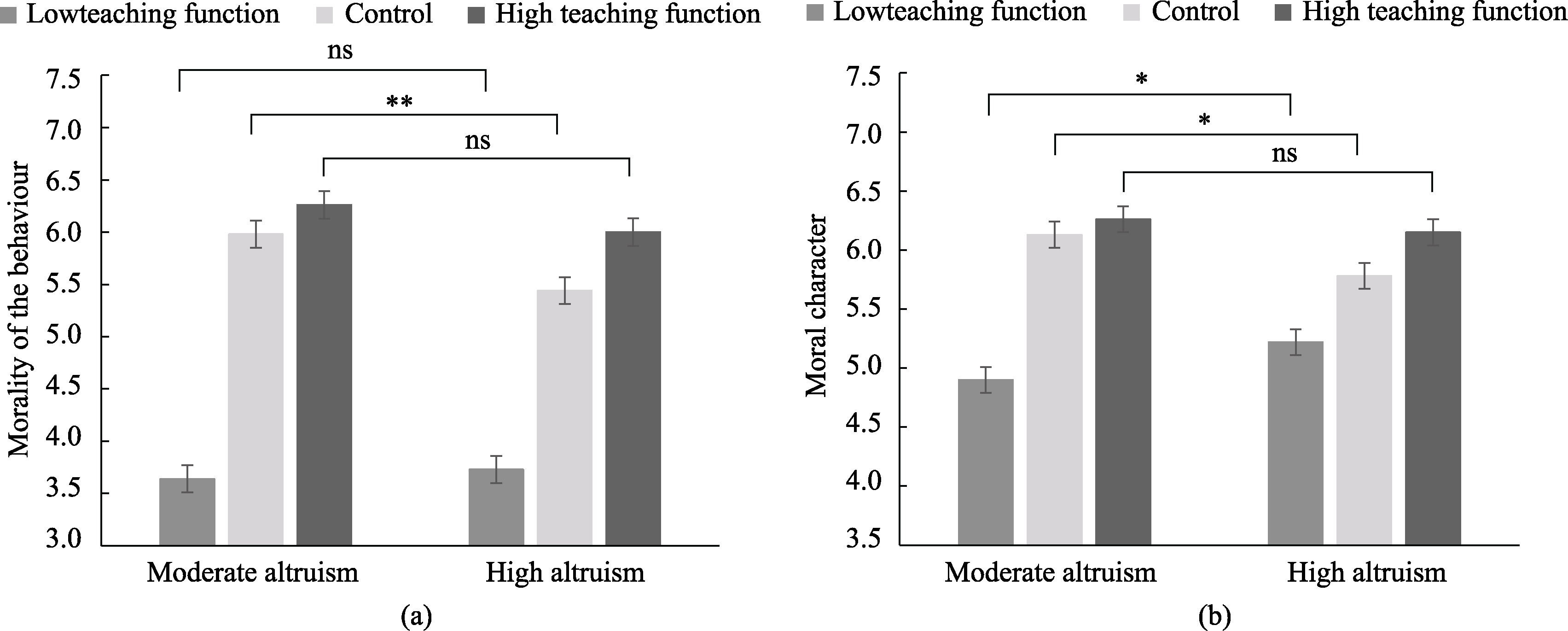
Figure 6. Differences in moral evaluation of the behavior and perceived moral character by degree of altruism and teaching-function manipulation. Note: Error bars represent standard errors. ***p < 0.001. ns = not significant.
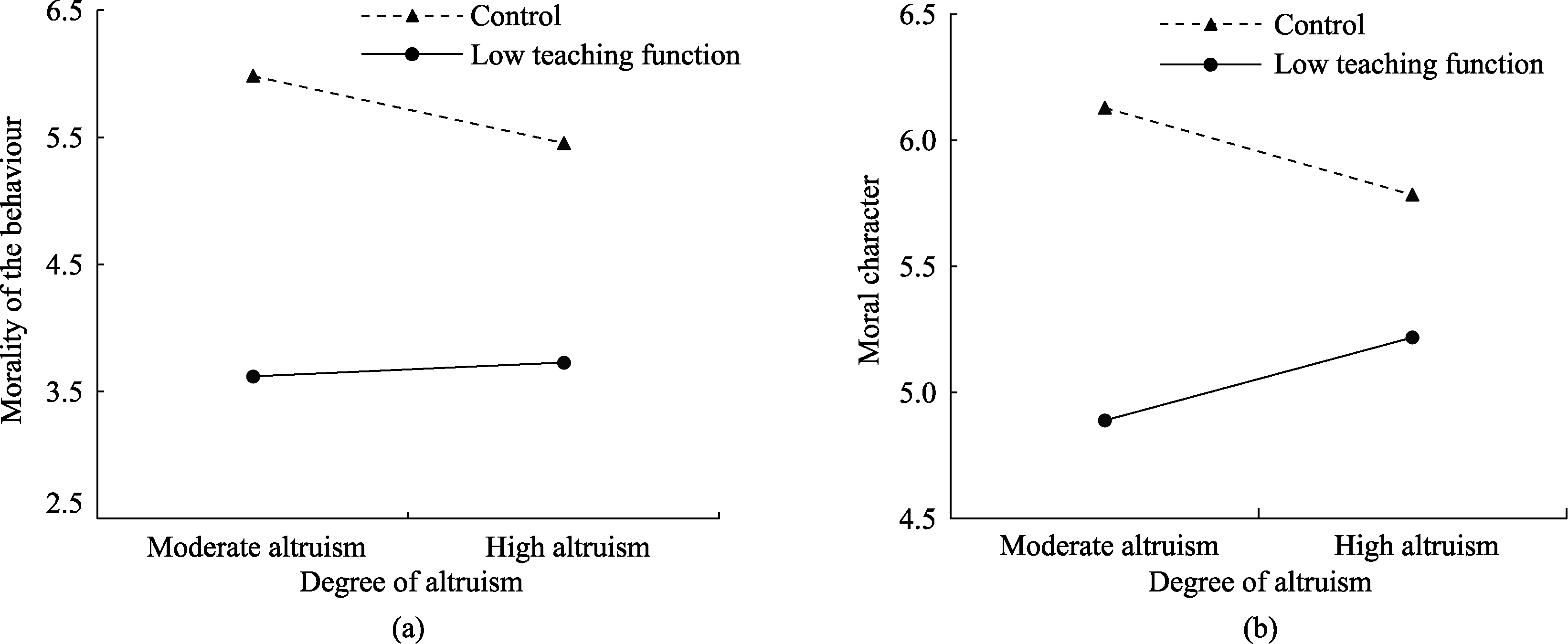
Figure 7. Moderating effects of teaching function on the relationship between degree of altruism and moral evaluation.
| variable | 1 | 2 | 3 | 4 | 5 | 6 |
|---|---|---|---|---|---|---|
| 1. Gender | — | ?0.02 | ?0.19*** | ?0.18** | ?0.12* | 0.14* |
| 2. Age | ?0.03 | — | 0.27** | 0.12* | 0.20*** | ?0.42*** |
| 3. Teaching function | ?0.24** | 0.21** | — | 0.69*** | 0.64*** | ?0.41*** |
| 4. Morality of the behavior | ?0.17* | 0.03 | 0.69*** | — | 0.79*** | ?0.28*** |
| 5. Moral character | ?0.11 | 0.07 | 0.56*** | 0.73*** | — | ?0.31*** |
| 6. Self-uncertainty | 0.18* | ?0.36*** | ?0.40*** | ?0.29*** | ?0.33*** | — |
Table 5 Correlations among variables
| variable | 1 | 2 | 3 | 4 | 5 | 6 |
|---|---|---|---|---|---|---|
| 1. Gender | — | ?0.02 | ?0.19*** | ?0.18** | ?0.12* | 0.14* |
| 2. Age | ?0.03 | — | 0.27** | 0.12* | 0.20*** | ?0.42*** |
| 3. Teaching function | ?0.24** | 0.21** | — | 0.69*** | 0.64*** | ?0.41*** |
| 4. Morality of the behavior | ?0.17* | 0.03 | 0.69*** | — | 0.79*** | ?0.28*** |
| 5. Moral character | ?0.11 | 0.07 | 0.56*** | 0.73*** | — | ?0.31*** |
| 6. Self-uncertainty | 0.18* | ?0.36*** | ?0.40*** | ?0.29*** | ?0.33*** | — |
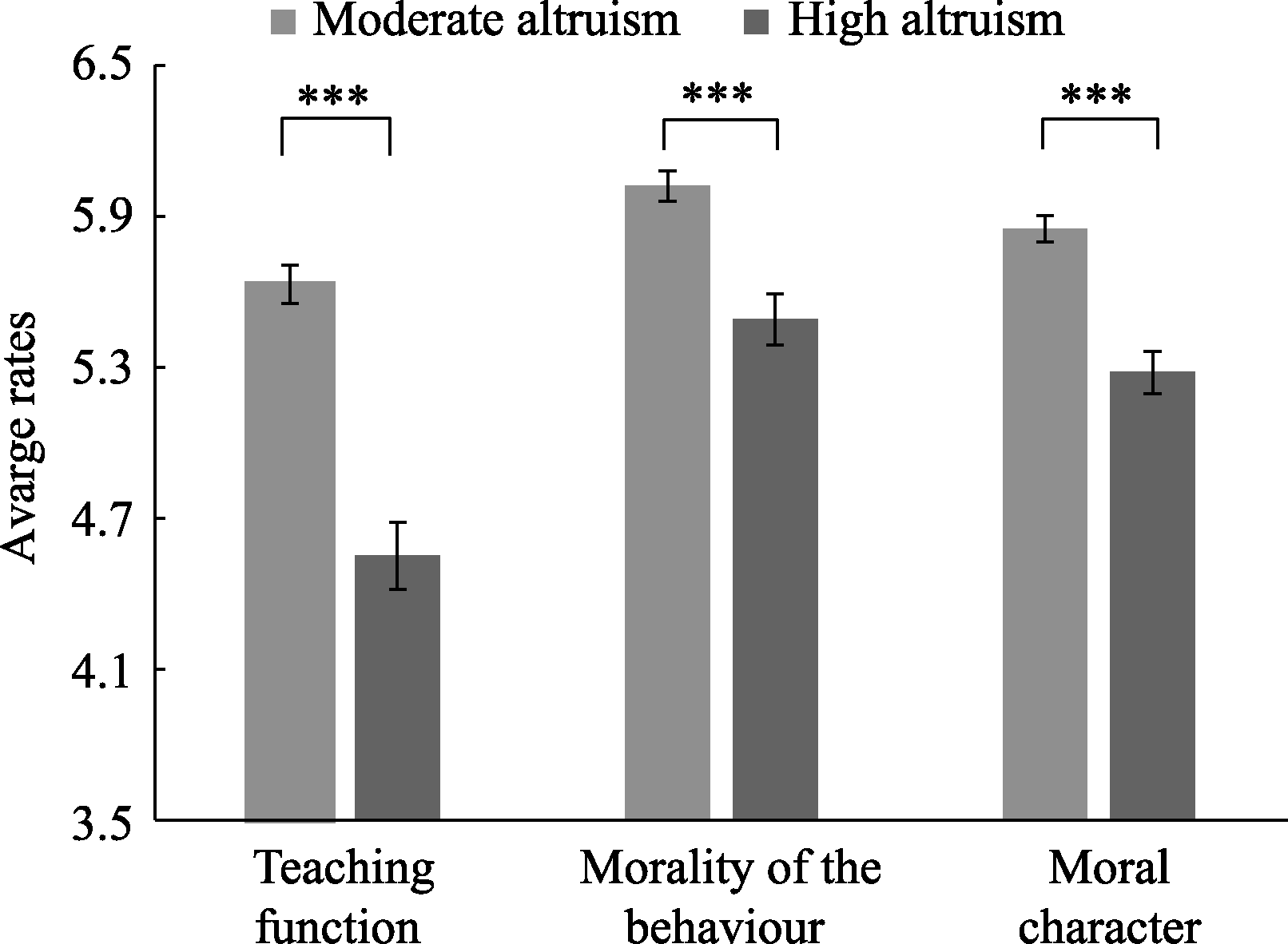
Figure 8. Differences in dependent-variable ratings by degree of altruism. Note: Error bars represent standard errors. ***p < 0.001.
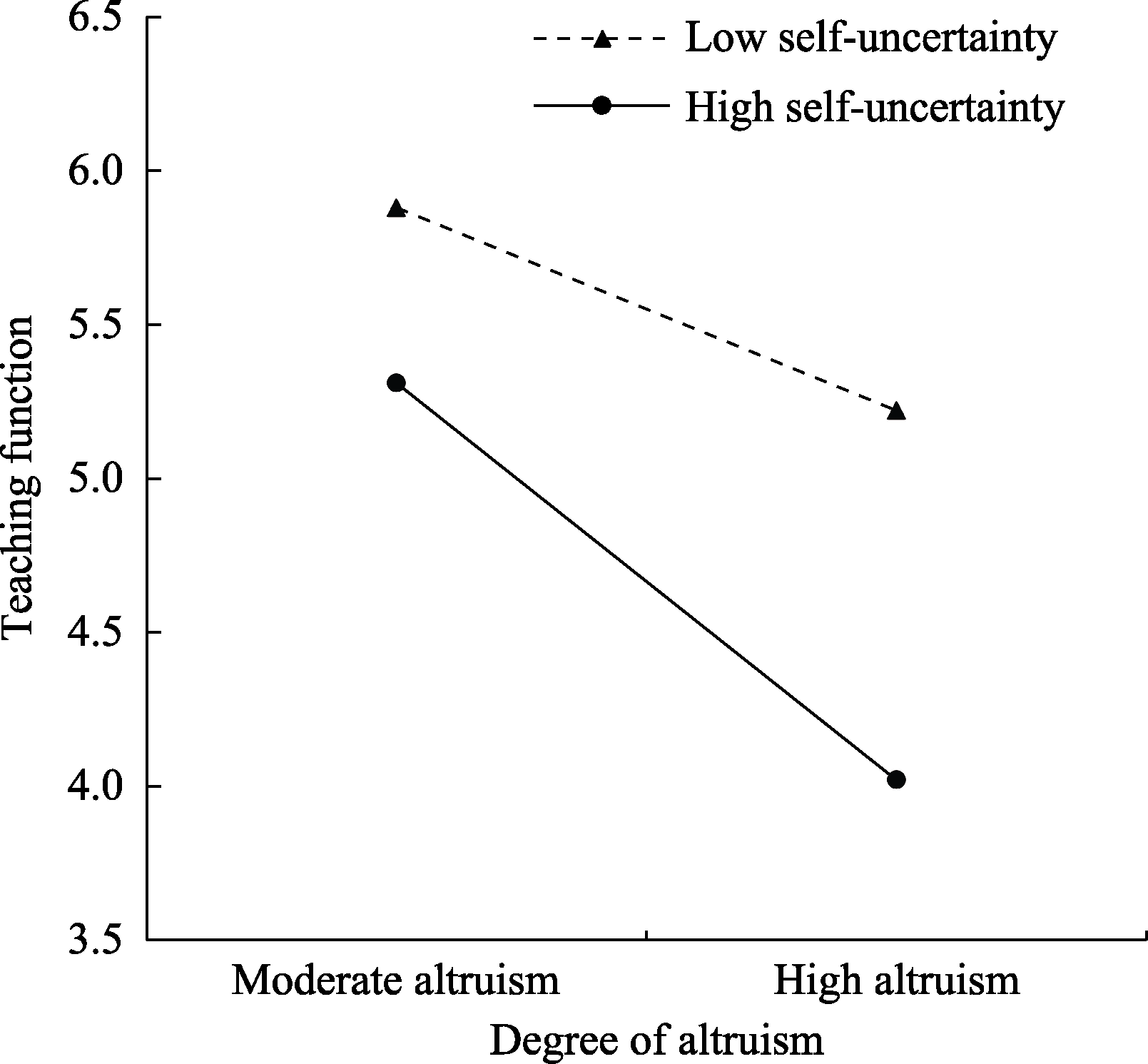
Figure 9. Moderating effect of self-uncertainty on the relationship between degree of altruism and perceived teaching function.
| variable | 1 | 2 | 3 | 4 | 5 |
|---|---|---|---|---|---|
| 1. Gender | — | ?0.08 | ?0.15* | ?0.09 | ?0.01 |
| 2. Age | 0.01 | — | 0.11 | 0.10 | ?0.02 |
| 3. Teaching function | ?0.09 | 0.09 | — | 0.50*** | 0.34*** |
| 4. Morality of the behavior | 0.02 | 0.04 | 0.59*** | — | 0.85*** |
| 5. Moral character | 0.04 | 0.01 | 0.42*** | 0.81*** | — |
Table 6 Correlations among variables within the moderate altruism condition
| variable | 1 | 2 | 3 | 4 | 5 |
|---|---|---|---|---|---|
| 1. Gender | — | ?0.08 | ?0.15* | ?0.09 | ?0.01 |
| 2. Age | 0.01 | — | 0.11 | 0.10 | ?0.02 |
| 3. Teaching function | ?0.09 | 0.09 | — | 0.50*** | 0.34*** |
| 4. Morality of the behavior | 0.02 | 0.04 | 0.59*** | — | 0.85*** |
| 5. Moral character | 0.04 | 0.01 | 0.42*** | 0.81*** | — |
| variable | 1 | 2 | 3 | 4 | 5 |
|---|---|---|---|---|---|
| 1. Gender | — | 0.06 | ?0.06 | ?0.04 | ?0.02 |
| 2. Age | ?0.12 | — | 0.10 | 0.05 | 0.02 |
| 3. Teaching function | ?0.25** | 0.10 | — | 0.62*** | 0.44*** |
| 4. Morality of the behavior | ?0.11 | 0.08 | 0.55*** | — | 0.86*** |
| 5. Moral character | ?0.01 | ?0.07 | 0.28*** | 0.71*** | — |
Table 7 Correlations among variables within the high altruism condition
| variable | 1 | 2 | 3 | 4 | 5 |
|---|---|---|---|---|---|
| 1. Gender | — | 0.06 | ?0.06 | ?0.04 | ?0.02 |
| 2. Age | ?0.12 | — | 0.10 | 0.05 | 0.02 |
| 3. Teaching function | ?0.25** | 0.10 | — | 0.62*** | 0.44*** |
| 4. Morality of the behavior | ?0.11 | 0.08 | 0.55*** | — | 0.86*** |
| 5. Moral character | ?0.01 | ?0.07 | 0.28*** | 0.71*** | — |
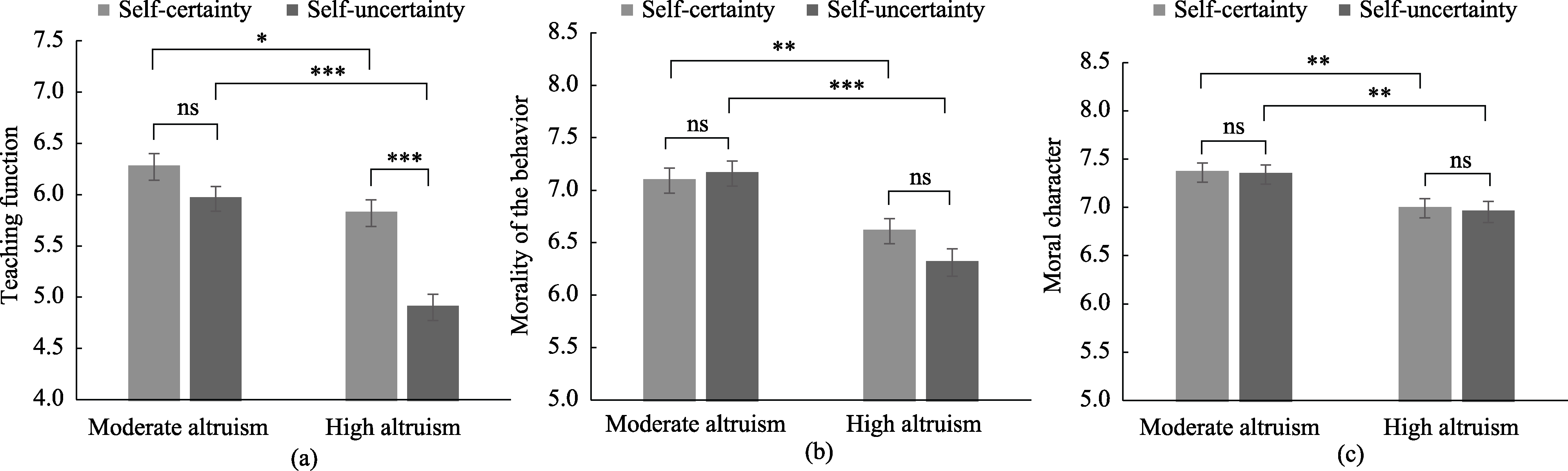
Figure 10. Differences in dependent-variable ratings by degree of altruism and self-uncertainty. Note: Error bars represent standard errors. *p < 0.05, **p < 0.01, ***p < 0.001, ns = not significant.
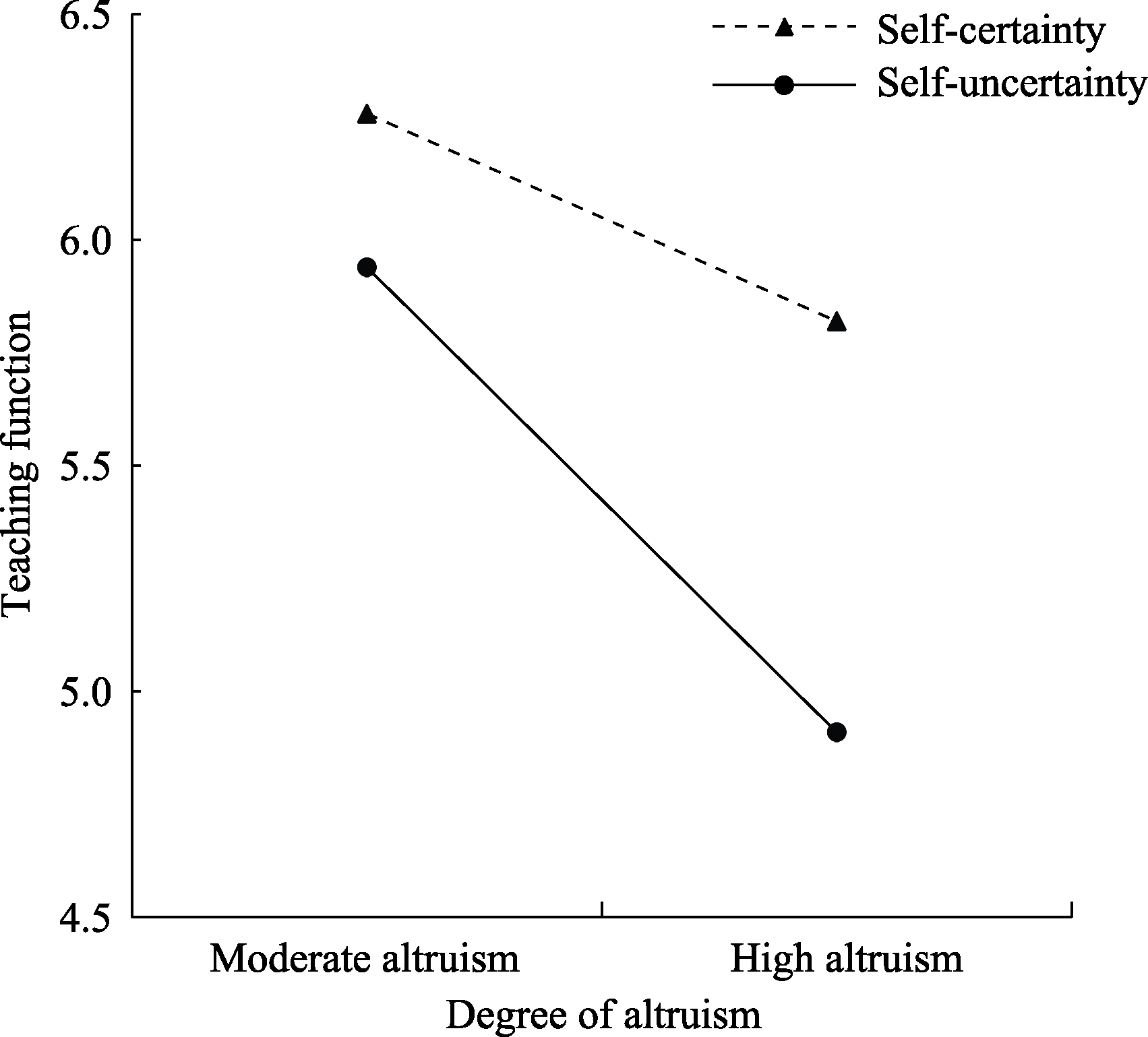
Figure 11. Moderating effect of self-uncertainty on the relationship between degree of altruism and perceived teaching function.

Figure 12. Meta-analytic Results.
| [1] |
Aguinis, H., Beaty, J. C., Boik, R. J., & Pierce, C. A. (2005). Effect size and power in assessing moderating effects of categorical variables using multiple regression: A 30-year review. Journal of Applied Psychology, 90(1), 94-107.
doi: 10.1037/0021-9010.90.1.94 pmid: 15641892 |
| [2] |
Anderson, R. A., Crockett, M. J., & Pizarro, D. A. (2020). A theory of moral praise. Trends in Cognitive Sciences, 24(9), 694-703.
doi: S1364-6613(20)30149-2 pmid: 32682732 |
| [3] |
Ashton, M. C., & Lee, K. (2009). The HEXACO-60: A short measure of the major dimensions of personality. Journal of Personality Assessment, 91(4), 340-345.
doi: 10.1080/00223890902935878 pmid: 20017063 |
| [4] | Bai, F., Wu, W., & Bao, S. (2019, July). Moral but dominant: When do-gooders get derogated. In Academy of Management Proceedings (Vol. 2019, No. 1, p. 14563). Briarcliff Manor, NY 10510: Academy of Management. |
| [5] |
Berman, J. Z., & Silver, I. (2022). Prosocial behavior and reputation: When does doing good lead to looking good? Current Opinion in Psychology, 43, 102-107.
doi: 10.1016/j.copsyc.2021.06.021 URL |
| [6] |
Berry, Z., & Lucas, B. J. (2024). How much is enough? The relationship between prosocial effort and moral character judgments. Personality and Social Psychology Bulletin, 50(5), 659-678.
doi: 10.1177/01461672221135954 URL |
| [7] |
Bhogal, M. S., Farrelly, D., Galbraith, N., Manktelow, K., & Bradley, H. (2020). The role of altruistic costs in human mate choice. Personality and Individual Differences, 160, 109939.
doi: 10.1016/j.paid.2020.109939 URL |
| [8] |
Bocian, K., Baryla, W., Kulesza, W. M., Schnall, S., & Wojciszke, B. (2018). The mere liking effect: Attitudinal influences on attributions of moral character. Journal of Experimental Social Psychology, 79, 9-20.
doi: 10.1016/j.jesp.2018.06.007 URL |
| [9] |
Bolderdijk, J. W., Brouwer, C., & Cornelissen, G. (2018). When do morally motivated innovators elicit inspiration instead of irritation? Frontiers in Psychology, 8, 2362.
doi: 10.3389/fpsyg.2017.02362 URL |
| [10] |
Bykov, A. (2017). Altruism: New perspectives of research on a classical theme in sociology of morality. Current Sociology, 65(6), 797-813.
doi: 10.1177/0011392116657861 URL |
| [11] |
Campbell, J. D., Trapnell, P. D., Heine, S. J., Katz, I. M., Lavallee, L. F., & Lehman, D. R. (1996). Self-concept clarity: Measurement, personality correlates, and cultural boundaries. Journal of Personality and Social Psychology, 70(6), 141-156.
doi: 10.1037/0022-3514.70.1.141 URL |
| [12] |
Capraro, V., Jordan, J. J., & Tappin, B. M. (2021). Does observability amplify sensitivity to moral frames? Evaluating a reputation-based account of moral preferences. Journal of Experimental Social Psychology, 94, 104103.
doi: 10.1016/j.jesp.2021.104103 URL |
| [13] |
Carnes, N. C., Allmon, B., Alva, J., Cousar, K. A., & Varnam, Z. D. (2022). How morality signals, benefits, binds, and teaches. Journal of Experimental Social Psychology, 101, 104313.
doi: 10.1016/j.jesp.2022.104313 URL |
| [14] |
Chen, J., Zhang, R., Yuan, J., & She. S. (2022). Antisocial punishment in the game. Advances in Psychological Science, 30(2), 436-448.
doi: 10.3724/SP.J.1042.2022.00436 |
| [15] | Choi, E. U., & Hogg, M. A. (2020). Self-uncertainty and group identification: A meta-analysis. Group Processes & Intergroup Relations, 23(4), 483-501. |
| [16] |
Chung, M., & Saini, R. (2022). Consumer self-uncertainty increases price dependency. Journal of Business Research, 140, 40-48.
doi: 10.1016/j.jbusres.2021.11.054 URL |
| [17] |
Coombs, C. H., & Avrunin, G. S. (1977). Single-peaked functions and the theory of preference. Psychological Review, 84(2), 216-230.
doi: 10.1037/0033-295X.84.2.216 URL |
| [18] | Curry, O., S. (2016). Morality as cooperation:A problem-centred approach. In T. K. Shackelford & R. D. Hansen (Eds.), The evolution of morality (pp. 27-51). Cham: Springer International Publishing. |
| [19] |
Curry, O. S., Mullins, D. A., & Whitehouse, H. (2019). Is it good to cooperate? Testing the theory of morality-as- cooperation in 60 societies. Current Anthropology, 60(1), 47-69.
doi: 10.1086/701478 URL |
| [20] |
Dawes, C. T., Fowler, J. H., Johnson, T., McElreath, R., & Smirnov, O. (2007). Egalitarian motives in humans. Nature, 446(7137), 794-796.
doi: 10.1038/nature05651 |
| [21] |
De Cremer, D., & Sedikides, C. (2009). The whys and whens of personal uncertainty. Psychological Inquiry, 20(4), 218-220.
doi: 10.1080/10478400903333437 URL |
| [22] |
Ellemers, N., Van Der Toorn, J., Paunov, Y., & Van Leeuwen, T. (2019). The psychology of morality: A review and analysis of empirical studies published from 1940 through 2017. Personality and Social Psychology Review, 23(4), 332-366.
doi: 10.1177/1088868318811759 pmid: 30658545 |
| [23] |
Fritz, M. S., & MacKinnon, D. P. (2007). Required sample size to detect the mediated effect. Psychological Science, 18(3), 233-239.
doi: 10.1111/j.1467-9280.2007.01882.x pmid: 17444920 |
| [24] | Fu, P. (2023). Fu Peirong unscrambles the Analects (Rev. ed.). Beijing: Oriental Press. |
| [25] |
Ge, X. (2023). Experimentally manipulating mediating processes: Why and how to examine mediation using statistical moderation analyses. Journal of Experimental Social Psychology, 109, 104507.
doi: 10.1016/j.jesp.2023.104507 URL |
| [26] |
Grant, A. M., & Schwartz, B. (2011). Too much of a good thing: The challenge and opportunity of the inverted U. Perspectives on Psychological Science, 6(1), 61-76.
doi: 10.1177/1745691610393523 pmid: 26162116 |
| [27] | Hayes, A. F. (2013). Introduction to mediation, moderation, and conditional process analysis: A regression-based approach. Guilford publications. |
| [28] | Hedges, L. V., & Tipton, E. (2010). Meta-analysis. In Steptoe, A. et al. (Ed.), Handbook of Behavioral Medicine: Methods and Applications (pp. 909-921). New York, NY: Springer New York. |
| [29] |
Ho, M. K., Cushman, F., Littman, M. L., & Austerweil, J. L. (2019). People teach with rewards and punishments as communication, not reinforcements. Journal of Experimental Psychology: General, 148(3), 520-549.
doi: 10.1037/xge0000569 URL |
| [30] | Hogg, M. A. (2007). Uncertainty-identity theory. Advances in Experimental Social Psychology, 39, 69-126. |
| [31] |
Hogg, M. A. (2009). Managing self-uncertainty through group identification. Psychological Inquiry, 20(4), 221-224.
doi: 10.1080/10478400903333452 URL |
| [32] | Hogg, M., A. (2021). Self-uncertainty and group identification: Consequences for social identity, group behavior, intergroup relations, and society. In B. Gawronski (Ed.), Advances in Experimental Social Psychology (Vol. 64, pp. 263-316). Academic Press. |
| [33] |
Jiao, L., Xu, Y., Tian, Y., Guo, Z., & Zhao, J. (2022). The hierarchies of good and evil personality traits. Acta Psychologica Sinica, 54(7), 850-866.
doi: 10.3724/SP.J.1041.2022.00850 |
| [34] |
Johnson, S. G., & Park, S. Y. (2021). Moral signaling through donations of money and time. Organizational Behavior and Human Decision Processes, 165, 183-196.
doi: 10.1016/j.obhdp.2021.05.004 URL |
| [35] | Kappes, A., Nussberger, A. M., Faber, N. S., Kahane, G., Savulescu, J., & Crockett, M. J. (2018). Uncertainty about the impact of social decisions increases prosocial behavior. Nature Human Behavior, 2(8), 573-580. |
| [36] |
Kawamura, Y., & Kusumi, T. (2020). Altruism does not always lead to a good reputation: A normative explanation. Journal of Experimental Social Psychology, 90, 104021.
doi: 10.1016/j.jesp.2020.104021 URL |
| [37] |
Kawamura, Y., Ohtsubo, Y., & Kusumi, T. (2021). Effects of cost and benefit of prosocial behavior on reputation. Social Psychological and Personality Science, 12(4), 452-460.
doi: 10.1177/1948550620929163 URL |
| [38] |
Klein, N., & Epley, N. (2014). The topography of generosity: Asymmetric evaluations of prosocial actions. Journal of Experimental Psychology: General, 143(6), 2366-2379.
doi: 10.1037/xge0000025 URL |
| [39] | Macdonnell, R., & White, K. (2015). How construals of money versus time impact consumer charitable giving. Journal of Consumer Research, 42(4), 551-563. |
| [40] |
Malle, B. F. (2021). Moral judgments. Annual Review of Psychology, 72(1), 293-318.
doi: 10.1146/psych.2021.72.issue-1 URL |
| [41] |
Meng, X., & Moriguchi, Y. (2021). Neural basis for egalitarian sharing in five-to six-year-old children. Neuropsychologia, 154, 107787.
doi: 10.1016/j.neuropsychologia.2021.107787 URL |
| [42] | Miller, D. E. (2012). Utilitarianism and consequentialism. In Gaus, G. et al. (Ed.), The Routledge companion to social and political philosophy (pp. 329-341). Routledge. |
| [43] |
Noguti, V., & Bokeyar, A. L. (2014). Who am I? The relationship between self‐concept uncertainty and materialism. International Journal of Psychology, 49(5), 323-333.
doi: 10.1002/ijop.2014.49.issue-5 URL |
| [44] |
Pfattheicher, S., & Böhm, R. (2018). Honesty-humility under threat: Self-uncertainty destroys trust among the nice guys. Journal of Personality and Social Psychology, 114(1), 179-194.
doi: 10.1037/pspp0000144 pmid: 28263618 |
| [45] |
Pfattheicher, S., Nielsen, Y. A., & Thielmann, I. (2022). Prosocial behavior and altruism: A review of concepts and definitions. Current Opinion in Psychology, 44, 124-129.
doi: 10.1016/j.copsyc.2021.08.021 URL |
| [46] |
Pleasant, A., & Barclay, P. (2018). Why hate the good guy? Antisocial punishment of high cooperators is greater when people compete to be chosen. Psychological Science, 29(6), 868-876.
doi: 10.1177/0956797617752642 pmid: 29708860 |
| [47] |
Reed II, A., Kay, A., Finnel, S., Aquino, K., & Levy, E. (2016). I don’t want the money, I just want your time: How moral identity overcomes the aversion to giving time to prosocial causes. Journal of Personality and Social Psychology, 110(3), 435-457.
doi: 10.1037/pspp0000058 URL |
| [48] |
Schwartz, S. A., & Inbar, Y. (2023). Is it good to feel bad about littering? Conflict between moral beliefs and behaviors for everyday transgressions. Cognition, 236, 105437.
doi: 10.1016/j.cognition.2023.105437 URL |
| [49] | Seligman, M. E., & Csikszentmihalyi, M. (2014). Positive psychology:An introduction. In Csikszentmihalyi, M (Ed.), Flow and the foundations of positive psychology: The collected works of Mihaly Csikszentmihalyi (pp. 279-298). Dordrecht: Springer Netherlands. |
| [50] | Sun, Q. (2022). The effect of distributive fairness on cooperative behavior in social dilemmas: Tradeoffs between fairness and self-benefits [Unpublished doctorial dissertation]. East China Normal University. |
| [51] |
Sun, S., Zhao, H., Pi, Q., & Zhang, H. (2025). The paradox in moral character judgement of highly altruistic individuals: Investigating the role of predictability and honesty-humility. European Journal of Social Psychology, 55(4), 624-639.
doi: 10.1002/ejsp.v55.4 URL |
| [52] |
Sun, X., Han, L., Wang, M., Liu, S., & Shen, Y. (2023). Social exclusion with antisocial punishment in spatial public goods game. Physics Letters A, 474, 128837.
doi: 10.1016/j.physleta.2023.128837 URL |
| [53] |
Tai, K., Lin, K. J., Lam, C. K., & Liu, W. (2023). Biting the hand that feeds: A status-based model of when and why receiving help motivates social undermining. Journal of Applied Psychology, 108(1), 27-52.
doi: 10.1037/apl0000580 URL |
| [54] |
Tasimi, A., Dominguez, A., & Wynn, K. (2015). Do-gooder derogation in children: The social costs of generosity. Frontiers in Psychology, 6, 1036.
doi: 10.3389/fpsyg.2015.01036 pmid: 26257688 |
| [55] |
Tetlock, P. E. (2002). Social functionalist frameworks for judgment and choice: Intuitive politicians, theologians, and prosecutors. Psychological Review, 109(3), 451-471.
pmid: 12088240 |
| [56] | Tomasello, M. (2016). A natural history of human morality. Harvard University Press. |
| [57] |
Uhlmann, E. L., Pizarro, D. A., & Diermeier, D. (2015). A person-centered approach to moral judgment. Perspectives on Psychological Science, 10(1), 72-81.
doi: 10.1177/1745691614556679 pmid: 25910382 |
| [58] |
Van, den Bos, K. (2009). Making sense of life: The existential self-trying to deal with personal uncertainty. Psychological Inquiry, 20(4), 197-217.
doi: 10.1080/10478400903333411 URL |
| [59] |
Vonasch, A. J., Mofradidoost, R., & Gray, K. (2024). People reject free money and cheap deals because they infer phantom costs. Personality and Social Psychology Bulletin, 51(10), 2050-2067.
doi: 10.1177/01461672241235687 URL |
| [60] |
Vosgerau, J., Simonsohn, U., Nelson, L. D., & Simmons, J. P. (2019). 99% impossible: A valid, or falsifiable, internal meta-analysis. Journal of Experimental Psychology: General, 148(9), 1628-1639.
doi: 10.1037/xge0000663 URL |
| [61] |
Wu, S., Wang, Y., & Peng, K. (2024). More utilitarian and less rational? Social change and two types of individualism over the last 40 years in China. Acta Psychologica Sinica, 56(7), 911-925.
doi: 10.3724/SP.J.1041.2024.00911 |
| [62] |
Wu, X., Li, J., & Li, Y. (2022). The impact of uncertainty induced by the COVID-19 pandemic on intertemporal choice. Journal of Experimental Social Psychology, 103, 104397.
doi: 10.1016/j.jesp.2022.104397 URL |
| [63] | Wu, Y. (2021). How uncertainty impacts on the identity of extreme groups in the global crisis. Sociological Review of China, 9(2), 157-172 |
| [64] |
Yang, Q., Bi, C., Li, L., & Huang, X. (2017). Self-uncertainty: Concepts, structures, and theories. Advances in Psychological Science, 25(6), 1012-1024.
doi: 10.3724/SP.J.1042.2017.01012 URL |
| [65] |
Zhao, X., & Biernat, M. (2022). Status of immigrants’ country of origin and Americans’ assimilation expectations. Journal of Personality and Social Psychology, 122(3), 443-468.
doi: 10.1037/pspi0000370 URL |
| [1] | WANG Tianhong, JIN Shan, CHENG Zipeng, LOU Yu, XIE Xiaofei. The prediction bias of conspicuous altruism: Helpers underestimate social evaluations from bystanders [J]. Acta Psychologica Sinica, 2024, 56(9): 1210-1224. |
| [2] | YANG Huan, WEI Xuhua. The impact of guanxi human resource management practices on beneficiaries’ altruistic behavior: The perspective of compensatory ethics [J]. Acta Psychologica Sinica, 2022, 54(10): 1248-1261. |
| [3] | FEI Dingzhou; QIAN Donghai; HUANG Xuchen. The self-control process model of altruistic behavior: The positive effect of moral emotions under the ego depletion [J]. Acta Psychologica Sinica, 2016, 48(9): 1175-1183. |
| [4] | XIAO Erping; ZHANG Jijia; WANG Juan. The Azhu Relationship under the Sexual Union in Moso Matrilineal Society: Akin to Kinship or Friendship? [J]. Acta Psychologica Sinica, 2015, 47(12): 1486-1498. |
| [5] | REN Jun;LI Ruixue;ZHAN Jun;LIU Di;LIN Man;PENG Nianqiang. Can Good People Commit Evil Acts? Evidence of Ego-depletion on Individuals’ Altruistic Behavior [J]. Acta Psychologica Sinica, 2014, 46(6): 841-851. |
| [6] | Xu Fen ( Institute of the Study and Promotion of Mental Health, Beijing Normal University, Beijing 100875) Jing Chunyan, Liu Yin, Bao Xuehua (Psychology Department, Zhejiang University, Hangzhou 310028). UNDERSTANDING CONCEPTS AND MORAL EVALUATIONS OF WHITE-LIE AND TRUTH-TELLING [J]. , 2002, 34(01): 75-81. |
| [7] | Xu Fen, Fu Genyao(Psychology Department, Hangzhou University, Hangzhou, 310028). CHILDREN'S EVALUATIONS ON LYING AND TRUTH-TELLING [J]. , 1998, 30(04): 452-459. |
| Viewed | ||||||
|
Full text |
|
|||||
|
Abstract |
|
|||||
