

ISSN 0439-755X
CN 11-1911/B
CN 11-1911/B
Acta Psychologica Sinica ›› 2026, Vol. 58 ›› Issue (5): 827-839.doi: 10.3724/SP.J.1041.2026.0827
• Reports of Empirical Studies • Previous Articles Next Articles
GUO Ruiqiao1, LI Wenrui2, GUO Xue3, ZHAO Na4, LEI Ming5, LIU Qiang1( )
)
Published:2026-05-25
Online:2026-03-05
Contact:
LIU Qiang, E-mail: GUO Ruiqiao, LI Wenrui, GUO Xue, ZHAO Na, LEI Ming, LIU Qiang. (2026). The impact of tACS stimulation timing on the modulation of working memory. Acta Psychologica Sinica, 58(5), 827-839.
Add to citation manager EndNote|Ris|BibTeX
URL: https://journal.psych.ac.cn/acps/EN/10.3724/SP.J.1041.2026.0827

Figure 1 Experimental flowchart. During stimulus presentation, there are 4 color blocks on each side, with each block having a distinct color, and the colors on the left and right sides do not repeat. A color image is available in the electronic version, and the same applies below.
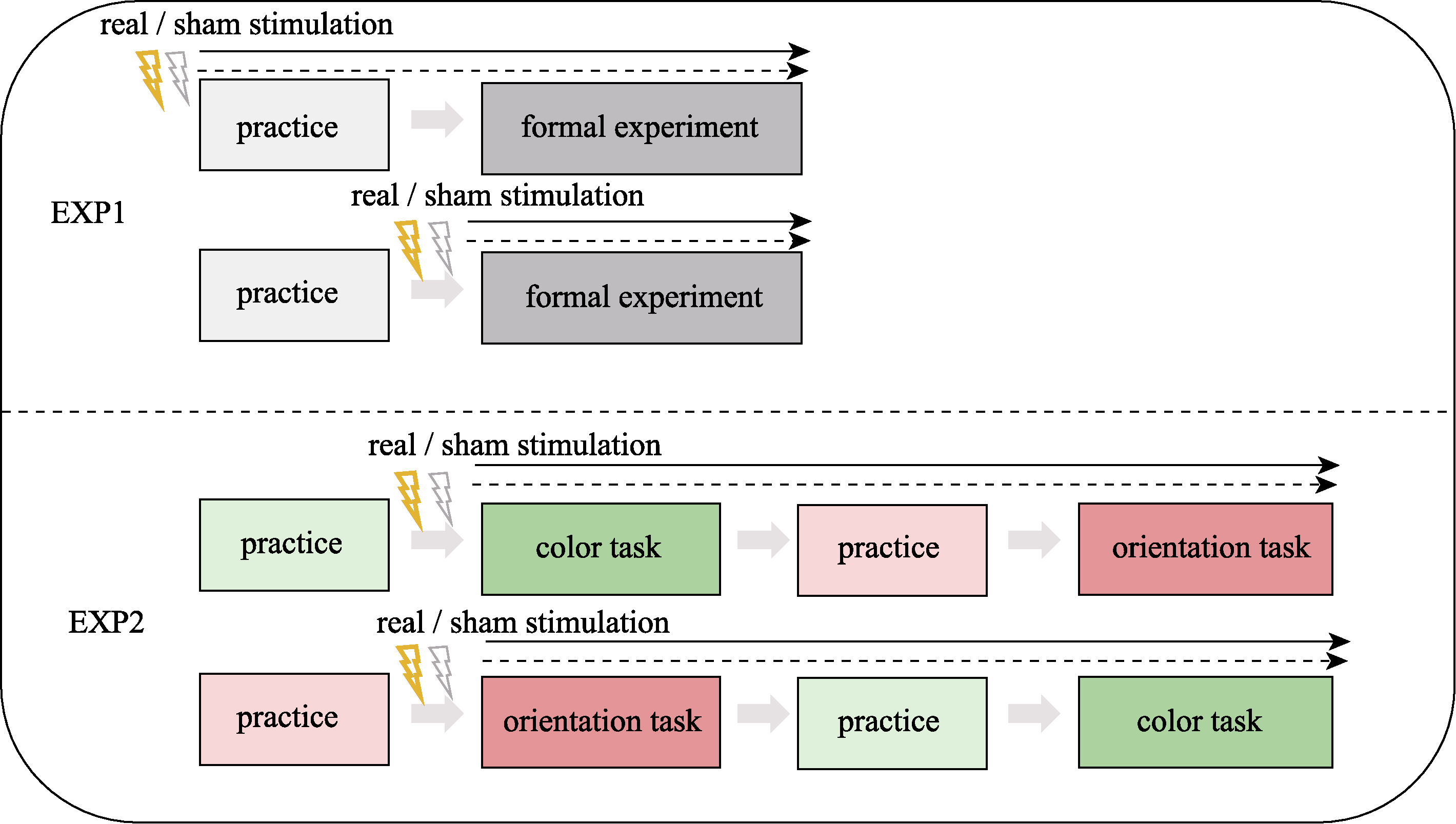
Figure 2. Flowchart of tACS stimulation and task order in Experiments 1 and 2. In Experiment 1, half of the participants were assigned to the pre-stimulation group, and half to the post-stimulation group. Each group completed both real and sham stimulation conditions with a one-week interval. In Experiment 2, half of the participants completed the color task first, and the other half completed the orientation task first. Each participant completed both real and sham stimulation conditions with a one-week interval. Yellow lightning indicates real stimulation, and black lightning indicates sham stimulation. Solid long arrows represent the duration of real stimulation, while dashed long arrows represent the duration of sham stimulation.
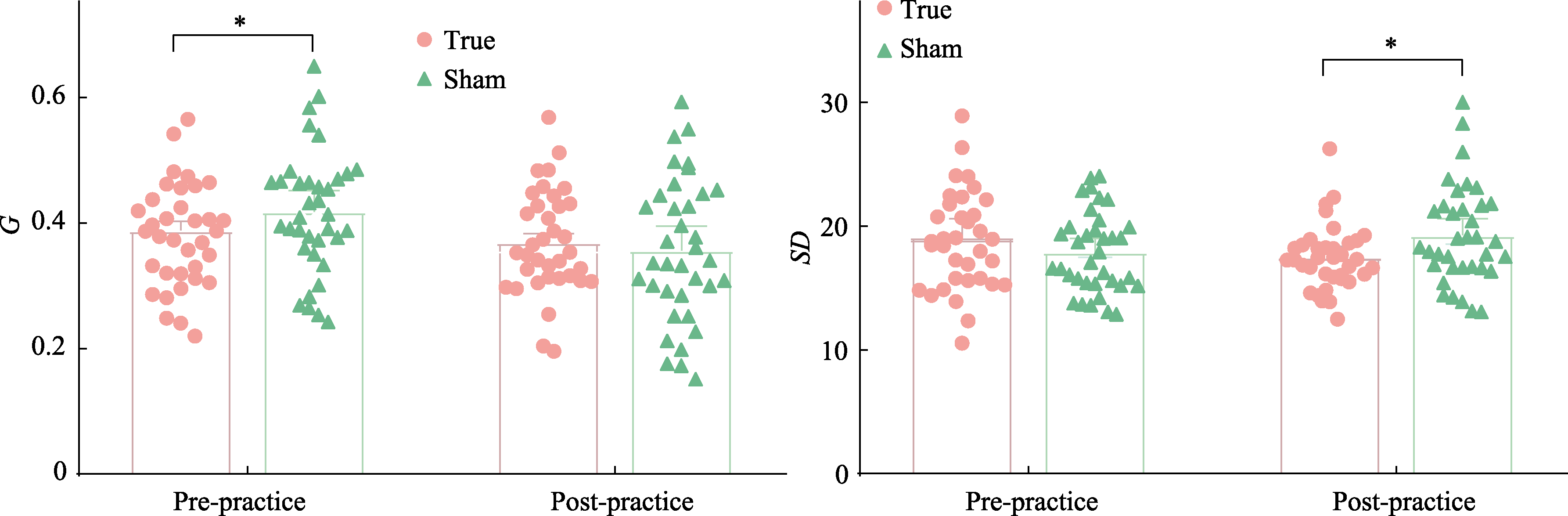
Figure 3. The left part of the figure shows the guess rate G results for the pre-stimulation and post-stimulation groups (data from both left and right visual fields combined). The right part shows the accuracy SD results for the pre-stimulation and post-stimulation groups. Note: Larger G values indicate a lower working memory capacity, and higher SD values indicate poorer working memory accuracy. In both G and SD results, circles represent real stimulation conditions, and triangles represent sham stimulation conditions.
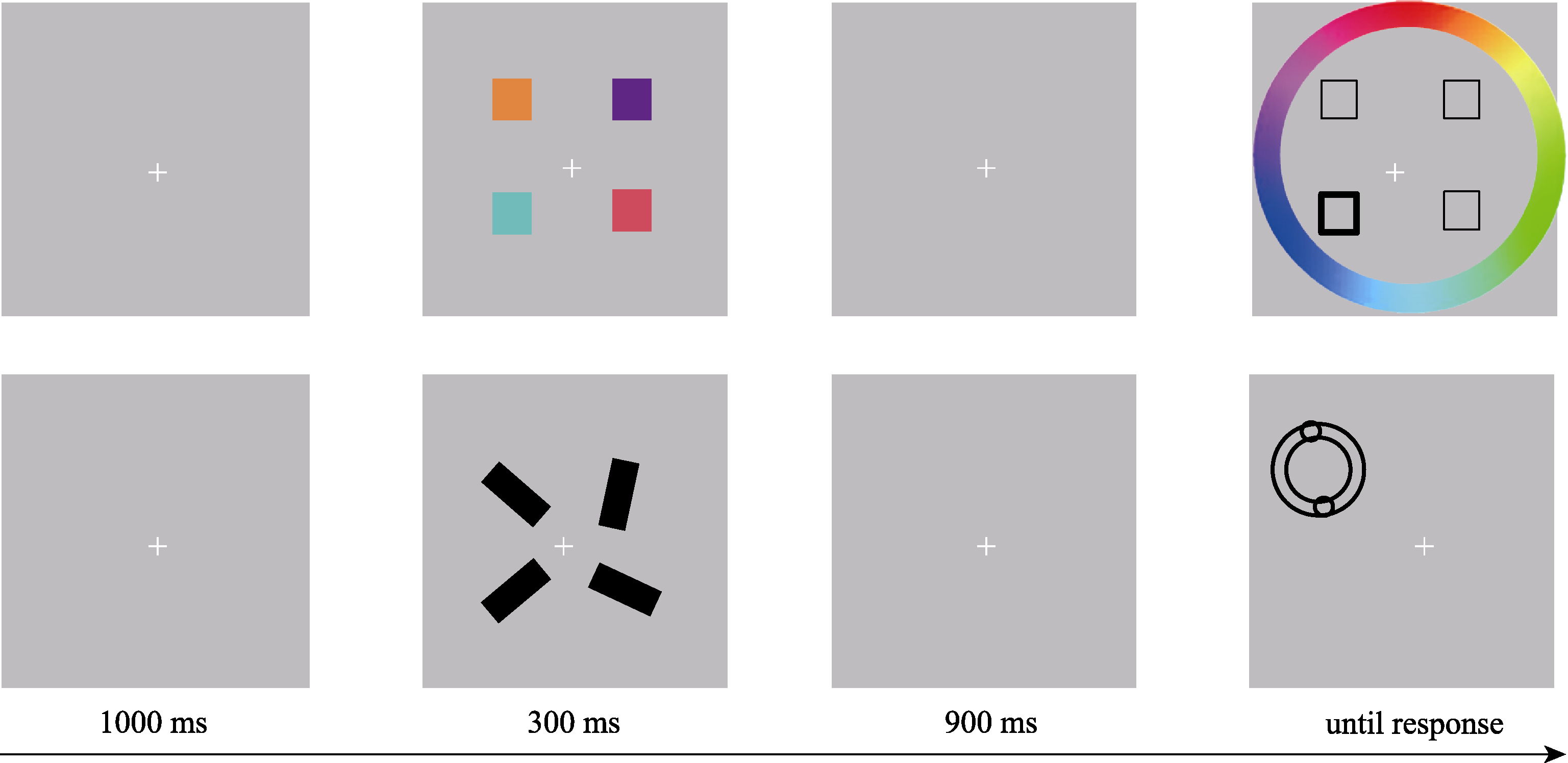
Figure 4. Flowchart of color and orientation recall tasks. In the color task, 4 different colors are presented at 4 positions.
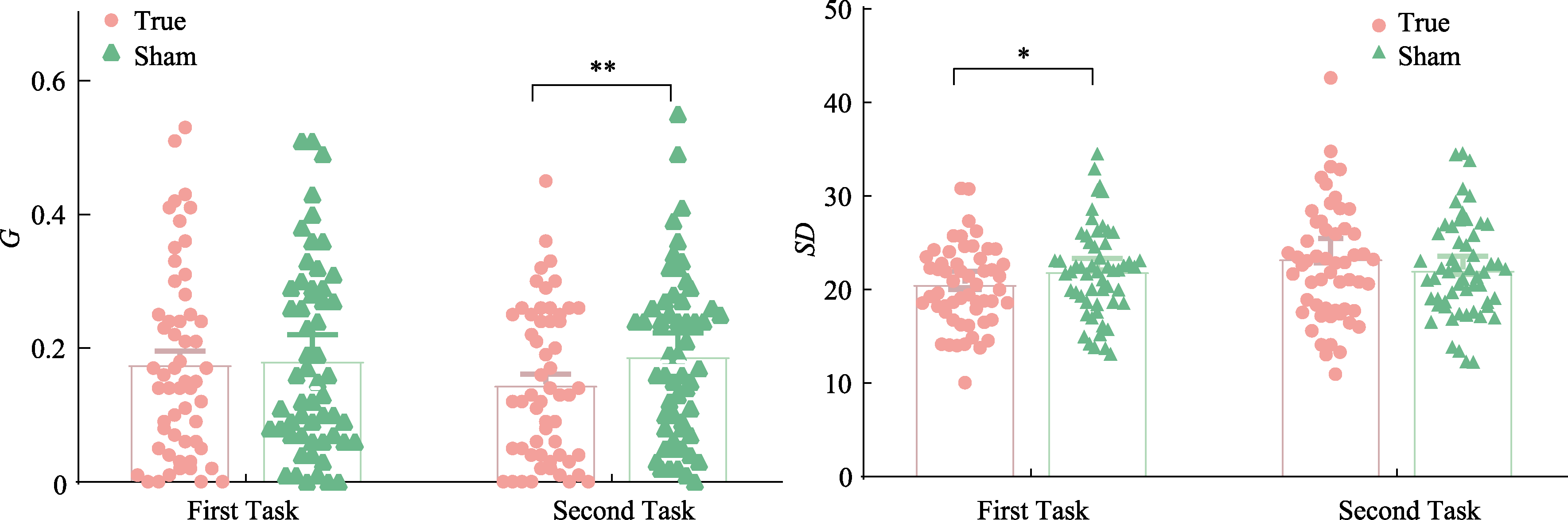
Figure 5. Guess rate G and accuracy SD results for the two tasks in Experiment 2. The first task refers to the task completed by the participant first, and the second task refers to the one completed second. Note: In both the first and second task plots, whether for G or SD, circles represent real stimulation conditions, and triangles represent sham stimulation conditions.
| [1] |
Alós-Ferrer, C., Hügelschäfer, S., & Li, J. (2016). Inertia and decision making. Frontiers in Psychology, 7, 169. https://doi.org/10.3389/fpsyg.2016.00169
doi: 10.3389/fpsyg.2016.00169 URL pmid: 26909061 |
| [2] |
Antal, A., Boros, K., Poreisz, C., Chaieb, L., Terney, D., & Paulus, W. (2008). Comparatively weak after-effects of transcranial alternating current stimulation (tACS) on cortical excitability in humans. Brain Stimulation, 1(2), 97-105. https://doi.org/10.1016/j.brs.2007.10.001
doi: 10.1016/j.brs.2007.10.001 URL pmid: 20633376 |
| [3] |
Antal, A., & Paulus, W. (2013). Transcranial alternating current stimulation (tACS). Frontiers in Human Neuroscience, 7, 317. https:// doi.org/10.3389/fnhum.2013.00317
doi: 10.3389/fnhum.2013.00317 URL pmid: 23825454 |
| [4] |
Axmacher, N., Henseler, M. M., Jensen, O., Weinreich, I., Elger, C. E., & Fell, J. (2010). Cross-frequency coupling supports multi-item working memory in the human hippocampus. Proceedings of the National Academy of Sciences, 107(7), 3228-3233. https://doi.org/10.1073/pnas.0911531107
doi: 10.1073/pnas.0911531107 URL |
| [5] |
Baddeley, A. (2012). Working memory: Theories, models, and controversies. Annual Review of Psychology, 63(1), 1-29. https:// doi.org/10.1146/annurev-psych-120710-100422
doi: 10.1146/psych.2012.63.issue-1 URL |
| [6] |
Barton, B., Ester, E. F., & Awh, E. (2009). Discrete resource allocation in visual working memory. Journal of Experimental Psychology: Human Perception and Performance, 35(5), 1359-1367. https:// doi.org/10.1037/a0015792
doi: 10.1037/a0015792 URL pmid: 19803642 |
| [7] |
Bays, P. M., & Husain, M. (2008). Dynamic shifts of limited working memory resources in human vision. Science, 321(5890), 851-854. https://doi.org/10.1126/science.1158023
doi: 10.1126/science.1158023 URL pmid: 18687968 |
| [8] |
Bender, M., Romei, V., & Sauseng, P. (2019). Slow theta tACS of the right parietal cortex enhances contralateral visual working memory capacity. Brain Topography, 32(3), 477-481. https://doi.org/10.1007/s10548-019-00702-2
doi: 10.1007/s10548-019-00702-2 URL pmid: 30694422 |
| [9] |
Biel, A. L., Sterner, E., Röll, L., & Sauseng, P. (2022). Modulating verbal working memory with fronto‐parietal transcranial electric stimulation at theta frequency: Does it work? European Journal of Neuroscience, 55(2), 405-425. https://doi.org/10.1111/ejn.15563
doi: 10.1111/ejn.v55.2 URL |
| [10] | Cohen, J. (1988). Statistical power analysis for the behavioral sciences (2nd ed.). Hillsdale, NJ: Lawrence Erlbaum Associates. |
| [11] |
Danner, U. N., Aarts, H., & de Vries, N. K. (2008). Habit vs. intention in the prediction of future behaviour: The role of frequency, context stability and mental accessibility of past behaviour. British Journal of Social Psychology, 47(2), 245-265. https://doi.org/10.1348/014466607X230876
doi: 10.1348/014466607X230876 URL |
| [12] |
Ding, J., Zhang, Y., Liang, P., & Li, X. (2023). Modulation of working memory capacity on predictive processing during language comprehension. Language, Cognition and Neuroscience, 38(8), 1133-1152.
doi: 10.1080/23273798.2023.2212819 URL |
| [13] |
Elyamany, O., Leicht, G., Herrmann, C. S., & Mulert, C. (2021). Transcranial alternating current stimulation (tACS): From basic mechanisms towards first applications in psychiatry. European Archives of Psychiatry and Clinical Neuroscience, 271(1), 135-156. https:// doi.org/10.1007/s00406-020-01209-9
doi: 10.1007/s00406-020-01209-9 URL pmid: 33211157 |
| [14] |
Ericsson, K. A., & Kintsch, W. (1995). Long-term working memory. Psychological Review, 102(2), 211-245. https://doi.org/10.1037/0033-295x.102.2.211
URL pmid: 7740089 |
| [15] |
Guo, X., Li, Z., Zhang, L., & Liu, Q. (2021). Modulation of visual working memory performance via different theta frequency stimulations. Brain Sciences, 11(10), 1358. https://doi.org/10.3390/brainsci11101358
doi: 10.3390/brainsci11101358 URL |
| [16] |
Haggar, P., Whitmarsh, L., & Skippon, S. M. (2019). Habit discontinuity and student travel mode choice. Transportation Research Part F: Traffic Psychology and Behaviour, 64, 1-13. https://doi.org/10.1016/j.trf.2019.04.022
doi: 10.1016/j.trf.2019.04.022 URL |
| [17] |
Jaušovec, N., Jaušovec, K., & Pahor, A. (2014). The influence of theta transcranial alternating current stimulation (tACS) on working memory storage and processing functions. Acta Psychologica, 146, 1-6. https://doi.org/10.1016/j.actpsy.2013.11.011
doi: 10.1016/j.actpsy.2013.11.011 URL pmid: 24361739 |
| [18] |
Jensen, O., & Lisman, J. E. (1998). An oscillatory short-term memory buffer model can account for data on the Sternberg task. The Journal of Neuroscience, 18(24), 10688-10699. https://doi.org/10.1523/jneurosci.18-24-10688.1998
doi: 10.1523/JNEUROSCI.18-24-10688.1998 URL |
| [19] |
Jensen, O., & Lisman, J. E. (2005). Hippocampal sequence-encoding driven by a cortical multi-item working memory buffer. Trends in Neurosciences, 28(2), 67-72. https://doi.org/10.1016/j.tins.2004.12.001
URL pmid: 15667928 |
| [20] |
Jensen, O., & Mazaheri, A. (2010). Shaping functional architecture by oscillatory alpha activity: Gating by inhibition. Frontiers in Human Neuroscience, 4, 186. https://doi.org/10.3389/fnhum.2010.00186
doi: 10.3389/fnhum.2010.00186 URL pmid: 21119777 |
| [21] |
Jones, K. T., Arciniega, H., & Berryhill, M. E. (2019). Replacing tDCS with theta tACS provides selective, but not general WM benefits. Brain Research, 1720, 146324.
doi: 10.1016/j.brainres.2019.146324 URL |
| [22] |
Kleinert, M.-L., Szymanski, C., & Müller, V. (2017). Frequency-unspecific effects of θ-tACS related to a visuospatial working memory Task. Frontiers in Human Neuroscience, 11, 367.
doi: 10.3389/fnhum.2017.00367 URL |
| [23] |
Lee, J., & Park, S. (2005). Working memory impairments in schizophrenia: A meta-analysis. Journal of Abnormal Psychology, 114(4), 599-611. https://doi.org/10.1037/0021-843X.114.4.599
doi: 10.1037/0021-843X.114.4.599 URL pmid: 16351383 |
| [24] |
Lega, B., Burke, J., Jacobs, J., & Kahana, M. J. (2016). Slow- theta-to-gamma phase-amplitude coupling in human hippocampus supports the formation of new episodic memories. Cerebral Cortex, 26(1), 268-278. https://doi.org/10.1093/cercor/bhu232
doi: 10.1093/cercor/bhu232 URL |
| [25] |
Liu, C.-L., & Zhou, R.-L. (2013). Effects of working memory training on cognition and brain plasticity. Advances in Psychological Science, 20(7), 1003-1011. https://doi.org/10.3724/sp.j.1042.2012.01003
doi: 10.3724/SP.J.1042.2012.01003 URL |
| [26] |
Long, F., Ye, C., Li, Z., Tian, Y., & Liu, Q. (2020). Negative emotional state modulates visual working memory in the late consolidation phase. Cognition and Emotion, 34(8), 1646-1663. https://doi.org/10.1080/02699931.2020.1795626
doi: 10.1080/02699931.2020.1795626 URL |
| [27] |
Nissim, N. R., McAfee, D. C., Edwards, S., Prato, A., Lin, J. X., Lu, Z., Coslett, H. B., & Hamilton, R. H. (2023). Efficacy of transcranial alternating current stimulation in the enhancement of working memory performance in healthy adults: A systematic meta-analysis. Neuromodulation: Technology at the Neural Interface, 26(4), 728-737. https://doi.org/10.1016/j.neurom.2022.12.014
doi: 10.1016/j.neurom.2022.12.014 URL |
| [28] |
Nitsche, M. A., Cohen, L. G., Wassermann, E. M., Priori, A., Lang, N., Antal, A., Paulus, W., Hummel, F., Boggio, P. S., Fregni, F., & Pascual-Leone, A. (2008). Transcranial direct current stimulation: State of the art 2008. Brain Stimulation, 1(3), 206-223. https://doi.org/10.1016/j.brs.2008.06.004
doi: 10.1016/j.brs.2008.06.004 URL pmid: 20633386 |
| [29] |
Ouellette, J. A., & Wood, W. (1998). Habit and intention in everyday life: The multiple processes by which past behavior predicts future behavior. Psychological Bulletin, 124(1), 54-74.
doi: 10.1037/0033-2909.124.1.54 URL |
| [30] | Paßmann, S., Baselgia, S., Kasten, F. H., Herrmann, C. S., & Rasch, B. (2024). Differential online and offline effects of theta-tACS on memory encoding and retrieval. Cognitive, Affective, & Behavioral Neuroscience, 24(5), 894-911. https://doi.org/10.3758/s13415-024-01204-w |
| [31] |
Peich, M.-C., Husain, M., & Bays, P. M. (2013). Age-related decline of precision and binding in visual working memory. Psychology and Aging, 28(3), 729-743. https://doi.org/10.1037/a0033236
doi: 10.1037/a0033236 URL |
| [32] |
Pupíková, M., Maceira-Elvira, P., Harquel, S., Šimko, P., Popa, T., Gajdoš, M., … Rektorová, I. (2024). Physiology-inspired bifocal fronto-parietal tACS for working memory enhancement. Heliyon, 10(18), e37427. https://doi.org/10.1016/j.heliyon.2024.e37427
doi: 10.1016/j.heliyon.2024.e37427 URL |
| [33] |
Riecke, L., Formisano, E., Herrmann, C. S., & Sack, A. T. (2015). 4-Hz transcranial alternating current stimulation phase modulates hearing. Brain Stimulation, 8(4), 777-783. https://doi.org/10.1016/j.brs.2015.04.004
doi: 10.1016/j.brs.2015.04.004 URL pmid: 25981160 |
| [34] |
Ruhnau, P., Neuling, T., Fuscá, M., Herrmann, C. S., Demarchi, G., & Weisz, N. (2016). Eyes wide shut: Transcranial alternating current stimulation drives alpha rhythm in a state dependent manner. Scientific Reports, 6(1), 27138. https://doi.org/10.1038/srep27138
doi: 10.1038/srep27138 URL |
| [35] |
Samuelson, W., & Zeckhauser, R. (1988). Status quo bias in decision making. Journal of Risk and Uncertainty, 1(1), 7-59. https:// doi.org/10.1007/BF00055564
doi: 10.1007/BF00055564 URL |
| [36] |
Sawilowsky, S. S. (2009). New effect size rules of thumb. Journal of Modern Applied Statistical Methods, 8(2), 597-599. https:// doi.org/10.22237/jmasm/1257035100
doi: 10.22237/jmasm/1257035100 URL |
| [37] |
Schneegans, S., & Bays, P. M. (2017). Neural architecture for feature binding in visual working memory. The Journal of Neuroscience, 37(14), 3913-3925. https://doi.org/10.1523/JNEUROSCI.3493-16.2017
doi: 10.1523/JNEUROSCI.3493-16.2017 URL |
| [38] |
Shiffrin, R. M., & Schneider, W. (1977). Controlled and automatic human information processing: II. Perceptual learning, automatic attending and a general theory. Psychological Review, 84(2), 127-190. https://doi.org/10.1037/0033-295x.84.2.127
doi: 10.1037/0033-295X.84.2.127 URL |
| [39] |
Spitzer, B., & Blankenburg, F. (2011). Stimulus-dependent EEG activity reflects internal updating of tactile working memory in humans. Proceedings of the National Academy of Sciences, 108(20), 8444-8449. https://doi.org/10.1073/pnas.1104189108
doi: 10.1073/pnas.1104189108 URL |
| [40] |
Sreeraj, V. S., Shivakumar, V., Sowmya, S., Bose, A., Nawani, H., Narayanaswamy, J. C., & Venkatasubramanian, G. (2019). Online theta frequency transcranial alternating current stimulation for cognitive remediation in schizophrenia: A case report and review of literature. The Journal of ECT, 35(2), 139-143. https://doi.org/10.1097/yct.0000000000000523
doi: 10.1097/YCT.0000000000000523 URL |
| [41] | Suchow, J. W., Brady, T. F., Fougnie, D., & Alvarez, G. A. (2013). Modeling visual working memory with the MemToolbox. Journal of Vision, 13(10), 9-9. https://doi.org/10.1167/13.10.9 |
| [42] |
Sweller, J., van Merrienboer, J. J. G., & Paas, F. G. W. C. (1998). Cognitive architecture and instructional design. Educational Psychology Review, 10(3), 251-296.
doi: 10.1023/A:1022193728205 |
| [43] |
Tavakoli, A. V., & Yun, K. (2017). Transcranial alternating current stimulation (tACS) mechanisms and protocols. Frontiers in Cellular Neuroscience, 11, 214. https://doi.org/10.3389/fncel.2017.00214
doi: 10.3389/fncel.2017.00214 URL pmid: 28928634 |
| [44] |
Tseng, P., Lu, K. C., & Juan, C.-H. (2018). The critical role of phase difference in theta oscillation between bilateral parietal cortices for visuospatial working memory. Scientific Reports, 8(1), 349.
doi: 10.1038/s41598-017-18449-w pmid: 29321584 |
| [45] |
Vogel, E. K., McCollough, A. W., & Machizawa, M. G. (2005). Neural measures reveal individual differences in controlling access to working memory. Nature, 438(7067), 500-503. https://doi.org/10.1038/nature04171
doi: 10.1038/nature04171 URL |
| [46] |
Wang, S., Itthipuripat, S., & Ku, Y. (2019). Electrical stimulation over human posterior parietal cortex selectively enhances the capacity of visual short-term memory. The Journal of Neuroscience, 39(3), 528-536. https://doi.org/10.1523/JNEUROSCI.1959-18.2018
doi: 10.1523/JNEUROSCI.1959-18.2018 URL |
| [47] |
Wolinski, N., Cooper, N. R., Sauseng, P., & Romei, V. (2018). The speed of parietal theta frequency drives visuospatial working memory capacity. PLOS Biology, 16(3), e2005348. https://doi.org/10.1371/journal.pbio.2005348
doi: 10.1371/journal.pbio.2005348 URL |
| [48] |
Ye, C., Hu, Z., Li, H., Ristaniemi, T., Liu, Q., & Liu, T. (2017). A two-phase model of resource allocation in visual working memory. Journal of Experimental Psychology: Learning, Memory, and Cognition, 43(10), 1557-1566. https://doi.org/10.1037/xlm0000376
doi: 10.1037/xlm0000376 URL |
| [49] |
Ye, C., Sun, H.-J., Xu, Q., Liang, T., Zhang, Y., & Liu, Q. (2019). Working memory capacity affects trade-off between quality and quantity only when stimulus exposure duration is sufficient: Evidence for the two-phase model. Scientific Reports, 9(1), 8727. https://doi.org/10.1038/s41598-019-44998-3
doi: 10.1038/s41598-019-44998-3 URL pmid: 31217521 |
| [50] |
Zhang, D.-W., Moraidis, A., & Klingberg, T. (2022). Individually tuned theta HD-tACS improves spatial performance. Brain Stimulation, 15(6), 1439-1447. https://doi.org/10.1016/j.brs.2022.10.009
doi: 10.1016/j.brs.2022.10.009 URL |
| [51] |
Zhang, S. Y., & Li, X., B. (2022). The application of different frequencies of transcranial alternating current stimulation in mental disorders. Advances in Psychological Science, 30(9), 2053-2066. https://doi.org/10.3724/sp.j.1042.2022.02053.
doi: 10.3724/SP.J.1042.2022.02053 URL |
| [52] |
Zhang, W., & Luck, S. J. (2008). Discrete fixed-resolution representations in visual working memory. Nature, 453(7192), 233-235. https://doi.org/10.1038/nature06860
doi: 10.1038/nature06860 URL |
| [53] | Zhang, X., Wang, W., Duan, H., Zhao, Y., Kan, Y., & Hu, W. (2019). Effect of working memory on insight and analytic problem solving. Journal of Psychological Science, 42(4), 777-783. |
| [54] |
Zokaei, N., Burnett Heyes, S., Gorgoraptis, N., Budhdeo, S., & Husain, M. (2015). Working memory recall precision is a more sensitive index than span. Journal of Neuropsychology, 9(2), 319-329. https://doi.org/10.1111/jnp.12052
doi: 10.1111/jnp.12052 URL pmid: 25208525 |
| [1] | REN Guofang, DING Xiaowei, ZHANG Yingchao, WANG Shengyuan. Spatial location is harder to remove from working memory than non-spatial features [J]. Acta Psychologica Sinica, 2026, 58(6): 1028-1041. |
| [2] | LIAN Haomin, ZHANG Qian, GU Xuemin, LI Shouxin. Influence of Sustained Visual Attention on the Prioritization of Visual Working Memory [J]. Acta Psychologica Sinica, 2025, 57(2): 191-206. |
| [3] | ZHOU Linshu, ZHANG Yuqing, CAI Dan-Chao. Musical training enhances the interaction between pitch and time dimensions in auditory working memory [J]. Acta Psychologica Sinica, 2025, 57(10): 1701-1714. |
| [4] | LI Ziyuan, LEI Ming, LIU Qiang. Cognitive mechanisms underlying the formation of offline representations in visual working memory [J]. Acta Psychologica Sinica, 2024, 56(4): 412-420. |
| [5] | PANG Chao, CHEN Yanzhang, WANG Li, YANG Xiduan, HE Ya, LI Zhiying, OUYANG Xiaoyu, FU Shimin, NAN Weizhi. Different attentional selection modes of object information in the encoding and maintenance stages of visual working memory [J]. Acta Psychologica Sinica, 2023, 55(9): 1397-1410. |
| [6] | DONG Tiantian, XU Lulu, HE Wen. Is positivity always beneficial? The effect of positive meta-stereotypes on working memory and their mechanism [J]. Acta Psychologica Sinica, 2023, 55(8): 1344-1357. |
| [7] | CHEN Yueyuan, FANG Weining, GUO Beiyuan, BAO Haifeng. Effects of interruption on work performance and the moderating effects of mental fatigue [J]. Acta Psychologica Sinica, 2023, 55(1): 22-35. |
| [8] | WANG Qiangqiang, ZHANG Qi, SHI Wendian, WANG Zhiwei, ZHANG Pengcheng. Online construction of spatial representation of numbers: Evidence from the SNARC effect in number processing in interferential situations [J]. Acta Psychologica Sinica, 2022, 54(7): 761-771. |
| [9] | JIA Shiwei, QI Congcong, CHEN Lele, REN Yanju. The effect of working memory load on feedback processing: Evidence from an event-related potentials (ERP) study [J]. Acta Psychologica Sinica, 2022, 54(3): 248-258. |
| [10] | WANG Ming, SUN Qiwu, LIU Jing, REN Zhihong, JIANG Guangrong. Effects of vulnerable personality traits of PTSD, working memory abilities and peritraumatic cognitive processing on analogue traumatic flashbacks [J]. Acta Psychologica Sinica, 2022, 54(2): 168-181. |
| [11] | CHE Xiaowei, XU Huiyun, WANG Kaixuan, ZHANG Qian, LI Shouxin. Precision requirement of working memory representations influences attentional guidance [J]. Acta Psychologica Sinica, 2021, 53(7): 694-713. |
| [12] | SUN Yanliang, SONG Jiaru, XIN Xiaowen, DING Xiaowei, LI Shouxin. Same-category advantage on the capacity of visual working memory [J]. Acta Psychologica Sinica, 2021, 53(11): 1189-1202. |
| [13] | HUANG Yuesheng, ZHANG Bao, FAN Xinhua, HUANG Jie. Can negative emotion of task-irrelevant working memory representation affect its attentional capture? A study of eye movements [J]. Acta Psychologica Sinica, 2021, 53(1): 26-37. |
| [14] | ZHANG Yin, LIANG Tengfei, YE Chaoxiong, LIU Qiang. The inhibitory effect of long-term associative representation on working memory [J]. Acta Psychologica Sinica, 2020, 52(5): 562-571. |
| [15] | YE Chaoxiong,HU Zhonghua,LIANG Tengfei,ZHANG Jiafeng,XU Qianru,LIU Qiang. The mechanism of retro-cue effect in visual working memory: Cognitive phase separation [J]. Acta Psychologica Sinica, 2020, 52(4): 399-413. |
| Viewed | ||||||
|
Full text |
|
|||||
|
Abstract |
|
|||||
