

ISSN 0439-755X
CN 11-1911/B
Acta Psychologica Sinica ›› 2026, Vol. 58 ›› Issue (11): 2371-2389.doi: 10.3724/SP.J.1041.2026.2371
Previous Articles Next Articles
ZHU Xiaoliang1, QIU Hongxiao1, LIN Liang2, WANG Xinliang1, YANG Xiujie2( ), ZHAO Xin1()
Published:2026-11-25
Online:2026-09-11
Contact:
ZHAO Xin, E-mail: ZHU Xiaoliang, QIU Hongxiao, LIN Liang, WANG Xinliang, YANG Xiujie, ZHAO Xin. (2026). Associations between working memory and mathematical ability in elementary school children: A cross-grade network analysis. Acta Psychologica Sinica, 58(11), 2371-2389.
| Variables | lower grade (first grade) | Middle grade (third grade) | Upper grade (fifth grade) | |||
|---|---|---|---|---|---|---|
| Skewness | Kurtosis | Skewness | Kurtosis | Skewness | Kurtosis | |
| Family SES | 0.22 | -0.87 | 0.01 | -1.19 | 0.63 | -0.56 |
| Nonverbal intelligence | -0.59 | 0.24 | -0.97 | 1.68 | -0.94 | 1.32 |
| Attention | 0.69 | 0.84 | 0.23 | 0.12 | -0.43 | 0.27 |
| Verbal WM capacity | 0.21 | -0.47 | 0.00 | -0.21 | -0.10 | -0.56 |
| Visuospatial WM capacity | 0.13 | -0.21 | 0.11 | 0.98 | -0.20 | -0.12 |
| Verbal WM updating | -1.02 | 0.80 | -1.23 | 1.16 | -1.23 | 1.12 |
| Visuospatial WM updating | -0.98 | 0.46 | -1.14 | 0.92 | -1.31 | 1.21 |
| Arithmetic ability | 0.14 | -0.13 | 0.18 | 0.10 | -0.71 | 1.99 |
| Logical thinking ability | 0.31 | -0.12 | -0.23 | -0.40 | -0.66 | 0.18 |
| Spatial imagination ability | -0.49 | 1.14 | -0.24 | 0.42 | -0.76 | 0.72 |
Table 1 Skewness and kurtosis of scores for each variable in the lower, middle, and upper grades
| Variables | lower grade (first grade) | Middle grade (third grade) | Upper grade (fifth grade) | |||
|---|---|---|---|---|---|---|
| Skewness | Kurtosis | Skewness | Kurtosis | Skewness | Kurtosis | |
| Family SES | 0.22 | -0.87 | 0.01 | -1.19 | 0.63 | -0.56 |
| Nonverbal intelligence | -0.59 | 0.24 | -0.97 | 1.68 | -0.94 | 1.32 |
| Attention | 0.69 | 0.84 | 0.23 | 0.12 | -0.43 | 0.27 |
| Verbal WM capacity | 0.21 | -0.47 | 0.00 | -0.21 | -0.10 | -0.56 |
| Visuospatial WM capacity | 0.13 | -0.21 | 0.11 | 0.98 | -0.20 | -0.12 |
| Verbal WM updating | -1.02 | 0.80 | -1.23 | 1.16 | -1.23 | 1.12 |
| Visuospatial WM updating | -0.98 | 0.46 | -1.14 | 0.92 | -1.31 | 1.21 |
| Arithmetic ability | 0.14 | -0.13 | 0.18 | 0.10 | -0.71 | 1.99 |
| Logical thinking ability | 0.31 | -0.12 | -0.23 | -0.40 | -0.66 | 0.18 |
| Spatial imagination ability | -0.49 | 1.14 | -0.24 | 0.42 | -0.76 | 0.72 |
| Variables | lower grade | Middle grade | Upper grade | F (2, 872) | Η2p | Post hoc comparison | |||
|---|---|---|---|---|---|---|---|---|---|
| M | SD | M | SD | M | SD | ||||
| Family SES | 19.56 | 6.12 | 20.95 | 7.60 | 17.28 | 6.32 | 21.46*** | 0.05 | 3 > 1 > 5 |
| Nonverbal intelligence | 32.09 | 8.96 | 38.25 | 7.50 | 43.67 | 6.84 | 155.17*** | 0.27 | 5 > 3 > 1 |
| Attention | 6.17 | 8.36 | 16.38 | 11.22 | 24.72 | 10.57 | 282.19*** | 0.36 | 5 > 3 > 1 |
| Verbal WM capacity | 6.54 | 2.75 | 9.07 | 3.27 | 10.14 | 4.06 | 95.84*** | 0.16 | 5 > 3 > 1 |
| Visuospatial WM capacity | 6.21 | 2.02 | 7.82 | 1.89 | 9.34 | 2.58 | 136.59*** | 0.26 | 5 > 3 > 1 |
| Verbal WM updating | 0.76 | 0.15 | 0.78 | 0.15 | 0.82 | 0.13 | 11.21*** | 0.02 | 5 > 3 = 1 |
| Visuospatial WM updating | 0.75 | 0.14 | 0.78 | 0.15 | 0.82 | 0.13 | 16.13*** | 0.03 | 5 > 3 > 1 |
| Arithmetic ability | 17.28 | 4.25 | 23.11 | 4.11 | 27.33 | 4.64 | 392.17*** | 0.47 | 5 > 3 > 1 |
| Logical thinking ability | 7.23 | 3.25 | 11.60 | 3.40 | 13.44 | 3.50 | 257.50*** | 0.37 | 5 > 3 > 1 |
| Spatial imagination ability | 13.45 | 3.35 | 15.87 | 3.93 | 19.78 | 4.27 | 196.50*** | 0.31 | 5 > 3 > 1 |
Table 2 Descriptive statistics and difference tests for each variable in the three grades
| Variables | lower grade | Middle grade | Upper grade | F (2, 872) | Η2p | Post hoc comparison | |||
|---|---|---|---|---|---|---|---|---|---|
| M | SD | M | SD | M | SD | ||||
| Family SES | 19.56 | 6.12 | 20.95 | 7.60 | 17.28 | 6.32 | 21.46*** | 0.05 | 3 > 1 > 5 |
| Nonverbal intelligence | 32.09 | 8.96 | 38.25 | 7.50 | 43.67 | 6.84 | 155.17*** | 0.27 | 5 > 3 > 1 |
| Attention | 6.17 | 8.36 | 16.38 | 11.22 | 24.72 | 10.57 | 282.19*** | 0.36 | 5 > 3 > 1 |
| Verbal WM capacity | 6.54 | 2.75 | 9.07 | 3.27 | 10.14 | 4.06 | 95.84*** | 0.16 | 5 > 3 > 1 |
| Visuospatial WM capacity | 6.21 | 2.02 | 7.82 | 1.89 | 9.34 | 2.58 | 136.59*** | 0.26 | 5 > 3 > 1 |
| Verbal WM updating | 0.76 | 0.15 | 0.78 | 0.15 | 0.82 | 0.13 | 11.21*** | 0.02 | 5 > 3 = 1 |
| Visuospatial WM updating | 0.75 | 0.14 | 0.78 | 0.15 | 0.82 | 0.13 | 16.13*** | 0.03 | 5 > 3 > 1 |
| Arithmetic ability | 17.28 | 4.25 | 23.11 | 4.11 | 27.33 | 4.64 | 392.17*** | 0.47 | 5 > 3 > 1 |
| Logical thinking ability | 7.23 | 3.25 | 11.60 | 3.40 | 13.44 | 3.50 | 257.50*** | 0.37 | 5 > 3 > 1 |
| Spatial imagination ability | 13.45 | 3.35 | 15.87 | 3.93 | 19.78 | 4.27 | 196.50*** | 0.31 | 5 > 3 > 1 |
| Variables | 1 | 2 | 3 | 4 | 5 | 6 | 7 | 8 | 9 | 10 | 11 | 12 |
|---|---|---|---|---|---|---|---|---|---|---|---|---|
| 1. Gender | - | |||||||||||
| 2. Age | -0.17** | - | ||||||||||
| 3. Family SES | -0.02 | -0.12* | - | |||||||||
| 4. Nonverbal intelligence | 0.07 | 0.12* | 0.15* | - | ||||||||
| 5. Attention | 0.06 | 0.11 | 0.10 | 0.07 | - | |||||||
| 6. Verbal WM capacity | -0.02 | 0.02 | 0.12* | 0.41*** | -0.03 | - | ||||||
| 7. Visuospatial WM capacity | 0.01 | 0.16** | 0.13* | 0.30*** | 0.16** | 0.26*** | - | |||||
| 8. Verbal WM updating | 0.14* | 0.05 | -0.04 | 0.22*** | -0.04 | 0.23*** | 0.18** | - | ||||
| 9. Visuospatial WM updating | 0.11 | 0.03 | 0.11 | 0.30*** | 0.04 | 0.23*** | 0.15** | 0.48*** | - | |||
| 10. Arithmetic ability | -0.05 | 0.16** | 0.05 | 0.55*** | 0.08 | 0.40*** | 0.29*** | 0.30*** | 0.28*** | - | ||
| 11. Logical thinking ability | 0.03 | 0.10 | 0.13* | 0.53*** | 0.11 | 0.33*** | 0.29*** | 0.18** | 0.23*** | 0.55*** | - | |
| 12. Spatial imagination ability | 0.01 | 0.07 | 0.09 | 0.28*** | 0.22*** | 0.12* | 0.19*** | 0.06 | 0.13* | 0.20*** | 0.27*** | - |
Table 3 Bivariate correlation among variables for children in the lower grade
| Variables | 1 | 2 | 3 | 4 | 5 | 6 | 7 | 8 | 9 | 10 | 11 | 12 |
|---|---|---|---|---|---|---|---|---|---|---|---|---|
| 1. Gender | - | |||||||||||
| 2. Age | -0.17** | - | ||||||||||
| 3. Family SES | -0.02 | -0.12* | - | |||||||||
| 4. Nonverbal intelligence | 0.07 | 0.12* | 0.15* | - | ||||||||
| 5. Attention | 0.06 | 0.11 | 0.10 | 0.07 | - | |||||||
| 6. Verbal WM capacity | -0.02 | 0.02 | 0.12* | 0.41*** | -0.03 | - | ||||||
| 7. Visuospatial WM capacity | 0.01 | 0.16** | 0.13* | 0.30*** | 0.16** | 0.26*** | - | |||||
| 8. Verbal WM updating | 0.14* | 0.05 | -0.04 | 0.22*** | -0.04 | 0.23*** | 0.18** | - | ||||
| 9. Visuospatial WM updating | 0.11 | 0.03 | 0.11 | 0.30*** | 0.04 | 0.23*** | 0.15** | 0.48*** | - | |||
| 10. Arithmetic ability | -0.05 | 0.16** | 0.05 | 0.55*** | 0.08 | 0.40*** | 0.29*** | 0.30*** | 0.28*** | - | ||
| 11. Logical thinking ability | 0.03 | 0.10 | 0.13* | 0.53*** | 0.11 | 0.33*** | 0.29*** | 0.18** | 0.23*** | 0.55*** | - | |
| 12. Spatial imagination ability | 0.01 | 0.07 | 0.09 | 0.28*** | 0.22*** | 0.12* | 0.19*** | 0.06 | 0.13* | 0.20*** | 0.27*** | - |
| Variables | 1 | 2 | 3 | 4 | 5 | 6 | 7 | 8 | 9 | 10 | 11 | 12 |
|---|---|---|---|---|---|---|---|---|---|---|---|---|
| 1. Gender | - | |||||||||||
| 2. Age | -0.04 | - | ||||||||||
| 3. Family SES | 0.03 | -0.31*** | - | |||||||||
| 4. Nonverbal intelligence | -0.05 | 0.05 | -0.08 | - | ||||||||
| 5. Attention | 0.16** | 0.04 | 0.03 | -0.11 | - | |||||||
| 6. Verbal WM capacity | 0.10 | -0.07 | 0.07 | 0.14* | 0.13* | - | ||||||
| 7. Visuospatial WM capacity | -0.08 | 0.08 | -0.06 | 0.28*** | 0.09 | 0.23*** | - | |||||
| 8. Verbal WM updating | 0.06 | -0.19** | 0.26*** | 0.13* | 0.06 | 0.12* | 0.13* | - | ||||
| 9. Visuospatial WM updating | -0.05 | -0.10 | 0.09 | 0.13* | 0.03 | 0.19** | 0.18** | 0.60*** | - | |||
| 10. Arithmetic ability | -0.12* | 0.21*** | -0.05 | 0.26*** | 0.14* | 0.18** | 0.40*** | 0.02 | 0.01 | - | ||
| 11. Logical thinking ability | -0.04 | 0.03 | 0.09 | 0.38*** | 0.18** | 0.27*** | 0.32*** | 0.25*** | 0.22*** | 0.41*** | - | |
| 12. Spatial imagination ability | -0.16** | 0.03 | 0.06 | 0.30*** | 0.09 | 0.14* | 0.24*** | 0.09 | 0.15** | 0.31*** | 0.39*** | - |
Table 4 Bivariate correlation among variables for children in the Middle grade
| Variables | 1 | 2 | 3 | 4 | 5 | 6 | 7 | 8 | 9 | 10 | 11 | 12 |
|---|---|---|---|---|---|---|---|---|---|---|---|---|
| 1. Gender | - | |||||||||||
| 2. Age | -0.04 | - | ||||||||||
| 3. Family SES | 0.03 | -0.31*** | - | |||||||||
| 4. Nonverbal intelligence | -0.05 | 0.05 | -0.08 | - | ||||||||
| 5. Attention | 0.16** | 0.04 | 0.03 | -0.11 | - | |||||||
| 6. Verbal WM capacity | 0.10 | -0.07 | 0.07 | 0.14* | 0.13* | - | ||||||
| 7. Visuospatial WM capacity | -0.08 | 0.08 | -0.06 | 0.28*** | 0.09 | 0.23*** | - | |||||
| 8. Verbal WM updating | 0.06 | -0.19** | 0.26*** | 0.13* | 0.06 | 0.12* | 0.13* | - | ||||
| 9. Visuospatial WM updating | -0.05 | -0.10 | 0.09 | 0.13* | 0.03 | 0.19** | 0.18** | 0.60*** | - | |||
| 10. Arithmetic ability | -0.12* | 0.21*** | -0.05 | 0.26*** | 0.14* | 0.18** | 0.40*** | 0.02 | 0.01 | - | ||
| 11. Logical thinking ability | -0.04 | 0.03 | 0.09 | 0.38*** | 0.18** | 0.27*** | 0.32*** | 0.25*** | 0.22*** | 0.41*** | - | |
| 12. Spatial imagination ability | -0.16** | 0.03 | 0.06 | 0.30*** | 0.09 | 0.14* | 0.24*** | 0.09 | 0.15** | 0.31*** | 0.39*** | - |
| Variables | 1 | 2 | 3 | 4 | 5 | 6 | 7 | 8 | 9 | 10 | 11 | 12 |
|---|---|---|---|---|---|---|---|---|---|---|---|---|
| 1. Gender | - | |||||||||||
| 2. Age | -0.05 | - | ||||||||||
| 3. Family SES | -0.05 | -0.08 | - | |||||||||
| 4. Nonverbal intelligence | 0.01 | 0.14* | 0.15** | - | ||||||||
| 5. Attention | 0.11 | 0.05 | 0.09 | 0.24*** | - | |||||||
| 6. Verbal WM capacity | 0.12* | 0.15** | 0.01 | 0.35*** | 0.14* | - | ||||||
| 7. Visuospatial WM capacity | -0.12* | -0.04 | 0.07 | 0.30*** | 0.14* | 0.20*** | - | |||||
| 8. Verbal WM updating | -0.01 | 0.11 | 0.06 | 0.21*** | 0.15* | 0.13* | 0.31*** | - | ||||
| 9. Visuospatial WM updating | -0.04 | 0.13* | 0.09 | 0.34*** | 0.17** | 0.25*** | 0.28*** | 0.59*** | - | |||
| 10. Arithmetic ability | -0.10 | 0.05 | 0.24*** | 0.45*** | 0.25*** | 0.28*** | 0.33*** | 0.29*** | 0.24*** | - | ||
| 11. Logical thinking ability | -0.05 | 0.12* | 0.19** | 0.56*** | 0.22*** | 0.27*** | 0.35*** | 0.26*** | 0.28*** | 0.52*** | - | |
| 12. Spatial imagination ability | -0.03 | 0.16** | 0.10 | 0.49*** | 0.30*** | 0.36*** | 0.35*** | 0.23*** | 0.32*** | 0.50*** | 0.55*** | - |
Table 5 Bivariate correlation among variables for children in the Upper grade
| Variables | 1 | 2 | 3 | 4 | 5 | 6 | 7 | 8 | 9 | 10 | 11 | 12 |
|---|---|---|---|---|---|---|---|---|---|---|---|---|
| 1. Gender | - | |||||||||||
| 2. Age | -0.05 | - | ||||||||||
| 3. Family SES | -0.05 | -0.08 | - | |||||||||
| 4. Nonverbal intelligence | 0.01 | 0.14* | 0.15** | - | ||||||||
| 5. Attention | 0.11 | 0.05 | 0.09 | 0.24*** | - | |||||||
| 6. Verbal WM capacity | 0.12* | 0.15** | 0.01 | 0.35*** | 0.14* | - | ||||||
| 7. Visuospatial WM capacity | -0.12* | -0.04 | 0.07 | 0.30*** | 0.14* | 0.20*** | - | |||||
| 8. Verbal WM updating | -0.01 | 0.11 | 0.06 | 0.21*** | 0.15* | 0.13* | 0.31*** | - | ||||
| 9. Visuospatial WM updating | -0.04 | 0.13* | 0.09 | 0.34*** | 0.17** | 0.25*** | 0.28*** | 0.59*** | - | |||
| 10. Arithmetic ability | -0.10 | 0.05 | 0.24*** | 0.45*** | 0.25*** | 0.28*** | 0.33*** | 0.29*** | 0.24*** | - | ||
| 11. Logical thinking ability | -0.05 | 0.12* | 0.19** | 0.56*** | 0.22*** | 0.27*** | 0.35*** | 0.26*** | 0.28*** | 0.52*** | - | |
| 12. Spatial imagination ability | -0.03 | 0.16** | 0.10 | 0.49*** | 0.30*** | 0.36*** | 0.35*** | 0.23*** | 0.32*** | 0.50*** | 0.55*** | - |

Figure 1. Network models of WM subcomponents and the three domains of mathematical abilities across the three grades. Note. Each node in the network represents a variable, and the edges connecting the nodes represent the partial correlations between two variables. Thicker edges reflect larger partial correlation coefficients between nodes. Nodes belonging to the same community are marked with the same color (red = WM community; blue = mathematical ability community). Green edges indicate positive partial correlations. To make the network models more intuitive and concise, covariates including gender, age, family SES, nonverbal intelligence, and attention are not displayed in the network models.
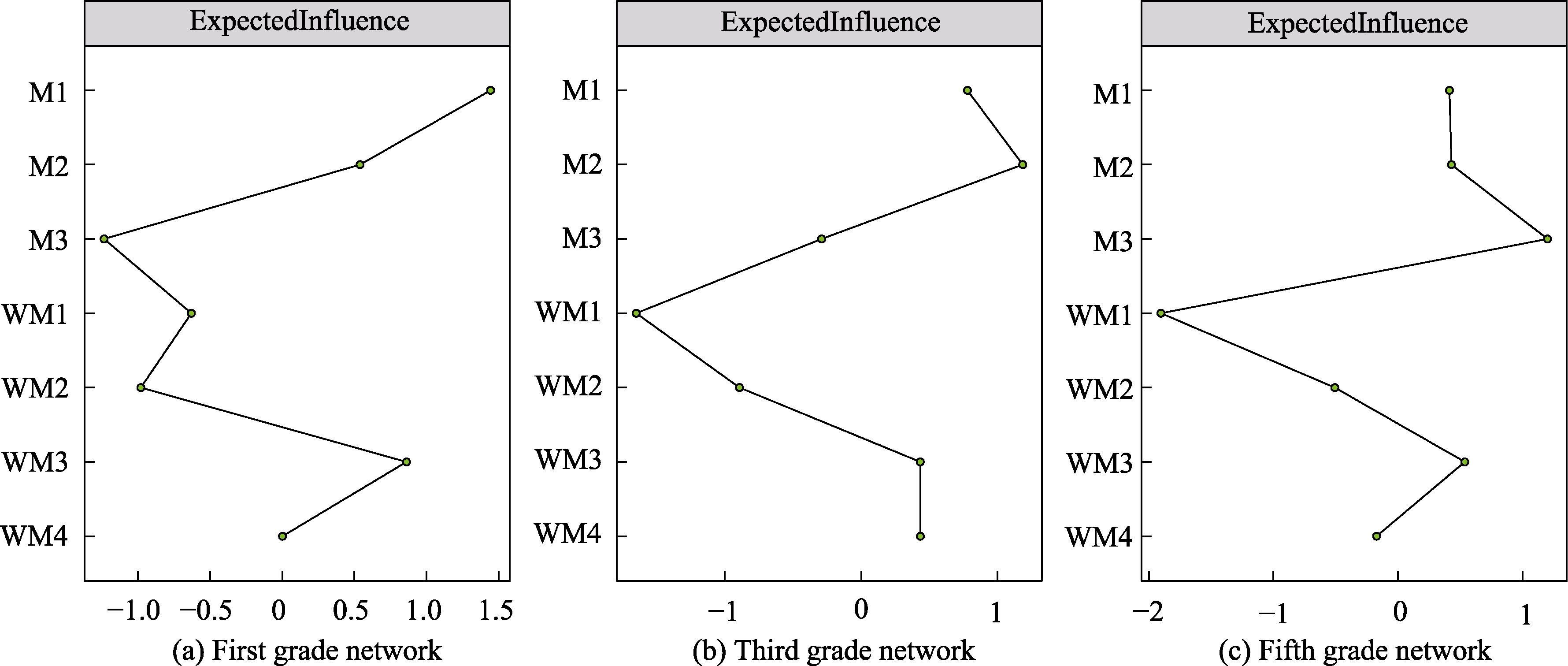
Figure 2. Standardized estimates of node centrality in the network of WM subcomponents and different domains of mathematical ability across the three grades.
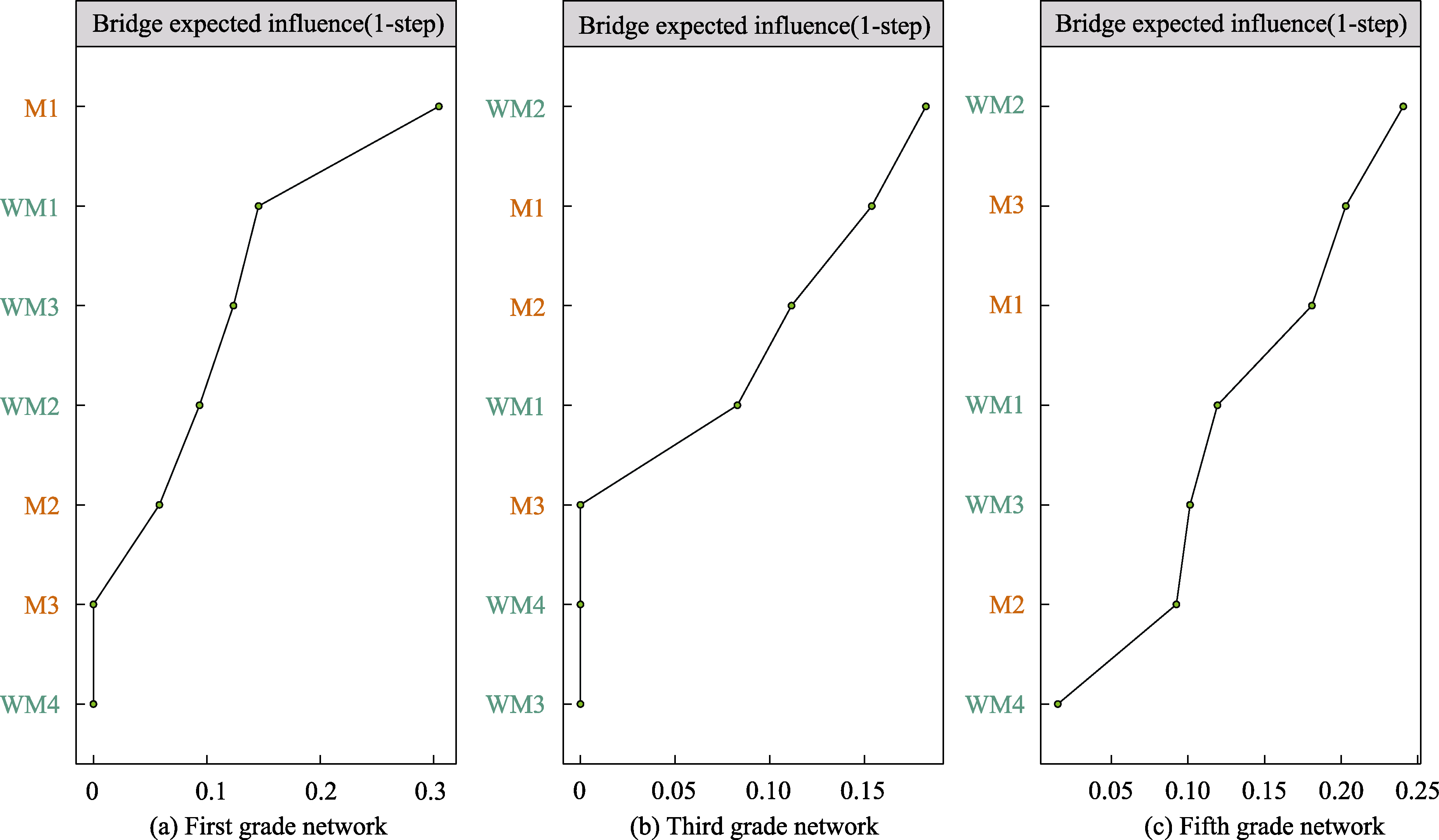
Figure 3. Standardized estimates of bridge centrality in the network of WM subcomponents and the three domains of mathematical ability across the three grades.

Supplementary Figure 1. Tests of differences in network node centrality between working memory subcomponents and mathematical abilities in various domains across children from three grades. Note. Black boxes indicate significant differences in expected influence indices between nodes, whereas gray boxes indicate non-significant differences.

Supplementary Figure 2. Bootstrap confidence intervals for edge weights in networks linking working memory subcomponents to mathematical abilities in various domains across children from three grades. Note. Red lines represent the original edge weights in the network model, black lines represent the mean edge weights across bootstrap samples, and the gray shaded areas represent the 95% confidence intervals of the bootstrapped edge weights.
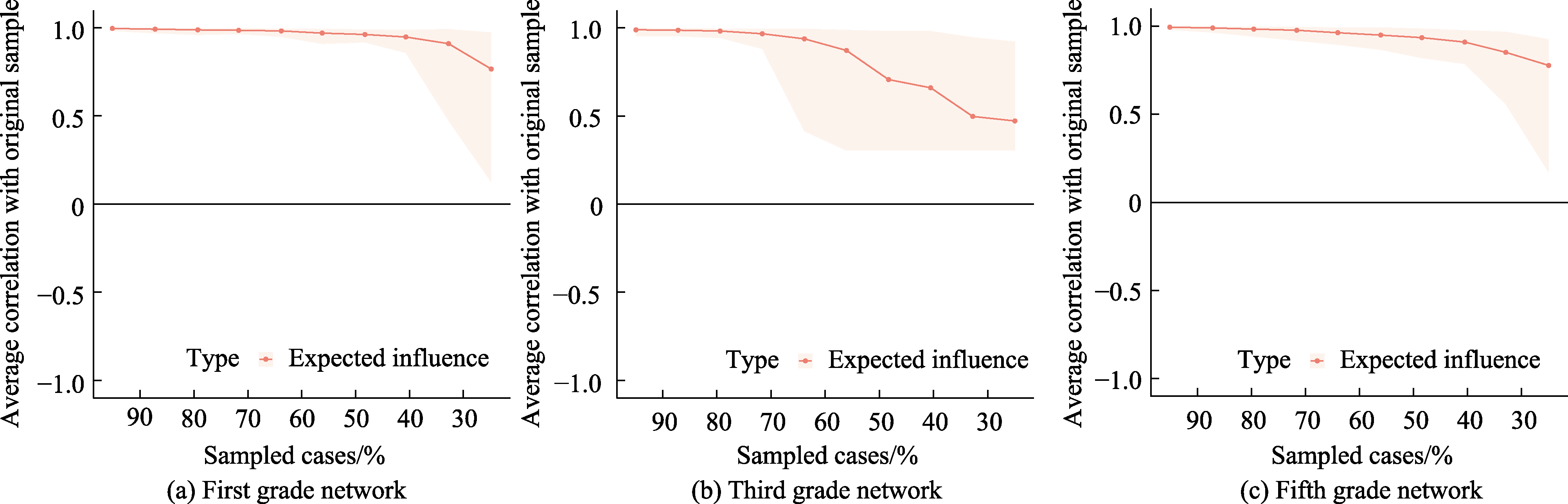
Supplementary Figure 3. Bootstrap results for network subsets of working memory subcomponents and mathematical abilities across different domains among children in three grades.

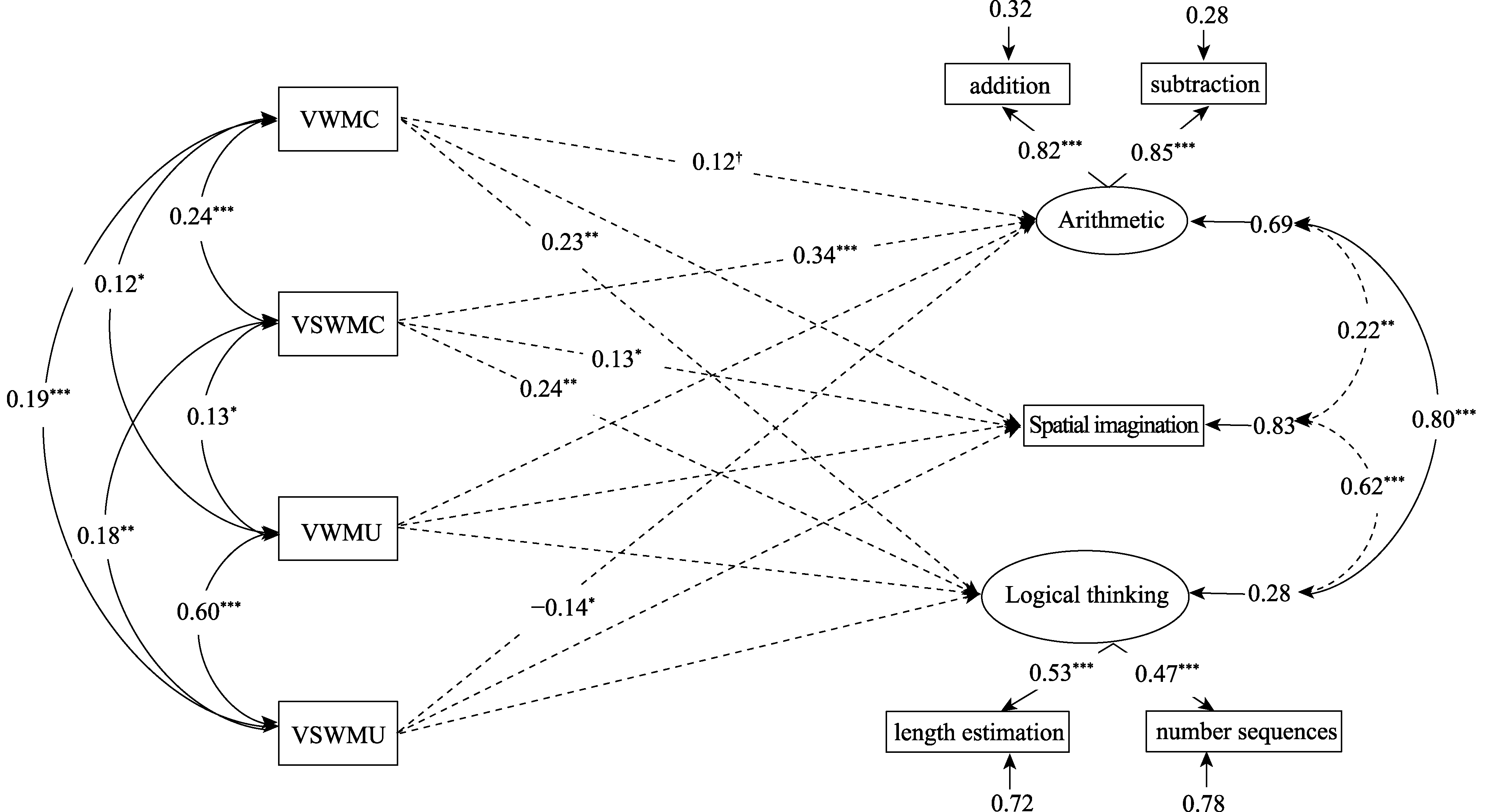
Supplementary Figure 4. Path model of the relationships between working memory subcomponents and mathematical abilities across different domains among first grade children. Note. VWMC = verbal WM capacity, VSWMC = Visuospatial WM capacity, VWMU = Verbal WM updating, VSWMU = Visuospatial WM updating. All path coefficients are standardized. Single-headed straight arrows represent predictive relationships, and double-headed curved arrows represent correlational relationships. Solid lines indicate significant regression paths, whereas dashed lines indicate non-significant regression paths. For parsimony and clarity, control variables—including gender, age, family SES, nonverbal intelligence, and attentional ability—are not depicted in the path model. ***p < 0.001, **p < 0.01, *p < 0.05, ?p < 0.10 (marginally significant). The same notation applies throughout the following figures. The fit indices for the lower-grade model were satisfactory: χ2/df = 2.033, CFI = 0.961, TLI = 0.907, RMSEA = 0.060, SRMR = 0.028.
Supplementary Figure 5. Path model of the relationships between working memory subcomponents and mathematical abilities across different domains among third grade children. Note. The fit indices for the middle-grade model were satisfactory: χ2/df = 0.786, CFI = 1.000, TLI = 1.025, RMSEA = 0.000, SRMR = 0.019.

Supplementary Figure 6. Path model of the relationships between working memory subcomponents and mathematical abilities across different domains among fifth grade children. Note. The fit indices for the upper-grade model were satisfactory: χ2/df = 1.318, CFI = 0.991, TLI = 0.978, RMSEA = 0.033, SRMR = 0.019.
| [1] |
Adams L. M., Volgenau K. M., Regalario I., & Hunt A. D. (2025). Examining the relationships between pain symptoms and psychosocial functioning among women living with and at risk for human immunodeficiency virus using a cross-sectional psychological network analysis. Rehabilitation Psychology, 70(3), 320-331.
doi: 10.1037/rep0000588 URL |
| [2] |
Allen K., & Giofrè D. (2021). A distinction between working memory components as unique predictors of mathematical components in 7-8 year old children. Educational Psychology, 41(6), 678-694.
doi: 10.1080/01443410.2020.1857702 URL |
| [3] |
Allen K., Giofrè D., Higgins S., & Adams J. (2020). Working memory predictors of mathematics across the middle primary school years. British Journal of Educational Psychology, 90(3), 848-869.
doi: 10.1111/bjep.12339 pmid: 31999851 |
| [4] |
Allen K., Giofrè D., Higgins S., & Adams J. (2021). Using working memory performance to predict mathematics performance 2 years on. Psychological Research, 85(5), 1986-1996.
doi: 10.1007/s00426-020-01382-5 |
| [5] | Alloway T. P. (2007). Automated working memory assessment (AWMA): Manual. Pearson Education. |
| [6] |
Alloway T. P., & Passolunghi M. C. (2011). The relationship between working memory, IQ, and mathematical skills in children. Learning and Individual Differences, 21(1), 133-137.
doi: 10.1016/j.lindif.2010.09.013 URL |
| [7] |
Andersson U., & Lyxell B. (2007). Working memory deficit in children with mathematical difficulties: A general or specific deficit? Journal of Experimental Child Psychology, 96(3), 197-228.
pmid: 17118398 |
| [8] |
Ang S. Y., Lee K., Cheam F., Poon K., & Koh J. (2015). Updating and working memory training: Immediate improvement, long-term maintenance, and generalisability to non-trained tasks. Journal of Applied Research in Memory and Cognition, 4(2), 121-128.
doi: 10.1016/j.jarmac.2015.03.001 URL |
| [9] | Anjariyah D., Juniati D., & Siswono T. Y. E. Siswono,(2022). How does working memory capacity affect students’ mathematical problem solving? European Journal of Educational Research, 11(3), 1427-1439. |
| [10] |
Ardanouy E., Lefèvre E., Delage H., & Zesiger P. (2024). Which skills underlie French-speaking children’s lexical spelling acquisition in elementary school? Insight from a cross-sectional exploratory network study from Grade 1 to Grade 5. Journal of Experimental Child Psychology, 245, 105963.
doi: 10.1016/j.jecp.2024.105963 URL |
| [11] | Birtwistle E., Chernikova O., Wünsch M., & Niklas F. (2025). Training of executive functions in children: A meta-analysis of cognitive training interventions. SAGE Open, 15(1), 21582440241311060. |
| [12] |
Blakey E., Matthews D., Cragg L., Buck J., Cameron D., Higgins B.,... Carroll D. J. (2020). The role of executive functions in socioeconomic attainment gaps: Results from a randomized controlled trial. Child Development, 91(5), 1594-1614.
doi: 10.1111/cdev.13358 URL |
| [13] |
Bull R., Espy K. A., & Wiebe S. A. (2008). Short-term memory, working memory, and executive functioning in preschoolers: Longitudinal predictors of mathematical achievement at age 7 years. Developmental Neuropsychology, 33(3), 205-228.
doi: 10.1080/87565640801982312 pmid: 18473197 |
| [14] |
Cai Y., Dong S., Yuan S., & Hu C. (2020). Network analysis and its applications in psychology. Advances in Psychological Science, 28(1), 178-190.
doi: 10.3724/SP.J.1042.2020.00178 |
| [15] |
Cao C., Yu G., Chen L., Qin J., & Lin Z. (2025). The bidirectional relationship between subjective well-being and depression: A cross-sectional and cross-lagged network analysis. Psychology Research and Behavior Management, 18, 719-731.
doi: 10.2147/PRBM.S508588 pmid: 40144352 |
| [16] |
Chan W. W. L., & Wong T. T. Y. (2019). Visuospatial pathways to mathematical achievement. Learning and Instruction, 62, 11-19.
doi: 10.1016/j.learninstruc.2019.03.001 |
| [17] |
Chen C., Liu P., Lu S., Li S., Zhang C., & Zhou X. (2023). Verbal but not visual-spatial working memory contributes to complex arithmetic calculation. British Journal of Developmental Psychology, 41(4), 385-399.
doi: 10.1111/bjdp.v41.4 URL |
| [18] |
Clements D. H., & Sarama J. (2011). Early childhood mathematics intervention. Science, 333(6045), 968-970.
doi: 10.1126/science.1204537 pmid: 21852488 |
| [19] | Corsi P. M. (1973). Memory and the medial temporal region of the brain (Unpublished doctorial dissertation). McGill University. |
| [20] |
Cragg L., Keeble S., Richardson S., Roome H. E., & Gilmore C. (2017). Direct and indirect influences of executive functions on mathematics achievement. Cognition, 162, 12-26.
doi: S0010-0277(17)30023-9 pmid: 28189034 |
| [21] |
De Smedt B., Janssen R., Bouwens K., Verschaffel L., Boets B., & Ghesquière P. (2009). Working memory and individual differences in mathematics achievement: A longitudinal study from first grade to second grade. Journal of Experimental Child Psychology, 103(2), 186-201.
doi: 10.1016/j.jecp.2009.01.004 pmid: 19281998 |
| [22] |
Diamond A. (2013). Executive functions. Annual Review of Psychology, 64(1), 135-168.
doi: 10.1146/psych.2013.64.issue-1 URL |
| [23] |
Dong W., Zhang J., Meng S., Jia M., & Wang W. (2025). The topological structure of adolescents’ internet adaptation: A longitudinal tracking study. Acta Psychologica Sinica, 57(3), 415-427.
doi: 10.3724/SP.J.1041.2025.0415 |
| [24] | Du W. (2013). The evolution of the connotation of mathematical competence in elementary school mathematics syllabus or curriculum standards. Mathematics for Primary and Secondary Schools (Primary Edition), 12, 43-45. |
| [25] |
Dumontheil I., & Klingberg T. (2012). Brain activity during a visuospatial working memory task predicts arithmetical performance 2 years later. Cerebral Cortex, 22(5), 1078-1085.
doi: 10.1093/cercor/bhr175 URL |
| [26] |
Duncan R. J., McClelland M. M., & Acock A. C. (2017). Relations between executive function, behavioral regulation, and achievement: Moderation by family income. Journal of Applied Developmental Psychology, 49, 21-30.
doi: 10.1016/j.appdev.2017.01.004 URL |
| [27] |
Ellefson M. R., Zachariou A., Ng F. F. Y., Wang Q., & Hughes C. (2020). Do executive functions mediate the link between socioeconomic status and numeracy skills? A cross-site comparison of Hong Kong and the United Kingdom. Journal of Experimental Child Psychology, 194, 104734.
doi: 10.1016/j.jecp.2019.104734 URL |
| [28] |
Epskamp S., Borsboom D., & Fried E. I. (2018). Estimating psychological networks and their accuracy: A tutorial paper. Behavior Research Methods, 50, 195-212.
doi: 10.3758/s13428-017-0862-1 pmid: 28342071 |
| [29] | Epskamp S., Cramer, A. O. J., Waldorp L. J., Schmittmann V. D., & Borsboom D. (2012). qgraph: Network visualizations of relationships in psychometric data. Journal of Statistical Software, 48(4), 1-18. |
| [30] |
Epskamp S., & Fried E. I. (2018). A tutorial on regularized partial correlation networks. Psychological Methods, 23(4), 617-634.
doi: 10.1037/met0000167 pmid: 29595293 |
| [31] |
Feng X., Li L., Zhang M., Yang X., Tian M., Xie W.,... Ding G. (2017). Dyslexic children show atypical cerebellar activation and cerebro-cerebellar functional connectivity in orthographic and phonological processing. The Cerebellum, 16, 496-507.
doi: 10.1007/s12311-016-0829-2 URL |
| [32] | Field A. (2013). Discovering statistics using IBM SPSS statistics (4 ed.). Sage. |
| [33] |
Friso-Van den Bos I., Van der Ven S. H., Kroesbergen E. H., & Van Luit J. E. (2013). Working memory and mathematics in primary school children: A meta-analysis. Educational Research Review, 10, 29-44.
doi: 10.1016/j.edurev.2013.05.003 URL |
| [34] |
Gashaj V., Oberer N., Mast F. W., & Roebers C. M. (2019). The relation between executive functions, fine motor skills, and basic numerical skills and their relevance for later mathematics achievement. Early Education and Development, 30(7), 913-926.
doi: 10.1080/10409289.2018.1539556 URL |
| [35] |
Gaye F., Groves N. B., Chan, E. S. M., Cole A. M., Jaisle E. M., Soto E. F., & Kofler M. J. (2024). Working memory and math skills in children with and without ADHD. Neuropsychology, 38(1), 1-16.
doi: 10.1037/neu0000920 URL |
| [36] |
Geary D. C. (1995). Reflections of evolution and culture in children’s cognition: Implications for mathematical development and instruction. American Psychologist, 50(1), 24-37.
pmid: 7872578 |
| [37] |
Geary D. C., Nicholas A., Li Y., & Sun J. (2017). Developmental change in the influence of domain-general abilities and domain-specific knowledge on mathematics achievement: An eight-year longitudinal study. Journal of Educational Psychology, 109(5), 680-693.
doi: 10.1037/edu0000159 pmid: 28781382 |
| [38] |
Georgiou G. K., Wei W., Inoue T., Das J. P., & Deng C. (2020). Cultural influences on the relation between executive functions and academic achievement. Reading and Writing, 33(4), 991-1013.
doi: 10.1007/s11145-019-09961-8 |
| [39] |
Gilmore C., Keeble S., Richardson S., & Cragg L. (2015). The role of cognitive inhibition in different components of arithmetic. ZDM Mathematics Education, 47, 771-782.
doi: 10.1007/s11858-014-0659-y URL |
| [40] |
Giofrè D., Donolato E., & Mammarella I. C. (2018). The differential role of verbal and visuospatial working memory in mathematics and reading. Trends in Neuroscience and Education, 12, 1-6.
doi: 10.1016/j.tine.2018.07.001 URL |
| [41] |
Giofrè D., Mammarella I. C., & Cornoldi C. (2014). The relationship among geometry, working memory, and intelligence in children. Journal of Experimental Child Psychology, 123, 112-128.
doi: 10.1016/j.jecp.2014.01.002 pmid: 24709286 |
| [42] |
Gordon R., De Morais D. S., Whitelock E., & Mukarram A. (2022). Mapping components of verbal and visuospatial working memory to mathematical topics in seven‐to fifteen‐year‐olds. British Journal of Educational Psychology, 92(1), 1-18.
doi: 10.1111/bjep.v92.1 URL |
| [43] |
Halliday E. R., Milgram L., Angiolini R., Grassie H. L., & Ehrenreich-May J. (2024). Symptom network analysis of parent-child depression and anxiety in treatment-seeking youth. Journal of Family Psychology, 38(6), 921-932.
doi: 10.1037/fam0001233 pmid: 38753375 |
| [44] |
Hamm J. V., & Perry M. (2002). Learning mathematics in first-grade classrooms: On whose authority? Journal of Educational Psychology, 94(1), 126-137.
doi: 10.1037/0022-0663.94.1.126 URL |
| [45] | Himi S. A., Bühner M., & Hilbert S. (2021). Advancing the understanding of the factor structure of executive functioning. Journal of Intelligence, 9(1), 16. |
| [46] |
Holmes J., Guy J., Kievit R. A., Bryant A., Mareva S., CALM Team, & Gathercole S. E. (2021). Cognitive dimensions of learning in children with problems in attention, learning, and memory. Journal of Educational Psychology, 113(7), 1454-1480.
doi: 10.1037/edu0000644 pmid: 35855686 |
| [47] |
Hou H., Yu P., Zhou Y., Luo D., Wang W., Wang Q., … Yang B. X. (2025). Network analysis of intergenerational transmission of psychopathological symptom among adolescents: A cross-sectional study. Journal of Family Psychology, 39(3), 389-399.
doi: 10.1037/fam0001289 pmid: 39745663 |
| [48] |
Hu Q., Liang Z., Zhou Y., Feng S., & Zhang Q. (2023). The role of working memory updating and capacity in children’s mathematical abilities: A developmental cascade model. British Journal of Educational Psychology, 93(3), 676-693.
doi: 10.1111/bjep.v93.3 URL |
| [49] |
Huo S., Zhang X., & Law Y. K. (2021). Pathways to word reading and calculation skills in young Chinese children: From biologically primary skills to biologically secondary skills. Journal of Educational Psychology, 113(2), 230-247.
doi: 10.1037/edu0000647 URL |
| [50] |
Jaeggi S. M., Buschkuehl M., Jonides J., & Shah P. (2011). Short- and long-term benefits of cognitive training. Proceedings of the National Academy of Sciences of the United States of America, 108(25), 10081-10086.
doi: 10.1073/pnas.1103228108 pmid: 21670271 |
| [51] |
Judd N., Klingberg T., & Sjöwall D. (2021). Working memory capacity, variability, and response to intervention at age 6 and its association to inattention and mathematics age 9. Cognitive Development, 58, 101013.
doi: 10.1016/j.cogdev.2021.101013 URL |
| [52] |
Kang D., Wen M., & Zhang Y. (2023). The relationship between fine motor skills and mathematical ability in children: A meta-analysis. Advances in Psychological Science, 31(8), 1443-1459.
doi: 10.3724/SP.J.1042.2023.01443 |
| [53] |
Lee K., & Bull R. (2016). Developmental changes in working memory, updating, and math achievement. Journal of Educational Psychology, 108(6), 869-882.
doi: 10.1037/edu0000090 URL |
| [54] |
Lee K., Bull R., & Ho R. M. (2013). Developmental changes in executive functioning. Child Development, 84(6), 1933-1953.
doi: 10.1111/cdev.12096 pmid: 23550969 |
| [55] |
Liang Z., Dong P., Zhou Y., Feng S., & Zhang Q. (2022). Whether verbal and visuospatial working memory play different roles in pupil’s mathematical abilities. British Journal of Educational Psychology, 92(2), 409-424.
doi: 10.1111/bjep.v92.2 URL |
| [56] | Lin C. (2011). Intellectual development and mathematical learning (4th ed.). Beijing: China Light Industry Press. |
| [57] |
Lin J., Xu B., Yang Y., Zhang Q., & Kou Y. (2024). Network analysis and core dimensions of adolescent prosocial behavior. Acta Psychologica Sinica, 56(9), 1252-1265.
doi: 10.3724/SP.J.1041.2024.01252 |
| [58] |
Menon V. (2016). Working memory in children's math learning and its disruption in dyscalculia. Current Opinion in Behavioral Sciences, 10, 125-132.
doi: 10.1016/j.cobeha.2016.05.014 pmid: 38223497 |
| [59] |
Meyer M. L., Salimpoor V. N., Wu S. S., Geary D. C., & Menon V. (2010). Differential contribution of specific working memory components to mathematics achievement in 2nd and 3rd graders. Learning and Individual Differences, 20(2), 101-109.
pmid: 21660238 |
| [60] |
Miller-Cotto D., & Byrnes J. P. (2020). What’s the best way to characterize the relationship between working memory and achievement?: An initial examination of competing theories. Journal of Educational Psychology, 112(5), 1074-1084.
doi: 10.1037/edu0000395 URL |
| [61] | Panesi S., Bandettini A., Traverso L., & Morra S. (2022). On the relation between the development of working memory updating and working memory capacity in preschoolers. Journal of Intelligence, 10(1), 5. |
| [62] | Passolunghi, M. C., & Costa H. M. (2019). Working memory and mathematical learning. In A. Fritz, V. G. Haase, & P. Räsänen (Eds.), International handbook of mathematical learning difficulties: From the laboratory to the classroom (pp. 407-421). Springer Cham. |
| [63] |
Peng P., Namkung J., Barnes M., & Sun C. (2016). A meta-analysis of mathematics and working memory: Moderating effects of working memory domain, type of mathematics skill, and sample characteristics. Journal of Educational Psychology, 108(4), 455-473.
doi: 10.1037/edu0000079 URL |
| [64] |
Peng P., Wang C., & Namkung J. (2018). Understanding the cognition related to mathematics difficulties: A meta-analysis on the cognitive deficit profiles and the bottleneck theory. Review of Educational Research, 88(3), 434-476.
doi: 10.3102/0034654317753350 URL |
| [65] |
Raghubar K. P., Barnes M. A., & Hecht S. A. (2010). Working memory and mathematics: A review of developmental, individual difference, and cognitive approaches. Learning and Individual Differences, 20(2), 110-122.
doi: 10.1016/j.lindif.2009.10.005 URL |
| [66] |
Rivella C., Cornoldi C., Caviola S., & Giofrè D. (2021). Learning a new geometric concept: The role of working memory and of domain‐specific abilities. British Journal of Educational Psychology, 91(4), 1537-1554.
doi: 10.1111/bjep.v91.4 URL |
| [67] |
Robinaugh D. J., Millner A. J., & McNally R. J. (2016). Identifying highly influential nodes in the complicated grief network. Journal of Abnormal Psychology, 125(6), 747-757.
doi: 10.1037/abn0000181 pmid: 27505622 |
| [68] |
Silver A. M., Elliott L., Imbeah A., & Libertus M. E. (2020). Understanding the unique contributions of home numeracy, inhibitory control, the approximate number system, and spontaneous focusing on number for children’s math abilities. Mathematical Thinking and Learning, 22(4), 296-311.
doi: 10.1080/10986065.2020.1818469 pmid: 33727781 |
| [69] |
Silverman S., & Ashkenazi S. (2022a). The differential relationship between visual and spatial working memory in children’s mathematics performance. Trends in Neuroscience and Education, 29, 100188.
doi: 10.1016/j.tine.2022.100188 URL |
| [70] |
Silverman S., & Ashkenazi S. (2022b). The unique role of spatial working memory for mathematics performance. Journal of Numerical Cognition, 8(1), 226-243.
doi: 10.5964/jnc.7159 URL |
| [71] |
Simmons F. R., Willis C., & Adams A. M. (2012). Different components of working memory have different relationships with different mathematical skills. Journal of Experimental Child Psychology, 111(2), 139-155.
doi: 10.1016/j.jecp.2011.08.011 pmid: 22018889 |
| [72] |
Singh L. J., Gaye F., Cole A. M., Chan E. S. M., & Kofler M. J. (2022). Central executive training for ADHD: Effects on academic achievement, productivity, and success in the classroom. Neuropsychology, 36(4), 330-345.
doi: 10.1037/neu0000798 pmid: 35343732 |
| [73] |
Söderqvist S., & Nutley S. B. (2015). Working memory training is associated with long term attainments in math and reading. Frontiers in Psychology, 6, 1711.
doi: 10.3389/fpsyg.2015.01711 pmid: 26617545 |
| [74] |
Spiegel J. A., Goodrich J. M., Morris B. M., Osborne C. M., & Lonigan C. J. (2021). Relations between executive functions and academic outcomes in elementary school children: A meta-analysis. Psychological Bulletin, 147(4), 329-351.
doi: 10.1037/bul0000322 pmid: 34166004 |
| [75] |
Stefanelli S., & Alloway T. P. (2020). Mathematical skills and working memory profile of children with borderline intellectual functioning. Journal of Intellectual Disabilities, 24(3), 358-366.
doi: 10.1177/1744629518821251 pmid: 30590980 |
| [76] |
Steinborn M. B., Langner R., Flehmig H. C., & Huestegge L. (2018). Methodology of performance scoring in the d2 sustained-attention test: Cumulative-reliability functions and practical guidelines. Psychological Assessment, 30(3), 339-357.
doi: 10.1037/pas0000482 pmid: 28406669 |
| [77] |
Swanson H. L., Jerman O., & Zheng X. (2008). Growth in working memory and mathematical problem solving in children at risk and not at risk for serious math difficulties. Journal of Educational Psychology, 100(2), 343-379.
doi: 10.1037/0022-0663.100.2.343 URL |
| [78] |
Szucs D., & Mammarella I. C. (2024). A biopsychological-social view of mathematical development. Current Opinion in Behavioral Sciences, 55, 101332.
doi: 10.1016/j.cobeha.2023.101332 URL |
| [79] |
Ten Braak D., Lenes R., Purpura D. J., Schmitt S. A., & Størksen I. (2022). Why do early mathematics skills predict later mathematics and reading achievement? The role of executive function. Journal of Experimental Child Psychology, 214, 105306.
doi: 10.1016/j.jecp.2021.105306 URL |
| [80] |
van Borkulo C. D., van Bork R., Boschloo L., Kossakowski J. J., Tio P., Schoevers R. A., Borsboom D., & Waldorp L. J. (2023). Comparing network structures on three aspects: A permutation test. Psychological Methods, 28(6), 1273-1285.
doi: 10.1037/met0000476 URL |
| [81] |
Van de Weijer-Bergsma E., Kroesbergen E. H., & Van Luit J. E. (2015). Verbal and visual-spatial working memory and mathematical ability in different domains throughout primary school. Memory & Cognition, 43, 367-378.
doi: 10.3758/s13421-014-0480-4 URL |
| [82] |
Van der Ven S. H., Van der Maas H. L., Straatemeier M., & Jansen B. R. (2013). Visuospatial working memory and mathematical ability at different ages throughout primary school. Learning and Individual Differences, 27, 182-192.
doi: 10.1016/j.lindif.2013.09.003 URL |
| [83] |
Wang C., Jaeggi S. M., Yang L., Zhang T., He X., Buschkuehl M., & Zhang Q. (2019). Narrowing the achievement gap in low-achieving children by targeted executive function training. Journal of Applied Developmental Psychology, 63, 87-95.
doi: 10.1016/j.appdev.2019.06.002 URL |
| [84] |
Wei X., Jiang H., Wang H., Geng J., Gao T., Lei L., & Ren L. (2022). The relationship between components of neuroticism and problematic smartphone use in adolescents: A network analysis. Personality and Individual Differences, 186, 111325.
doi: 10.1016/j.paid.2021.111325 URL |
| [85] | Wen P., Zhang L., Li H., LiuLi X. J., & Zhang X. Y. (2007). Model of executive functioning as predictor of children’s mathematical ability. Psychological Development and Education, 23(3), 13-18. |
| [86] |
Wilkey E. D., Pollack C., & Price G. R. (2020). Dyscalculia and typical math achievement are associated with individual differences in number‐specific executive function. Child Development, 91(2), 596-619.
doi: 10.1111/cdev.13194 pmid: 30597527 |
| [87] | Wu H., & Li L. (2005). Development of Chinese rating scale of pupil’s mathematic abilities and study on its reliability and validity. Chinese Journal of Public Health, 21(4), 473-475. |
| [88] |
Xie F., Zhang L., Chen X., & Xin Z. (2020). Is spatial ability related to mathematical ability: A meta-analysis. Educational Psychology Review, 32, 113-155.
doi: 10.1007/s10648-019-09496-y |
| [89] |
Yang X., Chung K. K. H., & McBride C. (2019). Longitudinal contributions of executive functioning and visual-spatial skills to mathematics learning in young Chinese children. Educational Psychology, 39(5), 678-704.
doi: 10.1080/01443410.2018.1546831 URL |
| [90] |
Yang X., Star J. R., Zhu X., Wang R., Zhang Y., Tong J., & He Z. (2024). Phonological awareness and RAN contribute to Chinese reading and arithmetic for different reasons. Cognitive Processing, 25, 443-455.
doi: 10.1007/s10339-024-01184-2 |
| [91] | Yu P., & Zuo M. (1996). The development of mathematical ability and cognitive structure of elementary school students in grades 3 to 6. Psychological Development and Education, 12(3), 30-36. |
| [92] |
Zainal N. H., & Newman M. G. (2023). A cross-lagged prospective network analysis of depression and anxiety and cognitive functioning components in midlife community adult women. Psychological Medicine, 53(9), 4160-4171.
doi: 10.1017/S0033291722000848 URL |
| [93] | Zhang Y., Tolmie A., & Gordon R. (2022). The relationship between working memory and arithmetic in primary school children: A meta-analysis. Brain Sciences, 13(1), 22. |
| [94] | Zhang H., & Wang X. (1989). Standardization research on raven’s standard progressive matrices in China. Acta Psychologica Sinica, 21(2), 3-11. |
| [95] |
Zhu X., Tang Y., Lu J., Song M., Yang C., & Zhao X. (2025a). Inhibitory control and mathematical ability in elementary school children: A preregistered meta-analysis. Educational Psychology Review, 37(1), 1-36.
doi: 10.1007/s10648-024-09976-w |
| [96] |
Zhu X., Tang Y., Pang Z., & Zhao X. (2025b). Executive functions and mathematical ability in early elementary school children: The moderating role of family socioeconomic status. Journal of Experimental Child Psychology, 256, 106252.
doi: 10.1016/j.jecp.2025.106252 URL |
| [97] |
Zhu X., Tang Y., Wang S., Ma X., Lin J., Chai Q., Yang X., & Zhao X. (2025c). Underlying mechanisms in the relationship between family socioeconomic status and mathematical abilities: A longitudinal investigation. Cognitive Development, 75, 101591.
doi: 10.1016/j.cogdev.2025.101591 URL |
| [98] |
Zhu X., & Zhao X. (2023). Role of executive function in mathematical ability of children in different grades. Acta Psychologica Sinica, 55(5), 696-710.
doi: 10.3724/SP.J.1041.2023.00696 |
| [1] | CHE Xiaowei, LI Xiaosong, LIU Li’ang, LIAN Haomin. The effect of visual impulses on attentional guidance by working memory representations [J]. Acta Psychologica Sinica, 2026, 58(9): 1781-1794. |
| [2] | LI Hangyu, XU Heng, MU Yurong, YUAN Xiaowei, LI Shouxin, ZHANG Qian. Moderating role of mental imagery in the relationship between depressive tendency and the filtering efficiency of task-irrelevant emotional stimuli [J]. Acta Psychologica Sinica, 2026, 58(9): 1813-1827. |
| [3] | GAO Yuanxia, WANG Jiangyang. Effects of reward and punishment motivation on working memory updating among college students at high risk for internet gaming disorder [J]. Acta Psychologica Sinica, 2026, 58(8): 1517-1531. |
| [4] | GUO Ruiqiao, LI Wenrui, GUO Xue, ZHAO Na, LEI Ming, LIU Qiang. The impact of tACS stimulation timing on the modulation of working memory [J]. Acta Psychologica Sinica, 2026, 58(5): 827-839. |
| [5] | LIU Huan, LI Ziyuan, HU Minglu, LIU Qiang. Active encoding in visual working memory causes loss in passive storage [J]. Acta Psychologica Sinica, 2026, 58(12): 2494-2505. |
| [6] | WANG Fancong, TANG Xiaoyu, YU Shengquan. Cognitive outsourcing based on generative artificial intelligence: An Analysis of interactive behavioral patterns and cognitive structural features [J]. Acta Psychologica Sinica, 2025, 57(6): 967-986. |
| [7] | DONG Wanghao, ZHANG Jie, MENG Sujie, JIA Min, WANG Weijun. The topological structure of adolescents’ internet adaptation: A longitudinal tracking study [J]. Acta Psychologica Sinica, 2025, 57(3): 415-427. |
| [8] | LIAN Haomin, ZHANG Qian, GU Xuemin, LI Shouxin. Influence of Sustained Visual Attention on the Prioritization of Visual Working Memory [J]. Acta Psychologica Sinica, 2025, 57(2): 191-206. |
| [9] | ZHOU Linshu, ZHANG Yuqing, CAI Dan-Chao. Musical training enhances the interaction between pitch and time dimensions in auditory working memory [J]. Acta Psychologica Sinica, 2025, 57(10): 1701-1714. |
| [10] | LIN Jing, XU Boya, YANG Ying, ZHANG Qing-peng, KOU Yu. Network analysis and core dimensions of adolescent prosocial behavior [J]. Acta Psychologica Sinica, 2024, 56(9): 1252-1265. |
| [11] | LI Ziyuan, LEI Ming, LIU Qiang. Cognitive mechanisms underlying the formation of offline representations in visual working memory [J]. Acta Psychologica Sinica, 2024, 56(4): 412-420. |
| [12] | PANG Chao, CHEN Yanzhang, WANG Li, YANG Xiduan, HE Ya, LI Zhiying, OUYANG Xiaoyu, FU Shimin, NAN Weizhi. Different attentional selection modes of object information in the encoding and maintenance stages of visual working memory [J]. Acta Psychologica Sinica, 2023, 55(9): 1397-1410. |
| [13] | CHEN Shiyun, QU Diyang, BU He, LIANG Kaixin, ZHANG Peichao, CHI Xinli. Changes in the network association of Internet addiction among heterogeneous high-risk adolescents [J]. Acta Psychologica Sinica, 2023, 55(9): 1465-1476. |
| [14] | DONG Tiantian, XU Lulu, HE Wen. Is positivity always beneficial? The effect of positive meta-stereotypes on working memory and their mechanism [J]. Acta Psychologica Sinica, 2023, 55(8): 1344-1357. |
| [15] | CHEN Yueyuan, FANG Weining, GUO Beiyuan, BAO Haifeng. Effects of interruption on work performance and the moderating effects of mental fatigue [J]. Acta Psychologica Sinica, 2023, 55(1): 22-35. |
| Viewed | ||||||
|
Full text |
|
|||||
|
Abstract |
|
|||||
