

ISSN 0439-755X
CN 11-1911/B
CN 11-1911/B
Acta Psychologica Sinica ›› 2025, Vol. 57 ›› Issue (3): 415-427.doi: 10.3724/SP.J.1041.2025.0415
• Original article • Previous Articles Next Articles
DONG Wanghao1,2,3, ZHANG Jie1,2,3, MENG Sujie1,2,3, JIA Min1,2,3, WANG Weijun1,2,3( )
)
Published:2025-03-25
Online:2025-01-24
Contact:
WANG Weijun, E-mail: DONG Wanghao, ZHANG Jie, MENG Sujie, JIA Min, WANG Weijun. (2025). The topological structure of adolescents’ internet adaptation: A longitudinal tracking study. Acta Psychologica Sinica, 57(3), 415-427.
Add to citation manager EndNote|Ris|BibTeX
URL: https://journal.psych.ac.cn/acps/EN/10.3724/SP.J.1041.2025.0415
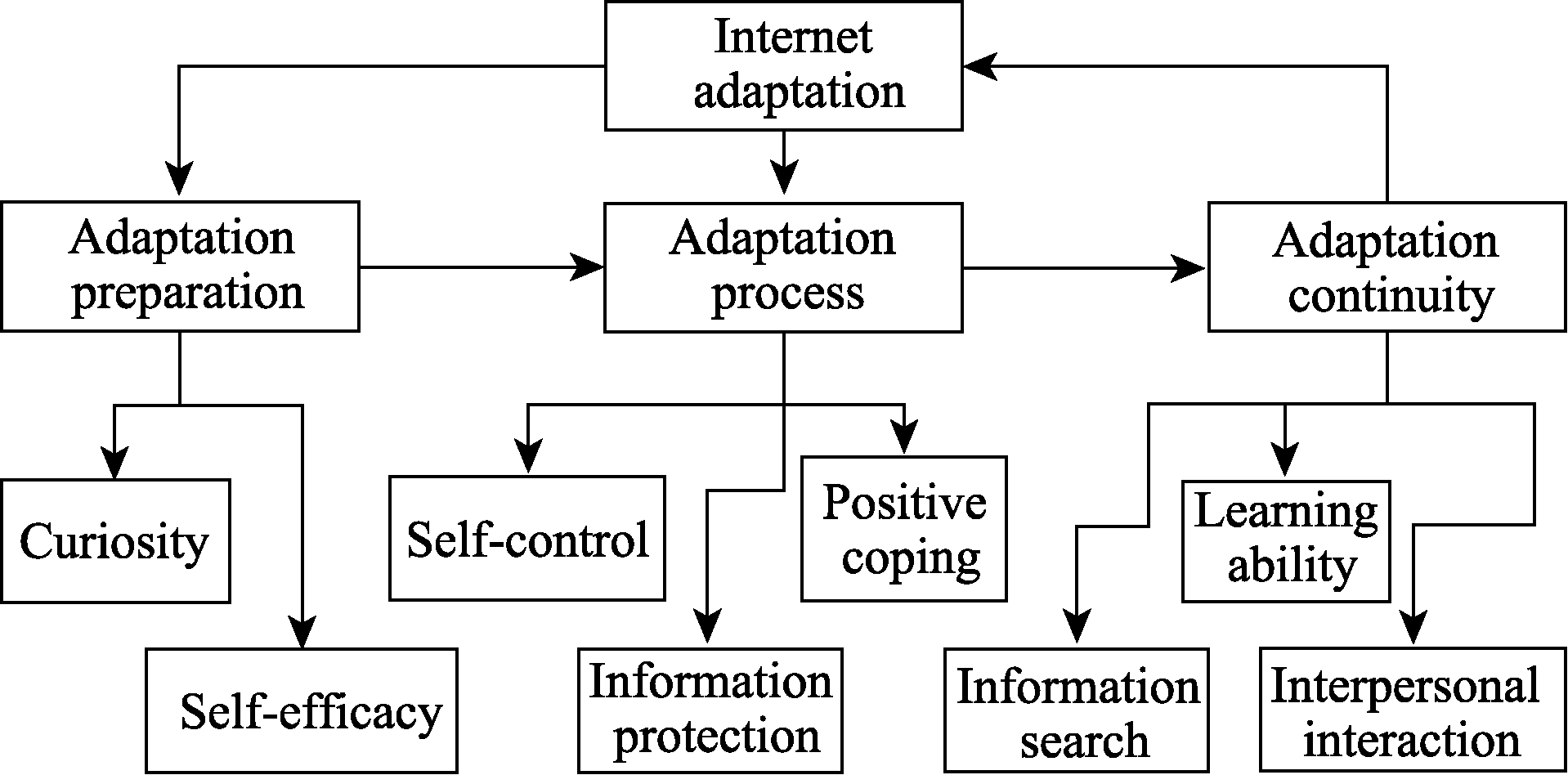
Figure 1. Schematic diagram of the dynamic process of internet adaptation.
| Dimension | N = 5783 | N = 1235 (T1) | N = 1235 (T2) | ||||||
|---|---|---|---|---|---|---|---|---|---|
| Mean (SD) | Skewness | Kurtosis | Mean (SD) | Skewness | Kurtosis | Mean (SD) | Skewness | Kurtosis | |
| Self-Control | 3.95(1.07) | 0.11 | ?0.15 | 4.13(1.06) | 0.03 | ?0.43 | 4.49(0.93) | ?0.25 | ?0.28 |
| Interpersonal Interaction | 3.87 (1.06) | ?0.04 | ?0.08 | 3.93(1.07) | ?0.17 | ?0.13 | 4.44(0.92) | ?0.19 | ?0.27 |
| Information search | 4.07(1.15) | ?0.21 | ?0.13 | 4.07(1.17) | ?0.31 | ?0.11 | 4.36(1.06) | ?0.41 | 0.00 |
| Information Protection | 4.39(1.09) | ?0.26 | ?0.44 | 4.50(1.06) | ?0.38 | ?0.42 | 4.53(0.96) | ?0.40 | ?0.10 |
| Proactive Coping | 4.54(1.05) | ?0.32 | ?0.31 | 4.72(0.99) | ?0.38 | ?0.52 | 4.65(0.93) | ?0.43 | 0.25 |
| Learning Ability | 4.06(1.04) | ?0.06 | 0.13 | 4.05(1.06) | ?0.13 | 0.06 | 4.49(0.95) | ?0.29 | ?0.04 |
| Self-Efficacy | 3.97(1.11) | 0.01 | ?0.10 | 3.94(1.15) | ?0.08 | ?0.20 | 4.48(0.98) | ?0.31 | ?0.08 |
| Curiosity | 4.11(1.02) | ?0.08 | 0.12 | 4.13(1.03) | ?0.18 | 0.10 | 4.42(0.93) | ?0.18 | ?0.11 |
| Craving | - | - | - | 2.41(1.00) | 0.41 | ?0.11 | 2.72(1.08) | 0.14 | ?0.49 |
| Tolerance | - | - | - | 2.28(1.04) | 0.44 | ?0.38 | 2.57(1.13) | 0.20 | ?0.66 |
| Behavioral Dyscontrol | - | - | - | 2.24(1.07) | 0.52 | ?0.36 | 2.48(1.15) | 0.32 | ?0.66 |
| Withdrawal | - | - | - | 2.00(1.08) | 0.84 | ?0.08 | 2.25(1.13) | 0.53 | ?0.55 |
| Time Extension | - | - | - | 2.57(1.16) | 0.31 | ?0.70 | 2.66(1.13) | 0.16 | ?0.71 |
| Negative Consequences | - | - | - | 1.62(0.93) | 1.36 | 1.03 | 2.01(1.12) | 0.71 | ?0.57 |
| Deception | - | - | - | 1.94(1.06) | 0.91 | 0.11 | 2.22(1.15) | 0.48 | ?0.73 |
| Escape | - | - | - | 2.24(1.18) | 0.62 | ?0.45 | 2.52(1.28) | 0.30 | ?0.94 |
Table 1 Descriptive Statistics of Internet Adaptation and Internet Addiction Dimensions
| Dimension | N = 5783 | N = 1235 (T1) | N = 1235 (T2) | ||||||
|---|---|---|---|---|---|---|---|---|---|
| Mean (SD) | Skewness | Kurtosis | Mean (SD) | Skewness | Kurtosis | Mean (SD) | Skewness | Kurtosis | |
| Self-Control | 3.95(1.07) | 0.11 | ?0.15 | 4.13(1.06) | 0.03 | ?0.43 | 4.49(0.93) | ?0.25 | ?0.28 |
| Interpersonal Interaction | 3.87 (1.06) | ?0.04 | ?0.08 | 3.93(1.07) | ?0.17 | ?0.13 | 4.44(0.92) | ?0.19 | ?0.27 |
| Information search | 4.07(1.15) | ?0.21 | ?0.13 | 4.07(1.17) | ?0.31 | ?0.11 | 4.36(1.06) | ?0.41 | 0.00 |
| Information Protection | 4.39(1.09) | ?0.26 | ?0.44 | 4.50(1.06) | ?0.38 | ?0.42 | 4.53(0.96) | ?0.40 | ?0.10 |
| Proactive Coping | 4.54(1.05) | ?0.32 | ?0.31 | 4.72(0.99) | ?0.38 | ?0.52 | 4.65(0.93) | ?0.43 | 0.25 |
| Learning Ability | 4.06(1.04) | ?0.06 | 0.13 | 4.05(1.06) | ?0.13 | 0.06 | 4.49(0.95) | ?0.29 | ?0.04 |
| Self-Efficacy | 3.97(1.11) | 0.01 | ?0.10 | 3.94(1.15) | ?0.08 | ?0.20 | 4.48(0.98) | ?0.31 | ?0.08 |
| Curiosity | 4.11(1.02) | ?0.08 | 0.12 | 4.13(1.03) | ?0.18 | 0.10 | 4.42(0.93) | ?0.18 | ?0.11 |
| Craving | - | - | - | 2.41(1.00) | 0.41 | ?0.11 | 2.72(1.08) | 0.14 | ?0.49 |
| Tolerance | - | - | - | 2.28(1.04) | 0.44 | ?0.38 | 2.57(1.13) | 0.20 | ?0.66 |
| Behavioral Dyscontrol | - | - | - | 2.24(1.07) | 0.52 | ?0.36 | 2.48(1.15) | 0.32 | ?0.66 |
| Withdrawal | - | - | - | 2.00(1.08) | 0.84 | ?0.08 | 2.25(1.13) | 0.53 | ?0.55 |
| Time Extension | - | - | - | 2.57(1.16) | 0.31 | ?0.70 | 2.66(1.13) | 0.16 | ?0.71 |
| Negative Consequences | - | - | - | 1.62(0.93) | 1.36 | 1.03 | 2.01(1.12) | 0.71 | ?0.57 |
| Deception | - | - | - | 1.94(1.06) | 0.91 | 0.11 | 2.22(1.15) | 0.48 | ?0.73 |
| Escape | - | - | - | 2.24(1.18) | 0.62 | ?0.45 | 2.52(1.28) | 0.30 | ?0.94 |
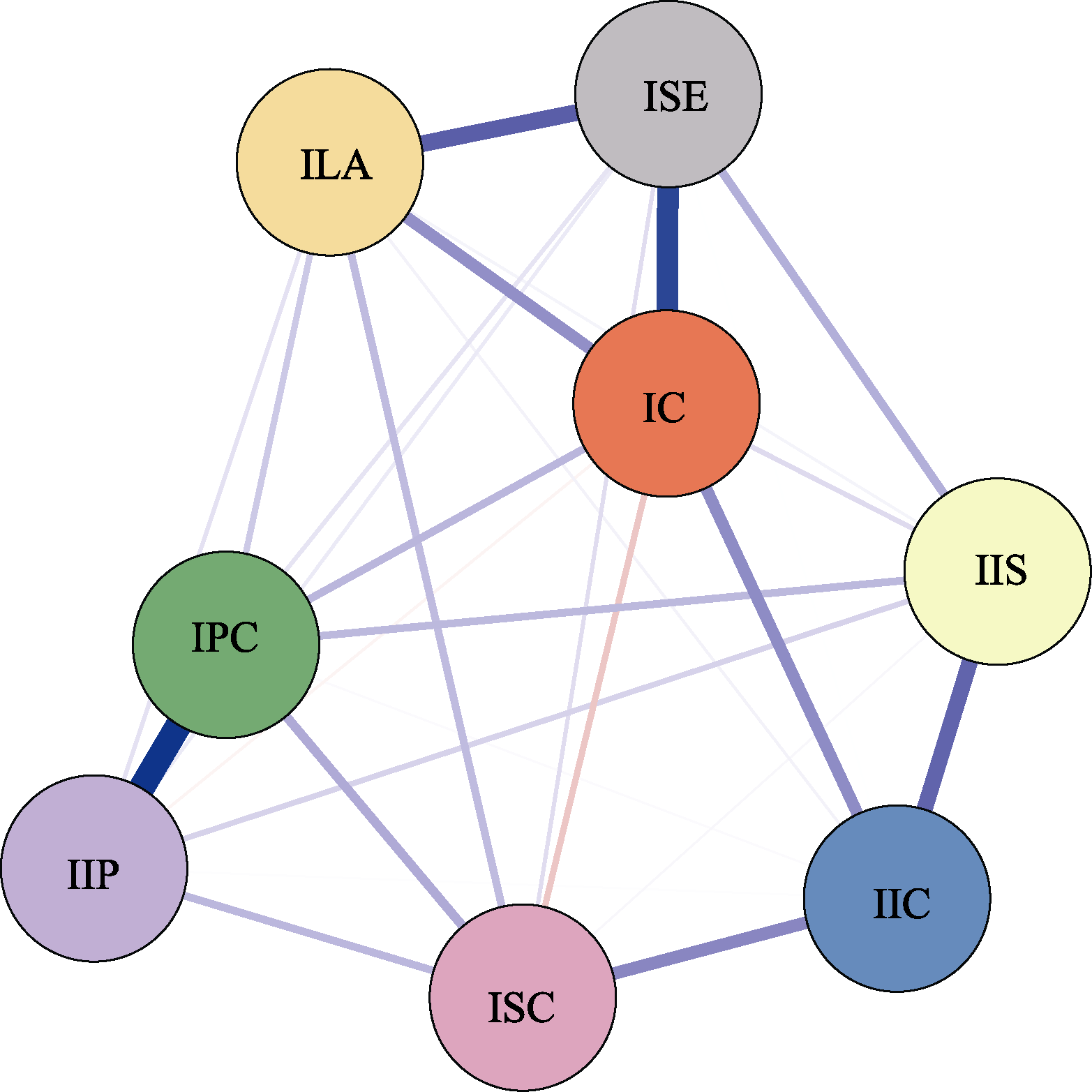
Figure 2. Regularized partial correlation network of internal dimensions of internet adaptation. Note. The thicker the edge, the stronger the conditional correlation between nodes. Blue edges indicate positive relationships, and red edges indicate negative relationships. For a color version, please refer to the electronic version.
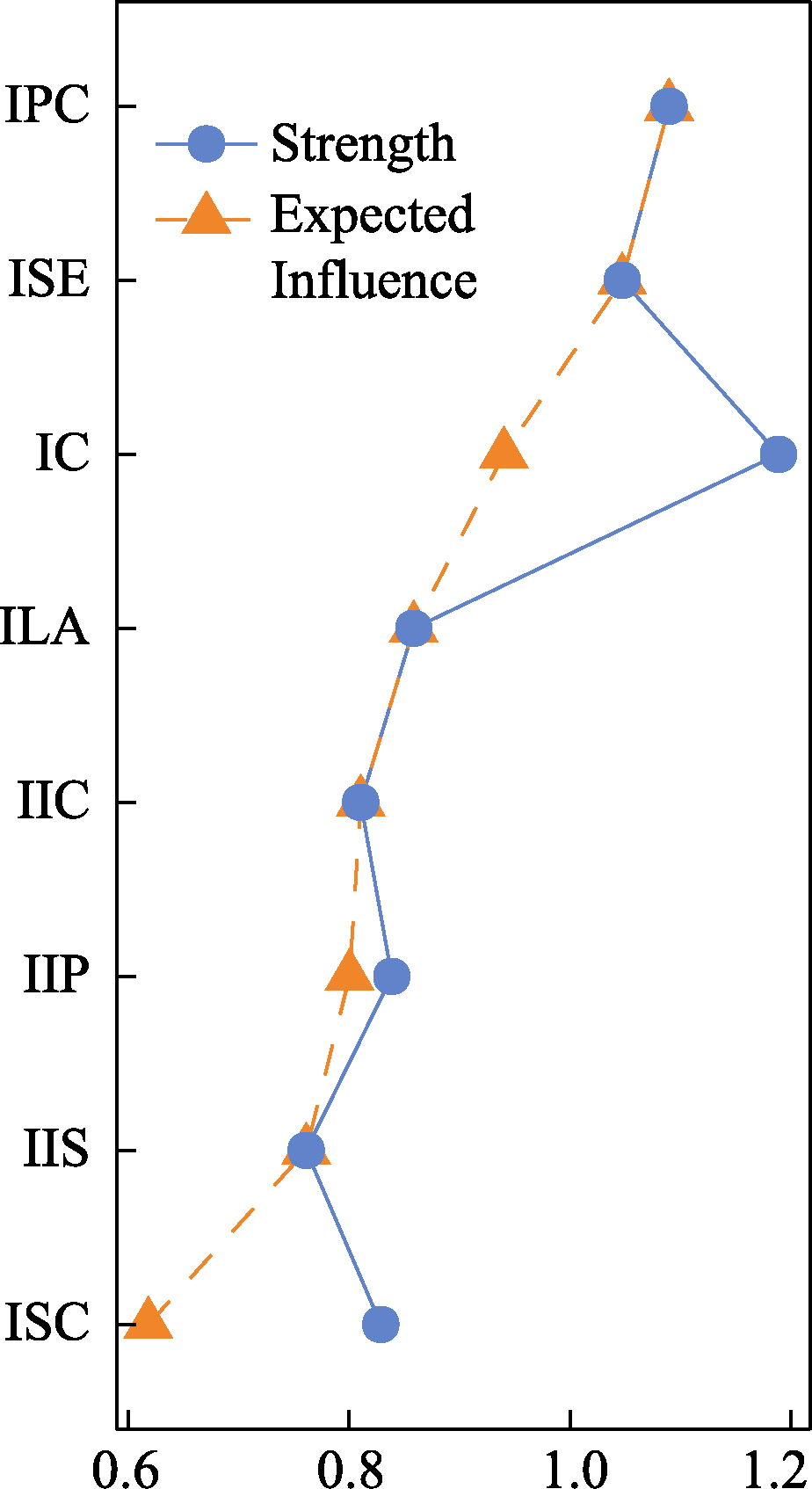
Figure 3. Node strength and expected impact of internet adaptation.
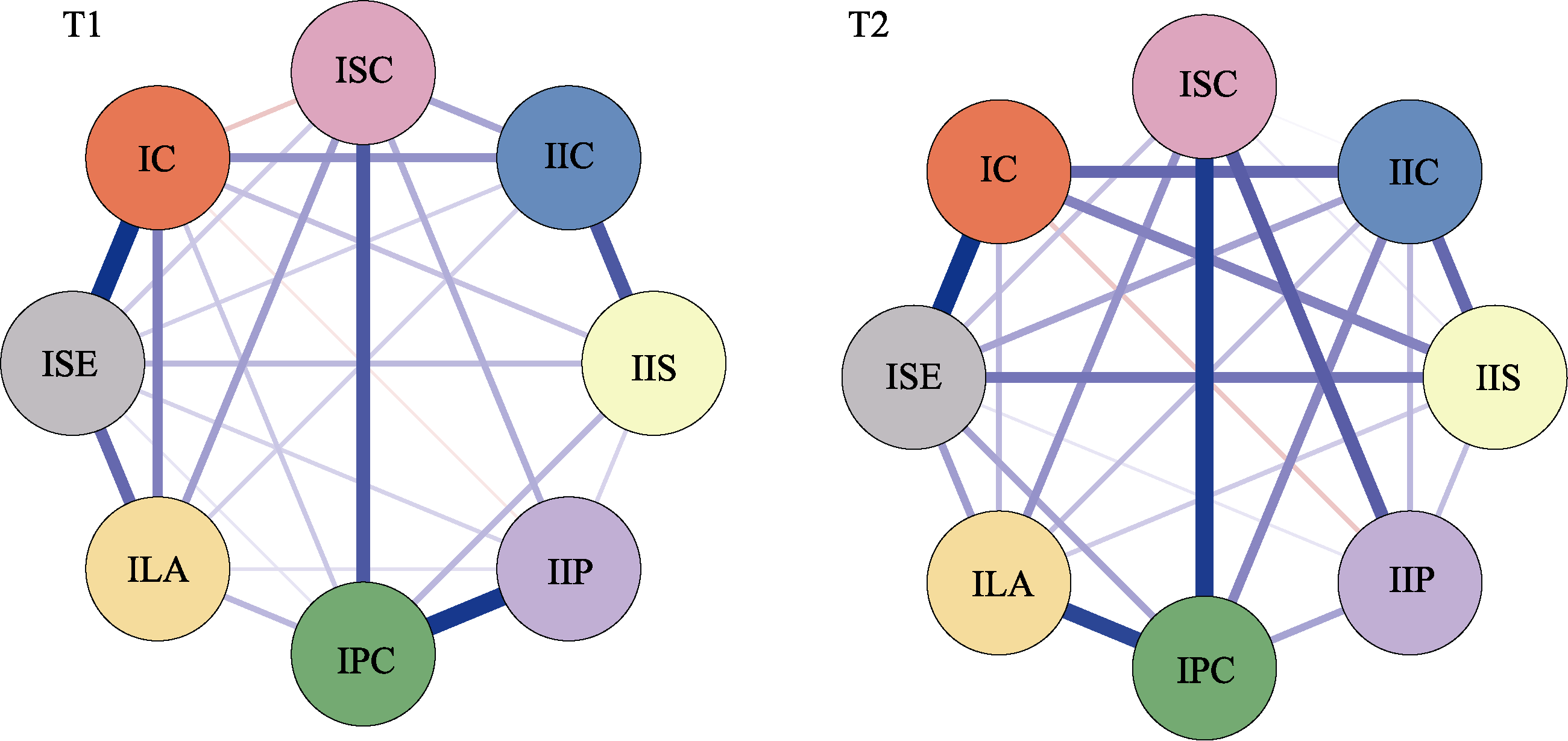
Figure 4. Cross-sectional network at T1 and T2. Note. For visual comparison, the network is presented in a circular layout.
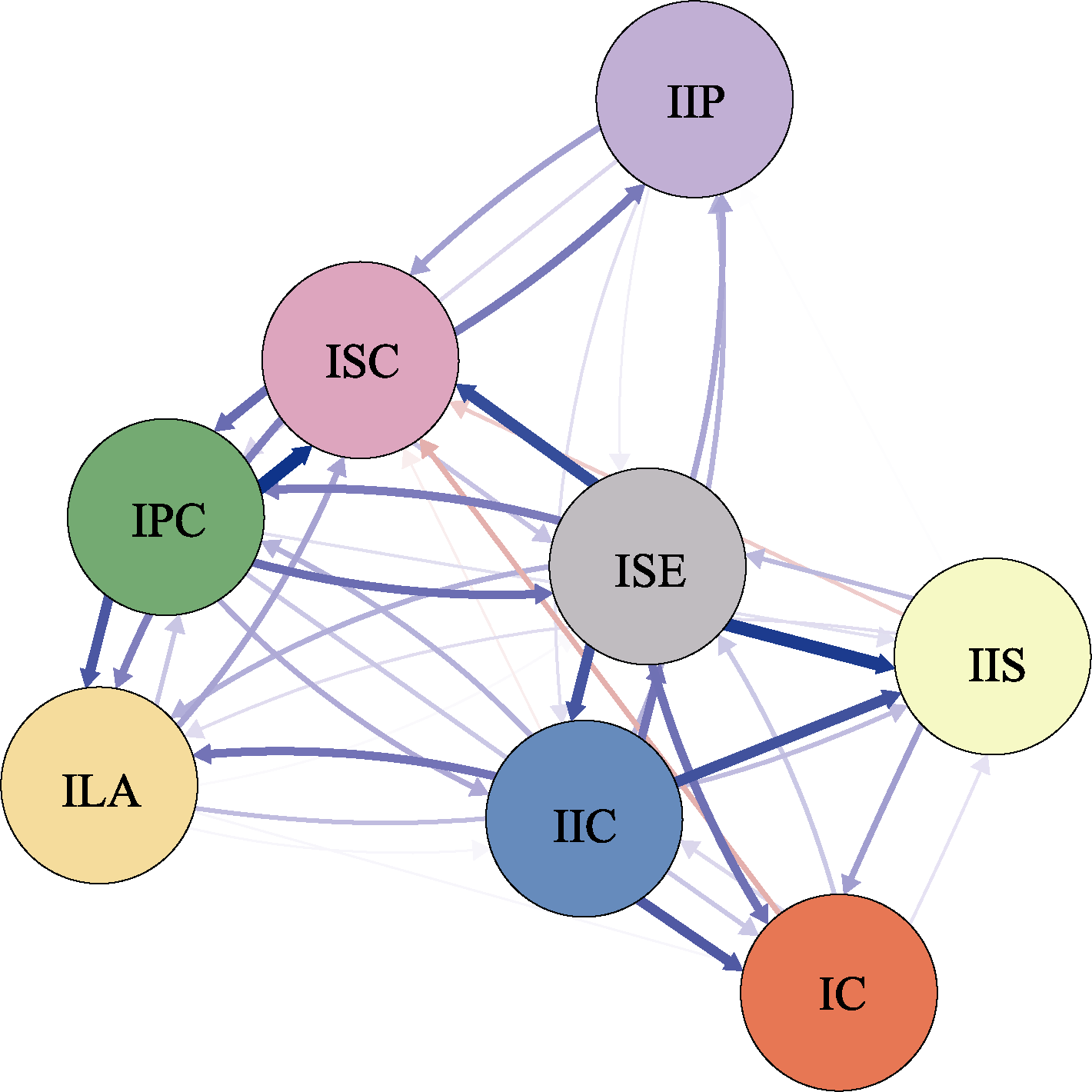
Figure 5. Cross-lagged network of adolescent internet adaptation (Autoregressive paths omitted).
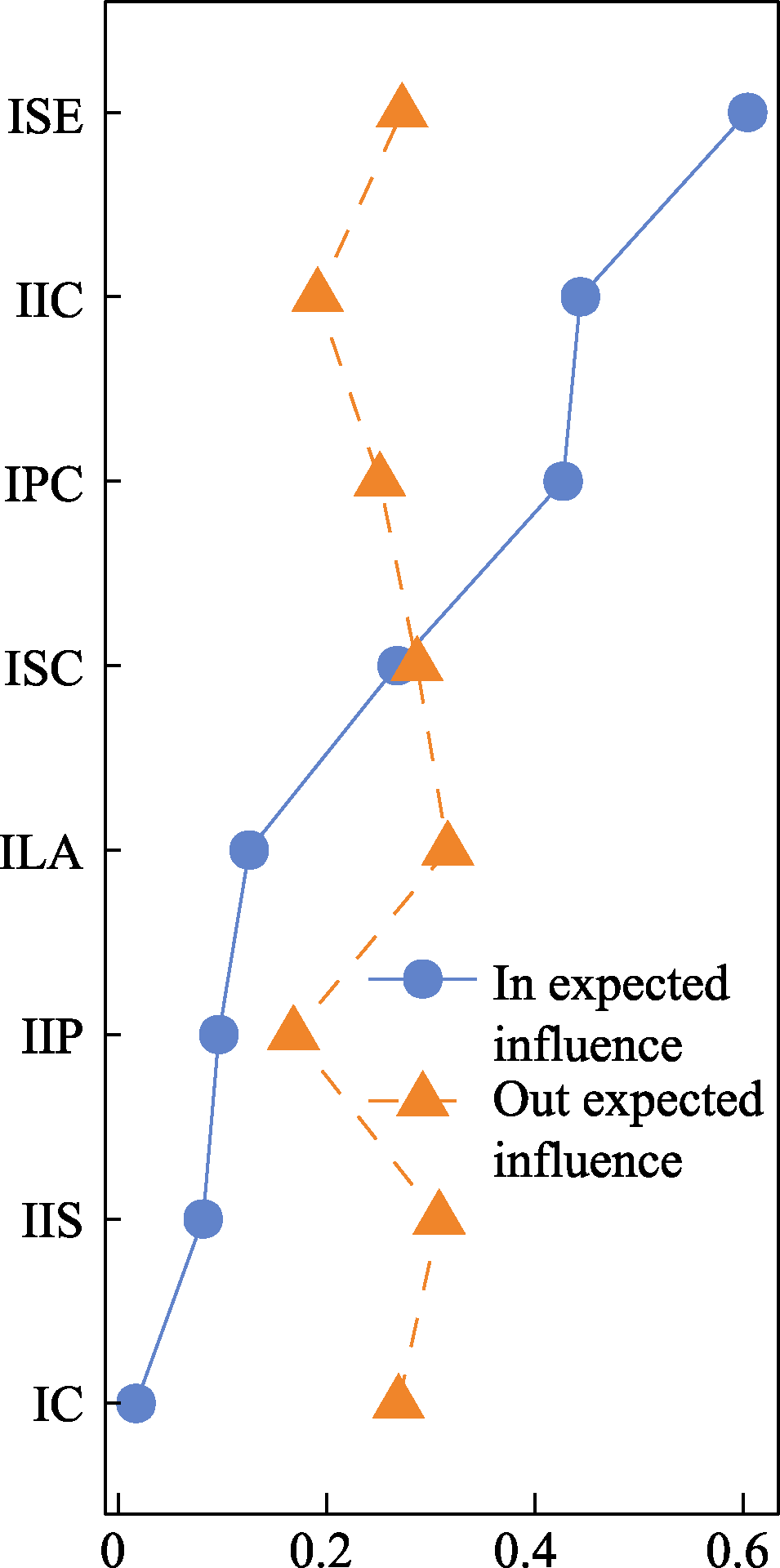
Figure 6. Outgoing and incoming predicted effects in the cross- lagged network of internet adaptation.
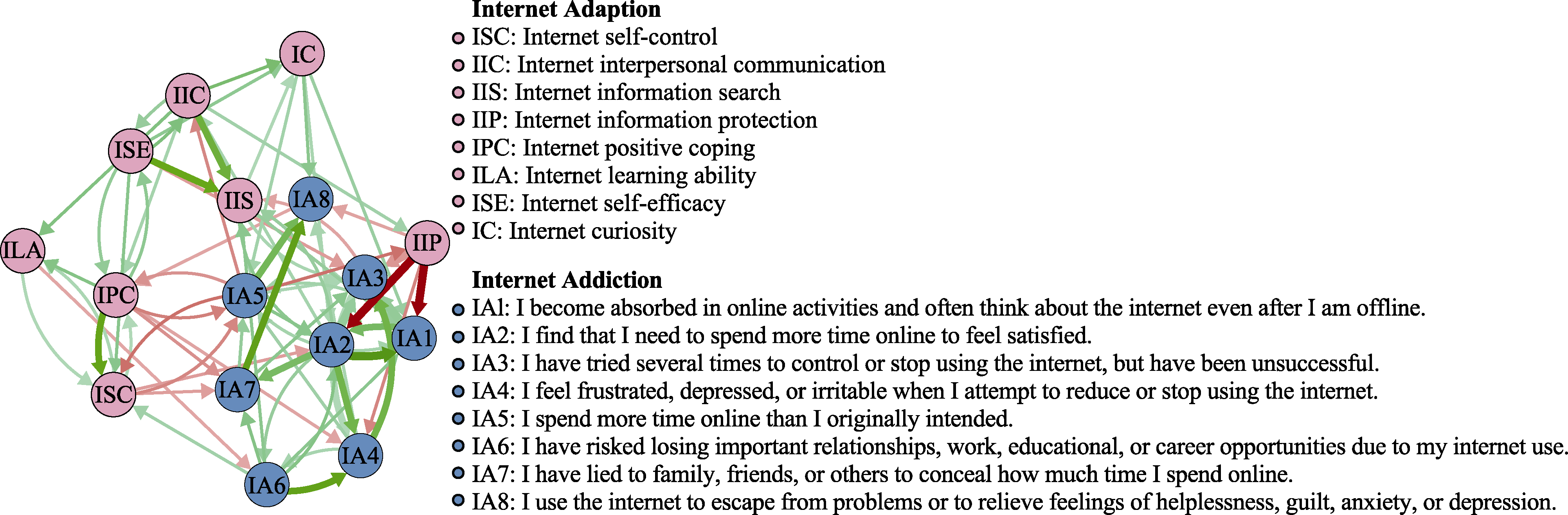
Figure 7. Cross-lagged network model of T1 internet adaptation and T2 internet addiction. Note. The model represents the temporal interactions between internet adaptation and internet addiction over two time points.
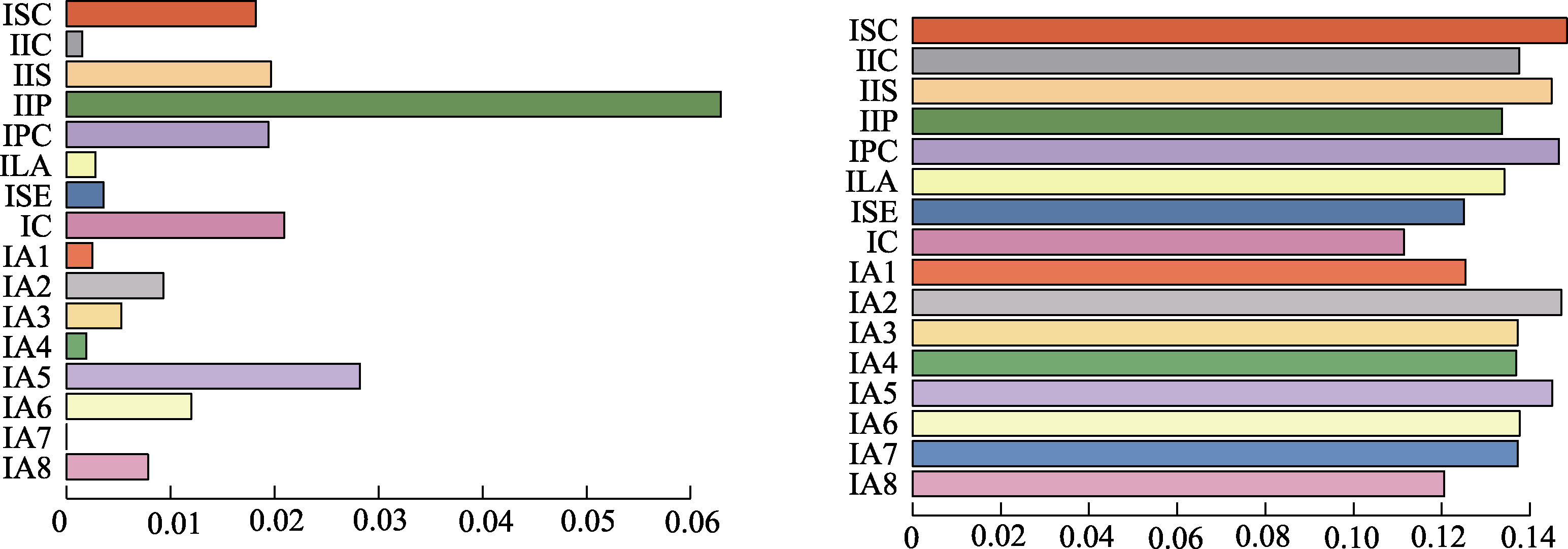
Figure 8. Cross-cluster outgoing predictability (left) and incoming predictability (right) in the cross-lagged network of internet adaptation and internet addiction.
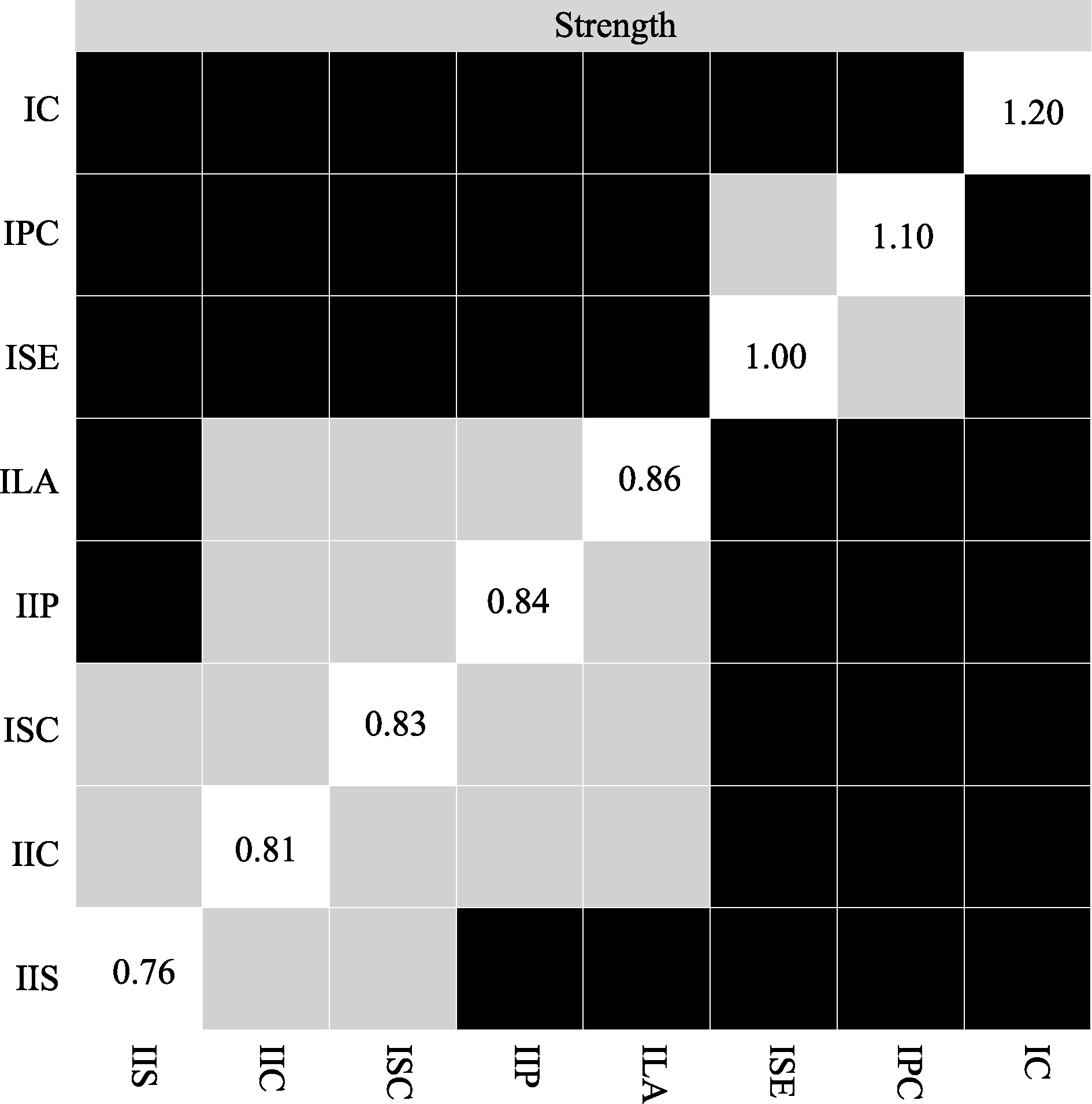
Figure S1. Nonparametric bootstrap method for testing network adaptation to the strength difference of individual nodes of the transect network. Note. Black squares in the figure indicate that the 95% confidence interval corresponding to the difference in the strengths of the two nodes derived from the bootstrap method does not contain zero, while gray squares indicate that the 95% confidence interval corresponding to the difference in the strengths of the two nodes contains zero. The diagonal lines indicate the magnitude of the individual node intensities (below).
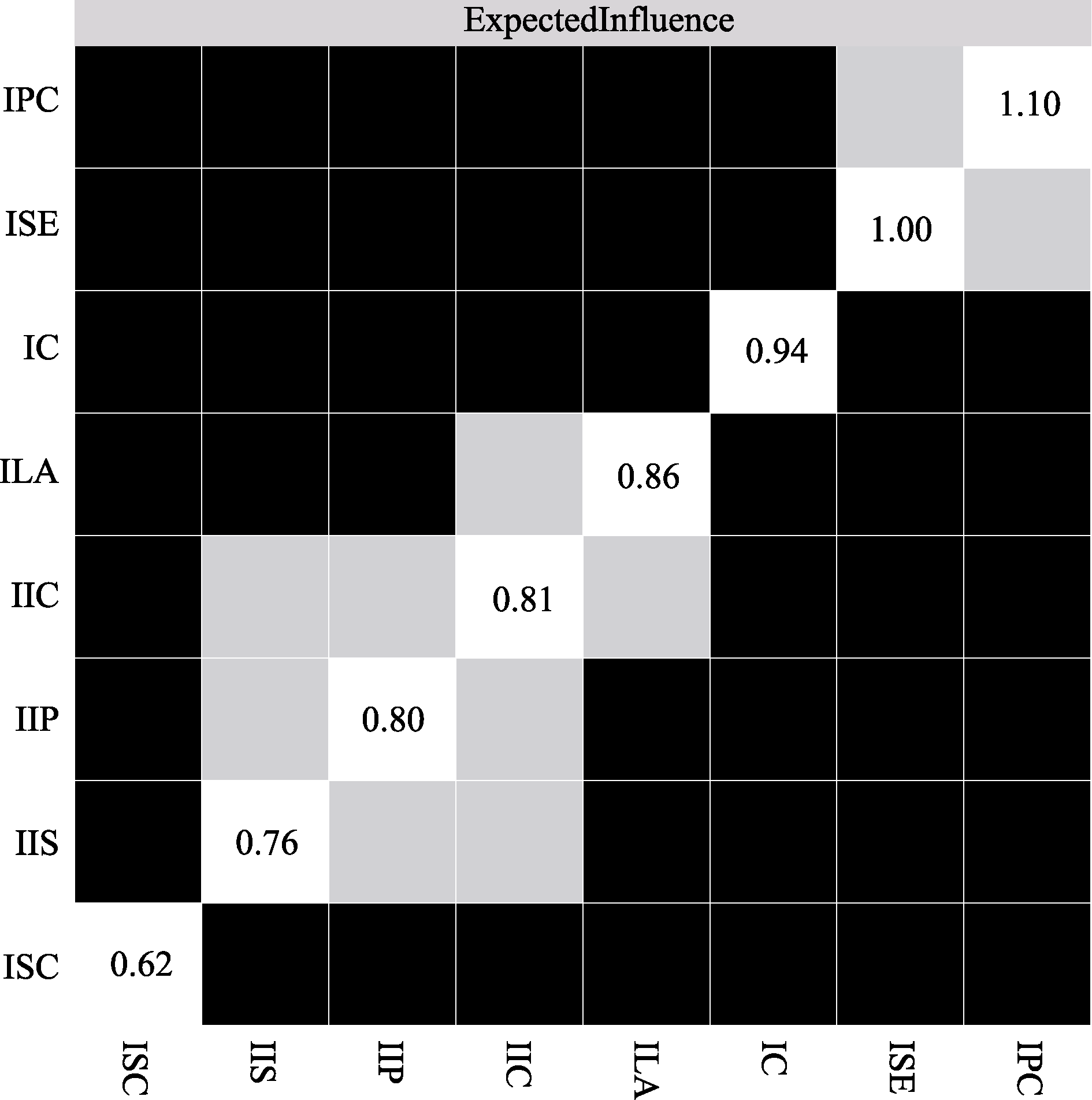
Figure S2. Nonparametric bootstrap method for testing network adaptation to transect differences in the expected impact of individual nodes of the network.
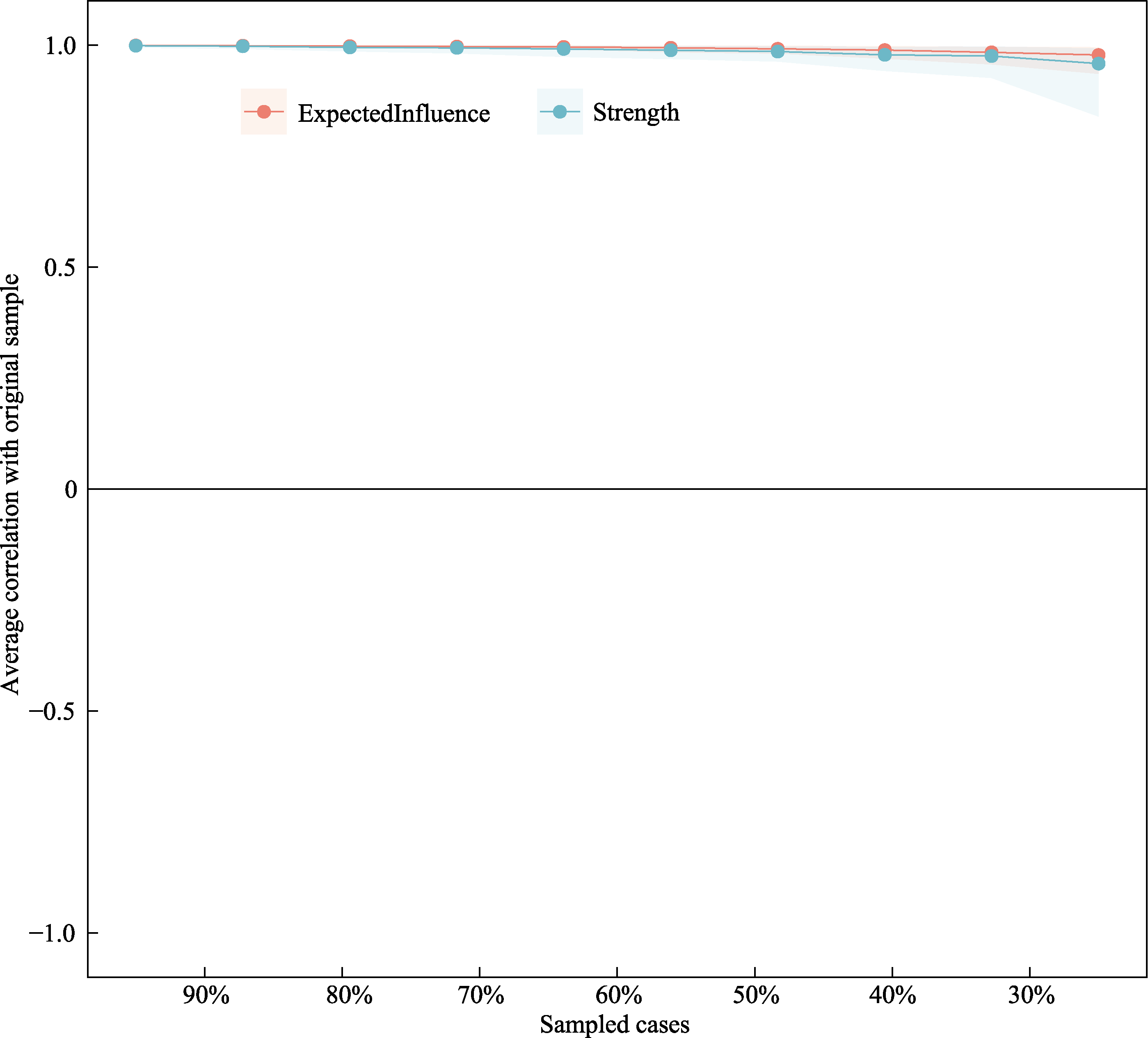
Figure S3. Stability test results of the Case-droping method for testing network adaptation to intensity and expected impacts in the transect network Note: The X-axis indicates the percentage of remaining after randomly dropping samples on the original sample; the Y-axis indicates the correlation of the centrality metrics between the remaining samples and the original sample. Points on the lines in the figure indicate the average correlation (from 90% to 10%) between the intensity estimated in the full sample and the intensity estimated on a random subsample that retains only a percentage of cases. Shaded areas indicate 95% bootstrap confidence intervals for the correlation estimates. Higher values indicate better stability of the centrality estimates. (below)
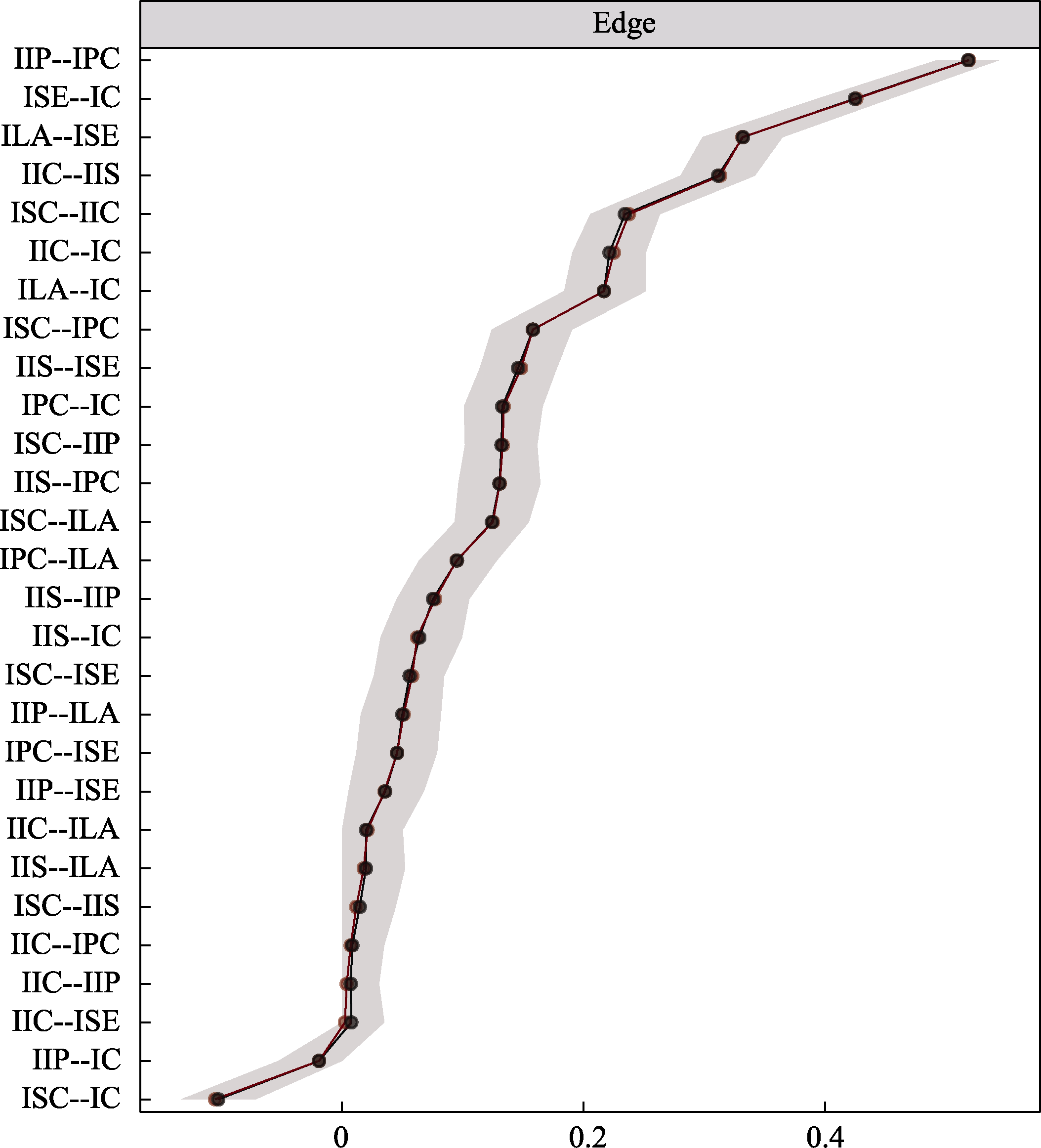
Figure S4. Nonparametric bootstrap method for testing network adaptation to edge differences in transect networks.
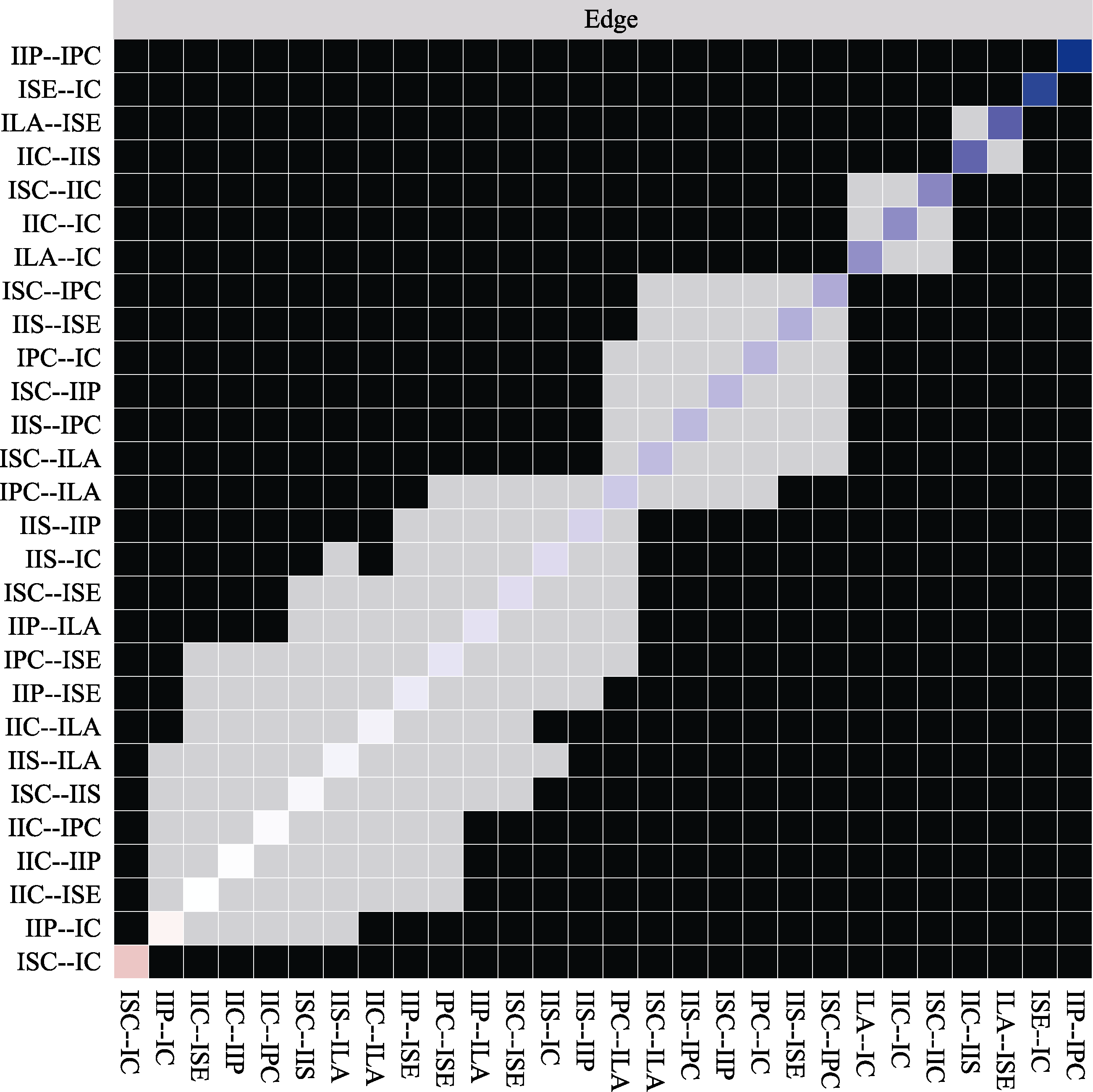
Figure S5. Nonparametric bootstrap method to test the accuracy of marginals estimation in network-adapted transect networks. Note. The red and black dots on each horizontal line indicate the sample values and the estimated bootstrap means of the marginals, respectively. The shaded portion of each horizontal line is the 95% confidence interval of the bootstrap estimate of the marginals, and the narrower gray shading means the higher accuracy of the marginals. (Same below)
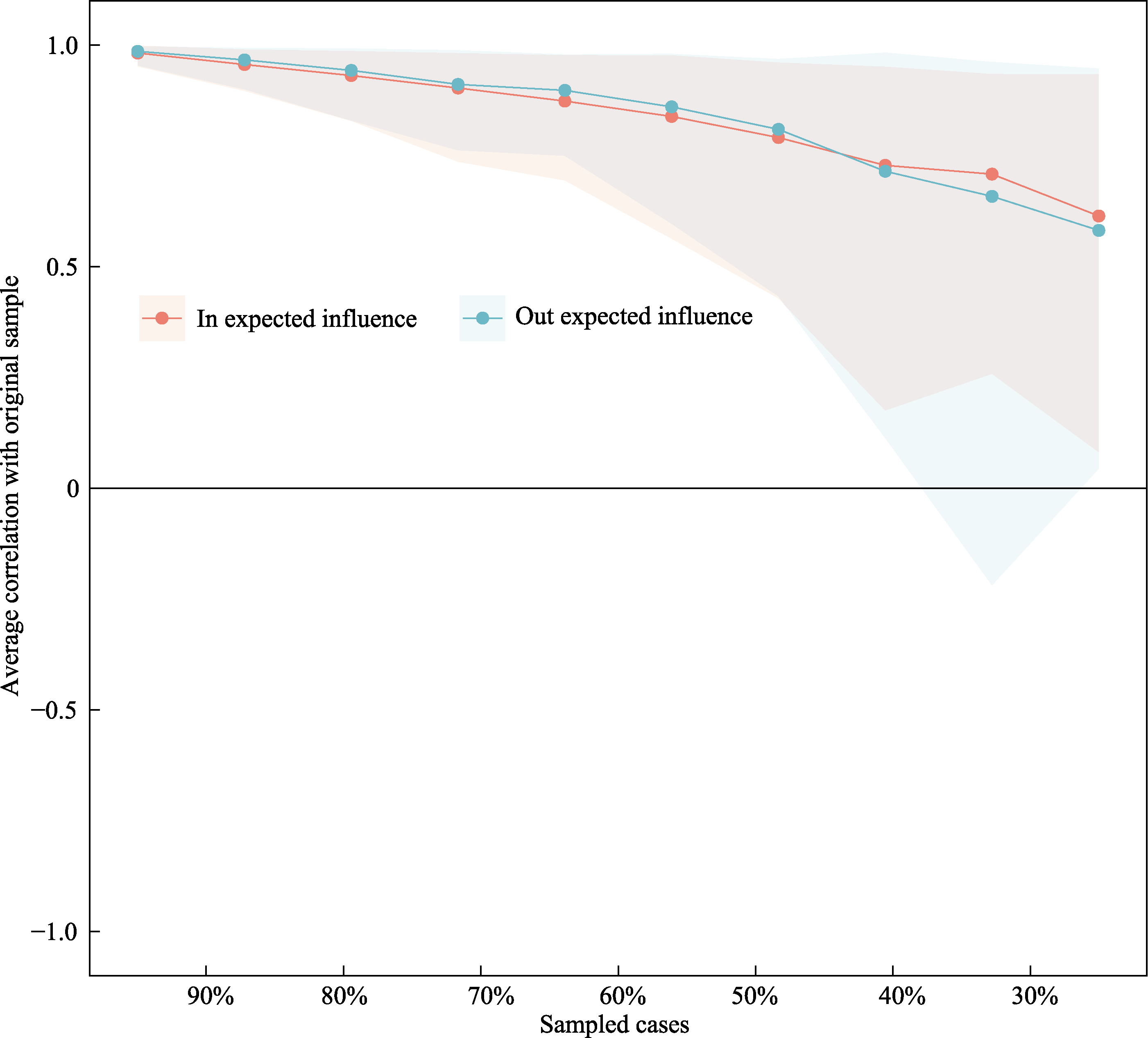
Figure S6. Case-droping method to test the stability of network adaptation to in-expected and out-expected impacts in cross-lagged networks.
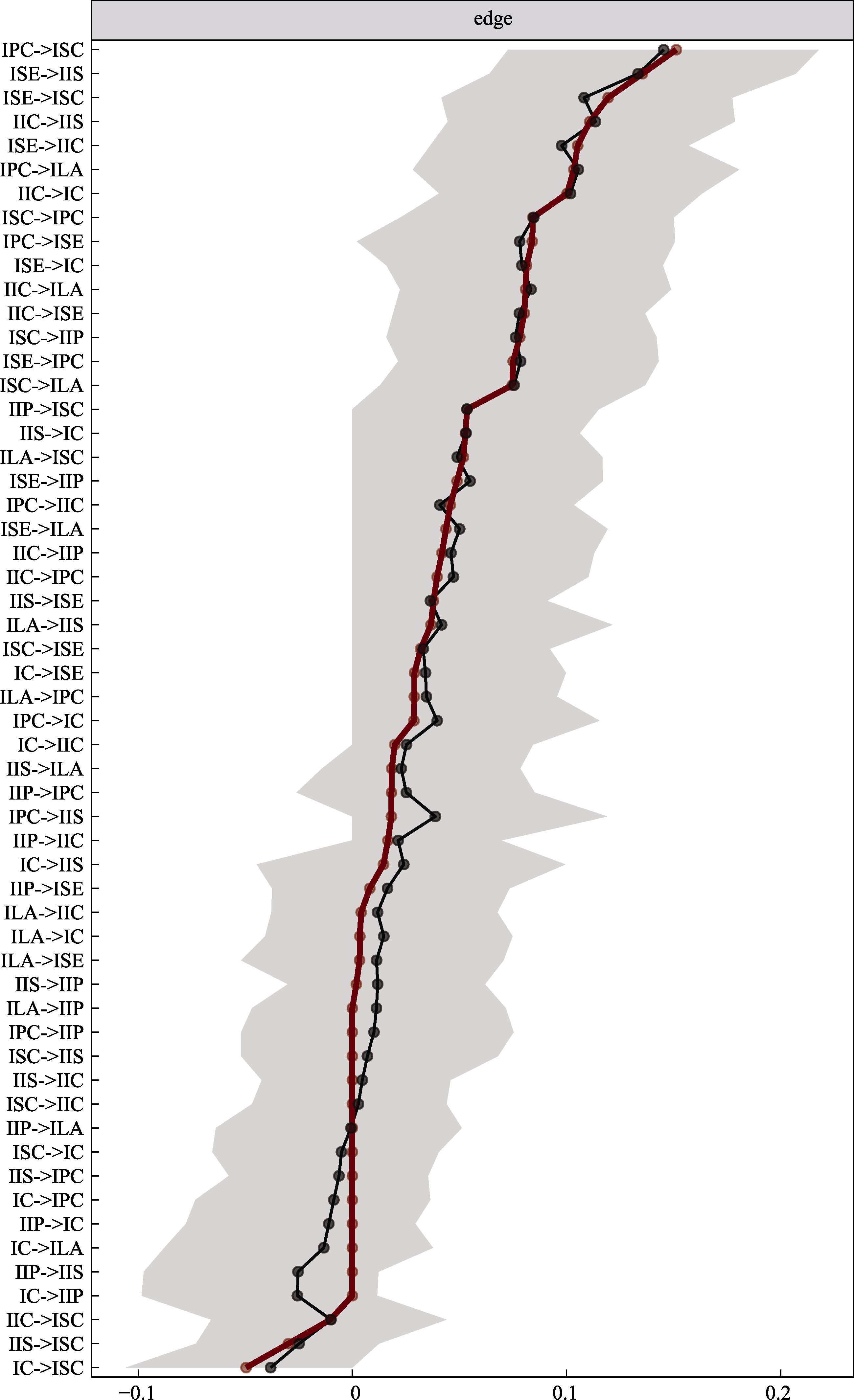
Figure S7. Nonparametric bootstrap method to test the accuracy of margin estimation in network-adapted cross-lag networks.
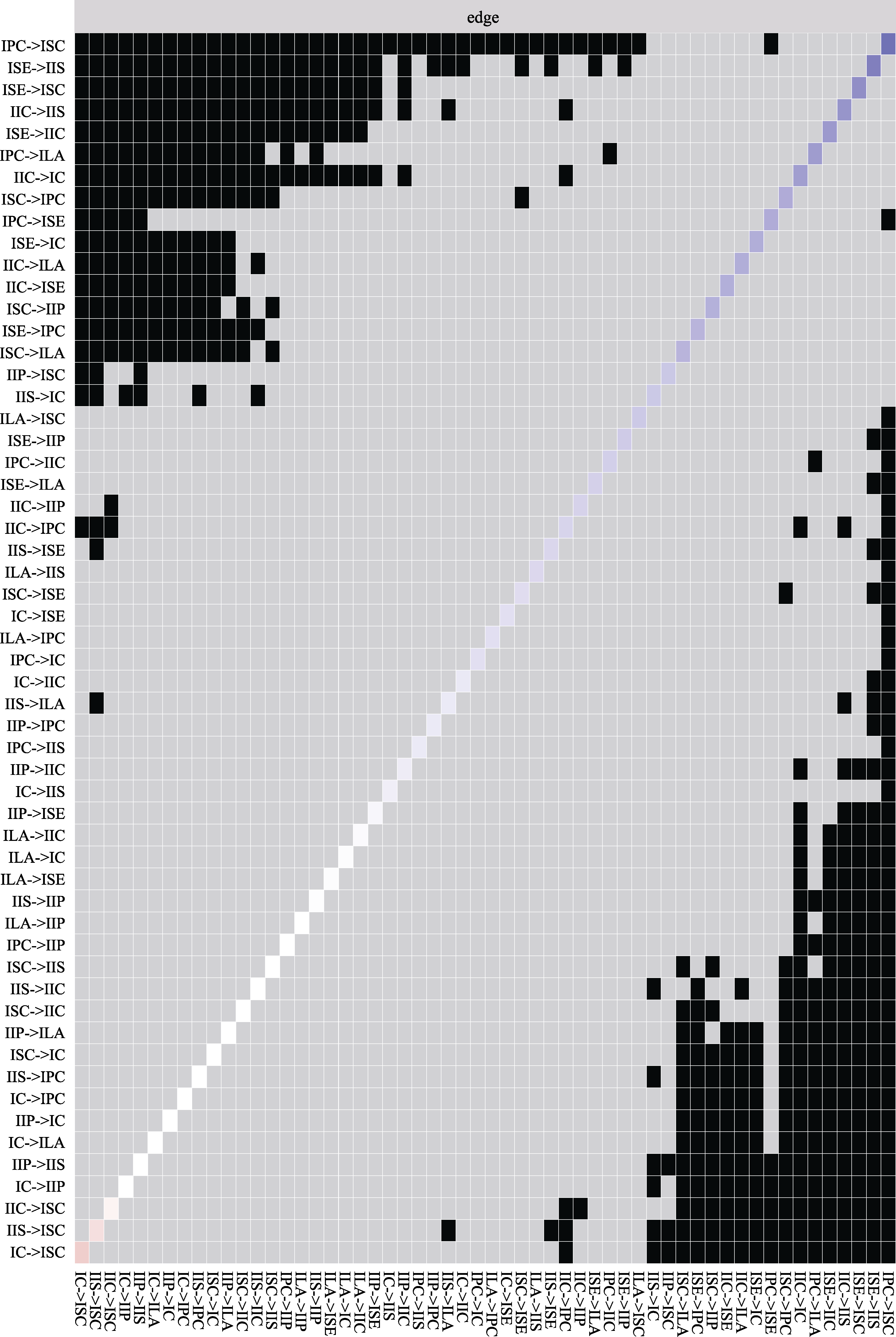
Figure S8. Nonparametric bootstrap method for testing network adaptation to borderline differences in cross-lagged networks.
| [1] | Al-Maskari, A., & Sanderson, M. (2011). The effect of user characteristics on search effectiveness in information retrieval. Information Processing & Management, 47(5), 719-729. |
| [2] | Ajzen, I. (1985). From intentions to actions:A theory of planned behavior. In KuhlJ., BeckmannJ.(Eds.), Action control (pp. 11-39). Springer. |
| [3] |
Bandura, A. (1977). Self-efficacy: Toward a unifying theory of behavioral change. Psychological Review, 84(2), 191-215.
doi: 10.1037//0033-295x.84.2.191 pmid: 847061 |
| [4] | Baumeister, R. F., Vohs, K. D., & Tice, D. M. (2007). The strength model of self-control. Current Directions in Psychological Science, 16(6), 351-355. |
| [5] |
Bekkhus, M., McVarnock, A., Coplan, R. J., Ulset, V., & Kraft, B. (2023). Developmental changes in the structure of shyness and internalizing symptoms from early to middle childhood: A network analysis. Child Development, 94(4), 1078-1086.
doi: 10.1111/cdev.13906 pmid: 36748207 |
| [6] | Borsboom, D., & Cramer, A. O. (2013). Network analysis: An integrative approach to the structure of psychopathology. Annual Review of Clinical Psychology, 9(1), 91-121. |
| [7] | Borsboom, D., Deserno, M. K., Rhemtulla, M., Epskamp, S., Fried, E. I., McNally, R. J.,... Waldorp, L. J. (2021). Network analysis of multivariate data in psychological science. Nature Reviews Methods Primers, 1(1), 1-18. |
| [8] | Bowler, L. (2010). The self-regulation of curiosity and interest during the information search process of adolescent students. Journal of the Association for Information Science and Technology, 61(7), 1332-1344. |
| [9] |
Bringmann, L. F., Elmer, T., Epskamp, S., Krause, R. W., Schoch, D., Wichers, M., … Snippe, E. (2019). What do centrality measures measure in psychological networks?. Journal of Abnormal Psychology, 128(8), 892-903.
doi: 10.1037/abn0000446 pmid: 31318245 |
| [10] |
Bringmann, L. F., & Eronen, M. I. (2018). Don’t blame the model: Reconsidering the network approach to psychopathology. Psychological Review, 125(4), 606-615.
doi: 10.1037/rev0000108 pmid: 29952625 |
| [11] | Byrne, B. M. (Ed.) (2010). Structural equation modeling with AMOS: Basic concepts, applications, and programming. Routledge. |
| [12] |
Cai, Y., Dong, S., Yuan, S., & Hu, C. P. (2020). Network analysis and its applications in psychology. Advances in Psychological Science, 28(1), 178-195.
doi: 10.3724/SP.J.1042.2020.00178 |
| [13] | Chen, J. W., & Wang, T. (2003). On social adaptation: Mental mechanism, structure and function. Journal of Educational Science of Hunan Normal University, 2(4), 90-94. |
| [14] | Curran, P. J., West, S. G., & Finch, J. F. (1996). The robustness of test statistics to nonnormality and specification error in confirmatory factor analysis. Psychological Methods, 1(1), 16-29. |
| [15] | De Simone, C., Battisti, A., & Ruggeri, A. (2022). Differential impact of web habits and active navigation on adolescents’ online learning. Computers in Human Behavior Reports, 8, 100246. https://doi.org/10.1016/j.chbr.2022.100246 |
| [16] | Du, H., Niyato, D., Kang, J., Xiong, Z., Zhang, P., Cui, S.,... Kim, D. I. (2024). The age of generative AI and AI-generated everything. IEEE Network. Advance online publication.https://doi.org/10.1109/MNET.2024.3422241 |
| [17] |
Epskamp, S., Borsboom, D., & Fried, E. I. (2018). Estimating psychological networks and their accuracy: A tutorial paper. Behavior Research Methods, 50(1), 195-212.
doi: 10.3758/s13428-017-0862-1 pmid: 28342071 |
| [18] | Epskamp, S., Cramer, A. O., Waldorp, L. J., Schmittmann, V. D., & Borsboom, D. (2012). Qgraph: Network visualizations of relationships in psychometric data. Journal of Statistical Software, 48(4), 1-18. |
| [19] |
Epskamp, S., Waldorp, L. J., Mõttus, R., & Borsboom, D. (2018). The Gaussian graphical model in cross-sectional and time-series data. Multivariate Behavioral Research, 53(4), 453-480.
doi: 10.1080/00273171.2018.1454823 pmid: 29658809 |
| [20] |
Friedman, J., Tibshirani, R., & Hastie, T. (2010). Regularization paths for generalized linear models via coordinate descent. Journal of Statistical Software, 33(1), 1-22.
pmid: 20808728 |
| [21] | Fruchterman, T. M., & Reingold, E. M. (1991). Graph drawing by force-directed placement. Software: Practice and Experience, 21(11), 1129-1164. |
| [22] | Fumero, A., Marrero, R. J., Voltes, D., & Peñate, W. (2018). Personal and social factors involved in internet addiction among adolescents: A meta-analysis. Computers in Human Behavior, 86, 387-400. |
| [23] | Funkhouser, C. J., Chacko, A. A., Correa, K. A., Kaiser, A. J., & Shankman, S. A. (2021). Unique longitudinal relationships between symptoms of psychopathology in youth: A cross-lagged panel network analysis in the ABCD study. Journal of child psychology and psychiatry, 62(2), 184-194. |
| [24] |
Haslbeck, J. M. B., & Fried, E. I. (2017). How predictable are symptoms in psychopathological networks? A reanalysis of 18 published datasets. Psychological Medicine, 47(16), 2767-2776.
doi: 10.1017/S0033291717001258 pmid: 28625186 |
| [25] |
Haslbeck, J. M. B., Borsboom, D., & Waldorp, L. J. (2021). Moderated Network Models. Multivariate Behavioral Research, 56(2), 256-287.
doi: 10.1080/00273171.2019.1677207 |
| [26] | Hsu, S. H., Wen, M. H., & Wu, M. C. (2009). Exploring user experiences as predictors of MMORPG addiction. Computers & Education, 53(3), 990-999. |
| [27] |
Huang, Q., Chen, C., Luo, Y., & Wu, H. (2021). The mechanism and function of curiosity. Advances in Psychological Science, 29(4), 723-736.
doi: 10.3724/SP.J.1042.2021.00723 |
| [28] | Isvoranu, A.-M., Epskamp, S., Waldorp, L., & Borsboom, D. (Eds.). (2022). Network Psychometrics with R: A Guide for Behavioral and Social Scientists. Routledge. |
| [29] | Jiang, Y. Z., Bai, X. L., A, Latanbagen., Liu, Y., Li, M., & Liu, G. Q. (2016). Problematic social networks usage of adolescent. Advances in Psychological Science, 24(9), 1435-1447. |
| [30] |
Li, J. (2013). The mechanism of why self-control resources and cognitive resources influence each other: An integrated model. Advances in Psychological Science, 21(2), 235-242.
doi: 10.3724/SP.J.1042.2013.00235 |
| [31] | Li, L., He, W., Xu, L., Ash, I., Anwar, M., & Yuan, X. (2019). Investigating the impact of cybersecurity policy awareness on employees’ cybersecurity behavior. International Journal of Information Management, 45, 13-24. |
| [32] | Li, Y., & Kwok, S. Y. (2023). A longitudinal network analysis of the interactions of risk and protective factors for suicidal potential in early adolescents. Journal of Youth and Adolescence, 52(2), 306-318. |
| [33] | Li, Y., Zhong, B. L., Liu, X. B., Zhang, Y., Zhu, J. H., & Hao, W. (2012). Reliability and validity of the Chinese version of self-rating Young’s diagnostic questionnaire of internet addiction: A preliminary study. Chinese Journal of Drug Dependence, 21(5), 390-394. |
| [34] | Lim, W. M., Gunasekara, A., Pallant, J. L., Pallant, J. I., & Pechenkina, E. (2023). Generative AI and the future of education: Ragnarök or reformation? A paradoxical perspective from management educators. The International Journal of Management Education, 21(2), 100790. |
| [35] | Loewenstein, G. (1994). The psychology of curiosity: A review and reinterpretation. Psychological Bulletin, 116(1), 75-98. |
| [36] | Mamonov, S., & Benbunan-Fich, R. (2018). The impact of information security threat awareness on privacy-protective behaviors. Computers in Human Behavior, 83, 32-44. |
| [37] | Moretta, T., & Buodo, G. (2020). Problematic Internet use and loneliness: How complex is the relationship? A short literature review. Current Addiction Reports, 7, 125-136. |
| [38] |
Muraven, M., & Baumeister, R. F. (2000). Self-regulation and depletion of limited resources: Does self-control resemble a muscle? Psychological Bulletin, 126(2), 247-259.
doi: 10.1037/0033-2909.126.2.247 pmid: 10748642 |
| [39] | Neugnot-Cerioli, M., & Laurenty, O. M. (2024). The future of child development in the AI era: Cross-disciplinary perspectives between AI and child development experts. arXiv preprint. https://doi.org/10.48550/arXiv.2405.19275. |
| [40] | Ordóñez-Carrasco, J. L., Sayans-Jiménez, P., & Rojas-Tejada, A. J. (2023). Ideation-to-action framework variables involved in the development of suicidal ideation: A network analysis. Current Psychology, 42(5), 4053-4064. |
| [41] |
Robinaugh, D. J., Millner, A. J., & McNally, R. J. (2016). Identifying highly influential nodes in the complicated grief network. Journal of Abnormal Psychology, 125(6), 747-757.
doi: 10.1037/abn0000181 pmid: 27505622 |
| [42] | Ramos-Vera, C., O'Diana, A. G., Villena, A. S., Bonfá-Araujo, B., Barros, L. D. O., Noronha, A. P. P., Gómez-Acosta, A., Sierra-Barón, W., Gerymski, R., Ogundokun, R. O., Babatunde, A. N., Abdulahi, A. T., & Adeniyi, E. A. (2023). Dark and Light Triad: A cross-cultural comparison of network analysis in 5 countries. Personality and Individual Differences, 215, 112377. |
| [43] |
Ryan, R.M., & Deci, E.L. (2000). Intrinsic and extrinsic motivations: Classic definitions and new directions. Contemporary Educational Psychology, 25(1), 54-67.
doi: 10.1006/ceps.1999.1020 pmid: 10620381 |
| [44] | Ryan, T., & Xenos, S. (2011). Who uses Facebook? An investigation into the relationship between the Big Five, shyness, narcissism, loneliness, and Facebook usage. Computers in Human Behavior, 27(5), 1658-1664. |
| [45] | Tibshirani, R. (1996). Regression shrinkage and selection via the lasso. Journal of the Royal Statistical Society Series B: Statistical Methodology, 58(1), 267-288. |
| [46] | Urban, M., Děchtěrenko, F., Lukavský, J., Hrabalová, V., Svacha, F., Brom, C., & Urban, K. (2024). ChatGPT improves creative problem-solving performance in university students: An experimental study. Computers & Education, 215, 105031. |
| [47] | van Borkulo, C. D., van Bork, R., Boschloo, L., Kossakowski, J. J., Tio, P., Schoevers, R. A., … & Waldorp, L. J. (2023). Comparing network structures on three aspects: A permutation test. Psychological Methods, 28(6), 1273-1285. |
| [48] | Vance, A., Anderson, B. B., Kirwan, C. B., & Eargle, D. (2014). Using measures of risk perception to predict information security behavior: Insights from electroencephalography (EEG). Journal of the Association for Information Systems, 15(10). DOI: 10.17705/1jais.00375 |
| [49] | van der Schyff, K., & Flowerday, S. (2021). Mediating effects of information security awareness. Computers & Security, 106, 102313. |
| [50] | Wang, F., Ni, X., Zhang, M., & Zhang, J. (2024). Educational digital inequality: A meta-analysis of the relationship between digital device use and academic performance in adolescents. Computers & Education, 213, 105003. |
| [51] | Wang, J. L., Jackson, L. A., Wang, H. Z., & Gaskin, J. (2015). Predicting social networking site (SNS) use: Personality, attitudes, motivation and internet self-efficacy. Personality and Individual Differences, 80, 119-124. |
| [52] | Wang, S., & Wu, P. (2008). The role of feedback and self-efficacy on web-based learning: The social cognitive perspective. Computers & Education, 51(4), 1589-1598. |
| [53] | Wang, W. J., Dong, R. C., Huang, D. W., & Zhou, Z. K. (2021). Internet adaptation: Concept and model. Journal of Nanchang University (Humanities and Social Sciences). 52(2), 45-54. |
| [54] | Wang, W., Ma, S., Han, X., & Zhao, X. (2023). The impact of internet adaptability on internet addiction: The serial mediation effect of meaning in life and anxiety. Frontiers in Psychiatry, 14, 1268539. |
| [55] | Wang, Y., Cao, Y., Gong, S., Wang, Z., Li, N., & Ai, L. (2022). Interaction and learning engagement in online learning: The mediating roles of online learning self-efficacy and academic emotions. Learning and Individual Differences, 94, 102128. |
| [56] | Wang, Y., Hu, Z., Feng, Y., Wilson, A., & Chen, R. (2020). Changes in network centrality of psychopathology symptoms between the COVID-19 outbreak and after peak. Molecular Psychiatry, 25(12), 3140-3149. https://doi.org/10.1038/s41380-020-00881-6 |
| [57] |
Wiggin, K. L., Reimann, M., & Jain, S. P. (2019). Curiosity tempts indulgence. Journal of Consumer Research, 45(6), 1194-1212.
doi: 10.1093/jcr/ucy055 |
| [58] | Wysocki, A., van Bork, R., Cramer, A. O. J., & Rhemtulla, M. (2022). Cross-Lagged Network Models. PsyArXiv preprint. https://doi.org/10.31234/osf.io/vjr8z |
| [59] |
Xie, M., Li, F., Luo, Y, H., Ke, L., Wang, X., Wang, Y. (2022). A developmental model of job burnout dimensions among primary school teachers: Evidence from structural equation model and cross-lagged panel network model. Acta Psychologica Sinica, 54(4), 371-384.
doi: 10.3724/SP.J.1041.2022.00371 |
| [60] | Yang, Y., Zhan, J., Ni, Y., Fan, Y., Zhang, Y., & Fang, Y. (2024). The influence of adolescents’ internet adaptation on internet addiction: The mediating role of internet cultural adaptation. Frontiers in Psychiatry, 14, 1338343. |
| [61] | Zhang, S., Zhao, X., Zhou, T., & Kim, J. H. (2024). Do you have AI dependency? The roles of academic self-efficacy, academic stress, and performance expectations on problematic AI usage behavior. International Journal of Educational Technology in Higher Education, 21(1), 1-14. |
| [62] | Zhao, H., Ji, A. T., & Jin, C. C. (2022). The relationship between family function and adolescent Internet adaptation: A dual moderating model. Psychology: Techniques and Applications, 10(10), 596-606. |
| [63] | Zheng, F., Khan, N. A., & Hussain, S. (2020). The COVID 19 pandemic and digital higher education: Exploring the impact of proactive personality on social capital through internet self-efficacy and online interaction quality. Children and Youth Services Review, 119, 105694. |
| [64] | Zhou, T., & Zhang, C. (2024). Examining generative AI user addiction from a CAC perspective. Technology in Society, 78, 102653. |
| Viewed | ||||||
|
Full text |
|
|||||
|
Abstract |
|
|||||
