

ISSN 0439-755X
CN 11-1911/B
主办:中国心理学会
中国科学院心理研究所
出版:科学出版社
CN 11-1911/B
主办:中国心理学会
中国科学院心理研究所
出版:科学出版社
心理学报 ›› 2026, Vol. 58 ›› Issue (5): 866-886.doi: 10.3724/SP.J.1041.2026.0866 cstr: 32110.14.2026.0866
吴莹莹1( ), 张雅婷1, 武星妍2, 王振兴3, 陈兰清4, 谢涵颖1
收稿日期:2025-05-27
发布日期:2026-03-04
出版日期:2026-05-25
通讯作者:
吴莹莹, E-mail: wuyypsy@outlook.com作者简介:吴莹莹、张雅婷和武星妍是本文的共同第一作者。
基金资助:
WU Yingying1(), ZHANG Yating1, WU Xingyan2, WANG Zhenxing3, CHEN Lanqing4, XIE Hanying1
Received:2025-05-27
Online:2026-03-04
Published:2026-05-25
摘要:
为探讨不同人际交往能力青少年的情绪注意偏向特征及其内在机理, 依据人际交往能力水平将60名青少年分为低、中、高三个组别, 采用两个眼动实验考察其对情绪面孔与文本的注意加工特点。实验1发现, 不同人际交往能力个体在情绪面孔加工中呈现出特定模式。青少年整体对消极面孔表现出注意偏向, 但交往能力较高者在情绪警觉性与加工效率上存在优势; 对于积极面孔, 低能力组表现出敏感性与再关注倾向, 中等能力组无明显偏向, 高能力组则表现出快速启动与稳定加工特征。实验2发现, 消极文本条件下仅高能力组表现出注意偏向, 积极文本条件下各组模式与面孔任务一致。这说明高能力组具有较高的跨刺激稳定性, 而低、中能力组的积极偏向较为稳定, 消极偏向则更具情境依赖性。研究有助于深化对青少年情绪加工机制及其在人际交往中潜在作用的理解, 并为提升青少年交往能力提供实践启示。
中图分类号:
吴莹莹, 张雅婷, 武星妍, 王振兴, 陈兰清, 谢涵颖. (2026). 不同人际交往能力青少年的情绪注意偏向. 心理学报, 58(5), 866-886.
WU Yingying, ZHANG Yating, WU Xingyan, WANG Zhenxing, CHEN Lanqing, XIE Hanying. (2026). Emotional attentional bias among adolescents with different levels of interpersonal competence. Acta Psychologica Sinica, 58(5), 866-886.
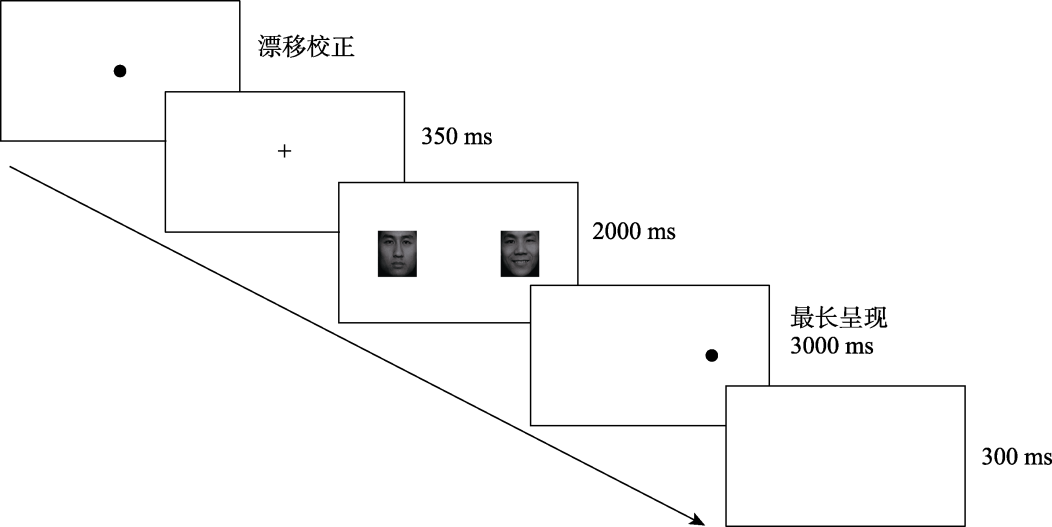
图1 实验1点探测任务的流程图(示例为一致条件)
| 人际交往能力 | 消极条件 | 积极条件 | 注意偏向分数 | |||
|---|---|---|---|---|---|---|
| 一致 | 不一致 | 一致 | 不一致 | 消极 | 积极 | |
| 低 | 624 ± 279 | 615 ± 269 | 612 ± 272 | 626 ± 275 | −4.55 ± 22.06 | 6.67 ± 23.25 |
| 中 | 526 ± 229 | 540 ± 227 | 537 ± 218 | 541 ± 224 | 7.15 ± 19.83 | 1.75 ± 23.69 |
| 高 | 484 ± 152 | 483 ± 152 | 498 ± 174 | 487 ± 150 | −0.54 ± 22.29 | −6.16 ± 26.34 |
表1 不同人际交往能力被试对探测点的反应时和注意偏向分数(M ± SD, 单位:ms)
| 人际交往能力 | 消极条件 | 积极条件 | 注意偏向分数 | |||
|---|---|---|---|---|---|---|
| 一致 | 不一致 | 一致 | 不一致 | 消极 | 积极 | |
| 低 | 624 ± 279 | 615 ± 269 | 612 ± 272 | 626 ± 275 | −4.55 ± 22.06 | 6.67 ± 23.25 |
| 中 | 526 ± 229 | 540 ± 227 | 537 ± 218 | 541 ± 224 | 7.15 ± 19.83 | 1.75 ± 23.69 |
| 高 | 484 ± 152 | 483 ± 152 | 498 ± 174 | 487 ± 150 | −0.54 ± 22.29 | −6.16 ± 26.34 |
| 固定效应 | b | SE | df | t | p | β | 95% CI |
|---|---|---|---|---|---|---|---|
| 截距 | −2.25 | 8.34 | 96.13 | −0.27 | 0.788 | −0.23 | [−0.65, 0.20] |
| 低 vs. 中能力 | 11.77 | 6.80 | 56.68 | 1.73 | 0.089 | 0.51 | [−0.09, 1.11] |
| 低 vs. 高能力 | 3.87 | 6.81 | 56.82 | 0.57 | 0.572 | 0.17 | [−0.43, 0.77] |
| 消极 vs. 积极 | 11.22 | 7.09 | 52.14 | 1.58 | 0.120 | 0.49 | [−0.15, 1.12] |
| 中能力 × 积极 | −16.62 | 10.09 | 86.60 | −1.65 | 0.103 | −0.03 | [−0.20, 0.14] |
| 高能力 × 积极 | −16.84 | 10.41 | 82.93 | −1.62 | 0.109 | −0.72 | [−1.64, 0.20] |
表2 实验1注意偏向分数的LMMs推断统计结果
| 固定效应 | b | SE | df | t | p | β | 95% CI |
|---|---|---|---|---|---|---|---|
| 截距 | −2.25 | 8.34 | 96.13 | −0.27 | 0.788 | −0.23 | [−0.65, 0.20] |
| 低 vs. 中能力 | 11.77 | 6.80 | 56.68 | 1.73 | 0.089 | 0.51 | [−0.09, 1.11] |
| 低 vs. 高能力 | 3.87 | 6.81 | 56.82 | 0.57 | 0.572 | 0.17 | [−0.43, 0.77] |
| 消极 vs. 积极 | 11.22 | 7.09 | 52.14 | 1.58 | 0.120 | 0.49 | [−0.15, 1.12] |
| 中能力 × 积极 | −16.62 | 10.09 | 86.60 | −1.65 | 0.103 | −0.03 | [−0.20, 0.14] |
| 高能力 × 积极 | −16.84 | 10.41 | 82.93 | −1.62 | 0.109 | −0.72 | [−1.64, 0.20] |
| 眼动指标 | 消极条件 | 积极条件 | ||||
|---|---|---|---|---|---|---|
| 低能力 | 中能力 | 高能力 | 低能力 | 中能力 | 高能力 | |
| DF | 0.62 ± 0.13 | 0.63 ± 0.14 | 0.58 ± 0.07 | 0.67 ± 0.11 | 0.66 ± 0.14 | 0.61 ± 0.09 |
| LB | −35.66 ± 90.7 | −82.79 ± 59.96 | −46.15 ± 99.56 | −65.76 ± 117.28 | −40.41 ± 79.75 | −47.98 ± 112.6 |
| FB | 9.14 ± 54.85 | 24.37 ± 41.15 | 20.62 ± 42.55 | 4.9 ± 62.13 | 1.13 ± 48.11 | 1.09 ± 49.42 |
| GB | 96.46 ± 89.53 | 79.58 ± 70.94 | 97.31 ± 70.55 | 13.55 ± 73.12 | 7.65 ± 55.18 | 41.4 ± 72.04 |
| TB | 115.46 ± 107.86 | 87.23 ± 63.49 | 101.23 ± 92.53 | 44.29 ± 111.85 | 30.26 ± 63.63 | 45.87 ± 74.03 |
表3 三组被试在两种情绪面孔条件下的眼动指标偏向(M ± SD)
| 眼动指标 | 消极条件 | 积极条件 | ||||
|---|---|---|---|---|---|---|
| 低能力 | 中能力 | 高能力 | 低能力 | 中能力 | 高能力 | |
| DF | 0.62 ± 0.13 | 0.63 ± 0.14 | 0.58 ± 0.07 | 0.67 ± 0.11 | 0.66 ± 0.14 | 0.61 ± 0.09 |
| LB | −35.66 ± 90.7 | −82.79 ± 59.96 | −46.15 ± 99.56 | −65.76 ± 117.28 | −40.41 ± 79.75 | −47.98 ± 112.6 |
| FB | 9.14 ± 54.85 | 24.37 ± 41.15 | 20.62 ± 42.55 | 4.9 ± 62.13 | 1.13 ± 48.11 | 1.09 ± 49.42 |
| GB | 96.46 ± 89.53 | 79.58 ± 70.94 | 97.31 ± 70.55 | 13.55 ± 73.12 | 7.65 ± 55.18 | 41.4 ± 72.04 |
| TB | 115.46 ± 107.86 | 87.23 ± 63.49 | 101.23 ± 92.53 | 44.29 ± 111.85 | 30.26 ± 63.63 | 45.87 ± 74.03 |
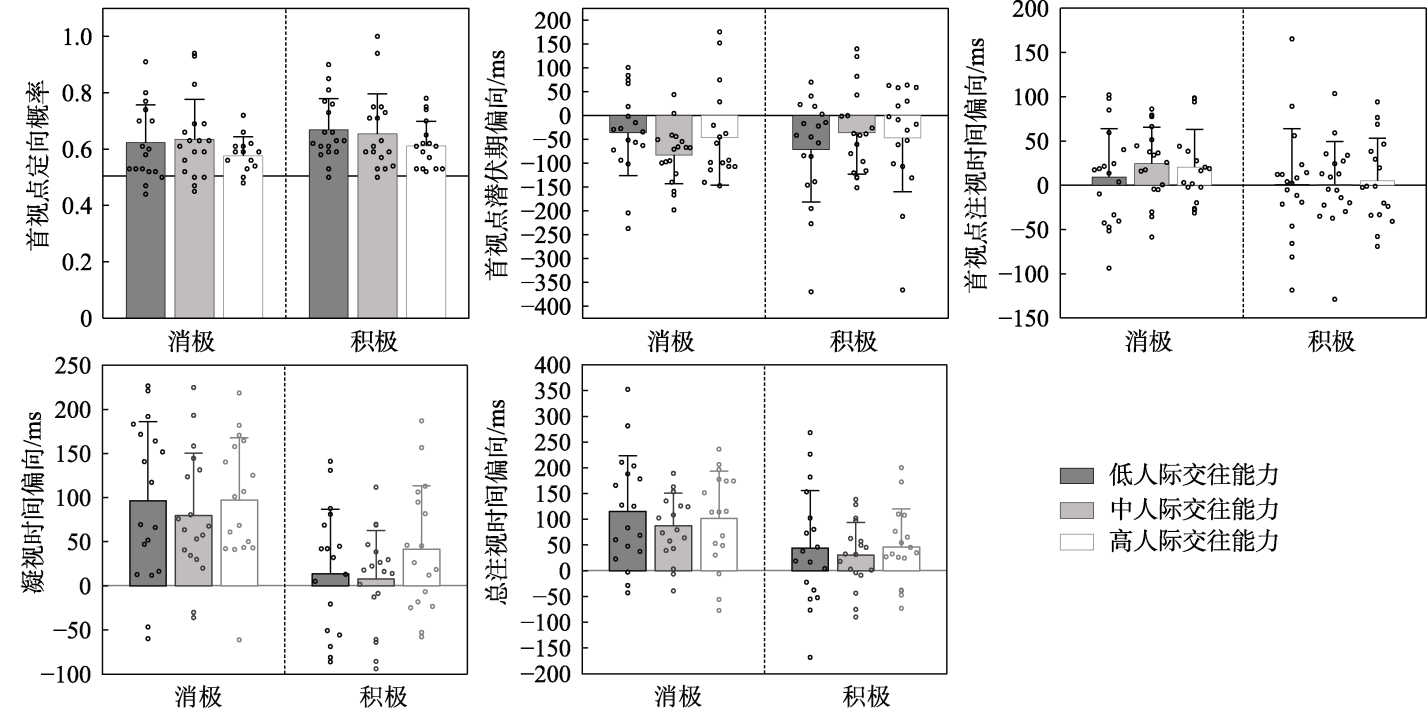
图2 三组被试在不同面孔情绪条件下的眼动指标偏向:数据点代表被试, 误差线为标准差。
| 测量指标 | 固定效应 | b | SE | df | t/z | p | β | 95% CI |
|---|---|---|---|---|---|---|---|---|
| 首视点定向概率 | 截距 | 0.75 | 0.91 | 0.83 | 0.407 | 1.72 | [ 0.98, 2.47] | |
| 低 vs. 中能力 | −0.11 | 0.55 | −0.21 | 0.837 | −0.11 | [−1.19, 0.97] | ||
| 低 vs. 高能力 | −0.19 | 0.57 | −0.33 | 0.742 | −0.2 | [−1.31, 0.92] | ||
| 消极 vs. 积极 | −0.09 | 0.18 | −0.53 | 0.599 | −0.09 | [−0.44, 0.26] | ||
| 中能力 × 积极 | 0.16 | 0.26 | 0.60 | 0.546 | 0.15 | [−0.36, 0.66] | ||
| 高能力 × 积极 | 0.25 | 0.26 | 0.97 | 0.334 | 0.25 | [−0.26, 0.75] | ||
| 首视点潜伏期偏向 | 截距 | −11.90 | 50.18 | 243.19 | −0.24 | 0.813 | 0.04 | [−0.09, 0.18] |
| 低 vs. 中能力 | −59.99 | 31.22 | 3038.92 | −1.92 | 0.055 | −0.11 | [−0.22, 0.01] | |
| 低 vs. 高能力 | −22.68 | 32.19 | 63.41 | −0.71 | 0.484 | −0.04 | [−0.16, 0.08] | |
| 消极 vs. 积极 | −15.58 | 54.51 | 99.44 | −0.29 | 0.776 | −0.03 | [−0.23, 0.17] | |
| 中能力 × 积极 | 53.76 | 46.29 | 156.59 | 1.16 | 0.247 | 0.1 | [−0.07, 0.27] | |
| 高能力 × 积极 | 18.23 | 48.03 | 77.23 | 0.38 | 0.705 | 0.03 | [−0.14, 0.20] | |
| 首视点注视时间偏向 | 截距 | 31.18 | 19.60 | 58.02 | 1.59 | 0.117 | 0.02 | [−0.09, 0.12] |
| 低 vs. 中能力 | 12.41 | 15.83 | 62.71 | 0.78 | 0.436 | 0.06 | [−0.08, 0.19] | |
| 低 vs. 高能力 | 6.13 | 15.59 | 55.44 | 0.39 | 0.696 | 0.03 | [−0.11, 0.16] | |
| 消极 vs. 积极 | −7.98 | 16.66 | 237.09 | −0.48 | 0.633 | −0.04 | [−0.19, 0.11] | |
| 中能力 × 积极 | −25.61 | 22.54 | 156.20 | −1.14 | 0.258 | −0.12 | [−0.31, 0.08] | |
| 高能力 × 积极 | −11.06 | 22.51 | 155.16 | −0.49 | 0.624 | −0.05 | [−0.25, 0.15] | |
| 凝视时间偏向 | 截距 | 59.00 | 40.84 | 78.09 | 1.45 | 0.153 | 0.10 | [−0.04, 0.24] |
| 低 vs. 中能力 | −5.71 | 28.00 | 112.12 | −0.20 | 0.839 | −0.02 | [−0.17, 0.14] | |
| 低 vs. 高能力 | 2.41 | 28.05 | 113.57 | 0.09 | 0.932 | 0.01 | [−0.15, 0.16] | |
| 消极 vs. 积极 | −87.61 | 33.24 | 145.11 | −2.64 | 0.009 | −0.25 | [−0.43, −0.06] | |
| 中能力 × 积极 | −2.60 | 33.94 | 2344.22 | −0.08 | 0.939 | −0.01 | [−0.19, 0.18] | |
| 高能力 × 积极 | 41.60 | 34.33 | 233.93 | 1.21 | 0.227 | 0.12 | [−0.07, 0.31] | |
| 总注视时间偏向 | 截距 | 44.99 | 40.68 | 67.79 | 1.11 | 0.273 | 0.09 | [ 0.00, 0.19] |
| 低 vs. 中能力 | −29.98 | 30.94 | 147.29 | −0.97 | 0.334 | −0.06 | [−0.19, 0.06] | |
| 低 vs. 高能力 | −8.00 | 32.32 | 69.25 | −0.25 | 0.805 | −0.02 | [−0.15, 0.12] | |
| 消极 vs. 积极 | −77.79 | 30.65 | 322.77 | −2.54 | 0.012 | −0.16 | [−0.29, −0.03] | |
| 中能力 × 积极 | 20.64 | 40.72 | 3051.78 | 0.51 | 0.612 | 0.04 | [−0.12, 0.21] | |
| 高能力 × 积极 | 20.03 | 43.55 | 164.31 | 0.46 | 0.646 | 0.04 | [−0.14, 0.23] |
表4 实验1眼动指标偏向的LMMs/GLMM推断统计结果
| 测量指标 | 固定效应 | b | SE | df | t/z | p | β | 95% CI |
|---|---|---|---|---|---|---|---|---|
| 首视点定向概率 | 截距 | 0.75 | 0.91 | 0.83 | 0.407 | 1.72 | [ 0.98, 2.47] | |
| 低 vs. 中能力 | −0.11 | 0.55 | −0.21 | 0.837 | −0.11 | [−1.19, 0.97] | ||
| 低 vs. 高能力 | −0.19 | 0.57 | −0.33 | 0.742 | −0.2 | [−1.31, 0.92] | ||
| 消极 vs. 积极 | −0.09 | 0.18 | −0.53 | 0.599 | −0.09 | [−0.44, 0.26] | ||
| 中能力 × 积极 | 0.16 | 0.26 | 0.60 | 0.546 | 0.15 | [−0.36, 0.66] | ||
| 高能力 × 积极 | 0.25 | 0.26 | 0.97 | 0.334 | 0.25 | [−0.26, 0.75] | ||
| 首视点潜伏期偏向 | 截距 | −11.90 | 50.18 | 243.19 | −0.24 | 0.813 | 0.04 | [−0.09, 0.18] |
| 低 vs. 中能力 | −59.99 | 31.22 | 3038.92 | −1.92 | 0.055 | −0.11 | [−0.22, 0.01] | |
| 低 vs. 高能力 | −22.68 | 32.19 | 63.41 | −0.71 | 0.484 | −0.04 | [−0.16, 0.08] | |
| 消极 vs. 积极 | −15.58 | 54.51 | 99.44 | −0.29 | 0.776 | −0.03 | [−0.23, 0.17] | |
| 中能力 × 积极 | 53.76 | 46.29 | 156.59 | 1.16 | 0.247 | 0.1 | [−0.07, 0.27] | |
| 高能力 × 积极 | 18.23 | 48.03 | 77.23 | 0.38 | 0.705 | 0.03 | [−0.14, 0.20] | |
| 首视点注视时间偏向 | 截距 | 31.18 | 19.60 | 58.02 | 1.59 | 0.117 | 0.02 | [−0.09, 0.12] |
| 低 vs. 中能力 | 12.41 | 15.83 | 62.71 | 0.78 | 0.436 | 0.06 | [−0.08, 0.19] | |
| 低 vs. 高能力 | 6.13 | 15.59 | 55.44 | 0.39 | 0.696 | 0.03 | [−0.11, 0.16] | |
| 消极 vs. 积极 | −7.98 | 16.66 | 237.09 | −0.48 | 0.633 | −0.04 | [−0.19, 0.11] | |
| 中能力 × 积极 | −25.61 | 22.54 | 156.20 | −1.14 | 0.258 | −0.12 | [−0.31, 0.08] | |
| 高能力 × 积极 | −11.06 | 22.51 | 155.16 | −0.49 | 0.624 | −0.05 | [−0.25, 0.15] | |
| 凝视时间偏向 | 截距 | 59.00 | 40.84 | 78.09 | 1.45 | 0.153 | 0.10 | [−0.04, 0.24] |
| 低 vs. 中能力 | −5.71 | 28.00 | 112.12 | −0.20 | 0.839 | −0.02 | [−0.17, 0.14] | |
| 低 vs. 高能力 | 2.41 | 28.05 | 113.57 | 0.09 | 0.932 | 0.01 | [−0.15, 0.16] | |
| 消极 vs. 积极 | −87.61 | 33.24 | 145.11 | −2.64 | 0.009 | −0.25 | [−0.43, −0.06] | |
| 中能力 × 积极 | −2.60 | 33.94 | 2344.22 | −0.08 | 0.939 | −0.01 | [−0.19, 0.18] | |
| 高能力 × 积极 | 41.60 | 34.33 | 233.93 | 1.21 | 0.227 | 0.12 | [−0.07, 0.31] | |
| 总注视时间偏向 | 截距 | 44.99 | 40.68 | 67.79 | 1.11 | 0.273 | 0.09 | [ 0.00, 0.19] |
| 低 vs. 中能力 | −29.98 | 30.94 | 147.29 | −0.97 | 0.334 | −0.06 | [−0.19, 0.06] | |
| 低 vs. 高能力 | −8.00 | 32.32 | 69.25 | −0.25 | 0.805 | −0.02 | [−0.15, 0.12] | |
| 消极 vs. 积极 | −77.79 | 30.65 | 322.77 | −2.54 | 0.012 | −0.16 | [−0.29, −0.03] | |
| 中能力 × 积极 | 20.64 | 40.72 | 3051.78 | 0.51 | 0.612 | 0.04 | [−0.12, 0.21] | |
| 高能力 × 积极 | 20.03 | 43.55 | 164.31 | 0.46 | 0.646 | 0.04 | [−0.14, 0.23] |
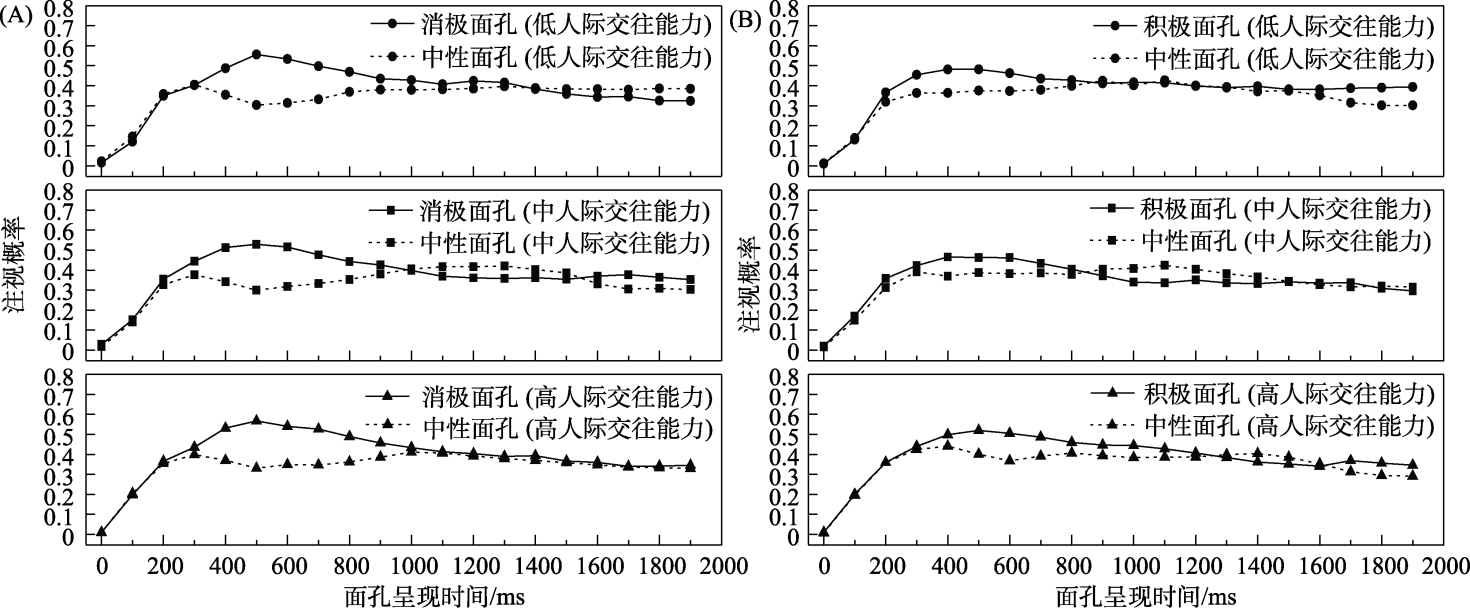
图3 三组被试在消极(A)和积极(B)情绪条件下对情绪面孔和中性面孔的注视概率注:图中数据点标示的是各时间段起点。
| 条件 | 句子 |
|---|---|
| 消极 | 国际知名钢琴大师 否定杨磊的弹琴技巧。 |
| 积极 | 国际知名钢琴大师 表扬杨磊的弹琴技巧。 |
| 中性 | 国际知名钢琴大师 改进杨磊的弹琴技巧。 |
| 消极 | 大家听到经理在办公室 否定李秘书做的方案。 |
| 积极 | 大家听到经理在办公室 表扬李秘书做的方案。 |
| 中性 | 大家听到经理在办公室 改进李秘书做的方案。 |
| 消极 | 组长昨天晚上发邮件 否定小金做的项目。 |
| 积极 | 组长昨天晚上发邮件 表扬小金做的项目。 |
| 中性 | 组长昨天晚上发邮件 改进小金做的项目。 |
表5 实验2实验材料列举
| 条件 | 句子 |
|---|---|
| 消极 | 国际知名钢琴大师 否定杨磊的弹琴技巧。 |
| 积极 | 国际知名钢琴大师 表扬杨磊的弹琴技巧。 |
| 中性 | 国际知名钢琴大师 改进杨磊的弹琴技巧。 |
| 消极 | 大家听到经理在办公室 否定李秘书做的方案。 |
| 积极 | 大家听到经理在办公室 表扬李秘书做的方案。 |
| 中性 | 大家听到经理在办公室 改进李秘书做的方案。 |
| 消极 | 组长昨天晚上发邮件 否定小金做的项目。 |
| 积极 | 组长昨天晚上发邮件 表扬小金做的项目。 |
| 中性 | 组长昨天晚上发邮件 改进小金做的项目。 |
| 指标 | 消极 | 积极 | 中性 |
|---|---|---|---|
| 愉悦度 | −1.68 ± 0.76 | 1.42 ± 0.55 | 0.39 ± 0.53 |
| 唤醒度 | 5.11 ± 0.55 | 4.39 ± 0.42 | 4.03 ± 0.28 |
| 具体性 | 5.02 ± 0.51 | 4.93 ± 0.41 | 4.82 ± 0.25 |
| 完形概率(%) | 0.13 ± 0.95 | 0.39 ± 2.86 | 0.32 ± 3.39 |
| 流畅性 | 5.61 ± 0.49 | 5.65 ± 0.49 | 5.71 ± 0.54 |
表6 实验2实验材料前测结果
| 指标 | 消极 | 积极 | 中性 |
|---|---|---|---|
| 愉悦度 | −1.68 ± 0.76 | 1.42 ± 0.55 | 0.39 ± 0.53 |
| 唤醒度 | 5.11 ± 0.55 | 4.39 ± 0.42 | 4.03 ± 0.28 |
| 具体性 | 5.02 ± 0.51 | 4.93 ± 0.41 | 4.82 ± 0.25 |
| 完形概率(%) | 0.13 ± 0.95 | 0.39 ± 2.86 | 0.32 ± 3.39 |
| 流畅性 | 5.61 ± 0.49 | 5.65 ± 0.49 | 5.71 ± 0.54 |
| 条件 | 关键词前 | 关键词 | 关键词后 | ||||||
|---|---|---|---|---|---|---|---|---|---|
| 首次注视时间 | 凝视时间 | 总注视时间 | 首次注视时间 | 凝视时间 | 总注视时间 | 首次注视时间 | 凝视时间 | 总注视时间 | |
| 低能力 | |||||||||
| 中性 | 213 ± 76 | 237 ± 109 | 515 ± 326 | 231 ± 94 | 270 ± 139 | 510 ± 300 | 236 ± 97 | 290 ± 157 | 495 ± 309 |
| 消极 | 212 ± 83 | 243 ± 125 | 501 ± 307 | 229 ± 88 | 268 ± 133 | 500 ± 294 | 235 ± 98 | 283 ± 152 | 469 ± 296 |
| 积极 | 214 ± 82 | 237 ± 116 | 531 ± 349 | 230 ± 93 | 265 ± 134 | 517 ± 304 | 231 ± 96 | 289 ± 169 | 520 ± 334 |
| 中能力 | |||||||||
| 中性 | 213 ± 75 | 248 ± 132 | 531 ± 347 | 234 ± 91 | 282 ± 152 | 524 ± 322 | 226 ± 93 | 281 ± 160 | 503 ± 338 |
| 消极 | 210 ± 72 | 244 ± 127 | 525 ± 357 | 225 ± 78 | 270 ± 157 | 516 ± 324 | 232 ± 94 | 286 ± 170 | 501 ± 360 |
| 积极 | 218 ± 82 | 240 ± 109 | 536 ± 369 | 228 ± 88 | 275 ± 158 | 526 ± 333 | 235 ± 90 | 277 ± 148 | 504 ± 341 |
| 高能力 | |||||||||
| 中性 | 217 ± 85 | 246 ± 124 | 629 ± 484 | 232 ± 92 | 274 ± 143 | 626 ± 471 | 228 ± 94 | 273 ± 149 | 523 ± 352 |
| 消极 | 212 ± 86 | 258 ± 157 | 597 ± 449 | 235 ± 97 | 280 ± 156 | 584 ± 399 | 240 ± 111 | 285 ± 159 | 544 ± 383 |
| 积极 | 214 ± 87 | 248 ± 138 | 605 ± 425 | 225 ± 90 | 282 ± 160 | 610 ± 425 | 237 ± 98 | 280 ± 140 | 531 ± 375 |
表7 三组被试在不同情绪条件下的眼动指标(M ± SD, 单位:ms)
| 条件 | 关键词前 | 关键词 | 关键词后 | ||||||
|---|---|---|---|---|---|---|---|---|---|
| 首次注视时间 | 凝视时间 | 总注视时间 | 首次注视时间 | 凝视时间 | 总注视时间 | 首次注视时间 | 凝视时间 | 总注视时间 | |
| 低能力 | |||||||||
| 中性 | 213 ± 76 | 237 ± 109 | 515 ± 326 | 231 ± 94 | 270 ± 139 | 510 ± 300 | 236 ± 97 | 290 ± 157 | 495 ± 309 |
| 消极 | 212 ± 83 | 243 ± 125 | 501 ± 307 | 229 ± 88 | 268 ± 133 | 500 ± 294 | 235 ± 98 | 283 ± 152 | 469 ± 296 |
| 积极 | 214 ± 82 | 237 ± 116 | 531 ± 349 | 230 ± 93 | 265 ± 134 | 517 ± 304 | 231 ± 96 | 289 ± 169 | 520 ± 334 |
| 中能力 | |||||||||
| 中性 | 213 ± 75 | 248 ± 132 | 531 ± 347 | 234 ± 91 | 282 ± 152 | 524 ± 322 | 226 ± 93 | 281 ± 160 | 503 ± 338 |
| 消极 | 210 ± 72 | 244 ± 127 | 525 ± 357 | 225 ± 78 | 270 ± 157 | 516 ± 324 | 232 ± 94 | 286 ± 170 | 501 ± 360 |
| 积极 | 218 ± 82 | 240 ± 109 | 536 ± 369 | 228 ± 88 | 275 ± 158 | 526 ± 333 | 235 ± 90 | 277 ± 148 | 504 ± 341 |
| 高能力 | |||||||||
| 中性 | 217 ± 85 | 246 ± 124 | 629 ± 484 | 232 ± 92 | 274 ± 143 | 626 ± 471 | 228 ± 94 | 273 ± 149 | 523 ± 352 |
| 消极 | 212 ± 86 | 258 ± 157 | 597 ± 449 | 235 ± 97 | 280 ± 156 | 584 ± 399 | 240 ± 111 | 285 ± 159 | 544 ± 383 |
| 积极 | 214 ± 87 | 248 ± 138 | 605 ± 425 | 225 ± 90 | 282 ± 160 | 610 ± 425 | 237 ± 98 | 280 ± 140 | 531 ± 375 |
| 眼动指标 | 固定效应 | b | SE | df | t | p | β | 95% CI |
|---|---|---|---|---|---|---|---|---|
| 首次注视时间 | 截距 | 214.45 | 7.22 | 50.85 | 29.69 | < 0.001 | 0.01 | [−0.17, 0.19] |
| 低 vs. 中人际交往能力 | 0.66 | 9.17 | 46.58 | 0.07 | 0.943 | 0.01 | [−0.22, 0.24] | |
| 低 vs. 高人际交往能力 | 5.22 | 9.69 | 54.32 | 0.54 | 0.592 | 0.06 | [−0.17, 0.30] | |
| 中性vs. 消极情绪 | −0.81 | 4.40 | 4802.13 | −0.18 | 0.854 | −0.01 | [−0.12, 0.10] | |
| 中性vs. 积极情绪 | 0.83 | 4.98 | 57.78 | 0.17 | 0.868 | 0.01 | [−0.10, 0.13] | |
| 中人际交往能力 × 消极情绪 | −3.31 | 6.64 | 93.47 | −0.50 | 0.620 | −0.04 | [−0.20, 0.12] | |
| 高人际交往能力 × 消极情绪 | −4.75 | 7.32 | 58.39 | −0.65 | 0.519 | −0.06 | [−0.24, 0.12] | |
| 中人际交往能力 × 积极情绪 | 4.00 | 6.95 | 56.18 | 0.58 | 0.567 | 0.05 | [−0.12, 0.21] | |
| 高人际交往能力 × 积极情绪 | −3.99 | 7.10 | 64.29 | −0.56 | 0.577 | −0.05 | [−0.22, 0.12] | |
| 凝视时间 | 截距 | 243.17 | 10.68 | 55.41 | 22.78 | < 0.001 | −0.01 | [−0.18, 0.16] |
| 低 vs. 中人际交往能力 | 9.30 | 13.37 | 50.35 | 0.70 | 0.490 | 0.07 | [−0.14, 0.28] | |
| 低 vs. 高人际交往能力 | 10.52 | 15.03 | 48.28 | 0.70 | 0.488 | 0.08 | [−0.15, 0.32] | |
| 中性vs. 消极情绪 | 4.88 | 7.14 | 67.70 | 0.68 | 0.497 | 0.04 | [−0.07, 0.14] | |
| 中性vs. 积极情绪 | −0.38 | 6.85 | 4778.20 | −0.06 | 0.955 | −0.004 | [−0.11, 0.10] | |
| 中人际交往能力 × 消极情绪 | −9.37 | 10.33 | 69.03 | −0.91 | 0.368 | −0.07 | [−0.22, 0.08] | |
| 高人际交往能力 × 消极情绪 | 4.83 | 12.73 | 51.09 | 0.38 | 0.706 | 0.04 | [−0.15, 0.23] | |
| 中人际交往能力 × 积极情绪 | −7.03 | 9.68 | 4772.87 | −0.73 | 0.467 | −0.06 | [−0.20, 0.09] | |
| 高人际交往能力 × 积极情绪 | 1.57 | 10.20 | 843.11 | 0.15 | 0.878 | 0.01 | [−0.14, 0.17] | |
| 总注视时间 | 截距 | 434.68 | 26.33 | 35.01 | 16.51 | < 0.001 | −0.13 | [−0.30, 0.04] |
| 低 vs. 中人际交往能力 | 15.38 | 36.77 | 41.79 | 0.42 | 0.678 | 0.04 | [−0.17, 0.26] | |
| 低 vs. 高人际交往能力 | 137.35 | 54.74 | 24.95 | 2.51 | 0.019 | 0.4 | [ 0.10, 0.70] | |
| 中性vs. 消极情绪 | −8.76 | 17.23 | 4779.14 | −0.51 | 0.611 | −0.03 | [−0.12, 0.07] | |
| 中性vs. 积极情绪 | 31.13 | 17.63 | 1098.11 | 1.77 | 0.078 | 0.09 | [−0.01, 0.19] | |
| 中人际交往能力 × 消极情绪 | −0.92 | 24.47 | 4762.46 | −0.04 | 0.970 | −0.002 | [−0.14, 0.14] | |
| 高人际交往能力 × 消极情绪 | −19.45 | 26.59 | 88.36 | −0.73 | 0.466 | −0.05 | [−0.21, 0.10] | |
| 中人际交往能力 × 积极情绪 | −26.00 | 24.68 | 124.19 | −1.05 | 0.294 | −0.08 | [−0.21, 0.06] | |
| 高人际交往能力 × 积极情绪 | −58.33 | 28.85 | 72.98 | −2.02 | 0.047 | −0.17 | [−0.33, 0.00] |
表8 实验2关键词前眼动指标的LMMs推断统计结果
| 眼动指标 | 固定效应 | b | SE | df | t | p | β | 95% CI |
|---|---|---|---|---|---|---|---|---|
| 首次注视时间 | 截距 | 214.45 | 7.22 | 50.85 | 29.69 | < 0.001 | 0.01 | [−0.17, 0.19] |
| 低 vs. 中人际交往能力 | 0.66 | 9.17 | 46.58 | 0.07 | 0.943 | 0.01 | [−0.22, 0.24] | |
| 低 vs. 高人际交往能力 | 5.22 | 9.69 | 54.32 | 0.54 | 0.592 | 0.06 | [−0.17, 0.30] | |
| 中性vs. 消极情绪 | −0.81 | 4.40 | 4802.13 | −0.18 | 0.854 | −0.01 | [−0.12, 0.10] | |
| 中性vs. 积极情绪 | 0.83 | 4.98 | 57.78 | 0.17 | 0.868 | 0.01 | [−0.10, 0.13] | |
| 中人际交往能力 × 消极情绪 | −3.31 | 6.64 | 93.47 | −0.50 | 0.620 | −0.04 | [−0.20, 0.12] | |
| 高人际交往能力 × 消极情绪 | −4.75 | 7.32 | 58.39 | −0.65 | 0.519 | −0.06 | [−0.24, 0.12] | |
| 中人际交往能力 × 积极情绪 | 4.00 | 6.95 | 56.18 | 0.58 | 0.567 | 0.05 | [−0.12, 0.21] | |
| 高人际交往能力 × 积极情绪 | −3.99 | 7.10 | 64.29 | −0.56 | 0.577 | −0.05 | [−0.22, 0.12] | |
| 凝视时间 | 截距 | 243.17 | 10.68 | 55.41 | 22.78 | < 0.001 | −0.01 | [−0.18, 0.16] |
| 低 vs. 中人际交往能力 | 9.30 | 13.37 | 50.35 | 0.70 | 0.490 | 0.07 | [−0.14, 0.28] | |
| 低 vs. 高人际交往能力 | 10.52 | 15.03 | 48.28 | 0.70 | 0.488 | 0.08 | [−0.15, 0.32] | |
| 中性vs. 消极情绪 | 4.88 | 7.14 | 67.70 | 0.68 | 0.497 | 0.04 | [−0.07, 0.14] | |
| 中性vs. 积极情绪 | −0.38 | 6.85 | 4778.20 | −0.06 | 0.955 | −0.004 | [−0.11, 0.10] | |
| 中人际交往能力 × 消极情绪 | −9.37 | 10.33 | 69.03 | −0.91 | 0.368 | −0.07 | [−0.22, 0.08] | |
| 高人际交往能力 × 消极情绪 | 4.83 | 12.73 | 51.09 | 0.38 | 0.706 | 0.04 | [−0.15, 0.23] | |
| 中人际交往能力 × 积极情绪 | −7.03 | 9.68 | 4772.87 | −0.73 | 0.467 | −0.06 | [−0.20, 0.09] | |
| 高人际交往能力 × 积极情绪 | 1.57 | 10.20 | 843.11 | 0.15 | 0.878 | 0.01 | [−0.14, 0.17] | |
| 总注视时间 | 截距 | 434.68 | 26.33 | 35.01 | 16.51 | < 0.001 | −0.13 | [−0.30, 0.04] |
| 低 vs. 中人际交往能力 | 15.38 | 36.77 | 41.79 | 0.42 | 0.678 | 0.04 | [−0.17, 0.26] | |
| 低 vs. 高人际交往能力 | 137.35 | 54.74 | 24.95 | 2.51 | 0.019 | 0.4 | [ 0.10, 0.70] | |
| 中性vs. 消极情绪 | −8.76 | 17.23 | 4779.14 | −0.51 | 0.611 | −0.03 | [−0.12, 0.07] | |
| 中性vs. 积极情绪 | 31.13 | 17.63 | 1098.11 | 1.77 | 0.078 | 0.09 | [−0.01, 0.19] | |
| 中人际交往能力 × 消极情绪 | −0.92 | 24.47 | 4762.46 | −0.04 | 0.970 | −0.002 | [−0.14, 0.14] | |
| 高人际交往能力 × 消极情绪 | −19.45 | 26.59 | 88.36 | −0.73 | 0.466 | −0.05 | [−0.21, 0.10] | |
| 中人际交往能力 × 积极情绪 | −26.00 | 24.68 | 124.19 | −1.05 | 0.294 | −0.08 | [−0.21, 0.06] | |
| 高人际交往能力 × 积极情绪 | −58.33 | 28.85 | 72.98 | −2.02 | 0.047 | −0.17 | [−0.33, 0.00] |
| 眼动指标 | 固定效应 | b | SE | df | t | p | β | 95% CI |
|---|---|---|---|---|---|---|---|---|
| 首次注视时间 | 截距 | 234.58 | 7.94 | 66.51 | 29.53 | < 0.001 | 0.05 | [−0.12, 0.22] |
| 低 vs. 中人际交往能力 | 2.83 | 10.20 | 70.28 | 0.28 | 0.782 | 0.03 | [−0.19, 0.25] | |
| 低 vs. 高人际交往能力 | 2.26 | 10.41 | 71.63 | 0.22 | 0.829 | 0.03 | [−0.20, 0.25] | |
| 中性vs. 消极情绪 | −1.99 | 4.72 | 5203.90 | −0.42 | 0.673 | −0.02 | [−0.12, 0.08] | |
| 中性vs. 积极情绪 | −1.75 | 4.90 | 1284.47 | −0.36 | 0.721 | −0.02 | [−0.12, 0.09] | |
| 中人际交往能力 × 消极情绪 | −7.27 | 6.71 | 5200.33 | −1.08 | 0.279 | −0.08 | [−0.23, 0.06] | |
| 高人际交往能力 × 消极情绪 | 3.49 | 7.09 | 838.32 | 0.49 | 0.622 | 0.04 | [−0.12, 0.19] | |
| 中人际交往能力 × 积极情绪 | −3.66 | 6.82 | 989.13 | −0.54 | 0.591 | −0.04 | [−0.19, 0.10] | |
| 高人际交往能力 × 积极情绪 | −6.68 | 6.98 | 108.12 | −0.96 | 0.341 | −0.08 | [−0.23, 0.07] | |
| 凝视时间 | 截距 | 278.84 | 13.14 | 28.34 | 21.22 | < 0.001 | 0.03 | [−0.14, 0.21] |
| 低 vs. 中人际交往能力 | 11.15 | 19.21 | 39.08 | 0.58 | 0.565 | 0.08 | [−0.18, 0.33] | |
| 低 vs. 高人际交往能力 | 7.72 | 17.37 | 43.61 | 0.44 | 0.659 | 0.05 | [−0.18, 0.28] | |
| 中性vs. 消极情绪 | −1.83 | 7.55 | 5021.18 | −0.24 | 0.808 | −0.01 | [−0.11, 0.09] | |
| 中性vs. 积极情绪 | −4.11 | 7.74 | 964.02 | −0.53 | 0.595 | −0.03 | [−0.13, 0.08] | |
| 中人际交往能力 × 消极情绪 | −10.36 | 10.83 | 96.11 | −0.96 | 0.342 | −0.07 | [−0.21, 0.07] | |
| 高人际交往能力 × 消极情绪 | 5.59 | 11.31 | 100.83 | 0.49 | 0.622 | 0.04 | [−0.11, 0.19] | |
| 中人际交往能力 × 积极情绪 | −1.69 | 12.25 | 78.03 | −0.14 | 0.891 | −0.01 | [−0.17, 0.15] | |
| 高人际交往能力 × 积极情绪 | 11.61 | 11.81 | 79.80 | 0.98 | 0.329 | 0.08 | [−0.08, 0.23] | |
| 总注视时间 | 截距 | 516.21 | 30.50 | 28.03 | 16.93 | < 0.001 | −0.08 | [−0.25, 0.09] |
| 低 vs. 中人际交往能力 | 11.06 | 42.72 | 41.05 | 0.26 | 0.797 | 0.03 | [−0.20, 0.27] | |
| 低 vs. 高人际交往能力 | 113.43 | 53.99 | 29.73 | 2.10 | 0.044 | 0.32 | [0.03, 0.61] | |
| 中性vs. 消极情绪 | −9.42 | 18.17 | 1101.27 | −0.52 | 0.604 | −0.02 | [−0.13, 0.08] | |
| 中性vs. 积极情绪 | 10.57 | 19.10 | 71.40 | 0.55 | 0.582 | 0.03 | [−0.08, 0.14] | |
| 中人际交往能力 × 消极情绪 | −0.24 | 24.87 | 5110.00 | −0.01 | 0.992 | −0.003 | [−0.14, 0.13] | |
| 高人际交往能力 × 消极情绪 | −32.08 | 26.67 | 83.45 | −1.20 | 0.232 | −0.09 | [−0.24, 0.05] | |
| 中人际交往能力 × 积极情绪 | −6.15 | 25.65 | 80.80 | −0.24 | 0.811 | −0.02 | [−0.16, 0.12] | |
| 高人际交往能力 × 积极情绪 | −23.30 | 26.72 | 62.90 | −0.87 | 0.387 | −0.07 | [−0.22, 0.08] |
表9 实验2关键词眼动指标的LMMs推断统计结果
| 眼动指标 | 固定效应 | b | SE | df | t | p | β | 95% CI |
|---|---|---|---|---|---|---|---|---|
| 首次注视时间 | 截距 | 234.58 | 7.94 | 66.51 | 29.53 | < 0.001 | 0.05 | [−0.12, 0.22] |
| 低 vs. 中人际交往能力 | 2.83 | 10.20 | 70.28 | 0.28 | 0.782 | 0.03 | [−0.19, 0.25] | |
| 低 vs. 高人际交往能力 | 2.26 | 10.41 | 71.63 | 0.22 | 0.829 | 0.03 | [−0.20, 0.25] | |
| 中性vs. 消极情绪 | −1.99 | 4.72 | 5203.90 | −0.42 | 0.673 | −0.02 | [−0.12, 0.08] | |
| 中性vs. 积极情绪 | −1.75 | 4.90 | 1284.47 | −0.36 | 0.721 | −0.02 | [−0.12, 0.09] | |
| 中人际交往能力 × 消极情绪 | −7.27 | 6.71 | 5200.33 | −1.08 | 0.279 | −0.08 | [−0.23, 0.06] | |
| 高人际交往能力 × 消极情绪 | 3.49 | 7.09 | 838.32 | 0.49 | 0.622 | 0.04 | [−0.12, 0.19] | |
| 中人际交往能力 × 积极情绪 | −3.66 | 6.82 | 989.13 | −0.54 | 0.591 | −0.04 | [−0.19, 0.10] | |
| 高人际交往能力 × 积极情绪 | −6.68 | 6.98 | 108.12 | −0.96 | 0.341 | −0.08 | [−0.23, 0.07] | |
| 凝视时间 | 截距 | 278.84 | 13.14 | 28.34 | 21.22 | < 0.001 | 0.03 | [−0.14, 0.21] |
| 低 vs. 中人际交往能力 | 11.15 | 19.21 | 39.08 | 0.58 | 0.565 | 0.08 | [−0.18, 0.33] | |
| 低 vs. 高人际交往能力 | 7.72 | 17.37 | 43.61 | 0.44 | 0.659 | 0.05 | [−0.18, 0.28] | |
| 中性vs. 消极情绪 | −1.83 | 7.55 | 5021.18 | −0.24 | 0.808 | −0.01 | [−0.11, 0.09] | |
| 中性vs. 积极情绪 | −4.11 | 7.74 | 964.02 | −0.53 | 0.595 | −0.03 | [−0.13, 0.08] | |
| 中人际交往能力 × 消极情绪 | −10.36 | 10.83 | 96.11 | −0.96 | 0.342 | −0.07 | [−0.21, 0.07] | |
| 高人际交往能力 × 消极情绪 | 5.59 | 11.31 | 100.83 | 0.49 | 0.622 | 0.04 | [−0.11, 0.19] | |
| 中人际交往能力 × 积极情绪 | −1.69 | 12.25 | 78.03 | −0.14 | 0.891 | −0.01 | [−0.17, 0.15] | |
| 高人际交往能力 × 积极情绪 | 11.61 | 11.81 | 79.80 | 0.98 | 0.329 | 0.08 | [−0.08, 0.23] | |
| 总注视时间 | 截距 | 516.21 | 30.50 | 28.03 | 16.93 | < 0.001 | −0.08 | [−0.25, 0.09] |
| 低 vs. 中人际交往能力 | 11.06 | 42.72 | 41.05 | 0.26 | 0.797 | 0.03 | [−0.20, 0.27] | |
| 低 vs. 高人际交往能力 | 113.43 | 53.99 | 29.73 | 2.10 | 0.044 | 0.32 | [0.03, 0.61] | |
| 中性vs. 消极情绪 | −9.42 | 18.17 | 1101.27 | −0.52 | 0.604 | −0.02 | [−0.13, 0.08] | |
| 中性vs. 积极情绪 | 10.57 | 19.10 | 71.40 | 0.55 | 0.582 | 0.03 | [−0.08, 0.14] | |
| 中人际交往能力 × 消极情绪 | −0.24 | 24.87 | 5110.00 | −0.01 | 0.992 | −0.003 | [−0.14, 0.13] | |
| 高人际交往能力 × 消极情绪 | −32.08 | 26.67 | 83.45 | −1.20 | 0.232 | −0.09 | [−0.24, 0.05] | |
| 中人际交往能力 × 积极情绪 | −6.15 | 25.65 | 80.80 | −0.24 | 0.811 | −0.02 | [−0.16, 0.12] | |
| 高人际交往能力 × 积极情绪 | −23.30 | 26.72 | 62.90 | −0.87 | 0.387 | −0.07 | [−0.22, 0.08] |
| 眼动指标 | 固定效应 | b | SE | df | t | p | β | 95% CI |
|---|---|---|---|---|---|---|---|---|
| 首次注视时间 | 截距 | 237.59 | 8.40 | 51.76 | 28.28 | < 0.001 | 0.05 | [−0.13, 0.22] |
| 低 vs. 中人际交往能力 | −10.19 | 10.74 | 49.15 | −0.95 | 0.347 | −0.1 | [−0.32, 0.11] | |
| 低 vs. 高人际交往能力 | −7.11 | 11.40 | 54.60 | −0.62 | 0.535 | −0.07 | [−0.31, 0.16] | |
| 中性vs. 消极情绪 | −1.66 | 6.09 | 83.01 | −0.27 | 0.786 | −0.02 | [−0.14, 0.11] | |
| 中性vs. 积极情绪 | −5.49 | 5.24 | 1873.62 | −1.05 | 0.295 | −0.06 | [−0.17, 0.05] | |
| 中人际交往能力 × 消极情绪 | 7.37 | 8.79 | 83.91 | 0.84 | 0.404 | 0.08 | [−0.10, 0.25] | |
| 高人际交往能力 × 消极情绪 | 13.89 | 8.77 | 79.36 | 1.58 | 0.117 | 0.14 | [−0.04, 0.32] | |
| 中人际交往能力 × 积极情绪 | 13.74 | 7.44 | 4858.03 | 1.85 | 0.065 | 0.14 | [−0.01, 0.29] | |
| 高人际交往能力 × 积极情绪 | 15.19 | 7.91 | 75.19 | 1.92 | 0.059 | 0.16 | [ 0.00, 0.32] | |
| 凝视时间 | 截距 | 295.72 | 14.04 | 52.34 | 21.06 | < 0.001 | 0.08 | [−0.09, 0.26] |
| 低 vs. 中人际交往能力 | −10.73 | 19.20 | 51.69 | −0.56 | 0.579 | −0.07 | [−0.31, 0.17] | |
| 低 vs. 高人际交往能力 | −15.84 | 17.76 | 46.33 | −0.89 | 0.377 | −0.10 | [−0.33, 0.12] | |
| 中性vs. 消极情绪 | −7.71 | 8.92 | 60.99 | −0.87 | 0.391 | −0.05 | [−0.16, 0.06] | |
| 中性vs. 积极情绪 | −1.33 | 8.33 | 1427.67 | −0.16 | 0.873 | −0.01 | [−0.11, 0.10] | |
| 中人际交往能力 × 消极情绪 | 10.81 | 13.95 | 67.87 | 0.78 | 0.441 | 0.07 | [−0.10, 0.24] | |
| 高人际交往能力 × 消极情绪 | 21.04 | 12.65 | 58.52 | 1.66 | 0.102 | 0.13 | [−0.02, 0.29] | |
| 中人际交往能力 × 积极情绪 | −2.43 | 11.75 | 4860.48 | −0.21 | 0.836 | −0.02 | [−0.16, 0.13] | |
| 高人际交往能力 × 积极情绪 | 9.16 | 11.86 | 4842.58 | 0.77 | 0.440 | 0.06 | [−0.09, 0.21] | |
| 总注视时间 | 截距 | 492.91 | 33.41 | 32.77 | 14.75 | < 0.001 | −0.05 | [−0.24, 0.14] |
| 低 vs. 中人际交往能力 | −0.49 | 45.61 | 40.08 | −0.01 | 0.992 | −0.002 | [−0.26, 0.26] | |
| 低 vs. 高人际交往能力 | 22.84 | 46.34 | 37.37 | 0.49 | 0.625 | 0.07 | [−0.20, 0.33] | |
| 中性vs. 消极情绪 | −22.19 | 17.83 | 66.45 | −1.25 | 0.218 | −0.06 | [−0.16, 0.04] | |
| 中性vs. 积极情绪 | 24.82 | 17.66 | 968.93 | 1.41 | 0.160 | 0.07 | [−0.03, 0.17] | |
| 中人际交往能力 × 消极情绪 | 24.22 | 24.59 | 63.81 | 0.99 | 0.329 | 0.07 | [−0.07, 0.21] | |
| 高人际交往能力 × 消极情绪 | 49.58 | 28.75 | 54.44 | 1.72 | 0.090 | 0.14 | [−0.02, 0.31] | |
| 中人际交往能力 × 积极情绪 | −20.99 | 25.11 | 105.35 | −0.84 | 0.405 | −0.06 | [−0.20, 0.08] | |
| 高人际交往能力 × 积极情绪 | −20.53 | 24.69 | 79.83 | −0.83 | 0.408 | −0.06 | [−0.20, 0.08] |
表10 实验2关键词后眼动指标的LMMs推断统计结果
| 眼动指标 | 固定效应 | b | SE | df | t | p | β | 95% CI |
|---|---|---|---|---|---|---|---|---|
| 首次注视时间 | 截距 | 237.59 | 8.40 | 51.76 | 28.28 | < 0.001 | 0.05 | [−0.13, 0.22] |
| 低 vs. 中人际交往能力 | −10.19 | 10.74 | 49.15 | −0.95 | 0.347 | −0.1 | [−0.32, 0.11] | |
| 低 vs. 高人际交往能力 | −7.11 | 11.40 | 54.60 | −0.62 | 0.535 | −0.07 | [−0.31, 0.16] | |
| 中性vs. 消极情绪 | −1.66 | 6.09 | 83.01 | −0.27 | 0.786 | −0.02 | [−0.14, 0.11] | |
| 中性vs. 积极情绪 | −5.49 | 5.24 | 1873.62 | −1.05 | 0.295 | −0.06 | [−0.17, 0.05] | |
| 中人际交往能力 × 消极情绪 | 7.37 | 8.79 | 83.91 | 0.84 | 0.404 | 0.08 | [−0.10, 0.25] | |
| 高人际交往能力 × 消极情绪 | 13.89 | 8.77 | 79.36 | 1.58 | 0.117 | 0.14 | [−0.04, 0.32] | |
| 中人际交往能力 × 积极情绪 | 13.74 | 7.44 | 4858.03 | 1.85 | 0.065 | 0.14 | [−0.01, 0.29] | |
| 高人际交往能力 × 积极情绪 | 15.19 | 7.91 | 75.19 | 1.92 | 0.059 | 0.16 | [ 0.00, 0.32] | |
| 凝视时间 | 截距 | 295.72 | 14.04 | 52.34 | 21.06 | < 0.001 | 0.08 | [−0.09, 0.26] |
| 低 vs. 中人际交往能力 | −10.73 | 19.20 | 51.69 | −0.56 | 0.579 | −0.07 | [−0.31, 0.17] | |
| 低 vs. 高人际交往能力 | −15.84 | 17.76 | 46.33 | −0.89 | 0.377 | −0.10 | [−0.33, 0.12] | |
| 中性vs. 消极情绪 | −7.71 | 8.92 | 60.99 | −0.87 | 0.391 | −0.05 | [−0.16, 0.06] | |
| 中性vs. 积极情绪 | −1.33 | 8.33 | 1427.67 | −0.16 | 0.873 | −0.01 | [−0.11, 0.10] | |
| 中人际交往能力 × 消极情绪 | 10.81 | 13.95 | 67.87 | 0.78 | 0.441 | 0.07 | [−0.10, 0.24] | |
| 高人际交往能力 × 消极情绪 | 21.04 | 12.65 | 58.52 | 1.66 | 0.102 | 0.13 | [−0.02, 0.29] | |
| 中人际交往能力 × 积极情绪 | −2.43 | 11.75 | 4860.48 | −0.21 | 0.836 | −0.02 | [−0.16, 0.13] | |
| 高人际交往能力 × 积极情绪 | 9.16 | 11.86 | 4842.58 | 0.77 | 0.440 | 0.06 | [−0.09, 0.21] | |
| 总注视时间 | 截距 | 492.91 | 33.41 | 32.77 | 14.75 | < 0.001 | −0.05 | [−0.24, 0.14] |
| 低 vs. 中人际交往能力 | −0.49 | 45.61 | 40.08 | −0.01 | 0.992 | −0.002 | [−0.26, 0.26] | |
| 低 vs. 高人际交往能力 | 22.84 | 46.34 | 37.37 | 0.49 | 0.625 | 0.07 | [−0.20, 0.33] | |
| 中性vs. 消极情绪 | −22.19 | 17.83 | 66.45 | −1.25 | 0.218 | −0.06 | [−0.16, 0.04] | |
| 中性vs. 积极情绪 | 24.82 | 17.66 | 968.93 | 1.41 | 0.160 | 0.07 | [−0.03, 0.17] | |
| 中人际交往能力 × 消极情绪 | 24.22 | 24.59 | 63.81 | 0.99 | 0.329 | 0.07 | [−0.07, 0.21] | |
| 高人际交往能力 × 消极情绪 | 49.58 | 28.75 | 54.44 | 1.72 | 0.090 | 0.14 | [−0.02, 0.31] | |
| 中人际交往能力 × 积极情绪 | −20.99 | 25.11 | 105.35 | −0.84 | 0.405 | −0.06 | [−0.20, 0.08] | |
| 高人际交往能力 × 积极情绪 | −20.53 | 24.69 | 79.83 | −0.83 | 0.408 | −0.06 | [−0.20, 0.08] |
| [1] |
Abend, R., de Voogd, L., Salemink, E., Wiers, R. W., Pérez-Edgar, K., Fitzgerald, A., … Bar-Haim, Y. (2018). Association between attention bias to threat and anxiety symptoms in children and adolescents. Depression and Anxiety, 35(3), 229-238.
doi: 10.1002/da.22706 pmid: 29212134 |
| [2] |
Adams, R. B., Jr., & Kleck, R. E. (2003). Perceived gaze direction and the processing of facial displays of emotion. Psychological Science, 14(6), 644-647.
pmid: 14629700 |
| [3] |
Adolphs, R. (2002). Recognizing emotion from facial expressions: Psychological and neurological mechanisms. Behavioral and Cognitive Neuroscience Reviews, 1(1), 21-62.
pmid: 17715585 |
| [4] | Argyris, C. (1962). Interpersonal competence and organizational effectiveness. Dorsey Press. |
| [5] |
Asmundson, G. J. G., & Stein, M. B. (1994). Selective processing of social threat in patients with generalized social phobia: Evaluation using a dot-probe paradigm. Journal of Anxiety Disorders, 8(2), 107-117.
doi: 10.1016/0887-6185(94)90009-4 URL |
| [6] |
Bantin, T., Stevens, S., Gerlach, A. L., & Hermann, C. (2016). What does the facial dot-probe task tell us about attentional processes in social anxiety? A systematic review. Journal of Behavior Therapy and Experimental Psychiatry, 50, 40-51.
doi: 10.1016/j.jbtep.2015.04.009 pmid: 26042381 |
| [7] |
Bar-Haim, Y., Lamy, D., Pergamin, L., Bakermans-Kranenburg, M. J., & van IJzendoorn, M. H. (2007). Threat-related attentional bias in anxious and nonanxious individuals: A meta-analytic study. Psychological Bulletin, 133(1), 1-24.
doi: 10.1037/0033-2909.133.1.1 pmid: 17201568 |
| [8] | Bayer, M., & Schacht, A. (2014). Event-related brain responses to emotional words, pictures, and faces-a cross- domain comparison. Frontiers in Psychology, 5, 1106. |
| [9] | Benjamini, Y., & Hochberg, Y. (1995). Controlling the false discovery rate: A practical and powerful approach to multiple testing. Journal of the Royal Statistical Society: Series B (Methodological), 57(1), 289-300. |
| [10] |
Best, P., Manktelow, R., & Taylor, B. (2014). Online communication, social media and adolescent wellbeing: A systematic narrative review. Children and Youth Services Review, 41, 27-36.
doi: 10.1016/j.childyouth.2014.03.001 URL |
| [11] |
Birch, S., & Rayner, K. (2010). Effects of syntactic prominence on eye movements during reading. Memory & Cognition, 38(6), 740-752.
doi: 10.3758/MC.38.6.740 URL |
| [12] |
Buhrmester, D., Furman, W., Wittenberg, M. T., & Reis, H. T. (1988). Five domains of interpersonal competence in peer relationships. Journal of Personality and Social Psychology, 55(6), 991-1008.
doi: 10.1037//0022-3514.55.6.991 pmid: 3216292 |
| [13] | Bürkner, P. -C. (2017). brms: An R package for Bayesian multilevel models using stan. Journal of Statistical Software, 80(1), 1-28. |
| [14] |
Campbell, J. I. D., & Thompson, V. A. (2012). MorePower 6.0 for ANOVA with relational confidence intervals and Bayesian analysis. Behavior Research Methods, 44(4), 1255-1265.
doi: 10.3758/s13428-012-0186-0 pmid: 22437511 |
| [15] |
Chen, X., Wang, L., Li, D., & Liu, J. (2014). Loneliness in Chinese children across contexts. Developmental Psychology, 50(10), 2324-2333.
doi: 10.1037/a0037689 pmid: 25181650 |
| [16] | China Internet Network Information Center. (2024). The 54th statistical report on China’s internet development. Retrieved April 20, 2025, from https://cnnic.cn/n4/2024/0829/c88-11065.html |
| [ 中国互联网络信息中心. (2024). 第54次中国互联网络发展状况统计报告. 2025-04-20取自 https://cnnic.cn/n4/2024/0829/c88-11065.html] | |
| [17] |
Cisler, J. M., & Koster, E. H. W.(2010). Mechanisms of attentional biases towards threat in anxiety disorders: An integrative review. Clinical Psychology Review, 30(2), 203-216.
doi: 10.1016/j.cpr.2009.11.003 pmid: 20005616 |
| [18] |
Crick, N. R., & Dodge, K. A. (1994). A review and reformulation of social information-processing mechanisms in children’s social adjustment. Psychological Bulletin, 115(1), 74-101.
doi: 10.1037/0033-2909.115.1.74 URL |
| [19] |
Cui, L., Dong, X., & Zhang, S. (2021). ERP evidence for emotional sensitivity in social anxiety. Journal of Affective Disorders, 279, 361-367.
doi: 10.1016/j.jad.2020.09.111 pmid: 33099050 |
| [20] |
Ding, X., Kang, T., Zhao, X., & Fun, J. (2018). A comparison for machine processing of emotional body language and facial expression. Advances in Psychological Science, 26(3), 423-432.
doi: 10.3724/SP.J.1042.2018.00423 URL |
|
[丁小斌, 康铁君, 赵鑫, 付军军. (2018). 躯体表情与面部表情加工进程比较. 心理科学进展, 26(3), 423-432.]
doi: 10.3724/SP.J.1042.2018.00423 |
|
| [21] | Dong, Y., & Yu, G. (2024). The evolution of adolescent mental health education policies since the 18th national congress of the communist party of China. Frontiers, 19, 91-100. |
| [董妍, 俞国良. (2024). 党的十八大以来青少年心理健康教育政策的演进. 人民论坛·学术前沿, 19, 91-100.] | |
| [22] |
Ensenberg-Diamant, N., Hassin, R. R., & Aviezer, H. (2025). Profound individual differences in contextualized emotion perception. Journal of Experimental Psychology: General, 154(5), 1236-1249.
doi: 10.1037/xge0001692 URL |
| [23] |
Faul, F., Erdfelder, E., Lang, A. G., & Buchner, A. (2007). G*Power 3: A flexible statistical power analysis program for the social, behavioral, and biomedical sciences. Behavior Research Methods, 39(2), 175-191.
doi: 10.3758/bf03193146 pmid: 17695343 |
| [24] |
Fox, E., Lester, V., Russo, R., Bowles, R. J., Pichler, A., & Dutton, K. (2000). Facial expressions of emotion: Are angry faces detected more efficiently? Cognition and Emotion, 14(1), 61-92.
doi: 10.1080/026999300378996 URL |
| [25] |
Fredrickson, B. L. (1998). What Good Are Positive Emotions? Review of General Psychology, 2(3), 300-319.
doi: 10.1037/1089-2680.2.3.300 pmid: 21850154 |
| [26] |
Gamble, A. L., & Rapee, R. M. (2009). The time-course of attentional bias in anxious children and adolescents. Journal of Anxiety Disorders, 23(7), 841-847.
doi: 10.1016/j.janxdis.2009.04.001 pmid: 19447004 |
| [27] |
Gao, P., Liu, H., Ding, N., & Guo, D. (2010). An event-related-potential study of emotional processing in adolescence. Acta Psychologica Sinica, 42(3), 342-351.
doi: 10.3724/SP.J.1041.2010.00342 URL |
| [高培霞, 刘惠军, 丁妮, 郭德俊. (2010). 青少年对情绪性图片加工的脑电反应特征. 心理学报, 42(3), 342-351.] | |
| [28] | Gronau, Q. F., Singmann, H., & Wagenmakers, E. -J. (2020). bridgesampling: An R package for estimating normalizing constants. Journal of Statistical Software, 92(10), 1-29. |
| [29] |
Gross, J. J. (1998). Antecedent- and response-focused emotion regulation: Divergent consequences for experience, expression, and physiology. Journal of Personality and Social Psychology, 74(1), 224-237.
doi: 10.1037//0022-3514.74.1.224 pmid: 9457784 |
| [30] |
Guo, Y., Elhai, J. D., Montag, C., Wang, Y., & Yang, H. (2024). Problematic mobile gamers have attention bias toward game social information. Computers in Human Behavior, 152, 108074.
doi: 10.1016/j.chb.2023.108074 URL |
| [31] | Harvey, A. G., Watkins, E., Mansell, W., & Shafran, R. (2004). Cognitive behavioural processes across psychological disorders: A transdiagnostic approach to research and treatment. Oxford University Press, USA. |
| [32] | Ito, T., & Cacioppo, J. (2005). Variations on a human universal: Individual differences in positivity offset and negativity bias. Cognition & Emotion, 19(1), 1-26. |
| [33] |
Kiuru, N., Wang, M. -T., Salmela-Aro, K., Kannas, L., Ahonen, T., & Hirvonen, R. (2020). Associations between adolescents’ interpersonal relationships, school well-being, and academic achievement during educational transitions. Journal of Youth and Adolescence, 49(5), 1057-1072.
doi: 10.1007/s10964-019-01184-y |
| [34] |
Knickerbocker, F., Johnson, R. L., Starr, E. L., Hall, A. M., Preti, D. M., Slate, S. R., & Altarriba, J. (2019). The time course of processing emotion-laden words during sentence reading: Evidence from eye movements. Acta Psychologica, 192, 1-10.
doi: S0001-6918(18)30200-2 pmid: 30388546 |
| [35] |
Knickerbocker, H., Johnson, R. L., & Altarriba, J. (2015). Emotion effects during reading: Influence of an emotion target word on eye movements and processing. Cognition and Emotion, 29(5), 784-806.
doi: 10.1080/02699931.2014.938023 URL |
| [36] |
La Greca, A. M., & Harrison, H. M. (2005). Adolescent peer relations, friendships, and romantic relationships: Do they predict social anxiety and depression? Journal of Clinical Child and Adolescent Psychology, 34(1), 49-61.
doi: 10.1207/s15374424jccp3401_5 pmid: 15677280 |
| [37] |
Lei, Y., Xia, Q., Mo, Z., & Li, H. (2020). The attention bias effect of infant face: The mechanism of cuteness and familiarity. Acta Psychologica Sinica, 52(7), 811-822.
doi: 10.3724/SP.J.1041.2020.00811 |
|
[雷怡, 夏琦, 莫志凤, 李红. (2020). 面孔可爱度和客观熟悉度对婴儿面孔注意偏向效应的影响. 心理学报, 52(7), 811-822.]
doi: 10.3724/SP.J.1041.2020.00811 |
|
| [38] | Li, Y., & Li, Y. (2015). Adolescents' interpersonal competence, social inferiority and mental health: The mediating role of social adaptiveness. Journal of Psychological Science, 38(1), 109-115. |
| [李艺敏, 李永鑫. (2015). 青少年人际关系能力对社交自卑感和心理健康的影响: 社会适应性的作用. 心理科学, 38(1), 109-115.] | |
| [39] |
Lieberman, A., & Schroeder, J. (2020). Two social lives: How differences between online and offline interaction influence social outcomes. Current Opinion in Psychology, 31, 16-21.
doi: S2352-250X(19)30065-X pmid: 31386968 |
| [40] | Liu, M. (2022). From social anxiety to social confidence: Psychological analysis behind the social issues of young people. People's Tribune, 1, 114-119. |
| [刘蒙之. (2022). 从社恐到社牛:青年人社交议题背后的心理分析. 人民论坛, 1, 114-119.] | |
| [41] | Luo, Y., Huang, Y., Li, X., & Li, X. (2006). Effects of emotion on cognitive processing: Series of event-related potentials study. Advances in Psychological Science, 14(4), 505-510. |
| [罗跃嘉, 黄宇霞, 李新影, 李雪冰. (2006). 情绪对认知加工的影响:事件相关脑电位系列研究. 心理科学进展, 14(4), 505-510.] | |
| [42] |
MacLeod, C., & Mathews, A. (1988). Anxiety and the allocation of attention to threat. The Quarterly Journal of Experimental Psychology Section A: Human Experimental Psychology, 40 (4), 653-670.
doi: 10.1080/14640748808402292 URL |
| [43] |
MacLeod, C., Mathews, A., & Tata, P. (1986). Attentional bias in emotional disorders. Journal of Abnormal Psychology, 95(1), 15-20.
doi: 10.1037//0021-843x.95.1.15 pmid: 3700842 |
| [44] | Maxwell, S. E., Delaney, H. D., & Kelley, K. (2017). Designing experiments and analyzing data: A model comparison perspective (3rd ed.), Routledge. |
| [45] |
Marsh, A. A., & Ambady, N. (2007). The influence of the fear facial expression on prosocial responding. Cognition and Emotion, 21(2), 225-247.
doi: 10.1080/02699930600652234 URL |
| [46] |
Mayer, J. D., Salovey, P., & Caruso, D. R. (2008). Emotional intelligence: New ability or eclectic traits? American Psychologist, 63(6), 503-517.
doi: 10.1037/0003-066X.63.6.503 pmid: 18793038 |
| [47] |
Mogg, K., Bradley, B., Miles, F., & Dixon, R. (2004). Time course of attentional bias for threat scenes: Testing the vigilance‐avoidance hypothesis. Cognition and Emotion, 18(5), 689-700.
doi: 10.1080/02699930341000158 URL |
| [48] | Morey, R. D., Rouder, J. N., Jamil, T., Urbanek, S., Forner, K., & Ly, A. (2024). BayesFactor: Computation of Bayes factors for common designs (R package version 0.9.12-4.7). Comprehensive R Archive Network (CRAN). |
| [49] |
Öhman, A., Lundqvist, D., & Esteves, F. (2001). The face in the crowd revisited: A threat advantage with schematic stimuli. Journal of Personality and Social Psychology, 80(3), 381-396.
doi: 10.1037/0022-3514.80.3.381 pmid: 11300573 |
| [50] |
Öhman, A., & Mineka, S. (2001). Fears, phobias, and preparedness: Toward an evolved module of fear and fear learning. Psychological Review, 108(3), 483-522.
pmid: 11488376 |
| [51] |
Payton, J. W., Wardlaw, D. M., Graczyk, P. A., Bloodworth, M. R., Tompsett, C. J., & Weissberg, R. P. (2000). Social and emotional learning: A framework for promoting mental health and reducing risk behavior in children and youth. The Journal of School Health, 70(5), 179-185.
doi: 10.1111/josh.2000.70.issue-5 URL |
| [52] |
Pérez-Edgar, K., Bar-Haim, Y., McDermott, J. M., Chronis-Tuscano, A., Pine, D. S., & Fox, N. A. (2010). Attention biases to threat and behavioral inhibition in early childhood shape adolescent social withdrawal. Emotion, 10(3), 349-357.
doi: 10.1037/a0018486 pmid: 20515224 |
| [53] | Pew Research Center. (2023). Teens, Social Media and Technology. Retrieved April 20, 2025, from https://www.pewresearch.org/internet/2023/12/11/teens-social-media-and-technology-2023/ |
| [54] |
Pierce, T. (2009). Social anxiety and technology: Face-to-face communication versus technological communication among teens. Computers in Human Behavior, 25(6), 1367-1372.
doi: 10.1016/j.chb.2009.06.003 URL |
| [55] |
Pitica, I., Susa, G., & Benga, O. (2013). Finding the angry face in the crowd: A comparison between preadolescents and adolescents with an emotional visual search task. Procedia - Social and Behavioral Sciences, 84, 416-420.
doi: 10.1016/j.sbspro.2013.06.577 URL |
| [56] |
Poulou, M. S. (2014). How are trait emotional intelligence and social skills related to emotional and behavioural difficulties in adolescents? Educational Psychology, 34(3), 354-366.
doi: 10.1080/01443410.2013.785062 URL |
| [57] |
Rayner, K. (1998). Eye movements in reading and information processing: 20 years of research. Psychological Bulletin, 124(3), 372-422.
doi: 10.1037/0033-2909.124.3.372 pmid: 9849112 |
| [58] | Rodriguez, L., M., Moreno, J. E., & Mesurado, B. (2021). Friendship relationships in children and adolescents:Positive development and prevention of mental health problems. In P. Á. Gargiulo & H. L. M. Arroyo (Eds.), Psychiatry and neuroscience update (pp. 433-443). Springer Nature Switzerland AG. |
| [59] |
Schad, D. J., Nicenboim, B., Bürkner, P. -C., Betancourt, M., & Vasishth, S. (2023). Workflow techniques for the robust use of bayes factors. Psychological Methods, 28(6), 1404-1426.
doi: 10.1037/met0000472 URL |
| [60] | Shiota, M., N., Campos, B., Keltner, D., & Hertenstein, M. J. (2004). Positive emotion and the regulation of interpersonal relationships. In P. Philippot & R. S. Feldman (Eds.), The regulation of emotion (pp. 127-155). Lawrence Erlbaum Associates. |
| [61] |
Shiota, M. N., Neufeld, S. L., Danvers, A. F., Osborne, E. A., Sng, O., & Yee, C. I. (2014). Positive emotion differentiation: A functional approach. Social and Personality Psychology Compass, 8(3), 104-117.
doi: 10.1111/spc3.v8.3 URL |
| [62] |
Smith, C. A., Haynes, K. N., Lazarus, R. S., & Pope, L. K. (1993). In search of the “hot” cognitions: Attributions, appraisals, and their relation to emotion. Journal of Personality and Social Psychology, 65(5), 916-929.
doi: 10.1037//0022-3514.65.5.916 pmid: 8246115 |
| [63] |
Smith, M. L., Cottrell, G. W., Gosselin, F., & Schyns, P. G. (2005). Transmitting and decoding facial expressions. Psychological Science, 16(3), 184-189.
pmid: 15733197 |
| [64] |
Valkenburg, P. M., & Peter, J. (2011). Online communication among adolescents: An integrated model of its attraction, opportunities, and risks. Journal of Adolescent Health, 48(2), 121-127.
doi: 10.1016/j.jadohealth.2010.08.020 URL |
| [65] |
Van Bockstaele, B., Verschuere, B., Tibboel, H., De Houwer, J., Crombez, G., & Koster, E. H. W.(2014). A review of current evidence for the causal impact of attentional bias on fear and anxiety. Psychological Bulletin, 140(3), 682-721.
doi: 10.1037/a0034834 pmid: 24188418 |
| [66] |
Van Kleef, G. A. (2009). How emotions regulate social life: The emotions as social information (EASI) model. Current Directions in Psychological Science, 18(3), 184-188.
doi: 10.1111/j.1467-8721.2009.01633.x URL |
| [67] | Van Kleef, G. A., De Dreu, C. K. W., & Manstead, A. S. R. (2010). An interpersonal approach to emotion in social decision making: The Emotions as Social Information model. In M. P. Zanna (Ed.), Advances in experimental social psychology, Vol. 42. (pp. 45-96). Academic Press. |
| [68] |
Van Rooijen, R., Ploeger, A., & Kret, M. E. (2017). The dot-probe task to measure emotional attention: A suitable measure in comparative studies? Psychonomic Bulletin & Review, 24(6), 1686-1717.
doi: 10.3758/s13423-016-1224-1 URL |
| [69] |
Wang, X., Lu, J., & Chen, W. (2019). The processing of emotional words and its emotional effect characteristics: Evidence from ERP studies. Advances in Psychological Science, 27(11), 1842-1852.
doi: 10.3724/SP.J.1042.2019.01842 |
|
[王霞, 卢家楣, 陈武英. (2019). 情绪词加工过程及其情绪效应特点:ERP的证据. 心理科学进展, 27(11), 1842-1852.]
doi: 10.3724/SP.J.1042.2019.01842 |
|
| [70] | Wang, Y., & Luo, Y. (2005). Standardization and assessment of college students’ facial expression of emotion. Chinese Journal of Clinical Psychology, 13(4), 396-398. |
| [王妍, 罗跃嘉. (2005). 大学生面孔表情材料的标准化及其评定. 中国临床心理学杂志, 13(4), 396-398.] | |
| [71] |
Watts, S. E., & Weems, C. F. (2006). Associations among selective attention, memory bias, cognitive errors and symptoms of anxiety in youth. Journal of Abnormal Child Psychology, 34(6), 841-852.
pmid: 17051435 |
| [72] |
White, S. W., Capriola-Hall, N. N., Wieckowski, A. T., & Ollendick, T. H. (2019). Change in gaze-based attention bias in adolescents with social anxiety disorder. Cognition and Emotion, 33(8), 1736-1744.
doi: 10.1080/02699931.2019.1598938 URL |
| [73] |
Xia, L., Liu, K., Li, X., & Ye, Q. (2025). Encoding types and narrative coherence modulate the impact of emotions on temporal order memory. Acta Psychologica Sinica, 57(1), 1-17.]
doi: 10.3724/SP.J.1041.2025.0001 |
|
[夏莲香, 刘凯歌, 李新宇, 叶群. (2025). 编码方式与叙事连贯性调节情绪对时间顺序记忆的影响. 心理学报, 57(1), 1-17.]
doi: 10.3724/SP.J.1041.2025.0001 |
|
| [74] | You, Z., & Zhao, Y. (2024). Person I or person E? Analysis and reflection on the phenomenon of youth MBTI enthusiasm. China Youth Study, 1, 83-92. |
| [游志纯, 赵玥颖. (2024). i人, e人?:青年“MBTI热”现象的分析与审思. 中国青年研究, 1, 83-92.] | |
| [75] | Yu, X., Lai, L., & Ren, Z. (2018). Effect size of negative and positive attentional bias and its related factors in social anxiety individuals: A meta-analysis. Chinese Mental Health Journal, 32(6), 455-461. |
| [余香莲, 赖丽足, 任志洪. (2018). 社交焦虑的消极与积极注意偏向大小及其相关因素的meta分析. 中国心理卫生杂志, 32(6), 455-461.] | |
| [76] | Zhang, M. (2010). Adolescent Emotional Resilience and Its Effect on Cognition [Unpublished doctorial dissertation]. Shanghai Normal University. |
| [张敏. (2010). 青少年情绪弹性及其对认知的影响 (博士学位论文). 上海师范大学.] | |
| [77] | Zhang, M., Xin, Z., & Lin, C. (2011). The relations between adolescents' social cognitive complexity and peer interaction. Journal of Psychological Science, 34(2), 354-360. |
| [张梅, 辛自强, 林崇德. (2011). 青少年社会认知复杂性与同伴交往的相关分析. 心理科学, 34(2), 354-360.] | |
| [78] |
Zhao, X., Zhang, P., Chen, L., & Zhou, R. (2014). Gender differences in the relationship between attentional bias to threat and social anxiety in adolescents. Personality and Individual Differences, 71, 108-112.
doi: 10.1016/j.paid.2014.07.023 URL |
| [79] |
Zheng, K., Xu, H., Qu, C., Sun, X., Xu, N., & Sun, P. (2023). The effectiveness of Interpersonal Psychotherapy- Adolescent Skills Training for adolescents with depression: A systematic review and meta-analysis. Frontiers in Psychiatry, 14, 1147864.
doi: 10.3389/fpsyt.2023.1147864 URL |
| [1] | 何婷婷, 吴天朗, 季琭妍, 陈文锋, 高晓岚. 基于非言语线索的面孔可信度印象动态更新及社会距离的调节作用[J]. 心理学报, 2026, 58(6): 1059-1076. |
| [2] | 周蕾, 李立统, 梁竹苑, 李纾, 惠青山, 张磊. 风险决策和跨期决策的过程比较: 基于概率和时间的等量转换范式[J]. 心理学报, 2026, 58(6): 1213-1236. |
| [3] | 李雨桐, 李璇, 岳泽明, 李亚红, 隋雪. 抑郁倾向个体对言语情绪信息的加工偏向[J]. 心理学报, 2025, 57(6): 1041-1055. |
| [4] | 董王昊, 张杰, 孟素洁, 贾敏, 王伟军. 青少年网络适应的拓扑结构分析:基于纵向追踪数据[J]. 心理学报, 2025, 57(3): 415-427. |
| [5] | 冯彪, 张栋桓, 陈伟, 曾灵, 吴潇悦, 黄君琳, 郑希付. 知觉还是概念?先前学习经验对恐惧泛化路径的调节[J]. 心理学报, 2025, 57(12): 2100-2115. |
| [6] | 杨鑫超, 陈燕铃, 郑俊猛, 张荣祥, 牟晓, 徐强. 工作记忆负荷对社交焦虑个体注意偏向的调节作用: 来自稳态视觉诱发电位的证据[J]. 心理学报, 2025, 57(10): 1729-1744. |
| [7] | 郭筱琳, 张艺凡, 关岳琳, 罗良. 亲子孝道观念冲突与青少年子女抑郁的关系[J]. 心理学报, 2025, 57(1): 58-70. |
| [8] | 林靓, 徐博雅, 杨莹, 张庆鹏, 寇彧. 青少年亲社会行为的网络分析及核心维度[J]. 心理学报, 2024, 56(9): 1252-1265. |
| [9] | 曾子豪, 刘双金, 杨琴, 王宏才, 刘承珍, 赵纤, 孟莉, 何震, 刘秀茹, 黄宁, 胡义秋. 童年期创伤后亲子关系对青少年社会适应的影响:HPA轴系统多基因的调节[J]. 心理学报, 2024, 56(8): 1091-1109. |
| [10] | 张良, 张文新. 过去20年城乡高中生的教育效用与教育志向:基于三个出生队列的历史比较研究[J]. 心理学报, 2024, 56(7): 926-937. |
| [11] | 张琪, 王紫乐, 吴美君. 知觉学习中非显著性刺激视觉加工的学习机制[J]. 心理学报, 2024, 56(6): 689-700. |
| [12] | 杨之旭, 彭海云, 辛素飞. 疫情后期青少年的抑郁和焦虑变迁趋势及其潜在因果:一项追踪研究[J]. 心理学报, 2024, 56(4): 482-496. |
| [13] | 梁菲菲, 刘瑛, 贺斐, 冯琳琳, 王峥, 白学军. 中文阅读伴随词汇学习中的视觉复杂性效应:基于笔画数和词长的证据[J]. 心理学报, 2024, 56(12): 1734-1750. |
| [14] | 赵纤, 胡义秋, 黎志华. 脱贫家庭青少年社会流动信念与亲社会行为的纵向发展关系:城乡差异的调节作用[J]. 心理学报, 2024, 56(11): 1499-1511. |
| [15] | 杨周, 朱嘉雯, 苏琳, 熊明洁. 对疼痛线索的晚期注视偏向预测慢性疼痛的维持:来自眼动的证据[J]. 心理学报, 2024, 56(1): 44-60. |
| 阅读次数 | ||||||
|
全文 |
|
|||||
|
摘要 |
|
|||||
