

ISSN 0439-755X
CN 11-1911/B
主办:中国心理学会
中国科学院心理研究所
出版:科学出版社
CN 11-1911/B
主办:中国心理学会
中国科学院心理研究所
出版:科学出版社
心理学报 ›› 2025, Vol. 57 ›› Issue (12): 2259-2272.doi: 10.3724/SP.J.1041.2025.2259 cstr: 32110.14.2025.2259
• 研究报告 • 上一篇
王雪霏, 刘玉新( ), 骆洋, 张容容
收稿日期:2024-09-12
发布日期:2025-09-28
出版日期:2025-12-25
通讯作者:
刘玉新, E-mail: liuyuxin@uibe.edu.cn基金资助:
WANG Xuefei, LIU Yuxin(), LUO Yang, ZHANG Rongrong
Received:2024-09-12
Online:2025-09-28
Published:2025-12-25
摘要: 现有关于工作场所自然接触的研究主要集中于资源视角, 本研究率先引入动机视角, 将个体角色从被动恢复者转化为主动建构者, 探寻自我控制动机在“自然接触→积极效应”过程中的作用。基于自我控制整合理论, 本文采用情景实验法(研究1, N = 199)与多时点问卷法(研究2, N = 380), 探究了工作场所自然接触对自我领导力的影响。结果表明: 工作场所自然接触会激发员工的自我控制动机, 进而促进其自我领导力, 任务分割在这一过程中调节作用显著。具体而言, 高任务分割会增强自然接触通过自我控制动机影响自我领导力的中介效应。本研究不仅从动机视角揭示了“自然接触→自我领导力”的内在机制, 还开创了自我领导力的生态类前因研究。
中图分类号:
王雪霏, 刘玉新, 骆洋, 张容容. (2025). 工作场所自然接触对员工自我领导力的影响. 心理学报, 57(12), 2259-2272.
WANG Xuefei, LIU Yuxin, LUO Yang, ZHANG Rongrong. (2025). The impact of nature exposure at work on employees’ self-leadership. Acta Psychologica Sinica, 57(12), 2259-2272.
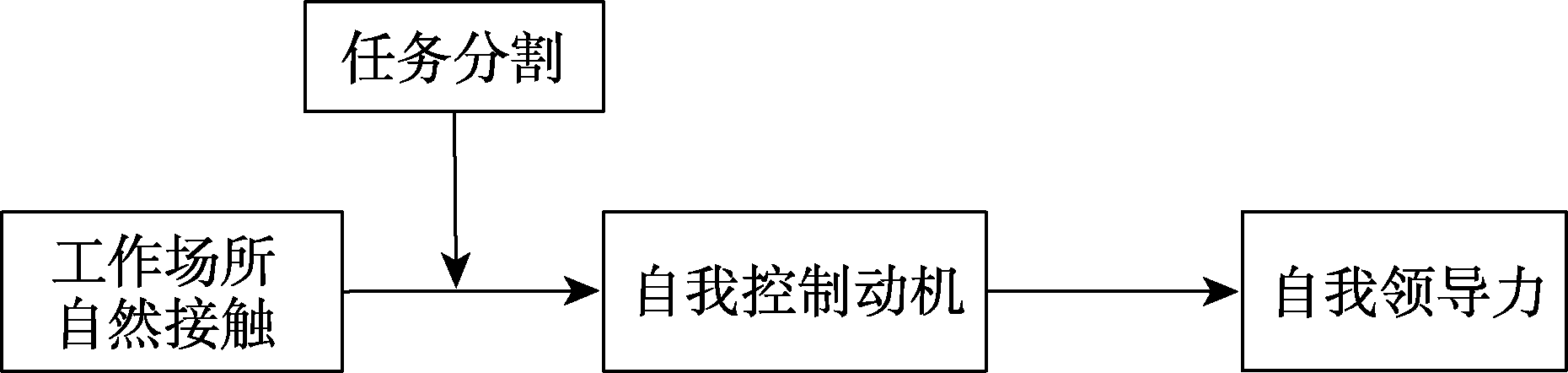
图1 研究模型
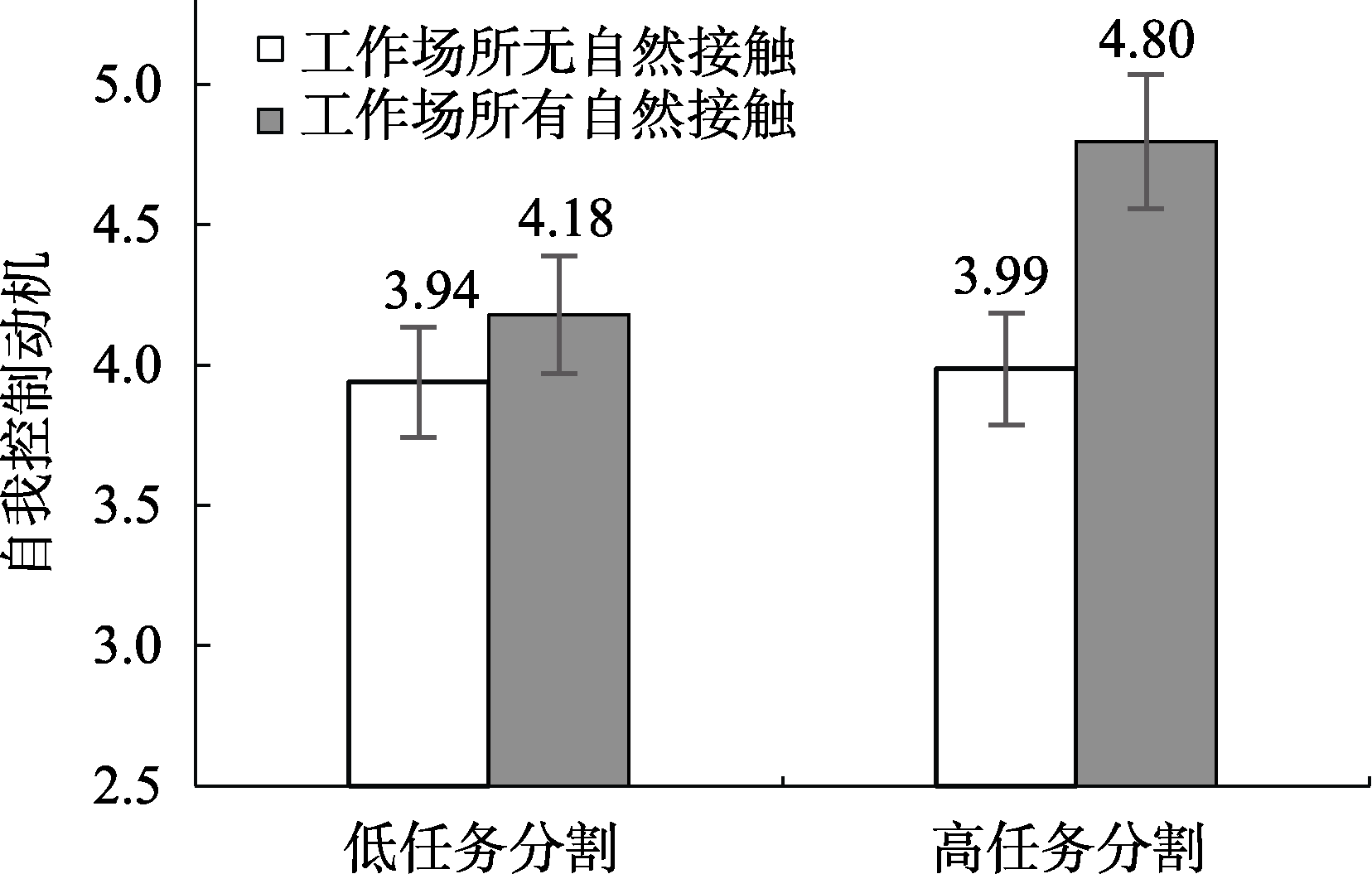
图2 任务分割在工作场所自然接触与自我控制动机间的调节作用(研究1)
| 模型 | χ² | df | χ²/ df | Δχ² | CFI | TLI | RMSEA | SRMR |
|---|---|---|---|---|---|---|---|---|
| 四因子模型 | 655.66 | 285 | 2.30 | / | 0.91 | 0.90 | 0.06 | 0.06 |
| 三因子模型 | 938.41 | 288 | 3.26 | 282.75 | 0.84 | 0.82 | 0.08 | 0.07 |
| 二因子模型 | 1454.32 | 290 | 5.01 | 798.66 | 0.72 | 0.68 | 0.10 | 0.10 |
| 单因子模型 | 2112.79 | 291 | 7.26 | 1457.13 | 0.56 | 0.50 | 0.13 | 0.12 |
| 共同方法因子模型 | 645.04 | 284 | 2.27 | -10.62 | 0.91 | 0.90 | 0.06 | 0.08 |
表1 验证性因子分析结果(研究2)
| 模型 | χ² | df | χ²/ df | Δχ² | CFI | TLI | RMSEA | SRMR |
|---|---|---|---|---|---|---|---|---|
| 四因子模型 | 655.66 | 285 | 2.30 | / | 0.91 | 0.90 | 0.06 | 0.06 |
| 三因子模型 | 938.41 | 288 | 3.26 | 282.75 | 0.84 | 0.82 | 0.08 | 0.07 |
| 二因子模型 | 1454.32 | 290 | 5.01 | 798.66 | 0.72 | 0.68 | 0.10 | 0.10 |
| 单因子模型 | 2112.79 | 291 | 7.26 | 1457.13 | 0.56 | 0.50 | 0.13 | 0.12 |
| 共同方法因子模型 | 645.04 | 284 | 2.27 | -10.62 | 0.91 | 0.90 | 0.06 | 0.08 |
| 变量 | M | SD | 1 | 2 | 3 | 4 | 5 | 6 | 7 | 8 | 9 | 10 |
|---|---|---|---|---|---|---|---|---|---|---|---|---|
| 1. 性别 | 1.48 | 0.50 | ||||||||||
| 2. 年龄 | 35.24 | 6.63 | -0.10 | |||||||||
| 3. 教育水平 | 2.83 | 0.86 | 0.24** | -0.11 | ||||||||
| 4. 职位 | 1.72 | 0.96 | -0.02 | 0.42** | 0.12* | |||||||
| 5. 自我效能感 | 4.49 | 1.29 | 0.04 | 0.03 | -0.01 | 0.05 | (0.80) | |||||
| 6. 活力感 | 4.51 | 1.16 | 0.05 | 0.09 | 0.09 | 0.19** | 0.11* | (0.85) | ||||
| 7. 工作场所自然接触 | 4.21 | 1.40 | 0.11* | 0.03 | 0.04 | 0.20** | 0.41** | 0.19** | (0.80) | |||
| 8. 任务分割 | 4.36 | 1.27 | 0.11* | 0.03 | 0.02 | 0.24** | 0.46** | 0.15** | 0.47** | (0.86) | ||
| 9. 自我控制动机 | 4.34 | 0.92 | 0.13* | -0.10 | 0.22** | 0.15** | 0.12* | 0.08 | 0.25** | 0.19** | (0.82) | |
| 10. 自我领导力 | 4.43 | 1.00 | 0.11* | 0.01 | 0.10* | 0.17** | 0.35** | 0.52** | 0.32** | 0.35** | 0.23** | (0.87) |
表2 描述性统计和变量间相关系数(研究2)
| 变量 | M | SD | 1 | 2 | 3 | 4 | 5 | 6 | 7 | 8 | 9 | 10 |
|---|---|---|---|---|---|---|---|---|---|---|---|---|
| 1. 性别 | 1.48 | 0.50 | ||||||||||
| 2. 年龄 | 35.24 | 6.63 | -0.10 | |||||||||
| 3. 教育水平 | 2.83 | 0.86 | 0.24** | -0.11 | ||||||||
| 4. 职位 | 1.72 | 0.96 | -0.02 | 0.42** | 0.12* | |||||||
| 5. 自我效能感 | 4.49 | 1.29 | 0.04 | 0.03 | -0.01 | 0.05 | (0.80) | |||||
| 6. 活力感 | 4.51 | 1.16 | 0.05 | 0.09 | 0.09 | 0.19** | 0.11* | (0.85) | ||||
| 7. 工作场所自然接触 | 4.21 | 1.40 | 0.11* | 0.03 | 0.04 | 0.20** | 0.41** | 0.19** | (0.80) | |||
| 8. 任务分割 | 4.36 | 1.27 | 0.11* | 0.03 | 0.02 | 0.24** | 0.46** | 0.15** | 0.47** | (0.86) | ||
| 9. 自我控制动机 | 4.34 | 0.92 | 0.13* | -0.10 | 0.22** | 0.15** | 0.12* | 0.08 | 0.25** | 0.19** | (0.82) | |
| 10. 自我领导力 | 4.43 | 1.00 | 0.11* | 0.01 | 0.10* | 0.17** | 0.35** | 0.52** | 0.32** | 0.35** | 0.23** | (0.87) |
| 结果变量 | 预测变量 | 拟合指标 | 系数显著性 | ||||
|---|---|---|---|---|---|---|---|
| R | R2 | F | B | SE | t | ||
| 自我控制动机 | 0.42 | 0.18 | 8.76 | ||||
| 常数项 | 4.03 | 0.39 | 10.40*** | ||||
| 性别 | 0.07 | 0.09 | 0.74 | ||||
| 年龄 | -0.02 | 0.01 | -2.83** | ||||
| 教育程度 | 0.17 | 0.05 | 3.15** | ||||
| 职位 | 0.14 | 0.06 | 2.53* | ||||
| 自我效能感 | 0.03 | 0.04 | 0.82 | ||||
| 活力感 | 0.00 | 0.04 | 0.06 | ||||
| 工作场所自然接触 | 0.12 | 0.04 | 3.19** | ||||
| 任务分割 | 0.08 | 0.04 | 1.83 | ||||
| 工作场所自然接触×任务分割 | 0.09 | 0.02 | 4.26*** | ||||
| 自我领导力 | 0.63 | 0.40 | 24.32 | ||||
| 常数项 | 1.47 | 0.41 | 3.59*** | ||||
| 性别 | 0.07 | 0.08 | 0.83 | ||||
| 年龄 | -0.01 | 0.01 | -0.77 | ||||
| 教育程度 | 0.02 | 0.05 | 0.38 | ||||
| 职位 | 0.03 | 0.05 | 0.63 | ||||
| 自我效能感 | 0.15 | 0.05 | 4.15*** | ||||
| 活力感 | 0.39 | 0.04 | 10.69*** | ||||
| 工作场所自然接触 | 0.04 | 0.03 | 1.17 | ||||
| 任务分割 | 0.11 | 0.04 | 2.69** | ||||
| 工作场所自然接触 ×任务分割 | 0.01 | 0.02 | 0.45 | ||||
| 自我控制动机 | 0.12 | 0.05 | 2.43* | ||||
表3 回归分析结果(研究2)
| 结果变量 | 预测变量 | 拟合指标 | 系数显著性 | ||||
|---|---|---|---|---|---|---|---|
| R | R2 | F | B | SE | t | ||
| 自我控制动机 | 0.42 | 0.18 | 8.76 | ||||
| 常数项 | 4.03 | 0.39 | 10.40*** | ||||
| 性别 | 0.07 | 0.09 | 0.74 | ||||
| 年龄 | -0.02 | 0.01 | -2.83** | ||||
| 教育程度 | 0.17 | 0.05 | 3.15** | ||||
| 职位 | 0.14 | 0.06 | 2.53* | ||||
| 自我效能感 | 0.03 | 0.04 | 0.82 | ||||
| 活力感 | 0.00 | 0.04 | 0.06 | ||||
| 工作场所自然接触 | 0.12 | 0.04 | 3.19** | ||||
| 任务分割 | 0.08 | 0.04 | 1.83 | ||||
| 工作场所自然接触×任务分割 | 0.09 | 0.02 | 4.26*** | ||||
| 自我领导力 | 0.63 | 0.40 | 24.32 | ||||
| 常数项 | 1.47 | 0.41 | 3.59*** | ||||
| 性别 | 0.07 | 0.08 | 0.83 | ||||
| 年龄 | -0.01 | 0.01 | -0.77 | ||||
| 教育程度 | 0.02 | 0.05 | 0.38 | ||||
| 职位 | 0.03 | 0.05 | 0.63 | ||||
| 自我效能感 | 0.15 | 0.05 | 4.15*** | ||||
| 活力感 | 0.39 | 0.04 | 10.69*** | ||||
| 工作场所自然接触 | 0.04 | 0.03 | 1.17 | ||||
| 任务分割 | 0.11 | 0.04 | 2.69** | ||||
| 工作场所自然接触 ×任务分割 | 0.01 | 0.02 | 0.45 | ||||
| 自我控制动机 | 0.12 | 0.05 | 2.43* | ||||
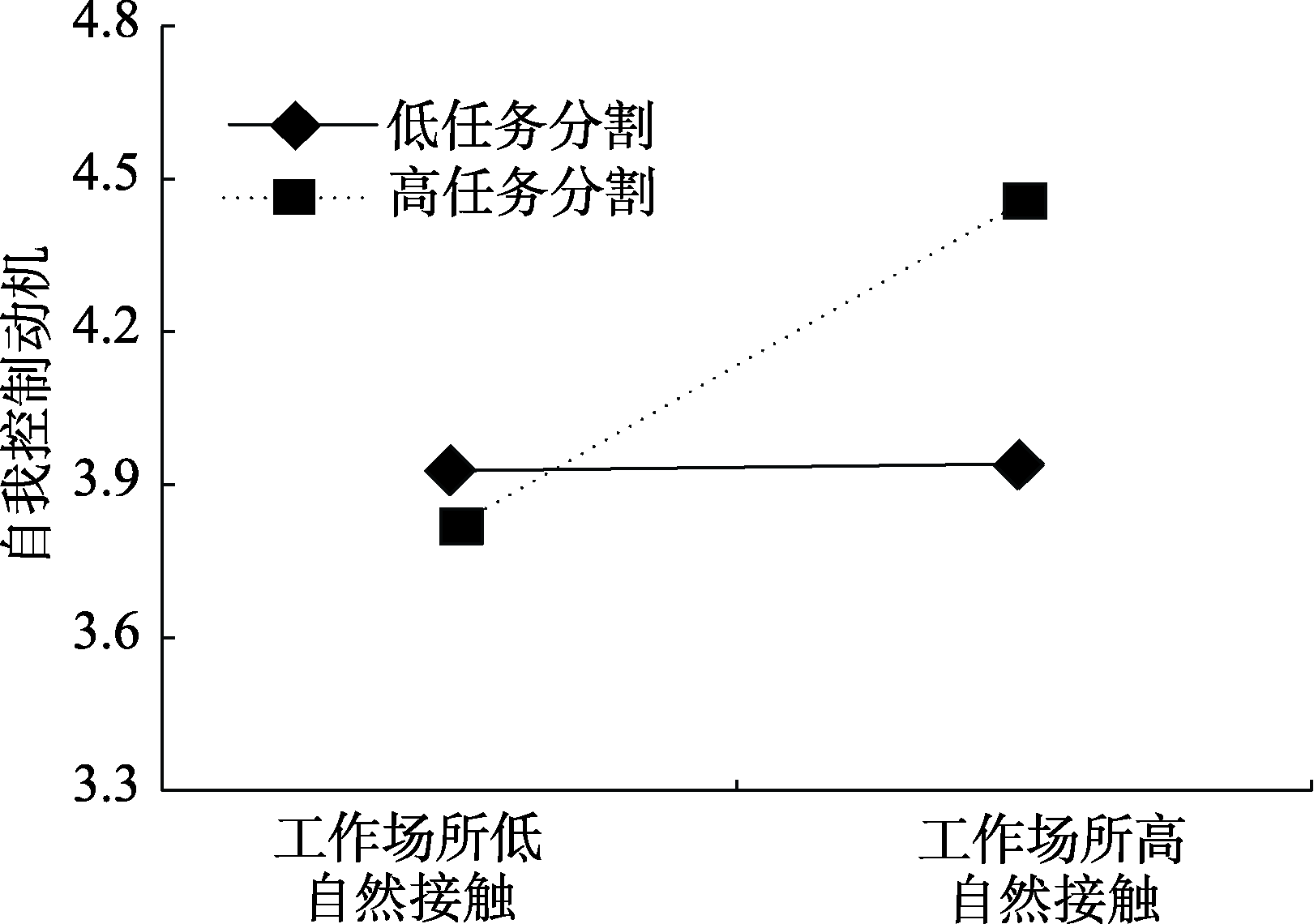
图3 任务分割在工作场所自然接触与自我控制动机之间的调节作用(研究2)
| 分组统计 | b | SE | 95% CI |
|---|---|---|---|
| 间接效应 | 0.01 | 0.01 | [0.001, 0.025] |
| 条件间接效应 | |||
| 高任务分割 | 0.03 | 0.01 | [0.004, 0.058] |
| 低任务分割 | 0.001 | 0.01 | [-0.014, 0.013] |
| 组间差异 | 0.03 | 0.02 | [0.004, 0.063] |
表4 被调节的中介效应分析结果(研究2)
| 分组统计 | b | SE | 95% CI |
|---|---|---|---|
| 间接效应 | 0.01 | 0.01 | [0.001, 0.025] |
| 条件间接效应 | |||
| 高任务分割 | 0.03 | 0.01 | [0.004, 0.058] |
| 低任务分割 | 0.001 | 0.01 | [-0.014, 0.013] |
| 组间差异 | 0.03 | 0.02 | [0.004, 0.063] |
| [1] |
Ariga A., & Lleras A. (2011). Brief and rare mental “breaks” keep you focused: Deactivation and reactivation of task goals preempt vigilance decrements. Cognition, 118(3), 439-443.
doi: 10.1016/j.cognition.2010.12.007 URL |
| [2] |
Baumeister R. F., Bratslavsky E., Muraven M., & Tice D. M. (1998). Ego depletion: Is the active self a limited resource? Journal of Personality and Social Psychology, 74(5), 1252-1265.
doi: 10.1037//0022-3514.74.5.1252 pmid: 9599441 |
| [3] |
Baumeister R. F., Vohs K. D., & Tice D. M. (2007). The strength model of self-control. Current Directions in Psychological Science, 16(6), 351-355.
doi: 10.1111/j.1467-8721.2007.00534.x URL |
| [4] |
Berman M. G., Jonides J., & Kaplan S. (2008). The cognitive benefits of interacting with nature. Psychological Science, 19(12), 1207-1212.
doi: 10.1111/j.1467-9280.2008.02225.x pmid: 19121124 |
| [5] |
Bernerth J. B., & Aguinis H. (2016). A critical review and best-practice recommendations for control variable usage. Personnel Psychology, 69(1), 229-283.
doi: 10.1111/peps.2016.69.issue-1 URL |
| [6] | Brislin, R. W. (1980). Translation and content analysis of oral and written material. In H. C.Triandis & J. W.Berry (Eds.), Handbook of cross-cultural psychology (pp. 389-444). Boston: Allyn & Bacon. |
| [7] |
Cartwright B. D. S., White M. P., & Clitherow T. J. (2018). Nearby nature ‘buffers’ the effect of low social connectedness on adult subjective wellbeing over the last 7 days. International Journal of Environmental Research and Public Health, 15(6), 1238.
doi: 10.3390/ijerph15061238 URL |
| [8] |
Deci E. L., & Ryan R. M. (2000). The “what” and “why” of goal pursuits: Human needs and the self-determination of behavior. Psychological Inquiry, 11(4), 227-268.
doi: 10.1207/S15327965PLI1104_01 URL |
| [9] |
Deng H., Wu C., Leung K., & Guan Y. (2016). Depletion from self-regulation: A resource-based account of the effect of value incongruence. Personnel Psychology, 69(2), 431-465.
doi: 10.1111/peps.2016.69.issue-2 URL |
| [10] |
Elsbach K. D., & Hargadon A. B. (2006). Enhancing creativity through “mindless” work: A framework of workday design. Organization Science, 17(4), 470-483.
doi: 10.1287/orsc.1060.0193 URL |
| [11] |
Forsyth D. K., & Burt C. D. B. (2008). Allocating time to future tasks: The effect of task segmentation on planning fallacy bias. Memory & Cognition, 36(4), 791-798.
doi: 10.3758/MC.36.4.791 URL |
| [12] |
Fredrickson B. L. (2001). The role of positive emotions in positive psychology: The broaden-and-build theory of positive emotions. American Psychologist, 56(3), 218-226.
doi: 10.1037//0003-066x.56.3.218 pmid: 11315248 |
| [13] |
Gollwitzer P. M. (1999). Implementation intentions: Strong effects of simple plans. American Psychologist, 54(7), 493-503.
doi: 10.1037/0003-066X.54.7.493 URL |
| [14] | Han Z. (2021). A philosophical investigation into Xi Jinping’s thought concerning ecological civilization: Constructing a new ecological civilization view wherein “nature and man are united as one.” Philosophical Research, 4, 5-15. |
| [韩震. (2021). 习近平生态文明思想的哲学研究——兼论构建新形态的“天人合一”生态文明观. 哲学研究, 4, 5-15.] | |
| [15] |
Harari M. B., Williams E. A., Castro S. L., & Brant K. K. (2021). Self-leadership: A meta-analysis of over two decades of research. Journal of Occupational and Organizational Psychology, 94(4), 890-923.
doi: 10.1111/joop.v94.4 URL |
| [16] | Hayes A. F. (2017). Introduction to mediation, moderation, and conditional process analysis: A regression-based approach. New York: Guilford Press. |
| [17] | Houghton J. D., Dawley D., & DiLiello T. C. (2012). The abbreviated self-leadership questionnaire (ASLQ): A more concise measure of self-leadership. International Journal of Leadership Studies, 7(2), 216-232. |
| [18] |
Kaplan S. (1995). The restorative benefits of nature: Toward an integrative framework. Journal of Environmental Psychology, 15(3), 169-182.
doi: 10.1016/0272-4944(95)90001-2 URL |
| [19] |
Kim H., & Kim K. (2019). Impact of self-efficacy on the self-leadership of nursing preceptors: The mediating effect of job embeddedness. Journal of Nursing Management, 27(8), 1756-1763.
doi: 10.1111/jonm.12870 pmid: 31529741 |
| [20] |
Klotz A. C., & Bolino M. C. (2021). Bringing the great outdoors into the workplace: The energizing effect of biophilic work design. Academy of Management Review, 46(2), 231-251.
doi: 10.5465/amr.2017.0177 URL |
| [21] |
Klotz A. C., McClean S. T., Yim J., Koopman J., & Tang P. M. (2023). Getting outdoors after the workday: The affective and cognitive effects of evening nature contact. Journal of Management, 49(7), 2254-2287.
doi: 10.1177/01492063221106430 URL |
| [22] |
Kotabe H. P., & Hofmann W. (2015). On integrating the components of self-control. Perspectives on Psychological Science, 10(5), 618-638.
doi: 10.1177/1745691615593382 pmid: 26386000 |
| [23] | Largo-Wight E., Chen W. W., Dodd V., & Weiler R. (2011). Healthy workplaces: The effects of nature contact at work on employee stress and health. Public Health Reports, 126(1_suppl), 124-130. |
| [24] |
Lian H., Yam K. C., Ferris D. L., & Brown D. (2017). Self-control at work. Academy of Management Annals, 11(2), 703-732.
doi: 10.5465/annals.2015.0126 URL |
| [25] |
Lopes S., Lima M., & Silva K. (2020). Nature can get it out of your mind: The rumination reducing effects of contact with nature and the mediating role of awe and mood. Journal of Environmental Psychology, 71, 101489.
doi: 10.1016/j.jenvp.2020.101489 URL |
| [26] |
Luo W., & Wang Y. (2022). Be your own leader: The multi- level motivational mechanisms of individual self-leadership. Advances in Psychological Science, 30(10), 2177-2193.
doi: 10.3724/SP.J.1042.2022.02177 URL |
|
[罗文豪, 王尧. (2022). 成为自己的掌舵者: 个体自我领导的多层次驱动机制. 心理科学进展, 30(10), 2177-2193.]
doi: 10.3724/SP.J.1042.2022.02177 |
|
| [27] |
Manz C. C. (1986). Self-Leadership: Toward an expanded theory of self-influence processes in organizations. Academy of Management Review, 11(3), 585-600.
doi: 10.2307/258312 URL |
| [28] |
Mayer F. S., Frantz C. M., Bruehlman-Senecal E., & Dolliver K. (2009). Why is nature beneficial? The role of connectedness to nature. Environment and Behavior, 41(5), 607-643.
doi: 10.1177/0013916508319745 URL |
| [29] |
McIntyre N., & Roggenbuck J. W. (1998). Nature/person transactions during an outdoor adventure experience: A multi-phasic analysis. Journal of Leisure Research, 30(4), 401-422.
doi: 10.1080/00222216.1998.11949841 URL |
| [30] |
Merriman K. K., Kostanski S. A., Ebrahimi N., & Montag-Smit T. A. (2025). The signaling effect of biophilic job posts: Do applicants trade green for green? Human Resource Management, 64(3), 825-839.
doi: 10.1002/hrm.v64.3 URL |
| [31] |
Mills P. R., Tomkins S. C., & Schlangen L. J. (2007). The effect of high correlated colour temperature office lighting on employee wellbeing and work performance. Journal of Circadian Rhythms, 5(1), 2.
doi: 10.1186/1740-3391-5-2 URL |
| [32] |
Milyavskaya M., Inzlicht M., Hope N., & Koestner R. (2015). Saying “no” to temptation: Want-to motivation improves self-regulation by reducing temptation rather than by increasing self-control. Journal of Personality and Social Psychology, 109(4), 677-693.
doi: 10.1037/pspp0000045 pmid: 25984785 |
| [33] |
Morgeson F. P., & Humphrey S. E. (2006). The Work Design Questionnaire (WDQ): Developing and validating a comprehensive measure for assessing job design and the nature of work. Journal of Applied Psychology, 91(6), 1321-1339.
doi: 10.1037/0021-9010.91.6.1321 pmid: 17100487 |
| [34] |
Muraven M., & Slessareva E. (2003). Mechanisms of self-control failure: Motivation and limited resources. Personality and Social Psychology Bulletin, 29(7), 894-906.
pmid: 15018677 |
| [35] |
Neck C. P., & Houghton J. D. (2006). Two decades of self-leadership theory and research: Past developments, present trends, and future possibilities. Journal of Managerial Psychology, 21(4), 270-295.
doi: 10.1108/02683940610663097 URL |
| [36] |
Neill C., Gerard J., & Arbuthnott K. D. (2019). Nature contact and mood benefits: Contact duration and mood type. The Journal of Positive Psychology, 14(6), 756-767.
doi: 10.1080/17439760.2018.1557242 URL |
| [37] |
Ozcelik H. (2013). An empirical analysis of surface acting in intra-organizational relationships. Journal of Organizational Behavior, 34(3), 291-309.
doi: 10.1002/job.v34.3 URL |
| [38] | Perrins S. P., Varanasi U., Seto E., & Bratman G. N. (2021). Nature at work: The effects of day-to-day nature contact on workers’ stress and psychological well-being. Urban Forestry & Urban Greening, 66, 127404. |
| [39] |
Podsakoff P. M., MacKenzie S. B., Lee J. -Y., & Podsakoff N. P. (2003). Common method biases in behavioral research: A critical review of the literature and recommended remedies. Journal of Applied Psychology, 88(5), 879-903.
doi: 10.1037/0021-9010.88.5.879 pmid: 14516251 |
| [40] |
Ryan R. M., & Deci E. L. (2000). Self-determination theory and the facilitation of intrinsic motivation, social development, and well-being. American Psychologist, 55(1), 68-78.
doi: 10.1037//0003-066x.55.1.68 pmid: 11392867 |
| [41] |
Ryan R. M., Weinstein N., Bernstein J., Brown K. W., Mistretta L., & Gagné M. (2010). Vitalizing effects of being outdoors and in nature. Journal of Environmental Psychology, 30(2), 159-168.
doi: 10.1016/j.jenvp.2009.10.009 URL |
| [42] |
Stewart G. L., Courtright S. H., & Manz C. C. (2011). Self- leadership: A multilevel review. Journal of Management, 37(1), 185-222.
doi: 10.1177/0149206310383911 URL |
| [43] |
Tang P. M., Klotz A., McClean S., & Lee R. (2024). From natural to novel: The cognition-broadening effects of contact with nature at work on creativity. Journal of Management, 50(7), 2490-2533.
doi: 10.1177/01492063231172182 URL |
| [44] |
Tang P. M., Klotz A. C., McClean S. T., Wang Y., Song Z., & Ng C. T. S. (2023). Who needs nature? The influence of employee speciesism on nature-based need satisfaction and subsequent work behavior. Journal of Applied Psychology, 108(11), 1737-1765.
doi: 10.1037/apl0001104 pmid: 37439741 |
| [45] | Theodorou A., Romano L., Bratman G. N., Carbone G. A., Rodelli R., Casagrande G., & Panno A. (2023). Different types of virtual natural environments enhance subjective vitality through restorativeness. Journal of Environmental Psychology, 87, 1-11. |
| [46] |
Thompson A., & Bruk-Lee V. (2019). Naturally! Examining nature’s role in workplace strain reduction. Occupational Health Science, 3(1), 23-43.
doi: 10.1007/s41542-019-00033-5 |
| [47] | Ulrich, R. S. (1983). Aesthetic and affective response to natural environment. In: AltmanI., WohlwillJ.F. (Eds.) Behavior and the Natural Environment (pp. 85-125). Boston: Springer US. |
| [48] |
Valor C., Redondo R., & Carrero I. (2024). Explaining the influence of biophilic design on employee well-being. Scientific Reports, 14(1), 32090.
doi: 10.1038/s41598-024-83791-9 |
| [49] | Watts A. (2012). Nature, man and woman. Vintage. |
| [50] | Wehrt W., Casper A., & Sonnentag S. (2020). Beyond depletion: Daily self-control motivation as an explanation of self-control failure at work. Journal of Organizational Behavior, 41(9), 931-947. |
| [51] |
Weinstein N., Przybylski A. K., & Ryan R. M. (2009). Can nature make us more caring? Effects of immersion in nature on intrinsic aspirations and generosity. Personality and Social Psychology Bulletin, 35(10), 1315-1329.
doi: 10.1177/0146167209341649 pmid: 19657048 |
| [52] | Werner K. M., & Milyavskaya M. (2019). Motivation and self-regulation: The role of want-to motivation in the processes underlying self-regulation and self-control. Social and Personality Psychology Compass, 13(1), 1-14. |
| [53] | Wilson E. O. (1984). Biophilia. Cambridge: Harvard University Press. |
| [54] |
Zhao H. H., Deng H., Chen R. P., Parker S. K., & Zhang W. (2022). Fast or slow: How temporal work design shapes experienced passage of time and job performance. Academy of Management Journal, 65(6), 2014-2033.
doi: 10.5465/amj.2019.1110 URL |
| [1] | 徐梓豪, 朱冬青, 闫小敏. 为何最优化患者对医生更警惕?道德推脱的中介作用[J]. 心理学报, 2026, 58(1): 57-73. |
| [2] | 胡小勇, 李穆峰, 李悦, 李凯, 喻丰. 人工智能决策的道德缺失效应及其机制与应对策略[J]. 心理学报, 2026, 58(1): 74-95. |
| [3] | 向姝婷, 周芷蕊, 谢小云, 张昱城, 吴珊. 越被小用, 越失激情?员工资质过剩感对其工作激情的影响[J]. 心理学报, 2026, 58(1): 96-112. |
| [4] | 张生军, 周建军, 万国光, 刘芳舟, 龙立荣, 庞旭宏. 领导人际情绪管理策略如何打破员工向领导者宣泄的自我延续效应?宣泄者-接受者互动视角[J]. 心理学报, 2026, 58(1): 113-129. |
| [5] | 钟杰, 倪丹, 郑晓明, 马超. 上下级关系与职业主动行为之间的倒U型关系——基于跨边界视角[J]. 心理学报, 2026, 58(1): 130-150. |
| [6] | 王静, 王雪华, 范秀成. 经验获益还是时间损失?老化心态对时尚消费的影响机制[J]. 心理学报, 2026, 58(1): 151-165. |
| [7] | 龙娟, 王婷, 张积家. 中华民族文化融合的心理学证据:基于汉族和纳西族的情境实验结果[J]. 心理学报, 2025, 57(12): 2242-2258. |
| [8] | 胡小勇, 赵越, 冀月欣, 马佳馨. 敬畏影响不同社会经济地位者亲社会性的心理机制[J]. 心理学报, 2025, 57(12): 2220-2241. |
| [9] | 李维维, 欧敏华, 康志强, 文雨婷, 林雪晴. 公平还是效率? 完成动机对亲社会行为偏好的影响[J]. 心理学报, 2025, 57(12): 2202-2219. |
| [10] | 蒋多, 罗振旺, 黄伟淇, 罗南宝, 陈雅文. 金钱与道德情境中对智能机器人的工作分配接受度:基于独立与协同模式[J]. 心理学报, 2025, 57(12): 2177-2201. |
| [11] | 范云歌, 马紫娟, 林玮诗, 张瑞, 王东方, 范方. 当代老年人精神赡养的内涵及其特征维度[J]. 心理学报, 2025, 57(12): 2131-2148. |
| [12] | 彭旺, 阎平, 周雅萍, 向燕辉. 结婚对成年早期个体生活满意度发展轨迹的影响——基于中国家庭追踪调查的10年追踪[J]. 心理学报, 2025, 57(12): 2149-2164. |
| [13] | 武月婷, 王博, 包寒吴霜, 李若男, 吴怡, 王嘉琪, 程诚, 杨丽. 人类对大语言模型的热情和能力感知[J]. 心理学报, 2025, 57(11): 2043-2059. |
| [14] | 魏心妮, 喻丰, 彭凯平. 低可持续性降低人工智能的接受意愿[J]. 心理学报, 2025, 57(11): 1973-1987. |
| [15] | 李斌, 芮建禧, 俞炜楠, 李爱梅, 叶茂林. 当设计遇见AI:人工智能设计产品对消费者响应模式的影响[J]. 心理学报, 2025, 57(11): 1914-1932. |
| 阅读次数 | ||||||
|
全文 |
|
|||||
|
摘要 |
|
|||||
