

ISSN 0439-755X
CN 11-1911/B
主办:中国心理学会
中国科学院心理研究所
出版:科学出版社
CN 11-1911/B
主办:中国心理学会
中国科学院心理研究所
出版:科学出版社
心理学报 ›› 2025, Vol. 57 ›› Issue (9): 1649-1660.doi: 10.3724/SP.J.1041.2025.1649 cstr: 32110.14.2025.1649
杨灿1, 李子萱2, 毕重增1( )
)
收稿日期:2024-05-20
发布日期:2025-06-26
出版日期:2025-09-25
通讯作者:
毕重增, E-mail: beech@swu.edu.cn
YANG Can1, LI Zixuan2, BI Chongzeng1()
Received:2024-05-20
Online:2025-06-26
Published:2025-09-25
摘要:
在相互依赖情景下, 互动对象的特点会影响个体的合作行为。本研究通过3个实验考察了对象中庸与社会善念水平对个体合作行为的影响。3个实验均发现, 互动对象中庸水平越高, 个体的合作行为越多; 实验1与实验3发现, 对象社会善念水平越高, 个体的合作行为越多; 3个实验中对象中庸与社会善念的交互作用表明, 对象中庸能够放大社会善念对合作行为的促进作用。本研究表明中庸是在人际互动中独立于社会善念的有益因素, 有助于增进社会善念的积极作用, 促成并深化合作。
中图分类号:
杨灿, 李子萱, 毕重增. (2025). 对象中庸与社会善念对合作行为的影响. 心理学报, 57(9), 1649-1660.
YANG Can, LI Zixuan, BI Chongzeng. (2025). The effect of interaction partners' Zhongyong and social mindfulness on cooperation. Acta Psychologica Sinica, 57(9), 1649-1660.
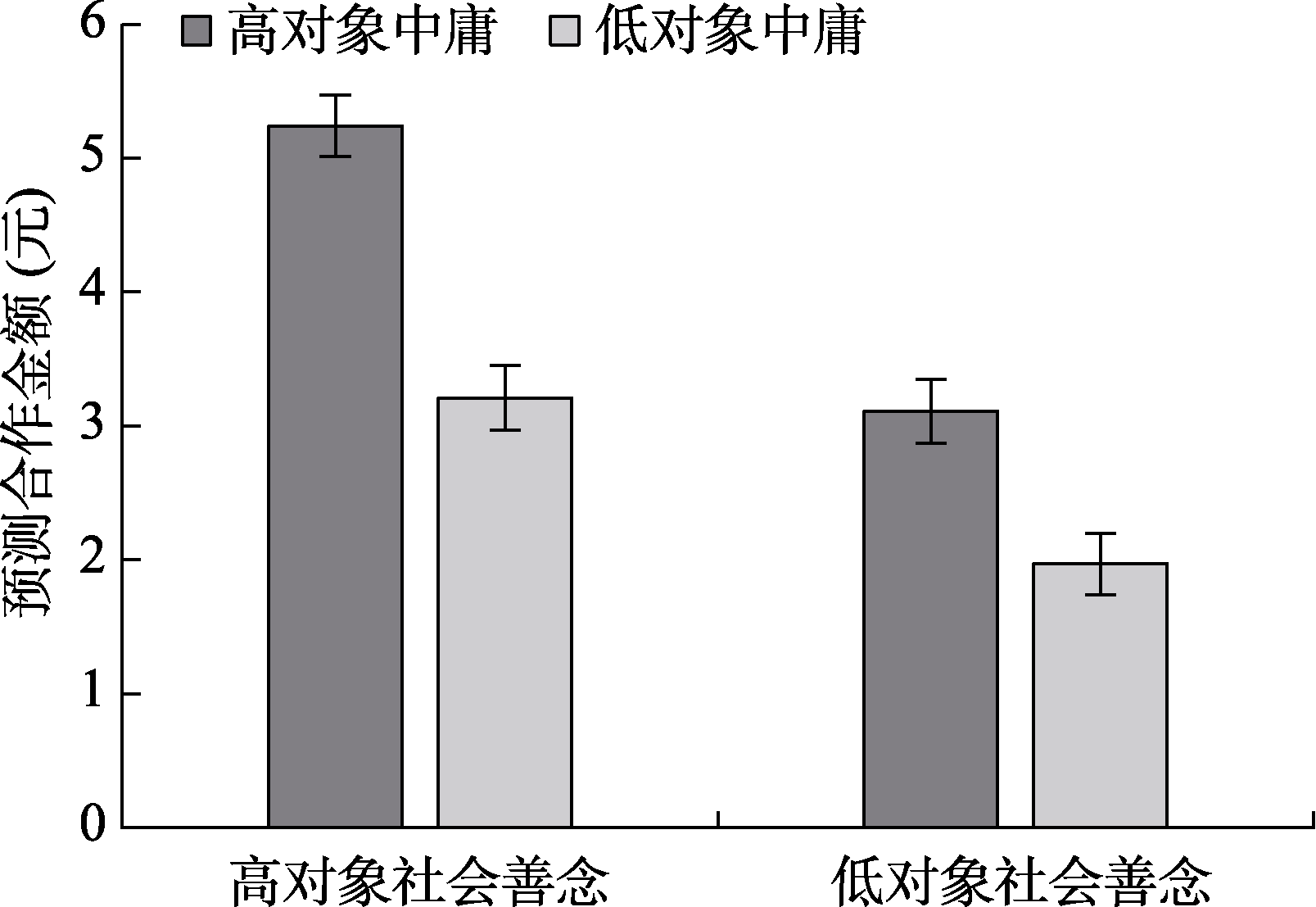
图1 实验1对象中庸与对象社会善念对信任(预测合作金额)的影响 注:误差线表示标准误。
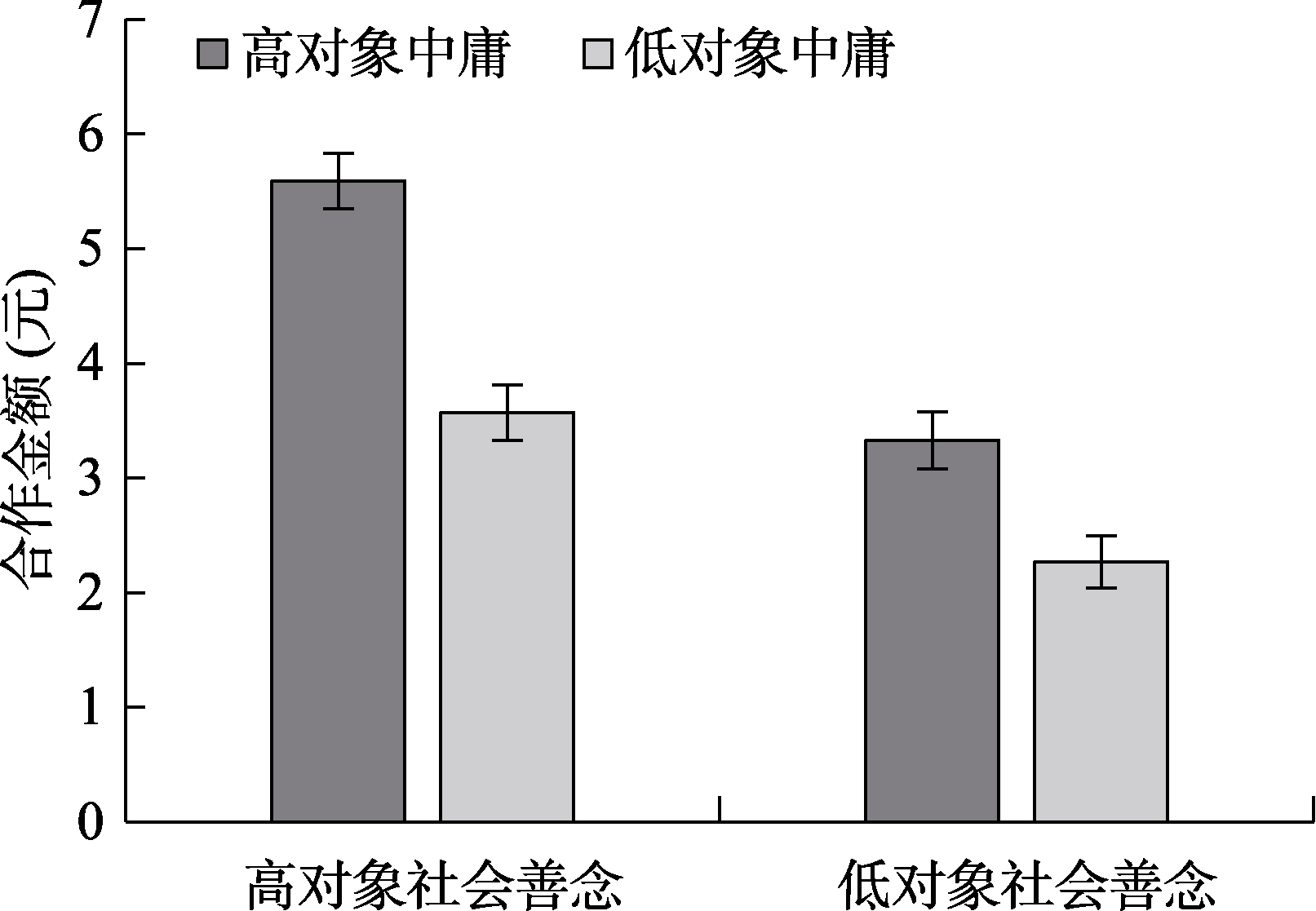
图2 实验1对象中庸与对象社会善念对合作的影响 注:误差线表示标准误。
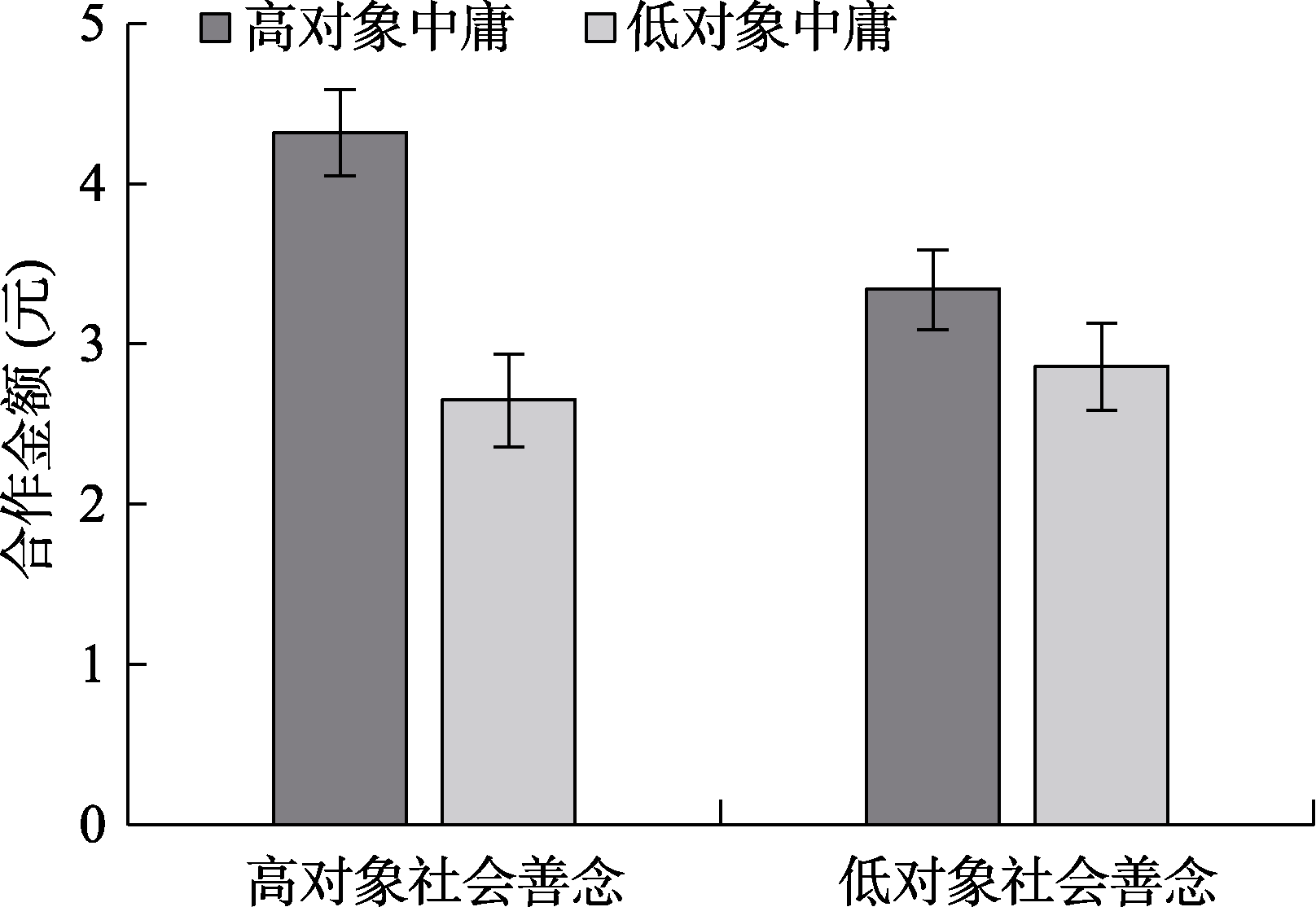
图3 实验2对象中庸与对象社会善念对合作的影响 注:误差线表示标准误。
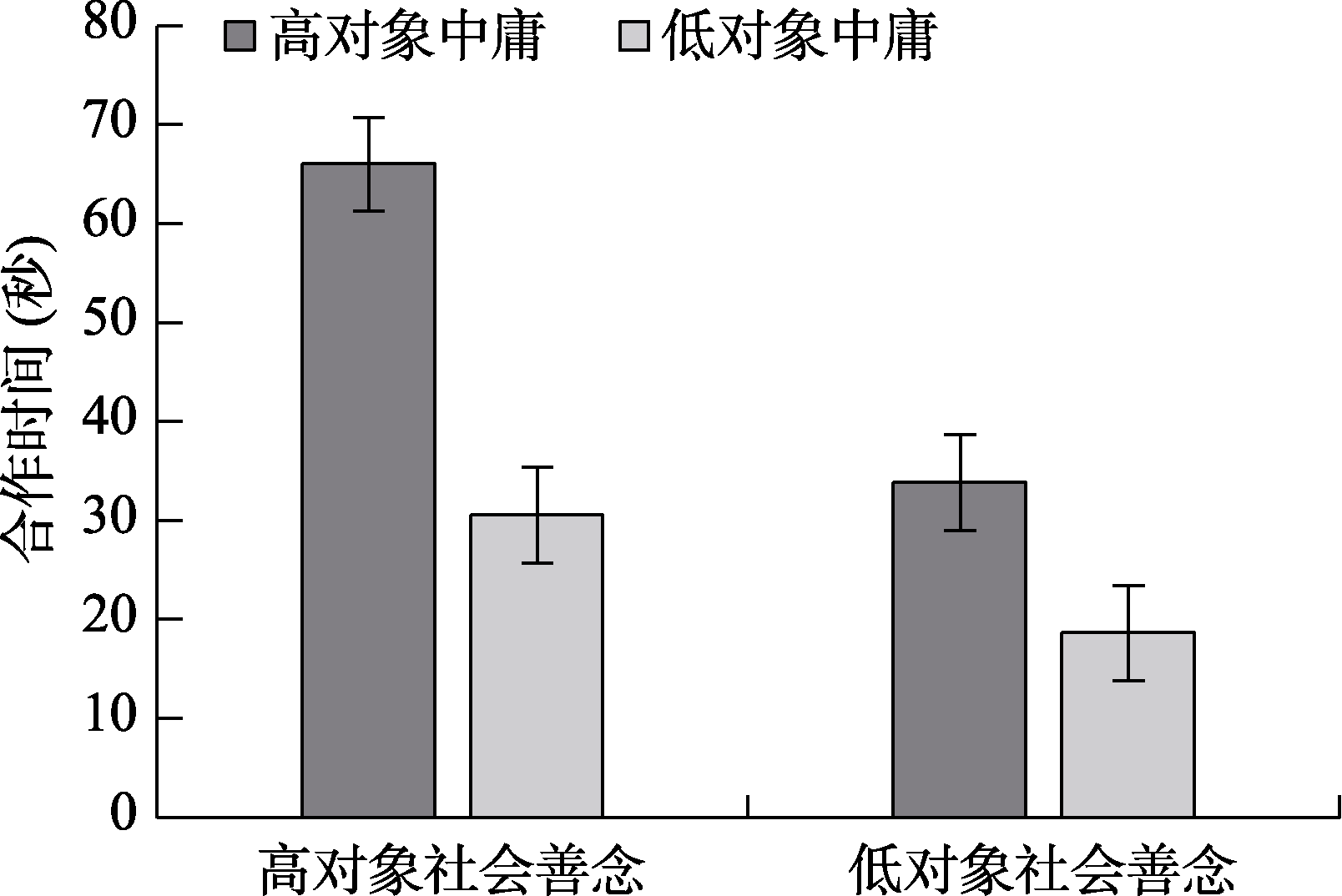
图4 实验3对象中庸与对象社会善念对合作的影响 注:误差线表示标准误。
| [1] | Balliet, D., & Lindström, B. (2023). Inferences about interdependence shape cooperation. Trends in Cognitive Sciences, 27(6), 583-595. |
| [2] |
Balliet, D., & van Lange, P. A. M. (2013). Trust, conflict, and cooperation: A meta-analysis. Psychological Bulletin, 139(5), 1090-1112.
doi: 10.1037/a0030939 pmid: 23231532 |
| [3] | Boyd, R., & Richerson, P. J. (2006). Culture and the evolution of the human social instincts. In N. J. Enfield & S. C. Berg (Eds.), Roots of human sociality: Culture, cognition and interaction. 453-477). Routledge. |
| [4] |
Chen, X., Zhao, G. X., & Ye, H. S. (2014). The forms and functions of punishment in public-goods dilemmas. Advances in Psychological Science, 22(1), 160-170.
doi: 10.3724/SP.J.1042.2014.00160 |
|
[陈欣, 赵国祥, 叶浩生. (2014). 公共物品困境中惩罚的形式与作用. 心理科学进展, 22(1), 160-170.]
doi: 10.3724/SP.J.1042.2014.00160 |
|
| [5] | Chiu, C. Y. (2010). The morality, practicality, cultural specificity, and social adaptability of the practical thinking of the golden mean. Indigenous Psychological Research in Chinese Societies, (34), 137-144. |
| [赵志裕. (2010). 中庸实践思维的道德性、实用性、文化特定性及社会适应性. 本土心理学研究, (34), 137-144.] | |
| [6] | Ding, Q., Zhang, Y. X., Wei, H., & Hu, W. (2019). Zhongyong thinking style and internet addiction of college students: Serial mediating effect of social support and loneliness. Studies of Psychology and Behavior, 17(4), 553-560. |
| [丁倩, 张永欣, 魏华, 胡伟. (2019). 中庸思维与大学生网络成瘾:社会支持和孤独感的序列中介作用. 心理与行为研究, 17(4), 553-560.] | |
| [7] | Dou, K., Liu, Y. Z., Wang, Y. J., & Nie, Y. G. (2018). Willingness to cooperate: Emotion enhancement mechanism of perceived social mindfulness on cooperative behaviour. Acta Psychologica Sinica, 50(1), 101-114. |
| [窦凯, 刘耀中, 王玉洁, 聂衍刚. (2018). “乐”于合作: 感知社会善念诱导合作行为的情绪机制. 心理学报, 50(1), 101-114.] | |
| [8] | Dou, K., Nie, Y. G., Wang, Y. J., & Liu, Y. Z. (2018). Trust or defence? The enhancing effect of perceived social mindfulness on cooperative behavior during interactive game. Journal of Psychological Science, 41(2), 390-396. |
| [窦凯, 聂衍刚, 王玉洁, 刘耀中. (2018). 信任还是设防? 互动博弈中社会善念对合作行为的促进效应. 心理科学, 41(2), 390-396.] | |
| [9] | Dou, K., Wang, Y. J., Li, J. B., Li, J. J., & Nie, Y. G. (2018). Perceiving high social mindfulness during interpersonal interaction promotes cooperative behaviours. Asian Journal of Social Psychology, 21(1-2), 97-106. |
| [10] | Du, J., & Yao, J. H. (2015). Zhongyong: The connotation and its relationship with collectivism. Chinese Journal of Management, 12(5), 638-646. |
| [杜旌, 姚菊花. (2015). 中庸结构内涵及其与集体主义关系的研究. 管理学报, 12(5), 638-646.] | |
| [11] | Geertz, C. (1983). Local knowledge. New York: Basic Books. |
| [12] | Henrich, J., Boyd, R., Bowles, S., Camerer, C., Fehr, E., Gintis, H., & McElreath, R. (2001). In search of homo economicus: Behavioral experiments in 15 small-scale societies. American Economic Review, 91(2), 73-78. |
| [13] | Huang, C. L., Lin, Y. C., & Yang, C. F. (2012). Revision of the Zhongyong Belief-Value Scale. Indigenous Psychological Research in Chinese Societies, 38, 3-14. |
| [黄金兰, 林以正, 杨中芳. (2012). 中庸信念-价值量表之修订. 本土心理学研究, 38, 3-14.] | |
| [14] | Kelley, H. H., Holmes, J. G., Kerr, N. L., Reis, H. T., Rusbult, C. E., & van Lange, P. A. M. (2003). An Atlas of Interpersonal Situations. New York, NY: Cambridge. |
| [15] | Kelley, H. H., & Thibaut, J. W. (1978). Interpersonal relations: A theory of interdependence. New York: Wiley. |
| [16] |
Kittler, J. E., Menard, W., & Phillips, K. A. (2007). Weight concerns in individuals with body dysmorphic disorder. Eating Behaviors, 8(1), 115-120.
pmid: 17174859 |
| [17] | Li, Z. X., Wang, X. G., & Bi, C. Z. (2019). What kind of person prefers Zhongyong Thinking? —A preliminary description in the fundamental dimensions of social cognition. Psychology: Techniques and Applications, 7(1), 17-22. |
| [李子萱, 王晓刚, 毕重增. (2019). 什么样的人偏爱中庸思维?——社会认知基本维度框架的初步描述. 心理技术与应用, 7(1), 17-22.] | |
| [18] | Lu, J., Huang, X., Liao, C., Guan, Q., Qi, X. R., & Cui, F. (2020). Social mindfulness shown by individuals with higher status is more pronounced in our brain: ERP evidence. Frontiers in Neuroscience, 13, 1432. |
| [19] | Lv, M. Z., Pan, J. Q., Zheng, Q., Xue, H., & Deng, Z. (2015). The impact of compromising thinking on forgiveness and self-forgiveness in college students. China Journal of Health Psychology, 23(1), 71-74. |
| [吕美祯, 潘家玮, 郑淇, 薛花, 邓铸. (2015). 大学生中庸思维对宽恕及自我宽恕的影响. 中国健康心理学杂志, 23(1), 71-74.] | |
| [20] | Moore, A. K., Lewis, J., Levine, E. E., & Schweitzer, M. E. (2023). Benevolent friends and high integrity leaders: How preferences for benevolence and integrity change across relationships. Organizational Behavior and Human Decision Processes, 177, 104252. |
| [21] | Pletzer, J. L., Balliet, D., Joireman, J., Kuhlman, D. M., Voelpel, S. C., & van Lange, P. A. M. (2018). Social value orientation, expectations, and cooperation in social dilemmas: A meta-analysis. European Journal of Personality, 32(1), 62-83. |
| [22] |
Rand, D. G. (2016). Cooperation, fast and slow: Meta-analytic evidence for a theory of social heuristics and self-interested deliberation. Psychological Science, 27(9), 1192-1206.
doi: 10.1177/0956797616654455 pmid: 27422875 |
| [23] |
Rand, D. G., & Nowak, M. A. (2013). Human cooperation. Trends in Cognitive Sciences, 17(8), 413-425.
doi: 10.1016/j.tics.2013.06.003 pmid: 23856025 |
| [24] | Rao, L. L., Han, R., Ren, X. P., Bai, X. W., Zheng, R., Liu, H., … Li, S. (2011). Disadvantage and prosocial behavior: The effects of the Wenchuan earthquake. Evolution and Human Behavior, 32(1), 63-69. |
| [25] | Rodriguez, L. M., Neighbors, C., & Knee, C. R. (2014). Problematic alcohol use and marital distress: An interdependence theory perspective. Addiction Research and Theory, 22(4), 294-312. |
| [26] | Rusbult, C. E., & van Lange, P. A. M. (2003). Interdependence, interaction, and relationships. Annual Review of Psychology, 54(1), 351-375. |
| [27] | Simpson, J. A. (2007). Psychological foundations of trust. Current Directions in Psychological Science, 16(5), 264-268. |
| [28] |
Tian, Y., Wang, L., Xu, Y., & Jiao, L. Y. (2021). Psychological structure of social mindfulness in Chinese culture. Acta Psychologica Sinica, 53(9), 1003-1017.
doi: 10.3724/SP.J.1041.2021.01003 |
|
[田一, 王莉, 许燕, 焦丽颖. (2021). 中国人社会善念的心理结构. 心理学报, 53(9), 1003-1017.]
doi: 10.3724/SP.J.1041.2021.01003 |
|
| [29] |
van Dijk, E., & De Dreu, C. K. W. (2021). Experimental games and social decision making. Annual Review of Psychology, 72, 415-438.
doi: 10.1146/annurev-psych-081420-110718 pmid: 33006926 |
| [30] |
van Doesum, N. J., van Lange, D. A. W., & van Lange, P. A. M. (2013). Social mindfulness: Skill and will to navigate the social world. Journal of Personality and Social Psychology, 105(1), 86-103.
doi: 10.1037/a0032540 pmid: 23647176 |
| [31] | van Doesum, N. J., van Lange, P. A. M., Mischkowski, D., & van Dijk, E. (2025). Social mindfulness and the SoMi Paradigm: A decade of research on low-cost prosociality. European Review of Social Psychology, 1-51. |
| [32] | van Lange, P. A. M., & Rand, D. G. (2022). Human cooperation and the crises of climate change, COVID-19, and misinformation. Annual Review of Psychology, 73, 370-402. |
| [33] | Wang, P., & Chen, L. (2011). The effects of sanction and social value orientation on trust and cooperation in public goods dilemmas. Acta Psychologica Sinica, 43(1), 52-64. |
| [王沛, 陈莉. (2011). 惩罚和社会价值取向对公共物品两难中人际信任与合作行为的影响. 心理学报, 43(1), 52-64.] | |
| [34] | Wang, X. H., Zhang, L. B., & Peng, M. (2021). How peer characteristics affect people's cooperation and conflict behavior? Journal of Psychological Science, 44(1), 148-154. |
| [王晓慧, 张李彬, 彭明. (2021). 同伴特点如何影响人们的合作与冲突行为? 心理科学, 44(1), 148-154.] | |
| [35] | Wang, Y. M., Zhang, J. M., Wang, F. Y., Xu, W. T., & Liu, W. T. (2023). Do not think any virtue trivial, and thus neglect it: Serial mediating role of social mindfulness and perspective taking. Acta Psychologica Sinica, 55(4), 626-641. |
|
[王伊萌, 张敬敏, 汪凤炎, 许文涛, 刘维婷. (2023). 勿以善小而不为:正念与智慧——社会善念与观点采择的链式中介. 心理学报, 55(4), 626-641.]
doi: 10.3724/SP.J.1041.2023.00626 |
|
| [36] | Wu, C. H. (2006). Zhongyong make my life better: The effect of Zhongyong thinking on life satisfaction. Journal of Psychology in Chinese Societies, 7, 163-176. |
| [吴佳辉. (2006). 中庸让我生活得更好: 中庸思维对生活满意度之影响. 华人心理学报, 7, 163-176.] | |
| [37] | Wu, C. H., & Lin, Y. C. (2005). Development of a Zhong- yong thinking style scale. Indigenous Psychological Research in Chinese Societies, 24, 247-300. |
| [吴佳辉, 林以正. (2005). 中庸思维量表的编制. 本土心理学研究, 24, 247-300.] | |
| [38] | Xiong, C. Q., Xu, J. Y., Ma, D. Y., & Liu, Y. F. (2021). The effect of opponent’s emotional facial expressions on individuals’ cooperation and underlying mechanism in prisoner’s dilemma game. Acta Psychologica Sinica, 53(8), 919-932. |
|
[熊承清, 许佳颖, 马丹阳, 刘永芳. (2021). 囚徒困境博弈中对手面部表情对合作行为的影响及其作用机制. 心理学报, 53(8), 919-932.]
doi: 10.3724/SP.J.1041.2021.00919 |
|
| [39] | Xu, Y. Y. (2012). The structure and measurement of Zhongyong self of college students and its relevant research with strategies dealing with conflict [Unpublished master dissertation]. Soochow University. |
| [徐圆圆. (2012). 大学生中庸自我结构、测量及其与冲突应对策略的相关研究 (硕士学位论文). 苏州大学 ] | |
| [40] | Yamagishi, T. (2011). Trust: The evolutionary game of mind and society. New York, NY: Springer. |
| [41] |
Yamagishi, T., Hashimoto, H., & Schug, J. (2008). Preferences versus strategies as explanations for culture-specific behavior. Psychological Science, 19(6), 579-584.
doi: 10.1111/j.1467-9280.2008.02126.x pmid: 18578848 |
| [42] | Yang, Z. F. (2009). A case of attempt to combine the Chinese traditional culture with the social science: The social psychological research of “Zhongyong”. Journal of Renmin University of China, (3), 53-60. |
| [杨中芳. (2009). 传统文化与社会科学结合之实例: 中庸的社会心理学研究. 中国人民大学学报, (3), 53-60.] | |
| [43] | Yang, C. F. (2022). Zhongyong psychology:Past, present and future. In C. F. Yang & J. H. Chang (Eds.), Chinese indigenous psychology, 30 years after(Vol. I, Chapter 5). Taipei: Wu-Nan Publishing Co. |
| [杨中芳. (2022). 中庸心理学研究: 源起、现状及展望. 见: 杨中芳, 张仁和 (编). 华人本土心理学30年 (上册, 第5章). 台北: 五南出版社.] | |
| [44] |
Yang, C. F. (2023). Zhong-yong action self as a contributing factor to COVID-19 crisis management. Acta Psychologica Sinica, 55(3), 355-373.
doi: 10.3724/SP.J.1041.2023.00355 |
|
[杨中芳. (2023). 从疫情控制看中庸行动我的应急灵活性. 心理学报, 55(3), 355-373.]
doi: 10.3724/SP.J.1041.2023.00355 |
|
| [45] | Yang, C. F., & Chiu, C. Y. (1997, May). A preliminary study of Zhongyong. Paper presented at the Fourth Symposium on “The Psychology and Behavior of the Chinese”, Taipei, China. |
| [ 杨中芳, 赵志裕. (1997, May). 中庸研究初探. 第四届中国人的心理与行为科际研讨会, 台北.] | |
| [46] | Yang, C. F., & Lin, S. D. (2014). What does Huang, Lin & Yang’s Zhongyong Belief/Value Scale really measure? Chinese Social Psychological Review, 7, 159-77. |
| [杨中芳, 林升栋. (2014). 中庸信念/价值量表到底在测什么? 中国社会心理学评论, 7, 59-77.] | |
| [47] | Yao, X., Yang, Q., Dong, N., & Wang, L. (2010). Moderating effect of Zhong Yong on the relationship between creativity and innovation behaviour. Asian Journal of Social Psychology, 13(1), 53-57. |
| [48] | Ye, X. L., & Zhang, L. C. (2014). The effects of Zhongyong thinking mode on decision-making in different situations. Chinese Social Psychological Review, 8, 77-87. |
| [叶晓璐, 张灵聪. (2014). 中庸思维对不同情境决策行为的影响. 中国社会心理学评论, 8(2), 77-87.] | |
| [49] | Yuan, B., Liu, Y. C., & Ku, T. T. (2024). The impact of perceived social mindfulness on adolescents’ prosocial behavior. Journal of Psychological Science, 47(5), 1153-1162. |
| [袁博, 刘怡畅, 库婷婷. (2024). 感知社会善念对青少年亲社会行为的影响. 心理科学, 47(5), 1153-1162.] | |
| [50] | Zhang, T. S., Jin, Y. J., Chen, H. W., Chen, J. M., Yang, C. F., Chiu, C. Y., & Yi, S. B. (2001). On Zhongyong rationality: Beyond instrumental, value, and communicative rationality. Sociological Studies, (2), 33-48. |
| [张德胜, 金耀基, 陈海文, 陈健民, 杨中芳, 赵志裕, 伊莎白. (2001). 论中庸理性: 工具理性、价值理性和沟通理性之外. 社会学研究, (2), 33-48.] | |
| [51] | Zhao, X., Li, D. D., & Yang, X. D. (2022). The relationship between preschoolers’ understanding of considerate socially- mindful actions and theory of mind. Acta Psychologica Sinica, 54(8), 892-904. |
|
[赵欣, 李丹丹, 杨向东. (2022). 学龄前儿童社会善念理解的发展与心理理论的关系. 心理学报, 54(8), 892-904.]
doi: 10.3724/SP.J.1041.2022.00892 |
|
| [52] | Zhou, Z., Zhang, H., Li, M., Sun, C., & Luo, H. (2021). The effects of Zhongyong thinking priming on creative problem-solving. The Journal of Creative Behavior, 55(1), 145-153. |
| [53] |
Zou, X., Tam, K. -P., Morris, M. W., Lee, S., Lau, I. Y. -M., & Chiu, C. Y. (2009). Culture as common sense: Perceived consensus versus personal beliefs as mechanisms of cultural influence. Journal of Personality and Social Psychology, 97(4), 579-597.
doi: 10.1037/a0016399 pmid: 19785480 |
| [1] | 何宁, 王紫祎, 林嘉浩, 李梦, 游旭群. 叙述性信息对狭隘合作行为的影响机制[J]. 心理学报, 2025, 57(4): 513-525. |
| [2] | 苑明亮, 伍俊辉, 金淑娴, 林靓, 寇彧, Paul A. M. Van Lange. 中国社会陌生人之间合作行为的变迁:基于社会困境研究的元分析(1999~2019)[J]. 心理学报, 2024, 56(9): 1159-1175. |
| [3] | 王伊萌, 张敬敏, 汪凤炎, 许文涛, 刘维婷. 勿以善小而不为:正念与智慧——社会善念与观点采择的链式中介[J]. 心理学报, 2023, 55(4): 626-641. |
| [4] | 杨中芳. 从疫情控制看中庸行动我的应急灵活性[J]. 心理学报, 2023, 55(3): 355-373. |
| [5] | 赵欣, 李丹丹, 杨向东. 学龄前儿童社会善念理解的发展与心理理论的关系[J]. 心理学报, 2022, 54(8): 892-904. |
| [6] | 崔丽莹, 卜炜玮, 高权丽, 吴琴, 黄瑶, 韩宪国, 罗俊龙. 歧视知觉对初中生的合作倾向与行为的影响[J]. 心理学报, 2022, 54(3): 259-269. |
| [7] | 田一, 王莉, 许燕, 焦丽颖. 中国人社会善念的心理结构[J]. 心理学报, 2021, 53(9): 1003-1017. |
| [8] | 熊承清, 许佳颖, 马丹阳, 刘永芳. 囚徒困境博弈中对手面部表情对合作行为的影响及其作用机制[J]. 心理学报, 2021, 53(8): 919-932. |
| [9] | 沈伊默, 马晨露, 白新文, 诸彦含, 鲁云林, 张庆林, 刘军. 辱虐管理与员工创造力:心理契约破坏和中庸思维的不同作用[J]. 心理学报, 2019, 51(2): 238-247. |
| [10] | 窦凯, 刘耀中, 王玉洁, 聂衍刚. “乐”于合作:感知社会善念诱导合作行为的情绪机制[J]. 心理学报, 2018, 50(1): 101-114. |
| [11] | 陈思静;何铨;马剑虹. 第三方惩罚对合作行为的影响:基于社会规范激活的解释[J]. 心理学报, 2015, 47(3): 389-405. |
| [12] | 张军伟;龙立荣. 员工宽恕的前因与后果:多层次模型[J]. 心理学报, 2014, 46(8): 1161-1175. |
| [13] | 杜旌;冉曼曼;曹平. 中庸价值取向对员工变革行为的情景依存作用[J]. 心理学报, 2014, 46(1): 113-124. |
| [14] | 段锦云,凌斌. 中国背景下员工建言行为结构及中庸思维对其的影响[J]. 心理学报, 2011, 43(10): 1185-1197. |
| [15] | 刘长江,郝芳. 不对称社会困境中社会价值取向对合作的影响[J]. 心理学报, 2011, 43(04): 432-441. |
| 阅读次数 | ||||||
|
全文 |
|
|||||
|
摘要 |
|
|||||
