

ISSN 0439-755X
CN 11-1911/B
主办:中国心理学会
中国科学院心理研究所
出版:科学出版社
CN 11-1911/B
主办:中国心理学会
中国科学院心理研究所
出版:科学出版社
心理学报 ›› 2026, Vol. 58 ›› Issue (7): 1325-1342.doi: 10.3724/SP.J.1041.2026.1325 cstr: 32110.14.2026.1325
杨景童, 姜英杰( ), 龙翼婷
收稿日期:2025-04-09
发布日期:2026-05-15
出版日期:2026-07-25
通讯作者:
姜英杰, E-mail: jiangyj993@nenu.edu.cn基金资助:
YANG Jingtong, JIANG Yingjie(), LONG Yiting
Received:2025-04-09
Online:2026-05-15
Published:2026-07-25
摘要:
本研究采用序列囚徒困境范式, 结合行为与脑电实验探究社会价值取向对互惠合作中合作与背叛伙伴来源记忆的影响及其电生理机制。行为结果发现, 亲社会价值取向者对合作伙伴有更好的来源记忆, 而亲自我价值取向者对背叛伙伴有更好的来源记忆。脑电结果发现, 在结果评价早期阶段, 亲自我价值取向者在背叛反馈下诱发更大FRN波幅, 而亲社会价值取向者在合作反馈下诱发更大FRN波幅; 在晚期阶段, 仅亲自我价值取向者在背叛反馈下诱发更大LPP波幅及更强的theta振荡。结果表明不同社会价值取向个体对合作与背叛反馈出现相反的结果评价模式, 仅亲自我价值取向者对背叛反馈存在更高情绪唤醒并投入更多注意资源。此外, FRN波幅和theta振荡均与来源记忆正确率显著相关。综上, 社会价值取向通过调节互惠合作中的结果评价过程, 进而影响个体对合作与背叛伙伴的来源记忆偏好。
中图分类号:
杨景童, 姜英杰, 龙翼婷. (2026). 社会价值取向对互惠合作中来源记忆的影响. 心理学报, 58(7), 1325-1342.
YANG Jingtong, JIANG Yingjie, LONG Yiting. (2026). The effect of social value orientation on source memory in reciprocal cooperation. Acta Psychologica Sinica, 58(7), 1325-1342.
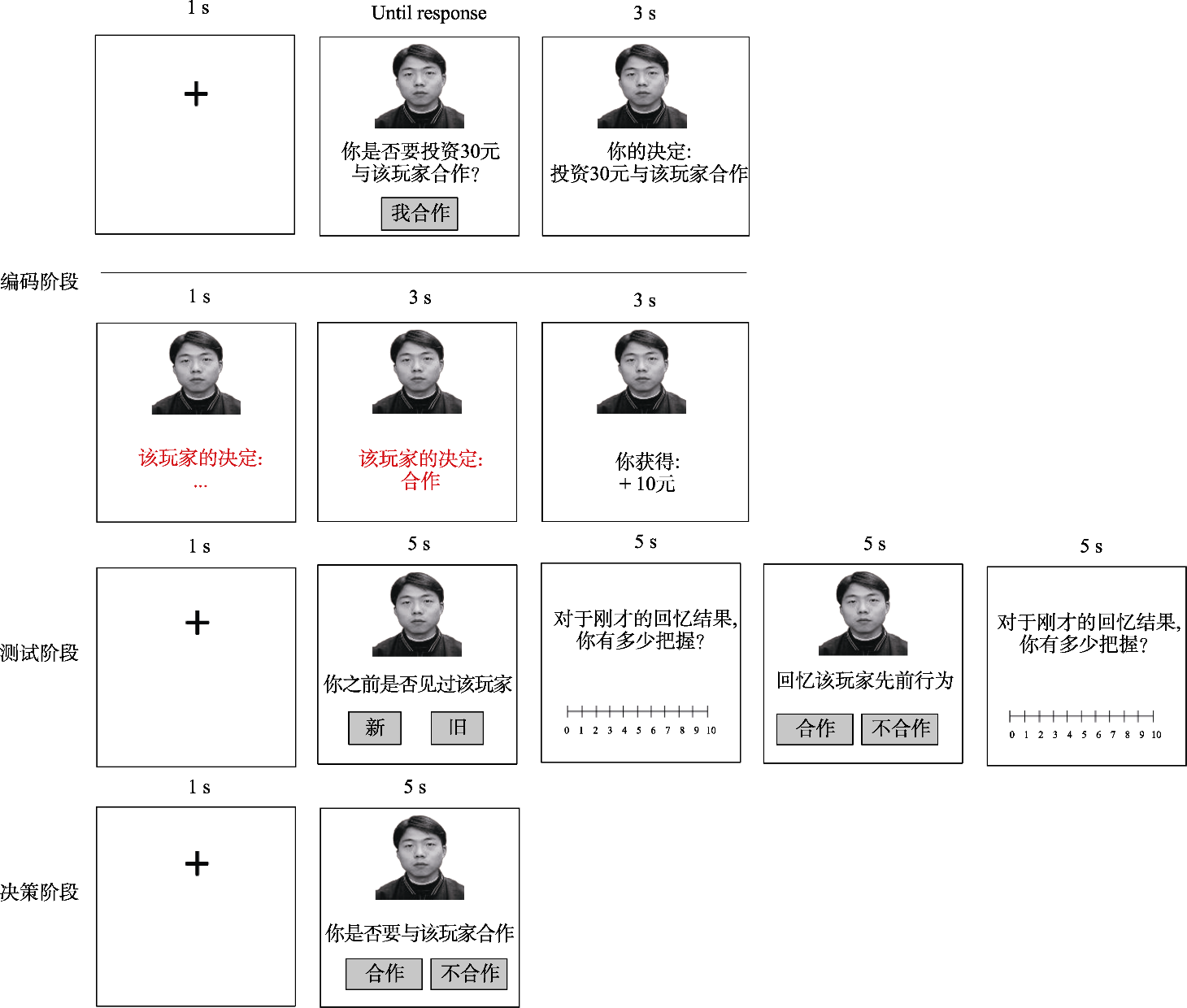
图1 实验1流程图
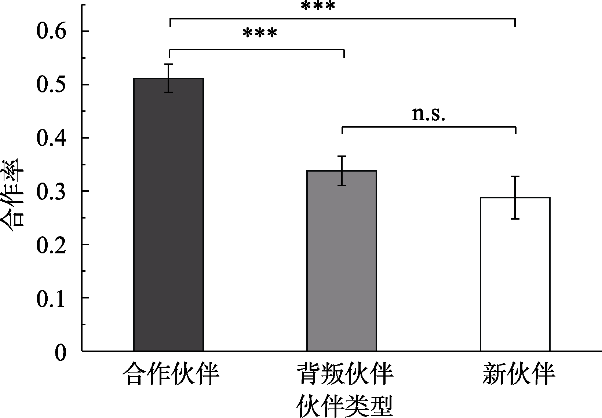
图2 决策阶段各伙伴类型下的合作率
注:***p < 0.001, **p < 0.01, *p < 0.05, n.s.代表p > 0.05。误差线代表SE, 下同。
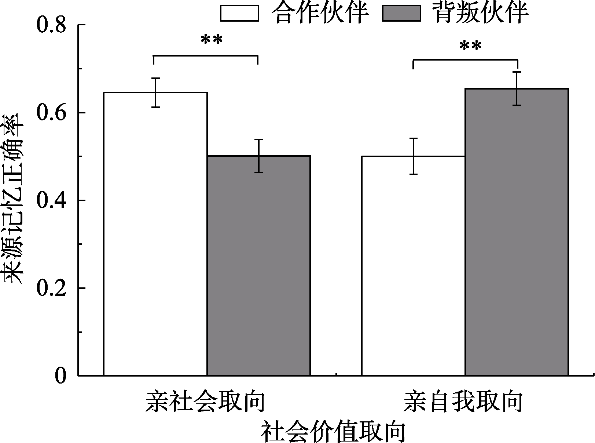
图3 不同社会价值取向下对合作与背叛伙伴的来源记忆正确率
| 变量 | 亲社会价值取向 | 亲自我价值取向 | ||
|---|---|---|---|---|
| 合作伙伴 | 背叛伙伴 | 合作伙伴 | 背叛伙伴 | |
| 来源记忆 正确率 | 0.65 ± 0.15 | 0.50 ± 0.17 | 0.50 ± 0.18 | 0.65 ± 0.17 |
| 来源记忆 信心判断 | 7.41 ± 1.03 | 7.29 ± 0.91 | 7.74 ± 1.33 | 7.39 ± 1.36 |
表1 实验1不同社会价值取向下来源记忆正确率和信心判断的均值和标准差
| 变量 | 亲社会价值取向 | 亲自我价值取向 | ||
|---|---|---|---|---|
| 合作伙伴 | 背叛伙伴 | 合作伙伴 | 背叛伙伴 | |
| 来源记忆 正确率 | 0.65 ± 0.15 | 0.50 ± 0.17 | 0.50 ± 0.18 | 0.65 ± 0.17 |
| 来源记忆 信心判断 | 7.41 ± 1.03 | 7.29 ± 0.91 | 7.74 ± 1.33 | 7.39 ± 1.36 |
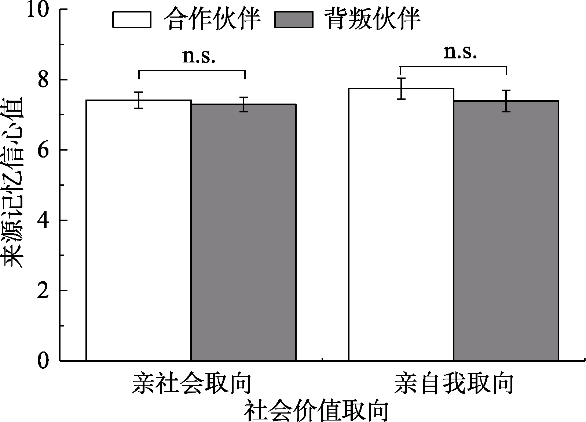
图4 不同社会价值取向下对合作与背叛伙伴的来源记忆信心值
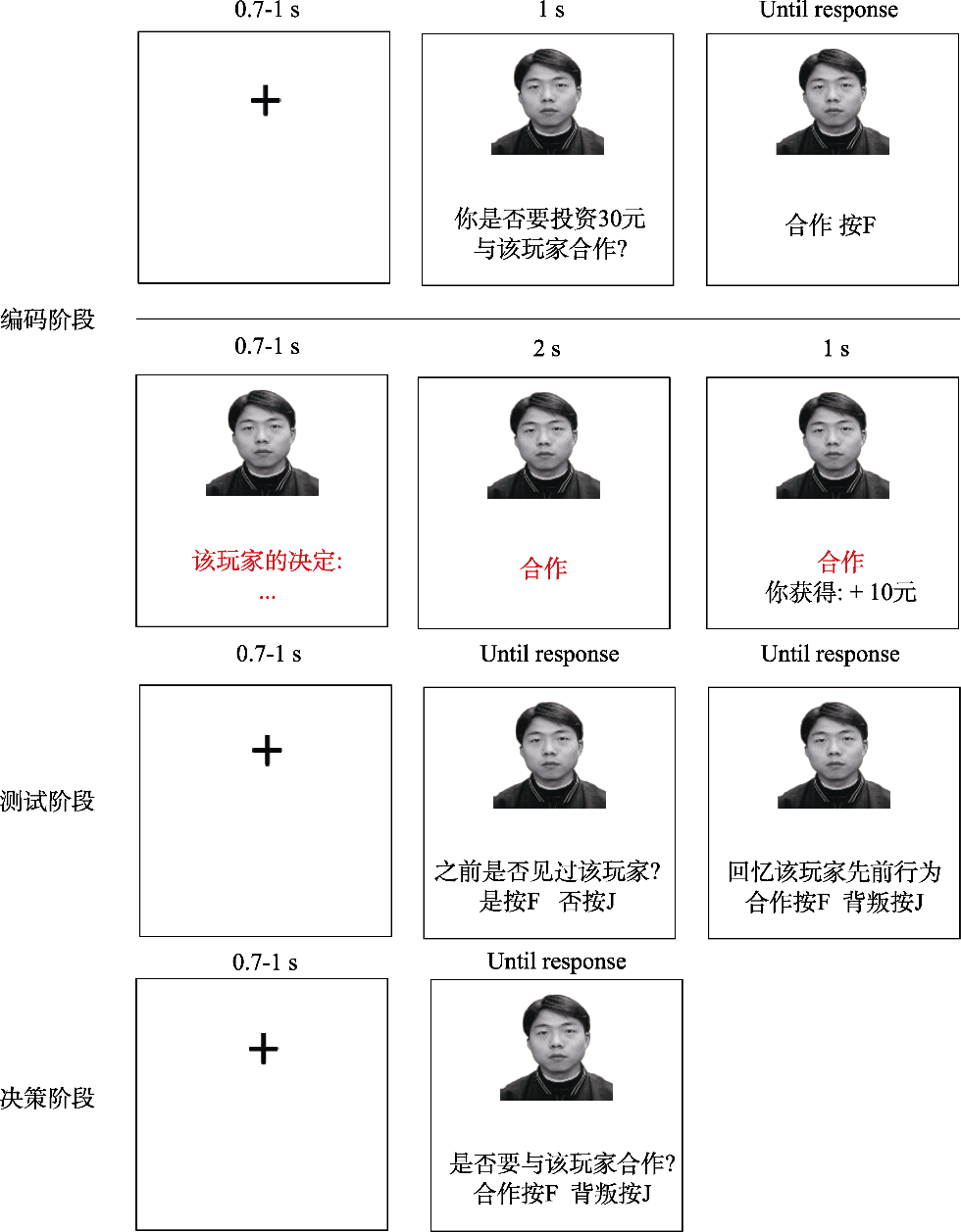
图5 实验2流程图
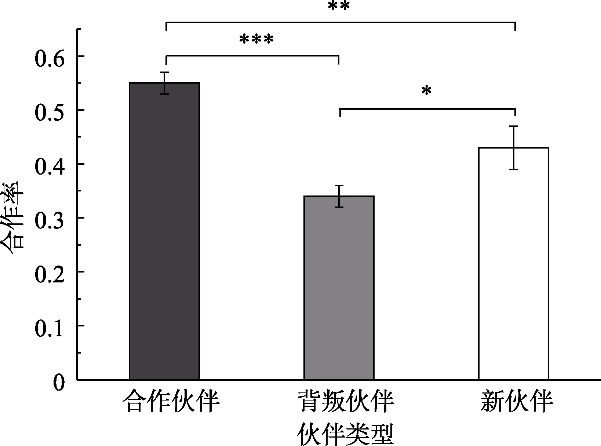
图6 决策阶段各伙伴类型下的合作率
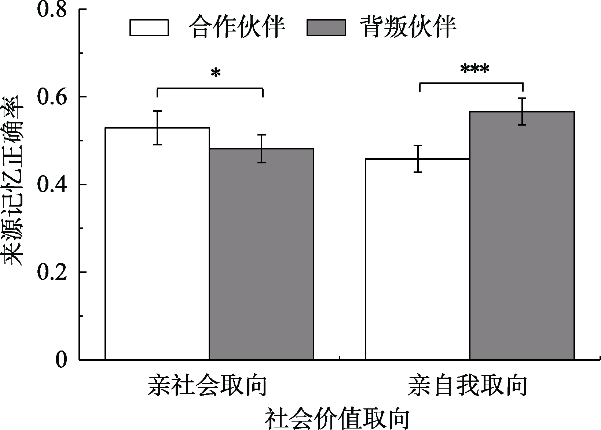
图7 不同社会价值取向来源记忆正确率
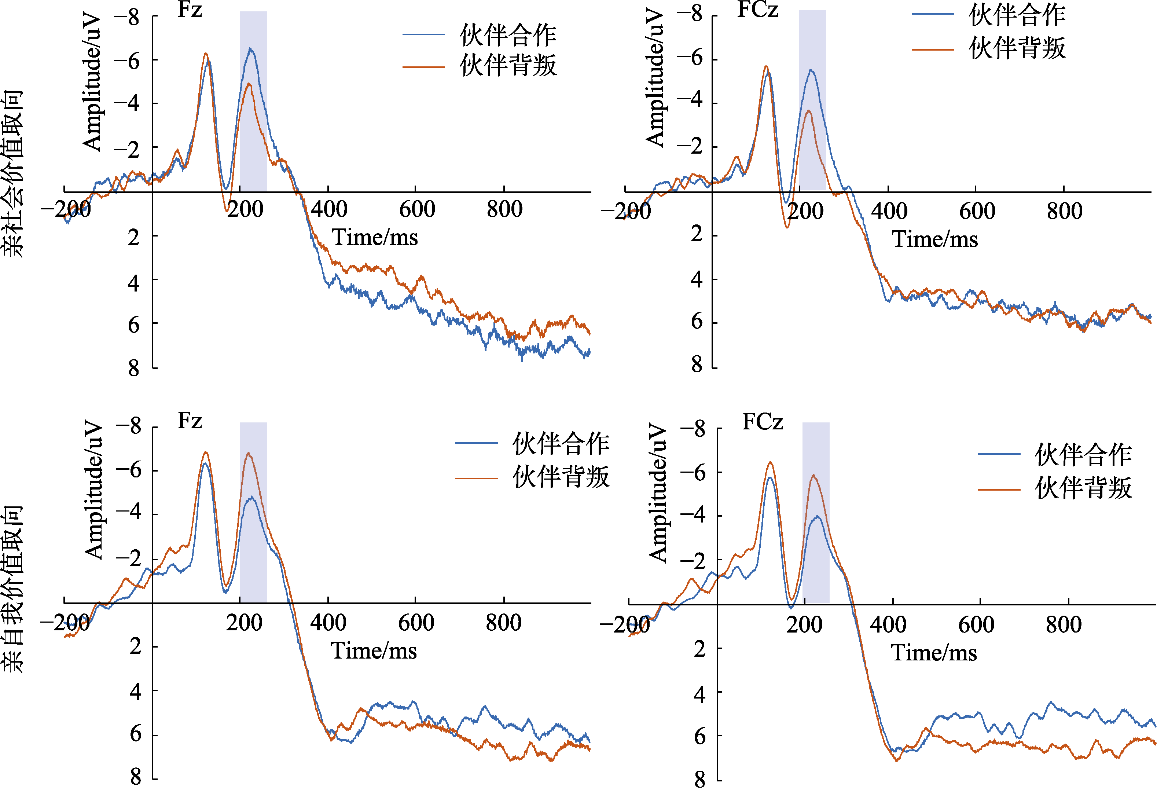
图8 编码阶段不同SVO在合作与背叛反馈下的FRN波形图 注: 彩图见电子版, 下同。
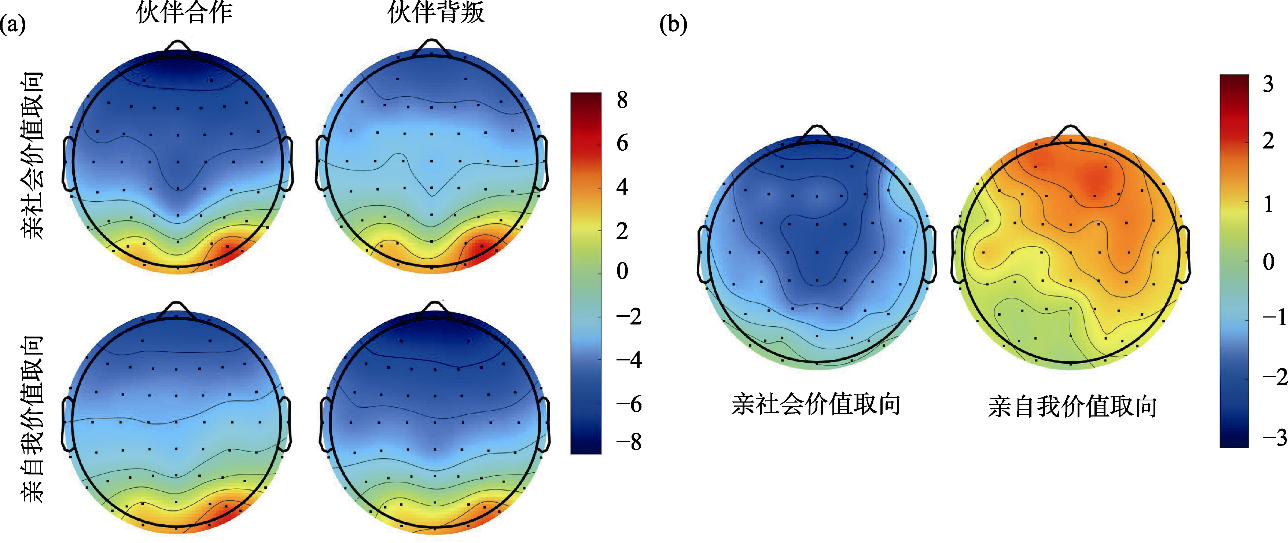
图9 编码阶段不同SVO在合作与背叛反馈下的FRN地形图(a)与差异地形图(b) (合作−背叛)
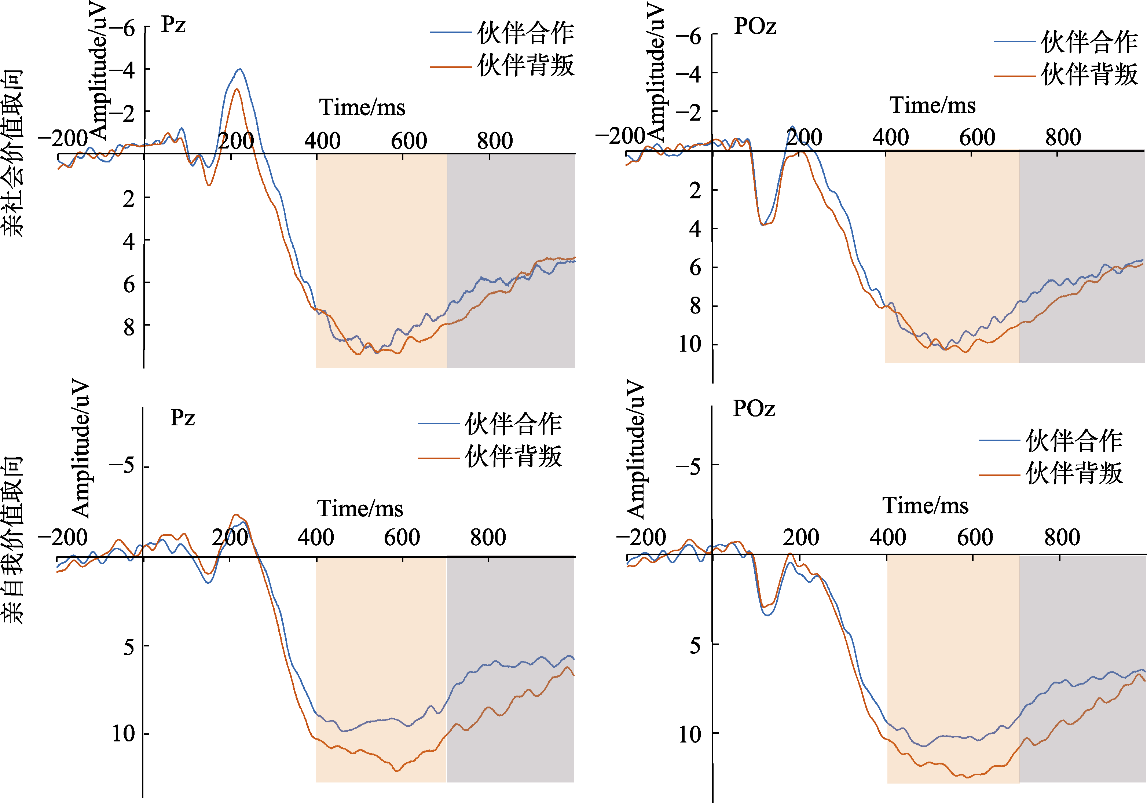
图10 编码阶段不同SVO在合作与背叛反馈下的LPP波形图
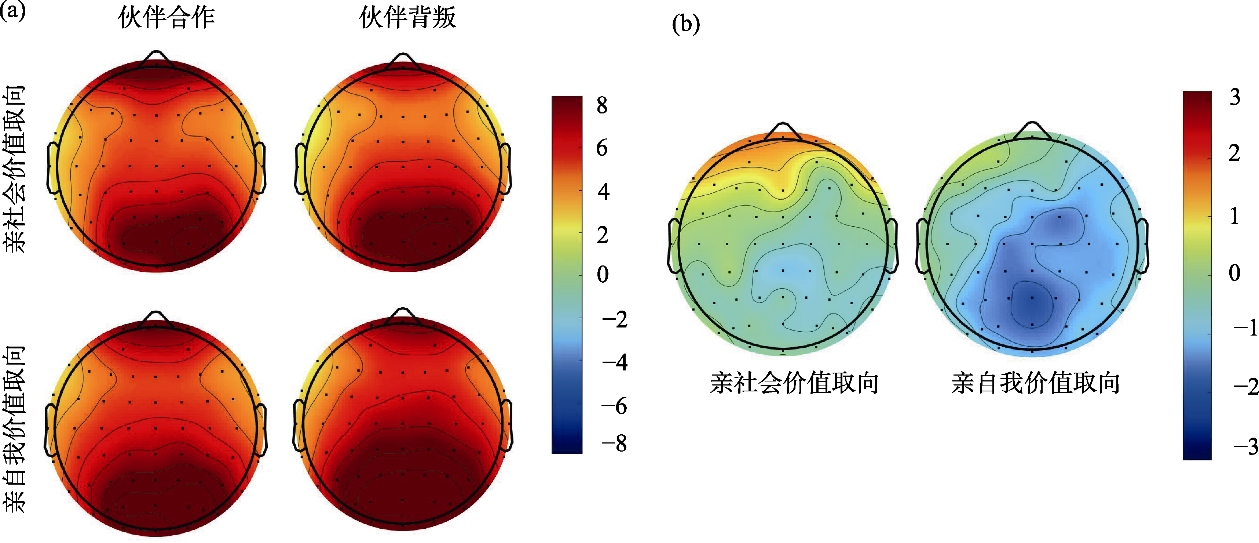
图11 编码阶段不同SVO在合作与背叛反馈下的LPP地形图(a)与差异地形图(b) (合作−背叛)
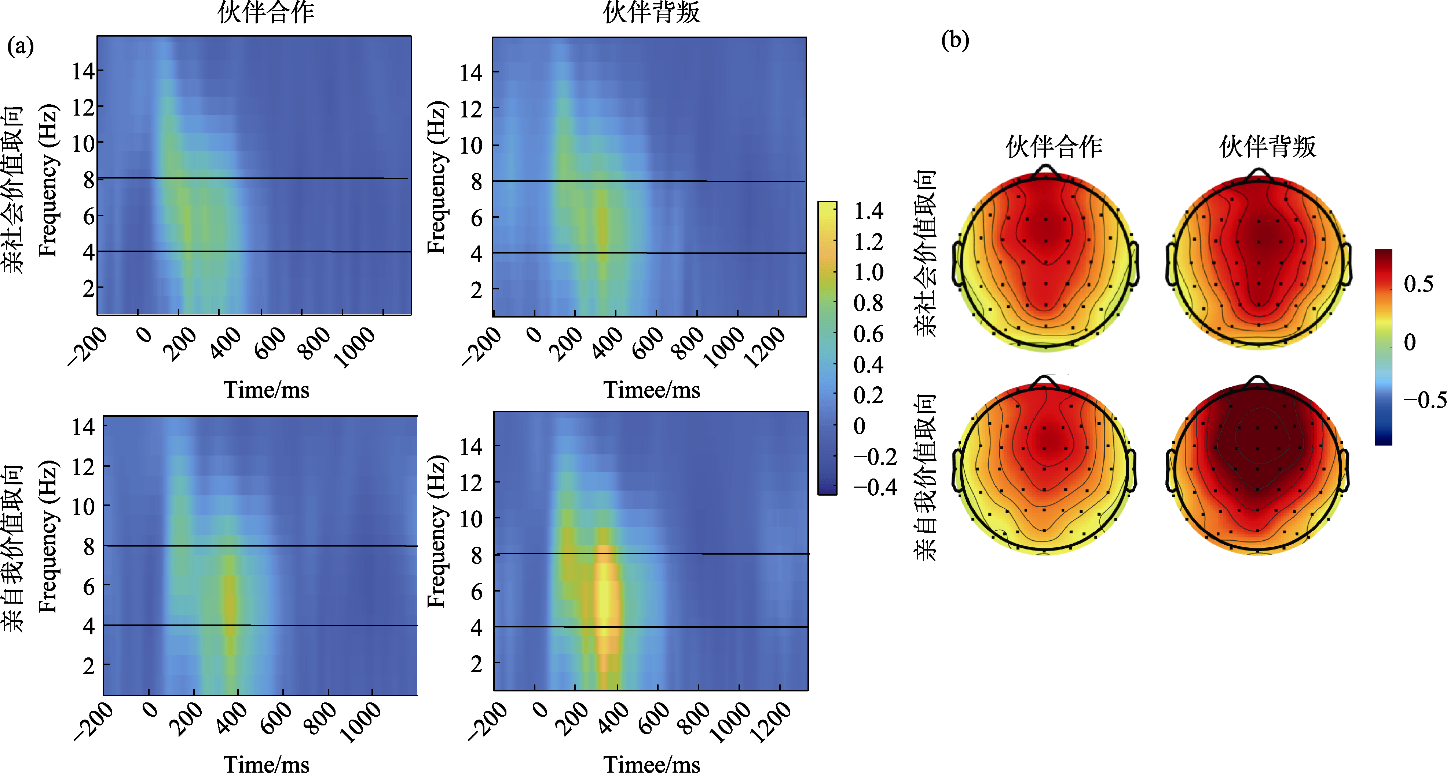
图12 编码阶段不同SVO在合作与背叛反馈下的theta振荡频率图(a)与地形图(b)
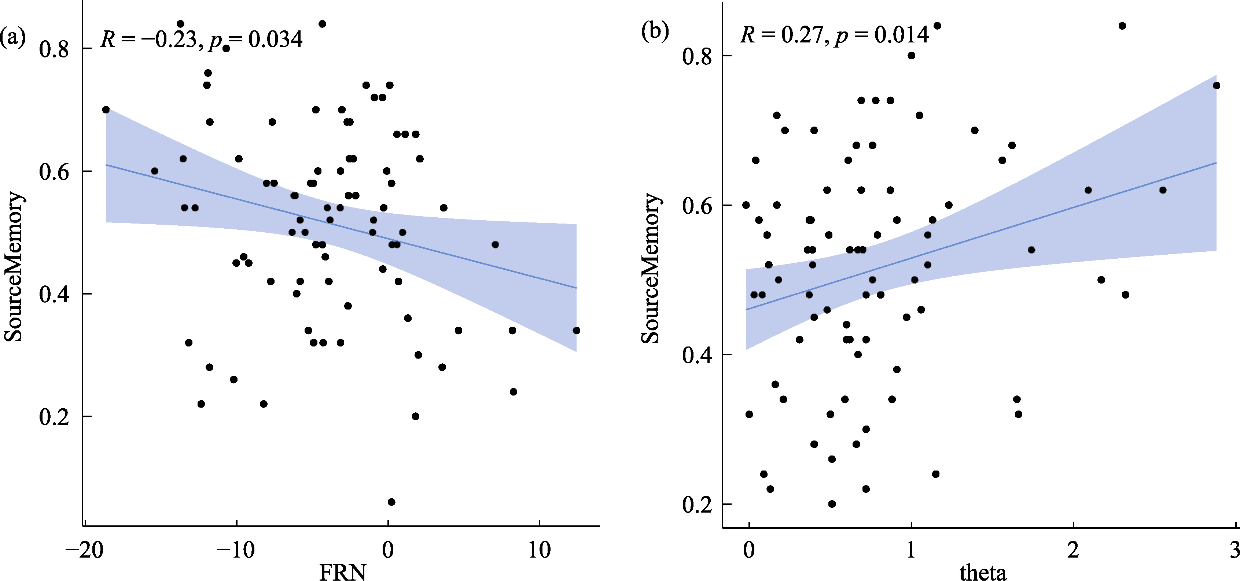
图13 FRN波幅(a)、theta振荡(b)与来源记忆正确率相关关系
| [1] | Alexander, W. H., & Brown, J. W. (2011). Medial prefrontal cortex as an action-outcome predictor. Nature Neuroscience, 14(10), 1338-1163. |
| [2] | Balliet, D., Parks, C., & Joireman, J. (2009). Social value orientation and cooperation in social dilemmas: A meta- analysis. Group Processes & Intergroup Relations, 12(4), 533-547. |
| [3] | Barclay, P. (2016). Biological markets and the effects of partner choice on cooperation and friendship. Current Opinion in Psychology, 7, 33-38. |
| [4] | Bell, R., Buchner, A., Erdfelder, E., Giang, T., Schain, C., & Riether, N. (2012). How specific is source memory for faces of cheaters? Evidence for categorical emotional tagging. Journal of Experimental Psychology: Learning Memory and Cognition, 38(2), 457-472. |
| [5] | Bell, R., Buchner, A., & Musch, J. (2010). Enhanced old-new recognition and source memory for faces of cooperators and defectors in a social-dilemma game. Cognition, 117(3), 261-275. |
| [6] | Bell, R., Mieth, L., & Buchner, A. (2017). Separating conditional and unconditional cooperation in a sequential Prisoner's Dilemma game. Plos One, 12(11), e0187952. |
| [7] | Bell, R., Sasse, J., Möller, M., Czernochowski, D., Mayr, S., & Buchner, A. (2016). Event-related potentials in response to cheating and cooperation in a social dilemma game. Psychophysiology, 53(2), 216-228. |
| [8] | Bogaert, S., Boone, C., & Declerck, C. (2008). Social value orientation and cooperation in social dilemmas: A review and conceptual model. British Journal of Social Psychology, 47(3), 453-480. |
| [9] | Buchner, A., Bell, R., Mehl, B., & Musch, J. (2009). No enhanced recognition memory, but better source memory for faces of cheaters. Evolution and Human Behavior, 30(3), 212-224. |
| [10] | Cauchoix, M., Chow, P. K. Y., van Horik, J. O., Atance, C. M., Barbeau, E. J., Barragan-Jason, G., … Morand-Ferron, J. (2018). The repeatability of cognitive performance: A meta-analysis. Philosophical Transactions of The Royal Society B-Biological Sciences, 373(1756), 20170281. |
| [11] | Cavanagh, J. F., & Frank, M. J. (2014). Frontal theta as a mechanism for cognitive control. Trends in Cognitive Sciences, 18(8), 414-421. |
| [12] | Cohen, M. X., Elger, C. E., & Ranganath, C. (2007). Reward expectation modulates feedback-related negativity and EEG spectra. Neuroimage, 35(2), 968-978. |
| [13] | Cohen, M. X., Wilmes, K., & van de Vijver, I. (2011). Cortical electrophysiological network dynamics of feedback learning. Trends in Cognitive Sciences, 15(12), 558-566. |
| [14] | Cosmides, L., & Tooby, J. (1989). Evolutionary psychology and the generation of culture, part II: Case study: A computational theory of social exchange. Ethology and Sociobiology, 10(1-3), 51-97. |
| [15] | Delmas, G. E., Lew, S. E., & Zanutto, B. S. (2019). High mutual cooperation rates in rats learning reciprocal altruism: The role of payoff matrix. Plos One, 14(1), e0204837. |
| [16] | Delorme, A., & Makeig, S. (2004). EEGLAB: An open source toolbox for analysis of single-trial EEG dynamics including independent component analysis. Journal of Neuroscience Methods, 134(1), 9-21. |
| [17] | FeldmanHall, O., Montez, D. F., Phelps, E. A., Davachi, L., & Murty, V. P. (2021). Hippocampus guides adaptive learning during dynamic social interactions. Journal of Neuroscience, 41(6), 1340-1348. |
| [18] | Foti, D., & Hajcak, G. (2008). Deconstructing reappraisal: Descriptions preceding arousing pictures modulate the subsequent neural response. Journal of Cognitive Neuroscience, 20(6), 977-988. |
| [19] | Foti, D., Weinberg, A., Bernat, E. M., & Proudfit, G. H. (2015). Anterior cingulate activity to monetary loss and basal ganglia activity to monetary gain uniquely contribute to the feedback negativity. Clinical Neurophysiology, 126(7), 1338-1347. |
| [20] | Gao, W., Cao, B., Shan, S., Chen, X., Zhou, D., Zhang, X., & Zhao, D. (2007). The CAS-PEAL large-scale Chinese face database and baseline evaluations. IEEE Transactions on Systems, Man, and Cybernetics - Part A: Systems and Humans, 38(1), 149-161. |
| [21] | Gehring, W. J., & Willoughby, A. R. (2002). The medial frontal cortex and the rapid processing of monetary gains and losses. Science, 295(5563), 2279-2282. |
| [22] | Glazer, J. E., Kelley, N. J., Pornpattananangkul, N., Mittal, V. A., & Nusslock, R. (2018). Beyond the FRN: Broadening the time-course of EEG and ERP components implicated in reward processing. International Journal of Psychophysiology, 132, 184-202. |
| [23] | Gobbini, M. I., & Haxby, J. V. (2007). Neural systems for recognition of familiar faces. Neuropsychologia, 45(1), 32-41. |
| [24] | Hajcak, G., MacNamara, A., & Olvet, D. M. (2010). Event- related potentials, emotion, and emotion regulation: An integrative review. Developmental Neuropsychology, 35(2), 129-155. |
| [25] | Hajcak, G., Moser, J. S., Holroyd, C. B., & Simons, R. F. (2005). The feedback-related negativity reflects the binary evaluation of good versus bad outcomes. Biological Psychology, 71(2), 148-154. |
| [26] | Hajcak, G., & Nieuwenhuis, S. (2006). Reappraisal modulates the electrocortical response to unpleasant pictures. Cognitive, Affective, & Behavioral Neuroscience, 6(4), 291-297. |
| [27] | Harrison, G. W., & List, J. A. (2004). Field experiments. Journal of Economic Literature, 42(4), 1009-1055 |
| [28] | Haruno, M., & Frith, C. D. (2010). Activity in the amygdala elicited by unfair divisions predicts social value orientation. Nature Neuroscience, 13(2), 160-161. |
| [29] | Henrich, J., & Muthukrishna, M. (2021). The origins and psychology of human cooperation. Annual Review of Psychology, 72, 207-240. |
| [30] | Herweg, N. A., Solomon, E. A., & Kahana, M. J. (2020). Theta oscillations in human memory. Trends in Cognitive Sciences, 24(3), 208-227. |
| [31] | Hilbig, B., Glöckner, A., & Zettler, I. (2014). Personality and prosocial behavior: Linking basic traits and social value orientations. Journal of Personality and Social Psychology, 107(3), 529-539. |
| [32] | Holroyd, C. B., & Coles, M . G. H. (2002). The neural basis of human error processing: Reinforcement learning, dopamine, and the error-related negativity. Psychological Review, 109(4), 679-709. |
| [33] | Holroyd, C. B., & Yeung, N. (2012). Motivation of extended behaviors by anterior cingulate cortex. Trends in Cognitive Sciences, 16(2), 122-128. |
| [34] | Hu, L., Xiao, P., Zhang, Z. G., Mouraux, A., & Iannetti, G. D. (2014). Single-trial time-frequency analysis of electrocortical signals: Baseline correction and beyond. NeuroImage, 84, 876-887. |
| [35] | Hu, X., & Mai, X. (2021). Social value orientation modulates fairness processing during social decision-making: Evidence from behavior and brain potentials. Social Cognitive and Affective Neuroscience, 16(7), 670-682. |
| [36] | Hu, X., Xu, Z., & Mai, X. (2017). Social value orientation modulates the processing of outcome evaluation involving others. Social Cognitive and Affective Neuroscience, 12(11), 1730-1739. |
| [37] | Huang, C. R., & Yu, R. J. (2018). Making mistakes in public: Being observed magnifies physiological responses to errors. Neuropsychologia, 119, 214-222. |
| [38] | Kroneisen, M., & Bell, R. (2022). Memory as a cognitive requirement for reciprocal cooperation. Current Opinion in Psychology, 43, 271-277. |
| [39] | Lakens, D. (2013). Calculating and reporting effect sizes to facilitate cumulative science: A practical primer for t-tests and ANOVAs. Frontiers in Psychology, 4, 863. |
| [40] | Li, D., Li, P., & Li, H. (2018). The updated theories of feedback-related negativity in the last decade. Advances in Psychological Science, 26(9), 1642-1650. |
| [李丹阳, 李鹏, 李红. (2018). 反馈负波及其近10年理论解释. 心理科学进展, 26(9), 1642-1650.] | |
| [41] | Liu, S., Gonzalez, G., & Warneken, F. (2019). Worth the wait: Children trade off delay and reward in self- and other- benefiting decisions. Developmental Science, 22(1), e12702. |
| [42] | Ma, Q., Meng, L., & Shen, Q. (2015). You have my word: Reciprocity expectation modulates feedback-related negativity in the trust game. Plos One, 10(2), e0119129. |
| [43] | Marco-Pallares, J., Cucurell, D., Cunillera, T., García, R., Andrés-Pueyo, A., Münte, T. F., & Rodríguez-Fornells, A. (2008). Human oscillatory activity associated to reward processing in a gambling task. Neuropsychologia, 46(1), 241-248. |
| [44] | Meadows, C. C., Gable, P. A., Lohse, K. R., & Miller, M. W. (2016). The effects of reward magnitude on reward processing: An averaged and single trial event-related potential study. Biological Psychology, 118, 154-160. |
| [45] | Mieth, L., Schaper, M. L., Kuhlmann, B. G., & Bell, R. (2021). Memory and metamemory for social interactions: Evidence for a metamemory expectancy illusion. Memory & Cognition, 49(1), 14-31. |
| [46] | Miltner, W. H. R., Braun, C. H., & Coles, M. G. H. (1997). Event-related brain potentials following incorrect feedback in a time-estimation task: Evidence for a "generic" neural system for error detection. Journal of Cognitive Neuroscience, 9(6), 788-798. |
| [47] | Minor, G., & Herzmann, G. (2019). Effects of negative emotion on neural correlates of item and source memory during encoding and retrieval. Brain Research, 1718, 32-45. |
| [48] | Mouraux, A., & Iannetti, G. D. (2008). Across-trial averaging of event-related EEG responses and beyond. Magnetic Resonance Imaging, 26(7), 1041-1054. |
| [49] | Murphy, R. O., Ackermann, K., & Handgraaf, M. J. J. (2011). Measuring social value orientation. Judgment and Decision Making, 6(8), 771-781. |
| [50] | Murty, V., FeldmanHall, O., Hunter, L. E., Phelps, E., & Davachi, L. (2016). Episodic memories predict adaptive value-based decision-making. Journal of Experimental Psychology: General, 145(5), 548-558. |
| [51] | Nicolaisen-Sobesky, E., Paz, V., Cervantes-Constantino, F., Fernández-Theoduloz, G., Pérez, A., Martínez-Montes, E., … Gradin, V. B. (2023). Event-related potentials during the ultimatum game in people with symptoms of depression and/or social anxiety. Psychophysiology, 60(9), e14319. |
| [52] | Oda, R., & Nakajima, S. (2010). Biased face recognition in the Faith Game. Evolution and Human Behavior, 31(2), 118-122. |
| [53] | Open Science Collaboration. (2015). Estimating the reproducibility of psychological science. Science, 349(6251), aac4716 |
| [54] | Pletzer, J., Balliet, D., Joireman, J., Kuhlman, D. M., Voelpel, S., van Lange, P. V., & Back, M. (2018). Social value orientation, expectations, and cooperation in social dilemmas: A meta-analysis. European Journal of Personality, 32(1), 62-83. |
| [55] | Polich, J. (2007). Updating P300: An integrative theory of P3a and P3b. Clinical Neurophysiology, 118(10), 2128-2148. |
| [56] | Qi, Y., Wu, H., Raiha, S., & Liu, X. (2018). Social value orientation modulates context-based social comparison preference in the outcome evaluation: An ERP study. Neuropsychologia, 112, 135-144. |
| [57] | Qi, Y. Y., Liu, Z. H., Cao, S. Q., Han, Y. X., Wang, Q., Liu, X., & Wu, H. Y. (2023). Social value orientation modulates behavioral and neural responses to social influence. Human Brain Mapping, 44(8), 3222-3231. |
| [58] | Rilling, J. K., Gutman, D. A., Zeh, T. R., Pagnoni, G., Berns, G. S., & Kilts, C. D. (2002). A neural basis for social cooperation. Neuron, 35(2), 395-405. |
| [59] | Rodrigues, J., Liesner, M., Reutter, M., Mussel, P., & Hewig, J. (2020). It's costly punishment, not altruistic: Low midfrontal theta and state anger predict punishment. Psychophysiology, 57(8), e13557. |
| [60] | Schaper, M., Mieth, L., & Bell, R. (2019). Adaptive memory: Source memory is positively associated with adaptive social decision making. Cognition, 186, 7-14. |
| [61] | Schupp, H. T., Flaisch, T., Stockburger, J., & Junghöfer, M. (2006). Emotion and attention: Event-related brain potential studies. Progress in Brain Research, 156, 31-51. |
| [62] | Sklenar, A. M., & Leshikar, E. D. (2024). Memory as a foundation for approach and avoidance decisions: A fertile area for research. Memory & Cognition, 53(2), 590-605. |
| [63] | Sun, P., & Ling, X. (2023). The influence of social value orientation and loss context on cooperation in social dilemmas under different time pressure. Studies of Psychology and Behavior, 21(1), 94-101. |
| [孙鹏, 凌晓丽. (2023). 社会价值取向与损失情境对不同时间压力下双人社会困境中合作行为的影响. 心理与行为研究, 21(1), 94-101.] | |
| [64] | Suzuki, A., Honma, Y., & Suga, S. (2013). Indelible distrust: Memory bias toward cheaters revealed as high persistence against extinction. Journal of Experimental Psychology: Learning, Memory, and Cognition, 39(6), 1901-1913. |
| [65] | Symeonidou, N., & Kuhlmann, B. G. (2022). Better memory for emotional sources? A systematic evaluation of source valence and arousal in source memory. Cognition and Emotion, 36(2), 300-316. |
| [66] | van den Bos, W., Talwar, A., & McClure, S. M. (2013). Neural correlates of reinforcement learning and social preferences in competitive bidding. Journal of Neuroscience, 33(5), 2137-2146. |
| [67] | Van Lange, P. A. (1999). The pursuit of joint outcomes and equality in outcomes: An integrative model of social value orientation. Journal of Personality and Social Psychology, 77(2), 337-349. |
| [68] | Wang, Y., Kuhlman, D. M., Roberts, K., Yuan, B., Zhang, Z., Zhang, W., & Simons, R. F. (2017). Social value orientation modulates the FRN and P300 in the chicken game. Biological Psychology, 127, 89-98. |
| [69] | Wei, Z., Zhao, Z., & Zheng, Y. (2016). Moderating effects of social value orientation on the effect of social influence in prosocial decisions. Frontiers in Psychology, 7, 952. |
| [70] | Weinberg, A., Hilgard, J., Bartholow, B. D., & Hajcak, G. (2012). Emotional targets: Evaluative categorization as a function of context and content. International Journal of Psychophysiology, 84(2), 149-154. |
| [71] | Weismüller, B., & Bellebaum, C. (2016). Expectancy affects the feedback-related negativity (FRN) for delayed feedback in probabilistic learning. Psychophysiology, 53(11), 1739-1750. |
| [72] | Wheatley, T., Weinberg, A., Looser, C., Moran, T., & Hajcak, G. (2011). Mind perception: Real but not artificial faces sustain neural activity beyond the N170/VPP. PloS One, 6(3), e17960. |
| [73] | Zhang, X., Lei, Y., Yin, H., Li, P., & Li, H. (2018). Slow is also fast: Feedback delay affects anxiety and outcome evaluation. Frontiers in Human Neuroscience, 12, 20. |
| [74] | Zhang, Z., Zhang, F., Yuan, S., Guo, F., & Wang, Y. (2015). Psychometric analysis of the SVO slider measure in Chinese cultural context. Studies of Psychology and Behavior, 13(3), 404-409. |
| [张振, 张帆, 原胜, 郭丰波, 王益文. (2015). 社会价值取向滑块测验中文版的测量学分析. 心理与行为研究, 13(3), 404-409.] | |
| [75] | Zheng, L., Zhou, Y., Ouyang, H., Xie, J., Lu, Y., & Guo, X. (2024). Receivers’ responses are integrated into costly third- party punishment in a way that interacts with the unfairness of allocations. Brain Research Bulletin, 217, 111082. |
| [1] | 张弘弛, 成旋, 毛伟宾. 奖赏预测误差对时间顺序记忆和来源记忆的影响[J]. 心理学报, 2023, 55(7): 1049-1062. |
| [2] | 钟毅平, 牛娜娜, 范伟, 任梦梦, 李梅. 动作自主性与社会距离对主动控制感的影响:来自行为与ERPs的证据[J]. 心理学报, 2023, 55(12): 1932-1948. |
| [3] | 李梅, 李琎, 张冠斐, 钟毅平, 李红. 承诺水平与社会距离对信任投资的影响:来自行为与ERPs的证据[J]. 心理学报, 2023, 55(11): 1859-1871. |
| [4] | 占友龙, 肖啸, 谭千保, 李琎, 钟毅平. 声誉关注与社会距离对伤害困境中道德决策的影响:来自行为与ERPs的证据[J]. 心理学报, 2022, 54(6): 613-627. |
| [5] | 李琎, 孙宇, 杨子鹿, 钟毅平. 社会价值取向对自我社会奖赏加工的影响——来自ERPs的证据[J]. 心理学报, 2020, 52(6): 786-800. |
| [6] | 付艺蕾, 罗跃嘉, 崔芳. 选择一致性影响结果评价的ERP研究[J]. 心理学报, 2017, 49(8): 1089-1099. |
| [7] | 王益文, 付超, 任相峰, 林羽中, 郭丰波, 张 振, 黄亮, 袁博, 郑玉玮. 自恋人格调节信任博弈的结果评价[J]. 心理学报, 2017, 49(8): 1080-1088. |
| [8] | 李婧; 陈安涛;陈杰;龙长权. 词语型类别属性归纳中分类与属性推理过程的时间特征[J]. 心理学报, 2016, 48(11): 1410-1422. |
| [9] | 王益文;张振;原胜;郭丰波;何少颖;敬一鸣. 重复信任博弈的决策过程与结果评价[J]. 心理学报, 2015, 47(8): 1028-1038. |
| [10] | 窦炜;曲璐璐;曲琛. 社会比较对合作任务结果评价的影响:来自ERP的证据[J]. 心理学报, 2014, 46(3): 405-414. |
| [11] | 索涛,冯廷勇,罗俊龙,罗禹,李红. 结果的接近性对正性结果评价影响的电生理证据[J]. 心理学报, 2012, 44(8): 1047-1057. |
| [12] | 吴燕,罗跃嘉. 利他惩罚中的结果评价—— ERP研究[J]. 心理学报, 2011, 43(06): 661-673. |
| [13] | 陈晶,索涛,袁文萍,冯廷勇. 青少年结果预期与评价的ERP研究[J]. 心理学报, 2011, 43(02): 152-163. |
| [14] | 李月婷,李琦,郭春彦. 内隐和外显记忆测验中情绪词差异的ERP研究[J]. 心理学报, 2010, 42(07): 735-742. |
| [15] | 吴燕,余荣军,周晓林,罗跃嘉. 自我主观标准决定执行任务和观察任务中的结果评价[J]. 心理学报, 2010, 42(02): 279-287. |
| 阅读次数 | ||||||
|
全文 |
|
|||||
|
摘要 |
|
|||||
