

ISSN 1671-3710
CN 11-4766/R
主办:中国科学院心理研究所
出版:科学出版社
CN 11-4766/R
主办:中国科学院心理研究所
出版:科学出版社
Advances in Psychological Science ›› 2026, Vol. 34 ›› Issue (11): 2109-2120.doi: 10.3724/SP.J.1042.2026.2109
• Research Method • Previous Articles
MAO Xiuzhen1( ), HUANG Linchao1, XU Binghui2, ZHENG Qiaoyu3
Received:2026-03-25
Online:2026-11-15
Published:2026-08-21
Contact:
MAO Xiuzhen
E-mail:maomao_wanli@163.com
CLC Number:
MAO Xiuzhen, HUANG Linchao, XU Binghui, ZHENG Qiaoyu. Methods for testing and learning attribute hierarchical structures from a latent variable modeling perspective[J]. Advances in Psychological Science, 2026, 34(11): 2109-2120.
| 线性 | 金字塔型 | 倒金字塔型 | 钻石型 | ||||
|---|---|---|---|---|---|---|---|
| 外部形状 | 内部结构 | 外部形状 | 内部结构 | 外部形状 | 内部结构 | 外部形状 | 内部结构 |
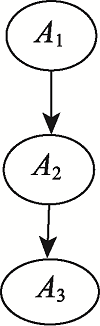 | (000) | 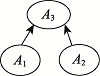 | (000) | 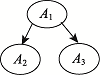 | (000) | 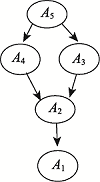 | (00000) |
| (100) | (100) | (100) | (00001) | ||||
| (010) | (010) | (010) | (00011) | ||||
| (001) | (001) | (001) | (00101) | ||||
| (110) | (110) | (110) | (00111) | ||||
| (101) | (101) | (101) | (01111) | ||||
| (011) | (011) | (011) | (11111) | ||||
| (111) | (111) | (111) | |||||
| 线性 | 金字塔型 | 倒金字塔型 | 钻石型 | ||||
|---|---|---|---|---|---|---|---|
| 外部形状 | 内部结构 | 外部形状 | 内部结构 | 外部形状 | 内部结构 | 外部形状 | 内部结构 |
| | (000) | | (000) | | (000) | | (00000) |
| (100) | (100) | (100) | (00001) | ||||
| (010) | (010) | (010) | (00011) | ||||
| (001) | (001) | (001) | (00101) | ||||
| (110) | (110) | (110) | (00111) | ||||
| (101) | (101) | (101) | (01111) | ||||
| (011) | (011) | (011) | (11111) | ||||
| (111) | (111) | (111) | |||||
| [1] | 马奕帆. (2021). 基于三种结构学习算法的属性层级结构估计研究与应用 [硕士学位论文]. 江西师范大学. |
| [2] | 王军. (2012). 贝叶斯网络在认知诊断中的应用 [硕士学位论文]. 南京师范大学. |
| [3] |
汪玲玲, 孙小坚. (2025). 认知诊断模型属性层级关系和Q矩阵的联合验证方法: 面向实践的视角. 心理学报, 57(7), 1295-1308.
doi: 10.3724/SP.J.1041.2025.1295 |
| [4] | 颜玉枝. (2022). 排序理论在认知诊断中辅助标定属性层级关系——基于属性关联强度矩阵 [硕士学位论文]. 江西师范大学. |
| [5] | 喻晓锋. (2009). 贝叶斯网在认知诊断中的应用 [硕士学位论文]. 江西师范大学. |
| [6] | 喻晓锋, 马奕帆, 罗照盛, 秦春影. (2021). 基于K2算法的属性层级学习研究. 江西师范大学学报(自然科学版), 45(4), 376-383. |
| [7] |
詹沛达. (2022). 引入眼动注视点的联合—交叉负载多模态认知诊断建模. 心理学报, 54(11), 1416-1438.
doi: 10.3724/SP.J.1041.2022.01416 |
| [8] | Brunskill, E., & Russell, S. (2010). RAPID: A reachable anytime planner for imprecisely-sensed domains. In Proceedings of the 26th Conference on Uncertainty in Artificial Intelligence (UAI), Catalina Island, CA, USA. |
| [9] | Chen, Y., González-Brenes, J. P., & Tian, J. (2016). Joint discovery of skill prerequisite graphs and student models. In Proceedings of the 9th International Conference on Educational Data Mining (EDM) (pp. 46-53). International Educational Data Mining Society. |
| [10] |
Chen, Y., Liu, J., Xu, G., & Ying, Z. (2015). Statistical analysis of Q-matrix based diagnostic classification models. Journal of the American Statistical Association, 110(510), 850-866.
doi: 10.1080/01621459.2014.934827 URL |
| [11] |
Chen, Y., Li, X., Liu, J., & Ying, Z. (2017). Regularized latent class analysis with application in cognitive diagnosis. Psychometrika, 82(3), 660-692.
doi: 10.1007/s11336-016-9545-6 URL |
| [12] |
Chen, Y., & Wang, S. (2023). Bayesian estimation of attribute hierarchy for cognitive diagnosis models. Journal of Educational and Behavioral Statistics, 48(6), 810-841.
doi: 10.3102/10769986231174918 URL |
| [13] | Chen, Y., Wuillemin, P.-H., & Labat, J.-M. (2015). Discovering prerequisite structure of skills through probabilistic association rules mining. In Proceedings of the 8th International Conference on Educational Data Mining (pp. 117-124). International Educational Data Mining Society. |
| [14] |
Cooper, G. F., & Herskovits, E. (1992). A Bayesian method for the induction of probabilistic networks from data. Machine Learning, 9(4), 309-347.
doi: 10.1023/A:1022649401552 |
| [15] |
de la, Torre, J. (2011). The generalized DINA model framework. Psychometrika, 76(2), 179-199.
doi: 10.1007/s11336-011-9207-7 URL |
| [16] |
Gierl, M. J., Cui, Y., & Hunka, S. (2008). Using connectionist models to evaluate examinees’ response patterns to achievement tests. Journal of Modern Applied Statistical Methods, 7(1), 234-245.
doi: 10.22237/jmasm/1209615480 URL |
| [17] | Gu, Y., & Xu, G. (2019). Learning attribute patterns in high-dimensional structured latent attribute models. Journal of Machine Learning Research, 20(115), 1-58. |
| [18] |
Henson, R. A., Templin, J. L., & Willse, J. T. (2009). Defining a family of cognitive diagnosis models using log-linear models with latent variables. Psychometrika, 74(2), 191-210.
doi: 10.1007/s11336-008-9089-5 URL |
| [19] |
Hu, B., & Templin, J. (2020). Using diagnostic classification models to validate attribute hierarchies and evaluate model fit in Bayesian networks. Multivariate Behavioral Research, 55(2), 300-311.
doi: 10.1080/00273171.2019.1632165 pmid: 31287339 |
| [20] | Lee, S., & Gu, Y. (2024). Latent conjunctive Bayesian network: Unify attribute hierarchy and Bayesian network for cognitive diagnosis. The Annals of Applied Statistics, 18(3), 1988-2011. |
| [21] | Leighton, J. P., & Gierl, M. J. (2007). Why cognitive diagnostic assessment. In J. P. Leighton & M. J. Gierl (Eds.), Cognitive diagnostic assessment for education: Theory and applications (pp. 3-18). Cambridge University Press. https://doi.org/10.1017/CBO9780511611186.001 |
| [22] |
Leighton, J. P., Gierl, M. J., & Hunka, S. M. (2004). The attribute hierarchy Method for cognitive assessment: A variation on Tatsuoka’s rule-space approach. Journal of Educational Measurement, 41(3), 205-237.
doi: 10.1111/jedm.2004.41.issue-3 URL |
| [23] | Li, J., Liu, Q., Wang, F., Liu, J., Huang, Z., Yao, F., … Su, Y. (2024). Towards the identifiability and explainability for personalized learner modeling: An inductive paradigm. In Proceedings of the ACM on Web Conference. (pp.3420-3431). Association for Computing Machinery. |
| [24] | Li, J., Wang, F., Liu, Q., Zhu, M., Huang, W., Huang, Z., … Wang, S. (2022). HierCDF: A Bayesian network-based hierarchical cognitive diagnosis framework. In Proceedings of the 28th ACM SIGKDD Conference on Knowledge Discovery and Data Mining (pp. 904-913). Association for Computing Machinery. |
| [25] |
Lim, Y. S., Willey, J. M., & Bangeranye, C. (2024). An exploration of cognitive diagnosis in medical education: Constructing comprehensive feedback for enhanced student learning. Medical Science Educator, 34(5), 1117-1122.
doi: 10.1007/s40670-024-02064-2 pmid: 39450034 |
| [26] |
Liu, C., & Cheng, Y. (2018). An application of the support vector machine for attribute-by-attribute classification in cognitive diagnosis. Applied Psychological Measurement, 42(1), 58-72.
doi: 10.1177/0146621617712246 pmid: 29881112 |
| [27] |
Liu, R. (2018). Misspecification of attribute structure in diagnostic measurement. Educational and Psychological Measurement, 78(4), 605-634.
doi: 10.1177/0013164417702458 pmid: 30147119 |
| [28] | Liu, R., & Huggins-Manley, A. C. (2016). The specification of attribute structures and its effects on classification accuracy in diagnostic test design. In Quantitative Psychology Research:The 80th Annual Meeting of the Psychometric Society, Beijing, 2015 (pp. 243-254). Springer International Publishing. |
| [29] |
Liu, Y., Xin, T., & Jiang, Y. (2022). Structural parameter standard error estimation method in diagnostic classification models: Estimation and application. Multivariate Behavioral Research, 57(5), 784-803.
doi: 10.1080/00273171.2021.1919048 URL |
| [30] |
Ma, C., Ouyang, J., & Xu, G. (2022). Learning latent and hierarchical structures in cognitive diagnosis models. Psychometrika, 88(1), 175-207.
doi: 10.1007/s11336-022-09867-5 pmid: 35596101 |
| [31] | Ma, C., & Xu, G. (2022). Hypothesis testing for hierarchical structures in cognitive diagnosis models. Journal of Data Science, 20(3), 279-302. |
| [32] | Scutari, M., & Denis, J.-B. (2014). Bayesian networks: With examples in R. Chapman and Hall/CRC. |
| [33] |
Shen, X., Pan, W., & Zhu, Y. (2012). Likelihood-based selection and sharp parameter estimation. Journal of the American Statistical Association, 107(497), 223-232.
pmid: 22736876 |
| [34] | Tao, J., Zhao, W., Liu, F., Guo, X., Cheng, N., Guo, Q., & Duan, H. (2024). Cognitive diagnosis method via Q-matrix-embedded neural networks. Applied Sciences, 14(22), 10380. |
| [35] | Tatsuoka, K., K. (1995). Architecture of knowledge structure and cognitive diagnosis:A statistical pattern recognition and classification approach. In P. D. Nichols, S. F. Chipman, & R. L. Brennan (Eds.), Cognitively diagnostic assessment (pp. 327-361). Lawrence Erlbaum Associates. |
| [36] |
Templin, J., & Bradshaw, L. (2014). Hierarchical diagnostic classification models: A family of models for estimating and testing attribute hierarchies. Psychometrika, 79(2), 317-339.
doi: 10.1007/s11336-013-9362-0 pmid: 24478021 |
| [37] | Thai-Nghe, N., & Schmidt-Thieme, L. (2015, October 8-10). Multi-relational factorization models for student modeling in intelligent tutoring systems. In 2015 Seventh International Conference on Knowledge and Systems Engineering (KSE) (pp. 61-66), Hanoi, Vietnam. |
| [38] |
Tu, D., Wang, S., Cai, Y., Douglas, J., & Chang, H. H. (2019). Cognitive diagnostic models with attribute hierarchies: Model estimation with a restricted Q-matrix design. Applied Psychological Measurement, 43(4), 255-271.
doi: 10.1177/0146621618765721 pmid: 31156279 |
| [39] |
Tsamardinos, I., Brown, L. E., & Aliferis, C. F. (2006). The max-min hill-climbing Bayesian network structure learning algorithm. Machine Learning, 65(1), 31-78.
doi: 10.1007/s10994-006-6889-7 URL |
| [40] |
Wang, X., Chen, Y., & Wang, S. (2026). Uncovering latent structures: A Bayesian approach to estimating Q-matrix and attribute hierarchies in cognitive diagnostic models. Psychometrika, 91(2), 669-694.
doi: 10.1017/psy.2026.10093 URL |
| [41] |
Wang, C., & Gierl, M. J. (2011). Using the attribute hierarchy method to make diagnostic inferences about examinees’ cognitive skills in critical reading. Journal of Educational Measurement, 48(2), 165-187.
doi: 10.1111/jedm.2011.48.issue-2 URL |
| [42] | Wang, F., Liu, Q., Chen, E., Huang, Z., Yin, Y., Wang, S., & Su, Y. (2024). NeuralCD: A general framework for cognitive diagnosis. IEEE Transactions on Knowledge and Data Engineering, 36(2), 850-864. https://doi.org/10.1109/TKDE.2022.3201037. |
| [43] |
Wang, J., Shi, N., Zhang, X., & Xu, G. (2022). Sequential gibbs sampling algorithm for cognitive diagnosis models with many attributes. Multivariate Behavioral Research, 57(5), 840-858.
doi: 10.1080/00273171.2021.1896352 URL |
| [44] |
Wang, C., & Lu, J. (2021). Learning attribute hierarchies from data: Two exploratory approaches. Journal of Educational and Behavioral Statistics, 46(1), 58-84.
doi: 10.3102/1076998620931094 URL |
| [45] |
Xu, G., & Shang, Z. (2018). Identifying latent structures in restricted latent class models. Journal of the American Statistical Association, 113(523), 1284-1295.
doi: 10.1080/01621459.2017.1340889 URL |
| [46] | Yan, Y., Dong, S., & Yu, X. (2025). Using ordering theory to learn attribute hierarchies from examinees’ attribute profiles. Journal of Educational and Behavioral Statistics, 50(6), 985-1013. |
| [47] | Zhan, P., & He, K. (2021). A longitudinal diagnostic model with hierarchical learning trajectories. Educational Measurement: Issues and Practice, 40(3), 18-30. |
| [48] |
Zhan, P., Ma, W., Jiao, H., & Ding, S. (2020). A sequential higher order latent structural model for hierarchical attributes in cognitive diagnostic assessments. Applied Psychological Measurement, 44(1), 65-83.
doi: 10.1177/0146621619832935 pmid: 31853159 |
| [49] | Zhang, C. H. (2010). Nearly unbiased variable selection under minimax concave penalty. Annals of Statistics, 38(2), 894-942. |
| [50] |
Zhang, X., Jiang, Y., Xin, T., & Liu, Y. (2025a). Validating attribute hierarchies in cognitive diagnosis models. Frontiers in Psychology, 16, 1562807. https://doi.org/10.3389/fpsyg.2025.1562807
doi: 10.3389/fpsyg.2025.1562807 URL |
| [51] | Zhang, X., Jiang, Y., Xin, T., & Liu, Y. (2025b). Iterative attribute hierarchy exploration methods for cognitive diagnosis models. Journal of Educational and Behavioral Statistic, 50(4), 682-713. |
| [52] | Zheng, X., Aragam, B., Ravikumar, P. K., & Xing, E. P. (2018, December 3-8). DAGs with NO TEARS: Continuous optimization for structure learning. Advances in Neural Information Processing Systems, 31, Montreal, Canada. |
| [53] |
Zou, H., & Hastie, T. (2005). Regularization and variable selection via the elastic net. Journal of the Royal Statistical Society: Series B, 67(2), 301-320.
doi: 10.1111/j.1467-9868.2005.00503.x URL |
| [1] | YANG Tongshu, HUANG Yanli, XIE Jiushu. The cognitive mechanisms of cross-situational word learning deficits in children with autism spectrum disorder [J]. Advances in Psychological Science, 2025, 33(8): 1367-1378. |
| [2] | WANG Yang, WEN Zhonglin, LI Wei, FANG Jie. Methodological research and model development on structural equation models in China’s mainland from 2001 to 2020 [J]. Advances in Psychological Science, 2022, 30(8): 1715-1733. |
| [3] | WEN Zhonglin, XIE Jinyan, FANG Jie, WANG Yifan. Methodological research on hypothesis test and related issues in China’s mainland from 2001 to 2020 [J]. Advances in Psychological Science, 2022, 30(8): 1667-1681. |
| [4] | LI Jia, MAO Xiuzhen, ZHANG Xueqin. Q-matrix estimation (validation) methods for cognitive diagnosis [J]. Advances in Psychological Science, 2021, 29(12): 2272-2280. |
| [5] | WANG Yang, WEN Zhonglin, FU Yuanshu. Equivalence testing: A new perspective on structural equation model evaluation and measurement invariance analysis [J]. Advances in Psychological Science, 2020, 28(11): 1961-1969. |
| [6] | WANG Meng-Cheng, BI Xiangyang. Regression mixture modeling: Advances in method and its implementation [J]. Advances in Psychological Science, 2018, 26(12): 2272-2280. |
| [7] | WANG Jing, TANG Wenqing, ZHANG Minqiang, ZHANG Wenyi, GUO Kaiyin. Piecewise growth mixture models and its current researches [J]. Advances in Psychological Science, 2017, 25(10): 1696-1704. |
| [8] | WANG Meng-Cheng, DENG Qiaowen, BI Xiangyang. Latent variable modeling using Bayesian methods [J]. Advances in Psychological Science, 2017, 25(10): 1682-1695. |
| [9] | ZHONG Xiaobo. Controversies on hypothesis testing: Clarification and solving of the problems [J]. Advances in Psychological Science, 2016, 24(10): 1670-1676. |
| [10] | LI Fu-Hong;CAO Yun-Fei;CAO Bi-Hua;CAI Xue-Li;LI Hong. The Neural Mechanism of Hypothesis Formation and Testing [J]. , 2012, 20(2): 191-196. |
| [11] | Lyndsey Nickels. Assessment of Cognitive Impairments [J]. , 2008, 16(1): 10-13. |
| Viewed | ||||||
|
Full text |
|
|||||
|
Abstract |
|
|||||
