

ISSN 1671-3710
CN 11-4766/R
主办:中国科学院心理研究所
出版:科学出版社
CN 11-4766/R
主办:中国科学院心理研究所
出版:科学出版社
心理科学进展 ›› 2019, Vol. 27 ›› Issue (4): 689-699.doi: 10.3724/SP.J.1042.2019.00689 cstr: 32111.14.2019.00689
许丽颖1, 喻丰1( ), 周爱钦2(), 杨沈龙1, 丁晓军1
收稿日期:2018-07-11
出版日期:2019-04-15
发布日期:2019-02-22
基金资助:
XU Liying1, YU Feng1(), ZHOU Aiqin2(), YANG Shenlong1, DING Xiaojun1
Received:2018-07-11
Online:2019-04-15
Published:2019-02-22
摘要:
萌是对一系列由视觉感知的婴儿外貌或行为特征的概括性描述。本文在厘清萌与可爱关系的基础上, 对萌的维度做了进一步区分, 即除了幼萌以外, 萌还可能包含趣萌、听觉萌、嗅觉萌等其他维度。目前关于人们对萌的感知是否存在个体差异这一问题仍然存在争论, 而萌之载体的多样性则已经得到广泛认同。通过对一系列实证研究的回顾, 本文认为萌的后果主要体现在认知(如诱发脆弱性、天真等推断)、情感(如积极情绪、同情和柔情)和行为(如注意和关怀)三个方面。未来研究可进一步探讨萌的维度及其与道德的关系问题。
中图分类号:
许丽颖, 喻丰, 周爱钦, 杨沈龙, 丁晓军. (2019). 萌:感知与后效. 心理科学进展 , 27(4), 689-699.
XU Liying, YU Feng, ZHOU Aiqin, YANG Shenlong, DING Xiaojun. (2019). Cuteness: Perceptions and consequences. Advances in Psychological Science, 27(4), 689-699.
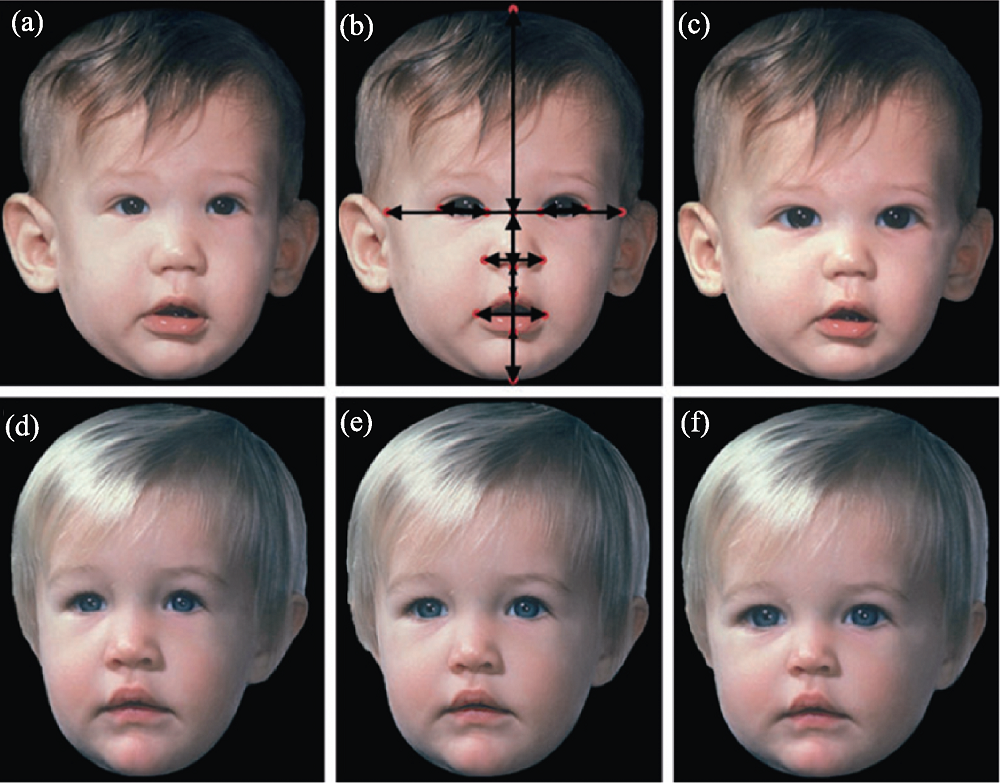
图1 幼萌(Glocker et al., 2009) 注:右侧婴儿比左侧婴儿的婴儿图式程度更高, 因而看起来更萌
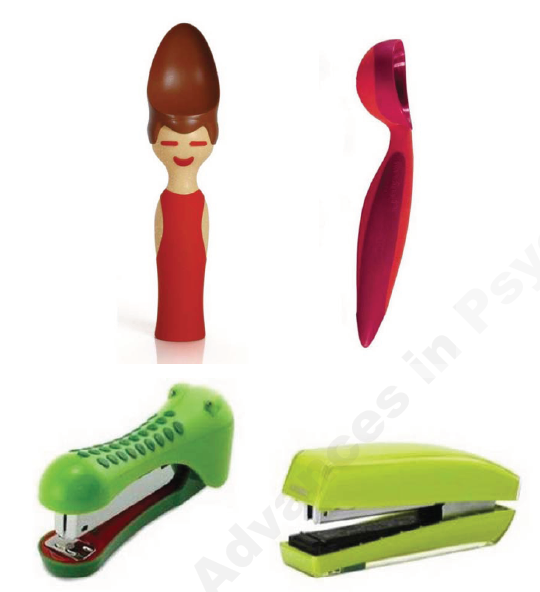
图2 趣萌(Nenkov & Scott, 2014)
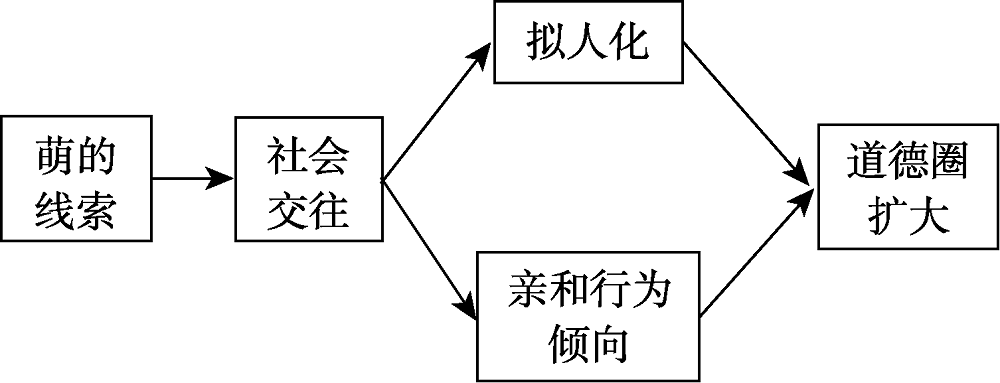
图3 萌的道德模型(Sherman & Haidt, 2011)
| [1] |
白解红, 王莎莎 . ( 2014). 汉语网络流行语“萌”语义演变及认知机制探析. 湖北大学学报(哲学社会科学版), 41, (2), 139-142.
doi: 10.3969/j.issn.1001-4799.2014.02.025 URL |
| [2] |
许丽颖, 喻丰, 邬家骅, 韩婷婷, 赵靓 . ( 2017). 拟人化: 从“它”到“他”. 心理科学进展, 25, (11), 1942-1954.
doi: 10.3724/SP.J.1042.2017.01942 URL |
| [3] |
Alley T.R . ( 1981). Head shape and the perception of cuteness. Developmental Psychology, 17, (5), 650-654.
doi: 10.1037/0012-1649.17.5.650 URL |
| [4] | Aragón O. R., Clark M. S., Dyer R. L., & Bargh J. A . ( 2015). Dimorphous expressions of positive emotion: Displays of both care and aggression in response to cute stimuli. Psychological Science, 26 (3), 259-273. |
| [5] | Archer J., &Monton S. ( 2011). Preferences for infant facial features in pet dogs and cats. Ethology, 117 (3), 217-226. |
| [6] |
Borgi M., Cogliati-Dezza I., Brelsford V., Meints K., & Cirulli F . ( 2014). Baby schema in human and animal faces induces cuteness perception and gaze allocation in children. Frontiers in Psychology, 5, 411.
doi: 10.3389/fpsyg.2014.00411 URL pmid: 24847305 |
| [7] |
Brosch T., Sander D., & Scherer K. R . ( 2007). That baby caught my eye.. attention capture by infant faces. Emotion, 7, (3), 685-689.
doi: 10.1037/1528-3542.7.3.685 URL pmid: 17683225 |
| [8] |
Brunton P.J., &Russell J.A . ( 2008). The expectant brain: Adapting for motherhood. Nature Reviews Neuroscience, 9 (1), 11-25.
doi: 10.1038/nrn2280 URL pmid: 18073776 |
| [9] |
Buckels E. E., Beall A. T., Hofer M. K., Lin E. Y., Zhou Z., & Schaller M . ( 2015). Individual differences in activation of the parental care motivational system: Assessment, prediction, and implications. Journal of Personality and Social Psychology, 108, (3), 497-514.
doi: 10.1037/pspp0000023 URL pmid: 25559194 |
| [10] |
Cárdenas R. A., Harris L. J., & Becker M. W . ( 2013). Sex differences in visual attention toward infant faces. Evolution and Human Behavior, 34, (4), 280-287.
doi: 10.1016/j.evolhumbehav.2013.04.001 URL |
| [11] |
Chang C-T., &Chen C-X . ( 2015). Babyface effects: A double-edged sword in healthcare service evaluations. Asian Journal of Social Psychology, 18 (4), 325-336.
doi: 10.1111/ajsp.12105 URL |
| [12] | Cho S., Gonzales R., & Yoon C . ( 2011). Cross-Cultural difference in the preference of the cute products: Asymetric dominance effect with product designs. Proceedings of IASDR 2011. |
| [13] | Dale J.P . ( 2017). The Appeal of the Cute Object: Desire, Domestication, and Agency. In Dale, J. P., Goggin, J., Leyda, J., McIntyre, A. P., & Negra, D., Eds.), New York, The aesthetics and affects of cuteness |
| [14] | Dale J. P., Goggin J., Leyda J., McIntyre A. P., & Negra D . ( 2017). The aesthetics and affects of cuteness. In Dale, J. P., Goggin, J., Leyda, J., McIntyre, A. P., & Negra, D., Eds.), New York, The aesthetics and affects of cuteness |
| [15] | Dijker A.J . ( 2014). A theory of vulnerability-based morality. Emotion Review, 6 (2), 175-183. |
| [16] |
Epley N., Waytz A., & Cacioppo J. T . ( 2007). On seeing human: A three-factor theory of anthropomorphism. Psychological Review, 114 (4), 864-886.
doi: 10.1037/0033-295X.114.4.864 URL pmid: 17907867 |
| [17] |
Glocker M. L., Langleben D. D., Ruparel K., Loughead J. W., Gur R. C., & Sachser N . ( 2009). Baby schema in infant faces induces cuteness perception and motivation for caretaking in adults. Ethology, 115 (3), 257-263.
doi: 10.1111/j.1439-0310.2008.01603.x URL pmid: 3260535 |
| [18] |
Golle J., Lisibach S., Mast F. W., & Lobmaier J. S . ( 2013). Sweet puppies and cute babies: Perceptual adaptation to babyfacedness transfers across species. PloS One, 8 (3), e58248.
doi: 10.1371/journal.pone.0058248 URL pmid: 3596402 |
| [19] | Gorn G. J., Jiang Y., & Johar G. V . ( 2008). Babyfaces, trait inferences, and company evaluations in a public relations crisis. Journal of Consumer Research, 35 (1), 36-49. |
| [20] |
Griskevicius V., Shiota M. N., & Neufeld S. L . ( 2010). Influence of different positive emotions on persuasion processing: A functional evolutionary approach. Emotion, 10 (2), 190-206.
doi: 10.1037/a0018421 URL pmid: 20364895 |
| [21] |
Heinrichs M., von Dawans B., & Domes G . ( 2009). Oxytocin, vasopressin, and human social behavior. Frontiers in Neuroendocrinology, 30 (4), 548-557.
doi: 10.1016/j.yfrne.2009.05.005 URL pmid: 19505497 |
| [22] |
Hildebrandt K.A . ( 1983). Effect of facial expression variations on ratings of infants' physical attractiveness. Developmental Psychology, 19 (3), 414-417.
doi: 10.1037/0012-1649.19.3.414 URL |
| [23] |
Hildebrandt K.A., &Fitzgerald H.E . ( 1978). Adults' responses to infants varying in perceived cuteness. Behavioural Processes, 3 (2), 159-172.
doi: 10.1016/0376-6357(78)90042-6 URL pmid: 24924654 |
| [24] |
Hildebrandt K.A., &Fitzgerald H.E . ( 1979 a). Facial feature determinants of perceived infant attractiveness. Infant Behavior and Development, 2, 329-339.
doi: 10.1016/S0163-6383(79)80043-0 URL |
| [25] |
Hildebrandt K.A., &Fitzgerald H.E . ( 1979 b). Adults' perceptions of infant sex and cuteness. Sex Roles, 5 (4), 471-481.
doi: 10.1007/BF00287322 URL |
| [26] | Jia H. M., Park C. W., & Pol G . ( 2015). Cuteness, nurturance, and implications for visual product design. In R. Batra, C. Seifert, & D. Brei (Eds.), The psychology of design: Creating consumer appeal( pp. 168-179). New York: Routledge. |
| [27] |
Kalawski J.P . ( 2010). Is tenderness a basic emotion?. Motivation and Emotion, 34 (2), 158-167.
doi: 10.1007/s11031-010-9164-y URL |
| [28] |
Keating C. F., Randall D. W., Kendrick T., & Gutshall K. A . ( 2003). Do babyfaced adults receive more help? The (cross-cultural) case of the lost resume. Journal of Nonverbal Behavior, 27 (2), 89-109.
doi: 10.1023/A:1023962425692 URL |
| [29] |
Kringelbach M. L., Stark E. A., Alexander C., Bornstein M. H., & Stein A . ( 2016). On cuteness: Unlocking the parental brain and beyond. Trends in Cognitive Sciences, 20 (7), 545-558.
doi: 10.1016/j.tics.2016.05.003 URL pmid: 4956347 |
| [30] |
Kuraguchi K., Taniguchi K., & Ashida H . ( 2015). The impact of baby schema on perceived attractiveness, beauty, and cuteness in female adults. SpringerPlus, 4, (1), 164.
doi: 10.1186/s40064-015-0940-8 URL pmid: 4393829 |
| [31] | Legge E . ( 2016). When awe turns to Awww: Jeff Koons’s balloon dog and the cute sublime. In Dale, J. P., Goggin, J., Leyda, J., McIntyre, A. P., & Negra, D.,Eds.), The aesthetics and affects of cuteness |
| [32] | Little A.C . ( 2012). Manipulation of infant-like traits affects perceived cuteness of infant, adult and cat faces. Ethology, 118 (8), 775-782. |
| [33] |
Livingston R.W., &Pearce N.A . ( 2009). The teddy-bear effect: Does having a baby face benefit black chief executive officers? Psychological Science, 20 (10), 1229-1236.
doi: 10.1111/j.1467-9280.2009.02431.x URL pmid: 19732388 |
| [34] |
Lobmaier J. S., Probst F., Perrett D. I., & Heinrichs M . ( 2015). Menstrual cycle phase affects discrimination of infant cuteness. Hormones and behavior, 70, 1-6.
doi: 10.1016/j.yhbeh.2015.02.001 URL pmid: 25683277 |
| [35] |
Lobmaier J. S., Sprengelmeyer R., Wiffen B., & Perrett D. I . ( 2010). Female and male responses to cuteness, age and emotion in infant faces. Evolution and Human Behavior, 31 (1), 16-21.
doi: 10.1016/j.evolhumbehav.2009.05.004 URL |
| [36] | Lorenz K .( 1943). Die angeborenen formen möglicher erfahrung. Ethology, 5 (2), 235-409. |
| [37] |
Maeng A., &Aggarwal P. ( 2017). Facing Dominance: Anthropomorphism and the effect of product face ratio on consumer preference. Journal of Consumer Research, 44 (5), 1104-1122.
doi: 10.1007/978-3-319-39946-1_5 URL |
| [38] |
McArthur L.Z., &Apatow K. ( 1984). Impressions of baby-faced adults. Social Cognition, 2 (4), 315-342.
doi: 10.1521/soco.1984.2.4.315 URL |
| [39] | Merriam-Webster. ( 2018. Merriam-Webster online dictionary. Retrieved May 1, 2018, from http://www.merriam- webster.com |
| [40] | Miesler L., Leder H., & Herrmann A . ( 2011). Isn't it cute: An evolutionary perspective of baby-schema effects in visual product designs. International Journal of Design, 5 (3), 17-30. |
| [41] |
Montepare J.M., &Zebrowitz-McArthur L. ( 1989). Children's perceptions of babyfaced adults. Perceptual and Motor Skills, 69 (2), 467-472.
doi: 10.2466/pms.1989.69.2.467 URL pmid: 2812994 |
| [42] |
Nenkov G.Y., &Scott M.L . ( 2014). “So cute I could eat it up”: Priming effects of cute products on indulgent consumption. Journal of Consumer Research, 41 (2), 326-341.
doi: 10.1086/676581 URL |
| [43] |
Nittono H., Fukushima M., Yano A., & Moriya H . ( 2012). The power of kawaii: Viewing cute images promotes a careful behavior and narrows attentional focus. PloS One, 7 (9), e46362.
doi: 10.1371/journal.pone.0046362 URL pmid: 23050022 |
| [44] |
Oveis C., Horberg E. J., & Keltner D . ( 2010). Compassion, pride, and social intuitions of self-other similarity. Journal of Personality and Social Psychology, 98, (4), 618-630.
doi: 10.1037/a0017628 URL pmid: 20307133 |
| [45] |
Parsons C. E., Young K. S., Jegindoe Elmholdt E-M., Stein A., & Kringelbach M. L . ( 2017). Interpreting infant emotional expressions: Parenthood has differential effects on men and women. The Quarterly Journal of Experimental Psychology, 70 (3), 554-564.
doi: 10.1080/17470218.2016.1141967 URL pmid: 26822551 |
| [46] |
Parsons C. E., Young K. S., Joensson M., Brattico E., Hyam J. A., Stein A., .. Kringelbach M. L . ( 2013). Ready for action: A role for the human midbrain in responding to infant vocalizations. Social Cognitive and Affective Neuroscience, 9 (7), 977-984.
doi: 10.1093/scan/nst076 URL pmid: 23720574 |
| [47] |
Parsons C. E., Young K. S., Kumari N., Stein A., & Kringelbach M. L . ( 2011). The motivational salience of infant faces is similar for men and women. PloS One, 6 (5), e20632.
doi: 10.1371/journal.pone.0020632 URL pmid: 21655195 |
| [48] |
Parsons C. E., Young K. S., Parsons E., Stein A., & Kringelbach M. L . ( 2012). Listening to infant distress vocalizations enhances effortful motor performance. Acta Paediatrica, 101 (4), e189-e191.
doi: 10.1111/j.1651-2227.2011.02554.x URL pmid: 22150522 |
| [49] |
Porter R. H., Cernoch J. M., & McLaughlin F. J . ( 1983). Maternal recognition of neonates through olfactory cues. Physiology & Behavior, 30 (1), 151-154.
doi: 10.1016/0031-9384(83)90051-3 URL pmid: 6836038 |
| [50] |
Riem M. M. E., van Ijzendoorn M. H., Tops M., Boksem M. A. S., Rombouts S. A. R. B., & Bakermans- Kranenburg M. J . ( 2012). No laughing matter: Intranasal oxytocin administration changes functional brain connectivity during exposure to infant laughter. Neuropsychopharmacology, 37 (5), 1257-1266.
doi: 10.1038/npp.2011.313 URL pmid: 3306887 |
| [51] | Sanefuji W., Ohgami H., & Hashiya K . ( 2007). Development of preference for baby faces across species in humans (Homo sapiens). Journal of Ethology, 25 (3), 249-254. |
| [52] |
Scott M.L., &Nenkov G.Y . ( 2016). Using consumer responsibility reminders to reduce cuteness-induced indulgent consumption. Marketing Letters, 27 (2), 323-336.
doi: 10.1007/s11002-014-9336-8 URL |
| [53] |
Sherman G.D., &Haidt J. ( 2011). Cuteness and disgust: the humanizing and dehumanizing effects of emotion. Emotion Review, 3 (3), 245-251.
doi: 10.1177/1754073911402396 URL |
| [54] |
Sherman G. D., Haidt J., & Coan J. A . ( 2009). Viewing cute images increases behavioral carefulness. Emotion, 9 (2), 282-286.
doi: 10.1037/a0014904 URL pmid: 19348541 |
| [55] | Singer P . ( 1981). The expanding circle: Ethics and sociobiology. New York, NY: Clarendon Press. |
| [56] |
Sprengelmeyer R., Lewis J., Hahn A., & Perrett D. I . ( 2013). Aesthetic and incentive salience of cute infant faces: Studies of observer sex, oral contraception and menstrual cycle. PLoS One, 8 (5), e65844.
doi: 10.1371/journal.pone.0065844 URL pmid: 3667077 |
| [57] | Sprengelmeyer R., Perrett D. I., Fagan E. C., Cornwell R. E., Lobmaier J. S., Sprengelmeyer A., .. Young A. M . ( 2009). The cutest little baby face: A hormonal link to sensitivity to cuteness in infant faces. Psychological Science, 20 (2), 149-154. |
| [58] |
Thompson-Booth C., Viding E., Mayes L. C., Rutherford H. J., Hodsoll S., & McCrory E. J . ( 2014). Here's looking at you, kid: Attention to infant emotional faces in mothers and non-mothers. Developmental Science, 17 (1), 35-46.
doi: 10.1111/desc.12090 URL pmid: 24341972 |
| [59] |
Volk A. A., Lukjanczuk J. L., & Quinsey V. L . ( 2007). Perceptions of child facial cues as a function of child age. Evolutionary Psychology, 5 (4), 801-814.
doi: 10.1177/147470490700500409 URL |
| [60] | Wang T &Anirban M. ( 2015). How consumers respond to cute products. In R. Batra, C. Seifert, & D. Brei (Eds.), The psychology of design: Creating consumer appeal( pp. 149-167). New York: Routledge. |
| [61] | Wang T., Mukhopadhyay A., & Patrick V. M . ( 2017). Getting consumers to recycle now! When and why cuteness appeals influence prosocial and sustainable behavior. Journal of Public Policy and Marketing, 36 (2), 269-283. |
| [62] |
Weisman O., Feldman R., & Goldstein A . ( 2012). Parental and romantic attachment shape brain processing of infant cues. Biological Psychology, 89 (3), 533-538.
doi: 10.1016/j.biopsycho.2011.11.008 URL pmid: 22138365 |
| [63] |
Williams M. J., Dalgleish T., Karl A., & Kuyken W . ( 2014). Examining the factor structures of the Five Facet Mindfulness Questionnaire and the Self-Compassion Scale. Psychological Assessment, 26, (2), 407-418.
doi: 10.1037/a0035566 URL pmid: 24490681 |
| [64] | Windhager S., Slice D. E., Schaefer K., Oberzaucher E., Thorstensen T., & Grammer K . ( 2008). Face to face. Human Nature, 19 (4), 331-346. |
| [65] |
Young K. S., Parsons C. E., Stein A., & Kringelbach M. L . ( 2015). Motion and emotion: Depression reduces psychomotor performance and alters affective movements in caregiving interactions. Frontiers in Behavioral Neuroscience, 9, 26.
doi: 10.3389/fnbeh.2015.00026 URL pmid: 4330887 |
| [66] | Yu F., Peng T., Peng K., Tang S., Chen C. S., Qian X., .. Chai F . ( 2016). Cultural value shifting in pronoun use. Journal of Cross-Cultural Psychology, 47 (2), 310-316. |
| [67] |
Zheng W., Yang Q., Peng K., & Yu F . ( 2016). What's in the Chinese Babyface? Cultural differences in understanding the babyface. Frontiers in Psychology, 7, 819.
doi: 10.3389/fpsyg.2016.00819 URL |
| [68] |
Zickfeld J. H., Kunst J. R., & Hohle S. M . ( 2018). Too sweet to eat: Exploring the effects of cuteness on meat consumption. Appetite, 120, 181-195.
doi: 10.1016/j.appet.2017.08.038 URL pmid: 28882424 |
| [1] | 彭晨明, 屈奕帆, 郭晓凌, 陈增祥. 人工智能服务对消费者道德行为的双刃剑效应[J]. 心理科学进展, 2025, 33(2): 236-255. |
| [2] | 秦环宇, 刘展呈, 谢志鹏, 吕林祥. 以“手”为攻, 匠心独具: 营销中的手工制作效应[J]. 心理科学进展, 2025, 33(2): 362-380. |
| [3] | 翁智刚, 陈潇潇, 张小妹, 张琚. 面向新型人机关系的社会临场感[J]. 心理科学进展, 2025, 33(1): 146-162. |
| [4] | 李世豪, 张文悦, 符国群. 刷碗少的人请买花: 夫妻贡献不均与家庭享乐性消费[J]. 心理科学进展, 2024, 32(8): 1250-1264. |
| [5] | 沈曼琼, 廖建财, 王海忠. 消费者用药依从行为探析:基于两阶段理论模型[J]. 心理科学进展, 2024, 32(5): 859-872. |
| [6] | 侯佳雯, 刘凤军, 孟陆. 独处及其在营销领域的表现与心理机制[J]. 心理科学进展, 2024, 32(4): 677-688. |
| [7] | 刘燕, 刘晴晴, 任磊. 道德无涉领导的产生原因及其双刃剑效应[J]. 心理科学进展, 2024, 32(3): 421-432. |
| [8] | 舒丽芳, 王魁, 吴月燕, 陈斯允. 人工智能指导对消费者长期目标追求的多阶段影响机制[J]. 心理科学进展, 2024, 32(3): 451-464. |
| [9] | 邱林波, 宛小昂. 环境感官线索对饮食决策的影响及其机制[J]. 心理科学进展, 2024, 32(11): 1933-1946. |
| [10] | 柴民权, 刘可欣, 靳菲. 更道德抑或更社会: 绿色消费的自我建构机制[J]. 心理科学进展, 2024, 32(10): 1726-1735. |
| [11] | 孙瑾, 陈晨. 资源类型对绿色消费的影响:时间还是金钱更有效?[J]. 心理科学进展, 2024, 32(1): 39-57. |
| [12] | 王鲁晓, 辛自强. 债务的心理和行为后果及其机制[J]. 心理科学进展, 2024, 32(1): 177-188. |
| [13] | 许销冰, 程兰萍, 孙洪杰. 时间拟人化倾向及其对亲社会行为的影响[J]. 心理科学进展, 2023, 31(9): 1569-1582. |
| [14] | 龚思羽, 盛光华. 产品绿色属性信息对消费者决策的双刃剑效应:形成机理与边界机制[J]. 心理科学进展, 2023, 31(9): 1611-1625. |
| [15] | 肖婷文, 卫海英, 陈斯允, 刘福. 品牌名称视听形式表征对消费者心理的影响及作用机制[J]. 心理科学进展, 2023, 31(9): 1756-1774. |
| 阅读次数 | ||||||
|
全文 |
|
|||||
|
摘要 |
|
|||||
