

ISSN 0439-755X
CN 11-1911/B
CN 11-1911/B
Acta Psychologica Sinica ›› 2026, Vol. 58 ›› Issue (7): 1387-1404.doi: 10.3724/SP.J.1041.2026.1387
• Reports of Empirical Studies • Previous Articles Next Articles
LIU Lei1,2, LIU Wenxia1,2, CHENG Yang1,2, GE Chunlei1,2, LIU Hongting1,2, LI Yu1,2( )
)
Published:2026-07-25
Online:2026-05-15
Contact:
LI Yu
E-mail:liyu@nbu.edu.cn
Supported by:LIU Lei, LIU Wenxia, CHENG Yang, GE Chunlei, LIU Hongting, LI Yu. (2026). Processing mechanism of negative discounting behavior: Explanation based on query theory. Acta Psychologica Sinica, 58(7), 1387-1404.
Add to citation manager EndNote|Ris|BibTeX
URL: https://journal.psych.ac.cn/acps/EN/10.3724/SP.J.1041.2026.1387
| Valence | |||
|---|---|---|---|
| Positive | Negative | ||
| Focus | Immediate Loss | Cut the knot; no constant worry | Pain comes sooner; unprepared mentally |
| Delayed Loss | Be mentally prepared; avoid impulsive decisions | Keep thinking about it; stay anxious | |
Table 1 Classification of Aspect Information by Focus and Valence
| Valence | |||
|---|---|---|---|
| Positive | Negative | ||
| Focus | Immediate Loss | Cut the knot; no constant worry | Pain comes sooner; unprepared mentally |
| Delayed Loss | Be mentally prepared; avoid impulsive decisions | Keep thinking about it; stay anxious | |
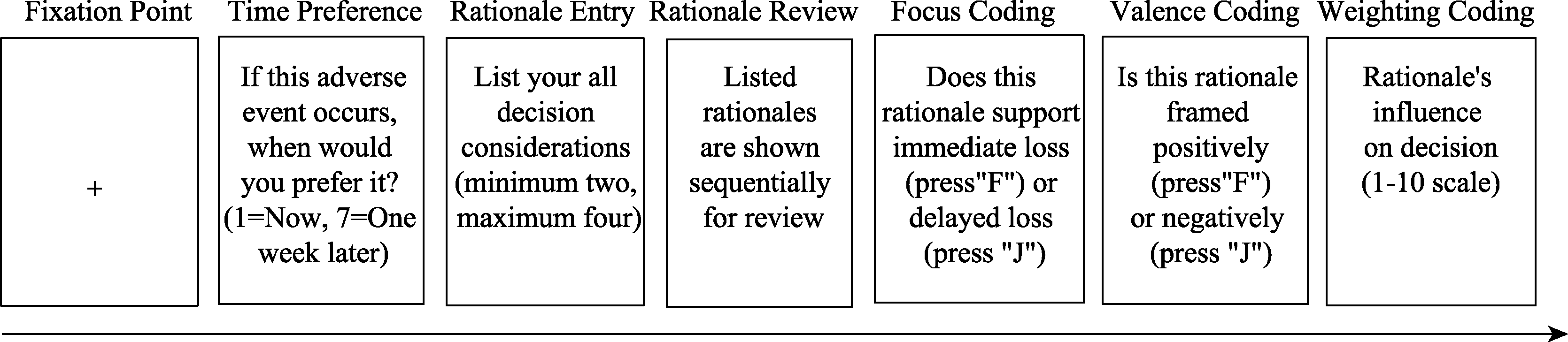
Figure 1. Research Flow Chart.
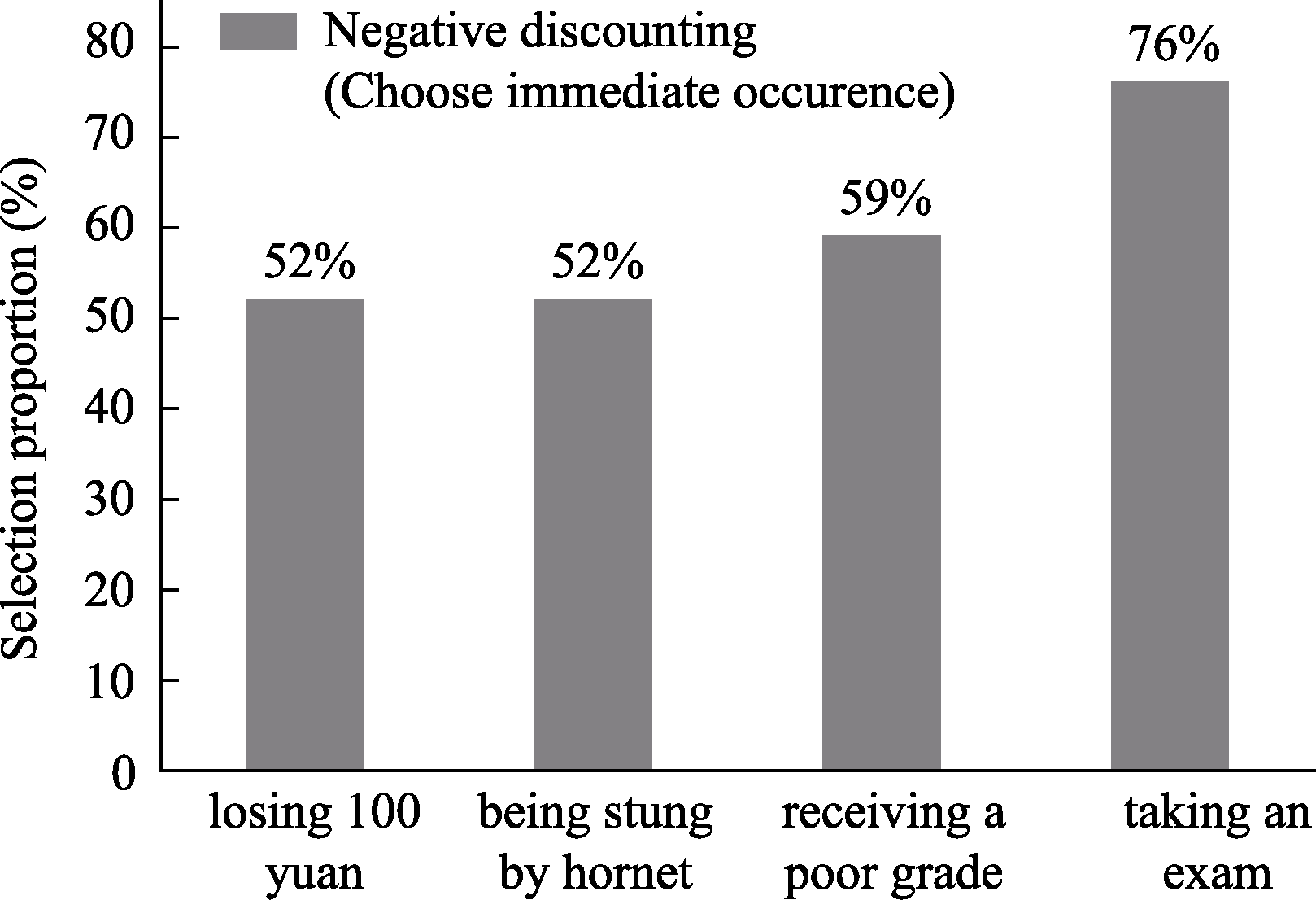
Figure 2. Selection Proportion of Negative Discounting Behavior Across Different Negative Events.
| reason count | reason order | Losing 100 yuan | Being stung by hornet | Receiving a poor grade | Taking an exam | ||||
|---|---|---|---|---|---|---|---|---|---|
| M ± SD | t or F | M ± SD | t or F | M ± SD | t or F | M ± SD | t or F | ||
| two | 1 | 8.71±0.97 | 16.36*** | 8.91±1.07 | 12.40*** | 8.81±1.06 | 12.37*** | 9.02±1.17 | 11.18*** |
| 2 | 7.27±1.20 | 7.62±1.54 | 7.61±1.52 | 7.92±1.43 | |||||
| three | 1 | 8.89±0.85 | 117.31*** | 9.07±0.87 | 54.94*** | 8.81±0.84 | 30.73*** | 9.21±0.78 | 42.05*** |
| 2 | 7.51±0.93 | 8.34±0.99 | 8.03±0.84 | 8.09±1.19 | |||||
| 3 | 6.16±1.34 | 6.78±1.08 | 6.62±1.33 | 7.07±1.55 | |||||
| four | 1 | 8.82±0.64 | 44.56*** | 8.66±0.92 | 13.30*** | 8.32±1.75 | 7.72** | 9.11±0.93 | 10.1*** |
| 2 | 7.67±1.81 | 7.93±0.96 | 7.86±1.49 | 7.79±1.11 | |||||
| 3 | 6.46±1.60 | 7.79±0.81 | 6.81±1.40 | 7.42±0.71 | |||||
| 4 | 4.34±1.70 | 6.77±1.26 | 6.04±2.33 | 6.55±1.48 | |||||
Table 2 Analysis of Reason Weight across Different Negative Events
| reason count | reason order | Losing 100 yuan | Being stung by hornet | Receiving a poor grade | Taking an exam | ||||
|---|---|---|---|---|---|---|---|---|---|
| M ± SD | t or F | M ± SD | t or F | M ± SD | t or F | M ± SD | t or F | ||
| two | 1 | 8.71±0.97 | 16.36*** | 8.91±1.07 | 12.40*** | 8.81±1.06 | 12.37*** | 9.02±1.17 | 11.18*** |
| 2 | 7.27±1.20 | 7.62±1.54 | 7.61±1.52 | 7.92±1.43 | |||||
| three | 1 | 8.89±0.85 | 117.31*** | 9.07±0.87 | 54.94*** | 8.81±0.84 | 30.73*** | 9.21±0.78 | 42.05*** |
| 2 | 7.51±0.93 | 8.34±0.99 | 8.03±0.84 | 8.09±1.19 | |||||
| 3 | 6.16±1.34 | 6.78±1.08 | 6.62±1.33 | 7.07±1.55 | |||||
| four | 1 | 8.82±0.64 | 44.56*** | 8.66±0.92 | 13.30*** | 8.32±1.75 | 7.72** | 9.11±0.93 | 10.1*** |
| 2 | 7.67±1.81 | 7.93±0.96 | 7.86±1.49 | 7.79±1.11 | |||||
| 3 | 6.46±1.60 | 7.79±0.81 | 6.81±1.40 | 7.42±0.71 | |||||
| 4 | 4.34±1.70 | 6.77±1.26 | 6.04±2.33 | 6.55±1.48 | |||||
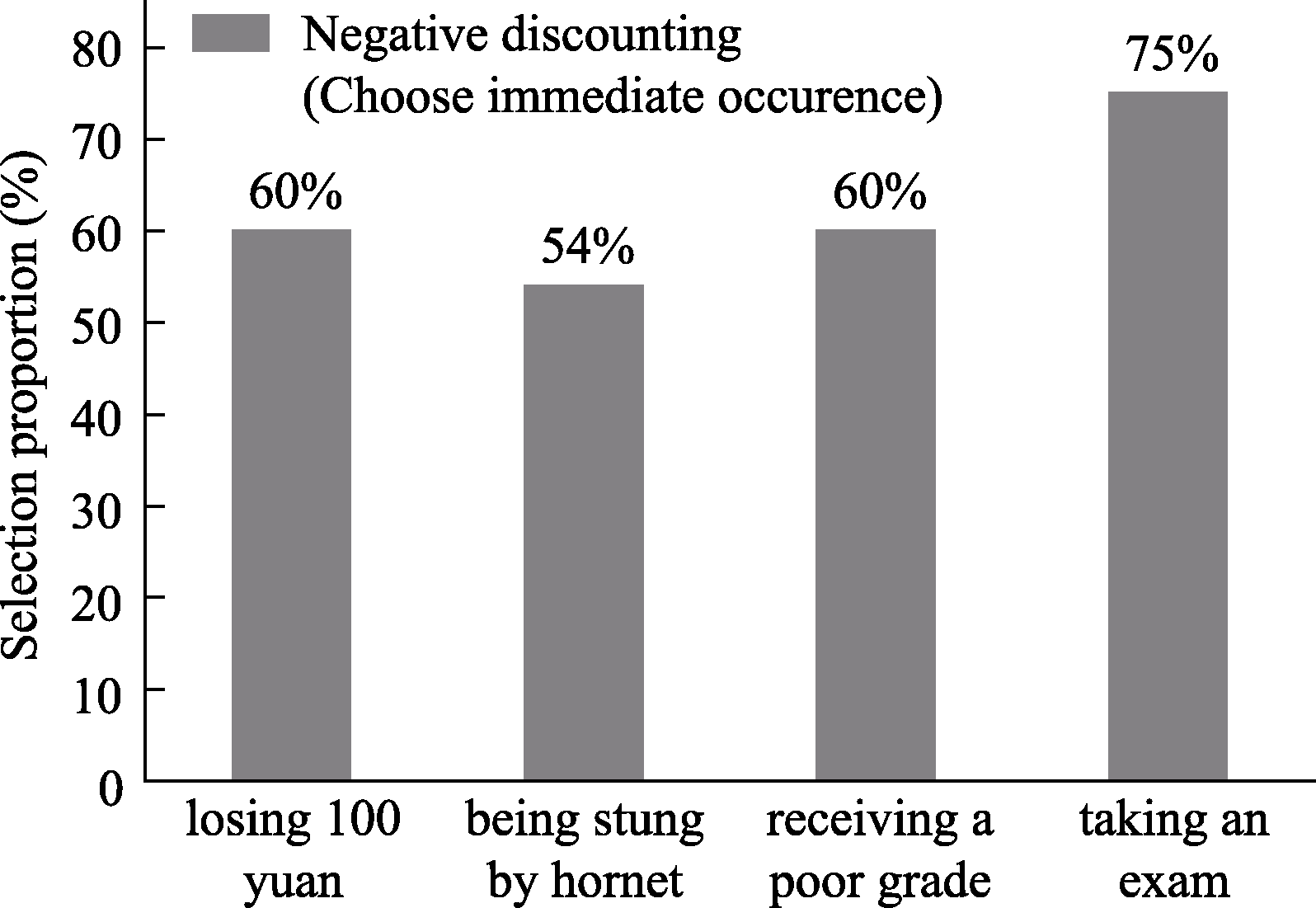
Figure 3. Selection Proportion of Negative Discounting Behavior across Different Negative Events.
| reason count | reason order | Losing 100 yuan | Being stung by hornet | Receiving a poor grade | Taking an exam | ||||
|---|---|---|---|---|---|---|---|---|---|
| M ± SD | t or F | M ± SD | t or F | M ± SD | t or F | M ± SD | t or F | ||
| two | 1 | 8.37±1.22 | 11.32*** | 8.65±1.09 | 14.44*** | 8.86±0.94 | 18.66*** | 8.88±0.90 | 15.85*** |
| 2 | 7.04±1.60 | 7.55±1.40 | 7.77±1.09 | 7.82±1.08 | |||||
| three | 1 | 8.79±0.91 | 98.54*** | 8.90±1.00 | 97.41*** | 9.37±0.70 | 95.36*** | 9.26±0.88 | 81.98*** |
| 2 | 7.52±1.34 | 7.87±1.26 | 8.42±0.82 | 8.44±0.89 | |||||
| 3 | 6.42±1.75 | 6.84±1.15 | 7.02±1.21 | 7.56±1.11 | |||||
| four | 1 | 8.49±0.93 | 32.30*** | 9.39±0.93 | 15.99*** | 9.10±0.57 | 24.62*** | 8.44±1.98 | 7.86** |
| 2 | 7.93±1.25 | 8.48±0.44 | 8.02±0.88 | 7.32±1.56 | |||||
| 3 | 6.87±1.27 | 7.37±0.92 | 7.01±1.69 | 6.64±1.02 | |||||
| 4 | 5.44±1.38 | 6.43±1.11 | 5.54±1.30 | 6.55±1.22 | |||||
Table 3 Analysis of Reason Weight across Different Negative Events
| reason count | reason order | Losing 100 yuan | Being stung by hornet | Receiving a poor grade | Taking an exam | ||||
|---|---|---|---|---|---|---|---|---|---|
| M ± SD | t or F | M ± SD | t or F | M ± SD | t or F | M ± SD | t or F | ||
| two | 1 | 8.37±1.22 | 11.32*** | 8.65±1.09 | 14.44*** | 8.86±0.94 | 18.66*** | 8.88±0.90 | 15.85*** |
| 2 | 7.04±1.60 | 7.55±1.40 | 7.77±1.09 | 7.82±1.08 | |||||
| three | 1 | 8.79±0.91 | 98.54*** | 8.90±1.00 | 97.41*** | 9.37±0.70 | 95.36*** | 9.26±0.88 | 81.98*** |
| 2 | 7.52±1.34 | 7.87±1.26 | 8.42±0.82 | 8.44±0.89 | |||||
| 3 | 6.42±1.75 | 6.84±1.15 | 7.02±1.21 | 7.56±1.11 | |||||
| four | 1 | 8.49±0.93 | 32.30*** | 9.39±0.93 | 15.99*** | 9.10±0.57 | 24.62*** | 8.44±1.98 | 7.86** |
| 2 | 7.93±1.25 | 8.48±0.44 | 8.02±0.88 | 7.32±1.56 | |||||
| 3 | 6.87±1.27 | 7.37±0.92 | 7.01±1.69 | 6.64±1.02 | |||||
| 4 | 5.44±1.38 | 6.43±1.11 | 5.54±1.30 | 6.55±1.22 | |||||
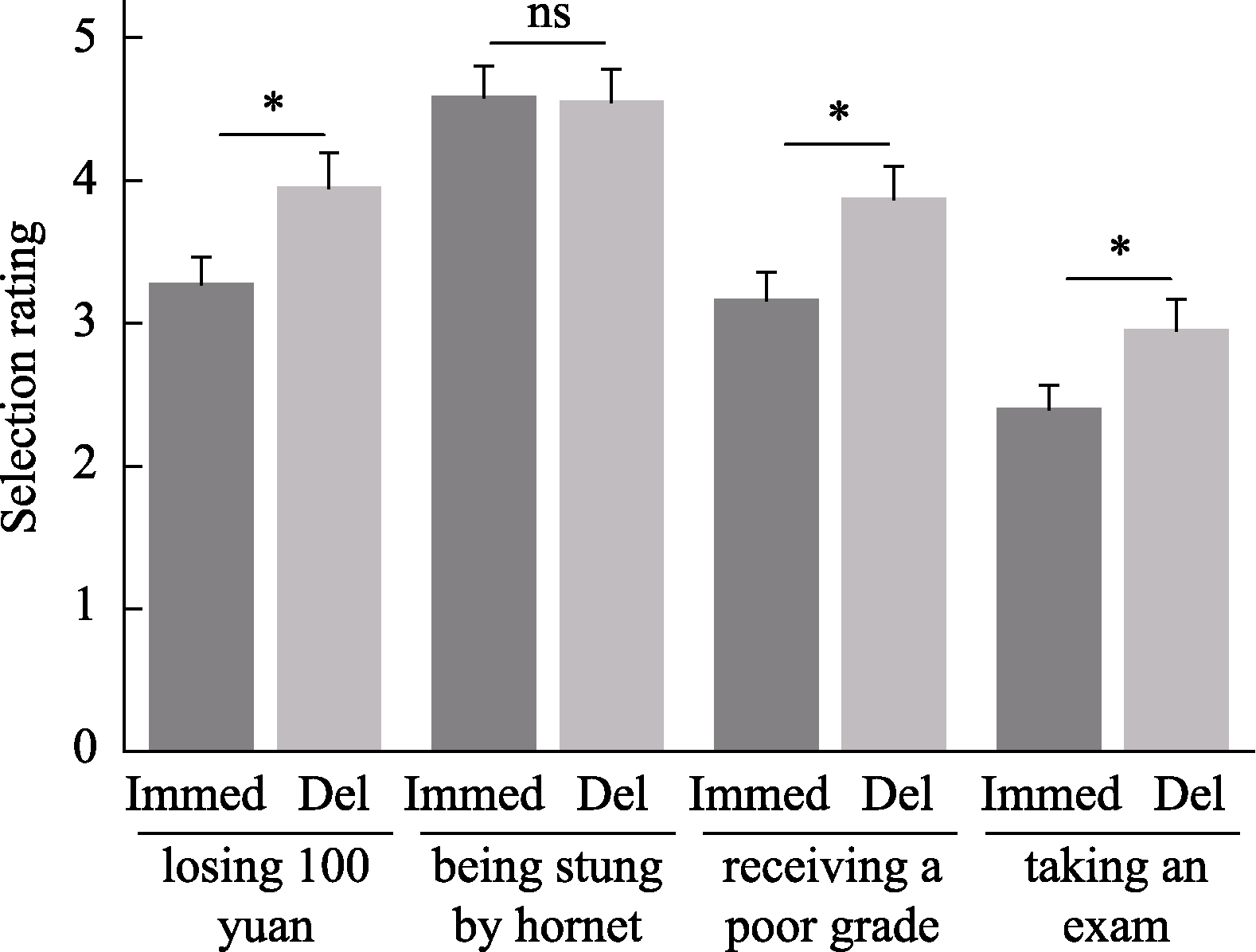
Figure 4. Selection Rating for Timing of Different Negative Events (M ± SE).
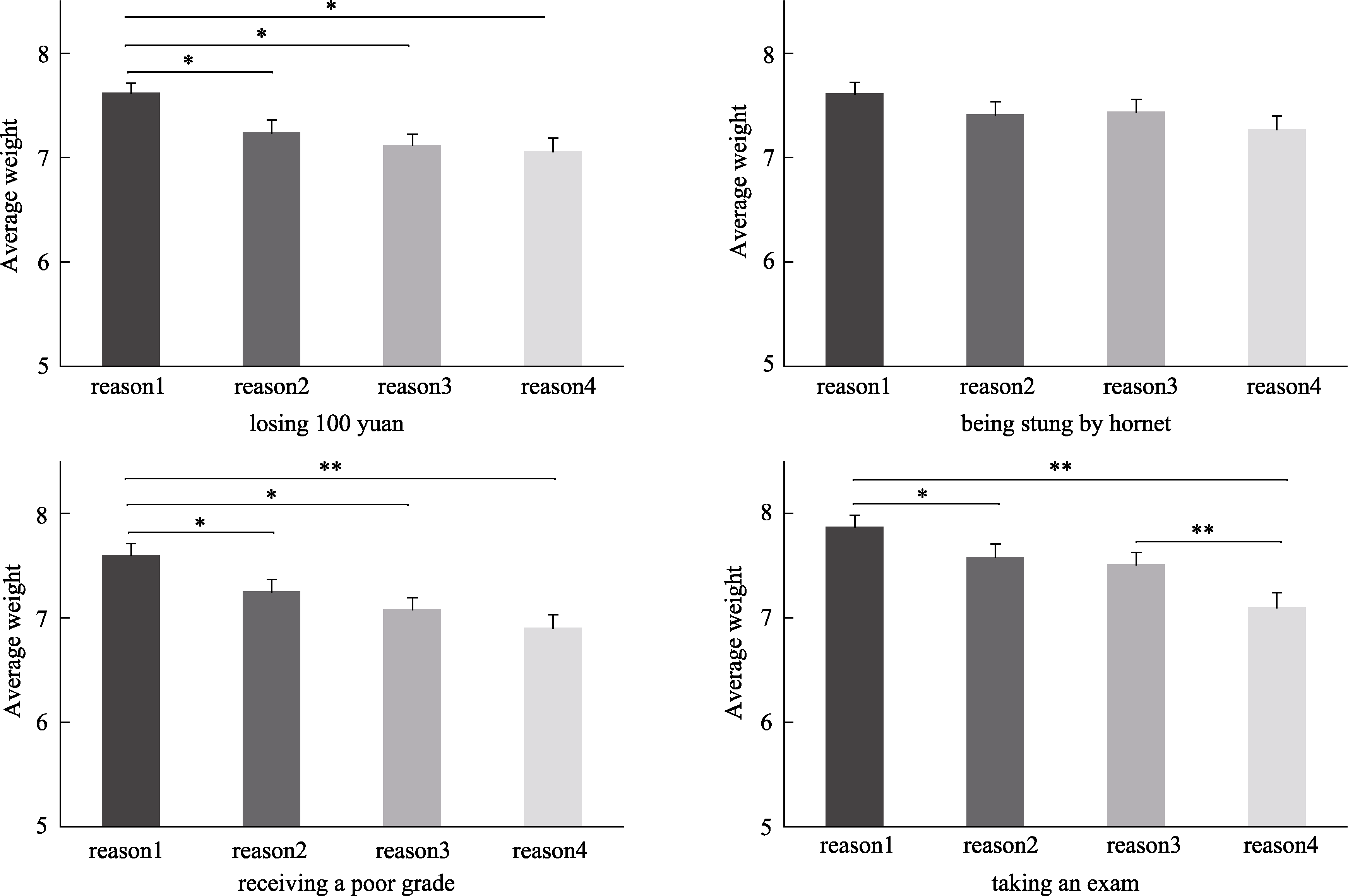
Figure 5. Comparison of Mean Weight Differences across Reasons (M ± SE).
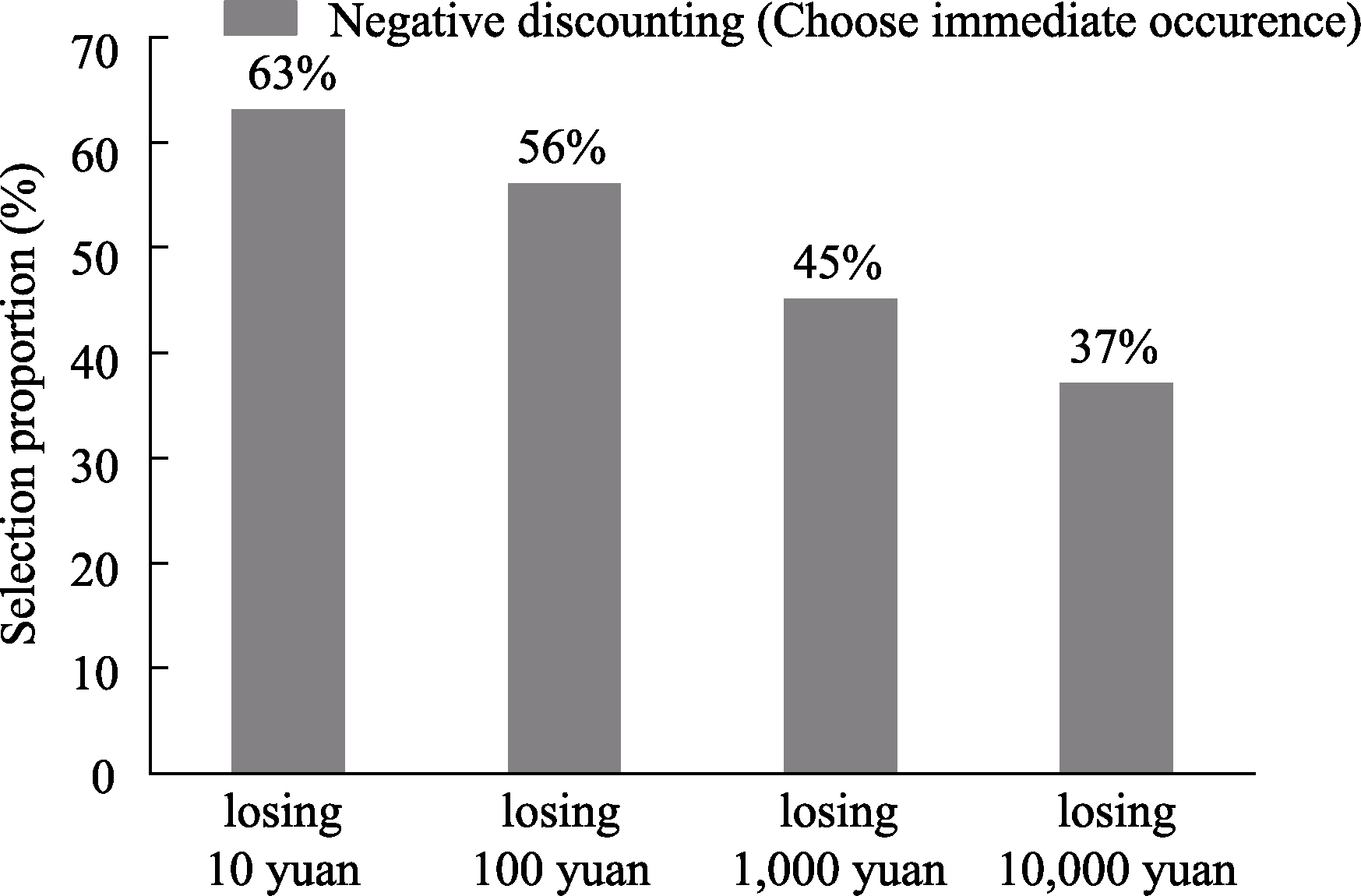
Figure 6. Selection Proportion of Negative Discounting across Different Loss Magnitudes.
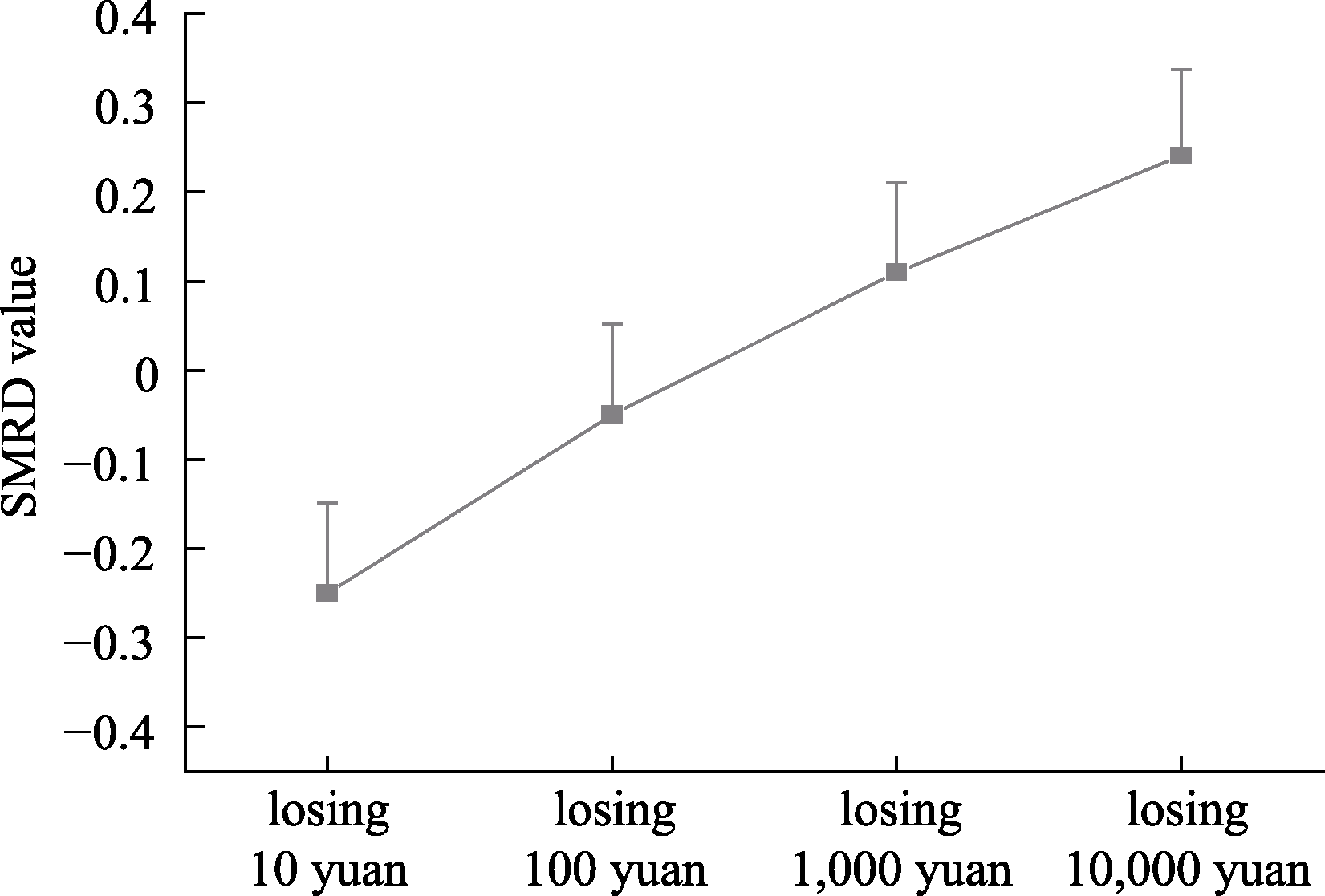
Figure 7. SMRD Values across Different Loss Magnitudes (M ± SE).
| [1] |
Amlung, M., Vedelago, L., Acker, J., Balodis, I., & MacKillop, J. (2017). Steep delay discounting and addictive behavior: A meta-analysis of continuous associations. Addiction, 112(1), 51-62.
doi: 10.1111/add.13535 pmid: 27450931 |
| [2] |
Appelt, K. C., Hardisty, D. J., & Weber, E. U. (2011). Asymmetric discounting of gains and losses: A query theory account. Journal of Risk and Uncertainty, 43(2), 107-126.
doi: 10.1007/s11166-011-9125-1 URL |
| [3] |
Baker, E., Johnson, M. W., & Bickel, W. K. (2003). Delay discounting in current and never-before cigarette smokers: Similarities and differences across commodity, sign, and magnitude. Journal of Abnormal Psychology, 112(3), 382-392.
pmid: 12943017 |
| [4] | Barile, L., Cullis, J., & Jones, P. (2018). Time preference for investment in the environment: The impact of intrinsic motivation. Economic Issues, 23(2), 31-56. |
| [5] |
Berns, G. S., Chappelow, J., Cekic, M., Zink, C. F., Pagnoni, G., & Martin-Skurski, M. E. (2006). Neurobiological substrates of dread. Science, 312(5774), 754-758.
doi: 10.1126/science.1123721 pmid: 16675703 |
| [6] |
Daugherty, J. R., & Brase, G. L. (2010). Taking time to be healthy: Predicting health behaviors with delay discounting and time perspective. Personality and Individual Differences, 48(2), 202-207.
doi: 10.1016/j.paid.2009.10.007 URL |
| [7] |
Dinner, I., Johnson, E. J., Goldstein, D. G., & Liu, K. (2011). Partitioning default effects: Why people choose not to choose. Journal of Experimental Psychology: Applied, 17(4), 332-341.
doi: 10.1037/a0024354 URL |
| [8] | Ericsson, K. A., & Simon, H. A. (1993). Protocol Analysis: Verbal Reports as Data (Rev. ed.). The MIT Press. |
| [9] |
Figner, B., Knoch, D., Johnson, E. J., Krosch, A. R., Lisanby, S. H., Fehr, E., & Weber, E. U. (2010). Lateral prefrontal cortex and self-control in intertemporal decision-making. Nature Neuroscience, 13(5), 538-539.
doi: 10.1038/nn.2516 pmid: 20348919 |
| [10] |
Finke, M. S., & Huston, S. J. (2013). Time preference and the importance of saving for retirement. Journal of Economic Behavior & Organization, 89, 23-34.
doi: 10.1016/j.jebo.2013.03.004 URL |
| [11] |
Frederick, S., Loewenstein, G., & O'Donoghue, T. (2002). Time discounting and time preference: A critical review. Journal of Economic Literature, 40(2), 351-401.
doi: 10.1257/jel.40.2.351 URL |
| [12] |
Green, L., & Myerson, J. (2004). A discounting framework for choice with delayed and probabilistic rewards. Psychological Bulletin, 130(5), 769-792.
doi: 10.1037/0033-2909.130.5.769 pmid: 15367080 |
| [13] |
Hardisty, D. J., Johnson, E. J., & Weber, E. U. (2010). A dirty word or a dirty world? Attribute framing, political affiliation, and query theory. Psychological Science, 21(1), 86-92.
doi: 10.1177/0956797609355572 pmid: 20424028 |
| [14] |
Hare, T. A., Camerer, C. F., & Rangel, A. (2009). Self-control in decision-making involves modulation of the vmPFC valuation system. Science, 324(5927), 646-648.
doi: 10.1126/science.1168450 pmid: 19407204 |
| [15] |
Harris, C. R. (2012). Feelings of dread and intertemporal decision- making. Journal of Behavioral Decision Making, 25(1), 13-28.
doi: 10.1002/bdm.v25.1 URL |
| [16] |
Harrison, G. W., & List, J. A. (2004). Field experiments. Journal of Economic Literature, 42(4), 1009-1055.
doi: 10.1257/0022051043004577 URL |
| [17] |
Harvey, C. M. (1994). The reasonableness of non-constant discounting. Journal of Public Economics, 53(1), 31-51.
doi: 10.1016/0047-2727(94)90012-4 URL |
| [18] | Hobfoll, S. E. (1989). Conservation of resources: a new attempt at conceptualizing stress. American Psychologist, 44(3), 513. |
| [19] |
Johnson, E. J., Haübl, G., & Keinan, A. (2007). Aspects of endowment: A query theory of value construction. Journal of Experimental Psychology: Learning, Memory, and Cognition, 33(3), 461-474.
doi: 10.1037/0278-7393.33.3.461 URL |
| [20] | Kahneman, D. (1999). Objective happiness. D. Kahneman, E. Diener, & N. Schwarz (Eds.), Well-Being: The Foundations of Hedonic Psychology (pp. 3-25). Russell Sage Foundation. |
| [21] | Kahneman, D., Knetsch, J. L., & Thaler, R. H. (1991). The endowment effect, loss aversion, and status quo bias. Journal of Economic Perspectives, 5 (1), 193-206. |
| [22] |
Klingspon, K. L., Holland, J. M., Neimeyer, R. A., & Lichtenthal, W. G. (2015). Unfinished business in bereavement. Death Studies, 39(7), 387-398.
doi: 10.1080/07481187.2015.1029143 pmid: 26057117 |
| [23] |
Laibson, D. (1997). Golden eggs and hyperbolic discounting. The Quarterly Journal of Economics, 112(2), 443-478.
doi: 10.1162/003355397555253 URL |
| [24] |
LeDoux, J. E. (2012). Rethinking the emotional brain. Neuron, 73(4), 653-676.
doi: 10.1016/j.neuron.2012.02.004 pmid: 22365542 |
| [25] |
Loewenstein, G. (1987). Anticipation and the valuation of delayed consumption. The Economic Journal, 97(387), 666-684.
doi: 10.2307/2232929 URL |
| [26] |
Loewenstein, G., & Prelec, D. (1992). Anomalies in intertemporal decision-making: Evidence and an interpretation. The Quarterly Journal of Economics, 107(2), 573-597.
doi: 10.2307/2118482 URL |
| [27] |
Loewenstein, G., & Prelec, D. (1993). Preferences for sequences of outcomes. Psychological Review, 100(1), 91-108.
doi: 10.1037/0033-295X.100.1.91 URL |
| [28] |
Loewenstein, G. F., Weber, E. U., Hsee, C. K., & Welch, N. (2001). Risk as feelings. Psychological Bulletin, 127(2), 267-286.
doi: 10.1037/0033-2909.127.2.267 pmid: 11316014 |
| [29] |
Maxwell, S. E. (2004). The persistence of underpowered studies in psychological research: Causes, consequences, and remedies. Psychological Methods, 9(2), 147-163.
doi: 10.1037/1082-989X.9.2.147 pmid: 15137886 |
| [30] |
Mazur, J. E. (1984). Tests of an equivalence rule for fixed and variable reinforcer delays. Journal of Experimental Psychology: Animal Behavior Processes, 10(4), 426-436.
doi: 10.1037/0097-7403.10.4.426 URL |
| [31] |
Mischel, W., Grusec, J., & Masters, J. C. (1969). Effects of expected delay time on the participantive value of rewards and punishments. Journal of Personality and Social Psychology, 11(4), 363-373.
pmid: 5787024 |
| [32] |
Mukherjee, S., Sahay, A., Pammi, V. C., & Srinivasan, N. (2017). Is loss-aversion magnitude-dependent? Measuring prospective affective judgments regarding gains and losses. Judgment and Decision Making, 12(1), 81-89.
doi: 10.1017/S1930297500005258 URL |
| [33] |
Ostaszewski, P., & Karzel, K. (2002). Discounting of delayed and probabilistic losses of different amounts. European Psychologist, 7(4), 295-301.
doi: 10.1027//1016-9040.7.4.295 URL |
| [34] |
Poon, N., Luckman, A., Isoni, A., & Mullett, T. L. (2023). A query theory account of the attraction effect. Cognition, 238, 105495.
doi: 10.1016/j.cognition.2023.105495 URL |
| [35] |
Samuelson, P. A. (1937). A note on measurement of utility. The Review of Economic Studies, 4(2), 155-161.
doi: 10.2307/2967612 URL |
| [36] |
Spälti, A. K., Brandt, M. J., & Zeelenberg, M. (2017). Memory retrieval processes help explain the incumbency advantage. Judgment and Decision Making, 12(2), 173-182.
doi: 10.1017/S1930297500005714 URL |
| [37] | Sun, H. Y., Cui, L. Y., & Li, D. (2016). Negative discounting: The self-other discrepancy in intertemporal decision-making. Journal of Psychological Science, 39(4), 970-976. |
| [38] |
Sun, H. Y., Li, A. M., Chen, S., Zhao, D., Rao, L. L., Liang, Z. Y., & Li, S. (2015). Pain now or later: An outgrowth account of pain-minimization. PLOS ONE, 10(3), e0119320.
doi: 10.1371/journal.pone.0119320 URL |
| [39] |
Sun, H. Y., Lu, P., & Jiang, Y. P. (2021). Negative discounting in intertemporal decision-making. Advances in Psychological Science, 29(7), 1291-1299.
doi: 10.3724/SP.J.1042.2021.01291 URL |
| [40] |
Sun, H. Y., Ma, J. T., Zhou, L., Jiang, C. M., & Li, S. (2022). Waiting is painful: The impact of anticipated dread on negative discounting in the loss domain. Judgment and Decision Making, 17(6), 1353-1378.
doi: 10.1017/S1930297500009451 URL |
| [41] |
Thaler, R. (1981). Some empirical evidence on dynamic inconsistency. Economics Letters, 8(3), 201-207.
doi: 10.1016/0165-1765(81)90067-7 URL |
| [42] | Weber, E., U., & Johnson, E. J. (2006). Constructing preferences from memory. In S. Lichtenstein & P. Slovic (Eds.), The construction of preference (pp. 397-410). Cambridge University Press. |
| [43] |
Weber, E. U., Johnson, E. J., Milch, K. F., Chang, H., Brodscholl, J. C., & Goldstein, D. G. (2007). Asymmetric discounting in intertemporal decision-making: A query theory account. Psychological Science, 18(6), 516-523.
pmid: 17576265 |
| [44] |
Yeh, Y. H., Myerson, J., Strube, M. J., & Green, L. (2020). Choice patterns reveal qualitative individual differences among discounting of delayed gains, delayed losses, and probabilistic losses. Journal of the Experimental Analysis of Behavior, 113(3), 609-625.
doi: 10.1002/jeab.v113.3 URL |
| [1] | WANG Panpan, HE Jiamei. Effects of episodic foresight on intertemporal decision-making [J]. Acta Psychologica Sinica, 2020, 52(1): 38-54. |
| [2] | LI Aimei, WANG Haixia, SUN Hailong, XIONG Guanxing, YANG Shaoli . The nudge effect of “foresight for the future of our children”: Pregnancy and environmental intertemporal choice [J]. Acta Psychologica Sinica, 2018, 50(8): 858-867. |
| [3] | CHEN Hai-Xian, HE Gui-Bing. The Effect of Construal Level on Intertemporal Choice and Risky Choice [J]. , 2011, 43(04): 442-452. |
| [4] | HE Jia-Mei,HUANG Xi-Ting,YING Ke-Li,LUO Yang-Mei. The Staged Construction of Temporal Discounting [J]. , 2010, 42(04): 474-484. |
| Viewed | ||||||
|
Full text |
|
|||||
|
Abstract |
|
|||||
