

ISSN 0439-755X
CN 11-1911/B
CN 11-1911/B
Acta Psychologica Sinica ›› 2026, Vol. 58 ›› Issue (7): 1279-1296.doi: 10.3724/SP.J.1041.2026.1279
• Academic Papers of the 28th Annual Meeting of the China Association for Science and Technology • Previous Articles Next Articles
SUN Yifei1,2, LI Xiulan1,2, DU Feng3,4, QI Yue1,2( )
)
Published:2026-07-25
Online:2026-05-15
Contact:
QI Yue
E-mail:qiy@ruc.edu.cn.
Supported by:SUN Yifei, LI Xiulan, DU Feng, QI Yue. (2026). The impact of privacy risk perception on initial trust in autonomous vehicle: Differential responses of professionals and non-professionals. Acta Psychologica Sinica, 58(7), 1279-1296.
Add to citation manager EndNote|Ris|BibTeX
URL: https://journal.psych.ac.cn/acps/EN/10.3724/SP.J.1041.2026.1279
| Professional Background | M | SD | 1 | 2 | 3 | 4 | 5 | 6 | |
|---|---|---|---|---|---|---|---|---|---|
| Professionals (N = 165) | 1 Initial trust | 3.14 | 1.00 | — | |||||
| 2 Perceived usefulness | 3.51 | 0.96 | 0.50*** | — | |||||
| 3 Perceived defects | 3.70 | 0.87 | ?0.23** | ?0.10 | — | ||||
| 4 Perceived safety risk | 3.98 | 1.03 | ?0.47*** | ?0.17* | 0.31*** | — | |||
| 5 Perceived privacy risk | 3.88 | 1.19 | ?0.36*** | ?0.10 | 0.41*** | 0.51*** | — | ||
| 6 Social influence | 3.34 | 0.97 | 0.70*** | 0.51 *** | ?0.13 | ?0.37*** | ?0.18* | — | |
| Non-professionals (N = 524) | 1 Initial trust | 4.04 | 0.74 | — | |||||
| 2 Perceived usefulness | 4.08 | 0.56 | 0.61*** | — | |||||
| 3 Perceived defects | 2.84 | 0.98 | ?0.50*** | ?0.38*** | — | ||||
| 4 Perceived safety risk | 2.69 | 1.20 | ?0.69*** | ?0.49*** | 0.70*** | — | |||
| 5 Perceived privacy risk | 2.44 | 1.21 | ?0.49*** | ?0.34*** | 0.67*** | 0.71*** | — | ||
| 6 Social influence | 4.09 | 0.72 | 0.79*** | 0.57*** | ?0.46*** | ?0.62*** | ?0.38*** | — |
Table1 Descriptive Statistics and Correlation Analysis Results of Variables in Study 1
| Professional Background | M | SD | 1 | 2 | 3 | 4 | 5 | 6 | |
|---|---|---|---|---|---|---|---|---|---|
| Professionals (N = 165) | 1 Initial trust | 3.14 | 1.00 | — | |||||
| 2 Perceived usefulness | 3.51 | 0.96 | 0.50*** | — | |||||
| 3 Perceived defects | 3.70 | 0.87 | ?0.23** | ?0.10 | — | ||||
| 4 Perceived safety risk | 3.98 | 1.03 | ?0.47*** | ?0.17* | 0.31*** | — | |||
| 5 Perceived privacy risk | 3.88 | 1.19 | ?0.36*** | ?0.10 | 0.41*** | 0.51*** | — | ||
| 6 Social influence | 3.34 | 0.97 | 0.70*** | 0.51 *** | ?0.13 | ?0.37*** | ?0.18* | — | |
| Non-professionals (N = 524) | 1 Initial trust | 4.04 | 0.74 | — | |||||
| 2 Perceived usefulness | 4.08 | 0.56 | 0.61*** | — | |||||
| 3 Perceived defects | 2.84 | 0.98 | ?0.50*** | ?0.38*** | — | ||||
| 4 Perceived safety risk | 2.69 | 1.20 | ?0.69*** | ?0.49*** | 0.70*** | — | |||
| 5 Perceived privacy risk | 2.44 | 1.21 | ?0.49*** | ?0.34*** | 0.67*** | 0.71*** | — | ||
| 6 Social influence | 4.09 | 0.72 | 0.79*** | 0.57*** | ?0.46*** | ?0.62*** | ?0.38*** | — |
| Predictor | β | t | p |
|---|---|---|---|
| Gender (Male) | ?0.03 | ?1.31 | 0.191 |
| Age (18-30 years) | 0.12 | 1.82 | 0.069 |
| Age (30-40 years) | 0.17 | 1.84 | 0.066 |
| Age (40-50 years) | 0.06 | 1.53 | 0.126 |
| Education (Associate degree) | ?0.01 | ?0.12 | 0.902 |
| Education (Bachelor's degree) | 0.03 | 1.12 | 0.261 |
| Driving experience (≤1 year) | ?0.01 | ?0.03 | 0.979 |
| Driving experience (1-3 years) | 0.02 | 0.54 | 0.590 |
| Driving experience (4-6 years) | ?0.01 | 0.40 | 0.691 |
| Driving experience (7-9 years) | 0.04 | 1.24 | 0.216 |
| Professional background | 0.01 | 1.45 | 0.148 |
| Perceived usefulness | 0.18 | 4.93 | <0.001 |
| Perceived defects | ?0.01 | ?0.46 | 0.643 |
| Perceived safety risk | ?0.22 | ?4.94 | <0.001 |
| Perceived privacy risk | ?0.10 | ?1.58 | 0.114 |
| Social influence | 0.51 | 13.42 | <0.001 |
| Professional background × Perceived usefulness | ?0.01 | ?0.33 | 0.738 |
| Professional background × Perceived defects | ?0.03 | ?1.11 | 0.267 |
| Professional background × Perceived safety risk | 0.01 | 0.27 | 0.785 |
| Professional background × Perceived privacy risk | ?0.06 | ?2.07 | 0.038 |
| Professional background × Social influence | ?0.01 | ?0.05 | 0.959 |
Table 2 Results of Regression Analysis for the Professional and Non-Professional Groups in Study 1
| Predictor | β | t | p |
|---|---|---|---|
| Gender (Male) | ?0.03 | ?1.31 | 0.191 |
| Age (18-30 years) | 0.12 | 1.82 | 0.069 |
| Age (30-40 years) | 0.17 | 1.84 | 0.066 |
| Age (40-50 years) | 0.06 | 1.53 | 0.126 |
| Education (Associate degree) | ?0.01 | ?0.12 | 0.902 |
| Education (Bachelor's degree) | 0.03 | 1.12 | 0.261 |
| Driving experience (≤1 year) | ?0.01 | ?0.03 | 0.979 |
| Driving experience (1-3 years) | 0.02 | 0.54 | 0.590 |
| Driving experience (4-6 years) | ?0.01 | 0.40 | 0.691 |
| Driving experience (7-9 years) | 0.04 | 1.24 | 0.216 |
| Professional background | 0.01 | 1.45 | 0.148 |
| Perceived usefulness | 0.18 | 4.93 | <0.001 |
| Perceived defects | ?0.01 | ?0.46 | 0.643 |
| Perceived safety risk | ?0.22 | ?4.94 | <0.001 |
| Perceived privacy risk | ?0.10 | ?1.58 | 0.114 |
| Social influence | 0.51 | 13.42 | <0.001 |
| Professional background × Perceived usefulness | ?0.01 | ?0.33 | 0.738 |
| Professional background × Perceived defects | ?0.03 | ?1.11 | 0.267 |
| Professional background × Perceived safety risk | 0.01 | 0.27 | 0.785 |
| Professional background × Perceived privacy risk | ?0.06 | ?2.07 | 0.038 |
| Professional background × Social influence | ?0.01 | ?0.05 | 0.959 |
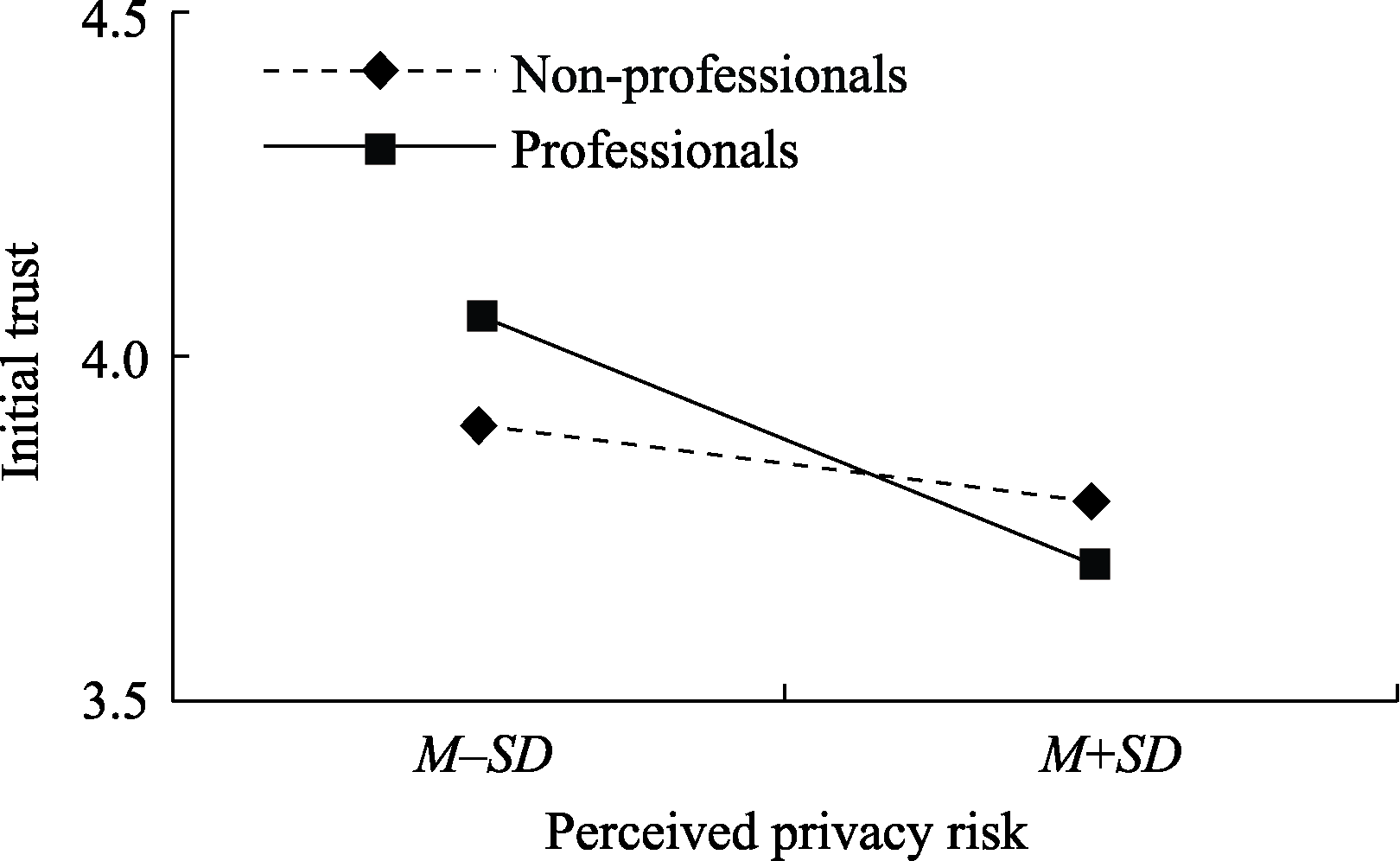
Figure 1. Simple Slope Test of the Interaction between Perceived privacy risk and Professional background in Study 1.
| Dependent Variable | Professionals | Non-Professionals | |||
|---|---|---|---|---|---|
| Low-Risk | High-Risk | Low-Risk | High-Risk | ||
| Perceived privacy risk | M | 4.14 | 4.41 | 2.00 | 4.31 |
| SD | 1.06 | 0.86 | 1.01 | 0.79 | |
| Initial trust | M | 3.07 | 2.87 | 4.31 | 1.99 |
| SD | 0.92 | 0.88 | 0.53 | 0.87 | |
Table 3 Descriptive Statistics of Variables in Study 2
| Dependent Variable | Professionals | Non-Professionals | |||
|---|---|---|---|---|---|
| Low-Risk | High-Risk | Low-Risk | High-Risk | ||
| Perceived privacy risk | M | 4.14 | 4.41 | 2.00 | 4.31 |
| SD | 1.06 | 0.86 | 1.01 | 0.79 | |
| Initial trust | M | 3.07 | 2.87 | 4.31 | 1.99 |
| SD | 0.92 | 0.88 | 0.53 | 0.87 | |
| Predictor | β | 95% CI Lower Bound | 95% CI Upper Bound | df | t | p |
|---|---|---|---|---|---|---|
| Gender (Female - Male) | 0.07 | ?0.17 | 0.32 | 168 | 0.59 | 0.556 |
| Age (30-40 years - 18-30 years) | ?0.25 | ?0.54 | 0.05 | 168 | ?1.65 | 0.101 |
| Age (40-50 years - 18-30 years) | ?0.11 | ?0.53 | 0.30 | 169 | ?0.53 | 0.595 |
| Age (≥50 years - 18-30 years) | 0.09 | ?0.63 | 0.81 | 173 | 0.24 | 0.814 |
| Education (Bachelor's - Associate degree) | ?0.68 | ?1.21 | ?0.14 | 168 | ?2.46 | 0.015 |
| Education (Master's or above - Associate degree) | ?0.63 | ?1.21 | ?0.05 | 168 | ?2.14 | 0.033 |
| Driving experience (1-3 years - ≤1 year) | ?0.24 | ?0.84 | 0.36 | 168 | ?0.79 | 0.433 |
| Driving experience (4-6 years - ≤1 year) | ?0.44 | ?0.99 | 0.11 | 168 | ?1.56 | 0.120 |
| Driving experience (7-9 years - ≤1 year) | ?0.38 | ?0.97 | 0.22 | 168 | ?1.24 | 0.218 |
| Driving experience (≥10 years - ≤1 year) | ?0.19 | ?0.83 | 0.45 | 168 | ?0.59 | 0.558 |
| Professional background (Professionals - Non-professionals) | 0.34 | 0.05 | 0.64 | 180 | 2.33 | 0.021 |
| Perceived privacy risk | ?0.93 | ?0.97 | ?0.87 | 197 | ?35.98 | <0.001 |
| Professional background (Professionals - Non-professionals) × Perceived privacy risk | 0.73 | 0.61 | 0.86 | 342 | 11.42 | <0.001 |
Table 4 Fixed Effects Results of the Linear Mixed-Effects Model in Study 2
| Predictor | β | 95% CI Lower Bound | 95% CI Upper Bound | df | t | p |
|---|---|---|---|---|---|---|
| Gender (Female - Male) | 0.07 | ?0.17 | 0.32 | 168 | 0.59 | 0.556 |
| Age (30-40 years - 18-30 years) | ?0.25 | ?0.54 | 0.05 | 168 | ?1.65 | 0.101 |
| Age (40-50 years - 18-30 years) | ?0.11 | ?0.53 | 0.30 | 169 | ?0.53 | 0.595 |
| Age (≥50 years - 18-30 years) | 0.09 | ?0.63 | 0.81 | 173 | 0.24 | 0.814 |
| Education (Bachelor's - Associate degree) | ?0.68 | ?1.21 | ?0.14 | 168 | ?2.46 | 0.015 |
| Education (Master's or above - Associate degree) | ?0.63 | ?1.21 | ?0.05 | 168 | ?2.14 | 0.033 |
| Driving experience (1-3 years - ≤1 year) | ?0.24 | ?0.84 | 0.36 | 168 | ?0.79 | 0.433 |
| Driving experience (4-6 years - ≤1 year) | ?0.44 | ?0.99 | 0.11 | 168 | ?1.56 | 0.120 |
| Driving experience (7-9 years - ≤1 year) | ?0.38 | ?0.97 | 0.22 | 168 | ?1.24 | 0.218 |
| Driving experience (≥10 years - ≤1 year) | ?0.19 | ?0.83 | 0.45 | 168 | ?0.59 | 0.558 |
| Professional background (Professionals - Non-professionals) | 0.34 | 0.05 | 0.64 | 180 | 2.33 | 0.021 |
| Perceived privacy risk | ?0.93 | ?0.97 | ?0.87 | 197 | ?35.98 | <0.001 |
| Professional background (Professionals - Non-professionals) × Perceived privacy risk | 0.73 | 0.61 | 0.86 | 342 | 11.42 | <0.001 |
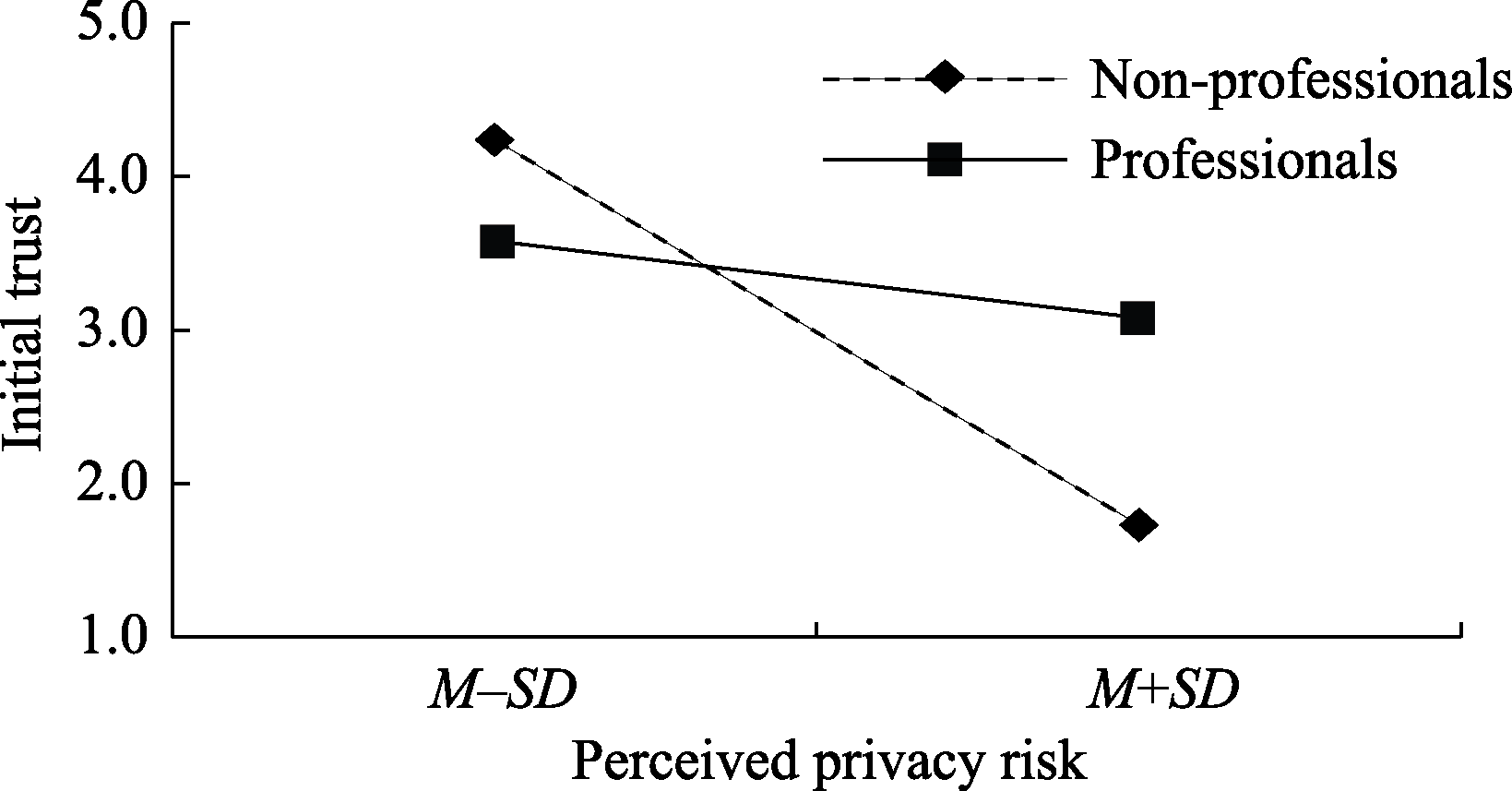
Figure 2. Simple Slope Test of the Interaction between Perceived Privacy Risk and Professional Background in Study 2.
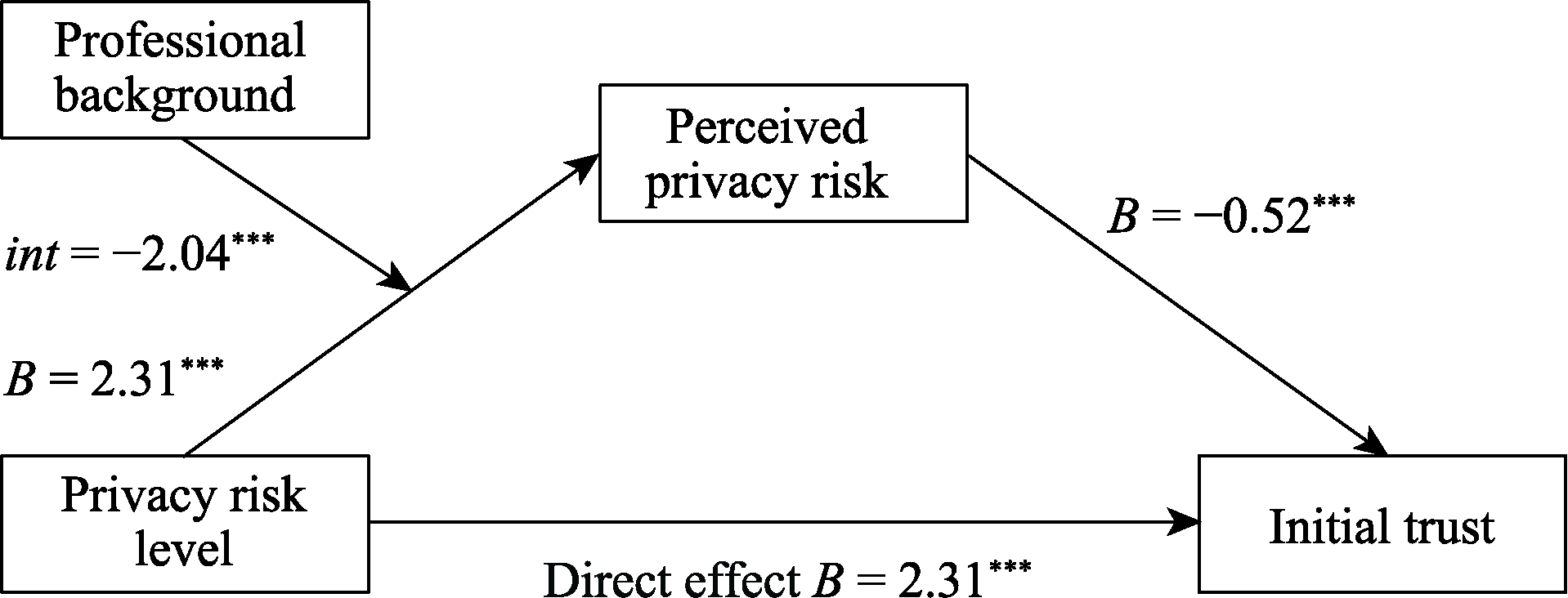
Figure 3. The Effect of Privacy Risk Level on Initial Trust: The Partial Mediating Role of Perceived Privacy Risk and the Moderating Role of Professional Background.
| Professional Background | Indirect Effect | Boot SE | Boot CI Lower Bound | Boot CI Upper Bound |
|---|---|---|---|---|
| 0 (Non-professionals) | ?1.20 | 0.11 | ?1.42 | ?0.98 |
| 1 (Professionals) | ?0.14 | 0.07 | ?0.28 | 0.01 |
| Moderated Mediation Effect | 1.06 | 0.14 | 0.80 | 1.33 |
Table 5 Partial Mediation Effects of Perceived Privacy Risk at Different Levels of Professional Background
| Professional Background | Indirect Effect | Boot SE | Boot CI Lower Bound | Boot CI Upper Bound |
|---|---|---|---|---|
| 0 (Non-professionals) | ?1.20 | 0.11 | ?1.42 | ?0.98 |
| 1 (Professionals) | ?0.14 | 0.07 | ?0.28 | 0.01 |
| Moderated Mediation Effect | 1.06 | 0.14 | 0.80 | 1.33 |
| Dependent Variable | Control | Low-Risk | High-Risk | |
|---|---|---|---|---|
| Perceived privacy risk | M | 2.05 | 1.83 | 4.40 |
| SD | 1.02 | 0.80 | 0.55 | |
| Initial trust | M | 4.33 | 4.40 | 1.90 |
| SD | 0.45 | 0.43 | 0.60 |
Table 6 Descriptive Statistics of Variables in Study 3
| Dependent Variable | Control | Low-Risk | High-Risk | |
|---|---|---|---|---|
| Perceived privacy risk | M | 2.05 | 1.83 | 4.40 |
| SD | 1.02 | 0.80 | 0.55 | |
| Initial trust | M | 4.33 | 4.40 | 1.90 |
| SD | 0.45 | 0.43 | 0.60 |
| Predictor | β | 95% CI Lower Bound | 95% CI Upper Bound | df | t | p |
|---|---|---|---|---|---|---|
| Gender (Female - Male) | 0.05 | ?0.06 | 0.15 | 138 | 0.86 | 0.392 |
| Age (30-40 years - 18-30 years) | 0.13 | ?0.01 | 0.26 | 138 | 1.78 | 0.079 |
| Age (40-50 years - 18-30 years) | 0.02 | ?0.20 | 0.25 | 138 | 0.20 | 0.839 |
| Age (≥50 years - 18-30 years) | 0.32 | <0.01 | 0.64 | 138 | 2.00 | 0.048 |
| Education (Bachelor's - Associate degree) | ?0.08 | ?0.26 | 0.09 | 141 | ?0.95 | 0.345 |
| Education (Master's or above - Associate degree) | ?0.12 | ?0.32 | 0.09 | 138 | ?1.11 | 0.271 |
| Driving experience (1-3 years - ≤1 year) | 0.29 | ?0.03 | 0.61 | 142 | 1.77 | 0.079 |
| Driving experience (4-6 years - ≤1 year) | 0.07 | ?0.25 | 0.38 | 145 | 0.41 | 0.680 |
| Driving experience (7-9 years - ≤1 year) | ?0.03 | ?0.37 | 0.31 | 146 | ?0.17 | 0.863 |
| Driving experience (≥10 years - ≤1 year) | ?0.01 | ?0.38 | 0.36 | 147 | ?0.05 | 0.957 |
| Risk level (Low-Risk- Control) | ?0.01 | ?0.09 | 0.08 | 305 | ?0.07 | 0.942 |
| Risk level (High-Risk- Control) | ?1.65 | ?1.80 | ?1.50 | 431 | ?21.85 | <0.001 |
| Perceived privacy risk | ?0.33 | ?0.39 | ?0.28 | 451 | ?12.75 | <0.001 |
Table 7 Fixed Effects Results of the Linear Mixed-Effects Model in Study 3
| Predictor | β | 95% CI Lower Bound | 95% CI Upper Bound | df | t | p |
|---|---|---|---|---|---|---|
| Gender (Female - Male) | 0.05 | ?0.06 | 0.15 | 138 | 0.86 | 0.392 |
| Age (30-40 years - 18-30 years) | 0.13 | ?0.01 | 0.26 | 138 | 1.78 | 0.079 |
| Age (40-50 years - 18-30 years) | 0.02 | ?0.20 | 0.25 | 138 | 0.20 | 0.839 |
| Age (≥50 years - 18-30 years) | 0.32 | <0.01 | 0.64 | 138 | 2.00 | 0.048 |
| Education (Bachelor's - Associate degree) | ?0.08 | ?0.26 | 0.09 | 141 | ?0.95 | 0.345 |
| Education (Master's or above - Associate degree) | ?0.12 | ?0.32 | 0.09 | 138 | ?1.11 | 0.271 |
| Driving experience (1-3 years - ≤1 year) | 0.29 | ?0.03 | 0.61 | 142 | 1.77 | 0.079 |
| Driving experience (4-6 years - ≤1 year) | 0.07 | ?0.25 | 0.38 | 145 | 0.41 | 0.680 |
| Driving experience (7-9 years - ≤1 year) | ?0.03 | ?0.37 | 0.31 | 146 | ?0.17 | 0.863 |
| Driving experience (≥10 years - ≤1 year) | ?0.01 | ?0.38 | 0.36 | 147 | ?0.05 | 0.957 |
| Risk level (Low-Risk- Control) | ?0.01 | ?0.09 | 0.08 | 305 | ?0.07 | 0.942 |
| Risk level (High-Risk- Control) | ?1.65 | ?1.80 | ?1.50 | 431 | ?21.85 | <0.001 |
| Perceived privacy risk | ?0.33 | ?0.39 | ?0.28 | 451 | ?12.75 | <0.001 |
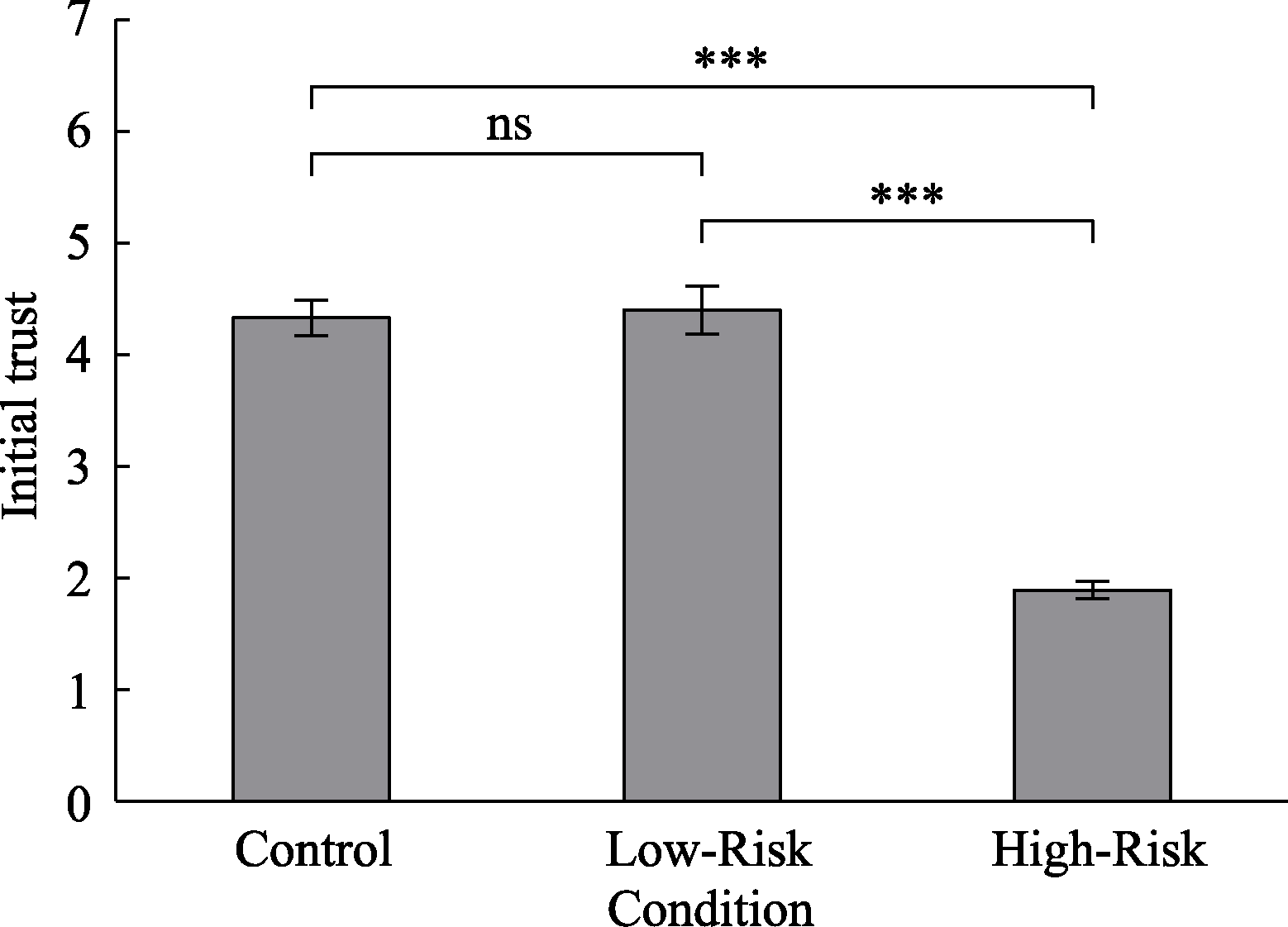
Figure 4. Changes in Initial Trust under Different Conditions in Study 3. Note. * p < 0.05, ** p < 0.01, *** p < 0.001. Error bars represent M ± 1 SE
| [1] | Abraham, H., Lee, C., Brady, S., Fitzgerald, C., Mehler, B., Reimer, B., & Coughlin, J. F. (2017). Autonomous vehicles and alternatives to driving: Trust, preferences, and effects of age. Transportation Research Board 96th Annual Meeting. |
| [2] |
Ahmed, S. S., Pantangi, S. S., Eker, U., Fountas, G., Still, S. E., & Anastasopoulos, P. Ch. (2020). Analysis of safety benefits and security concerns from the use of autonomous vehicles: A grouped random parameters bivariate probit approach with heterogeneity in means. Analytic Methods in Accident Research, 28, 100134.
doi: 10.1016/j.amar.2020.100134 URL |
| [3] |
Balfe, N., Sharples, S., & Wilson, J. R. (2018). Understanding is key: An analysis of factors pertaining to trust in a real-world automation system. Human Factors, 60(4), 477-495.
doi: 10.1177/0018720818761256 pmid: 29613815 |
| [4] |
Beggiato, M., & Krems, J. F. (2013). The evolution of mental model, trust and acceptance of adaptive cruise control in relation to initial information. Transportation Research Part F: Traffic Psychology and Behaviour, 18, 47-57.
doi: 10.1016/j.trf.2012.12.006 URL |
| [5] |
Biassoni, F., Ruscio, D., & Ciceri, R. (2016). Limitations and automation. The role of information about device-specific features in ADAS acceptability. Safety Science, 85, 179-186.
doi: 10.1016/j.ssci.2016.01.017 URL |
| [6] | Booth, S., Tompkin, J., Pfister, H., Waldo, J., Gajos, K., & Nagpal, R. (2017). Piggybacking robots: Human-robot overtrust in university dormitory security. Proceedings of the 2017 ACM/IEEE International Conference on Human-Robot Interaction (pp.426-434). Association for Computing Machinery, New York, NY, United States. |
| [7] | Carlson, M. S., Desai, M., Drury, J. L., Kwak, H., & Yanco, H. A. (2014). Identifying factors that influence trust in automated cars and medical diagnosis systems. In 2014 AAAI Spring Symposium Series on The Intersection of Robust Intelligence and Trust in Autonomous Systems. Association for the Advancement of Artificial Intelligence, Washington, D.C., United States. |
| [8] |
Celmer, N., Branaghan, R., & Chiou, E. (2018). Trust in branded autonomous vehicles & performance expectations: A theoretical framework. Proceedings of the Human Factors and Ergonomics Society Annual Meeting, 62(1), 1761-1765.
doi: 10.1177/1541931218621398 URL |
| [9] |
Choi, J. K., & Ji, Y. G. (2015). Investigating the importance of trust on adopting an autonomous vehicle. International Journal of Human-Computer Interaction, 31(10), 692-702.
doi: 10.1080/10447318.2015.1070549 URL |
| [10] | Christensen, A. B. H., Dam, C. R., Rasle, C., Bauer, J. E., Mohamed, R. A., & Jensen, L. C. (2019). Reducing overtrust in failing robotic systems. 2019 14th ACM/IEEE International Conference on Human-Robot Interaction (HRI) (pp.542-543). IEEE. |
| [11] |
Davis, F., Bagozzi, R., & Warshaw, P. (1989). User acceptance of computer technology: A comparison of 2 theoretical-models. Management Science, 35(8), 982-1003.
doi: 10.1287/mnsc.35.8.982 URL |
| [12] | Deloitte, China. (2019). Consumers pump the brakes on autonomous vehicle adoption | Deloitte China | Newsroom. Deloitte. https://www2.deloitte.com/cn/en/pages/about-deloitte/articles/pr-consumers-pump-the-brakes-on-autonomous-vehicle-adoption.html |
| [13] |
Dirsehan, T., & Can, C. (2020). Examination of trust and sustainability concerns in autonomous vehicle adoption. Technology in Society, 63, 101361.
doi: 10.1016/j.techsoc.2020.101361 URL |
| [14] |
Faul, F., Erdfelder, E., Lang, A.-G., & Buchner, A. (2007). G*Power 3: A flexible statistical power analysis program for the social, behavioral, and biomedical sciences. Behavior Research Methods, 39(2), 175-191.
doi: 10.3758/bf03193146 pmid: 17695343 |
| [15] | Fishbein, M., & Ajzen, I. (1975). Belief, attitude, intention and behaviour: An introduction to theory and research (Vol. 27). Addison-Wesley. |
| [16] |
Gao, Z., Li, W., Liang, J., Pan, H., Xu, W., & Shen, M. (2021). Trust in automated vehicles. Advances in Psychological Science, 29(12), 2172-2183.
doi: 10.3724/SP.J.1042.2021.02172 |
| [17] |
Glikson, E., & Woolley, A. W. (2020). Human Trust in Artificial Intelligence: Review of Empirical Research. Academy of Management Annals, 14(2), 627-660.
doi: 10.5465/annals.2018.0057 URL |
| [18] |
Gopinath, K., & Narayanamurthy, G. (2022). Early bird catches the worm! Meta-analysis of autonomous vehicles adoption - Moderating role of automation level, ownership and culture. International Journal of Information Management, 66, 102536.
doi: 10.1016/j.ijinfomgt.2022.102536 URL |
| [19] |
Ha, T., Kim, S., Seo, D., & Lee, S. (2020). Effects of explanation types and perceived risk on trust in autonomous vehicles. Transportation Research Part F: Traffic Psychology and Behaviour, 73, 271-280.
doi: 10.1016/j.trf.2020.06.021 URL |
| [20] |
Hoff, K. A., & Bashir, M. (2015). Trust in automation: Integrating empirical evidence on factors that influence trust. Human Factors, 57(3), 407-434.
doi: 10.1177/0018720814547570 pmid: 25875432 |
| [21] | Hu, Y., Xiao, J., & Liu, Q. (2025). Privacy protection from the perspective of risk perception: A meta-analysis study. Journal of Intelligence, 44(1), 198-206. |
| [22] |
Huang, X., & Li, Y. (2024). Trust dampening and trust promoting: A dual-pathway of trust calibration in human-robot interaction. Advances in Psychological Science, 32(3), 527-542.
doi: 10.3724/SP.J.1042.2024.00527 |
| [23] | Jin, M., Lu, G., Chen, F., & Shi, X. (2020). How driving experience affect trust in automation from level 3 automated vehicles? An experimental analysis. 2020 IEEE 23rd International Conference on Intelligent Transportation Systems (ITSC), 1-6. IEEE. |
| [24] | Kahl, B. (2021). Human biases preventing the widespread adoption of self-driving cars. ArXiv, abs/2104.01022. |
| [25] |
Kraus, J., Scholz, D., Stiegemeier, D., & Baumann, M. (2020). The more you know: Trust dynamics and calibration in highly automated driving and the effects of take-overs, system malfunction, and system transparency. Human Factors, 62(5), 718-736.
doi: 10.1177/0018720819853686 pmid: 31233695 |
| [26] |
Kyriakidis, M., Happee, R., & de Winter, J. C. F.(2015). Public opinion on automated driving: Results of an international questionnaire among 5000 respondents. Transportation Research Part F: Traffic Psychology and Behaviour, 32, 127-140.
doi: 10.1016/j.trf.2015.04.014 URL |
| [27] |
Lee, J. D., & See, K. A. (2004). Trust in automation: Designing for appropriate reliance. Human Factors, 46(1), 50-80.
doi: 10.1518/hfes.46.1.50_30392 pmid: 15151155 |
| [28] |
Lee, J., & Lee, K. (2022). Polite speech strategies and their impact on drivers’ trust in autonomous vehicles. Computers in Human Behavior, 127, 107015.
doi: 10.1016/j.chb.2021.107015 URL |
| [29] |
Lyons, J. B., & Guznov, S. Y. (2019). Individual differences in human-machine trust: A multi-study look at the perfect automation schema. Theoretical Issues in Ergonomics Science, 20(4), 440-458.
doi: 10.1080/1463922X.2018.1491071 URL |
| [30] | Ma, Y., Li, S., Qin, S., & Qi, Y. (2020). Factors affecting trust in the autonomous vehicle: A survey of primary school students and parent perceptions. Proceedings - 2020 IEEE 19th International Conference on Trust, Security and Privacy in Computing and Communications, TrustCom 2020, 2020-2027. IEEE. |
| [31] |
Madigan, R., Louw, T., Wilbrink, M., Schieben, A., & Merat, N. (2017). What influences the decision to use automated public transport? Using UTAUT to understand public acceptance of automated road transport systems. Transportation Research Part F: Traffic Psychology and Behaviour, 50, 55-64.
doi: 10.1016/j.trf.2017.07.007 URL |
| [32] |
Merritt, S. M., & Ilgen, D. R. (2008). Not all trust is created equal: Dispositional and history-based trust in human-automation interactions. Human Factors, 50(2), 194-210.
doi: 10.1518/001872008X288574 pmid: 18516832 |
| [33] |
Narayanan, S., Chaniotakis, E., & Antoniou, C. (2020). Shared autonomous vehicle services: A comprehensive review. Transportation Research Part C: Emerging Technologies, 111, 255-293.
doi: 10.1016/j.trc.2019.12.008 URL |
| [34] |
Onnasch, L., Hoesterey, S., & Fahrner, V. (2023). To (dis)agree with automation: Effects of automation levels on trust attitude and trust behavior in high-risk situations. Proceedings of the Human Factors and Ergonomics Society Annual Meeting, 67(1), 1393-1399.
doi: 10.1177/21695067231192910 URL |
| [35] | On-Road Automated Driving (Orad) Committee. (2023). J3016 (WIP) Taxonomy and Definitions for Terms Related to Driving Automation Systems for On-Road Motor Vehicles. SAE International. https://www.sae.org/standards/content/j3016/ |
| [36] | Osswald, S., Wurhofer, D., Trösterer, S., Beck, E., & Tscheligi, M. (2012). Predicting information technology usage in the car:Towards a car technology acceptance model. Proceedings of the 4th International Conference on Automotive User Interfaces and Interactive Vehicular Applications (pp. 51-58). Association for Computing Machinery, New York, NY, United States. |
| [37] |
Podsakoff, P. M., MacKenzie, S. B., Lee, J.-Y., & Podsakoff, N. P. (2003). Common method biases in behavioral research: A critical review of the literature and recommended remedies. Journal of Applied Psychology, 88(5), 879-903.
doi: 10.1037/0021-9010.88.5.879 pmid: 14516251 |
| [38] |
Podsakoff, P. M., & Organ, D. W. (1986). Self-reports in organizational research: Problems and prospects. Journal of Management, 12(4), 531-544.
doi: 10.1177/014920638601200408 URL |
| [39] |
Pop, V. L., Shrewsbury, A., & Durso, F. T. (2015). Individual differences in the calibration of trust in automation. Human Factors, 57(4), 545-556.
doi: 10.1177/0018720814564422 pmid: 25977317 |
| [40] | PricewaterhouseCoopers. (2023). Digital Auto Report 2023. PricewaterhouseCoopers. https://www.strategyand.pwc.com/tr/tr/pdf/digital-auto-report-2023.pdf |
| [41] | Pype, P., Daalderop, G., Schulz-Kamm, E., Walters, E., & von Grafenstein, M. (2017). Privacy and security in autonomous vehicles. In D. Watzenig & M. Horn (Eds), Automated driving: Safer and more efficient future driving (pp. 17-27). Springer International Publishing. |
| [42] |
Qi, Y., Chen, J., Qin, S., & Du, F. (2024). Human-AI mutual trust in the era of artificial general intelligence. Advances in Psychological Science, 32(12), 2124-2136.
doi: 10.3724/SP.J.1042.2024.02124 |
| [43] | Qin, S., Li, C., & Qi, Y. (2024). Trust transfer in autonomous vehicles: The role of warm brand image amid automation failure. In D. Harris & W.-C. Li (Eds), Engineering psychology and cognitive ergonomics (pp. 123-140). Springer Nature Switzerland. |
| [44] |
Rieger, T., Roesler, E., & Manzey, D. (2021). The imperfect automation schema—Evidence for increased trust in human support agents. Proceedings of the Human Factors and Ergonomics Society Annual Meeting, 65(1), 1020-1020.
doi: 10.1177/1071181321651069 URL |
| [45] |
Robinette, P., Howard, A. M., & Wagner, A. R. (2017). Effect of robot performance on human-robot trust in time-critical situations. IEEE Transactions on Human-Machine Systems, 47(4), 425-436.
doi: 10.1109/THMS.2017.2648849 URL |
| [46] |
Rupp, M. A., Michaelis, J. R., McConnell, D. S., & Smither, J. A. (2018). The role of individual differences on perceptions of wearable fitness device trust, usability, and motivational impact. Applied Ergonomics, 70, 77-87.
doi: S0003-6870(18)30029-2 pmid: 29866329 |
| [47] |
Sheridan, T. B. (2019). Individual differences in attributes of trust in automation: Measurement and application to system design. Frontiers in Psychology, 10, 1117.
doi: 10.3389/fpsyg.2019.01117 pmid: 31178783 |
| [48] |
Tan, H., Zhao, X., & Yang, J. (2022). Exploring the influence of anxiety, pleasure and subjective knowledge on public acceptance of fully autonomous vehicles. Computers in Human Behavior, 131, 107187.
doi: 10.1016/j.chb.2022.107187 URL |
| [49] |
Tao, D., Yuan, J., Shao, F., Li, D., Zhou, Q., & Qu, X. (2018). Factors affecting consumer acceptance of an online health information portal among young internet users. CIN: Computers, Informatics, Nursing, 36(11), 530-539.
doi: 10.1097/CIN.0000000000000467 URL |
| [50] |
Walker, G. H., Stanton, N. A., & Salmon, P. (2016). Trust in vehicle technology. International Journal of Vehicle Design, 70(2), 157-182.
doi: 10.1504/IJVD.2016.074419 URL |
| [51] |
Wang, K., Wu, J., Sun, Y., Chen, J., Pu, Y., & Qi, Y. (2024). Trust in human and virtual live streamers: The role of integrity and social presence. International Journal of Human-Computer Interaction, 40(23), 8274-8294.
doi: 10.1080/10447318.2023.2279410 URL |
| [52] |
Waung, M., McAuslan, P., & Lakshmanan, S. (2021). Trust and intention to use autonomous vehicles: Manufacturer focus and passenger control. Transportation Research Part F: Traffic Psychology and Behaviour, 80, 328-340.
doi: 10.1016/j.trf.2021.05.004 URL |
| [53] |
Wen, Z.L., & Ye, B.J. (2014). Different methods for testing moderated mediation models: Competitors or backups? Acta Psychologica Sinica, 46(5), 714-726.
doi: 10.3724/SP.J.1041.2014.00714 |
| [54] | Wintersberger, P., Noah, B. E., Kraus, J., McCall, R., Mirnig, A. G., Kunze, A., Thakkar, S., & Walker, B. N. (2018). Second workshop on trust in the age of automated driving. Adjunct Proceedings of the 10th International Conference on Automotive User Interfaces and Interactive Vehicular Applications (pp. 56-64). Association for Computing Machinery, New York, NY, United States. |
| [55] |
Wu, M., Wang, N., & Yuen, K. F. (2023). Deep versus superficial anthropomorphism: Exploring their effects on human trust in shared autonomous vehicles. Computers in Human Behavior, 141, 107614.
doi: 10.1016/j.chb.2022.107614 URL |
| [56] |
Xu, W., & Ge, L. (2020). Engineering psychology in the era of artificial intelligence. Advances in Psychological Science, 28(9), 1409-1425.
doi: 10.3724/SP.J.1042.2020.01409 |
| [57] |
You, S., Qi, Y., Chen, J., Luo, L., & Zhang, K. (2025). Safety trust in intelligent domestic robots: Human and AI perspectives on trust and relevant influencing factors. Acta Psychologica Sinica, 57(11), 1951-1972.
doi: 10.3724/SP.J.1041.2025.1951 |
| [58] |
Yuen, K. F., Wong, Y. D., Ma, F., & Wang, X. (2020). The determinants of public acceptance of autonomous vehicles: An innovation diffusion perspective. Journal of Cleaner Production, 270, 121904.
doi: 10.1016/j.jclepro.2020.121904 URL |
| [59] |
Zhang, T., Tao, D., Qu, X., Zhang, X., Lin, R., & Zhang, W. (2019). The roles of initial trust and perceived risk in public’s acceptance of automated vehicles. Transportation Research Part C: Emerging Technologies, 98, 207-220.
doi: 10.1016/j.trc.2018.11.018 URL |
| [60] |
Zhang, T., Tao, D., Qu, X., Zhang, X., Zeng, J., Zhu, H., & Zhu, H. (2020). Automated vehicle acceptance in China: Social influence and initial trust are key determinants. Transportation Research Part C: Emerging Technologies, 112, 220-233.
doi: 10.1016/j.trc.2020.01.027 URL |
| [61] |
Zhu, A., Yang, S., Chen, Y., & Xing, C. (2022). A moral decision-making study of autonomous vehicles: Expertise predicts a preference for algorithms in dilemmas. Personality and Individual Differences, 186, 111356.
doi: 10.1016/j.paid.2021.111356 URL |
| [62] | Zmud, J., Sener, I., & Wagner, J. (2016). Consumer Acceptance and Travel Behavior Impacts of Automated Vehicles. |
| No related articles found! |
| Viewed | ||||||
|
Full text |
|
|||||
|
Abstract |
|
|||||
