

ISSN 0439-755X
CN 11-1911/B
CN 11-1911/B
Acta Psychologica Sinica ›› 2026, Vol. 58 ›› Issue (7): 1254-1278.doi: 10.3724/SP.J.1041.2026.1254
• Academic Papers of the 28th Annual Meeting of the China Association for Science and Technology • Previous Articles Next Articles
CUI Xunxuan1,2, QIAO Ziteng3, LIU Ning1,2( )
)
Received:2025-05-07
Published:2026-07-25
Online:2026-05-15
Contact:
LIU Ning
E-mail:liuning@sdnu.edu.cn
Supported by:CUI Xunxuan, QIAO Ziteng, LIU Ning. (2026). The impact of anthropomorphism on perceived warmth-competence of AI and human-AI cooperation intention. Acta Psychologica Sinica, 58(7), 1254-1278.
Add to citation manager EndNote|Ris|BibTeX
URL: https://journal.psych.ac.cn/acps/EN/10.3724/SP.J.1041.2026.1254
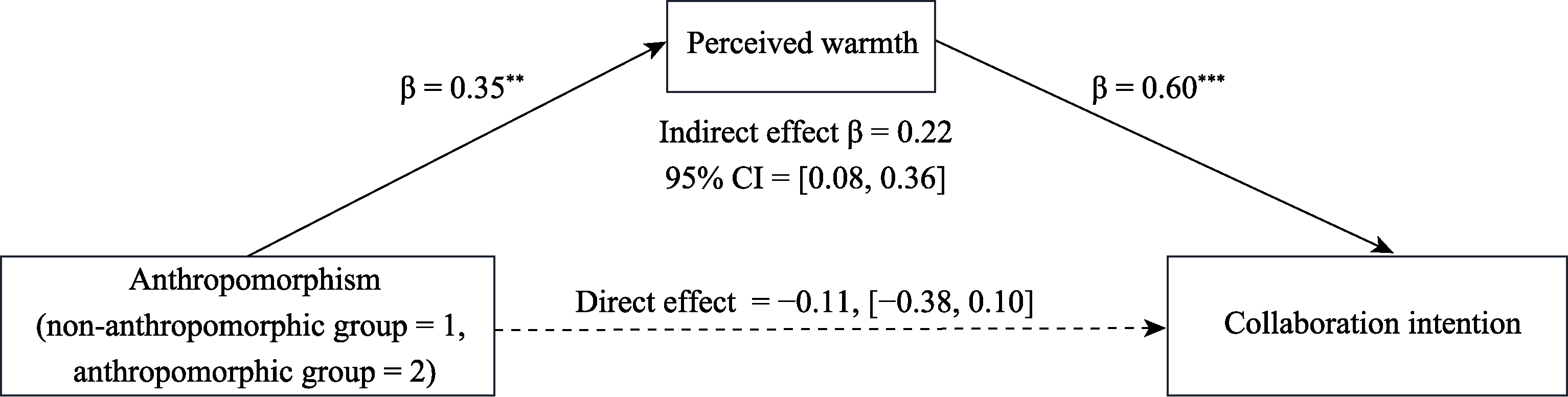
Figure 1. Study 1a: path analysis of the anthropomorphism?perceived warmth?collaboration intention pathway. Note. **p < 0.01, ***p < 0.001
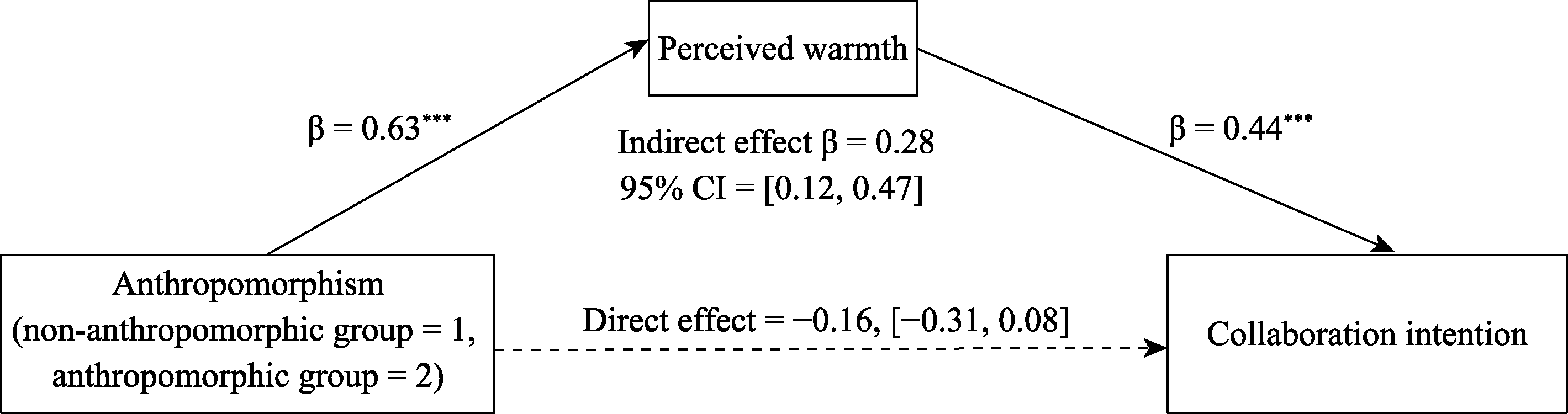
Figure 2. Study 1b: path analysis of the anthropomorphism?perceived warmth?collaboration intention pathway. Note. ***p < 0.001
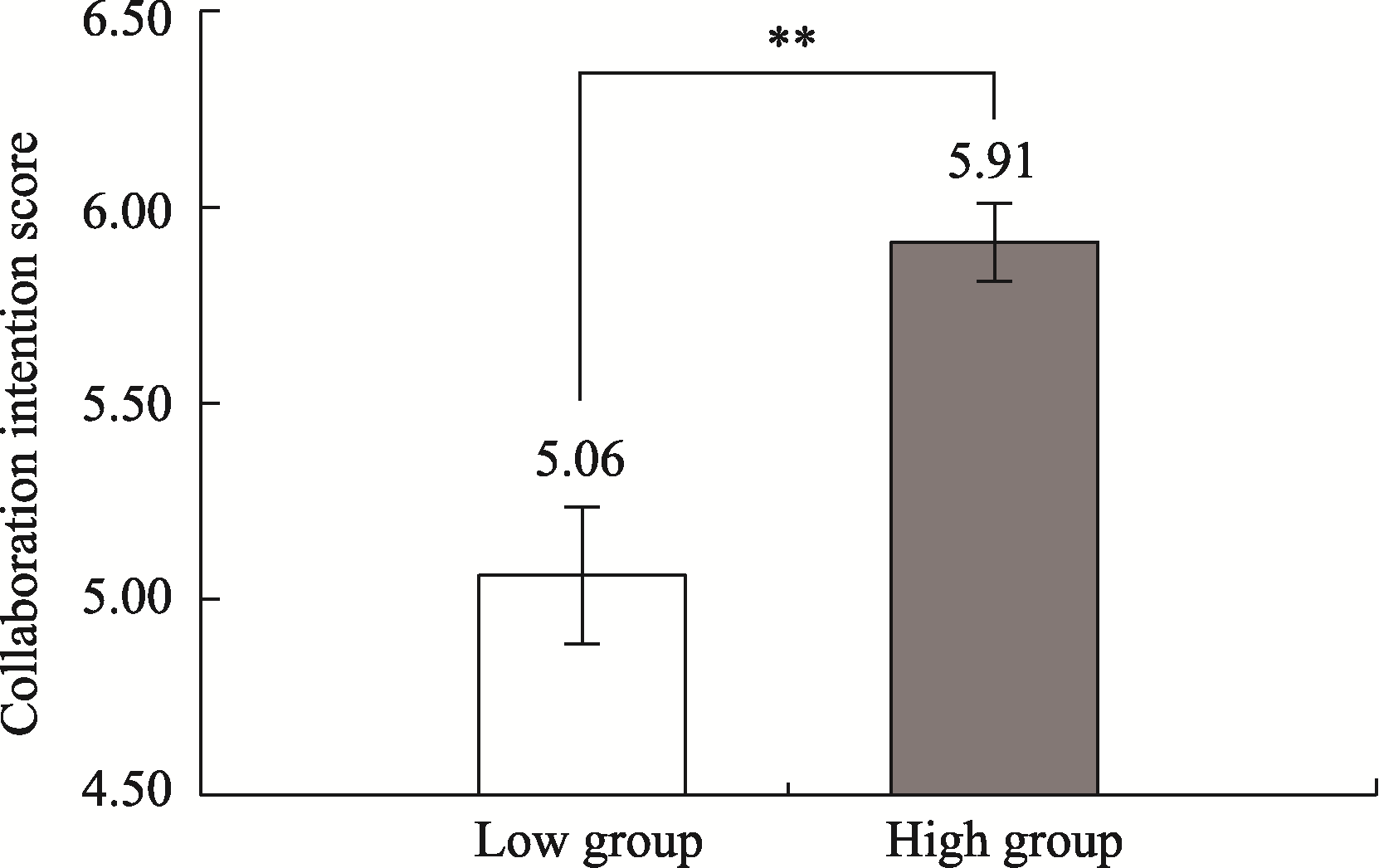
Figure 3. Study 2: The effect of anthropomorphism on collaboration intention. Note. **p < 0.01
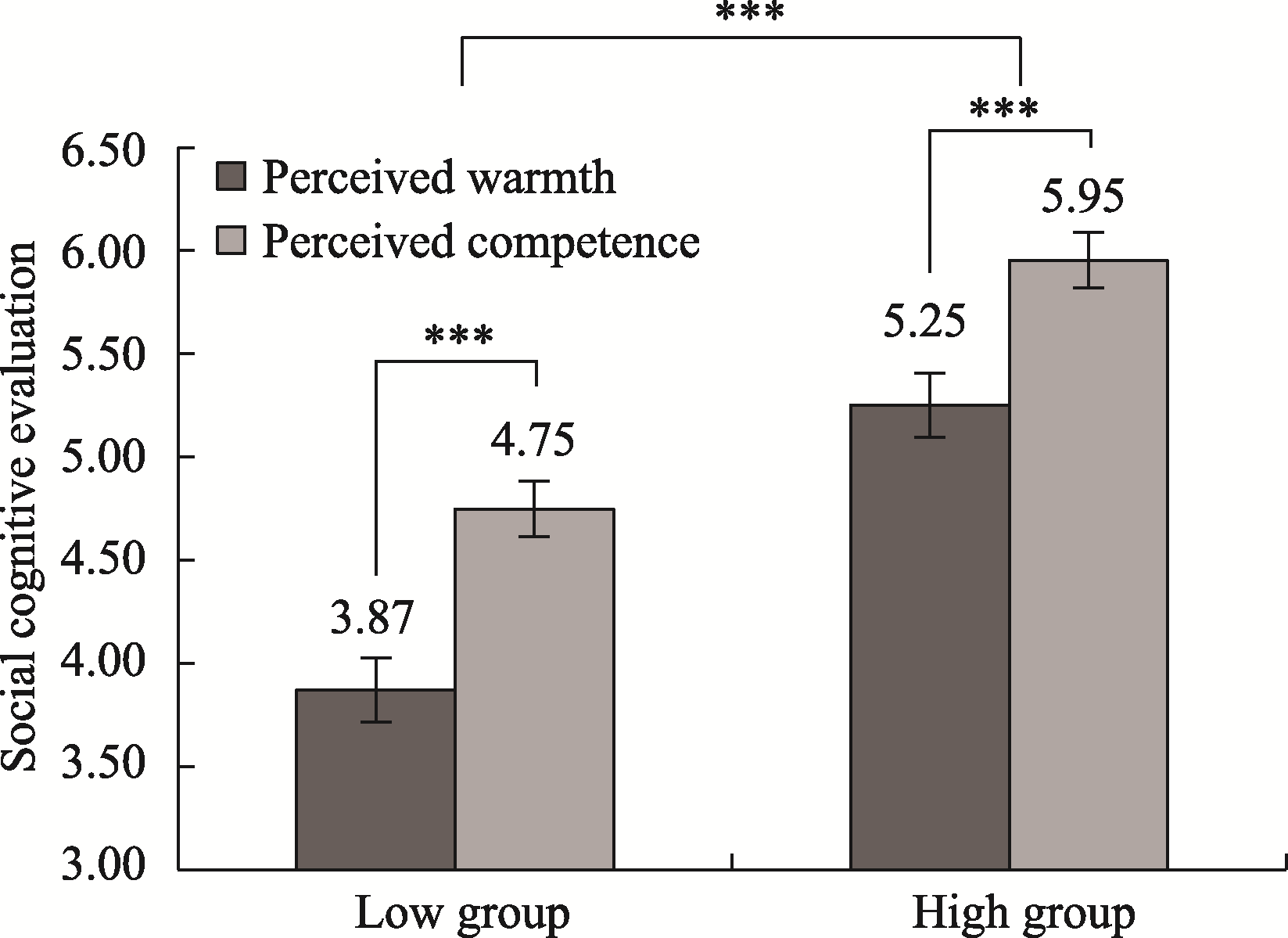
Figure 4. Study 2: The effect of anthropomorphism grouping on perceived warmth-competence of AI. Note. ***p < 0.001
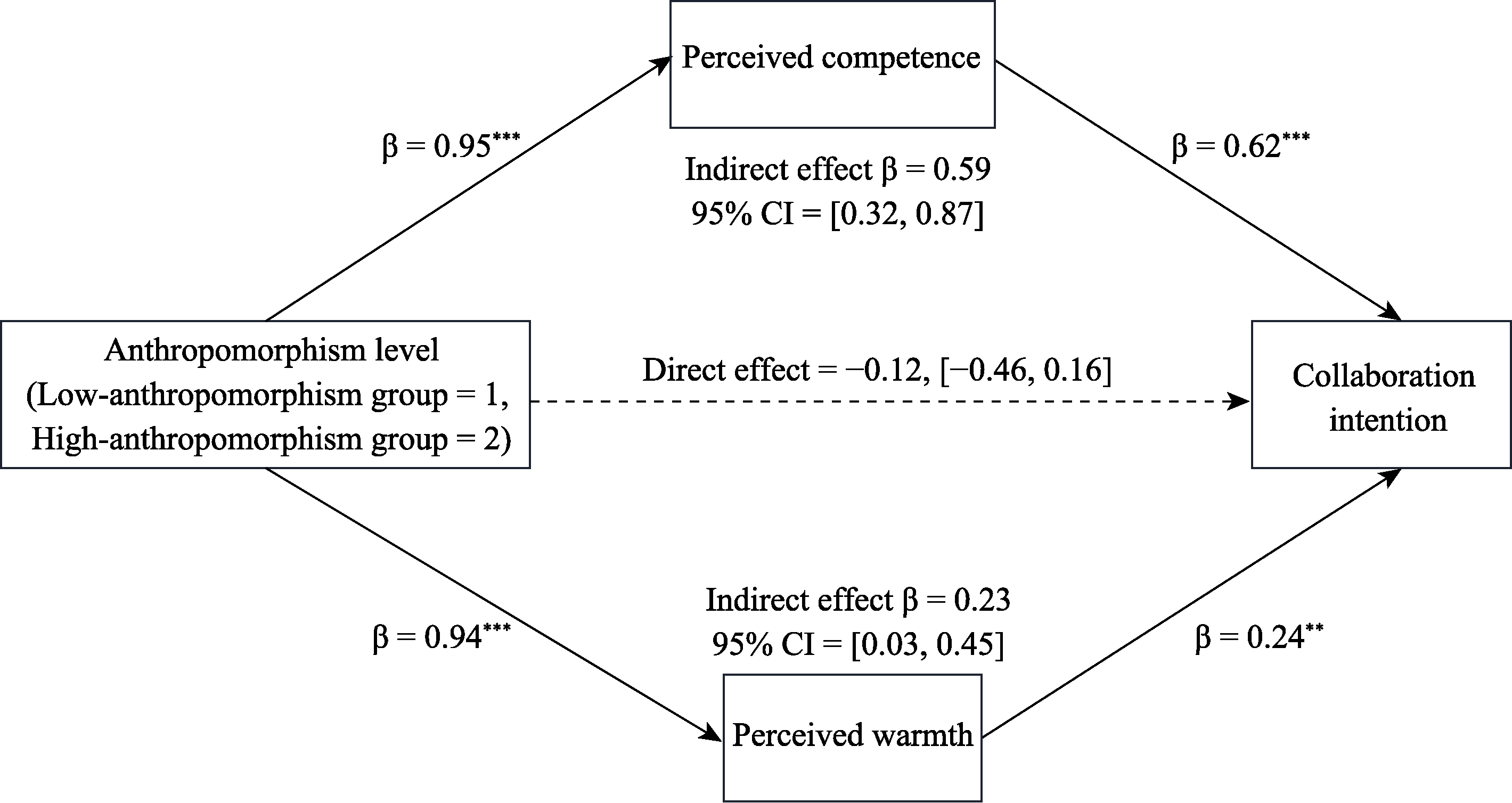
Figure 5. Study 2: Path analysis of the anthropomorphism?perceived warmth and competence?collaboration intention pathway. Note. **p < 0.01, ***p < 0.001
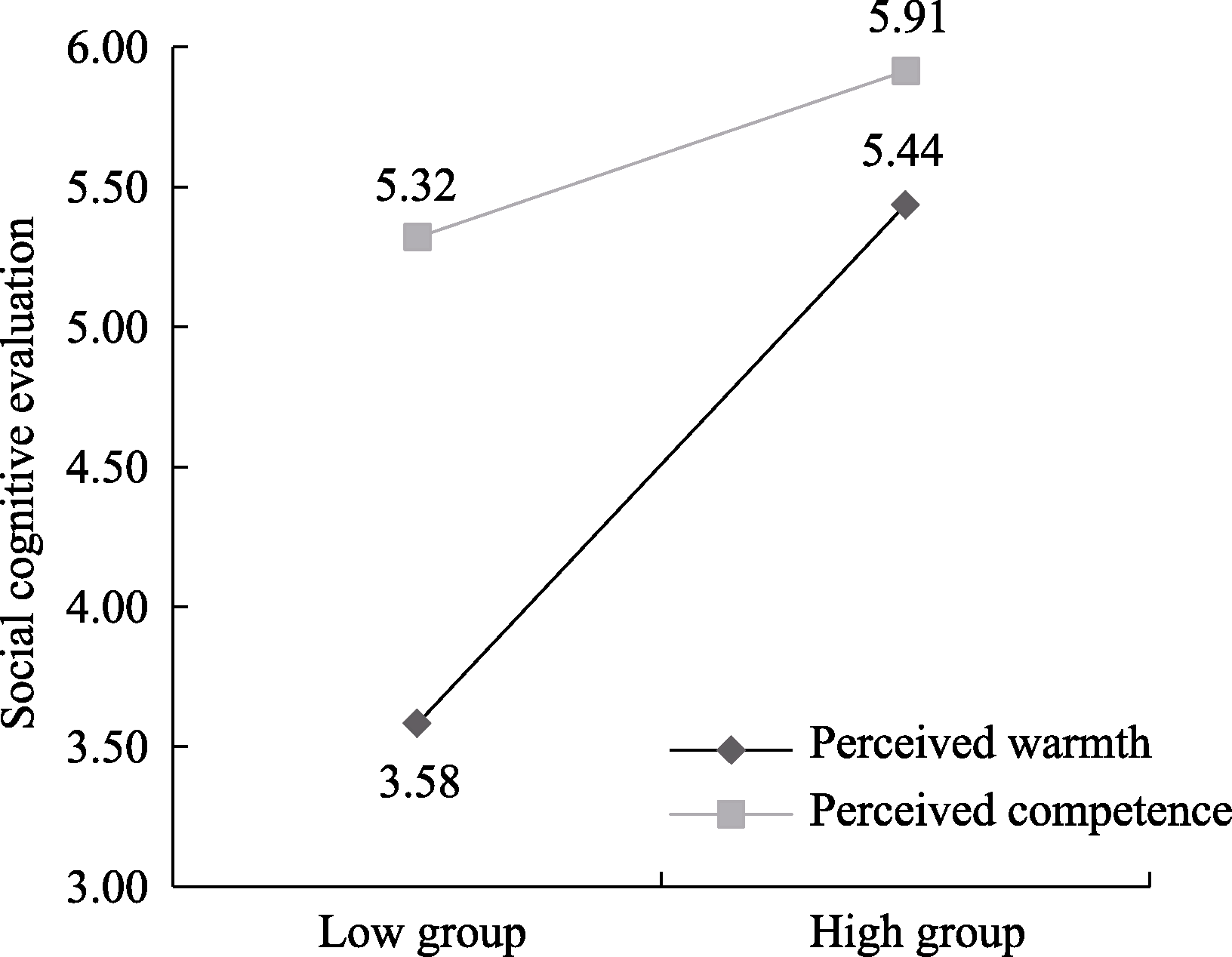
Figure 6. Study 3a: The effect of anthropomorphism on perceived warmth-competence of AI.
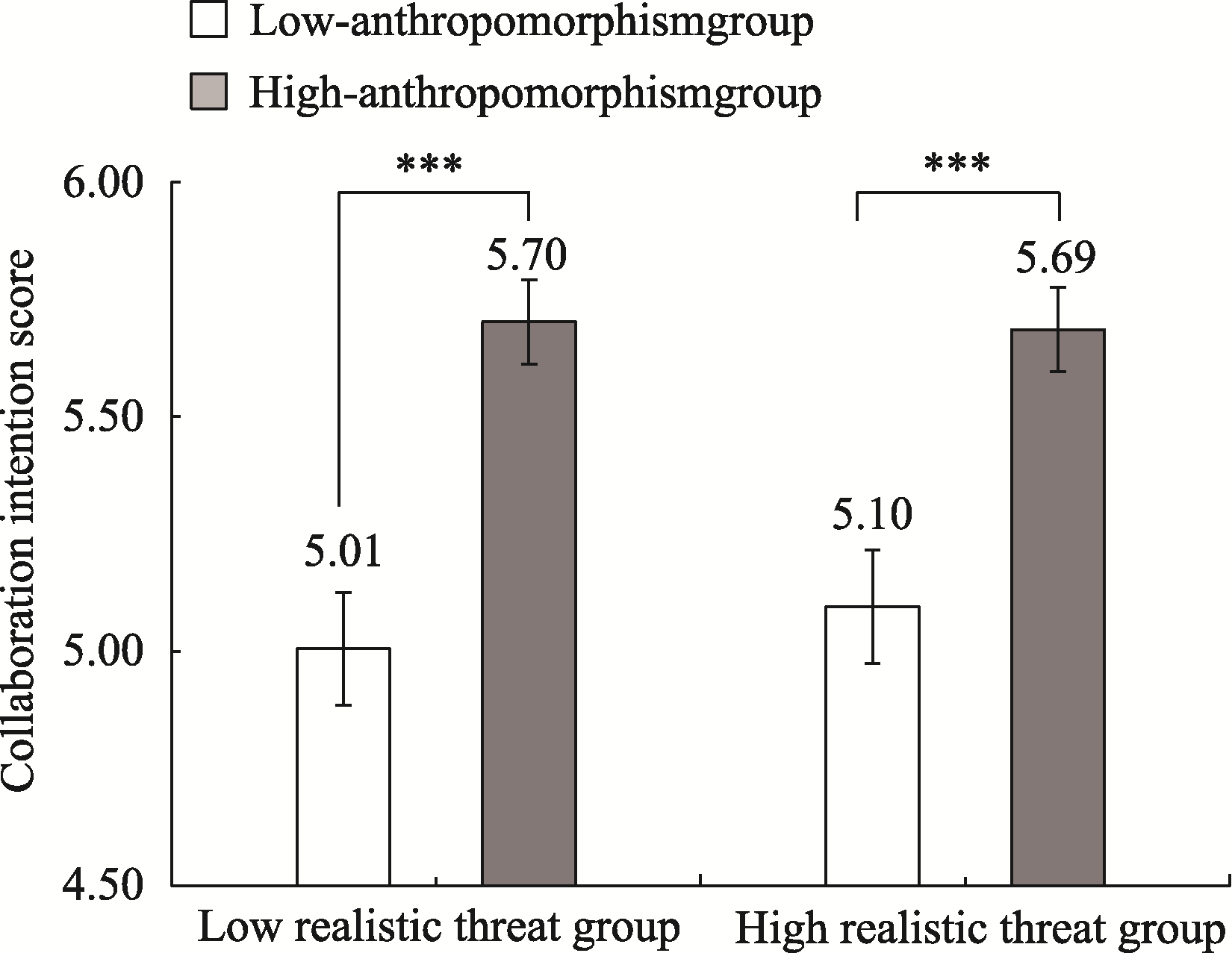
Figure 8. Studies 3a and 3b: The effect of anthropomorphism on collaboration intention. Note. ***p < 0.001
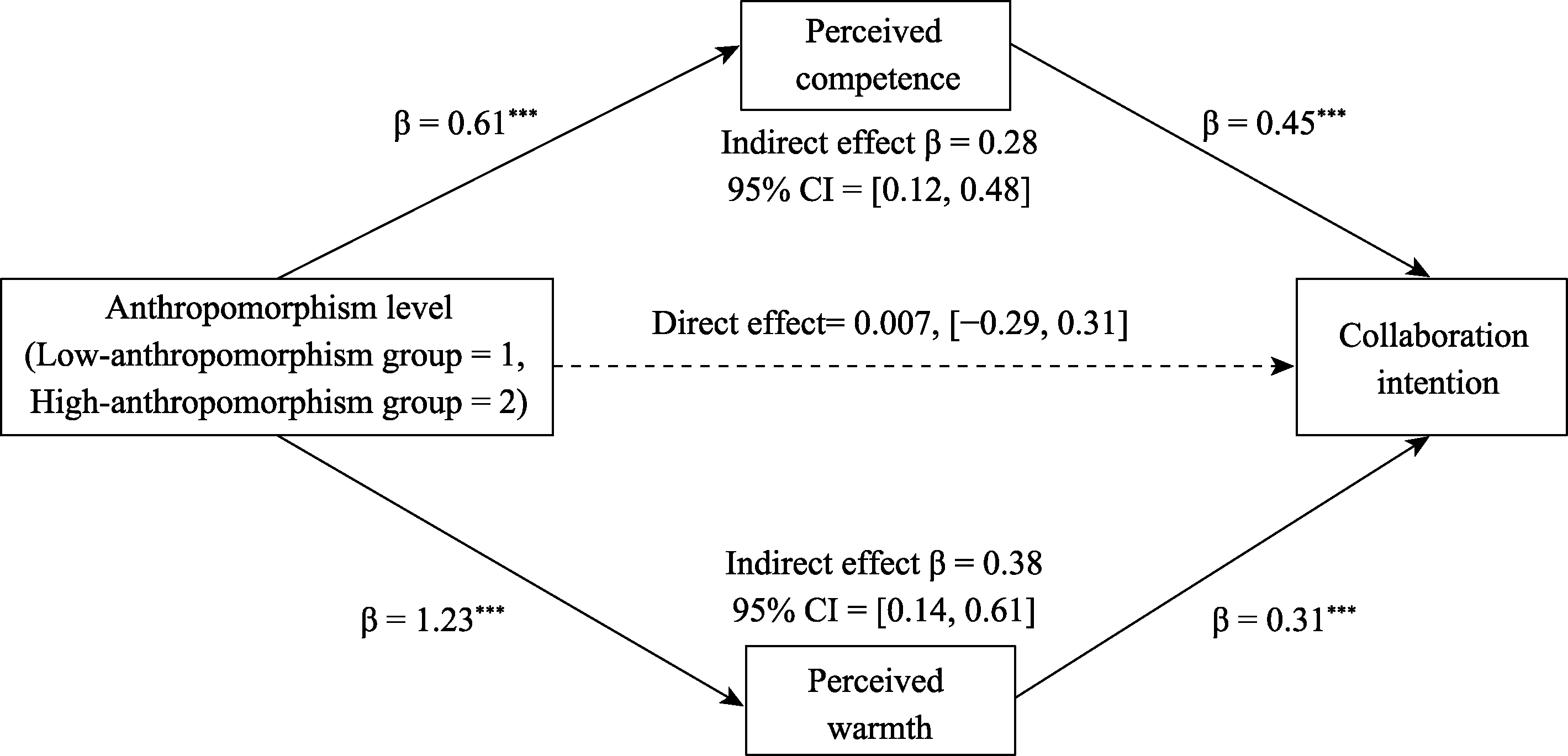
Figure 9. Study 3a: Path analysis of the anthropomorphism?perceived warmth and competence?collaboration intention pathway. Note. ***p < 0.001
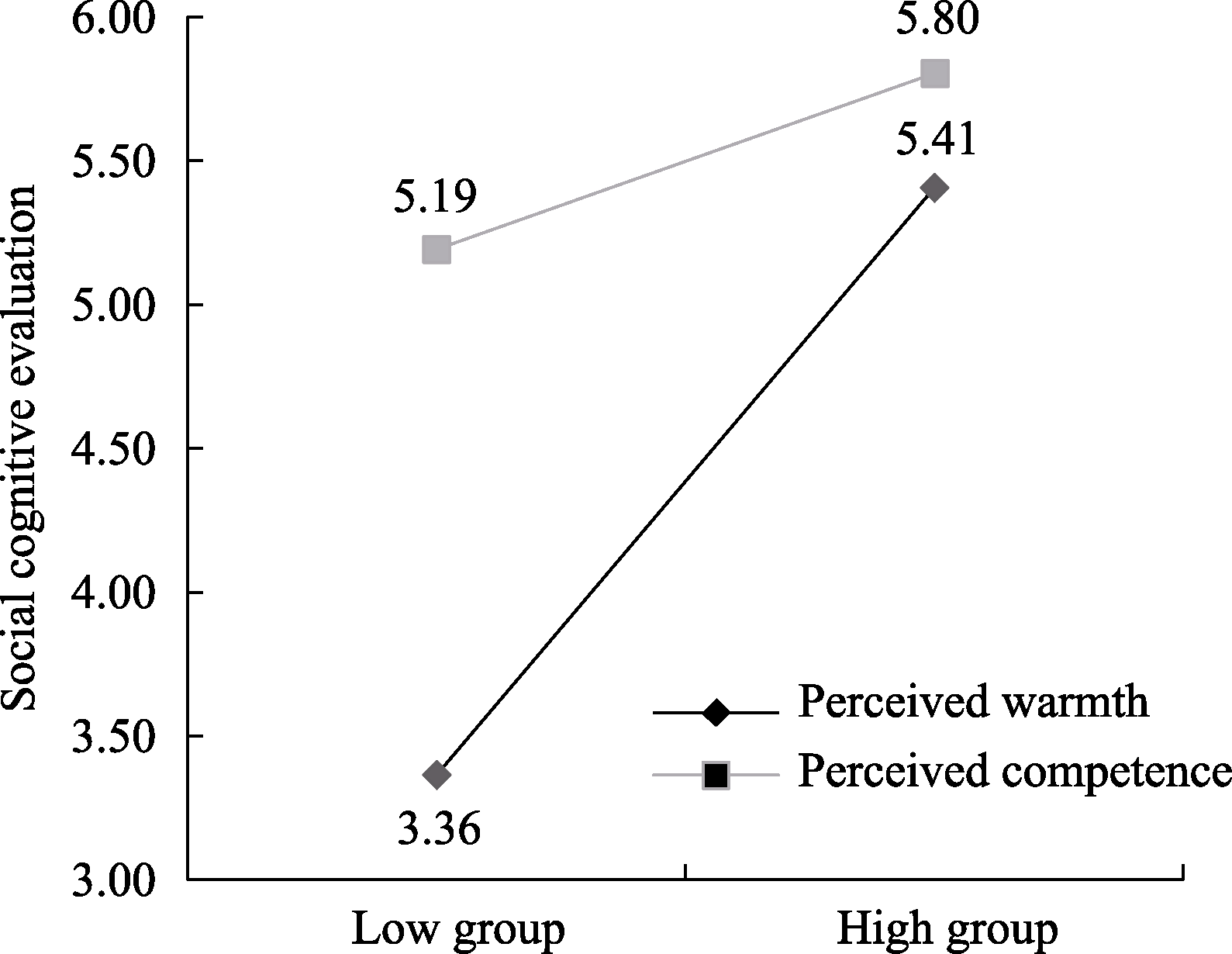
Figure 7. Study 3b: The effect of anthropomorphism on perceived warmth-competence of AI.
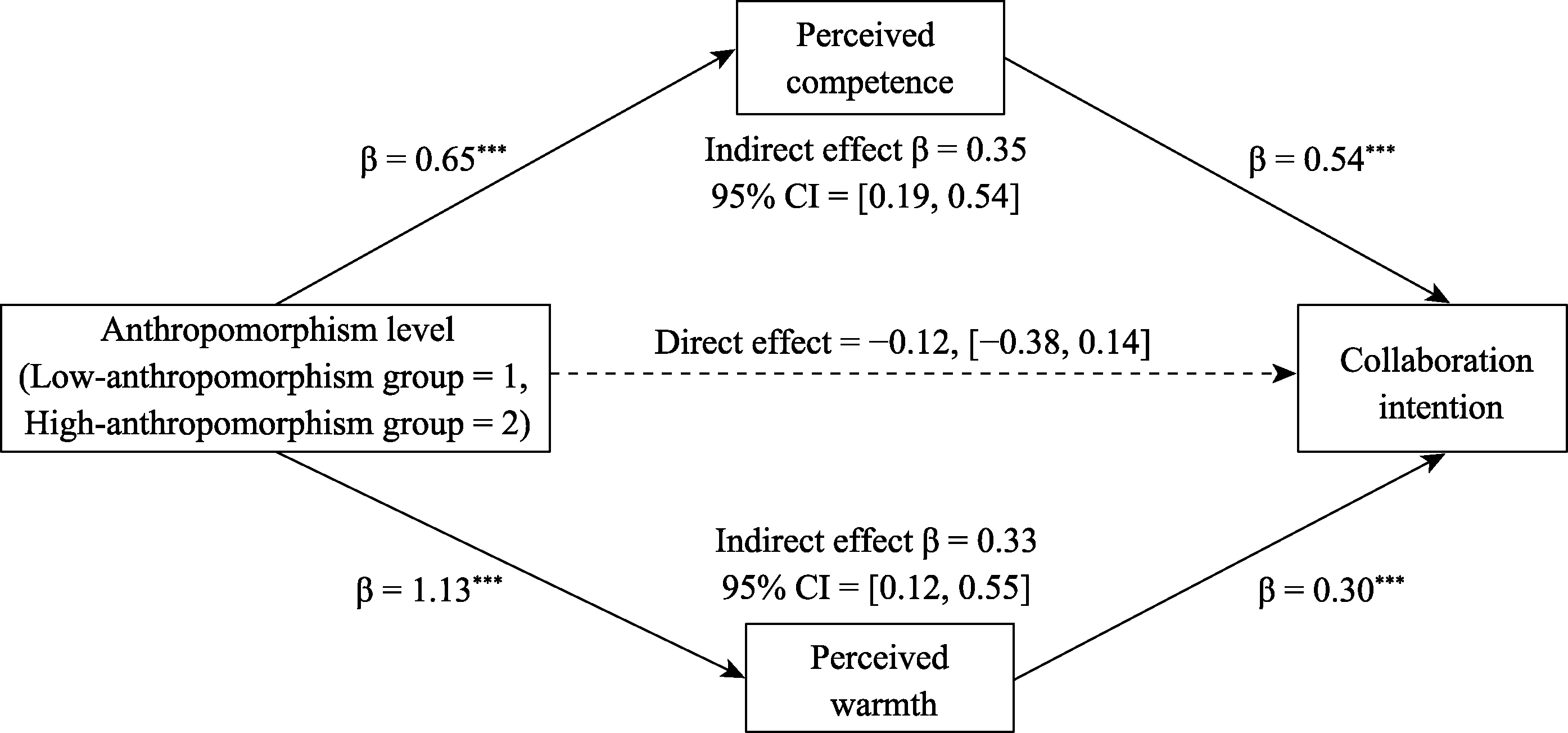
Figure 10. Study 3b: Path analysis of the anthropomorphism?perceived warmth and competence?collaboration intention pathway. Note. ***p < 0.001
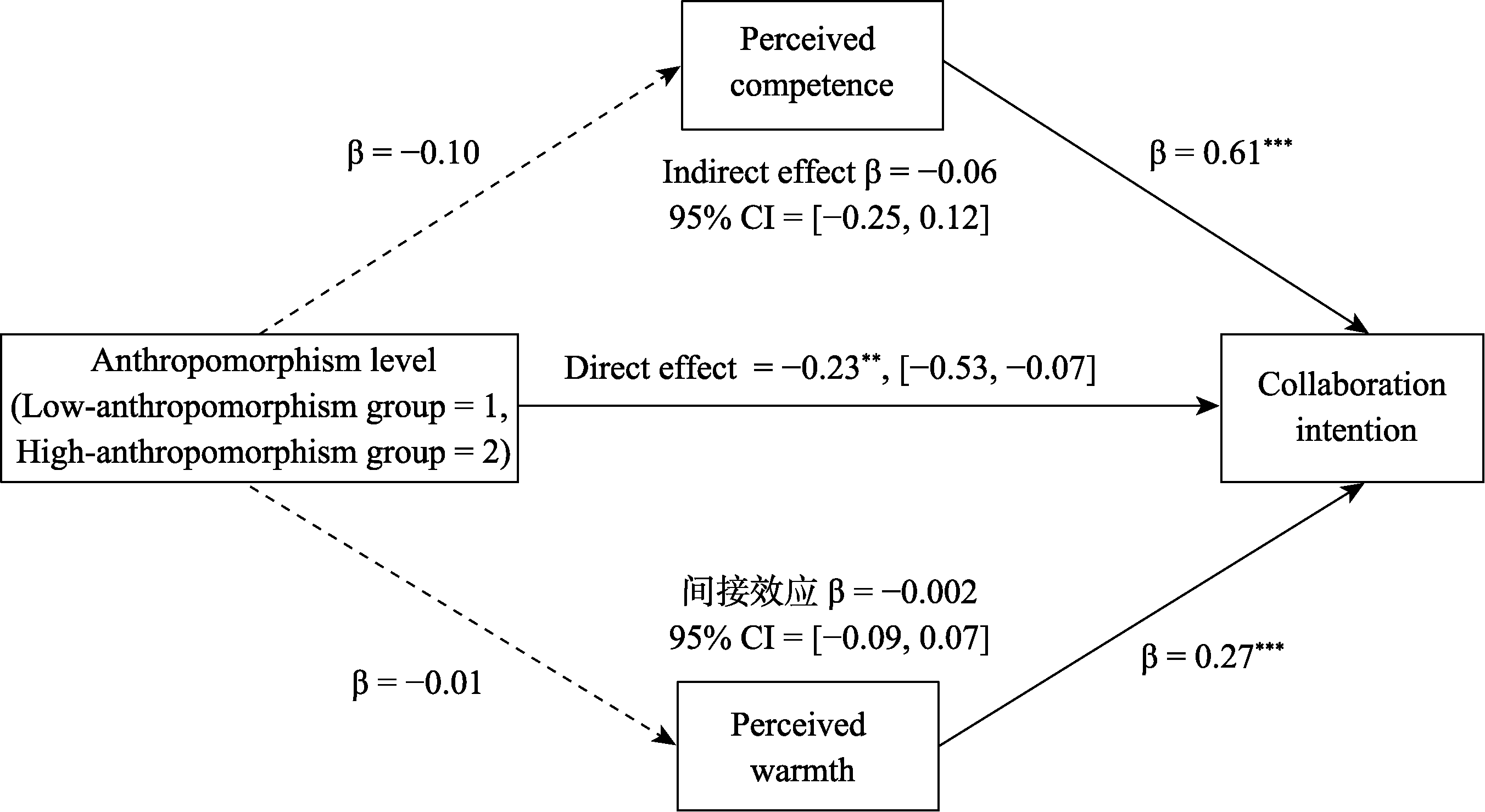
Figure 11. Study 4: Path analysis of the anthropomorphism condition?perceived warmth and competence?collaboration intention pathway. Note. **p < 0.01, ***p < 0.001
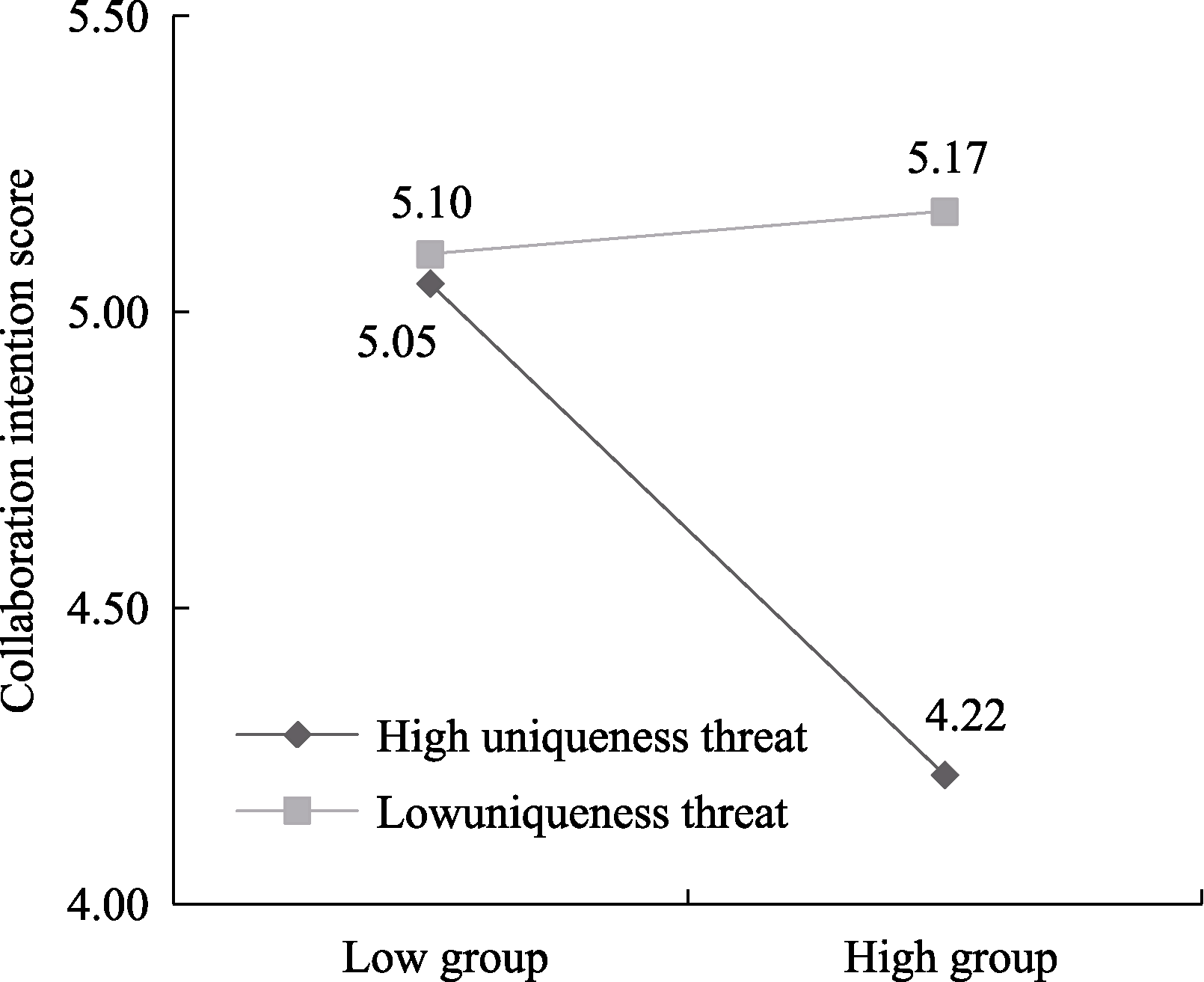
Figure 12. The moderating role of uniqueness threat on the effect of anthropomorphism on collaboration intention. Note. The cutoff for high/low uniqueness threat groups was determined based on M ± 1 SD
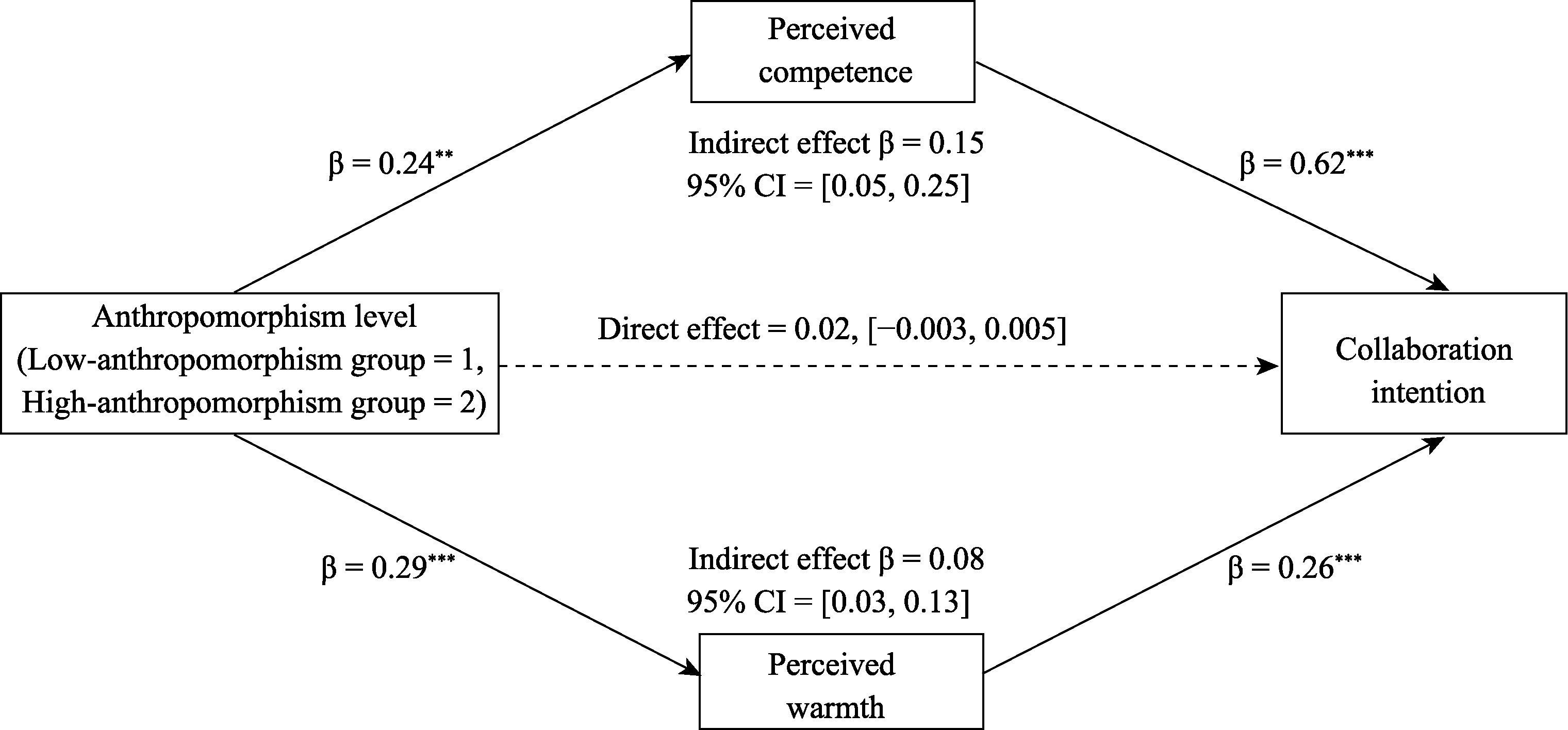
Supplementary Figure 1. Study 4: Path analysis of the subjective anthropomorphism?perceived warmth and competence?collaboration intention pathway. ** p < 0.01, *** p < 0.001
| [1] |
Aaker, J., Vohs, K. D., & Mogilner, C. (2010). Nonprofits are seen as warm and for-profits as competent: Firm stereotypes matter. Journal of Consumer Research, 37(2), 224-237.
doi: 10.1086/651566 URL |
| [2] |
Abbink, K., & Harris, D. (2019). In-group favouritism and out-group discrimination in naturally occurring groups. PLoS ONE, 14(9), e0221616.
doi: 10.1371/journal.pone.0221616 URL |
| [3] |
Aggarwal, P., & McGill, A. L. (2012). When brands seem human, do humans act like brands? Automatic behavioral priming effects of brand anthropomorphism. Journal of Consumer Research, 39(2), 307-323.
doi: 10.1086/662614 URL |
| [4] |
Alabed, A., Javornik, A., & Gregory-Smith, D. (2022). AI anthropomorphism and its effect on users’ self-congruence and self-AI integration: A theoretical framework and research agenda. Technological Forecasting and Social Change, 182, 121786.
doi: 10.1016/j.techfore.2022.121786 URL |
| [5] |
Aron, A., Aron, E. N., & Smollan, D. (1992). Inclusion of Other in the Self Scale and the structure of interpersonal closeness. Journal of Personality and Social Psychology, 63(4), 596-612.
doi: 10.1037/0022-3514.63.4.596 URL |
| [6] |
Balliet, D., Li, N. P., Macfarlan, S. J., & Van Vugt, M. (2011). Sex differences in cooperation: A meta-analytic review of social dilemmas. Psychological Bulletin, 137(6), 881-909.
doi: 10.1037/a0025354 pmid: 21910518 |
| [7] |
Bartneck, C., Kulić, D., Croft, E., & Zoghbi, S. (2009). Measurement instruments for the anthropomorphism, animacy, likeability, perceived intelligence, and perceived safety of robots. International Journal of Social Robotics, 1(1), 71-81.
doi: 10.1007/s12369-008-0001-3 URL |
| [8] | Bergmann, K., Eyssel, F., & Kopp, S. (2012). A second chance to make a first impression? How appearance and nonverbal behavior affect perceived warmth and competence of virtual agents over time. In M. Walker, M. Neff, A. Paiva, & Y. Nakano (Eds.), Proceedings of the 12th international conference on Intelligent Virtual Agents (Vol. 7502, pp. 126-138). Springer. |
| [9] |
Bernerth, J. B., & Aguinis, H. (2016). A critical review and best‐practice recommendations for control variable usage. Personnel Psychology, 69(1), 229-283.
doi: 10.1111/peps.2016.69.issue-1 URL |
| [10] |
Brewer, M. B. (2007). The importance of being we: Human nature and intergroup relations. American Psychologist, 62(8), 728-738.
doi: 10.1037/0003-066X.62.8.728 URL |
| [11] |
Crolic, C., Thomaz, F., Hadi, R., & Stephen, A. T. (2022). Blame the bot: Anthropomorphism and anger in customer-chatbot interactions. Journal of Marketing, 86(1), 132-148.
doi: 10.1177/00222429211045687 URL |
| [12] |
Cuddy, A. J. C., Glick, P., & Beninger, A. (2011). The dynamics of warmth and competence judgments, and their outcomes in organizations. Research in Organizational Behavior, 31, 73-98.
doi: 10.1016/j.riob.2011.10.004 URL |
| [13] | Dou, X., Wu, C.-F., Wang, X., & Niu, J. (2020). User expectations of social robots in different applications:An online user study. In C. Stephanidis, M. Kurosu, H. Degen, & L. Reinerman-Jones (Eds.), HCI International 2020-Late breaking papers: Multimodality and Intelligence , pp. 64-72). Springer Nature. |
| [14] | Du, F., Qi, Y., Min, Y. C., Wang, X. T., & Chen, Y. N. (2024). Human and Artificial Intelligence: The synergy of human and AI in the era of intelligence. Shaanxi Normal University Press |
| [15] |
Eisenbruch, A. B., & Krasnow, M. M. (2022). Why warmth matters more than competence: A new evolutionary approach. Perspectives on Psychological Science, 17(6), 1604-1623.
doi: 10.1177/17456916211071087 URL |
| [16] |
Epley, N., Waytz, A., Akalis, S., & Cacioppo, J. T. (2008). When we need a human: Motivational determinants of anthropomorphism. Social Cognition, 26(2), 143-155.
doi: 10.1521/soco.2008.26.2.143 URL |
| [17] |
Epley, N., Waytz, A., & Cacioppo, J. T. (2007). On seeing human: A three-factor theory of anthropomorphism. Psychological Review, 114(4), 864-886.
doi: 10.1037/0033-295X.114.4.864 pmid: 17907867 |
| [18] | Eyssel, F., Hegel, F., Horstmann, G., & Wagner, C. (2010). Anthropomorphic inferences from emotional nonverbal cues: A case study. In 19th International Symposium in Robot and Human Interactive Communication (pp. 646-651). IEEE. |
| [19] |
Eyssel, F., & Kuchenbrandt, D. (2012). Social categorization of social robots: Anthropomorphism as a function of robot group membership. British Journal of Social Psychology, 51(4), 724-731.
doi: 10.1111/j.2044-8309.2011.02082.x pmid: 22103234 |
| [20] |
Faul, F., Erdfelder, E., Buchner, A., & Lang, A.-G. (2009). Statistical power analyses using G*Power 3.1: Tests for correlation and regression analyses. Behavior Research Methods, 41(4), 1149-1160.
doi: 10.3758/BRM.41.4.1149 pmid: 19897823 |
| [21] |
Ferrari, F., Paladino, M. P., & Jetten, J. (2016). Blurring Human- Machine distinctions: Anthropomorphic appearance in social robots as a threat to human distinctiveness. International Journal of Social Robotics, 8(2), 287-302.
doi: 10.1007/s12369-016-0338-y URL |
| [22] |
Fiske, S. T. (2018). Stereotype content: Warmth and competence endure. Current Directions in Psychological Science, 27(2), 67-73.
doi: 10.1177/0963721417738825 pmid: 29755213 |
| [23] |
Fiske, S. T., Cuddy, A. J. C., & Glick, P. (2007). Universal dimensions of social cognition: Warmth and competence. Trends in Cognitive Sciences, 11(2), 77-83.
doi: 10.1016/j.tics.2006.11.005 pmid: 17188552 |
| [24] |
Fiske, S. T., Cuddy, A. J. C., Glick, P., & Xu, J. (2002). A model of (often mixed) stereotype content: Competence and warmth respectively follow from perceived status and competition. Journal of Personality and Social Psychology, 82(6), 878-902.
pmid: 12051578 |
| [25] | Gilad, Z., Amir, O., & Levontin, L. (2021). The effects of warmth and competence perceptions on users’ choice of an AI system. In Proceedings of the 2021 CHI Conference on Human Factors in Computing Systems (pp. 1-13). ACM. |
| [26] |
Glikson, E., & Woolley, A. W. (2020). Human trust in artificial intelligence: Review of empirical research. Academy of Management Annals, 14(2), 627-660.
doi: 10.5465/annals.2018.0057 URL |
| [27] |
Golec de Zavala, A., Federico, C. M., Sedikides, C., Guerra, R., Lantos, D., Mroziński, B.,... Baran, T. (2019). Low self-esteem predicts out-group derogation via collective narcissism, but this relationship is obscured by in-group satisfaction. Journal of Personality and Social Psychology, 119(3), 741-764.
doi: 10.1037/pspp0000260 URL |
| [28] |
Gray, K., & Wegner, D. M. (2012). Feeling robots and human zombies: Mind perception and the uncanny valley. Cognition, 125(1), 125-130.
doi: 10.1016/j.cognition.2012.06.007 pmid: 22784682 |
| [29] |
Guo, D., Yang, D., Zhang, H., Song, J., Wang, P., Zhu, Q.,... Zhang, Z. (2025). DeepSeek-R1 incentivizes reasoning in LLMs through reinforcement learning. Nature, 645(8081), 633-638.
doi: 10.1038/s41586-025-09422-z |
| [30] |
Han, B., Deng, X., & Fan, H. (2023). Partners or opponents? How mindset shapes consumers’ attitude toward anthropomorphic artificial intelligence service robots. Journal of Service Research, 26(3), 441-458.
doi: 10.1177/10946705231169674 URL |
| [31] |
Harris-Watson, A. M., Larson, L. E., Lauharatanahirun, N., DeChurch, L. A., & Contractor, N. S. (2023). Social perception in Human-AI teams: Warmth and competence predict receptivity to AI teammates. Computers in Human Behavior, 145, 107765.
doi: 10.1016/j.chb.2023.107765 URL |
| [32] |
Haslam, N. (2006). Dehumanization: An integrative review. Personality and Social Psychology Review, 10(3), 252-264.
doi: 10.1207/s15327957pspr1003_4 pmid: 16859440 |
| [33] | Hayes, A. F. (2013). Introduction to mediation, moderation, and conditional process analysis: A regression-based approach. New York: The Guilford Press. |
| [34] |
Hu, Q., Lu, Y., Pan, Z., Gong, Y., & Yang, Z. (2021). Can AI artifacts influence human cognition? The effects of artificial autonomy in intelligent personal assistants. International Journal of Information Management, 56, 102250.
doi: 10.1016/j.ijinfomgt.2020.102250 URL |
| [35] |
Huang, H. L., Cheng, L. K., Sun, P. C., & Chou, S. J. (2021). The effects of perceived identity threat and realistic threat on the negative attitudes and usage intentions toward hotel service robots: The moderating effect of the robot’s anthropomorphism. International Journal of Social Robotics, 13(7), 1599-1611.
doi: 10.1007/s12369-021-00752-2 |
| [36] |
Jackson, J. C., Castelo, N., & Gray, K. (2020). Could a rising robot workforce make humans less prejudiced? American Psychologist, 75(7), 969-982.
doi: 10.1037/amp0000582 URL |
| [37] |
Kahn, P. H., Ishiguro, H., Friedman, B., Kanda, T., Freier, N. G., Severson, R. L., & Miller, J. (2007). What is a human? Toward psychological benchmarks in the field of human-robot interaction. Interaction Studies: Social Behaviour and Communication in Biological and Artificial Systems, 8(3), 363-390.
doi: 10.1075/is URL |
| [38] |
Kervyn, N., Fiske, S. T., & Malone, C. (2012). Brands as intentional agents framework: How perceived intentions and ability can map brand perception. Journal of Consumer Psychology, 22(2), 166-176.
doi: 10.1016/j.jcps.2011.09.006 URL |
| [39] | Khadpe, P., Krishna, R., Li, F. F., Hancock, J. T., & Bernstein, M. S. (2020). Conceptual metaphors impact perceptions of human-AI collaboration. Proceedings of the ACM on Human-Computer Interaction, 4(CSCW2), 1-26. |
| [40] |
Kim, H. C., & Kramer, T. (2015). Do materialists prefer the “brand-as-servant”? The interactive effect of anthropomorphized brand roles and materialism on consumer responses. Journal of Consumer Research, 42(2), 284-299.
doi: 10.1093/jcr/ucv015 URL |
| [41] |
Lee, S.-L., Lau, I. Y.-M., & Hong, Y.-Y. (2011). Effects of appearance and functions on likability and perceived occupational suitability of robots. Journal of Cognitive Engineering and Decision Making, 5(2), 232-250.
doi: 10.1177/1555343411409829 URL |
| [42] |
Leyens, J.-P., Paladino, P. M., Rodriguez-Torres, R., Vaes, J., Demoulin, S., Rodriguez-Perez, A., & Gaunt, R. (2000). The emotional side of prejudice: The attribution of secondary emotions to ingroups and outgroups. Personality and Social Psychology Review, 4(2), 186-197.
doi: 10.1207/S15327957PSPR0402_06 URL |
| [43] |
McClure, P. K. (2018). “You’re fired,” says the robot: The rise of automation in the workplace, technophobes, and fears of unemployment. Social Science Computer Review, 36(2), 139-156.
doi: 10.1177/0894439317698637 URL |
| [44] | McKee, K. R., Bai, X., & Fiske, S. T. (2023). Humans perceive warmth and competence in artificial intelligence. iScience, 26(8), 107256. |
| [45] | Mitchell, M. (2024). Debates on the nature of artificial general intelligence. Science, 383(6689), eado7069. |
| [46] | Mori, M. (1970). The uncanny valley. Energy, 7, 33-35. |
| [47] | National Academies of Sciences, Engineering, and Medicine (NASEM).(2021). Human-AI teaming: State-of-the-art and research needs. Retrieved Jan. 16, 2026, from https://nap.nationalacademies.org/catalog/26355/human-ai-teaming-state-of-the-art-and-research-needs |
| [48] |
Neave, N., Jackson, R., Saxton, T., & Hönekopp, J. (2015). The influence of anthropomorphic tendencies on human hoarding behaviours. Personality and Individual Differences, 72, 214-219.
doi: 10.1016/j.paid.2014.08.041 URL |
| [49] |
O’Neill, T., McNeese, N., Barron, A., & Schelble, B. (2022). Human-autonomy teaming: A review and analysis of the empirical literature. Human Factors, 64(5), 904-938.
doi: 10.1177/0018720820960865 URL |
| [50] |
Onnasch, L., & Roesler, E. (2020). A taxonomy to structure and analyze human-robot interaction. International Journal of Social Robotics, 13(4), 833-849.
doi: 10.1007/s12369-020-00666-5 |
| [51] |
Park, D., Lee, Y., & Kim, Y. M. (2023). Effects of autonomous driving context and anthropomorphism of in-vehicle voice agents on intimacy, trust, and intention to use. International Journal of Human-Computer Interaction, 40(22), 7179-7192.
doi: 10.1080/10447318.2023.2262271 URL |
| [52] |
Pelau, C., Dabija, D.-C., & Ene, I. (2021). What makes an AI device human-like? The role of interaction quality, empathy and perceived psychological anthropomorphic characteristics in the acceptance of artificial intelligence in the service industry. Computers in Human Behavior, 122, 106855.
doi: 10.1016/j.chb.2021.106855 URL |
| [53] | Phillips, E., Zhao, X., Ullman, D., & Malle, B. F. (2018). What is human-like?: Decomposing robots’ human-like appearance using the anthropomorphic roBOT (ABOT) database. In Proceedings of the 2018 ACM/IEEE International Conference on Human-Robot Interaction (pp. 105-113). ACM. |
| [54] |
Piçarra, N., & Giger, J.-C. (2018). Predicting intention to work with social robots at anticipation stage: Assessing the role of behavioral desire and anticipated emotions. Computers in Human Behavior, 86, 129-146.
doi: 10.1016/j.chb.2018.04.026 URL |
| [55] |
Puzakova, M., Kwak, H., & Rocereto, J. F. (2013). When humanizing brands goes wrong: The detrimental effect of brand anthropomorphization amid product wrongdoings. Journal of Marketing, 77(3), 81-100.
doi: 10.1509/jm.11.0510 URL |
| [56] |
Qi, T., Liu, H., & Huang, Z. (2025). An assistant or A friend? The role of parasocial relationship of human-computer interaction. Computers in Human Behavior, 167, 108625.
doi: 10.1016/j.chb.2025.108625 URL |
| [57] | Reeves, B., Hancock, J., & Liu, X. (2020). Social robots are like real people: First impressions, attributes, and stereotyping of social robots. Technology, Mind, and Behavior, 1( 1), 76-89. |
| [58] |
Riek, B. M., Mania, E. W., & Gaertner, S. L. (2006). Intergroup threat and outgroup attitudes: A meta-analytic review. Personality and Social Psychology Review, 10(4), 336-353.
pmid: 17201592 |
| [59] |
Riva, P., Sacchi, S., & Brambilla, M. (2015). Humanizing machines: Anthropomorphization of slot machines increases gambling. Journal of Experimental Psychology: Applied, 21(4), 313-325.
doi: 10.1037/xap0000057 URL |
| [60] |
Robbins, J. M., & Krueger, J. I. (2005). Social projection to ingroups and outgroups: A review and meta-analysis. Personality and Social Psychology Review, 9(1), 32-47.
pmid: 15745863 |
| [61] | Roesler, E., Manzey, D., & Onnasch, L. (2021). A meta-analysis on the effectiveness of anthropomorphism in human-robot interaction. Science Robotics, 6(58), eabj5425. |
| [62] |
Schanke, S., Burtch, G., & Ray, G. (2021). Estimating the impact of “humanizing” customer service chatbots. Information Systems Research, 32(3), 736-751.
doi: 10.1287/isre.2021.1015 URL |
| [63] |
Sevillano, V., & Fiske, S. T. (2016). Warmth and competence in animals. Journal of Applied Social Psychology, 46(5), 276-293.
doi: 10.1111/jasp.2016.46.issue-5 URL |
| [64] |
Shariff, A., Bonnefon, J. F., & Rahwan, I. (2017). Psychological roadblocks to the adoption of self-driving vehicles. Nature Human Behaviour, 1(10), 694-696.
doi: 10.1038/s41562-017-0202-6 pmid: 31024097 |
| [65] |
Silver, D., Huang, A., Maddison, C. J., Guez, A., Sifre, L., Van Den Driessche, G.,... Hassabis, D. (2016). Mastering the game of Go with deep neural networks and tree search. Nature, 529(7587), 484-489.
doi: 10.1038/nature16961 |
| [66] |
Stephan, W. G., Boniecki, K. A., Ybarra, O., Bettencourt, A., Ervin, K. S., Jackson, L. A.,... Renfro, C. L. (2002). The role of threats in the racial attitudes of Blacks and Whites. Personality and Social Psychology Bulletin, 28(9), 1242-1254.
doi: 10.1177/01461672022812009 URL |
| [67] | Stephan, W. G., Ybarra, O., & Morrison, K. R. (2009). Intergroup threat theory. In T. D. Nelson (Ed.), Handbook of prejudice (pp. 43-59). Mahwah, NJ: Lawrence Erlbaum. |
| [68] | Stephan, W. G., Ybarra, O., & Rios, K. (2016). Intergroup threat theory. In T. D. Nelson (Ed.), Handbook of prejudice, stereotyping, and discrimination (2nd ed., pp. 255-278). Psychology Press. |
| [69] |
Steyvers, M., Tejeda, H., Kumar, A., Belem, C., Karny, S., Hu, X.,... Smyth, P. (2025). What large language models know and what people think they know. Nature Machine Intelligence, 7(2), 221-231.
doi: 10.1038/s42256-024-00976-7 |
| [70] |
Tam, K.-P., Lee, S.-L., & Chao, M. M. (2013). Saving Mr. Nature: Anthropomorphism enhances connectedness to and protectiveness toward nature. Journal of Experimental Social Psychology, 49(3), 514-521.
doi: 10.1016/j.jesp.2013.02.001 URL |
| [71] | Tian, L. M., & Zhang, X. K. (2007). Relationship between self-esteem and self-serving bias. Advances in Psychological Science, 15(4), 631-636. |
| [72] |
Vaccaro, M., Almaatouq, A., & Malone, T. (2024). When combinations of humans and AI are useful: A systematic review and meta-analysis. Nature Human Behaviour, 8(12), 2293-2303.
doi: 10.1038/s41562-024-02024-1 pmid: 39468277 |
| [73] |
Vimalkumar, M., Sharma, S. K., Singh, J. B., & Dwivedi, Y. K. (2021). ‘Okay google, what about my privacy?’: User’s privacy perceptions and acceptance of voice based digital assistants. Computers in Human Behavior, 120, 106763.
doi: 10.1016/j.chb.2021.106763 URL |
| [74] | Wan, E. W., Chen, R. P., & Jin, L. (2017). Judging a book by its cover? The effect of anthropomorphism on product attribute processing and consumer preference. Journal of Consumer Research, 43(6), 1008-1030. |
| [75] |
Waytz, A., Heafner, J., & Epley, N. (2014). The mind in the machine: Anthropomorphism increases trust in an autonomous vehicle. Journal of Experimental Social Psychology, 52, 113-117.
doi: 10.1016/j.jesp.2014.01.005 URL |
| [76] |
Wu, Y. T., Wang, B., Bao, H. W. S., Li, R. N., Wu, Y., Wang, J. Q.,... Yang, L. (2025). Humans perceive warmth and competence in large language models. Acta Psychologica Sinica, 57(11), 1-17.
doi: 10.3724/SP.J.1041.2025.0001 URL |
| [77] |
Xie, Y., Zhu, K., Zhou, P., & Liang, C. (2023). How does anthropomorphism improve human-AI interaction satisfaction: A dual-path model. Computers in Human Behavior, 148, 107878.
doi: 10.1016/j.chb.2023.107878 URL |
| [78] |
Xu, L. Y., Wang, X. F., Yu, F., & Peng, K. P. (2024). The influence of perceived robot threat on workplace objectification. Acta Psychologica Sinica, 56(2), 210-225.
doi: 10.3724/SP.J.1041.2024.00210 |
| [79] |
Xu, L. Y., Yu, F., Wu, J. H., Han, T. T., & Zhao, L. (2017). Anthropomorphism: Antecedents and consequences. Advances in Psychological Science, 25(11), 1942-1954.
doi: 10.3724/SP.J.1042.2017.01942 URL |
| [80] |
Xu, W., Gao, Z. F., & Ge, L. Z. (2024). New research paradigms and agenda of human factors science in the intelligence era. Acta Psychologica Sinica, 56(3), 363-382.
doi: 10.3724/SP.J.1041.2024.00363 |
| [81] |
Yam, K. C., Bigman, Y. E., Tang, P. M., Ilies, R., De Cremer, D., Soh, H., & Gray, K. (2021). Robots at work: People prefer—and forgive—service robots with perceived feelings. Journal of Applied Psychology, 106(10), 1557-1572.
doi: 10.1037/apl0000834 URL |
| [82] |
Yam, K. C., Goh, E-Y., Fehr, R., Lee, R., Soh, H., & Gray, K. (2022). When your boss is a robot: Workers are more spiteful to robot supervisors that seem more human. Journal of Experimental Social Psychology, 102, 104360.
doi: 10.1016/j.jesp.2022.104360 URL |
| [83] |
Yeomans, M., Shah, A., Mullainathan, S., & Kleinberg, J. (2019). Making sense of recommendations. Journal of Behavioral Decision Making, 32(4), 403-414.
doi: 10.1002/bdm.2118 |
| [84] |
Yin, M. (2025). Bridging the gap between machine confidence and human perceptions. Nature Machine Intelligence, 7(3), 330-331.
doi: 10.1038/s42256-025-01013-x |
| [85] |
Yogeeswaran, K., Złotowski, J., Livingstone, M., Bartneck, C., Sumioka, H., & Ishiguro, H. (2016). The interactive effects of robot anthropomorphism and robot ability on perceived threat and support for robotics research. Journal of Human-Robot Interaction, 5(2), 29-47.
doi: 10.5898/JHRI.5.2.Yogeeswaran URL |
| [86] | Yu, F., & Xu, L. Y. (2020). Artificial intelligence and anthropomorphism. Journal of Northwest Normal University (Social Sciences), 57(5), 52-60. |
| [87] | Zhang, Q., Feng, J. P., & Wang, E. P. (2009). The classification of intergroup threat and the effect of threat on prejudice. Advances in Psychological Science, 17(2), 473-480. |
| [88] |
Zhang, X., Yu, P., Ma, L., & Liang, Y. (2025). How the human-like characteristics of AI assistants affect employee creativity: A social network ties perspective. International Journal of Human-Computer Interaction, 41(10), 6431-6449.
doi: 10.1080/10447318.2024.2379719 URL |
| [89] |
Zhao, Y. J., Xu, L. Y., Yu, F., & Jin, W. L. (2024). Perceived opacity leads to algorithm aversion in the workplace. Acta Psychologica Sinica, 56(4), 497-514.
doi: 10.3724/SP.J.1041.2024.00497 |
| [90] |
Zhou, P., Xie, Y., & Liang, C. (2023). How to increase consumers’ continued use intention of artificial intelligence voice assistants? The role of anthropomorphic features. Electronic Markets, 33, 60.
doi: 10.1007/s12525-023-00681-0 |
| [91] | Zuo, B., Dai, T. T., Wen, F. F., & Suo, Y. X. (2015). The Big Two model in social cognition. Journal of Psychological Science, 38(4), 1019-1023. |
| [1] | HU Xiaoyong, LI Mufeng, LI Yue, LI Kai, YU Feng. Moral deficiency in AI decision-making: Underlying mechanisms and mitigation strategies [J]. Acta Psychologica Sinica, 2026, 58(1): 74-95. |
| [2] | WU Yueting, WANG Bo, BAO Han Wu Shuang, LI Ruonan, WU Yi, WANG Jiaqi, CHENG Cheng, YANG Li. Humans perceive warmth and competence in large language models [J]. Acta Psychologica Sinica, 2025, 57(11): 2043-2059. |
| [3] | DONG Da, CHEN Wei. Persons are not things: Rejuvenating social cognition [J]. Acta Psychologica Sinica, 2025, 57(1): 173-189. |
| [4] | ZHAO Yijun, XU Liying, YU Feng, JIN Wanglong. Perceived opacity leads to algorithm aversion in the workplace [J]. Acta Psychologica Sinica, 2024, 56(4): 497-514. |
| [5] | SUN Chu, GENG Haiyan. Dynamic information processing under self and another’s perspectives: A behavioral oscillation study [J]. Acta Psychologica Sinica, 2023, 55(2): 224-236. |
| [6] | XU Liying, YU Feng, PENG Kaiping. Algorithmic discrimination causes less desire for moral punishment than human discrimination [J]. Acta Psychologica Sinica, 2022, 54(9): 1076-1092. |
| [7] | GONG Shaoying, SHANGGUAN Chenyu, ZHAI Kuihu, GUO Yawei. The effects of emotional design on multimedia learning [J]. Acta Psychologica Sinica, 2017, 49(6): 771-782. |
| [8] | SONG Juan; GUO Fengbo; ZHANG Zhen; YUAN Sheng; JIN Hua; WANG Yiwen. Interpersonal distance influences on pain empathy: Friends priming effect [J]. Acta Psychologica Sinica, 2016, 48(7): 833-844. |
| [9] | YANG Shenlong, GUO Yongyu, HU Xiaoyong, SHU Shouli, LI Jing. Do lower class individuals possess higher levels of system justification? An examination from the social cognitive perspectives [J]. Acta Psychologica Sinica, 2016, 48(11): 1467-1478. |
| [10] | WANG Yuqing, YOU Xuqun, JIAO Jian, CHEN Pengfei. Perspective Taking: Making Inferences Based on Oneself and Related Individual Differences [J]. Acta Psychologica Sinica, 2015, 47(8): 1039-1049. |
| [11] | WANG Yi-Wen;HUANG Liang;XU Sheng;YUAN Bo;XU Yan-Jiao;LI Hong-Yu. ERP Time Course of Understanding Private versus Communicative Intentions [J]. Acta Psychologica Sinica, 2012, 44(12): 1618-1627. |
| [12] | Zhong Yiping (Xiangtan Normal College,Xiangtan,411201) Yang Zhi liang (East China Normal University,Shanghai,200062). A STUDY ON PRIMING EFFECT OF IMPRESSION FORMATION IN IMPLICIT SOCIAL COGNITION [J]. , 1998, 30(01): 21-26. |
| [13] | Yang Zhiliang Gao Hua Guo Liping (Department of Psychology,East China Normal University,Shanghai,200062). MORE IMPLICITY IN SOCIAL COGNITION [J]. , 1998, 30(01): 1-6. |
| [14] | Yang Zhiliang Liu Suzhen Zhong Yiping Gao Hua Tang Yongming (EastChinaNormalUniversity,Shanghai,200062). A STUDY ON IMPLICIT SOCIAL COGNITION [J]. , 1997, 29(01): 18-202. |
| Viewed | ||||||
|
Full text |
|
|||||
|
Abstract |
|
|||||
