
ISSN 0439-755X
CN 11-1911/B

Acta Psychologica Sinica ›› 2026, Vol. 58 ›› Issue (6): 1090-1112.doi: 10.3724/SP.J.1041.2026.1090

• Reports of Empirical Studies • Previous Articles     Next Articles

Differential predictions of various types of mind-wandering on creative thinking and the underlying neural mechanisms

LI Yadan1, XIE Cong2, ZHANG Jiyu1, SU Jiahao1   
  1. 1MOE Key Laboratory of Modern Teaching Technology, Shaanxi Normal University, Xi'an 710062, China;
    2The School of Psychology and Cognitive Science, East China Normal University, Shanghai 200062, China
  • Received:2025-04-10 Published:2026-06-25 Online:2026-04-28

Abstract: Mind-wandering (MW), a prevalent mental experience, has been linked to creative thinking, but empirical findings remain inconsistent. Some research suggests that mind-wandering can enhance creative thinking, while other studies show no significant relationship. This inconsistency may arise from treating mind-wandering as a unitary construct, neglecting its heterogeneous nature. To address this gap, the present study used functional near-infrared spectroscopy (fNIRS) to investigate the distinct relationships between different types of mind-wandering and creative thinking, alongside their underlying neural correlates, at both trait and state levels.
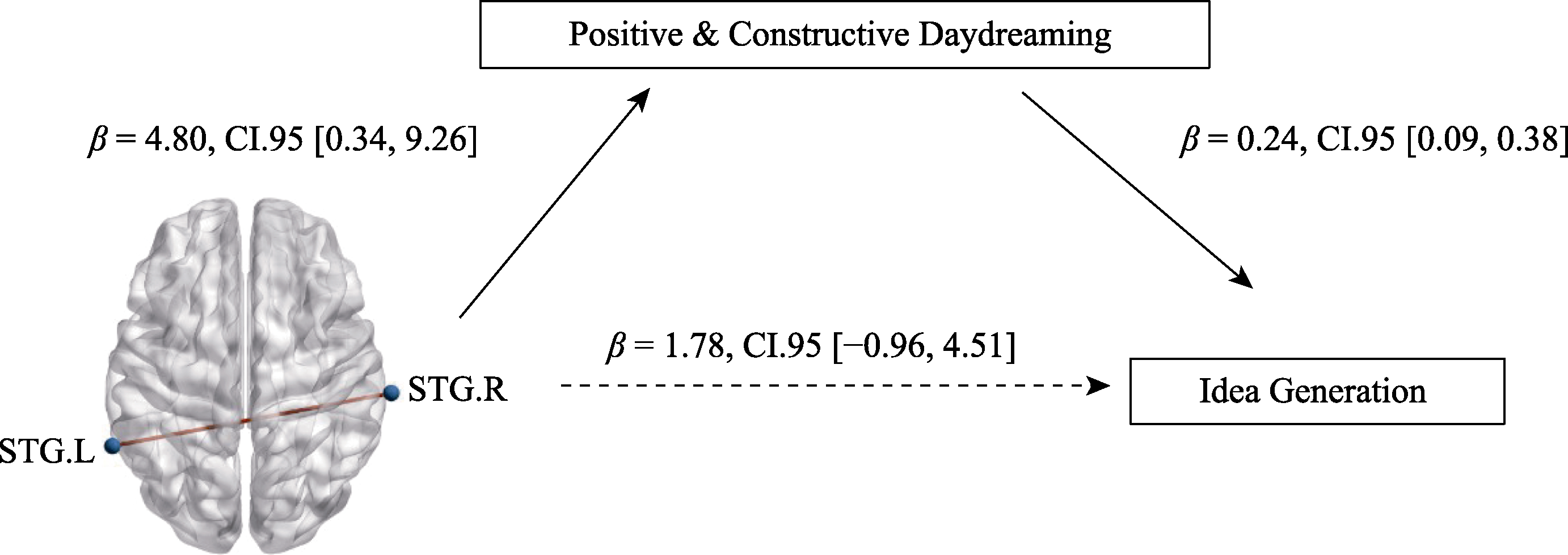
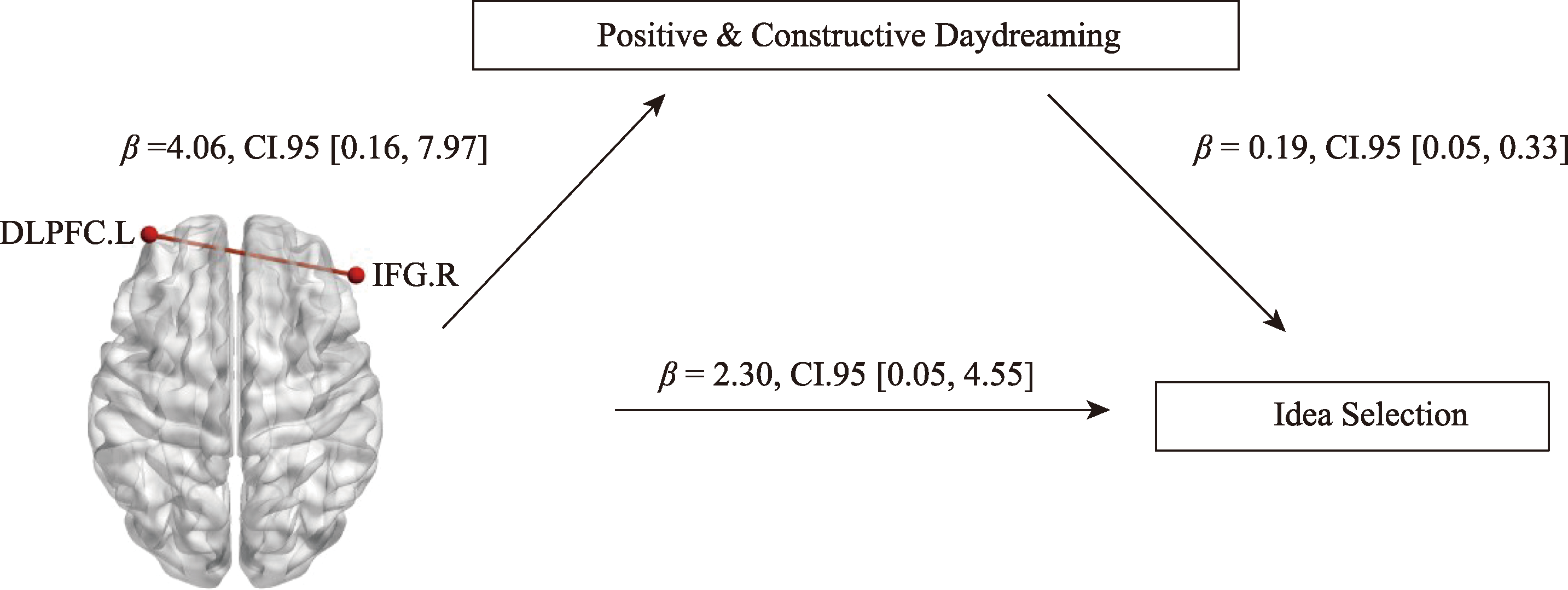
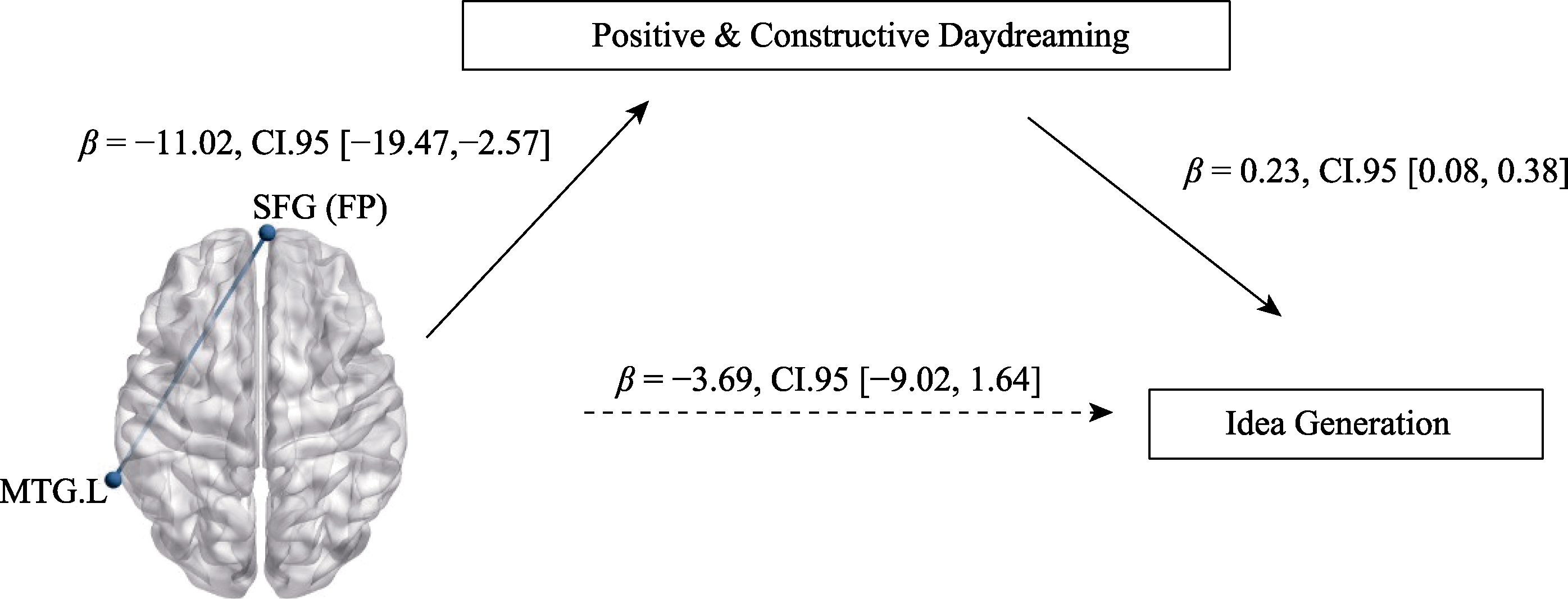
In Experiment 1 (trait level), resting-state brain activity was recorded via fNIRS. Participants completed the Generation and Selection Questionnaire (GSQ) to assess creative thinking at the trait level and the Short Imaginal Processes Inventory (SIPI) to measure positive-constructive daydreaming (PCD) and guilty-dysphoric daydreaming (GDD). Results showed that PCD mediated three distinct pathways: the positive relationship between functional connectivity of the bilateral superior temporal gyri and creative idea generation, the negative relationship between functional connectivity of the frontal pole and left middle temporal gyrus and creative idea generation, and the positive relationship between functional connectivity of the left dorsolateral prefrontal cortex and right inferior frontal gyrus and creative idea selection.
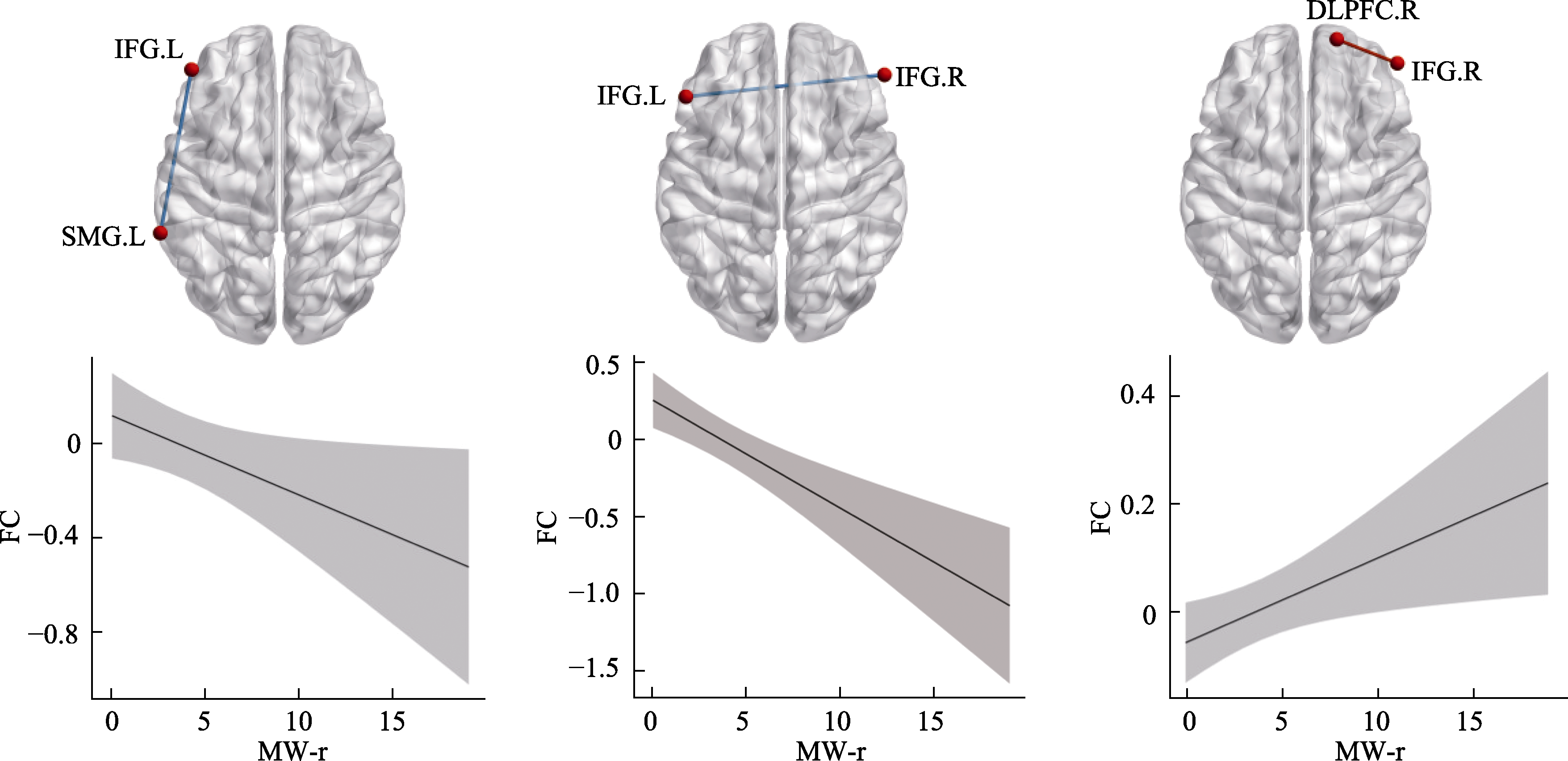
Experiment 2 (state level) employed a creative incubation paradigm. Brain activity was recorded during an Alternative Uses Task (AUT). The Sustained Attention to Response Task (SART) served as the incubation period, during which thought probes assessed deliberate (MW-d), spontaneous (MW-s), task-related (MW-r) and task-unrelated (MW-u) mind-wandering. The findings revealed that MW-r was significantly associated with higher post-incubation AUT originality, whereas MW-u showed no such association. At the neural level, MW-r was linked to decreased functional connectivity between the left inferior frontal gyrus and left supramarginal gyrus, as well as between bilateral inferior frontal gyri, and to increased dynamic functional connectivity between the right dorsolateral prefrontal cortex and right inferior frontal gyrus.
These findings elucidate the specific types of mind-wandering that are associated with creative thinking, providing a multi-level neural account that helps resolve previous contradictory findings and deepens our understanding of the adaptive potential of mind-wandering.

Key words: mind-wandering, creative thinking, positive-constructive daydreaming, task-related mind-wandering, fNIRS