
ISSN 0439-755X
CN 11-1911/B

Acta Psychologica Sinica ›› 2026, Vol. 58 ›› Issue (7): 1357-1369.doi: 10.3724/SP.J.1041.2026.1357

• Reports of Empirical Studies • Previous Articles     Next Articles

Gradient modulation of spatial metaphors for abstract concepts in L2 by embodied experience: ERP evidence

YAO Zhao1, LI Tiantian1, ZHU Xiangru2   

  1. 1School of Foreign Studies, Xi'an Jiaotong University, Xi'an 710049, China;
    2Faculty of Education, Henan University, Kaifeng 475004, China
  • Received:2025-08-27 Published:2026-07-25 Online:2026-05-15

Abstract: The embodied cognitive perspective on language suggests that the representation of abstract concepts is grounded in the human sensorimotor system, which involves perceptual, motor, and affective information. As a key representative of this theoretical framework, Conceptual Metaphor Theory provides a systematic explanation for the metaphorical nature of abstract concepts. It posits that individuals understand and represent abstract concepts by drawing on concrete spatial perceptual experiences. While the spatial metaphor effects of abstract concepts have been extensively validated in the first language (L1) domain, it remains controversial whether similar spatial metaphorical associations exist in the processing of second language (L2) abstract concepts. Therefore, this study hypothesizes that simulated embodied experience can provide sensorimotor grounding for L2 abstract concepts, thereby enhancing the stability of their metaphorical mapping onto spatial information and producing more reliable spatial metaphor effects. To this end, the present study employs ERP technology in combination with valence judgment and vertical Stroop tasks to investigate the following questions: (1) To what extent do simulated embodied experiences strengthen the metaphorical association between L2 abstract concepts and vertical spatial information? (2) What is the neural time course of this enhancement effect? (3) Do different modalities of embodied experience differentially facilitate metaphorical associations?
Two ERP experiments were designed to investigate how two types of embodied experience—visual simulation and hand movement simulation—affect the spatial metaphorical association of L2 abstract concepts and their neural time courses. Experiment 1 used a valence judgment task that incorporated a spatially oriented fixation point (upward/downward movement) to evaluate the effect of visual simulation. In contrast, Experiment 2 employed a vertical Stroop task combined with mouse-tracking technology, in which the direction of the participant's hand movement (upward/downward) was manipulated to assess the role of hand movement simulation.
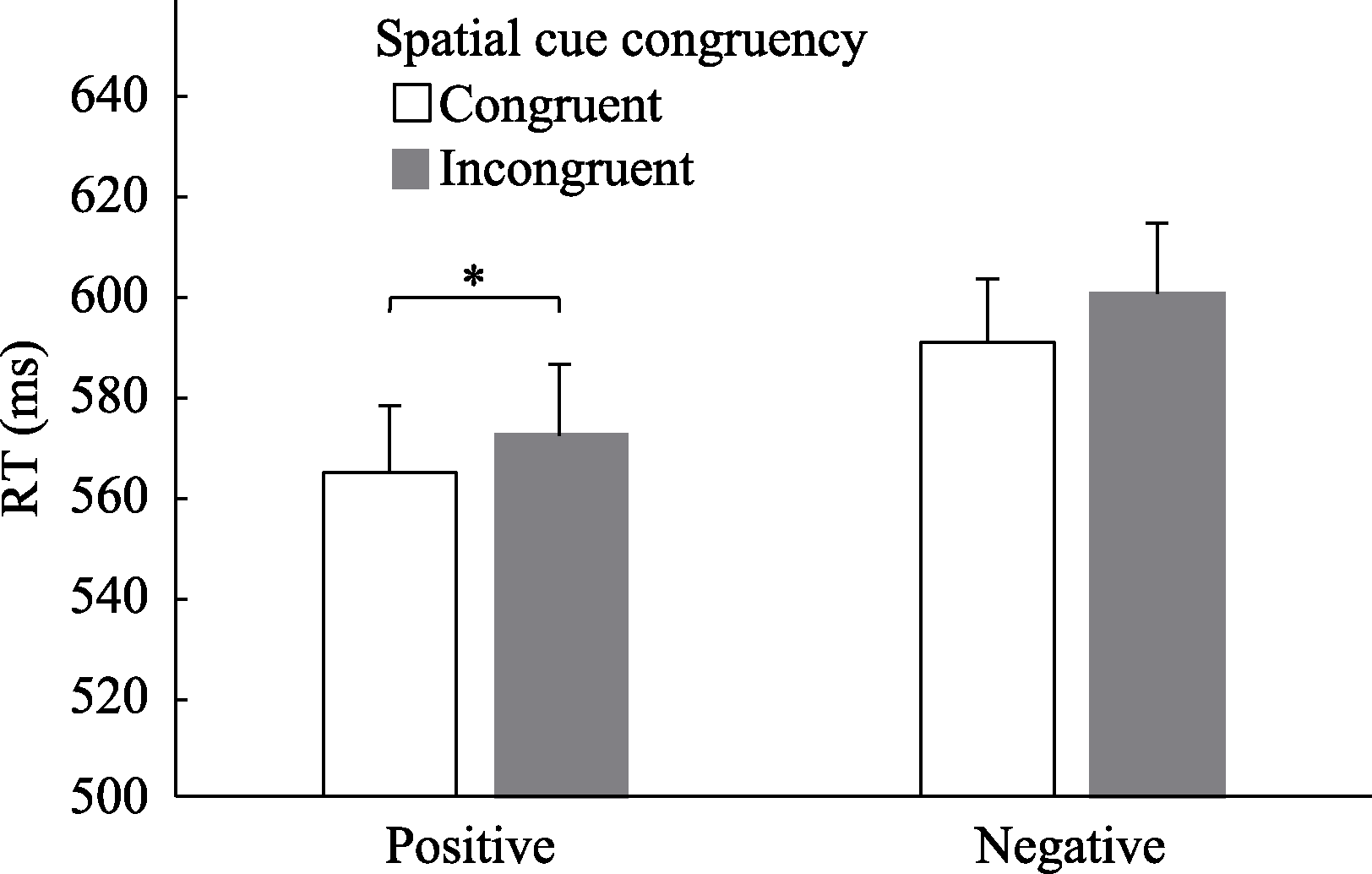
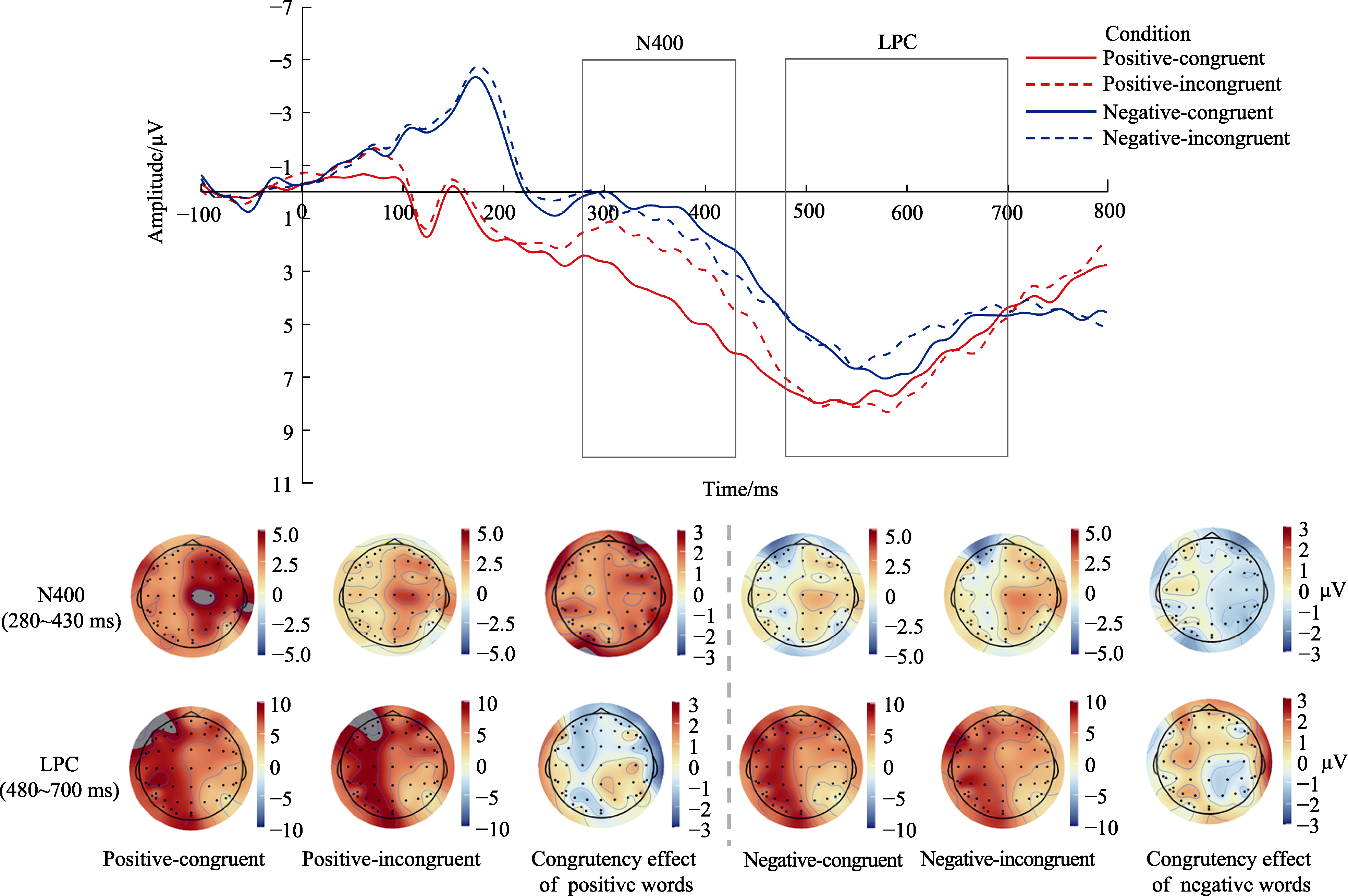
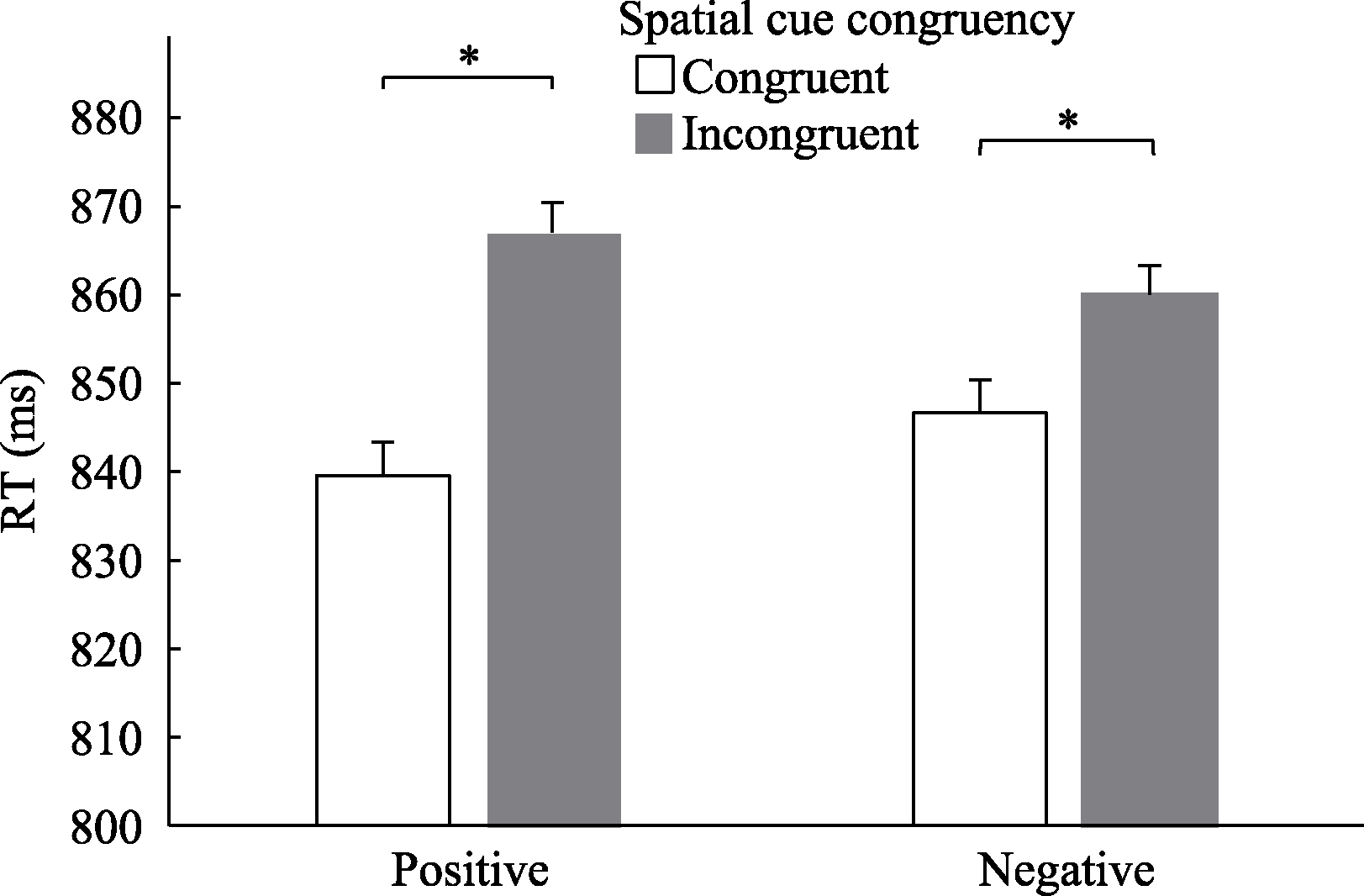
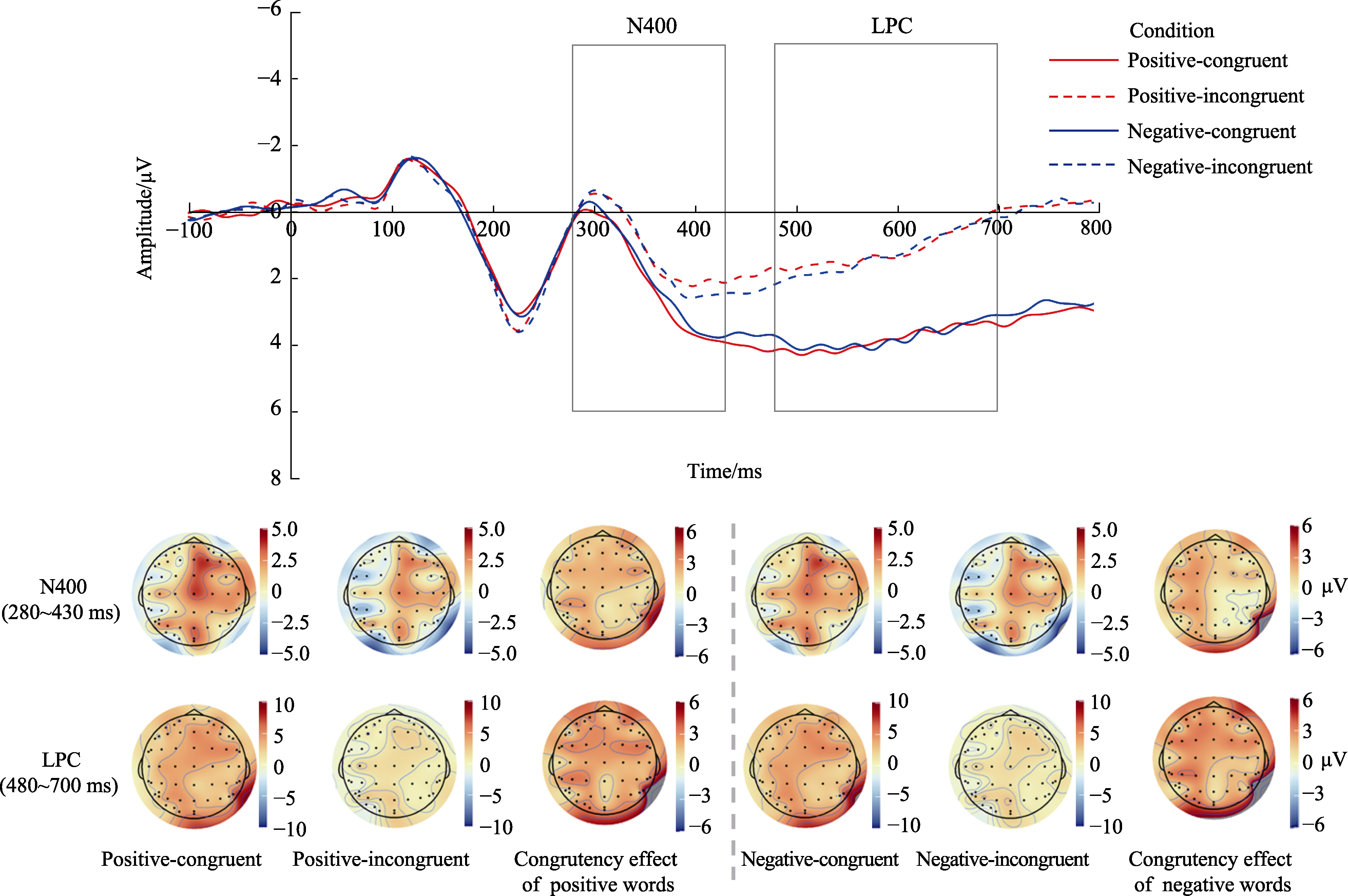
The results show that both modalities of embodied simulation effectively strengthened the metaphorical association between L2 abstract concepts and vertical space, with hand movement simulation showing a significantly stronger facilitative effect than visual simulation. Specifically, visual simulation only induced a unidirectional “positive-up” metaphorical association, as reflected in shorter reaction times for positive words presented in the upper versus lower visual field, along with a reduced N400 amplitude. In contrast, hand movement simulation elicited a bidirectional “positive-up/negative-down” association. This was evidenced by shorter reaction times, a reduced N400 amplitude, and an enhanced LPC amplitude under metaphor-congruent conditions. These results suggest that L2 abstract concepts are represented through spatial metaphors, and that embodied experiences, particularly those involving visual and motor simulation, can effectively enhance metaphorical mappings from spatial information to L2 abstract concepts. Furthermore, the types of simulation modality differentially influence the behavioral and neural correlates of L2 metaphor processing, modulating both early semantic integration (N400) and/or later cognitive resource regulation (LPC).
This study makes several significant contributions. First, it proposes and provides evidence that embodied experience can modulate the strength of spatial metaphor mappings in L2 abstract concepts, thereby expanding the explanatory scope of Conceptual Metaphor Theory in second language processing. Second, through real-time tracking of neural time courses using ERP technology, the study provides direct neuroelectrophysiological evidence supporting the view that hand movement simulation induces stronger embodied effects than visual simulation. By systematically comparing the differentiated effects of distinct embodied modalities on L2 abstract concepts, the findings also affirm the cross-linguistic universality of spatial metaphorical associations. Moreover, this work suggests that embodied simulations can offer a viable approach to enhancing the acquisition and understanding of L2 abstract concepts by compensating for the lack of direct perceptual-motor experiences in L2 learners.

Key words: L2 abstract concepts, spatial metaphor, visual simulation, hand movement simulation, ERPs