

ISSN 0439-755X
CN 11-1911/B
CN 11-1911/B
Acta Psychologica Sinica ›› 2026, Vol. 58 ›› Issue (6): 1113-1131.doi: 10.3724/SP.J.1041.2026.1113
• Reports of Empirical Studies • Previous Articles Next Articles
PAN Chaochao, XUE Meimei, YIN Yulong( ), ZHOU Aibao
Published:2026-06-25
Online:2026-04-28
Contact:
YIN Yulong
E-mail:yinhaomin2486144@nwnu.edu.cn
PAN Chaochao, XUE Meimei, YIN Yulong, ZHOU Aibao. (2026). Abnormally weakened sense of agency in schizophrenia: Evidence from behavioral and ERP studies. Acta Psychologica Sinica, 58(6), 1113-1131.
Add to citation manager EndNote|Ris|BibTeX
URL: https://journal.psych.ac.cn/acps/EN/10.3724/SP.J.1041.2026.1113
| Variable | Patients (n = 103) | Controls (n = 100) | t/χ2 | p | Cohen's d |
|---|---|---|---|---|---|
| Gender (Male/Female) | 51/52 | 50/50 | 0.01 | 0.95 | 0.01 |
| Age (years) | 34.56 ± 8.87 | 36.91 ± 11.37 | 1.75 | 0.08 | 0.25 |
| Education (years) | 9.05 ± 3.66 | 9.59 ± 3.12 | 1.24 | 0.21 | 0.17 |
| Illness Duration (years) | 9.60 ± 7.04 | - | - | - | - |
| SAPS | 31.02 ± 8.64 | - | - | - | - |
| SANS | 35.67 ± 9.97 | - | - | - | - |
| Antipsychotic dosage (chlorpromazine equivalent, mg/day) | 340.74 ± 180.04 | - | - | - | - |
Table 1 Demographic and Clinical Characteristics of participants (M ± SD).
| Variable | Patients (n = 103) | Controls (n = 100) | t/χ2 | p | Cohen's d |
|---|---|---|---|---|---|
| Gender (Male/Female) | 51/52 | 50/50 | 0.01 | 0.95 | 0.01 |
| Age (years) | 34.56 ± 8.87 | 36.91 ± 11.37 | 1.75 | 0.08 | 0.25 |
| Education (years) | 9.05 ± 3.66 | 9.59 ± 3.12 | 1.24 | 0.21 | 0.17 |
| Illness Duration (years) | 9.60 ± 7.04 | - | - | - | - |
| SAPS | 31.02 ± 8.64 | - | - | - | - |
| SANS | 35.67 ± 9.97 | - | - | - | - |
| Antipsychotic dosage (chlorpromazine equivalent, mg/day) | 340.74 ± 180.04 | - | - | - | - |

Figure 1. Schematic diagram of the baseline task and action task in the temporal estimation paradigm.
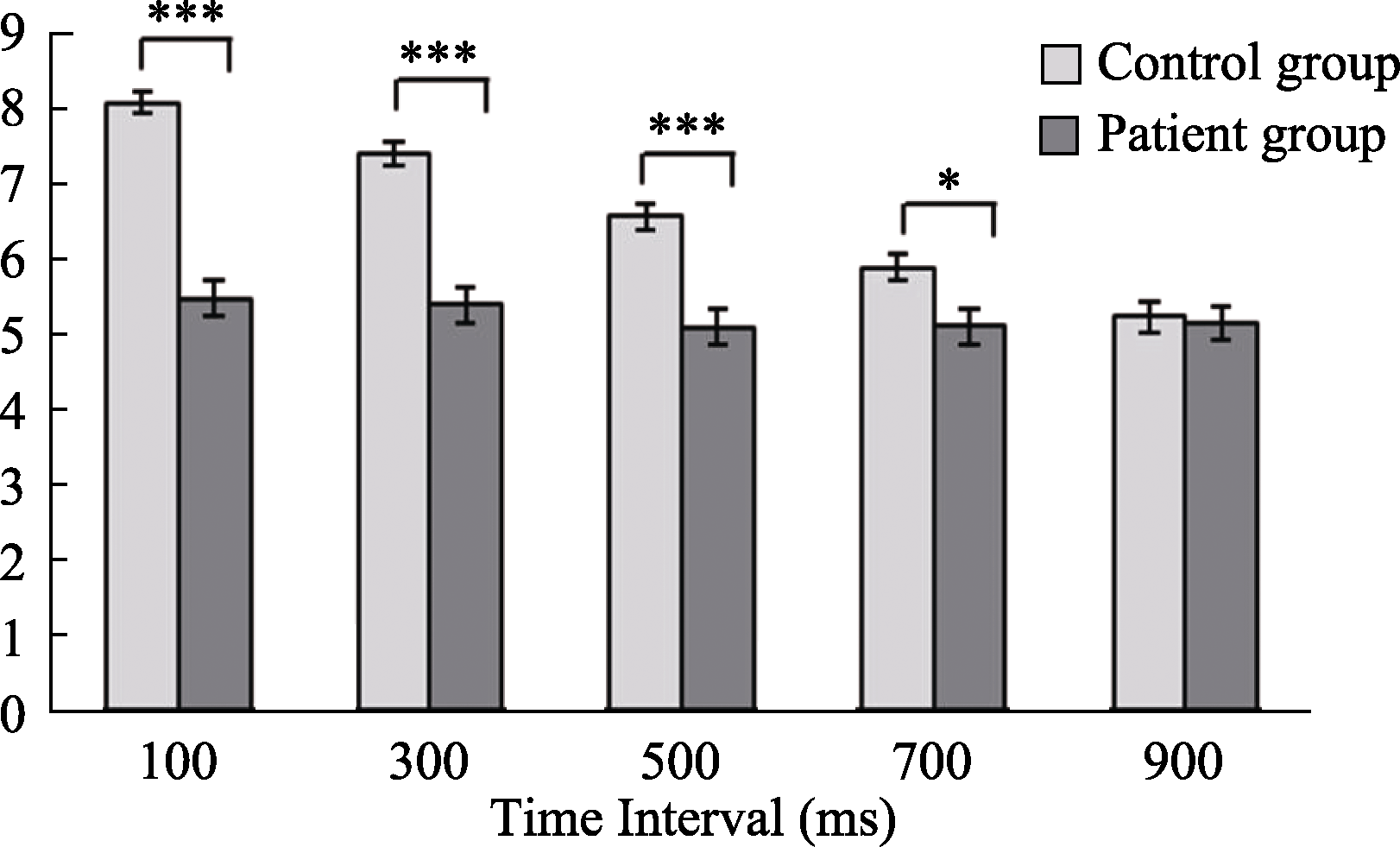
Figure 2. Sense of agency ratings of participants in the two groups. Note: *p <.05, **p <.01, ***p <.001.
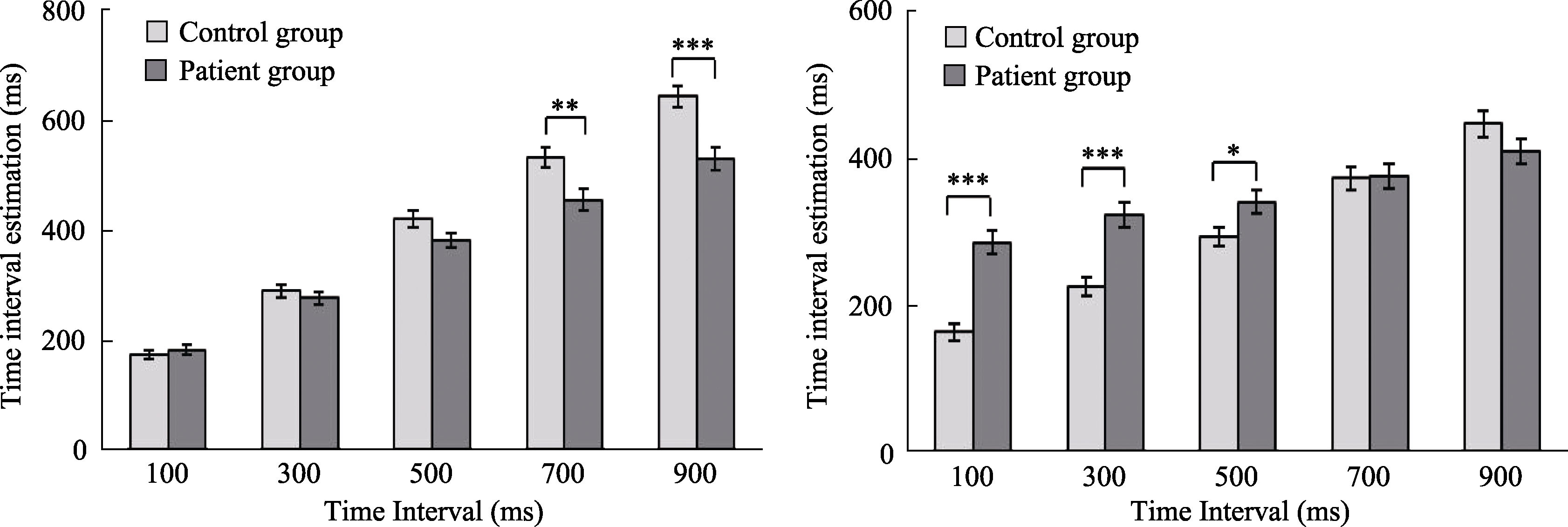
Figure 3. Temporal interval estimates in the baseline task and action task.
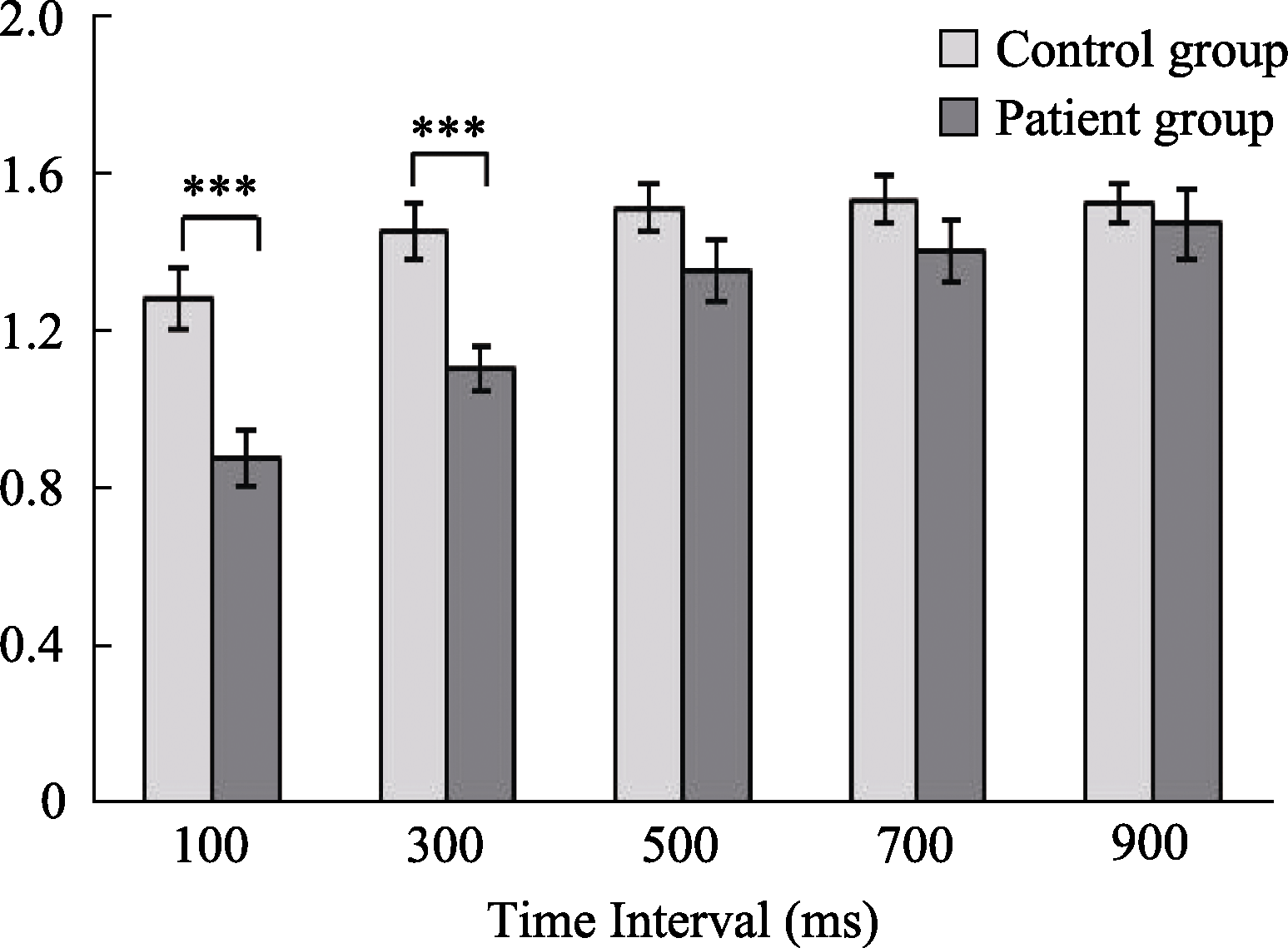
Figure 4. Intentional binding magnitude of participants in the two groups at different temporal intervals.

Figure 5. Correlations among sense of agency ratings, temporal interval estimates, and intentional binding magnitude at different temporal intervals. Note: B = temporal interval estimate in the baseline task; A = temporal interval estimate in the action task; R = intentional binding magnitude; AA = sense of agency rating.
| Variables | Sense of agency ratings | Psychotic symptoms | |||||
|---|---|---|---|---|---|---|---|
| 100 ms | 300 ms | 500 ms | 700 ms | 900 ms | SAPS | SANS | |
| 100 ms | 1.00 | ||||||
| 300 ms | 0.92** | 1.00 | |||||
| 500 ms | 0.87** | 0.96** | 1.00 | ||||
| 700 ms | 0.78** | 0.91** | 0.96** | 1.00 | |||
| 900 ms | 0.73* | 0.87** | 0.93** | 0.96** | 1.00 | ||
| SAPS | ?0.22* | ?0.23* | ?0.24** | ?0.25** | ?0.27** | 1.00 | |
| SANS | 0.02 | 0.06 | 0.03 | 0.02 | ?0.01 | 0.33** | 1.00 |
Table 2 Correlation between sense of agency ratings and psychotic symptoms
| Variables | Sense of agency ratings | Psychotic symptoms | |||||
|---|---|---|---|---|---|---|---|
| 100 ms | 300 ms | 500 ms | 700 ms | 900 ms | SAPS | SANS | |
| 100 ms | 1.00 | ||||||
| 300 ms | 0.92** | 1.00 | |||||
| 500 ms | 0.87** | 0.96** | 1.00 | ||||
| 700 ms | 0.78** | 0.91** | 0.96** | 1.00 | |||
| 900 ms | 0.73* | 0.87** | 0.93** | 0.96** | 1.00 | ||
| SAPS | ?0.22* | ?0.23* | ?0.24** | ?0.25** | ?0.27** | 1.00 | |
| SANS | 0.02 | 0.06 | 0.03 | 0.02 | ?0.01 | 0.33** | 1.00 |
| Variables | Time interval estimation | Psychotic symptoms | |||||
|---|---|---|---|---|---|---|---|
| 100 ms | 300 ms | 500 ms | 700 ms | 900 ms | SAPS | SANS | |
| 100 ms | 1.00 | ||||||
| 300 ms | 0.83** | 1.00 | |||||
| 500 ms | 0.64** | 0.77** | 1.00 | ||||
| 700 ms | 0.49** | 0.66** | 0.89** | 1.00 | |||
| 900 ms | 0.26** | 0.44** | 0.72** | 0.85** | 1.00 | ||
| SAPS | 0.24** | 0.18* | 0.05 | 0.06 | ?0.06 | 1.00 | |
| SANS | 0.04 | ?0.05 | ?0.09 | ?0.09 | 0.03 | 0.33** | 1.00 |
Table 3 Correlation matrix between time interval estimation in the action task and psychotic symptoms
| Variables | Time interval estimation | Psychotic symptoms | |||||
|---|---|---|---|---|---|---|---|
| 100 ms | 300 ms | 500 ms | 700 ms | 900 ms | SAPS | SANS | |
| 100 ms | 1.00 | ||||||
| 300 ms | 0.83** | 1.00 | |||||
| 500 ms | 0.64** | 0.77** | 1.00 | ||||
| 700 ms | 0.49** | 0.66** | 0.89** | 1.00 | |||
| 900 ms | 0.26** | 0.44** | 0.72** | 0.85** | 1.00 | ||
| SAPS | 0.24** | 0.18* | 0.05 | 0.06 | ?0.06 | 1.00 | |
| SANS | 0.04 | ?0.05 | ?0.09 | ?0.09 | 0.03 | 0.33** | 1.00 |
| Variables | Intentional binding magnitude | Psychotic symptoms | |||||
|---|---|---|---|---|---|---|---|
| 100 ms | 300 ms | 500 ms | 700 ms | 900 ms | SAPS | SANS | |
| 100 ms | 1.00 | ||||||
| 300 ms | 0.68** | 1.00 | |||||
| 500 ms | 0.53** | 0.58** | 1.00 | ||||
| 700 ms | 0.46** | 0.47** | 0.82** | 1.00 | |||
| 900 ms | 0.39** | 0.35** | 0.77** | 0.83** | 1.00 | ||
| SAPS | ?0.22* | ?0.07 | ?0.01 | ?0.00 | 0.03 | 1.00 | |
| SANS | ?0.10 | ?0.07 | ?0.04 | ?0.08 | ?0.16 | 0.33** | 1.00 |
Table 4 Correlation between sense of agency ratings and psychotic symptoms
| Variables | Intentional binding magnitude | Psychotic symptoms | |||||
|---|---|---|---|---|---|---|---|
| 100 ms | 300 ms | 500 ms | 700 ms | 900 ms | SAPS | SANS | |
| 100 ms | 1.00 | ||||||
| 300 ms | 0.68** | 1.00 | |||||
| 500 ms | 0.53** | 0.58** | 1.00 | ||||
| 700 ms | 0.46** | 0.47** | 0.82** | 1.00 | |||
| 900 ms | 0.39** | 0.35** | 0.77** | 0.83** | 1.00 | ||
| SAPS | ?0.22* | ?0.07 | ?0.01 | ?0.00 | 0.03 | 1.00 | |
| SANS | ?0.10 | ?0.07 | ?0.04 | ?0.08 | ?0.16 | 0.33** | 1.00 |
| Variables | Schizophrenia patient group (n = 24) | Healthy control group (n = 24) | t | p | Cohen's d |
|---|---|---|---|---|---|
| Gender(Male/Female) | 13/11 | 10/14 | 0.75 | 0.38 | 0.13 |
| Age (years) | 33.33 ± 8.84 | 35.00 ± 14.51 | 0.42 | 0.67 | 0.14 |
| Education (years) | 10.78 ± 2.32 | 12.31 ± 3.07 | 1.71 | 0.10 | 0.57 |
| SAPS | 35.14 ± 6.76 | ||||
| SANS | 37.65 ± 10.07 | ||||
| Medication dose (mg, CPZ equiv.) | 370.88 ± 152.43 |
Table 5 Demographic information of participants (Mean ± SD)
| Variables | Schizophrenia patient group (n = 24) | Healthy control group (n = 24) | t | p | Cohen's d |
|---|---|---|---|---|---|
| Gender(Male/Female) | 13/11 | 10/14 | 0.75 | 0.38 | 0.13 |
| Age (years) | 33.33 ± 8.84 | 35.00 ± 14.51 | 0.42 | 0.67 | 0.14 |
| Education (years) | 10.78 ± 2.32 | 12.31 ± 3.07 | 1.71 | 0.10 | 0.57 |
| SAPS | 35.14 ± 6.76 | ||||
| SANS | 37.65 ± 10.07 | ||||
| Medication dose (mg, CPZ equiv.) | 370.88 ± 152.43 |
| Variables | Schizophrenia patient group | Healthy control group | t | p | Cohen's d |
|---|---|---|---|---|---|
| Sense of agency rating | 5.25 ± 2.29 | 6.63 ± 1.21 | 4.15 | < 0.001 | 1.25 |
| Intentional binding magnitude | 1.23 ± 0.53 | 1.46 ± 0.37 | 2.70 | 0.008 | 0.83 |
Table 6 Descriptive statistics for sense of agency ratings and intentional binding magnitude in both groups (M ± SD)
| Variables | Schizophrenia patient group | Healthy control group | t | p | Cohen's d |
|---|---|---|---|---|---|
| Sense of agency rating | 5.25 ± 2.29 | 6.63 ± 1.21 | 4.15 | < 0.001 | 1.25 |
| Intentional binding magnitude | 1.23 ± 0.53 | 1.46 ± 0.37 | 2.70 | 0.008 | 0.83 |
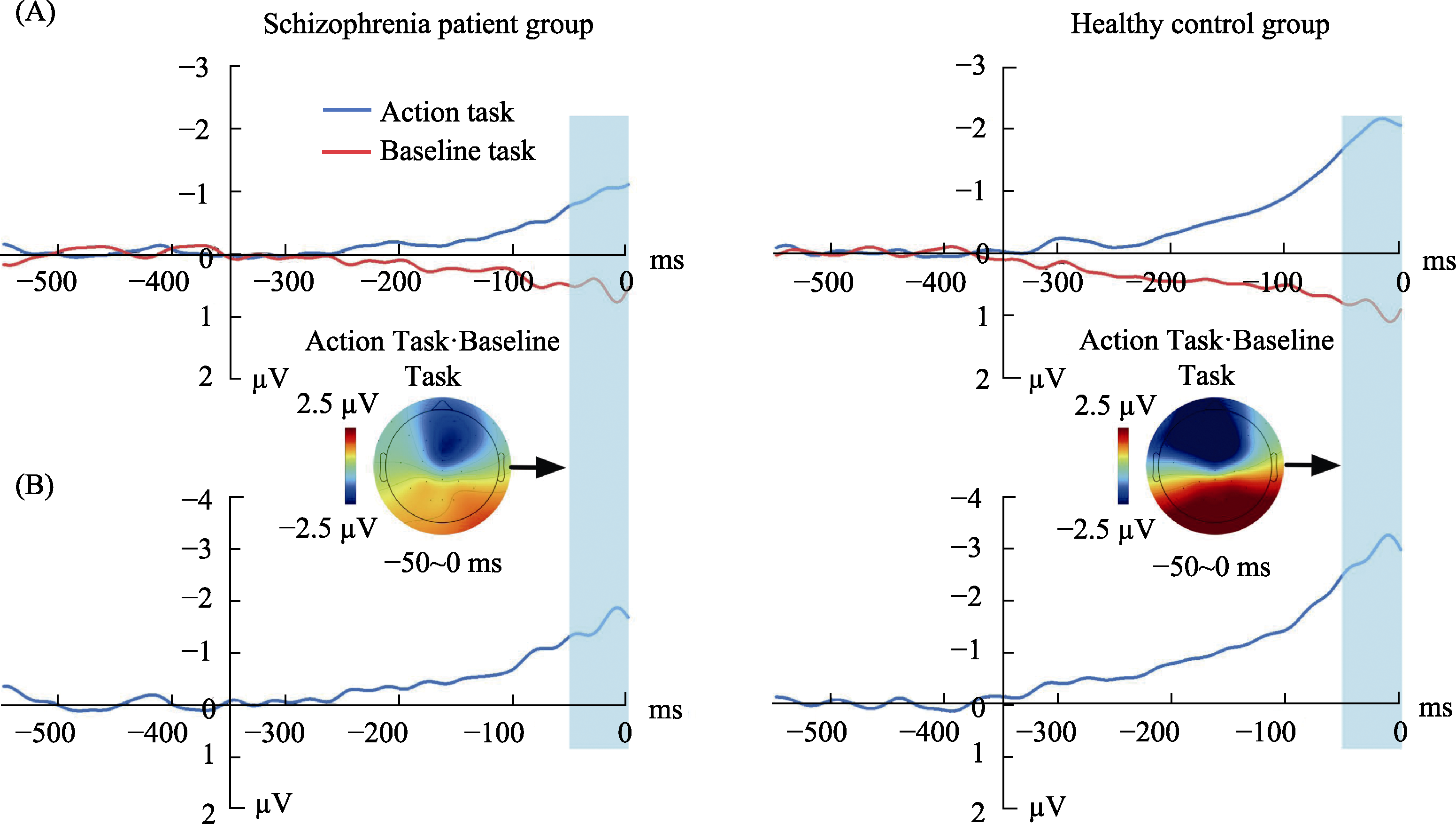
Figure 6. Readiness potential waveforms and topographical maps (?50~0 ms) elicited at the selected electrodes for participants in the two groups.
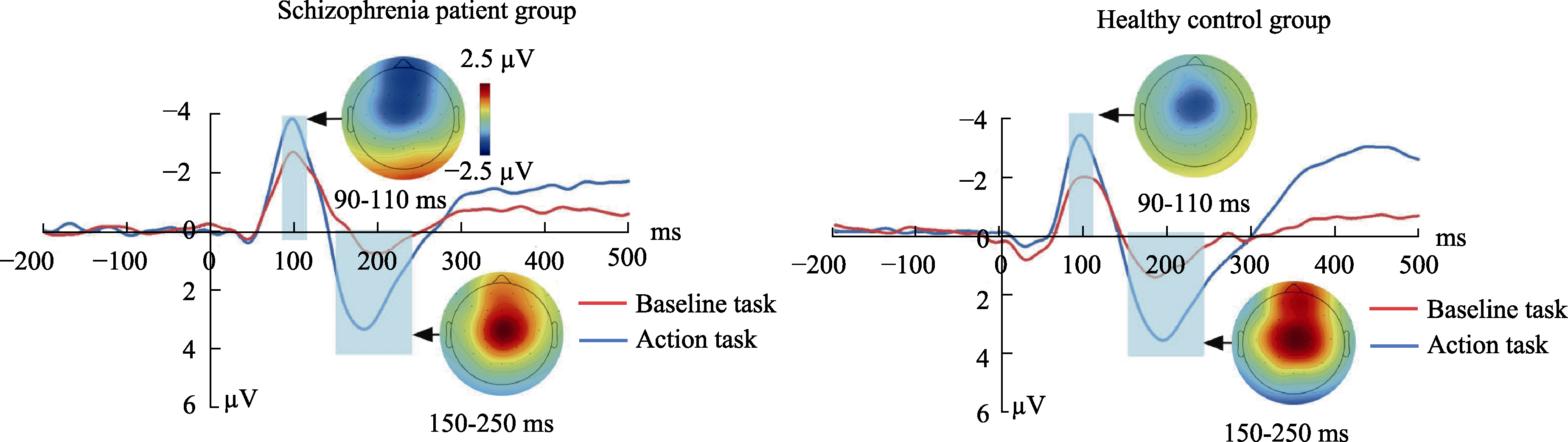
Figure 7. N1 and P2 waveforms and topographical maps elicited by participants in the two groups during the baseline task and action task.
| Variables | Schizophrenia patient group(n = 20) | Healthy control group (n = 22) | t | p |
|---|---|---|---|---|
| N1 suppression | ?1.02± 1.26 | ?1.22 ± 1.78 | ?0.38 | 0.70 |
| P2 suppression | 1.82 ± 0.91 | 1.92 ± 1.14 | ?0.26 | 0.79 |
Table 7 Descriptive statistics for N1 and P2 suppression (Mean ± SD)
| Variables | Schizophrenia patient group(n = 20) | Healthy control group (n = 22) | t | p |
|---|---|---|---|---|
| N1 suppression | ?1.02± 1.26 | ?1.22 ± 1.78 | ?0.38 | 0.70 |
| P2 suppression | 1.82 ± 0.91 | 1.92 ± 1.14 | ?0.26 | 0.79 |
| [1] |
Adler G., & Adler J. (1989). Influence of stimulus intensity on AEP components in the 80- to 200-millisecond latency range. Audiology, 28(6), 316-324.
pmid: 2597095 |
| [2] |
Aliu S. O., Houde J. F., & Nagarajan S. S. (2009). Motor-induced suppression of the auditory cortex. Journal of Cognitive Neuroscience, 21, 791-802.
doi: 10.1162/jocn.2009.21055 pmid: 18593265 |
| [3] | Asai T., & Tanno Y. (2008). Highly schizotypal students have a weaker sense of self-agency. Psychiatry and Clinical Neuroences, 62(1), 115-119. |
| [4] |
Baess P., Horvath J., Jacobsen T., & Schröger E. (2011). Selective suppression of self-initiated sounds in an auditory stream: An ERP study. Psychophysiology, 48(9), 1276-1283.
doi: 10.1111/j.1469-8986.2011.01196.x pmid: 21449953 |
| [5] |
Blakemore S.-J., Smith J., Steel R., Johnstone E. C., & Frith C. D. (2000). The perception of self-produced sensory stimuli in patients with auditory hallucinations and passivity experiences: Evidence for a breakdown in self-monitoring. Psychological Medicine, 30(5), 1131-1139.
doi: 10.1017/s0033291799002676 pmid: 12027049 |
| [6] |
Carroll C. A., O’Donnell B. F., Shekhar A., & Hetrick W. P. (2009). Timing dysfunctions in schizophrenia span from millisecond to several-second durations. Brain and Cognition, 70(2), 181-190.
doi: 10.1016/j.bandc.2009.02.001 pmid: 19282082 |
| [7] |
Chen K. C., Lee I. H., Yeh T. L., Chiu N. T., Chen P. S., Yang Y. K., … Chen C. C. (2012). Schizotypy trait and striatal dopamine receptors in healthy volunteers. Psychiatry Research - Neuroimaging, 201(3), 218-221.
doi: 10.1016/j.pscychresns.2011.07.003 URL |
| [8] | Donati F. L., Fecchio M., Maestri D., Cornali M., Derchi C. C., Casetta C.,... D’Agostino A. (2021). Reduced readiness potential and post-movement beta synchronization reflect self-disorders in early course schizophrenia. Scientific Reports, 11(1), 15044. |
| [9] |
Duzcu H., Özkurt T. E., Mapelli I., & Hohenberger A. (2019). N1-P2: Neural markers of temporal expectation and response discrimination in interval timing. Acta Neurobiologiae Experimentalis, 79(2), 193-204.
pmid: 31342955 |
| [10] |
Howes O. D., Shotbolt P., Bloomfield M., Daalman K., Demjaha A., Diederen K. M. J., … Sommer I. E. (2013). Dopaminergic function in the psychosis spectrum: An [18F]-DOPA imaging study in healthy individuals with auditory hallucinations. Schizophrenia Bulletin, 39(4), 807-814.
doi: 10.1093/schbul/sbr195 pmid: 22282457 |
| [11] |
Davalos D. B., Kisley M. A., & Ross R. G. (2003). Effects of interval duration on temporal processing in schizophrenia. Brain and Cognition, 52(3), 295-301.
pmid: 12907174 |
| [12] | Dewey J. A., & Knoblich G. (2014). Do implicit and explicit measures of the sense of agency measure the same thing? PLoS One, 9(10), 110-118. |
| [13] |
Dodgson G., & Gordon S. (2009). Avoiding false negatives: Are some auditory hallucinations an evolved design flaw? Behavioural and Cognitive Psychotherapy, 37(3), 325-334.
doi: 10.1017/S1352465809005244 pmid: 19371459 |
| [14] | Donati F. L., Fecchio M., Maestri D., Cornali M., Derchi C. C., Casetta C.,... D’Agostino A. (2021). Reduced readiness potential and post-movement beta synchronization reflect self-disorders in early course schizophrenia. Scientific Reports, 11(1), 15044. |
| [15] |
Dreher J. C., Trapp W., Banquet J. P., Keil M., W. Günther, & Burnod Y. (1999). Planning dysfunction in schizophrenia: Impairment of potentials preceding fixed/free and single/sequence of self-initiated finger movements. Experimental Brain Research, 124(2), 200-214.
doi: 10.1007/s002210050615 pmid: 9928843 |
| [16] |
Ebert J. P., & Wegner D. M. (2010). Time warp: Authorship shapes the perceived timing of actions and events. Consciousness and Cognition, 19(1), 481-489.
doi: 10.1016/j.concog.2009.10.002 pmid: 19896868 |
| [17] |
Elvevåg B., Mccormack T., Gilbert A., Brown G, Weinberger D. R., & Goldberg T. E. (2003). Duration judgements in patients with schizophrenia. Psychological Medicine, 33(7), 1249-1261.
pmid: 14580079 |
| [18] |
Exner C., Weniger G., Schmidt-Samoa C., & Irle E. (2006). Reduced size of the pre-supplementary motor cortex and impaired motor sequence learning in first-episode schizophrenia. Schizophrenia Research, 84(2-3), 386-396.
pmid: 16624528 |
| [19] |
Ford J. M., Gray M., Faustman W. O., Roach B. J., & Mathalon D. H. (2007). Dissecting corollary discharge dysfunction in schizophrenia. Psychophysiology, 44(4), 522-529.
doi: 10.1111/j.1469-8986.2007.00533.x pmid: 17565658 |
| [20] |
Gallagher S. (2000). Philosophical conceptions of the self: Implications for cognitive science. Trends in Cognitive Sciences, 4(1), 14-21.
doi: 10.1016/s1364-6613(99)01417-5 pmid: 10637618 |
| [21] | Garbarini F., Mastropasqua A., Sigaudo M., Rabuffetti M., Piedimonte A., Pia L., & Rocca P. (2016). Abnormal sense of agency in patients with schizophrenia: Evidence from bimanual coupling paradigm. Frontiers in Behavioral Neuroscience, 10(43), 1?10. |
| [22] |
Gentsch A., Kathmann N., & Schutz-Bosbach S. (2012). Reliability of sensory predictions determines the experience of self-agency. Behavioural Brain Research, 228(2), 415-422.
doi: 10.1016/j.bbr.2011.12.029 pmid: 22212711 |
| [23] |
Gentsch A., & Schutz-Bosbach S. (2011). I did it: Unconscious expectation of sensory consequences modulates the experience of self-agency and its functional signature. Journal of Cognitive Neuroscience, 23(12), 3817-3828.
doi: 10.1162/jocn_a_00012 pmid: 21452945 |
| [24] |
Goldberg M., Busch N., & van der Meer E. (2017). The amount of recent action-outcome coupling modulates the mechanisms of the intentional binding effect: A behavioral and ERP study. Consciousness and Cognition, 56, 135-149.
doi: S1053-8100(16)30229-X pmid: 28716392 |
| [25] |
Graham-Schmidt K. T., Martin-Iverson M. T., Holmes N. P., & Waters F. A. V. (2016). When one’s sense of agency goes wrong: Absent modulation of time perception by voluntary actions and reduction of perceived length of intervals in passivity symptoms in schizophrenia. Consciousness and Cognition, 45, 9-23.
doi: S1053-8100(16)30238-0 pmid: 27544689 |
| [26] |
Graham-Schmidt K. T., Martin-Iverson M. T., & Waters F. A. V. (2017). Self- and other-agency in people with passivity (first rank) symptoms in schizophrenia. Schizophrenia Research, 192, 75-81.
doi: 10.1016/j.schres.2017.04.024 URL |
| [27] |
Gu J. J., Zhao K., & Fu X. L. (2020). The sense of agency and the attribution of responsibility in human behavior. China Science Bulletin, 65(19), 1902-1911.
doi: 10.1360/TB-2019-0715 URL |
| [28] |
Haggard P. (2017). Sense of agency in the human brain. Nature Reviews Neuroscience, 18(4), 196-207.
doi: 10.1038/nrn.2017.14 pmid: 28251993 |
| [29] |
Haggard P. (2008). Human volition: Towards a neuroscience of will. Nature Reviews Neuroscience, 9(12), 934-946.
doi: 10.1038/nrn2497 pmid: 19020512 |
| [30] |
Han N., Jack B. N., Hughes G., Elijah R. B., & Whitford. T. J. (2021). Sensory attenuation in the absence of movement: Differentiating motor action from sense of agency. Cortex, 141, 436-448.
doi: 10.1016/j.cortex.2021.04.010 pmid: 34146742 |
| [31] |
Horváth J. (2015). Action-related auditory ERP attenuation: Paradigms and hypotheses. Brain Research, 1626, 54-65.
doi: 10.1016/j.brainres.2015.03.038 pmid: 25843932 |
| [32] |
Huang Y. Q., Wang Y., Wang H., Liu Z., Yu Y., Kou C., … Wu Y. (2019). Prevalence of mental disorders in China: A cross-sectional epidemiological study. The Lancet Psychiatry, 6(3), 211-224.
doi: 10.1016/S2215-0366(18)30511-X URL |
| [33] |
Hughes G. (2018). The role of the temporoparietal junction in implicit and explicit sense of agency. Neuropsychologia, 113, 1-5.
doi: S0028-3932(18)30113-1 pmid: 29567107 |
| [34] |
Hughes G., Desantis A., & Waszak F. (2013). Attenuation of auditory N1 results from identity-specific action-effect prediction. European Journal of Neuroscience, 37(7), 1152-1158.
doi: 10.1111/ejn.12120 pmid: 23331545 |
| [35] |
Hughes G., & Waszak F. (2011). ERP correlates of action effect prediction and visual sensory attenuation in voluntary action. Neuroimage, 56(3), 1632-1640.
doi: 10.1016/j.neuroimage.2011.02.057 pmid: 21352924 |
| [36] |
Hur J.-W., Kwon J. S., Lee T. Y., & Park S. (2014). The crisis of minimal self-awareness in schizophrenia: A meta-analytic review. Schizophrenia Research, 152(1), 58-64.
doi: 10.1016/j.schres.2013.08.042 URL |
| [37] |
Imaizumi S., & Tanno Y. (2019). Intentional binding coincides with explicit sense of agency. Consciousness and Cognition, 67, 1-15.
doi: S1053-8100(18)30288-5 pmid: 30471470 |
| [38] | Jo H. G., Wittmann M., Hinterberger T., & Schmidt S. (2014). The readiness potential reflects intentional binding. Frontiers in Human Neuroscience, 8, 421. https://doi.org/10.3389/fnhum.2014.00421 |
| [39] |
Kapur S. (2003). Psychosis as a state of aberrant salience: A framework linking biology, phenomenology, and pharmacology in schizophrenia. American Journal of Psychiatry, 160(1), 13-23.
doi: 10.1176/appi.ajp.160.1.13 pmid: 12505794 |
| [40] |
Khalighinejad N., Di Costa S., & Haggard P. (2016). Endogenous action selection processes in dorsolateral prefrontal cortex contribute to sense of agency: A meta-analysis of tDCS studies of “intentional binding”. Brain Stimulation, 9(3), 372-379.
doi: S1935-861X(16)00009-7 pmid: 26896324 |
| [41] |
Kieling C., Buchweitz C., Caye A., Silvani J., Ameis S. H., Brunoni A. R.,... Szatmari P. (2024). Worldwide prevalence and disability from mental disorders across childhood and adolescence: Evidence from the global burden of disease study. JAMA psychiatry. 81(4), 347-356. https://doi.org/10.1001/jamapsychiatry.2023.5051
doi: 10.1001/jamapsychiatry.2023.5051 URL pmid: 38294785 |
| [42] |
Klaffehn A. L., Baess P., Kunde W., & Pfister R. (2019). Sensory attenuation prevails when controlling for temporal predictability of self- and externally generated tones. Neuropsychologia, 132, 107145-107145.
doi: 10.1016/j.neuropsychologia.2019.107145 URL |
| [43] |
Knolle F., Schröger E., & Kotz S. A. (2013). Prediction errors in self- and externally-generated deviants. Biological Psychology, 92, 410-416.
doi: 10.1016/j.biopsycho.2012.11.017 pmid: 23246535 |
| [44] |
Lange K. (2011). The reduced N1 to self-generated tones: An effect of temporal predictability? Psychophysiology, 48(8), 1088-1095.
doi: 10.1111/j.1469-8986.2010.01174.x pmid: 21261634 |
| [45] |
Lee K.-H., Bhaker R. S., Mysore A., Parks R. W., Birkett P. B. L., & Woodruff P. W. R. (2009). Time perception and its neuropsychological correlates in patients with schizophrenia and in healthy volunteers. Psychiatry Research, 166(2-3), 174-183.
doi: 10.1016/j.psychres.2008.03.004 URL |
| [46] |
Legaspi R., & Toyoizumi T. (2019). A Bayesian psychophysics model of sense of agency. Nature Communications, 10(1), 1-11.
doi: 10.1038/s41467-018-07882-8 |
| [47] | Li Y. H., Wang K., & Chen X., W. (2010). Time perception in patients with Parkinson's disease. Chinese Journal of Neurology, 43(9), 622-625. |
| [48] |
Maeda T., Takahata K., Muramatsu T., Okimura T., Koreki A., & Iwashita S., … Kato M. (2013). Reduced sense of agency in chronic schizophrenia with predominant negative symptoms. Psychiatry Research, 209(3), 386-392.
doi: 10.1016/j.psychres.2013.04.017 pmid: 23680465 |
| [49] |
Moccia L., di Luzio M., Conte E., Modica M., Ambrosecchia M., Ardizzi M.,... Sani G. (2024). Sense of agency and its disturbances: A systematic review targeting the intentional binding effect in neuropsychiatric disorders. Psychiatry and Clinical Neurosciences, 78(1), 3-18.
doi: 10.1111/pcn.v78.1 URL |
| [50] | Oestreich L. K. L., Mifsud N. G., Ford J. M., Roach B. J., Mathalon D. H., & Whitford T. J. (2015). Cortical suppression to delayed self-initiated auditory stimuli in schizotypy: Neurophysiological evidence for a continuum of psychosis. Clinical EEG and Neuroscience, 3, 1-8. |
| [51] |
Ohata R., Asai T., Imaizumi S., & Imamizu H. (2022). I hear my voice; therefore I spoke: The sense of agency over speech is enhanced by hearing one’s own voice. Psychological Science, 33(8), 1226-1239. https://doi.org/10.1177/09567976211068880
doi: 10.1177/09567976211068880 URL pmid: 35787212 |
| [52] | Okimura T., Maeda T., Mimura M., & Yamashita Y. (2023). Aberrant sense of agency induced by delayed prediction signals in schizophrenia: A computational modeling study. Schizophrenia, 9(1), 72. |
| [53] | Pan C. C. (2022). The effect of self-alienation on psychotic symptoms——Research perspective based on schizophrenia. Journal of Psychological Science, 45(5), 1251-1258. |
| [54] |
Pan C. C., Lu H., Gong J. X., Guo Y., Li Z. K., & Xie P. (2021). High schizotypy conditionally have a weaker sense of agency. Current Psychology, 42, 5088-5094.
doi: 10.1007/s12144-021-01870-w |
| [55] |
Plana-Ripoll O., Weye N., Knudsen A. K., Hakulinen C., Madsen K. B., Christensen M. K.,... McGrath J. J. (2023). The association between mental disorders and subsequent years of working life: A Danish population-based cohort study. The Lancet Psychiatry, 10(1), 30-39.
doi: 10.1016/S2215-0366(22)00376-5 URL |
| [56] |
Poonian S. K., Mcfadyen J., Ogden J., & Cunnington R. (2015). Implicit agency in observed actions: Evidence for N1 suppression of tones caused by self-made and observed actions. Journal of Cognitive Neuroscience, 27(4), 752-764.
doi: 10.1162/jocn_a_00745 pmid: 25321488 |
| [57] |
Prikken M., van der Weiden A., Renes R. A., Koevoets G.J. C., Heering H. D., Kahn R. S., Aarts H., & van Haren N. E. M.(2017). Abnormal agency experiences in schizophrenia patients: Examining the role of psychotic symptoms and familial risk. Psychiatry Research, 250, 270-276.
doi: S0165-1781(16)30486-3 pmid: 28189096 |
| [58] |
Rammsayer T. (1990). Temporal discrimination in schizophrenic and affective disorders: Evidence for a dopamine dependent internal clock. International Journal of Neuroscience, 53(2-4), 111-120.
pmid: 2265930 |
| [59] | Rossetti I., Musco M. A., Sacheli L. M., Capuzzi E., Clerici M., Caldiroli A.,... Zapparoli L. (2025). Dissecting sense of agency in schizophrenia: A predictive coding perspective. Schizophrenia Bulletin, 52(1), sbaf054. |
| [60] |
Roy M., Grondin S., & Roy M.-A. (2012). Time perception disorders are related to working memory impairment in schizophrenia. Psychiatry Research, 200(2-3), 159-166.
doi: 10.1016/j.psychres.2012.06.008 pmid: 22862910 |
| [61] |
Salomon R., Kannape O. A., Debarba H. G., Kaliuzhna M., Schneider M., Faivre N.,... Blanke O. (2022). Agency deficits in a human genetic model of schizophrenia: Insights from 22q11DS patients. Schizophrenia bulletin, 48(2), 495-504.
doi: 10.1093/schbul/sbab143 URL |
| [62] |
Sato A., & Yasuda A. (2005). Illusion of sense of self-agency: Discrepancy between the predicted and actual sensory consequences of actions modulates the sense of self-agency, but not the sense of self-ownership. Cognition, 94(3), 241-255.
pmid: 15617673 |
| [63] | Shu Q., Duan Z. G., Hu G., & Li M. (2012). Psychological mechanisms of dopamine in psychotic symptoms of schizophrenia: Recent theoretical and empirical advances. Chinese Science Bulletin, 57(35), 3384-3398. |
| [64] |
Stekelenburg J. J., & Vroomen J. (2012). Electrophysiological correlates of predictive coding of auditory location in the perception of natural audiovisual events. Frontiers in Integrative Neuroscience, 6, 26.
doi: 10.3389/fnint.2012.00026 pmid: 22666195 |
| [65] |
Timm J., Schönwiesner M., Schröger E., & SanMiguel I. (2016). Sensory suppression of brain responses to self-generated sounds is observed with and without the perception of agency. Cortex, 80, 5-20.
doi: 10.1016/j.cortex.2016.03.018 pmid: 27137101 |
| [66] |
Travers E., Khalighinejad N., Schurger A., & Haggard P. (2019). Do readiness potentials happen all the time? NeuroImage, 206, 116286. https://doi.org/10.1016/j.neuroimage.2019.116286
doi: 10.1016/j.neuroimage.2019.116286 URL |
| [67] |
Ueda N., Maruo K., & Sumiyoshi T. (2018). Positive symptoms and time perception in schizophrenia: A meta-analysis. Schizophrenia Research: Cognition, 13, 3-6.
doi: 10.1016/j.scog.2018.07.002 URL |
| [68] |
Voss M., Moore J., Hauser M., Gallinat J., Heinz A., & Haggard P. (2010). Altered awareness of action in schizophrenia: A specific deficit in predicting action consequences. Brain, 133(10), 3104-3112.
doi: 10.1093/brain/awq152 pmid: 20685805 |
| [69] |
Whitford T. J., Mathalon D. H., Shenton M. E., Roach B. J., Bammer R., Adcock R. A., … Ford J. M. (2011). Electrophysiological and diffusion tensor imaging evidence of delayed corollary discharges in patients with schizophrenia. Psychological Medicine, 41(5), 959-969.
doi: 10.1017/S0033291710001376 pmid: 20663254 |
| [70] |
Xie X. L., Pan W. Y., Zhang C. C., Lin J. Y., & Li H. (2025). Sequential feedback influences the psychological and event-related potentials mechanism of sense of agency. Acta Psychologica Sinica, 57(3), 380-399.
doi: 10.3724/SP.J.1041.2025.0380 |
| [71] |
Zhao K., Gu J. J., Huang G. H., Zheng S., & Fu X. L. (2021). The spatiotemporal markers for the sense of agency in the human brain. Advances in Psychological Science, 29(10), 1901-1910.
doi: 10.3724/SP.J.1042.2021.01901 URL |
| [72] | Zhang M. Q., Yi P. C., & Dai T. G. (2016). A study on time perception disorder in first-episode schizophrenia patients. Modern Practical Medicine, 28(4), 461-463. |
| [73] |
Zhong Y. P., Niu N. N., Fan W., Ren M. M., & Li M. (2023). The influence of voluntary action and social distance on sense of agency: Evidence from behavioral and ERPs study. Acta Psychologica Sinica, 55(12), 1932-1948.
doi: 10.3724/SP.J.1041.2023.01932 |
| [1] | ZHONG Yiping, NIU Nana, FAN Wei, REN Mengmeng, LI Mei. The influence of voluntary action and social distance on sense of agency: Evidence from behavioral and ERPs study [J]. Acta Psychologica Sinica, 2023, 55(12): 1932-1948. |
| [2] | HUANG Xinjie, ZHANG Chi, WAN Huagen, ZHANG Lingcong. Effect of predictability of emotional valence on temporal binding [J]. Acta Psychologica Sinica, 2023, 55(1): 36-44. |
| [3] | Bu Yu-Bo, Li Li-Hong, Lv Xiang-Ling, Guo Hong-Yuan, An Can-Ling, Wang Ling-Yun. Influence of voluntary action, nature of outcomes on sense of agency under different predictability [J]. Acta Psychologica Sinica, 2022, 54(7): 789-798. |
| [4] | Meng Peixin,Zheng Richang,Cai zhuoji,Cao Dahong,Ma Liang,Liu Jun,Liu Yu. GROUP INTERVENTION FOR SCHIZOPHRENIA INPATIENT WITH ART AS MEDIUM [J]. , 2005, 37(03): 403-412. |
| [5] | Xu Xiangdong,Yang Jingquan,Lu Shuyun Oasis Hospital, Shihezi, Xinjiang. A PRELIMINARY STUDY ON SCHIZOPHRENIC PATIENT'S ABILITY TO DIFFERENTIATE FACIAL EXPRESSIONS OF ADULTS [J]. , 1992, 24(03): 83-91. |
| Viewed | ||||||
|
Full text |
|
|||||
|
Abstract |
|
|||||
