

ISSN 0439-755X
CN 11-1911/B
CN 11-1911/B
Acta Psychologica Sinica ›› 2025, Vol. 57 ›› Issue (4): 573-583.doi: 10.3724/SP.J.1041.2025.0573
• Special Issue on Prosocial Behavior (Part Ⅱ) • Previous Articles Next Articles
LI Hui( ), LIU Siyi, PANG Yi
Published:2025-04-25
Online:2025-02-11
Contact:
LI Hui
E-mail:huilipsy@ccnu.edu.cn
LI Hui, LIU Siyi, PANG Yi. (2025). The effect of a social robot on the sharing behavior of 3- to 5-year-old children. Acta Psychologica Sinica, 57(4), 573-583.
Add to citation manager EndNote|Ris|BibTeX
URL: https://journal.psych.ac.cn/acps/EN/10.3724/SP.J.1041.2025.0573
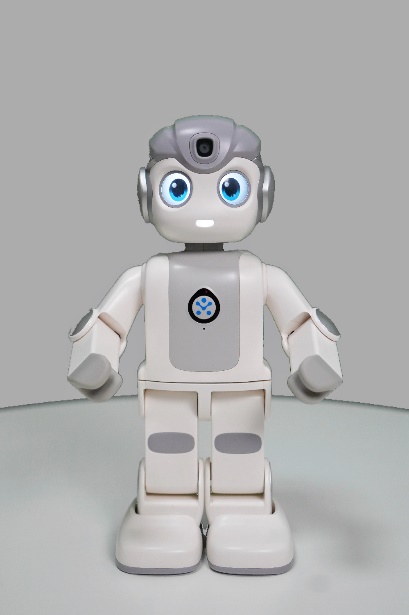
Figure 1. Wukong Robot.
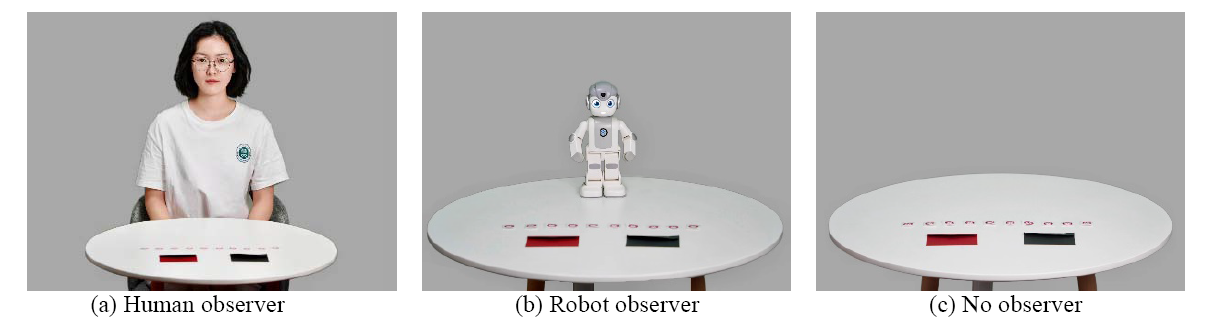
Figure 2. Different observer conditions.
| Age | Human Observer | Robot observer | No observer | |||
|---|---|---|---|---|---|---|
| M | SD | M | SD | M | SD | |
| 3-year-old | 3.11 | 2.61 | 3.59 | 2.19 | 1.59 | 2.06 |
| 5-year-old | 3.93 | 1.59 | 3.11 | 2.33 | 3.30 | 1.98 |
Table 1 The number of stickers shared by children under different observer conditions
| Age | Human Observer | Robot observer | No observer | |||
|---|---|---|---|---|---|---|
| M | SD | M | SD | M | SD | |
| 3-year-old | 3.11 | 2.61 | 3.59 | 2.19 | 1.59 | 2.06 |
| 5-year-old | 3.93 | 1.59 | 3.11 | 2.33 | 3.30 | 1.98 |
| Age | Biological | Psychological | Perceptual | Living | Artificial | |||||
|---|---|---|---|---|---|---|---|---|---|---|
| M | SD | M | SD | M | SD | M | SD | M | SD | |
| 3-year-old | 0.70 | 0.91 | 1.15 | 0.91 | 1.59 | 0.70 | 0.73 | 0.55 | 0.62 | 0.70 |
| 5-year-old | 0.15 | 0.37 | 1.22 | 0.87 | 1.08 | 0.70 | 0.54 | 0.65 | 1.52 | 0.94 |
| Total | 0.43 | 0.74 | 1.18 | 0.89 | 1.33 | 0.74 | 0.64 | 0.61 | 1.07 | 0.94 |
Table 2 Animistic Tests for 3-year-old and 5-year-old children
| Age | Biological | Psychological | Perceptual | Living | Artificial | |||||
|---|---|---|---|---|---|---|---|---|---|---|
| M | SD | M | SD | M | SD | M | SD | M | SD | |
| 3-year-old | 0.70 | 0.91 | 1.15 | 0.91 | 1.59 | 0.70 | 0.73 | 0.55 | 0.62 | 0.70 |
| 5-year-old | 0.15 | 0.37 | 1.22 | 0.87 | 1.08 | 0.70 | 0.54 | 0.65 | 1.52 | 0.94 |
| Total | 0.43 | 0.74 | 1.18 | 0.89 | 1.33 | 0.74 | 0.64 | 0.61 | 1.07 | 0.94 |
| Properties | Biological | Psychological | Perceptual | Living | Artificial | |||||
|---|---|---|---|---|---|---|---|---|---|---|
| M | SD | M | SD | M | SD | M | SD | M | SD | |
| With | 0.69 | 0.92 | 1.16 | 0.89 | 1.35 | 0.90 | 1.16 | 0.73 | 1.10 | 0.91 |
| Without | 0.43 | 0.70 | 0.84 | 0.93 | 1.27 | 0.98 | 0.40 | 0.49 | 1.20 | 0.86 |
| Total | 0.56 | 0.83 | 1.00 | 0.92 | 1.31 | 0.94 | 0.78 | 0.73 | 1.15 | 0.88 |
Table 3 Animism test for 3-year-old children
| Properties | Biological | Psychological | Perceptual | Living | Artificial | |||||
|---|---|---|---|---|---|---|---|---|---|---|
| M | SD | M | SD | M | SD | M | SD | M | SD | |
| With | 0.69 | 0.92 | 1.16 | 0.89 | 1.35 | 0.90 | 1.16 | 0.73 | 1.10 | 0.91 |
| Without | 0.43 | 0.70 | 0.84 | 0.93 | 1.27 | 0.98 | 0.40 | 0.49 | 1.20 | 0.86 |
| Total | 0.56 | 0.83 | 1.00 | 0.92 | 1.31 | 0.94 | 0.78 | 0.73 | 1.15 | 0.88 |
| [1] | Belpaeme, T., Baxter, P., De Greeff, J., Kennedy, J., Read, R., Looije, R.,... Zelati, M. C. (2013). Child-robot interaction: Perspectives and challenges. In Social Robotics: 5th International Conference, ICSR 2013, Bristol, UK, October 27-29, 2013, Proceedings 5 (pp. 452-459). Springer International Publishing. |
| [2] | Belpaeme, T., Kennedy, J., Ramachandran, A., Scassellati, B., & Tanaka, F. (2018). Social robots for education: A review. Science Robotics, 3(21), eaat5954. https://doi.org/10.1126/scirobotics.aat5954 |
| [3] | Benenson, J. F., Pascoe, J., & Radmore, N. (2007). Children's altruistic behavior in the dictator game. Evolution and Human Behavior, 28(3), 168-175. |
| [4] | Beran, T. N., Ramirez-Serrano, A., Kuzyk, R., Fior, M., & Nugent, S. (2011). Understanding how children understand robots: Perceived animism in child-robot interaction. International Journal of Human-Computer Studies, 69(7-8), 539-550. |
| [5] |
Brink, K. A., & Wellman, H. M. (2020). Robot teachers for children? Young children trust robots depending on their perceived accuracy and agency. Developmental Psychology, 56(7), 1268-1277.
doi: 10.1037/dev0000884 pmid: 32463269 |
| [6] | Carlo, G., McGinley, M., Hayes, R., Batenhorst, C., & Wilkinson, J. (2007). Parenting styles or practices? Parenting, sympathy, and prosocial behaviors among adolescents. The Journal of Genetic Psychology, 168(2), 147-176. |
| [7] | Chernyak, N., & Gary, H. E. (2016). Children’s cognitive and behavioral reactions to an autonomous versus controlled social robot dog. Early Education and Development, 27(8), 1175-1189. |
| [8] |
Chernyak, N., & Kushnir, T. (2013). Giving preschoolers choice increases sharing behavior. Psychological Science, 24(10), 1971-1979.
doi: 10.1177/0956797613482335 pmid: 23955355 |
| [9] | Deng, S. C., Lin, Z. H., Lu, Y. Q., & Li, X. Q. (2023). New playmates in the age of intelligence: Characteristics of children’s interactions with robots and their impact on child development. Advances in Psychological Science, 31(12), 2319-2336. |
| [10] |
Dunfield, K. A., & Kuhlmeier, V. A. (2013). Classifying prosocial behavior: Children’s responses to instrumental need, emotional distress, and material desire. Child Development, 84(5), 1766-1776.
doi: 10.1111/cdev.12075 pmid: 23461793 |
| [11] |
Eisenberg, N., & Miller, P. A. (1987). The relation of empathy to prosocial and related behaviors. Psychological Bulletin, 101(1), 91-119.
pmid: 3562705 |
| [12] |
Eisenberg, N., VanSchyndel, S. K., & Spinrad, T. L. (2016). Prosocial motivation: Inferences from an opaque body of work. Child Development, 87(6), 1668-1678.
doi: 10.1111/cdev.12638 pmid: 28262941 |
| [13] | Engelmann, J. M., Herrmann, E., & Tomasello, M. (2017). Concern for group reputation increases prosociality in young children. Psychological Science, 29(2), 181-190. |
| [14] |
Engelmann, J. M., Over, H., Herrmann, E., & Tomasello, M. (2013). Young children care more about their reputation with ingroup members and potential reciprocators. Developmental Science, 16(6), 952-958.
doi: 10.1111/desc.12086 pmid: 24118719 |
| [15] | Faul, F., Erdfelder, E., Lang, A. G., & Buchner, A. (2007). G* Power 3: A flexible statistical power analysis program for the social, behavioral, and biomedical sciences. Behavior Research Methods, 39(2), 175-191. |
| [16] | Fehr, E., Bernhard, H., & Rockenbach, B. (2008). Egalitarianism in young children. Nature, 454(7208), 1079-1083. |
| [17] | Fujisawa, K. K., Kutsukake, N., & Hasegawa, T. (2008). Reciprocity of prosocial behavior in Japanese preschool children. International Journal of Behavioral Development, 32(2), 89-97. |
| [18] | Giannakos, M., Markopoulos, P., Hourcade, J. P., & Antle, A. N. (2022). “Lots done, more to do”: The current state of interaction design and children research and future directions. International Journal of Child-Computer Interaction, 33, 100469. https://doi.org/10.1016/ j.ijcci.2022.100469 |
| [19] | Gummerum, M., Hanoch, Y., & Keller, M. (2008). When child development meets economic game theory: An interdisciplinary approach to investigating social development. Human Development, 51(4), 235-261. |
| [20] | Hamlin, J. K., Wynn, K., & Bloom, P. (2007). Social evaluation by preverbal infants. Nature, 450(7169), 557-559. |
| [21] | House, B. R., Silk, J. B., Henrich, J., Barrett, H. C., Scelza, B. A., Boyette, A. H., … Laurence, S. (2013). Ontogeny of prosocial behavior across diverse societies. Proceedings of the National Academy of Sciences, 110(36), 14586-14591. |
| [22] | Jipson, J. L., & Gelman, S. A. (2007). Robots and rodents: Children’s inferences about living and nonliving kinds. Child Development, 78(6), 1675-1688. |
| [23] | Jipson, J. L., Gülgöz, S., & Gelman, S. A. (2016). Parent-child conversations regarding the ontological status of a robotic dog. Cognitive Development, 39, 21-35. |
| [24] | Kim, M., Yi, S., & Lee, D. (2019). Between living and nonliving: Young children’s animacy judgments and reasoning about humanoid robots. PLoS ONE, 14(6), e0216869. https://doi.org/10.1371/ journal.pone.0216869 |
| [25] | Lai, J. X., Yang, H., & Guo, L. P. (2012). On the preschool children’s sharing behavior and its implication. Studies in Early Childhood Education, 206(2), 20-26. |
| [26] |
Liu, B., Huang, Z., Xu, G., Jin, Y., Chen, Y., Li, X., … Jing, J. (2016). Altruistic sharing behavior in children: Role of theory of mind and inhibitory control. Journal of Experimental Child Psychology, 141, 222-228.
doi: 10.1016/j.jecp.2015.09.010 pmid: 26452508 |
| [27] |
Liu, L., Xiao, X., Liu, L., Xu, L., Zhang, X., & Li, Y. (2019). Children’s quality-based resource allocation in different involvement contexts: The role of in-group favoritism. Acta Psychologica Sinica, 51(5), 584-597.
doi: 10.3724/SP.J.1041.2019.00584 |
| [28] | Liu, Y., Odic, D., Tang, X., Ma, A., Laricheva, M., Chen, G.,... Milner-Bolotin, M. (2023). Effects of robotics education on young children’s cognitive development: A Pilot study with eye-tracking. Journal of Science Education and Technology, 32(3), 295-308. |
| [29] | Malti, T., Gummerum, M., Ongley, S., Chaparro, M., Nola, M., & Bae, N. Y. (2016). “Who is worthy of my generosity?” Recipient characteristics and the development of children’s sharing. International Journal of Behavioral Development, 40(1), 31-40. |
| [30] | Martin, D. U., MacIntyre, M. I., Perry, C., Clift, G., Pedell, S., & Kaufman, J. (2020). Young children’s indiscriminate helping behavior toward a humanoid robot. Frontiers in Psychology, 11, 239. https://doi.org/10.3389/fpsyg.2020.00239 |
| [31] | Michaelis, J. E., & Mutlu, B. (2018). Reading socially: Transforming the in-home reading experience with a learning-companion robot. Science Robotics, 3(21), eaat5999. https://doi.org/10.1126/scirobotics.aat5999 |
| [32] | Nijssen, S. R. R., Müller, B. C. N., Bosse, T., & Paulus, M. (2021). You, robot? The role of anthropomorphic emotion attributions in children’s sharing with a robot. International Journal of Child-Computer Interaction, 30, 100319. https://doi.org/10.1016/j.ijcci.2021.100319 |
| [33] | Okanda, M., Taniguchi, K., & Itakura, S. (2019). The role of animism tendencies and empathy in adult evaluations of robot. In Proceedings of the 7th international conference on human-agent interaction (pp. 51-58). Kyoto, Japan: Association for Computing Machinery. |
| [34] | Okanda, M., Taniguchi, K., Wang, Y., & Itakura, S. (2021). Preschoolers’ and adults’ animism tendencies toward a humanoid robot. Computers in Human Behavior, 118, 106688. https://doi.org/10.1016/ j.chb.2021.106688 |
| [35] |
Okumura, Y., Hattori, T., Fujita, S., & Kobayashi, T. (2023). A robot is watching me!: Five-year-old children care about their reputation after interaction with a social robot. Child Development, 94(4), 865-873.
doi: 10.1111/cdev.13903 pmid: 36752147 |
| [36] | Pang, Y., & Li, H. (2024). When the Recipient is a Social Robot: The impact of negative behavioral valence on 5-year-old children’s sharing. International Journal of Human-Computer Interaction, 1-10. Advance online publication. https://doi.org/10.1080/10447318.2024.2378247 |
| [37] | Peter, J., Kühne, R., & Barco, A. (2021). Can social robots affect children’s prosocial behavior? An experimental study on prosocial robot models. Computers in Human Behavior, 120, 106712. https://doi.org/10.1016/j.chb.2021.106712 |
| [38] | Piaget, J. (1929). The child’s conception of the world. London: Routledge and Kegan Paul. |
| [39] | Rao, N., & Stewart, S. M. (1999). Cultural influences on sharer and recipient behavior: Sharing in Chinese and Indian preschool children. Journal of Cross-Cultural Psychology, 30(2), 219-241. |
| [40] |
Schlottmann, A., & Ray, E. (2010). Goal attribution to schematic animals: Do 6-month-olds perceive biological motion as animate? Developmental Science, 13(1), 1-10.
doi: 10.1111/j.1467-7687.2009.00854.x pmid: 20121858 |
| [41] | Schmidt, M. F. H., & Sommerville, J. A. (2011). Fairness expectations and altruistic sharing in 15-month-old human infants. PLoS ONE, 6(10), e23223. https://doi.org/10.1371/journal.pone.0023223 |
| [42] |
Somanader, M. C., Saylor, M. M., & Levin, D. T. (2011). Remote control and children’s understanding of robots. Journal of Experimental Child Psychology, 109(2), 239-247.
doi: 10.1016/j.jecp.2011.01.005 pmid: 21349536 |
| [43] |
Spinrad, T. L., & Gal, D. E. (2018). Fostering prosocial behavior and empathy in young children. Current Opinion in Psychology, 20, 40-44.
doi: S2352-250X(17)30128-8 pmid: 28830005 |
| [44] | Su, Y. J., Zhang, H., & Zhang, K. (2012). Social decision-making: The equilibrium between self interest and the interests of others. Journal of Psychological Science, 35(6), 1423-1428. |
| [45] | Tung, F. W. (2016). Child perception of humanoid robot appearance and behavior. International Journal of Human-Computer Interaction, 32(6), 493-502. |
| [46] | Vonk, J., Jett, S. E., Tomeny, T. S., Mercer, S. H., & Cwikla, J. (2020). Young children’s theory of mind predicts more sharing with friends over time. Child Development, 91(1), 63-77. |
| [47] |
Warneken, F., & Tomasello, M. (2013). The emergence of contingent reciprocity in young children. Journal of Experimental Child Psychology, 116(2), 338-350.
doi: 10.1016/j.jecp.2013.06.002 pmid: 23917162 |
| [48] | Xiong, M., Shi, J., Wu, Z., & Zhang, Z. (2016). Five-year-old preschoolers’ sharing is influenced by anticipated reciprocation. Frontiers in Psychology, 7, 460. https://doi.org/10.3389/fpsyg.2016.00460 |
| Viewed | ||||||
|
Full text |
|
|||||
|
Abstract |
|
|||||
