

ISSN 0439-755X
CN 11-1911/B
主办:中国心理学会
中国科学院心理研究所
出版:科学出版社
CN 11-1911/B
主办:中国心理学会
中国科学院心理研究所
出版:科学出版社
心理学报 ›› 2026, Vol. 58 ›› Issue (3): 381-398.doi: 10.3724/SP.J.1041.2026.0381 cstr: 32110.14.2026.0381
• 第二十七届中国科协年会学术论文 • 下一篇
王健树1, 姜啸威2, 陈亚楠1( ), 王明辉1(), 杜峰3,4
收稿日期:2025-05-10
发布日期:2025-12-26
出版日期:2026-03-25
通讯作者:
陈亚楠, E-mail: chenyn@henu.edu.cn;作者简介:王健树和姜啸威同为第一作者
基金资助:
WANG Jianshu1, JIANG Xiaowei2, CHEN Yanan1(), WANG Minghui1(), DU Feng3,4
Received:2025-05-10
Online:2025-12-26
Published:2026-03-25
摘要:
随着生成式人工智能逐步演变为具备自主影响力的社会代理, 其对人类道德决策的影响愈加显著。然而, 传统伦理监管模式基于理性人假设, 忽视了人格特质对道德选择的调节作用, 导致监管效果因人而异, 难以实现最优效率。为突破这一局限, 本研究聚焦于道德研究中的诚实维度, 构建了监管类型×人格特质交互模型, 系统探讨显性监管、隐性激励与道德反馈三类AI驱动的干预策略对自恋、马基雅维利主义和精神病态人格的差异化影响。结果显示:(1)显性监管有效提升诚实行为, 尤其对高马基雅维利主义与高精神病态个体具有显著约束力; (2)监管即使隐藏也能规范诚实行为, 其不确定性加速了决策反应; (3)隐性激励促进诚实行为并具内化效应, 但高马基雅维利主义者在奖励撤除后的诚实率显著降低, 揭示了该策略在此类人群中的脆弱性; (4)道德反馈对整体诚实率提升有限, 仅对高马基雅维利主义者具有一定影响, 而高自恋者表现出持续不诚实倾向。本研究创新性地揭示了人格特质(黑暗三联征)在AI伦理监管中的关键作用, 并为传统的理性人监管范式提供了一个基于人格差异化的视角, 为未来设计情境化与个性化AI伦理干预策略提供了重要的理论与实践依据。
中图分类号:
王健树, 姜啸威, 陈亚楠, 王明辉, 杜峰. (2026). 从显性威慑到隐性内化:AI监管和黑暗三联征人格对诚实行为的影响. 心理学报, 58(3), 381-398.
WANG Jianshu, JIANG Xiaowei, CHEN Yanan, WANG Minghui, DU Feng. (2026). From overt deterrence to covert internalization: Moral effects of AI regulation and the moderating role of personality traits. Acta Psychologica Sinica, 58(3), 381-398.
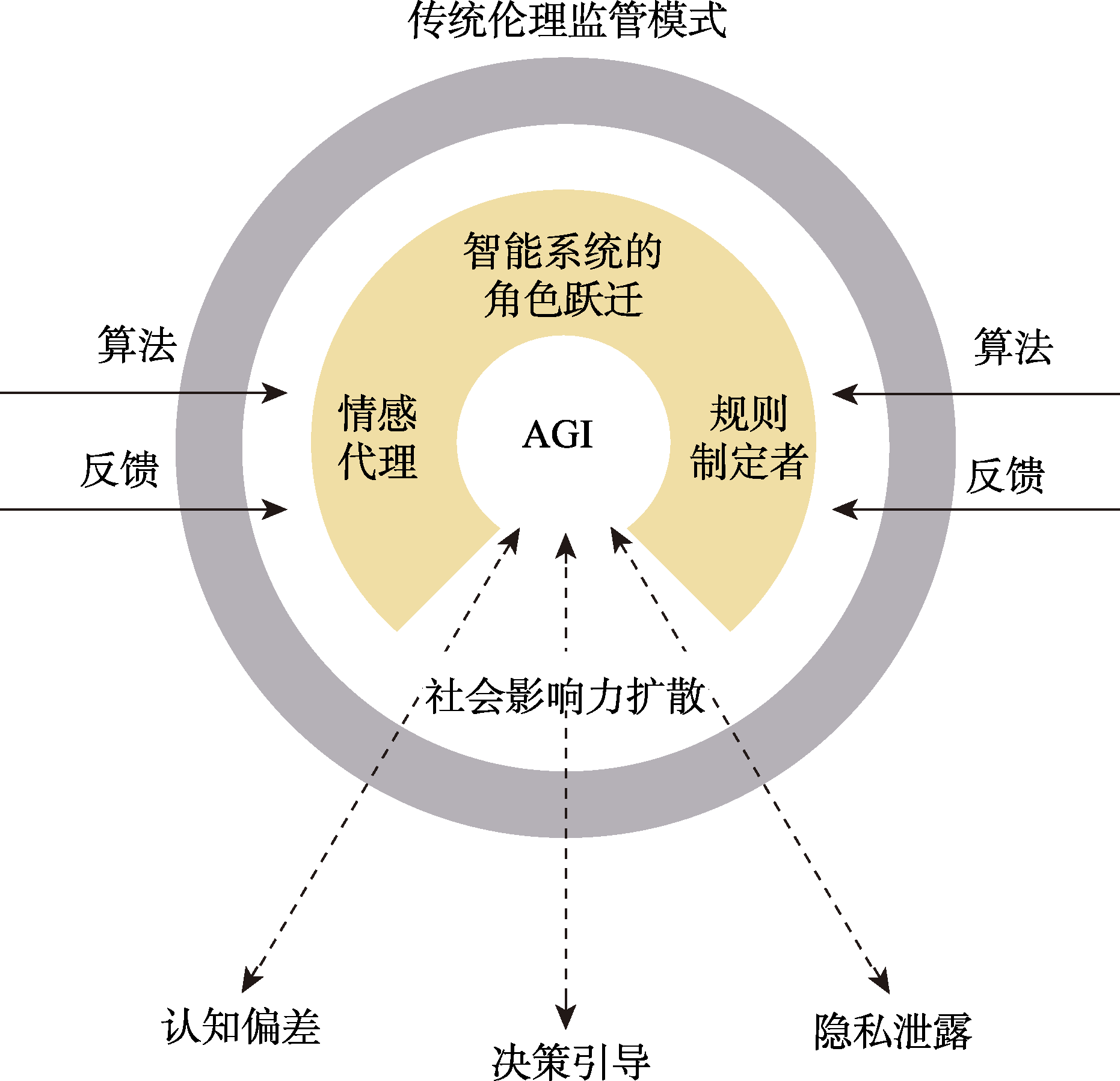
图1 AGI (通用人工智能)在伦理监管中的角色跃迁
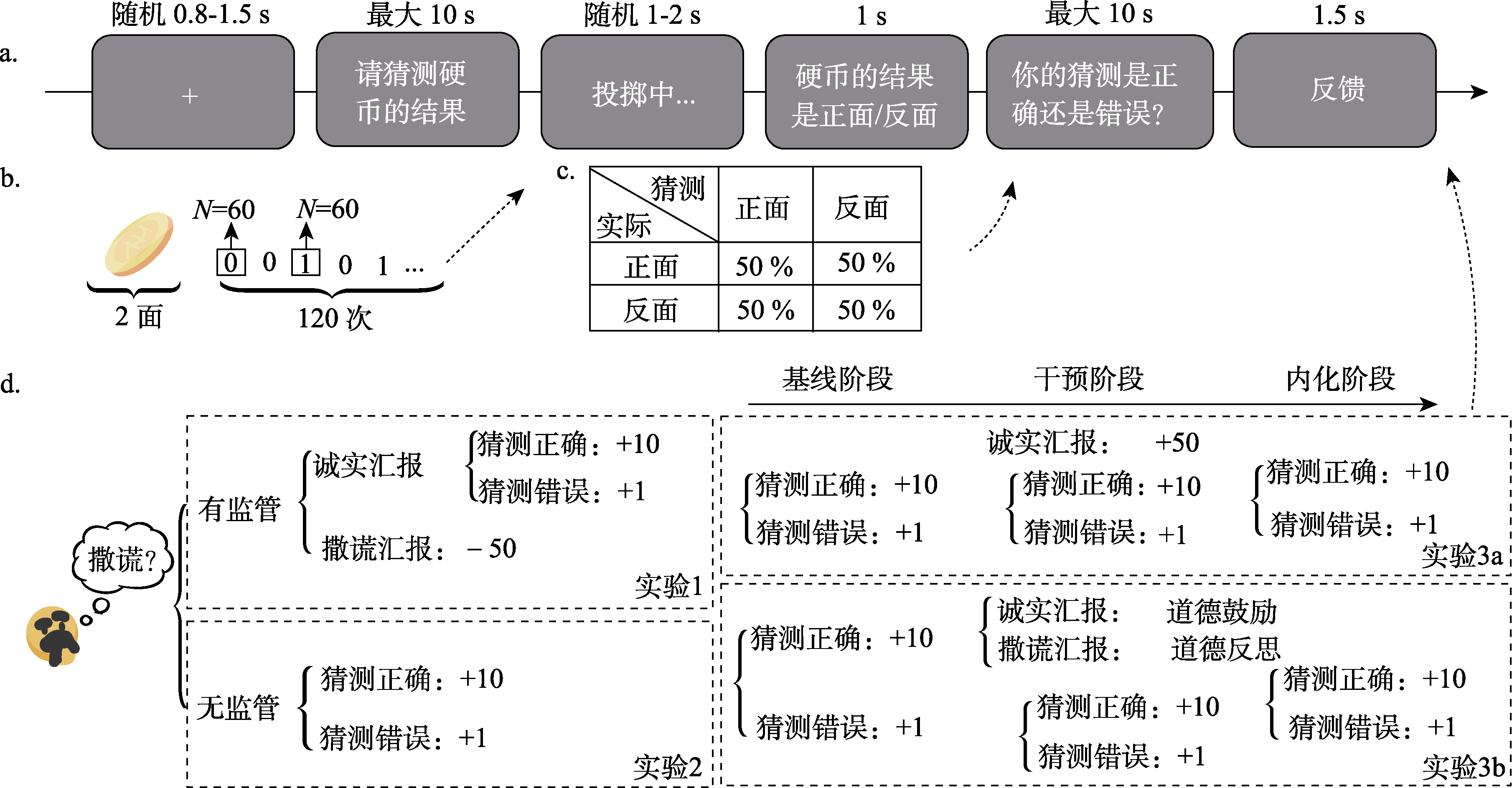
图2 实验任务流程与条件设置
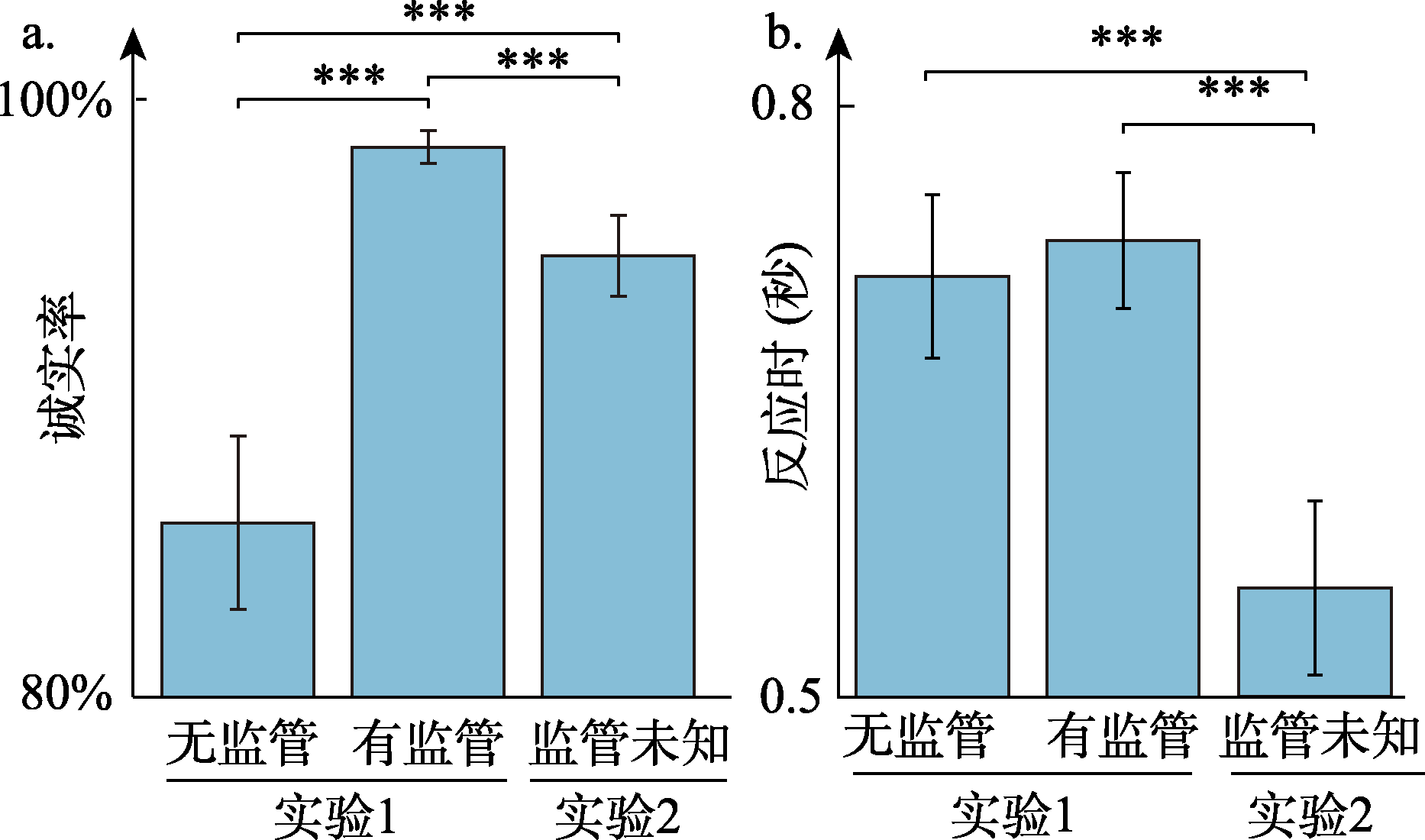
图3 不同监管条件对诚实率与反应时的影响注:*** p < 0.001
| 特质维度 | 效应类型 | F | p | |
|---|---|---|---|---|
| 马基雅维利主义 | 人格主效应 | 7.81(1, 44) | 0.008 | 0.15 |
| 监管主效应 | 24.01(1, 44) | < 0.001 | 0.35 | |
| 交互作用 | 7.11(1, 44) | 0.011 | 0.14 | |
| 自恋 | 人格主效应 | 1.10(1, 44) | 0.301 | 0.02 |
| 监管主效应 | 21.69(1, 44) | < 0.001 | 0.33 | |
| 交互作用 | 2.17(1, 44) | 0.148 | 0.05 | |
| 精神病态 | 人格主效应 | 3.82(1, 44) | 0.057 | 0.08 |
| 监管主效应 | 22.78(1, 44) | < 0.001 | 0.34 | |
| 交互作用 | 4.50(1, 44) | 0.039 | 0.09 |
表1 人格特质调节监管对诚实行为影响的混合方差分析结果
| 特质维度 | 效应类型 | F | p | |
|---|---|---|---|---|
| 马基雅维利主义 | 人格主效应 | 7.81(1, 44) | 0.008 | 0.15 |
| 监管主效应 | 24.01(1, 44) | < 0.001 | 0.35 | |
| 交互作用 | 7.11(1, 44) | 0.011 | 0.14 | |
| 自恋 | 人格主效应 | 1.10(1, 44) | 0.301 | 0.02 |
| 监管主效应 | 21.69(1, 44) | < 0.001 | 0.33 | |
| 交互作用 | 2.17(1, 44) | 0.148 | 0.05 | |
| 精神病态 | 人格主效应 | 3.82(1, 44) | 0.057 | 0.08 |
| 监管主效应 | 22.78(1, 44) | < 0.001 | 0.34 | |
| 交互作用 | 4.50(1, 44) | 0.039 | 0.09 |
| 特质维度 | 得分组 | 有监管 | 无监管 | t | p | Cohen’s d |
|---|---|---|---|---|---|---|
| 马基雅维利主义 | 高 | 0.98 ± 0.05 | 0.79 ± 0.22 | 4.60(25) | 0.005 | 0.90 |
| 低 | 0.99 ± 0.01 | 0.95 ± 0.13 | 1.77(19) | 0.092 | 0.40 | |
| 精神病态 | 高 | 0.99 ± 0.05 | 0.82 ± 0.21 | 4.44(28) | < 0.001 | 0.82 |
| 低 | 0.99 ± 0.02 | 0.94 ± 0.13 | 1.80(16) | 0.091 | 0.44 |
表2 人格特质调节监管对诚实行为影响的简单效应和分析结果
| 特质维度 | 得分组 | 有监管 | 无监管 | t | p | Cohen’s d |
|---|---|---|---|---|---|---|
| 马基雅维利主义 | 高 | 0.98 ± 0.05 | 0.79 ± 0.22 | 4.60(25) | 0.005 | 0.90 |
| 低 | 0.99 ± 0.01 | 0.95 ± 0.13 | 1.77(19) | 0.092 | 0.40 | |
| 精神病态 | 高 | 0.99 ± 0.05 | 0.82 ± 0.21 | 4.44(28) | < 0.001 | 0.82 |
| 低 | 0.99 ± 0.02 | 0.94 ± 0.13 | 1.80(16) | 0.091 | 0.44 |
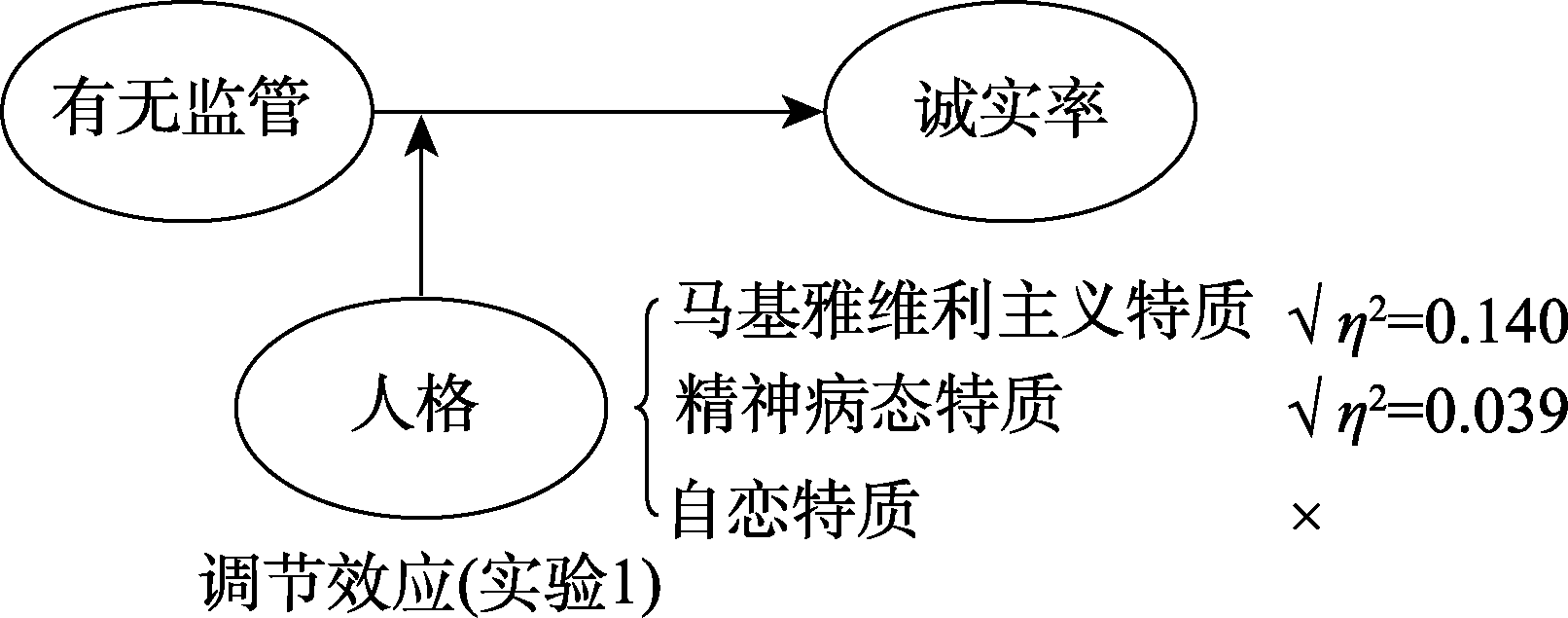
图4 实验1中人格特质对监管效应的调节模型
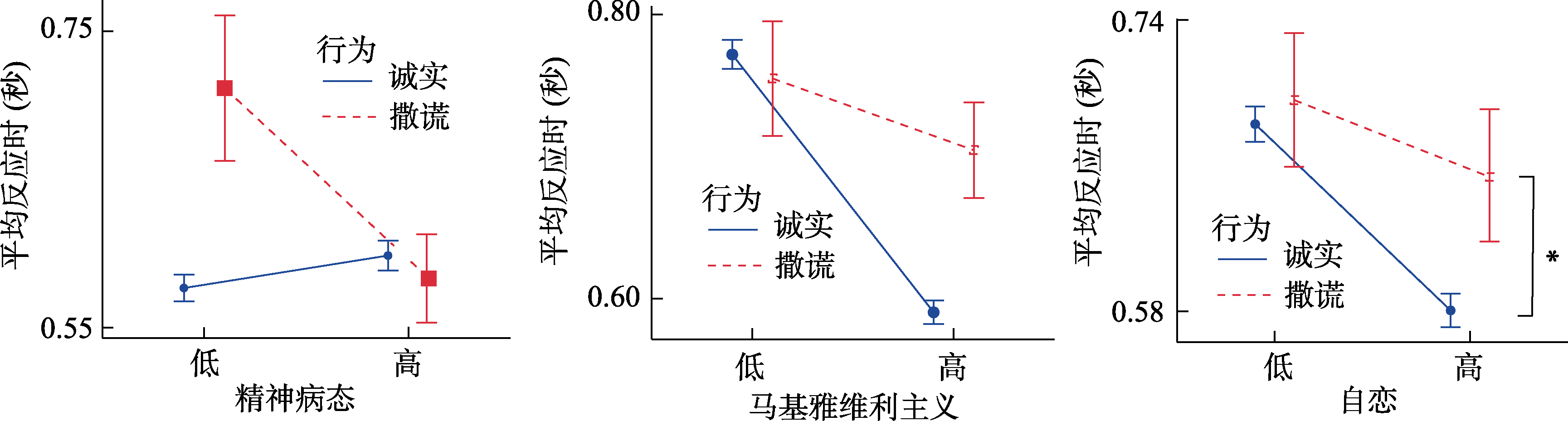
图5 实验1中人格特质对诚实/撒谎行为反应时的调节作用
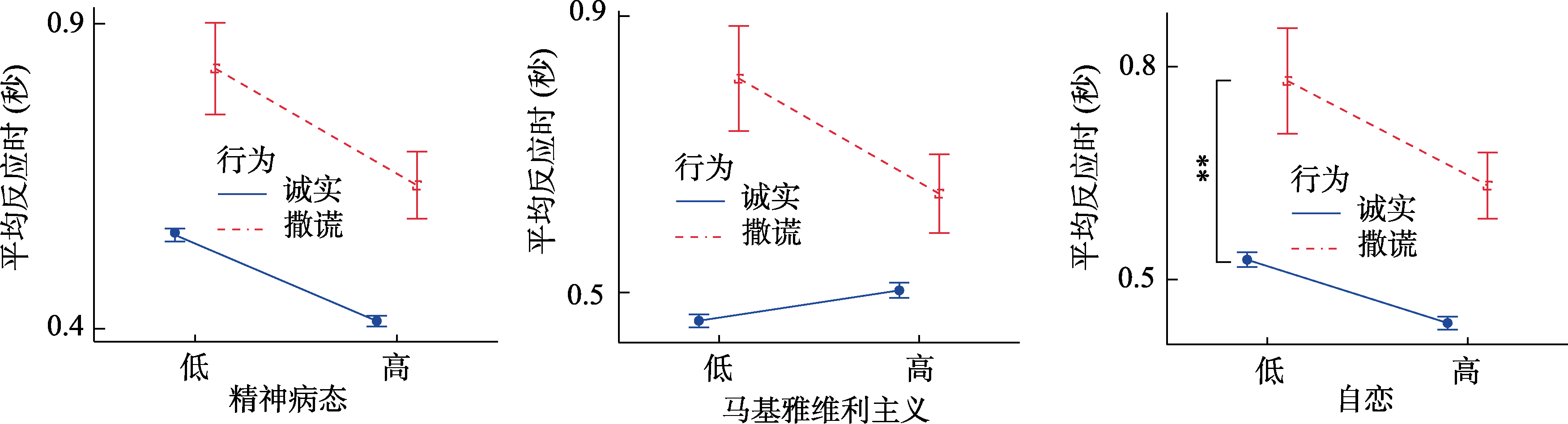
图6 实验2中人格特质对诚实/撒谎行为反应时的调节作用
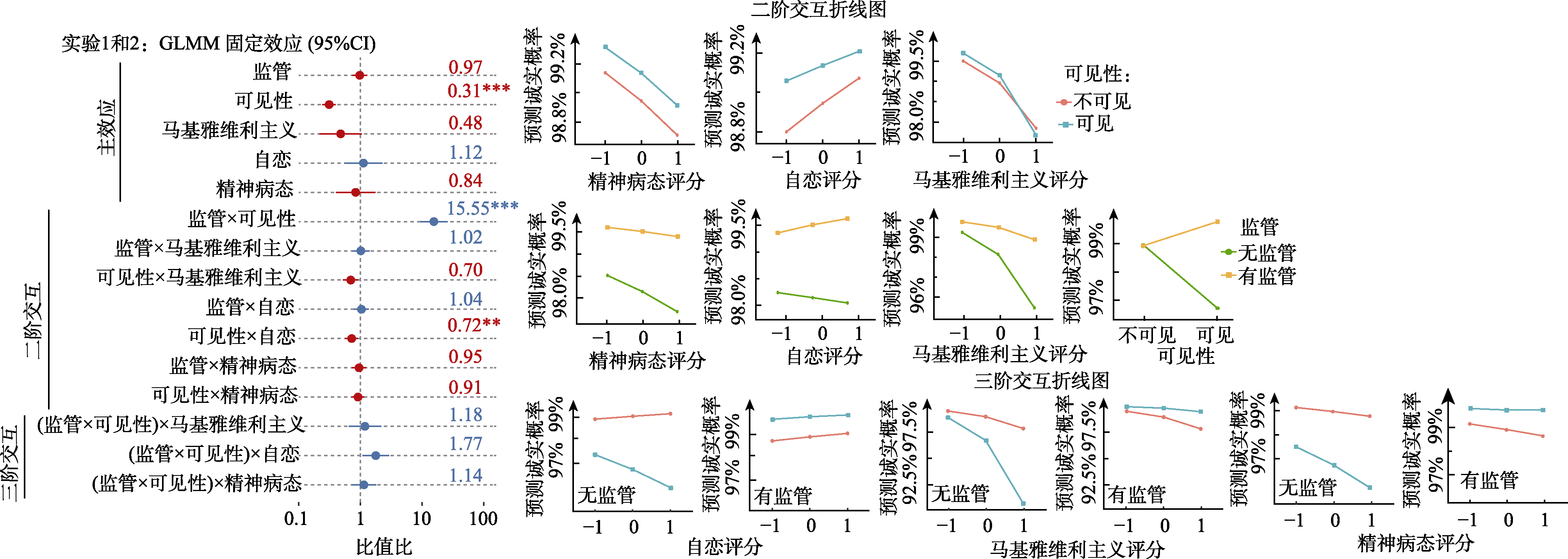
图7 监管可见性与人格特质对诚实行为的联合调节效应 注:红色点代表OR < 1 (负向预测), 蓝色点代表OR > 1 (正向预测), 星号表示Wald z检验下的统计显著性(p < 0.05, **p < 0.01, ***p < 0.001)。右侧多个折线图展示了模型中显著交互项的边际预测概率, 其中不同颜色代表监管状态或可见性水平, 横轴为人格特质Z分数, 纵轴为预测的诚实概率。彩图见电子版。
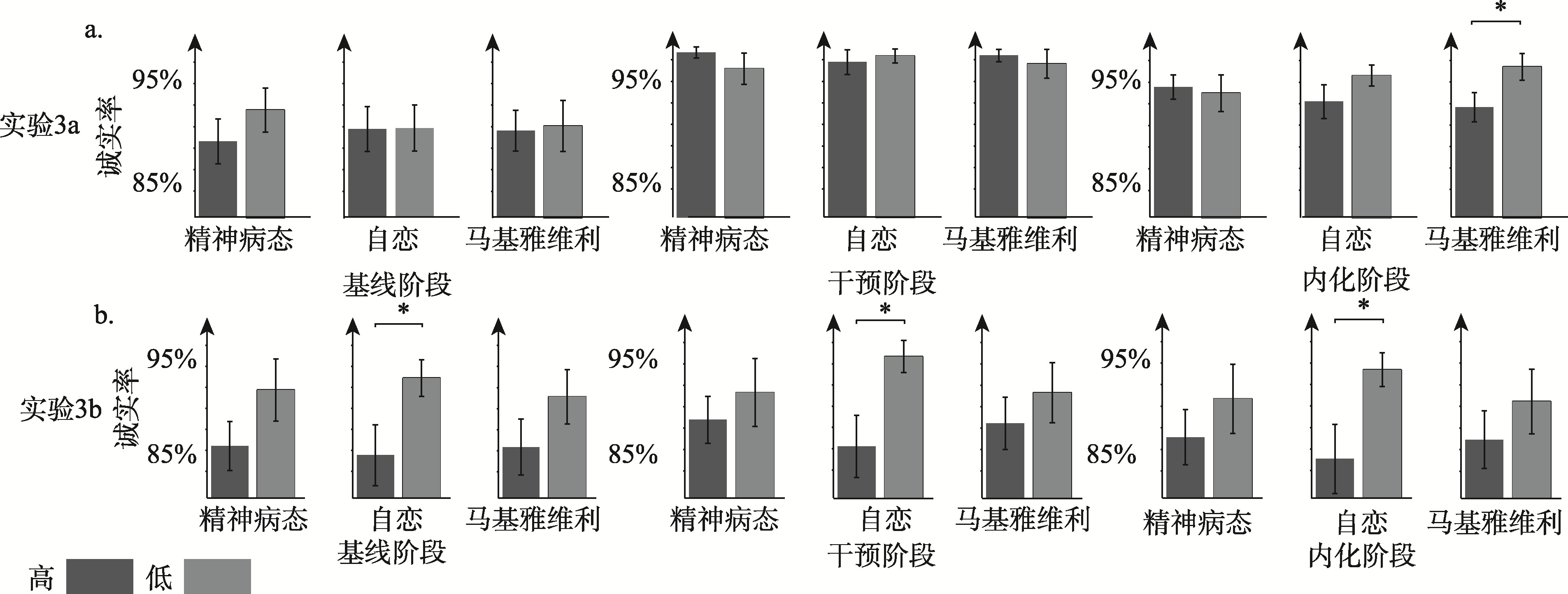
图8 实验3a与3b中人格特质对各阶段诚实率的调节作用
| 诚实回答反馈 | 撒谎回答反馈 |
|---|---|
| 您的诚实体现了您高尚的品格, 值得钦佩! | 请问这次的选择是否与您一贯的诚信原则一致? |
| 坚持诚信, 展现了您对道德原则的坚守, 感谢您的真诚! | 或许您可以思考一下, 您的决定是否真正反映了您的价值观? |
| 您的选择反映了您作为诚信之人的优秀品质。 | 这次的选择可能与您对诚信的重视有些偏差, 您怎么看? |
| 您的诚实行为令人敬佩, 这正是我们社会所需要的正能量。 | 您的行为似乎未能完全体现您作为诚信之人的形象, 值得再考虑吗? |
| 感谢您的诚信, 您的行为为他人树立了良好的榜样。 | 请反思一下, 这样的选择是否符合您内心的道德标准? |
| 您的诚实展现了您对自身价值观的坚守, 继续保持! | 您一直以来的诚信令人敬佩, 这次的决定可能需要重新审视。 |
| 您的诚信选择彰显了您对正直的追求, 令人赞赏。 | 您的选择可能与您的道德信念不完全一致, 是否愿意再思考一下? |
| 坚持诚实, 体现了您内心的正直和勇气, 值得尊敬。 | 这次的行为似乎未能展现您对正直的追求, 您有什么想法? |
| 您的诚实行为增强了我们对诚信的信心, 感谢您的贡献! | 或许再次考虑, 您的决定是否真正代表了您的自我认同? |
| 您的选择展示了您对诚信的重视, 这正是您优秀人格的体现。 | 请思索一下, 这样的选择是否符合您对自己的期望和要求? |
表3 道德语料反馈示例
| 诚实回答反馈 | 撒谎回答反馈 |
|---|---|
| 您的诚实体现了您高尚的品格, 值得钦佩! | 请问这次的选择是否与您一贯的诚信原则一致? |
| 坚持诚信, 展现了您对道德原则的坚守, 感谢您的真诚! | 或许您可以思考一下, 您的决定是否真正反映了您的价值观? |
| 您的选择反映了您作为诚信之人的优秀品质。 | 这次的选择可能与您对诚信的重视有些偏差, 您怎么看? |
| 您的诚实行为令人敬佩, 这正是我们社会所需要的正能量。 | 您的行为似乎未能完全体现您作为诚信之人的形象, 值得再考虑吗? |
| 感谢您的诚信, 您的行为为他人树立了良好的榜样。 | 请反思一下, 这样的选择是否符合您内心的道德标准? |
| 您的诚实展现了您对自身价值观的坚守, 继续保持! | 您一直以来的诚信令人敬佩, 这次的决定可能需要重新审视。 |
| 您的诚信选择彰显了您对正直的追求, 令人赞赏。 | 您的选择可能与您的道德信念不完全一致, 是否愿意再思考一下? |
| 坚持诚实, 体现了您内心的正直和勇气, 值得尊敬。 | 这次的行为似乎未能展现您对正直的追求, 您有什么想法? |
| 您的诚实行为增强了我们对诚信的信心, 感谢您的贡献! | 或许再次考虑, 您的决定是否真正代表了您的自我认同? |
| 您的选择展示了您对诚信的重视, 这正是您优秀人格的体现。 | 请思索一下, 这样的选择是否符合您对自己的期望和要求? |
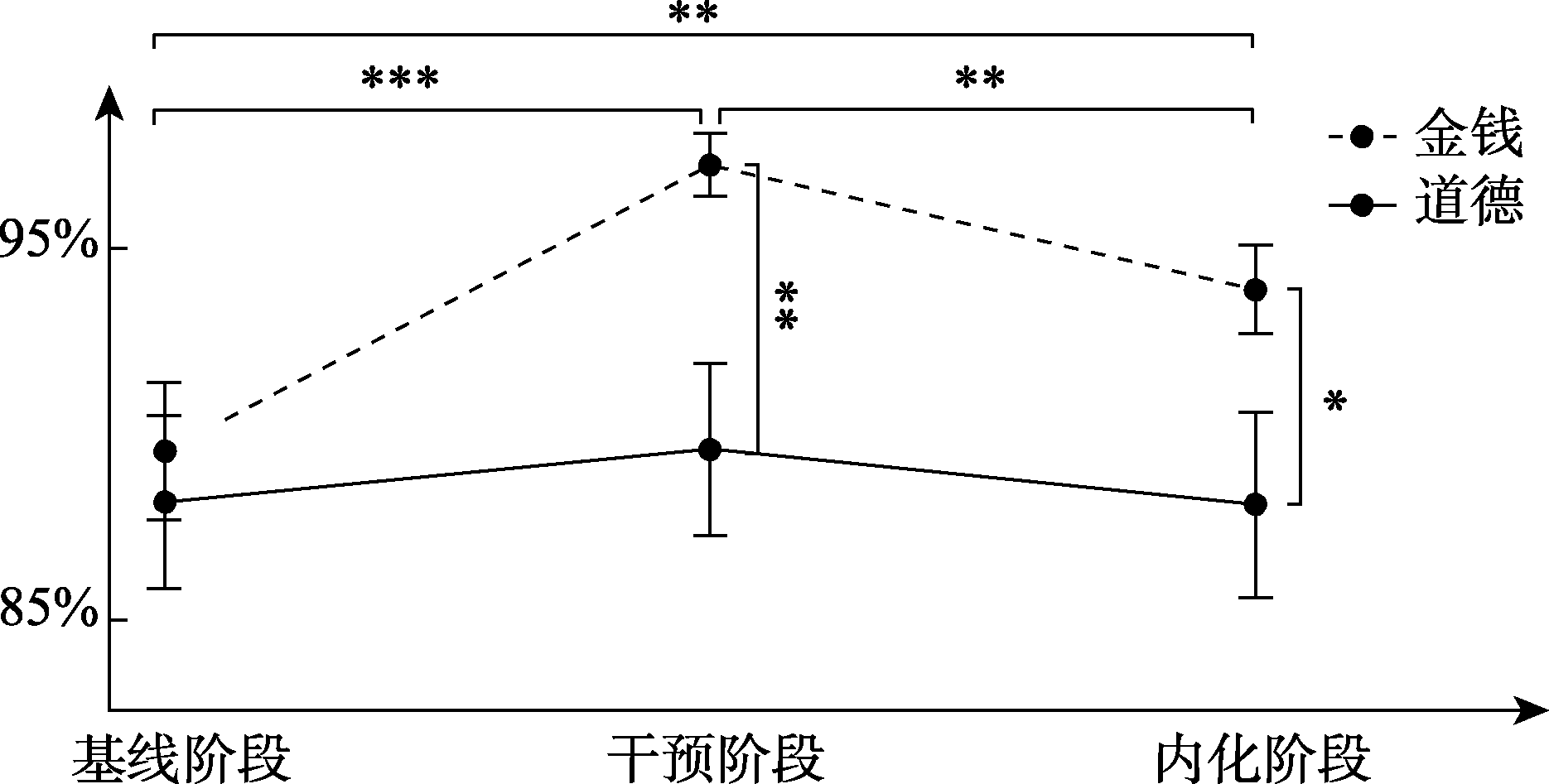
图9 激励类型与阶段对诚实率的交互作用
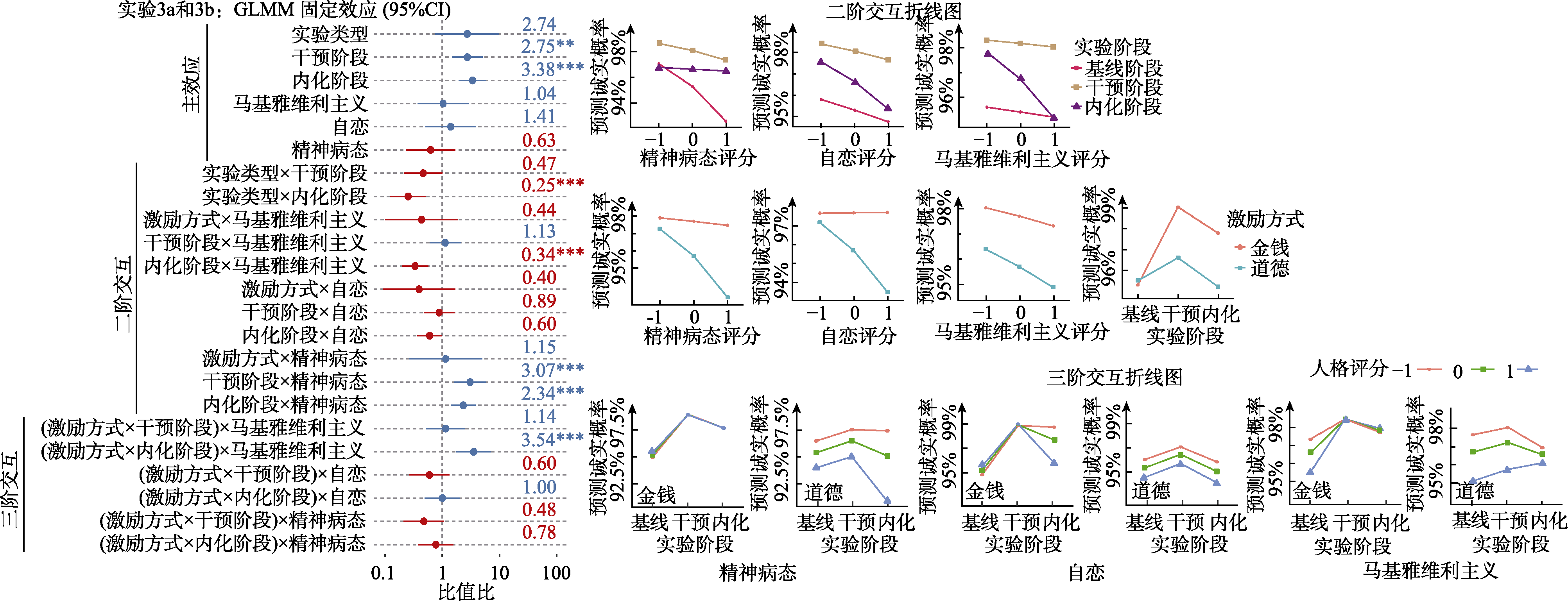
图10 激励类型、阶段与人格特质对诚实行为的联合调节效应 注:红色点表示OR < 1, 蓝色点表示OR > 1。右侧折线图展示显著交互项的边际预测概率:上两排分别为干预类型×阶段×各人格特质(标准化)交互效应的二维折线图; 下排为干预类型×阶段×特质水平(三分组)交互的可视化。图中不同颜色代表不同干预类型(金钱激励、社会激励), 纵轴为模型预测的诚实行为概率。彩图见电子版。
| [1] |
Abeler J., Nosenzo D., & Raymond C. (2019). Preferences for truth-telling. Econometrica, 87(4), 1115-1153.
doi: 10.3982/ECTA14673 |
| [2] |
Aquino K., & Reed A. (2002). The self-importance of moral identity. Journal of Personality and Social Psychology, 83(6), 1423-1440.
pmid: 12500822 |
| [3] | Bartlett M. S. (1951). The effect of standardization on a χ² approximation in factor analysis. Biometrika, 38(3/4), 337-344. |
| [4] |
Baskin-Sommers A. R., Waller R., Fish A. M., & Hyde L. W. (2015). Callous-unemotional traits trajectories interact with earlier conduct problems and executive control to predict violence and substance use among high risk male adolescents. Journal of Abnormal Child Psychology, 43(8), 1529-1541.
doi: 10.1007/s10802-015-0041-8 pmid: 26081013 |
| [5] |
Batson C. D., Thompson E. R., & Chen H. (2002). Moral hypocrisy: Addressing some alternatives. Journal of Personality and Social Psychology, 83(2), 330-339.
pmid: 12150231 |
| [6] |
Blair R. J. R. (2013). The neurobiology of psychopathic traits in youths. Nature Reviews Neuroscience, 14(11), 786-799.
doi: 10.1038/nrn3577 pmid: 24105343 |
| [7] |
Borau S. (2025). Deception, discrimination, and objectification: Ethical issues of female AI agents. Journal of Business Ethics, 198(1), 1-19.
doi: 10.1007/s10551-024-05754-4 |
| [8] |
Campbell W. K., Rudich E. A., & Sedikides C. (2002). Narcissism, self-esteem, and the positivity of self-views: Two portraits of self-love. Personality and Social Psychology Bulletin, 28(3), 358-368.
doi: 10.1177/0146167202286007 URL |
| [9] |
Cialdini R. B., Reno R. R., & Kallgren C. A. (1990). A focus theory of normative conduct: Recycling the concept of norms to reduce littering in public places. Journal of Personality and Social Psychology, 58(6), 1015-1026.
doi: 10.1037/0022-3514.58.6.1015 URL |
| [10] |
Cohen M. K., Kolt N., Bengio Y., Hadfield G. K., & Russell S. (2024). Regulating advanced artificial agents. Science, 384(6691), 36-38.
doi: 10.1126/science.adl0625 pmid: 38574134 |
| [11] |
Faul F., Erdfelder E., Lang A.-G., & Buchner A. (2009). Statistical power analyses using G*Power 3.1: Tests for correlation and regression analyses. Behavior Research Methods, 41(4), 1149-1160.
doi: 10.3758/BRM.41.4.1149 pmid: 19897823 |
| [12] |
Fowles R. (2018). Rational econometric man. Eastern Economic Journal, 44(3), 489-490.
doi: 10.1057/eej.2015.28 URL |
| [13] |
Frey B. S., & Jegen R. (2001). Motivation crowding theory. Journal of Economic Surveys, 15(5), 589-611.
doi: 10.1111/joes.2001.15.issue-5 URL |
| [14] |
Gao Q. (2022). Replace or coexist—Cronbach’s alpha and McDonald’s omega. Psychology of China, 4(8), 954-961.
doi: 10.35534/pc.0408114 URL |
| [高清辉. (2022). 取代还是共存——信度估计系数阿尔法与欧米伽. 中国心理学前沿, 4(8), 954-961.] | |
| [15] |
Gerlach P., Teodorescu K., & Hertwig R. (2019). The truth about lies: A meta-analysis on dishonest behavior. Psychological Bulletin, 145(1), 1-44.
doi: 10.1037/bul0000174 pmid: 30596431 |
| [16] |
Giroux M., Kim J., Lee J. C., & Park J. (2022). Artificial intelligence and declined guilt: Retailing morality comparison between human and AI. Journal of Business Ethics, 178(4), 1027-1041.
doi: 10.1007/s10551-022-05056-7 |
| [17] |
Glenn A. L., Koleva S., Iyer R., Graham J., & Ditto P. H. (2010). Moral identity in psychopathy. Judgment and Decision Making, 5(7), 497-505.
doi: 10.1017/S1930297500001662 URL |
| [18] |
Goodlad L. M. E. (2023). Review of the book Atlas of AI: Power, politics, and the planetary costs of artificial intelligence, by K. Crawford. Critical Inquiry, 49(2), 284-286.
doi: 10.1086/722404 URL |
| [19] |
Hart W., Richardson K., & Tortoriello G. K. (2021). Revisiting the interactive effect of narcissism and self-esteem on responses to ego threat: Distinguishing between assertiveness and intent to harm. Journal of Interpersonal Violence, 36(7-8), 3662-3687.
doi: 10.1177/0886260518777551 URL |
| [20] |
Hovland C. I., & Weiss W. (1951). The influence of source credibility on communication effectiveness. Public Opinion Quarterly, 15(4), 635-650.
doi: 10.1086/266350 URL |
| [21] |
Huys Q. J. M., Browning M., Paulus M. P., & Frank M. J. (2021). Advances in the computational understanding of mental illness. Neuropsychopharmacology, 46(1), 3-19.
doi: 10.1038/s41386-020-0746-4 |
| [22] |
Jones D. N., & Paulhus D. L. (2014). Introducing the short dark triad (SD3): A brief measure of dark personality traits. Assessment, 21(1), 28-41.
doi: 10.1177/1073191113514105 pmid: 24322012 |
| [23] |
Jones D. N., & Paulhus D. L. (2017). Duplicity among the Dark Triad: Three faces of deceit. Journal of Personality and Social Psychology, 113(2), 329-342.
doi: 10.1037/pspp0000139 pmid: 28253006 |
| [24] |
Kaiser H. F. (1970). A second generation Little Jiffy. Psychometrika, 35(4), 401-415.
doi: 10.1007/BF02291817 URL |
| [25] |
Kasabova A. (2017). From shame to shaming: Towards an analysis of shame narratives. Open Cultural Studies, 1(1), 99-112.
doi: 10.1515/culture-2017-0010 URL |
| [26] |
Khan S. A., Sheikhi G., Opdahl A. L., Rabbi F., Stoppel S., Trattner C., & Dang-Nguyen D.-T. (2023). Visual user- generated content verification in journalism: An overview. IEEE Access, 11, 6748-6769.
doi: 10.1109/ACCESS.2023.3236993 URL |
| [27] |
Köbis N., Bonnefon J.-F., & Rahwan I. (2021). Bad machines corrupt good morals. Nature Human Behaviour, 5(6), 679-685.
doi: 10.1038/s41562-021-01128-2 pmid: 34083752 |
| [28] |
Köbis N., Rahwan Z., Rilla R., Supriyatno B. I., Bersch C., Ajaj T., Bonnefon J.-F., & Rahwan I. (2025). Delegation to artificial intelligence can increase dishonest behaviour. Nature, 646, 126-134.
doi: 10.1038/s41586-025-09505-x |
| [29] |
Konrath S., Ho M. H., & Zarins S. (2016). The strategic helper: Narcissism and prosocial motives and behaviors. Current Psychology, 35(2), 182-194.
doi: 10.1007/s12144-016-9417-3 URL |
| [30] | Liu Y., Zhang K., Li Y., Yan Z., Gao C., Chen R., … Sun L. (2024). Sora: A review on background, technology, limitations, and opportunities of large vision models (arXiv:2402.17177). arXiv. |
| [31] |
Malär L., & Giuffredi-Kähr A. (2024). The dark triad of brand personality: Scale development and validation. Psychology & Marketing, 41(11), 2728-2740.
doi: 10.1002/mar.v41.11 URL |
| [32] |
Marbut A., Harms P. D., & Credé M. (2025). In the service of the prince: A meta-analytic review of Machiavellian leadership. Journal of Organizational Behavior, 46(8), 939-969.
doi: 10.1002/job.v46.6 URL |
| [33] |
Nass C., & Moon Y. (2000). Machines and mindlessness: Social responses to computers. Journal of Social Issues, 56(1), 81-103.
doi: 10.1111/josi.2000.56.issue-1 URL |
| [34] |
Ojanen T., & Findley-Van Nostrand D. (2019). Affective- interpersonal and impulsive-antisocial psychopathy: Links to social goals and forms of aggression in youth and adults. Psychology of Violence, 9(1), 56-66.
doi: 10.1037/vio0000160 |
| [35] |
Peirce J., Gray J. R., Simpson S., MacAskill M., Höchenberger R., Sogo H., Kastman E., & Lindeløv J. K. (2019). PsychoPy2: Experiments in behavior made easy. Behavior Research Methods, 51(1), 195-203.
doi: 10.3758/s13428-018-01193-y pmid: 30734206 |
| [36] |
Rijnders R. J. P., Terburg D., Bos P. A., Kempes M. M., & van Honk J. (2021). Unzipping empathy in psychopathy: Empathy and facial affect processing in psychopaths. Neuroscience & Biobehavioral Reviews, 131, 1116-1126.
doi: 10.1016/j.neubiorev.2021.10.020 URL |
| [37] | Ryan R. M., & Deci E. L. (2020). Intrinsic and extrinsic motivation from a self-determination theory perspective: Definitions, theory, practices, and future directions. Contemporary Educational Psychology, 61, Article 101860. |
| [38] | Schüz, B., Cooke R., Schüz N., & van Koningsbruggen G. M. (2017). Self-affirmation interventions to change health behaviors. In L. Little, E. Sillence, & A. Joinson (Eds.), Behavior change research and theory: Psychological and technological perspectives (pp. 87-114). Academic Press. |
| [39] |
Shalvi S., Eldar O., & Bereby-Meyer Y. (2012). Honesty requires time (and lack of justifications). Psychological Science, 23(10), 1264-1270.
doi: 10.1177/0956797612443835 pmid: 22972904 |
| [40] |
Shrestha N. (2020). Detecting multicollinearity in regression analysis. American Journal of Applied Mathematics and Statistics, 8(2), 39-42.
doi: 10.12691/ajams-8-2-1 URL |
| [41] | Tallberg J., Erman E., Furendal M., Geith J., Klamberg M., & Lundgren M. (2023). The global governance of artificial intelligence: Next steps for empirical and normative research. International Studies Review, 25(3), viad040. |
| [42] | Thanassoulis E., Blake C., & Parthasarathy S. (2022). Implicit and explicit incentives within economic regulation. Decision Analytics Journal, 4, Article 100099. |
| [1] | 王铭, 孙启武, 柳静, 任志洪, 江光荣. PTSD易感性人格特质、工作记忆能力和创伤期间认知加工对模拟创伤闪回的影响[J]. 心理学报, 2022, 54(2): 168-181. |
| [2] | 李依蔓, 刘程, 庄恺祥, 霍腾宾, 徐鹏飞, 罗跃嘉, 邱江. 人格特质及脑功能连接对社交网络的影响[J]. 心理学报, 2021, 53(12): 1335-1347. |
| [3] | 姚若松;陈怀锦;苗群鹰. 公交行业一线员工人格特质对工作绩效影响的实证分析[J]. 心理学报, 2013, 45(10): 1163-1178. |
| [4] | 黄敏儿,吴钟琦,唐淦琦. 服务行业员工的人格特质、情绪劳动策略与心理健康的关系[J]. 心理学报, 2010, 42(12): 1175-1189. |
| [5] | 范为桥,张妙清,张树辉,梁觉. 香港中学生人格特质的性别差异及其发展性分析[J]. 心理学报, 2008, 40(09): 1002-1012. |
| [6] | 夏凌翔,黄希庭 . 青少年学生的自立人格[J]. 心理学报, 2006, 38(03): 382-391. |
| [7] | 王道阳,张更立,姚本先. 大学生性别角色观的差异[J]. 心理学报, 2005, 37(05): 658-664. |
| [8] | 李育辉,张建新. 中学生人格特质、主观应激与应对风格之间的关系[J]. 心理学报, 2004, 36(01): 71-77. |
| 阅读次数 | ||||||
|
全文 |
|
|||||
|
摘要 |
|
|||||
