

ISSN 0439-755X
CN 11-1911/B
主办:中国心理学会
中国科学院心理研究所
出版:科学出版社
CN 11-1911/B
主办:中国心理学会
中国科学院心理研究所
出版:科学出版社
心理学报 ›› 2025, Vol. 57 ›› Issue (8): 1452-1467.doi: 10.3724/SP.J.1041.2025.1452 cstr: 32110.14.2025.1452
汪祚军1,†, 叶妍2,†, 程雪岩3, 徐四华4,5( )
)
收稿日期:2024-08-10
发布日期:2025-05-22
出版日期:2025-08-25
通讯作者:
徐四华, E-mail: sihuaxu@shisu.edu.cn作者简介:第一联系人:†共同第一作者。
基金资助:
WANG Zuo-Jun1,†, YE Yan2,†, CHENG Xue-Yan3, XU Sihua4,5()
Received:2024-08-10
Online:2025-05-22
Published:2025-08-25
摘要: 互惠与公平是人际互动的基本准则。以往研究往往分别考察互惠与公平原则对人际行为的影响, 却鲜有研究考察当两者相悖时人们如何取舍。本研究5项实验分别通过故事情境法和实验室实验法操纵受人恩惠的条件, 并考察其对个体不公平规避行为的影响及潜在心理机制。结果表明, 受人恩惠, 无论是大恩惠还是“小恩小惠”, 均显著降低了个体的不公平规避行为。研究结果还揭示了不同大小恩惠条件下中介机制的不对称性:在大恩惠条件下, 亏欠情绪中介了受人恩惠对不公平规避行为的影响, 而在“小恩小惠”条件下, 感激情绪起到了中介作用。研究结果不仅为理解公平行为的复杂心理过程提供了新的解释视角, 同时也为企业和政府部门制定相关政策, 有效规避由恩惠而引发的违反公平的现象提供实践依据。
中图分类号:
汪祚军, 叶妍, 程雪岩, 徐四华. (2025). “人情”与公平的抉择?恩惠对不公平规避行为的影响. 心理学报, 57(8), 1452-1467.
WANG Zuo-Jun, YE Yan, CHENG Xue-Yan, XU Sihua. (2025). “Renqing” or equity? The influence of favor acceptance on inequity aversion. Acta Psychologica Sinica, 57(8), 1452-1467.
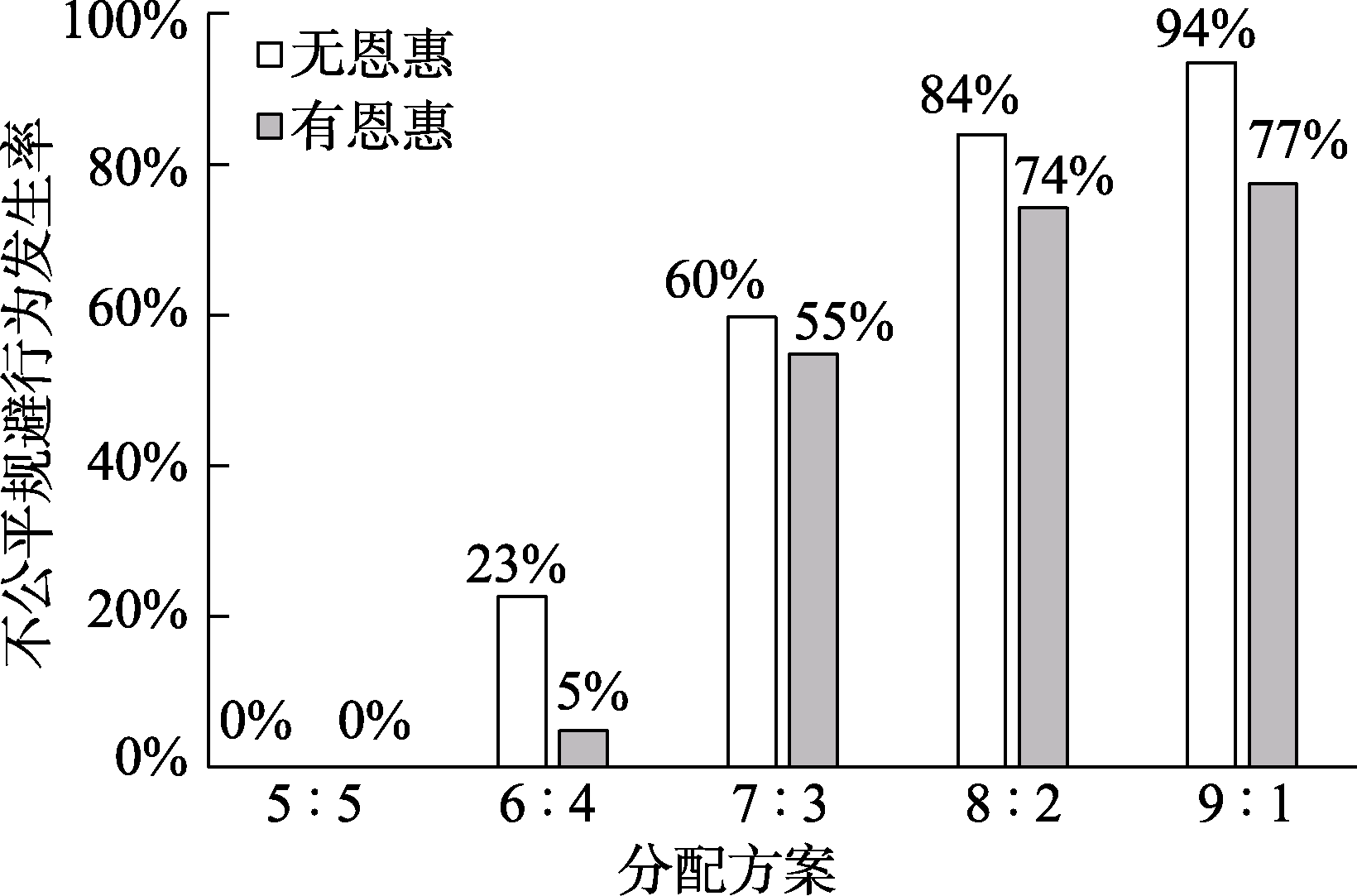
图1 不同分配方案及恩惠条件下不公平规避行为发生率
| 恩惠 | 实验1B (80元大恩惠) | 实验2A (2元小恩惠) | 实验2B (非金钱小恩惠) | 实验3 (20~60元恩惠) | ||||||
|---|---|---|---|---|---|---|---|---|---|---|
| 无 | 有 | 无 | 有 | 无 | 有 | 无 | 20元 | 40元 | 60元 | |
| 感激 | 0.84*** (1.40) | 2.19*** (0.97) | −0.95*** (1.62) | 0.79*** (1.54) | −1.00*** (1.40) | 1.88*** (1.28) | −1.06*** (0.89) | 0.55** (1.02) | 0.97*** (0.79) | 1.11*** (0.78) |
| 亏欠 | −1.36*** (1.31) | 0.22 (1.67) | −1.75* (1.29) | −0.60*** (1.75) | −1.55*** (1.28) | −1.60*** (1.24) | −1.21*** (0.91) | −0.14 (1.07) | −0.14 (1.26) | 0.27 (1.11) |
表1 感激和亏欠情绪的跨实验比较
| 恩惠 | 实验1B (80元大恩惠) | 实验2A (2元小恩惠) | 实验2B (非金钱小恩惠) | 实验3 (20~60元恩惠) | ||||||
|---|---|---|---|---|---|---|---|---|---|---|
| 无 | 有 | 无 | 有 | 无 | 有 | 无 | 20元 | 40元 | 60元 | |
| 感激 | 0.84*** (1.40) | 2.19*** (0.97) | −0.95*** (1.62) | 0.79*** (1.54) | −1.00*** (1.40) | 1.88*** (1.28) | −1.06*** (0.89) | 0.55** (1.02) | 0.97*** (0.79) | 1.11*** (0.78) |
| 亏欠 | −1.36*** (1.31) | 0.22 (1.67) | −1.75* (1.29) | −0.60*** (1.75) | −1.55*** (1.28) | −1.60*** (1.24) | −1.21*** (0.91) | −0.14 (1.07) | −0.14 (1.26) | 0.27 (1.11) |
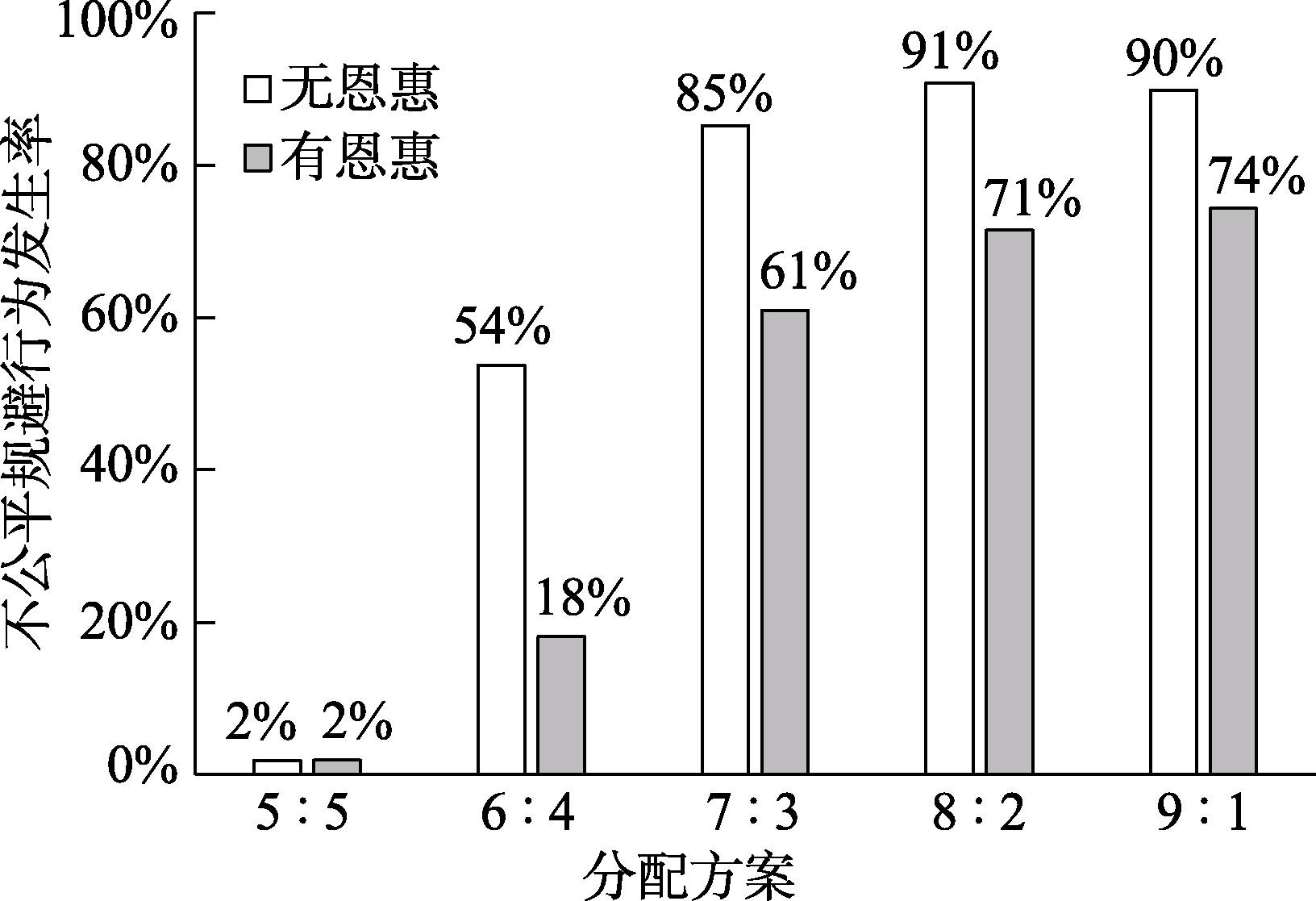
图2 不同分配方案及恩惠条件下不公平规避行为发生率
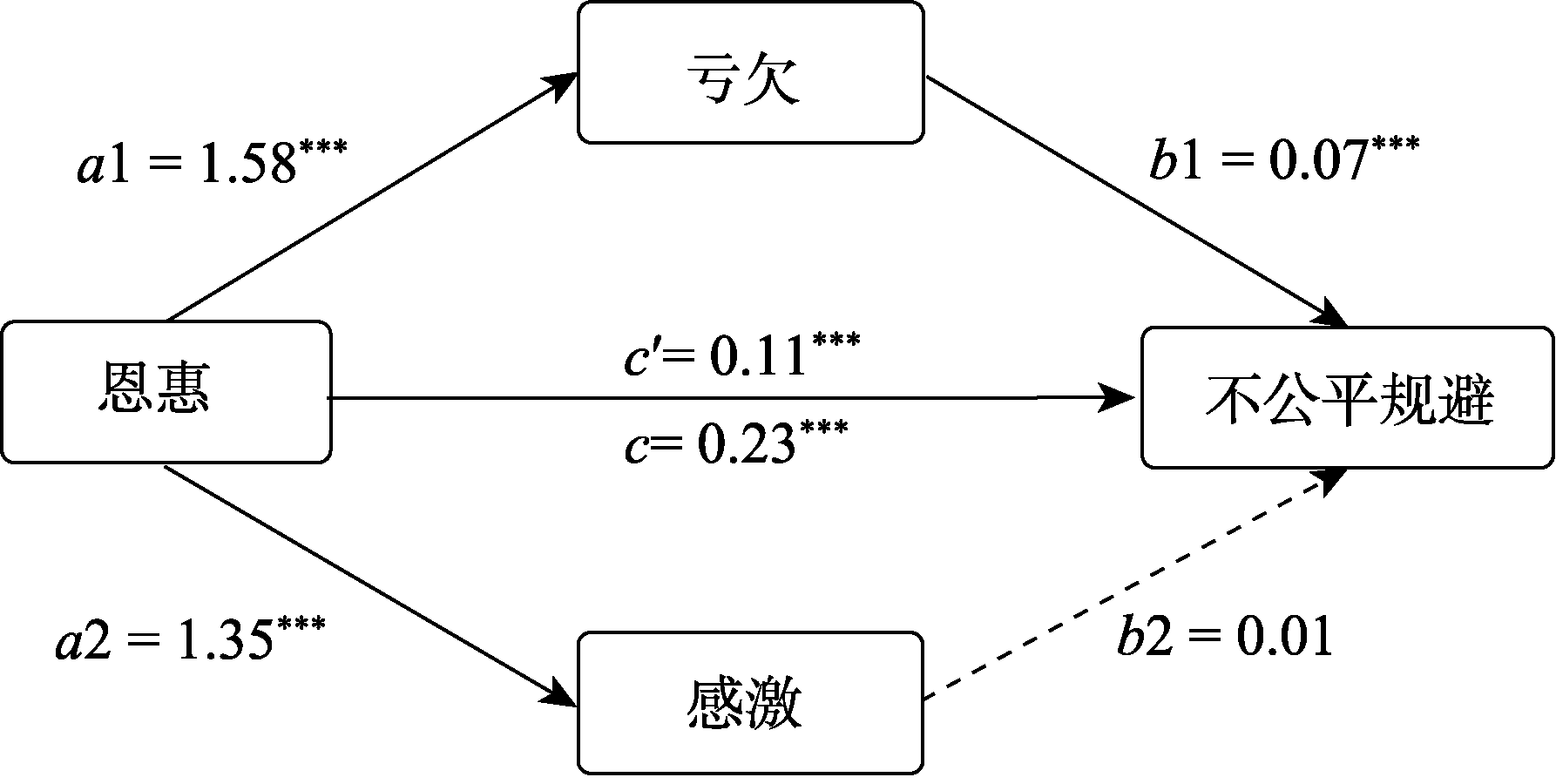
图3 感激和亏欠情绪的中介效应检验图
注:*** p < 0.001
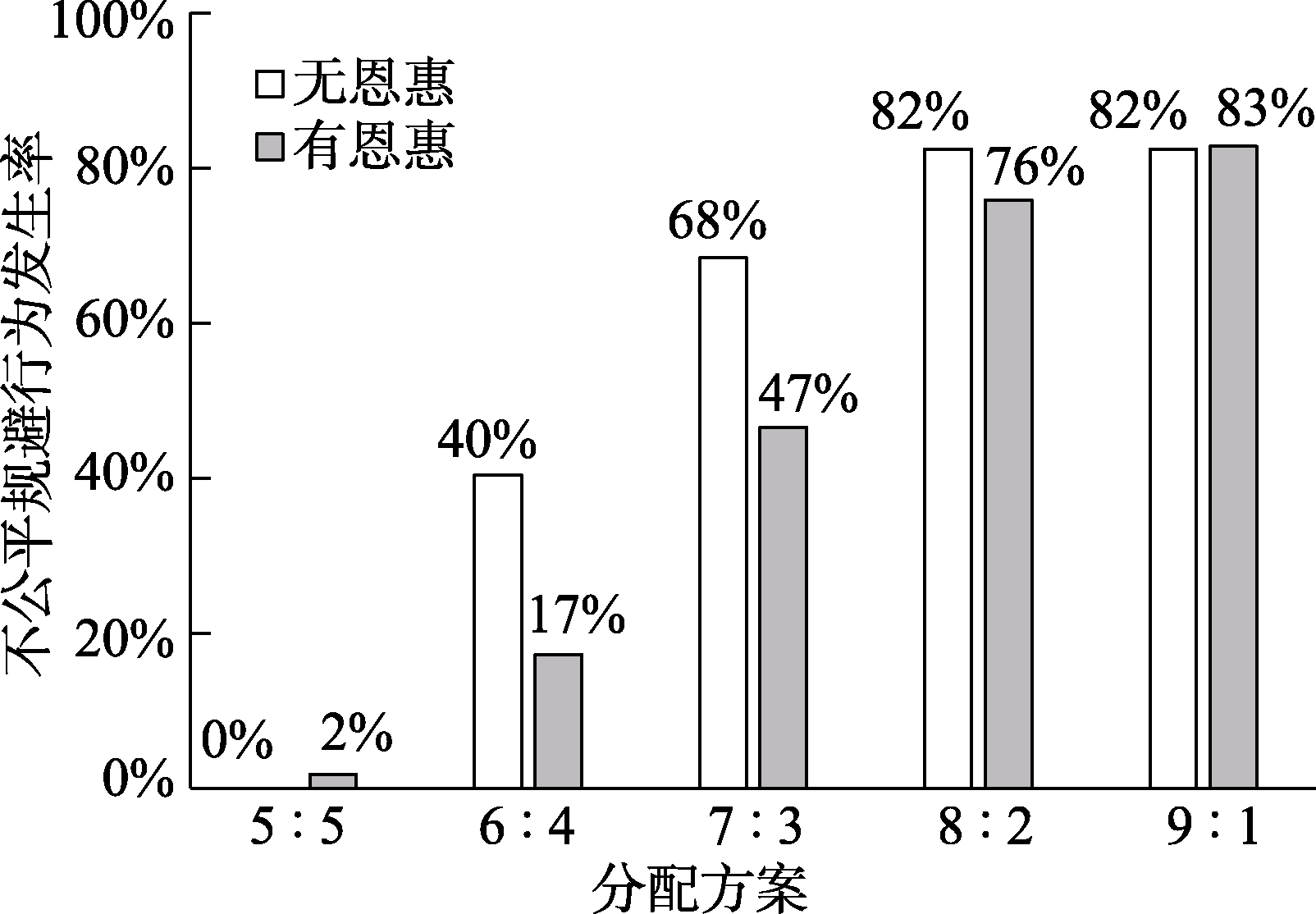
图4 不同分配方案及恩惠条件下不公平规避行为发生率
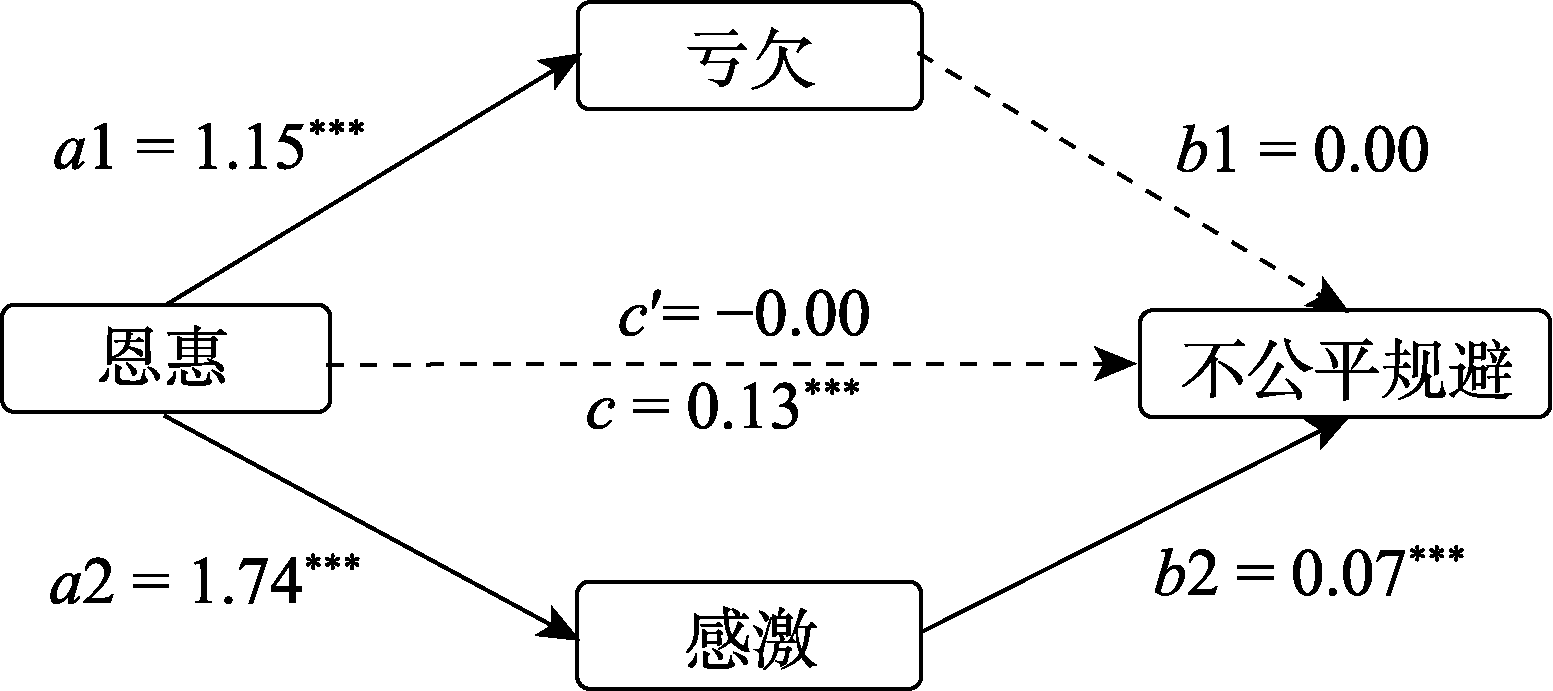
图5 感激和亏欠的中介效应检验图
注:*** p < 0.001
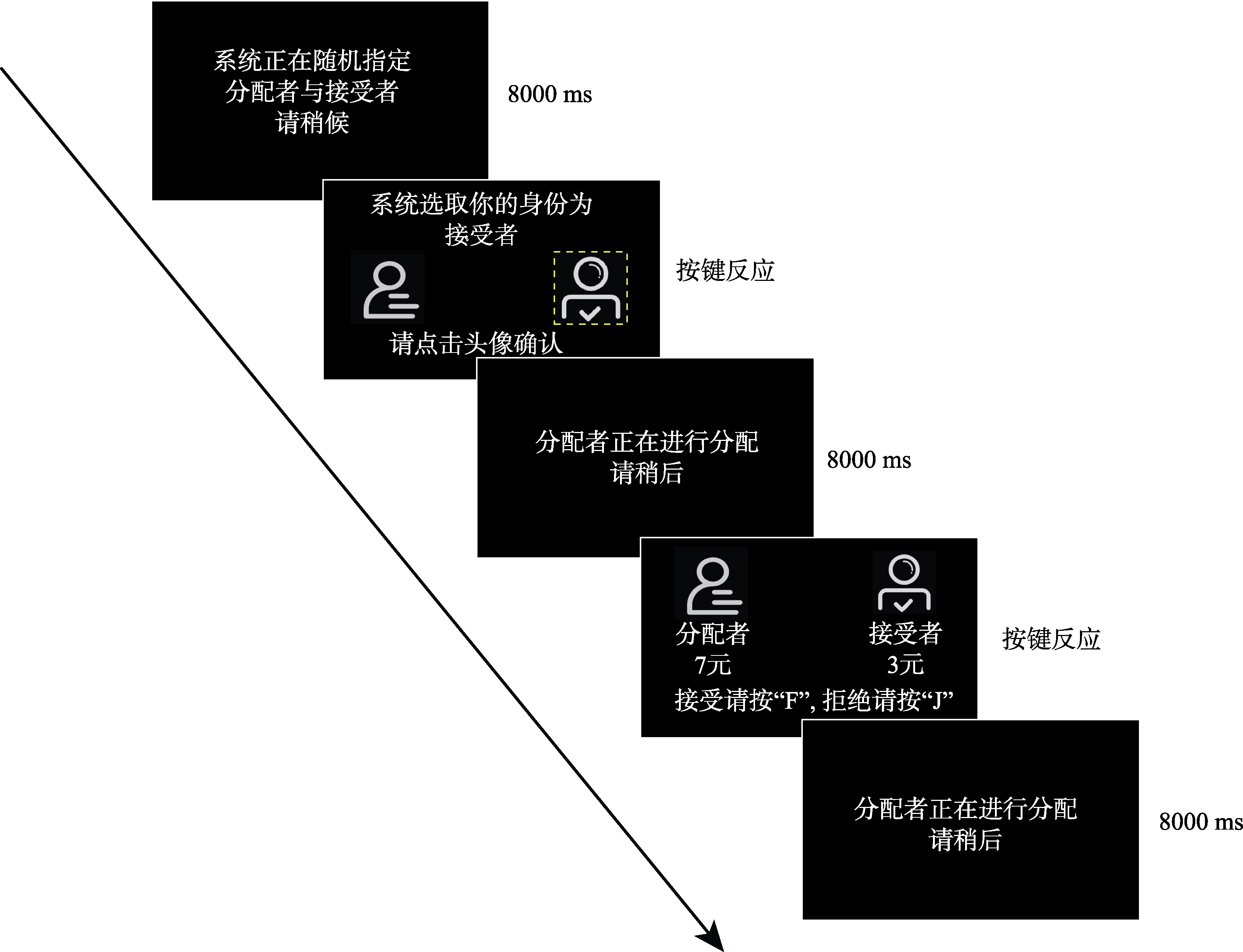
图6 实验2B流程图
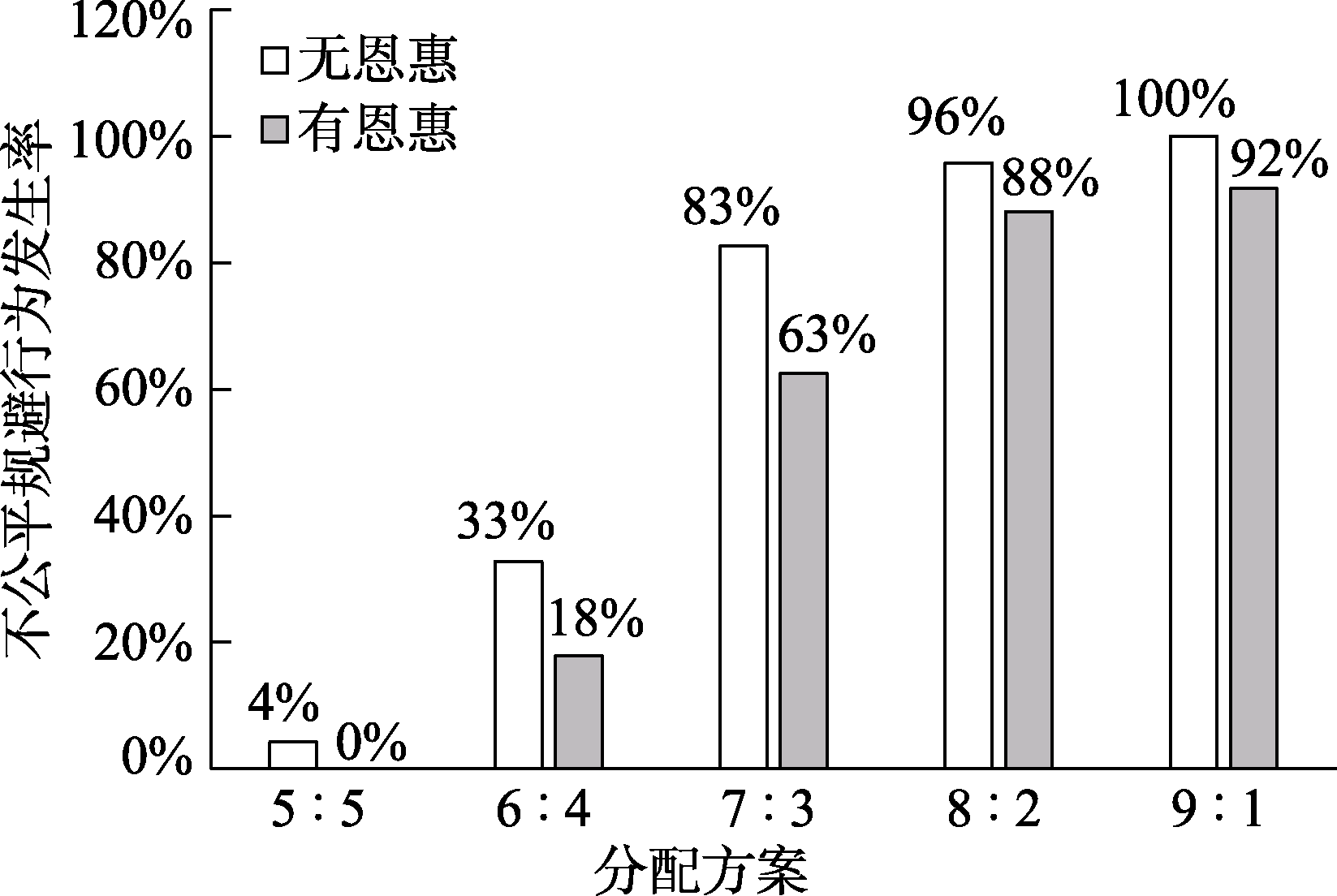
图7 不同分配方案及恩惠条件下不公平规避行为发生率
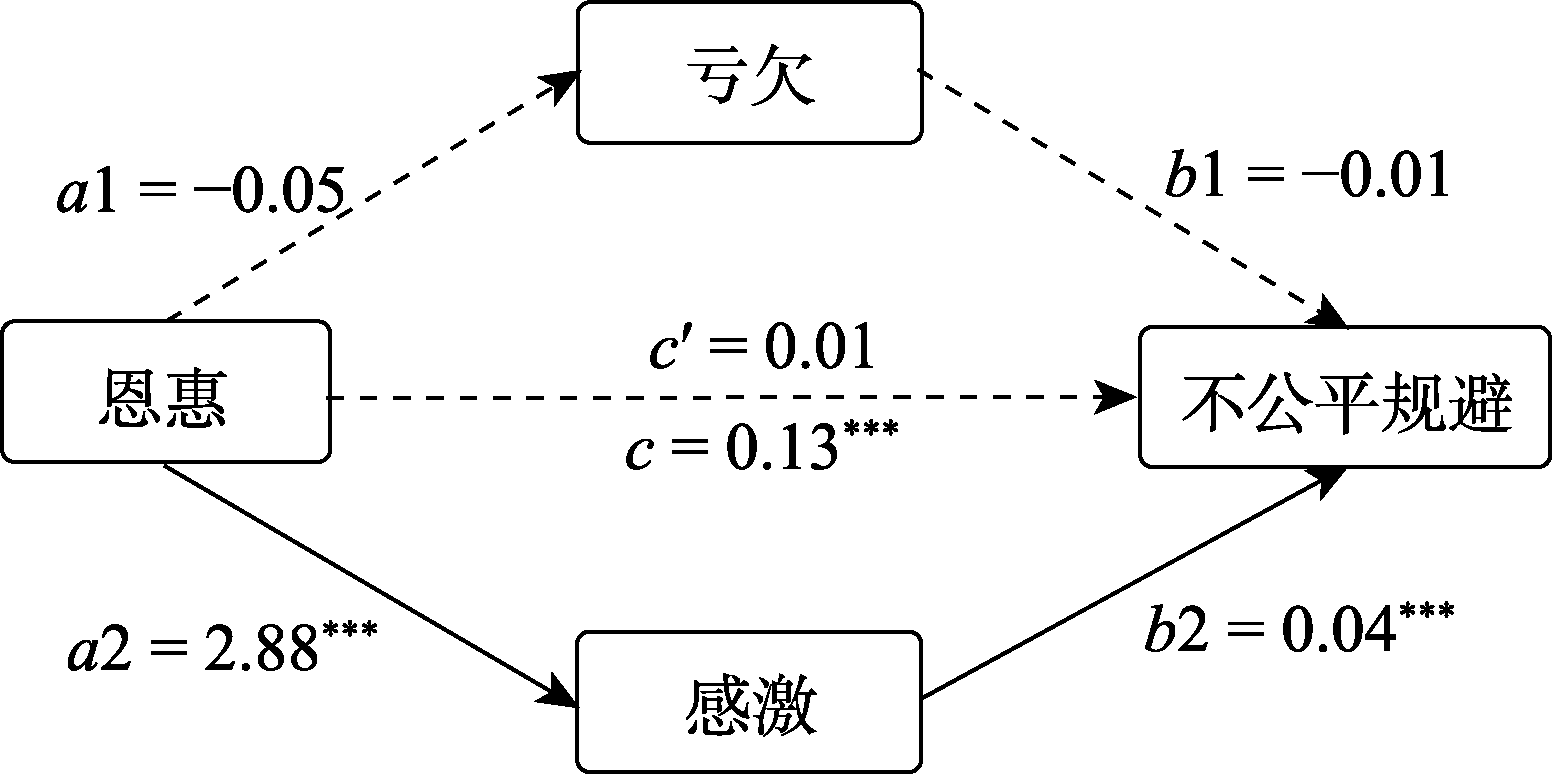
图8 感激和亏欠情绪的中介效应检验图
注:*** p < 0.001
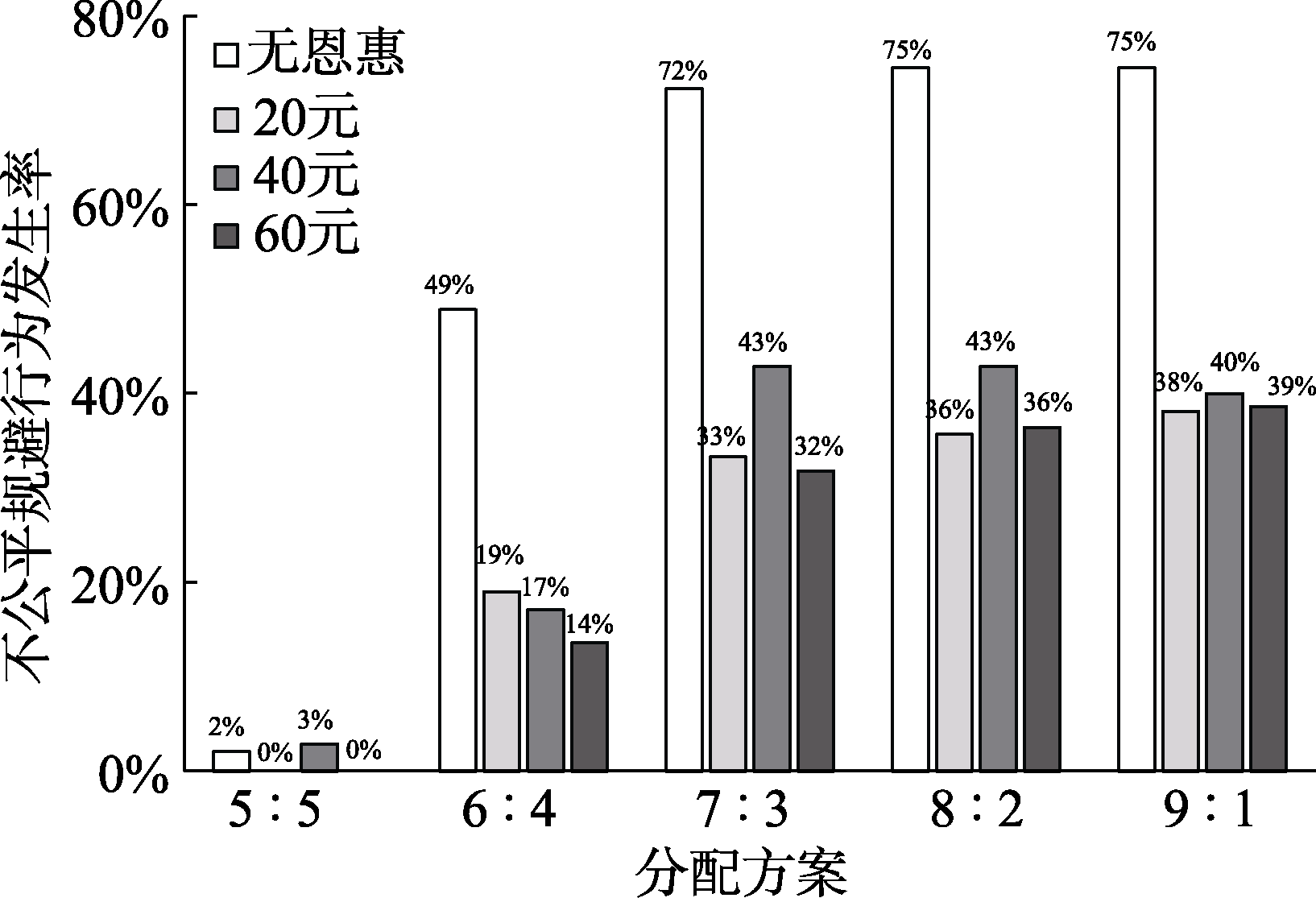
图9 不同分配方案及恩惠条件下不公平规避行为发生率

图10 不同大小恩惠vs.无恩惠条件中感激和亏欠的中介效应检验图
注:* p < 0.05, ** p < 0.01, *** p < 0.001
| 参数 | 全模型 | 最简模型 | ||||||
|---|---|---|---|---|---|---|---|---|
| b | SE | z | p | b | SE | z | p | |
| 截距 | 5.69 | 1.09 | 5.24 | <0.001 | 12.91 | 1.58 | 8.17 | <0.001 |
| 恩惠 | 2.46 | 1.77 | 1.40 | 0.163 | ||||
| 分配方案7 : 3 | −10.33 | 1.95 | −5.31 | <0.001 | −24.77 | 1.97 | −12.59 | <0.001 |
| 分配方案8 : 2 | −16.60 | 2.84 | −5.84 | <0.001 | −40.62 | 2.79 | −14.58 | <0.001 |
| 分配方案9 : 1 | −20.98 | 3.80 | −5.51 | <0.001 | −54.32 | 3.75 | −14.49 | <0.001 |
| 恩惠×分配方案7 : 3 | −2.27 | 2.02 | −1.12 | 0.262 | ||||
| 恩惠×分配方案8 : 2 | −0.82 | 2.34 | −0.35 | 0.726 | ||||
| 恩惠×分配方案9 : 1 | 2.48 | 2.73 | 0.91 | 0.364 | ||||
| AIC | 337.00 | 252.00 | ||||||
| BIC | 374.85 | 273.03 | ||||||
| N | 124 | 124 | ||||||
附表1 实验1A广义线性混合模型
| 参数 | 全模型 | 最简模型 | ||||||
|---|---|---|---|---|---|---|---|---|
| b | SE | z | p | b | SE | z | p | |
| 截距 | 5.69 | 1.09 | 5.24 | <0.001 | 12.91 | 1.58 | 8.17 | <0.001 |
| 恩惠 | 2.46 | 1.77 | 1.40 | 0.163 | ||||
| 分配方案7 : 3 | −10.33 | 1.95 | −5.31 | <0.001 | −24.77 | 1.97 | −12.59 | <0.001 |
| 分配方案8 : 2 | −16.60 | 2.84 | −5.84 | <0.001 | −40.62 | 2.79 | −14.58 | <0.001 |
| 分配方案9 : 1 | −20.98 | 3.80 | −5.51 | <0.001 | −54.32 | 3.75 | −14.49 | <0.001 |
| 恩惠×分配方案7 : 3 | −2.27 | 2.02 | −1.12 | 0.262 | ||||
| 恩惠×分配方案8 : 2 | −0.82 | 2.34 | −0.35 | 0.726 | ||||
| 恩惠×分配方案9 : 1 | 2.48 | 2.73 | 0.91 | 0.364 | ||||
| AIC | 337.00 | 252.00 | ||||||
| BIC | 374.85 | 273.03 | ||||||
| N | 124 | 124 | ||||||
| 参数 | 全模型 | 最简模型 | ||||||
|---|---|---|---|---|---|---|---|---|
| b | SE | z | p | b | SE | z | p | |
| 截距 | 0.67 | 0.37 | 1.79 | 0.073 | 0.57 | 0.35 | 1.62 | 0.106 |
| 恩惠 | 0.93 | 0.54 | 1.73 | 0.084 | 1.14 | 0.48 | 2.35 | 0.019 |
| 分配方案 | −4.05 | 0.59 | −6.89 | <0.001 | −3.74 | 0.44 | −8.53 | <0.001 |
| 恩惠×分配方案 | 0.56 | 0.65 | 0.87 | 0.384 | ||||
| AIC | 493.60 | 492.37 | ||||||
| BIC | 514.63 | 509.20 | ||||||
| N | 124 | 124 | ||||||
附表2 实验1A分配方案合并后的广义线性混合模型
| 参数 | 全模型 | 最简模型 | ||||||
|---|---|---|---|---|---|---|---|---|
| b | SE | z | p | b | SE | z | p | |
| 截距 | 0.67 | 0.37 | 1.79 | 0.073 | 0.57 | 0.35 | 1.62 | 0.106 |
| 恩惠 | 0.93 | 0.54 | 1.73 | 0.084 | 1.14 | 0.48 | 2.35 | 0.019 |
| 分配方案 | −4.05 | 0.59 | −6.89 | <0.001 | −3.74 | 0.44 | −8.53 | <0.001 |
| 恩惠×分配方案 | 0.56 | 0.65 | 0.87 | 0.384 | ||||
| AIC | 493.60 | 492.37 | ||||||
| BIC | 514.63 | 509.20 | ||||||
| N | 124 | 124 | ||||||
| 参数 | 全模型 | 最简模型 | ||||||
|---|---|---|---|---|---|---|---|---|
| b | SE | z | p | b | SE | z | p | |
| 截距 | −1.74 | 0.88 | −1.97 | 0.049 | −6.80 | 0.88 | −7.70 | <0.001 |
| 恩惠 | 7.19 | 1.59 | 4.51 | <0.001 | 13.12 | 1.32 | 9.96 | <0.001 |
| 分配方案7 : 3 | −6.69 | 1.28 | −5.24 | <0.001 | −11.66 | 1.21 | −9.63 | <0.001 |
| 分配方案8 : 2 | −9.99 | 1.54 | −6.50 | <0.001 | −14.69 | 1.57 | −9.33 | <0.001 |
| 分配方案9 : 1 | −8.40 | 1.42 | −5.90 | <0.001 | −15.15 | 1.62 | −9.35 | <0.001 |
| 恩惠×分配方案7 : 3 | −2.20 | 1.97 | −1.12 | 0.263 | ||||
| 恩惠×分配方案8 : 2 | −0.85 | 2.18 | −0.39 | 0.697 | ||||
| 恩惠×分配方案9 : 1 | −3.26 | 2.11 | −1.55 | 0.122 | ||||
| AIC | 631.98 | 624.44 | ||||||
| BIC | 674.71 | 652.92 | ||||||
| N | 213 | 213 | ||||||
附表3 实验1B广义线性混合模型
| 参数 | 全模型 | 最简模型 | ||||||
|---|---|---|---|---|---|---|---|---|
| b | SE | z | p | b | SE | z | p | |
| 截距 | −1.74 | 0.88 | −1.97 | 0.049 | −6.80 | 0.88 | −7.70 | <0.001 |
| 恩惠 | 7.19 | 1.59 | 4.51 | <0.001 | 13.12 | 1.32 | 9.96 | <0.001 |
| 分配方案7 : 3 | −6.69 | 1.28 | −5.24 | <0.001 | −11.66 | 1.21 | −9.63 | <0.001 |
| 分配方案8 : 2 | −9.99 | 1.54 | −6.50 | <0.001 | −14.69 | 1.57 | −9.33 | <0.001 |
| 分配方案9 : 1 | −8.40 | 1.42 | −5.90 | <0.001 | −15.15 | 1.62 | −9.35 | <0.001 |
| 恩惠×分配方案7 : 3 | −2.20 | 1.97 | −1.12 | 0.263 | ||||
| 恩惠×分配方案8 : 2 | −0.85 | 2.18 | −0.39 | 0.697 | ||||
| 恩惠×分配方案9 : 1 | −3.26 | 2.11 | −1.55 | 0.122 | ||||
| AIC | 631.98 | 624.44 | ||||||
| BIC | 674.71 | 652.92 | ||||||
| N | 213 | 213 | ||||||
| 参数 | 全模型 | 最简模型 | ||||||
|---|---|---|---|---|---|---|---|---|
| b | SE | z | p | b | SE | z | p | |
| 截距 | −1.58 | 0.36 | −4.44 | <0.001 | −1.53 | 0.34 | −4.43 | <0.001 |
| 恩惠 | 2.58 | 0.51 | 5.05 | <0.001 | 2.47 | 0.48 | 5.18 | <0.001 |
| 分配方案 | −2.46 | 0.41 | −5.99 | <0.001 | −2.66 | 0.30 | −8.96 | <0.001 |
| 恩惠×分配方案 | −0.34 | 0.51 | −0.67 | 0.503 | ||||
| AIC | 793.83 | 792.28 | ||||||
| BIC | 817.57 | 811.27 | ||||||
| N | 213 | 213 | ||||||
附表4 实验1B分配方案合并后的广义线性混合模型
| 参数 | 全模型 | 最简模型 | ||||||
|---|---|---|---|---|---|---|---|---|
| b | SE | z | p | b | SE | z | p | |
| 截距 | −1.58 | 0.36 | −4.44 | <0.001 | −1.53 | 0.34 | −4.43 | <0.001 |
| 恩惠 | 2.58 | 0.51 | 5.05 | <0.001 | 2.47 | 0.48 | 5.18 | <0.001 |
| 分配方案 | −2.46 | 0.41 | −5.99 | <0.001 | −2.66 | 0.30 | −8.96 | <0.001 |
| 恩惠×分配方案 | −0.34 | 0.51 | −0.67 | 0.503 | ||||
| AIC | 793.83 | 792.28 | ||||||
| BIC | 817.57 | 811.27 | ||||||
| N | 213 | 213 | ||||||
| 参数 | 全模型 | 最简模型 | ||||||
|---|---|---|---|---|---|---|---|---|
| b | SE | z | p | b | SE | z | p | |
| 截距 | 4.05 | 1.80 | 2.25 | 0.024 | 10.56 | 1.46 | 7.24 | <0.001 |
| 恩惠 | 5.01 | 2.27 | 2.21 | 0.027 | 21.67 | 2.27 | 9.57 | <0.001 |
| 分配方案7 : 3 | −9.06 | 2.44 | −3.71 | <0.001 | −21.65 | 2.21 | −9.78 | <0.001 |
| 分配方案8 : 2 | −14.53 | 3.90 | −3.73 | <0.001 | −43.70 | 3.54 | −12.33 | <0.001 |
| 分配方案9 : 1 | −14.44 | 3.88 | −3.73 | <0.001 | −57.03 | 4.79 | −11.91 | <0.001 |
| 恩惠×分配方案7 : 3 | 1.68 | 2.22 | 0.76 | 0.450 | ||||
| 恩惠×分配方案8 : 2 | −1.30 | 2.51 | −0.52 | 0.604 | ||||
| 恩惠×分配方案9 : 1 | −3.81 | 2.60 | −1.47 | 0.143 | ||||
| AIC | 341.40 | 290.27 | ||||||
| BIC | 378.58 | 315.06 | ||||||
| N | 115 | 115 | ||||||
附表5 实验2A广义线性混合模型
| 参数 | 全模型 | 最简模型 | ||||||
|---|---|---|---|---|---|---|---|---|
| b | SE | z | p | b | SE | z | p | |
| 截距 | 4.05 | 1.80 | 2.25 | 0.024 | 10.56 | 1.46 | 7.24 | <0.001 |
| 恩惠 | 5.01 | 2.27 | 2.21 | 0.027 | 21.67 | 2.27 | 9.57 | <0.001 |
| 分配方案7 : 3 | −9.06 | 2.44 | −3.71 | <0.001 | −21.65 | 2.21 | −9.78 | <0.001 |
| 分配方案8 : 2 | −14.53 | 3.90 | −3.73 | <0.001 | −43.70 | 3.54 | −12.33 | <0.001 |
| 分配方案9 : 1 | −14.44 | 3.88 | −3.73 | <0.001 | −57.03 | 4.79 | −11.91 | <0.001 |
| 恩惠×分配方案7 : 3 | 1.68 | 2.22 | 0.76 | 0.450 | ||||
| 恩惠×分配方案8 : 2 | −1.30 | 2.51 | −0.52 | 0.604 | ||||
| 恩惠×分配方案9 : 1 | −3.81 | 2.60 | −1.47 | 0.143 | ||||
| AIC | 341.40 | 290.27 | ||||||
| BIC | 378.58 | 315.06 | ||||||
| N | 115 | 115 | ||||||
| 参数 | 全模型 | 最简模型 | ||||||
|---|---|---|---|---|---|---|---|---|
| b | SE | z | p | b | SE | z | p | |
| 截距 | −0.37 | 0.65 | −0.57 | 0.567 | −0.05 | 0.61 | −0.08 | 0.938 |
| 恩惠 | 2.51 | 0.99 | 2.54 | 0.011 | 1.80 | 0.85 | 2.11 | 0.035 |
| 分配方案 | −3.70 | 0.79 | −4.65 | <0.001 | −4.64 | 0.77 | −6.07 | <0.001 |
| 恩惠×分配方案 | −1.88 | 1.02 | −1.83 | 0.067 | ||||
| AIC | 422.28 | 424.02 | ||||||
| BIC | 442.94 | 440.55 | ||||||
| N | 115 | 115 | ||||||
附表6 实验2A分配方案合并后的广义线性混合模型
| 参数 | 全模型 | 最简模型 | ||||||
|---|---|---|---|---|---|---|---|---|
| b | SE | z | p | b | SE | z | p | |
| 截距 | −0.37 | 0.65 | −0.57 | 0.567 | −0.05 | 0.61 | −0.08 | 0.938 |
| 恩惠 | 2.51 | 0.99 | 2.54 | 0.011 | 1.80 | 0.85 | 2.11 | 0.035 |
| 分配方案 | −3.70 | 0.79 | −4.65 | <0.001 | −4.64 | 0.77 | −6.07 | <0.001 |
| 恩惠×分配方案 | −1.88 | 1.02 | −1.83 | 0.067 | ||||
| AIC | 422.28 | 424.02 | ||||||
| BIC | 442.94 | 440.55 | ||||||
| N | 115 | 115 | ||||||
| 参数 | 全模型 | 最简模型 | ||||||
|---|---|---|---|---|---|---|---|---|
| b | SE | z | p | b | SE | z | p | |
| 截距 | 1.47 | 0.51 | 2.90 | 0.004 | 1.13 | 0.46 | 2.45 | 0.014 |
| 恩惠 | 1.22 | 0.71 | 1.72 | 0.085 | 1.93 | 0.62 | 3.09 | 0.002 |
| 分配方案7 : 3 | −4.71 | 0.56 | −8.49 | <0.001 | −3.99 | 0.34 | −11.70 | <0.001 |
| 分配方案8 : 2 | −7.12 | 0.75 | −9.43 | <0.001 | −6.54 | 0.47 | −14.03 | <0.001 |
| 分配方案9 : 1 | −24.32 | 95.08 | −0.26 | 0.798 | −7.80 | 0.58 | −13.44 | <0.001 |
| 恩惠×分配方案7 : 3 | 1.24 | 0.65 | 1.91 | 0.056 | ||||
| 恩惠×分配方案8 : 2 | 0.98 | 0.87 | 1.12 | 0.262 | ||||
| 恩惠×分配方案9 : 1 | 17.41 | 95.08 | 0.18 | 0.855 | ||||
| AIC | 773.80 | 777.57 | ||||||
| BIC | 820.63 | 808.79 | ||||||
| N | 84 | 84 | ||||||
附表7 实验2B广义线性混合模型
| 参数 | 全模型 | 最简模型 | ||||||
|---|---|---|---|---|---|---|---|---|
| b | SE | z | p | b | SE | z | p | |
| 截距 | 1.47 | 0.51 | 2.90 | 0.004 | 1.13 | 0.46 | 2.45 | 0.014 |
| 恩惠 | 1.22 | 0.71 | 1.72 | 0.085 | 1.93 | 0.62 | 3.09 | 0.002 |
| 分配方案7 : 3 | −4.71 | 0.56 | −8.49 | <0.001 | −3.99 | 0.34 | −11.70 | <0.001 |
| 分配方案8 : 2 | −7.12 | 0.75 | −9.43 | <0.001 | −6.54 | 0.47 | −14.03 | <0.001 |
| 分配方案9 : 1 | −24.32 | 95.08 | −0.26 | 0.798 | −7.80 | 0.58 | −13.44 | <0.001 |
| 恩惠×分配方案7 : 3 | 1.24 | 0.65 | 1.91 | 0.056 | ||||
| 恩惠×分配方案8 : 2 | 0.98 | 0.87 | 1.12 | 0.262 | ||||
| 恩惠×分配方案9 : 1 | 17.41 | 95.08 | 0.18 | 0.855 | ||||
| AIC | 773.80 | 777.57 | ||||||
| BIC | 820.63 | 808.79 | ||||||
| N | 84 | 84 | ||||||
| 参数 | 全模型 | 最简模型 | ||||||
|---|---|---|---|---|---|---|---|---|
| b | SE | z | p | b | SE | z | p | |
| 截距 | −0.50 | 0.29 | −1.69 | 0.091 | −0.54 | 0.29 | −1.85 | 0.064 |
| 恩惠 | 1.17 | 0.42 | 2.82 | 0.005 | 1.27 | 0.41 | 3.11 | 0.002 |
| 分配方案 | −4.43 | 0.47 | −9.41 | <0.001 | −4.02 | 0.27 | −14.72 | <0.001 |
| 恩惠×分配方案 | 0.63 | 0.55 | 1.14 | 0.256 | ||||
| AIC | 1038.32 | 1037.67 | ||||||
| BIC | 1064.34 | 1058.48 | ||||||
| N | 84 | 84 | ||||||
附表8 实验2B分配方案合并后的广义线性混合模型
| 参数 | 全模型 | 最简模型 | ||||||
|---|---|---|---|---|---|---|---|---|
| b | SE | z | p | b | SE | z | p | |
| 截距 | −0.50 | 0.29 | −1.69 | 0.091 | −0.54 | 0.29 | −1.85 | 0.064 |
| 恩惠 | 1.17 | 0.42 | 2.82 | 0.005 | 1.27 | 0.41 | 3.11 | 0.002 |
| 分配方案 | −4.43 | 0.47 | −9.41 | <0.001 | −4.02 | 0.27 | −14.72 | <0.001 |
| 恩惠×分配方案 | 0.63 | 0.55 | 1.14 | 0.256 | ||||
| AIC | 1038.32 | 1037.67 | ||||||
| BIC | 1064.34 | 1058.48 | ||||||
| N | 84 | 84 | ||||||
| 参数 | 全模型 | 最简模型 | ||||||
|---|---|---|---|---|---|---|---|---|
| b | SE | z | p | b | SE | z | p | |
| 截距 | 0.47 | 2.17 | 0.22 | 0.827 | −8.67 | 1.29 | −6.73 | <0.001 |
| 分配方案7 : 3 | −5.66 | 2.12 | −2.67 | 0.008 | −9.45 | 0.97 | −9.73 | <0.001 |
| 分配方案8 : 2 | −6.39 | 2.27 | −2.82 | 0.005 | −10.44 | 1.09 | −9.56 | <0.001 |
| 分配方案9 : 1 | −6.30 | 2.25 | −2.80 | 0.005 | −10.72 | 1.13 | −9.53 | <0.001 |
| 恩惠20 | 9.47 | 3.22 | 2.94 | 0.003 | 29.39 | 2.62 | 11.23 | <0.001 |
| 恩惠40 | 5.67 | 2.82 | 2.01 | 0.044 | 29.04 | 2.63 | 11.04 | <0.001 |
| 恩惠60 | 9.14 | 3.54 | 2.58 | 0.010 | 29.46 | 2.61 | 11.27 | <0.001 |
| 金额5000 | −0.10 | 2.97 | −0.03 | 0.973 | ||||
| 分配方案7 : 3×恩惠20 | 1.50 | 2.65 | 0.56 | 0.573 | ||||
| 分配方案8 : 2×恩惠20 | 1.35 | 2.77 | 0.49 | 0.625 | ||||
| 分配方案9 : 1×恩惠20 | 1.31 | 2.75 | 0.48 | 0.635 | ||||
| 分配方案7 : 3×恩惠40 | 5.08 | 2.55 | 1.99 | 0.046 | ||||
| 分配方案8 : 2×恩惠40 | 5.76 | 2.67 | 2.16 | 0.031 | ||||
| 分配方案9 : 1×恩惠40 | 6.23 | 2.69 | 2.32 | 0.020 | ||||
| 分配方案7 : 3×恩惠60 | 0.13 | 2.63 | 0.05 | 0.960 | ||||
| 分配方案8 : 2×恩惠60 | −0.27 | 2.79 | −0.10 | 0.924 | ||||
| 分配方案9 : 1×恩惠60 | −0.22 | 2.77 | −0.08 | 0.937 | ||||
| 分配方案7 : 3×金额5000 | 1.83 | 2.52 | 0.73 | 0.467 | ||||
| 分配方案8 : 2×金额5000 | 2.47 | 2.63 | 0.94 | 0.348 | ||||
| 分配方案9 : 1×金额5000 | 2.43 | 2.61 | 0.93 | 0.352 | ||||
| 恩惠20×金额5000 | −3.36 | 4.19 | −0.80 | 0.423 | ||||
| 恩惠40×金额5000 | 0.38 | 3.80 | 0.10 | 0.921 | ||||
| 恩惠60×金额5000 | 0.16 | 4.07 | 0.04 | 0.970 | ||||
| 分配方案7 : 3×恩惠20×金额5000 | −1.01 | 3.52 | −0.29 | 0.776 | ||||
| 分配方案8 : 2×恩惠20×金额5000 | −0.82 | 3.62 | −0.23 | 0.821 | ||||
| 分配方案9 : 1×恩惠20×金额5000 | −1.67 | 3.64 | −0.46 | 0.646 | ||||
| 分配方案7 : 3×恩惠40×金额5000 | −9.16 | 3.55 | −2.58 | 0.010 | ||||
| 分配方案8 : 2×恩惠40×金额5000 | −9.64 | 3.64 | −2.65 | 0.008 | ||||
| 分配方案9 : 1×恩惠40×金额5000 | −10.23 | 3.66 | −2.80 | 0.005 | ||||
| 分配方案7 : 3×恩惠60×金额5000 | 0.23 | 3.51 | 0.07 | 0.947 | ||||
| 分配方案8 : 2×恩惠60×金额5000 | −0.27 | 3.68 | −0.07 | 0.941 | ||||
| 分配方案9 : 1×恩惠60×金额5000 | −1.12 | 3.69 | −0.30 | 0.761 | ||||
| AIC | 505.51 | 418.92 | ||||||
| BIC | 654.35 | 455.00 | ||||||
| N | 168 | 168 | ||||||
附表9 实验3广义线性混合模型
| 参数 | 全模型 | 最简模型 | ||||||
|---|---|---|---|---|---|---|---|---|
| b | SE | z | p | b | SE | z | p | |
| 截距 | 0.47 | 2.17 | 0.22 | 0.827 | −8.67 | 1.29 | −6.73 | <0.001 |
| 分配方案7 : 3 | −5.66 | 2.12 | −2.67 | 0.008 | −9.45 | 0.97 | −9.73 | <0.001 |
| 分配方案8 : 2 | −6.39 | 2.27 | −2.82 | 0.005 | −10.44 | 1.09 | −9.56 | <0.001 |
| 分配方案9 : 1 | −6.30 | 2.25 | −2.80 | 0.005 | −10.72 | 1.13 | −9.53 | <0.001 |
| 恩惠20 | 9.47 | 3.22 | 2.94 | 0.003 | 29.39 | 2.62 | 11.23 | <0.001 |
| 恩惠40 | 5.67 | 2.82 | 2.01 | 0.044 | 29.04 | 2.63 | 11.04 | <0.001 |
| 恩惠60 | 9.14 | 3.54 | 2.58 | 0.010 | 29.46 | 2.61 | 11.27 | <0.001 |
| 金额5000 | −0.10 | 2.97 | −0.03 | 0.973 | ||||
| 分配方案7 : 3×恩惠20 | 1.50 | 2.65 | 0.56 | 0.573 | ||||
| 分配方案8 : 2×恩惠20 | 1.35 | 2.77 | 0.49 | 0.625 | ||||
| 分配方案9 : 1×恩惠20 | 1.31 | 2.75 | 0.48 | 0.635 | ||||
| 分配方案7 : 3×恩惠40 | 5.08 | 2.55 | 1.99 | 0.046 | ||||
| 分配方案8 : 2×恩惠40 | 5.76 | 2.67 | 2.16 | 0.031 | ||||
| 分配方案9 : 1×恩惠40 | 6.23 | 2.69 | 2.32 | 0.020 | ||||
| 分配方案7 : 3×恩惠60 | 0.13 | 2.63 | 0.05 | 0.960 | ||||
| 分配方案8 : 2×恩惠60 | −0.27 | 2.79 | −0.10 | 0.924 | ||||
| 分配方案9 : 1×恩惠60 | −0.22 | 2.77 | −0.08 | 0.937 | ||||
| 分配方案7 : 3×金额5000 | 1.83 | 2.52 | 0.73 | 0.467 | ||||
| 分配方案8 : 2×金额5000 | 2.47 | 2.63 | 0.94 | 0.348 | ||||
| 分配方案9 : 1×金额5000 | 2.43 | 2.61 | 0.93 | 0.352 | ||||
| 恩惠20×金额5000 | −3.36 | 4.19 | −0.80 | 0.423 | ||||
| 恩惠40×金额5000 | 0.38 | 3.80 | 0.10 | 0.921 | ||||
| 恩惠60×金额5000 | 0.16 | 4.07 | 0.04 | 0.970 | ||||
| 分配方案7 : 3×恩惠20×金额5000 | −1.01 | 3.52 | −0.29 | 0.776 | ||||
| 分配方案8 : 2×恩惠20×金额5000 | −0.82 | 3.62 | −0.23 | 0.821 | ||||
| 分配方案9 : 1×恩惠20×金额5000 | −1.67 | 3.64 | −0.46 | 0.646 | ||||
| 分配方案7 : 3×恩惠40×金额5000 | −9.16 | 3.55 | −2.58 | 0.010 | ||||
| 分配方案8 : 2×恩惠40×金额5000 | −9.64 | 3.64 | −2.65 | 0.008 | ||||
| 分配方案9 : 1×恩惠40×金额5000 | −10.23 | 3.66 | −2.80 | 0.005 | ||||
| 分配方案7 : 3×恩惠60×金额5000 | 0.23 | 3.51 | 0.07 | 0.947 | ||||
| 分配方案8 : 2×恩惠60×金额5000 | −0.27 | 3.68 | −0.07 | 0.941 | ||||
| 分配方案9 : 1×恩惠60×金额5000 | −1.12 | 3.69 | −0.30 | 0.761 | ||||
| AIC | 505.51 | 418.92 | ||||||
| BIC | 654.35 | 455.00 | ||||||
| N | 168 | 168 | ||||||
| [1] | Algoe S. B. (2012). Find, remind, and bind: The functions of gratitude in everyday relationships. Social and Personality Psychology Compass, 6(6), 455-469. https://doi.org/10.1111/j.1751-9004.2012.00439.x |
| [2] |
Bartlett M. Y., & DeSteno D. (2006). Gratitude and prosocial behavior: Helping when it costs you. Psychological Science, 17(4), 319-325. https://doi.org/10.1111/j.1467-9280.2006.01705.x
URL pmid: 16623689 |
| [3] | Baumeister R. F., Bratslavsky E., Finkenauer C., & Vohs K. D. (2001). Bad is stronger than good. Review of General Psychology, 5(4), 323-370. https://doi.org/10.1037//1089-2680.5.4.323 |
| [4] | Chae J., Kim K., Kim Y., Lim G., Kim D., & Kim H. (2022). Ingroup favoritism overrides fairness when resources are limited. Scientific Reports, 12(1), Article 4560. https://doi.org/10.1038/s41598-022-08460-1 |
| [5] | Chao M. (2018). Intentions-based reciprocity to monetary and non-monetary gifts. Games, 9(4), Article 74. https://doi.org/10.3390/g9040074 |
| [6] | Chapkovski P., Peer E., & Brandt E. (2024). From WEIRD to GREAT? Exploring data quality of global platforms for online research. OSF Preprints. https://doi.org/10.31234/osf.io/xvfqn |
| [7] | Chen P., Zhang Y., Hu X., & Mai X. (2024). Age differences of responders' decision-making in disadvantageous and advantageous inequality contexts in the ultimatum game: The role of social value orientation. Personality and Individual Differences, 220, Article 112521. https://doi.org/10.1016/j.paid.2023.112521 |
| [8] | Chen S. P., & Bo X. (2016). The influence of unfairness and punishment price to the demand of third-party punishment. Studies of Psychology and Behavior, 14(3), 372-376. |
| [陈世平, 薄欣. (2016). 公平与惩罚价格对第三方惩罚需求的影响. 心理与行为研究, 14(3), 372-376.] | |
| [9] | Cialdini R. B. Ed. (2007). Influence: The psychology of persuasion (pp. 16-22). New York: Collins. |
| [10] | Cook K. S., & Hegtvedt K. A. (1983). Distributive justice, equity, and equality. Annual Review of Sociology, 9(1), 217-241. https://doi.org/10.1146/annurev.so.09.080183.001245 |
| [11] | Dawkins M. B., Sloane S., & Baillargeon R.(2019). Do infants in the first year of life expect equal resource allocations? Frontiers in Psychology, 10, Article 116. https://doi.org/10.3389/fpsyg.2019.00116 |
| [12] | Degutis M., Urbonavičius S., Hollebeek L. D., & Anselmsson J. (2023). Consumers’ willingness to disclose their personal data in e-commerce: A reciprocity-based social exchange perspective. Journal of Retailing and Consumer Services, 74, Article 103385. https://doi.org/10.1016/j.jretconser.2023.103385 |
| [13] |
Flynn F. J., & Yu A. (2021). Better to give than reciprocate? Status and reciprocity in prosocial exchange. Journal of Personality and Social Psychology, 121(1), 115-136. http://dx.doi.org/10.1037/pspi0000349
doi: 10.1037/pspi0000349 URL pmid: 33492155 |
| [14] | Gao X., Jolly E., Yu H., Liu H., Zhou X., & Chang L. J. (2020). The hidden cost of receiving favors: A theory of indebtedness. BioRxiv. https://doi.org/10.1101/2020.02.03.926295 |
| [15] | Gao X., Jolly E., Yu H., Liu H., Zhou X., & Chang L. J. (2024). The psychological, computational, and neural foundations of indebtedness. Nature Communications, 15(1), Article 68. https://doi.org/10.1038/s41467-023-44286-9 |
| [16] | Goyal N., Adams M. M., Wice M., Sullivan S., & Miller J. G. (2022). Gratitude endures while indebtedness persuades: Investigating the unique influences of gratitude and indebtedness in helping. Cognition and Emotion, 36(7), 1361-1373. https://doi.org/10.1080/02699931.2022.2118237 |
| [17] | Greenberg, M.S. (1980). A Theory of Indebtedness. In K. J.Gergen, M. S.Greenberg, & R. H.Willis (Eds.), Social exchange (pp. 3-26). Boston, MA: Springer. https://doi.org/10.1007/978-1-4613-3087-5_1 |
| [18] | Halali E., Bereby-Meyer Y., & Meiran N. (2014). Between self-interest and reciprocity: The social bright side of self-control failure. Journal of Experimental Psychology: General, 143(2), 745-754. https://doi.org/10.1037/a0033824 |
| [19] | Hameed A., & Khwaja M. G. (2023). Employee gratitude: A win-win for the employer and the employee. South Asian Journal of Human Resources Management, 10(2), 303-326. https://doi.org/10.1177/23220937221101261 |
| [20] | Han Y. D. (2023-06-01). Crack down on the corruption behind the "Renqing". The Central Commission for Discipline Inspection of the Communist Party of China Website. Retrieved June 25, 2024, from https://www.ccdi.gov.cn/toutiaon/202306/t20230621_270947.html |
| [韩亚栋. (2023-06-21). 严查“人情往来”背后腐败. 中央纪委国家监委网站. 2024-07-25 取自 https://www.ccdi.gov.cn/toutiaon/202306/t20230621_270947.html] | |
| [21] | Hitokoto H. (2016). Indebtedness in cultural context: The role of culture in the felt obligation to reciprocate. Asian Journal of Social Psychology, 19(1), 16-25. https://doi.org/10.1111/ajsp.12122 |
| [22] | Hoffmann R., Kanitsar G., & Seifert M. (2024). Behavioral barriers impede pro-environmental decision-making: Experimental evidence from incentivized laboratory and vignette studies. Ecological Economics, 225, Article 108347. https://doi.org/10.1016/j.ecolecon.2024.108347 |
| [23] | House B. R., Kanngiesser P., Barrett H. C., Yilmaz S., Smith A. M., Sebastian-Enesco C.,... Silk J. B. (2020). Social norms and cultural diversity in the development of third-party punishment. Proceedings of the Royal Society B, 287(1925), Article 20192794. https://doi.org/10.1098/rspb.2019.2794 |
| [24] | Hu G. X., Liu Y. Z., Wang H., He N., & Chen X. X. (2020). Effect of ego-depletion on altruistic punishment: The role of anger and justice sensitivity. Journal of Psychological Science, 43(1), 117-124. https://doi.org/10.16719/j.cnki.1671-6981.20200117 |
| [胡高喜, 刘耀中, 王赫, 贺娜, 陈晓曦. (2020). 自我损耗对利他惩罚的影响:愤怒与公正敏感性的作用. 心理科学, 43(1), 117-124. https://doi.org/10.16719/j.cnki.1671-6981.20200117 ] | |
| [25] | Hu X., & Mai X. (2021). Social value orientation modulates fairness processing during social decision-making: Evidence from behavior and brain potentials. Social Cognitive and Affective Neuroscience, 16(7), 670-682. https://doi.org/10.1093/scan/nsab032 |
| [26] |
Keysar B., Converse B. A., Wang J., & Epley N. (2008). Reciprocity is not give and take: Asymmetric reciprocity to positive and negative acts. Psychological Science, 19(12), 1280-1286. https://doi.org/10.1111/j.1467-9280.2008.02223.x
doi: 10.1111/j.1467-9280.2008.02223.x URL pmid: 19121138 |
| [27] |
Li S., Luan M., Li H., & Fu G. Q. (2024). How gifts convey love? The influence of feasible and desirable gifts on mating intention. Acta Psychologica Sinica, 56(11), 1524-1540. https://doi.org/10.3724/SP.J.1041.2024.01524
doi: 10.3724/SP.J.1041.2024.01524 URL |
|
[李世豪, 栾墨, 李虹, 符国群. (2024). 礼物何以传递爱意: 便利型与合意型礼物对择偶交往意愿的影响. 心理学报, 56(11), 1524-1540. https://doi.org/10.3724/SP.J.1041.2024.01524 ]
doi: 10.3724/SP.J.1041.2024.01524 URL |
|
| [28] | Li X., Zhu P., Yu Y., Zhang J., & Zhang Z. (2017). The effect of reciprocity disposition on giving and repaying reciprocity behavior. Personality and Individual Differences, 109, 201-206. http://dx.doi.org/10.1016/j.paid.2017.01.007 |
| [29] | Lilleheie I., Debesay J., Bye A., & Bergland A. (2021). The tension between carrying a burden and feeling like a burden: A qualitative study of informal caregivers’ and care recipients’ experiences after patient discharge from hospital. International Journal of Qualitative Studies on Health and Well-being, 16(1), Article 1855751. https://doi.org/10.1080/17482631.2020.1855751 |
| [30] | Liu G., Cui Z., Yu H., Rotshtein P., Zhao F., Wang H.,... Sui J. (2020). Neural responses to intention and benefit appraisal are critical in distinguishing gratitude and joy. Scientific Reports, 10(1), Article 7864. https://doi.org/10.1038/s41598-020-64720-y |
| [31] |
Lv S-S., Sun X., Shen L-L., Wu Y-Q., Zhao S., Wang F., & Wang Z-J.(2021). Effect of group membership on unfairness perception under coexperience conditions. Acta Psychologica Sinica, 53(7), 773-787. https://doi.org/10.3724/SP.J.1041.2021.00773
doi: 10.3724/SP.J.1041.2021.00773 URL |
|
[吕飒飒, 孙欣, 沈林林, 武雨晴, 赵纾, 王霏, 汪祚军. (2021). 群体共同经历影响不公平感知. 心理学报, 53(7), 773-787. https://doi.org/10.3724/SP.J.1041.2021.00773 ]
doi: 10.3724/SP.J.1041.2021.00773 URL |
|
| [32] | Ma L. K., Tunney R. J., & Ferguson E. (2017). Does gratitude enhance prosociality? A meta-analytic review. Psychological Bulletin, 143(6), 601-635. https://doi.org/10.1037/bul0000103 |
| [33] |
McCullough M. E., Kilpatrick S. D., Emmons R. A., & Larson D. B. (2001). Is gratitude a moral affect? Psychological Bulletin, 127(2), 249-266. https://doi.org/10.1037/0033-2909.127.2.249
URL pmid: 11316013 |
| [34] | Molleman L., van den Broek E., & Egas M. (2013). Personal experience and reputation interact in human decisions to help reciprocally. Proceedings of the Royal Society B, 280(1757), Article 20123044. https://doi.org/10.1098/rspb.2012.3044 |
| [35] | Nelson J. M., Hardy S. A., Tice D., & Schnitker S. A. (2024). Returning thanks to God and others: Prosocial consequences of transcendent indebtedness. The Journal of Positive Psychology, 19(1), 121-135. https://doi.org/10.1080/17439760.2023.2190926 |
| [36] | Ostermaier A., & Schäfer P. (2024). Do good intentions pay off? Employee responses to well-intended actions with risky outcomes. European Accounting Review, 33(1), 313-334. https://doi.org/10.1080/09638180.2022.2085132 |
| [37] | Peng C. (2020). The bittersweet flavor of a favor: Gratitude, indebtedness, and social exchange [Unpublished doctorial dissertation]. Tilburg University. |
| [38] | Peng C., Nelissen R., & Zeelenberg M. (2024). Emotional consequences of social debt sharing in communal relationships. Emotion, 24(1), 225-233. https://doi.org/10.1037/emo0001271 |
| [39] | Peng C., Nelissen R. M. A., & Zeelenberg M. (2018). Reconsidering the roles of gratitude and indebtedness in social exchange. Cognition and Emotion, 32(4), 760-772. https://doi.org/10.1080/02699931.2017.1353484 |
| [40] | Puhr R., Heinze G., Nold M., Lusa L., & Geroldinger A. (2017). Firth's logistic regression with rare events: Accurate effect estimates and predictions? Statistics in Medicine, 36(14), 2302-2317. https://doi.org/10.1002/sim.7273 |
| [41] | Qiu F., Mai K. M., & Ellis A. P. (2025). Examining the hindering effects of receiving help on internal reporting of unethical behavior. Journal of Organizational Behavior. https://doi.org/10.1002/job.2872 |
| [42] | Rosseel Y. (2012). Iavaan: An R package for structural equation modeling. Journal of Statistical Software, 48(2), 1-36. https://doi.org/10.18637/jss.v048.i02 |
| [43] | Schaumberg, R., & Flynn F. J. (2009). Differentiating between grateful and indebted reactions to receiving help. In S. R.Thye, & E. J.Lawler (Eds.), Altruism and prosocial behavior in groups (pp. 105-132). Leeds, UK: Emerald Group Publishing Limited. https://doi.org/10.1108/S0882-6145(2009)0000026008 |
| [44] |
Schmid L., Chatterjee K., Hilbe C., & Nowak M. A. (2021). A unified framework of direct and indirect reciprocity. Nature Human Behaviour, 5(10), 1292-1302. https://doi.org/10.1038/s41562-021-01114-8
doi: 10.1038/s41562-021-01114-8 URL pmid: 33986519 |
| [45] | Shen L-L., Yuan B., Wei H-H., Miao X-Y., & Wang Z-J.(2020). Sharing unfairness decreases unfairness perception. Journal of Psychological Science, 43(2), 473-480. https://doi.org/10.16719/j.cnki.1671-6981.20200230 |
| [沈林林, 袁博, 魏荟荟, 苗晓燕, 汪祚军. (2020). 共同经历不公平降低个体的不公平感知. 心理科学, 43(2), 473-480. https://doi.org/10.16719/j.cnki.1671-6981.20200230 ] | |
| [46] | Shi H., Cai S., & Luo X. R. (2023). Online free product sampling: The reciprocity and diagnosticity effects. Journal of Electronic Commerce Research, 24(3), 194-214. |
| [47] | Stsiampkouskaya K., Joinson A., & Piwek L. (2023). To like or not to like? An experimental study on relational closeness, social grooming, reciprocity, and emotions in social media liking. Journal of Computer-Mediated Communication, 28(2), Article zmac036. https://doi.org/10.1093/jcmc/zmac036 |
| [48] | Tangpong C., Li J., & Hung K. T. (2016). Dark side of reciprocity norm: Ethical compromise in business exchanges. Industrial Marketing Management, 55, 83-96. https://doi.org/10.1016/j.indmarman.2016.02.015 |
| [49] |
Thompson P. S., & Bolino M. C. (2018). Negative beliefs about accepting coworker help: Implications for employee attitudes, job performance, and reputation. Journal of Applied Psychology, 103(8), 842-866. http://dx.doi.org/10.1037/apl0000300
doi: 10.1037/apl0000300 URL pmid: 29658737 |
| [50] | Tsang J. A. (2007). Gratitude for small and large favors: A behavioral test. The Journal of Positive Psychology, 2(3), 157-167. https://doi.org/10.1080/17439760701229019 |
| [51] | Vale H., Schuster L., & Greer D. A. (2024). Gifts to incentivise donations from young consumers: An ethical tension. Young Consumers, 25(6), 771-786. https://doi.org/10.1108/YC-11-2023-1908 |
| [52] | van Baar J. M., Klaassen F. H., Ricci F., Chang L. J., & Sanfey A. G. (2020). Stable distribution of reciprocity motives in a population. Scientific Reports, 10(1), Article 18164. https://doi.org/10.1038/s41598-020-74818-y |
| [53] | Van Dijk E., & De Dreu C. K. (2021). Experimental games and social decision making. Annual Review of Psychology, 72(1), 415-438. https://doi.org/10.1146/annurev-psych-081420-110718 |
| [54] | Wang X., Zheng X., & Zhao S. (2022). Repaying the debt: An examination of the relationship between perceived organizational support and unethical pro-organizational behavior by low performers. Journal of Business Ethics, 179(3), 697-709. https://doi.org/10.1007/s10551-021-04809-0 |
| [55] | Wörle M., Essler S., & Paulus M. (2020). Paying it back and forward: The impact of experiencing and observing others’ sharing and stinginess on preschoolers’ own sharing behavior and expectations. Journal of Experimental Child Psychology, 198, Article 104886. https://doi.org/10.1016/j.jecp.2020.104886 |
| [56] |
Xie W-L., Wang Z-J., Wang F., & Zhang L. (2013). A review on cooperation from the point of view of evolutionary psychology. Advances in Psychological Science, 21(11), 2057-2063. https://doi.org/10.3724/SP.J.1042.2013.02057
doi: 10.3724/SP.J.1042.2013.02057 URL |
|
[谢文澜, 汪祚军, 王霏, 张林. (2013). 合作行为的产生机制及影响因素——基于进化心理学视角下的探讨. 心理科学进展, 21(11), 2057-2063. https://doi.org/10.3724/SP.J.1042.2013.02057 ]
doi: 10.3724/SP.J.1042.2013.02057 URL |
|
| [57] | Xu J., Sun X-C., Dong Y., Wang Z-J., Li W-Q., & Yuan B.(2017). Compensation or punishment—The effect of social distance on third-party intervention. Journal of Psychological Science, 40(5), 1175-1181. https://doi.org/10.16719/j.cnki.1671-6981.20170523 |
| [徐杰, 孙向超, 董悦, 汪祚军, 李伟强, 袁博. (2017). 人情与公正的抉择:社会距离对第三方干预的影响. 心理科学, 40(5), 1175-1181. https://doi.org/10.16719/j.cnki.1671-6981.20170523 ] | |
| [58] | Ye S., Chen L., & Qu Y. E. (2024). Demystifying benevolent leadership: When subordinates feel obligated to undertake illegitimate tasks. Journal of Business Ethics, 195(3), 537-561. https://doi.org/10.1007/s10551-024-05631-0 |
| [59] | Yoder K. J., & Decety J. (2020). Me first: Neural representations of fairness during three-party interactions. Neuropsychologia, 147, Article 107576. https://doi.org/10.1016/j.neuropsychologia.2020.107576 |
| [60] | Zhu R., Xu Z., Su S., Feng C., Luo Y., Tang H.,... Liu C. (2021). From gratitude to injustice: Neurocomputational mechanisms of gratitude-induced injustice. NeuroImage, 245, Article 118730. https://doi.org/10.1016/j.neuroimage.2021.118730 |
| [61] | Zhu R., Xu Z., Tang H., Wang H., Zhang S., Zhang Z.,... Liu C. (2020). The dark side of gratitude: Gratitude could lead to moral violation. Journal of Experimental Social Psychology, 91, Article 104048. https://doi.org/10.1016/j.jesp.2020.104048 |
| [1] | 祝养浩, 龙立荣, 刘文兴. 领导感激表达能提高员工的追随行为吗?情绪表达真诚性的作用[J]. 心理学报, 2023, 55(7): 1160-1175. |
| [2] | 付博, 彭坚, 梁潇杰, 陈丽芳, 于桂兰. 下属亲领导非伦理行为的持续与消退:基于领导反应的视角[J]. 心理学报, 2023, 55(5): 844-860. |
| [3] | 丁如一;周晖;林玛. 感激情绪的认知评估体系[J]. 心理学报, 2014, 46(10): 1463-1475. |
| 阅读次数 | ||||||
|
全文 |
|
|||||
|
摘要 |
|
|||||
