

ISSN 0439-755X
CN 11-1911/B
主办:中国心理学会
中国科学院心理研究所
出版:科学出版社
CN 11-1911/B
主办:中国心理学会
中国科学院心理研究所
出版:科学出版社
心理学报 ›› 2026, Vol. 58 ›› Issue (2): 362-375.doi: 10.3724/SP.J.1041.2026.0362 cstr: 32110.14.2026.0362
李世豪1, 张文悦2( ), 梁思萌3, 符国群2
收稿日期:2025-02-28
发布日期:2025-12-03
出版日期:2026-02-25
通讯作者:
张文悦, E-mail: wenyuezhang25@stu.pku.edu.cn基金资助:
LI Shihao1, ZHANG Wenyue2(), LIANG Simeng3, FU Guoqun2
Received:2025-02-28
Online:2025-12-03
Published:2026-02-25
摘要:
在日常的消费决策中, 个体(沟通者)经常主动询问并需要伴侣给予反馈, 然而伴侣(反馈者)常在 “如实反馈”与“情感保护”存在两难选择的“困难对话”中感到为难。本研究将真实想法(真实但不够友善)和善意谎言(友善但不完全真实)视为伴侣的两种反馈类型, 通过4项研究探讨其对伴侣关系满意度的影响。研究发现, 伴侣反馈类型与反馈时机(消费决策前vs.后)之间存在显著交互效应, 感知伴侣支持起中介作用, 且该效应受到产品类型(享乐性vs.实用性)的调节。本研究创新性地关注沟通者视角下的伴侣反馈, 拓展了善意谎言在消费决策中的研究内涵和外延。实践上, 本文也为消费决策的反馈策略和提升亲密关系的满意度提供了有益启示。
中图分类号:
李世豪, 张文悦, 梁思萌, 符国群. (2026). 说实话还是说好话?消费决策中伴侣反馈类型如何影响关系满意度. 心理学报, 58(2), 362-375.
LI Shihao, ZHANG Wenyue, LIANG Simeng, FU Guoqun. (2026). Be honest or tell a white lie? The impact of partner feedback in consumer decisions on relationship satisfaction. Acta Psychologica Sinica, 58(2), 362-375.
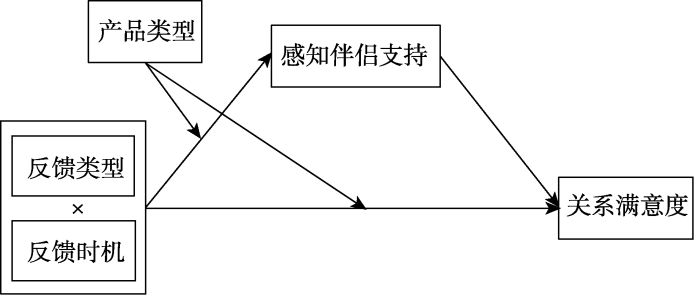
图1 理论模型图
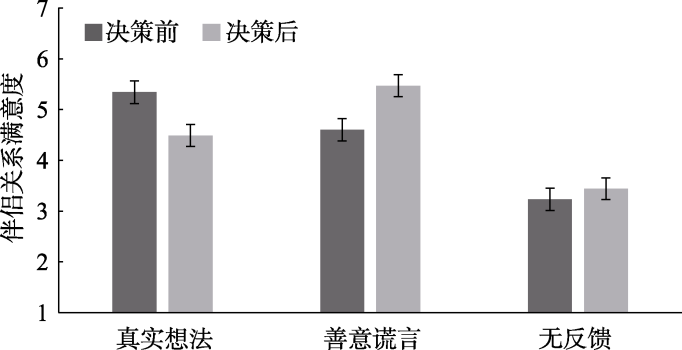
图2 实验1b反馈时机的调节作用
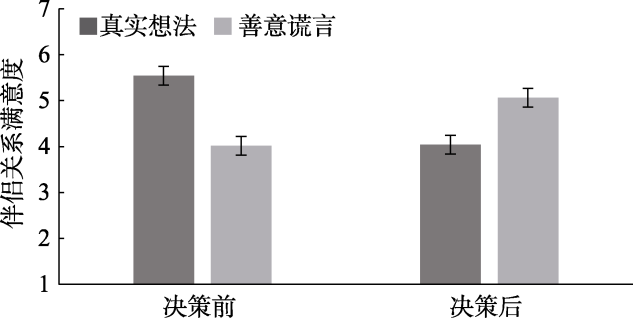
图3 实验2反馈时机的调节作用
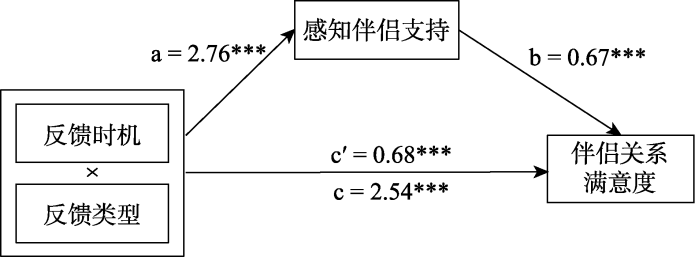
图4 实验2中介效应图
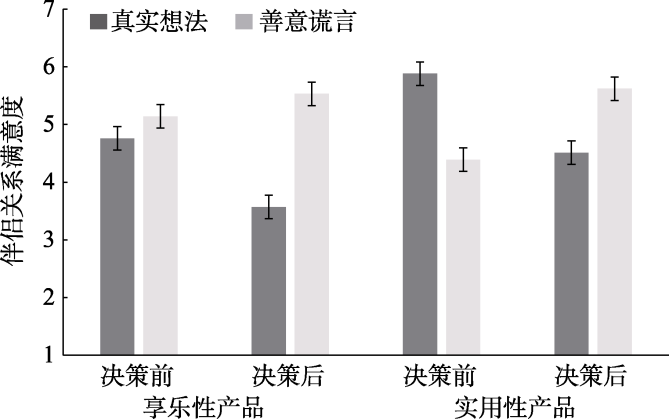
图5 实验3产品类型的调节作用
| [1] |
Abbey A., Andrews F. M., & Halman L. J. (1995). Provision and receipt of social support and disregard: What is their impact on the marital life quality of infertile and fertile couples? Journal of Personality and Social Psychology, 68(3), 455-469.
pmid: 7714725 |
| [2] |
Acitelli L. K., & Antonucci T. C. (1994). Gender differences in the link between marital support and satisfaction in older couples. Journal of Personality and Social Psychology, 67(4), 688-698.
doi: 10.1037//0022-3514.67.4.688 pmid: 7965614 |
| [3] |
Alba J. W., & Williams E. F. (2013). Pleasure principles: A review of research on hedonic consumption. Journal of Consumer Psychology, 23(1), 2-18.
doi: 10.1016/j.jcps.2012.07.003 URL |
| [4] |
Argo J. J., & Shiv B. (2012). Are white lies as innocuous as we think? Journal of Consumer Research, 38(6), 1093-1102.
doi: 10.1086/661640 URL |
| [5] |
Argyle M., & Henderson M. (1984). The rules of friendship. Journal of Social and Personal Relationships, 1(2), 211-237.
doi: 10.1177/0265407584012005 URL |
| [6] |
Babin B. J., Darden W. R., & Griffin M. (1994). Work and/or fun: Measuring hedonic and utilitarian shopping value. Journal of Consumer Research, 20(4), 644-656.
doi: 10.1086/jcr.1994.20.issue-4 URL |
| [7] |
Baek E., & Choo H. J. (2015). Effects of peer consumption on hedonic purchase decisions. Social Behavior and Personality: An International Journal, 43(7), 1085-1100.
doi: 10.2224/sbp.2015.43.7.1085 URL |
| [8] |
Bailey E. R., & Iyengar S. S. (2022). Yours truly: On the complex relationship between authenticity and honesty. Current Opinion in Psychology, 47, 101419.
doi: 10.1016/j.copsyc.2022.101419 URL |
| [9] |
Batra R., & Ahtola O. T. (1991). Measuring the hedonic and utilitarian sources of consumer attitudes. Marketing Letters, 2(2), 159-170.
doi: 10.1007/BF00436035 URL |
| [10] |
Birley S. (1985). The role of networks in the entrepreneurial process. Journal of Business Venturing, 1(1), 107-117.
doi: 10.1016/0883-9026(85)90010-2 URL |
| [11] | Bok S. (2011). Lying: Moral choice in public and private life. Vintage. |
| [12] |
Brunstein J. C., Dangelmayer G., & Schultheiss O. C. (1996). Personal goals and social support in close relationships: Effects on relationship mood and marital satisfaction. Journal of Personality and Social Psychology, 71(5), 1006-1019.
doi: 10.1037/0022-3514.71.5.1006 URL |
| [13] |
Bui M., Krishen A. S., & Bates K. (2011). Modeling regret effects on consumer post-purchase decisions. European Journal of Marketing, 45(7/8), 1068-1090.
doi: 10.1108/03090561111137615 URL |
| [14] |
Cai S., & Wu S. (2024). Dark side of white lies: How altruistic lying impacts subsequent self-interested lying. Current Psychology, 43(6), 5090-5103.
doi: 10.1007/s12144-023-04678-y |
| [15] |
Chang C.-C., & Tseng A.-H. (2014). The post-purchase communication strategies for supporting online impulse buying. Computers in Human Behavior, 39, 393-403.
doi: 10.1016/j.chb.2014.05.035 URL |
| [16] |
Cole T. (2001). Lying to the one you love: The use of deception in romantic relationships. Journal of Social and Personal Relationships, 18(1), 107-129.
doi: 10.1177/0265407501181005 URL |
| [17] |
Crocker J., & Park L. E. (2004). The costly pursuit of self-esteem. Psychological Bulletin, 130(3), 392-414.
doi: 10.1037/0033-2909.130.3.392 pmid: 15122925 |
| [18] |
DePaulo B. M., & Kashy D. A. (1998). Everyday lies in close and casual relationships. Journal of Personality and Social Psychology, 74(1), 63-79.
pmid: 9457776 |
| [19] |
DePaulo B. M., Kashy D. A., Kirkendol S. E., Wyer M. M., & Epstein J. A. (1996). Lying in everyday life. Journal of Personality and Social Psychology, 70(5), 979-995.
pmid: 8656340 |
| [20] |
Dhar R., & Wertenbroch K. (2000). Consumer choice between hedonic and utilitarian goods. Journal of Marketing Research, 37(1), 60-71.
doi: 10.1509/jmkr.37.1.60.18718 URL |
| [21] |
Erat S., & Gneezy U. (2012). White lies. Management Science, 58(4), 723-733.
doi: 10.1287/mnsc.1110.1449 URL |
| [22] | Festinger L. (1957). A theory of cognitive dissonance. Stanford University Press. |
| [23] |
Finkelstein S. R., Fishbach A., & Tu Y. (2017). When friends exchange negative feedback. Motivation and Emotion, 41(1), 69-83.
doi: 10.1007/s11031-016-9589-z URL |
| [24] |
Gino F., & Pierce L. (2009). Dishonesty in the name of equity. Psychological Science, 20(9), 1153-1160.
doi: 10.1111/j.1467-9280.2009.02421.x pmid: 19674386 |
| [25] |
Gino F., & Schweitzer M. E. (2008). Blinded by anger or feeling the love: How emotions influence advice taking. Journal of Applied Psychology, 93(5), 1165-1173.
doi: 10.1037/0021-9010.93.5.1165 pmid: 18808234 |
| [26] |
Guthrie J., & Kunkel A. (2013). Tell me sweet (and not-so-sweet) little lies: Deception in romantic relationships. Communication Studies, 64(2), 141-157.
doi: 10.1080/10510974.2012.755637 URL |
| [27] |
Iezzoni L. I., Rao S. R., DesRoches C. M., Vogeli C., & Campbell E. G. (2012). Survey shows that at least some physicians are not always open or honest with patients. Health Affairs, 31(2), 383-391.
doi: 10.1377/hlthaff.2010.1137 URL |
| [28] |
Jensen S. L., Levine E. E., White M. W., & Huppert E. (2024). Lying is sometimes ethical, but honesty is the best policy: The desire to avoid harmful lies leads to moral preferences for unconditional honesty. Journal of Experimental Psychology: General, 153(1), 122-144.
doi: 10.1037/xge0001460 URL |
| [29] |
Le B. M., Chopik W. J., Shimshock C. J., & Chee P. X. (2022). When the truth helps and when it hurts: How honesty shapes well-being. Current Opinion in Psychology, 46, 101397.
doi: 10.1016/j.copsyc.2022.101397 URL |
| [30] |
Lemon K. N., & Verhoef P. C. (2016). Understanding customer experience throughout the customer journey. Journal of Marketing, 80(6), 69-96.
doi: 10.1509/jm.15.0420 URL |
| [31] |
Levine E. E. (2022). Community standards of deception: Deception is perceived to be ethical when it prevents unnecessary harm. Journal of Experimental Psychology: General, 151(2), 410-436.
doi: 10.1037/xge0001081 URL |
| [32] |
Levine E. E., & Lupoli M. J. (2022). Prosocial lies: Causes and consequences. Current Opinion in Psychology, 43, 335-340.
doi: 10.1016/j.copsyc.2021.08.006 URL |
| [33] |
Levine E. E., Roberts A. R., & Cohen T. R. (2020). Difficult conversations: Navigating the tension between honesty and benevolence. Current Opinion in Psychology, 31, 38-43.
doi: S2352-250X(19)30114-9 pmid: 31446340 |
| [34] |
Levine E. E., & Schweitzer M. E. (2014). Are liars ethical? On the tension between benevolence and honesty. Journal of Experimental Social Psychology, 53, 107-117.
doi: 10.1016/j.jesp.2014.03.005 URL |
| [35] |
Levine E. E., & Schweitzer M. E. (2015). Prosocial lies: When deception breeds trust. Organizational Behavior and Human Decision Processes, 126, 88-106.
doi: 10.1016/j.obhdp.2014.10.007 URL |
| [36] |
Li S., & Jain K. (2021). Blinded by guilt: Short-term relational focus and lying. Journal of Experimental Social Psychology, 96, 104191.
doi: 10.1016/j.jesp.2021.104191 URL |
| [37] |
Lupoli M. J., Jampol L., & Oveis C. (2017). Lying because we care: Compassion increases prosocial lying. Journal of Experimental Psychology: General, 146(7), 1026-1042.
doi: 10.1037/xge0000315 URL |
| [38] |
Lupoli M. J., Levine E. E., & Greenberg A. E. (2018). Paternalistic lies. Organizational Behavior and Human Decision Processes, 146, 31-50.
doi: 10.1016/j.obhdp.2018.01.001 URL |
| [39] | Mao W., & Oppewal H. (2010). Did I choose the right university? How post-purchase information affects cognitive dissonance, satisfaction and perceived service quality. Australasian Marketing Journal, 18(1), 28-35. |
| [40] |
McLeod S., Berry K., Hodgson C., & Wearden A. (2020). Attachment and social support in romantic dyads: A systematic review. Journal of Clinical Psychology, 76(1), 59-101.
doi: 10.1002/jclp.22868 pmid: 31566266 |
| [41] |
Miller G. R., Mongeau P. A., & Sleight C. (1986). Invited article fudging with friends and lying to lovers: Deceptive communication in personal relationships. Journal of Social and Personal Relationships, 3(4), 495-512.
doi: 10.1177/0265407586034006 URL |
| [42] | Palmieri J. J., & Stern T. A. (2009). Lies in the doctor-patient relationship. Primary Care Companion to the Journal of Clinical Psychiatry, 11(4), 163-168. |
| [43] |
Patrick H., Knee C. R., Canevello A., & Lonsbary C. (2007). The role of need fulfillment in relationship functioning and well-being: A self-determination theory perspective. Journal of Personality and Social Psychology, 92(3), 434-457.
pmid: 17352602 |
| [44] | Reis H. T., Clark M. S., & Holmes J. G. (2004). Perceived partner responsiveness as an organizing construct in the study of intimacy and closeness. In D. J. Mashek & A. P. Aron (Eds.), Handbook of closeness and intimacy (pp. 201-225). Psychology Press. |
| [45] |
Roggensack K. E., & Sillars A. (2014). Agreement and understanding about honesty and deception rules in romantic relationships. Journal of Social and Personal Relationships, 31(2), 178-199.
doi: 10.1177/0265407513489914 URL |
| [46] |
Rusbult C. E., Martz J. M., & Agnew C. R. (1998). The investment model scale: Measuring commitment level, satisfaction level, quality of alternatives, and investment size. Personal Relationships, 5(4), 357-387.
doi: 10.1111/pere.1998.5.issue-4 URL |
| [47] | Shaver R. D., & Reis P. (1988). Intimacy as an interpersonal process. In S. Duck, D. F. Hay, S. E. Hobfoll, W. Ickes, & B. M. Montgomery (Eds.), Handbook of personal relationships: Theory, research and interventions (pp. 367-389). John Wiley & Sons. |
| [48] |
Shiv B., & Fedorikhin A. (1999). Heart and mind in conflict: The interplay of affect and cognition in consumer decision making. Journal of Consumer Research, 26(3), 278-292.
doi: 10.1086/jcr.1999.26.issue-3 URL |
| [49] | Shuster S., Eyal T., Ayal S., & Moran S. (2024). Proud to be dishonest: Emotional consequences of altruistic versus egoistic dishonesty. Journal of Behavioral Decision Making, 37(3), e2386. |
| [50] |
Tugnoli S., Agnoli C., Silvestri A., Giari S., Bettoli V., & Caracciolo S. (2020). Anger, emotional fragility, self-esteem, and psychiatric comorbidity in patients with hidradenitis suppurativa/acne inversa. Journal of Clinical Psychology in Medical Settings, 27(3), 527-540.
doi: 10.1007/s10880-019-09640-4 pmid: 31222671 |
| [51] |
Voss K. E., Spangenberg E. R., & Grohmann B. (2003). Measuring the hedonic and utilitarian dimensions of consumer attitude. Journal of Marketing Research, 40(3), 310-320.
doi: 10.1509/jmkr.40.3.310.19238 URL |
| [52] | Wakefield K. L., & Stone G. W. (2004). Social influence on post purchase brand attitudes. North American Advances, 31, 740-746. |
| [53] |
Wheaton A. (2022). Balancing honesty and benevolence in dementia care: A commentary on therapeutic lies and codes of ethics. Journal of Nursing Management, 30(7), 2241-2244.
doi: 10.1111/jonm.13659 pmid: 35506499 |
| [54] |
Wickham R. E. (2013). Perceived authenticity in romantic partners. Journal of Experimental Social Psychology, 49(5), 878-887.
doi: 10.1016/j.jesp.2013.04.001 URL |
| [55] |
Williams S. S. (2001). Sexual lying among college students in close and casual relationships. Journal of Applied Social Psychology, 31(11), 2322-2338.
doi: 10.1111/jasp.2001.31.issue-11 URL |
| [56] |
Wood W., & Hayes T. (2012). Social influence on consumer decisions: Motives, modes, and consequences. Journal of Consumer Psychology, 22(3), 324-328.
doi: 10.1016/j.jcps.2012.05.003 URL |
| [57] | Xu F., Jing C., Liu Y., & Bao X. (2002). Understanding concepts and moral evaluations of white-lie and truth-telling in social interaction contexts. Acta Psychologica Sinica, 34(1), 74-80. |
| [徐芬, 荆春燕, 刘英, 包雪华. (2002). 交往情景下个体对说谎的理解及其道德评价. 心理学报, 34(1), 75-81.] | |
| [58] |
Zeelenberg M., & Pieters R. (2007). A theory of regret regulation 1.0. Journal of Consumer Psychology, 17(1), 3-18.
doi: 10.1207/s15327663jcp1701_3 URL |
| [1] | 李斌, 芮建禧, 俞炜楠, 李爱梅, 叶茂林. 当设计遇见AI:人工智能设计产品对消费者响应模式的影响[J]. 心理学报, 2025, 57(11): 1914-1932. |
| [2] | 于文环, 何琳, 傅钰, 刘涛. 产品传统文化载荷对品牌地位的影响——来自青年消费群体的证据[J]. 心理学报, 2023, 55(9): 1542-1557. |
| [3] | 黄敏学, 姚舜禹, 刘茂红. 自强还是自嘲?名人代言如何提升社会化媒体广告的营销效果[J]. 心理学报, 2018, 50(8): 907-919. |
| [4] | 李宝珠, 魏少木. 广告诉求形式对产品反馈的影响作用: 基于眼动的证据[J]. 心理学报, 2018, 50(1): 69-81. |
| [5] | 崔楠;徐岚;谢雯婷. 做会后悔还是不做会后悔?——自我调节模式对不作为惯性的影响[J]. 心理学报, 2016, 48(4): 423-434. |
| [6] | 魏华;汪涛;周宗奎;冯文婷;丁倩. 叠音品牌名称对消费者知觉和偏好的影响[J]. 心理学报, 2016, 48(11): 1479-1488. |
| [7] | 杜晓梦, 赵占波, 崔晓. 评论效价、新产品类型与调节定向对在线评论有用性的影响[J]. 心理学报, 2015, 47(4): 555-568. |
| 阅读次数 | ||||||
|
全文 |
|
|||||
|
摘要 |
|
|||||
