

ISSN 1671-3710
CN 11-4766/R
主办:中国科学院心理研究所
出版:科学出版社
CN 11-4766/R
主办:中国科学院心理研究所
出版:科学出版社
Advances in Psychological Science ›› 2026, Vol. 34 ›› Issue (5): 801-816.doi: 10.3724/SP.J.1042.2026.0801
• Conceptual Framework • Previous Articles Next Articles
CHANG Baorui1, HUANG Zhen2, DONG Zhiwen3, FANG Zuozhi4( )
)
Received:2025-09-16
Online:2026-05-15
Published:2026-03-20
Contact:
FANG Zuozhi
E-mail:xgx2025@126.com
CLC Number:
CHANG Baorui, HUANG Zhen, DONG Zhiwen, FANG Zuozhi. Growth mindset promotes academic engagement: Psychological mechanisms, neural foundations and synergistic intervention[J]. Advances in Psychological Science, 2026, 34(5): 801-816.
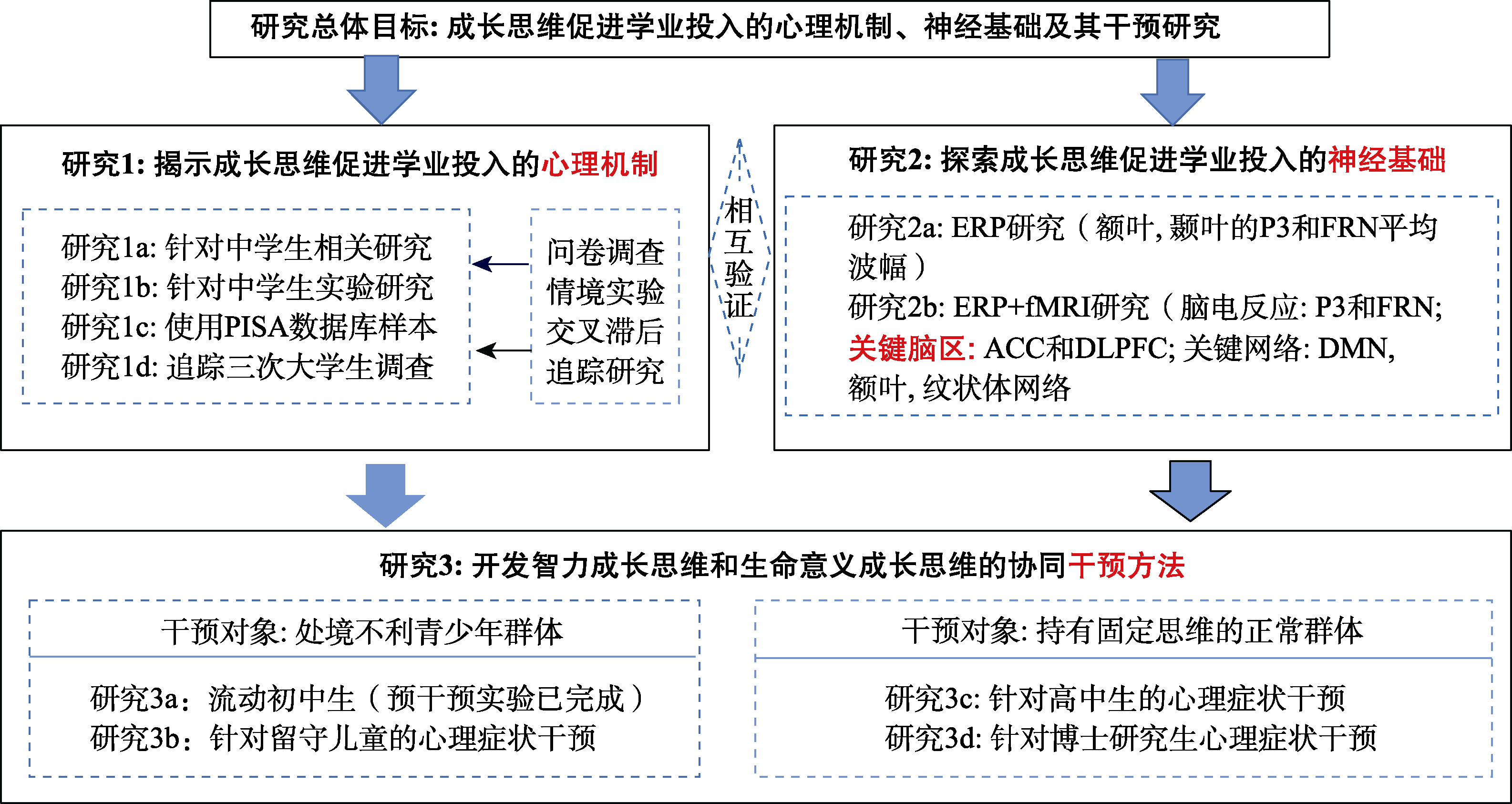
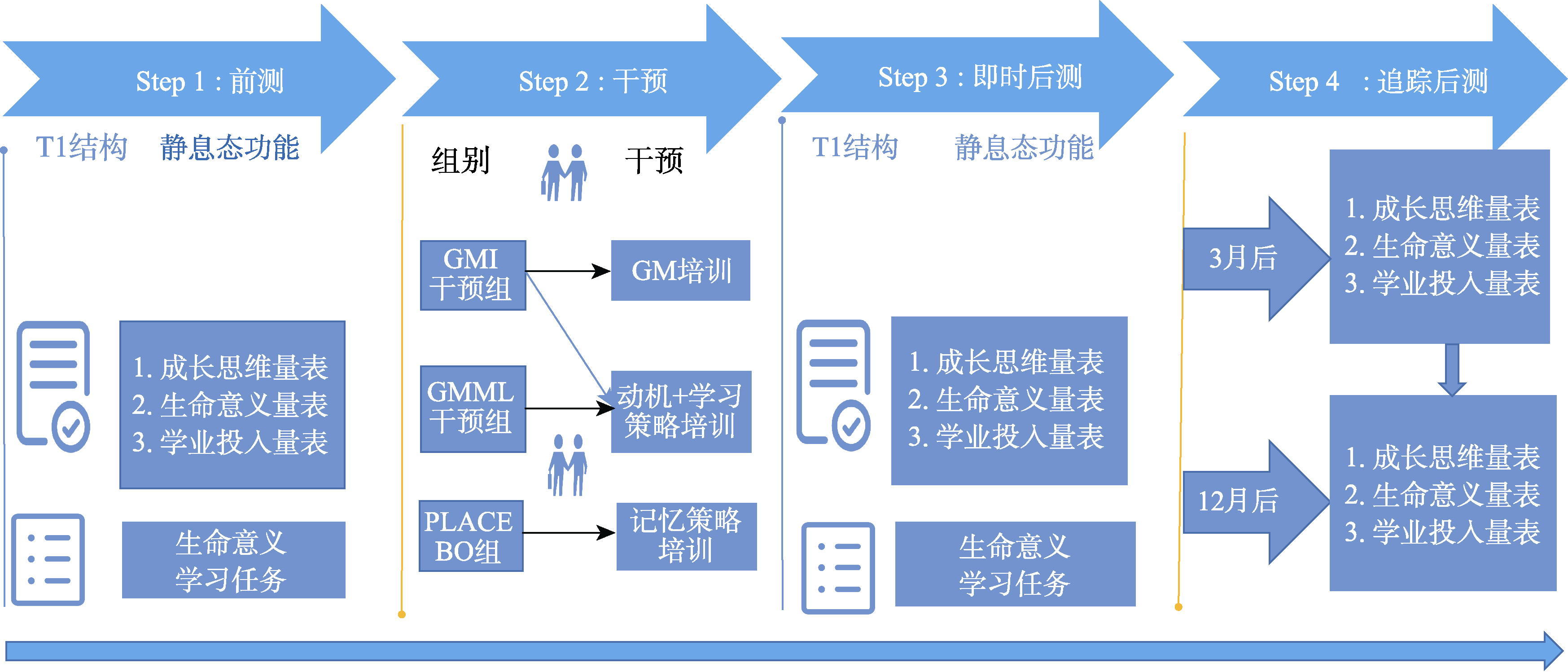
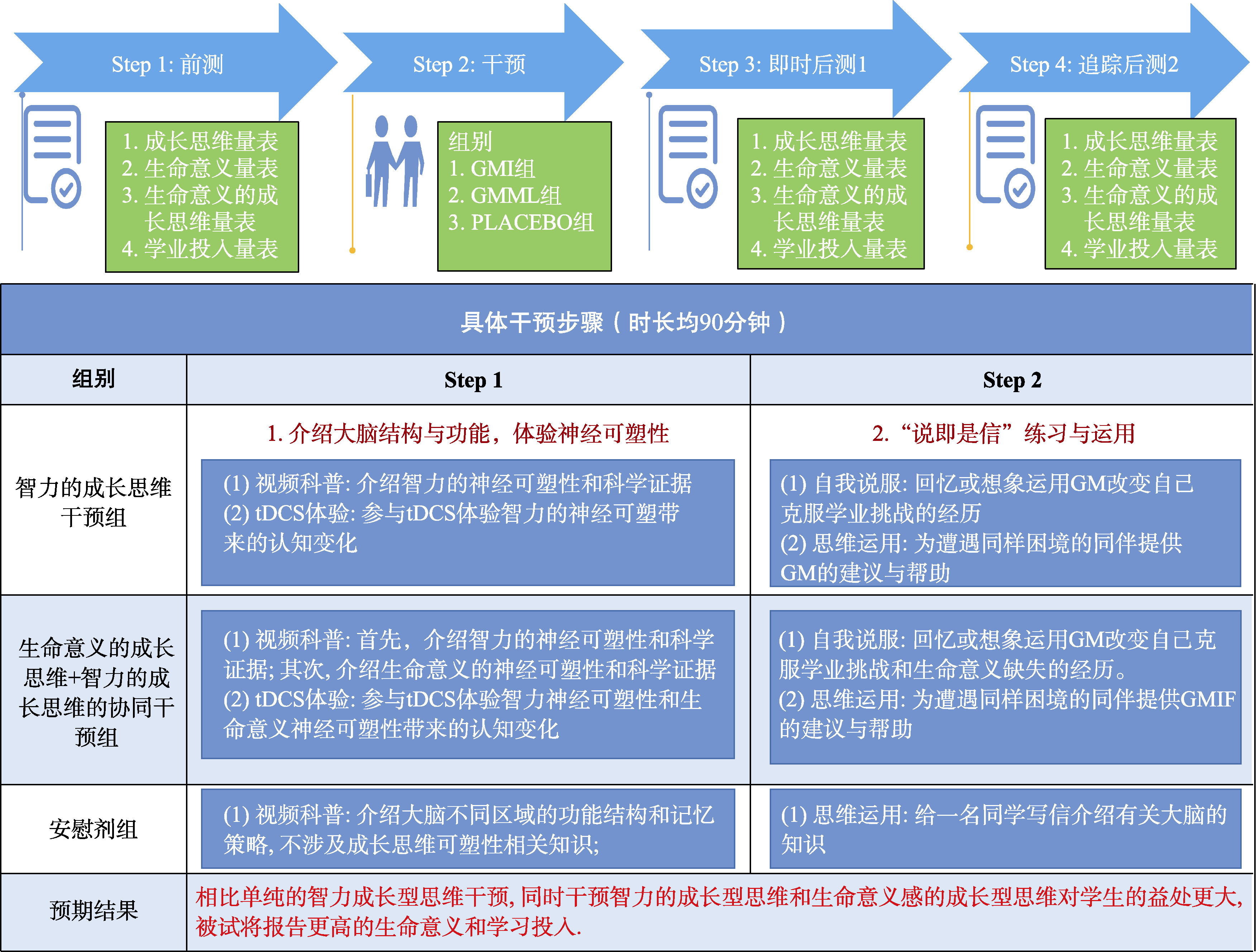
注: GMI=“Growth Mindset of Intelligence”; GMML=Growth Mindset of Meaning in Life
| [1] |
傅安国, 张再生, 郑剑虹, 岳童, 林肇宏, 吴娜, 黄希庭. (2020). 脱贫内生动力机制的质性探究. 心理学报, 52(1), 66-80. https://doi.org/10.3724/SP.J.1041.2020.00066
doi: 10.3724/SP.J.1041.2020.00066 URL |
| [2] |
冀月欣, 刘畅, 赵越, 王笛新, 胡小勇. (2024). 成长心态效应的异质性及边界条件. 心理科学进展, 32(3), 514-526.
doi: 10.3724/SP.J.1042.2024.00514 |
| [3] | 家晓余, 陈群林, 郝磊. (2023). 成长型思维与大脑结构和功能发育的关系研究. 中国心理学会. 第二十五届全国心理学学术会议摘要集——专题研讨会. |
| [4] |
家晓余, 李平, 李伟健. (2024). 成长型思维影响学习过程的行为和神经反应模式:基于自我调节学习理论的视角. 心理科学进展, 32(12), 1947-1960.
doi: 10.3724/SP.J.1042.2024.01947 |
| [5] | 林丹华. (2020). 基于脑科学的成长型思维与学生学业成就提升. 教育家, 252(48), 78-79. |
| [6] | 宁本涛, 杨柳. (2022). 中小学生“作业减负”政策实施成效及协同机制分析——基于全国30个省(市、区)137个地级市的调查. 中国电化教育, (1), 9-16. |
| [7] | 赵志裕, 陈晓思, 李秀丽, 唐燕文, 汤旭瑜, 杨彩珊. (2023). 重构成长思维理论与干预策略:基于文化心态的新试点. 中国社会心理学评论, 25, 27-50. |
| [8] |
Alonso-Tapia J., Merino-Tejedor E., & Huertas J. A. (2023). Academic engagement: Assessment, conditions, and effects—A study in higher education from the perspective of the person-situation interaction. European Journal of Psychology of Education, 38(2), 631-655. https://doi.org/10.1007/s10212-022-00621-0
doi: 10.1007/s10212-022-00621-0 URL |
| [9] |
Aronson J., Fried C. B., & Good C. (2002). Reducing the effects of stereotype threat on African American college students by shaping theories of intelligence. Journal of Experimental Social Psychology, 38(2), 113-125. https://doi.org/10.1006/jesp.2001.1491
doi: 10.1006/jesp.2001.1491 URL |
| [10] |
Bailey T. H., & Phillips L. J. (2015). The influence of motivation and adaptation on students’ subjective well- being, meaning in life and academic performance. Higher Education Research and Development, 35(2), 201-216. https://doi.org/10.1080/07294360.2015.1087474
doi: 10.1080/07294360.2015.1087474 URL |
| [11] |
Benner A. D. (2011). The transition to high school: Current knowledge, future directions (Study 3). Educational Psychology Review, 23(4), 299-328. https://doi.org/10.1007/s10648-011-9152-0
doi: 10.1007/s10648-011-9152-0 URL |
| [12] |
Blackwell L. S., Trzesniewski K. H., & Dweck C. S. (2007). Implicit theories of intelligence predict achievement across an adolescent transition: A longitudinal study and an intervention. Child Development, 78(1), 246-263. https://doi.org/10.1111/j.1467-8624.2007.00995.x
doi: 10.1111/j.1467-8624.2007.00995.x URL pmid: 17328703 |
| [13] |
Bond M. J., & Feather N. T. (1988). Some correlates of structure and purpose in the use of time. Journal of Personality and Social Psychology, 55(2), 321-329. https://doi.org/10.1037/0022-3514.55.2.321
doi: 10.1037/0022-3514.55.2.321 URL |
| [14] | Box-Steffensmeier J. M., Freeman J. R., Hitt M. P., & Pevehouse, J. C. W. (2014). Time series analysis for the social sciences. Cambridge University Press. |
| [15] |
Bradley R. H., & Corwyn R. F. (2002). Socioeconomic status and child development. Annual Review of Psychology, 53(1), 371-399. https://doi.org/10.1146/annurev.psych.53.100901.135233
doi: 10.1146/psych.2002.53.issue-1 URL |
| [16] |
Bronk K. C., Holmes Finch W., & Talib T. L. (2010). Purpose in life among high ability adolescents. High Ability Studies, 21(2), 133-145. https://doi.org/10.1080/13598139.2010.525339
doi: 10.1080/13598139.2010.525339 URL |
| [17] | Bryan, C. J., Master S. L., & Walton G. M. (2020). Motivation and mindset interventions: A synthesis of principles, processes, and progress. In J. M. Lecci & W. R. Miller (Eds.), Handbook of motivation in clinical practice (pp. 3-25). American Psychological Association. |
| [18] |
Burnette J. L., Billingsley J., Banks G. C., Knouse L. E., Hoyt C. L., Pollack J. M., & Simon S. (2023). A systematic review and meta-analysis of growth mindset interventions: For whom, how, and why might such interventions work? Psychological Bulletin, 149(3-4), 174-205. https://doi.org/10.1037/bul0000368
doi: 10.1037/bul0000368 URL |
| [19] |
Burnette J. L., Hoyt C. L., Russell V. M., Lawson B., Dweck C. S., & Finkel E. (2020). A growth mindset intervention improves interest but not academic performance in the field of computer science. Social Psychological and Personality Science, 11(1), 107-116. https://doi.org/10.1177/1948550619841631
doi: 10.1177/1948550619841631 URL |
| [20] |
Burnette J. L., O’Boyle E. H., VanEpps E. M., Pollack J. M., & Finkel E. J. (2013). Mind-sets matter: A meta- analytic review of implicit theories and self-regulation. Psychological Bulletin, 139(3), 655-701. https://doi.org/10.1037/a0029531
doi: 10.1037/a0029531 URL pmid: 22866678 |
| [21] | Chen L., Chang H., Rudoler J., Wang X., Lee H. L., & Duckworth A. L. (2022). Cognitive training enhances growth mindset in children through plasticity of cortico- striatal circuits. Nature Human Behaviour, 6(12), 1614-1624. https://doi.org/10.1038/s41562-022-01437-3 |
| [22] |
Chen P., Bao C., & Gao Q. (2021). Proactive personality and academic engagement: The mediating effects of teacher- student relationships and academic self-efficacy. Frontiers in Psychology, 12, 652994. https://doi.org/10.3389/fpsyg.2021.652994
doi: 10.3389/fpsyg.2021.652994 URL |
| [23] |
Chiu C.-y., Hong Y.-y., & Dweck C. S. (1997). Lay dispositionism and implicit theories of personality. Journal of Personality and Social Psychology, 73(1), 19-30. https://doi.org/10.1037/0022-3514.73.1.19
doi: 10.1037//0022-3514.73.1.19 URL pmid: 9216077 |
| [24] |
Costa A., & Faria L. (2018). Implicit theories of intelligence and academic achievement: A meta-analytic review. Frontiers in Psychology, 9, 829-845. https://doi.org/10.3389/fpsyg.2018.00829
doi: 10.3389/fpsyg.2018.00829 URL pmid: 29922195 |
| [25] |
Diener C. I., & Dweck C. S. (1978). An analysis of learned helplessness: Continuous changes in performance, strategy, and achievement cognitions following failure. Journal of Personality and Social Psychology, 36(5), 451-462. https://doi.org/10.1037/0022-3514.36.5.451
doi: 10.1037/0022-3514.36.5.451 URL |
| [26] |
Dotterer A. M., & Lowe K. (2011). Classroom context, school engagement, and academic achievement in early adolescence. Journal of Youth and Adolescence, 40(12), 1649-1660. https://doi.org/10.1007/s10964-011-9647-5
doi: 10.1007/s10964-011-9647-5 URL pmid: 21400208 |
| [27] |
Dweck C. S. (1986). Motivational processes affecting learning. American Psychologist, 41(10), 1040-1048. https://doi.org/10.1037/0003-066X.41.10.1040
doi: 10.1037/0003-066X.41.10.1040 URL |
| [28] |
Dweck C. S., & Leggett E. L. (1988). A social-cognitive approach to motivation and personality. Psychological Review, 95(2), 256-273.
doi: 10.1037/0033-295X.95.2.256 URL |
| [29] | Dweck, C. S., & Molden D. C. (2017). Their impact on competence motivation and acquisition. In A. J. Elliot, C. S. Dweck, & D. S. Yeager (Eds.), Handbook of competence and motivation: Theory and application (2nd ed., pp. 135-154). Guilford Press. |
| [30] |
Dweck C. S., & Yeager D. S. (2019). Mindsets: A view from two eras. Perspectives on Psychological Science, 14(3), 481-496. https://doi.org/10.1177/1745691618804166
doi: 10.1177/1745691618804166 URL pmid: 30707853 |
| [31] | Fang Z., Chang B., & Dang J. (2022). Growth mindset matters: Influences of socioeconomic status on Chinese secondary vocational students’ learning engagement. Journal of Pacific Rim Psychology, 16, 1-12. https://doi.org/10.1177/18344909221141984 |
| [32] | Foliano F., Rolfe H., Buzzeo J. Runge, J., & Wilkinson, D.(2019). Changing mindsets: Effectiveness trial (Evaluation report). Education Endowment Foundation and National Institute of Economic and Social Research, UK. |
| [33] |
Fredricks J. A., Blumenfeld P. C., & Paris A. H. (2004). School engagement: potential of the concept, state of the evidence. Review of Educational Research, 74(1), 59-109. https://doi.org/10.3102/00346543074001059
doi: 10.3102/00346543074001059 URL |
| [34] |
Garrosa E., Blanco-Donoso L. M., Carmona-Cobo I., & Moreno-Jiménez B. (2016). How do curiosity, meaning in life, and search for meaning predict college students’ daily emotional exhaustion and engagement? Journal of Happiness Studies, 18(1), 17-40. https://doi.org/10.1007/s10902-016-9715-3
doi: 10.1007/s10902-016-9715-3 URL |
| [35] | George D. K. (2003). What we’re learning about student engagement from NSSE: Benchmarks for effective educational practices. Change, 35(2), 24-32. https://doi.org/10.2307/40177261 |
| [36] |
Good C., Aronson J., & Inzlicht M. (2003). Improving adolescents' standardized test performance: An intervention to reduce the effects of stereotype threat. Journal of Applied Developmental Psychology, 24(6), 645-662. https://doi.org/10.1016/j.appdev.2003.09.002
doi: 10.1016/j.appdev.2003.09.002 URL |
| [37] |
Gunderson E. A., Gripshover S. J., Romero C., Dweck C. S., Goldin-Meadow S., & Levine S. C. (2013). Parent praise to 1- to 3-year-olds predicts children's motivational frameworks 5 years later. Child Development, 84(5), 1526-1541. https://doi.org/10.1111/cdev.12064
doi: 10.1111/cdev.12064 URL pmid: 23397904 |
| [38] |
Hecht C. A., Yeager D. S., Dweck C. S., & Murphy M. C. (2021). Beliefs, affordances, and adolescent development: Lessons from a decade of growth mindset interventions. Advances in Child Development and Behavior, 61, 169-197. https://doi.org/10.1016/bs.acdb.2021.04.004
doi: 10.1016/bs.acdb.2021.04.004 URL pmid: 34266564 |
| [39] |
Henrich J., Heine S. J., & Norenzayan A. (2010). The weirdest people in the world? Behavioral and Brain Sciences, 33(2-3), 61-83. https://doi.org/10.1017/S0140525X0999152X
doi: 10.1017/S0140525X0999152X URL pmid: 20550733 |
| [40] |
Heine S. J., Lehman D. R., Markus H. R., & Kitayama S. (2001). Cultural variation in unrealistic optimism: Does the West feel more invulnerable than the East? Journal of Personality and Social Psychology, 68(4), 595-607. https://doi.org/10.1037/0022-3514.80.2.320
doi: 10.1037/0022-3514.68.4.595 URL |
| [41] |
Holroyd C. B., & Yeung N. (2012). Motivation of extended behaviors by anterior cingulate cortex. Trends in Cognitive Sciences, 16(2), 122-128. https://doi.org/10.1016/j.tics.2011.12.008
doi: 10.1016/j.tics.2011.12.008 URL pmid: 22226543 |
| [42] |
Hong Y., Chiu C., Dweck C. S., Lin D. M.-S., & Wan W. (1999). Implicit theories, attributions, and coping: A meaning system approach. Journal of Personality and Social Psychology, 77(3), 588-599. https://doi.org/10.1037/0022-3514.77.3.588
doi: 10.1037/0022-3514.77.3.588 URL |
| [43] |
Huang Z., Wei X., Lu R., & Shi J. (2022). Whether and how can a growth mindset intervention help students in a non-western culture? Evidence from a field experiment in China. Educational Psychology, 42(7), 913-929. https://doi.org/10.1080/01443410.2022.2085669
doi: 10.1080/01443410.2022.2085669 URL |
| [44] | Huang Z., Wu Y., Zhao Y., & Peng K. (2023). Growth mindset of meaning in life: Viewing meaning in life as malleable matters. Journal of Pacific Rim Psychology, 17, 1-13. https://doi.org/10.1177/18344909231166758 |
| [45] | Intasao N., & Hao N. (2018). Beliefs about creativity influence creative performance: The mediation effects of flexibility and positive affect. Frontiers in Psychology, 9, 1810. https://doi.org/10.3389/fpsyg.2018.01810 |
| [46] |
Jia X., Hao L., He L., Li P., Liu M., Zhang Y., & Qiu J. (2023). Regional gray matter volume is associated with growth mindset: A voxel-based morphometry study. Neuroscience, 509, 96-102. https://doi.org/10.1016/j.neuroscience.2022.11.020
doi: 10.1016/j.neuroscience.2022.11.020 URL |
| [47] |
Kiang L., & Witkow M. R. (2015). Normative changes in meaning in life and links to adjustment in adolescents from Asian American backgrounds. Asian American Journal of Psychology, 6(2), 164-173. https://doi.org/10.1037/aap0000018
doi: 10.1037/aap0000018 URL |
| [48] |
Kleiman E. M., Adams L. M., Kashdan T. B., & Riskind J. H. (2013). Gratitude and grit indirectly reduce risk of suicidal ideations by enhancing meaning in life: Evidence for a mediated moderation model. Journal of Research in Personality, 47(5), 539-546. https://doi.org/10.1016/j.jrp.2013.04.007
doi: 10.1016/j.jrp.2013.04.007 URL |
| [49] |
Ladd G. W., & Dinella L. M. (2009). Continuity and change in early school engagement: Predictive of children’s achievement trajectories from first to eighth grade? Journal of Educational Psychology, 101(1), 190-206. https://doi.org/10.1037/a0013153
doi: 10.1037/a0013153 URL |
| [50] |
Leslie S. J., Cimpian A., Meyer M., & Freeland E. (2015). Expectations of brilliance underlie gender distributions across academic disciplines. Science, 347(6219), 262-265. https://doi.org/10.1126/science.1261375
doi: 10.1126/science.1261375 URL |
| [51] |
Lin M., Lucas H. C., Jr., & Shmueli G. (2013). Too big to fail: Large samples and the p-value problem. Information Systems Research, 24(4), 906-917. https://doi.org/10.1287/isre.2013.0480
doi: 10.1287/isre.2013.0480 URL |
| [52] |
Macnamara B. N., & Burgoyne A. P. (2023). Do growth mindset interventions impact students’ academic achievement? A systematic review and meta-analysis with recommendations for best practices. Psychological Bulletin, 149(3-4), 133-173. https://doi.org/10.1037/bul0000352
doi: 10.1037/bul0000352 URL |
| [53] |
Markus H. R., & Kitayama S. (1991). Culture and the self: Implications for cognition, emotion, and motivation. Psychological Review, 98(2), 224-253. https://doi.org/10.1037/0033-295X.98.2.224
doi: 10.1037/0033-295X.98.2.224 URL |
| [54] |
Mangels J. A., Butterfield B. L., Lambird K. T., & Good C. (2006). Why do beliefs about intelligence influence learning success? A social cognitive neuroscience model. Social Cognitive and Affective Neuroscience, 1(2), 75-86. https://sci-hub.ee/10.1093/scan/nsl013
URL pmid: 17392928 |
| [55] |
Martela F., & Steger M. F. (2016). The three meanings of meaning in life: Distinguishing coherence, purpose, and significance. The Journal of Positive Psychology, 11(5), 531-545. https://doi.org/10.1080/17439760.2015.1137623
doi: 10.1080/17439760.2015.1137623 URL |
| [56] |
Martin A. J., Nejad H. G., Colmar S., & Liem, G. A. D. (2013). Adaptability: How students’ responses to uncertainty and novelty predict their academic and non-academic outcomes. Journal of Educational Psychology, 105(3), 728-746. https://doi.org/10.1037/a0032794
doi: 10.1037/a0032794 URL |
| [57] |
Mason H. D., & Nel J. A. (2011). Student development and support using a logotherapeutic approach. Journal of Psychology in Africa, 21(3), 469-471. http://dx.doi.org/10.1080/14330237.2011.10820484
doi: 10.1080/14330237.2011.10820484 URL |
| [58] |
Miao M., Zheng L., & Gan Y. (2017). Meaning in life promotes proactive coping via positive affect: A daily diary study. Journal of Happiness Studies, 18(6), 1683-1696. https://doi.org/10.1007/s10902-016-9791-4
doi: 10.1007/s10902-016-9791-4 URL |
| [59] |
Miura N., Tanabe H. C., Sasaki A. T., Harada T., & Sadato N. (2017). Neural evidence for the intrinsic value of action as motivation for behavior. Neuroscience, 352, 190-203. https://doi.org/10.1016/j.neuroscience.2017.03.064
doi: S0306-4522(17)30239-7 URL pmid: 28396007 |
| [60] |
Moreau D., Macnamara B. N., & Hambrick D. Z. (2019). Overstating the role of environmental factors in success: A cautionary note. Current Directions in Psychological Science, 28(1), 28-33. https://doi.org/10.1177/0963721418797300
doi: 10.1177/0963721418797300 URL |
| [61] |
Moser J. S., Schroder H. S., Heeter C., Moran T. P., & Lee Y.-H. (2011). Mind your errors: Evidence for a neural mechanism linking growth mind-set to adaptive posterror adjustments. Psychological Science, 22(12), 1484-1489. https://doi.org/10.1177/0956797611419520
doi: 10.1177/0956797611419520 URL pmid: 22042726 |
| [62] |
Myers C. A., Wang C., Black J. M., Bugescu N., & Hoeft F. (2016). The matter of motivation: Striatal resting-state connectivity is dissociable between grit and growth mindset. Social Cognitive and Affective Neuroscience, 11(10), 1521-1527. https://doi.org/10.1093/scan/nsw065
doi: 10.1093/scan/nsw065 URL pmid: 27217105 |
| [63] |
Ng B. (2018). The neuroscience of growth mindset and intrinsic motivation. Brain Sciences, 8(2), 20-30.
doi: 10.3390/brainsci8020020 URL |
| [64] | Ng B., & Ong A. K. (2018). Neuroscience and digital learning environment in universities: What do current research tell us? Journal of the Scholarship of Teaching and Learning, 18(3), 116-131. https://doi.org/10.14434/josotl.v18i3.22651 |
| [65] |
Noah T., Schul Y., & Mayo R. (2018). When both the original study and its failed replication are correct: Feeling observed eliminates the facial-feedback effect. Journal of Personality and Social Psychology, 114(5), 657-664. https://doi.org/10.1037/pspa0000121
doi: 10.1037/pspa0000121 URL pmid: 29672101 |
| [66] |
Pan J., Zaff J. F., & Donlan A. E. (2017). Social support and academic engagement among reconnected youth: Adverse life experiences as a moderator. Journal of Research on Adolescence, 27(4), 890-906. https://doi.org/10.1111/jora.12322
doi: 10.1111/jora.12322 URL pmid: 29152870 |
| [67] |
Parada S., & Verlhiac J. F. (2022). Growth mindset intervention among French university students, and its articulation with proactive coping strategies. Educational Psychology, 42(3), 354-374. https://doi.org/10.1080/01443410.2021.1917519
doi: 10.1080/01443410.2021.1917519 URL |
| [68] |
Park D., Gunderson E. A., Tsukayama E., Levine S. C., & Beilock S. L. (2016). Young children’s motivational frameworks and math achievement: Relation to teacher- reported instructional practices, but not teacher theory of intelligence. Journal of Educational Psychology, 108(3), 300-313. https://doi.org/10.1037/edu0000064
doi: 10.1037/edu0000064 URL |
| [69] |
Paunesku D., Walton G. M., Romero C., Smith E. N., Yeager D. S., & Dweck C. S. (2015). Mind-set interventions are a scalable treatment for academic underachievement. Psychological Science, 26(6), 784-793. https://doi.org/10.1177/0956797615571017
doi: 10.1177/0956797615571017 URL pmid: 25862544 |
| [70] |
Perkmann M., Salandra R., Tartari V., McKelvey M., & Hughes A. (2021). Academic engagement: A review of the literature 2011-2019. Research Policy, 50(1), 104114. https://doi.org/10.1016/j.respol.2020.104114
doi: 10.1016/j.respol.2020.104114 URL |
| [71] |
Ployhart R. E., & Vandenberg R. J. (2010). Longitudinal research: The theory, design, and analysis of change. Journal of Management, 36(1), 94-120. https://doi.org/10.1177/0149206309352110
doi: 10.1177/0149206309352110 URL |
| [72] |
Puente-Díaz R., & Cavazos-Arroyo J. (2017). Creative self-efficacy: The influence of affective states and social persuasion as antecedents and imagination and divergent thinking as consequences. Creativity Research Journal, 29(3), 304-312. https://doi.org/10.1080/10400419.2017.1341278
doi: 10.1080/10400419.2017.1360067 URL |
| [73] |
Puusepp I., Linnavalli T., Huuskonen M., Kukkonen K., Huotilainen M., Kujala T.,... Tirri K. (2021). Mindsets and neural mechanisms of automatic reactions to negative feedback in mathematics in elementary school students. Frontiers in Psychology, 12, 635972. https://doi.org/10.3389/fpsyg.2021.635972
doi: 10.3389/fpsyg.2021.635972 URL |
| [74] |
Rattan A., Savani K., Chugh D., & Dweck C. S. (2015). Leveraging mindsets to promote academic achievement: Policy recommendations. Perspectives on Psychological Science, 10(6), 721-726. https://doi.org/10.1177/1745691615599383
doi: 10.1177/1745691615599383 URL pmid: 26581725 |
| [75] | Rogers B. A., Christian J. S., & Jennings R. E. (2019). “If I can change, so can you”: The growth mindset at work and daily prosocial behavior. Academy of Management Proceedings, (1), 12001. https://doi.org/10.5465/AMBPP.2019.12001abstract |
| [76] |
Rubin A., Sheintuch L., Brande-Eilat N., Pinchasof O., Rechavi Y., Geva N, & Ziv Y. (2019). Revealing neural correlates of behavior without behavioral measurements. Nature Communications, 10(1), 4745-4759. https://doi.org/10.1038/s41467-019-12724-2
doi: 10.1038/s41467-019-12724-2 URL pmid: 31628322 |
| [77] |
Ryff C. D., & Singer B. (1998). The contours of positive human health. Psychological Inquiry, 9(1), 1-28.
doi: 10.1207/s15327965pli0901_1 URL |
| [78] | Sadoughi M., Hejazi S. Y., & Lou N. M. (2023). How do growth mindsets contribute to academic engagement in L2 classes? The mediating and moderating roles of the L 2 motivational self system. Social Psychology of Education, 26(1), 21-44. https://doi.org/10.1007/s11218-022-09744-0 |
| [79] |
Sarrasin J. B., Nenciovici L., Foisy L.-M. B., Allaire- Duquette G., Riopel M., & Masson S. (2018). Effects of teaching the concept of neuroplasticity to induce a growth mindset on motivation, achievement, and brain activity: A meta-analysis. Trends in Neuroscience and Education, 12, 22-31. https://doi.org/10.1016/j.tine.2018.07.003
doi: 10.1016/j.tine.2018.07.003 URL |
| [80] |
Schleider J. L., & Weisz J. R. (2016). Reducing risk for anxiety and depression in adolescents: Effects of a single- session intervention teaching that personality can change. Behaviour Research and Therapy, 87, 170-181. https://doi.org/10.1016/j.brat.2016.09.011
doi: S0005-7967(16)30168-1 URL pmid: 27697671 |
| [81] |
Schroder H. S., Moran T. P., Donnellan M. B., & Moser J. S. (2017). Mindset induction effects on cognitive control: A neurobehavioral investigation. Biological Psychology, 129, 36-47. http://dx.doi.org/10.1016/j.biopsycho.2014.08.004
doi: 10.1016/j.biopsycho.2017.07.024 URL |
| [82] |
Schuetze B. A., & Yan V. X. (2022). Optimal learning under time constraints: Empirical and simulated trade-offs between depth and breadth of study. Cognitive Science, 46(4), e13136. https://doi.org/10.1111/cogs.13136
doi: 10.1111/cogs.v46.4 URL |
| [83] |
Shively R. L., & Ryan C. S. (2013). Longitudinal changes in college math students’ implicit theories of intelligence. Social Psychology of Education, 16(2), 241-256. https://doi.org/10.1007/s11218-012-9208-0
doi: 10.1007/s11218-012-9208-0 URL |
| [84] |
Sisk V. F., Burgoyne A. P., Sun J., Butler J. L., & Macnamara B. N. (2018). To what extent and under which circumstances are growth mind-sets important to academic achievement? Two meta-analyses. Psychological Science, 29(4), 549-571. https://doi.org/10.1177/0956797617739704
doi: 10.1177/0956797617739704 URL pmid: 29505339 |
| [85] |
Steger M. F., Frazier P., Oishi S., & Kaler M. (2006). The meaning in life questionnaire: Assessing the presence of and search for meaning in life. Journal of Counseling Psychology, 53(1), 80-93. https://doi.org/10.1037/0022-0167.53.1.80
doi: 10.1037/0022-0167.53.1.80 URL |
| [86] |
Steger M. F., & Kashdan T. B. (2009). Depression and everyday social activity, belonging, and well-being. Journal of Counseling Psychology, 56(2), 289-300. https://doi.org/10.1037/a0015416
doi: 10.1037/a0015416 URL pmid: 20428460 |
| [87] | van der Walt, C. (2019). The relationships between first-year students’ sense of purpose and meaning in life, mental health and academic performance. Journal of Student Affairs in Africa, 7(2), 109-121. https://doi.org/10.24085/jsaa.v7i2.3828 |
| [88] |
Walton G. M., & Wilson T. D. (2018). Wise interventions: Psychological remedies for social and personal problems. Psychological Review, 125(5), 617-655. https://doi.org/10.1037/rev0000115
doi: 10.1037/rev0000115 URL pmid: 30299141 |
| [89] | Walton G. M., & Yeager D. S. (2020). Identity, mindset, and meaning: Three sources of resilience in times of change. Journal of Personality and Social Psychology, 119(1), 156-186. https://doi.org/10.1037/pspp0000261 |
| [90] |
Walton G. M., & Yeager D. S. (2020). Seed and soil: Psychological affordances in contexts help to explain where wise interventions succeed or fail. Current Directions in Psychological Science, 29(3), 219-226. https://doi.org/10.1177/0963721420904453
doi: 10.1177/0963721420904453 URL pmid: 32719574 |
| [91] |
Wong P. T. (2010). Meaning therapy: An integrative and positive existential psychotherapy. Journal of Contemporary Psychotherapy, 40(2), 85-93. https://doi.org/10.1007/s10879-009-9132-6
doi: 10.1007/s10879-009-9132-6 URL |
| [92] |
Yeager D. S., Bryan C. J., Gross J. J., Murray J. S., Cobb D. K., Santos P. H. F.,... Jamieson J. P. (2022). A synergistic mindsets intervention protects adolescents from stress. Nature, 607(7919), 512-520. https://doi.org/10.1038/s41586-022-04907-7
doi: 10.1038/s41586-022-04907-7 URL |
| [93] |
Yeager D. S., Hanselman P., Walton G. M., Murray J. S., Crosnoe R., Muller C.,... Dweck C. S. (2019). A national experiment reveals where a growth mindset improves achievement. Nature, 573(7774), 364-369. https://doi.org/10.1038/s41586-019-1466-y
doi: 10.1038/s41586-019-1466-y URL |
| [94] | Yeager D. S., & Walton G. M. (2011). Social-psychological interventions in education: They’re not magic. Review of Educational Research, 81(2), 267-301. https://doi.org/10.3102/0034654311405999 |
| [95] |
Zhang R. W., & Li D. (2018). How to experience a meaningful life: Based on the integration of theoretical models on meaning in life. Advances in Psychological Science, 26(4), 744-760. https://doi.org/10.3724/SP.J.1042.2018.00744
doi: 10.3724/SP.J.1042.2018.00744 URL |
| [1] | JI Yuexin, LIU Chang, ZHAO Yue, WANG Dixin, HU Xiaoyong. The heterogeneity and boundary conditions of growth mindset effect [J]. Advances in Psychological Science, 2024, 32(3): 514-526. |
| [2] | JIA Xiaoyu, LI Ping, LI Weijian. The behavioral and neural response patterns of growth mindset affecting learning process: A perspective from self-regulation learning theory [J]. Advances in Psychological Science, 2024, 32(12): 1947-1960. |
| [3] | ZHANG Xufan, ZHANG Wenjian. How does team growth mindsets effect team innovation? A perspective from attention composition and attention configuration [J]. Advances in Psychological Science, 2023, 31(8): 1389-1410. |
| [4] | BAI Xinwen, QI Shuting, MING Xiaodong, ZHOU Yiyong, HUANG Mingquan. Pearls are everywhere but not the eyes: The mechanism and boundary conditions of the influences of decision maker's mental models on idea recognition [J]. Advances in Psychological Science, 2019, 27(4): 571-586. |
| [5] | ZHANG Rongwei, LI Dan. How to experience a meaningful life: Based on the integration of theoretical models on meaning in life [J]. Advances in Psychological Science, 2018, 26(4): 744-760. |
| [6] | LI Zhanhong, ZHAO Mengjiao, LIU Huiying, LIU Yanan, PENG Kaiping. The cause of search for meaning in life: Life affirming or deficit correcting [J]. Advances in Psychological Science, 2018, 26(12): 2192-2203. |
| [7] | ZHAO Na, MA Min, XIN Ziqiang. Mental mechanism and the influencing factors of meaning in life [J]. Advances in Psychological Science, 2017, 25(6): 1003-1011. |
| [8] | YANG Qie; CHENG Wei; HE Wenjie; HAN Buxin; YANG Zhaoning. Will searching for meaning bring well-being? [J]. Advances in Psychological Science, 2016, 24(9): 1496-1503. |
| [9] | JIN Yuchang; HE Mingcheng; LI Junyi. The relationship between meaning in life and subjective well-being in China: A Meta-analysis [J]. Advances in Psychological Science, 2016, 24(12): 1854-1863. |
| [10] | ZHANG Shu-Yue;XU Yan;YANG Hao-Keng. The Connotation, Measurement and Function of Meaning in Life [J]. , 2010, 18(11): 1756-1761. |
| [11] | Qiu Lin, Zheng Xue, Yan Biaobin (Department of Psychology of South China Normal University, Guangzhou, 510631). CULTURAL NORM MODEL AND GOAL AS A MODERATOR MODEL: TWO KINDS OF CULTURAL THEORIES OF SWB [J]. , 2002, 10(3): 290-294. |
| Viewed | ||||||
|
Full text |
|
|||||
|
Abstract |
|
|||||
