

ISSN 1671-3710
CN 11-4766/R
主办:中国科学院心理研究所
出版:科学出版社
CN 11-4766/R
主办:中国科学院心理研究所
出版:科学出版社
Advances in Psychological Science ›› 2025, Vol. 33 ›› Issue (9): 1541-1557.doi: 10.3724/SP.J.1042.2025.1541
• Conceptual Framework • Previous Articles Next Articles
WANG Yan1, JIANG Jing2( )
)
Received:2024-12-13
Online:2025-09-15
Published:2025-06-26
Contact:
JIANG Jing
E-mail:jiangjing@rmbs.ruc.edu.cn
CLC Number:
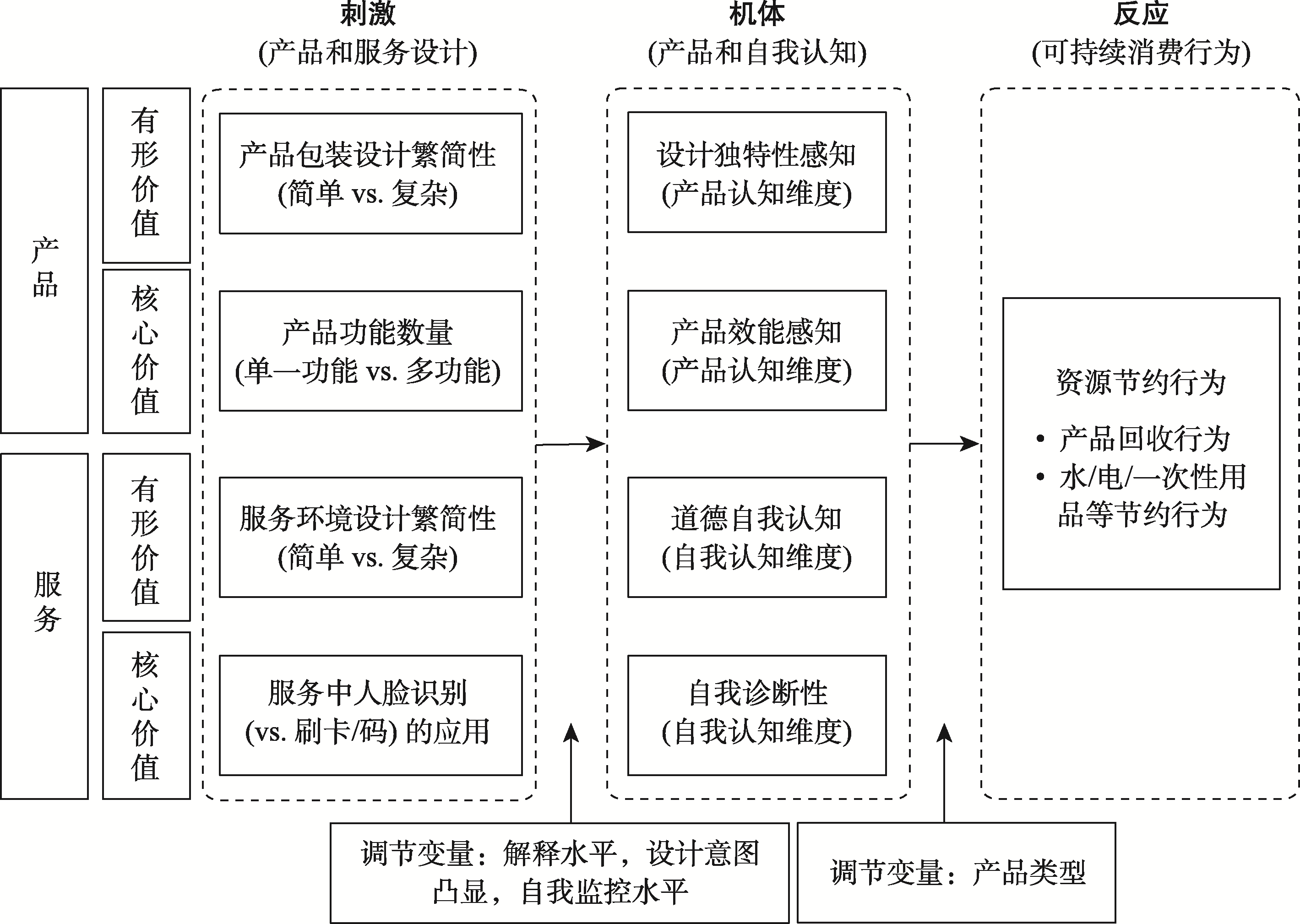
WANG Yan, JIANG Jing. The impact of minimalist design on sustainable consumption behavior[J]. Advances in Psychological Science, 2025, 33(9): 1541-1557.
| 有形价值:稀疏美学 (以简为美) | 核心价值:精简功能流程 (以少为美) | ||
|---|---|---|---|
| 产品 | 概念 | 产品包装设计繁简性: 简单 vs. 复杂 | 产品功能数量: 单一功能产品 vs. 多功能产品 |
| 示例 | 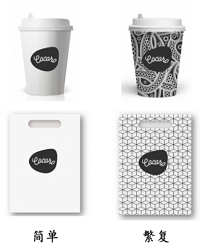 简单 繁复 | 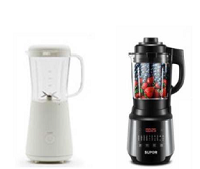 单一功能产品 多功能产品 (搅拌机) (多功能料理机) | |
| 服务 | 概念 | 服务环境设计繁简性: 简单 vs. 复杂 | 服务流程中人脸识别的应用: 刷脸 vs. 刷卡/码 |
| 示例 |  简单 繁复 | 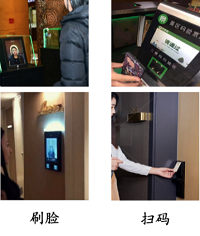 刷脸 扫码 |
| 有形价值:稀疏美学 (以简为美) | 核心价值:精简功能流程 (以少为美) | ||
|---|---|---|---|
| 产品 | 概念 | 产品包装设计繁简性: 简单 vs. 复杂 | 产品功能数量: 单一功能产品 vs. 多功能产品 |
| 示例 | 简单 繁复 | 单一功能产品 多功能产品 (搅拌机) (多功能料理机) | |
| 服务 | 概念 | 服务环境设计繁简性: 简单 vs. 复杂 | 服务流程中人脸识别的应用: 刷脸 vs. 刷卡/码 |
| 示例 | 简单 繁复 | 刷脸 扫码 |
| [1] | 陈凯. (2020). 信息干预对绿色消费行为的影响分析. 中国特色社会主义研究, Z1(5), 126-131. |
| [2] |
陈斯允, 卫海英, 熊继伟, 冉雅璇. (2021). 大道至“简”:极简主义消费内涵解构与理论阐释. 心理科学进展, 29(11), 2043-2061.
doi: 10.3724/SP.J.1042.2021.02043 |
| [3] |
陈斯允, 肖婷文, 熊继伟, 彭凯平. (2023). 包装中的“奥卡姆剃刀定律”:繁简设计对产品效能判断的影响. 心理学报, 55(11), 1872-1888.
doi: 10.3724/SP.J.1041.2023.01872 |
| [4] |
陈增祥, 何云, 李枭, 王琳. (2022). 你能看见我的努力吗:社会地位感知对消费者繁简偏好的影响. 心理学报, 54(9), 1106-1123.
doi: 10.3724/SP.J.1041.2022.01106 |
| [5] | 杜建刚, 赵欢, 苏九如, 张宇. (2022). 服务智能化下的顾客行为:研究述评与展望. 外国经济与管理, 44(3), 19-35. |
| [6] | 黎静仪, 李先国, 黄元豪. (2022). 人脸识别技术对消费者独特性寻求的影响. 管理科学, 35(2), 111-120. |
| [7] | 黎静仪, 李先国, 黄元豪, 彭慧佳. (2023). 人脸识别对消费者自我提升类产品偏好的影响研究. 南开管理评论, 26(5), 181-191. |
| [8] | 生态环境部环境与经济政策研究中心. (2020). 公民生态环境行为调查报告(2020年). |
| [9] |
孙瑾, 陈晨. (2024). 资源类型对绿色消费的影响:时间还是金钱更有效? 心理科学进展, 32(1), 39-57.
doi: 10.3724/SP.J.1042.2024.00039 |
| [10] | 王建明. (2013). 资源节约意识对资源节约行为的影响——中国文化背景下一个交互效应和调节效应模型. 管理世界, 8, 77-90. |
| [11] | 王建明, 赵婧. (2022). 数字时代信息嵌入式监管工具对线上绿色消费行为的推进效应——绿色购买场景模拟和监管工具设计实验. 管理世界, 38(4), 142-162. |
| [12] | 王建明, 郑冉冉. (2011). 心理意识因素对消费者生态文明行为的影响机理. 管理学报, 8(7), 1027-1035. |
| [13] | 汪涛, 牟宇鹏, 谢志鹏. (2013). 混合产品的概念内涵、认知机制与研究框架. 研究与发展管理, 25(3), 83-91. |
| [14] | 王艳, 蒋晶. (2022). 环境无序性对消费者多样化寻求的影响及作用机制. 心理学报, 54(1), 78—90. |
| [15] | Althuizen, N. (2021). Revisiting Berlyne's inverted U-shape relationship between complexity and liking: The role of effort, arousal, and status in the appreciation of product design aesthetics. Psychology & Marketing, 38(3), 481-503. |
| [16] |
Aquino, K., & Reed, A. (2002). The self-importance of moral identity. Journal of Personality and Social Psychology, 83(6), 1423-1440.
pmid: 12500822 |
| [17] | Batra, R., & Ahtola, O. T. (1991). Measuring the hedonic and utilitarian sources of consumer attitudes. Marketing Letters, 2(2), 159-170. |
| [18] | Becherer, R. C., & Richard, L. M. (1978). Self-monitoring as a moderating variable in consumer behavior. Journal of Consumer Research, 5(3), 159-162. |
| [19] | Berlyne, D. E. (1970). Novelty, complexity, and hedonic value. Perception and Psychophysics, 8(5A), 279-286. |
| [20] |
Bonini, N., Hadjichristidis, C., & Graffeo, M. (2018). Green nudging. Acta Psychologica Sinica, 50(8), 814-826.
doi: 10.3724/SP.J.1041.2018.00814 |
| [21] | Boutroy, E. (2020). Minimalism and lightweight backpacking in France: A material culture of detachment. Consumption Markets & Culture, 24(4), 357-372. |
| [22] | Brannon, D. C., & Soltwisch, B. W. (2017). If it has lots of bells and whistles, it must be the best: How maximizers and satisficers evaluate feature-rich versus feature-poor products. Marketing Letters, 28(4), 651-662. |
| [23] | Carpenter, G. S., Glazer, R., & Nakamoto, K. (1994). Meaningful brands from meaningless differentiation: The dependence on irrelevant attributes. Journal of Marketing Research, 31(3), 339-350. |
| [24] | Carver, C. S., & Scheier, M. F. (1978). Self-focusing effects of dispositional self-consciousness, mirror presence, and audience presence. Journal of Personality and Social Psychology, 36(3), 324-332. |
| [25] | Catlin, J. R., & Wang, Y. (2013). Recycling gone bad: When the option to recycle increases resource consumption. Journal of Consumer Psychology, 23(1), 122-127. |
| [26] | Chae, B. G., & Zhu, R. J. (2014). Environmental disorder leads to self-regulatory failure. Journal of Consumer Research, 40(6), 1203-1218. |
| [27] | Chang, H. S., Huh, C., & Lee, M. J. (2016). Would an energy conservation nudge in hotels encourage hotel guests to conserve? Cornell Hospitality Quarterly, 57(2), 172-183. |
| [28] | Chartrand, T. L., & Bargh, J. A. (1996). Automatic activation of impression formation and memorization goals: Nonconscious goal priming reproduces effects of explicit task instructions. Journal of Personality and Social Psychology, 71(3), 464-478. |
| [29] | Chen, S., Ahlstrom, D., & Xiao, T. (2023). Too complex to handle: Goal conflict and tourist preference for simple aesthetics. Annals of Tourism Research, 102, 103639. |
| [30] | Chen, S., & Wei, H. (2023). Linking temporal landmarks to voluntary simplicity: The mediating roles of self- transcendence and self-enhancement. Journal of Business Ethics, 188(4), 693-708. |
| [31] | Clement, J., Kristensen, T., & Grønhaug, K. (2013). Understanding consumers’ in-store visual perception: The influence of package design features on visual attention. Journal of Retailing and Consumer Services, 20(2), 234-239. |
| [32] | de Visser-Amundson, A., Peloza, J., & Kleijnen, M. (2021). How association with physical waste attenuates consumer preferences for rescue-based food. Journal of Marketing Research, 58(5), 870-887. |
| [33] | Elgaaïed-Gambier, L. (2016). Who buys overpackaged grocery products and why? Understanding consumers’ reactions to overpackaging in the food sector. Journal of Business Ethics, 135(4), 683-698. |
| [34] | Eytam, E., Lowengart, O., & Tractinsky, N. (2021). Effects of visual simplicity in product design and individual differences in preference of interactive products. Review of Managerial Science, 15(5), 1347-1389. |
| [35] |
Favier, M., Celhay, F., & Pantin-Sohier, G. (2019). Is less more or a bore? Package design simplicity and brand perception: An application to Champagne. Journal of Retailing and Consumer Services, 46, 11-20.
doi: 10.1016/j.jretconser.2018.09.013 |
| [36] |
Frank, M. G., & Gilovich, T. (1988). The dark side of self and social perception: Black uniforms and aggression in professional sports. Journal of Personality and Social Psychology, 54(1), 74-85.
pmid: 3346809 |
| [37] | Freund, B., König, H., & Roth, N. (1997). Impact of information technologies on manufacturing. International Journal of Technology Management, 13(3), 215-228. |
| [38] | Gai, P. J., & Puntoni, S. (2021). Language and consumer dishonesty: A self-diagnosticity theory. Journal of Consumer Research, 48(2), 333-351. |
| [39] | Gneezy, A., Gneezy, U., Riener, G., & Nelson, L. D. (2012) Pay-what-you-want, identity, and self-signaling in markets. Proceedings of the National Academy of Sciences, 109(19), 7236-7240. |
| [40] | Goldsmith, K., Griskevicius, V., & Hamilton, R. (2020). Scarcity and consumer decision making: Is scarcity a mindset, a threat, a reference point, or a journey? Journal of the Association for Consumer Research, 5(4), 358-364. |
| [41] | Han, H., Hsu, L. T. J., Lee, J. S., & Sheu, C. (2011). Are lodging customers ready to go green? An examination of attitudes, demographics, and eco-friendly intentions. International Journal of Hospitality Management, 30(2), 345-355. |
| [42] | Han, H., & Kim, Y. (2010). An investigation of green hotel customers’ decision formation: Developing an extended model of the theory of planned behavior. International Journal of Hospitality Management, 29(4), 659-668. |
| [43] | Hassler, C. M. K., Mende, M., Scott, M. L., & Bolton, L. E. (2024). The prosocial ambassador effect: Adopting an ambassador role increases sustainable behavior. Journal of Marketing, 89(1), 19-38. |
| [44] | He, D., Fan, L., & Jiang, Y. (2021). Avoiding minimalist design in gift giving. Advances in Consumer Research, 49, 898. |
| [45] | Hochstein, R. E., Veresiu, E., & Harmeling, C. M. (2024). Moralizing everyday consumption: The case of self-care. Journal of Consumer Research, https://doi.org/10.1093/jcr/ucae056. |
| [46] | Huang, X. (Irene), & Labroo, A. A. (2020). Cueing morality: The effect of high-pitched music on healthy choice. Journal of Marketing, 84(6), 130-144. |
| [47] | Huang, Z. (T.) & Wyer, R. S., Jr. (2015). Diverging effects of mortality salience on variety seeking: The different roles of death anxiety and semantic concept activation. Journal of Experimental Social Psychology, 58, 112-123. |
| [48] | Johnstone, M., & Tan, L. (2015). Exploring the gap between consumers’ green rhetoric and purchasing behaviour. Journal of Business Ethics, 132(2), 311-328. |
| [49] | Joshi, P., & Kronrod, A. (2020). Sounds of green: How brand name sounds metaphorically convey environmental friendliness. Journal of Advertising, 49(1), 61-77. |
| [50] | Kannisto, P. (2018). Travelling like locals: Market resistance in long-term travel. Tourism Management, 67, 297-306. |
| [51] |
Keizer, K., Lindenberg, S., & Steg, L. (2008). The spreading of disorder. Science, 322(5908), 1681-1685.
doi: 10.1126/science.1161405 pmid: 19023045 |
| [52] | Ketron, S. (2018). Perceived product sizes in visually complex environments. Journal of Retailing, 94(2), 154-166. |
| [53] | Kidwell, B., Farmer, A., & Hardesty, D. M. (2013). Getting liberals and conservatives to go green: Political ideology and congruent appeals. Journal of Consumer Research, 40(2), 350-367. |
| [54] | Kilbourne, W., & Pickett, G. (2008). How materialism affects environmental beliefs, concern, and environmentally responsible behavior. Journal of Business Research, 61(9), 885-893. |
| [55] | Kivetz, R., & Zheng, Y. H. (2017). The effects of promotions on hedonic versus utilitarian purchases. Journal of Consumer Psychology, 27(1), 59-68. |
| [56] | Krishna, A., & Schwarz, N. (2014). Sensory marketing, embodiment, and grounded cognition: A review and introduction. Journal of Consumer Psychology, 24(2), 159-168. |
| [57] | Lee, A. Y., & Labroo, A. A. (2004). The effect of conceptual and perceptual fluency on brand evaluation. Journal of Marketing Research, 41(2), 151-165. |
| [58] | Liberman, N., Sagristano, M. D., & Trope, Y. (2002). The effect of temporal distance on level of mental construal. Journal of Experimental Social Psychology, 38(6), 523-534. |
| [59] | Liberman, N., & Trope, Y. (1998). The role of feasibility and desirability considerations in near and distant future decisions: A test of temporal construal theory. Journal of Personality and Social Psychology, 75(1), 5-18. |
| [60] |
Liljenquist, K., Zhong, C. B., & Galinsky, A. D. (2010). The smell of virtue: Clean scents promote reciprocity and charity. Psychological Science, 21(3), 381-383.
doi: 10.1177/0956797610361426 pmid: 20424074 |
| [61] | Lin, Y., & Chang, C. A. (2012). Double standard: The role of environmental consciousness in green product usage. Journal of Marketing, 76(5), 125-134. |
| [62] | Lu, F., & Sinha, J. (2017). Speaking to the heart: Social exclusion and reliance on feelings versus reasons in persuasion. Journal of Consumer Psychology, 27(4), 409-421. |
| [63] | McDonald, S., Oates, C. J., Young, C. W., & Hwang, K. (2006). Toward sustainable consumption: Researching voluntary simplifiers. Psychology & Marketing, 23(6), 515-534. |
| [64] | Mehrabian, A., & Russell, J. A. (1974). An approach to environmental psychology. The MIT Press. |
| [65] | Min, L., Liu, P. J., & Anderson, C. L. (2025). The visual complexity = higher production cost lay belief. Journal of Consumer Research, 51(6), 1167-1185. |
| [66] | Muncy, J. A., & Vitell, S. J. (1992). Consumer ethics: An investigation of the ethical beliefs of the final consumer. Journal of Business Research, 24(4), 297-311. |
| [67] | Okada, E. M. (2001). Trade-ins, mental accounting, and product replacement decisions. Journal of Consumer Research, 27(4), 433-446. |
| [68] |
Olivola, C. Y., Funk, F., & Todorov, A. (2014). Social attributions from faces bias human choices. Trends in Cognitive Sciences, 18(11), 566-570.
pmid: 25344029 |
| [69] | Orth, U. R., & Crouch, R. C. (2014). Is beauty in the aisles of the retailer? Package processing in visually complex contexts. Journal of Retailing, 90(4), 524-537. |
| [70] | Orth, U. R., & Malkewitz, K. (2008). Holistic package design and consumer brand impressions. Journal of Marketing, 72(3), 64-81. |
| [71] | Orth, U. R., & Wirtz, J. (2014). Consumer processing of interior service environments: The interplay among visual complexity, processing fluency, and attractiveness. Journal of Service Research, 17(3), 296-309. |
| [72] | Pancer, E., McShane, L., & Noseworthy, T. J. (2017). Isolated environmental cues and product efficacy penalties: The color green and eco-labels. Journal of Business Ethics, 143(1), 159-177. |
| [73] | Pangarkar, A., Shukla, P., & Taylor, C. R. (2021). Minimalism in consumption: A typology and brand engagement strategies. Journal of Business Research, 127, 167-178. |
| [74] | Paul, I., Mohanty, S., & Parker, J. R. (2025). The impact of green energy production on healthiness perceptions and preferences. Journal of Consumer Research, https://doi.org/10.1093/jcr/ucaf024. |
| [75] | Peck, J., Kirk, C. P., Luangrath, A. W., & Shu, S. B. (2021). Caring for the commons: Using psychological ownership to enhance stewardship behavior for public goods. Journal of Marketing, 85(2), 33-49. |
| [76] | Peifer, J. L., Chugani, S., & Roos, J. M. (2020). The ethical underpinnings of nonmaterialistic values and voluntary simplicity behavior in the United States. Psychology & Marketing, 37(2), 232-249. |
| [77] | Peloza, J., White, K., & Shang, J. (2013). Good and guilt-free: The role of self-accountability in influencing preferences for products with ethical attributes. Journal of Marketing, 77(1), 104-119. |
| [78] | Phillips, B. J., McQuarrie, E. F., & Griffin, W. G. (2014). How visual brand identity shapes consumer response. Psychology & Marketing, 31(3), 225-236. |
| [79] | Pieters, R., Wedel, M., & Batra, R. (2010). The stopping power of advertising: Measures and effects of visual complexity. Journal of Marketing, 74(5), 48-60. |
| [80] | Pracejus, J. W., Olsen, G. D., & O’Guinn, T. C. (2006). How nothing became something: White space, rhetoric, history, and meaning. Journal of Consumer Research, 33(1), 82-90. |
| [81] | Rebouças, R., & Soares, A. M. (2021). Voluntary simplicity: A literature review and research agenda. International Journal of Consumer Studies, 45(3), 303-319. |
| [82] | Rotella, A., & Barclay, P. (2020). Failure to replicate moral licensing and moral cleansing in an online experiment. Personality and Individual Differences, 161, Article 109967. |
| [83] | Salerno, A., Laran, J., & Janiszewski, C. (2014). Hedonic eating goals and emotion: When sadness decreases the desire to indulge. Journal of Consumer Research, 41(1), 135-151. |
| [84] | Savary, J., Goldsmith, K., & Dhar, R. (2015). Giving against the odds: When tempting alternatives increase willingness to donate. Journal of Marketing Research, 52(1), 27-38. |
| [85] | Schultz, P. W., & Oskamp, S. (1996). Effort as a moderator of the attitude-behavior relationship: General environmental concern and recycling. Social Psychology Quarterly, 59(4), 375-383. |
| [86] | Shama, A. (1985). The voluntary simplicity consumer. Journal of Consumer Marketing, 2(4), 57-63. |
| [87] |
Snyder, M., & Gangestad, S. (1986). On the nature of self-monitoring: Matters of assessment, matters of validity. Journal of Personality and Social Psychology, 51(1), 125-139.
doi: 10.1037/0022-3514.51.1.125 pmid: 3735063 |
| [88] | Szocs, C., Kim, Y., Lim, M., Mera, C. A., & Biswas, D. (2023). The store of the future: Engaging customers through sensory elements, personalized atmospherics, and interpersonal interaction. Journal of Retailing, 99(4), 605-620. |
| [89] | Tezer, A., & Bodur, H. O. (2020). The greenconsumption effect: How using green products improves consumption experience. Journal of Consumer Research, 47(1), 25-39. |
| [90] | Thompson, D. V., Hamilton, R. W., & Rust, R. T. (2005). Feature fatigue: When product capabilities become too much of a good thing. Journal of Marketing Research, 42(4), 431-442. |
| [91] | Thompson, D. V., & Norton, M. I. (2011). The social utility of feature creep. Journal of Marketing Research, 48(3), 555-565. |
| [92] | Ton, L. A. N., Smith, R. K., & Sevilla, J. (2024). Symbolically simple: How simple packaging design influences willingness to pay for consumable products. Journal of Marketing, 88(2), 121-140. |
| [93] |
Touré-Tillery, M., & Fishbach, A. (2015). It was (n’t) me: Exercising restraint when choices appear self-diagnostic. Journal of Personality and Social Psychology, 109(6), 1117-1131.
doi: 10.1037/a0039536 pmid: 26414839 |
| [94] | Touré-Tillery, M., & Wang, L. (2022). The good-on-paper effect: How the decision context influences virtuous behavior. Marketing Science, 41(5), 1004-1024. |
| [95] |
Trope, Y., & Liberman, N. (2010). Construal-level theory of psychological distance. Psychological Review, 117(2), 440-463.
doi: 10.1037/a0018963 pmid: 20438233 |
| [96] | Trudel, R., & Argo, J. J. (2013). The effect of product size and form distortion on consumer recycling behavior. Journal of Consumer Research, 40(4), 632-643. |
| [97] | Trudel, R., Argo, J. J., & Meng, M. D. (2016). The recycled self: Consumers’ disposal decisions of identity-linked products. Journal of Consumer Research, 43(2), 246-264. |
| [98] | Vining, J., & Ebreo, A. (1992). Predicting recycling behavior from global and specific environmental attitudes and changes in recycling opportunities. Journal of Applied Social Psychology, 22(20), 1580-1607. |
| [99] |
Vohs, K. D., Redden, J. P., & Rahinel, R. (2013). Physical order produces healthy choices, generosity, and conventionality, whereas disorder produces creativity. Psychological Science, 24(9), 1860-1867.
doi: 10.1177/0956797613480186 pmid: 23907542 |
| [100] | Wang, Y., Jiang, J., Gong, X., & Wang, J. (2023). Simple=Authentic: The effect of visually simple package design on perceived brand authenticity and brand choice. Journal of Business Research, 166, 114078. |
| [101] | White, K., Habib, R., & Hardisty, D. J. (2019). How to SHIFT Consumer behaviors to be more sustainable: A literature review and guiding framework. Journal of Marketing, 83(3), 22-49. |
| [102] | White, K., MacDonnell, R., & Dahl, D. W. (2011). It’s the mind-set that matters: The role of construal level and message framing in influencing consumer efficacy and conservation behaviors. Journal of Marketing Research, 48(3), 472-485. |
| [103] | White, K., & Simpson, B. (2013). When do (and don’t) normative appeals influence sustainable consumer behaviors? Journal of Marketing, 77(2), 78-95. |
| [104] | White, K., Simpson, B., & Argo, J. J. (2014). The motivating role of dissociative out-groups in encouraging positive consumer behaviors. Journal of Marketing Research, 51(4), 433-447. |
| [105] | Wilson, A. V., & Bellezza, S. (2022). Consumer minimalism. Journal of Consumer Research, 48(5), 796-816. |
| [106] | Winterich, K. P., Mittal, V., & Aquino, K. (2013). When does recognition increase charitable behavior? Toward a moral identity-based model. Journal of Marketing, 77(3), 121-134. |
| [107] |
Winterich, K. P., Nenkov, G. Y., & Gonzales, G. E. (2019). Knowing what it makes: How product transformation salience increases recycling. Journal of Marketing, 83(4), 21-37.
doi: 10.1177/0022242919842167 |
| [108] | Wu, A. Y., Malter, M. S., & Johar, G. V. (2023). “Recycle me!” Product anthropomorphism can increase recycling behavior. Journal of the Association for Consumer Research, 8(3), 351-363. |
| [109] | Xu, H., & Bolton, L. E. (2024). How do consumers react to production waste? Journal of Consumer Research, 51(2), 212-237. |
| [110] | Xu, L., Zhao, S., Cotte, J., & Cui, N. (2023). Cyclical time is greener: The impact of temporal perspective on pro-environmental behavior. Journal of Consumer Research, 50(4), 722-741. |
| [111] | Yan, L., Keh, H. T., & Chen, J. (2021a). Assimilating and differentiating: The curvilinear effect of social class on green consumption. Journal of Consumer Research, 47(6), 914-936. |
| [112] | Yan, L., Keh, H. T., & Murray, K. B. (2024). Feeling the values: How pride and awe differentially enhance consumers’ sustainable behavioral intentions. Journal of the Academy of Marketing Science, 52, 75-96. |
| [113] | Yan, L., Keh, H. T., & Wang, X. (2021b). Powering sustainable consumption: The roles of green consumption values and power distance belief. Journal of Business Ethics, 169(3), 499-516. |
| [114] | Ye, N., Morrin, M., & Kampfer, K. (2020). From glossy to greasy: The impact of learned associations on perceptions of food healthfulness. Journal of Consumer Psychology, 30(1), 96-124. |
| [115] | You, Y., Pan, J., Yang, X., & Fei, X. (2022). From functional efficiency to temporal efficiency: Multifunctional products increase consumer impatience. Journal of Consumer Psychology, 32(3), 509-516. |
| [116] | Zajonc, R. B. (1968). Attitudinal effects of mere exposure. Journal of Personality and Social Psychology, 9(2, Pt.2), 1-27. |
| [117] |
Zebrowitz, L. A. (2017). First impressions from faces. Current Directions in Psychological Science, 26(3), 237-242. https://doi.org/10.1177/0963721416683996
doi: 10.1177/0963721416683996 URL pmid: 28630532 |
| [118] | Zhang, X., Gong, X., & Jiang, J. (2021). Dump or recycle? Nostalgia and consumer recycling behavior. Journal of Business Research, 132, 594-603. |
| [119] | Zhong, C. B., Strejcek, B., & Sivanathan, N. (2010). A clean self can render harsh moral judgment. Journal of Experimental Social Psychology, 46(5), 859-862. |
| [1] | CHEN Siyun, WEI Haiying, XIONG Jiwei, RAN Yaxuan. Less is more: A theoretical interpretation of minimalism in consumption [J]. Advances in Psychological Science, 2021, 29(11): 2043-2061. |
| Viewed | ||||||
|
Full text |
|
|||||
|
Abstract |
|
|||||
