

ISSN 1671-3710
CN 11-4766/R
主办:中国科学院心理研究所
出版:科学出版社
CN 11-4766/R
主办:中国科学院心理研究所
出版:科学出版社
心理科学进展 ›› 2025, Vol. 33 ›› Issue (10): 1805-1820.doi: 10.3724/SP.J.1042.2025.1805 cstr: 32111.14.2025.1805
刘欣, 吕小康( )
)
收稿日期:2025-02-05
出版日期:2025-10-15
发布日期:2025-08-18
通讯作者:
吕小康, E-mail: luxk@nankai.edu.cn基金资助:
LIU Xin, LYU Xiaokang()
Received:2025-02-05
Online:2025-10-15
Published:2025-08-18
摘要:
健康动机性推理是指个体通过选择性处理健康信息来强化或维护自身健康信念及行为的心理过程。当前研究主要涉及健康动机的分类模式、健康动机性推理的影响因素及其发生机制。健康动机可依据时间指向、个体心理、推理目标、调节策略及信息生命周期等特点进行类别划分。这种推理形式与三类因素密切相关: 一是健康信念、认知特质、离散情绪等个人因素, 二是信息冲突性、信息框架等信息特征, 三是社会认同、文化规范等社会文化因素。采用贝叶斯模型动态地解析动机如何影响健康信息的加工过程, 有助于整合新的健康证据和个体信念的调整过程。未来研究应致力于构建健康动机性推理的综合影响因素模型, 结合认知神经科学方法深入探讨其机制, 并进一步优化健康干预策略。
中图分类号:
刘欣, 吕小康. (2025). 健康动机性推理的影响因素及其发生机制. 心理科学进展 , 33(10), 1805-1820.
LIU Xin, LYU Xiaokang. (2025). Factors and mechanisms underlying health-related motivated reasoning. Advances in Psychological Science, 33(10), 1805-1820.
| 分类 | 理论框架 | 分类依据 | 代表性研究 |
|---|---|---|---|
| 溯源性动机、前瞻性动机 | —— | 过去/经历或未来/期望 | Schutz, |
| 内部动机、外部动机、无动机 | 自我决定理论 | 动机连续体 | Deci & Ryan, |
| 准确性动机、目的性动机 | 认知失调理论 | 准确性或目的性 | Kunda, |
| 促进定向、预防定向 | 调节定向理论 | 积极或消极结果 | Higgins, |
| 产生、促进与传播动机 | 信息生命周期理论 | 信息生命周期三阶段 | Wilson & Maceviciute, |
表1 动机的分类
| 分类 | 理论框架 | 分类依据 | 代表性研究 |
|---|---|---|---|
| 溯源性动机、前瞻性动机 | —— | 过去/经历或未来/期望 | Schutz, |
| 内部动机、外部动机、无动机 | 自我决定理论 | 动机连续体 | Deci & Ryan, |
| 准确性动机、目的性动机 | 认知失调理论 | 准确性或目的性 | Kunda, |
| 促进定向、预防定向 | 调节定向理论 | 积极或消极结果 | Higgins, |
| 产生、促进与传播动机 | 信息生命周期理论 | 信息生命周期三阶段 | Wilson & Maceviciute, |
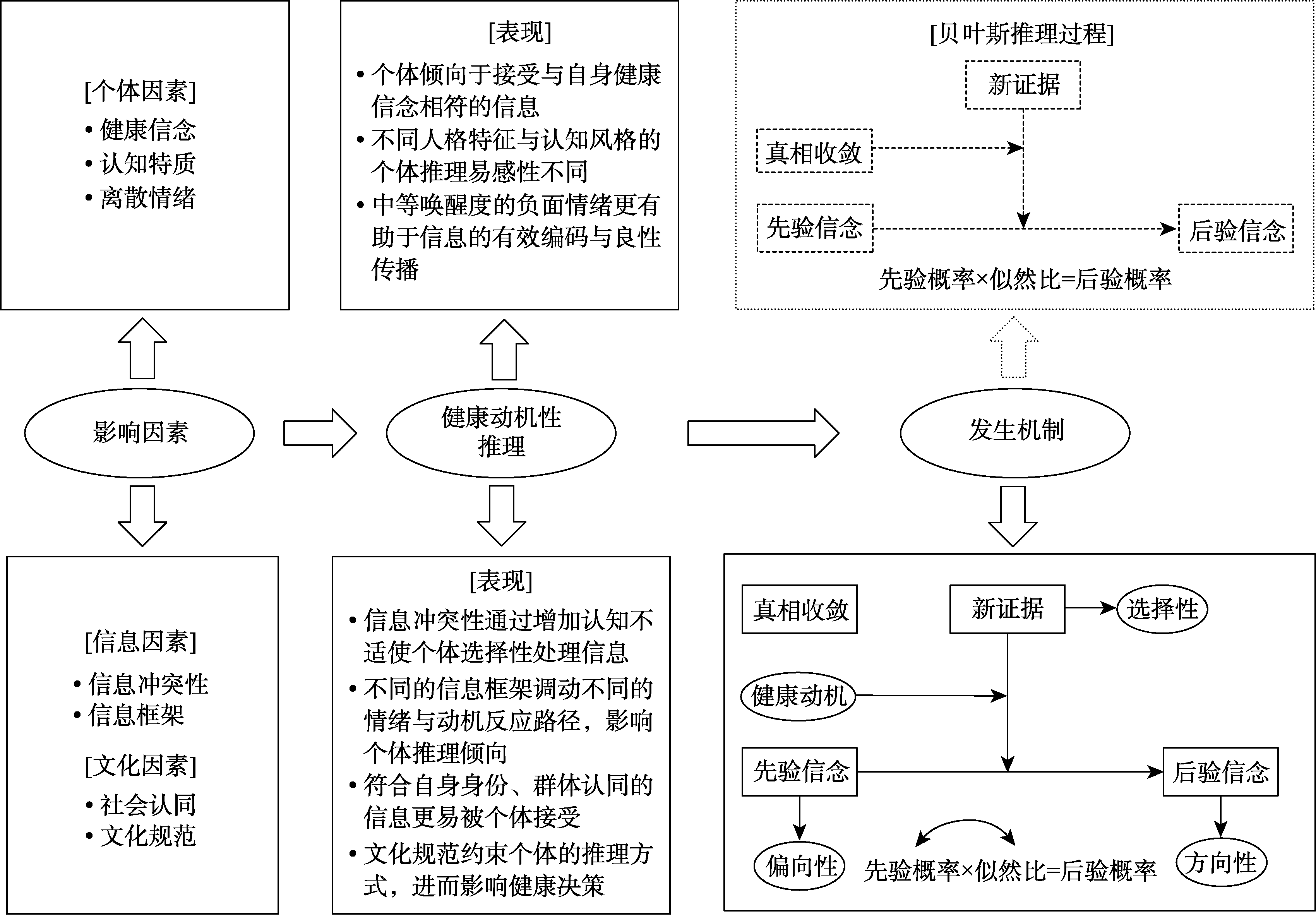
图1 健康动机性推理的整合框架 来源: 作者自制, 其中发生机制部分改编自Kahan (2016a)。
| [1] |
陈寿勇, 李静. (2024). 环境物质主义的发生机制及条件. 心理科学进展, 32(12), 2109-2123.
doi: 10.3724/SP.J.1042.2024.02109 |
| [2] | 刘颖, 陈丽君, 汪新建. (2022). 中医药文化认同影响个体动机性推理. 心理技术与应用, 10(11), 642-653. |
| [3] | 诺韦拉, S., 诺韦拉, B., 圣玛丽, C., 诺韦拉, J., 伯恩斯坦, E.(2020). 如何独立思考 (文辉译). 北京: 中信出版社. |
| [4] | 齐瓦·孔达. (2013). 社会认知——洞悉人心的科学 (周治金, 朱新秤等译). 北京: 人民邮电出版社. |
| [5] |
邱林波, 宛小昂. (2024). 环境感官线索对饮食决策的影响及其机制. 心理科学进展, 32(11), 1933-1946.
doi: 10.3724/SP.J.1042.2024.01933 |
| [6] | 张凤华, 方侠辉, 刘书培. (2015). 决策框架和调节定向对模糊规避的影响. 中国临床心理学杂志, 23(6), 963-967. |
| [7] | Ahn J., & Kahlor L. A. (2023). When experts offer conflicting information: A study of perceived ambiguity, information insufficiency, trustworthiness and risk information behaviors. Health Communication, 38(14), 3276-3286. |
| [8] | Alqahtani F., Orji R., Riper H., Mccleary N., Witteman H., & Mcgrath P. (2023). Motivation-based approach for tailoring persuasive mental health applications. Behaviour & Information Technology, 42(5), 569-595. |
| [9] | Appel H., & Sanatkar S. (2024). Systematic search and scoping review of physicians’ intolerance of uncertainty and medical decision-making uncertainties during the COVID-19 pandemic: A summary of the literature and directions for future research. Journal of Clinical Psychology in Medical Settings, 31(2), 338-358. |
| [10] | Badillo-Goicoechea E., Chang T. H., Kim E., LaRocca S., Morris K., Deng X.,... Stuart E. A. (2021). Global trends and predictors of face mask usage during the COVID-19 pandemic. BMC Public Health, 21, 1-12. |
| [11] |
Bailey R. L., Wang T., & Kaiser C. K. (2018). Clash of the primary motivations: Motivated processing of emotionally experienced content in fear appeals about obesity prevention. Health Communication, 33(2), 111-121.
doi: 10.1080/10410236.2016.1250186 pmid: 27976921 |
| [12] | Bayes R., & Druckman J. N. (2021). Motivated reasoning and climate change. Current Opinion in Behavioral Sciences, 42, 27-35. |
| [13] | Bensi L., Giusberti F., Nori R., & Gambetti E. (2010). Individual differences and reasoning: A study on personality traits. British Journal of Psychology, 101(3), 545-562. |
| [14] | Boyer M. M. (2023). Aroused argumentation: How the news exacerbates motivated reasoning. The International Journal of Press/Politics, 28(1), 92-115. |
| [15] | Boyer M. M., Aaldering L., & Lecheler S. (2022). Motivated reasoning in identity politics: Group status as a moderator of political motivations. Political Studies, 70(2), 385-401. |
| [16] | Boyer M. M., Lecheler S., & Aaldering L. (2024). Don’t throw the frame out with the bathwater: How episodic news frames can prevent identity-motivated reasoning. Journalism & Mass Communication Quarterly, 101(4), 933-954. |
| [17] | Braman E., & Nelson T. E. (2007). Mechanism of motivated reasoning? Analogical perception in discrimination disputes. American Journal of Political Science, 51(4), 940-956. |
| [18] | Cai M., Luo H., Meng X., Cui Y., & Wang W. (2022). Influence of information attributes on information dissemination in public health emergencies. Humanities & Social Sciences Communications, 9(1), 1-22. |
| [19] | Camp N., Vagnetti R., Penner S., Ramos C., Hunter K., Hough J., & Magistro D. (2024). It is not just a matter of motivation: The role of self-control in promoting physical activity in older adults-a Bayesian mediation model. Healthcare, 12(16), 1663. |
| [20] |
Carpenter D. M., Geryk L. L., Chen A. T., Nagler R. H., Dieckmann N. F., & Han P. K. (2016). Conflicting health information: A critical research need. Health Expectations, 19(6), 1173-1182.
doi: 10.1111/hex.12438 pmid: 26709206 |
| [21] | Chang C. (2015). Motivated processing: How people perceive news covering novel or contradictory health research findings. Science Communication, 37(5), 602-634. |
| [22] | Chen B., Chen X., Pan J., Liu K., Xie B., Wang W., … Jiang J. (2021). Dissemination and refutation of rumors during the COVID-19 outbreak in China: Infodemiology study. Journal of Medical Internet Research, 23(2), e22427. |
| [23] | Cohen A., Perozich A., Rajan R., Persky S., Parisi J., Bowie J.,... Cheskin L. J. (2017). Framed, interactive theory-driven texting: Effects of message framing on health behavior change for weight loss. Family & Community Health, 40(1), 43-51. |
| [24] |
Converse B. A., Juarez L., & Hennecke M. (2019). Self-control and the reasons behind our goals. Journal of Personality and Social Psychology, 116(5), 860-883.
doi: 10.1037/pspp0000188 pmid: 30070566 |
| [25] |
Courbage C., & Peter R. (2021). On the effect of uncertainty on personal vaccination decisions. Health Economics, 30(11), 2937-2942.
doi: 10.1002/hec.4405 pmid: 34346125 |
| [26] | Damgaard P. R., & James O. (2024). Public service users’ responses to performance information: Bayesian learning or motivated reasoning? Journal of Public Administration Research and Theory, 34(4), 532-546. |
| [27] | Davis J. A., & Schlauch R. C. (2024). Gender differences in college drinkers: A test of the precarious manhood hypothesis on drinking motivation. Journal of Social and Clinical Psychology, 43(2), 152-179. |
| [28] | Deci E. L., & Ryan R. M. (1985). Intrinsic motivation and self-determination in human behavior. Plenum Press. |
| [29] | de Mooij B., Fekkes M., Miers A. C., van den Akker A. L., Scholte R. H., & Overbeek G. (2023). What works in preventing emerging social anxiety: Exposure, cognitive restructuring, or a combination? Journal of Child and Family Studies, 32(2), 498-515. |
| [30] | Dibbets P., Borger L., & Nederkoorn C. (2021). Filthy fruit! Confirmation bias and novel food. Appetite, 167, 105607. |
| [31] | Dickinson D. L., & Kakoschke N. (2021). Seeking confirmation? Biased information search and deliberation in the food domain. Food Quality and Preference, 91, 104189. |
| [32] | Ditto P. H., Scepansky J. A., Munro G. D., Apanovitch A. M., & Lockhart L. K. (1998). Motivated sensitivity to preference-inconsistent information. Journal of Personality and Social Psychology, 75(1), 53-69. |
| [33] | Dong W., Tao J., Xia X., Ye L., Xu H., Jiang P., & Liu Y. (2020). Public emotions and rumors spread during the COVID-19 epidemic in China: Web-based correlation study. Journal of Medical Internet Research, 22(11), e21933. |
| [34] | Dorfman L., Wallack L., & Woodruff K. (2005). More than a message: Framing public health advocacy to change corporate practices. Health Education & Behavior, 32(3), 320-336. |
| [35] | Dryhurst S., Schneider C. R., Kerr J. R., Freeman A. L., Recchia G., van der Bles A. M., Spiegelhalter D. J., & van der Linden S. (2020). Risk perceptions of COVID-19 around the world. Journal of Risk Research, 23(7-8), 994-1006. |
| [36] | Ecker U. K. H., Sanderson J. A., McIlhiney P., Rowsell J. J., Quekett H. L., Brown G. D., & Lewandowsky S. (2023). Combining refutations and social norms increases belief change. Quarterly Journal of Experimental Psychology, 76(6), 1275-1297. |
| [37] | Ednie A., & Stibor M. (2017). Influence and interpretation of intrinsic and extrinsic exercise motives. Journal of Human Sport and Exercise, 12(2), 414-425. |
| [38] | Epley N., & Gilovich T. (2016). The mechanics of motivated reasoning. Journal of Economic Perspectives, 30(3), 133-140. |
| [39] | Festinger L. (1957). A theory of cognitive dissonance. Stanford University Press. |
| [40] | Filindra A., & Harbridge-Yong L. (2022). How do partisans navigate intra-group conflict? A theory of leadership- driven motivated reasoning. Political Behavior, 44(3), 1437-1458. |
| [41] | Fitzgibbon L., & Murayama K. (2022). Counterfactual curiosity: Motivated thinking about what might have been. Philosophical Transactions of the Royal Society B, 377(1866), 20210340. |
| [42] | Fugitt J. L., Ham L. S., & Bridges A. J. (2017). Undifferentiated gender role orientation, drinking motives, and increased alcohol use in men and women. Substance Use & Misuse, 52(6), 760-772. |
| [43] | Gadarian S. K., Goodman S. W., & Pepinsky T. B. (2021). Partisanship, health behavior, and policy attitudes in the early stages of the COVID-19 pandemic. Plos One, 16(4), e0249596. |
| [44] |
Gallagher K. M., & Updegraff J. A. (2012). Health message framing effects on attitudes, intentions, and behavior: A meta-analytic review. Annals of Behavioral Medicine, 43(1), 101-116.
doi: 10.1007/s12160-011-9308-7 pmid: 21993844 |
| [45] | Garcia O. F., Serra E., Zacares J. J., Calafat A., & Garcia F. (2020). Alcohol use and abuse and motivations for drinking and non-drinking among Spanish adolescents: Do we know enough when we know parenting style? Psychology & Health, 35(6), 645-664. |
| [46] | Graham M. H., & Singh S. (2024). An outbreak of selective attribution: Partisanship and blame in the COVID-19 pandemic. American Political Science Review, 118(1), 423-441. |
| [47] | Haarmann L., Kalbe E., Anapa G., Kurt D., & Seven Ü. S. (2025). Subjective health literacy and personality in older adults: Conscientiousness, neuroticism, and openness as key predictors—A cross-sectional study. International Journal of Environmental Research and Public Health, 22(3),392. |
| [48] | Haigh M., & Birch H. A. (2021). When ‘scientists say’ coffee is good for you one day and bad for you the next: Do generic attributions to ‘scientists’ and ‘experts’ amplify perceived conflict? Collabra: Psychology, 7(1), 23447. |
| [49] | Haupt M. R., Cuomo R., Mackey T. K., & Coulson S. (2024). The role of narcissism and motivated reasoning on misinformation propagation. Frontiers in Communication, 9, 1472631. |
| [50] |
Higgins E. T. (1997). Beyond pleasure and pain. American Psychologist, 52(12), 1280-1300.
doi: 10.1037//0003-066x.52.12.1280 pmid: 9414606 |
| [51] |
Higgins J. W., Naylor P. J., Berry T., O'Connor B., & McLean D. (2006). The health buck stops where? Thematic framing of health discourse to understand the context for CVD prevention. Journal of Health Communication, 11(3), 343-358.
pmid: 16624798 |
| [52] |
Ho L. L. K., Li W. H. C., Cheung A. T., & Xia W. (2021). Effectiveness of smoking cessation interventions for smokers with chronic diseases: A systematic review. Journal of Advanced Nursing, 77(8), 3331-3342.
doi: 10.1111/jan.14869 pmid: 33896036 |
| [53] |
Holmila M., & Raitasalo K. (2005). Gender differences in drinking: Why do they still exist? Addiction, 100(12), 1763-1769.
doi: 10.1111/j.1360-0443.2005.01249.x pmid: 16367976 |
| [54] |
Hutmacher F., Reichardt R., & Appel M. (2024). Motivated reasoning about climate change and the influence of numeracy, need for cognition, and the dark factor of personality. Scientific Reports, 14(1), 5615.
doi: 10.1038/s41598-024-55930-9 pmid: 38454097 |
| [55] | Ihekweazu C. (2023). Is coffee the cause or the cure? Conflicting nutrition messages in two decades of online New York Times’ nutrition news coverage. Health Communication, 38(2), 260-274. |
| [56] |
Ji X., Zhao J., Li H., Pizzagalli D. A., Law S., Lin P., … Wang X. (2021). From motivation, decision-making to action: An fMRI study on suicidal behavior in patients with major depressive disorder. Journal of Psychiatric Research, 139, 14-24.
doi: 10.1016/j.jpsychires.2021.05.007 pmid: 34004553 |
| [57] | Jiang T., Wu X., Chen Y., & Wang Y. (2021). The effects of message framing on online health headline selection of female users: A moderation of approach/avoidance motivation. International Journal of Medical Informatics, 148, 104397. |
| [58] | Jin E., & Oh J. (2022). The role of emotion in interactivity effects: Positive emotion enhances attitudes, negative emotion helps information processing. Behaviour & Information Technology, 41(16), 3487-3505. |
| [59] | Ju R., Jia M., & Cheng J. (2023). Promoting mental health on social media: A content analysis of organizational tweets. Health Communication, 38(8), 1540-1549. |
| [60] | Kahan, D. M. (2016a). The politically motivated reasoning paradigm, part 1:What politically motivated reasoning is and how to measure it. In R. A. Scott, S. M. Kosslyn, & M. C. Buchmann (Eds.), Emerging trends in the social and behavioral sciences: An interdisciplinary, searchable, and linkable resource (1st ed.). Wiley. |
| [61] | Kahan, D. M. (2016b). The politically motivated reasoning paradigm, part 2:Unanswered questions. In R. A. Scott, S. M. Kosslyn, & M. C. Buchmann (Eds.), Emerging trends in the social and behavioral sciences: An interdisciplinary, searchable, and linkable resource (1st ed.). Wiley. |
| [62] | Kahan D. M., Peters E., Dawson E. C., & Slovic P. (2017). Motivated numeracy and enlightened self-government. Behavioural Public Policy, 1(1), 54-86. |
| [63] |
Kalke K., Studd H., & Scherr C. L. (2021). The communication of uncertainty in health: A scoping review. Patient Education and Counseling, 104(8), 1945-1961.
doi: 10.1016/j.pec.2021.01.034 pmid: 33593644 |
| [64] | Klinenberg E., & Sherman M. (2021). Face mask face-offs Culture and conflict in the COVID-19 pandemic. Public Culture, 33(3), 441-466. |
| [65] | Kuhfeldt K. J., Kaiser J. L., Morgan A. J., Ngoma T., Hamer D. H., Fink G., … Scott N. A. (2024). Motivation, cues to action, and barriers to COVID-19 vaccine uptake: A qualitative application of the health belief model among women in rural Zambia. The American Journal of Tropical Medicine and Hygiene, 111(5), 1118-1126. |
| [66] | Kumar V., Sood A., Gupta S., & Sood N. (2021). Prevention-versus promotion-focus regulatory efforts on the disease incidence and mortality of COVID-19: A multinational diffusion study using functional data analysis. Journal of International Marketing, 29(1), 1-22. |
| [67] |
Kunda Z. (1990). The case for motivated reasoning. Psychological Bulletin, 108(3), 480-498
pmid: 2270237 |
| [68] | Lang A., & Yegiyan N. S. (2008). Understanding the interactive effects of emotional appeal and claim strength in health messages. Journal of Broadcasting & Electronic Media, 52(3), 432-447. |
| [69] |
Langford A. T., Solid C. A., Gann L. C., Rabinowitz E. P., Williams S. K., & Seixas A. A. (2018). Beliefs about the causes of hypertension and associations with pro-health behaviors. Health Psychology, 37(12), 1092-1101.
doi: 10.1037/hea0000687 pmid: 30307273 |
| [70] | Liu B., Wang M., Wang H., Feng Y., Ju Y., Sun J.,... Li L. (2024). Association between personality and cognitive bias in adults with and without depression. BMC Psychology, 12(1), 779. |
| [71] | Lois G., Tsakas E., Yuen K., & Riedl A. (2024). Tracking politically motivated reasoning in the brain: The role of mentalizing, value-encoding, and error detection networks. Social Cognitive and Affective Neuroscience, 19(1), nsae056. |
| [72] | Lu J. G., Jin P., & English A. S. (2021). Collectivism predicts mask use during COVID-19. Proceedings of the National Academy of Sciences, 19(23), e2021793118. |
| [73] |
Lyu D., Pappas I., Menon D. K., & Stamatakis E. A. (2021). A precuneal causal loop mediates external and internal information integration in the human brain. Journal of Neuroscience, 41(48), 9944-9956.
doi: 10.1523/JNEUROSCI.0647-21.2021 pmid: 34675087 |
| [74] | Maguire A., Persson E., Västfjäll D., & Tinghög G. (2022). COVID-19 and politically motivated reasoning. Medical Decision Making, 42(8), 1078-1086. |
| [75] |
Martino M. L., Lemmo D., Donizzetti A. R., Bianchi M., Freda M. F., & Caso D. (2024). Emotions and narrative reappraisal strategies of users of breast cancer screening: Reconstructing the past, passing through the present, and predicting emotions. Qualitative Health Research, 34(3), 263-276.
doi: 10.1177/10497323231214120 pmid: 38128547 |
| [76] | Masarwa D., Niazov Y., Ben Natan M., & Mostovoy D. (2023). The role of parental health beliefs in seeking an eye examination for their child. BMC Ophthalmology, 23(1), 269. |
| [77] | McNeil A., & Purdon C. (2022). Anxiety disorders, COVID-19 fear, and vaccine hesitancy. Journal of Anxiety Disorders, 90, 102598. |
| [78] | Mehlhaff I. D., Ryan T. J., Hetherington M. J., & MacKuen M. B. (2024). Where motivated reasoning withers and looms large: Fear and partisan reactions to the COVID-19 pandemic. American Journal of Political Science, 68(1), 5-23. |
| [79] | Mei D., Zhang W., & Yin L. (2020). Neural responses of in-group “favoritism” and out-group “discrimination” toward moral behaviors. Neuropsychologia, 139, 107375. |
| [80] | Melbye E. L., & Hansen H. (2015). Promotion and prevention focused feeding strategies: Exploring the effects on healthy and unhealthy child eating. Biomed Research International, 2015(1), 306306. |
| [81] |
Meppelink C. S., Smit E. G., Fransen M. L., & Diviani N. (2019). “I was right about vaccination”: Confirmation bias and health literacy in online health information seeking. Journal of Health Communication, 24(2), 129-140.
doi: 10.1080/10810730.2019.1583701 pmid: 30895889 |
| [82] | Mercadante A. R., & Law A. V. (2021). Will they, or won’t they? Examining patients' vaccine intention for flu and COVID-19 using the Health Belief Model. Research in Social & Administrative Pharmacy, 17(9), 1596-1605. |
| [83] | Miller C. A., Schroeder M. W., Guidry J. P., Fuemmeler B. F., & Pagoto S. (2023). Older adults’ exposure to and posting of health-related messages on Facebook by chronic health condition status. Digital Health, 9, https://doi.org/10.1177/20552076231203799 20552076231 203799. |
| [84] | Mohammed S. A., Rajashekar S., Giri Ravindran S., Kakarla M., Ausaja Gambo M., Yousri Salama M., … Hamid P. (2022). Does vaccination increase the risk of autism spectrum disorder? Cureus, 14(8), e27921. |
| [85] | Moon W. K., Chung M., & Jones-Jang S. M. (2023). How can we fight partisan biases in the COVID-19 pandemic? AI source labels on fact-checking messages reduce motivated reasoning. Mass Communication and Society, 26(4), 646-670. |
| [86] | Mühlberger C., Endrejat P., Möller J., Herrmann D., Kauffeld S., & Jonas E. (2022). Focus meets motivation: When regulatory focus aligns with approach/avoidance motivation in creative processes. Frontiers in Psychology, 13, 807875. |
| [87] |
Na K., Garrett R. K., & Slater M. D. (2018). Rumor acceptance during public health crises: Testing the emotional congruence hypothesis. Journal of Health Communication, 23(8), 791-799.
doi: 10.1080/10810730.2018.1527877 pmid: 30325720 |
| [88] | Nestor P. G., & Woodhull A. A. (2024). Neuropsychology of social cognition: Culture, display rules, and emotional expressivity. Journal of Clinical and Experimental Neuropsychology, 46(9), 811-827. |
| [89] |
Nieber K. (2017). The impact of coffee on health. Planta Medica, 83(16), 1256-1263.
doi: 10.1055/s-0043-115007 pmid: 28675917 |
| [90] | Nyhan B., Reifler J., Richey S., & Freed G. L. (2014). Effective messages in vaccine promotion: A randomized trial. Pediatrics, 133(4), e835-e842. |
| [91] | Parwati N. M., Bakta I. M., Januraga P. P., & Wirawan I. M. A. (2021). A health belief model-based motivational interviewing for medication adherence and treatment success in pulmonary tuberculosis patients. International Journal of Environmental Research and Public Health, 18(24), 13238. |
| [92] | Peng R. X. (2022). How online searches fuel health anxiety: Investigating the link between health-related searches, health anxiety, and future intention. Computers in Human Behavior, 136, 107384. |
| [93] | Pennycook G., McPhetres J., Bago B., & Rand D. G. (2022). Beliefs about COVID-19 in Canada, the United Kingdom, and the United States: A novel test of political polarization and motivated reasoning. Personality and Social Psychology Bulletin, 48(5), 750-765. |
| [94] | Persson E., Andersson D., Koppel L., Västfjäll D., & Tinghög G. (2021). A preregistered replication of motivated numeracy. Cognition, 214, 104768. |
| [95] | Piksa M., Noworyta K., Gundersen A., Kunst J., Morzy M., Piasecki J., & Rygula R. (2024). The impact of confirmation bias awareness on mitigating susceptibility to misinformation. Frontiers in Public Health, 12, 1414864. |
| [96] | Pop-Flanja D. (2020). Cross-cultural differences in risk perception and risk communication. A case study on the COVID-19 outbreak. Redefining Community in Intercultural Context, 9(1), 68-74. |
| [97] | Prado J., Léone J., Epinat-Duclos J., Trouche E., & Mercier H. (2020). The neural bases of argumentative reasoning. Brain and Language, 208, 104827. |
| [98] | Priniski J. H., Horne Z., & Solanki P. (2022). A Bayesian decision-theoretic framework for studying motivated reasoning. https://doi.org/10.31234/osf.io/ngavz |
| [99] | Pröllochs N., Bär D., & Feuerriegel S. (2021). Emotions explain differences in the diffusion of true vs. false social media rumors. Scientific Reports, 11(1), 22721. |
| [100] |
Rathje S., Roozenbeek J., Van Bavel J. J., & Van Der Linden S. (2023). Accuracy and social motivations shape judgements of (mis) information. Nature Human Behaviour, 7(6), 892-903.
doi: 10.1038/s41562-023-01540-w pmid: 36879042 |
| [101] | Rigoli F., Martinelli C., & Pezzulo G. (2021). I want to believe: Delusion, motivated reasoning, and Bayesian decision theory. Cognitive Neuropsychiatry, 26(6), 408-420. |
| [102] | Rosenstock I. M. (1974). The health belief model and preventive health behavior. Health Education Monographs, 2(4), 354-386. |
| [103] | Ryan R. M., & Deci E. L. (2017). Self-determination theory: Basic psychological needs in motivation, development, and wellness . Guilford Press. |
| [104] | Ryan R. M., & Deci E. L. (2020). Intrinsic and extrinsic motivation from a self-determination theory perspective: Definitions, theory, practices, and future directions. Contemporary Educational Psychology, 61, 101860. |
| [105] | Savolainen R. (2022). What drives people to prefer health- related misinformation? The viewpoint of motivated reasoning. Information Research, 27(2), 927. |
| [106] | Schutz, A. (1962). Choosing among projects of action. In M. Natanson (Ed.) Collected papers I. The problem of social reality (pp. 67-96). Springer. |
| [107] | Simonovic N., Taber J. M., Scherr C. L., Dean M., Hua J., Howell J. L.,... Politi M. C. (2023). Uncertainty in healthcare and health decision making: Five methodological and conceptual research recommendations from an interdisciplinary team. Journal of Behavioral Medicine, 46(4), 541-555. |
| [108] | Southworth J. (2021). A perspective‐taking theory of open-mindedness: Confronting the challenge of motivated reasoning. Educational Theory, 71(5), 589-607. |
| [109] | Standen E. C., Rothman A. J., & Mann T. (2025). Weight loss advice from a healthcare provider is motivating, but it is also stigmatizing: An experimental, scenario-based approach. Annals of Behavioral Medicine, 59(1), kaaf018. |
| [110] |
Staples C., Palermo M., & Rancourt D. (2022). Intrinsic and extrinsic motivations as moderators of the association between exercise frequency and exercise behavior. Eating and Weight Disorders-Studies on Anorexia, Bulimia and Obesity, 27(7), 2801-2809.
doi: 10.1007/s40519-022-01430-6 pmid: 35776380 |
| [111] | Stehr P., Luetke Lanfer H., & Rossmann C. (2021). Beliefs and motivation regarding physical activity among older adults in Germany: Results of a qualitative study. International Journal of Qualitative Studies on Health and Well-being, 16(1), 1932025. |
| [112] | Stenhouse N., Myers T. A., Vraga E. K., Kotcher J. E., Beall L., & Maibach E. W. (2018). The potential role of actively open-minded thinking in preventing motivated reasoning about controversial science. Journal of Environmental Psychology, 57, 17-24. |
| [113] | Strömbäck C., Andersson D., Västfjäll D., & Tinghög G. (2024). Motivated reasoning, fast and slow. Behavioural Public Policy, 8(3), 617-632. |
| [114] | Suhay E., & Erisen C. (2018). The role of anger in the biased assimilation of political information. Political Psychology, 39(4), 793-810. |
| [115] | Sun R. T., Han W., Chang H. L., & Shaw M. J. (2021). Motivating adherence to exercise plans through a personalized mobile health app: Enhanced action design research approach. JMIR mHealth and uHealth, 9(6), e19941. |
| [116] |
Sylvester S. M. (2021). COVID-19 and motivated reasoning: The influence of knowledge on COVID-related policy and health behavior. Social Science Quarterly, 102(5), 2341-2359.
doi: 10.1111/ssqu.12989 pmid: 34226771 |
| [117] | Taber C. S., & Lodge M. (2006). Motivated skepticism in the evaluation of political beliefs. American Journal of Political Science, 50(3), 755-769. |
| [118] | Tappin B. M., Pennycook G., & Rand D. G. (2020). Bayesian or biased? Analytic thinking and political belief updating. Cognition, 204, 104375. |
| [119] |
Temmen C. D., & Crockett L. J. (2020). Relations of stress and drinking motives to young adult alcohol misuse: Variations by gender. Journal of Youth and Adolescence, 49(4), 907-920.
doi: 10.1007/s10964-019-01144-6 pmid: 31721009 |
| [120] | Thaler M. (2024). The fake news effect: Experimentally identifying motivated reasoning using trust in news. American Economic Journal: Microeconomics, 16(2), 1-38. |
| [121] |
Tudoran A. A., Scholderer J., & Brunsø K. (2012). Regulatory focus, self-efficacy and outcome expectations as drivers of motivation to consume healthy food products. Appetite, 59(2), 243-251.
doi: 10.1016/j.appet.2012.05.002 pmid: 22595287 |
| [122] | van Stekelenburg A., Schaap G., Veling H., & Buijzen M. (2020). Correcting misperceptions: The causal role of motivation in corrective science communication about vaccine and food safety. Science Communication, 42(1), 31-60. |
| [123] | van Velsen L., Broekhuis M., Jansen-Kosterink S., & Op den Akker H. (2019). Tailoring persuasive electronic health strategies for older adults on the basis of personal motivation: Web-based survey study. Journal of Medical Internet Research, 21(9), 11759. |
| [124] |
Van’t Riet J., Cox A. D., Cox D., Zimet G. D., De Bruijn G. J., Van den Putte B., … Ruiter R. A. C. (2016). Does perceived risk influence the effects of message framing? Revisiting the link between prospect theory and message framing. Health Psychology Review, 10(4), 447-459.
pmid: 27062974 |
| [125] | Viator R. E., Harp N. L., Rinaldo S. B., & Marquardt B. B. (2020). The mediating effect of reflective-analytic cognitive style on rational thought. Thinking & Reasoning, 26(3), 381-413. |
| [126] | Wang J., Yuan B., Lu X., Liu X., Li L., Geng S.,... Fang H. (2021). Willingness to accept COVID-19 vaccine among the elderly and the chronic disease population in China. Human Vaccines & Immunotherapeutics, 17(12), 4873-4888. |
| [127] | Wang L., Gollust S. E., Rothman A. J., Vogel R. I., Yzer M. C., & Nagler R. H. (2025). Effects of exposure to conflicting health information on topic-specific information sharing and seeking intentions. Health Communication, 40(3), 522-530. |
| [128] | Wang Y., Wen X., Zhu Y., Xiong Y., & Liu X. (2022). Chinese residents’ healthy eating intentions and behaviors: Based on an extended health belief model. International Journal of Environmental Research and Public Health, 19(15), 9037. |
| [129] |
Ward L. A., Cain O. L., Mullally R. A., Holliday K. S., Wernham A. G., Baillie P. D., & Greenfield S. M. (2009). Health beliefs about bottled water: A qualitative study. BMC Public Health, 9, 196.
doi: 10.1186/1471-2458-9-196 pmid: 19545357 |
| [130] | Wilson T. D., & Maceviciute E. (2022). Information misbehaviour: Modelling the motivations for the creation, acceptance and dissemination of misinformation. Journal of Documentation, 78(7), 485-505. |
| [131] |
Wojtowicz Z., & DeDeo S. (2020). From probability to consilience: How explanatory values implement Bayesian reasoning. Trends in Cognitive Sciences, 24(12), 981-993.
doi: 10.1016/j.tics.2020.09.013 pmid: 33198908 |
| [132] | Yang H., Li D., & Hu P. (2024). Decoding algorithm fatigue: The role of algorithmic literacy, information cocoons, and algorithmic opacity. Technology in Society, 79, 102749. |
| [133] | Yang L., Greenbaum D., Cupid J., & Reed M. (2023). Health appeal appraisal and memory in older adults: The effects of goal and valence framing. Aging, Neuropsychology and Cognition, 30(5), 713-728. |
| [134] | Yao V. (2022). Personality traits and covid vaccine uptake. International Journal of Social Science and Education Research, 5(1), 456-459. |
| [135] | Young D. G., Maloney E. K., Bleakley A., & Langbaum J. (2022). “I feel it in my gut:” Epistemic motivations, political beliefs, and misperceptions of COVID-19 and the 2020 U.S. presidential election. Journal of Social and Political Psychology, 10(2), 643-656. |
| [136] | Zhang I. Y., & Liao J. M. (2021). Incorporating emotions into clinical decision-making solutions. Healthcare, 9(3), 100569. |
| [137] | Zhang X. A. (2021). Understanding the cultural orientations of fear appeal variables: A cross-cultural comparison of pandemic risk perceptions, efficacy perceptions, and behaviors. Journal of Risk Research, 24(3-4), 432-448. |
| [138] |
Zhang X., & Zhou S. (2019). Clicking health risk messages on social media: Moderated mediation paths through perceived threat, perceived efficacy, and fear arousal. Health Communication, 34(11), 1359-1368.
doi: 10.1080/10410236.2018.1489202 pmid: 29958013 |
| [139] | Zimbres T. M., Bell R. A., Miller L. M. S., & Zhang J. (2022). Contradictory and complex health messages: An experimental test of different sources of uncertainty. Communication Research Reports, 39(3), 147-159. |
| [1] | 曹呈旭, 七十三, 金童林, 曾小叶, 安叶青, 卜塔娜. 基于信号检测论的错误信息鉴别层级模型[J]. 心理科学进展, 2024, 32(7): 1209-1220. |
| [2] | 孙造诣, 许苇婧, 徐亮, 李宏汀. 调节定向对App用户隐私披露的影响[J]. 心理科学进展, 2023, 31(7): 1160-1171. |
| [3] | 史滋福; 王香香; 陈姣; 张庆林. 贝叶斯推理研究的三个层次[J]. 心理科学进展, 2010, 18(2): 230-236. |
| [4] | 陈永香;朱莉琪;Twila Tardif;孟祥芝;Rachel Pulverman. 词汇学习中“快速映射”现象的机制[J]. 心理科学进展, 2009, 17(1): 71-77. |
| [5] | 张向阳;刘鸣. 贝叶斯推理研究综述[J]. 心理科学进展, 2002, 10(4): 388-394. |
| [6] | GerdGigerenzer;包燕. 生态学智力:人类的推理算法对频率的适应[J]. 心理科学进展, 2001, 9(4): 325-329. |
| 阅读次数 | ||||||
|
全文 |
|
|||||
|
摘要 |
|
|||||
