

ISSN 1671-3710
CN 11-4766/R
主办:中国科学院心理研究所
出版:科学出版社
CN 11-4766/R
主办:中国科学院心理研究所
出版:科学出版社
心理科学进展 ›› 2026, Vol. 34 ›› Issue (2): 348-363.doi: 10.3724/SP.J.1042.2026.0348 cstr: 32111.14.2026.0348
张昊天( )
)
收稿日期:2025-07-21
出版日期:2026-02-15
发布日期:2025-12-15
通讯作者:
张昊天, E-mail: haotianzhang@sdnu.edu.cn基金资助:
ZHANG Haotian()
Received:2025-07-21
Online:2026-02-15
Published:2025-12-15
摘要:
道德化(moralization)意指将原本价值中立的事物赋予道德内涵的过程。道德化的诱发受认知、情感、社会等多层次因素影响。现有关于道德化的理论模型主要为道德放大模型与道德推拉模型, 但两者均忽视了宏观社会因素的作用。新构建的道德化“认知−情感−社会”整合模型旨在弥补这一不足。道德化之后效具有“双刃剑”的功能:一方面, 道德化对于规范社会行为和个体目标寻求具有积极作用; 另一方面又会导致认知偏见、无端歧视、敌对态度、群体极化、集体暴力等消极后果。未来研究应重点探索“去道德化”的心理机制与干预手段、社交媒体新技术对网络道德化心理与行为的影响、人工智能时代的道德化研究以及基于中国本土文化的道德化心理现象。
中图分类号:
张昊天. (2026). 道德化:人们如何赋予中性事物以道德意味?. 心理科学进展 , 34(2), 348-363.
ZHANG Haotian. (2026). Moralization: How do people ascribe moral meaning to morally neutral things?. Advances in Psychological Science, 34(2), 348-363.

图1 道德化的放大模型(译自Rhee et al., 2019)

图2 道德化的推拉模型(译自Feinberg et al., 2019)
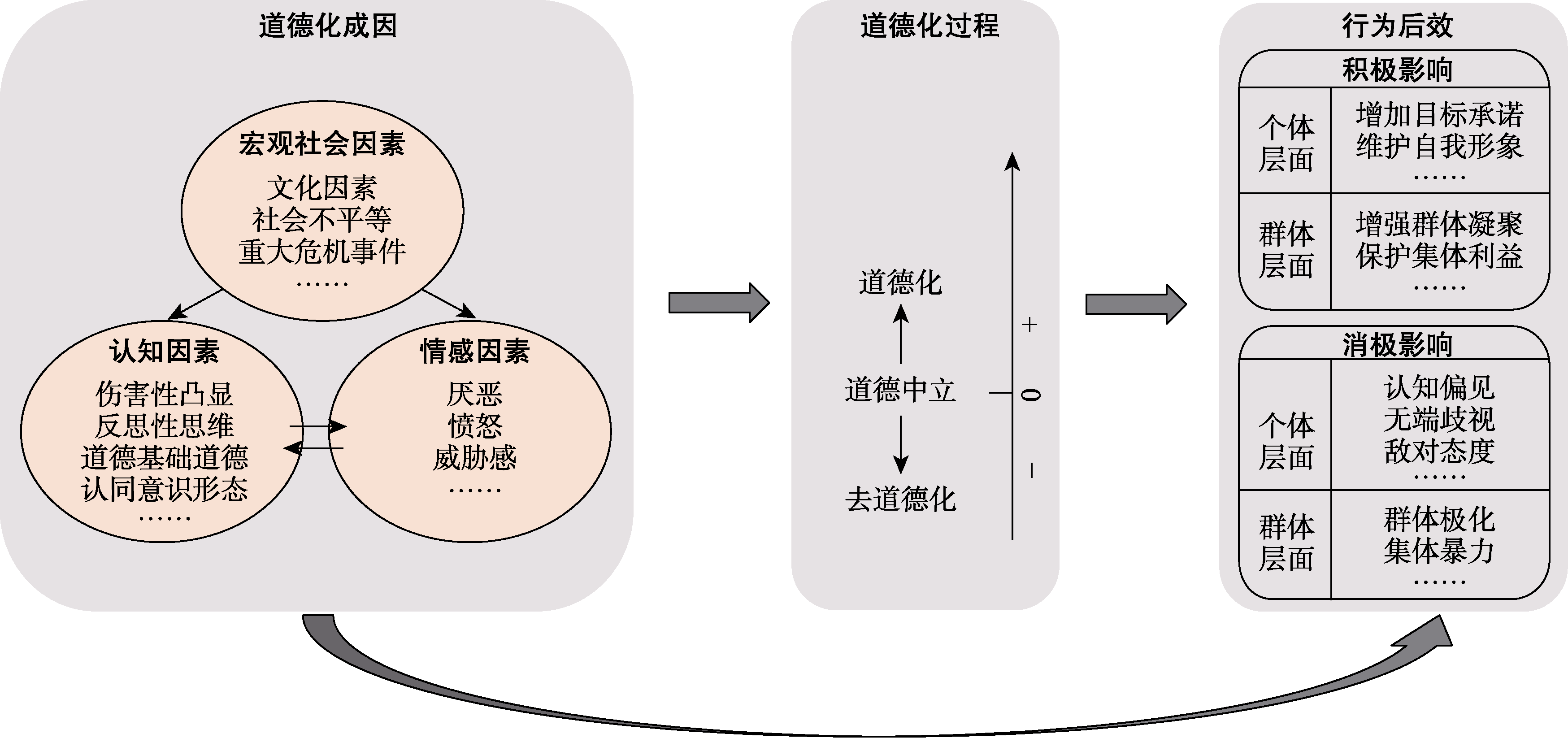
图3 道德化的“认知−情感−社会(cognitive-affective-social, CAS)”整合模型
| [1] | 陈珂, 万欣荣. (2023). 网络舆情泛道德化:伴生危害、形成逻辑与治理策略. 山东师范大学学报(社会科学版), 68(1), 21-29. |
| [2] | 程志敏. (2024). 论儒家 “道德主义” 思想的特质及现代价值. 伦理学研究, 84(1), 52-60. |
| [3] | 金观涛. (2015). 中国思想史十讲: 上卷. 北京: 法律出版社. |
| [4] | 梁漱溟. (2021). 中国文化要义. 北京: 商务印书馆. |
| [5] |
滕玥, 张昊天, 赵偲琪, 彭凯平, 胡晓檬. (2024). 多元文化经历提升人类对机器人的利他行为及心智知觉的中介作用. 心理学报, 56(2), 146-160.
doi: 10.3724/SP.J.1041.2024.00146 |
| [6] | 托马塞洛. (2017). 人类道德自然史 (王锐俊, 译). 北京: 新华出版社. |
| [7] | 殷海光. (2024). 中国文化的展望. 北京: 民主与建设出版社. |
| [8] |
张昊天, 喻丰. (2023). 自然性偏好的概念、表现及成因. 心理科学进展, 31(12), 2393-2405.
doi: 10.3724/SP.J.1042.2023.02393 |
| [9] |
张昊天, 喻丰, 许丽颖, 玄哲理. (2023). 道德之一元论与多元论:缘起、内涵与论争. 心理科学进展, 31(2), 301-314.
doi: 10.3724/SP.J.1042.2023.00301 |
| [10] |
Abdurahman S., Reimer N. K., Golazizian P., Baek E., Shen Y., Trager J., … Dehghani M. (2025). Targeting audiences’ moral values shapes misinformation sharing. Journal of Experimental Psychology: General, 154(4), 935-957. https://doi.org/10.1037/xge0001714
doi: 10.1037/xge0001714 URL |
| [11] |
Adelman L., Verkuyten M., & Yogeeswaran K. (2021). Moralization and moral trade-offs explain (in)tolerance of Muslim minority behaviours. European Journal of Social Psychology, 51(6), 924-935. https://doi.org/10.1002/ejsp. 2792
doi: 10.1002/ejsp.2792 URL pmid: 35874876 |
| [12] |
Agostini M., & van Zomeren M. (2021). Toward a comprehensive and potentially cross-cultural model of why people engage in collective action: A quantitative research synthesis of four motivations and structural constraints. Psychological Bulletin, 147(7), 667-700. https://doi.org/10.1037/bul0000256
doi: 10.1037/bul0000256 URL pmid: 34855427 |
| [13] |
Amos C., Zhang L., & Read D. (2019). Hardworking as a heuristic for moral character: Why we attribute moral values to those who work hard and its implications. Journal of Business Ethics, 158(4), 1047-1062. https://doi.org/10.1007/s10551-017-3725-x
doi: 10.1007/s10551-017-3725-x URL |
| [14] |
Anderson R. A., Crockett M. J., & Pizarro D. A. (2020). A theory of moral praise. Trends in Cognitive Sciences, 24(9), 694-703. https://doi.org/10.1016/j.tics.2020.06.008
doi: S1364-6613(20)30149-2 URL pmid: 32682732 |
| [15] |
Aquino K., & Reed II A. (2002). The self-importance of moral identity. Journal of Personality and Social Psychology, 83(6), 1423-1440. https://doi.org/10.1037/ 0022-3514.83.6.1423
URL pmid: 12500822 |
| [16] |
Arhiri L., Gherman M. A., & Holman A. C. (2022a). A person-centered approach to moralization—The case of vaping. International Journal of Environmental Research and Public Health, 19(9), 5628. https://doi.org/10.3390/ijerph19095628
doi: 10.3390/ijerph19095628 URL |
| [17] |
Arhiri L., Gherman M. A., & Holman A. C. (2022b). Using moralization as a persuasion strategy in public health messages: A cross-sectional, experimental study on vaping. International Journal of Environmental Research and Public Health, 19(22), 14859. https://doi.org/10.3390/ijerph192214859
doi: 10.3390/ijerph192214859 URL |
| [18] |
Bagcchi S. (2020). Stigma during the COVID-19 pandemic. The Lancet Infectious Diseases, 20(7), 782. https://doi.org/10.1016/S1473-3099(20)30498-9
doi: 10.1016/S1473-3099(20)30498-9 URL |
| [19] | Ballone C., Pacilli M. G., Teresi M., Palumbo R., & Pagliaro S. (2023). Attitudes moralization and outgroup dehumanization in the dynamic between pro-vs. Anti- vaccines against COVID-19. Journal of Community & Applied Social Psychology, 33(5), 1297-1308. https://doi.org/10.1002/casp.2718 |
| [20] |
Bastian B., & Loughnan S. (2017). Resolving the meat- paradox: A motivational account of morally troublesome behavior and its maintenance. Personality and Social Psychology Review, 21(3), 278-299. https://doi.org/10.1177/1088868316647562
doi: 10.1177/1088868316647562 URL pmid: 27207840 |
| [21] | Bentham J. (1988). The principles of morals and legislation. Prometheus. |
| [22] |
Berniūnas R., Silius V., & Dranseika V. (2022). Moralization East and West: Moralizing different transgressions among Chinese, Americans, and Lithuanians. Asian Journal of Social Psychology, 25(2), 185-197. https://doi.org/10.1111/ajsp.12479
doi: 10.1111/ajsp.v25.2 URL |
| [23] |
Bonnefon J.-F., Rahwan I., & Shariff A. (2024). The moral psychology of artificial intelligence. Annual Review of Psychology, 75, 653-675.
doi: 10.1146/psych.2024.75.issue-1 URL |
| [24] |
Bowes S. M., Costello T. H., Lee C., McElroy-Heltzel S., Davis D. E., & Lilienfeld S. O. (2022). Stepping outside the echo chamber: Is intellectual humility associated with less political myside bias? Personality and Social Psychology Bulletin, 48(1), 150-164. https://doi.org/10.1177/0146167221997619
doi: 10.1177/0146167221997619 URL |
| [25] |
Brady W. J., Crockett M. J., & Van Bavel J. J. (2020). The MAD model of moral contagion: The role of motivation, attention, and design in the spread of moralized content online. Perspectives on Psychological Science, 15(4), 978-1010. https://doi.org/10.1177/1745691620917336
doi: 10.1177/1745691620917336 URL pmid: 32511060 |
| [26] | Brady W. J., & Van Bavel J. J. (2025). Social identity shapes antecedents and functional outcomes of moral emotion expression. Journal of Experimental Psychology: General, 154(6), 1505-1522. https://doi.org/10.1037/xge0001753 |
| [27] |
Brady W. J., Wills J. A., Jost J. T., Tucker J. A., & Van Bavel J. J. (2017). Emotion shapes the diffusion of moralized content in social networks. Proceedings of the National Academy of Sciences, 114(28), 7313-7318. https://doi.org/10.1073/pnas.1618923114
doi: 10.1073/pnas.1618923114 URL |
| [28] |
Brandt M. J., Wisneski D. C., & Skitka L. J. (2015). Moralization and the 2012 U.S. presidential election campaign. Journal of Social and Political Psychology, 3(2), 211-237. https://doi.org/10.5964/jspp.v3i2.434
doi: 10.5964/jspp.v3i2.434 URL |
| [29] |
Buchanan A., & Powell R. (2017). De-moralization as emancipation: Liberty, progress, and the evolution of invalid moral norms. Social Philosophy and Policy, 34(2), 108-135. https://doi.org/10.1017/S0265052517000231
doi: 10.1017/S0265052517000231 URL |
| [30] |
Buchtel E. E., Guan Y., Peng Q., Su Y., Sang B., Chen S. X., & Bond M. H. (2015). Immorality East and West: Are immoral behaviors especially harmful, or especially uncivilized? Personality and Social Psychology Bulletin, 41(10), 1382-1394. https://doi.org/10.1177/0146167215595606
doi: 10.1177/0146167215595606 URL pmid: 26253486 |
| [31] |
Buttlar B., & Walther E. (2019). Dealing with the meat paradox: Threat leads to moral disengagement from meat consumption. Appetite, 137, 73-80. https://doi.org/10.1016/j.appet.2019.02.017
doi: S0195-6663(18)31510-1 URL pmid: 30825492 |
| [32] |
Celniker J. B., Gregory A., Koo H. J., Piff P. K., Ditto P. H., & Shariff A. F. (2023). The moralization of effort. Journal of Experimental Psychology: General, 152(1), 60-79. https://doi.org/10.1037/xge0001259
doi: 10.1037/xge0001259 URL |
| [33] |
Cervone C., Suitner C., Carraro L., Menini A., & Maass A. (2024). Unequal by malice, protesters by outrage: Agent perceptions drive moralization of, and collective action against, inequality. British Journal of Social Psychology, 63(4), 1879-1898. https://doi.org/10.1111/bjso.12761
doi: 10.1111/bjso.v63.4 URL |
| [34] |
Clark C. J., Liu B. S., Winegard B. M., & Ditto P. H. (2019). Tribalism is human nature. Current Directions in Psychological Science, 28(6), 587-592. https://doi.org/10.1177/0963721419862289
doi: 10.1177/0963721419862289 URL |
| [35] |
Clifford S. (2019). How emotional frames moralize and polarize political attitudes. Political Psychology, 40(1), 75-91. https://doi.org/10.1111/pops.12507
doi: 10.1111/pops.12507 URL |
| [36] | Clifford S., Iyengar V., Cabeza R., & Sinnott-Armstrong W. (2015). Moral foundations vignettes: A standardized stimulus database of scenarios based on moral foundations theory. Behavior Research Methods, 47(4), 1178-1198. https://doi.org/10.3758/s13428-014-0551-2 |
| [37] |
Crimston C. R., Bain P. G., Hornsey M. J., & Bastian B. (2016). Moral expansiveness: Examining variability in the extension of the moral world. Journal of Personality and Social Psychology, 111(4), 636-653.
doi: 10.1037/pspp0000086 pmid: 26751743 |
| [38] |
Crimston C. R., Hornsey M. J., Bain P. G., & Bastian B. (2018). Toward a psychology of moral expansiveness. Current Directions in Psychological Science, 27(1), 14-19. https://doi.org/10.1177/0963721417730888
doi: 10.1177/0963721417730888 URL |
| [39] |
Crockett M. J. (2017). Moral outrage in the digital age. Nature Human Behaviour, 1(11), 769-771. https://doi.org/10.1038/s41562-017-0213-3
doi: 10.1038/s41562-017-0213-3 URL pmid: 31024117 |
| [40] |
Curry O. S., Mullins D. A., & Whitehouse H. (2019). Is it good to cooperate? Testing the theory of morality-as- cooperation in 60 societies. Current Anthropology, 60(1), 47-69. https://doi.org/10.1086/701478
doi: 10.1086/701478 URL |
| [41] |
D’Amore, C., Van Zomeren, M., & Koudenburg, N. (2022). Attitude moralization within polarized contexts: An emotional value-protective response to dyadic harm cues. Personality and Social Psychology Bulletin, 48(11), 1566-1579. https://doi.org/10.1177/01461672211047375
doi: 10.1177/01461672211047375 URL |
| [42] |
D’Amore, C., Van Zomeren, M., & Koudenburg, N. (2024). How perceived polarization predicts attitude moralization (and vice versa): A four-wave longitudinal study during the 2020 U.S. election. Journal of Personality and Social Psychology, 126(4), 624-642. https://doi.org/10.1037/pspi0000454
doi: 10.1037/pspi0000454 URL pmid: 38386365 |
| [43] | de Mello V., Ayad R., Côté É., Inbar Y., Plaks J., & Inzlicht M. (2025). The moralization of artificial intelligence. Preprint. https://doi.org/10.31234/osf.io/5mwre_v1 |
| [44] | Decety J. (2024). The power of moral conviction: How it catalyzes dogmatism, intolerance, and violence. Proceedings of the Paris Institute for Advanced Study. https://doi.org/10.5281/zenodo.11001100 |
| [45] |
Delton A. W., DeScioli P., & Ryan T. J. (2020). Moral obstinacy in political negotiations. Political Psychology, 41(1), 3-20. https://doi.org/10.1111/pops.12612
doi: 10.1111/pops.12612 URL |
| [46] |
Dietvorst B. J., & Bartels D. M. (2021). Consumers object to algorithms making morally relevant tradeoffs because of algorithms’ consequentialist decision strategies. Journal of Consumer Psychology, 32(3), 406-424. https://doi.org/10.1002/jcpy.1266
doi: 10.1002/jcpy.v32.3 URL |
| [47] |
Dietvorst B. J., Simmons J. P., & Massey C. (2015). Algorithm aversion: People erroneously avoid algorithms after seeing them err. Journal of Experimental Psychology: General, 144(1), 114-126.
doi: 10.1037/xge0000033 URL |
| [48] |
Donner M. R., Azaad S., Warren G. A., & Laham S. M. (2023). Specificity versus generality: A meta-analytic review of the association between trait disgust sensitivity and moral judgment. Emotion Review, 15(1), 63-84. https://doi.org/10.1177/17540739221114643
doi: 10.1177/17540739221114643 URL |
| [49] |
Effron D. A., & Brady W. J. (2025). Affective and cognitive underpinnings of moral condemnation when news of transgressions goes viral. Journal of Experimental Psychology: General, 154(9), 2553-2568. https://doi.org/10.1037/xge0001791
doi: 10.1037/xge0001791 URL |
| [50] |
Effron D. A., & Miller D. T. (2012). How the moralization of issues grants social legitimacy to act on one’s attitudes. Personality and Social Psychology Bulletin, 38(5), 690-701. https://doi.org/10.1177/0146167211435982
doi: 10.1177/0146167211435982 URL |
| [51] |
Ekstrom P., & Lai C. (2022). A good person shouldn’t feel this way: Moralized attitudes, identity, and self-esteem. Collabra: Psychology, 8(1), 36344. https://doi.org/10.1525/collabra.36344
doi: 10.1525/collabra.36344 URL |
| [52] |
Everett J. A. C., Clark C. J., Meindl P., Luguri J. B., Earp B. D., Graham J., … Shariff A. F. (2021). Political differences in free will belief are associated with differences in moralization. Journal of Personality and Social Psychology, 120(2), 461-483. https://doi.org/10.1037/pspp0000286
doi: 10.1037/pspp0000286 URL |
| [53] |
Feinberg M., Kovacheff C., Teper R., & Inbar Y. (2019). Understanding the process of moralization: How eating meat becomes a moral issue. Journal of Personality and Social Psychology, 117(1), 50-72. https://doi.org/10.1037/pspa0000149
doi: 10.1037/pspa0000149 URL pmid: 30869989 |
| [54] |
Finkel E. J., Bail C. A., Cikara M., Ditto P. H., Iyengar S., Klar S., … Druckman J. N. (2020). Political sectarianism in America. Science, 370(6516), 533-536. https://doi.org/10.1126/science.abe1715
doi: 10.1126/science.abe1715 URL pmid: 33122374 |
| [55] |
Fitouchi L., André J.-B., & Baumard N. (2023). Moral disciplining: The cognitive and evolutionary foundations of puritanical morality. Behavioral and Brain Sciences, 46, e293. https://doi.org/10.1017/S0140525X22002047
doi: 10.1017/S0140525X22002047 URL |
| [56] |
Fitouchi L., & Nettle D. (2025). Harmless bodily pleasures are moralized because they are perceived as reducing self-control and cooperativeness. Cognition, 262, 106154. https://doi.org/10.1016/j.cognition.2025.106154
doi: 10.1016/j.cognition.2025.106154 URL |
| [57] |
Folk D. P., Wu C., & Heine S. J. (2025). Cultural variation in attitudes toward social chatbots. Journal of Cross- Cultural Psychology, 56(3), 219-239. https://doi.org/10.1177/00220221251317950
doi: 10.1177/00220221251317950 URL |
| [58] |
Francis K. B., & McNabb C. B. (2022). Moral decision- making during COVID-19: Moral judgements, moralisation, and everyday behaviour. Frontiers in Psychology, 12, 769177. https://doi.org/10.3389/fpsyg.2021.769177
doi: 10.3389/fpsyg.2021.769177 URL |
| [59] |
Frank L. E., & Nagel S. K. (2017). Addiction and moralization: The role of the underlying model of addiction. Neuroethics, 10(1), 129-139. https://doi.org/10.1007/s12152-017-9307-x
doi: 10.1007/s12152-017-9307-x URL pmid: 28725284 |
| [60] |
Gai P. J., & Bhattacharjee A. (2022). Willpower as moral ability. Journal of Experimental Psychology: General, 151(8), 1999-2006. https://doi.org/10.1037/xge0001169
doi: 10.1037/xge0001169 URL |
| [61] | Gamez P., Shank D. B., Arnold C., & North M. (2020). Artificial virtue: The machine question and perceptions of moral character in artificial moral agents. AI & Society, 35(4), 795-809. https://doi.org/10.1007/s00146-020-00977-1 |
| [62] |
Garrett K. N. (2019). Fired up by morality: The unique physiological response tied to moral conviction in politics. Political Psychology, 40(3), 543-563. https://doi.org/10.1111/pops.12527
doi: 10.1111/pops.v40.3 URL |
| [63] |
Garrett K. N., & Bankert A. (2020). The moral roots of partisan division: How moral conviction heightens affective polarization. British Journal of Political Science, 50(2), 621-640. https://doi.org/10.1017/S000712341700059X
doi: 10.1017/S000712341700059X URL |
| [64] | Gelfand M. J., Jackson J. C., Pan X., Nau D., Pieper D., Denison E., … Wang M. (2021). The relationship between cultural tightness-looseness and COVID-19 cases and deaths: A global analysis. The Lancet Planetary Health, 5(3), e135-e144. https://doi.org/10.1016/S2542-5196(20)30301-6 |
| [65] |
Gelfand M. J., Raver J. L., Nishii L., Leslie L. M., Lun J., Lim B. C., … Yamaguchi S. (2011). Differences between tight and loose cultures: A 33-nation study. Science, 332(6033), 1100-1104. https://doi.org/10.1126/science.1197754
doi: 10.1126/science.1197754 URL pmid: 21617077 |
| [66] |
Ghelfi E., Christopherson C. D., Urry H. L., Lenne R. L., Legate N., Ann Fischer M., … Sullivan D. (2020). Reexamining the effect of gustatory disgust on moral judgment: A multilab direct replication of Eskine, Kacinik, and Prinz (2011). Advances in Methods and Practices in Psychological Science, 3(1), 3-23. https://doi.org/10.1177/2515245919881152
doi: 10.1177/2515245919881152 URL |
| [67] |
Ginther M. R., Hartsough L. E. S., & Marois R. (2022). Moral outrage drives the interaction of harm and culpable intent in third-party punishment decisions. Emotion, 22(4), 795-804. https://doi.org/10.1037/emo0000950
doi: 10.1037/emo0000950 URL |
| [68] |
Graso M., Chen F. X., & Reynolds T. (2021). Moralization of COVID-19 health response: Asymmetry in tolerance for human costs. Journal of Experimental Social Psychology, 93, 104084. https://doi.org/10.1016/j.jesp.2020.104084
doi: 10.1016/j.jesp.2020.104084 URL |
| [69] |
Gray K., & Pratt S. (2025). Morality in our mind and across cultures and politics. Annual Review of Psychology. 76, 663-691. https://doi.org/10.1146/annurev-psych-020924- 124236
doi: 10.1146/annurev-psych-020924-124236 URL |
| [70] | Haidt J. (2001). The emotional dog and its rational tail: A social intuitionist approach to moral judgment. Psychological Review, 108(4), 814. |
| [71] | Haidt J. (2012). The righteous mind: Why good people are divided by politics and religion. Vintage. |
| [72] |
Horberg E. J., Oveis C., Keltner D., & Cohen A. B. (2009). Disgust and the moralization of purity. Journal of Personality and Social Psychology, 97(6), 963-976. https://doi.org/10.1037/a0017423
doi: 10.1037/a0017423 URL pmid: 19968413 |
| [73] | Hosey C. B. (2014). Moralizing goals: Consequences for goal pursuit and judgment [Unpublished doctorial dissertation] The University of Chicago. https://www.proquest.com/docview/1560685851/abstract/99967293C1FE4C99PQ/1 |
| [74] | Inbar Y., & Pizarro D. A. (2022). How disgust affects social judgments. In B.Gawronski (Ed.), Advances in experimental social psychology (Vol. 65, pp. 109-166). Academic Press. https://doi.org/10.1016/bs.aesp.2021.11.002 |
| [75] |
Jackson A. M., Iniguez A., Min H. J., Strickland M., & Lanigan J. (2023). “I enjoy the good foods, all of which are not good for me.” The categorization and moralization of food. Appetite, 191, 107071. https://doi.org/10.1016/j.appet.2023.107071
doi: 10.1016/j.appet.2023.107071 URL |
| [76] |
Janoff-Bulman R., & Sheikh S. (2006). From national trauma to moralizing nation. Basic and Applied Social Psychology, 28(4), 325-332. https://doi.org/10.1207/s15324834basp2804_5
doi: 10.1207/s15324834basp2804_5 URL |
| [77] |
Joo M. (2024). It’s the AI’s fault, not mine: Mind perception increases blame attribution to AI. PLOS ONE, 19(12), e0314559. https://doi.org/10.1371/journal.pone.0314559
doi: 10.1371/journal.pone.0314559 URL |
| [78] |
Kennedy B., Golazizian P., Trager J., Atari M., Hoover J., Mostafazadeh Davani A., & Dehghani M. (2023). The (moral) language of hate. PNAS Nexus, 2(7), pgad210. https://doi.org/10.1093/pnasnexus/pgad210
doi: 10.1093/pnasnexus/pgad210 URL |
| [79] |
Kirkland K., Van Lange P. A. M., Gorenz D., Blake K., Amiot C. E., Ausmees L., … Bastian B. (2024). High economic inequality is linked to greater moralization. PNAS Nexus, 3(7), pgae221. https://doi.org/10.1093/pnasnexus/pgae221
doi: 10.1093/pnasnexus/pgae221 URL |
| [80] | Klebl C., Jetten J., Bastian B., & Cunningham J. L. (2024). Biodiversity and cultural diversity are morally valued. British Journal of Social Psychology. https://doi.org/10.1111/bjso.12818 |
| [81] |
Kovacheff C., Schwartz S., Inbar Y., & Feinberg M. (2018). The problem with morality: Impeding progress and increasing divides. Social Issues and Policy Review, 12(1), 218-257. https://doi.org/10.1111/sipr.12045
doi: 10.1111/sipr.2018.12.issue-1 URL |
| [82] |
Kraaijeveld S. R., & Jamrozik E. (2022). Moralization and mismoralization in public health. Medicine, Health Care and Philosophy, 25(4), 655-669. https://doi.org/10.1007/s11019-022-10103-1
doi: 10.1007/s11019-022-10103-1 URL |
| [83] |
Kunnari A., Francis K. B., Sundvall J., & Laakasuo M. (2024). The changing moral environment—A three-wave study testing four moral theories and the fear of COVID- 19 in predicting compliance with behavioral guidelines on COVID-19, moralization toward non-compliance, and vaccination. Basic and Applied Social Psychology, 46(5), 334-352. https://doi.org/10.1080/01973533.2024.2373150
doi: 10.1080/01973533.2024.2373150 URL |
| [84] |
Kwon M., Cunningham J. L., & Jachimowicz J. M. (2023). Discerning saints: Moralization of intrinsic motivation and selective prosociality at work. Academy of Management Journal, 66(6), 1625-1650. https://doi.org/10.5465/amj.2020.1761
doi: 10.5465/amj.2020.1761 URL |
| [85] | Kwon M., & Sonday L. (in press). The moralization of intrinsic motivation: Opportunities and perils. Academy of Management Review. https://doi.org/10.5465/amr.2021.0467 |
| [86] |
Ladak A., Loughnan S., & Wilks M. (2024). The moral psychology of artificial intelligence. Current Directions in Psychological Science, 33(1), 27-34. https://doi.org/10.1177/09637214231205866
doi: 10.1177/09637214231205866 URL |
| [87] |
Landy J. F., & Piazza J. (2019). Reevaluating moral disgust: Sensitivity to many affective states predicts extremity in many evaluative judgments. Social Psychological and Personality Science, 10(2), 211-219. https://doi.org/10.1177/1948550617736110
doi: 10.1177/1948550617736110 URL |
| [88] |
Leach S., Formanowicz M., Nikadon J., & Cichocka A. (2026). Moral outrage predicts the virality of petitions for change on social media, but not the number of signatures they receive. Social Psychological and Personality Science, 17(2), 194-203. https://doi.org/10.1177/19485506251335373
doi: 10.1177/19485506251335373 URL |
| [89] |
Leal A., Van Zomeren M., González R., Gordijn E., Carozzi P., Reifen-Tagar M., … Halperin E. (2025). Attitude moralization in the context of collective action: How participation in collective action may foster moralization over time. Journal of Personality and Social Psychology, 129(6), 1130-1150. https://doi.org/10.1037/pspi0000486
doi: 10.1037/pspi0000486 URL |
| [90] | Lovett B. J., Jordan A. H., & Wiltermuth S. S. (2012). Individual differences in the moralization of everyday life. Ethics & Behavior, 22(4), 248-257. https://doi.org/10.1080/10508422.2012.659132 |
| [91] |
Luttrell A., & Togans L. J. (2021). The stability of moralized attitudes over time. Personality and Social Psychology Bulletin, 47(4), 551-564. https://doi.org/10.1177/0146167220935737
doi: 10.1177/0146167220935737 URL |
| [92] |
Malik M., Hopp F. R., Chen Y., & Weber R. (2021). Does regional variation in pathogen prevalence predict the moralization of language in COVID-19 news? Journal of Language and Social Psychology, 40(5-6), 653-676. https://doi.org/10.1177/0261927X211044194
doi: 10.1177/0261927X211044194 URL |
| [93] |
Malle B. F. (2021). Moral judgments. Annual Review of Psychology, 72, 293-318. https://doi.org/10.1146/annurev-psych-072220-104358
doi: 10.1146/psych.2021.72.issue-1 URL |
| [94] |
Marie A., Altay S., & Strickland B. (2023). Moralization and extremism robustly amplify myside sharing. PNAS Nexus, 2(4), pgad078. https://doi.org/10.1093/pnasnexus/pgad078
doi: 10.1093/pnasnexus/pgad078 URL |
| [95] |
Monroe A. E., & Plant E. A. (2019). The dark side of morality: Prioritizing sanctity over care motivates denial of mind and prejudice toward sexual outgroups. Journal of Experimental Psychology: General, 148(2), 342-360. https://doi.org/10.1037/xge0000537
doi: 10.1037/xge0000537 URL |
| [96] |
Mooijman M., Hoover J., Lin Y., Ji H., & Dehghani M. (2018). Moralization in social networks and the emergence of violence during protests. Nature Human Behaviour, 2(6), 389-396. https://doi.org/10.1038/s41562-018-0353-0
doi: 10.1038/s41562-018-0353-0 URL pmid: 31024159 |
| [97] | Mooijman M., Meindl P., & Graham J. (2020). Moralizing self-control. In A. R.Mele (Ed.), Surrounding self-control (pp. 259-274). New York: Oxford University Press. https://doi.org/10.1093/oso/9780197500941.003.0014 |
| [98] |
Mooijman M., Meindl P., Oyserman D., Monterosso J., Dehghani M., Doris J. M., & Graham J. (2018). Resisting temptation for the good of the group: Binding moral values and the moralization of self-control. Journal of Personality and Social Psychology, 115(3), 585-599. https://doi.org/10.1037/pspp0000149
doi: 10.1037/pspp0000149 URL pmid: 28604018 |
| [99] |
Nail P. R., McGregor I., Drinkwater A. E., Steele G. M., & Thompson A. W. (2009). Threat causes liberals to think like conservatives. Journal of Experimental Social Psychology, 45(4), 901-907. https://doi.org/10.1016/j.jesp.2009.04.013
doi: 10.1016/j.jesp.2009.04.013 URL |
| [100] | Philipp-Muller A., Lee S. W. S., & Petty R. E. (2022). Why are people antiscience, and what can we do about it? Proceedings of the National Academy of Sciences, 119(30), e2120755119. https://doi.org/10.1073/pnas.2120755119 |
| [101] |
Plaks J. E., Robinson J. S., & Forbes R. (2022). Anger and sadness as moral signals. Social Psychological and Personality Science, 13(2), 362-371. https://doi.org/10.1177/19485506211025909
doi: 10.1177/19485506211025909 URL |
| [102] |
Pretus C., Ray J. L., Granot Y., Cunningham W. A., & Van Bavel J. J. (2023). The psychology of hate: Moral concerns differentiate hate from dislike. European Journal of Social Psychology, 53(2), 336-353. https://doi.org/10.1002/ejsp.2906
doi: 10.1002/ejsp.v53.2 URL |
| [103] |
Prosser A. M. B., Judge M., Bolderdijk J. W., Blackwood L., & Kurz T. (2020). ‘Distancers’ and ‘non-distancers’? The potential social psychological impact of moralizing COVID-19 mitigating practices on sustained behaviour change. British Journal of Social Psychology, 59(3), 653-662. https://doi.org/10.1111/bjso.12399
doi: 10.1111/bjso.v59.3 URL |
| [104] | Purzycki B. G., Henrich J., & Norenzayan A. (Eds.). (2023). The evolution of religion and morality: Volume I. Routledge. https://doi.org/10.4324/9781032624068 |
| [105] | Rathje S., Van Bavel J. J., & van der Linden S. (2021). Out-group animosity drives engagement on social media. Proceedings of the National Academy of Sciences, 118(26), e2024292118. https://doi.org/10.1073/pnas.2024292118 |
| [106] | Reif J. A., Larrick R. P., & Soll J. B. (2025). Evidence of a social evaluation penalty for using AI. Proceedings of the National Academy of Sciences, 122(19), e2426766122. https://doi.org/10.1073/pnas.2426766122 |
| [107] |
Rhee J. J., Schein C., & Bastian B. (2019). The what, how, and why of moralization: A review of current definitions, methods, and evidence in moralization research. Social and Personality Psychology Compass, 13(12), e12511. https://doi.org/10.1111/spc3.12511
doi: 10.1111/spc3.v13.12 URL |
| [108] | Ringel M. M. (2020). The Moralization of Health: Measurement, Correlates, and Predictive Validity [Unpublished doctoral dissertation]. University of California, Irvine. |
| [109] |
Ringel M. M., & Ditto P. H. (2019). The moralization of obesity. Social Science & Medicine, 237, 112399. https://doi.org/10.1016/j.socscimed.2019.112399
doi: 10.1016/j.socscimed.2019.112399 URL |
| [110] |
Roth L. H. O., Tissot T. T., Fischer T., & Masak S. C. (2025). See me, judge me, pay me: Gendered effort moralization in work and care. Collabra: Psychology, 11(1), 140759. https://doi.org/10.1525/collabra.140759
doi: 10.1525/collabra.140759 URL |
| [111] |
Rottman J., Young L., & Kelemen D. (2017). The impact of testimony on children’s moralization of novel actions. Emotion, 17(5), 811-827. https://doi.org/10.1037/emo0000276
doi: 10.1037/emo0000276 URL pmid: 28191996 |
| [112] |
Royzman E. B., Landy J. F., & Goodwin G. P. (2014). Are good reasoners more incest-friendly? Trait cognitive reflection predicts selective moralization in a sample of American adults. Judgment and Decision Making, 9(3), 176-190. https://doi.org/10.1017/S1930297500005738
doi: 10.1017/S1930297500005738 URL |
| [113] | Rozin P. (1997). Moralization. In A. M. Brandt & P. Rozin (Eds.), Morality and Health. Routledge. |
| [114] |
Rozin P. (1999). The process of moralization. Psychological Science, 10(3), 218-221. https://doi.org/10.1111/1467-9280.00139
doi: 10.1111/1467-9280.00139 URL |
| [115] |
Rozin P., Markwith M., & Stoess C. (1997). Moralization and becoming a vegetarian: The transformation of preferences into values and the recruitment of disgust. Psychological Science, 8(2), 67-73. https://doi.org/10.1111/j.1467-9280.1997.tb00685.x
doi: 10.1111/j.1467-9280.1997.tb00685.x URL |
| [116] |
Rozin P., & Singh L. (1999). The moralization of cigarete smoking in the United States. Journal of Consumer Psychology, 8(3), 321-337. https://doi.org/10.1207/s15327663jcp0803_07
doi: 10.1207/s15327663jcp0803_07 URL |
| [117] |
Salatino A., Prével A., Caspar E., & Bue S. L. (2025). Influence of AI behavior on human moral decisions, agency, and responsibility. Scientific Reports, 15(1), 12329. https://doi.org/10.1038/s41598-025-95587-6
doi: 10.1038/s41598-025-95587-6 URL |
| [118] |
Salomon E., Preston J. L., & Tannenbaum M. B. (2017). Climate change helplessness and the (de)moralization of individual energy behavior. Journal of Experimental Psychology: Applied, 23(1), 15-28. https://doi.org/10.1037/xap0000105
doi: 10.1037/xap0000105 URL |
| [119] |
Sauer H., Blunden C., Eriksen C., & Rehren P. (2021). Moral progress: Recent developments. Philosophy Compass, 16(10), e12769. https://doi.org/10.1111/phc3.12769
doi: 10.1111/phc3.v16.10 URL |
| [120] | Schein C., & Gray K. (2018). Moralization:How acts become wrong. In K.Gray & J.Graham (Atlasof Moral Psychology Eds.), Moralization: How acts become wrong. In K. Gray & J. Graham (Eds.), Atlas of Moral Psychology (pp. 363-370). Guilford Publications. |
| [121] |
Schenk P., Müller V. A., & Keiser L. (2024). Social status and the moral acceptance of artificial intelligence. Sociological Science, 11, 989-1016. https://doi.org/10.15195/v11.a36
doi: 10.15195/issn.2330-6696 URL |
| [122] |
Sheikh S., Botindari L., & White E. (2013). Embodied metaphors and emotions in the moralization of restrained eating practices. Journal of Experimental Social Psychology, 49(3), 509-513. https://doi.org/10.1016/j.jesp.2012.12.016
doi: 10.1016/j.jesp.2012.12.016 URL |
| [123] |
Silver J. R., Pickett J. T., Barnes J. C., Bontrager S. R., & Roe-Sepowitz D. E. (2022). Why men (don’t) buy sex: Purity moralization and perceived harm as constraints on prostitution offending. Sexual Abuse, 34(2), 180-206. https://doi.org/10.1177/10790632211002859
doi: 10.1177/10790632211002859 URL |
| [124] | Singer P. (1981). The expanding circle: Ethics and sociobiology. Oxford University Press. |
| [125] |
Skitka L. J., Bauman C. W., & Sargis E. G. (2005). Moral conviction: Another contributor to attitude strength or something more? Journal of Personality and Social Psychology, 88(6), 895-917. https://doi.org/10.1037/0022-3514.88.6.895
doi: 10.1037/0022-3514.88.6.895 URL pmid: 15982112 |
| [126] |
Skitka L. J., Hanson B. E., Morgan G. S., & Wisneski D. C. (2021). The psychology of moral conviction. Annual Review of Psychology, 72(1), 347-366. https://doi.org/10.1146/annurev-psych-063020-030612
doi: 10.1146/psych.2021.72.issue-1 URL |
| [127] |
Skitka L. J., Wisneski D. C., & Brandt M. J. (2018). Attitude moralization: Probably not intuitive or rooted in perceptions of harm. Current Directions in Psychological Science, 27(1), 9-13. https://doi.org/10.1177/09637214 17727861
doi: 10.1177/0963721417727861 URL |
| [128] |
Solovev K., & Pröllochs N. (2023). Moralized language predicts hate speech on social media. PNAS Nexus, 2(1), pgac281. https://doi.org/10.1093/pnasnexus/pgac281
doi: 10.1093/pnasnexus/pgac281 URL |
| [129] |
Stanley M. L., Marsh E. J., & Kay A. C. (2020). Structure-seeking as a psychological antecedent of beliefs about morality. Journal of Experimental Psychology: General, 149(10), 1908-1918. https://doi.org/10.1037/xge0000752
doi: 10.1037/xge0000752 URL |
| [130] |
Steinert-Threlkeld Z. C. (2018). Moralization, protest and violence. Nature Human Behaviour, 2(6), 370-371. https://doi.org/10.1038/s41562-018-0359-7
doi: 10.1038/s41562-018-0359-7 URL pmid: 31024157 |
| [131] |
Sullivan Y. W., & Fosso Wamba S. (2022). Moral Judgments in the Age of Artificial Intelligence. Journal of Business Ethics, 178(4), 917-943. https://doi.org/10.1007/s10551-022-05053-w
doi: 10.1007/s10551-022-05053-w URL |
| [132] |
Van Bavel J. J., Robertson C. E., Rosario K. del, Rasmussen J., & Rathje S. (2024). Social media and morality. Annual Review of Psychology, 75, 311-340. https://doi.org/10.1146/annurev-psych-022123-110258
doi: 10.1146/psych.2024.75.issue-1 URL |
| [133] |
Versteegt L., Van Dijke M., & Van Den Bos K. (2024). Physical distancing during the COVID‐19 crisis: The roles of threat and moralization. Journal of Applied Social Psychology, 54(3), 162-174. https://doi.org/10.1111/jasp.13021
doi: 10.1111/jasp.v54.3 URL |
| [134] |
Voelkel J. G., Stagnaro M. N., Chu J. Y., Pink S. L., Mernyk J. S., Redekopp C., … Willer R. (2024). Megastudy testing 25 treatments to reduce antidemocratic attitudes and partisan animosity. Science, 386(6719), eadh4764. https://doi.org/10.1126/science.adh4764
doi: 10.1126/science.adh4764 URL |
| [135] |
Vollaard B., & van Soest D. (2024). Punishment to promote prosocial behavior: A field experiment. Journal of Environmental Economics and Management, 124, 102899. https://doi.org/10.1016/j.jeem.2023.102899
doi: 10.1016/j.jeem.2023.102899 URL |
| [136] |
Wheatley T., & Haidt J. (2005). Hypnotic disgust makes moral judgments more severe. Psychological Science, 16(10), 780-784. https://doi.org/10.1111/j.1467-9280.2005.01614.x
doi: 10.1111/j.1467-9280.2005.01614.x URL pmid: 16181440 |
| [137] |
Wisneski D. C., Hanson B. E., & Morgan G. S. (2020). The roles of disgust and harm perception in political attitude moralization. Politics and the Life Sciences, 39(2), 215-227. https://doi.org/10.1017/pls.2020.22
doi: 10.1017/pls.2020.22 URL pmid: 33231038 |
| [138] |
Wisneski D. C., & Skitka L. J. (2017). Moralization through moral shock: Exploring emotional antecedents to moral conviction. Personality and Social Psychology Bulletin, 43(2), 139-150.
doi: 10.1177/0146167216676479 pmid: 27872393 |
| [139] |
Workman C. I., Yoder K. J., & Decety J. (2020). The dark side of morality-neural mechanisms underpinning moral convictions and support for violence. AJOB Neuroscience, 11(4), 269-284. https://www.tandfonline.com/doi/abs/10.1080/21507740.2020.1811798
doi: 10.1080/21507740.2020.1811798 URL |
| [140] |
Wright J. C., & Pölzler T. (2022). Should morality be abolished? An empirical challenge to the argument from intolerance. Philosophical Psychology, 35(3), 350-385. https://doi.org/10.1080/09515089.2021.1983160
doi: 10.1080/09515089.2021.1983160 URL |
| [141] |
Yoder K. J., & Decety J. (2022). Moral conviction and metacognitive ability shape multiple stages of information processing during social decision-making. Cortex, 151, 162-175. https://doi.org/10.1016/j.cortex.2022.03.008
doi: 10.1016/j.cortex.2022.03.008 URL pmid: 35429765 |
| [142] | Zaal M. P., Saab R., O’Brien K., Jeffries C., Barreto M., & Van Laar C. (2017). You’re either with us or against us! Moral conviction determines how the politicized distinguish friend from foe. Group Processes & Intergroup Relations, 20(4), 519-539. https://doi.org/10.1177/1368430215615682 |
| [143] |
Zhou X., Chen C., Li W., Yao Y., Cai F., Xu J., & Qin X. (2025). How do coworkers interpret employee ai usage: Coworkers’ perceived morality and helping as responses to employee ai usage. Human Resource Management, 64(4), 1077-1097. https://doi.org/10.1002/hrm.22299
doi: 10.1002/hrm.v64.4 URL |
| [1] | 严文华, 沈芝羽, 岳冰洁, 孙启武, 王铭. 治疗性评估的效果和机制及其在中国文化情境中的发展[J]. 心理科学进展, 2023, 31(10): 1952-1965. |
| [2] | 邱小燕, 葛艳莹, 胡超. 表达性写作应用于社会灾难时期心理救援的理论探讨[J]. 心理科学进展, 2022, 30(12): 2799-2808. |
| [3] | 陈晨, 杨付, 李永强. 职场排斥的作用机制与本土化发展[J]. 心理科学进展, 2017, 25(8): 1387-1400. |
| [4] | 汪新建;史梦薇. 中国人压力应对研究:基于主位与客位的视角[J]. 心理科学进展, 2013, 21(7): 1239-1247. |
| 阅读次数 | ||||||
|
全文 |
|
|||||
|
摘要 |
|
|||||
