

ISSN 1671-3710
CN 11-4766/R
主办:中国科学院心理研究所
出版:科学出版社
CN 11-4766/R
主办:中国科学院心理研究所
出版:科学出版社
心理科学进展 ›› 2026, Vol. 34 ›› Issue (2): 283-298.doi: 10.3724/SP.J.1042.2026.0283 cstr: 32111.14.2026.0283
孙逸梵, 贺琴, 张畅( ), 陈宁()
收稿日期:2025-04-03
出版日期:2026-02-15
发布日期:2025-12-15
通讯作者:
陈宁, E-mail: chenning@shnu.edu.cn
SUN Yifan, HE Qin, ZHANG Chang(), CHEN Ning()
Received:2025-04-03
Online:2026-02-15
Published:2025-12-15
摘要:
大量研究表明, 音乐聆听既可能提高也可能损害个体的任务表现, 研究者围绕情绪体验与认知资源调控等路径提出了多种理论假说, 但在作用机制的解释上仍存在显著分歧。本文在梳理既有研究与理论的基础上, 提出了一个关于音乐聆听调节认知加工的整合解释路径。该框架的核心假设包括:注意系统是音乐影响认知加工的关键认知枢纽; 先导音乐与背景音乐均可作用于大脑注意网络中的警觉、定向和执行控制等三个子网络, 其中对执行控制的调节作用方向可能存在差异; 此外, 情绪唤醒度与认知负荷量等因素可进一步调节音乐聆听效应的表现方向与程度。从认知神经科学的注意网络理论出发重新审视音乐聆听效应, 不仅有助于整合并调和现有机制解释的冲突, 也可为临床干预、教育场景中的音乐应用, 以及智能声学环境的设计提供机制指导与理论支持。
中图分类号:
孙逸梵, 贺琴, 张畅, 陈宁. (2026). 音乐聆听促进认知加工? 既往争议与注意网络理论视角的新解释. 心理科学进展 , 34(2), 283-298.
SUN Yifan, HE Qin, ZHANG Chang, CHEN Ning. (2026). Does music listening facilitate cognitive processing? Revisiting previous debates from an attention network perspective. Advances in Psychological Science, 34(2), 283-298.
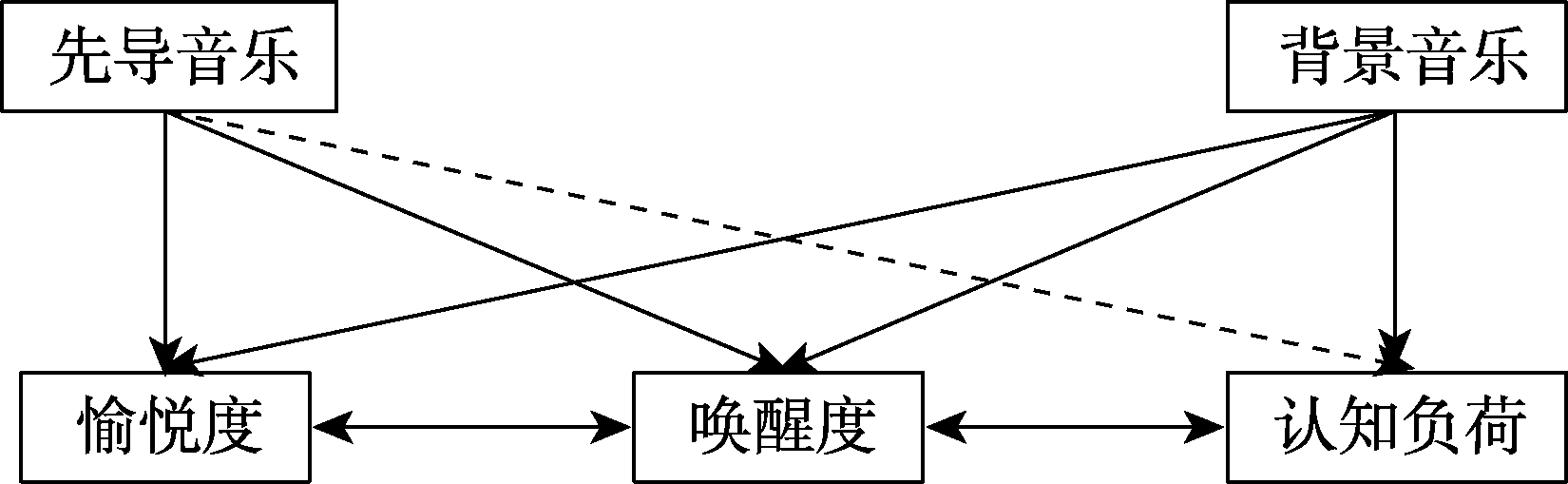
图1 不同音乐聆听形式下个体相似的状态性改变
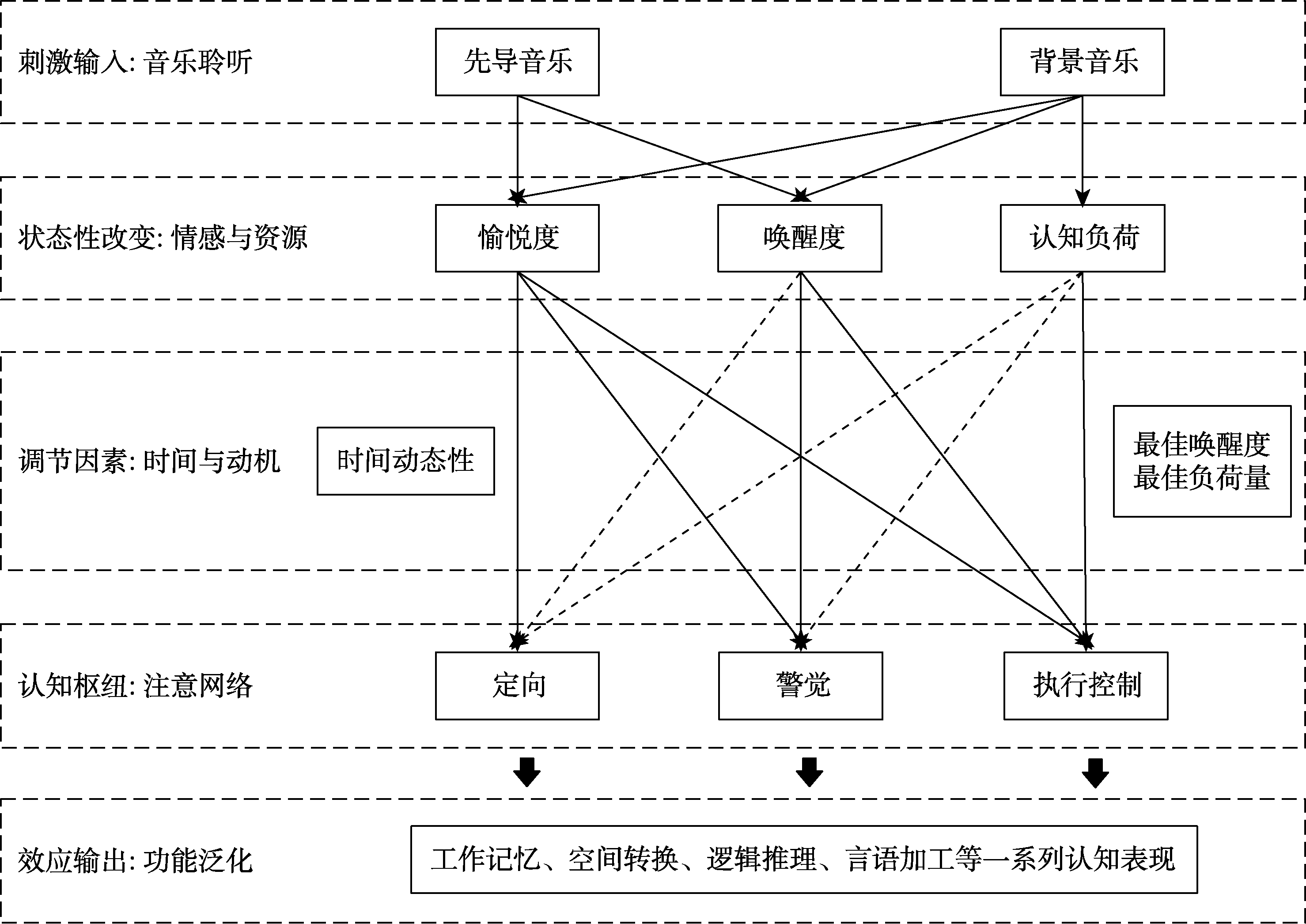
图2 音乐聆听的注意网络模型
| [1] |
陈洁佳, 周翊, 陈杰. (2020). 音乐训练与抑制控制的关系: 来自ERPs的证据. 心理学报, 52(12), 1365-1376. https://doi.org/10.3724/SP.J.1041.2020.01365
doi: 10.3724/SP.J.1041.2020.01365 URL |
| [2] | 李琴, 陈小异, 蒋军. (2023). 唤醒水平变化对执行功能的影响及调节机制. 心理学进展, 13(3), 795-805. https://doi.org/10.12677/AP.2023.133096 |
| [3] |
Aheadi A., Dixon P., & Glover S. (2010). A limiting feature of the Mozart effect: Listening enhances mental rotation abilities in non-musicians but not musicians. Psychology of Music, 38(1), 107-117. https://doi.org/10.1177/0305735609336057
doi: 10.1177/0305735609336057 URL |
| [4] |
Ahumada-Méndez F., Lucero B., Avenanti A., Saracini C., Muñoz-Quezada M. T., Cortés-Rivera C., & Canales- Johnson A. (2022). Affective modulation of cognitive control: A systematic review of EEG studies. Physiology & Behavior, 249, 113743. https://doi.org/10.1016/j.physbeh.2022.113743
doi: 10.1016/j.physbeh.2022.113743 URL |
| [5] |
Alley T. R., & Greene M. E. (2008). The relative and perceived impact of irrelevant speech, vocal music and non-vocal music on working memory. Current Psychology, 27(4), 277-289. https://doi.org/10.1007/s12144-008-9040-z
doi: 10.1007/s12144-008-9040-z URL |
| [6] | Angel L. A., Polzella D. J., & Elvers G. C. (2010). Background music and cognitive performance. Perceptual and Motor Skills, 110(3C), 1059-1064. https://doi.org/10.2466/04.11.22.PMS.110.C.1059-1064 |
| [7] | Armitage J., Eerola T., & Halpern A. R. (2024). Play it again, but more sadly: Influence of timbre, mode, and musical experience in melody processing. Memory & Cognition. https://doi.org/10.3758/s13421-024-01614-8 |
| [8] |
Avila C., Furnham A., & McClelland A. (2012). The influence of distracting familiar vocal music on cognitive performance of introverts and extraverts. Psychology of Music, 40(1), 84-93. https://doi.org/10.1177/0305735611422672
doi: 10.1177/0305735611422672 URL |
| [9] |
Baddeley A. (2012). Working memory: Theories, models, and controversies. Annual Review of Psychology, 63(1), 1-29. https://doi.org/10.1146/annurev-psych-120710-100422
doi: 10.1146/psych.2012.63.issue-1 URL |
| [10] |
Balch W. R., Bowman K., & Mohler L. A. (1992). Music- dependent memory in immediate and delayed word recall. Memory & Cognition, 20(1), 21-28. https://doi.org/10.3758/BF03208250
doi: 10.3758/BF03208250 URL |
| [11] |
Baldwin C. L., & Lewis B. A. (2017). Positive valence music restores executive control over sustained attention. PLOS ONE, 12(11), e0186231. https://doi.org/10.1371/journal.pone.0186231
doi: 10.1371/journal.pone.0186231 URL |
| [12] |
Begum M. M., Uddin M. S., Rithy J. F., Kabir J., Tewari D., Islam A., & Ashraf G. M. (2019). Analyzing the impact of soft, stimulating and depressing songs on attention among undergraduate students: A cross-sectional pilot study in Bangladesh. Frontiers in Psychology, 10, 161-161. https://doi.org/10.3389/fpsyg.2019.00161
doi: 10.3389/fpsyg.2019.00161 URL pmid: 30804845 |
| [13] |
Benedek M., Borovnjak B., Neubauer A. C., & Kruse- Weber S. (2014). Creativity and personality in classical, jazz and folk musicians. Personality and Individual Differences, 63(100), 117-121. https://doi.org/10.1016/j.paid.2014.01.064
URL pmid: 24895472 |
| [14] |
Bialystok E., & DePape A.-M. (2009). Musical expertise, bilingualism, and executive functioning. Journal of Experimental Psychology: Human Perception and Performance, 35(2), 565-574. https://doi.org/10.1037/a0012735
doi: 10.1037/a0012735 URL |
| [15] |
Bolger D., Coull J. T., & Schön D. (2014). Metrical rhythm implicitly orients attention in time as indexed by improved target detection and left inferior parietal activation. Journal of Cognitive Neuroscience, 26(3), 593-605. https://doi.org/10.1162/jocn_a_00511
doi: 10.1162/jocn_a_00511 URL pmid: 24168222 |
| [16] |
Bolger D., Trost W., & Schön D. (2013). Rhythm implicitly affects temporal orienting of attention across modalities. Acta Psychologica, 142(2), 238-244. https://doi.org/10.1016/j.actpsy.2012.11.012
doi: 10.1016/j.actpsy.2012.11.012 URL pmid: 23357092 |
| [17] | Bottiroli S., Rosi A., Russo R., Vecchi T., & Cavallini E. (2014). The cognitive effects of listening to background music on older adults: Processing speed improves with upbeat music, while memory seems to benefit from both upbeat and downbeat music. Frontiers in Aging Neuroscience, 6, 284. https://doi.org/10.3389/fnagi.2014.00284 |
| [18] |
Bouwer F. L. (2022). Neural entrainment to auditory rhythms: Automatic or top-down driven? The Journal of Neuroscience, 42(11), 2146-2148. https://doi.org/10.1523/JNEUROSCI.2305-21.2022
doi: 10.1523/JNEUROSCI.2305-21.2022 URL |
| [19] | Cacciafesta M., Ettorre E., Amici A., Cicconetti P., Martinelli V., Linguanti A.,... Marigliano V. (2010). New frontiers of cognitive rehabilitation in geriatric age: The Mozart Effect (ME). Archives of Gerontology and Geriatrics, 51(3), e79-e82. https://doi.org/10.1016/j.archger.2010.01.001 |
| [20] |
Canolty R. T., & Knight R. T. (2010). The functional role of cross-frequency coupling. Trends in Cognitive Sciences, 14(11), 506-515. https://doi.org/10.1016/j.tics.2010.09.001
doi: 10.1016/j.tics.2010.09.001 URL pmid: 20932795 |
| [21] |
Cantou P., Platel H., Desgranges B., & Groussard M. (2018). How motor, cognitive and musical expertise shapes the brain: Focus on fMRI and EEG resting-state functional connectivity. Journal of Chemical Neuroanatomy, 89, 60-68. https://doi.org/10.1016/j.jchemneu.2017.08.003
doi: S0891-0618(16)30251-4 URL pmid: 28855117 |
| [22] |
Carstens C. B., Huskins E., & Hounshell G. W. (1995). Listening to Mozart may not enhance performance on the revised Minnesota paper form board test. Psychological Reports, 77(1), 111-114. https://doi.org/10.2466/pr0.1995.77.1.111
URL pmid: 7501747 |
| [23] |
Cassidy G., & MacDonald R. A. R. (2007). The effect of background music and background noise on the task performance of introverts and extraverts. Psychology of Music, 35(3), 517-537. https://doi.org/10.1177/0305735607076444
doi: 10.1177/0305735607076444 URL |
| [24] |
Chan M. M. Y., & Han Y. M. Y. (2022). The functional brain networks activated by music listening: A neuroimaging meta-analysis and implications for treatment. Neuropsychology, 36(1), 4-22. https://doi.org/10.1037/neu0000777
doi: 10.1037/neu0000777 URL |
| [25] |
Conway A. R. A., Cowan N., & Bunting M. F. (2001). The cocktail party phenomenon revisited: The importance of working memory capacity. Psychonomic Bulletin & Review, 8(2), 331-335. https://doi.org/10.3758/BF03196169
doi: 10.3758/BF03196169 URL |
| [26] |
Deng M., & Wu F. (2020). Impact of background music on reaction test and visual pursuit test performance of introverts and extraverts. International Journal of Industrial Ergonomics, 78, 102976. https://linkinghub.elsevier.com/retrieve/pii/S0169814119305645
doi: 10.1016/j.ergon.2020.102976 URL |
| [27] |
Ding C., Geok S. K., Sun H., Roslan S., Cao S., & Zhao Y. (2025). Does music counteract mental fatigue? A systematic review. PLOS ONE, 20(1), e0316252. https://doi.org/10.1371/journal.pone.0316252
doi: 10.1371/journal.pone.0316252 URL |
| [28] |
Ding J., Zhang X., Liu J., Hu Z., Yang Z., Tang Y., & Ding Y. (2025). Entrainment of rhythmic tonal sequences on neural oscillations and the impact on subjective emotion. Scientific Reports, 15(1), 17462. https://doi.org/10.1038/s41598-025-98548-1
doi: 10.1038/s41598-025-98548-1 URL |
| [29] |
Ding K., Li J., Li X., & Li H. (2024). Understanding the effect of listening to music, playing music, and singing on brain function: A scoping review of fNIRS studies. Brain Sciences, 14(8), 751. https://doi.org/10.3390/brainsci14080751
doi: 10.3390/brainsci14080751 URL |
| [30] | Dixon M. L., De La Vega A., Mills C., Andrews-Hanna J., Spreng R. N., Cole M. W., & Christoff K. (2018). Heterogeneity within the frontoparietal control network and its relationship to the default and dorsal attention networks. Proceedings of the National Academy of Sciences, 115(7). https://doi.org/10.1073/pnas.1715766115 |
| [31] | Doelling K. B., & Poeppel D. (2015). Cortical entrainment to music and its modulation by expertise. Proceedings of the National Academy of Sciences, 112(45). https://doi.org/10.1073/pnas.1508431112 |
| [32] |
Eschrich S., Münte T. F., & Altenmüller E. O. (2008). Unforgettable film music: The role of emotion in episodic long-term memory for music. BMC Neuroscience, 9(1), 48. https://doi.org/10.1186/1471-2202-9-48
doi: 10.1186/1471-2202-9-48 URL |
| [33] |
Escoffier N., Sheng D. Y. J., & Schirmer A. (2010). Unattended musical beats enhance visual processing. Acta Psychologica, 135(1), 12-16. https://doi.org/10.1016/j.actpsy.2010.04.005
doi: 10.1016/j.actpsy.2010.04.005 URL pmid: 20451167 |
| [34] |
Eskine K. E., Anderson A. E., Sullivan M., & Golob E. J. (2020). Effects of music listening on creative cognition and semantic memory retrieval. Psychology of Music, 48(4), 513-528. https://doi.org/10.1177/0305735618810792
doi: 10.1177/0305735618810792 URL |
| [35] |
Fan J., McCandliss B. D., Fossella J., Flombaum J., & Posner M. (2005). The activation of attentional networks. NeuroImage, 26(2), 471-479. https://doi.org/10.1016/j.neuroimage.2005.02.004
doi: 10.1016/j.neuroimage.2005.02.004 URL pmid: 15907304 |
| [36] |
Fan J., McCandliss B. D., Sommer T., Raz A., & Posner M. I. (2002). Testing the efficiency and independence of attentional networks. Journal of Cognitive Neuroscience, 14(3), 340-347. https://doi.org/10.1162/089892902317361886
doi: 10.1162/089892902317361886 URL pmid: 11970796 |
| [37] |
Fernandez N. B., Trost W. J., & Vuilleumier P. (2019). Brain networks mediating the influence of background music on selective attention. Social Cognitive and Affective Neuroscience, 14(12), 1441-1452. https://doi.org/10.1093/scan/nsaa004
doi: 10.1093/scan/nsaa004 URL pmid: 31993668 |
| [38] | Ferreri L., Aucouturier J.-J., Muthalib M., Bigand E., & Bugaiska A. (2013). Music improves verbal memory encoding while decreasing prefrontal cortex activity: An fNIRS study. Frontiers in Microbiology, 7. https://doi.org/10.3389/fnhum.2013.00779 |
| [39] | Ferreri L., Bigand E., Bard P., & Bugaiska A. (2015). The influence of music on prefrontal cortex during episodic encoding and retrieval of verbal information: A multichannel fNIRS study. Behavioural Neurology, 2015, 707625. https://doi.org/10.1155/2015/707625 |
| [40] | Ferreri L., Bigand E., Perrey S., Muthalib M., Bard P., & Bugaiska A. (2014). Less effort, better results: How does music act on prefrontal cortex in older adults during verbal encoding? An fNIRS study. Frontiers in Human Neuroscience, 8. https://doi.org/10.3389/fnhum.2014.00301 |
| [41] |
Fitzroy A. B., & Sanders L. D. (2015). Musical meter modulates the allocation of attention across time. Journal of Cognitive Neuroscience, 27(12), 2339-2351. https://doi.org/10.1162/jocn_a_00862
doi: 10.1162/jocn_a_00862 pmid: 26284995 |
| [42] |
Fredrickson B. L. (2001). The role of positive emotions in positive psychology: The broaden-and-build theory of positive emotions. American Psychologist, 56(3), 218-226. https://doi.org/10.1037/0003-066X.56.3.218
doi: 10.1037//0003-066x.56.3.218 URL pmid: 11315248 |
| [43] |
Gao S., Gong Y., Xu C., & Chen Z. (2024). The bidirectional role of music effect in epilepsy: Friend or foe? Epilepsia Open, 9(6), 2112-2127. https://doi.org/10.1002/epi4.13064
doi: 10.1002/epi4.13064 URL pmid: 39403878 |
| [44] | Gasper K. (2004). Do you see what I see? Affect and visual information processing. Cognition & Emotion, 18(3), 405-421. https://doi.org/10.1080/02699930341000068 |
| [45] |
Gazzaley A., & Nobre A. C. (2012). Top-down modulation: Bridging selective attention and working memory. Trends in Cognitive Sciences, 16(2), 129-135. https://doi.org/10.1016/j.tics.2011.11.014
doi: 10.1016/j.tics.2011.11.014 URL pmid: 22209601 |
| [46] |
Gonzalez M., & Aiello J. R. (2019). More than meets the ear: Investigating how music affects cognitive task performance. Journal of Experimental Psychology: Applied, 25(3), 431-444. https://doi.org/10.1037/xap0000202
doi: 10.1037/xap0000202 URL |
| [47] | Gonzalez M., Smith G., Stockwell D., & Horton R. (2003). The “Arousal Effect”: An alternative interpretation of the Mozart effect. American Journal of Undergraduate Research, 2(2). https://doi.org/10.33697/ajur.2003.019 |
| [48] |
Guo W., Ren J., Wang B., & Zhu Q. (2015). Effects of Relaxing Music on Mental Fatigue Induced by a Continuous Performance Task: Behavioral and ERPs Evidence. PLOS ONE, 10(8), e0136446. https://doi.org/10.1371/journal.pone.0136446
doi: 10.1371/journal.pone.0136446 URL |
| [49] |
He W.-J., Wong W.-C., & Hui A. N.-N. (2017). Emotional reactions mediate the effect of music listening on creative thinking: Perspective of the arousal-and-mood hypothesis. Frontiers in Psychology, 8, 1680. https://doi.org/10.3389/fpsyg.2017.01680
doi: 10.3389/fpsyg.2017.01680 URL |
| [50] | Heine L., Castro M., Martial C., Tillmann B., Laureys S., & Perrin F. (2015). Exploration of functional connectivity during preferred music stimulation in patients with disorders of consciousness. Frontiers in Psychology, 6, 1704. https://doi.org/10.3389/fpsyg.2015.01704 |
| [51] | Herlekar S. S., & Siddangoudra S. (2019). Effect of classical instrumental music on successive divided attention tests in Indian and Malaysian first year medical students: A randomized control trial. Indian Journal of Physiology and Pharmacology, 63(1), 2-7. |
| [52] | Hodges E., & Limb C. (2025). A scoping review of music and the default mode network: Insights into creativity and flow. Creativity Research Journal. https://doi.org/10.1080/10400419.2025.2547196 |
| [53] |
Hu B., Rao J., Li X., Cao T., Li J., Majoe D., & Gutknecht J. (2017). Emotion regulating attentional control abnormalities in major depressive disorder: An event- related potential study. Scientific Reports, 7(1), 13530. https://doi.org/10.1038/s41598-017-13626-3
doi: 10.1038/s41598-017-13626-3 URL |
| [54] |
Huber F., Beckmann S. C., & Herrmann A. (2004). Means- end analysis: Does the affective state influence information processing style? Psychology and Marketing, 21(9), 715-737. https://doi.org/10.1002/mar.20026
doi: 10.1002/mar.v21:9 URL |
| [55] |
Hurley B. K., Fink L. K., & Janata P. (2018). Mapping the dynamic allocation of temporal attention in musical patterns. Journal of Experimental Psychology: Human Perception and Performance, 44(11), 1694-1711. https://doi.org/10.1037/xhp0000563
doi: 10.1037/xhp0000563 URL pmid: 30091636 |
| [56] |
Hyde K. L., Lerch J., Norton A., Forgeard M., Winner E., Evans A. C., & Schlaug G. (2009). Musical training shapes structural brain development. The Journal of Neuroscience, 29(10), 3019-3025. https://doi.org/10.1523/JNEUROSCI.5118-08.2009
doi: 10.1523/JNEUROSCI.5118-08.2009 URL |
| [57] |
Jaušovec N., Jaušovec K., & Gerlič I. (2006). The influence of Mozart’s music on brain activity in the process of learning. Clinical Neurophysiology, 117(12), 2703-2714. https://doi.org/10.1016/j.clinph.2006.08.010
doi: 10.1016/j.clinph.2006.08.010 URL |
| [58] | Jeong E., Ryu H., Jo G., & Kim J. (2018). Cognitive load changes during music listening and its implication in earcon design in public environments: An fNIRS study. International Journal of Environmental Research and Public Health, 15(10), 2075. https://doi.org/10.3390/ijerph15102075 |
| [59] |
Jiang J., Scolaro A. J., Bailey K., & Chen A. (2011). The effect of music-induced mood on attentional networks. International Journal of Psychology, 46(3), 214-222. https://doi.org/10.1080/00207594.2010.541255
doi: 10.1080/00207594.2010.541255 URL pmid: 22044234 |
| [60] |
Jones D. M., & Macken W. J. (1993). Irrelevant tones produce an irrelevant speech effect: Implications for phonological coding in working memory. Journal of Experimental Psychology: Learning, Memory, and Cognition, 19(2), 369-381. https://doi.org/10.1037/0278-7393.19.2.369
doi: 10.1037/0278-7393.19.2.369 URL |
| [61] | Kahneman D. (1973). Attention and effort. Englewood Cliffs, NJ: Prentice-Hall. |
| [62] |
Kämpfe J., Sedlmeier P., & Renkewitz F. (2011). The impact of background music on adult listeners: A meta-analysis. Psychology of Music, 39(4), 424-448. https://doi.org/10.1177/0305735610376261
doi: 10.1177/0305735610376261 URL |
| [63] |
Kiss L., & Linnell K. J. (2021). The effect of preferred background music on task-focus in sustained attention. Psychological Research, 85(6), 2313-2325. https://doi.org/10.1007/s00426-020-01400-6
doi: 10.1007/s00426-020-01400-6 URL |
| [64] |
Kiss L., & Linnell K. J. (2022). Making sense of background music listening habits: An arousal and task-complexity account. Psychology of Music, 51(1), 89-106. https://doi.org/10.1177/03057356221089017
doi: 10.1177/03057356221089017 URL |
| [65] |
Klimesch W. (2012). Alpha-band oscillations, attention, and controlled access to stored information. Trends in Cognitive Sciences, 16(12), 606-617. https://doi.org/10.1016/j.tics.2012.10.007
doi: 10.1016/j.tics.2012.10.007 URL |
| [66] | Koelsch S. (2011). Toward a neural basis of music perception - A review and updated model. Frontier in Psychology, 2. https://doi.org/10.3389/fpsyg.2011.00110 |
| [67] |
Large E. W., & Jones M. R. (1999). The dynamics of attending: How people track time-varying events. Psychological Review, 106(1), 119-159. https://doi.org/10.1037/0033-295X.106.1.119
doi: 10.1037/0033-295X.106.1.119 URL |
| [68] |
Lavie N. (1995). Perceptual load as a necessary condition for selective attention. Journal of Experimental Psychology: Human Perception and Performance, 21(3), 451-468. https://doi.org/10.1037/0096-1523.21.3.451
doi: 10.1037/0096-1523.21.3.451 URL |
| [69] |
Lavie N. (2005). Distracted and confused?: Selective attention under load. Trends in Cognitive Sciences, 9(2), 75-82. https://doi.org/10.1016/j.tics.2004.12.004
doi: 10.1016/j.tics.2004.12.004 URL pmid: 15668100 |
| [70] |
Luo Z., & Zhang D.-W. (2025). Rhythms of relief: Perspectives on neurocognitive mechanisms of music interventions in ADHD. Frontiers in Psychology, 16, 1476928. https://doi.org/10.3389/fpsyg.2025.1476928
doi: 10.3389/fpsyg.2025.1476928 URL |
| [71] |
Ma R., Feng L., Guo X., Guo S., Long S., Yang H., & Lu J. (2024). Effects of music composition on structural and functional connectivity in the orbitofrontal cortex. Brain- Apparatus Communication: A Journal of Bacomics, 3(1), 2346498. https://doi.org/10.1080/27706710.2024.2346498
doi: 10.1080/27706710.2024.2346498 URL |
| [72] |
Mendes C. G., Diniz L. A., & Marques Miranda D. (2021). Does music listening affect attention? A literature review. Developmental Neuropsychology, 46(3), 192-212. https://doi.org/10.1080/87565641.2021.1905816
doi: 10.1080/87565641.2021.1905816 URL |
| [73] |
Miyake A., Friedman N. P., Emerson M. J., Witzki A. H., Howerter A., & Wager T. D. (2000). The unity and diversity of executive functions and their contributions to complex “Frontal Lobe” tasks: A latent variable analysis. Cognitive Psychology, 41(1), 49-100. https://doi.org/10.1006/cogp.1999.0734
doi: 10.1006/cogp.1999.0734 URL pmid: 10945922 |
| [74] |
Moreno S., Bialystok E., Barac R., Schellenberg E. G., Cepeda N. J., & Chau T. (2011). Short-term music training enhances verbal intelligence and executive function. Psychological Science, 22(11), 1425-1433. https://doi.org/10.1177/0956797611416999
doi: 10.1177/0956797611416999 URL pmid: 21969312 |
| [75] |
Nguyen T., & Grahn J. A. (2017). Mind your music: The effects of music-induced mood and arousal across different memory tasks. Psychomusicology: Music, Mind, and Brain, 27(2), 81-94. https://doi.org/10.1037/pmu0000178
doi: 10.1037/pmu0000178 URL |
| [76] |
Nieuwenhuis S. (2024). Arousal and performance: Revisiting the famous inverted-U-shaped curve. Trends in Cognitive Sciences, 28(5), 394-396. https://doi.org/10.1016/j.tics.2024.03.011
doi: 10.1016/j.tics.2024.03.011 URL pmid: 38570252 |
| [77] |
Nobre A. C., & Van Ede F. (2018). Anticipated moments: Temporal structure in attention. Nature Reviews Neuroscience, 19(1), 34-48. https://doi.org/10.1038/nrn.2017.141
doi: 10.1038/nrn.2017.141 URL pmid: 29213134 |
| [78] | Orpella J., Bowling D., Tomaino C., & Ripolles P. (2023). Effects of affectively parameterized music on mood and attention [Preprint]. PsyArXiv. https://doi.org/10.31234/osf.io/yauxt |
| [79] | Patel A. D. (2008). Music, language, and the brain. Oxford University Press. |
| [80] | Patel A. D., & Iversen J. R. (2014). The evolutionary neuroscience of musical beat perception: The Action Simulation for Auditory Prediction (ASAP) hypothesis. Frontiers in Systems Neuroscience, 8(57). https://doi.org/10.3389/fnsys.2014.00057 |
| [81] |
Perham N., & Currie H. (2014). Does listening to preferred music improve reading comprehension performance? Applied Cognitive Psychology, 28(2), 279-284. https://doi.org/10.1002/acp.2994
doi: 10.1002/acp.v28.2 URL |
| [82] |
Perham N., & Vizard J. (2011). Can preference for background music mediate the irrelevant sound effect? Applied Cognitive Psychology, 25(4), 625-631. https://doi.org/10.1002/acp.1731
doi: 10.1002/acp.v25.4 URL |
| [83] |
Pessoa L. (2009). How do emotion and motivation direct executive control? Trends in Cognitive Sciences, 13(4), 160-166. https://doi.org/10.1016/j.tics.2009.01.006
doi: 10.1016/j.tics.2009.01.006 URL pmid: 19285913 |
| [84] |
Petersen S. E., & Posner M. I. (2012). The attention system of the human brain: 20 years after. Annual Review of Neuroscience, 35(1), 73-89. https://doi.org/10.1146/annurev-neuro-062111-150525
doi: 10.1146/neuro.2012.35.issue-1 URL |
| [85] |
Pietschnig J., Voracek M., & Formann A. K. (2010). Mozart effect-Shmozart effect: A meta-analysis. Intelligence, 38(3), 314-323. https://doi.org/10.1016/j.intell.2010.03.001
doi: 10.1016/j.intell.2010.03.001 URL |
| [86] |
Posner M. I. (1980). Orienting of attention. Quarterly Journal of Experimental Psychology, 32(1), 3-25. https://doi.org/10.1080/00335558008248231
doi: 10.1080/00335558008248231 URL pmid: 7367577 |
| [87] |
Posner M. I. (1992). Attention as a cognitive and neural system. Current Directions in Psychological Science, 1(1), 11-14. https://doi.org/10.1111/1467-8721.ep10767759
doi: 10.1111/1467-8721.ep10767759 URL |
| [88] |
Posner M. I. (2016). Orienting of attention: Then and now. Quarterly Journal of Experimental Psychology, 69(10), 1864-1875. https://doi.org/10.1080/17470218.2014.937446
doi: 10.1080/17470218.2014.937446 URL |
| [89] |
Posner M. I., & Petersen S. E. (1990). The attention system of the human brain. Annual Review of Neuroscience, 13(1), 25-42. https://doi.org/10.1146/annurev.ne.13.030190.000325
doi: 10.1146/neuro.1990.13.issue-1 URL |
| [90] |
Putkinen V., Makkonen T., & Eerola T. (2017). Music- induced positive mood broadens the scope of auditory attention. Social Cognitive and Affective Neuroscience, 12(7), 1159-1168. https://doi.org/10.1093/scan/nsx038
doi: 10.1093/scan/nsx038 URL pmid: 28460035 |
| [91] | Putkinen V., Tervaniemi M., Saarikivi K., & Huotilainen M. (2015). Promises of formal and informal musical activities in advancing neurocognitive development throughout childhood. Annals of the New York Academy of Sciences, 1337(1), 153-162. https://doi.org/10.1111/nyas.12656 |
| [92] | Rauscher F. H., Shaw G. L., & Ky C. N. (1993). Music and spatial task performance. Nature, 365(6447), 611-611. https://doi.org/10.1038/365611a0 |
| [93] |
Ritter S. M., & Ferguson S. (2017). Happy creativity: Listening to happy music facilitates divergent thinking. PLOS ONE, 12(9), e0182210. https://doi.org/10.1371/journal.pone.0182210
doi: 10.1371/journal.pone.0182210 URL |
| [94] |
Rogenmoser L., Zollinger N., Elmer S., & Jäncke L. (2016). Independent component processes underlying emotions during natural music listening. Social Cognitive and Affective Neuroscience, 11(9), 1428-1439. https://doi.org/10.1093/scan/nsw048
doi: 10.1093/scan/nsw048 URL pmid: 27217116 |
| [95] |
Romand D. (2015). Theodor Waitz’s theory of feelings and the rise of affective sciences in the mid-19th century. History of Psychology, 18(4), 385-400. https://doi.org/10.1037/a0039797
doi: 10.1037/a0039797 URL pmid: 26551862 |
| [96] |
Ross J. M., & Balasubramaniam R. (2022). Time perception for musical rhythms: Sensorimotor perspectives on entrainment, simulation, and prediction. Frontiers in Integrative Neuroscience, 16, 916220. https://doi.org/10.3389/fnint.2022.916220
doi: 10.3389/fnint.2022.916220 URL |
| [97] |
Roth E. A., & Smith K. A. (2008). The Mozart effect: Evidence for the arousal hypothesis. Perceptual and Motor Skills, 107(2), 396-402. https://doi.org/10.2466/PMS.107.6.396-402.
URL pmid: 19093601 |
| [98] |
Rowe G., Hirsh J. B., & Anderson A. K. (2007). Positive affect increases the breadth of attentional selection. Proceedings of the National Academy of Sciences, 104(1), 383-388. https://doi.org/10.1073/pnas.0605198104
doi: 10.1073/pnas.0605198104 URL |
| [99] |
Salamé P., & Baddeley A. (1989). Effects of background music on phonological short-term memory. The Quarterly Journal of Experimental Psychology Section A, 41(1), 107-122. https://doi.org/10.1080/14640748908402355
doi: 10.1080/14640748908402355 URL |
| [100] |
Salimpoor V. N., Benovoy M., Larcher K., Dagher A., & Zatorre R. J. (2011). Anatomically distinct dopamine release during anticipation and experience of peak emotion to music. Nature Neuroscience, 14(2), 257-262. https://doi.org/10.1038/nn.2726
doi: 10.1038/nn.2726 URL pmid: 21217764 |
| [101] |
Sarasso P., Barbieri P., Del Fante E., Bechis L., Neppi- Modona M., Sacco K., & Ronga I. (2022). Preferred music listening is associated with perceptual learning enhancement at the expense of self-focused attention. Psychonomic Bulletin & Review, 29(6), 2108-2121. https://doi.org/10.3758/s13423-022-02127-8
doi: 10.3758/s13423-022-02127-8 URL |
| [102] |
Särkämö T., Tervaniemi M., Laitinen S., Numminen A., Kurki M., Johnson J. K., & Rantanen P. (2014). Cognitive, emotional, and social benefits of regular musical activities in early dementia: Randomized controlled study. The Gerontologist, 54(4), 634-650. https://doi.org/10.1093/geront/gnt100
doi: 10.1093/geront/gnt100 URL |
| [103] | Schäfer T., Sedlmeier P., Städtler C., & Huron D. (2013). The psychological functions of music listening. Frontiers in Psychology, 4, 511. https://doi.org/10.3389/fpsyg.2013.00511 |
| [104] |
Schellenberg E. G., Nakata T., Hunter P. G., & Tamoto S. (2007). Exposure to music and cognitive performance: Tests of children and adults. Psychology of Music, 35(1), 5-19. https://doi.org/10.1177/0305735607068885
doi: 10.1177/0305735607068885 URL |
| [105] |
Schweppe J., & Knigge J. (2020). Irrelevant music: How suprasegmental changes of a melody’s tempo and mode affect the disruptive potential of music on serial recall. Memory & Cognition, 48(6), 982-993. https://doi.org/10.3758/s13421-020-01037-1
doi: 10.3758/s13421-020-01037-1 URL |
| [106] |
Sesso G., & Sicca F. (2020). Safe and sound: Meta-analyzing the Mozart effect on epilepsy. Clinical Neurophysiology, 131(7), 1610-1620. https://doi.org/10.1016/j.clinph.2020.03.039
doi: S1388-2457(20)30148-6 URL pmid: 32449680 |
| [107] | Shih Y.-N., Huang R.-H., & Chiang H.-Y. (2012). Background music: Effects on attention performance. Work, 42(4), 573-578. https://doi.org/10.3233/WOR-2012-1410 |
| [108] |
Smith A., Waters B., & Jones H. (2010). Effects of prior exposure to office noise and music on aspects of working memory. Noise and Health, 12(49), 235. https://doi.org/10.4103/1463-1741.70502
doi: 10.4103/1463-1741.70502 URL |
| [109] |
Smith S. (1985). Background music and context-dependent memory. The American Journal of Psychology, 98(4), 591-603. https://doi.org/10.2307/1422512
doi: 10.2307/1422512 URL |
| [110] | Strait D., & Kraus N. (2011a). Can you hear me now? Musical training shapes functional brain networks for selective auditory attention and hearing speech in noise. Frontiers in Psychology, 2, 113. https://doi.org/10.3389/fpsyg.2011.00113 |
| [111] |
Strait D., & Kraus N. (2011b). Playing music for a smarter ear: Cognitive, perceptual and neurobiological evidence. Music Perception, 29(2), 133-146. https://doi.org/10.1525/mp.2011.29.2.133
doi: 10.1525/mp.2011.29.2.133 URL |
| [112] |
Sun Y. (2025). The impact of background music on flow, work engagement and task performance: A randomized controlled study. Behavioral Sciences, 15(4), 416. https://doi.org/10.3390/bs15040416
doi: 10.3390/bs15040416 URL |
| [113] |
Thompson W. F., Schellenberg E. G., & Husain G. (2001). Arousal, mood, and the Mozart effect. Psychological Science, 12(3), 248-251. https://doi.org/10.1111/1467-9280.00345
URL pmid: 11437309 |
| [114] |
Thompson W. F., Schellenberg E. G., & Letnic A. K. (2012). Fast and loud background music disrupts reading comprehension. Psychology of Music, 40(6), 700-708. https://doi.org/10.1177/0305735611400173
doi: 10.1177/0305735611400173 URL |
| [115] | Thomson A. M., & Rakesh K. R. (2024). The effect of music on short-term memory and attention. International Journal of Innovative Science and Research Technology, 1769-1775. https://doi.org/10.38124/ijisrt/IJISRT24JUN1441 |
| [116] |
Vasilev M. R., Kirkby J. A., & Angele B. (2018). Auditory distraction during reading: A Bayesian meta-analysis of a continuing controversy. Perspectives on Psychological Science, 13(5), 567-597. https://doi.org/10.1177/1745691617747398
doi: 10.1177/1745691617747398 URL pmid: 29958067 |
| [117] |
Wu H., Yan H., Yang Y., Xu M., Shi Y., Zeng W., … Wang N. (2020). Occupational neuroplasticity in the human brain: A critical review and meta-analysis of neuroimaging studies. Frontiers in Human Neuroscience, 14, 215. https://doi.org/10.3389/fnhum.2020.00215
doi: 10.3389/fnhum.2020.00215 URL |
| [118] |
Wu Q., Sun L., Ding N., & Yang Y. (2024). Musical tension is affected by metrical structure dynamically and hierarchically. Cognitive Neurodynamics, 18(4), 1955-1976. https://doi.org/10.1007/s11571-023-10058-w
doi: 10.1007/s11571-023-10058-w URL pmid: 39104669 |
| [119] |
Xiao X., Tan J., Liu X., & Zheng M. (2023). The dual effect of background music on creativity: Perspectives of music preference and cognitive interference. Frontiers in Psychology, 14, 1247133. https://doi.org/10.3389/fpsyg.2023.1247133
doi: 10.3389/fpsyg.2023.1247133 URL |
| [120] |
Xing Y., Xia Y., Kendrick K., Liu X., Wang M., Wu D., … Yao D. (2016). Mozart, Mozart rhythm and retrograde Mozart effects: Evidences from behaviours and neurobiology bases. Scientific Reports, 6(1), 18744. https://doi.org/10.1038/srep18744
doi: 10.1038/srep18744 URL |
| [121] |
Yerkes R. M., & Dodson J. D. (1908). The relation of strength of stimulus to rapidity of habit‐formation. Journal of Comparative Neurology and Psychology, 18(5), 459-482. https://doi.org/10.1002/cne.920180503
doi: 10.1002/cne.v18:5 URL |
| [122] |
Zanto T. P., Johnson V., Ostrand A., & Gazzaley A. (2022). How musical rhythm training improves short-term memory for faces. Proceedings of the National Academy of Sciences, 119(41), e2201655119. https://doi.org/10.1073/pnas.2201655119
doi: 10.1073/pnas.2201655119 URL |
| [123] |
Zhao J. (2024). Memory, attention and creativity as cognitive processes in musical performance: A case study of students and professionals among non-musicians and musicians. Attention, Perception, & Psychophysics, 86(6), 2042-2052. https://doi.org/10.3758/s13414-024-02944-0
doi: 10.3758/s13414-024-02944-0 URL |
| [124] |
Zuk J., Benjamin C., Kenyon A., & Gaab N. (2014). Behavioral and neural correlates of executive functioning in musicians and non-musicians. PLoS ONE, 9(6), e99868. https://doi.org/10.1371/journal.pone.0099868
doi: 10.1371/journal.pone.0099868 URL |
| [1] | 段颖, 尹可丽. 集体欢腾的产生机制、情境特征及其积极心理效应[J]. 心理科学进展, 2026, 34(2): 364-378. |
| [2] | 周璨, 周临舒, 蒋存梅. 音乐愉悦体验的神经机制[J]. 心理科学进展, 2021, 29(1): 123-130. |
| [3] | 孙庆洲, 邬青渊, 张静, 江程铭, 赵雷, 胡凤培. 风险决策的概率权重偏差:心理机制与优化策略[J]. 心理科学进展, 2019, 27(5): 905-913. |
| [4] | 敖玲敏;吕厚超;庞雪. “悲喜交加”的概念、测量及相关研究述评[J]. 心理科学进展, 2013, 21(9): 1643-1650. |
| 阅读次数 | ||||||
|
全文 |
|
|||||
|
摘要 |
|
|||||
