

ISSN 0439-755X
CN 11-1911/B
CN 11-1911/B
Acta Psychologica Sinica ›› 2026, Vol. 58 ›› Issue (3): 516-536.doi: 10.3724/SP.J.1041.2026.0516
• Reports of Empirical Studies • Previous Articles Next Articles
ZHU Naping, ZHANG Xia, ZHOU Jie, LI Yanfang( )
)
Published:2026-03-25
Online:2025-12-26
Contact:
LI Yanfang
E-mail:Liyanfang@bnu.edu.cn
ZHU Naping, ZHANG Xia, ZHOU Jie, LI Yanfang. (2026). The development and motivations of children’s third-party intervention preference in group cooperation norm violation. Acta Psychologica Sinica, 58(3), 516-536.
Add to citation manager EndNote|Ris|BibTeX
URL: https://journal.psych.ac.cn/acps/EN/10.3724/SP.J.1041.2026.0516

Figure 1 Illustration of the Group Cooperation Norm Violation Scenario (Labor Contribution).

Figure 2 Children’s (a) moral evaluation and (b) anger response toward the “free-riding” behavior.
| Age (years) | Intervention Behavior | No Intervention | |
|---|---|---|---|
| Reward | Punishment | ||
| 4 | 11 (61.11) | 6 (33.33) | 1 (5.56) |
| 5 | 5 (33.33) | 8 (53.33) | 2 (13.33) |
| 6 | 9 (50.00) | 8 (44.44) | 1 (5.56) |
| 7 | 6 (33.33) | 12 (66.67) | 0 (0.00) |
| 8 | 4 (22.22) | 13 (72.22) | 1 (5.56) |
| 9 | 2 (10.53) | 16 (84.21) | 1 (5.26) |
| 10 | 1 (5.56) | 17 (94.44) | 0 (0.00) |
| 11 | 0 (0.00) | 14 (82.35) | 3 (17.65) |
| Total | 38 (26.95) | 94 (66.67) | 9 (6.38) |
Table 1 Descriptive statistics of children’s intervention behavior in the group cooperation violation condition (contribution of labor) (%).
| Age (years) | Intervention Behavior | No Intervention | |
|---|---|---|---|
| Reward | Punishment | ||
| 4 | 11 (61.11) | 6 (33.33) | 1 (5.56) |
| 5 | 5 (33.33) | 8 (53.33) | 2 (13.33) |
| 6 | 9 (50.00) | 8 (44.44) | 1 (5.56) |
| 7 | 6 (33.33) | 12 (66.67) | 0 (0.00) |
| 8 | 4 (22.22) | 13 (72.22) | 1 (5.56) |
| 9 | 2 (10.53) | 16 (84.21) | 1 (5.26) |
| 10 | 1 (5.56) | 17 (94.44) | 0 (0.00) |
| 11 | 0 (0.00) | 14 (82.35) | 3 (17.65) |
| Total | 38 (26.95) | 94 (66.67) | 9 (6.38) |
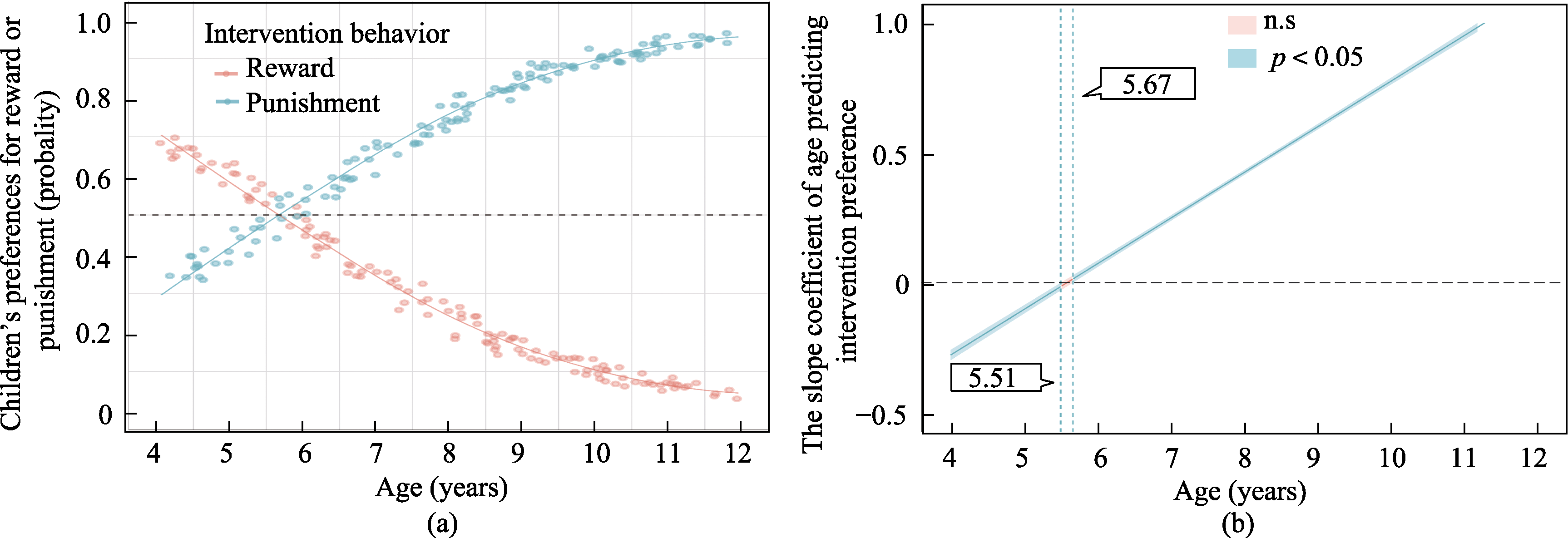
Figure 3 (a) The preferences for children’s reward or punishment interventions and (b) the age turning point. Note: Color version available online.
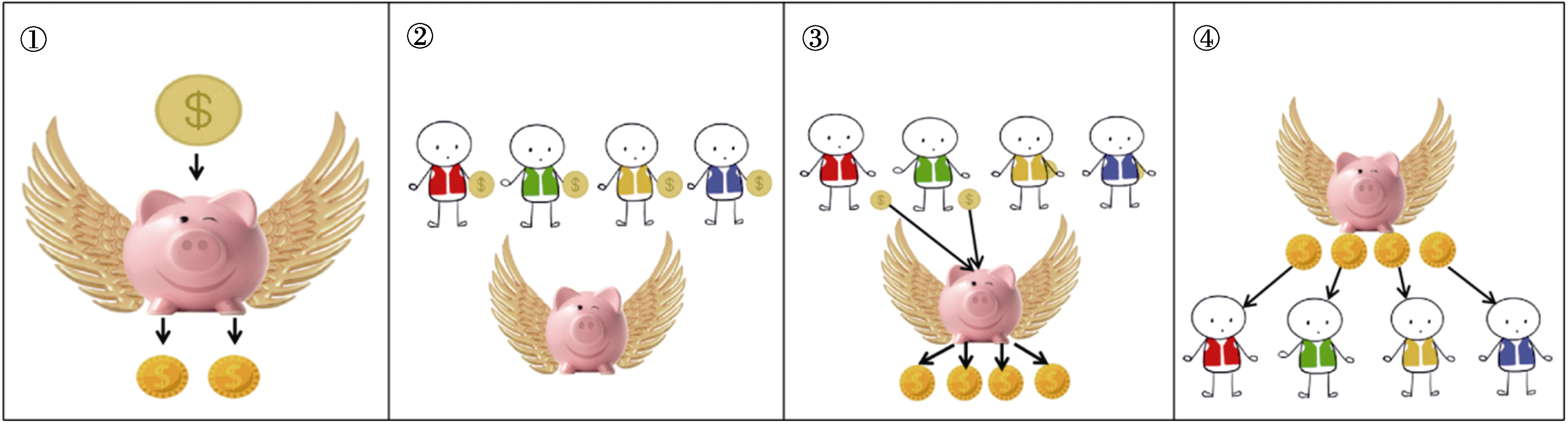
Figure 4 Illustration of the Group Cooperation Norm Violation Scenario (Material Contribution).
| Reward Cooperators | Punish Free-Riders | |
|---|---|---|
| Consequentialist Motivation | “You chose to ‘give one extra coin to Xiaohong and Xiaolv each’. Was it because you hope Xiaohong and Xiaolv will continue to do this in the future?” | “You chose to ‘take away the coins from Xiaohuang and Xiaolan’. Was it because you hope Xiaohuang and Xiaolan will not do this in the future?” |
| Deontological Motivation | “You chose to ‘give one extra coin to Xiaohong and Xiaolv each’. Was it because you feel Xiaohong and Xiaolv deserve to be rewarded?” | “You chose to ‘take away the coins from Xiaohuang and Xiaolan’. Was it because you feel Xiaohuang and Xiaolan deserve to be punished?” |
Table 2 Instructions for Evaluating the Deontological and Consequentialist Motivation in the Identification Rating Task.
| Reward Cooperators | Punish Free-Riders | |
|---|---|---|
| Consequentialist Motivation | “You chose to ‘give one extra coin to Xiaohong and Xiaolv each’. Was it because you hope Xiaohong and Xiaolv will continue to do this in the future?” | “You chose to ‘take away the coins from Xiaohuang and Xiaolan’. Was it because you hope Xiaohuang and Xiaolan will not do this in the future?” |
| Deontological Motivation | “You chose to ‘give one extra coin to Xiaohong and Xiaolv each’. Was it because you feel Xiaohong and Xiaolv deserve to be rewarded?” | “You chose to ‘take away the coins from Xiaohuang and Xiaolan’. Was it because you feel Xiaohuang and Xiaolan deserve to be punished?” |
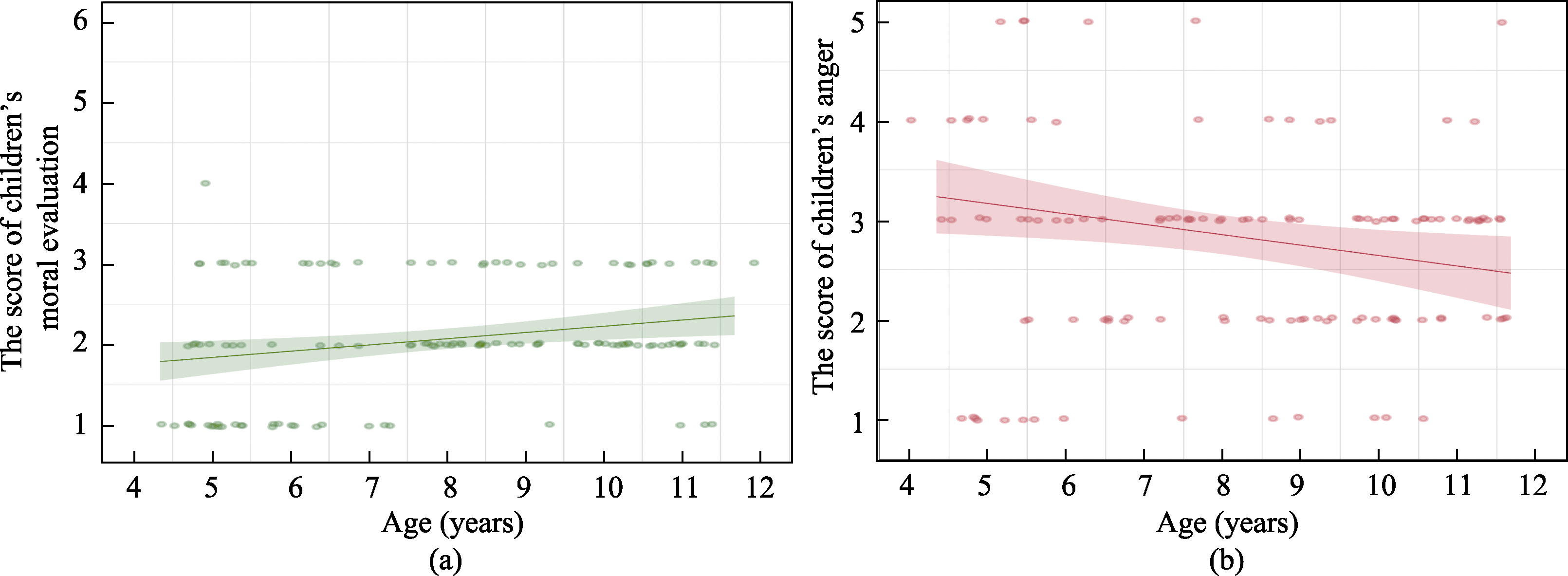
Figure 5 Children’s (a) moral evaluations and (b) anger response toward the “free-riding” behavior.
| Age (years) | Intervention Behavior | No Intervention | |
|---|---|---|---|
| Reward | Punishment | ||
| 4 | 7 (50.00) | 2 (14.29) | 5 (35.71) |
| 5 | 14 (66.67) | 5 (23.81) | 2 (9.52) |
| 6 | 6 (50.00) | 2 (16.67) | 4 (33.33) |
| 7 | 2 (16.67) | 6 (50.00) | 4 (33.33) |
| 8 | 6 (35.29) | 8 (47.06) | 3 (17.65) |
| 9 | 2 (14.29) | 10 (71.43) | 2 (14.29) |
| 10 | 8 (42.11) | 11 (57.89) | 0 (0.00) |
| 11 | 7 (43.75) | 8 (50.00) | 1 (6.25) |
| Total | 52 (41.60) | 52 (41.60) | 21 (16.80) |
Table 3 Descriptive statistics of children’s intervention behavior in the material-contribution cooperation violation condition (%)
| Age (years) | Intervention Behavior | No Intervention | |
|---|---|---|---|
| Reward | Punishment | ||
| 4 | 7 (50.00) | 2 (14.29) | 5 (35.71) |
| 5 | 14 (66.67) | 5 (23.81) | 2 (9.52) |
| 6 | 6 (50.00) | 2 (16.67) | 4 (33.33) |
| 7 | 2 (16.67) | 6 (50.00) | 4 (33.33) |
| 8 | 6 (35.29) | 8 (47.06) | 3 (17.65) |
| 9 | 2 (14.29) | 10 (71.43) | 2 (14.29) |
| 10 | 8 (42.11) | 11 (57.89) | 0 (0.00) |
| 11 | 7 (43.75) | 8 (50.00) | 1 (6.25) |
| Total | 52 (41.60) | 52 (41.60) | 21 (16.80) |
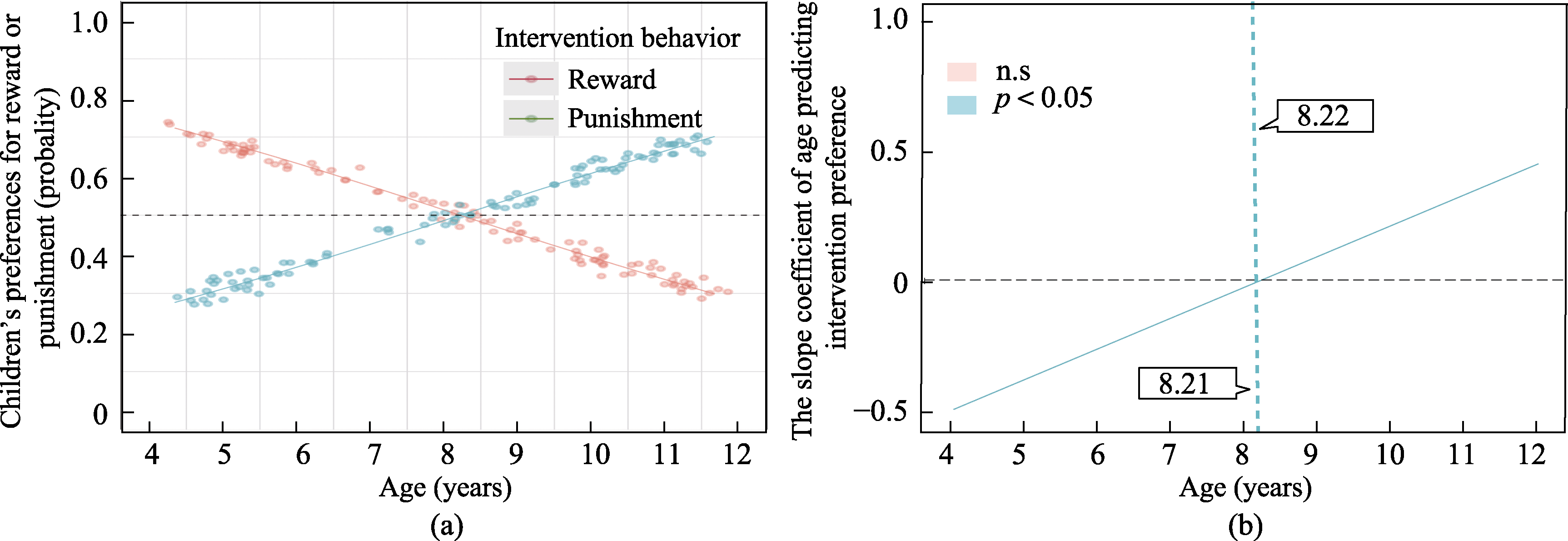
Figure 6 (a)The preferences for children’s reward or punishment interventions and (b) the age turning point. Note: Color version available online.

Figure 7 Children’s identification with deontological and consequentialist motivation when (a) rewarding cooperators and (b) punishing “free-riders”.
| Age (years) | Reward | Punishment | ||
|---|---|---|---|---|
| Deontological Motivation | Consequentialist motivation | Deontological Motivation | Consequentialist Motivation | |
| 4 | 3(42.86) | 4(57.14) | 2(100.00) | 0(0.00) |
| 5 | 6(42.86) | 8(57.14) | 2(40.00) | 3(60.00) |
| 6 | 5(83.33) | 1(16.67) | 0(0.00) | 2(100.00) |
| 7 | 1(50.00) | 1(50.00) | 1(16.67) | 5(83.33) |
| 8 | 6(100.00) | 0(0.00) | 0(0.00) | 8(100.00) |
| 9 | 1(50.00) | 1(50.00) | 2(20.00) | 8(80.00) |
| 10 | 5(62.50) | 3(37.50) | 0(0.00) | 11(100.00) |
| 11 | 4(57.14) | 3(42.86) | 1(12.50) | 7(87.50) |
| Total | 31(59.62) | 21(40.38) | 8(15.38) | 44(84.62) |
Table 4 Children’s motivational profiles when rewarding or punishing in the material-contribution cooperation violation scenario (%).
| Age (years) | Reward | Punishment | ||
|---|---|---|---|---|
| Deontological Motivation | Consequentialist motivation | Deontological Motivation | Consequentialist Motivation | |
| 4 | 3(42.86) | 4(57.14) | 2(100.00) | 0(0.00) |
| 5 | 6(42.86) | 8(57.14) | 2(40.00) | 3(60.00) |
| 6 | 5(83.33) | 1(16.67) | 0(0.00) | 2(100.00) |
| 7 | 1(50.00) | 1(50.00) | 1(16.67) | 5(83.33) |
| 8 | 6(100.00) | 0(0.00) | 0(0.00) | 8(100.00) |
| 9 | 1(50.00) | 1(50.00) | 2(20.00) | 8(80.00) |
| 10 | 5(62.50) | 3(37.50) | 0(0.00) | 11(100.00) |
| 11 | 4(57.14) | 3(42.86) | 1(12.50) | 7(87.50) |
| Total | 31(59.62) | 21(40.38) | 8(15.38) | 44(84.62) |
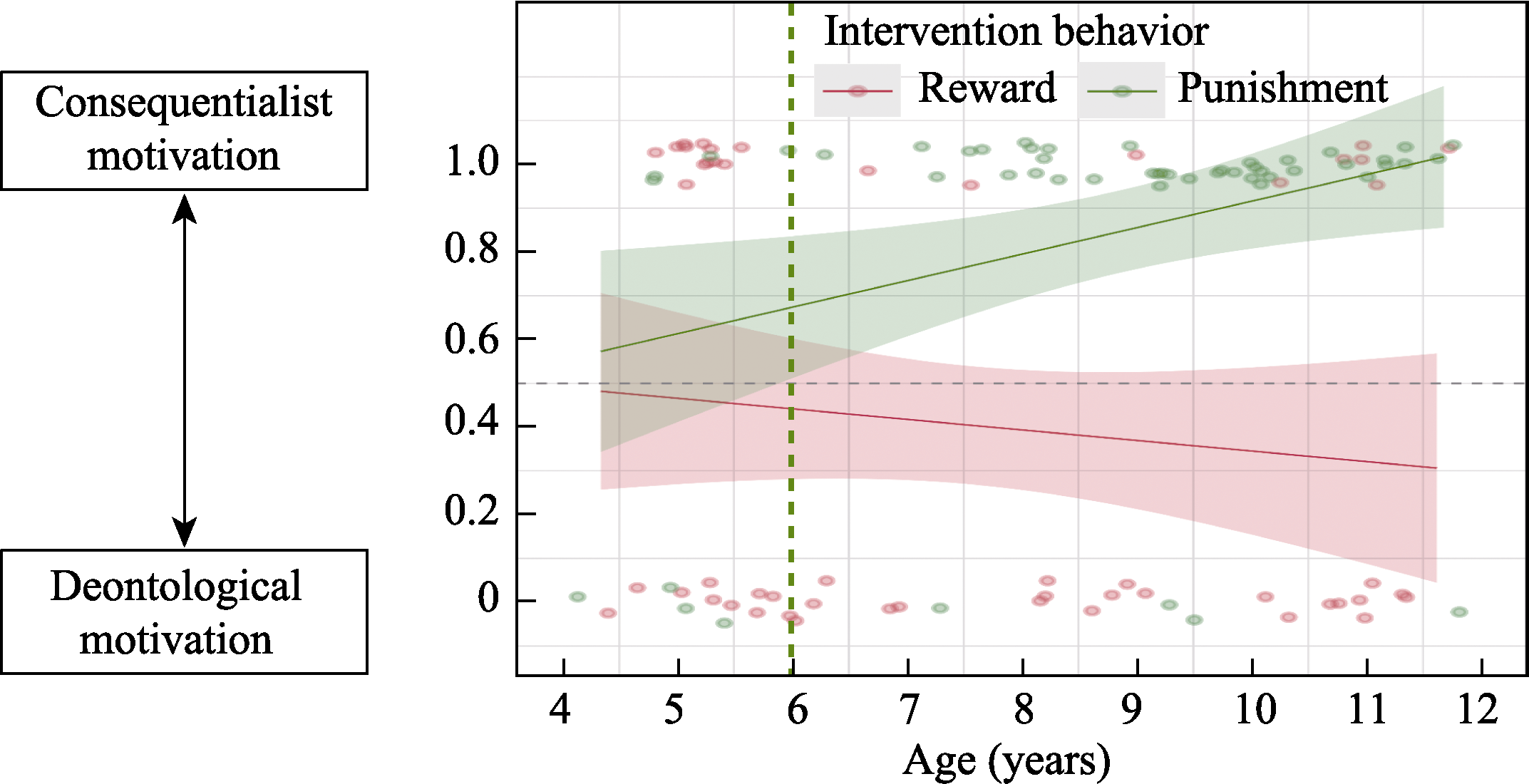
Figure 8 Children’s forced-choice motivations when rewarding cooperators or punishing “free-riders”.
| [1] |
Arini R. L., Mahmood M., Bocarejo Aljure J., Ingram, G. P. D., Wiggs L., & Kenward B. (2023). Children endorse deterrence motivations for third-party punishment but derive higher enjoyment from compensating victims. Journal of Experimental Child Psychology, 230, 105630.
doi: 10.1016/j.jecp.2023.105630 URL |
| [2] |
Arini R. L., Wiggs L., & Kenward B. (2021). Moral duty and equalization concerns motivate children’s third-party punishment. Developmental Psychology, 57(8), 1325-1341.
doi: 10.1037/dev0001191 pmid: 34591575 |
| [3] |
Balliet D., Mulder L. B., & Van Lange P. A. M. (2011). Reward, punishment, and cooperation: A meta-analysis. Psychological Bulletin, 137(4), 594-615.
doi: 10.1037/a0023489 pmid: 21574679 |
| [4] | Bandura A., & Huston A. C. (1961). Identification as a process of incidental learning. Journal of Abnormal & Social Psychology, 63(2), 311-318. |
| [5] |
Berndt T. J., & Berndt E. G. (1975). Children’s use of motives and intentionality in person perception and moral judgement. Child Development, 46(4), 904-912.
pmid: 1201668 |
| [6] |
Bregant J., Shaw A., & Kinzler K. D. (2016). Intuitive jurisprudence: Early reasoning about the functions of punishment. Journal of Empirical Legal Studies, 13(4), 693-717.
doi: 10.1111/jels.2016.13.issue-4 URL |
| [7] |
Carlo G., McGinley M., Hayes R., Batenhorst C., & Wilkinson J. (2007). Parenting styles or practices? Parenting, sympathy, and prosocial behaviors among adolescents. The Journal of Genetic Psychology, 168(2), 147-176.
doi: 10.3200/GNTP.168.2.147-176 URL |
| [8] |
Carlsmith K. M., Darley J. M., & Robinson P. H. (2002). Why do we punish? Deterrence and just deserts as motives for punishment. Journal of Personality and Social Psychology, 83(2), 284-299.
doi: 10.1037/0022-3514.83.2.284 pmid: 12150228 |
| [9] |
Carlsmith K. M. (2006). The roles of retribution and utility in determining punishment. Journal of Experimental Social Psychology, 42(4), 437-451.
doi: 10.1016/j.jesp.2005.06.007 URL |
| [10] |
Crockett M. J., Özdemir Y., & Fehr E. (2014). The value of vengeance and the demand for deterrence. Journal of Experimental Psychology: General, 143(6), 2279-2286.
doi: 10.1037/xge0000018 URL |
| [11] |
Delton A. W., Cosmides L., Guemo M., Robertson T. E., & Tooby J. (2012). The psychosemantics of free riding: Dissecting the architecture of a moral concept. Journal of Personality and Social Psychology, 102(6), 1252-1270.
doi: 10.1037/a0027026 pmid: 22268815 |
| [12] |
Dunlea J. P., & Heiphetz L. (2020). Children’s and adults’ understanding of punishment and the criminal justice system. Journal of Experimental Social Psychology, 87, 103913.
doi: 10.1016/j.jesp.2019.103913 URL |
| [13] |
Dunlea J. P., & Heiphetz L. (2021). Children’s and adults’ views of punishment as a path to redemption. Child Development, 92(4), e398-e415.
doi: 10.1111/cdev.13475 pmid: 33462800 |
| [14] |
Faul F., Erdfelder E., Buchner A., & Lang A. G. (2009). Statistical power analyses using G*Power 3.1: Tests for correlation and regression analyses. Behavior Research Methods, 41(4), 1149-1160.
doi: 10.3758/BRM.41.4.1149 pmid: 19897823 |
| [15] |
Fehr E., & Gächter S. (2002). Altruistic punishment in humans. Nature, 415(6868), 137-140.
doi: 10.1038/415137a |
| [16] | Fehr E., & Fischbacher U. (2004). Third-party punishment and social norms. Evolution & Human Behavior, 25(2), 63-87. |
| [17] | Fehr E., & Williams T. (2018). Social norms, endogenous sorting and the culture of cooperation. Social Science Electronic Publishing. |
| [18] |
Geraci A., & Surian L. (2021). Toddlers’ expectations of third-party punishments and rewards following an act of aggression. Aggressive Behavior, 47(5), 521-529.
doi: 10.1002/ab.v47.5 URL |
| [19] |
Gray K., Young L., & Waytz A. (2012). Mind perception is the essence of morality. Psychological Inquiry, 23(2), 101-124.
doi: 10.1080/1047840X.2012.651387 pmid: 22754268 |
| [20] | Gutbier C. L. D. (2014). A historical examination of punishment and forgiveness in literature for children. Liberal Studies, Skidmore College. |
| [21] |
Hamlin J. K., Wynn K., Bloom P., & Mahajan N. (2011). How infants and toddlers react to antisocial others. Proceedings of the National Academy of Sciences, 108(50), 19931-19936.
doi: 10.1073/pnas.1110306108 URL |
| [22] |
Hardecker S., Schmidt M.F., Roden M., & Tomasello M. (2016). Young children’s behavioral and emotional responses to different social norm violations. Journal of Experimental Child Psychology, 150, 364-379.
doi: S0022-0965(16)30069-8 pmid: 27429365 |
| [23] |
Hardecker S., & Tomasello M. (2017). From imitation to implementation: How two-and three-year-old children learn to enforce social norms. British Journal of Developmental Psychology, 35(2), 237-248.
doi: 10.1111/bjdp.12159 pmid: 27653172 |
| [24] |
House B. R., Silk J. B., Henrich J., Barrett H. C., Scelza B. A., Boyette A. H., … Laurence S. (2013). Ontogeny of prosocial behavior across diverse societies. Proceedings of the National Academy of Sciences of the United States of America, 110(36), 14586-14591.
doi: 10.1073/pnas.1221217110 pmid: 23959869 |
| [25] |
House B. R., Kanngiesser P., Barrett H. C., Broesch T., Cebioglu S., Crittenden A. N., … Silk J. B. (2020a). Universal norm psychology leads to societal diversity in prosocial behaviour and development. Nature Human Behaviour, 4(1), 36-44.
doi: 10.1038/s41562-019-0734-z |
| [26] | House B. R., Kanngiesser P., Barrett H. C., Yilmaz S., Smith A. M., Sebastian-Enesco C., … Silk J. B. (2020b). Social norms and cultural diversity in the development of third-party punishment. Proceedings of the Royal Society B: Biological Sciences, 287(1925), 20192794. |
| [27] | Ikeda A., Okumura Y., Kobayashi T., & Itakura S. (2018). Children passively allow other's rule violations in cooperative situations. Scientific Reports, 8(1), 6843. |
| [28] |
Johnson P. O., & Fay L. C. (1950). The Johnson-Neyman technique: Its theory and application. Psychometrika, 15 (4), 349-367.
doi: 10.1007/BF02288864 URL |
| [29] | Kant, I. (1952). The science of right (W. Hastie, Trans.). In R. M. Hutchins (Ed.), Great books of the Western world (Vol. 42, pp. 397-446). Encyclopedia Britannica. |
| [30] |
Kalish C. W., & Lawson C. A. (2008). Development of social category representations: Early appreciation of roles and deontic relations. Child Development, 79(3), 577-593.
doi: 10.1111/j.1467-8624.2008.01144.x pmid: 18489414 |
| [31] | Kenward B., & Östh T. (2012). Enactment of third-party punishment by 4-year-olds. Frontiers in Psychology, 3(373). doi: 10.3389/fpsyg.2012.00373 |
| [32] |
Kenward B., & Östh T. (2015). Five‐year‐olds punish antisocial adults. Aggressive Behavior, 41(5), 413-420.
doi: 10.1002/ab.21568 pmid: 26918430 |
| [33] | Kerr N. L., & Bruun S. E. (1983). Dispensability of member effort and group motivation losses: Free-rider effects. Journal of Personality & Social Psychology, 44(1), 78-94. |
| [34] |
Lee Y. E., & Warneken F. (2020). Children’s evaluations of third-party responses to unfairness: Children prefer helping over punishment. Cognition, 205, 104374.
doi: 10.1016/j.cognition.2020.104374 URL |
| [35] |
Lee Y. E., & Warneken F. (2022). Does third-party punishment in children aim at equality? Developmental Psychology, 58(5), 866-873.
doi: 10.1037/dev0001331 URL |
| [36] |
Lee Y.-E., Marshall J., Deutchman P., McAuliffe K., & Warneken F. (2022). Children's judgments of interventions against norm violations: COVID-19 as a naturalistic case study. Journal of Experimental Child Psychology, 221, 105452.
doi: 10.1016/j.jecp.2022.105452 URL |
| [37] |
Leliveld M. C., van Dijk E., & van Beest I. (2012). Punishing and compensating others at your own expense: The role of empathic concern on reactions to distributive injustice. European Journal of Social Psychology, 42(2), 135-140.
doi: 10.1002/ejsp.v42.2 URL |
| [38] |
Liu X., Yang X., & Wu Z. (2021). To punish or to restore: How children evaluate victims’ responses to immorality. Frontiers in Psychology, 12, 696160.
doi: 10.3389/fpsyg.2021.696160 URL |
| [39] |
Lotz S., Okimoto T. G., Schlösser T., & Fetchenhauer D. (2011). Punitive versus compensatory reactions to injustice: Emotional antecedents to third-party interventions. Journal of Experimental Social Psychology, 47(2), 477-480.
doi: 10.1016/j.jesp.2010.10.004 URL |
| [40] |
Marshall J., Yudkin D. A., & Crockett M. J. (2021). Children punish third parties to satisfy both consequentialist and retributive motives. Nature Human Behaviour, 5(3), 361-368.
doi: 10.1038/s41562-020-00975-9 pmid: 33230281 |
| [41] |
Marshall J., & McAuliffe K. (2022). Children as assessors and agents of third-party punishment. Nature Reviews Psychology, 1(6), 334-344.
doi: 10.1038/s44159-022-00046-y |
| [42] |
Marshall J., & McAuliffe K. (2024). How retributive motives shape the emergence of third‐party punishment across intergroup contexts. Child Development, 95(5), 1779-1796.
doi: 10.1111/cdev.14097 pmid: 38613375 |
| [43] |
Marshall J., Mermin-Bunnell K., Gollwitzer A., Retelsdorf J., & Bloom P. (2024). Cross-cultural conceptions of third-party intervention across childhood. Journal of Experimental Psychology: General, 153(9), 2216-2229.
doi: 10.1037/xge0001617 URL |
| [44] |
McAuliffe K., Jordan J. J., & Warneken F. (2015). Costly third-party punishment in young children. Cognition. 134, 1-10.
doi: 10.1016/j.cognition.2014.08.013 pmid: 25460374 |
| [45] | McAuliffe K., & Dunham Y. (2021). Children favor punishment over restoration. Developmental Science, 24(5), e13093. |
| [46] |
McAuliffe K., Marshall J., & Mclaughlin A. (2025). Beyond punishment: Psychological foundations of restorative interventions. Trends in Cognitive Sciences, 29(2), 149-169.
doi: 10.1016/j.tics.2024.11.011 pmid: 39732574 |
| [47] |
Misch A., Paulus M., & Dunham Y. (2021). Anticipation of future cooperation eliminates minimal ingroup bias in children and adults. Journal of Experimental Psychology: General, 150(10), 2036-2056.
doi: 10.1037/xge0000899 URL |
| [48] | Nussbaum M. C. (2017). Powerlessness and the politics of blame. National Endowment for the Humanities. https://www.law.uchicago.edu/news/martha-c-nussbaums-jefferson-lecture-powerlessness-and-politics-blame |
| [49] |
Ozono H., & Watabe M. (2012). Reputational benefit of punishment: Comparison among the punisher, rewarder, and non-sanctioner. Letters on Evolutionary Behavioral Science, 3(2), 21-24.
doi: 10.5178/lebs.2012.22 URL |
| [50] |
Rakoczy H., & Schmidt M.F. (2013). The early ontogeny of social norms. Child Development Perspectives, 7(1), 17-21.
doi: 10.1111/cdep.12010 URL |
| [51] |
Riedl K., Jensen K., Call J., & Tomasello M. (2015). Restorative justice in children. Current Biology, 25(13), 1731-1735.
doi: 10.1016/j.cub.2015.05.014 pmid: 26096976 |
| [52] | Piaget J. (1932). The moral judgment of the child. The Free Press. |
| [53] | Piaget J. (1952). The origins of intelligence in children. International Universities Press. |
| [54] |
Plötner M., Over H., Carpenter M., & Tomasello M. (2015). The effects of collaboration and minimal-group membership on children’s prosocial behavior, liking, affiliation, and trust. Journal of Experimental Child Psychology, 139, 161-173.
doi: 10.1016/j.jecp.2015.05.008 pmid: 26112747 |
| [55] | Prétôt L., Taylor Q., & McAuliffe K. (2024). Children cooperate more with in-group members than with out-group members in an iterated face-to-face Prisoner’s Dilemma Game. Journal of Experimental Child Psychology, 241, 1-20. |
| [56] |
Salali G. D., Juda M., & Henrich J. (2015). Transmission and development of costly punishment in children. Evolution and Human Behavior, 36(2), 86-94.
doi: 10.1016/j.evolhumbehav.2014.09.004 URL |
| [57] |
Schmidt M.F., Rakoczy H., & Tomasello M. (2012). Young children enforce social norms selectively depending on the violator’s group affiliation. Cognition, 124(3), 325-333.
doi: 10.1016/j.cognition.2012.06.004 URL |
| [58] |
Stallen M., Rossi F., Heijne A., Smidts A., de Dreu C. K. W., & Sanfey A. G. (2018). Neurobiological mechanisms of responding to injustice. Journal of Neuroscience, 38(12), 2944-2954.
doi: 10.1523/JNEUROSCI.1242-17.2018 pmid: 29459373 |
| [59] | Twardawski M., & Hilbig B. E. (2020). The motivational basis of third-party punishment in children. PLoS One, 15(11), e0241919. |
| [60] |
Twardawski M., & Hilbig B. E. (2024). Retribution and utilitarianism as motives for children’s third-party punishment: An information-seeking approach. Motivation Science, 10(4), 387-391.
doi: 10.1037/mot0000351 URL |
| [61] |
Vaish A., Missana M., & Tomasello M. (2011). Three-year-old children intervene in third-party moral transgressions. British Journal of Developmental Psychology, 29(1), 124-130.
doi: 10.1348/026151010X532888 URL |
| [62] |
Vidmar N., & Miller D. T. (1980). Social psychological processes underlying attitudes toward legal punishment. Law and Society Review, 14(3), 565-602.
doi: 10.2307/3053193 URL |
| [63] |
Walden T. A. (1982). Mediation and production deficiencies in children’s judgments of morality. Journal of Experimental Child Psychology, 33(1), 165-181.
doi: 10.1016/0022-0965(82)90012-1 URL |
| [64] |
Warneken F. (2018). How children solve the two challenges of cooperation. Annual Review of Psychology, 69(1), 205-229.
doi: 10.1146/psych.2018.69.issue-1 URL |
| [65] | Wickham H. (2009). ggplot2: Elegant graphics for data analysis. Springer-Verlag New York. |
| [66] |
Wörle M., & Paulus M. (2017). Normative expectations about fairness: The development of a charity norm in preschoolers. Journal of Experimental Child Psychology, 165, 66-84.
doi: 10.1016/j.jecp.2017.03.016 URL |
| [67] |
Yang F., Choi Y. J., Misch A., Yang X., & Dunham Y. (2018). In defense of the commons: Young children negatively evaluate and sanction free-riders. Psychological Science, 29(10), 1598-1611.
doi: 10.1177/0956797618779061 pmid: 30010493 |
| [68] | Yang H., Sabrina S., & Bernd W. (2015). Helping or punishing strangers: Neural correlates of altruistic decisions as third-party and of its relation to empathic concern. Frontiers in Behavioral Neuroscience, 9(24), 1-9. |
| [69] |
Yang X., Wu Z., & Dunham Y. (2021). Children's restorative justice in an intergroup context. Social Development. 30(3), 663-683.
doi: 10.1111/sode.v30.3 URL |
| [70] |
Yucel M., Drell M. B., Jaswal V. K., & Vaish A. (2022). Young children do not perceive distributional fairness as a moral norm. Developmental Psychology, 58(6), 1103-1113.
doi: 10.1037/dev0001349 pmid: 35377702 |
| [71] |
Yudkin D. A., Van Bavel J. J., & Rhodes M. (2020). Young children police group members at personal cost. Journal of Experimental Psychology: General. 149(1), 182-191.
doi: 10.1037/xge0000613 URL |
| [72] | Zelazo P. D., Müller U., Frye D., Marcovitch S., Argitis G., Boseovski J., … Sutherland A. (2003). The development of executive function in early childhood. Monographs of the Society for Research in Child Development, 68(3), 7-137. |
| [73] |
Ziv T., Whiteman J. D., & Sommerville J. A. (2021). Toddlers’ interventions toward fair and unfair individuals. Cognition, 214, 104781.
doi: 10.1016/j.cognition.2021.104781 URL |
| No related articles found! |
| Viewed | ||||||
|
Full text |
|
|||||
|
Abstract |
|
|||||
