
ISSN 0439-755X
CN 11-1911/B

Acta Psychologica Sinica ›› 2026, Vol. 58 ›› Issue (3): 500-515.doi: 10.3724/SP.J.1041.2026.0500

• Reports of Empirical Studies • Previous Articles     Next Articles

Neural mechanisms of binaural beats in pain modulation

LI Xiaoyun1, WU Qiqi1, JIANG Liwen1, LU Xuejing2, PENG Weiwei1   

  1. 1School of Psychology, Shenzhen University, Shenzhen 518060, China;
    2State Key Laboratory of Cognitive Science and Mental Health, Institute of Psychology, Chinese Academy of Sciences, Beijing 100101, China
  • Received:2025-08-02 Published:2026-03-25 Online:2025-12-26

Abstract: Non-pharmacological interventions for pain have been a crucial topic within psychology and neuroscience disciplines for many years. Among them, rhythmic auditory stimulation has gained increasing attention due to its non-invasive nature, repeatability, and suitability for daily use. Binaural beats (BBs), which comprise a virtual, rhythmic signal generated by presenting slightly different frequencies to each ear, can induce cortical oscillations at matching frequencies and thereby modulate brain activity. BBs engage more complex central auditory processing compared to monaural beats (MBs), which are physically mixed sounds that primarily act as external rhythmic stimuli.
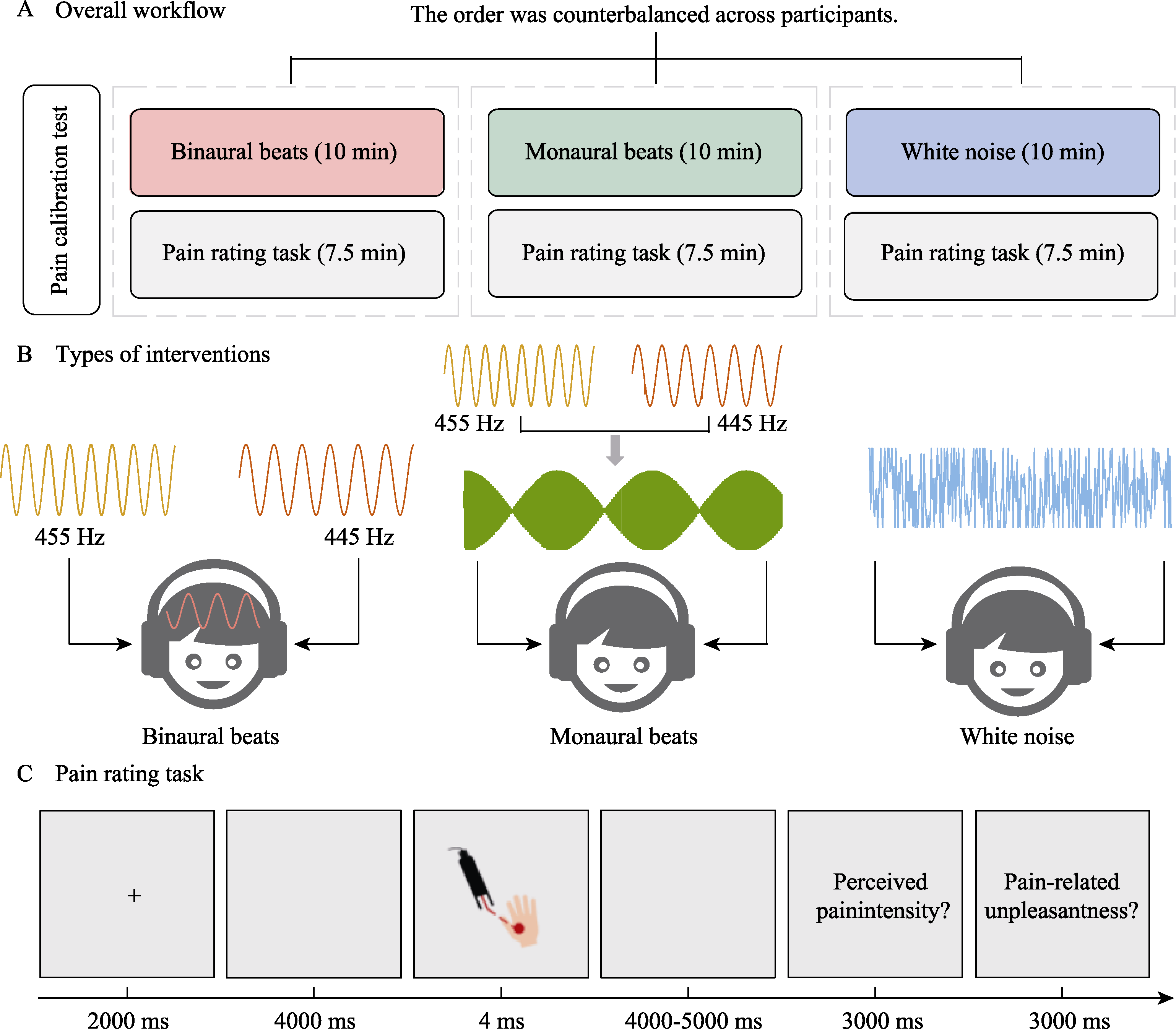
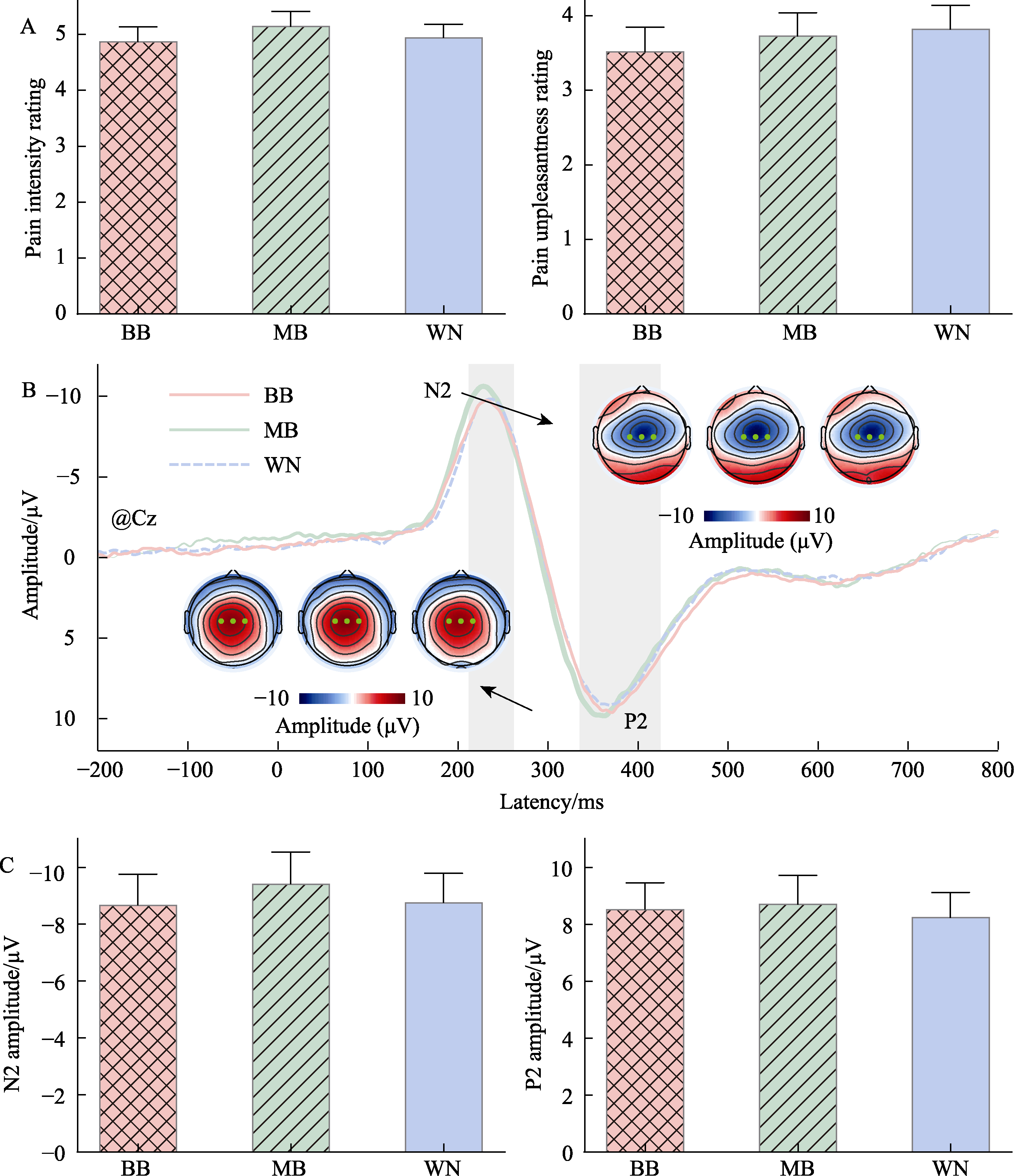
There is an inverse relationship between alpha activity and pain perception, and enhanced alpha oscillations have been proposed to play an analgesic role. Accordingly, this study employs alpha-band BBs as an experimental stimulus, with MBs and white noise as control conditions, to investigate their analgesic effects and underlying neural mechanisms. Using a within-subjects design with three auditory conditions (BBs, MBs, and white noise), we assessed subjective pain ratings (intensity and unpleasantness), laser-evoked potentials (LEPs), and spontaneous EEG dynamics. To comprehensively capture neural modulation, we combined spectral power analysis with EEG microstate analysis to examine the dynamic reorganization of brain networks during auditory stimulation with BBs.
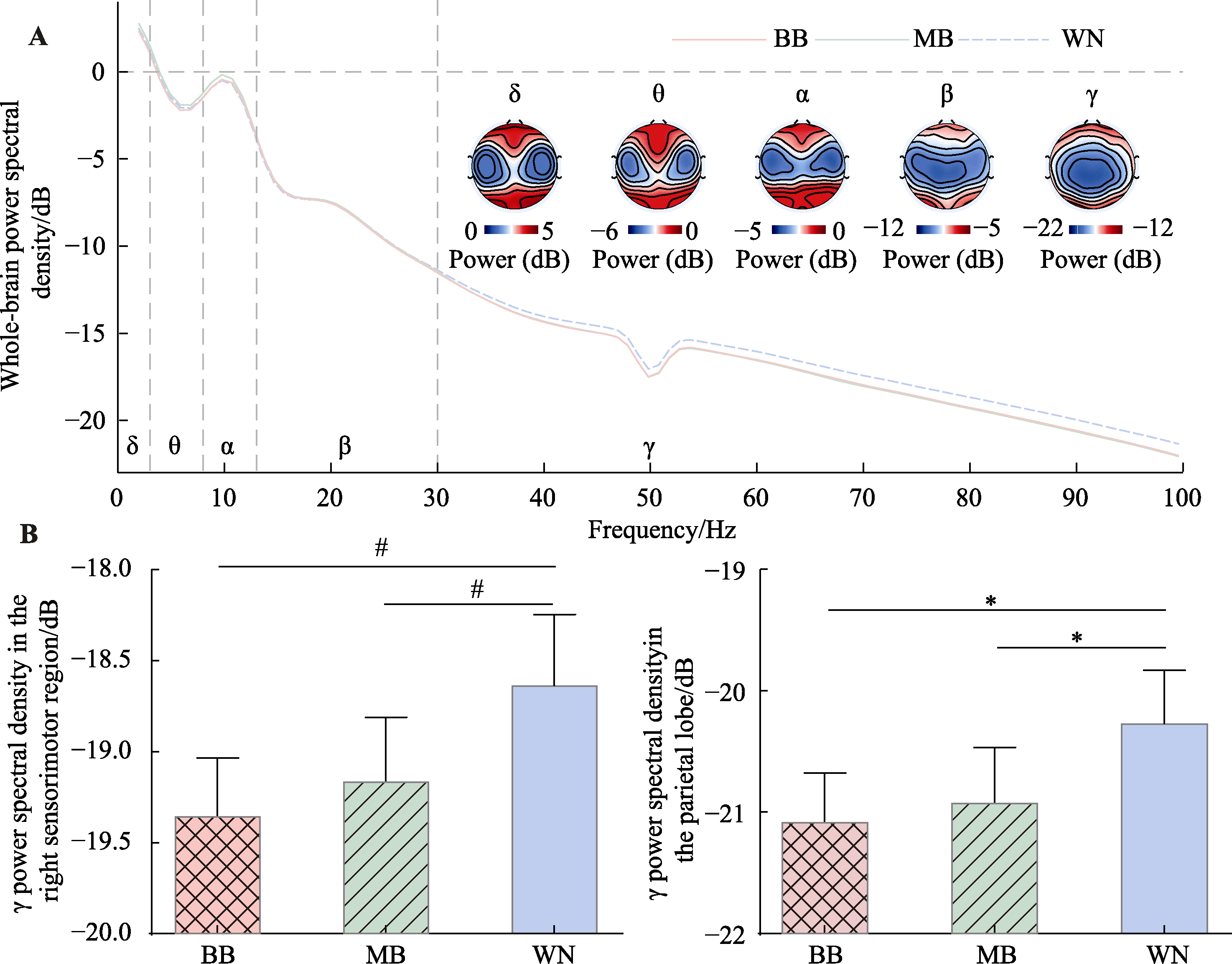
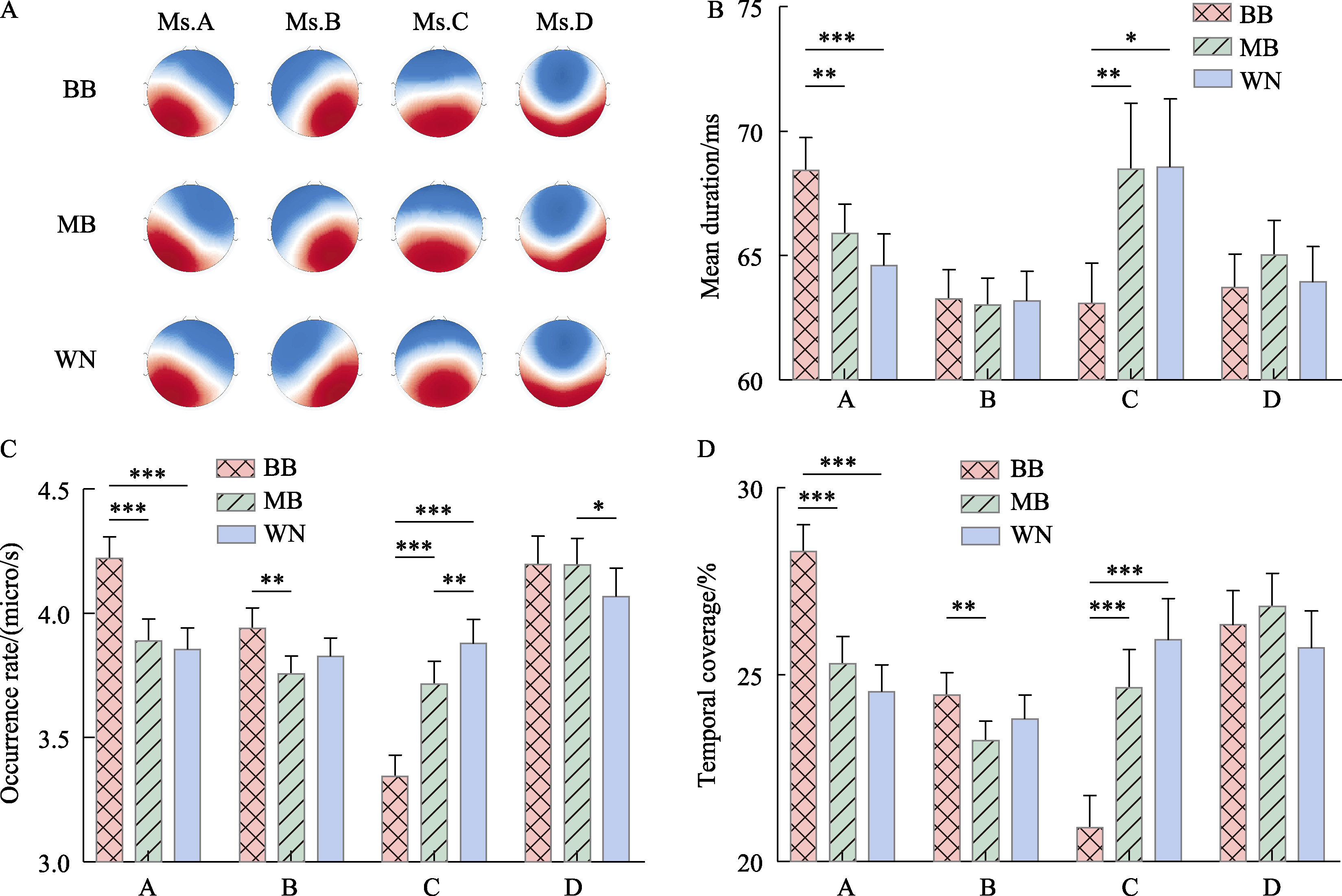
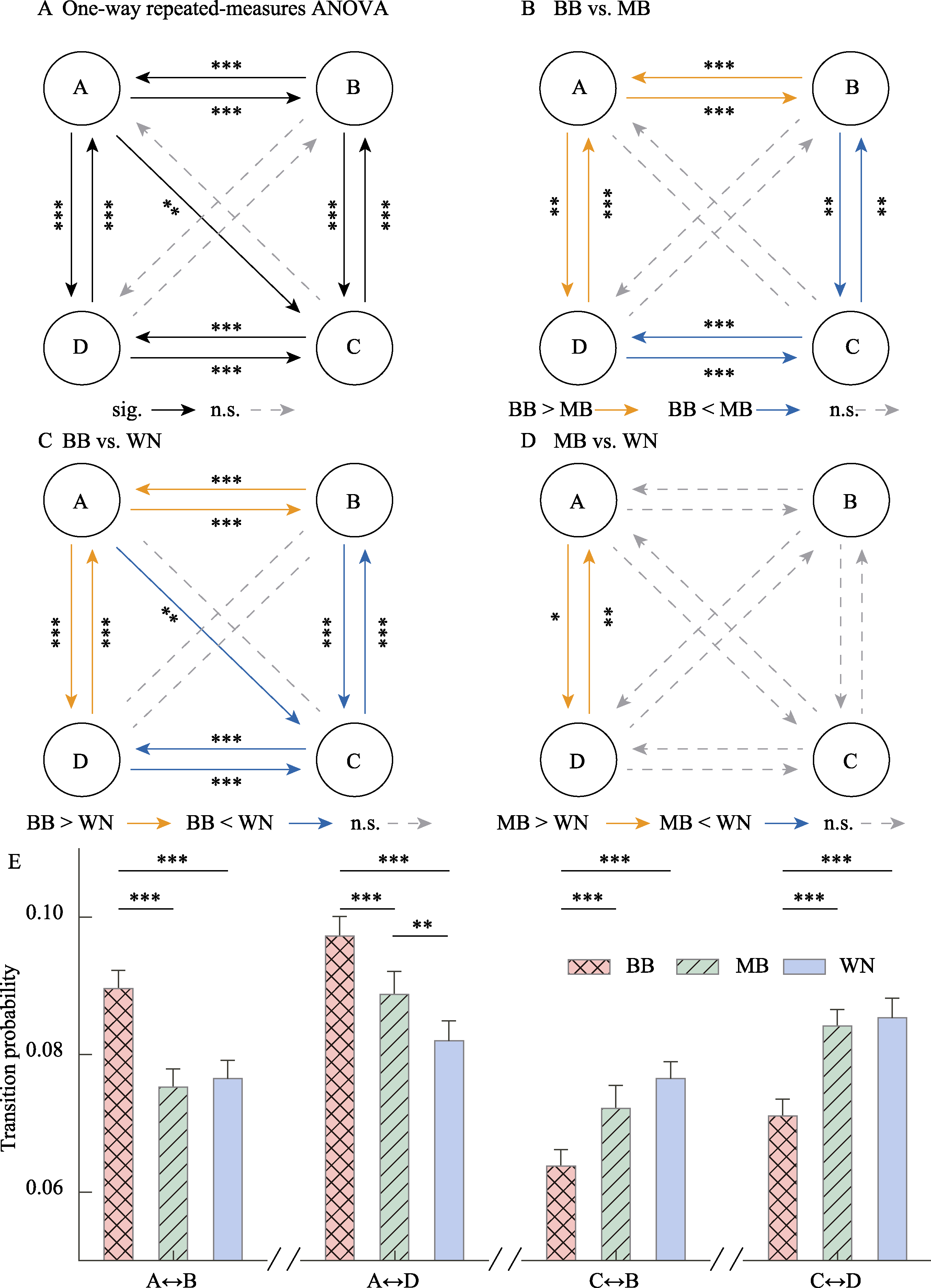
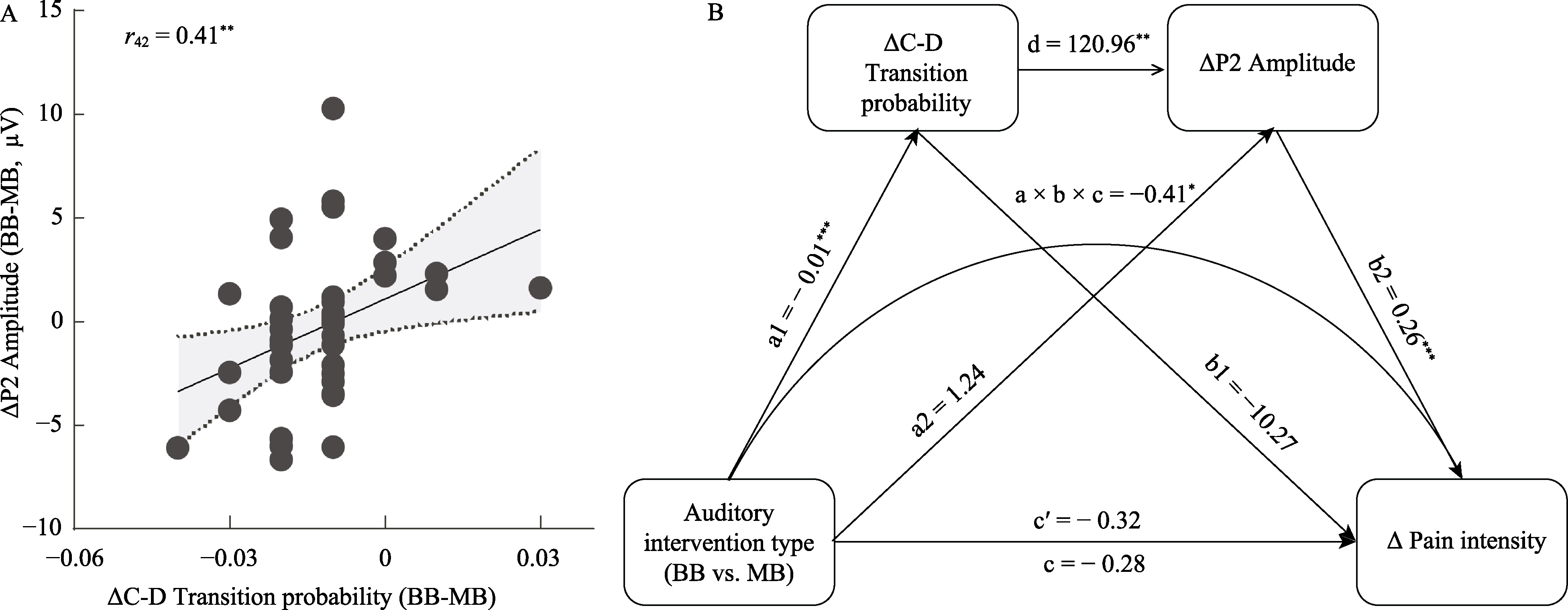
No significant differences in subjective pain ratings were observed across conditions. However, BBs were found to uniquely modulate brain dynamics. Both BBs and MBs significantly decreased gamma-band power during stimulation compared to white noise, indicating a similar effect between these rhythmic auditory inputs on high-frequency activity. Importantly, microstate analysis revealed BB-specific changes: BBs enhanced the occurrence of microstate A (associated with primary auditory processing) while reducing the presence of microstate C (linked to introspective and self-referential processing). Mediation analysis further showed that BBs indirectly modulated pain-related P2 amplitudes, indicative of attentional allocation to nociceptive stimuli, through reducing the transition probability between microstate C and microstate D (involved in attentional reorientation); these factors together may modulate subjective pain experiences. This dynamic pathway suggests that BBs can alter pain processing by reshaping functional brain states and modulating the deployment of attentional resources.
In summary, while BBs did not produce robust behavioral analgesia, they produced significant neural modulatory effects—potentially by reducing dynamic switching between the default mode network and attention-related networks. Our methodology of EEG microstate analysis to investigate pain modulation by rhythmic auditory stimulation offers a novel perspective for evaluating non-pharmacological neuromodulation. Theoretically, our findings call for a shift from frequency-centric views toward a state-dependent framework emphasizing dynamic brain network reorganization. Future studies may explore personalized rhythmic stimulation protocols tailored to individual brain dynamics to enhance the clinical application of BBs in chronic pain and affective disorders.

Key words: binaural beats, monaural beats, pain, microstate analyses, laser-evoked potentials

CLC Number: