

ISSN 0439-755X
CN 11-1911/B
CN 11-1911/B
Acta Psychologica Sinica ›› 2025, Vol. 57 ›› Issue (9): 1499-1511.doi: 10.3724/SP.J.1041.2025.1499
• Reports of Empirical Studies • Next Articles
YANG Mingchuan1, LI Xianzhuo2( ), LIANG Dandan3,4()
Published:2025-09-25
Online:2025-06-26
Contact:
LI Xianzhuo,LIANG Dandan
E-mail:xli@nnu.edu.cn;03275@njnu.edu.cn
YANG Mingchuan, LI Xianzhuo, LIANG Dandan. (2025). Bidirectional transfer between language and musical experience: Based on the categorical perception in Mandarin-speaking musicians. Acta Psychologica Sinica, 57(9), 1499-1511.
Add to citation manager EndNote|Ris|BibTeX
URL: https://journal.psych.ac.cn/acps/EN/10.3724/SP.J.1041.2025.1499
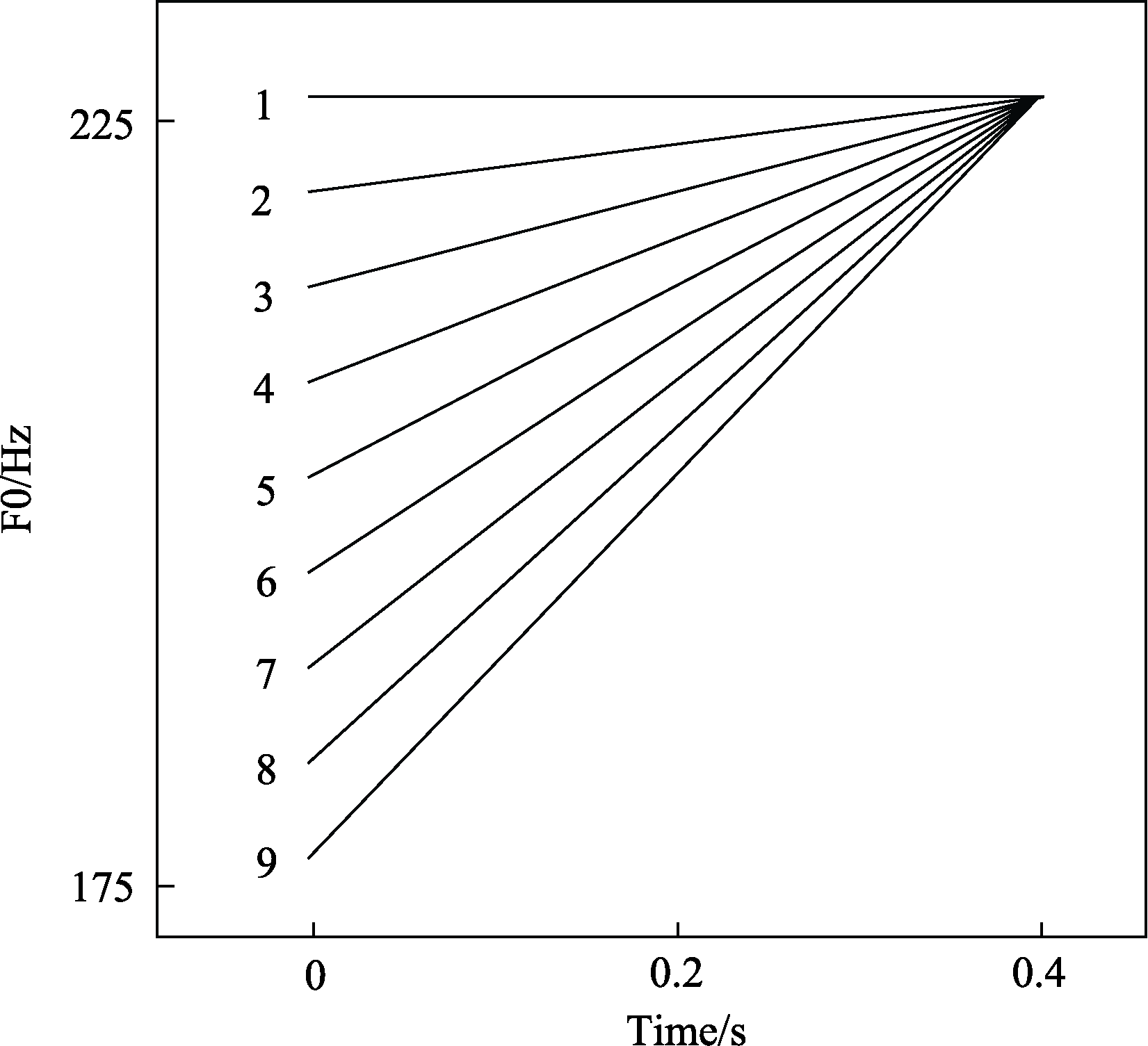
Figure 1. Schematic diagram of the T1-T2 continuum pitch pattern.
| Stimulus | Starting pitch (Hz) | Starting pitch (ERB) | Step (Hz) | Step (ERB) |
|---|---|---|---|---|
| 1 | 225 | 6.229 | 6.63 | 0.12 |
| 2 | 218.37 | 6.104 | 6.52 | 0.12 |
| 3 | 211.85 | 5.980 | 6.41 | 0.12 |
| 4 | 205.44 | 5.856 | 6.30 | 0.12 |
| 5 | 199.14 | 5.732 | 6.19 | 0.12 |
| 6 | 192.95 | 5.607 | 6.09 | 0.12 |
| 7 | 186.87 | 5.483 | 5.98 | 0.12 |
| 8 | 180.88 | 5.359 | 5.88 | 0.12 |
| 9 | 175 | 5.235 |
Table 1 The initial pitch parameters of each stimulus in the continuum
| Stimulus | Starting pitch (Hz) | Starting pitch (ERB) | Step (Hz) | Step (ERB) |
|---|---|---|---|---|
| 1 | 225 | 6.229 | 6.63 | 0.12 |
| 2 | 218.37 | 6.104 | 6.52 | 0.12 |
| 3 | 211.85 | 5.980 | 6.41 | 0.12 |
| 4 | 205.44 | 5.856 | 6.30 | 0.12 |
| 5 | 199.14 | 5.732 | 6.19 | 0.12 |
| 6 | 192.95 | 5.607 | 6.09 | 0.12 |
| 7 | 186.87 | 5.483 | 5.98 | 0.12 |
| 8 | 180.88 | 5.359 | 5.88 | 0.12 |
| 9 | 175 | 5.235 |

Figure 2. The waveform and spectrogram of stimulus 9 in the language continuum and the musical continuum.
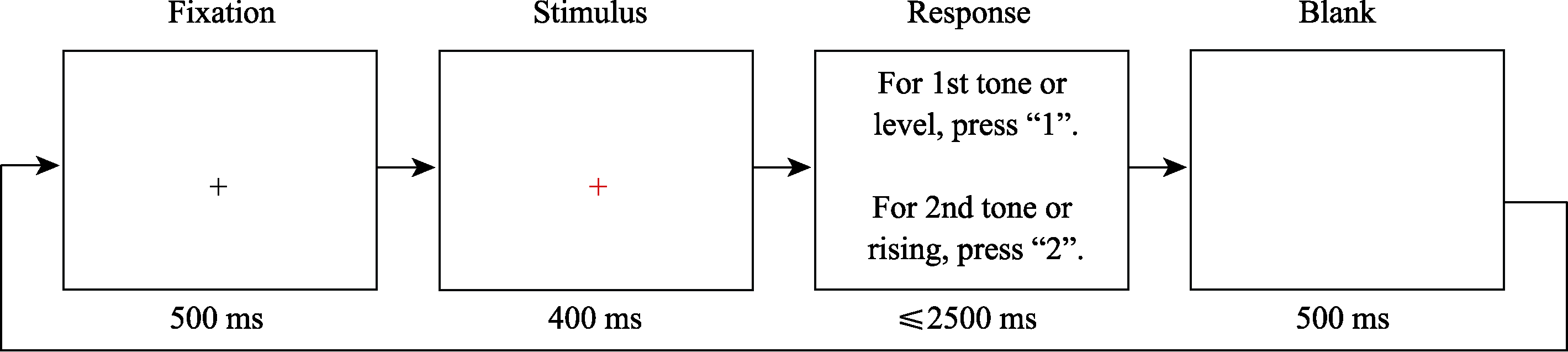
Figure 3. Flowchart of the identification task.
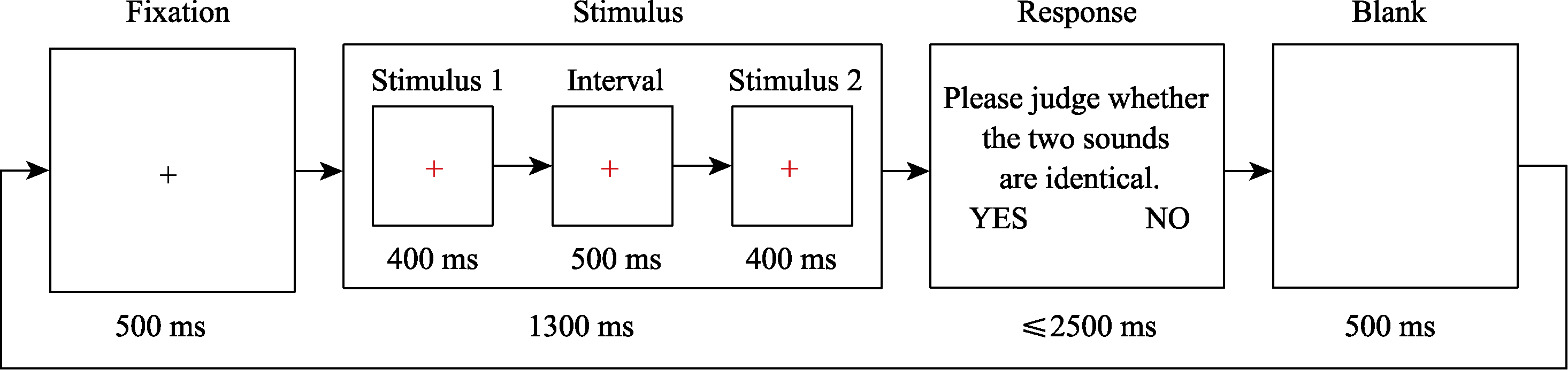
Figure 4. Flowchart of the discrimination task.
| Group | Music | Language | ||||
|---|---|---|---|---|---|---|
| Slopes | Boundary position | Boundary width | Slopes | Boundary position | Boundary width | |
| Musicians | −2.49(0.58) | 4.85(1.01) | 0.92(0.21) | −1.74(0.38) | 5.97(0.88) | 1.35(0.46) |
| Nonmusicians | −2.02(0.53) | 5.01(1.26) | 1.19(0.42) | −1.46(0.32) | 6.56(0.78) | 1.59(0.40) |
Table 2 The indices in the identification task
| Group | Music | Language | ||||
|---|---|---|---|---|---|---|
| Slopes | Boundary position | Boundary width | Slopes | Boundary position | Boundary width | |
| Musicians | −2.49(0.58) | 4.85(1.01) | 0.92(0.21) | −1.74(0.38) | 5.97(0.88) | 1.35(0.46) |
| Nonmusicians | −2.02(0.53) | 5.01(1.26) | 1.19(0.42) | −1.46(0.32) | 6.56(0.78) | 1.59(0.40) |
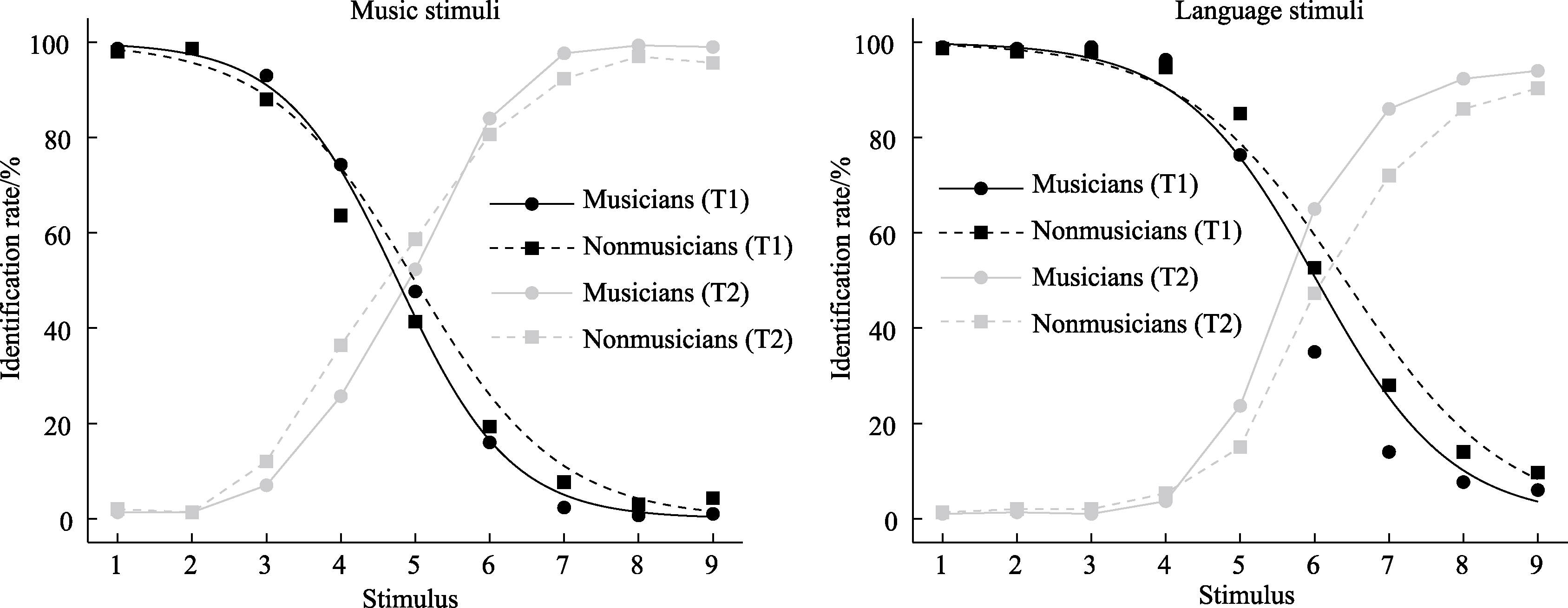
Figure 5. The identification curves.
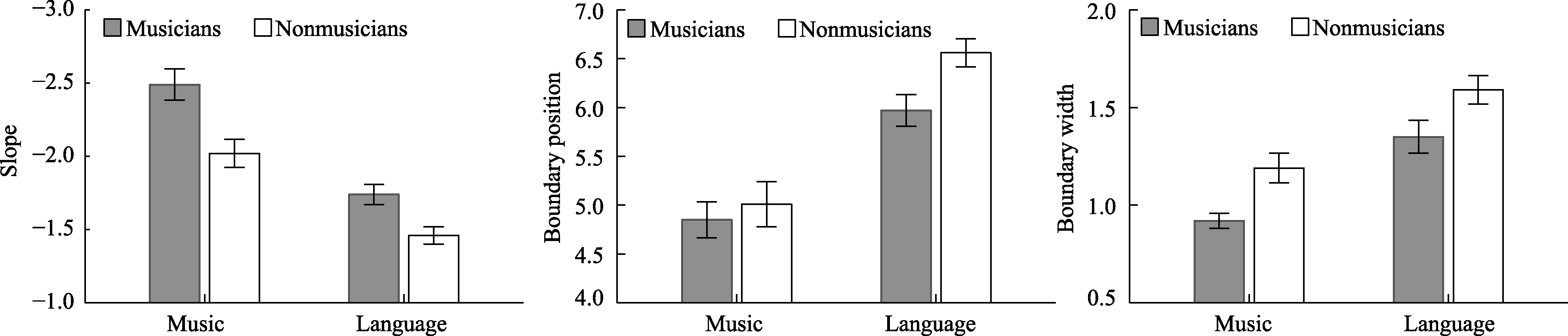
Figure 6. Indices in the identification task. Note. The error bars represent standard errors.
| Group | Music | Language | ||||
|---|---|---|---|---|---|---|
| Between-category accuracy | Within-category accuracy | Discrimination peak | Between-category accuracy | Within-category accuracy | Discrimination peak | |
| Musicians | 0.74(0.09) | 0.63(0.06) | 0.12(0.11) | 0.71(0.11) | 0.62(0.04) | 0.09(0.11) |
| Nonmusicians | 0.67(0.08) | 0.59(0.05) | 0.08(0.09) | 0.65(0.09) | 0.60(0.07) | 0.05(0.11) |
Table 3 The indices in the discrimination task
| Group | Music | Language | ||||
|---|---|---|---|---|---|---|
| Between-category accuracy | Within-category accuracy | Discrimination peak | Between-category accuracy | Within-category accuracy | Discrimination peak | |
| Musicians | 0.74(0.09) | 0.63(0.06) | 0.12(0.11) | 0.71(0.11) | 0.62(0.04) | 0.09(0.11) |
| Nonmusicians | 0.67(0.08) | 0.59(0.05) | 0.08(0.09) | 0.65(0.09) | 0.60(0.07) | 0.05(0.11) |
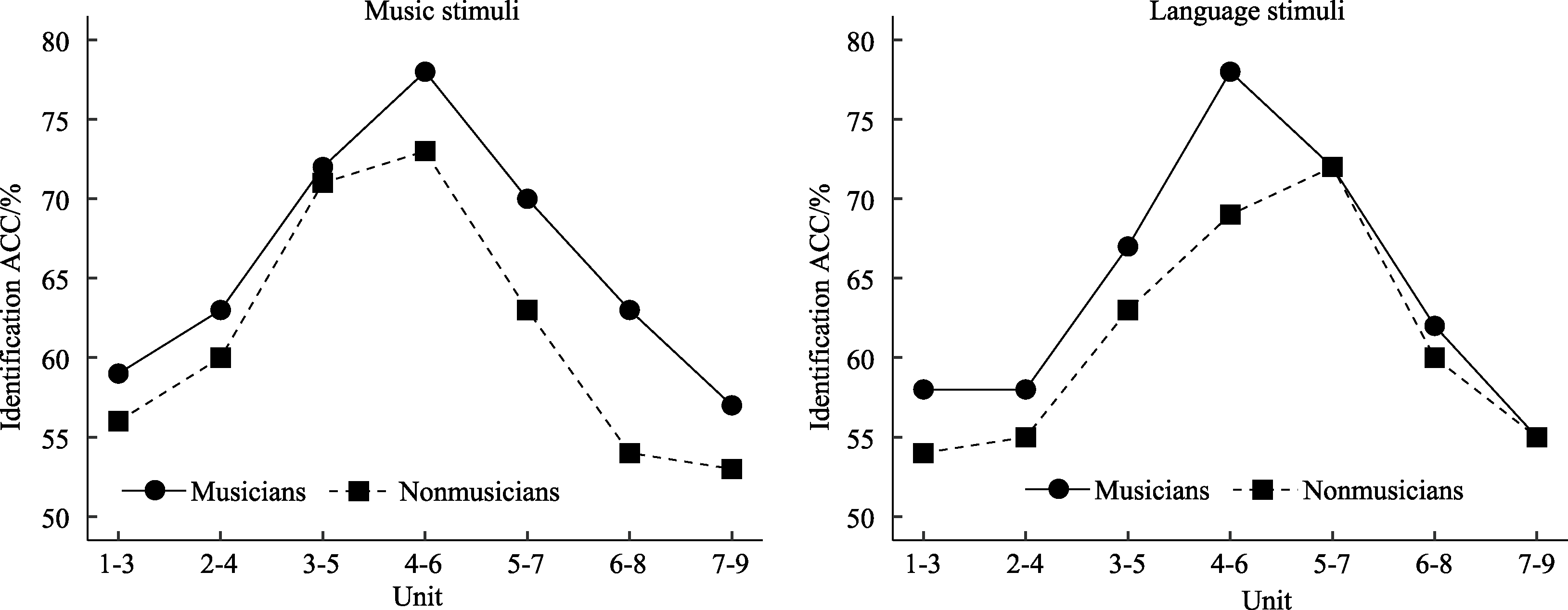
Figure 7. The discrimination curves.
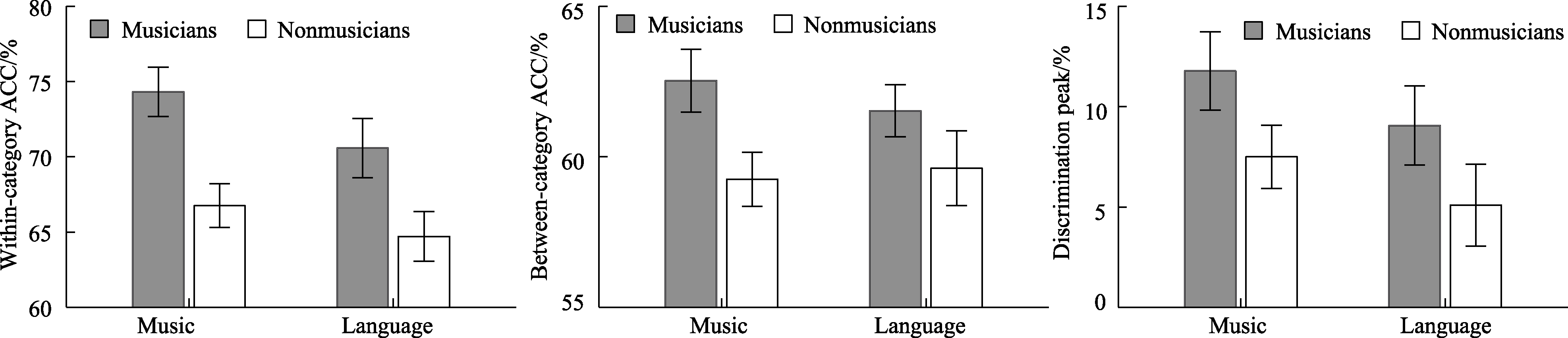
Figure 8. Indices in the discrimination task. Note. The error bars represent standard errors.
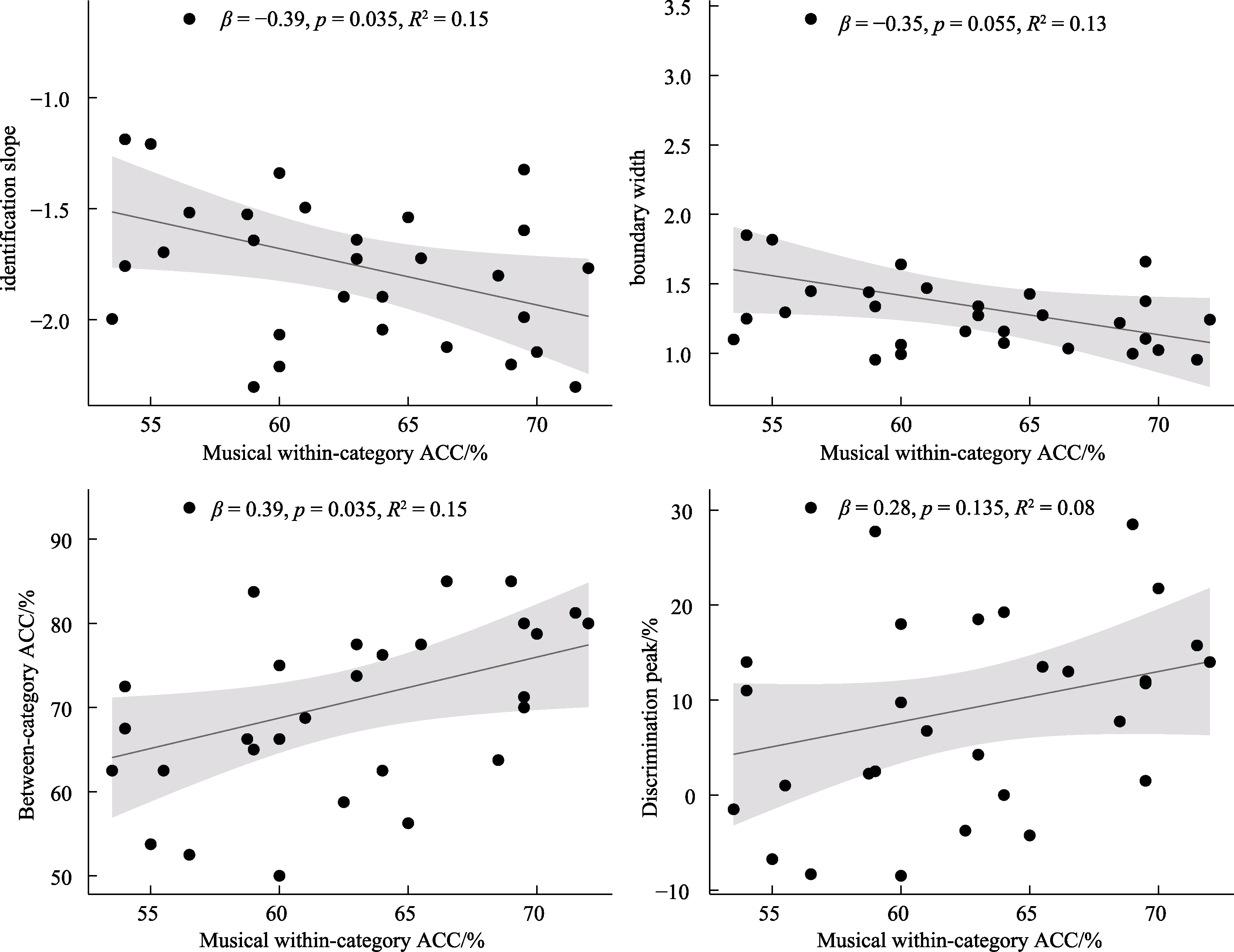
Figure 9. Regression results of musicians. Note. The shadow represents the 95% confidence interval.
| [1] | Bakan, M. B. (2012). World music: Traditions and transformations (2nd ed.). New York, NY: McGraw-Hill. |
| [2] |
Besson, M., Chobert, J., & Marie, C. (2011). Transfer of training between music and speech: Common processing, attention, and memory. Frontiers in Psychology, 2, 94.
doi: 10.3389/fpsyg.2011.00094 pmid: 21738519 |
| [3] | Bidelman, G. M., Weiss, M. W., Moreno, S., & Alain, C. (2014). Coordinated plasticity in brainstem and auditory cortex contributes to enhanced categorical speech perception in musicians. The European Journal of Neuroscience, 40(4), 2662-2673. |
| [4] | Boersma, P., & van Heuven, V. (2001). Speak and unSpeak with Praat. Glot International, 5(9-10), 341-347. |
| [5] |
Chang, D., Hedberg, N., & Wang, Y. (2016). Effects of musical and linguistic experience on categorization of lexical and melodic tones. Journal of the Acoustical Society of America, 139(5), 2432-2447.
doi: 10.1121/1.4947497 pmid: 27250140 |
| [6] | Chen, F., & Peng, G. (2020). Reduced sensitivity to between-category information but preserved categorical perception of lexical tones in tone language speakers with congenital amusia. Frontiers in Psychology, 11, 581410. |
| [7] | Chen, F., Zhang, H., Wang, S., & Peng, G. (2019). Intrinsic cues and vowel categorical perception. Linguistic Sciences, 18(4), 410-425. |
| [8] | Chen, S., Zhu, Y., Wayland, R., & Yang, Y. (2020). How musical experience affects tone perception efficiency by musicians of tonal and non-tonal speakers? PloS One, 15(5), e0232514. |
| [9] |
Chobert, J., Marie, C., François, C., Schön, D., & Besson, M. (2011). Enhanced passive and active processing of syllables in musician children. Journal of Cognitive Neuroscience, 23(12), 3874-3887.
doi: 10.1162/jocn_a_00088 pmid: 21736456 |
| [10] | Cooper, A., & Wang, Y. (2012). The influence of linguistic and musical experience on Cantonese word learning. The Journal of the Acoustical Society of America, 131(6), 4756-4769. |
| [11] | Creel, S. C., Obiri-Yeboah, M., & Rose, S. (2023). Language-to-music transfer effects depend on the tone language: Akan vs. east Asian tone languages. Memory & Cognition, 51(7), 1624-1639. |
| [12] |
Faul, F., Erdfelder, E., Lang, A. G., & Buchner, A. (2007). G*Power 3: A flexible statistical power analysis program for the social, behavioral, and biomedical sciences. Behavior Research Methods, 39(2), 175-191.
doi: 10.3758/bf03193146 pmid: 17695343 |
| [13] | Francis, A. L., Ciocca, V., & Ng, B. K. C. (2003). On the (non) categorical perception of lexical tones. Perception and Psychophysics, 65(7), 1029-1044. |
| [14] | Friederici, A. D. (2017). Language in our brain: The origins of a uniquely human capacity. Cambridge, MA: The MIT Press. |
| [15] |
Giuliano, R. J., Pfordresher, P. Q., Stanley, E. M., Narayana, S., & Wicha, N. Y. (2011). Native experience with a tone language enhances pitch discrimination and the timing of neural responses to pitch change. Frontiers in Psychology, 2, 146.
doi: 10.3389/fpsyg.2011.00146 pmid: 21886629 |
| [16] | Greenwood, D. D. (1961). Critical bandwidth and the frequency coordinates of the basilar membrane. Journal of the Acoustical Society of America, 33(10), 1344-1356. |
| [17] |
Griffiths, T. D., & Warren, J. D. (2002). The planum temporale as a computational hub. Trends in Neurosciences, 25(7), 348-353.
doi: 10.1016/s0166-2236(02)02191-4 pmid: 12079762 |
| [18] | Guo, J. (1993). An explication and investigation of Chinese tones and intonation. Beijing: Beijing Language Institute Press. |
| [19] | Hao, Y. C. (2012). Second language acquisition of Mandarin Chinese tones by tonal and non-tonal language speakers. Journal of Phonetics, 40(2), 269-279. |
| [20] | Hu, A., Wang, M., Li, Y., Tang, Q., & Gu, F. (2020). Dong speakers outperform Mandarin speakers in behavioral pitch discrimination. The Journal of the Acoustical Society of America, 147(1), EL62- EL65. |
| [21] | Jiang, C., Hamm, J. P., Lim, V. K., Kirk, I. J., & Yang, Y. (2012). Impaired categorical perception of lexical tones in Mandarin-speaking congenital amusics. Memory and Cognition, 40(7), 1109-1121. |
| [22] | Levy, D. F., & Wilson, S. M. (2020). Categorical encoding of vowels in primary auditory cortex. Cerebral Cortex, 30(2), 618-627. |
| [23] |
Li, X., Xiao, R., & Liang, D. (2022). The cross-domain influence of tonal categorical perception and tonal complexity on musical pitch perception. Acta Psychologica Sinica, 54(9), 1021-1030.
doi: 10.3724/SP.J.1041.2022.01021 |
| [24] | Ma, J., Zhu, J., Yao, X., & Chen, Y. (2024). Categorical perception of lexical tones and stops in Mandarin-speaking musicians and nonmusicians. Sage Open, 14(1), 21582440241227703. |
| [25] |
Marie, C., Delogu, F., Lampis, G., Belardinelli, M. O., & Besson, M. (2011). Influence of musical expertise on segmental and tonal processing in mandarin Chinese. Journal of Cognitive Neuroscience, 23(10), 2701-2715.
doi: 10.1162/jocn.2010.21585 pmid: 20946053 |
| [26] |
Marques, C., Moreno, S., Castro, S. L., & Besson, M. (2007). Musicians detect pitch violation in a foreign language better than nonmusicians: Behavioral and electrophysiological evidence. Journal of Cognitive Neuroscience, 19(9), 1453-1463.
pmid: 17714007 |
| [27] | Nan, Y. (2017). The facilitation effect of music learning on speech processing. Advances in Psychological Science, 25(11), 1844-1853. |
| [28] |
Nan, Y., & Friederici, A. D. (2013). Differential roles of right temporal cortex and Broca's area in pitch processing: Evidence from music and Mandarin. Human Brain Mapping, 34(9), 2045-2054.
doi: 10.1002/hbm.22046 pmid: 22431306 |
| [29] |
Patel, A. D. (2003). Language, music, syntax and the brain. Nature Neuroscience, 6(7), 674-681.
doi: 10.1038/nn1082 pmid: 12830158 |
| [30] | Patel, A. D. (2008). Music, language, and the brain. New York, NY: Oxford University Press. |
| [31] |
Patel, A. D. (2014). Can nonlinguistic musical training change the way the brain processes speech? The expanded opera hypothesis. Hearing Research, 308, 98-108.
doi: 10.1016/j.heares.2013.08.011 pmid: 24055761 |
| [32] | Peng, G., Zheng, H. Y., Gong, T., Yang, R. X., Kong, J. P., & Wang, W. S. Y. (2010). The influence of language experience on categorical perception of pitch contours. Journal of Phonetics, 38(4), 616-624. |
| [33] | Peretz, I., Champod, A. S., & Hyde, K. (2003). Varieties of musical disorders——The Montreal battery of evaluation of amusia. Annals of the New York Academy of Sciences, 999, 58-75. |
| [34] | Pike, K. L. (1948). Tone languages. Ann Arbor, MI: University of Michigan Press. |
| [35] |
Poeppel, D., Phillips, C., Yellin, E., Rowley, H. A., Roberts, T. P. L., & Marantz, A. (1997). Processing of vowels in supratemporal auditory cortex. Neuroscience Letters, 221(2-3), 145-148.
pmid: 9121685 |
| [36] | Shen, X. S., & Lin, M. (1991). A perceptual study of Mandarin tones 2 and 3. Language and Speech, 34(2), 145-156. |
| [37] |
Tang, W., Xiong, W., Zhang, Y. X., Dong, Q., & Nan, Y. (2016). Musical experience facilitates lexical tone processing among mandarin speakers: Behavioral and neural evidence. Neuropsychologia, 91, 247-253.
doi: S0028-3932(16)30285-8 pmid: 27503769 |
| [38] | Wang, L. (1991). Fundamentals of phonology. Beijing: Language and Culture Press. |
| [39] | Wang, W. S. (1976). Language change. Annals of the New York Academy of Sciences, 280(1), 61-72. |
| [40] | Wang, Y., Liu, S., & Qing, W. (2016). Tonal patterns and categorical perception of Yinping and Yangping in Chongqing Mandarin: Implications to historical changing of Yinping and Shangsheng. Chinese Journal of Phonetics, (2), 18-27. |
| [41] | Wang, Y., & Qin, X. (2015). The identification and discrimination of tone2 and tone3 in Mandarin: The influence of experimental design on categorical perception of tones. Linguistic Sciences, 14(4), 337-352. |
| [42] | Wang, Y., Wu, Q., & Liu, S. (2021). Categorical perception of similar-contour and dissimilar-contour tones in Beijing Mandarin of native and non-native speakers: An MMN study. Contemporary Linguistics, 23(3), 413-432. |
| [43] | Wayland, R., Herrera, E., & Kaan, E. (2010). Effects of musical experience and training on pitch contour perception. Journal of Phonetics, 38(4), 654-662. |
| [44] |
Wong, P. C. M., Skoe, E., Russo, N. M., Dees, T., & Kraus, N. (2007). Musical experience shapes human brainstem encoding of linguistic pitch patterns. Nature Neuroscience, 10(4), 420-422.
doi: 10.1038/nn1872 pmid: 17351633 |
| [45] |
Wu, H., Ma, X., Zhang, L., Liu, Y., Zhang, Y., & Shu, H. (2015). Musical experience modulates categorical perception of lexical tones in native Chinese speakers. Frontiers in Psychology, 6, 436.
doi: 10.3389/fpsyg.2015.00436 pmid: 25918511 |
| [46] |
Xi, J., Zhang, L., Shu, H., Zhang, Y., & Li, P. (2010). Categorical perception of lexical tones in Chinese revealed by mismatch negativity. Neuroscience, 170(1), 223-231.
doi: 10.1016/j.neuroscience.2010.06.077 pmid: 20633613 |
| [47] |
Xu, Y., Gandour, J. T., & Francis, A. L. (2006). Effects of language experience and stimulus complexity on the categorical perception of pitch direction. Journal of the Acoustical Society of America, 120(2), 1063-1074.
pmid: 16938992 |
| [48] |
Yao, Y., & Chen, X. (2020). The effects of music training on categorical perception of Mandarin tones in 4- to 5-year-old children. Acta Psychologica Sinica, 52(4), 456-468.
doi: 10.3724/SP.J.1041.2020.00456 |
| [49] |
Yu, K., Wang, R., Li, L., & Li, P. (2014). Processing of acoustic and phonological information of lexical tones in Mandarin Chinese revealed by mismatch negativity. Frontiers in Human Neuroscience, 8, 729.
doi: 10.3389/fnhum.2014.00729 pmid: 25278863 |
| [50] | Zhang, L. (2010). On the influence of native language on the categorical perception of Chinese tones. TCSOL Studies, 38(2), 15-20. |
| [51] | Zhang, L., Xi, J., Xu, G., Shu, H., Wang, X., & Li, P. (2011). Cortical dynamics of acoustic and phonological processing in speech perception. PLoS One, 6(6), e20963. |
| [52] |
Zhao, T. C., & Kuhl, P. K. (2015). Effect of musical experience on learning lexical tone categories. Journal of the Acoustical Society of America, 137(3), 1452-1463.
doi: 10.1121/1.4913457 pmid: 25786956 |
| [53] | Zhu, J., Chen, X., & Yang, Y. (2021). Effects of amateur musical experience on categorical perception of lexical tones by native Chinese adults: An ERP study. Frontiers in Psychology, 12, 611189. |
| [1] | JIAO Liying, LI Chang-Jin, CHEN Zhen, XU Hengbin, XU Yan. When AI “possesses” personality: Roles of good and evil personalities influence moral judgment in large language models [J]. Acta Psychologica Sinica, 2025, 57(6): 929-946. |
| [2] | GAO Chenghai, DANG Baobao, WANG Bingjie, WU Michael Shengtao. The linguistic strength and weakness of artificial intelligence: A comparison between Large Language Model (s) and real students in the Chinese context [J]. Acta Psychologica Sinica, 2025, 57(6): 947-966. |
| [3] | ZHANG Yanbo, HUANG Feng, MO Liuling, LIU Xiaoqian, ZHU Tingshao. Suicidal ideation data augmentation and recognition technology based on large language models [J]. Acta Psychologica Sinica, 2025, 57(6): 987-1000. |
| [4] | HUA Shan, JIANG Xintong, GAO Yangzhenyu, MU Yan, DU Yi. The impacts of music training and music sophistication on empathy [J]. Acta Psychologica Sinica, 2025, 57(4): 544-558. |
| [5] | ZHOU Zisen, HUANG Qi, TAN Zehong, LIU Rui, CAO Ziheng, MU Fangman, FAN Yachun, QIN Shaozheng. Emotional capabilities evaluation of multimodal large language model in dynamic social interaction scenarios [J]. Acta Psychologica Sinica, 2025, 57(11): 1988-2000. |
| [6] | HUANG Feng, DING Huimin, LI Sijia, HAN Nuo, DI Yazheng, LIU Xiaoqian, ZHAO Nan, LI Linyan, ZHU Tingshao. Self-help AI psychological counseling system based on large language models and its effectiveness evaluation [J]. Acta Psychologica Sinica, 2025, 57(11): 2022-2042. |
| [7] | WU Yueting, WANG Bo, BAO Han Wu Shuang, LI Ruonan, WU Yi, WANG Jiaqi, CHENG Cheng, YANG Li. Humans perceive warmth and competence in large language models [J]. Acta Psychologica Sinica, 2025, 57(11): 2043-2059. |
| [8] | ZHOU Linshu, ZHANG Yuqing, CAI Dan-Chao. Musical training enhances the interaction between pitch and time dimensions in auditory working memory [J]. Acta Psychologica Sinica, 2025, 57(10): 1701-1714. |
| [9] | LAN Zebo, GUO Meihua, JIANG Kun, WU Junjie, YAN Guoli. The distinctness of visual word recognition in hearing-impaired college readers: The effects of language experience and reading ability [J]. Acta Psychologica Sinica, 2023, 55(6): 954-967. |
| [10] | XU Chuyan, ZHU Lin, WANG Yunping, WANG Ruibing, LIU Conghui. The effect of foreign language speaking anxiety on the quality of verbal interaction: A fNIRS-based hyperscanning study [J]. Acta Psychologica Sinica, 2023, 55(12): 1949-1965. |
| [11] | ZHANG Hang, WANG Ting, FENG Xiaohui, WEI Yiping, ZHANG Jijia. Effect of bronze drum training on rhythm perception and executive function of Zhuang drummers [J]. Acta Psychologica Sinica, 2023, 55(11): 1762-1779. |
| [12] | LI Xianzhuo, XIAO Rong, LIANG Dandan. The cross-domain influence of tonal categorical perception and tonal complexity on musical pitch perception [J]. Acta Psychologica Sinica, 2022, 54(9): 1021-1030. |
| [13] | YANG Jimei, CHAI Jieyu, QIU Tianlong, QUAN Xiaoshan, ZHENG Maoping. Relationship between empathy and emotion recognition in Chinese national music: An event-related potential study evidence [J]. Acta Psychologica Sinica, 2022, 54(10): 1181-1192. |
| [14] | WU Limei, ZHANG Jijia, MENG Le, ZHANG Xiaolin, HUANG Nanxin, ZHANG Jinqiao. Language evolution and ethnic group/dialect name affecting ethnic information processing: Three major Chinese dialects in Guangdong [J]. Acta Psychologica Sinica, 2021, 53(9): 944-959. |
| [15] | LUO Fang, JIANG Liming, TIAN Xuetao, XIAO Mengge, MA Yanzhen, ZHANG Sheng. Shyness prediction and language style model construction of elementary school students [J]. Acta Psychologica Sinica, 2021, 53(2): 155-169. |
| Viewed | ||||||
|
Full text |
|
|||||
|
Abstract |
|
|||||
